


Irony Measured In Square Feet
By Tom Seest
At Sequatchie Crossing, we tell the stories of Sequatchie Crossing.
Please share this post with your friends, family, or business associates who may want help telling the stories of their legacy.
🎤 Audio Overview
Public Comment Exceeds Banner Size Limit
Act I – The Meeting That Was Supposed to Be Small
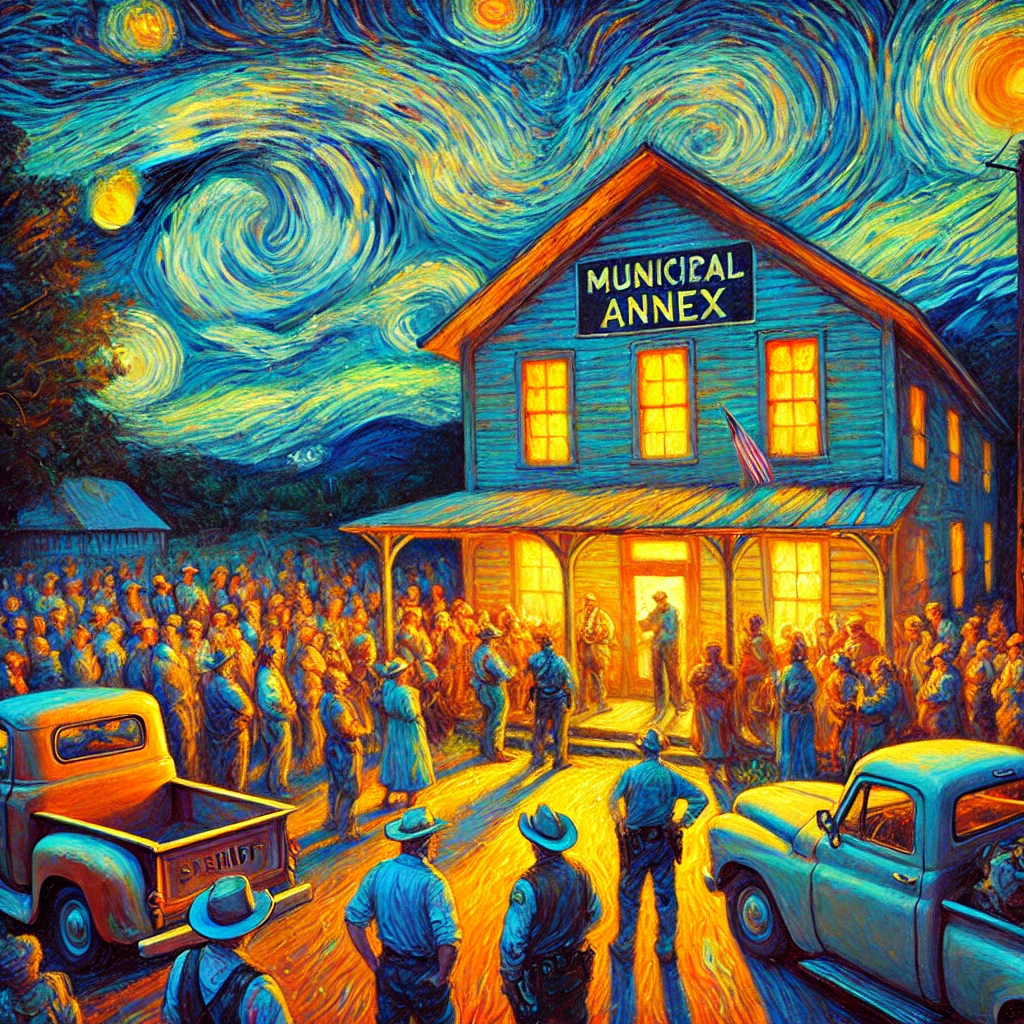
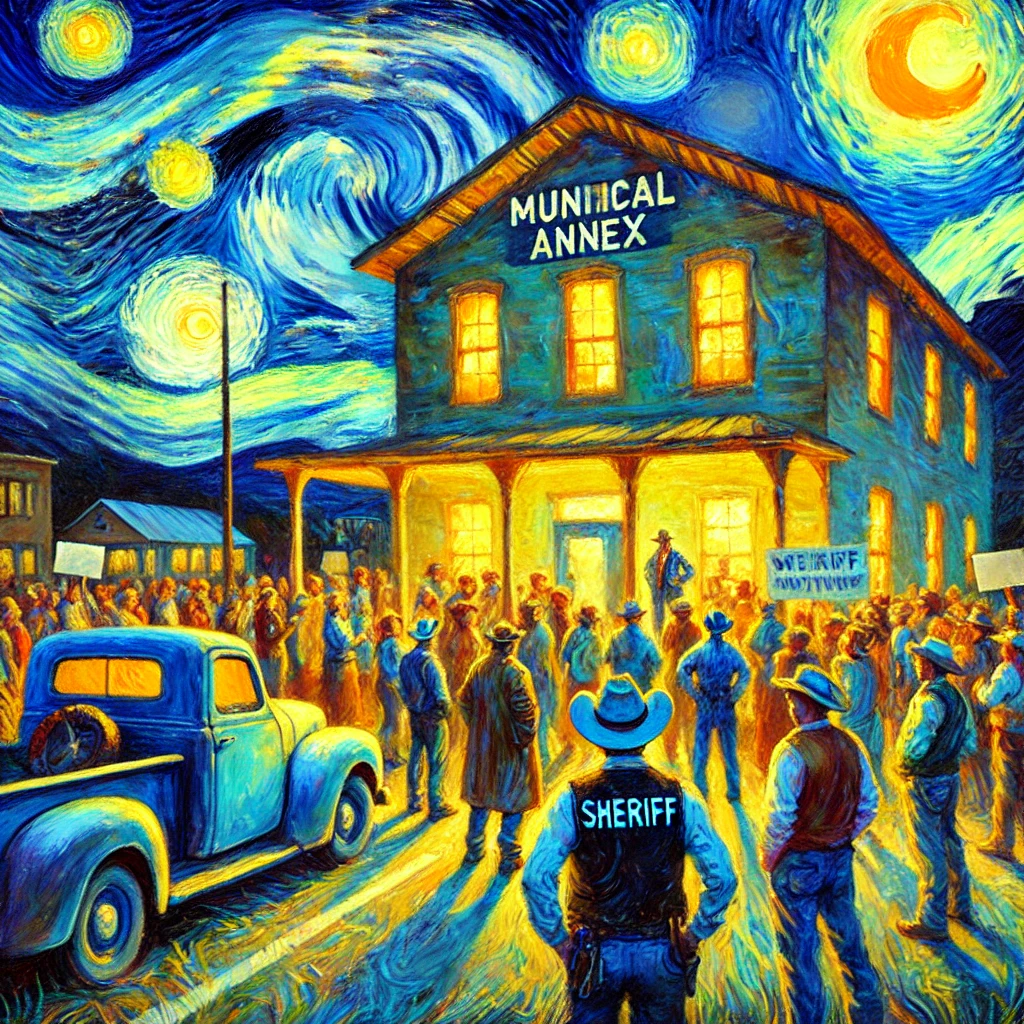
The Sequatchie Crossing Municipal Annex had never been a building designed for emotional overflow.
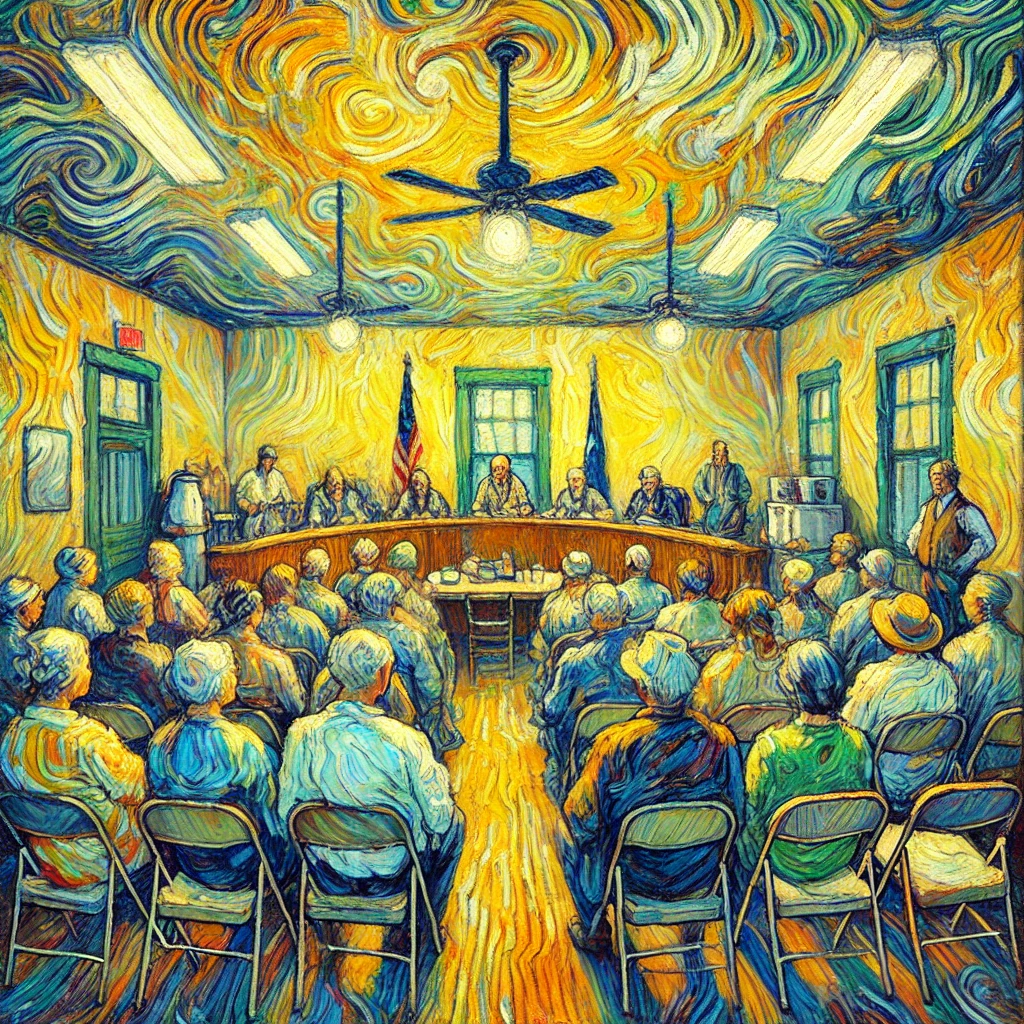
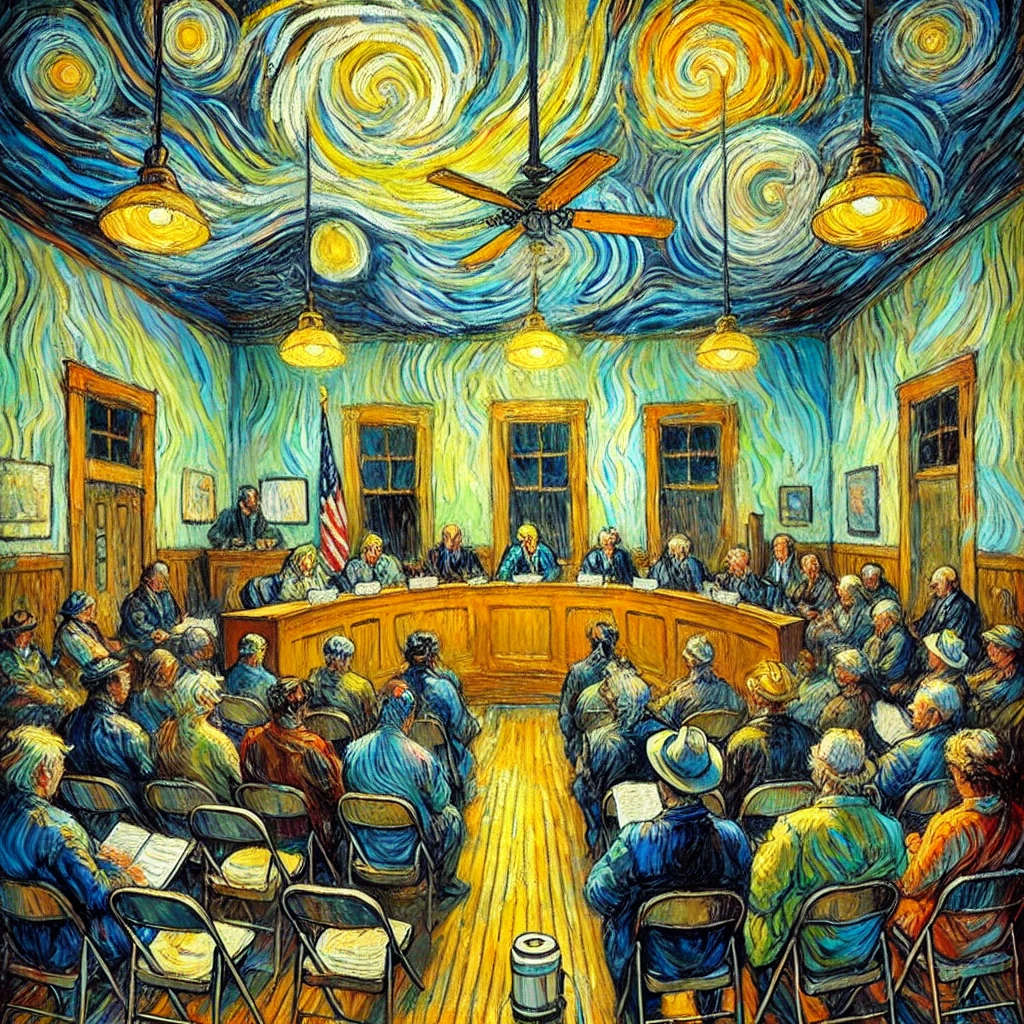
It was constructed in 1978 when the town believed most civic problems could be solved with a folding table, a coffee pot, and a man named Earl who owned a tape measure. The room itself had the rectangular humility of a church basement without the theology. Fluorescent lights hummed softly overhead like insects that had accepted their fate. The linoleum floor bore the faint scars of decades of chairs dragged backward in disagreement.
Normally the annex hosted zoning board discussions, budget workshops, and the occasional drainage debate that ended with two farmers silently pointing at a map for forty minutes.
But tonight it was hosting something far more volatile.
The subject, officially, was the enforcement of Sequatchie Crossing’s portable sign ordinance—an eleven-year-old regulation that had slept quietly inside a municipal binder until a few weeks earlier when someone in City Hall rediscovered it and began applying it with the enthusiasm of a man who had just found a flashlight during a power outage.
The ordinance restricted the size and placement of temporary signs: banners, yard placards, sandwich boards, inflatable figures, and various forms of entrepreneurial optimism.
Until recently, nobody had cared.
Now everybody did.
By six-thirty the room was full.
Business owners sat in the front rows clutching folders containing receipts, invoices, and the brittle dignity of people who had suddenly been told their marketing strategy was illegal. Church members clustered together with notebooks and expressions suggesting they had prayed for patience but not necessarily promised to use it.
Teenagers occupied the back row with the quiet anticipation of young people sensing adults were about to behave in a way that would provide entertainment for weeks.
Sheriff Peeler stood near the door with the weary stillness of a man who had been told the meeting was “routine.”
Boot Barnes leaned against the wall beside the coffee urn, watching the room with the relaxed curiosity of someone who considered municipal unrest a recreational activity.
At the council table sat Mayor Jasper Pickett, Councilwoman June Talbott, Councilman Leon Purdy, and Councilman Rayford Hince.
And beside them sat Miss Darlene Voss, town clerk, guardian of the ordinance binder, and the only person in the room who appeared capable of maintaining order through sheer administrative gravity.
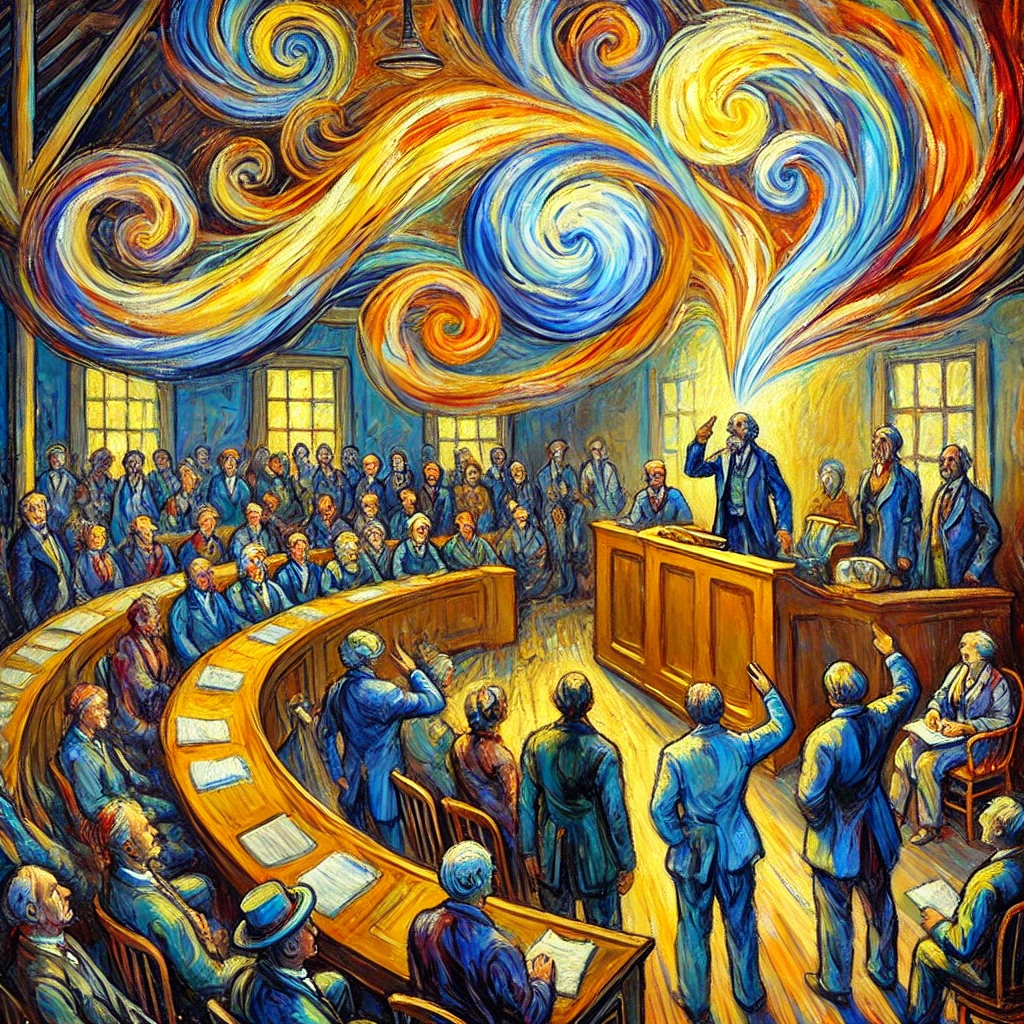
At precisely seven o’clock Mayor Pickett tapped the microphone.
The microphone responded with a sound resembling a startled goose.
“We’ll call this public comment session to order.”
The room quieted.
Mayor Pickett adjusted his notes.
“Tonight we will hear comments regarding the enforcement of the sign ordinance. Each speaker will be allotted three minutes.”
That announcement landed like a small insult.
Three minutes.
In a town that had spent three weeks arguing about banners.
Miss Darlene stood beside the sign-up sheet.
“Please state your name and remain respectful,” she said. “And please remain within the time limit.”
Boot Barnes whispered from the back:
“Respectful I can do. Small I’m less confident about.”
The first name was called.
Reverend Asa Gentry rose from the second row and approached the lectern with the calm authority of a man who had preached in August without air conditioning.
“Good evening,” he began.
His voice filled the room like warm water filling a bowl.
“My concern is not merely the banner outside our church,” he said. “My concern is proportion. When a town begins measuring welcome in square footage, it risks confusing order with hospitality.”
Several people nodded.
Act I – The Meeting That Was Supposed to Be Small
The Reverend continued.
“A banner that says ‘Homecoming Sunday’ is not an advertisement. It is an invitation.”
Miss Darlene’s timer ticked.
The Reverend warmed to his theme.
“But if speech must remain within approved dimensions—”
“Thirty seconds,” Miss Darlene said.
The Reverend blinked, startled by the speed of time.
He hurried.
“My point is simply that a town which restricts expression too narrowly risks shrinking its own spirit.”
The timer beeped.
“Time.”
Reverend Gentry returned to his seat carrying the quiet frustration of a man whose sermon had been interrupted just before the good part.
Boot leaned toward him and whispered:
“You had at least another two square yards in you.”
The Reverend sighed.
“I know.”
And thus the evening began.
Act I – The Meeting That Was Supposed to Be Small
Act II – The Comments Begin to Grow
The next speakers arrived with tidy intentions.
A florist explained that seasonal banners helped people remember she sold chrysanthemums in the fall instead of only funeral arrangements.
A hardware store owner argued that Christmas lights stayed up until February without anyone calling them blight.
A realtor declared that real estate signs were at least honest about being temporary.
But as each speaker approached the microphone, something predictable happened.
Their arguments expanded.
Not dramatically.
Not angrily.
Just… steadily.
A discussion about banner size drifted into complaints about selective enforcement.
A remark about sandwich boards became a reflection on downtown decline.
A comment about yard signs turned into a defense of community pride.
Each speech attempted to stay within its allotted three minutes.
Each failed.
The timer beeped again and again like a polite but ineffective referee.
Miss Darlene enforced the rule with mechanical discipline.

Act II – The Comments Begin to Grow
“Time.”
“Time.”
“Time.”
But the speeches kept swelling.
The turning point came when Clovis Strickland stepped forward.
Clovis carried a binder of photocopied meeting minutes and the satisfied look of a man who had done research voluntarily.
“My name is Clovis Strickland,” he began.
“And I believe this meeting has accidentally demonstrated the problem we’re discussing.”
The council shifted.
Clovis adjusted his papers.
“The ordinance limits signs by square footage. But tonight citizens are attempting to compress years of frustration into three minutes of speech.”
A ripple of laughter moved through the room.
“In planning language,” Clovis continued, “this would be considered non-conforming usage.”
Sheriff Peeler coughed to hide a grin.
Clovis lifted a page.
“I prepared a chart comparing the average banner size to the rhetorical expansion of tonight’s public comments—”
Miss Darlene interrupted.
“Was that prop disclosed beforehand?”
Clovis hesitated.
“No.”
“Then please continue verbally.”
Clovis lowered the chart.
“My point remains,” he said. “Every comment tonight is expanding beyond its allotted dimensions.”
He paused and looked around the room.
“This entire hearing is becoming a human banner.”
The phrase spread instantly.
“Human banner,” someone repeated.
“That’s exactly it.”
Boot Barnes nodded slowly.
Clovis concluded just as the timer beeped again.
The applause that followed lasted longer than his speech.

Act II – The Comments Begin to Grow
Act III – The Meeting Exceeds Its Limits
By the time Mabel Dean reached the lectern, the room had changed.
The tension had softened into something more dangerous:
Agreement.
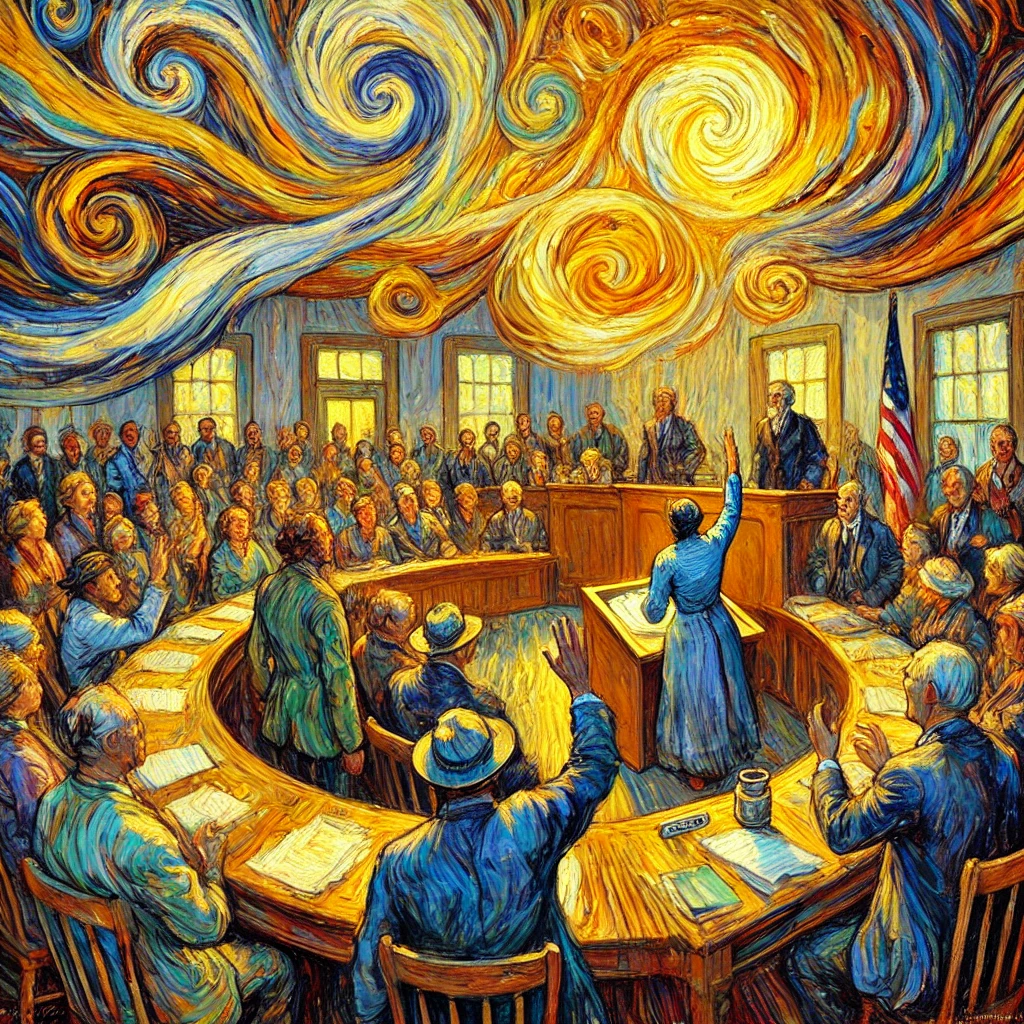
“My name is Mabel Dean,” she said calmly.
“And I would like to begin by acknowledging that I voluntarily reported my own yard sign violation.”
A teenager whispered from the back:
“Legend.”
Mabel ignored it.
“I did so because I believe rules matter,” she continued.
“But I did not do so in order to participate in nonsense.”
Councilman Purdy leaned forward.
“The issue is not nonsense, ma’am. The issue is compliance—”
Mabel turned her head.
“I was not finished, Leon.”
The room erupted in laughter.
Mabel continued.
“You’ve asked citizens to explain eleven years of selective enforcement in three minutes.”
She placed both hands on the lectern.
“That is not a comment period.”
“That is compression.”
The timer beeped.
Mabel did not move.
“No,” she said.
The room froze.
“You may note for the record,” she continued, “that I am exceeding my allotted time in the same spirit that this town has exceeded its patience.”
Boot Barnes slapped his knee so hard the sound echoed.
After that, the meeting loosened like a rope whose knot had been cut.
Speeches expanded.
A mechanic argued that if inflatable tube men were illegal because they moved in the wind, then campaign promises should also be inspected for wind response.
A barber said the real issue wasn’t signs—it was who got to be seen.
A grandmother explained that her grandson’s graduation sign had made her cry every time she drove past it.
The timer beeped repeatedly.

Act III – The Meeting Exceeds Its Limits
But the beeps no longer carried authority.
They sounded like polite suggestions from a microwave nobody intended to open.
Then Boot Barnes took the microphone.
“My name is Boot Barnes,” he said.
“And my concern tonight is area.”
Councilman Hince frowned.
Boot continued.
“Not just sign area. Civic area.”
Laughter.
“For weeks we’ve been arguing about how much visible surface a person may place on their own property.”
He leaned closer to the microphone.
“But tonight we’ve learned something.”
The room quieted.
“Every grievance seeks the space it requires.”
A murmur moved through the chairs.
“When you don’t allow enough room,” Boot said, “it doesn’t disappear.”
“It wrinkles.”
“It bunches.”
“It flaps at the corners.”
Sheriff Peeler stared at the ceiling.
Boot continued.
“This hearing itself is now a prohibited sign.”
The room exploded.
“Portable.”
“Promotional.”
“Oversized.”
“Insufficiently anchored.”
The timer beeped again.
Boot ignored it.
“And I’ll go one better,” he said.
“If public comment has a size limit, then some folks on this council have exceeded it in barber shops and parking lots for years.”
Councilman Purdy flushed.
Miss Darlene rubbed her temples.
Boot finished.
“Public comment exceeded banner size limits tonight because the town spent eleven years storing oversized meaning in undersized language.”
The applause shook the room.

Act III – The Meeting Exceeds Its Limits
Act IV – The Room Becomes the Banner
The speeches continued.
A teacher named Miss Lorene Bivins stepped forward.
She spoke quietly.
“My concern is compression.”
The room listened.
“A sign is never just a sign,” she said.
“It is identity, memory, commerce, celebration, grief.”
She adjusted her glasses.
“And public comment is never just comment.”
“It is what spills out when systems give people too little space.”
The timer beeped.
She ignored it.
“You invited a town to explain visibility in three minutes.”
“That was never going to work.”
The room stayed silent.
Even Boot.
Miss Bivins concluded.
“You created a rhetorical zoning failure.”
Then she stepped away.
For several seconds nobody spoke.
Then applause broke out so loud the gavel barely mattered.
And something shifted.
Citizens began speaking from their seats.
Short statements.
Fragments.
“My sign helps customers find me.”
“My banner tells people the church is alive.”
Act IV – The Room Becomes the Banner
“My grandson graduated.”
“My problem is selective enforcement.”
“My problem is embarrassment.”
“My problem is who gets told their existence is too visible.”
Sheriff Peeler stepped forward but stopped.
There was no chaos.
Just accumulation.
A hundred small declarations rising like flags.
Then Miss Darlene reached forward and switched off the timer.
The room noticed immediately.
She stood slowly.
“For the record,” she said, “this meeting has exceeded all anticipated bounds.”
Nobody laughed.
She continued.
“It is also clear that three minutes was never sufficient.”
Councilman Purdy stared at her.
“That recommendation is not on the agenda.”
Miss Darlene looked at him calmly.
“Neither was this level of civic compression failure.”
Clovis clutched his binder like it was history happening.
Miss Darlene finished.
“I recommend extending written comments for thirty days and scheduling a second hearing before further enforcement actions.”
Reverend Gentry began clapping.
Soon the entire room was standing.
Not because the ordinance was gone.
But because the town had finally been allowed to speak at its natural size.
Act IV – The Room Becomes the Banner
Epilogue – The Measurements Change
Later that night the annex parking lot filled with clusters of conversation.
Boot Barnes explained to two teenagers that “government is mostly measuring the wrong thing with confidence.”
Clovis declared the evening “a landmark procedural anomaly.”
Mabel Dean hugged the teacher who had said the quiet truth.
Mayor Pickett stood beside Miss Darlene near the door.
“This is going to get bigger before it gets smaller,” he said.
Miss Darlene nodded.
“That’s how stored-up things behave.”
He looked out across the parking lot where people were still talking under the streetlights.
“It isn’t really about the signs anymore, is it?”
Miss Darlene shook her head.
“No.”
“That’s just what fit on the agenda.”

Epilogue – The Measurements Change
Disclaimer
The events reported in the Sequatchie Crossing Dispatch should be understood as stories of a fictional town whose citizens possess an unusual combination of patience, stubbornness, humor, and civic enthusiasm.
Any resemblance to real meetings, real ordinances, or real debates about banners, signs, visibility, or public comment is purely coincidental—though residents of small towns everywhere may find the circumstances strangely familiar.

Disclaimer – Public Comment Exceeds Banner Size Limit
Real Places Behind the Ruckus – From The Dunlap Directory

Real Places Behind the Ruckus – From The Dunlap Directory
Yes, this story was fictional; even the parts that weren’t true. These places? Absolutely real. Stop by, support local, and keep the Wi-Fi away from livestock:
- Dunlap Tennessee Overview
- Smalltown Ceramics
- Subway
- Kats Car Wash Automatic
- Chimneys State Natural Area
- Wendy’s
- Affordable Chiropractic, PC
- Local Depot
- Dairy Queen
- Carbon Black Global
- County Veterans Service Offices
- Sequatchie Valley TN
- Cooperative Response Center
- Sequatchie Valley Real Estate LLC
- Red’s Innovations TN
- Jason Lewis’ Dunlap SuperCenter

Real Places Behind the Ruckus – From The Dunlap Directory
At Sequatchie Crossing, we tell the stories of Sequatchie Crossing.
Please share this post with your friends, family, or business associates who may want help telling the stories of their legacy.



0 Comments