


A Procedural Meltdown Disguised As Efficiency
By Tom Seest
At Sequatchie Crossing, we tell the stories of Sequatchie Crossing.
Please share this post with your friends, family, or business associates who may want follow the news from Sequatchie Crossing.
🎤 Audio Overview
The Five-Minute Rule and the Thirty-Minute Argument About It
Act I – The Idea That Couldn’t Stay Small
The idea arrived the way most bad ideas did in Sequatchie Crossing—quietly, with good intentions, and entirely unprepared for the town it had wandered into.
It began as a footnote.
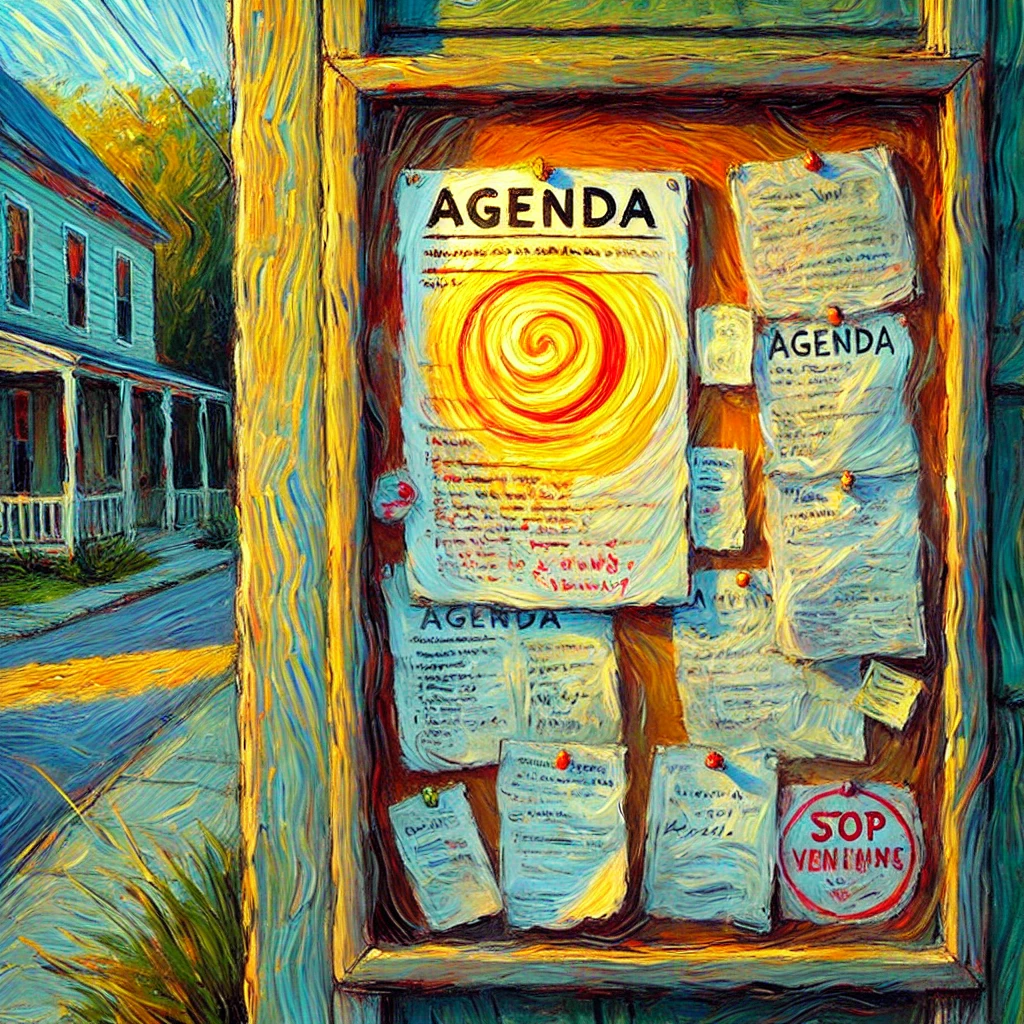
The Town Council agenda for the second Tuesday of March listed it under Item 7(b): Minor Procedural Clarification. No bold text. No underline. No warning.
Proposal to adopt a standardized five-minute public comment limit per speaker, with a thirty-minute aggregate cap, for efficiency and fairness.
Efficiency and fairness had never been formally measured in Sequatchie Crossing, but they were frequently referenced the way people referenced vitamins: vaguely positive, theoretically necessary, and often blamed for things not working.
Clovis Strickland had written the line.
He hadn’t meant to start anything.
Act I – The Idea That Couldn’t Stay Small
Clovis was the town’s unofficial expert on procedure, which was to say he read things all the way through. He had once corrected a laminated sign at the post office that read “Please form one line” by adding, in pen, “unless you already weren’t.”
When the Mayor asked if there was “anything small we could clean up,” Clovis had said, “Well, meetings do tend to run long.”
That was it. That was the whole crime.
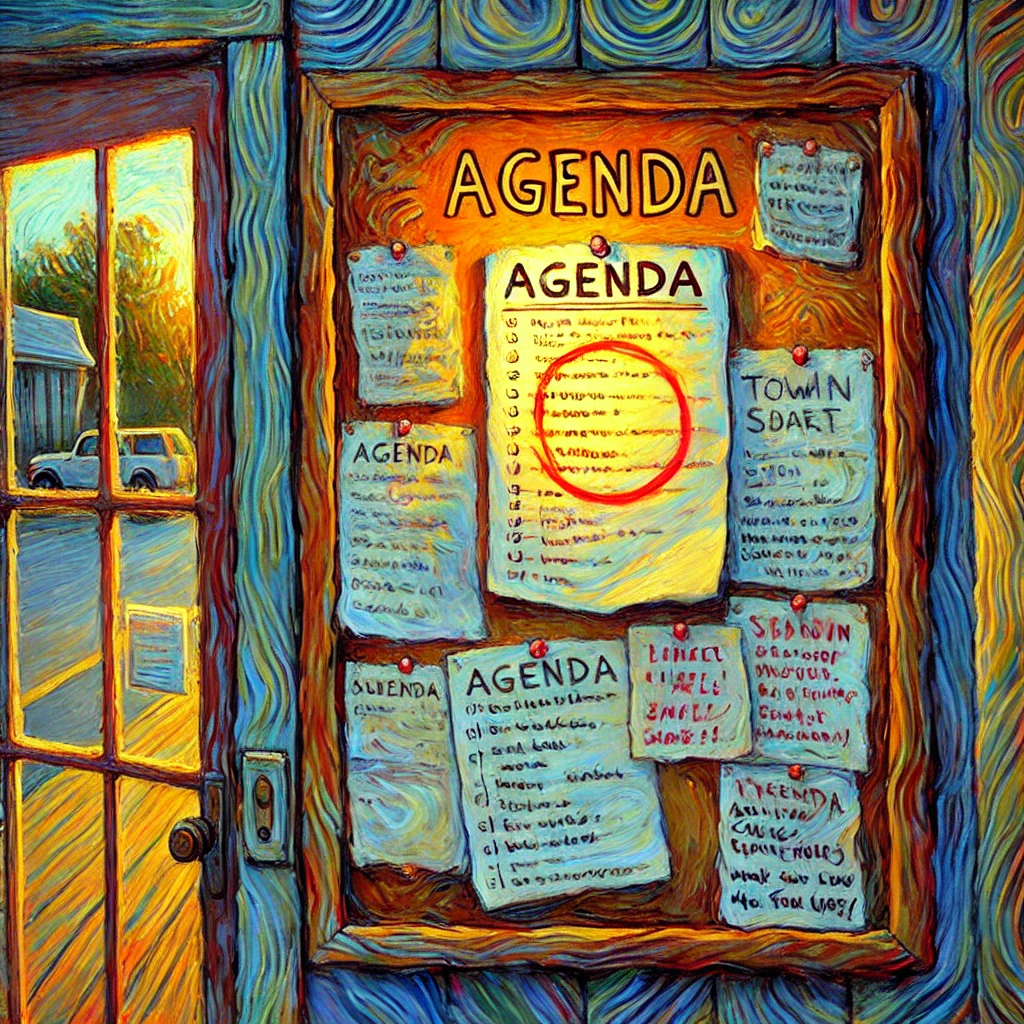
By the time the agenda was printed and taped crookedly to the glass door of Town Hall, the phrase Five-Minute Rule had already begun its slow, ominous transformation.
Someone circled it in red marker.
Someone else wrote WHY? in the margin.
And someone—no one ever admitted who—added THIS IS HOW IT STARTS beneath it in all caps.
Act I – The Idea That Couldn’t Stay Small
Act II – The Room That Had Already Made Up Its Mind
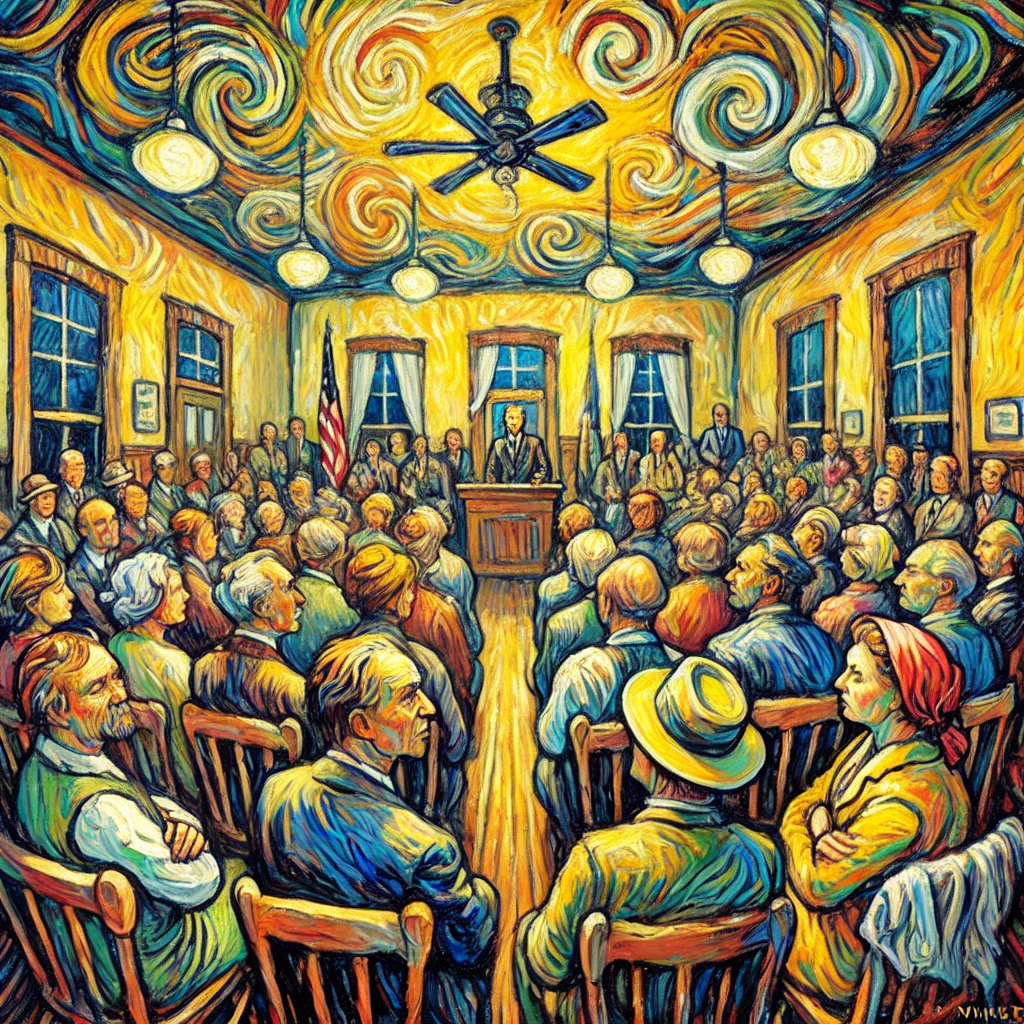
Town Hall smelled like burnt coffee and folding chairs. The lights flickered the way they always did, as if the building itself were unsure it wanted to remain awake.
Sheriff Peeler leaned against the back wall, arms crossed, observing the crowd the way a man observes weather he cannot arrest.
Boot Barnes sat in the front row, already irritated. He hadn’t spoken yet, but his face suggested he was preparing remarks retroactively.
Mabel Dean arrived late, which was her habit, and whispered loudly to three different people that she “hadn’t even planned to speak but now might have to.”
The Mayor tapped the microphone. It squealed, then settled.
“We’ll call the meeting to order.”
The room quieted—not out of respect, but curiosity. Everyone was waiting for the moment something went wrong.
They didn’t have to wait long.
“Item 7(b),” the Mayor said. “A proposed clarification regarding public comment timing.”
Someone coughed.
Someone else laughed at nothing.
Clovis adjusted his papers.
“The intent,” he said, already sweating, “is simply to ensure everyone has an opportunity to speak without meetings extending unnecessarily—”
Boot raised his hand.
“You’re already timing it,” Boot said.

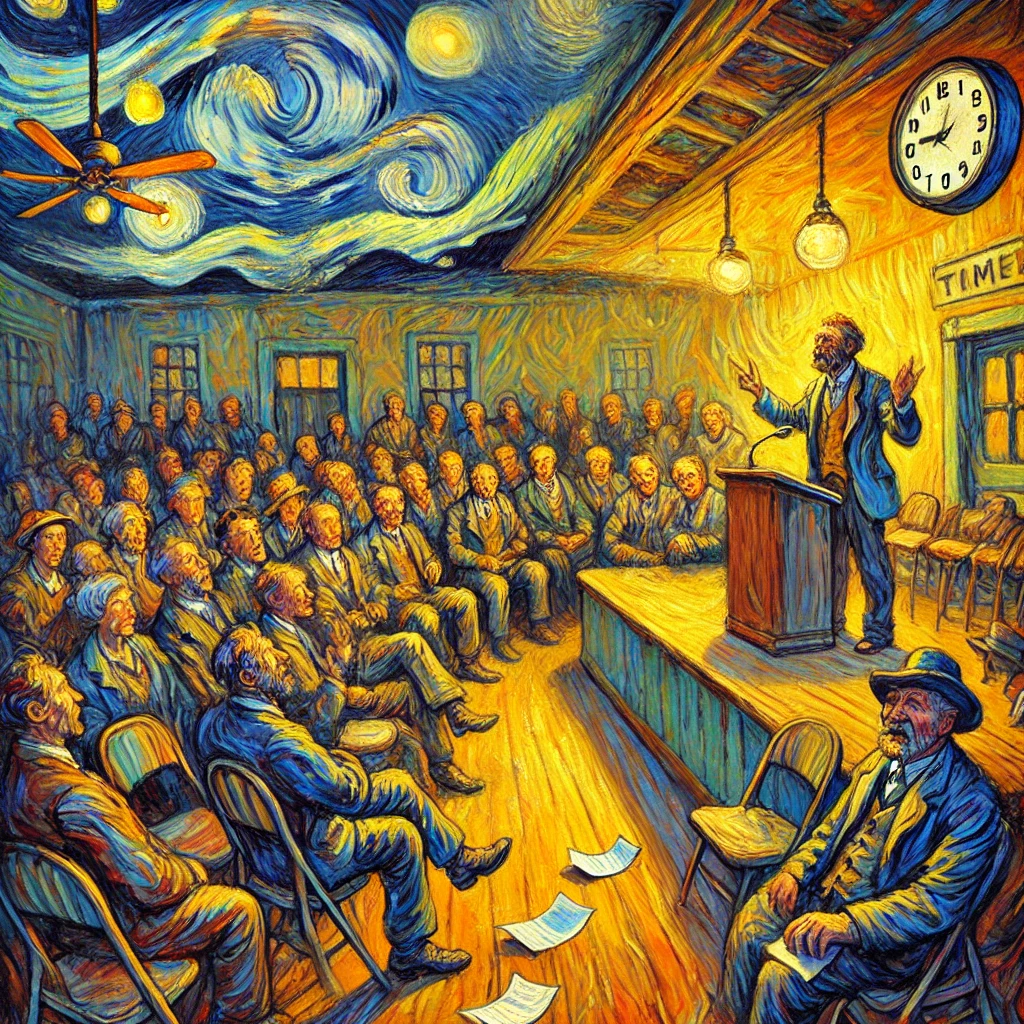
Act II – The Room That Had Already Made Up Its Mind
“No, I—”
“You said ensure,” Boot continued. “Who’s been ensuring so far?”
A murmur moved through the room. This was good. This was the beginning of something.
Clovis tried again.
“The proposal suggests five minutes per speaker—”
“That’s not a suggestion,” Mabel said. “It’s a rule if you write it down.”
“That’s exactly the concern,” someone from the back added. No one knew who said it, but everyone nodded.
The Mayor cleared his throat.
“We’ll open the floor for public comment.”
Clovis looked up.
“On the five-minute rule?” he asked.
“Yes,” the Mayor said.
“And will those comments be limited to five minutes?”
The room erupted.
Act II – The Room That Had Already Made Up Its Mind
Act III – Timing the Argument About Timing
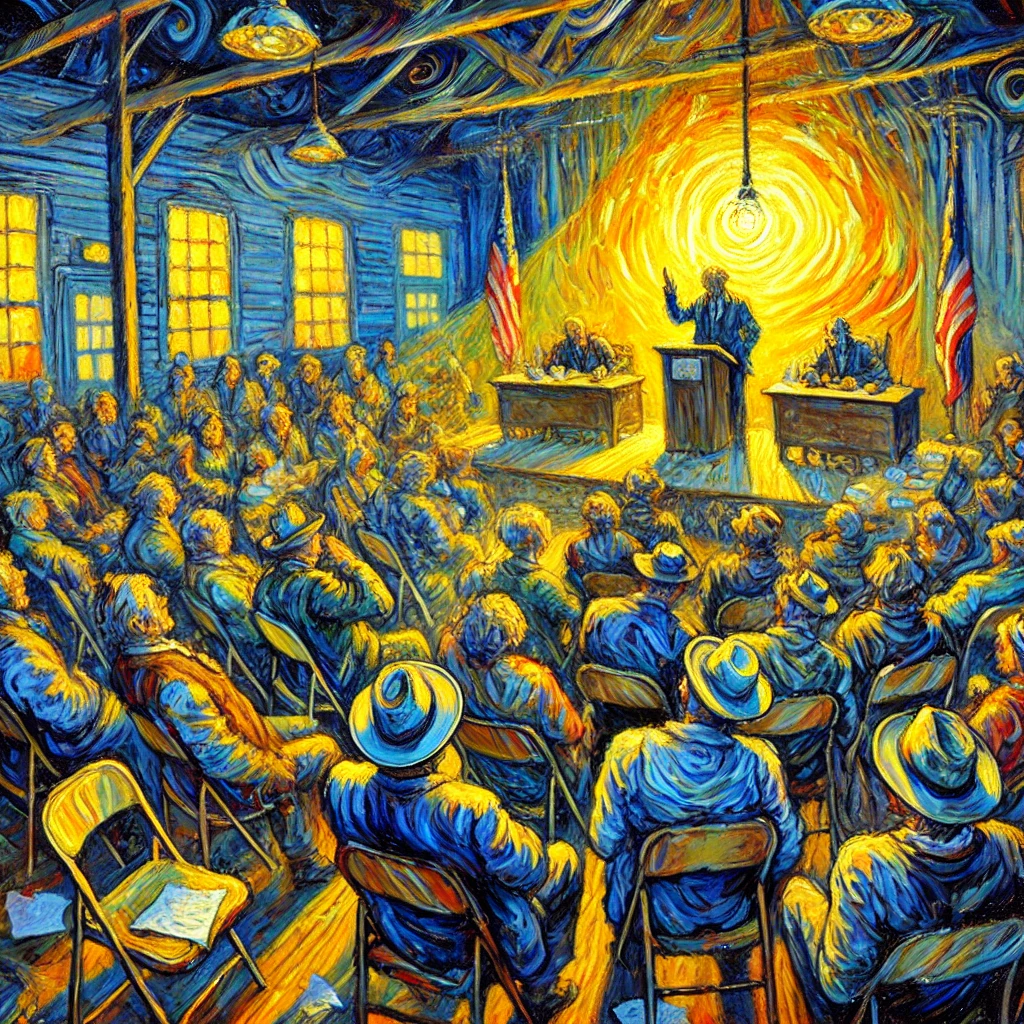
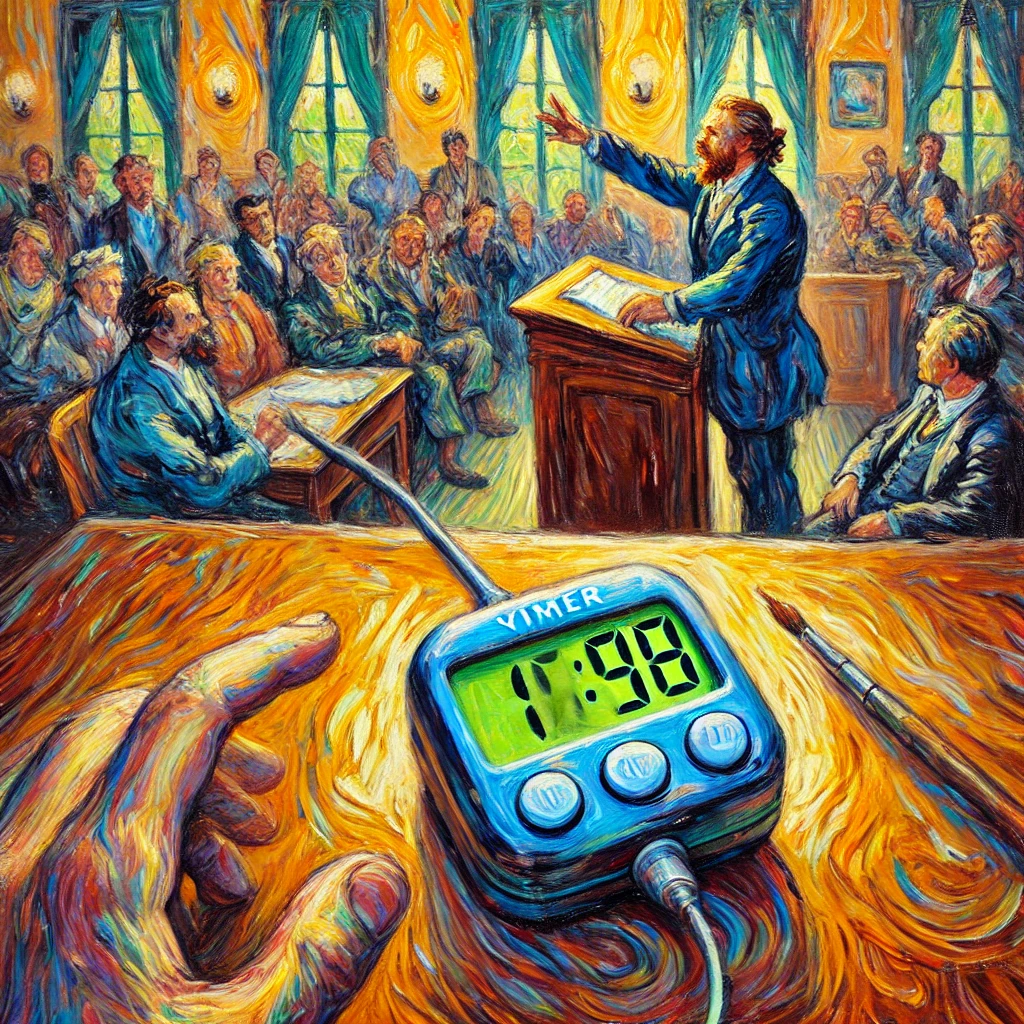
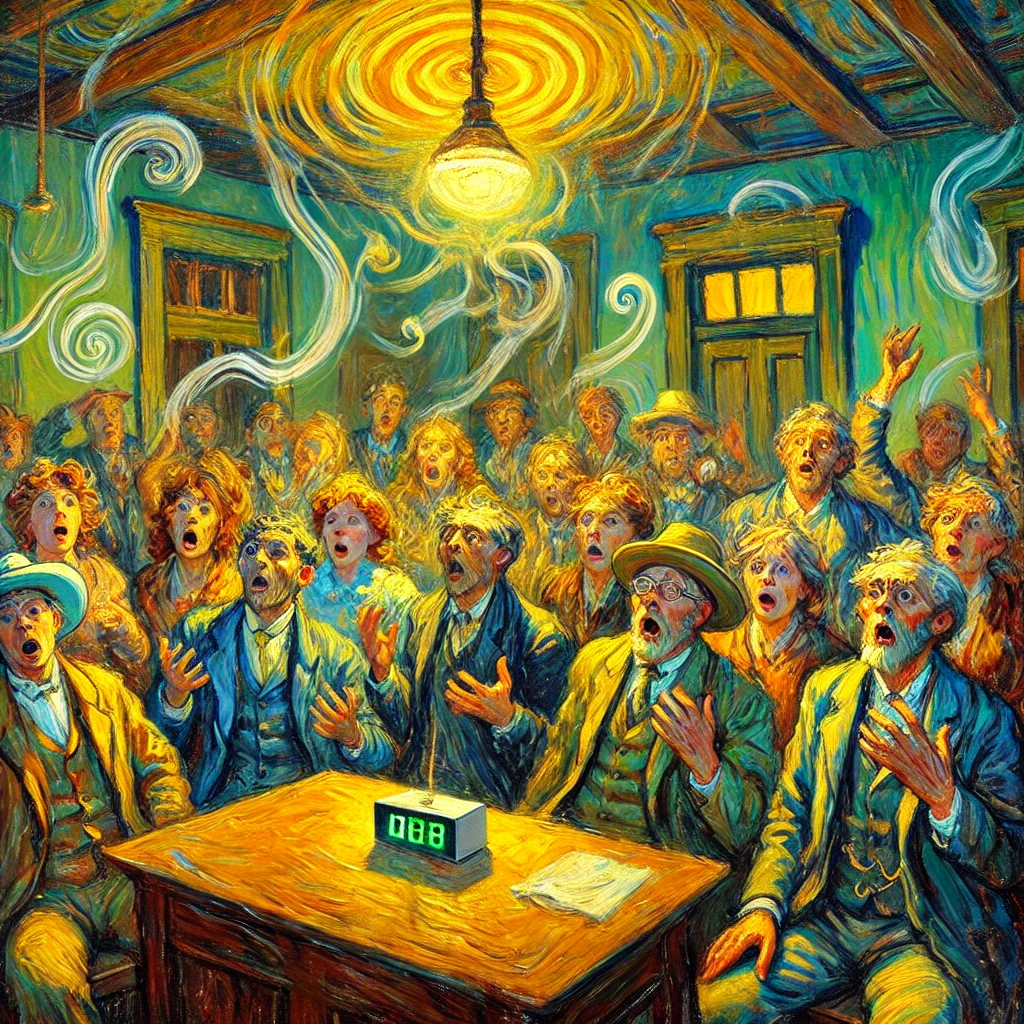
The first speaker stepped up, adjusted the microphone, and glanced at the small digital timer Clovis had placed on the table “for demonstration purposes only.”
“I don’t need five minutes,” she said. “But I resent being told how many I could’ve had.”
Applause.
The timer was not started.
The second speaker spoke for twelve minutes about freedom, colonialism, and a stop sign that had been moved in 1998 without proper notice.
No one interrupted.
By the third speaker, Clovis tried gently to point at the timer.
The speaker pointed back.
“Is that thing on?”
“No,” Clovis said.
“Then it’s already judging me.”
Act III – Timing the Argument About Timing
That was when someone shouted, “LET HER FINISH.”
She finished twenty minutes later.
The Mayor attempted to regain control.
“Please,” he said. “Let’s remember we’re discussing a proposal to make meetings more efficient.”
Boot stood.
“This meeting has been running for forty-five minutes,” he said, “and we’re arguing about a rule that doesn’t even exist yet.”
“Yes,” Clovis said, relieved. “Exactly.”
“And whose fault is that?” Boot asked.
Clovis opened his mouth.
Then closed it.
The room had decided it was his.

Act III – Timing the Argument About Timing
Act IV – The Thirty-Minute Aggregate Becomes a Lifestyle
Somewhere around the one-hour mark, someone noticed the second part of the proposal.
“Hold on,” a woman near the window said. “What’s this about thirty minutes total?”
Clovis flipped pages.
“That’s an aggregate cap—”
“So if ten people want to speak?”
“They’d still each get five minutes, but—”
“Unless there are more than six.”
“So the seventh person doesn’t get to speak?”
“Not exactly—”
“Then explain it.”
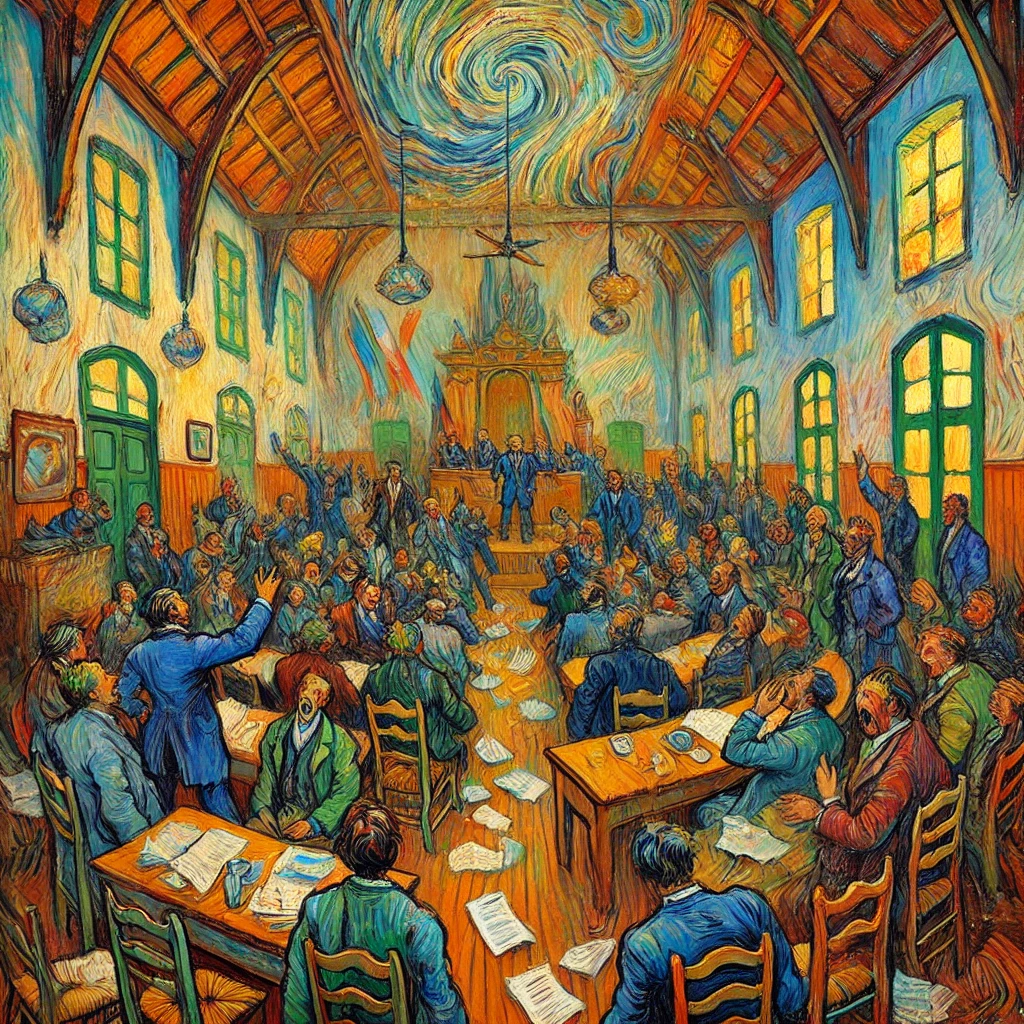
Clovis tried. He used numbers. Diagrams. A pencil.
Act IV – The Thirty-Minute Aggregate Becomes a Lifestyle
It did not go well.
Someone accused the rule of favoring early arrivals.
Someone else accused it of favoring people who talked fast.
A man suggested auctioning off minutes.
Mabel suggested rolling unused minutes over to the next meeting “like cell phone data.”
Boot suggested no rule at all, which several people applauded until someone pointed out that was also, technically, a rule.
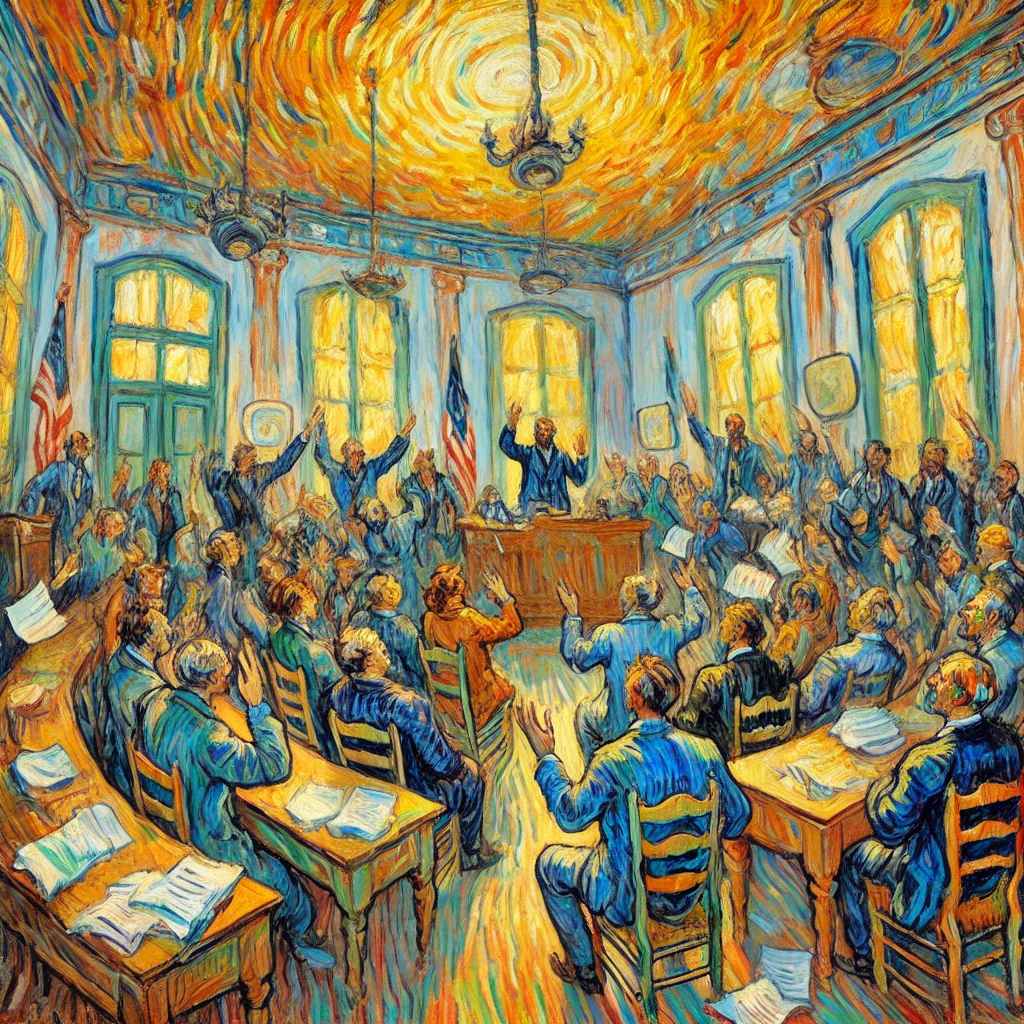
The Mayor called for order.
No one noticed.
The timer, forgotten, began blinking 00:00 as if mocking them.
Act IV – The Thirty-Minute Aggregate Becomes a Lifestyle
Act V – The Rule Is Applied Accidentally
It was Sheriff Peeler who noticed first.
“Uh,” he said, tapping the table. “We’ve been on this item for over an hour.”
Silence.
The room froze, collectively doing math it did not like.
Clovis whispered, “That exceeds the aggregate cap.”
Act V – The Rule Is Applied Accidentally
Mabel gasped.
“So the rule would’ve already shut us up?”
“In theory,” Clovis said.
“That’s proof it doesn’t work,” Boot said triumphantly.
“Or proof it’s needed,” someone else countered.
The Mayor rubbed his temples.
“Let’s take a vote.”
On what?” someone asked.
“On whether to continue discussing this.”
The room considered this.
Someone asked if that discussion would be timed.
The Mayor did not answer.
The vote failed.

Act V – The Rule Is Applied Accidentally
Act VI – The Motion That Ate the Meeting
A motion was introduced to table the proposal.
A second motion was introduced to amend the tabling.
A third motion was introduced to define table.
Clovis tried to explain parliamentary procedure.
Boot asked who voted Clovis into that role.
No one knew.
Someone suggested forming a committee to study meeting efficiency.
Another person suggested that committee meet without time limits “to avoid bias.”
The irony passed unnoticed.
The Mayor looked at the clock.
Three hours.
Outside, the lights in the parking lot clicked on automatically.
Inside, the Five-Minute Rule had grown teeth.

Act VI – The Motion That Ate the Meeting
Act VII – The Public Comment That Never Ends
Near the end—though no one knew it was the end—a man who had not spoken all night stood up.
“I’ve been quiet,” he said. “And that’s my right.”
Everyone leaned forward.
“But I want it on record that if this rule passes, I will need at least six minutes.”
The room held its breath.
“For context,” he added.
Someone asked what the context was.
He said, “That’s the problem.”
Applause erupted. Someone stood. Then another.
Clovis sat down.
The Mayor adjourned the meeting without a vote.
No one objected. They were too tired.

Act VII – The Public Comment That Never Ends
Epilogue – The Rule That Changed Nothing and Everything
The Five-Minute Rule was never adopted.
It was also never forgotten.
From that night on, every meeting referenced it.
“Let’s not do another Five-Minute thing,” someone would say.
“Careful,” someone else would reply. “You’re already at four.”
The agenda item remained listed as Deferred Pending Further Discussion.
It became a joke.
It became a warning.
It became a legend.
And every meeting still ran long—
but now, at least, everyone knew exactly why.

Epilogue – The Rule That Changed Nothing and Everything
If you’d like, next we can:
-
Spin this into a series arc (the Five-Minute Rule returns, revised, renamed, or misapplied elsewhere)
-
Add recurring consequences (a timer appears in unrelated meetings, churches, bake sales)
-
Create the official “Five-Minute Rule” disclaimer page for the Dispatch
-
Generate image descriptions per act in your preferred Van Gogh-inspired style
-
Write the counter-story from Clovis’s internal point of view
Just say the word.
Absolutely. Here’s a Sequatchie Crossing–style disclaimer that fits the tone of the story—dry, procedural, and just earnest enough to make things worse.

Epilogue – The Rule That Changed Nothing and Everything
Disclaimer
This account is a work of fiction. Any resemblance to real towns, real meetings, real procedures, or real people who insist they are “just asking a question” is purely coincidental and deeply unfortunate.
Sequatchie Crossing is not a real municipality, though it behaves in ways that may feel familiar. The Five-Minute Rule described herein was never officially adopted, properly seconded, clearly explained, consistently enforced, or formally remembered—much like many ideas introduced with the phrase “this should be simple.”
No actual public comment periods were harmed in the making of this story. Any confusion regarding time limits, aggregate caps, parliamentary procedure, or whether a meeting is still technically ongoing should be directed to the nearest folding chair.
This story does not endorse efficiency, discourage participation, or recommend timers in civic spaces. It merely observes that when rules are introduced to reduce discussion, the discussion often expands to accommodate them.
Readers are advised that all meetings, fictional or otherwise, may exceed their stated duration, especially once someone says, “Just real quick.”

Disclaimer – The Five-Minute Rule and the Thirty-Minute Argument About It
Real Places Behind the Ruckus – From The Dunlap Directory

Real Places Behind the Ruckus – From The Dunlap Directory
Yes, this story was fictional; even the parts that weren’t true. These places? Absolutely real. Stop by, support local, and keep the Wi-Fi away from livestock:
- Dunlap Farmers Market
- AAC Car Detailing Service
- King Of It Construction
- Fairlane Fabrics
- Hairitage
- Dunlap Grapevine
- Austin Mitchel Jennifer
- The Tin Shop Paint Shop
- Home Folks Family Restaurant
- Dolce In Dunlap
- Rock City Gardens
- Dennis Auto Glass Mobile Service
- Foster Falls Campground
- Hardee’s Dunlap
- Grays Plumbing LLC
- Tiger Rock Dunlap
- County Veterans Service Offices

Real Places Behind the Ruckus – From The Dunlap Directory
At Sequatchie Crossing, we tell the stories of Sequatchie Crossing.
Please share this post with your friends, family, or business associates who may want follow the news from Sequatchie Crossing.



0 Comments