


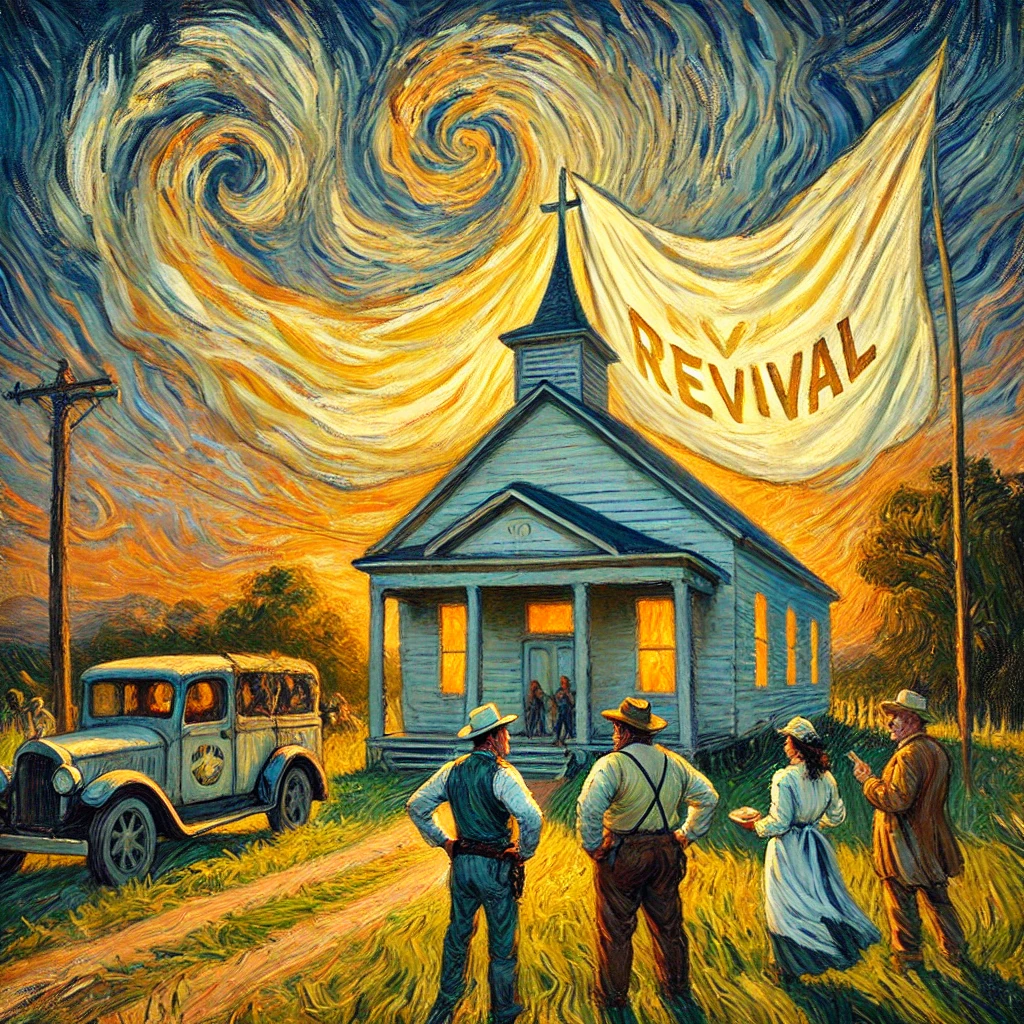
Temporary Salvation Meets Permanent Code
By Tom Seest
At Sequatchie Crossing, we tell the stories of Sequatchie Crossing.
Please share this post with your friends, family, or business associates who may want help telling the stories of their legacy.
🎤 Audio Overview
The Church Banner Problem
The Church Banner Problem
Act I – The Banner That Meant Well
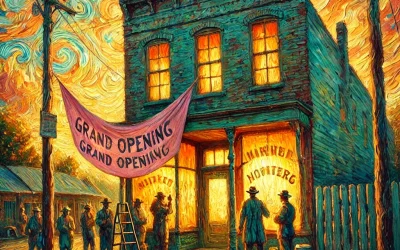
The banner appeared on a Tuesday morning, which was the day most things in Sequatchie Crossing appeared.
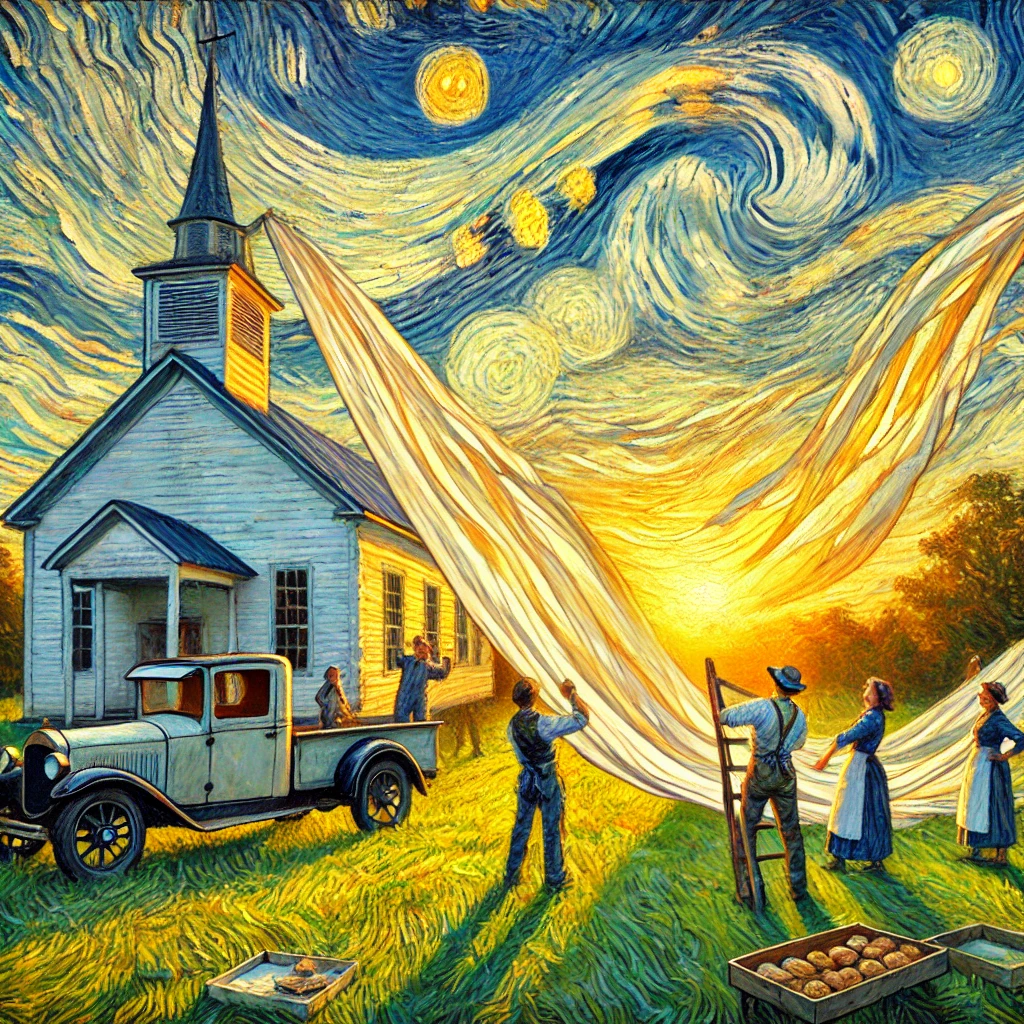
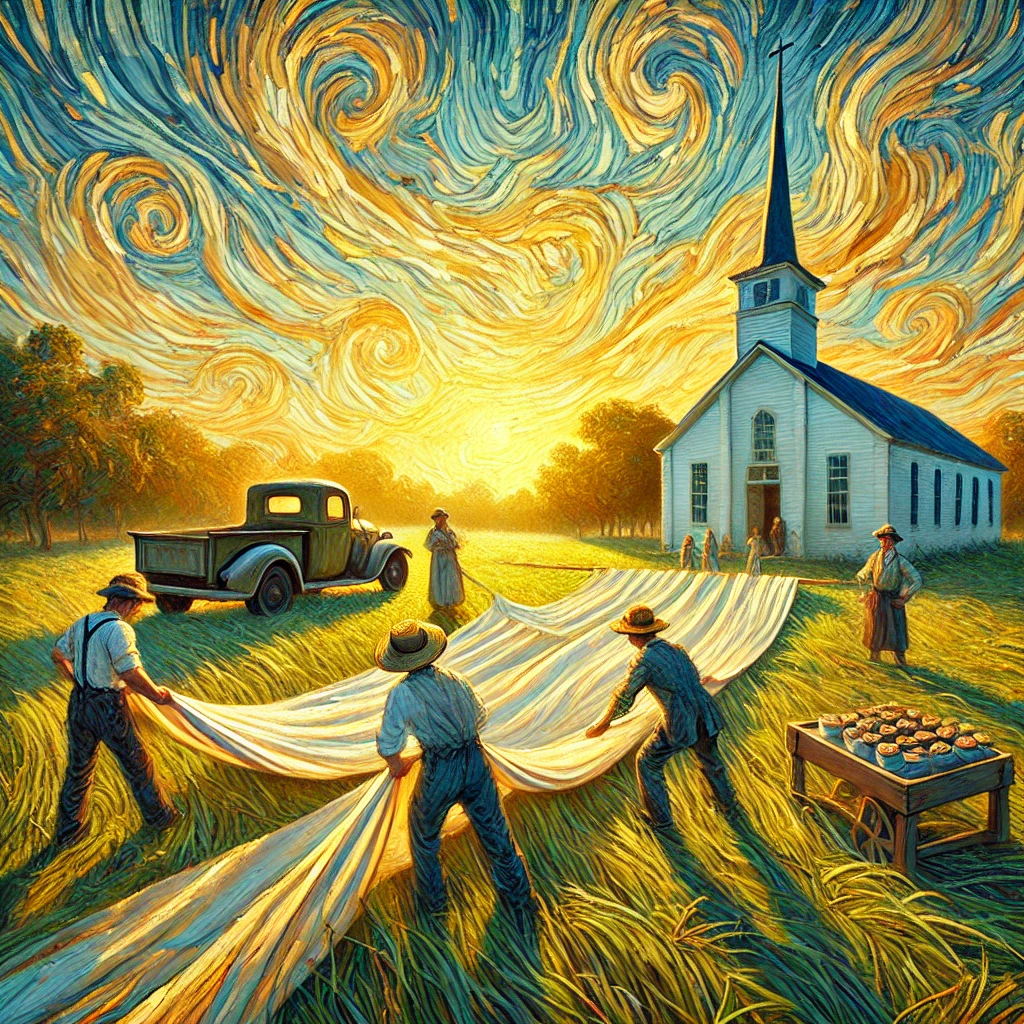
It was not hung by committee, though the committee would later claim responsibility. Nor was it discussed in advance at a meeting, though someone would later insist it had been. In truth, the banner had been quietly unfurled at dawn by two well-meaning members of First Fellowship Church who believed they were doing something both helpful and seasonal.
The banner read:
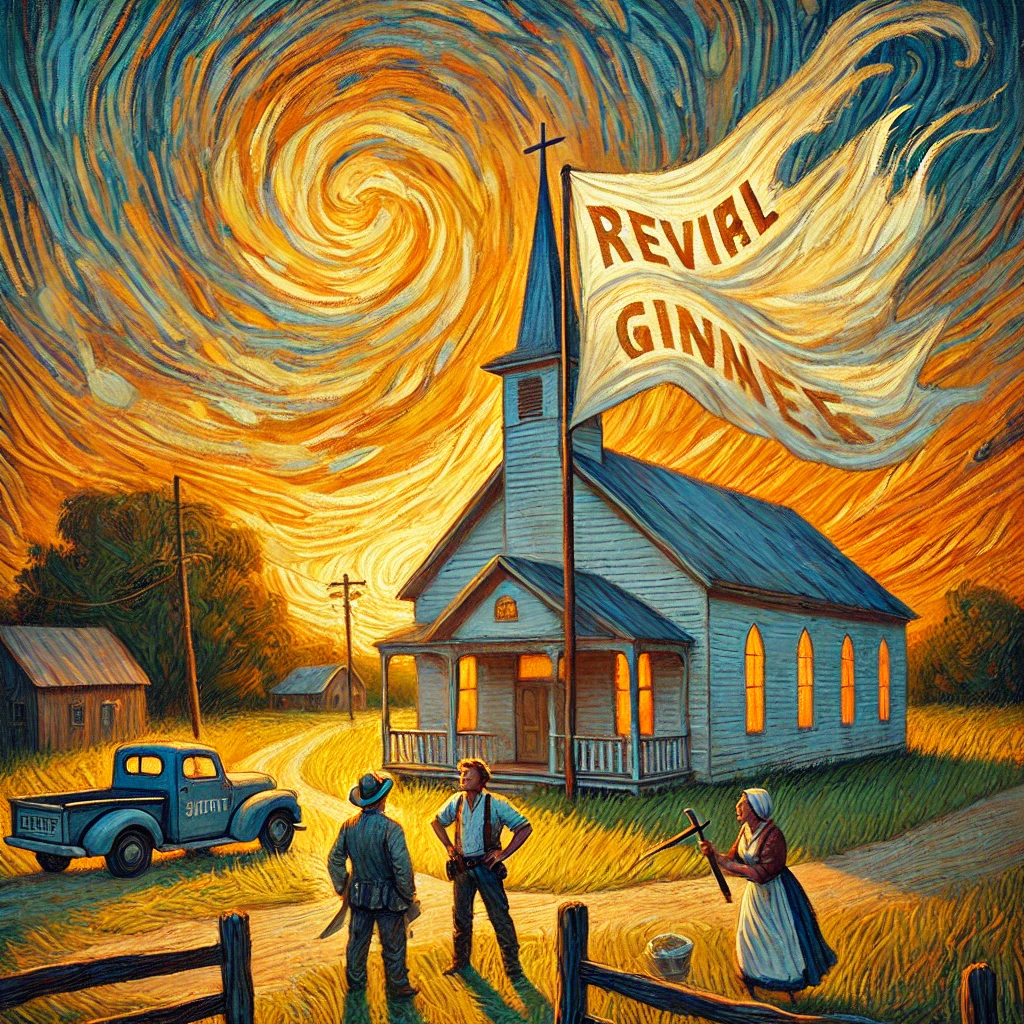
“REVIVAL THIS WEEK — ALL WELCOME”
The lettering was bright red on a white background, which made it visible from the road that curved past the churchyard like a lazy thought. Two wooden stakes held the banner upright in the grass between the church sign and the gravel parking lot.
It fluttered in the early breeze with a hopeful sound.
Inside the church fellowship hall, Mabel Dean was arranging muffins on a plate.
Mabel believed strongly in two things: the importance of hospitality and the power of baked goods to settle disputes before they started.
She had been told the revival was expected to draw visitors from three counties.
Act I – The Banner Appears
“You can’t greet a stranger with an empty plate,” she said aloud, placing the last molasses muffin beside the others.
Across the room, Boot Barnes leaned against the coffee machine and watched the banner through the window.
Boot had not yet said anything about it.
Boot Barnes believed that if a thing was going to cause trouble, it would eventually introduce itself without assistance.
Sheriff Peeler arrived shortly after nine.
He was not there because of the banner. At least, not originally.
He had come to borrow the church’s folding tables for a charity fish fry scheduled later that week. The sheriff had always believed it was easier to ask forgiveness for borrowing church property than permission from the town council.
As he stepped out of his cruiser, he noticed the banner.
Sheriff Peeler squinted.
He had recently spent several days measuring portable signs across town with a tape measure that had not been used since 1998. The town’s long-dormant sign ordinance had awakened unexpectedly, and ever since, Sheriff Peeler had been living in a world of yard signs, banners, and the legal definition of “temporary.”
The banner at the church was unmistakably a banner.
He stood there a moment longer than necessary.
Then he sighed and walked inside.
Act I – The Banner Appears
Act II – The Language of Ordinance
The first mention of the problem occurred over coffee.
Sheriff Peeler cleared his throat gently.
“Mabel,” he said.
“Yes, Sheriff?”
“You folks got a banner out front.”
Mabel smiled.
“Isn’t it lovely? The revival starts Thursday.”
Boot Barnes stirred his coffee slowly.
Sheriff Peeler shifted his hat in his hands.
“Well,” he said carefully, “the thing is… banners like that fall under portable signage.”
Boot glanced up.
“Portable to who?” he asked.
Sheriff Peeler hesitated.
“That’s what the ordinance says.”
Boot nodded thoughtfully.
“That ordinance also says the town bandstand can’t exceed twelve feet in height,” he said. “And we all remember what happened there.”
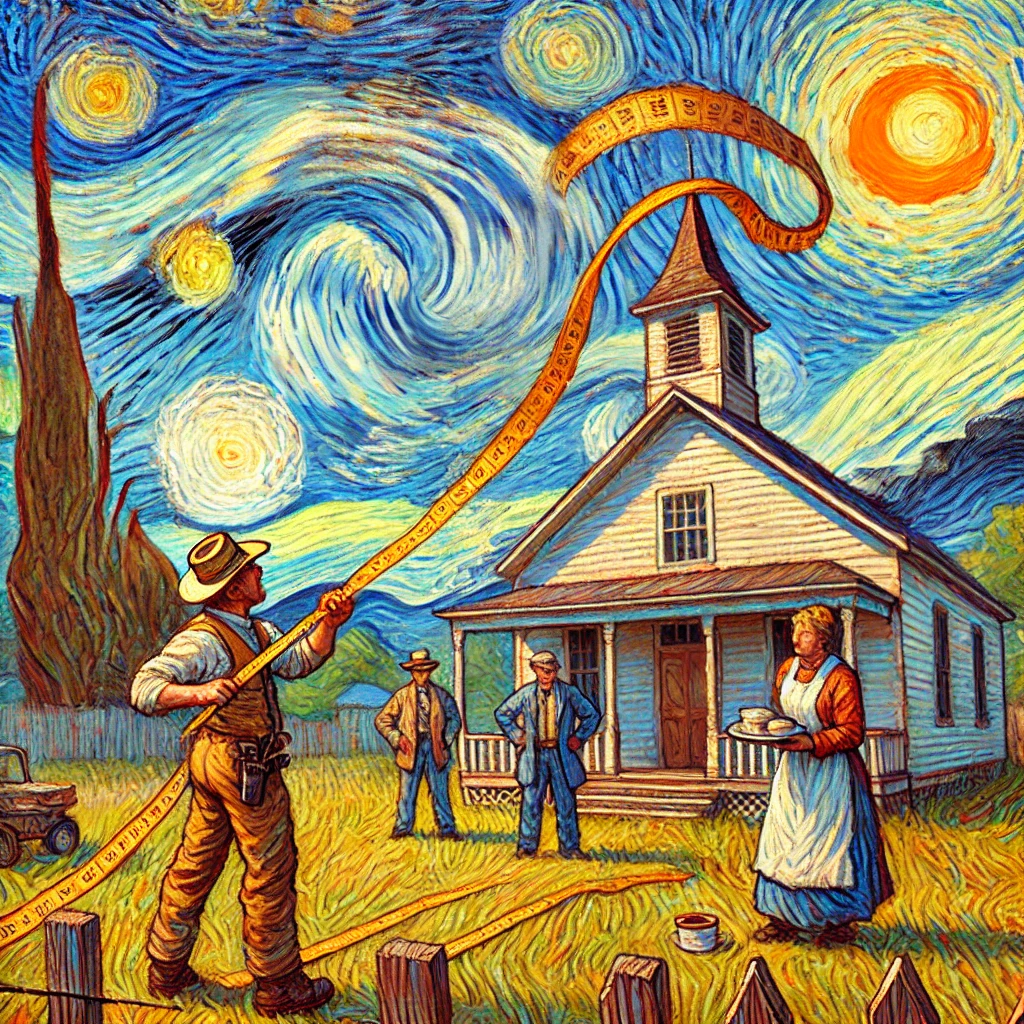
Act II – The Language of Ordinance
The bandstand had once been measured at thirteen feet and three inches. The town solved the problem by placing a decorative flower box underneath one corner until the measurement looked right.
Mabel frowned.
“I don’t see the problem,” she said.
Sheriff Peeler explained.
The sign ordinance—passed eleven years earlier and enforced approximately never—prohibited most portable banners unless they met certain criteria involving permits, duration, and placement.
It had recently begun to matter.
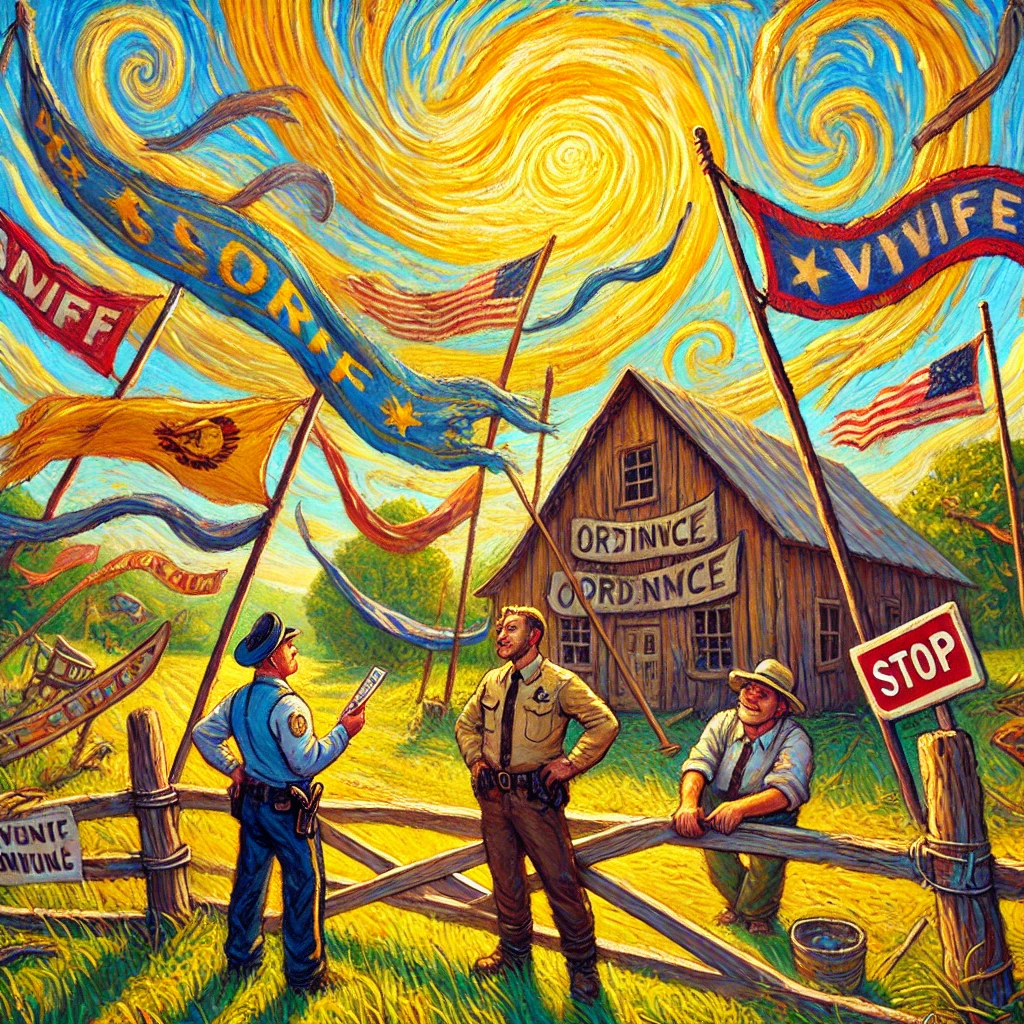
Businesses across town were quietly removing their banners.
The inflatable tube man outside Carl’s Hardware had already received a citation.
Boot leaned back.
“So you’re telling me,” he said, “that salvation now requires a permit?”
Sheriff Peeler sighed again.
“Boot, I didn’t write the ordinance.”
“No,” Boot said kindly. “You just measure it.”
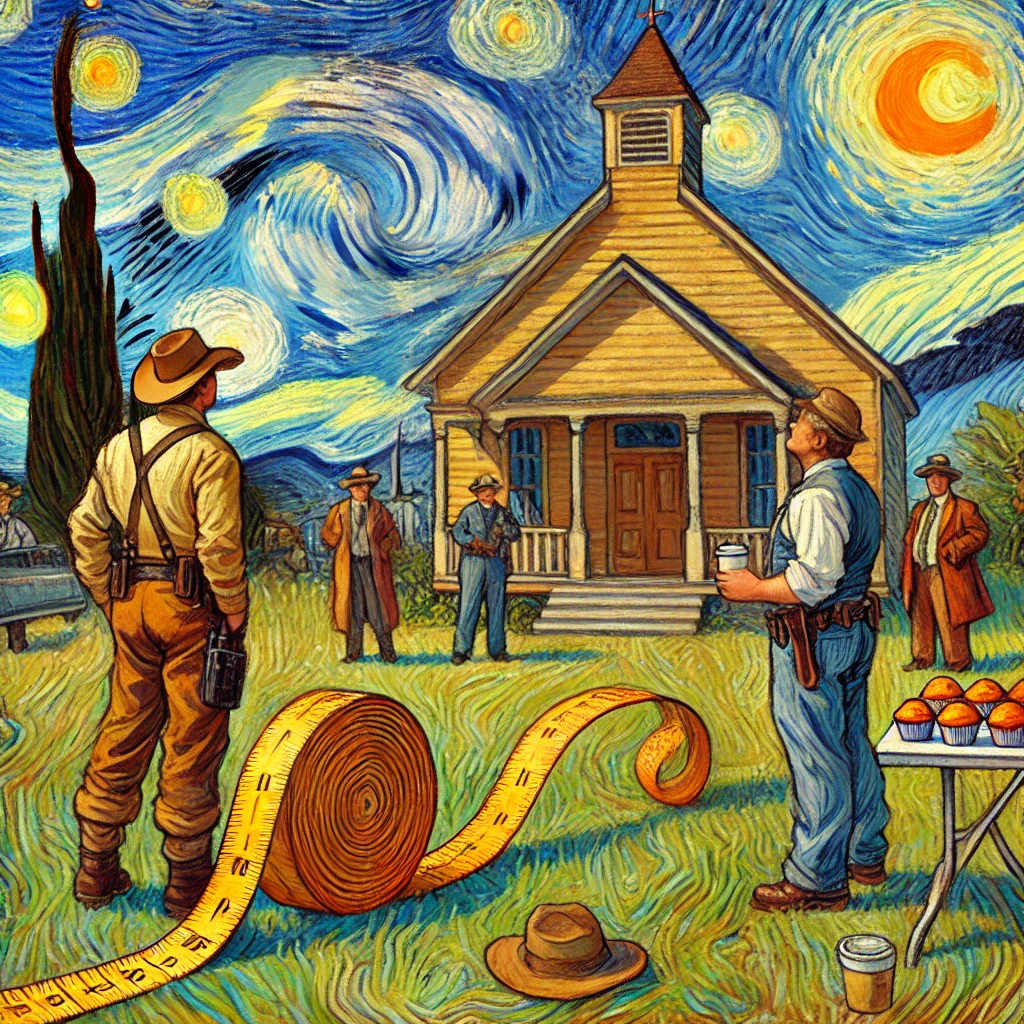
Act II – The Language of Ordinance
Act III – The Meeting After Choir Practice
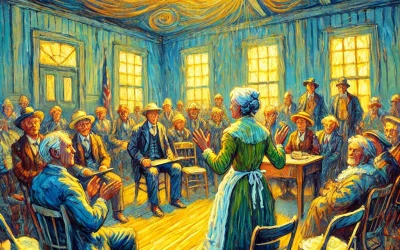
The church council gathered that evening.
It was technically a regular meeting, but the banner had already become the central topic.
Pastor Gentry opened with prayer.
“Lord,” he said gently, “grant us wisdom as we navigate matters both earthly and… somewhat bureaucratic.”
Clovis Strickland sat near the back with a notebook.
Clovis believed that every problem eventually revealed itself as a documentation issue.
The council discussed the banner.
“It’s temporary,” said Deacon Harold.
“Revival lasts four days.”
“But the ordinance doesn’t define temporary,” Clovis said.
Everyone looked at him.
Clovis flipped through his notebook.
“In municipal code,” he explained, “temporary often means no more than thirty days.”
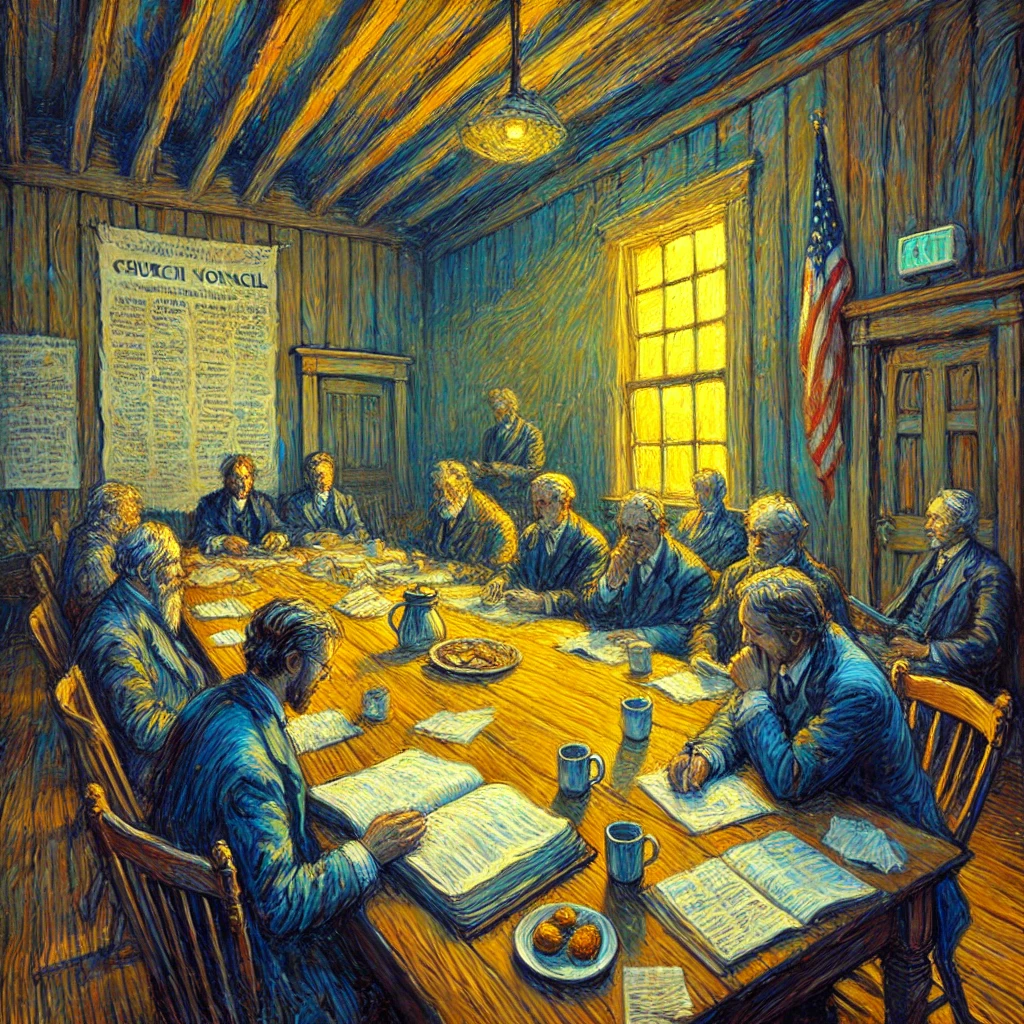
Act III – The Church Council Meeting
“Well there you go,” Harold said.
Clovis raised a finger.
“Unless the ordinance defines temporary differently.”
He turned another page.
“In this case, it doesn’t define it at all.”
Silence settled.
Pastor Gentry folded his hands.
“Are we saying the banner is illegal?”
Clovis considered.
“I’m saying the ordinance is… spiritually ambiguous.”
Mabel frowned.
“It’s inviting people to church.”
Clovis nodded.
“Yes. But the ordinance is inviting interpretation.”
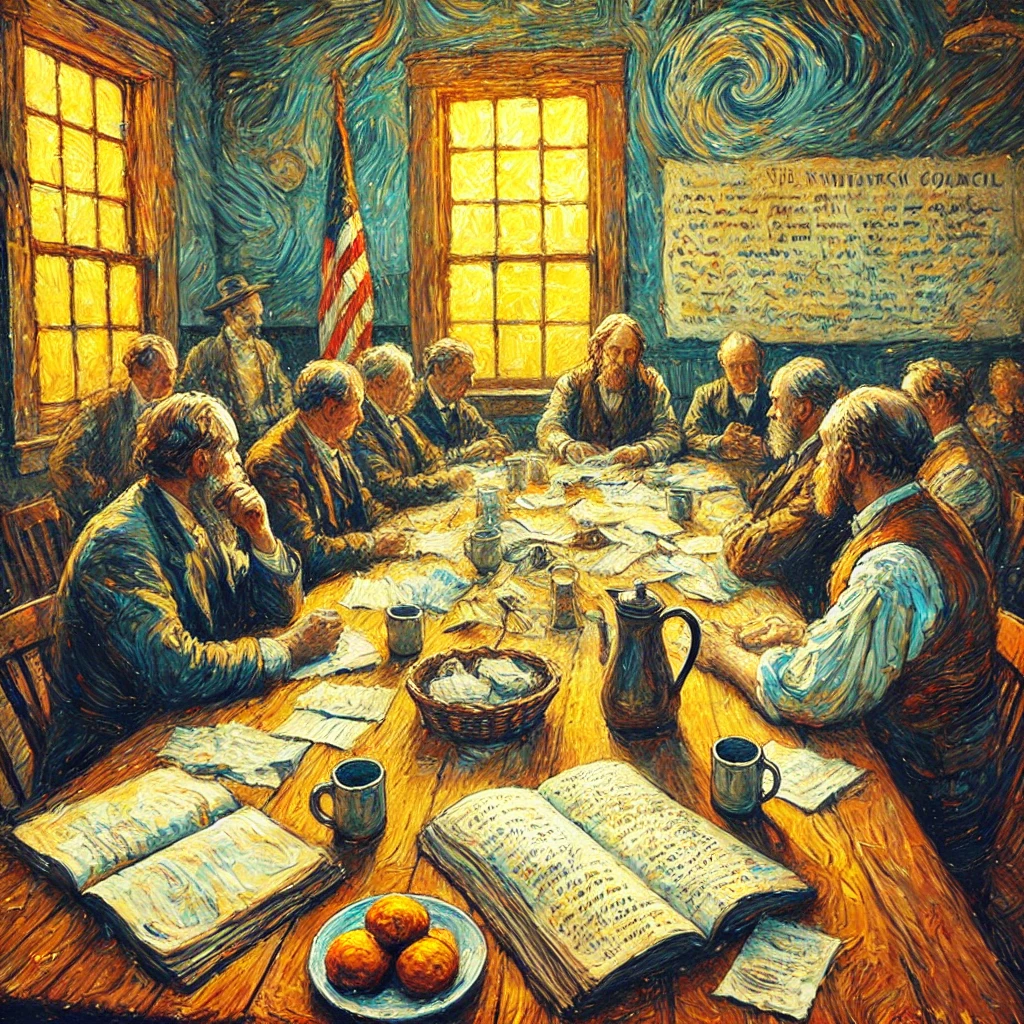
Act III – The Church Council Meeting
Act IV – Theology Meets Zoning
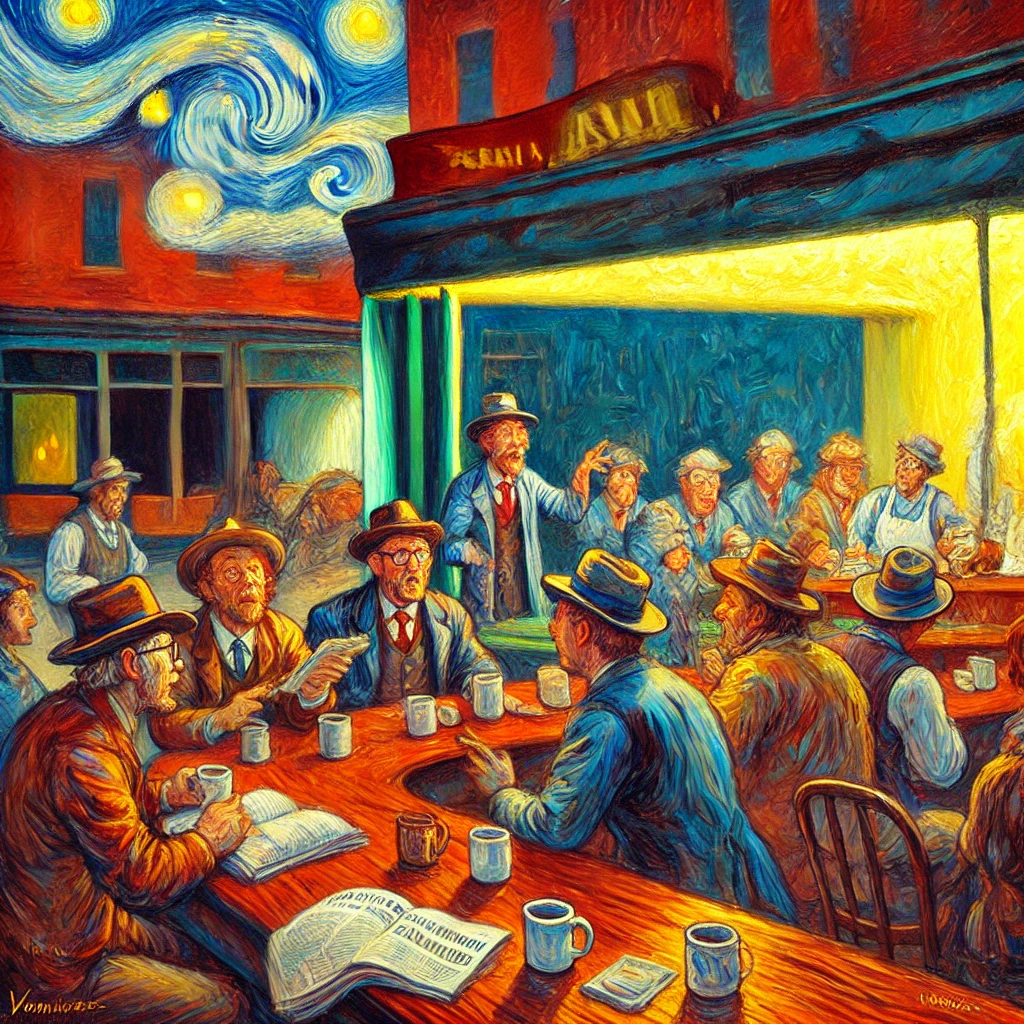
Word spread through town with the speed typical of matters involving both religion and paperwork.
By Wednesday afternoon, people had opinions.
At the diner, someone asked whether revival counted as a commercial event.
At the hardware store, someone asked whether banners for salvation could be classified as nonprofit messaging.
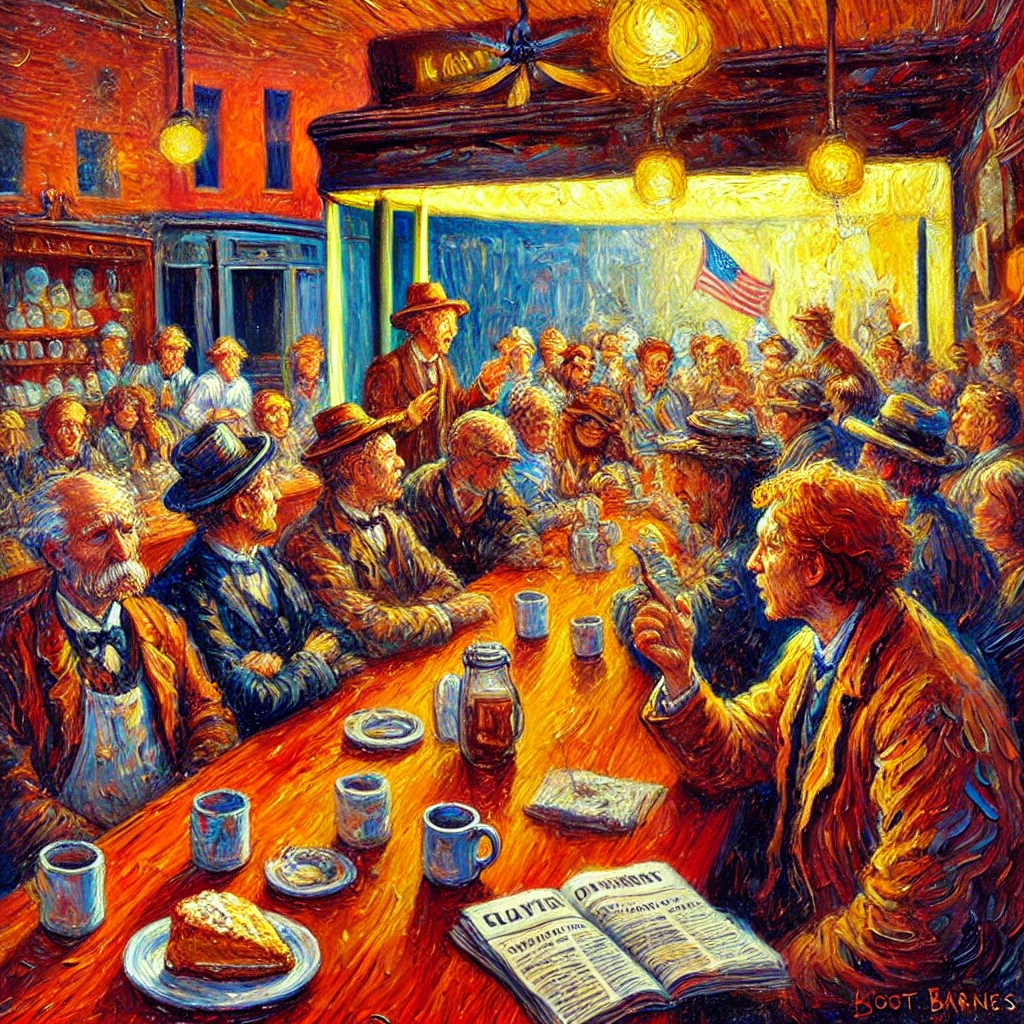
Boot Barnes offered a different theory.
“Church banners,” he said, “might qualify as religious expression.”
Someone asked if that meant the First Amendment applied.
Boot shrugged.
“It might.”
Clovis overheard this conversation and wrote it down.
Meanwhile, Sheriff Peeler tried very hard not to drive past the church again.
He failed.
Act IV – Town Speculation
The banner was still there.
It fluttered with quiet confidence.
Sheriff Peeler parked across the road and stared at it.
He had issued citations to businesses that week for similar banners.
Yet the thought of citing a church felt… complicated.
Not legally complicated.
Spiritually complicated.
Act IV – Town Speculation
Act V – The Quiet Tension
The revival began Thursday night.
The banner remained.
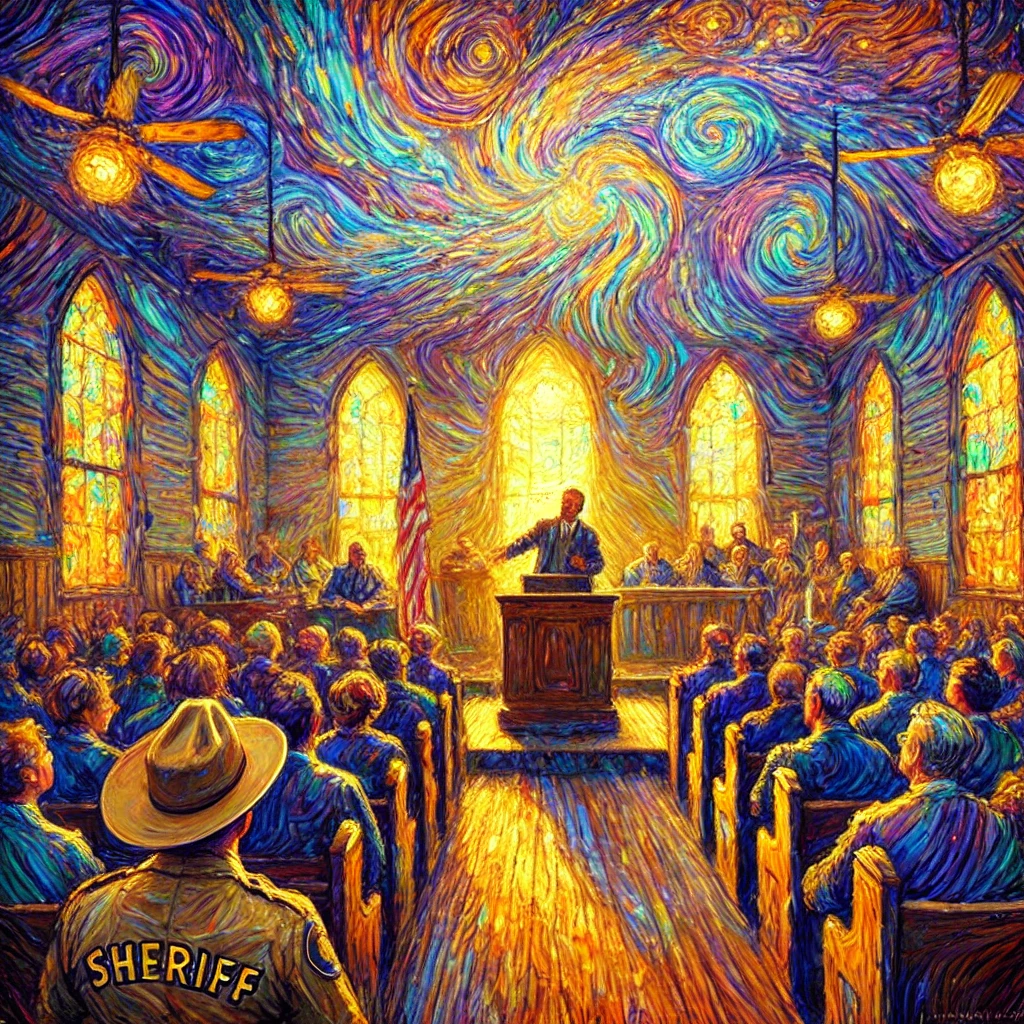
Cars filled the gravel lot. Folding chairs appeared inside the sanctuary. Voices rose in song.
Sheriff Peeler attended the service.
He did not sit near the front.
The sermon that evening happened to be about grace.
Pastor Gentry spoke about forgiveness, patience, and the human tendency to create rules that were sometimes harder to follow than the spirit behind them.
Sheriff Peeler listened carefully.
Boot Barnes sat beside him.
“You thinking about the banner?” Boot whispered.
Sheriff Peeler nodded.
Boot leaned back.
“Seems to me,” he said quietly, “the ordinance was written for advertising.”
Sheriff Peeler nodded again.
Boot gestured toward the sanctuary.
“This ain’t exactly a mattress sale.”
Sheriff Peeler considered that.
Act V – The Revival Service
Act VI – The Interpretive Committee
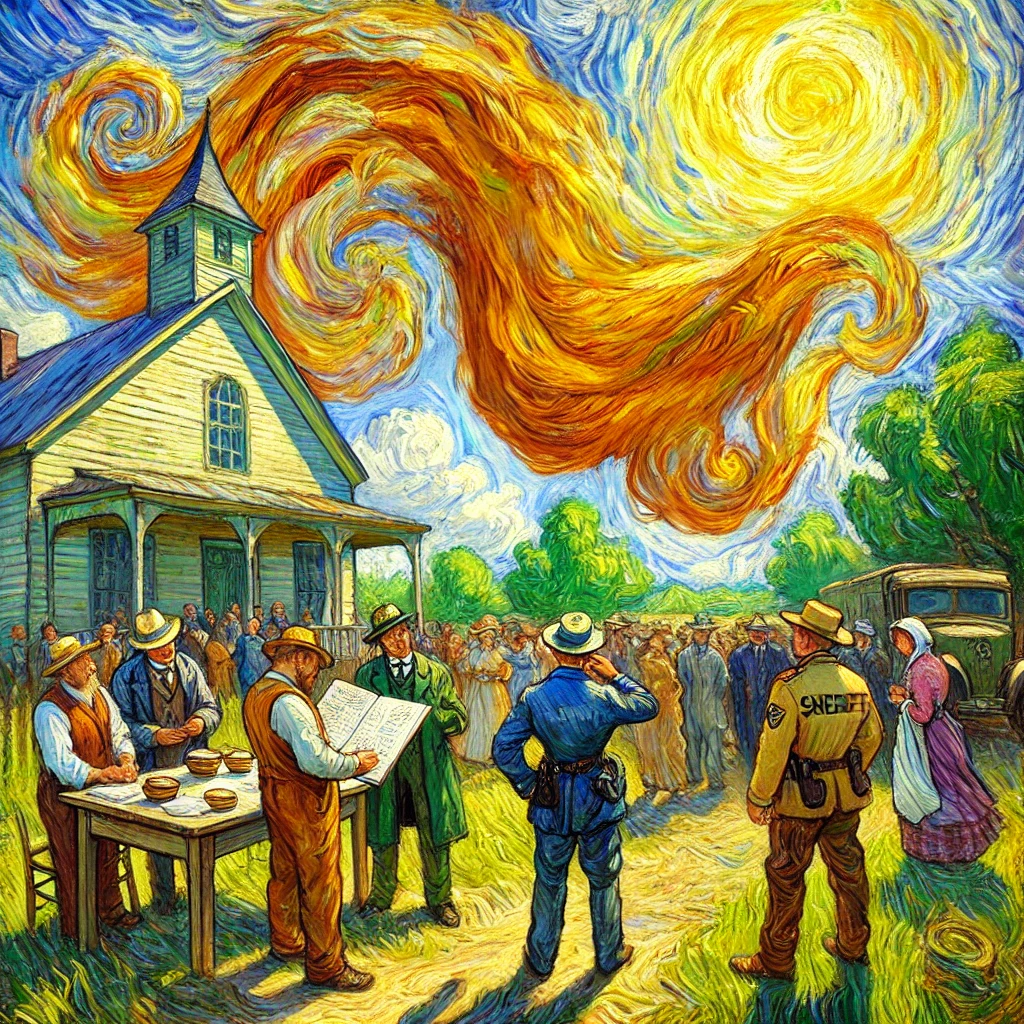
On Friday morning, a small group gathered outside the church sign.
They called themselves an interpretive committee.
It consisted of Boot Barnes, Clovis Strickland, Sheriff Peeler, and Mabel Dean holding a plate of muffins.
They studied the banner.
Clovis read aloud from the ordinance.
“Portable signs are prohibited unless permitted under subsection C…”
Boot interrupted.
“What’s subsection C say?”
Clovis turned the page.
“It describes banners used for temporary promotional purposes.”
Boot pointed at the church.
“That revival promoting something?”
Mabel looked offended.
“It’s inviting people to worship.”
Clovis nodded.
“That might be classified as spiritual outreach rather than commercial promotion.”
Sheriff Peeler rubbed his chin.
“So the question is… does salvation count as advertising?”
Everyone stood quietly for a moment.
Finally Boot said:
“Depends who’s selling it.”
Act VI – The Interpretive Committee
Act VII – A Temporary Compromise
By Saturday afternoon, the matter had resolved itself in the way most Sequatchie Crossing problems eventually did.
Through mild exhaustion.
The interpretive committee reached a conclusion.
The banner would remain for the duration of the revival.
Afterward, it would be removed.
No citation would be issued.
Sheriff Peeler folded his tape measure and placed it back in the cruiser.
Boot Barnes watched the banner ripple in the wind.
“Temporary salvation,” he said thoughtfully.
Clovis closed his notebook.
“Permanent code,” he replied.
Mabel handed them muffins.
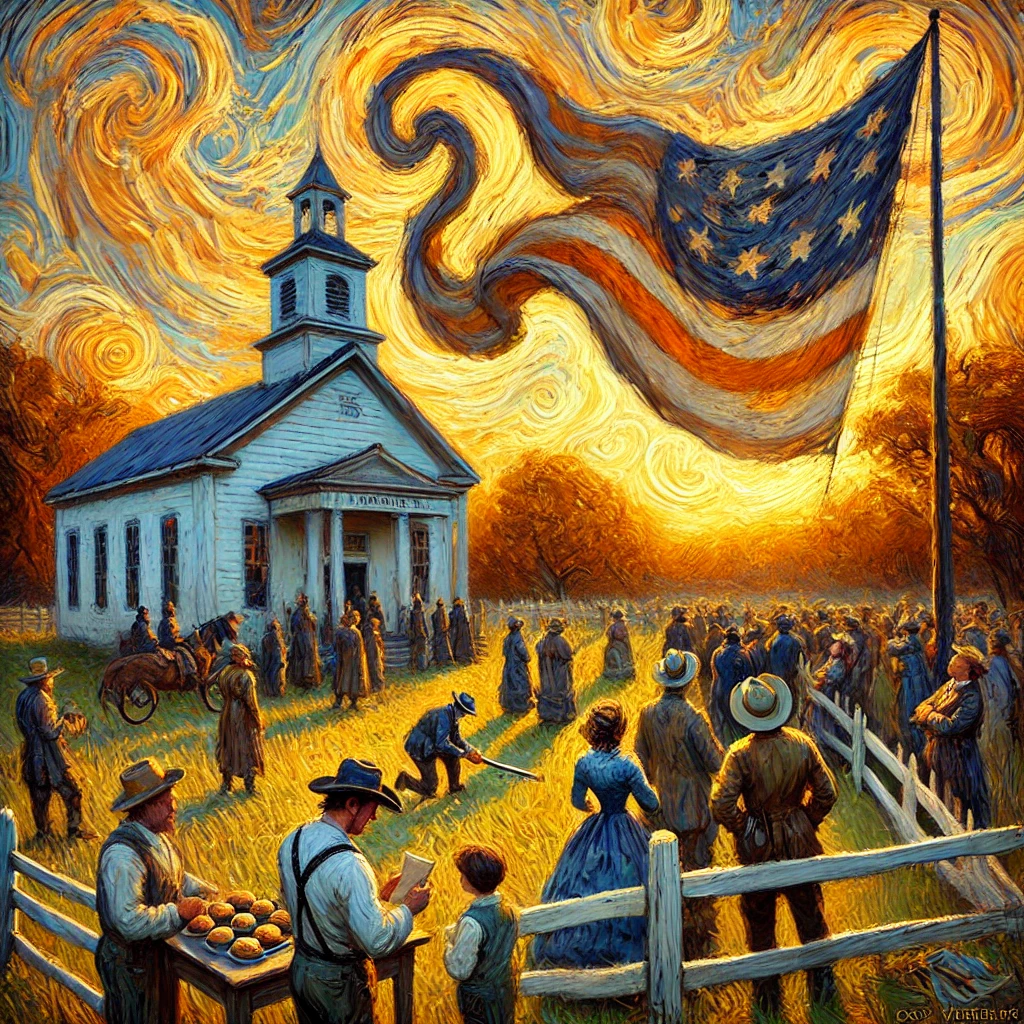
Pastor Gentry stepped outside just as the banner caught the afternoon sun.
The letters glowed red against the sky.
For a moment, everyone stood quietly.
Not because they had solved the problem completely.
But because they had solved it enough.
And in Sequatchie Crossing, that was usually sufficient.
Act VII – A Peaceful Resolution
Epilogue – The Banner Comes Down
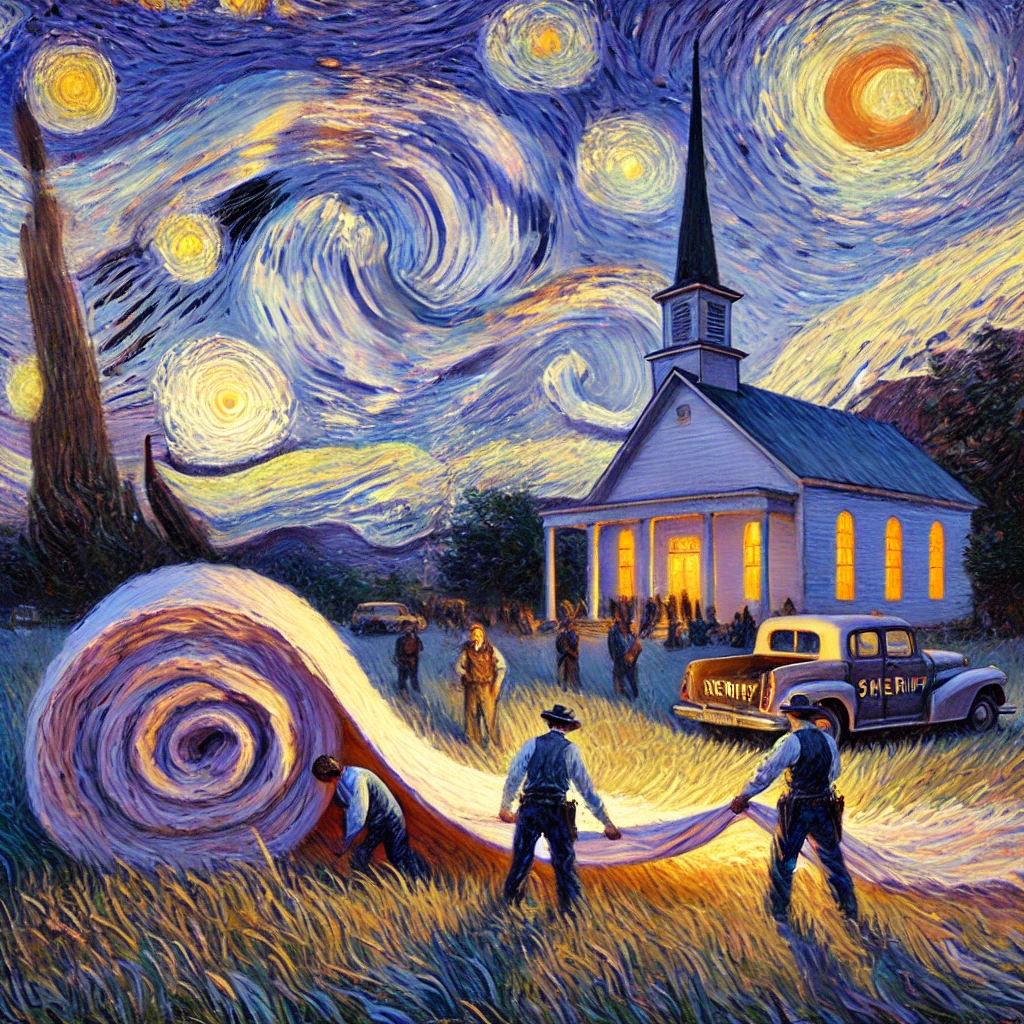
On Sunday evening, after the final hymn, the banner was removed.
Two volunteers rolled it carefully.
The grass where it had stood looked slightly pressed, as if the earth itself had been paying attention.
Sheriff Peeler drove by later that night.
He noticed the empty space.
He also noticed the church parking lot was still half full.
He nodded to himself.
Sometimes, he reflected, the town worried too much about the permanence of rules and not enough about the temporary nature of the things those rules tried to regulate.
He drove on.
The wind moved gently through the churchyard.
And somewhere in the quiet town of Sequatchie Crossing, another banner was probably already being considered.
Epilogue – The Banner Comes Down
Disclaimer
The events described in this story are part of the fictional world of Sequatchie Crossing. While the situations may resemble the occasional intersection of small-town life, municipal code, and enthusiastic signage, the characters and events are entirely fictional and intended for humor and storytelling. Any resemblance to real persons, ordinances, banners, or theological zoning disputes is purely coincidental.
Disclaimer – The Church Banner Problem
Real Places Behind the Ruckus – From The Dunlap Directory

Real Places Behind the Ruckus – From The Dunlap Directory
Yes, this story was fictional; even the parts that weren’t true. These places? Absolutely real. Stop by, support local, and keep the Wi-Fi away from livestock:
- Dunlap Flower Shop
- Needful Things General Store
- W N Lofty Grading & Paving Co
- Tiger Rock Dunlap
- Sun Valley Coffee Shop
- Citizens Tri-County Bank – Industrial Park Motor Branch
- Firefly on Rankin
- C.F Cleaning Services
- ChattaBOOga Ghost Walk
- Brandon’s Tree Service
- Mountain Top Diesel Repair
- Yamato Japanese Steakhouse
- Whitzell Excavation
- Bolt Farm Treehouse Tennessee
- River Life RV Resort

Real Places Behind the Ruckus – From The Dunlap Directory
At Sequatchie Crossing, we tell the stories of Sequatchie Crossing.
Please share this post with your friends, family, or business associates who may want help telling the stories of their legacy.

0 Comments