


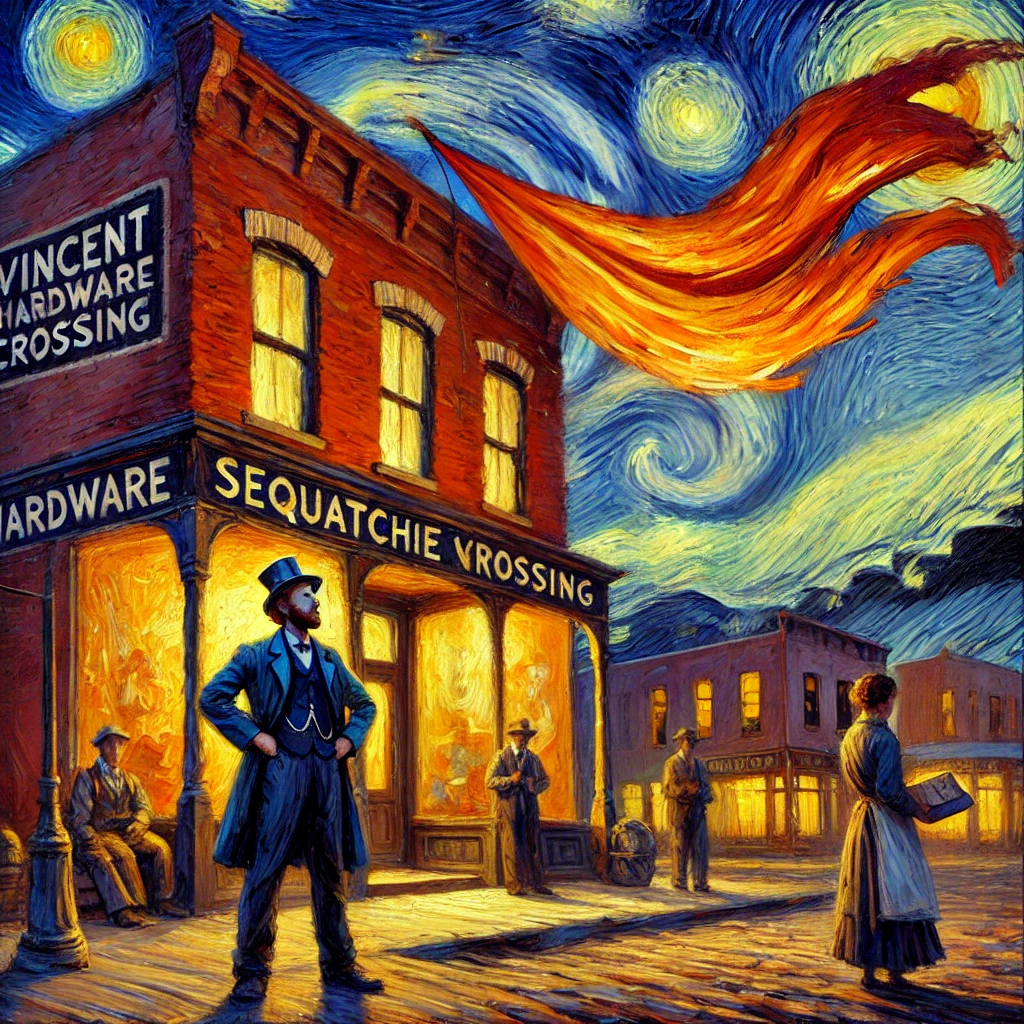
Statute Of Limitations Debated Beside a Flapping Advertisement
By Tom Seest
At Sequatchie Crossing, we tell the stories of Sequatchie Crossing.
Please share this post with your friends, family, or business associates who may want help telling the stories of their legacy.
🎤 Audio Overview
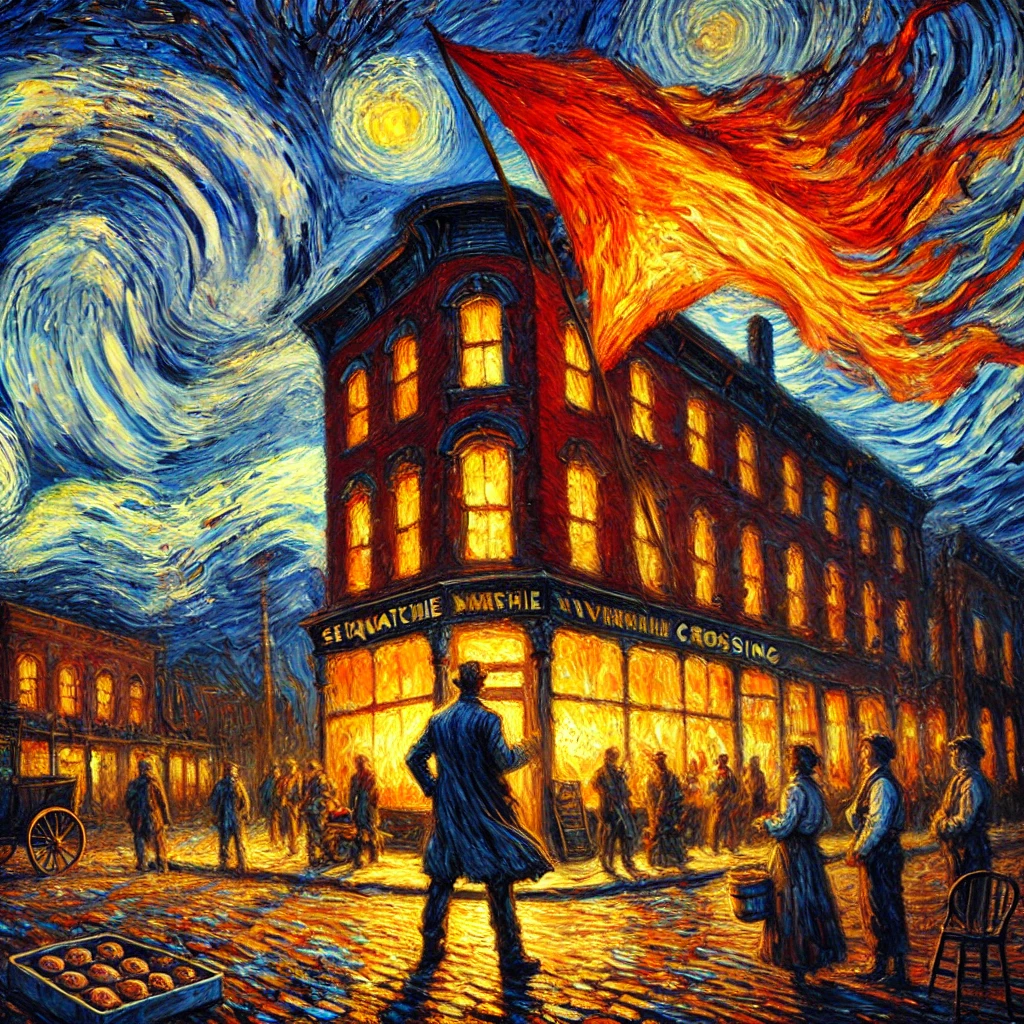
Boot Barnes Asks If Time Voids Fabric
Act I: The Banner That Would Not Rest
The banner had been flapping for eleven years.
Not continuously. Not heroically. But persistently. It had flapped through three mayors, four droughts, two surprise hailstorms, a brief community obsession with artisanal goat soap, and the entire rise and fall of the “Bring Back the Whistle at Noon” campaign.
It hung, faded but stubborn, from the side of the old hardware building on Main Street. Its message—once bright red—now read in pinkish, sun-bleached insistence:
GRAND OPENING!
Below that, in letters barely legible:
FREE COFFEE FRIDAY
No one remembered which Friday.
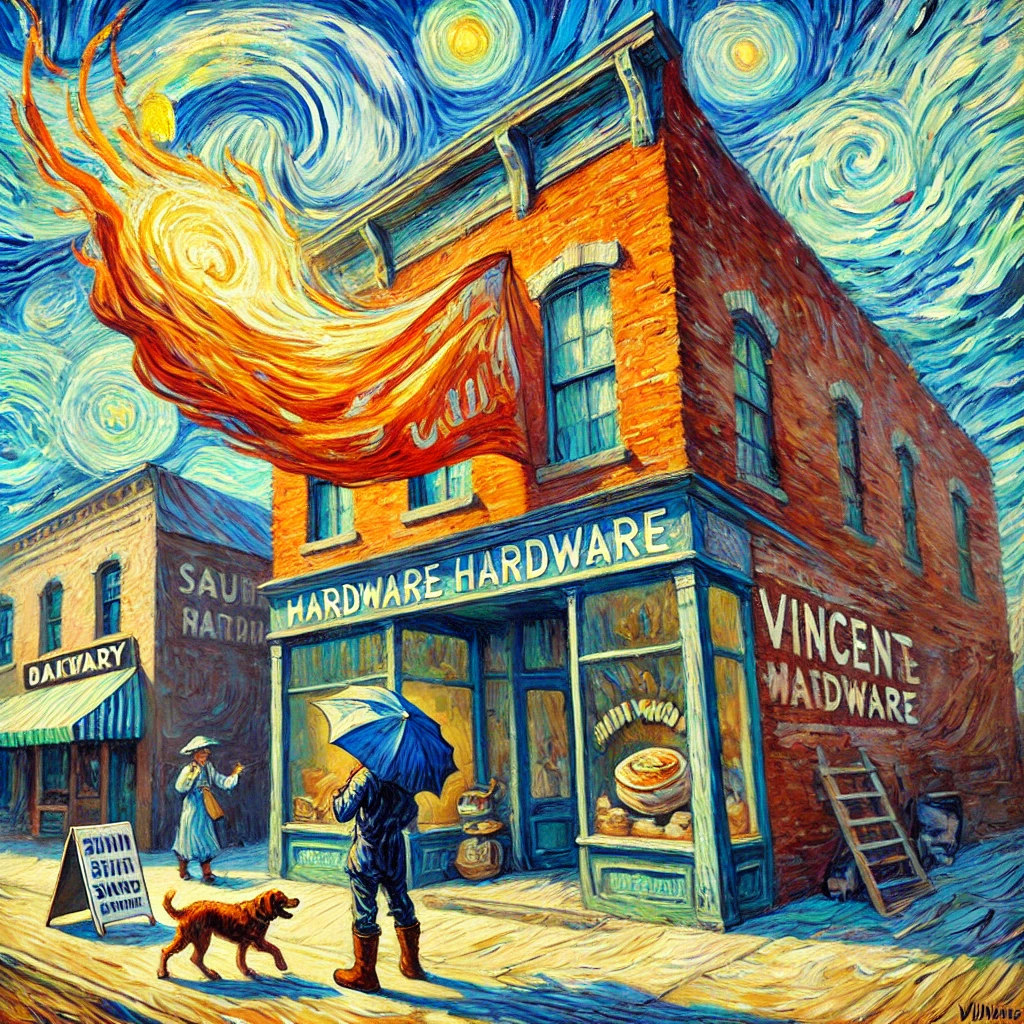
Act I — The Banner That Would Not Rest
Boot Barnes did not wake up that morning intending to challenge municipal theory. He had woken up intending to return a borrowed post-hole digger and possibly acquire a biscuit. But the wind was sharp, and the banner—having lost one corner grommet sometime around the third drought—snapped and cracked against the brick like a flag in mild distress.
Boot stopped.
He had always been susceptible to visual injustice.
He placed his hands on his hips and stared upward, squinting.
“Eleven years,” he muttered.
Mabel Dean, emerging from the bakery with a box of something frosted, paused beside him.
“Still grand, I suppose,” she said. “Time is relative.”
Boot did not respond. His mind had moved elsewhere—into the territory where fairness and paperwork intersect in unpredictable ways.
“Can time void fabric?” he asked.
Mabel blinked.
“The fabric looks voided already.”
“No,” Boot said, stepping back for perspective. “Legally.”
Mabel considered this. She had long ago accepted that living in Sequatchie Crossing meant conversational pivoting.
“You mean like when you ignore something long enough it becomes… historical?”
“Yes,” Boot said, nodding. “Statute of limitations. Eleven years of non-enforcement.”
Mabel tilted her head toward the banner.
“It does flap aggressively.”
Boot took this as confirmation.
By the time he reached the diner, the idea had matured into thesis form:
If the town had not enforced its signage ordinance against this banner for eleven consecutive years, then perhaps the rule—at least as applied to that banner—had expired.
And if that was true, what else had expired quietly while everyone was busy discussing potholes?
Boot ordered coffee and began drafting arguments on the back of a placemat.
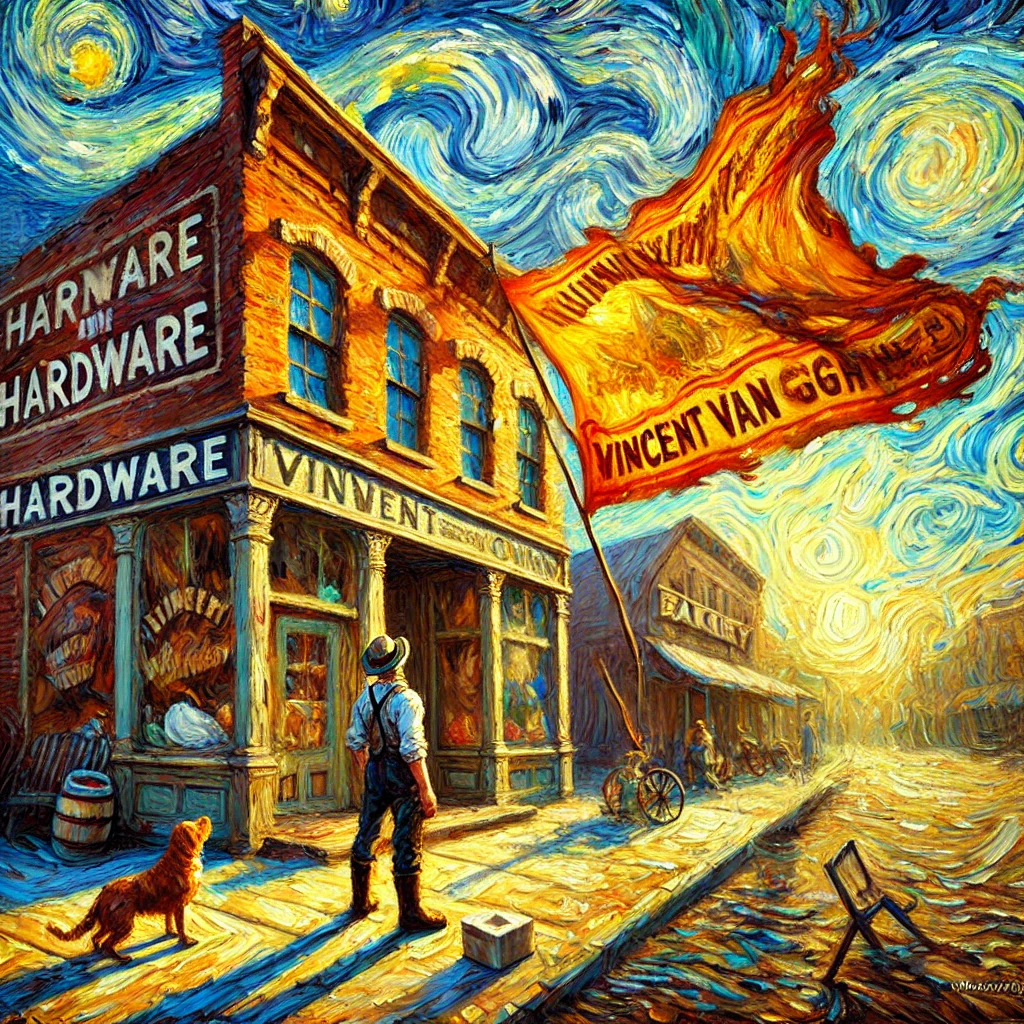
Act I — The Banner That Would Not Rest
Act II: The Ordinance in Question
The signage ordinance had been passed in Year Four of the “Clean Corners Initiative.” It required that temporary advertising banners be removed within thirty days of an event. Thirty days was considered reasonable, optimistic, and aspirational.
The banner in question had celebrated the grand reopening of a hardware annex that had since closed, reopened as a seasonal fireworks outlet, closed again, and then briefly housed a meditation studio that specialized in guided silence.
The banner had outlived all of them.
Clovis Strickland, self-appointed historian of the town’s procedural ambiguities, met Boot at the counter and slid into the booth.
“You’re staring at your placemat like it owes you money,” Clovis observed.
Boot turned the paper toward him.
“Eleven years of non-enforcement,” Boot said. “Selective enforcement. Due process. Equitable estoppel.”
Clovis squinted.
“You been reading something?”
“I have been thinking,” Boot replied, which in Sequatchie Crossing carried more consequence.

Act II — The Ordinance in Question
Clovis nodded gravely.
“That banner’s been there since Daisy was a puppy.”
Daisy, the town’s unofficial hound of record, thumped her tail under the table at the mention of her name, though she was no longer technically a puppy by anyone’s measure.
Boot leaned in.
“If the rule says thirty days, and the town ignores it for four thousand and some days, then either the rule doesn’t matter, or it matters selectively.”
Clovis stirred his coffee with the deliberation of a man preparing to archive a conversation.
“You planning to bring this up at council?”
Boot sat back.
“I am.”
Clovis inhaled slowly, as one might before stepping into cold water.
“That’ll ignite debate.”
Boot smiled faintly.
“Good.”

Act II — The Ordinance in Question
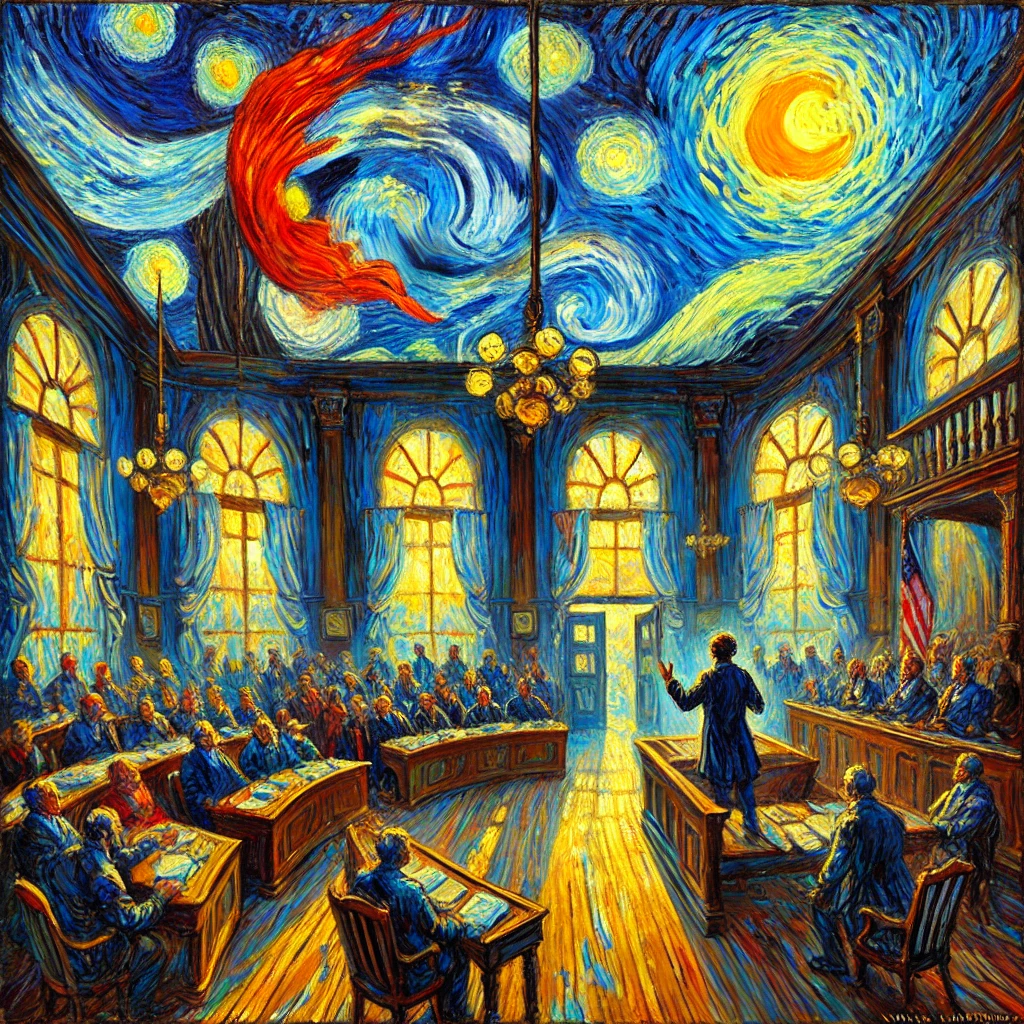
Act III: The Meeting Convenes
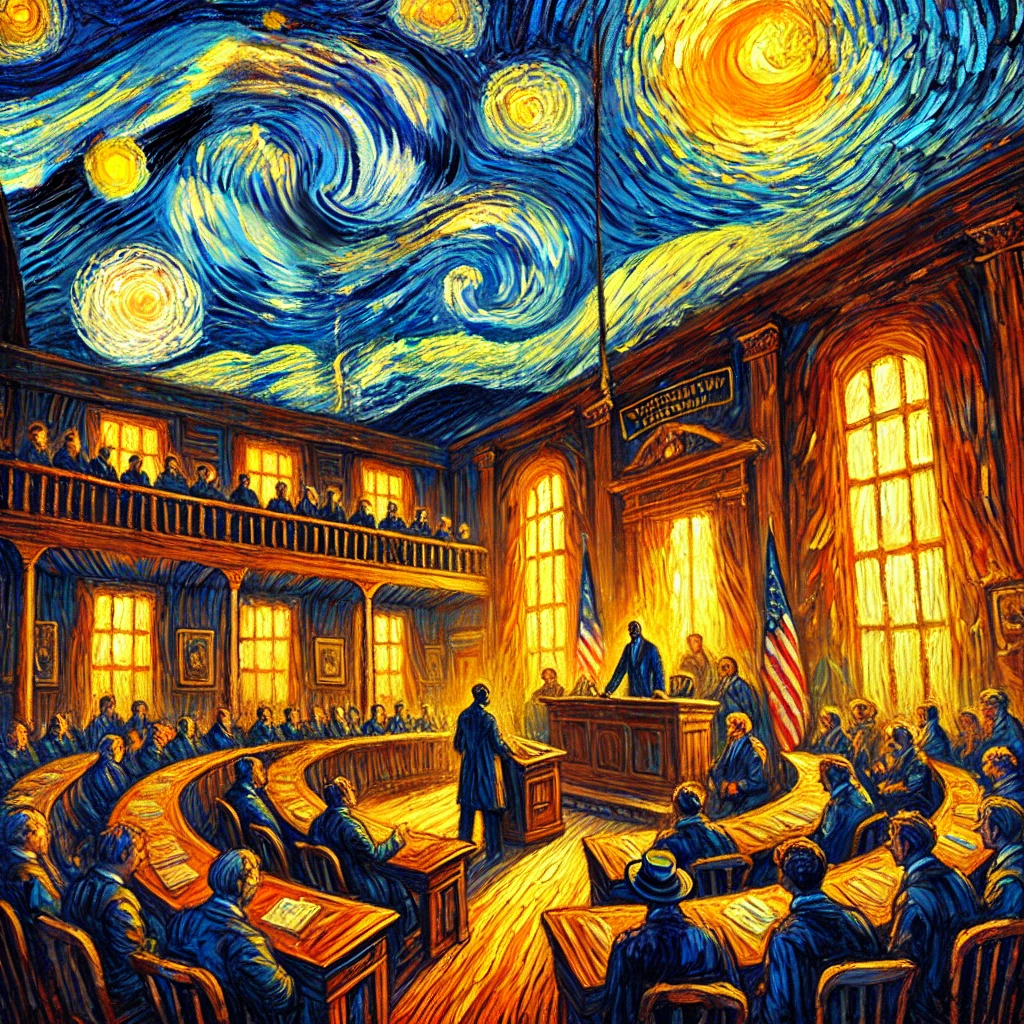
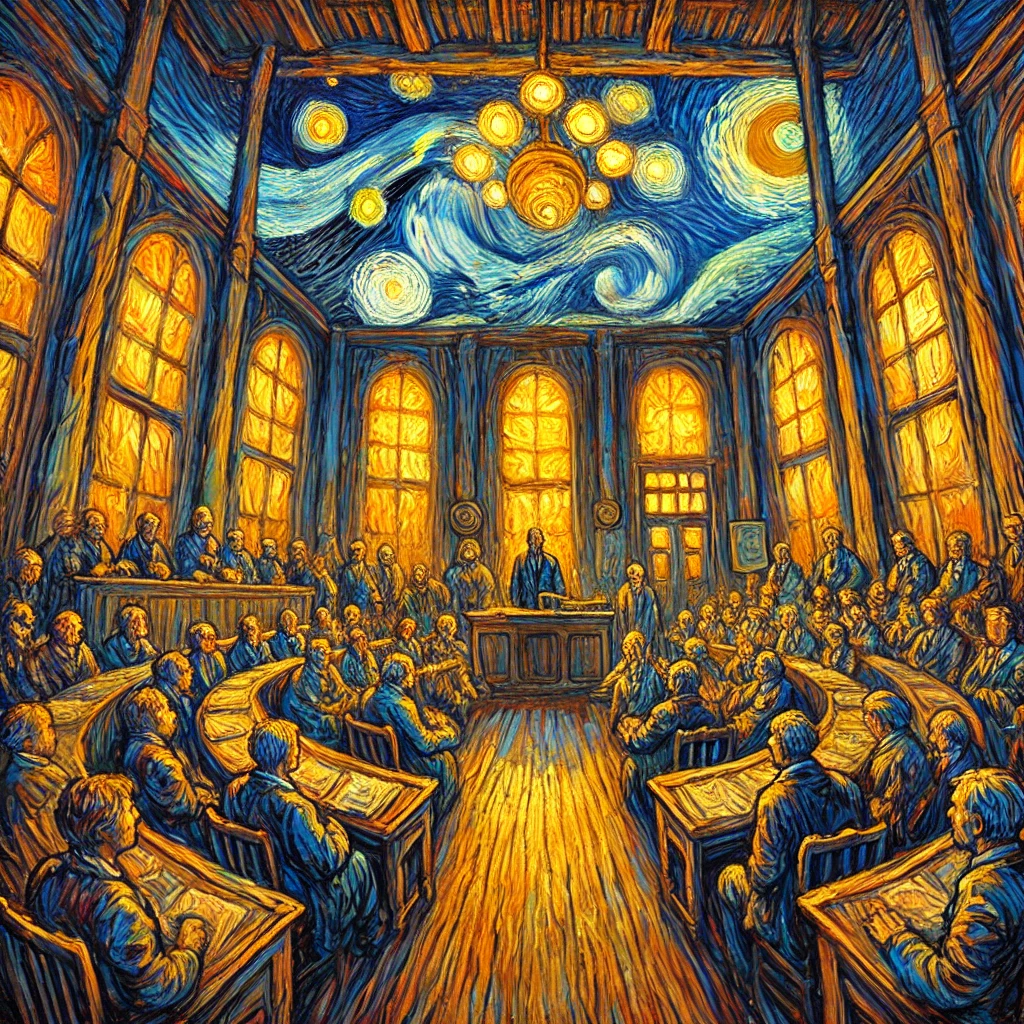
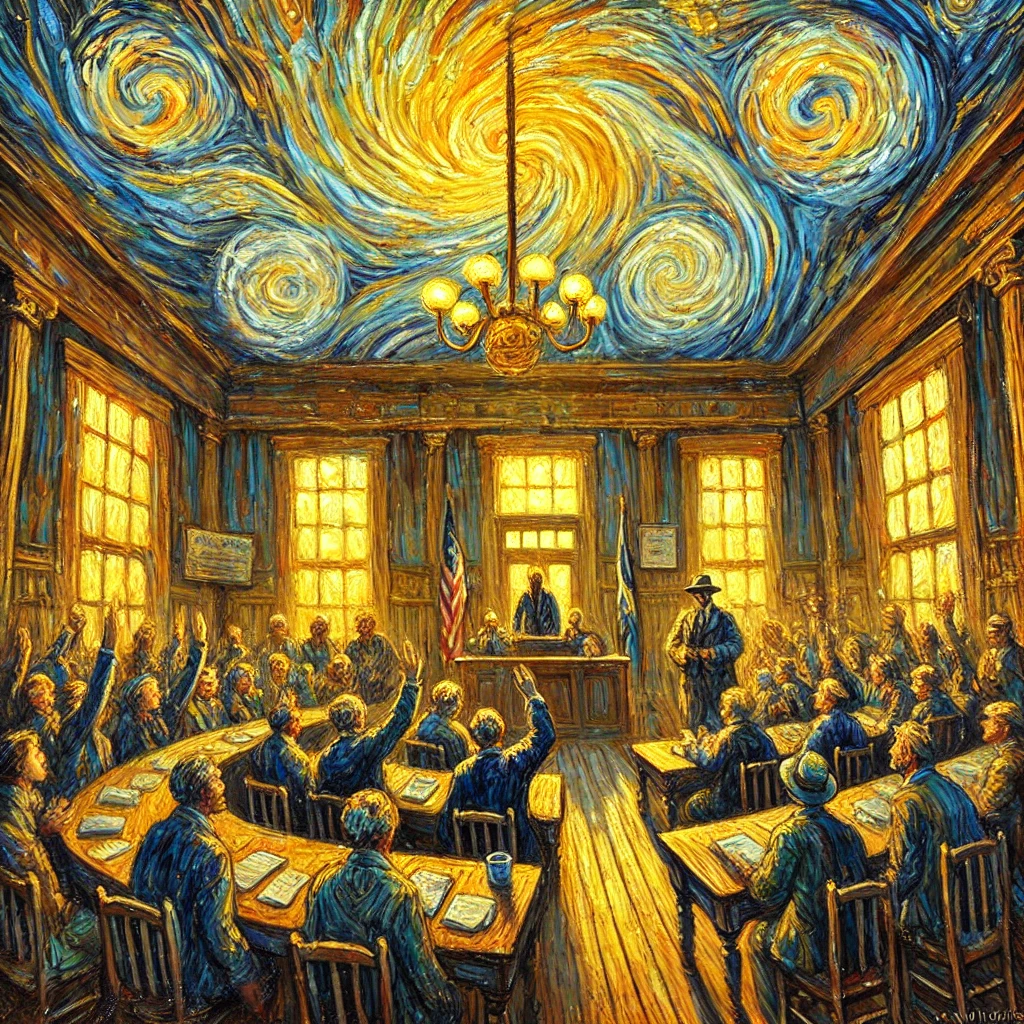
Town Hall was full that evening, though “full” in Sequatchie Crossing meant twelve chairs occupied and two people leaning with suspicion.
The banner had been brought up not by Boot but by Council Member Harlan Peet, who had recently begun a “Visible Order Initiative.” His platform was simple: if it looked like it might be a problem, it probably was.
“Item seven,” Harlan read. “Outdated promotional signage. Specifically, the Grand Opening banner on Main.”
A murmur moved through the room.
Boot raised his hand before the floor was even open.
“Yes, Mr. Barnes,” said Clerk Lydia Mae, who already appeared tired in anticipation.
Boot stood.
“I have a procedural inquiry.”
The phrase landed like a paperweight.
Lydia Mae nodded cautiously.
Act III — The Meeting Convenes
“Proceed.”
Boot cleared his throat.
“The ordinance requires removal within thirty days, correct?”
“Yes.”
“And that banner has remained for eleven years.”
“Yes.”
“And no enforcement action has been taken?”
Lydia Mae hesitated.
“That is correct.”
Boot folded his hands behind his back.
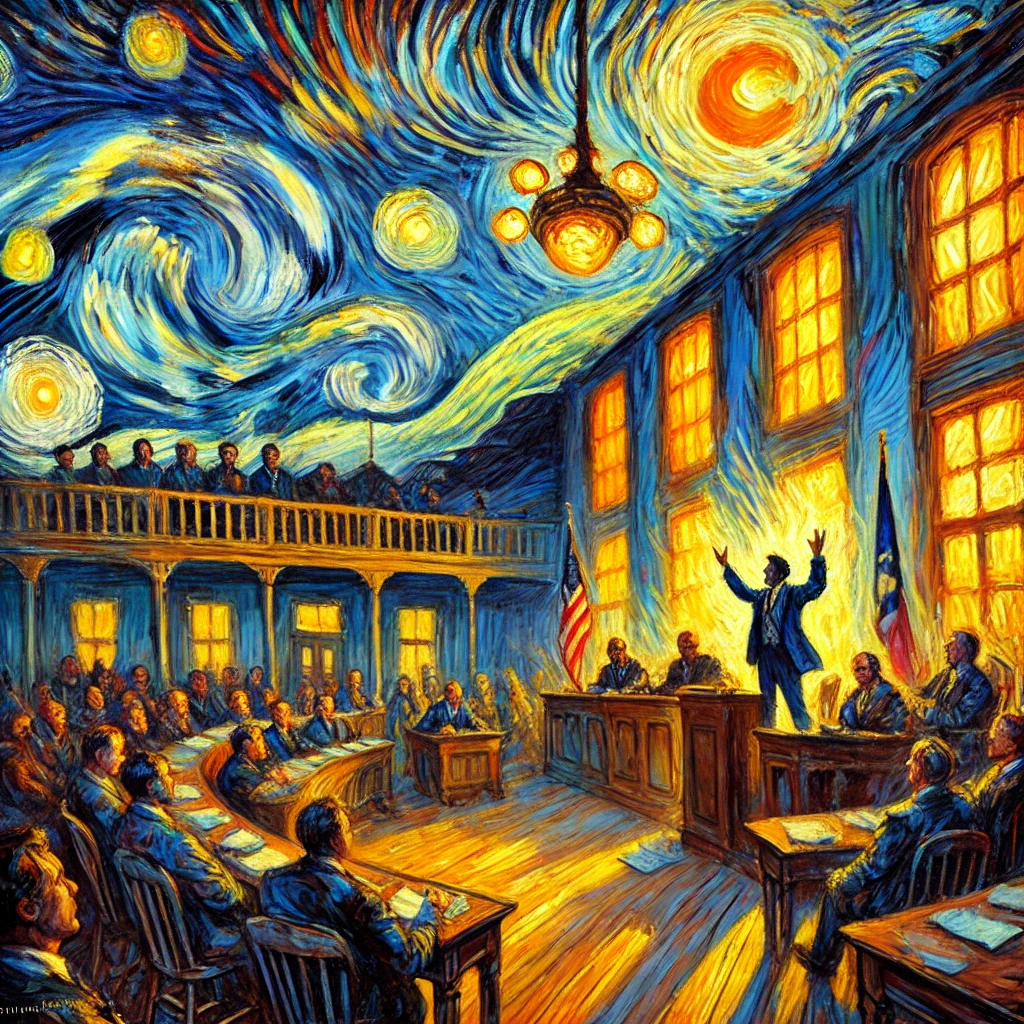
“Then I ask: does time void fabric?”
Silence settled.
Harlan blinked.
“I’m sorry?”
“If the town fails to enforce its own rule for over a decade, does that inaction constitute implicit waiver? Have we, by silence, granted permanence?”
Mabel Dean, seated near the back, whispered, “He’s in full paragraph mode.”
Harlan shifted papers nervously.
“The rule is still valid.”
“On paper,” Boot agreed. “But in practice?”
Clovis coughed thoughtfully.
Sheriff Peeler leaned against the wall, arms folded, expression neutral but alert, as if time itself might require escort.
Boot continued.
“Selective enforcement undermines legitimacy. If we enforce now, after eleven years, without enforcing earlier, what distinguishes today from yesterday?”
Harlan opened his mouth and closed it again.
The banner, visible through the window, snapped sharply in the wind.
Act III — The Meeting Convenes
Act IV: Selective Enforcement Enters the Room
Council Member Willa Grant, who preferred quiet solutions and less wind, leaned forward.
“Are you suggesting we never enforce anything we’ve neglected?”
“I am suggesting consistency,” Boot replied.
Willa nodded slowly.
“Or what?”
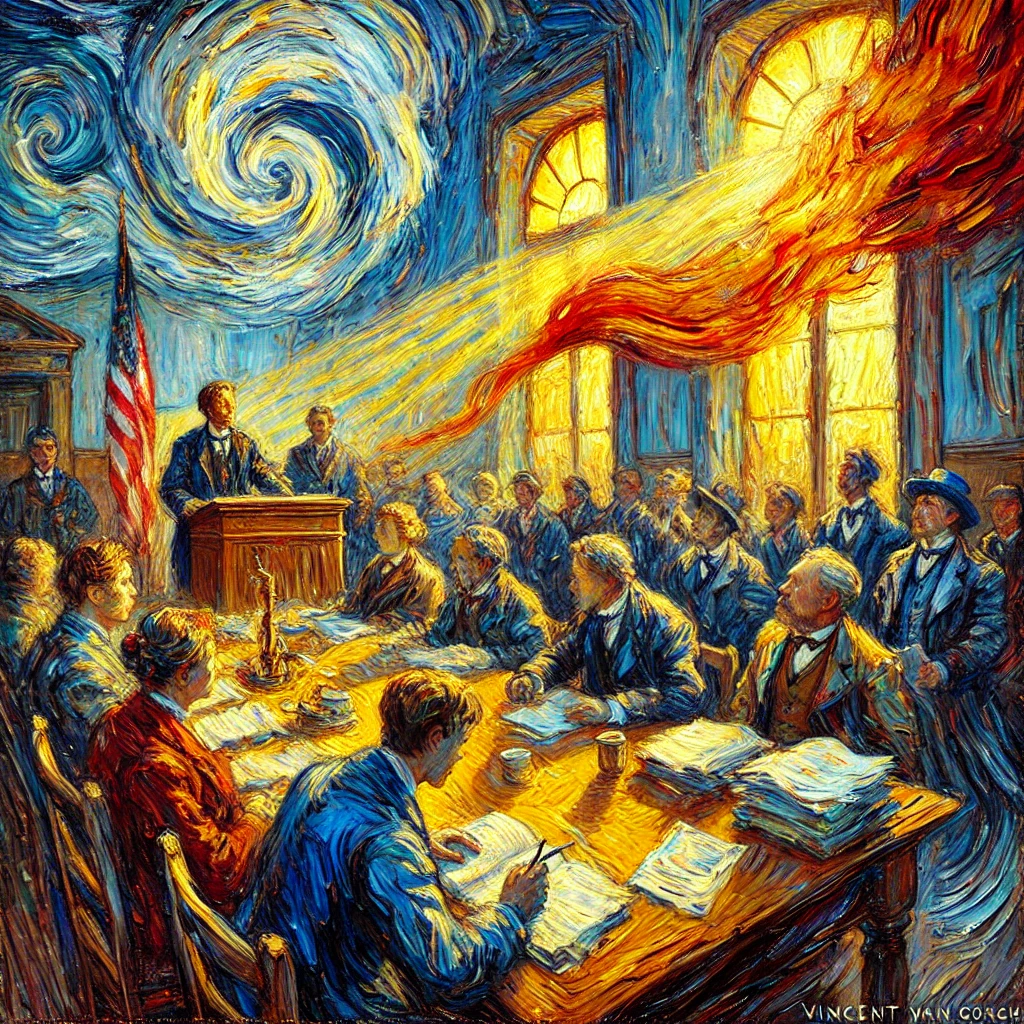
“Or we admit that enforcement is discretionary, and if discretionary, subject to scrutiny.”
Clovis scribbled something in his notebook titled “Banner Precedent.”
A man in the second row—who had once been cited for an overgrown hedge—raised his hand.
“My hedge was cited in three weeks,” he said. “Not eleven years.”
Boot gestured gently.
Act IV — Selective Enforcement Enters the Room
“Precisely.”
Harlan straightened.
“The banner is clearly in violation.”
Boot smiled faintly.
“It has been in violation for eleven years.”
Harlan’s voice tightened.
“Then we correct it.”
Boot tilted his head.
“Or we acknowledge that the town has tolerated it as de facto grandfathered.”
“Grandfathered?” Willa echoed.
Boot nodded.
“By neglect.”
The phrase hung like the banner itself.
Sheriff Peeler finally spoke.
“You arguing statute of limitations on canvas?”
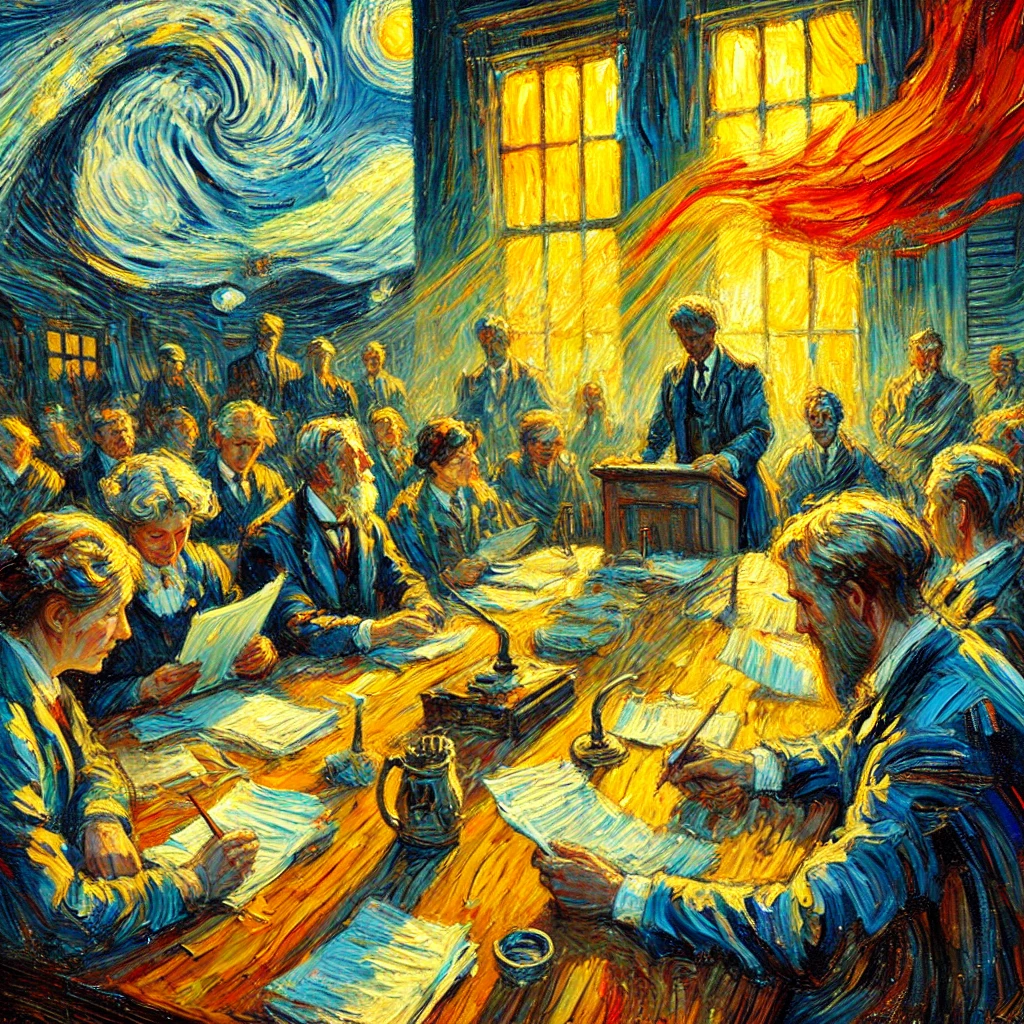
“I am arguing that time alters expectations,” Boot replied. “When a rule lies dormant, citizens adapt. Removing it now without explanation suggests unpredictability.”
Mabel leaned to Clovis.
“He’s building scaffolding.”
Clovis nodded.
“It’s load-bearing.”
Act IV — Selective Enforcement Enters the Room
Act V: The Philosophical Turn
Debate drifted from the banner to theory.
“What about parking violations?” someone asked.
“What about fireworks?” asked another.
“What about that rooster that crows at 4:15?”
Boot held steady.
“I am not defending neglect,” he clarified. “I am questioning fairness in revival.”
Lydia Mae tapped her pen.
“If we ignore something long enough, do we lose authority to address it?”
Boot considered.
“Not necessarily. But we incur responsibility to justify timing.”
Harlan leaned back.
“So we do nothing?”
Act V — The Philosophical Turn
Boot glanced at the window.
The banner flapped like punctuation.
“I propose clarity,” he said.
“Define selective enforcement. Establish criteria. Announce transition. Provide grace period.”
Clovis whispered, “He’s proposing infrastructure.”
The hedge-cited man nodded vigorously.
Willa sighed.
“We’re debating fabric.”
“No,” Boot said softly. “We’re debating trust.”
That shifted the room.
Act V — The Philosophical Turn
Act VI: The Advertisement Responds
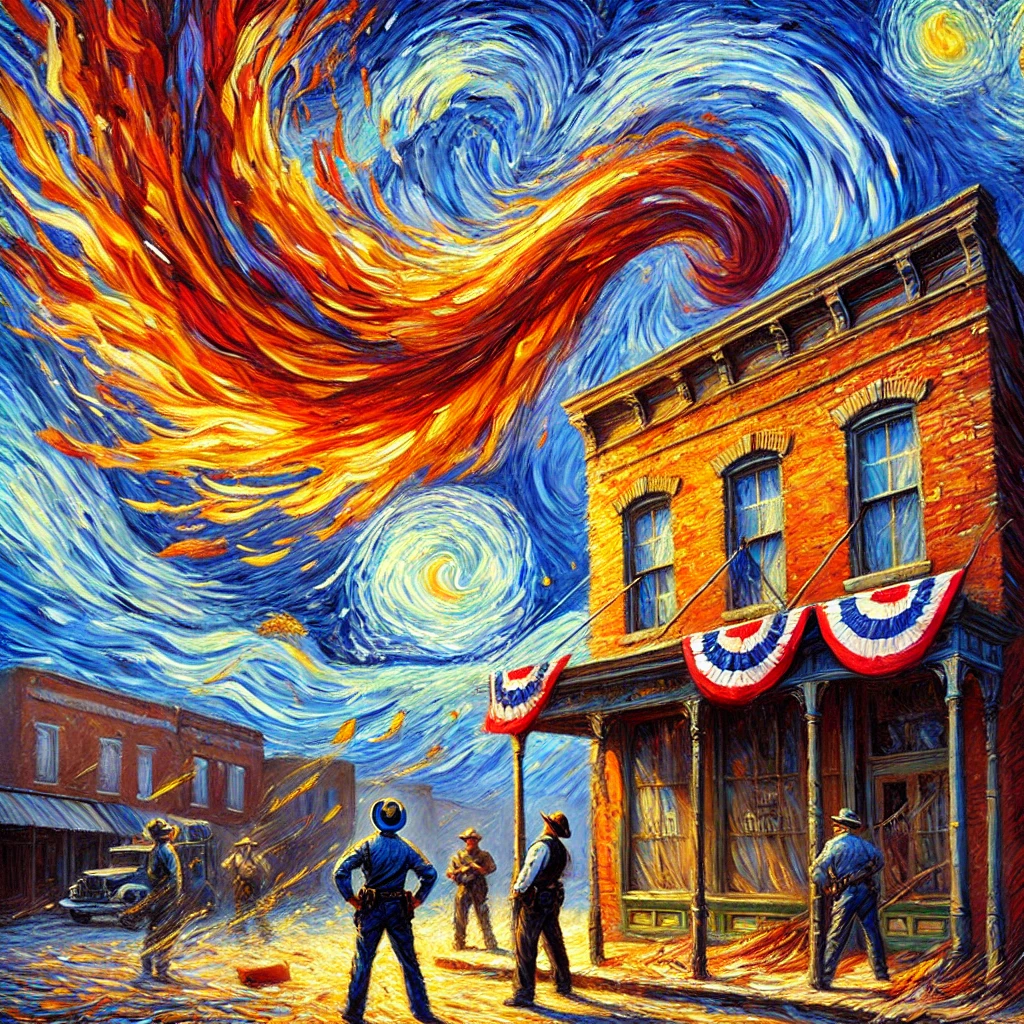
At that precise moment, a gust of wind tore the remaining grommet loose.
The banner dropped halfway, hanging diagonally, one corner clinging stubbornly.
The room collectively inhaled.
Sheriff Peeler stepped outside.
The banner flapped violently, as if unwilling to concede narrative control.
Boot followed.
They stood beneath it.
Up close, the fabric showed years of sun-scored threads and patched seams. Someone had once repaired a tear with duct tape that had since fossilized.
Sheriff Peeler looked at Boot.
“You trying to protect this?”
Act VI — The Advertisement Responds
Boot shook his head.
“I’m trying to protect process.”
The sheriff studied the frayed edge.
“Time doesn’t void fabric,” he said quietly. “Wind does.”
Boot nodded.
“But wind takes time.”
The sheriff allowed a small smile.
“You ever think maybe the town just didn’t notice?”
Boot gestured broadly.
“It’s twelve feet wide.”
Sheriff Peeler conceded that point.
Behind them, council members gathered at the doorway, watching the banner struggle against gravity.
It was less advertisement now than artifact.

Act VI — The Advertisement Responds
Act VII: The Amendment Proposal
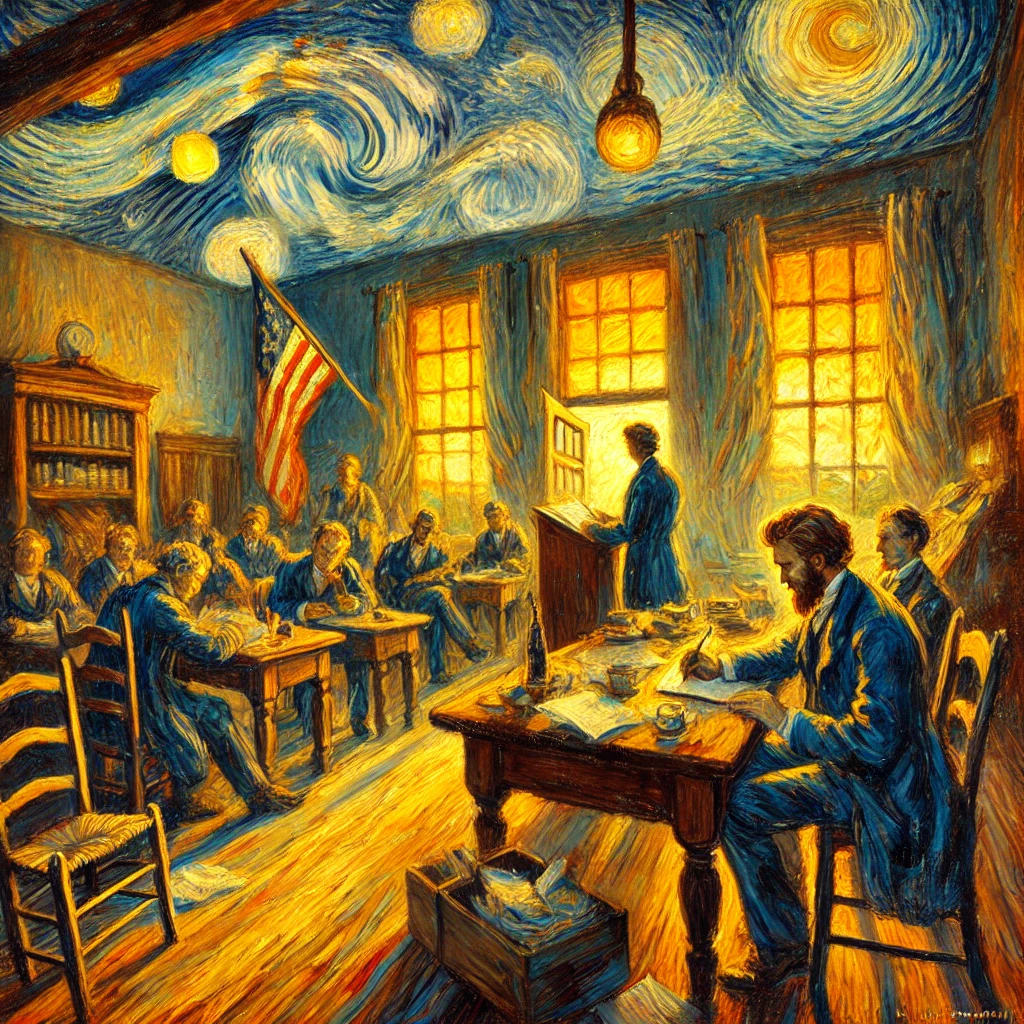
Back inside, Willa Grant called the meeting to order.
“Perhaps,” she said, “we separate two issues: the banner itself and the enforcement pattern.”
Boot nodded appreciatively.
Harlan rubbed his temples.
“So what do you want, Boot?”
Boot inhaled slowly.
“A resolution acknowledging lapse. A formal reset. Announce that signage rules will be enforced prospectively with thirty-day compliance period. No retroactive penalties.”
Clovis underlined “prospectively.”
“And the banner?” Lydia Mae asked.
Boot looked toward the window.
“Remove it respectfully.”
Act VII — The Amendment Proposal
The room stilled.
“Respectfully?” Harlan repeated.
“It has served,” Boot said. “Inadvertently.”
Mabel added softly, “It’s part of the skyline.”
The hedge-cited man crossed his arms.
“I still want my hedge apology.”
Boot nodded sympathetically.
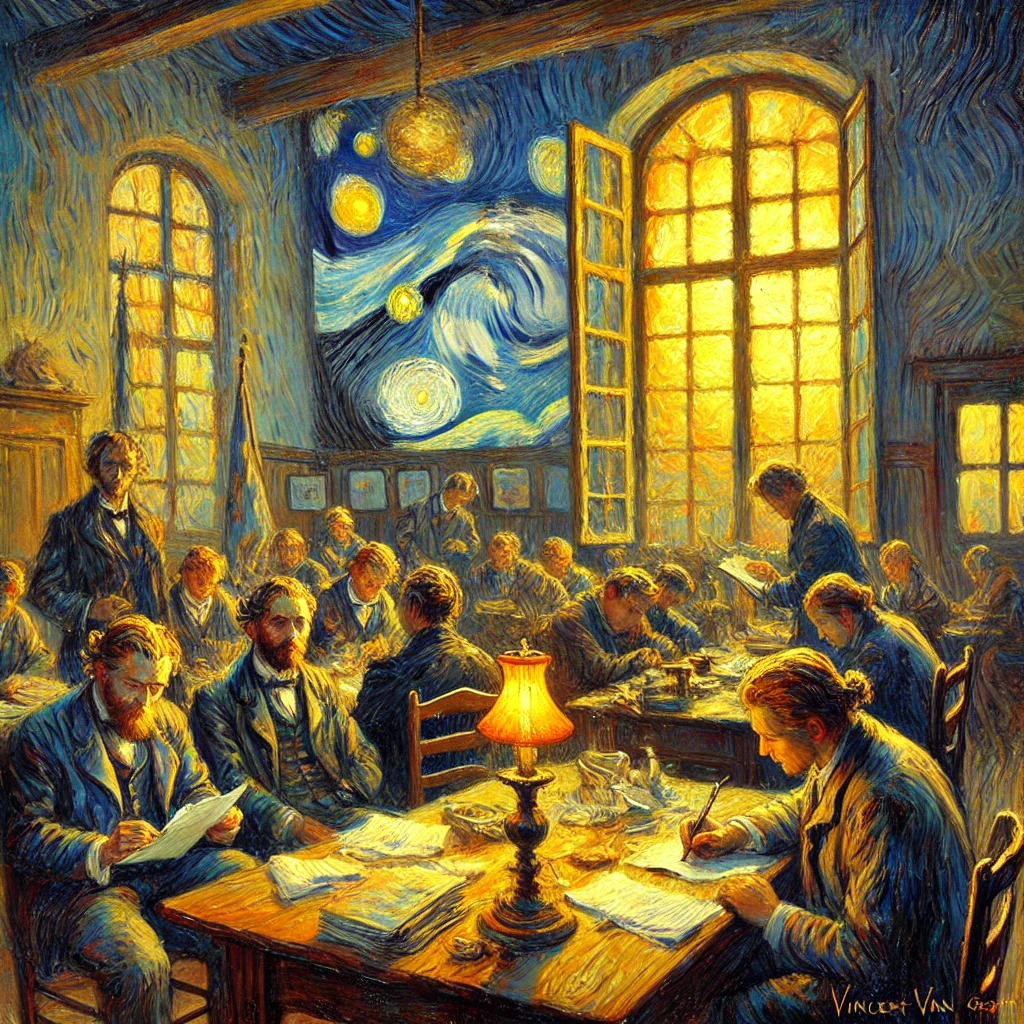
Willa began drafting language aloud.
“Whereas the town acknowledges periods of non-enforcement…”
Clovis beamed.
“…and whereas clarity enhances public trust…”
Harlan exhaled.
“…and whereas outdated signage may pose aesthetic concerns…”
Sheriff Peeler added dryly, “And navigational confusion.”
The room laughed lightly, tension easing.
Act VII — The Amendment Proposal
Act VIII: Selective Enforcement Debated Openly
Discussion shifted from banner to broader principle.
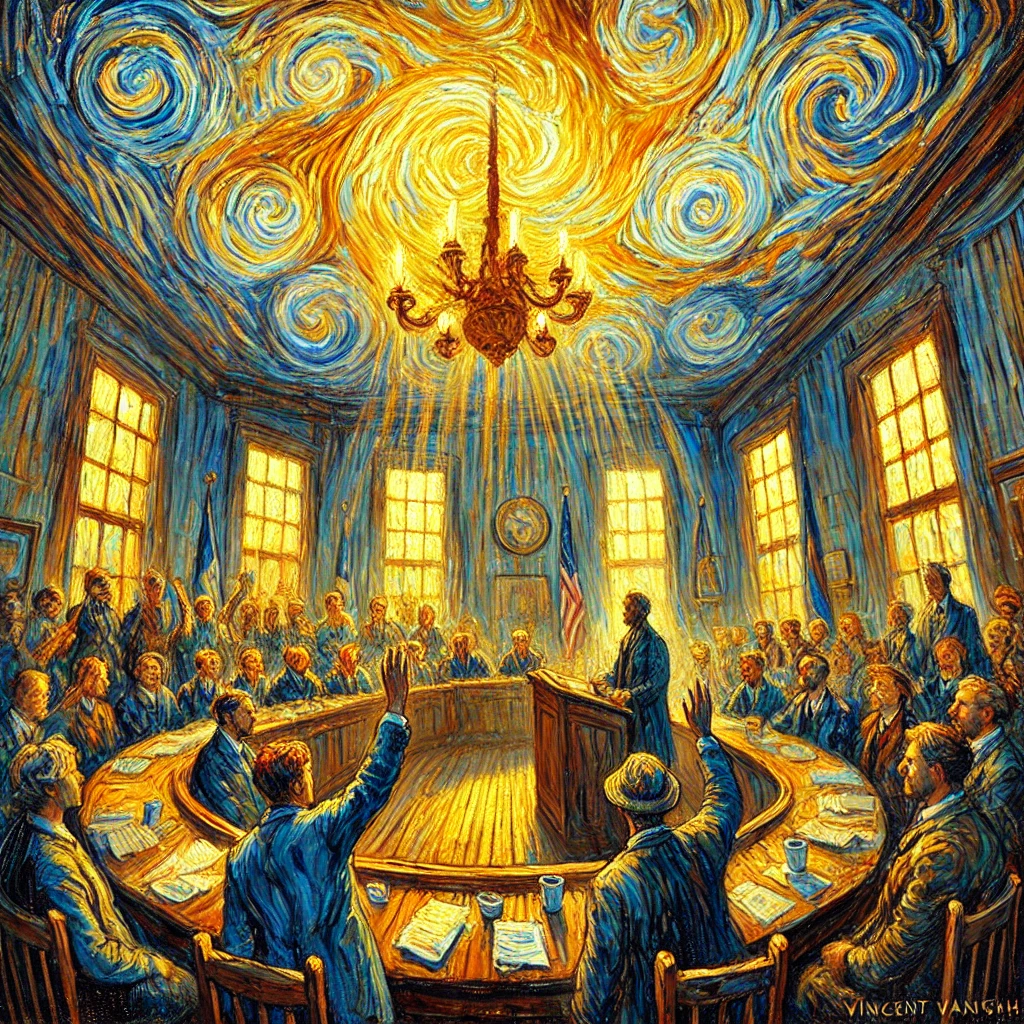
Willa asked, “How do we ensure we don’t drift into selective enforcement again?”
Boot answered carefully.
“Transparency. Publish enforcement logs quarterly.”
Clovis wrote “LOGS.”
“Set clear thresholds,” Boot continued. “If a rule is dormant, review it. Either enforce or repeal.”
Harlan frowned.
“You’re making this complicated.”
Act VIII — Selective Enforcement Debated Openly
Boot shook his head.
“I’m making it explicit.”
The hedge-cited man raised his hand again.
“If you do this, does it apply to landscaping?”
Willa sighed.
“Yes.”
The rooster owner looked alarmed.
“Noise ordinances too?”
Sheriff Peeler gave him a look that suggested moderation.
Boot concluded, “Consistency prevents resentment.”
Mabel murmured, “And fewer placemats.”
Clovis closed his notebook with satisfaction.
The debate had matured from fabric to philosophy.
Act VIII — Selective Enforcement Debated Openly
Act IX: The Vote
The resolution was read aloud.
It acknowledged non-enforcement, established prospective clarity, provided grace periods, and directed removal of the banner “with historical acknowledgment.”
The phrase had been Boot’s suggestion.
Harlan hesitated before voting.
“Aye,” he said reluctantly.
Willa followed.
“Aye.”
The resolution passed unanimously.
Boot sat down slowly.
Act IX — The Vote
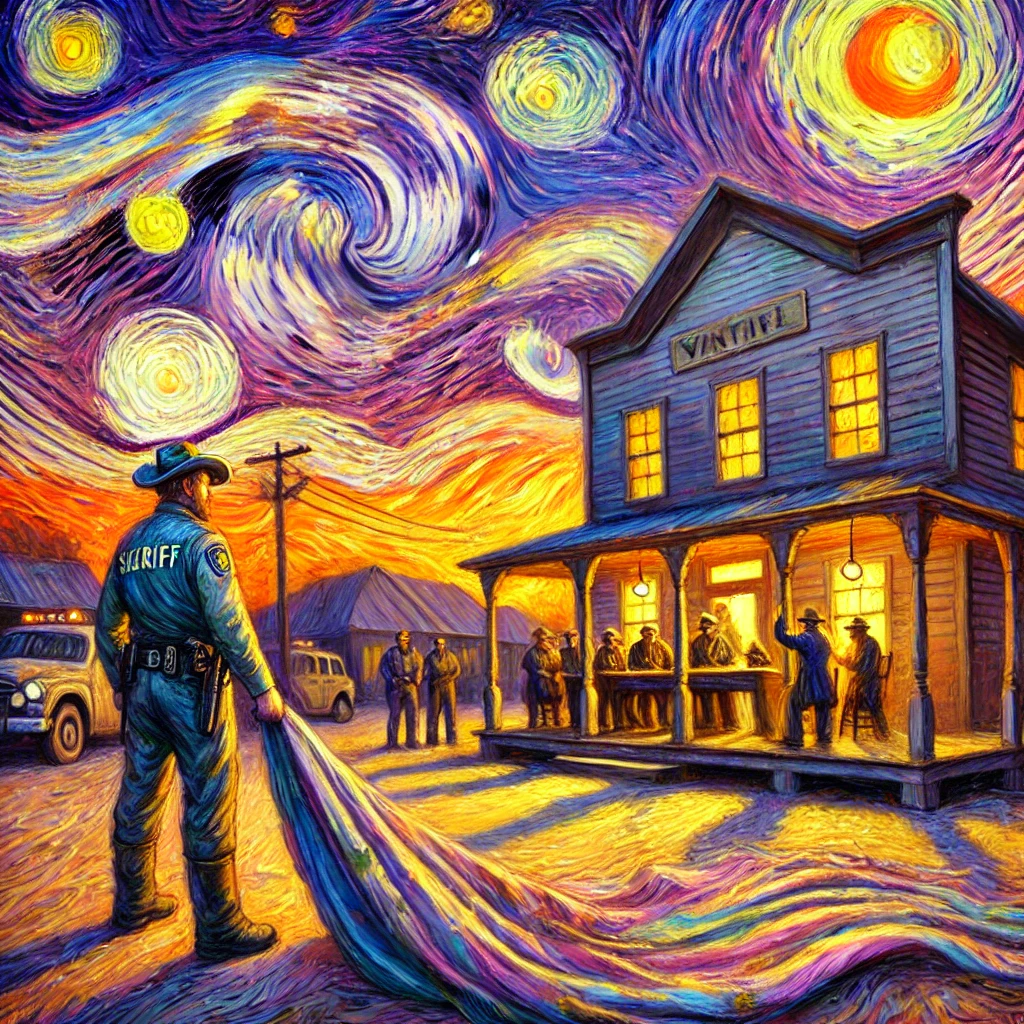
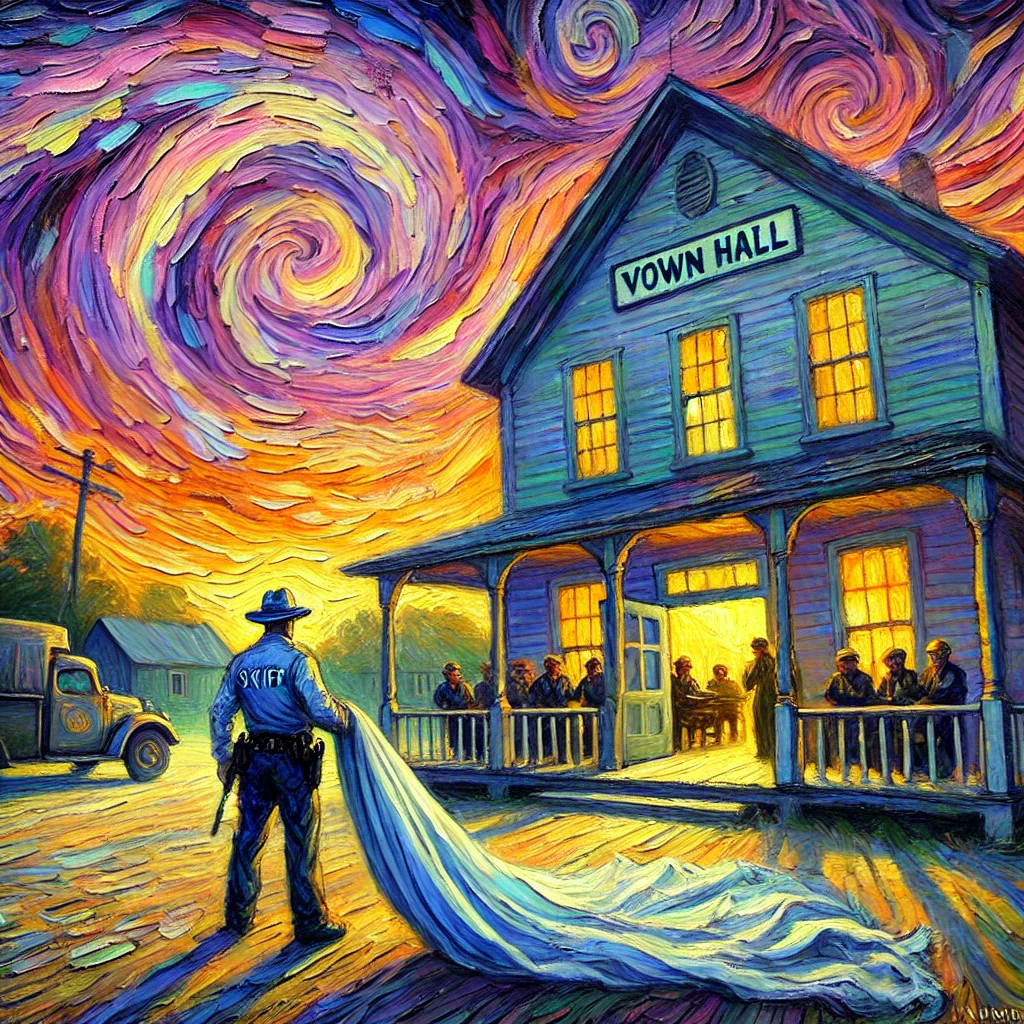
The banner outside flapped once more, then sagged into stillness as Sheriff Peeler untied the final cord.
It fell into his arms like a tired sail.
For a moment, no one spoke.
Then Lydia Mae said gently, “Meeting adjourned.”
Act IX — The Vote
Epilogue: What Time Does
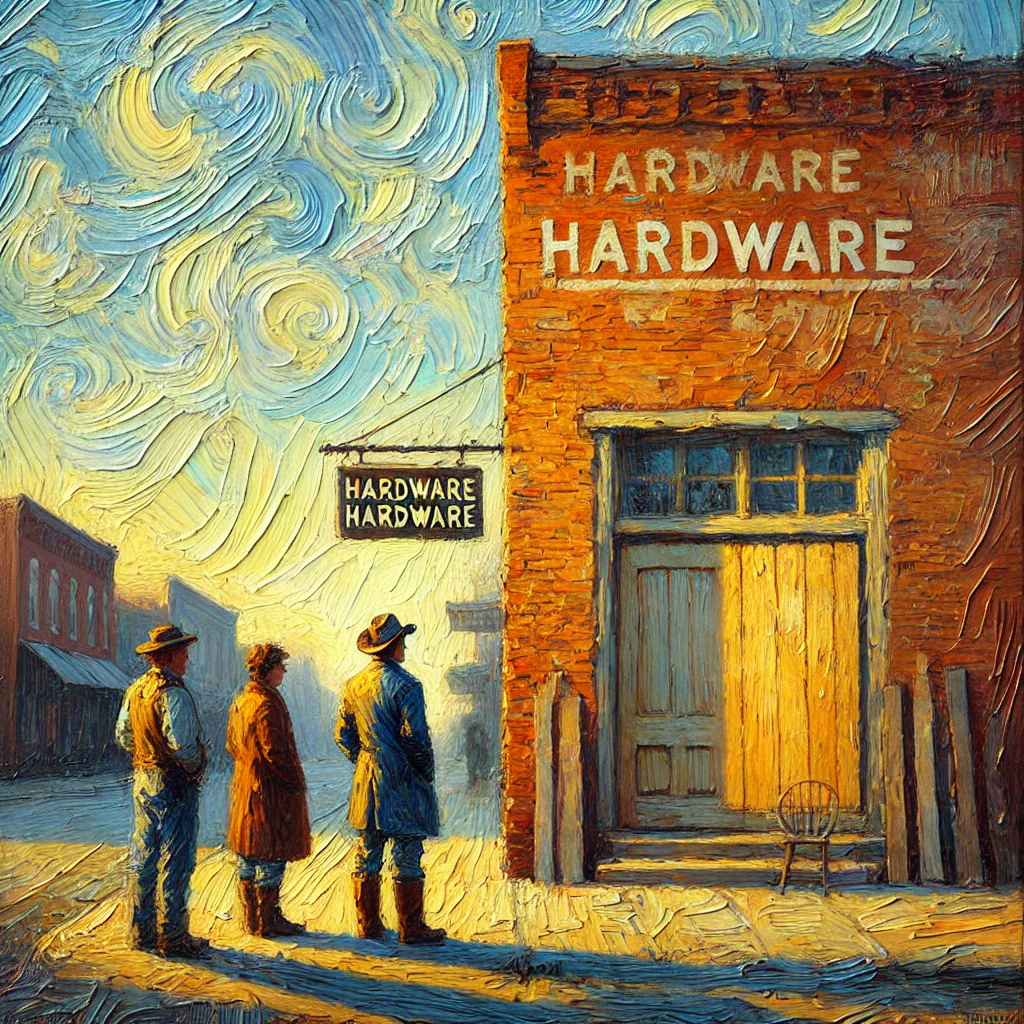
The next morning, the hardware building’s brick looked strangely exposed.
The absence of the banner revealed a faint rectangle where sunlight had not reached in eleven years.
Boot stood with Mabel, observing the mark.
“See?” she said. “Time doesn’t void fabric. It preserves memory.”
Boot nodded.
“They’ll argue about this for a while.”
“Of course,” Mabel said. “We debated beside it.”
Clovis later proposed framing a section of the banner for the town archive. Harlan suggested composting it. Sheriff Peeler stored it temporarily in the evidence closet labeled “Historical Curiosities.”
The hedge-cited man trimmed his hedge voluntarily.
The rooster owner adjusted his coop.
And the signage ordinance—once dormant—now lived again, not as a threat, but as a policy publicly understood.
Boot sipped coffee on the bench outside Town Hall.
Selective enforcement had not vanished from the world.
But in Sequatchie Crossing, at least for a season, it had been examined.
The wind moved lightly down Main Street.
Nothing flapped.
Boot watched the brick rectangle fade slowly in the sun.
“Time doesn’t void fabric,” he murmured.
“It just tells on it.”
Mabel, passing by with another box of something frosted, nodded.
“And on us.”
The town continued, as towns do—balancing rules and mercy, memory and motion, enforcement and grace.
And somewhere in the evidence closet, folded neatly, lay a faded banner that once promised free coffee on a Friday no one could quite remember.
But everyone, now, could discuss.
Epilogue — What Time Does
Disclaimer
This episode of Sequatchie Crossing is a work of fiction. All characters—including Boot Barnes, Mabel Dean, Clovis Strickland, Sheriff Peeler, council members, hedge owners, roosters, and flapping banners—are fictional creations within a satirical storytelling universe.
Any resemblance to real persons, living or deceased, or to actual towns, ordinances, meetings, or signage disputes is purely coincidental. References to statutes, enforcement practices, or municipal procedures are used for narrative and thematic purposes only and should not be interpreted as legal advice, historical record, or commentary on any specific governing body.
The story explores ideas such as selective enforcement, fairness, and civic trust through humor and exaggeration. It is intended to entertain, provoke thoughtful reflection, and celebrate the peculiar rhythms of small-town debate—not to accuse, document, or adjudicate real-world events.
No actual banners were harmed in the making of this story, though several may feel seen.
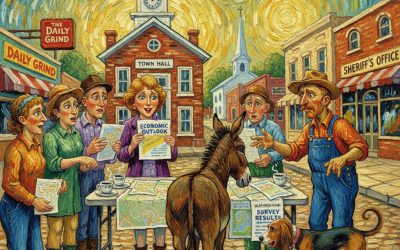
Disclaimer Image — Satirical Framing
Real Places Behind the Ruckus – From The Dunlap Directory

Real Places Behind the Ruckus – From The Dunlap Directory
Yes, this story was fictional; even the parts that weren’t true. These places? Absolutely real. Stop by, support local, and keep the Wi-Fi away from livestock:
- Bigfoot Adventure TN Zipline
- Tractor Supply
- Daniels Business Solutions
- Dunlap Industries
- Omni Rehab – Dunlap Office
- Sequatchie County Veterans Service Office
- Sequatchie Valley Brewing Co.
- Clayton Homes
- Mountain Valley Bank
- Rolling Oak Distillery
- TN Waterfront Vacation Rental
- County Veterans Service Offices
- El Metate
- Campbell’s Tree Service
- Home Folks Family Restaurant

Real Places Behind the Ruckus – From The Dunlap Directory
At Sequatchie Crossing, we tell the stories of Sequatchie Crossing.
Please share this post with your friends, family, or business associates who may want help telling the stories of their legacy.


0 Comments