


By Tom Seest
At Sequatchie Crossing, we tell the stories of Sequatchie Crossing.
🎤 Audio Overview
The Pageant Scandal That Split The Quilting Guild – Rhinestones, Resentment, and Ribbon Rebellion
If you ever thought a child’s beauty pageant and a quilting guild had nothing in common, then friend, you’ve never been to Sequatchie Crossing during the lead-up to the annual Miss Stitch & Shine Festival Pageant.
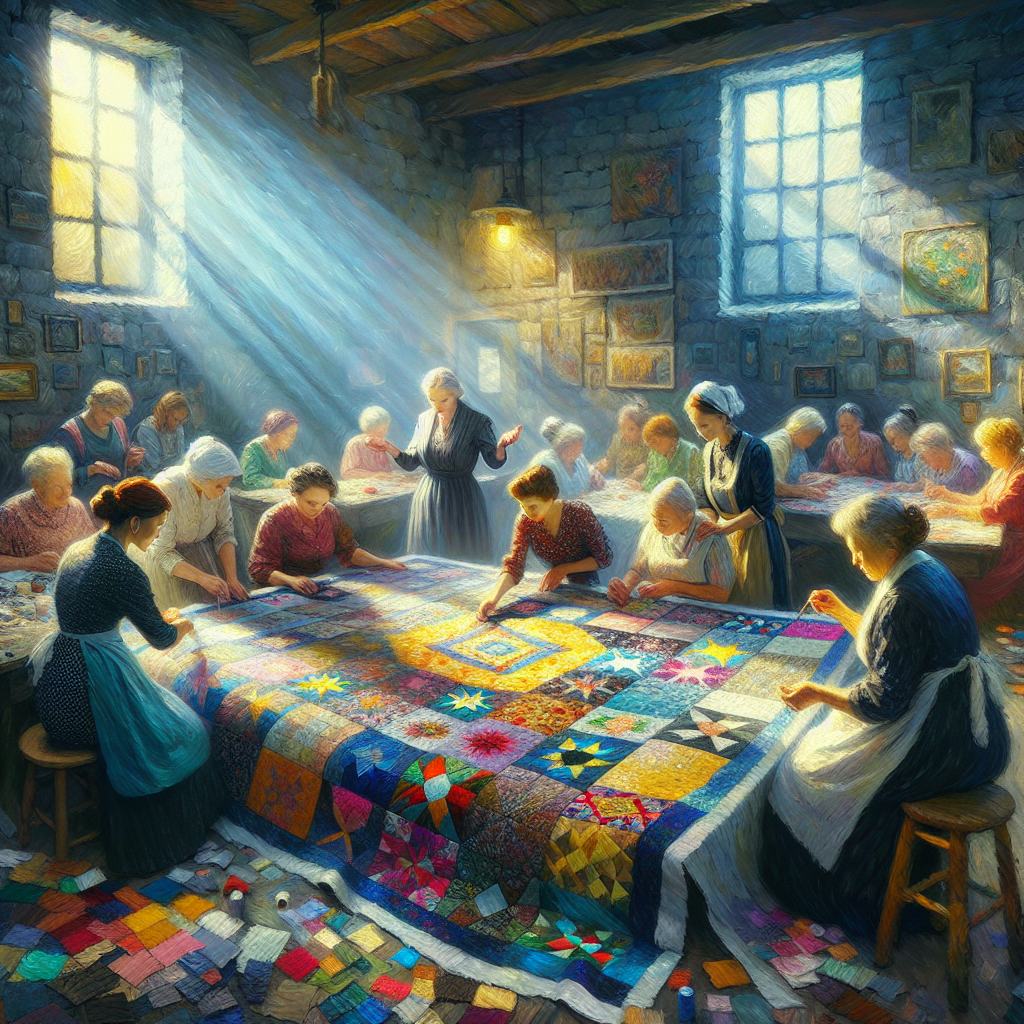
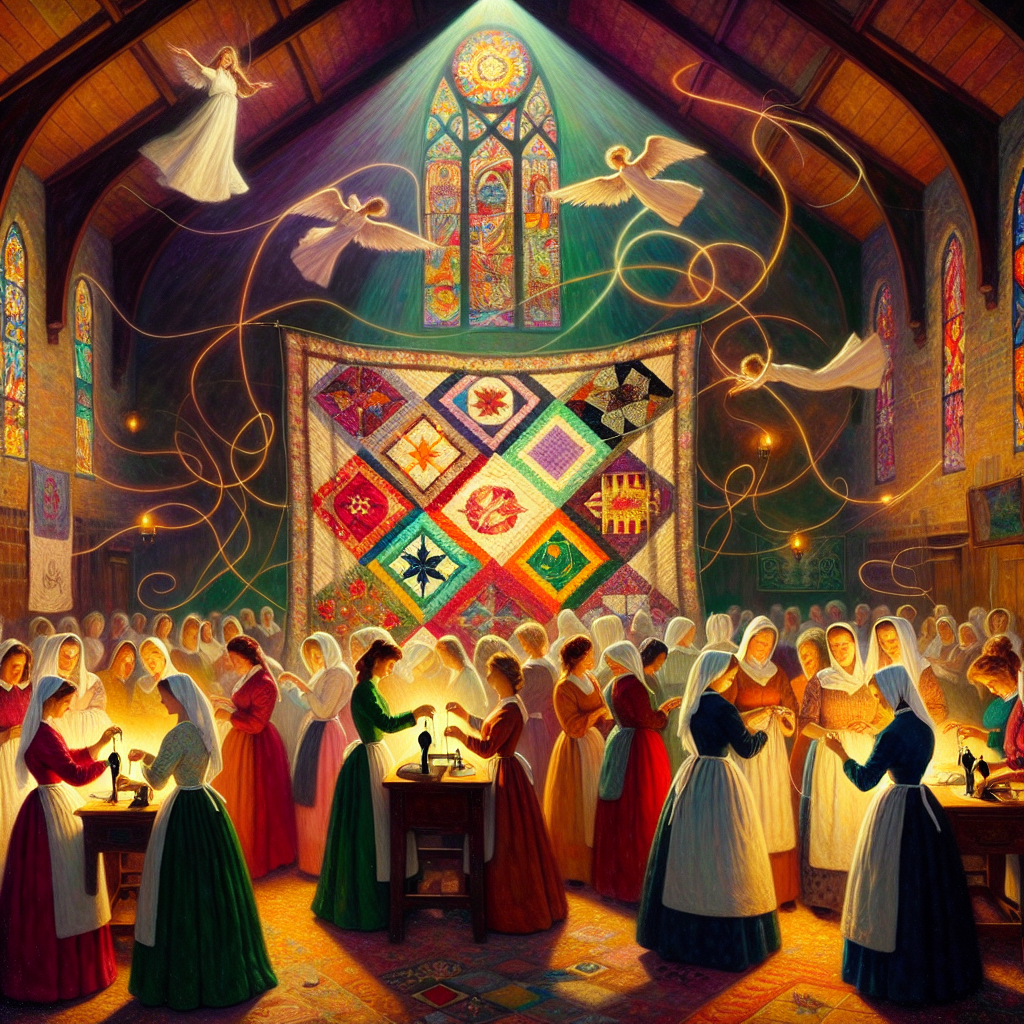
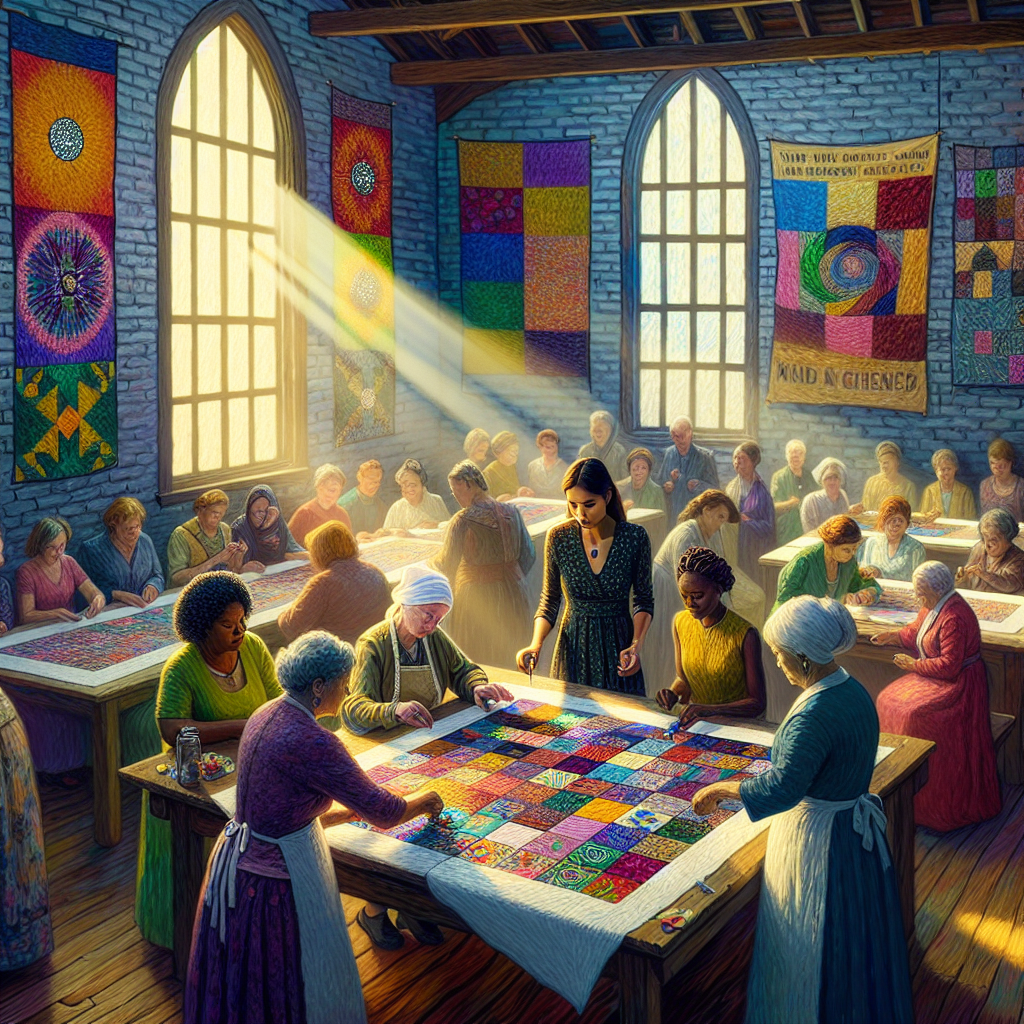
On paper, it was a simple partnership: the Fredonia Stitch & Salvation Quilting Guild would handcraft the sashes, the crowns, and a one-of-a-kind “Legacy Quilt” backdrop for the winner’s throne. But in practice, it became a turf war so fierce it made the Hatfields and McCoys look like pen pals.
The trouble started when Trixie Jo Bartlett—age 9, pageant veteran, and reigning Little Miss Sequatchie—submitted a “concept sketch” for the winner’s sash. It featured rhinestones, LED lights, and a holographic butterfly with rotating wings.
Mabel Dean Ashcroft, head of the guild and staunch defender of “quiet thread values,” called it “sash blasphemy.”
Meanwhile, Shelley Wexler backed Trixie’s design, arguing that the butterfly represented “inner metamorphosis, chakra evolution, and the feminine divine.” She also suggested embedding a healing crystal into the center knot for “balance.”
At the next guild meeting, Evelyn Grace Tipton proposed a vote. The motion read: “Shall the guild allow non-sewn elements of artificial origin to be fused, glued, or hot-fixed to ceremonial garments of traditional designation?”
The vote was split 9–9.
The tension was stitched tighter than a double-stitched Dresden plate block.
The Pageant Scandal That Split The Quilting Guild – Rhinestones, Resentment, and Ribbon Rebellion
Pastor Arnold Peeler, brought in to mediate, accidentally referred to rhinestones as “Satan’s sequins” and reignited the entire debate.
By Wednesday, factions had formed:
- The Purists, led by Mabel Dean, demanded thread-only embellishments and launched the slogan: “If It Ain’t Sewn, It’s Overthrown.”
- The Glammers, led by Shelley and Trixie Jo, promoted sparkle as “spiritual expression.” Their shirts read: “Shine On, Sister.”
A full-on ribbon rebellion broke out during the dress rehearsal when Evelyn tried to switch out a glittered sash for a muslin one “out of modesty.” Words were exchanged. Glitter was flung. Someone’s embroidery hoop was weaponized.
Officer Kenny Joe Teeter was called to de-escalate and arrived with his hands up, muttering “I ain’t trained for fashion riots.”
The mayor, desperate to maintain peace ahead of the festival, brokered a compromise: dual sashes—one traditional, one “interpretive.” The pageant winner would wear both.
Trixie Jo declared it “a win for diplomacy and sparkle integrity.”
The Pageant Scandal That Split The Quilting Guild – Rhinestones, Resentment, and Ribbon Rebellion
But the compromise didn’t hold for long. On the night of the pageant, Trixie showed up not just with both sashes—but with a third, self-made sash made from sequined ribbon, fringe, and what looked like a repurposed Fourth of July tablecloth. It read “Miss Meta-Fabric 2025.”
The crowd roared. Mabel Dean nearly fainted into a stack of quilt blocks. Shelley stood and applauded. Evelyn retreated to the punch table and declared it “a moral unraveling.”
After the crowning, the Legacy Quilt backdrop mysteriously disappeared. It was later discovered folded beneath the bleachers with a note pinned to it that read: “Too Much Glitter Weakens the Stitch.”
The Guild has now split into three factions:
- The Fredonia Traditional Needle Assembly
- The Sequatchie Freeform Textile Guild
- And Trixie Jo’s Young Sew-cialists, who meet Thursdays behind the gazebo with battery-operated glue guns and rhinestone stencils.
The town hasn’t seen this much pageantry-related tension since the Great Tiara Collapse of 2009.
Conclusion
At Sequatchie Crossing, we tell the stories of Sequatchie Crossing.
Disclaimer: This story is entirely fictional except for the parts aren’t true. Any resemblance to real people, living or just stubborn, is purely accidental—but also maybe a little flattering. Sequatchie Crossing exists only in the minds of those brave enough to imagine a town where zoning laws, casseroles, and conspiracy cassettes collide in glorious disarray.


0 Comments