



Locals Celebrate Victory for ‘Human Beep’ Over Machine Beep; Roundabout Committee Still Lost In the Inner Circle
By Tom Seest
At Sequatchie Crossing, we tell the stories of Sequatchie Crossing.
Please share this post with your friends, family, or business associates who may want follow the news from Sequatchie Crossing.
🎤 Audio Overview

The Peanut Rebellion
Act I: The Peanut Problem
Sequatchie Crossing’s Walmart was once a fluorescent temple of normalcy — where air-conditioning blasted like divine mercy and gossip came free with every gallon of milk. But peace was shattered the day headquarters rolled out what they proudly called the “Peanut Layout” — a circular self-checkout experiment modeled after “the town’s successful roundabout initiative.”
Unfortunately, Sequatchie Crossing was the last place on Earth that should have been trusted with anything circular.
The peanut consisted of two plump loops connected by a narrow “cart corridor,” designed to “enhance shopper flow.” Instead, it triggered chaos reminiscent of a demolition derby hosted by blindfolded raccoons.
“It was like NASCAR for groceries,” sighed Mabel Dean, who limped into the ER after colliding with a pyramid of Pringles. “You had to yield to laundry detergent.”
Within a week, six cart collisions, four minor injuries, and one emotional breakdown (involving frozen lasagna) were reported. A local man scanned himself as “organic produce,” while another attempted to “merge left” into a display of Cheez-Its.

Act I – Peanut Layout Chaos
Act II: The Great Beep Revolt
The breaking point came one Tuesday when the town’s Roundabout Committee — still recovering from a years-long debate about who actually has the right-of-way — held an emergency meeting inside the Walmart.
They entered the peanut layout to “study customer circulation,” but failed to exit for three hours, eventually forming a small civilization near Aisle 5.
Meanwhile, chaos spread.
Boot Barnes, Sequatchie Crossing’s self-appointed “traffic marshal,” took a stand. Waving a roll of receipt paper like a flag of freedom, he shouted, “We demand the human beep!”
The cry echoed through the store. Within minutes, dozens joined him, carts locked in solidarity, blocking the peanut’s inner circle. “No Scan, No Peace!” they chanted as an elderly shopper unplugged the first self-checkout machine in an act of symbolic rebellion.
Someone hacked the store’s PA system and blasted Dolly Parton’s 9 to 5 on repeat. The crowd swayed to the beat, receipts fluttering like confetti.
By closing time, the “Beep Rebellion” had begun.
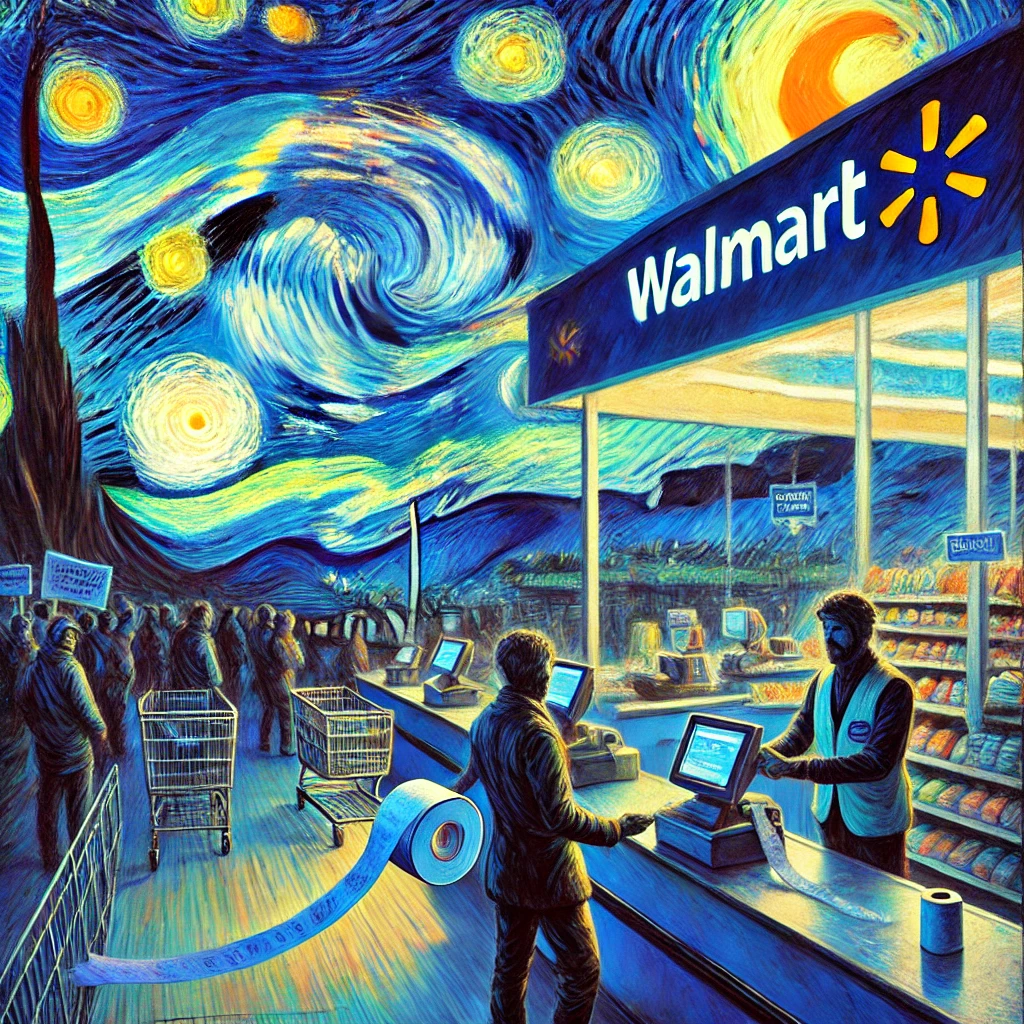
Act II – Beep for the People
Act III: The Machines Strike Back
Walmart management tried to calm the uprising by rebooting all 24 kiosks at once — a move historians would later call “The Great Power Surge.”
Every screen flashed blue. Error messages cascaded like a digital waterfall. One unlucky shopper, midway through scanning 38 rolls of paper towels, was charged $4,862 and received a congratulatory “Thank You for Your Mega Order!” banner.
The lights flickered. The machines beeped uncontrollably — hundreds of tones overlapping like a chorus of panicking robots. People screamed, carts jammed, and one child was briefly declared “manager on duty” after tapping the wrong screen.
Local conspiracy theorist Clovis Tucker livestreamed from inside, claiming Walmart had “installed 5G beacons inside the peanut’s shell.”
“That ain’t a layout,” he warned, “that’s surveillance geometry.”
By nightfall, paramedics were treating cases of phantom beeping — shoppers hearing invisible barcodes in their dreams.

Act III – The Great Power Surge
Act IV: The Mayor Intervenes
After three days of chaos, Sequatchie Crossing’s interim mayor, J.W. “Buster” Haney — a man famous for banning escalators from the courthouse after “one bad experience at the Chattanooga Mall” — decided enough was enough.
“I don’t know what a QR code is,” he said at a press briefing, “but I do know folks just want to buy their Vienna sausages and get out alive.”
Haney declared a local “checkout emergency” and personally called Walmart corporate. Within hours, trucks rolled into the parking lot carrying long-forgotten relics of humanity: cash registers.
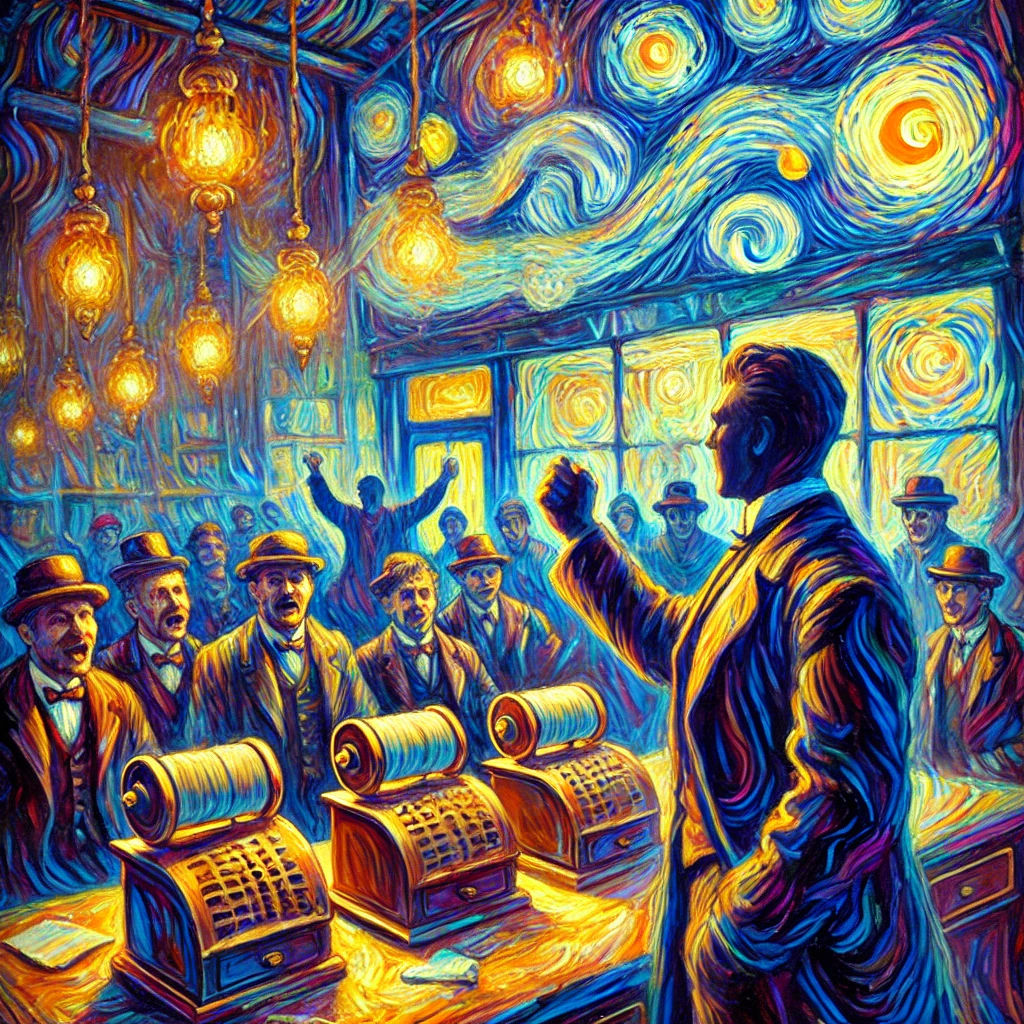
Act IV – Mayor Haney’s Declaration
Act V: Return of the Cashiers
By sunrise, the peanut was gone — replaced by good, old-fashioned straight lanes. Cashiers were reinstated, each one greeted like a war hero.
When the first “human beep” rang through the air — a cashier scanning a box of Little Debbie cakes — the crowd erupted. Some cried, others hugged. Someone started a conga line in Aisle 7.
“I never thought I’d miss a teenager sighing over expired coupons,” said Darlene Pruitt, holding a bouquet of flowers for her favorite cashier. “It’s the sound of civilization.”
Corporate released a statement later that day:
“After community feedback, we are proud to reintroduce traditional checkout experiences emphasizing the human connection.”
(Translation: We surrender.)

Act V – Return of the Cashiers
Act VI: The Inner Circle Never Ends
The Roundabout Committee, still technically “meeting,” continues to wander the empty peanut outline in the floor tiles. They argue endlessly about whether it was a “traffic experiment” or “performance art.”
Boot Barnes insists they were victorious.
Mabel Dean claims it was divine intervention.
And somewhere near “Frozen Foods,” you can still hear the faint echo of rebellion — that ancient rhythm of people versus progress:
Beep for the people. Beep for the people.

Act VI – The Endless Roundabout
Disclaimer
The following story is a work of satire set in the fictional town of Sequatchie Crossing. While inspired by real small-town humor and the universal confusion caused by self-checkout systems, all characters, events, and mayors — past, present, or imagined — are purely fictional. Any resemblance to actual individuals, Walmart employees, or local government officials (current or retired) is purely coincidental. No peanuts were harmed in the making of this story.

Disclaimer in the Aisle of Truth
Moral of the Story:
Progress may beep louder, but humanity still scans smoother.
Real Places Behind the Ruckus – From The Dunlap Directory
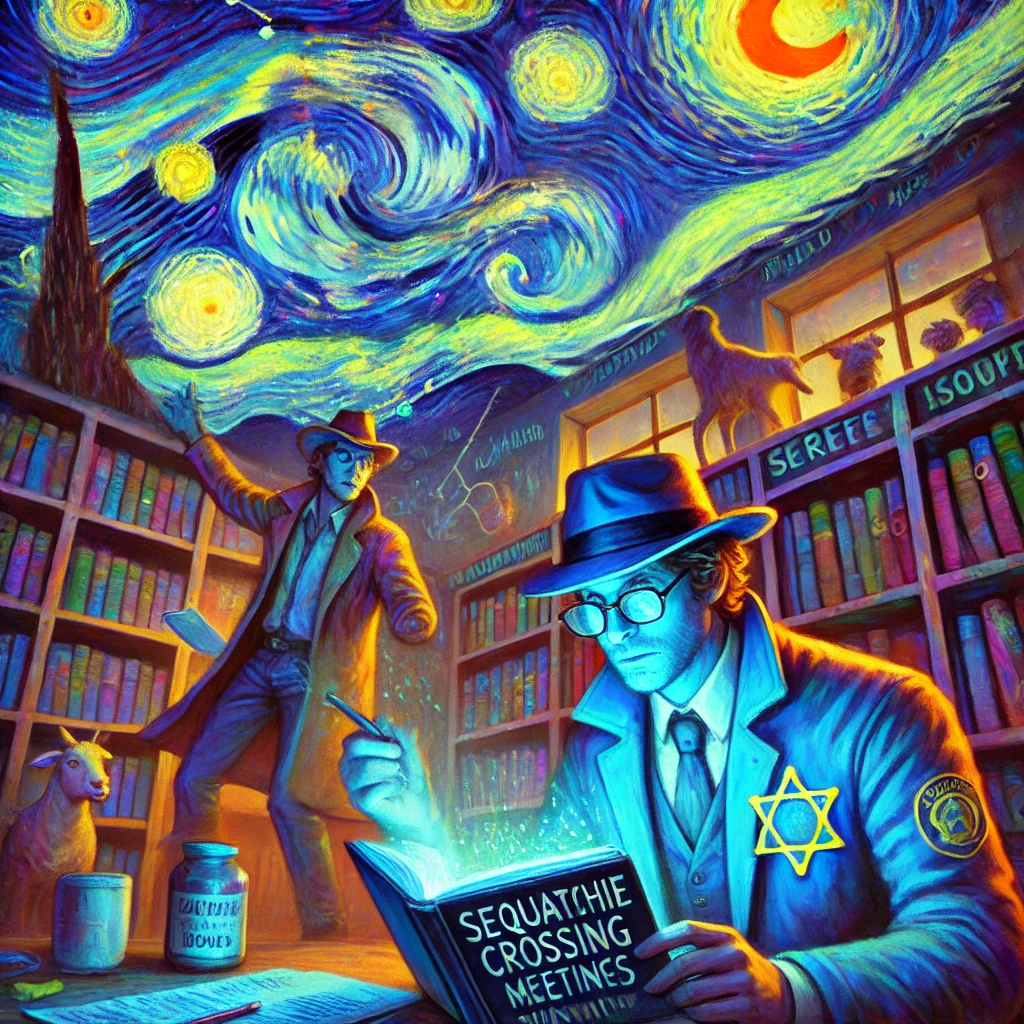
Real Places Behind the Ruckus – From The Dunlap Directory
Yes, this story was fictional; even the parts that weren’t true. These places? Absolutely real. Stop by, support local, and keep the Wi-Fi away from livestock:
- H&M Armory
- Helping Hands Estate Sales
- Main Street Automotive
- Dunlap Plumbing Company
- Whitwell Dunlap Buy Sell Trade
- Cain Development
- Standefer-Reed Funeral Home
- Tiger Rock Dunlap
- Valhalla Acres Campground
- L&W Electric, LLC
- Sequatchie Valley Low Cost Spay & Neuter
- Great Stone Door
- Dunlap AIrpark
- Walgreens
- Applegate Inn
- Ladd Construction
- Coops Creek RV Campground

Real Places Behind the Ruckus – From The Dunlap Directory
At Sequatchie Crossing, we tell the stories of Sequatchie Crossing.
Please share this post with your friends, family, or business associates who may want follow the news from Sequatchie Crossing.



0 Comments