


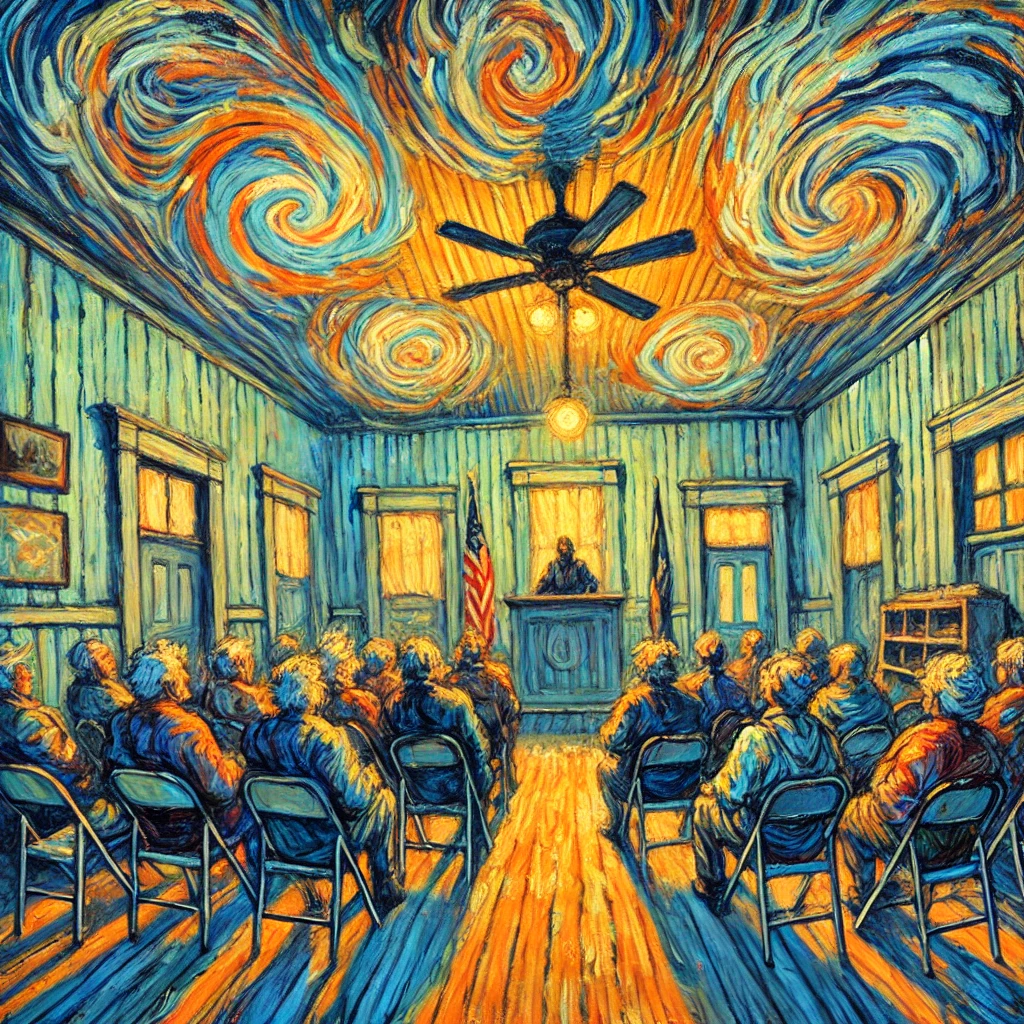
Enforcement Proves Challenging
By Tom Seest
At Sequatchie Crossing, we tell the stories of Sequatchie Crossing.
Please share this post with your friends, family, or business associates who may want follow the news from Sequatchie Crossing.
🎤 Audio Overview
Whispering Classified As Public Comment
Whispering Classified As Public Comment
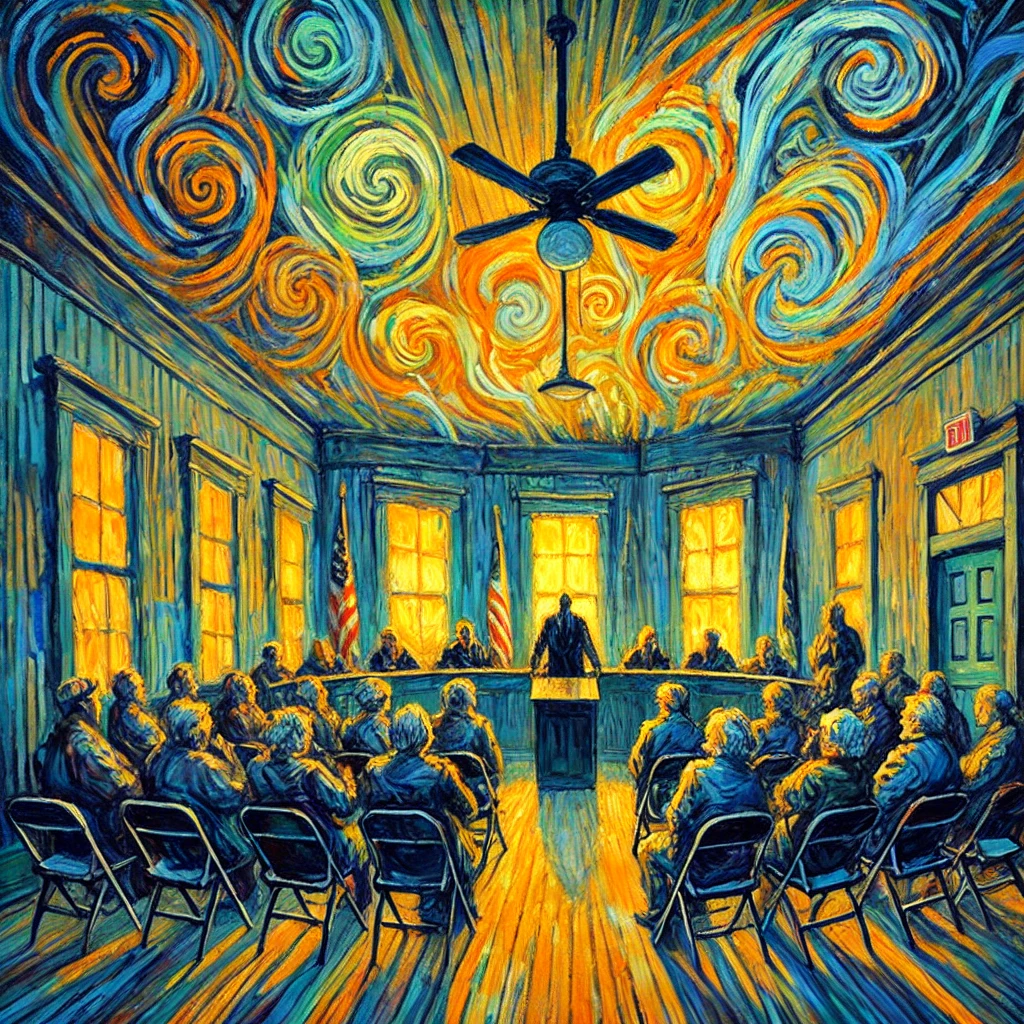
Act I – The Sound Before the Meeting
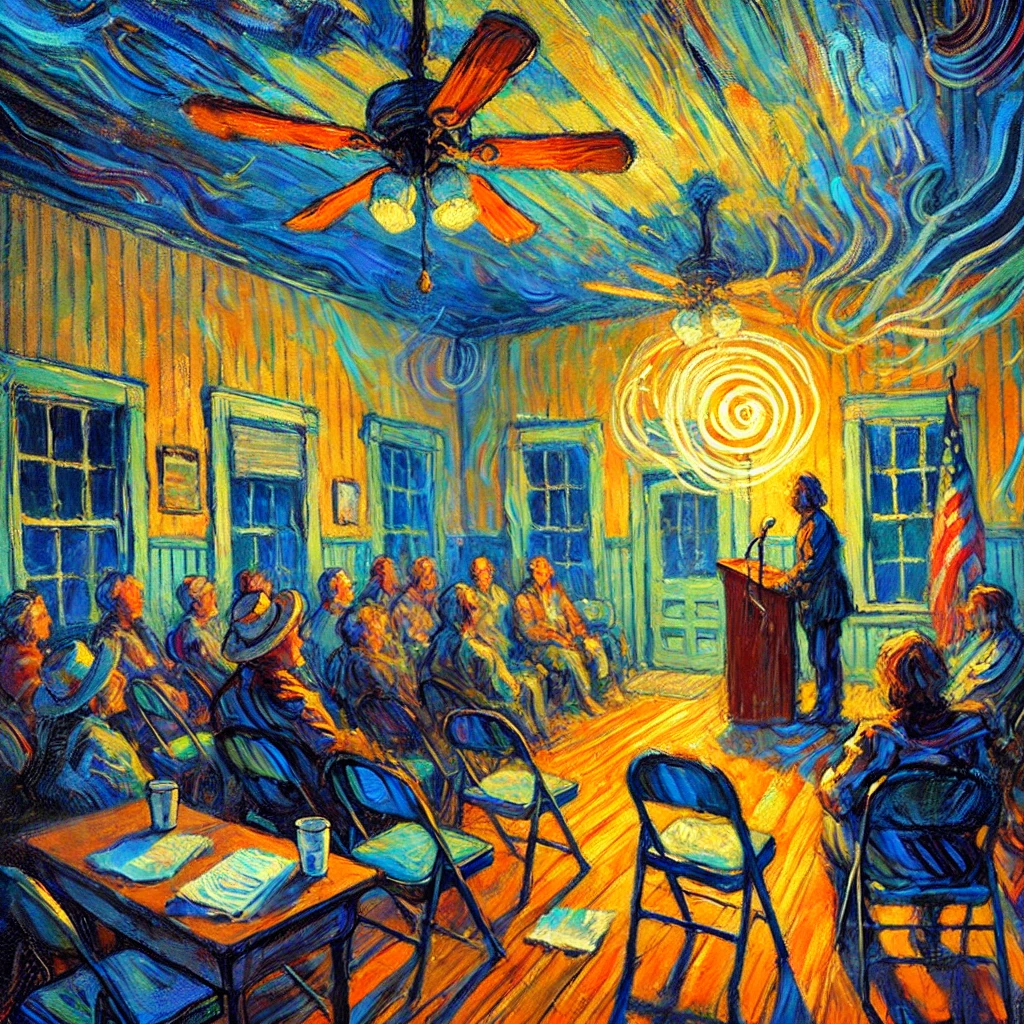
The first whisper of the evening happened before the meeting officially began, which later became important.
It came from the third row, left side, near the folding chair with the missing rubber foot. It wasn’t directed at anyone in particular, which was part of the problem. It simply existed – a low, confidential sound released into the municipal air like a test balloon.
“Did you see who’s here?”
No name followed. No finger pointed. Just the whisper.
The clerk paused mid-agenda stack. Sheriff Peeler, leaning against the back wall, tilted his head slightly – not enough to be obvious, but enough to register that something had happened. Boot Barnes, already seated and holding a yellow legal pad with nothing written on it yet, stopped tapping his pen.
The whisper drifted. No one owned it.
The meeting had not yet been called to order.
This would matter later.
Act I – The Sound Before the Meeting
Act II – The Ordinance That Wasn’t About Whispering
The ordinance itself had nothing to do with sound.
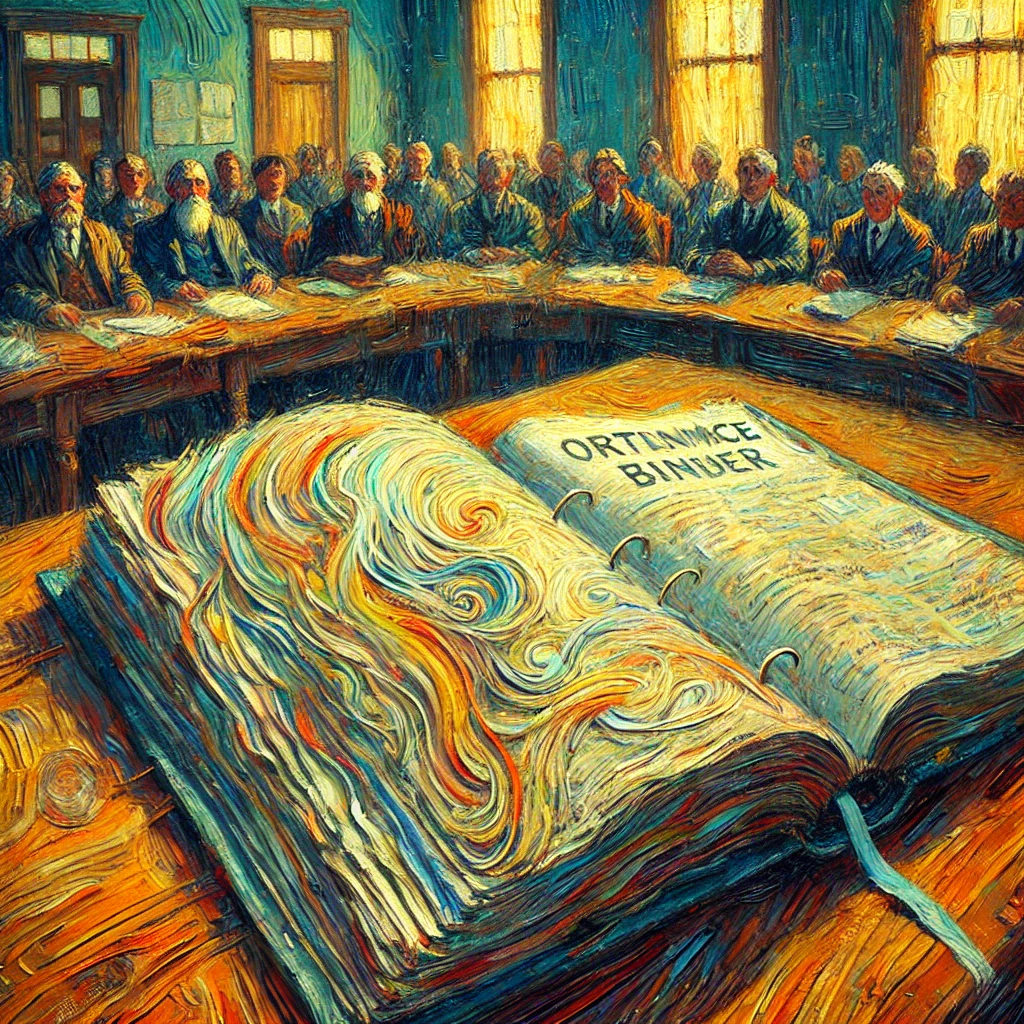
On paper, it was called Ordinance 22-B: Clarification of Public Comment Conduct and Orderly Proceedings. It had been drafted in response to “recent disruptions,” a phrase that meant different things to different people depending on whether they’d been interrupted, ignored, or briefly stared at during previous meetings.
The stated goal was simple:
-
Define when public comment begins
-
Clarify how it ends
-
Prevent “overlapping participation”
The problem was subsection (c), added late in the process, reportedly by accident, though no one could later explain how.
“Any audible expression occurring during a public meeting that may reasonably be interpreted as commentary shall be considered public comment.”
No volume threshold was specified.
No directional intent required.
No exemption for whispering.
The ordinance passed unanimously, largely because no one read that part out loud.
Act II – The Ordinance That Wasn’t About Whispering
Act III – The First Enforcement Attempt
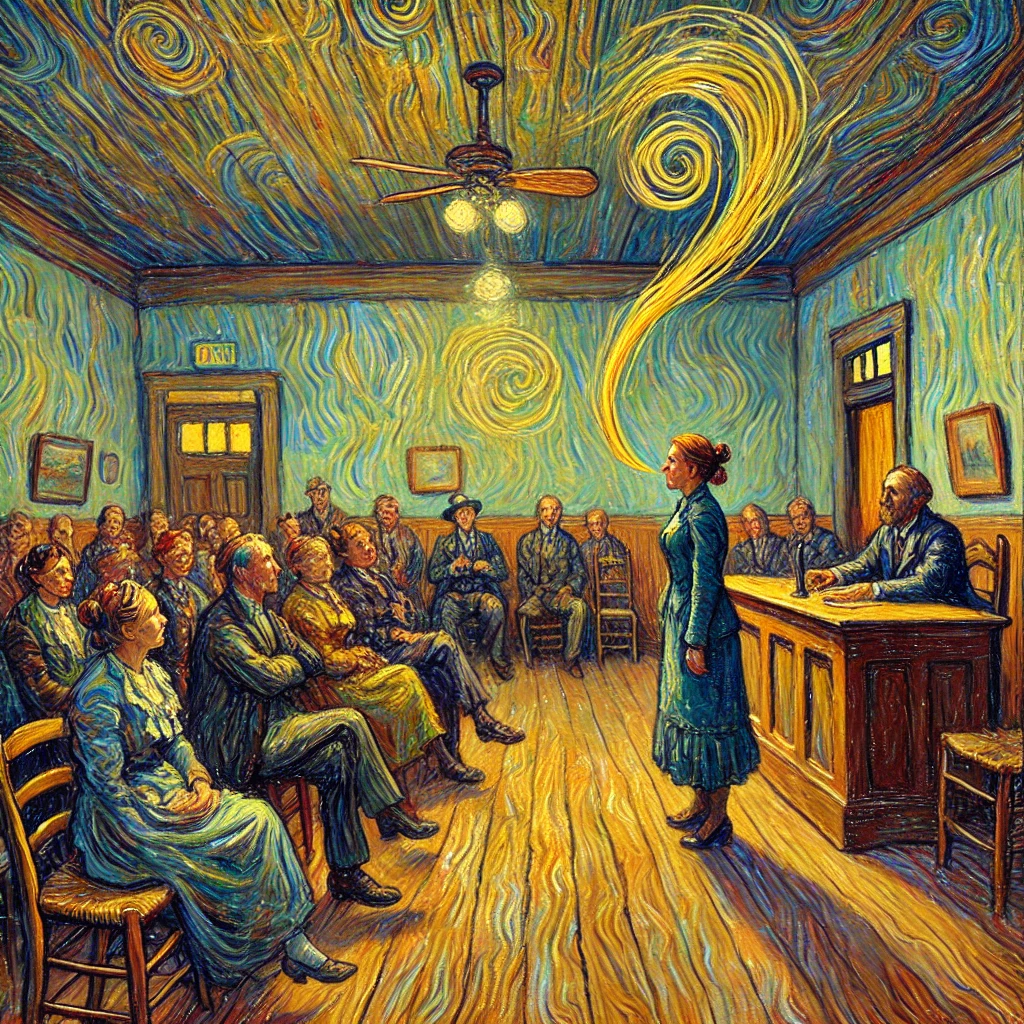
The first enforcement attempt occurred exactly seven minutes into the next meeting.
A woman in the back row leaned toward her neighbor and whispered, “Here we go.”
The chair froze.
“I’m sorry,” he said, peering over his glasses. “Was that a comment?”
She looked up, startled. “No, sir. I was just – ”
“Ma’am,” the chair interrupted gently, “if it was audible, it qualifies.”
“I wasn’t addressing the board.”
The clerk flipped through the ordinance binder. The sound of pages turning was louder than the whisper had been.
“That’s not a requirement,” the clerk said.
A pause followed – the kind that gets remembered later as longer than it was.
“So… do I get the floor?” the woman asked.
The chair hesitated. “I suppose… yes?”
She stood. She had nothing prepared.
“Well,” she said, “since I’m up here now, I guess I’ll say this ordinance is ridiculous.”
Applause broke out, which was not technically whispering and therefore not covered.
Yet.
Act III – The First Enforcement Attempt
Act IV – Clovis Strickland Takes Notes
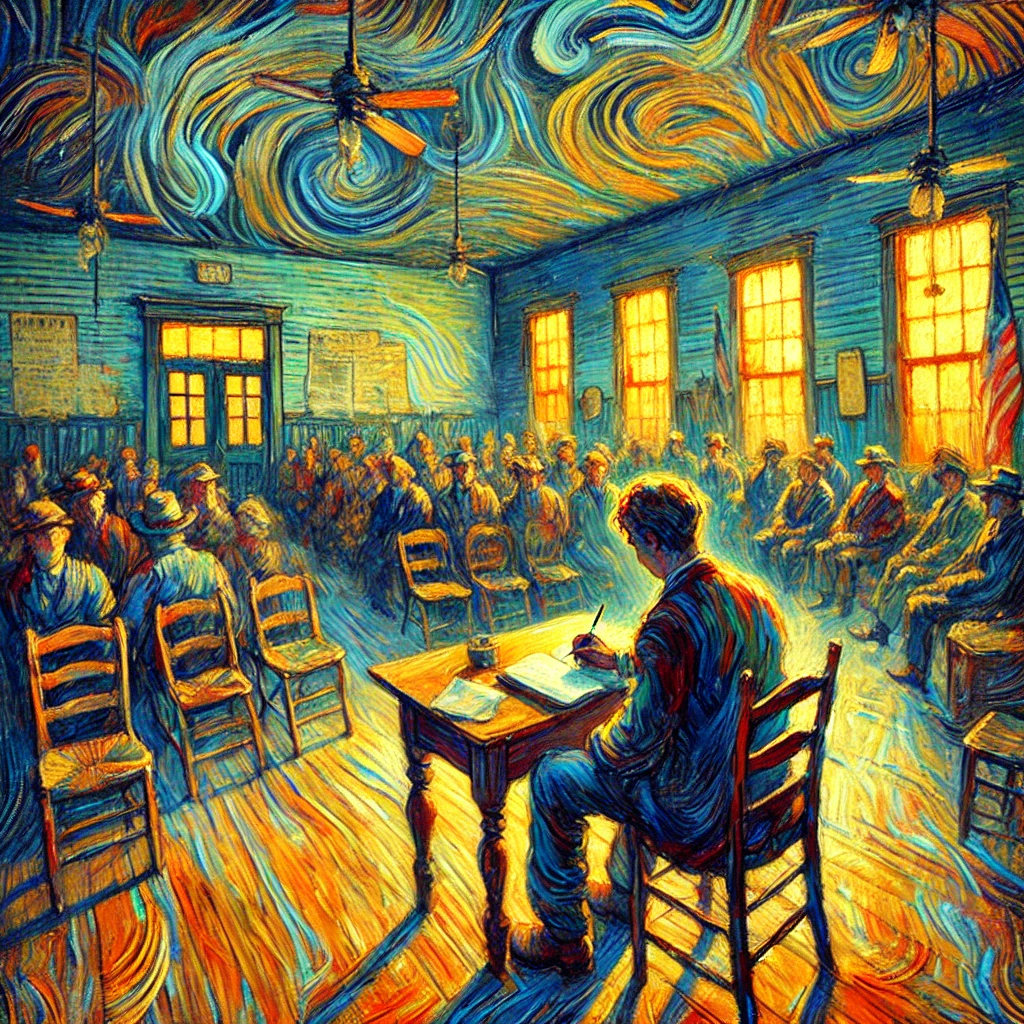
Clovis Strickland did not whisper.
He leaned back in his chair, hands folded, eyes alert, absorbing the room the way some men absorb weather patterns. He had already decided two things:
-
This would not go well.
-
Someone would later claim it had.
In his notebook – the blue one, not the brown one – he wrote:
“Ambiguity has acquired a microphone.”
He underlined it twice.
Clovis had been in meetings where silence carried more weight than speech. This was different. This was sound weaponized by uncertainty.
Across the aisle, a man coughed.
The chair looked up sharply.
“Was that directed commentary?”
The man froze mid-cough, eyes watering.
“I – I have bronchitis.”
The clerk consulted the binder again.
No exemption for illness.
Clovis wrote another note.
“Respiratory ambiguity pending.”
Act IV – Clovis Strickland Takes Notes
Act V – Boot Barnes Tests the Limits
Boot Barnes had been waiting.
Not impatiently – strategically.
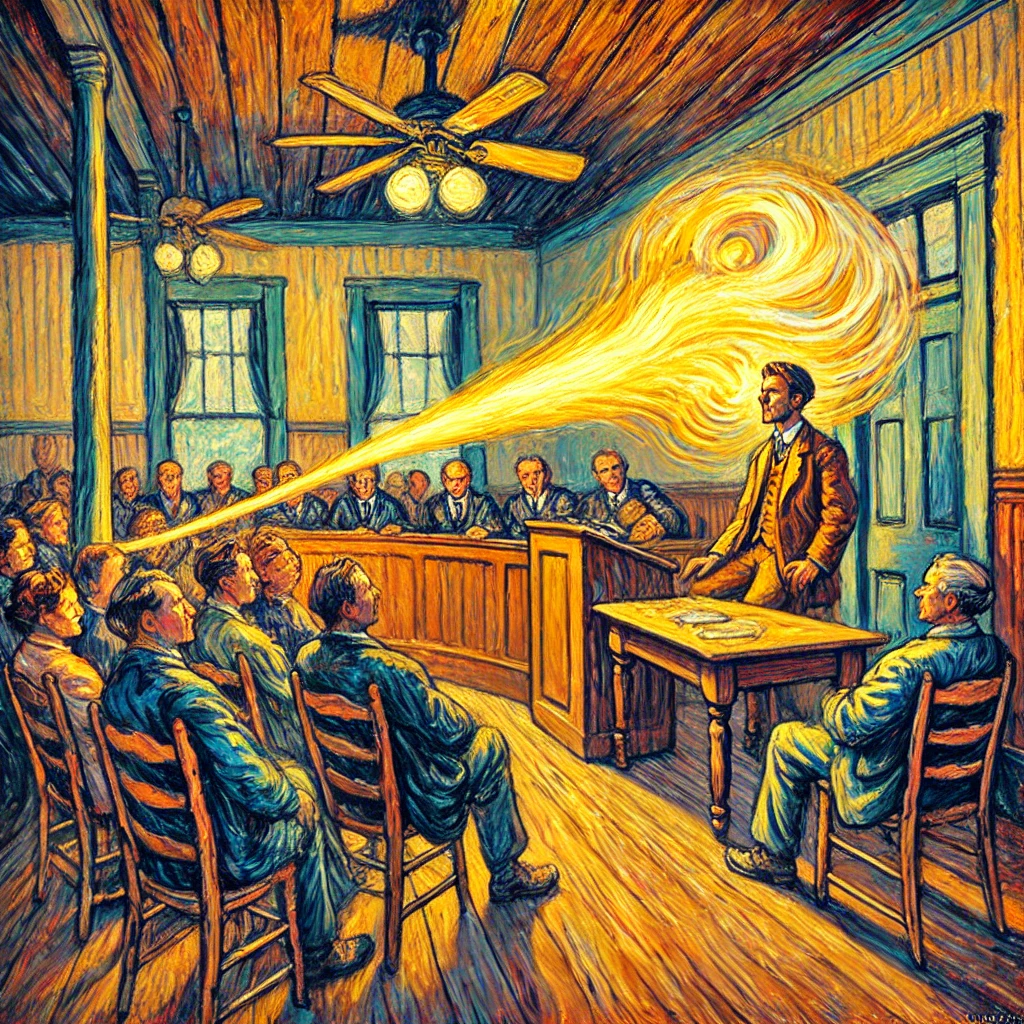
When the floor finally opened for general comment, he did not raise his hand. He did not stand. He did not speak at full volume.
He whispered.
Not to anyone. To the room.
“Seems like we’ve wandered into a philosophical thicket.”
The whisper carried.
The chair leaned forward. “Mr. Barnes, are you requesting to speak?”
Boot blinked. “No, sir. I was thinking out loud.”
“That’s commentary.”
“So is breathing, apparently.”
Murmurs followed. Some whispered. Some did not.
The clerk scribbled frantically, unsure whether to log the murmurs individually or as a collective event.
Boot stood anyway.
“If whispering is public comment,” he said, now projecting clearly, “then silence is dissent.”
The room went quiet.
That silence would later be debated for weeks.
Act V – Boot Barnes Tests the Limits
Act VI – Sheriff Peeler Loses Track of the Sound
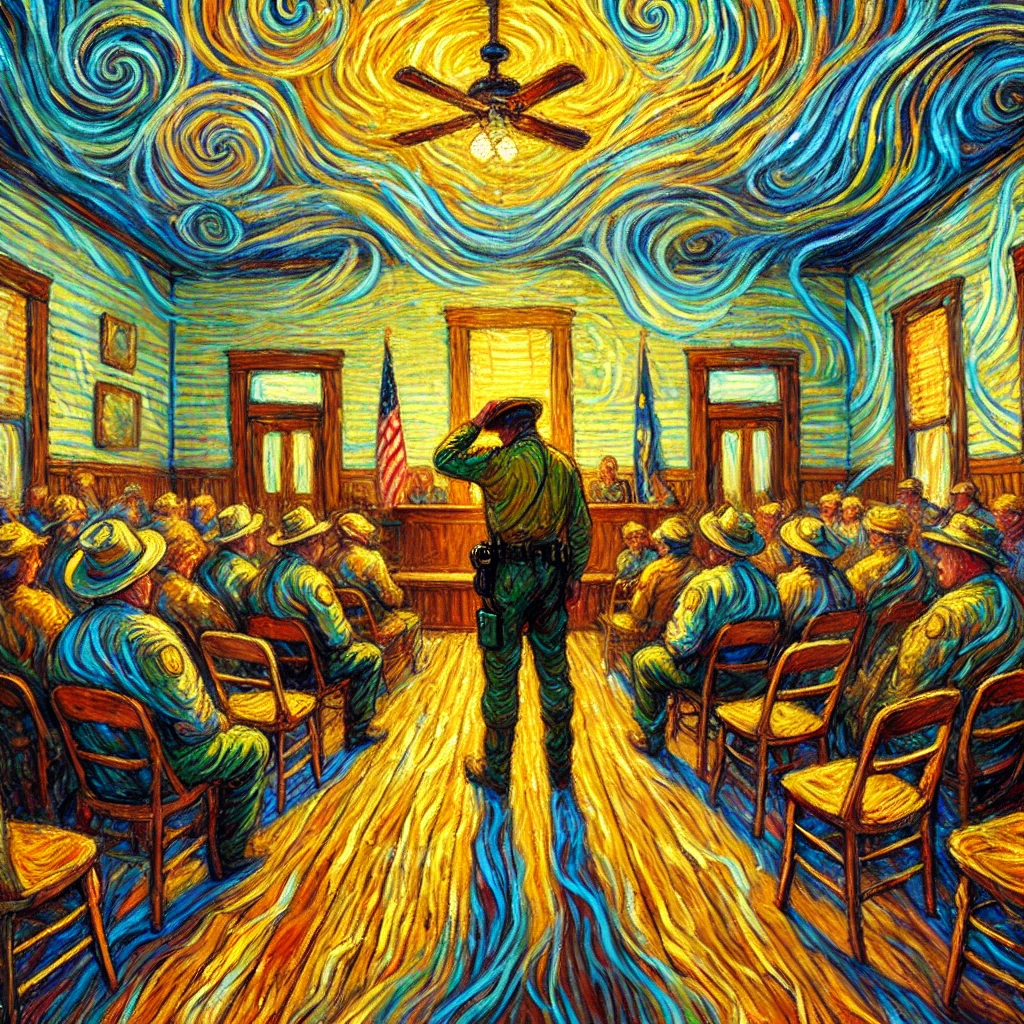
Sheriff Peeler had been assigned to “maintain order,” a task that usually involved body language and the occasional reminder that the exits were visible.
Tonight, he found himself counting sounds.
Two whispers near the back.
One muttered phrase near the podium.
A sigh – long, expressive, possibly sarcastic.
“Was that a sigh of opposition?” the chair asked.
Peeler rubbed his forehead.
“I don’t know anymore,” he said honestly.
Someone whispered, “This is unreal.”
“Who said that?” the chair demanded.
No answer.
The whisper had no owner.
Peeler leaned toward the clerk. “You want me to remove… the air?”
Act VI – Sheriff Peeler Loses Track of the Sound
Act VII – The Town Discovers Itself
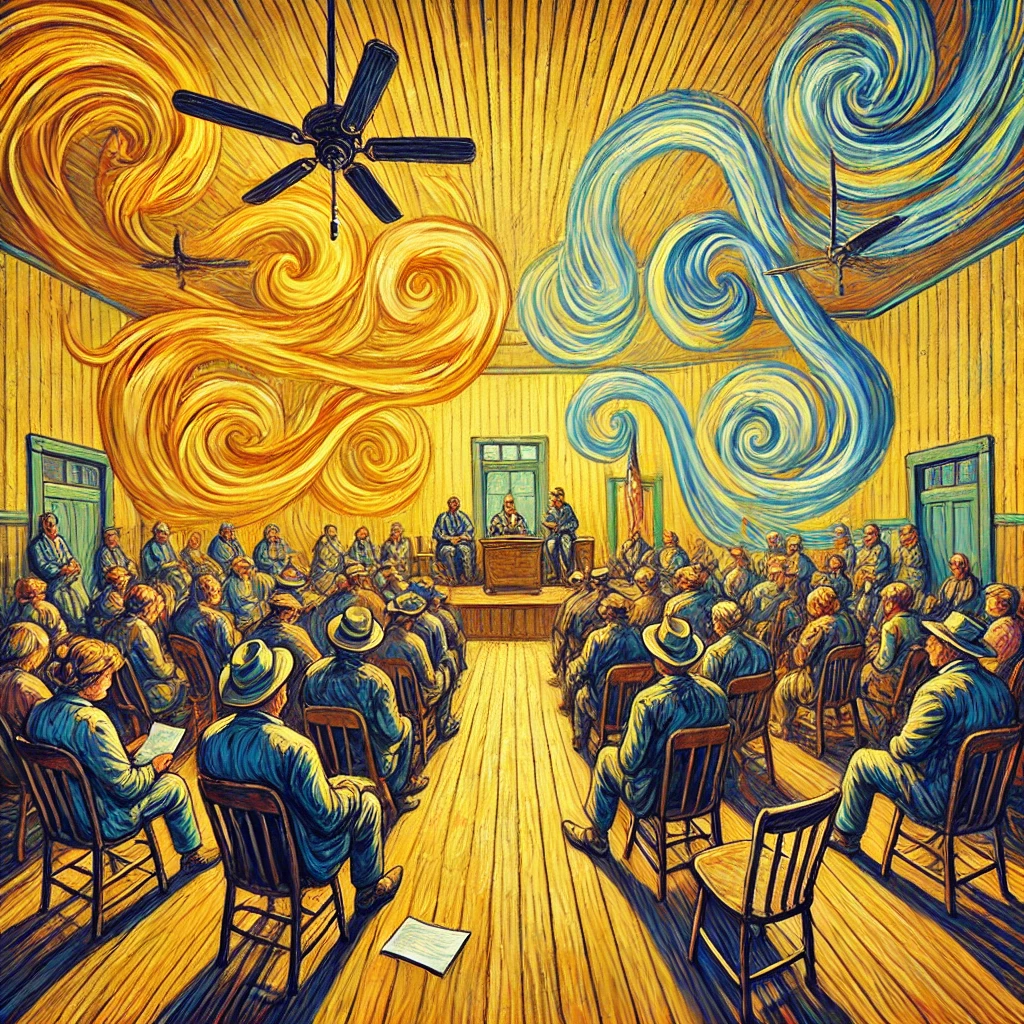
Over the next three meetings, patterns emerged.
-
People whispered intentionally, to force recognition.
-
Others exaggerated silence, refusing even to breathe audibly.
-
One man brought a small notepad and wrote comments, then slid it across the floor, claiming “silent speech.”
The clerk rejected the note.
“No sound,” she said. “No record.”
At the fourth meeting, a woman arrived with a bell.
“If I ring it softly,” she asked, “is that commentary?”
No one answered.
The bell rang anyway.
The clerk sighed, loudly.
That sigh was entered into the minutes.
Act VII – The Town Discovers Itself
Act VIII – The Emergency Clarification Meeting
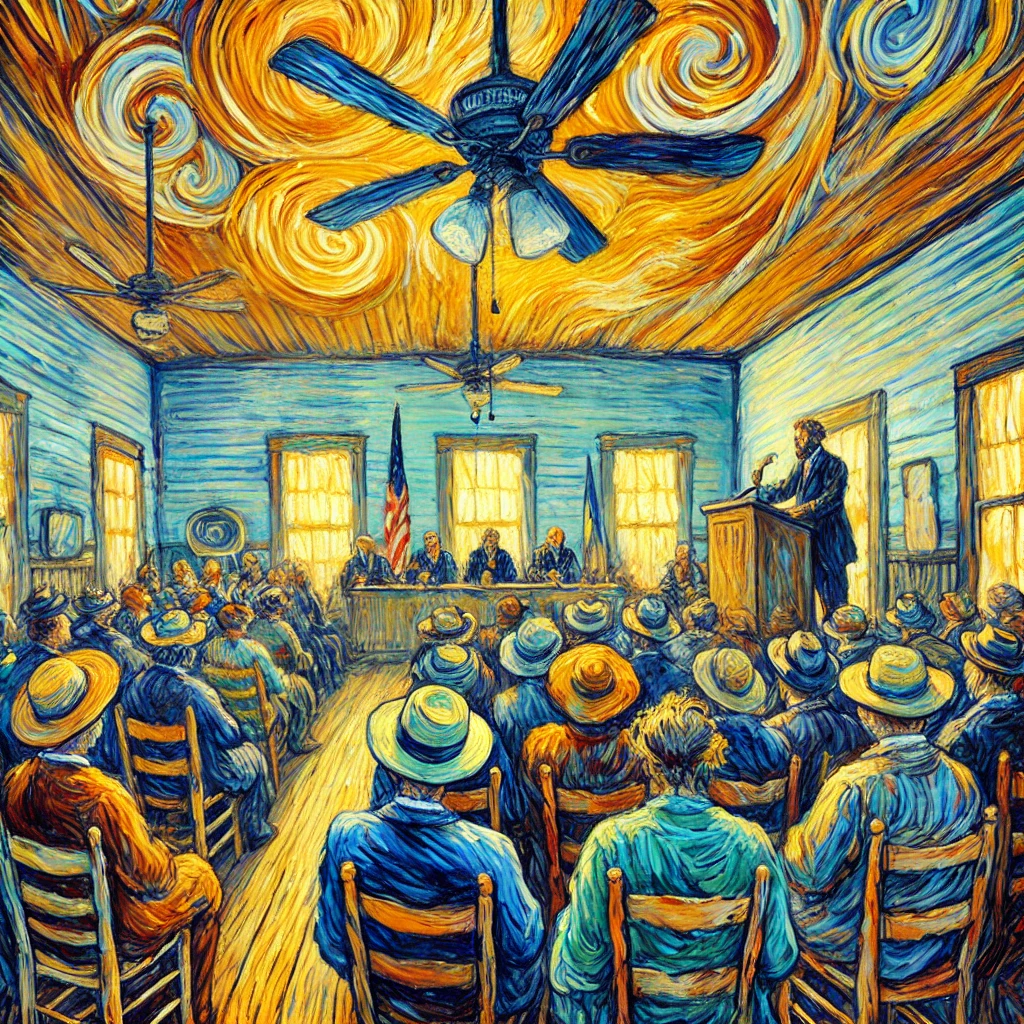
The emergency clarification meeting was called to address confusion around enforcement.
Ironically, it was the quietest meeting Sequatchie Crossing had ever held.
No one spoke above a whisper.
No one spoke below one either.
Each word was delivered carefully, surgically, like a legal specimen.
When a man sneezed, the chair paused.
“Bless you,” someone whispered.
“That’s commentary,” the clerk said without looking up.
The man sneezed again.
“Seconded,” Boot whispered.
The motion carried.
Act VIII – The Emergency Clarification Meeting
Act IX – The Repeal That Wasn’t
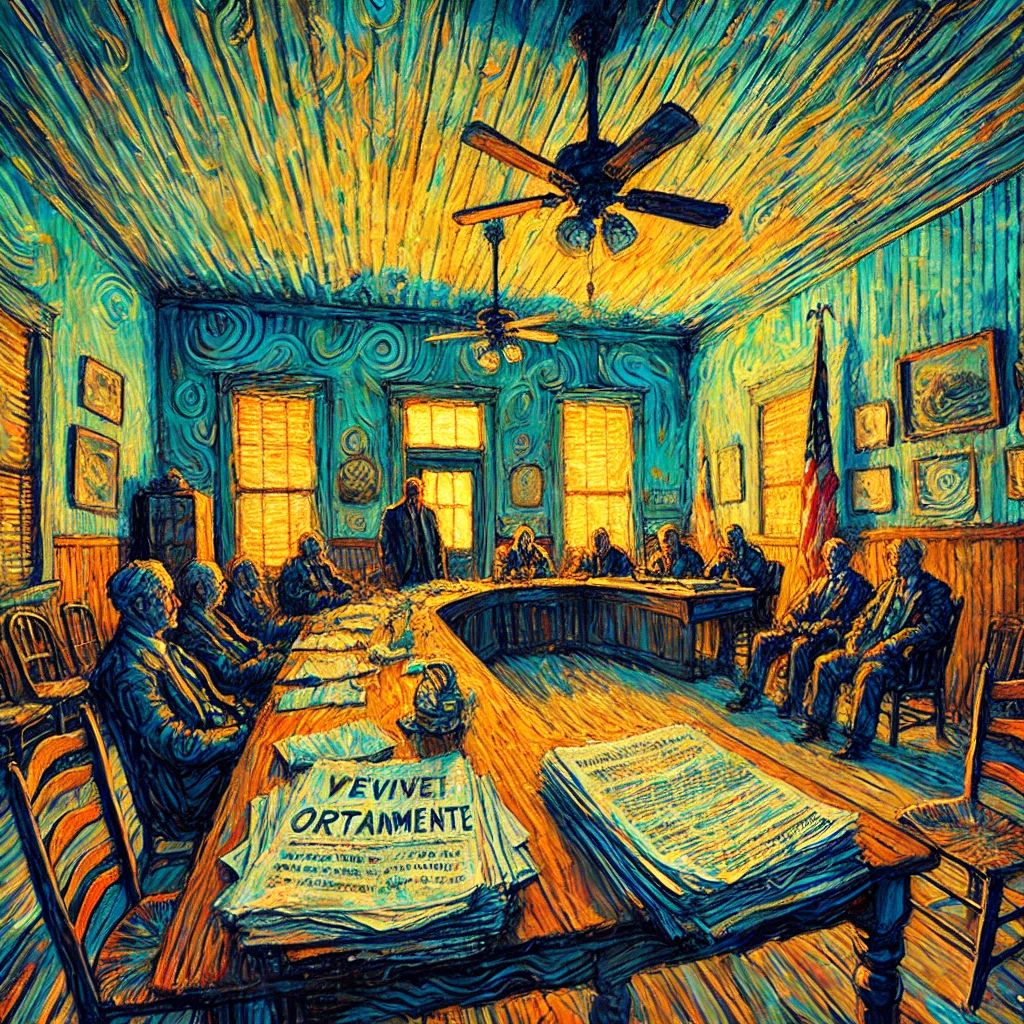
The ordinance was eventually amended.
Not repealed – clarified.
A new clause was added:
“Intent shall be considered.”
No one defined intent.
The whispers did not stop.
They just changed tone.
Clovis closed his notebook for the first time that evening.
“The town has learned nothing,” he wrote later.
“But it has learned it together.”
Act IX – The Repeal That Wasn’t
Epilogue – What Remains Audible
To this day, the phrase “Was that a comment?” carries weight in Sequatchie Crossing.
People pause before whispering.
They glance toward the podium before sighing.
And sometimes, in the middle of a perfectly normal meeting, the room goes quiet – not because no one has anything to say, but because everyone is deciding how loudly their thoughts deserve to exist.
The minutes from that period remain unusually detailed.
Every cough.
Every breath.
Every sound that refused to stay private.
Epilogue – What Remains Audible
Disclaimer
The following account is a work of local documentation, interpreted memory, and procedural guesswork. Any resemblance to real meetings, actual ordinances, or recognizable individuals is entirely coincidental, except where it is painfully accurate. The Town of Sequatchie Crossing does not endorse whispering, shouting, muttering, stage sighs, or the strategic clearing of one’s throat – though it acknowledges that all have occurred. This report is provided for historical context only and should not be used as guidance during future meetings, particularly those involving microphones.

Disclaimer – Whispering Classified As Public Comment
Real Places Behind the Ruckus – From The Dunlap Directory

Real Places Behind the Ruckus – From The Dunlap Directory
Yes, this story was fictional; even the parts that weren’t true. These places? Absolutely real. Stop by, support local, and keep the Wi-Fi away from livestock:
- Flowers & Thyme
- Prime Income & Tax Services
- Results Physiotherapy Dunlap Clinic?
- Renegade Foods
- RiverBend Farm
- Crumb & Co.
- Big Dog Development
- Jack’s Dunlap
- JJ Farms Dunlap
- New Dimensions Complex
- Palmer’s Turf Farm
- Backwoods Fence and Decking
- Amy Painter Photography
- Wheeler’s Orchard & Vineyard
- SRM Concrete
- Tennessee Tree Toppers Club
- The Old Tar Woodworker
- Affordable Storage Guys – North Dunlap

Real Places Behind the Ruckus – From The Dunlap Directory
At Sequatchie Crossing, we tell the stories of Sequatchie Crossing.
Please share this post with your friends, family, or business associates who may want follow the news from Sequatchie Crossing.

0 Comments