


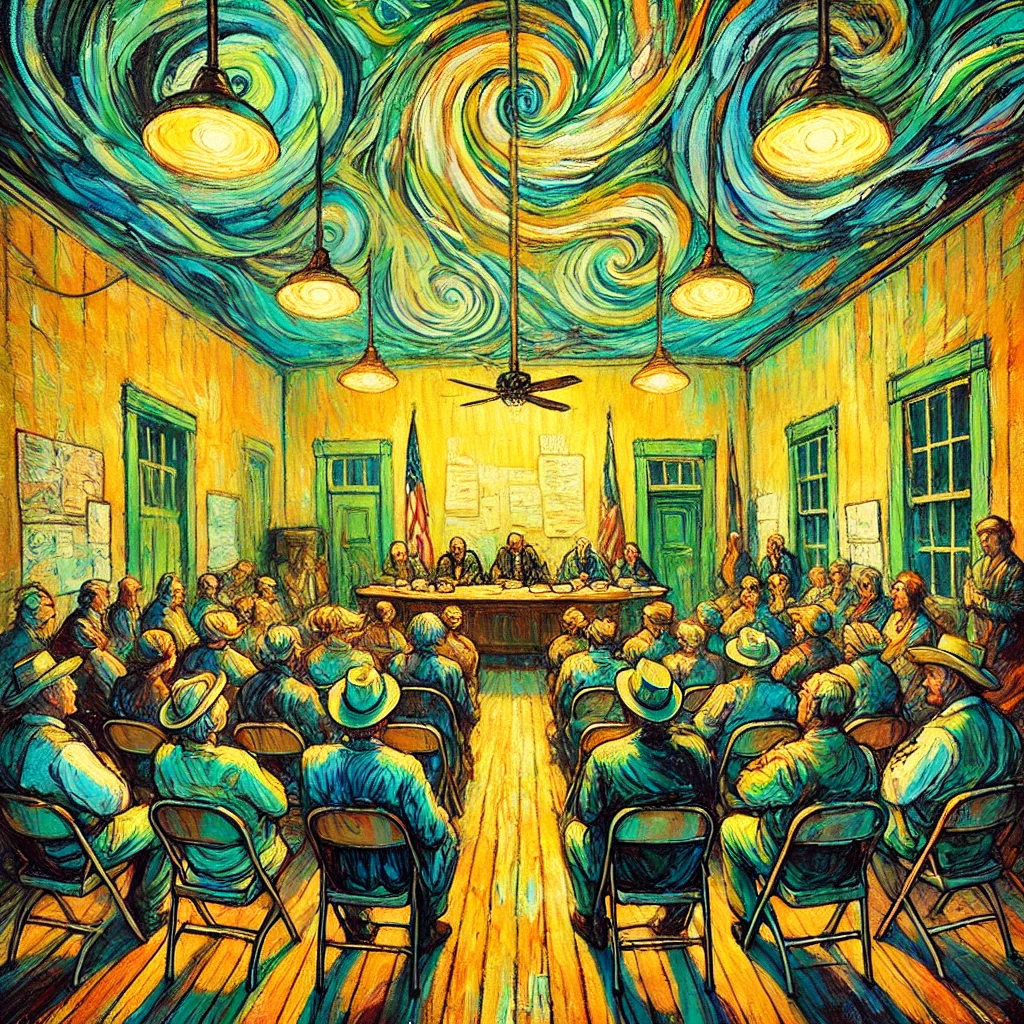
No One Reads Them, Everyone Cites Them
By Tom Seest
At Sequatchie Crossing, we tell the stories of Sequatchie Crossing.
Please share this post with your friends, family, or business associates who may want follow the news from Sequatchie Crossing.
🎤 Audio Overview
Public Comment Guidelines Expanded to Eight Pages
Act I: The Document Appears
The packet appeared on the folding table outside City Hall sometime between Tuesday night and Wednesday morning, stacked neatly beneath a paperweight shaped like an eagle that no one remembered approving.
It was thick. Unsettlingly thick.
Eight pages, stapled once in the upper left corner, printed single-sided, with a cover page that read:
PUBLIC COMMENT GUIDELINES (REVISED)
Adopted by consensus, clarification, or exhaustion
No date. No signatures. Just that.
By 9:12 a.m., Clovis Strickland had picked one up, flipped through all eight pages without reading a word, and announced to no one in particular, “Well, this explains a lot.”
By 9:15 a.m., three different versions of what the document said were already circulating.

Act I – The Document Appears
Act II: The Reason It Exists
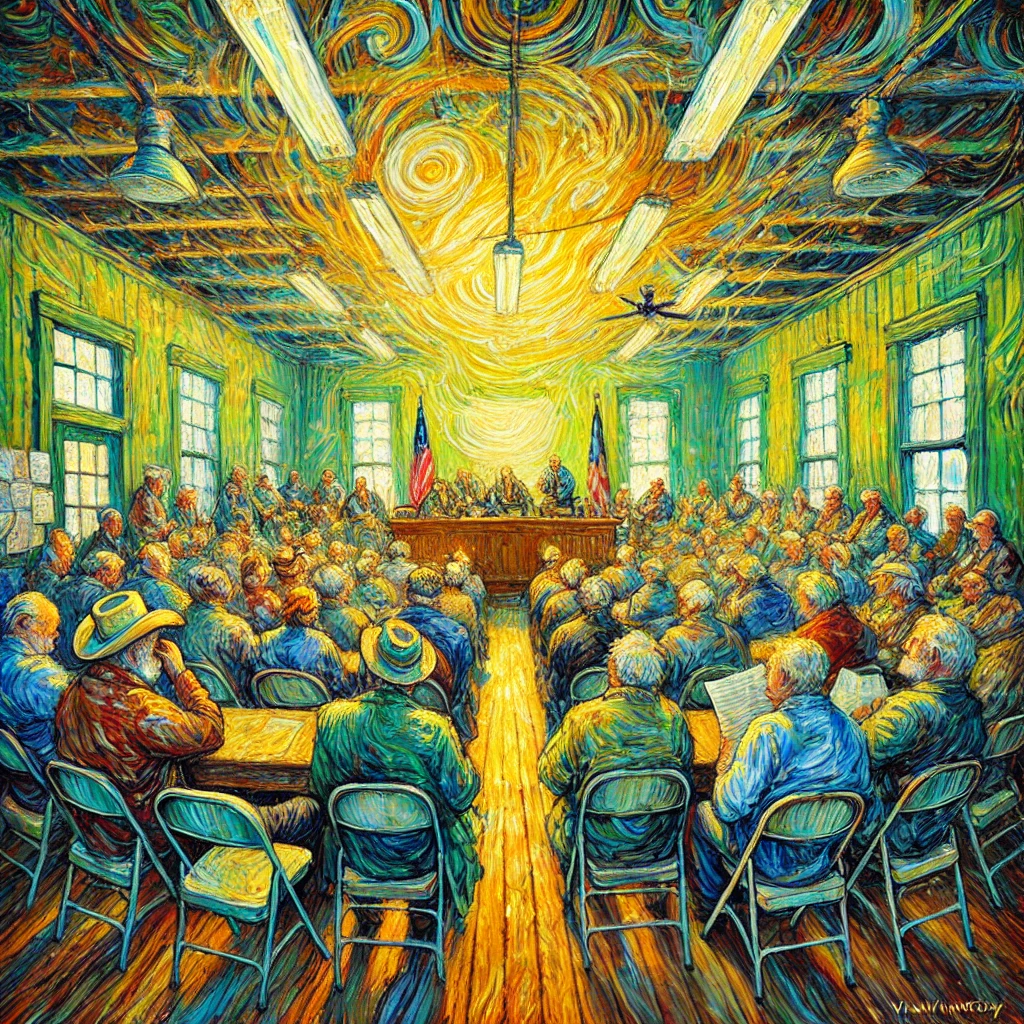
The guidelines existed because of a Tuesday night meeting that had gone wrong in the specific way Sequatchie Crossing meetings always did: politely at first, then abstractly, then spiritually.
The agenda item had been labeled simply:
Public Comment – General
This was a mistake.
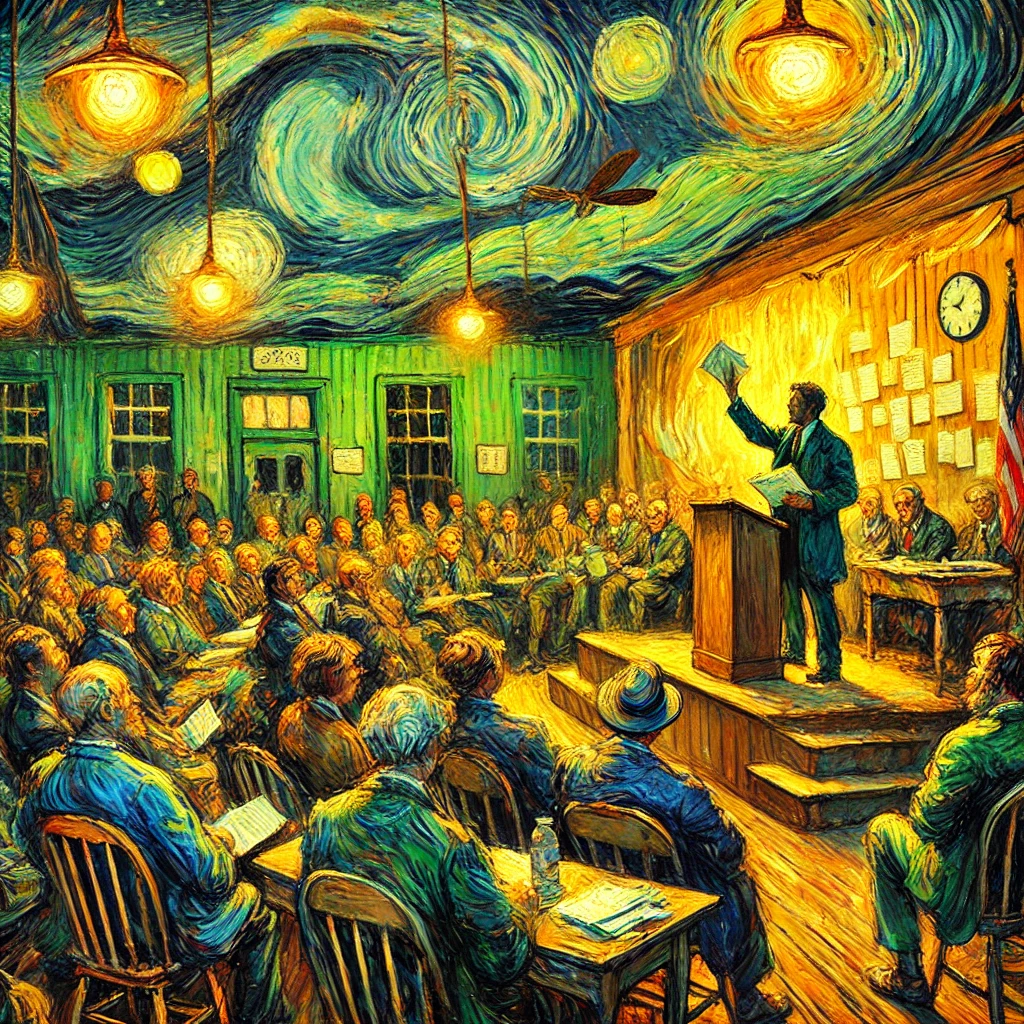
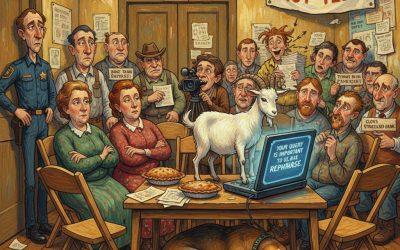
Boot Barnes had arrived early, carrying a manila folder that visibly sagged under the weight of printed Facebook posts, handwritten notes, and at least one laminated screenshot. He did not intend to speak long. He intended to speak correctly.
Mabel Dean arrived ten minutes late, holding a reusable grocery bag that clinked softly when she walked. She had brought documents too, though no one would ever find out what kind.
Sheriff Peeler arrived on time, sat in his usual chair, and made the mistake of saying, “Let’s hear folks out.”
What followed was not shouting. That would have been manageable. What followed was interpretation.
One resident spoke for four minutes about potholes, then pivoted to the moral decline of email newsletters. Another read a prepared statement that appeared to be about zoning but was structurally identical to a sermon. Someone else began by saying, “I won’t take much of your time,” and was still speaking when the building’s motion-sensor lights turned off.
By the end of the evening, the clerk had written “SEE GUIDELINES???” in the margin of her notebook so hard the pen tore through the page.
Act II – The Reason It Exists
Act III: The Expansion Committee
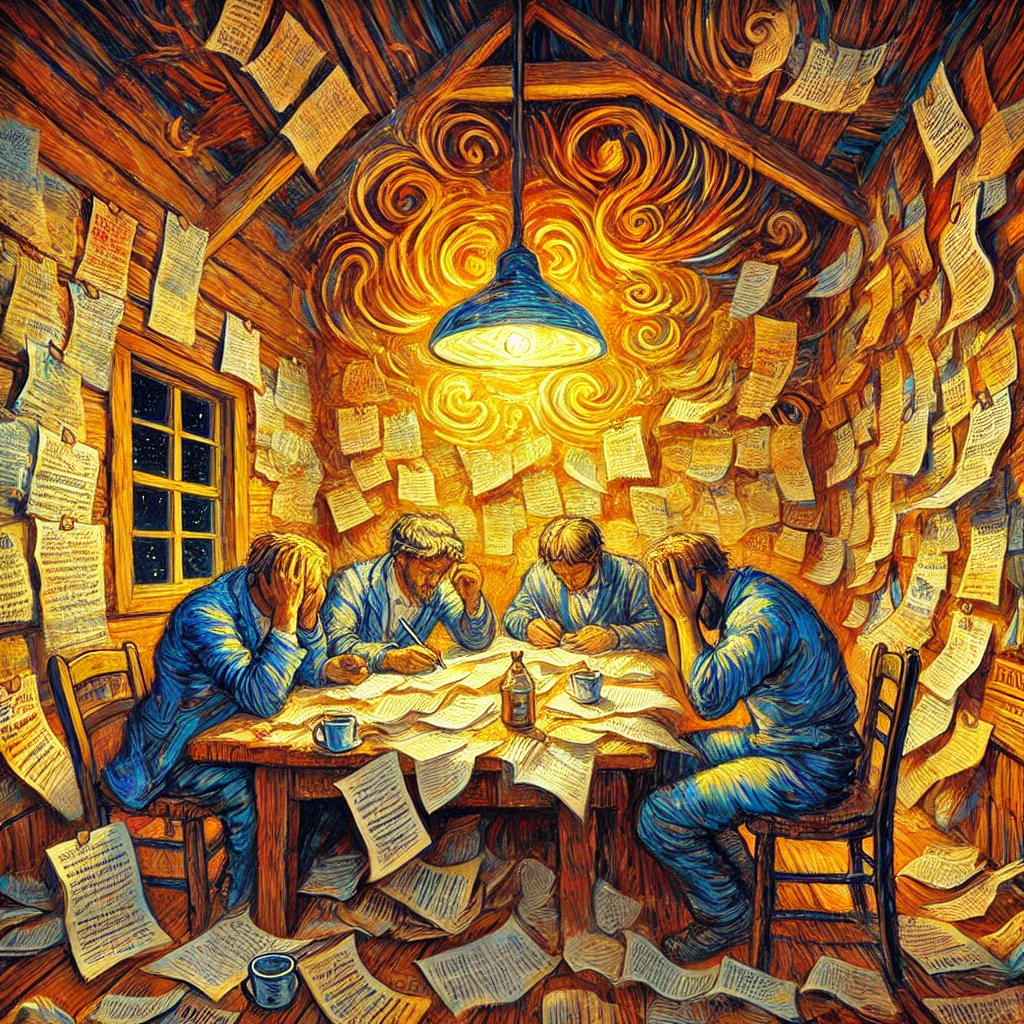
The next morning, a committee was formed. Not officially. No vote was taken. It simply happened the way committees in Sequatchie Crossing always did: someone sighed, someone nodded, and three people stayed after the meeting.
The Public Comment Clarification Working Group consisted of:
-
The Clerk
-
A retired teacher who believed in rubrics
-
Clovis Strickland, who believed in records
Their task was simple: clarify the rules.
Their output was not.
Page One covered Purpose and Spirit, a section no one would ever read but everyone would quote selectively.
Page Two addressed Time Limits, including footnotes, examples, and a parenthetical that read (five minutes means five minutes).
Page Three explained Topic Relevance, with a flowchart that began with “Is this related?” and ended with “Please conclude.”
Page Four tackled Tone, which proved controversial and was revised three times to remove the word “respectful” and replace it with “civil-adjacent.”
Page Five covered Materials, specifying what could be handed out, displayed, or waved.
Page Six addressed Addressing Individuals, a section added after someone had begun a sentence with “Now, Sheriff, since you’re sitting right there – ”
Page Seven explained Consequences, none of which were enforceable.
Page Eight was labeled Appendix, and contained nothing but definitions that referenced other definitions.
The committee stapled it, admired it, and went home.
Act III – The Expansion Committee
Act IV: Immediate Misuse
The first person to cite the new guidelines did so incorrectly.
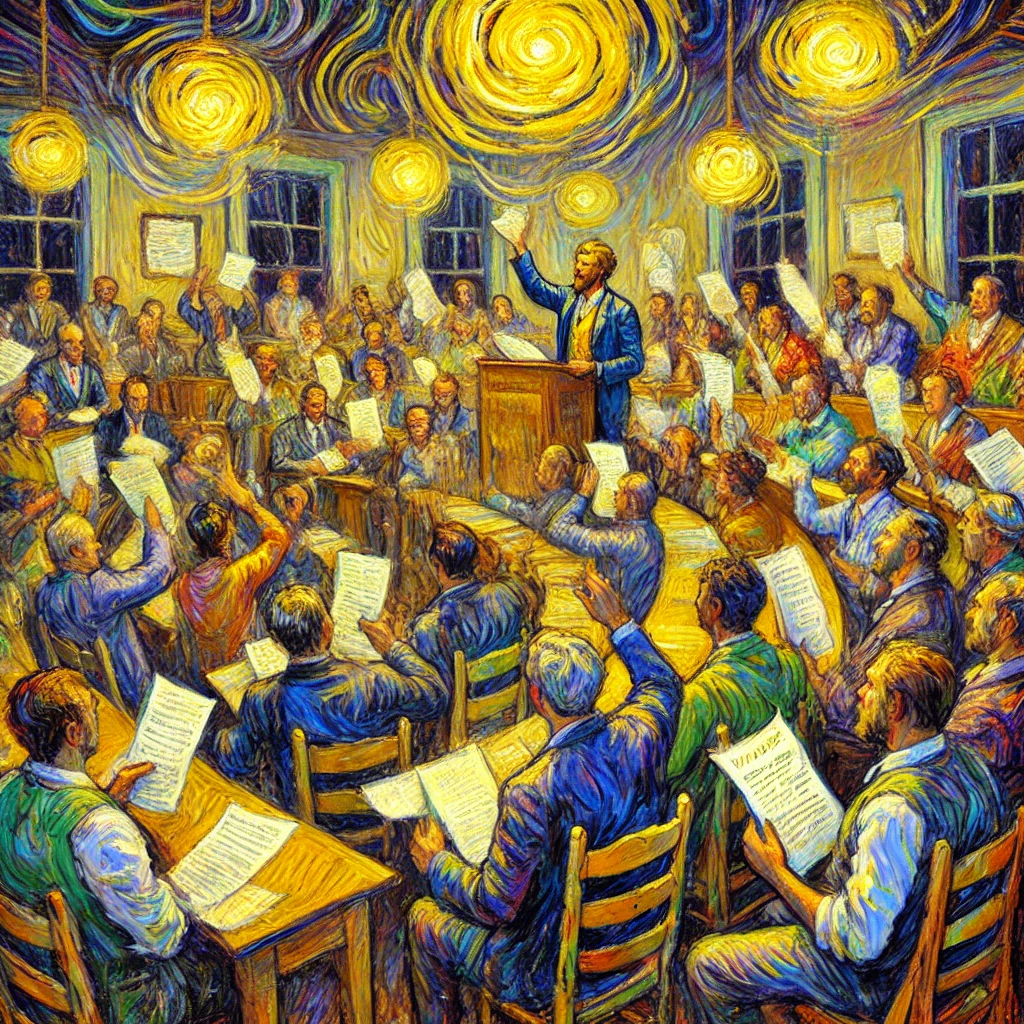
Boot Barnes opened the next meeting by holding the packet aloft and saying, “According to page three – ” before being interrupted by the clerk, who gently pointed out that page three said the opposite of what he was about to argue.
Boot nodded, adjusted his glasses, and said, “Well, the spirit of page three – ”
From that moment on, the document ceased to be a guide and became a prop.
People brought highlighted copies. People underlined things in different colors. Someone tabbed it.
One resident claimed page five prohibited “visual aids of an accusatory nature.” Another insisted page two allowed overtime if the speaker was “mid-thought.”
No one agreed. Everyone cited.
Act IV – Immediate Misuse
Act V: Enforcement Without Authority
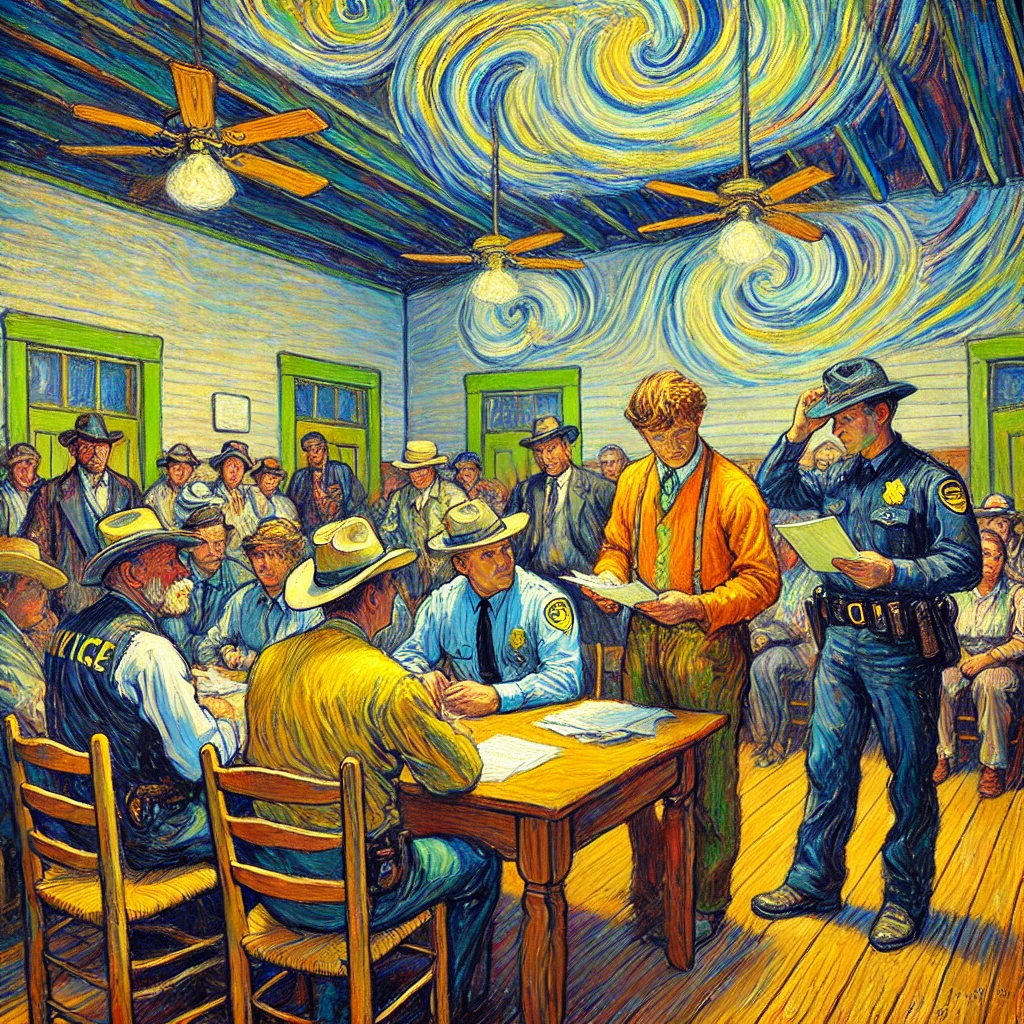
Sheriff Peeler was asked whether the guidelines were enforceable.
He read the cover page, skimmed page eight, and said, “They’re… aspirational.”
This did not help.
A man stood up during public comment and announced he would be using his time to explain why the guidelines themselves violated the guidelines. He referenced page six repeatedly and page four emotionally.
Mabel Dean waited patiently, then rose and said only, “I brought muffins,” which was not addressed anywhere in the document and therefore caused a procedural pause.
Clovis Strickland took notes, as he always did, writing in the margins of his own copy:
No one knows what this does, but everyone feels better holding it.
Act V – Enforcement Without Authority
Act VI: The Online Interpretation Phase
By Friday, the guidelines had been posted online.
This was worse.
Screenshots circulated with red circles. Paragraphs were isolated and reposted without context. Someone created a summary that was longer than the document itself.
A rumor spread that page seven allowed the chair to mute speakers. This was false, but clarifying it only strengthened belief.
Another rumor suggested the guidelines were written by outsiders. This was also false, but more satisfying.
People began opening their comments with, “I’ll keep this within the guidelines,” before proceeding to ignore them entirely.

Act VI – The Online Interpretation Phase
Act VII: The Meeting That Broke the Staple
At the next meeting, the staple failed.
Not metaphorically. Physically.
Midway through a particularly impassioned reading of page two, the packet separated into loose sheets and fluttered to the floor.
There was a silence as everyone watched eight pages scatter like confetti.
No one moved.
Finally, the clerk said, “We’ll… take that under advisement.”
Public comment continued, freer now, unburdened by paper.

Act VII – The Meeting That Broke the Staple
Act VIII: The Quiet After
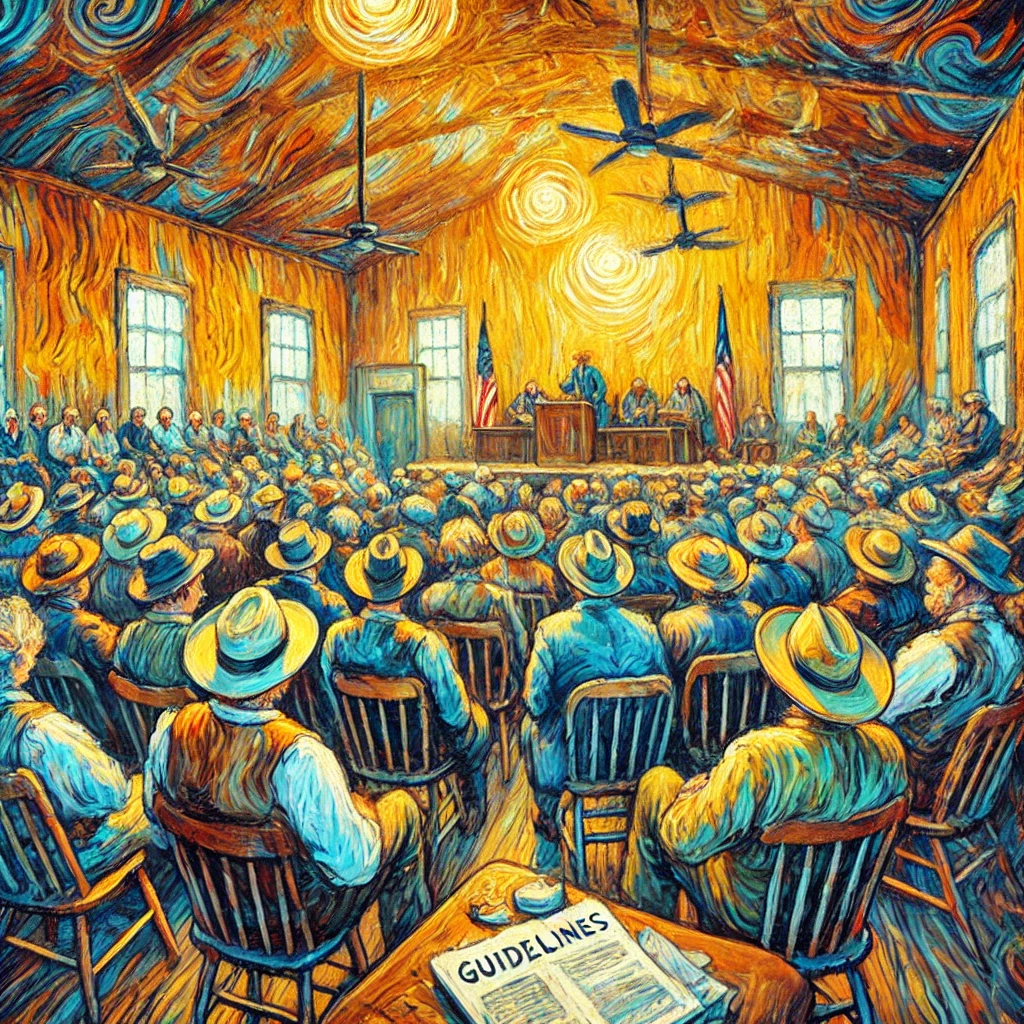
Two weeks later, the guidelines were still technically in effect.
No one brought them anymore.
They remained posted, occasionally referenced, mostly ignored.
But something had changed.
People spoke a little shorter. Or maybe they didn’t.
The clerk slept better. Or maybe she didn’t.
Clovis filed his notes, labeling the folder Guidelines Era, and placed it between Five-Minute Rule and Online Comments Attempt.
Act VIII – The Quiet After
Epilogue: What the Document Became
Years later, someone would ask why public comment in Sequatchie Crossing felt the way it did.
No one would mention the eight pages directly.
But someone would say, “Well, after that document…”
And everyone would nod.
Because even when no one reads the rules, the town remembers writing them.
And citing them.
Endlessly.

Epilogue – What the Document Became
Disclaimer
This story is a work of fiction. All characters, meetings, committees, documents, guidelines, stapling methods, muffins, and interpretations thereof are invented for narrative and satirical purposes.
Any resemblance to actual towns, public comment policies, municipal procedures, online discourse, or people who have ever said “according to page three” is purely coincidental – and, frankly, unavoidable.
Sequatchie Crossing is not a real place, though the feelings it produces may be familiar. No real ordinances were harmed in the writing of this story. No one successfully enforced anything. The guidelines remain aspirational.
Reader discretion is advised for those with strong opinions about public comment, time limits, or the moral authority of stapled documents.
Disclaimer – Public Comment Guidelines Expanded to Eight Pages
Real Places Behind the Ruckus – From The Dunlap Directory

Real Places Behind the Ruckus – From The Dunlap Directory
Yes, this story was fictional; even the parts that weren’t true. These places? Absolutely real. Stop by, support local, and keep the Wi-Fi away from livestock:
- Sun Valley Coffee Shop
- Black Bear Electrical
- Peto Farm
- RJ’s Garage
- Martinez Mobile Auto Detailing
- El Metate
- River Valley AgCredit
- Sunrise Extended Stay RV Park
- Sequatchie Valley Construction
- Bolt Farm Treehouse Tennessee
- Black Cat Tire Exchange
- MANN+HUMMEL
- Dennis Auto Glass Mobile Service
- Kubota of Chattanooga
- Nathan Barker – Farm Bureau Insurance Agent

Real Places Behind the Ruckus – From The Dunlap Directory
At Sequatchie Crossing, we tell the stories of Sequatchie Crossing.
Please share this post with your friends, family, or business associates who may want follow the news from Sequatchie Crossing.


0 Comments