


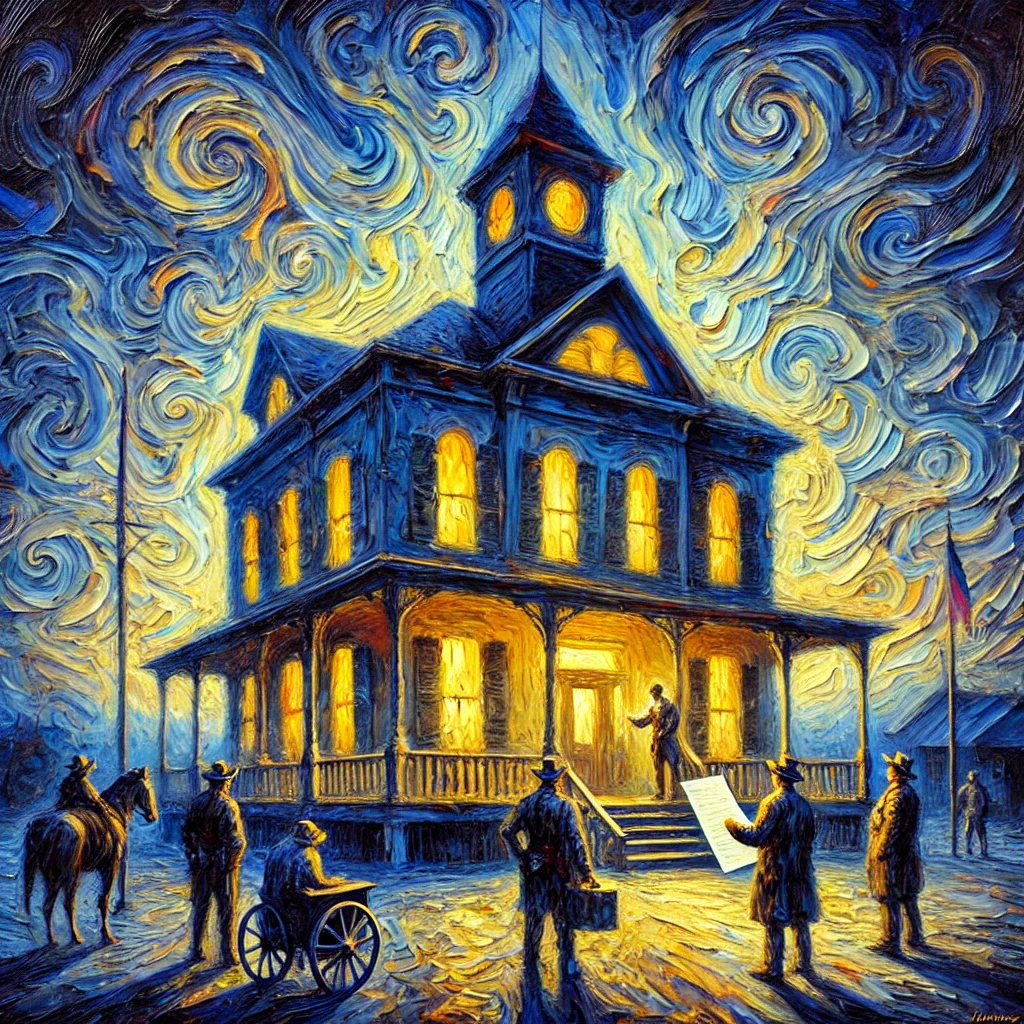
Not Sinister – Just Small And Bureaucratic
By Tom Seest
At Sequatchie Crossing, we tell the stories of Sequatchie Crossing.
Please share this post with your friends, family, or business associates who may want help telling the stories of their legacy.
🎤 Audio Overview
The Reason It Started Is Worse Than You Thought
The Reason It Started Is Worse Than You Thought
Act I – The Question Nobody Wanted to Ask
For months, the people of Sequatchie Crossing had debated signs.
Not the meaning of them, not their aesthetics, not even their grammar—though grammar had briefly become an issue when someone argued that “SALE THIS WEEKEND!!!” constituted a punctuation emergency.
No.
They had debated their legality.
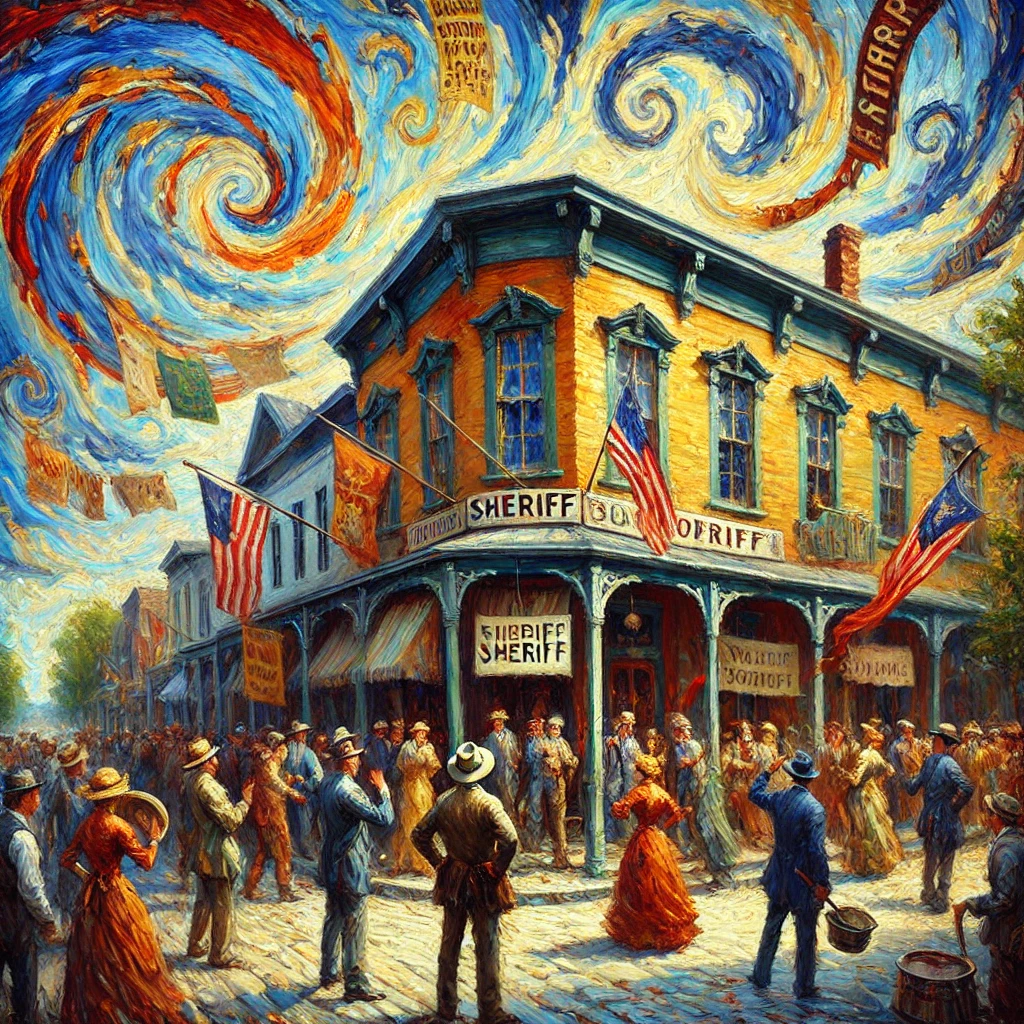
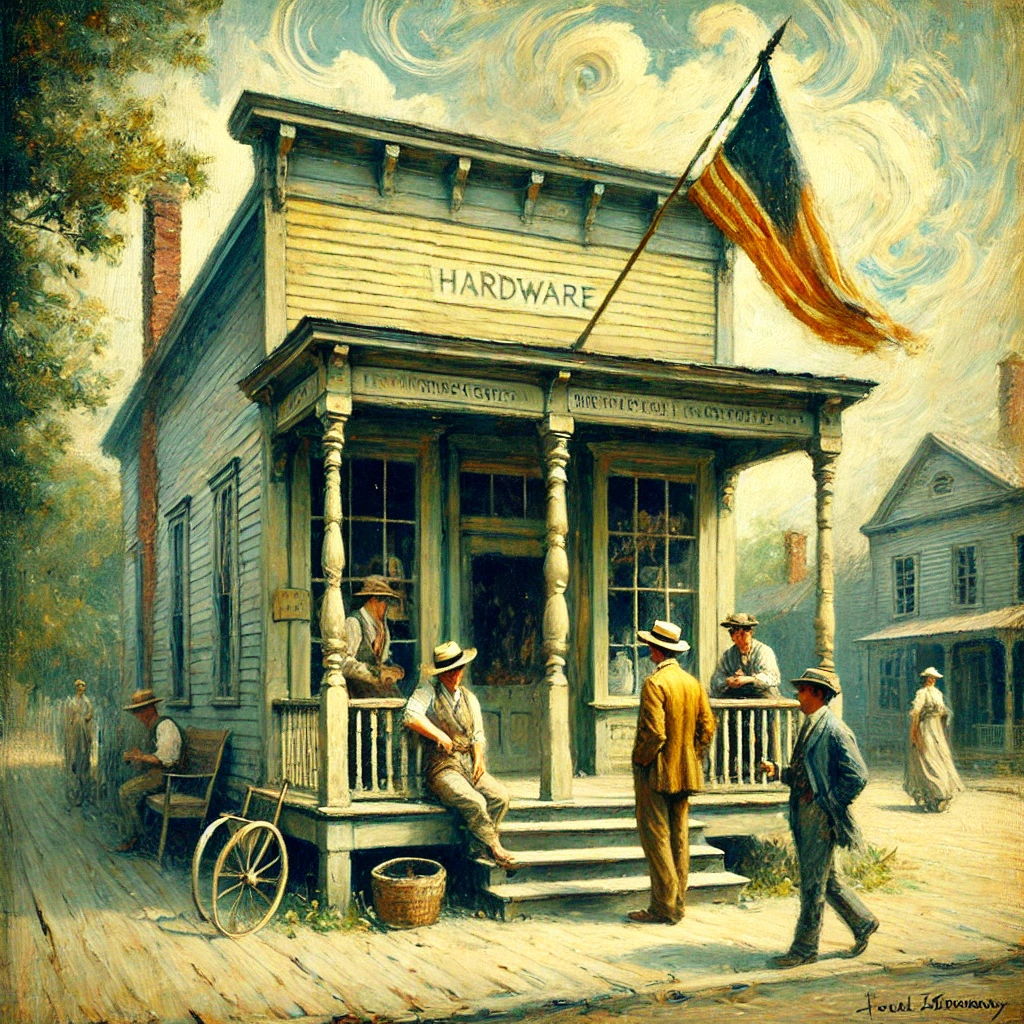
It began when a portable banner disappeared from the front of Honeycutt Hardware one quiet Tuesday morning.
By noon, the banner’s removal had produced:
-
three phone calls to Town Hall
-
two Facebook posts
-
one suspiciously calm statement from the mayor
-
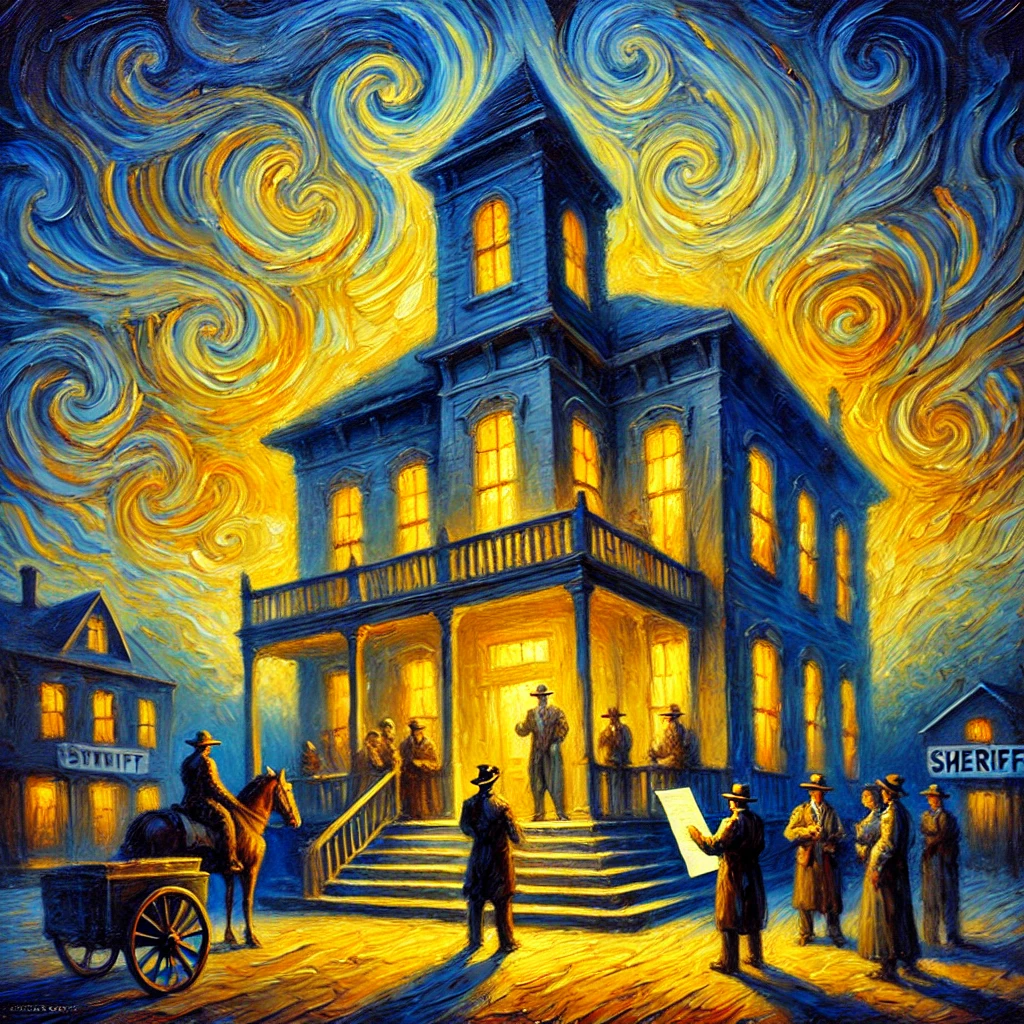
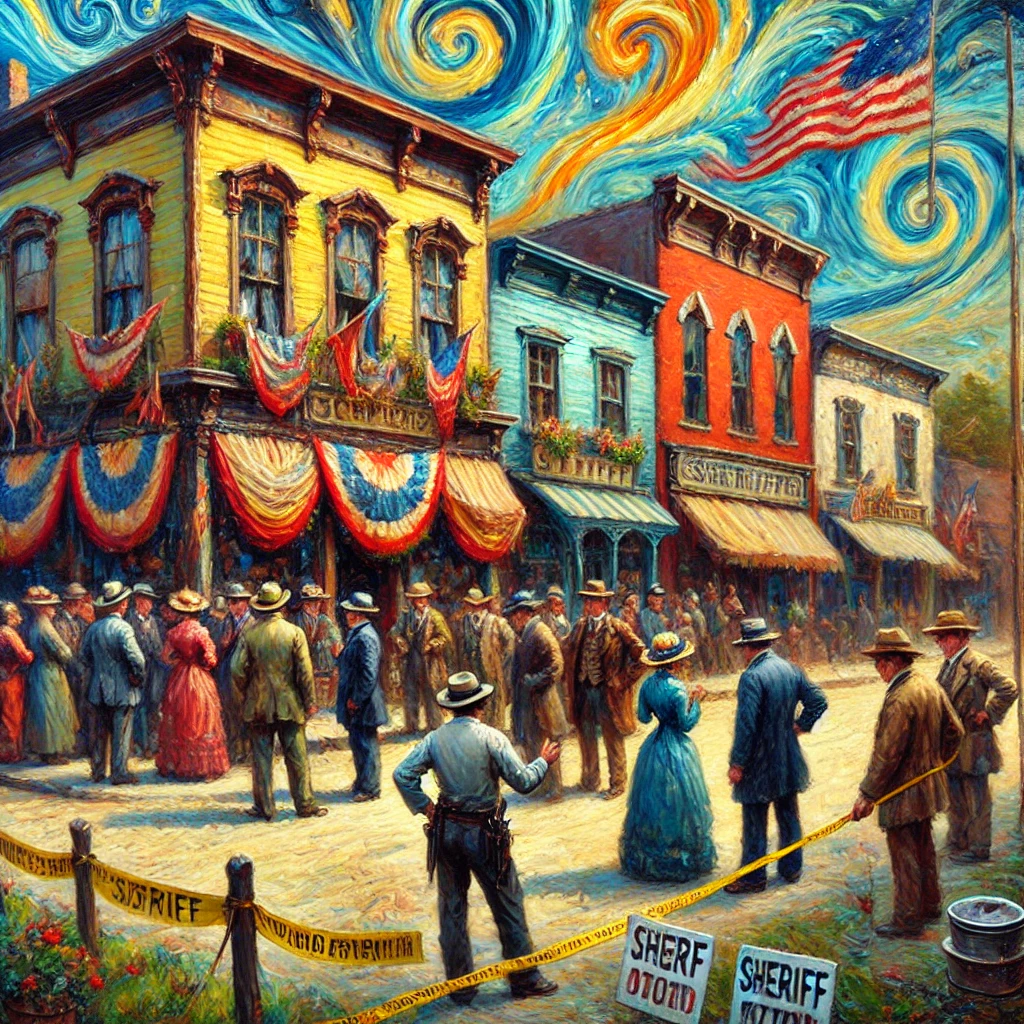
and a tape measure in the possession of Sheriff Peeler.
That single banner removal had triggered a chain reaction.
Soon the town discovered that:
-
most portable banners were technically illegal
-
several yard signs exceeded allowable sizes
-
one inflatable tube man was classified as “mechanically expressive signage”
-
and the ordinance governing these matters had been passed eleven years earlier.
For eleven years, no one had enforced it.
Then suddenly—very suddenly—everyone was enforcing it.
Act I – The Question Nobody Wanted to Ask
Or at least trying to.
The resulting months had produced:
-
committees
-
counter-committees
-
interpretive subcommittees
-
and a surprisingly heated debate about whether wind counted as a co-author of signage.
By the time the dust settled, the town had divided itself into three unofficial camps.
The Traditionalists, who believed banners were part of the town’s cultural fabric.
The Compliance Enthusiasts, who believed ordinances existed for a reason.
And The Confused, who were mostly trying to figure out how a tape measure became a political symbol.
Through all of this, one question hovered quietly over the proceedings.
A question nobody had answered.
Or perhaps nobody had wanted to.
Because the truth was both simple and suspicious.
The town knew when enforcement had started.
But nobody knew why.
Act I – The Question Nobody Wanted to Ask
Act II – Clovis and the Paper Trail
Clovis Strickland did not trust mysteries.
He trusted documents.
Where other people saw confusion, Clovis saw filing cabinets.
He had already proven that the ordinance itself had passed unanimously in 2015 by producing the official minutes from a binder labeled:
“Town Council Proceedings, Vol. 12: The Quiet Years.”
Now he had moved on to the next logical question.
Why enforce it now?
The town had theories.
Theories spread quickly in Sequatchie Crossing.
Within days of the first banner removal, speculation included:
-
a state inspection
-
a lawsuit threat
-
a regional zoning crackdown
-
a federal signage initiative
-
and, briefly, the possibility that Clovis himself had triggered enforcement by filing paperwork accidentally.
Clovis denied this last theory vigorously.

Act II – Clovis and the Paper Trail
“Paperwork,” he said, “never happens accidentally.”
Still, the question remained.
Why now?
Clovis spent three evenings in the Town Hall records room.
The room smelled faintly of:
-
dust
-
lemon cleaner
-
and the quiet dignity of forgotten government decisions.
He reviewed:
-
council minutes
-
enforcement logs
-
permit records
-
citizen complaints
Nothing.
Then he found something.
Not a council motion.
Not a policy shift.
Not a state directive.
Just a single complaint form.
Filed four months earlier.
Clovis blinked.
He adjusted his glasses.
Then he read it again.

Act II – Clovis and the Paper Trail
Act III – The Complaint
The complaint was not dramatic.
It was not even angry.
It was, in fact, extremely polite.
Typed neatly on a standard municipal form, the document read:
Subject: Visibility obstruction near roadway.
Concern: Temporary banner at Honeycutt Hardware may slightly obscure line of sight when exiting adjacent driveway.
Requested Action: Review for compliance with existing signage ordinance.
No accusations.
No threats.
Just a request.
The form included a signature.
But the name was partially illegible.
Clovis stared at it.
He turned the page sideways.
He adjusted the lamp.

Act III – The Complaint
Then he sighed.
Because what he had found was both:
-
extremely ordinary
-
and quietly devastating.
This single complaint had triggered a process.
That process had required staff to:
-
Review the ordinance
-
Confirm the banner’s legality
-
Determine enforcement procedures
And in doing so, the town had discovered something awkward.
The ordinance existed.
And technically, it applied.
Which meant ignoring it would now require explaining why.
Government rarely enjoys explaining why it ignores its own rules.
So enforcement began.
Not dramatically.
Not maliciously.
Just procedurally.
The first banner came down.
And the rest, as they say in municipal governance, became complicated.

Act III – The Complaint
Act IV – The Town Meeting
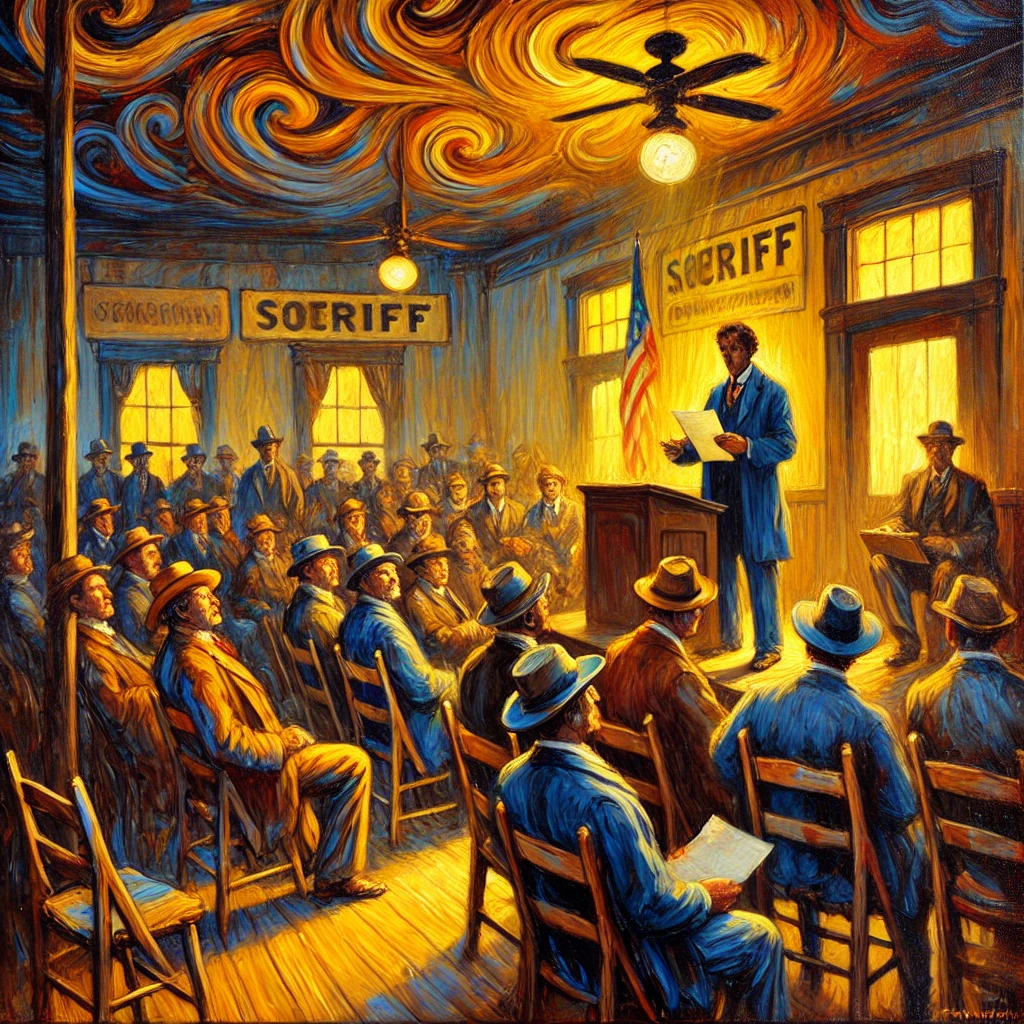
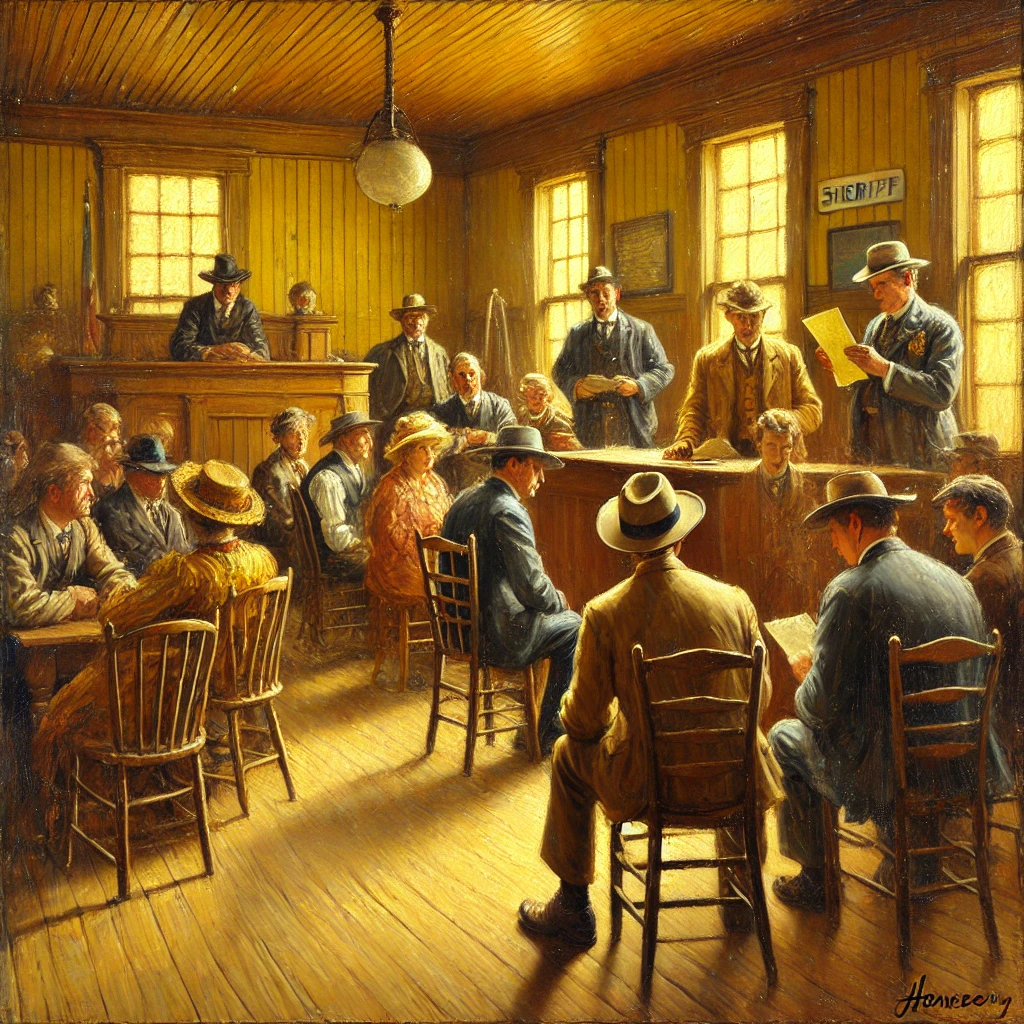
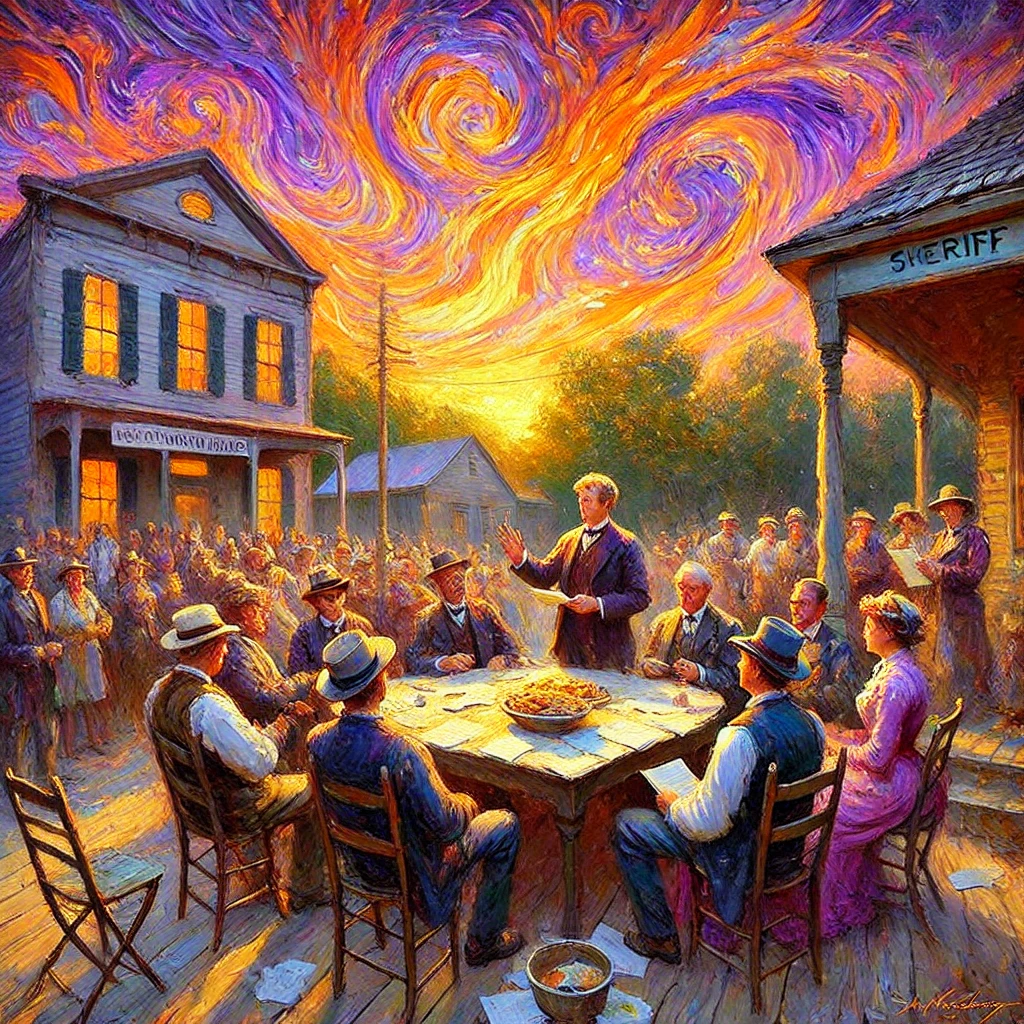
The revelation arrived during what was supposed to be the Final Sign Ordinance Discussion Session.
Attendance was unusually high.
Present were:
-
Mayor Pickett
-
and approximately forty citizens who had developed strong feelings about vinyl.
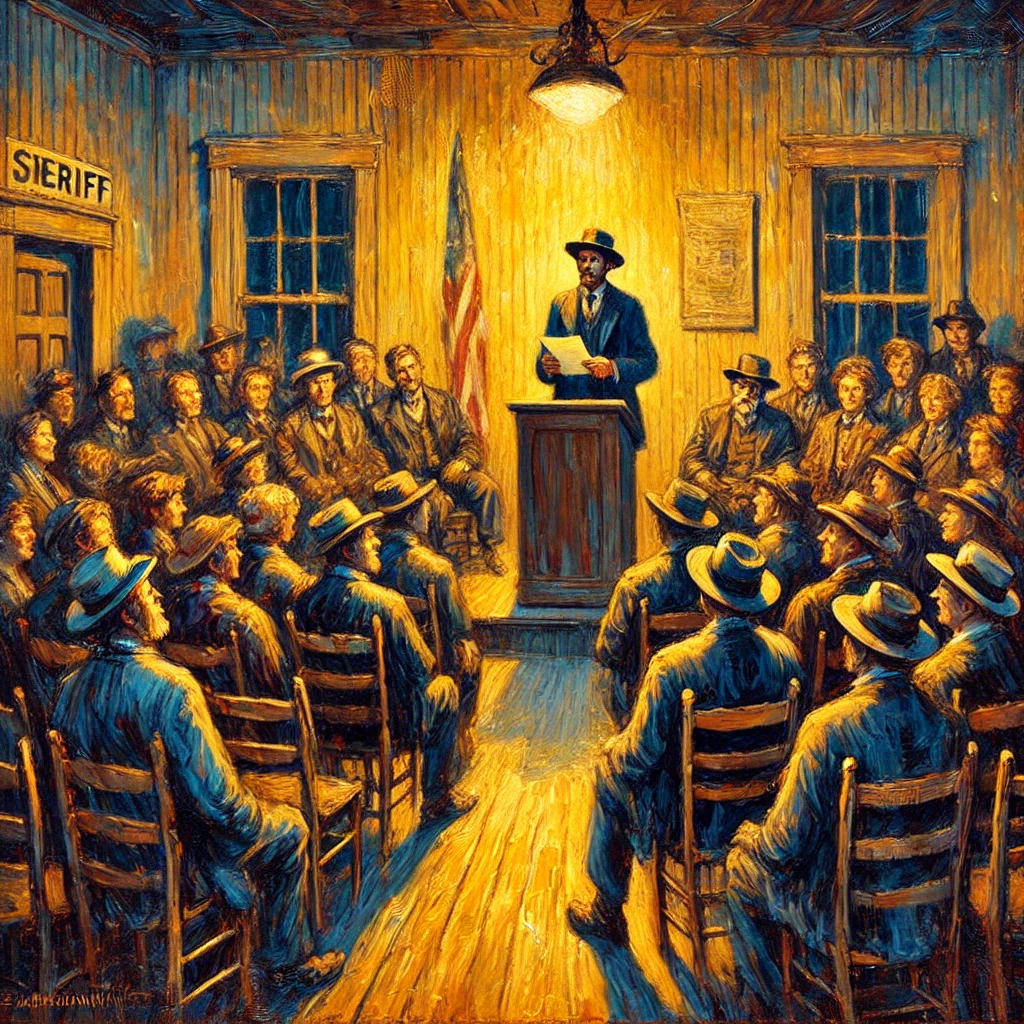
Clovis stood slowly.
He placed the complaint form on the podium.
And he cleared his throat.
“I believe,” he said carefully, “we have located the origin.”
The room leaned forward.
Boot adjusted his hat.
Sheriff Peeler leaned against the wall, holding his tape measure like a quiet witness.
Clovis continued.
“The enforcement process began with a citizen complaint regarding visibility near Honeycutt Hardware.”
Silence filled the room.
Act IV – The Town Meeting
Not dramatic silence.
Just thoughtful silence.
Mayor Pickett asked the obvious question.
“And the complaint alleged… what exactly?”
Clovis adjusted his glasses.
“That the banner might slightly obstruct a driveway sightline.”
More silence.
Boot raised his hand.
“Are you telling me,” Boot said slowly, “that this whole situation started because somebody might have had to lean forward a little while pulling out?”
Clovis nodded.
“Technically… yes.”
The room processed this information carefully.
Then Mabel spoke.
“That seems… small.”
Clovis nodded again.
“Bureaucracy,” he said, “often begins with small.”
Act IV – The Town Meeting
Act V – The Bureaucratic Domino
Once explained, the process made sense.
At least on paper.
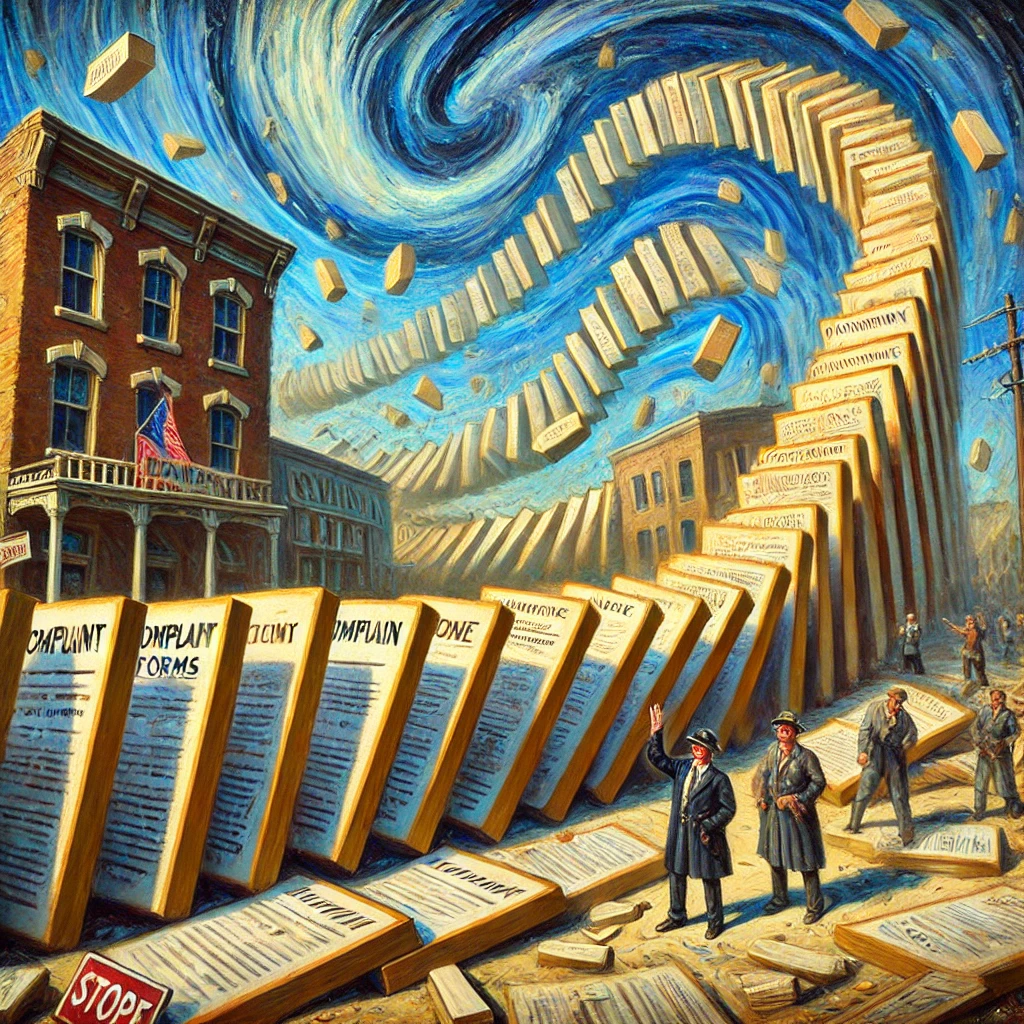
The complaint triggered a review.
The review confirmed the ordinance.
The ordinance required enforcement.
Enforcement triggered compliance checks.
Compliance checks revealed more violations.
Each action required documentation.
Documentation required consistency.
Consistency required broader enforcement.
And suddenly, a single banner removal had become a town-wide signage reckoning.
Act V – The Bureaucratic Domino
It was not a conspiracy.
It was not politics.
It was not even particularly intentional.
It was simply procedure.
As Clovis summarized gently:
“When a rule exists and someone points to it, the system tends to wake up.”
Sheriff Peeler nodded.
“That’s about right.”
Boot looked around the room.
“So nobody was targeting banners?”
“No.”
“And nobody was trying to start a town fight?”
“No.”
Boot leaned back.
“Then why did we all end up fighting anyway?”
Clovis paused.
Then he answered the question with unusual honesty.
“Because once the process starts, people react to the consequences.”

Act V – The Bureaucratic Domino
Act VI – The Realization
The town absorbed the revelation slowly.
Not with anger.
Not with relief.
But with something closer to mild embarrassment.
Because the truth was awkward.
Months of:
-
debates
-
accusations
-
social media arguments
-
and zoning meetings
had all grown from something almost microscopic.
A polite complaint about a driveway sightline.
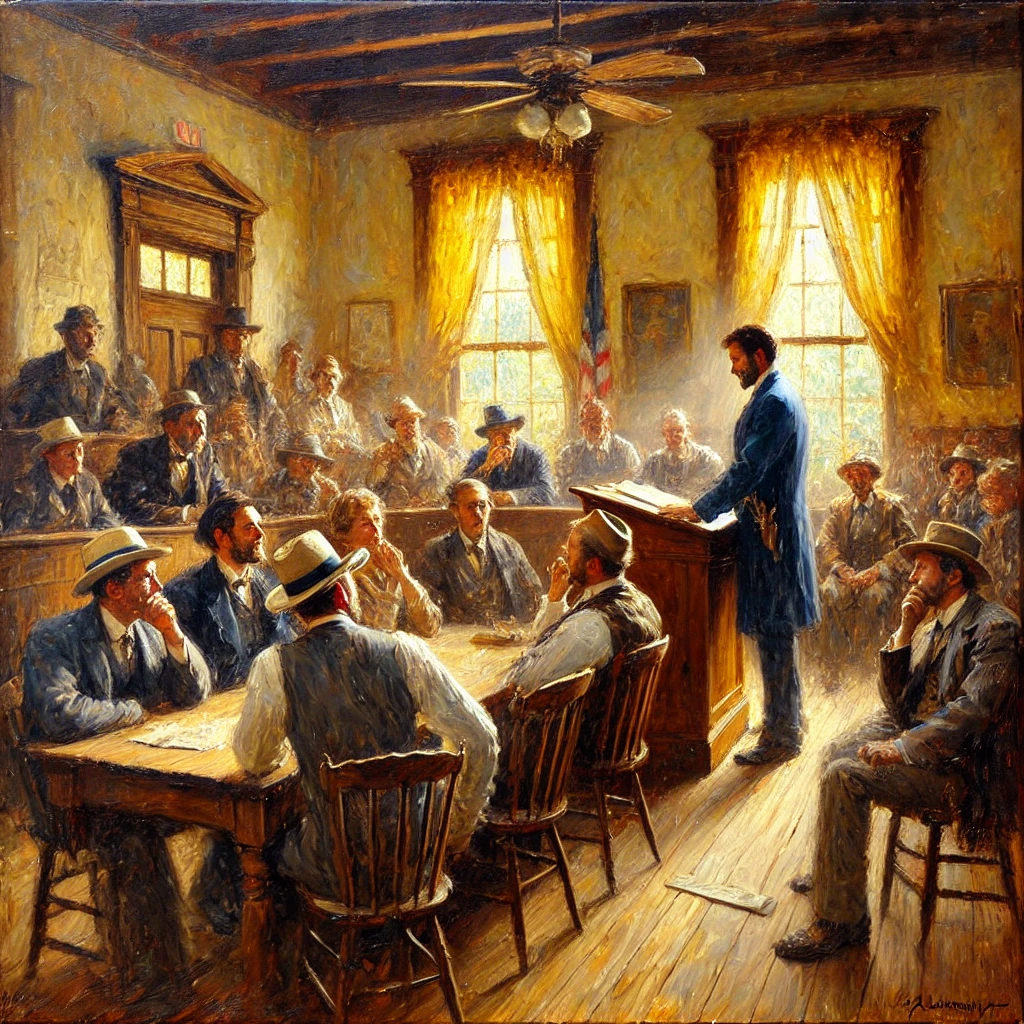
Mabel spoke first.
“Well,” she said thoughtfully, “that’s anticlimactic.”
Boot nodded.
“I was hoping for corruption.”
Sheriff Peeler shrugged.
Act VI – The Realization
“Corruption usually involves more paperwork.”
Mayor Pickett leaned forward.
“So what do we learn from this?”
Clovis considered the question carefully.
Then he said something that sounded less like a bureaucratic explanation and more like philosophy.
“Small triggers,” he said, “often reveal larger tensions that were already there.”
The room grew quiet.
Because everyone understood what he meant.
The banners themselves had never been the real issue.
They were simply visible.
What the debate had revealed was something deeper.
Questions about:
-
tradition
-
change
-
fairness
-
visibility
-
and how rules should function in a small town.
The complaint had simply opened the door.
Everything else had walked in afterward.
Act VI – The Realization
Act VII – What Happens Next
Sequatchie Crossing did not repeal the ordinance.
Nor did it fully embrace strict enforcement.
Instead, the council proposed something uniquely small-town.
A revision committee.
The committee would:
-
clarify definitions
-
reconsider size limits
-
and develop enforcement guidelines that acknowledged both law and local culture.
Boot volunteered immediately.
“I have opinions,” he said.
Mabel volunteered too.
“I have muffins.”
Sheriff Peeler declined politely.
“I have tape measures,” he said. “That seems like enough responsibility.”
Clovis agreed to serve as historical advisor.
Mayor Pickett looked relieved.
The town, it seemed, had reached a new phase.
Not conflict.
Not compliance.
Just adjustment.
Which, in Sequatchie Crossing, was usually how things eventually worked out.
Act VII – What Happens Next
Epilogue – The Small Beginning
Weeks later, Honeycutt Hardware installed a smaller banner.
It complied perfectly with the ordinance.
It also happened to be easier to read.
The driveway remained unobstructed.
Traffic flowed normally.
And the town moved on.
Mostly.
Though every now and then someone would mention the story.
Usually with a gentle laugh.
Because it had become a local legend.
Not about banners.
But about how things begin.
Sometimes great conflicts start with dramatic moments.
Other times they start with something smaller.
A form.
A rule.
A quiet complaint about a driveway.
And before anyone notices, a town is debating the meaning of fabric.
Epilogue – The Small Beginning
Disclaimer
Sequatchie Crossing is a fictional town created to explore the humor, tensions, and peculiar rhythms of small-town life.
All characters, events, and incidents depicted in these stories are fictional and intended as satire. Any resemblance to real towns, officials, meetings, ordinances, or suspiciously familiar banner disputes is purely coincidental—or simply proof that small towns everywhere tend to argue about the same things.
The purpose of these stories is not to mock communities, but to celebrate the strange, earnest, and sometimes bureaucratic ways communities work through their differences.
After all, most towns are not divided by grand conspiracies.
More often than not, they are divided by something much smaller.
And much more human.

Disclaimer – The Reason It Started Is Worse Than You Thought
Real Places Behind the Ruckus – From The Dunlap Directory
Real Places Behind the Ruckus – From The Dunlap Directory
Yes, this story was fictional; even the parts that weren’t true. These places? Absolutely real. Stop by, support local, and keep the Wi-Fi away from livestock:
- Signal Electric
- Jason Lewis’ Dunlap SuperCenter
- Citizens Tri-County Bank – Highway 28 Motor Branch
- Church Trainer
- Dollar General Store #332
- Eddie’s Excavation Services LLC
- George Hamilton Real Estate & Management Co.
- Big Valley Air
- U-Haul – Stocker Service Center
- US Post Office-Dunlap
- The Tin Shop Paint Shop
- MANN+HUMMEL
- Sunny Valley Thrift

Real Places Behind the Ruckus – From The Dunlap Directory
At Sequatchie Crossing, we tell the stories of Sequatchie Crossing.
Please share this post with your friends, family, or business associates who may want help telling the stories of their legacy.


0 Comments