


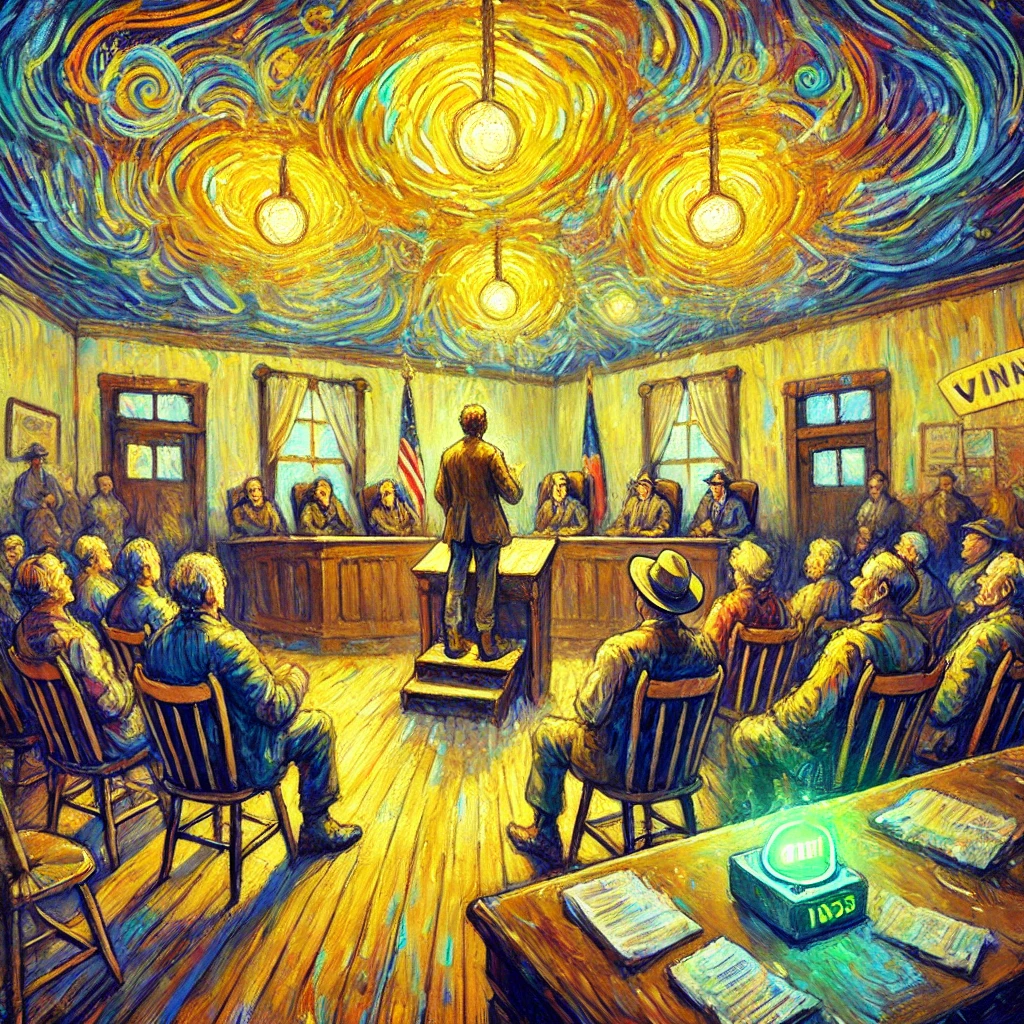
A Man Accustomed to Being Right Encounters a Stopwatch
By Tom Seest
At Sequatchie Crossing, we tell the stories of Sequatchie Crossing.
Please share this post with your friends, family, or business associates who may want follow the news from Sequatchie Crossing.
🎤 Audio Overview
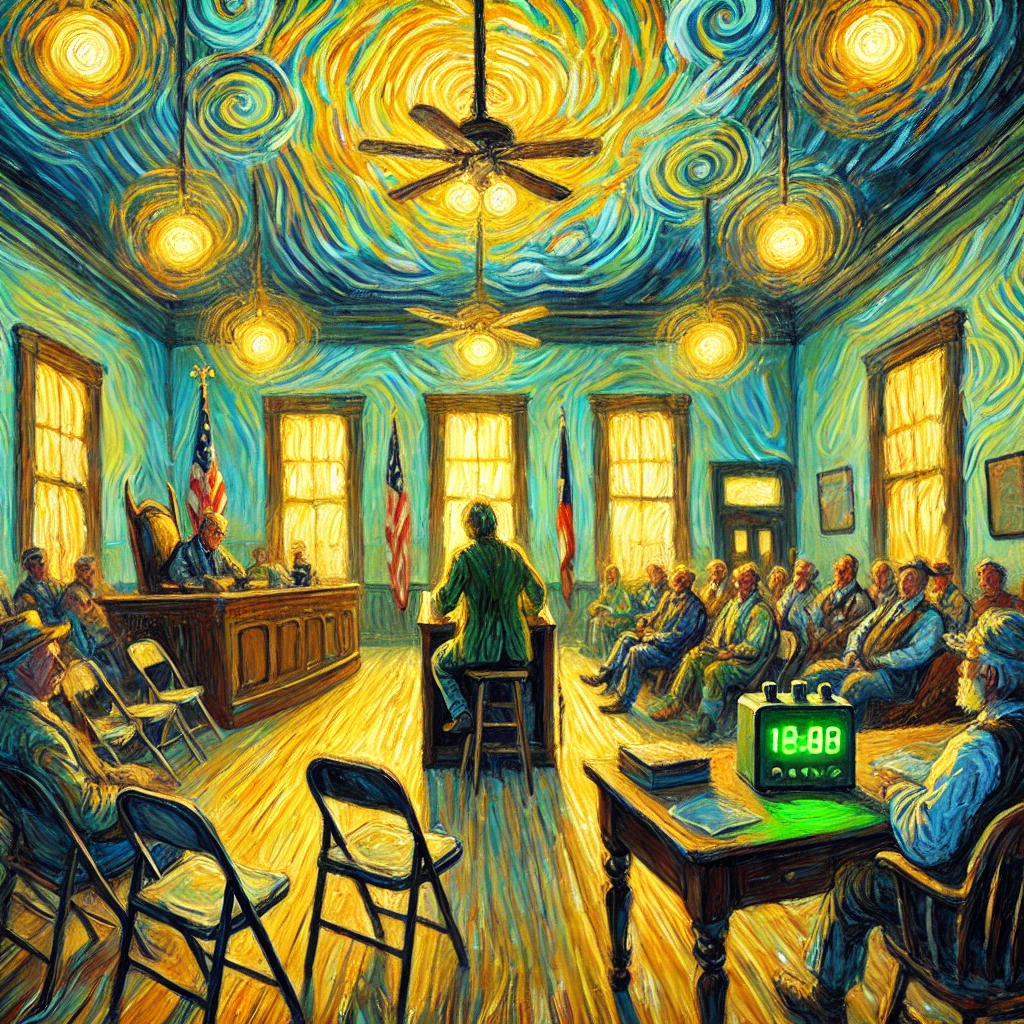
Boot Barnes Discovers Public Comment Is Not a Monologue
Act I – The Floor Is Open
The agenda for the Sequatchie Crossing Town Council meeting was ordinary to the point of invisibility.
Budget adjustments.
A culvert discussion.
A zoning clarification that would later turn out not to be one.
And, near the bottom of the page, printed in a font slightly smaller than the rest:
Public Comment (3 minutes per speaker).
This line had been there for years. It had never mattered.
Tonight, it would.
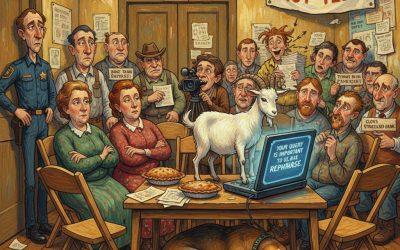
Boot Barnes arrived ten minutes early, which for him was late enough to appear casual but early enough to secure what he considered a position of rhetorical advantage: the third folding chair from the aisle, left side, near the podium but not so close as to suggest eagerness.
He brought no notes.
Boot did not need notes.
He brought confidence, memory, precedent, and a lifetime of being correct in rooms where others were technically present.
He wore his usual: pressed jeans, boots that had seen things, and a button-down shirt that suggested he might, at any moment, lean against a fence post and render a verdict on history.
Sheriff Peeler nodded at him from the back of the room.
Clovis Strickland glanced up from a manila folder thick enough to suggest documentation but thin enough to suggest relevance was negotiable.
The Clerk adjusted her microphone.
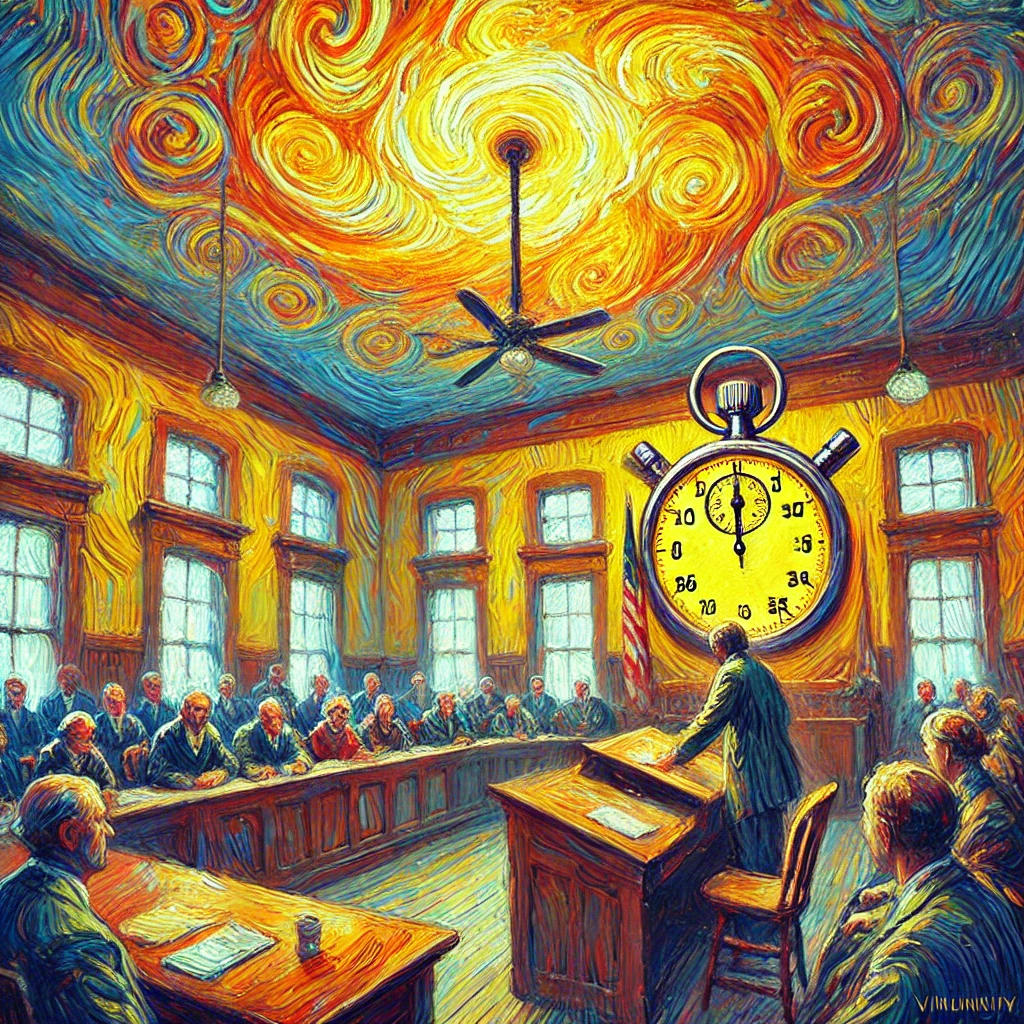
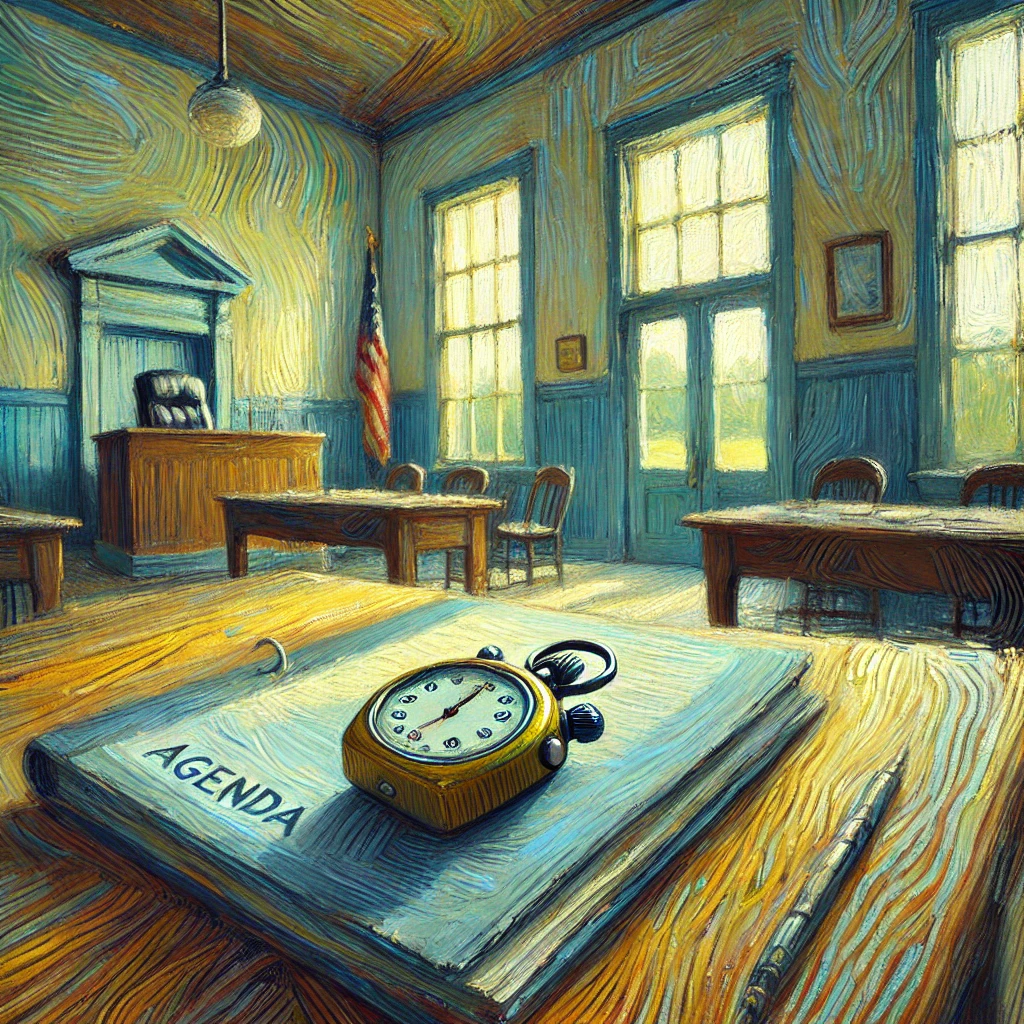
The stopwatch—new, black, unmistakably digital—sat on the table in front of her like a quiet accusation.
Boot did not notice it.

Act I – The Floor Is Open
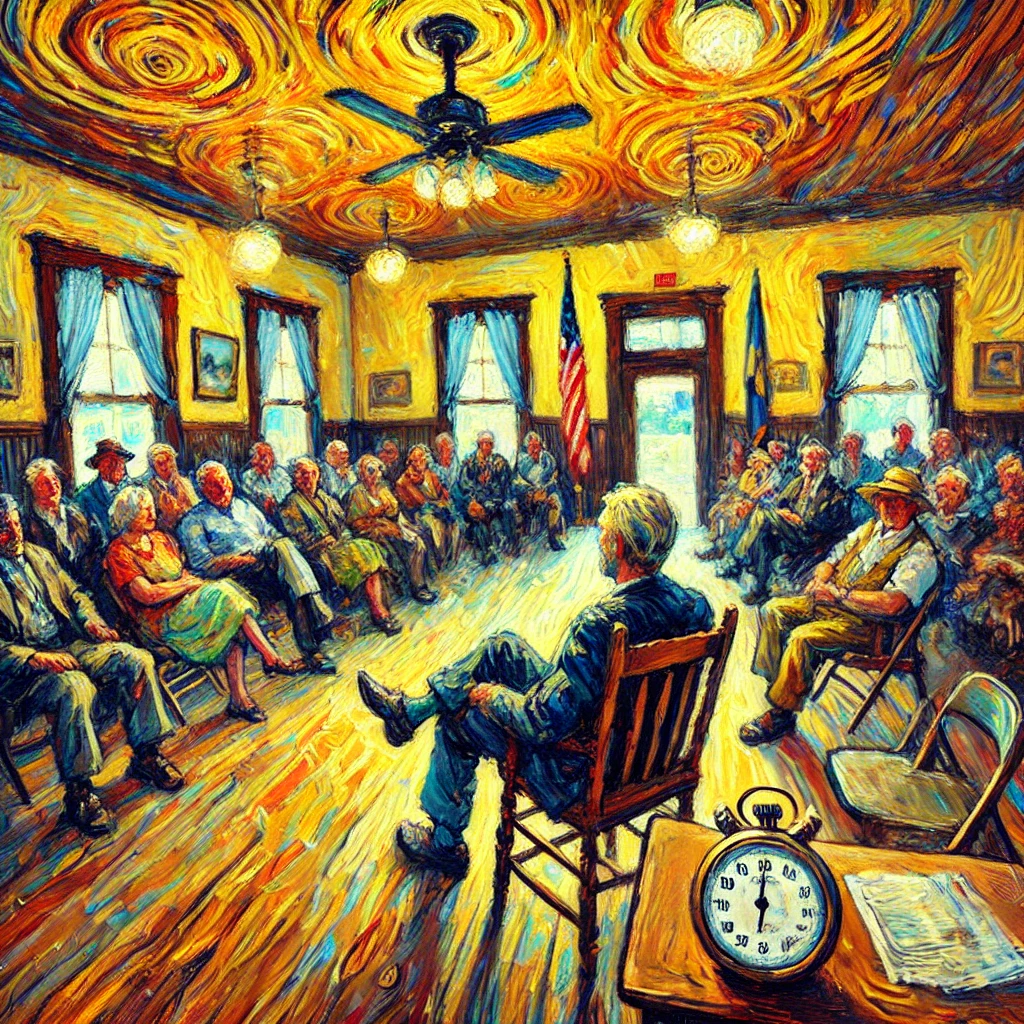
Act II – A Tradition of Speaking Until Finished
Public comment in Sequatchie Crossing had never been a timed event.
It was a rite.
You stood.
You cleared your throat.
You began somewhere adjacent to the topic.
You looped outward through family history, prior grievances, a brief recap of the Carter administration, and then—eventually—returned to the matter at hand, changed by the journey.
Time was not enforced.
Time was respected.
Boot Barnes had spoken during public comment more than anyone present, living or otherwise.
He had spoken on:
-
Road placement
-
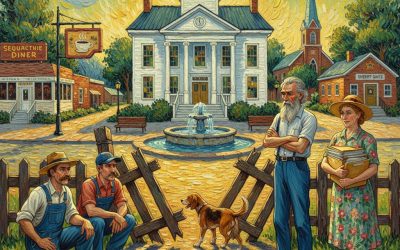
Fence lines
-
Fence ownership
-
Who had first suggested the fence
-
Why the fence was a mistake
-
Why the absence of a fence was worse
-
Why the current fence was neither fence nor solution
He had spoken when the issue affected him.
He had spoken when it did not.
He had spoken when the issue had already been resolved but incorrectly.
Boot Barnes believed in participation the way some men believe in gravity: as a constant, unavoidable, and proof-based phenomenon.
So when the Clerk said, “Public comment will now begin,” Boot stood automatically.
No one else moved.
This pleased him.
Act II – A Tradition of Speaking Until Finished
Act III – The Opening Statement That Never Closed
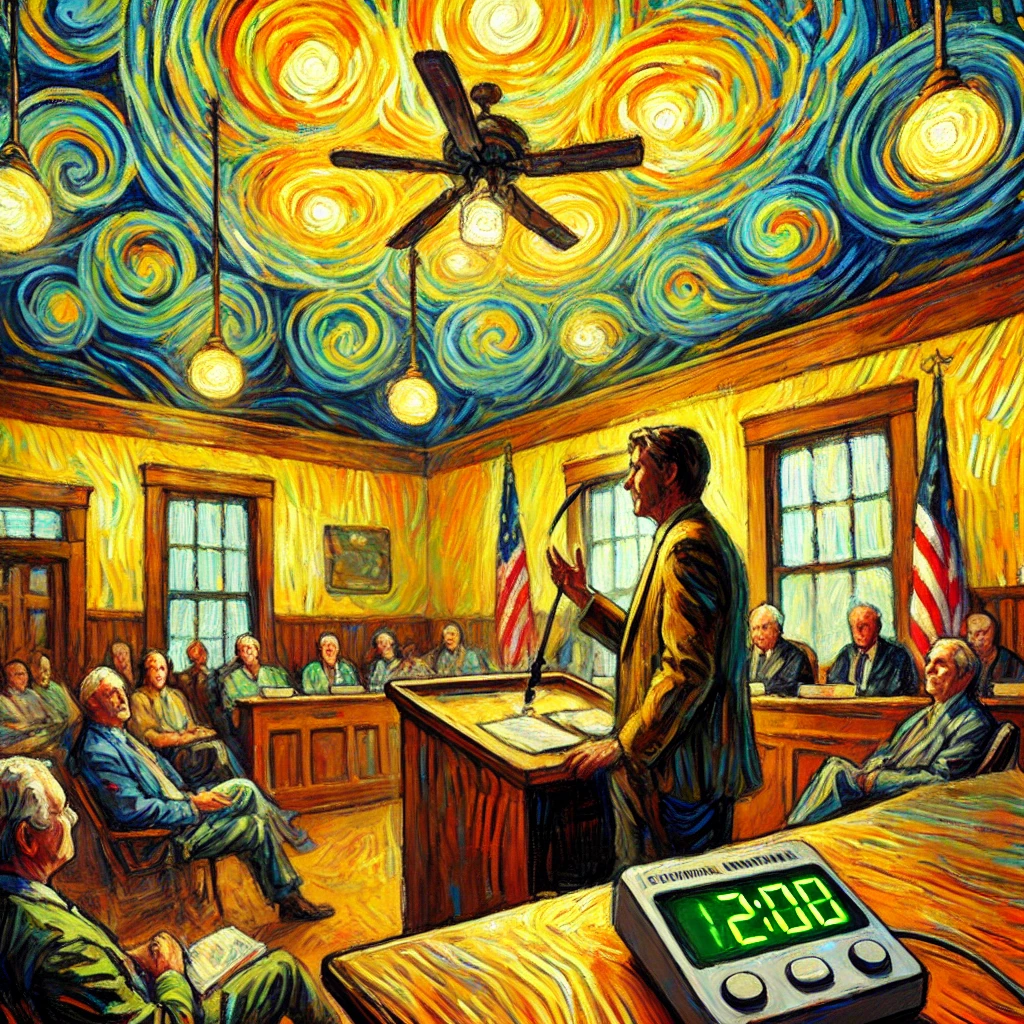
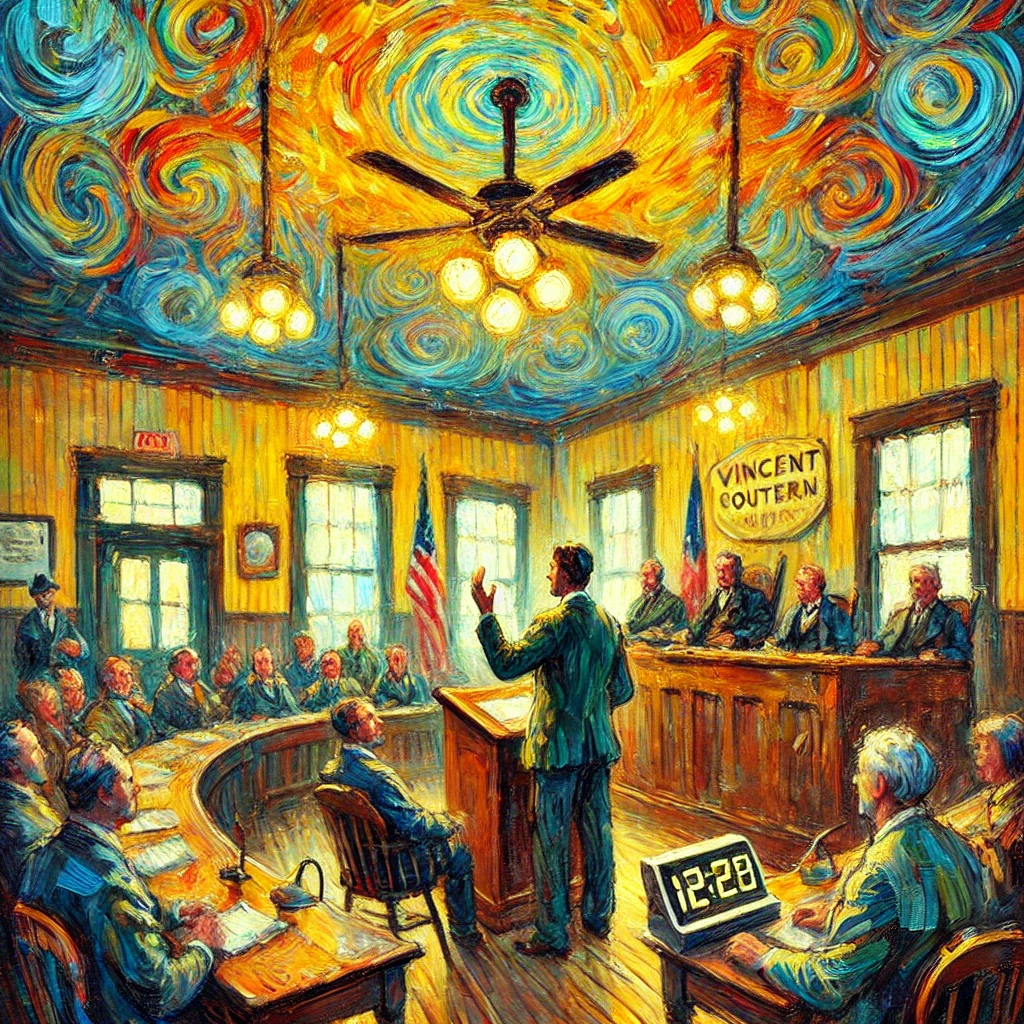
“Thank you,” Boot began, nodding once, magnanimously, to the Council as a whole.
He paused—not because he needed to, but because pauses create gravity.
“I’ve been sittin’ here listenin’,” he said, which was not entirely true but was close enough to pass.
“And I just wanna say, before we get too far down the road on this culvert business—”
The Clerk’s hand hovered, unnoticed, near the stopwatch.
“—that we’ve been here before. Not with this culvert, but with the thinking behind it.”
Boot leaned forward slightly.
“This is the kind of thing that starts out small. A little water. A little erosion. Next thing you know—”
The stopwatch beeped.
It was not loud.
Act III – The Opening Statement That Never Closed
It was not aggressive.
It was precise.
Boot paused mid-sentence.
“…what was that?” he asked.
The Clerk glanced down.
“That was three minutes, Mr. Barnes.”
Boot laughed.
It was a polite laugh.
A clarifying laugh.
“Well,” he said, “I’m just gettin’ started.”
The Clerk met his eyes.
“You’ve used your allotted time.”
The room shifted.
Someone coughed.
Sheriff Peeler straightened in his chair.
Clovis Strickland wrote something down that might later be cited.
Boot did not sit.
Act III – The Opening Statement That Never Closed
Act IV – The Concept of Time Is Introduced
“I don’t think you heard me,” Boot said, gently, as one might speak to a child or an appliance.
“I’m still in the middle of my comment.”
“Yes, sir,” the Clerk replied. “But the rule is three minutes.”
Boot frowned—not in anger, but in recalculation.
“Since when?”
“Since tonight,” she said.
Boot turned slightly, addressing the room now, not the desk.
“Now, I don’t wanna make a thing of this,” he said, which was false and aspirational at the same time.
“But public comment is—historically speaking—where citizens speak.”
Act IV – The Concept of Time Is Introduced
“Yes,” the Clerk said. “For three minutes.”
Boot gestured broadly.
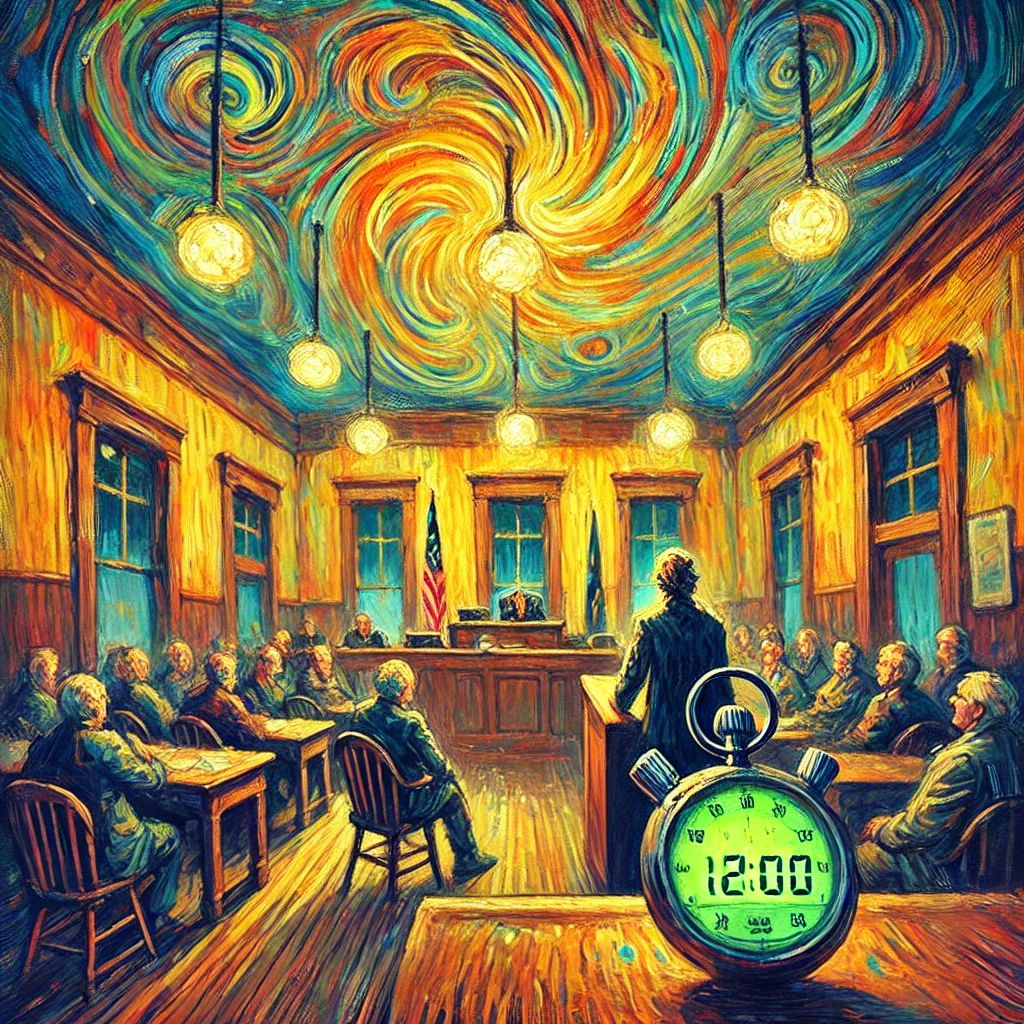
“You can’t put a clock on civic engagement.”
The stopwatch beeped again.
The Clerk had not touched it.
The room froze.
Sheriff Peeler cleared his throat.
“Maybe we let him finish his thought,” he suggested, already sounding tired.
The Clerk shook her head.
“If we let one person go over, we have to let everyone.”
Boot smiled, sensing opportunity.
“Well, that seems fair.”
Clovis Strickland looked up.
“That would extend the meeting indefinitely,” he said.
Boot turned.
“Democracy’s not a schedule, Clovis.”
Clovis nodded.
“That’s what the schedule says.”
Act IV – The Concept of Time Is Introduced
Act V – A Man Meets a Boundary
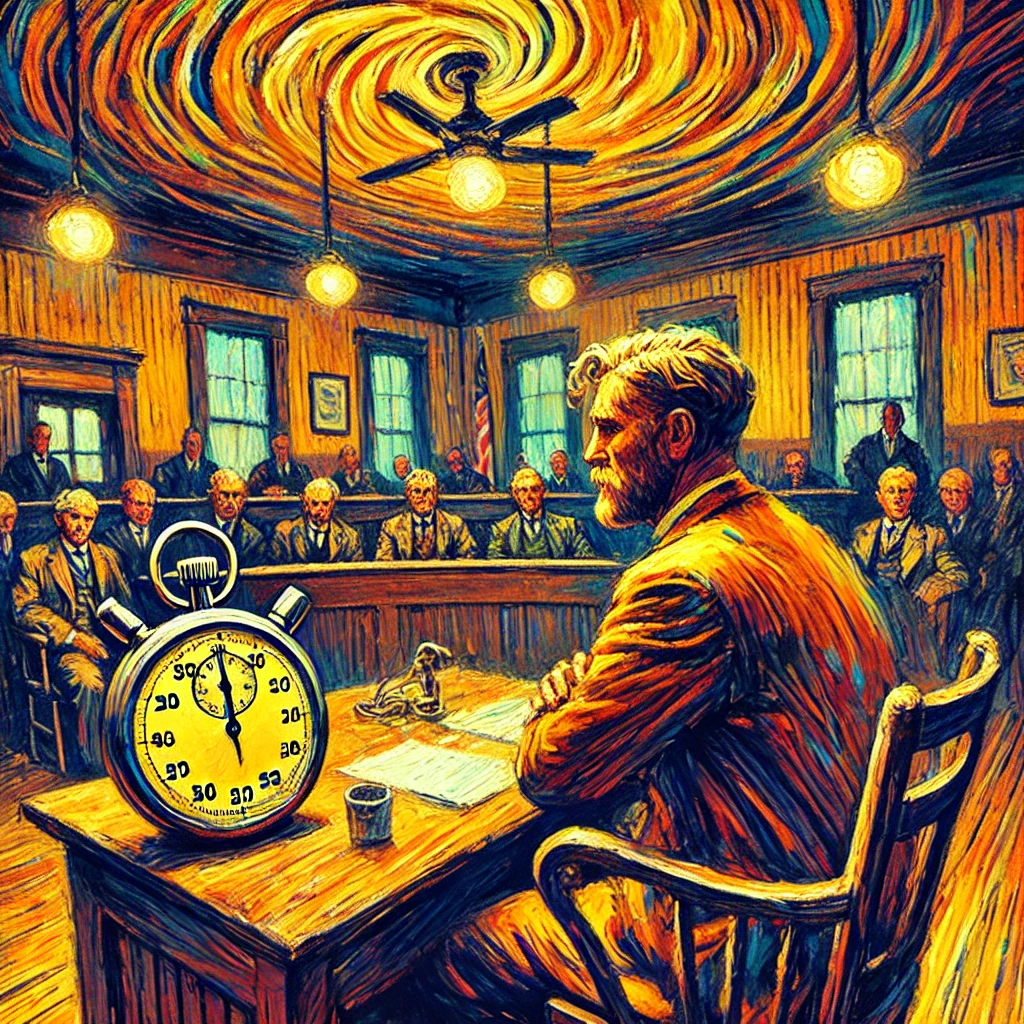
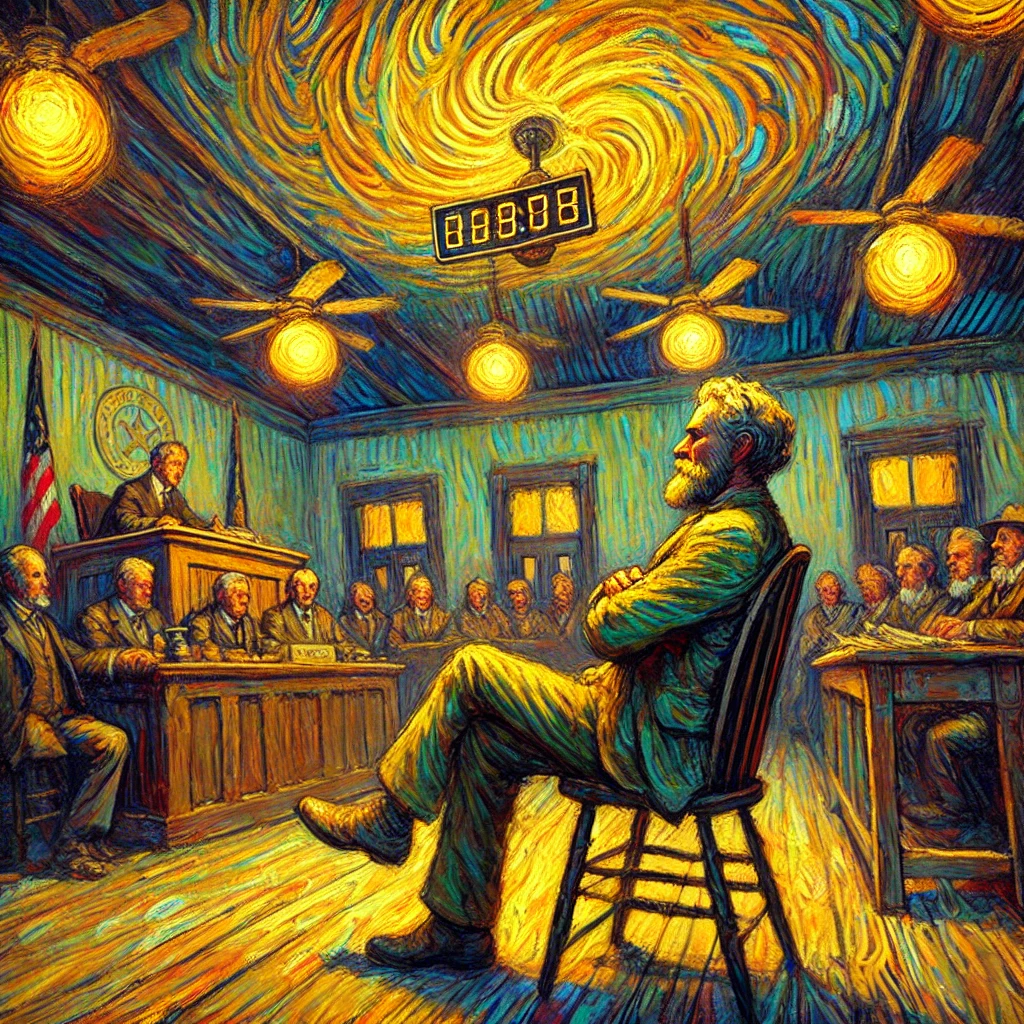
Boot Barnes sat down slowly.
This was not surrender.
This was strategy.
He folded his arms.
He waited.
The next speaker rose—someone new, nervous, and tragically brief.
She spoke for ninety seconds and sat.
The stopwatch remained silent.
Act V – A Man Meets a Boundary
Boot stood again.
“I have a follow-up.”
The Clerk did not look up.
“Public comment is concluded.”
Boot blinked.
“…I didn’t finish.”
“You did,” she said.
“No, I didn’t.”
“You exceeded your time.”
Boot placed his hands on the podium.
“This isn’t how it’s done.”
The Clerk finally looked at him fully.
“This is how it’s done now.”
The words landed harder than expected.
Now.
As if time itself had shifted slightly left.
Act V – A Man Meets a Boundary
Act VI – Procedural Reality Sets In
The meeting moved on.
Boot did not.
He sat rigid, listening not to the discussion but to the injustice of it.
This was not about the culvert anymore.
This was about something larger.
Something structural.
Something with implications.
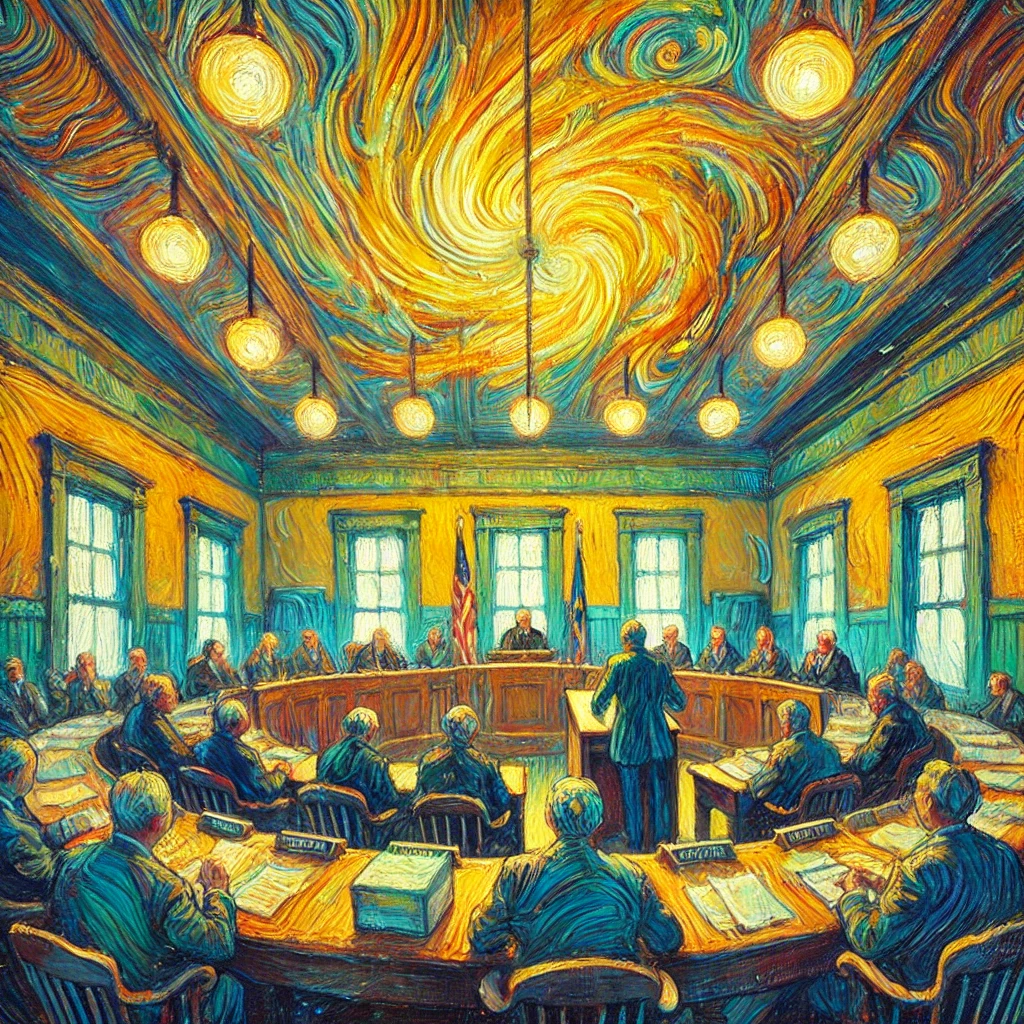
When the Council voted on the item—unanimously—Boot raised his hand.
“Point of order.”
The Mayor hesitated.
“Yes, Mr. Barnes?”
“I object.”
Act VI – Procedural Reality Sets In
“On what grounds?”
“I wasn’t heard.”
The Mayor glanced at the Clerk.
“She spoke.”
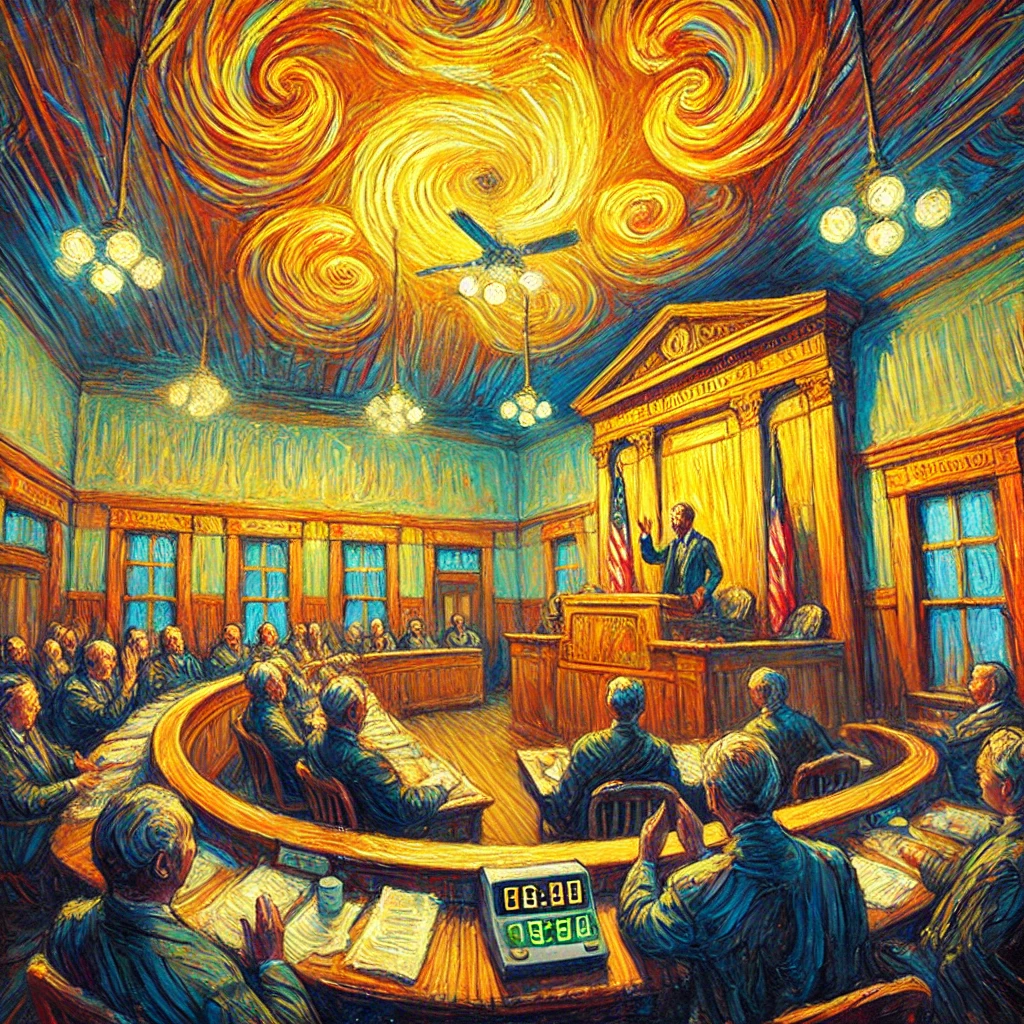
“For three minutes,” the Clerk said.
Boot exhaled.
“Three minutes is not enough time to be correct.”
There it was.
The sentence hung in the air, undeniable and complete.
Sheriff Peeler looked down.
Clovis Strickland underlined something.
The Mayor cleared his throat.
“Your objection is noted.”
Boot stood.
“Then I’ll continue outside.”
And he did.
Act VI – Procedural Reality Sets In
Act VII – The Parking Lot Address
Boot Barnes delivered his remaining seventeen minutes in the parking lot.
To no one.
And to everyone.
He spoke to the building.
He spoke to the future.
He spoke to the idea that a stopwatch could reduce a lifetime of rightness into a countdown.
Inside, the meeting adjourned on time.
This had never happened before.
People looked at one another, unsure what to do with the extra minutes.
The Clerk powered down the stopwatch.
Clovis filed his notes.
Sheriff Peeler paused at the door, listening.
Boot’s voice drifted through the glass.
“…and that’s why you can’t rush truth.”
Peeler nodded.

Act VII – The Parking Lot Address
Act VIII – The Aftermath
By morning, the story had spread.
Opinions formed.
Sides were taken.
Some said the rule was overdue.
Some said it was tyranny.
Boot Barnes did not attend the next meeting.
Neither did the stopwatch.
It sat in a drawer, quietly charged, waiting.

Act VIII – The Aftermath
Epilogue – A New Understanding
Two weeks later, Boot returned.
He sat.
He waited.
When public comment opened, he stood.
He spoke carefully.
He stopped at two minutes and fifty seconds.
He nodded.
And he sat down.
No one applauded.
But several people checked the clock.
Boot Barnes had learned something.
Not about time.
But about limits.
And Sequatchie Crossing would never be entirely comfortable with that.

Epilogue – A New Understanding
Disclaimer
This story is a work of fiction. Any resemblance to actual meetings, real procedures, or people who believe they are entitled to uninterrupted correctness is purely coincidental. Public comment may vary by jurisdiction. Stopwatch batteries not included.
Disclaimer – Boot Barnes Discovers Public Comment Is Not a Monologue
Real Places Behind the Ruckus – From The Dunlap Directory

Real Places Behind the Ruckus – From The Dunlap Directory
Yes, this story was fictional; even the parts that weren’t true. These places? Absolutely real. Stop by, support local, and keep the Wi-Fi away from livestock:
- Bigfoot Adventure and Baggenstoss Farm
- Big Dog Development
- Morton Industries – Dunlap Plant
- Pickett Heating & AIr Conditioning
- Accident Attorneys Greer, Swafford & Adams
- Rigsby Farm Equipment
- Hickerson Land Management
- Commercial Bancshares Services Inc
- Evergreen Enterprise
- Wendy’s
- Dead Zero Shooting LLC
- Dellview Homestead
- King Donuts
- H&R Block
- Boardtree Falls
- Red’s Innovations TN
- Mid-Tenn Diesel Truck Repair

Real Places Behind the Ruckus – From The Dunlap Directory
At Sequatchie Crossing, we tell the stories of Sequatchie Crossing.
Please share this post with your friends, family, or business associates who may want follow the news from Sequatchie Crossing.


0 Comments