



Balance Lasts Four Minutes
By Tom Seest
At Sequatchie Crossing, we tell the stories of Sequatchie Crossing.
Please share this post with your friends, family, or business associates who may want follow the news from Sequatchie Crossing.
🎤 Audio Overview
For exactly four minutes on a Tuesday morning – between the end of the rain and the beginning of the second round of opinions – Sequatchie Crossing achieved something no town had ever achieved before.
It cared the exact correct amount.
No more. No less.
It did not overreact. It did not underreact. It did not form a committee. It did not speculate about outsiders. It did not blame Facebook, the government, or newcomers with out-of-state plates. It simply acknowledged a situation, expressed appropriate concern, and then paused.
The pause is what made it historic.
It began, as these things often do, with a truck that did not belong where it was.

Sequatchie Crossing Achieves Perfect Balance Between Caring and Complaining
Act I – The Truck, The Ditch, and the First Layer of Concern
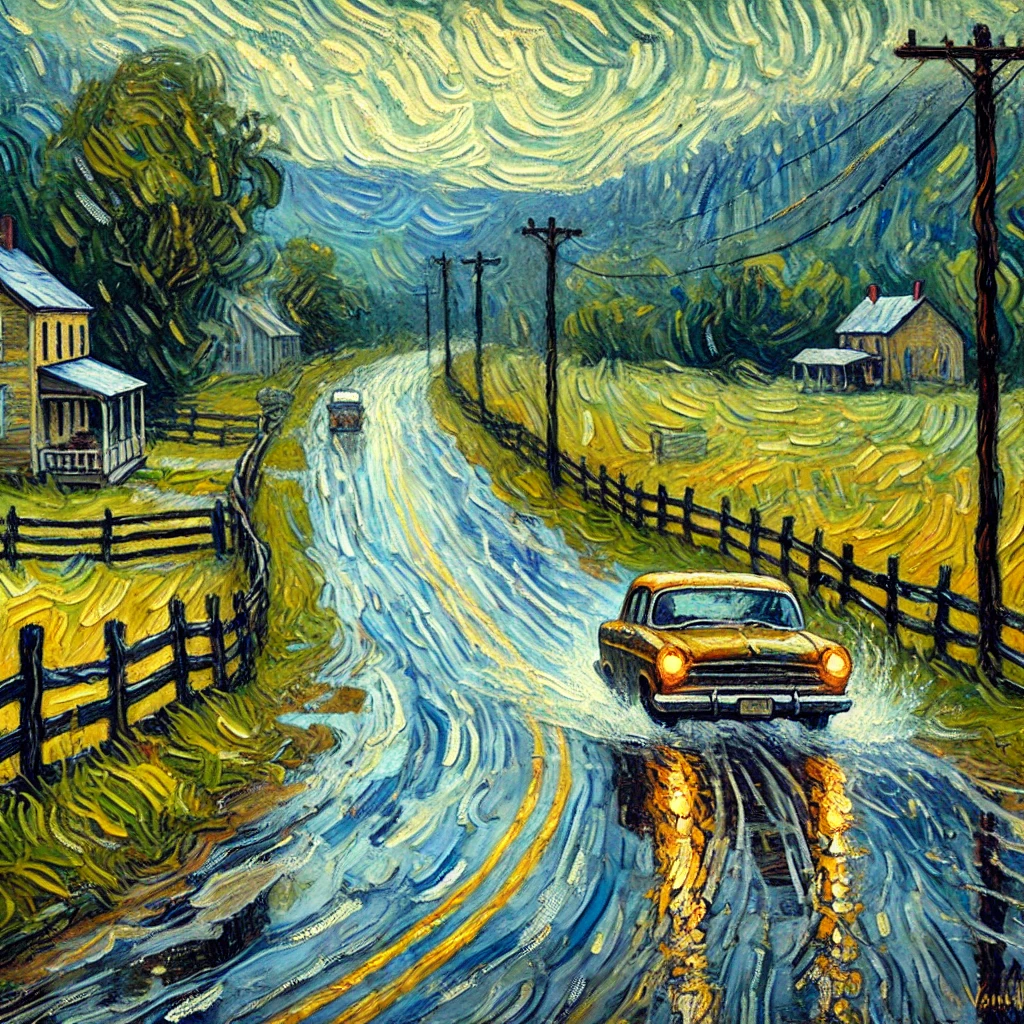
The truck was a white utility pickup with a ladder rack, parked halfway into the shallow drainage ditch beside Ridge Road, just past the turnoff where the old feed store used to be before it became a taxidermy supply shop and then quietly wasn’t anything at all.
Its hazard lights were on.
That alone elevated the situation.
Hazard lights in Sequatchie Crossing meant one of three things:
-
Someone was genuinely in trouble
-
Someone wanted to be seen as potentially in trouble
-
Someone had no idea what the button did and pressed it accidentally while searching for the radio
In this case, it was the first one.
The driver – middle-aged, baseball cap, boots too clean to be local but too dirty to be corporate – stood beside the truck, phone to his ear, staring down at the front tire, which had settled into the mud at an angle that suggested it had made a decision and was standing by it.
He was not yelling.
He was not waving.
He was simply there.
And for a brief, shining moment, the town responded perfectly.

Act I – The Truck, The Ditch, and the First Layer of Concern
Act II – The Four-Minute Window
The first car slowed down.
Not stopped. Just slowed.
The driver – a woman from up on the mountain, recognizable by posture alone – rolled down her window and asked, “You alright?”
The man nodded.
“Tow truck’s on the way.”
She nodded back.
No advice was offered.
No story about a worse ditch in ’98 was told.
No commentary about how Ridge Road had “never been right since they touched it” escaped.
She drove on.

Act II – The Four-Minute Window
The second car slowed. A young guy, local, nodded once, gave a thumbs-up, and continued without comment.
The third car stopped – but only because it had to. Sheriff Peeler happened to be driving behind it, and protocol required a brief check.
Peeler rolled down his window, assessed the scene in a single glance, and said, “Looks handled.”
The man agreed.
Peeler drove on.
And for four full minutes after that, something extraordinary happened.
Nothing else.
No one posted.
No one called anyone else.
No one speculated.
No one claimed to know the man, the truck, or the true reason it was there.
The town existed in a state of functional empathy.
The universe held its breath.
Then Clovis Strickland noticed.

Act II – The Four-Minute Window
Act III – Clovis Detects an Imbalance
Clovis Strickland noticed the truck at 9:12 a.m., which was late enough to be suspicious.
He noticed it because the truck was not there yesterday, and because Clovis believed deeply that anything new on Ridge Road was either:
• A test
• A mistake
• Or a sign that someone somewhere had failed to ask permission
Clovis did not stop.
He did not roll down his window.
He did not wave.
He drove past at exactly two miles under the speed limit, leaning forward slightly, cataloging details.
White truck.
Out-of-county plates.
Hazard lights on too confidently.
He said nothing out loud.
That was important.
Because once Clovis spoke, the balance would tip.

Act III – Clovis Detects an Imbalance
Act IV – The First Post (Careful, Neutral, Temporary)
At 9:16 a.m., a post appeared.
Not accusatory. Not alarmist.
Measured.
“White utility truck stuck off Ridge Road near the old feed store location. Driver seems okay. Tow truck en route as of this morning.”
No emojis.
No names.
No questions.
The comments remained empty for almost thirty seconds.
That was the tail end of the balance.
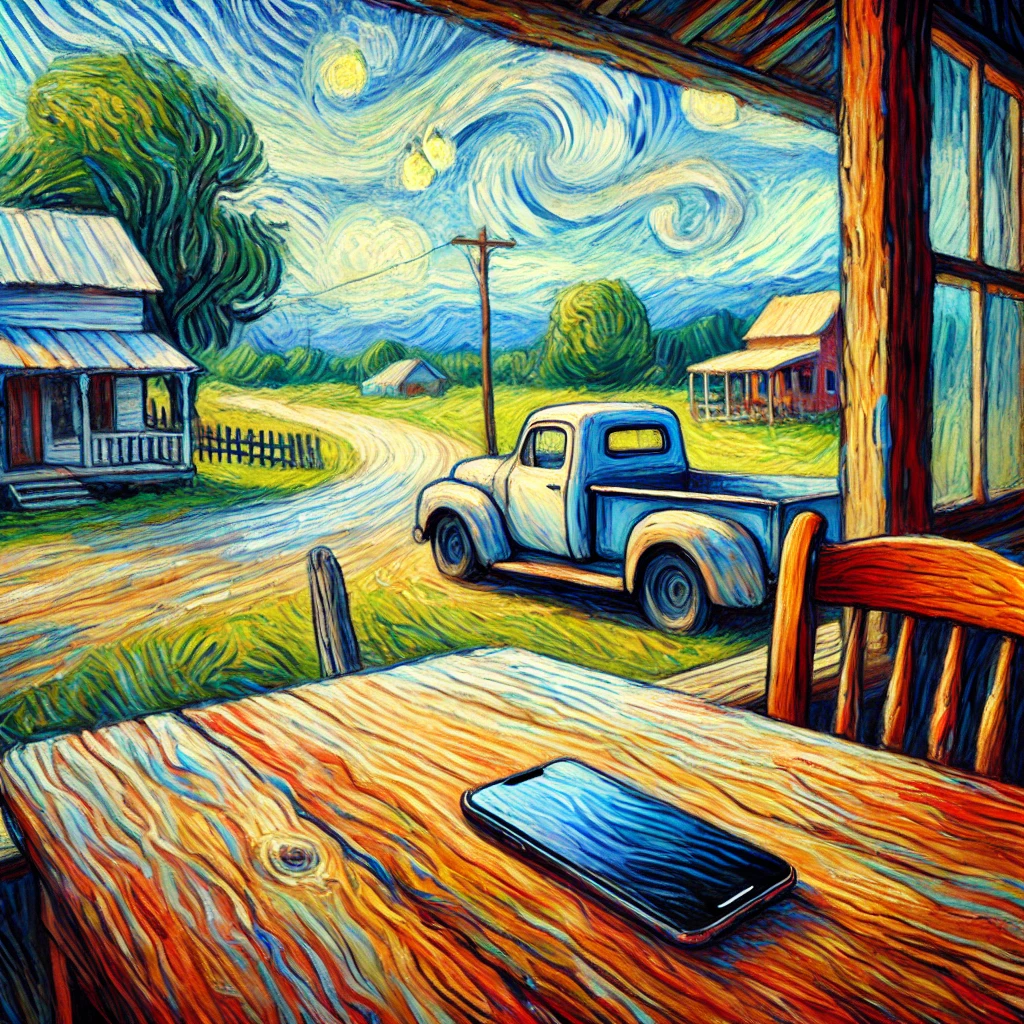
Act IV – The First Post Appears
Act V – The Compliment Phase
The first comment was supportive.
“Glad he’s alright.”
Then another:
“That stretch stays slick after rain.”
Still fine.
Still normal.
A third:
“Hope they get him out quick.”
At this point, the town was still caring more than complaining.
The ratio held.
But ratios, like peace treaties, require constant vigilance.

Act V – The Compliment Phase
Act VI – The Context Creep
The fourth comment did not break the balance – but it leaned on it.
“That road’s been messed up since they ‘fixed’ it.”
The quotation marks were unnecessary, but forgivable.
The fifth comment added history.
“My cousin slid there back in 2004.”
The sixth introduced speculation.
“Is that one of those contractors for the new thing?”
No one knew what “the new thing” was, but everyone felt it.
The balance wobbled.
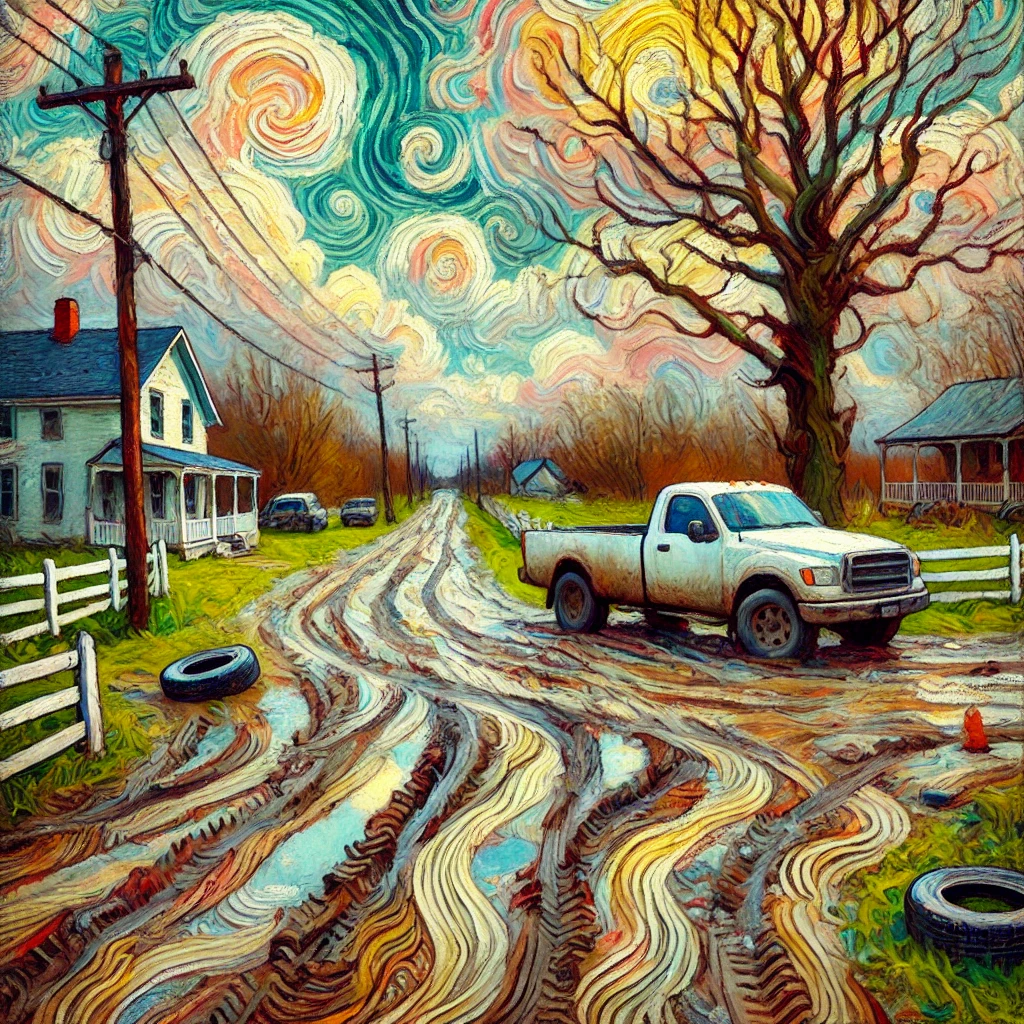
Act VI – Context Creep
Act VII – Eugene “Boot” Barnes Offers Perspective
Boot Barnes didn’t comment often.
When he did, people read it twice.
He wrote:
“Man’s stuck. Tow’s coming. That’s about it.”
It was a reset attempt.
A good one.
For approximately twelve seconds, it worked.

Act VII – Boot Barnes Offers Perspective
Act VIII – The Advice Phase Begins
Then came the suggestions.
“He should’ve backed in.”
“That’s why I don’t pull off there.”
“They need to gravel that shoulder.”
“That wouldn’t have happened if – ”
The final comment in that sequence trailed off, unfinished, but loaded.
The balance tipped.

Act VIII – The Advice Phase Begins
Act IX – The Care-to-Complaint Exchange Rate Collapses
By 9:24 a.m., the thread had evolved.
The truck was no longer a truck.
It was evidence.
Evidence of:
• Poor infrastructure
• Outside interference
• Declining standards
• Or general moral slippage, depending on the commenter
Someone asked why the county hadn’t done anything.
Someone else explained why the county never did anything.
A third person corrected both of them inaccurately.
Care was still present – but it had been diluted.
Complaining was now leading.
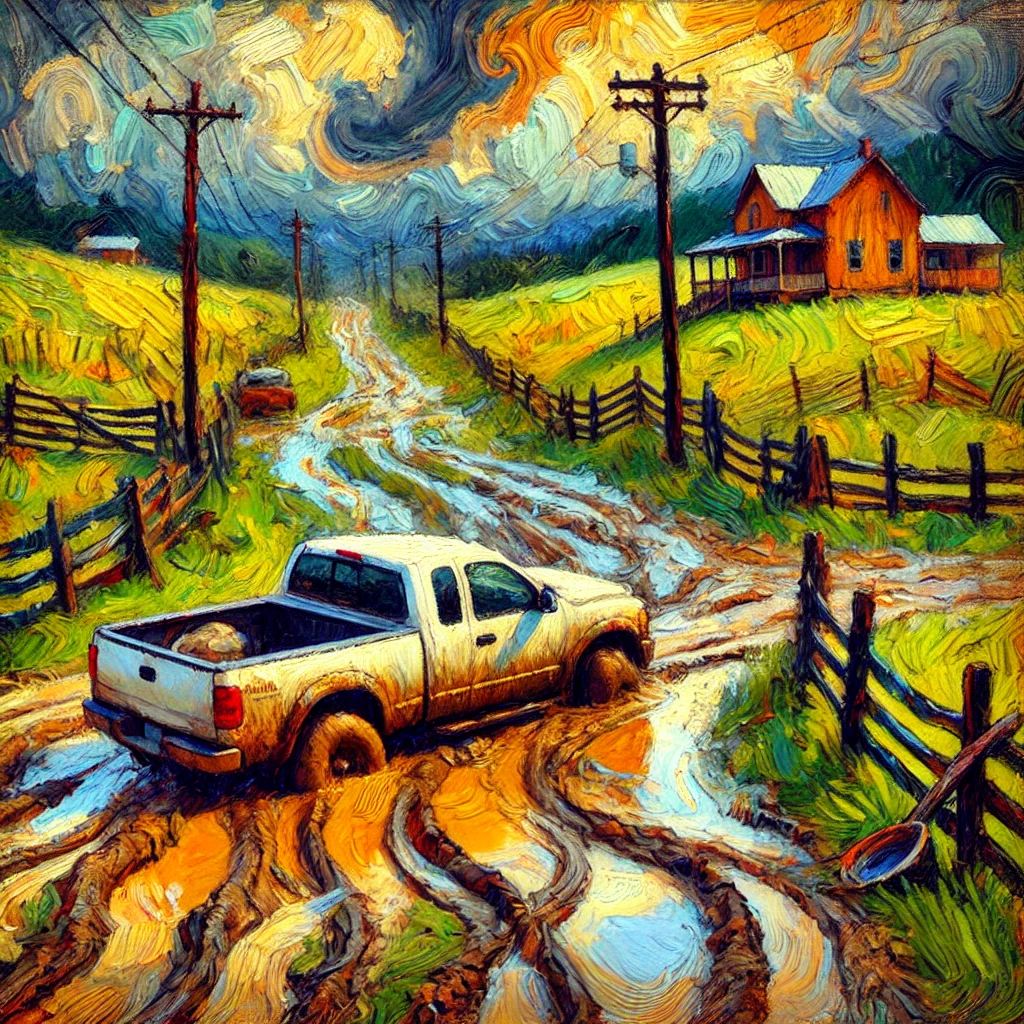
Act IX – The Care-to-Complaint Exchange Collapses
Act X – The Tow Truck Arrives (Too Late to Matter)
At 9:27 a.m., the tow truck arrived.
It did its job efficiently.
The white truck was freed, waved once in thanks, and drove off.
The physical situation resolved.
The social one did not.
Because by then, the thread had moved on to:
• Whether Ridge Road needed a study
• Whether studies ever helped
• Whether anyone remembered when things worked
• Whether “they” even cared anymore
The original driver was never mentioned again.
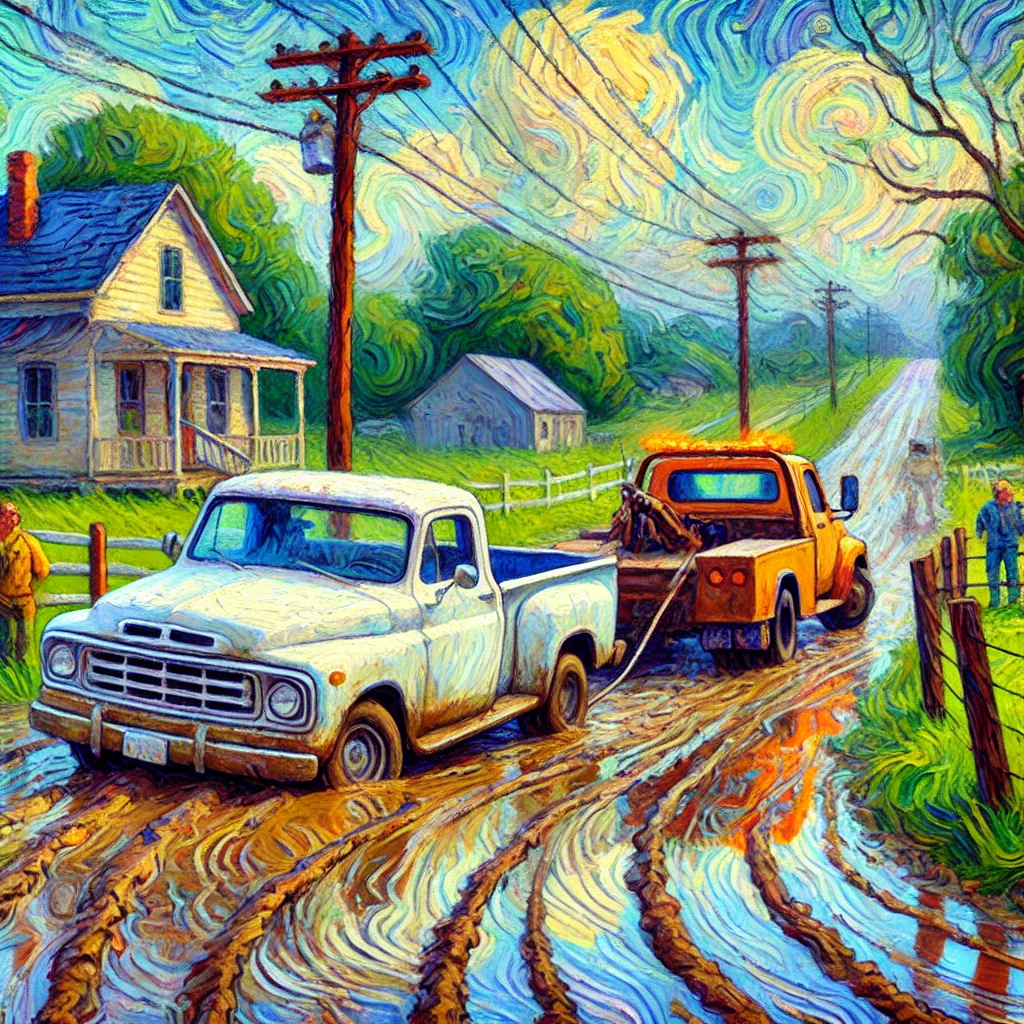
Act X – The Tow Truck Arrives
Act XI – The Postmortem
Later that afternoon, someone summarized the whole thing:
“Glad it got handled.”
Another replied:
“Handled, sure – but for now.”
And there it was.
The town, back in its natural state.

Act XI – The Postmortem
Act XII – What Almost Happened (But Didn’t)
No meeting was called.
No sign was erected.
No ordinance was proposed.
And that, ironically, was the most balanced outcome possible.
For four minutes that morning, Sequatchie Crossing proved it could care without spiraling.
It did not hold the pose.
It never does.
But the fact that it happened at all became a reference point.
Weeks later, when something else went sideways, someone would say:
“Well, at least it ain’t like that truck thing.”
And everyone would know exactly what they meant.

Act XII – What Almost Happened
Epilogue – The Balance Returns, Briefly
The next rain came.
Another car slowed.
Another question was asked.
Another nod was given.
For a moment – just a moment – the town hovered again on the edge of perfect balance.
Then someone posted.
And the universe exhaled.

Epilogue – The Balance Returns, Briefly
If you want, next logical companion pieces could be:
-
“Town Establishes Temporary Calm, Immediately Distrusts It”
-
“Sequatchie Crossing Solves Problem Accidentally, Debates How to Undo It”
-
“Local Incident Resolved Too Quickly to Be Useful”
Or we can expand this into a multi-act version with Clovis notes, a formal “Balance Index,” or a later town meeting where someone tries to recreate the four minutes and fails spectacularly.
Just say the word.
Absolutely. Here’s a Sequatchie Crossing–standard disclaimer that fits the tone of this story – dry, restrained, quietly self-aware, and just a little accusatory without pointing fingers.
You can drop this at the top or bottom, or reuse it as a series-wide disclaimer.
Epilogue – The Balance Returns, Briefly
Disclaimer
This story is a work of fiction.
Any resemblance to real people, real trucks, real ditches, real roads, real social media posts, or real arguments that “weren’t really arguments, just observations” is purely coincidental and probably unavoidable.
Sequatchie Crossing is not a real town, though it may feel uncomfortably familiar.
All characters, events, and four-minute periods of civic balance are fictionalized composites, assembled from memory, observation, and the universal human instinct to both care deeply and complain immediately.
No drivers were judged, no roads were officially evaluated, and no comments were deleted in the making of this story.
Any lessons implied were not agreed upon in advance and are not binding.
If you believe you recognize yourself, your neighbor, or a specific stretch of road, please remember:
you may simply be part of the pattern.

Disclaimer – Sequatchie Crossing Achieves Perfect Balance Between Caring and Complaining
Real Places Behind the Ruckus – From The Dunlap Directory

Real Places Behind the Ruckus – From The Dunlap Directory
Yes, this story was fictional; even the parts that weren’t true. These places? Absolutely real. Stop by, support local, and keep the Wi-Fi away from livestock:
- Red’s Innovations TN
- Studio Dunlap
- Sequatchie Valley Insurance LLC
- Little Tail Farms
- Ed’s Lawn Care
- Christy Cartwright Real Estate Agent
- Five Star Wine & Spirits
- Crumb & Co.
- Berg’s Diesel Repair
- 580 Tactical Training
- Save A Lot
- Sequatchie Valley Brewing Co.
- Cain Development

Real Places Behind the Ruckus – From The Dunlap Directory
At Sequatchie Crossing, we tell the stories of Sequatchie Crossing.
Please share this post with your friends, family, or business associates who may want follow the news from Sequatchie Crossing.

0 Comments