


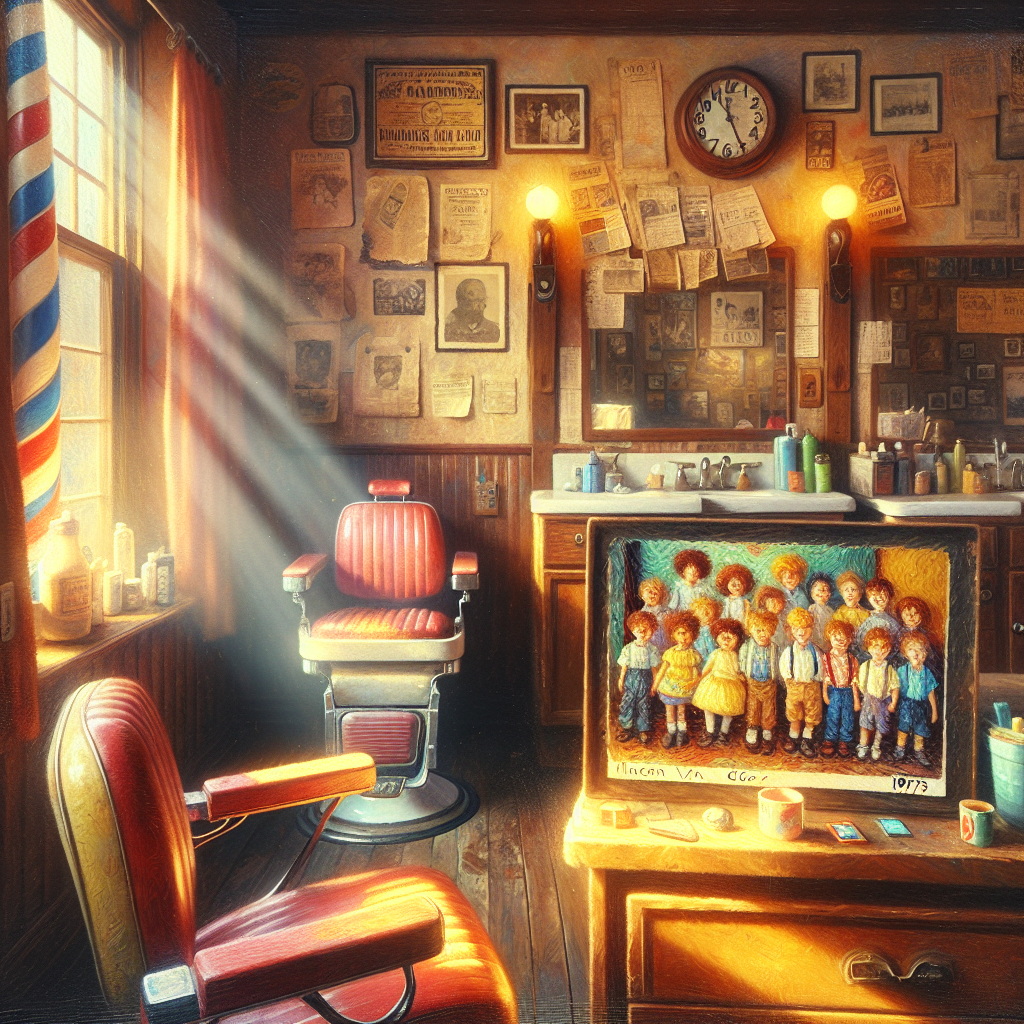
1973 Secrets and a Polaroid Rock The Town
By Tom Seest
At Sequatchie Crossing, we tell the stories of Sequatchie Crossing.
Please share this post with your friends, family, or business associates.
🎤 Audio Overview
Barbershop Time Capsule Discovery – 1973 Secrets and a Polaroid Rock The Town
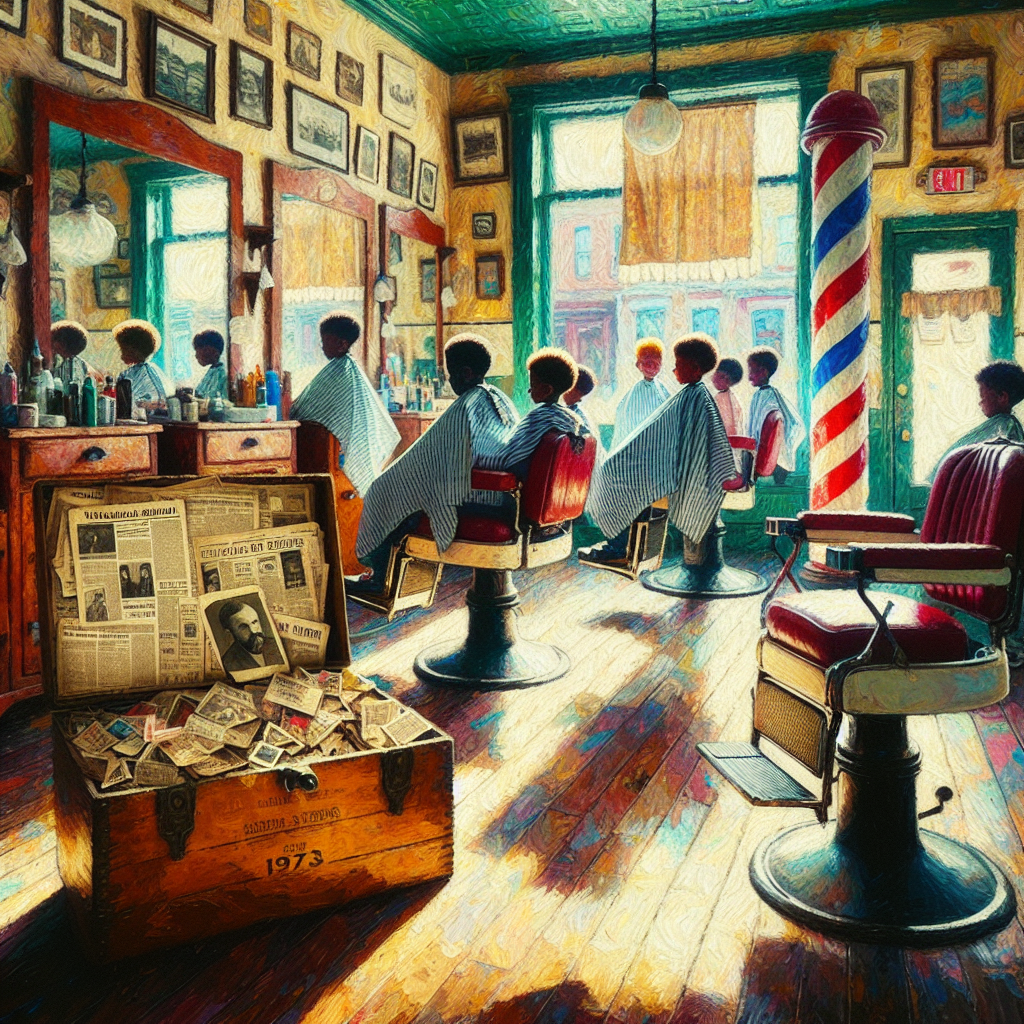
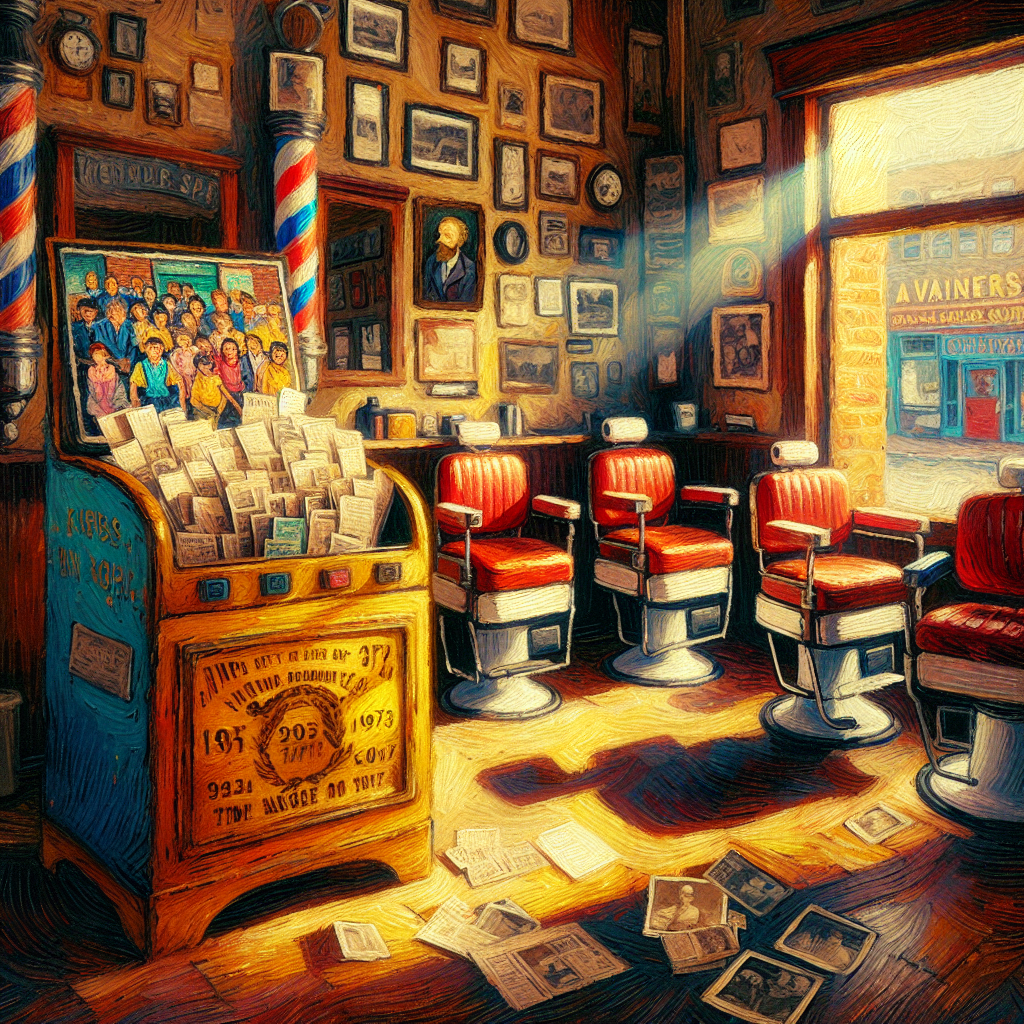
It all started with a leaky sink at Claude’s Barbershop, a two-chair operation with one functioning chair and one used primarily to store expired magazines and conspiracy pamphlets. Chester Ray Blevins had come in for his quarterly sideburn lamination (“just in case history repeats itself”) and noticed a slow drip near the back wall. Being the town’s most qualified laminator and least qualified plumber, Chester climbed onto the wobbly storage shelf to investigate—and that’s when his elbow hit something above the acoustic tiles.
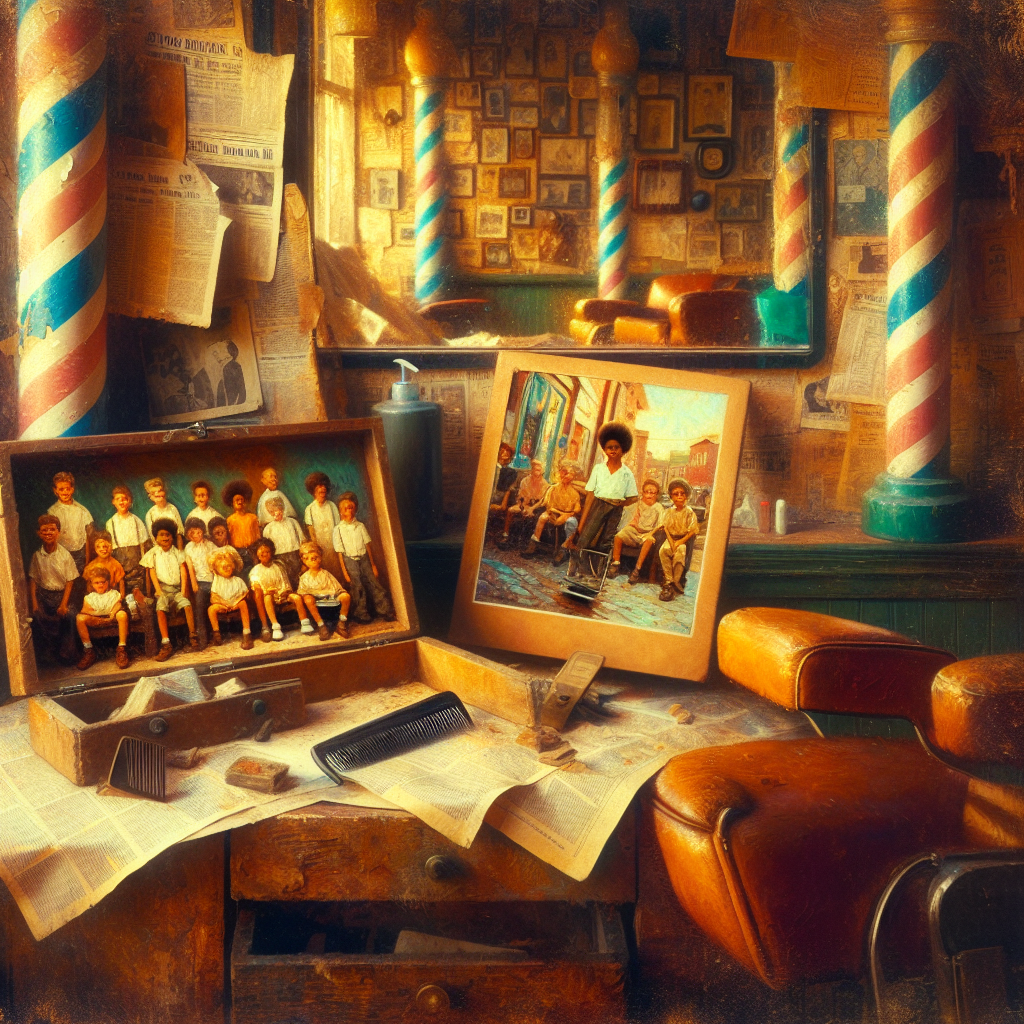
A cloud of dust and a mild sneeze later, Chester Ray pulled down an old Nike shoebox, duct-taped shut and marked: “1973 – For Emergency Truths Only.”
Naturally, he brought it to Boot Barnes.
Barbershop Time Capsule Discovery – 1973 Secrets and a Polaroid Rock The Town
Boot Barnes, the town’s self-declared historian and actual breaker of every known digitization effort, insisted on an Emergency Town Historical Review. He hand-typed invitations (all in Courier, naturally) and posted them on the community bulletin, the post office door, and Evelyn Grace Tipton’s piano.
The meeting convened at Earl’s Market’s back room, because the library was booked for a Reiki drum circle (thanks, Brett and Alyssa Crenshaw). Present were the usual suspects: Mabel Dean Ashcroft with her casserole clipboard, Pastor Peeler polishing his sermon notes, Coach Freddie trying to install motivational decals, Clovis Strickland with a bug sweeper, and Tiffany Roark livestreaming on TiffTok under the hashtag #ShoeboxScandal.
Boot dramatically opened the box.
Inside: a stack of handwritten notes on faded stationery, a handful of old ticket stubs from the 1973 Sequatchie Square Dance Championship, and a Polaroid of what appeared to be a very shirtless Mayor Clyde L. Tuttle, mid-embrace with what looked suspiciously like a mannequin wearing a sash labeled “Miss Rural Elegance 1973.”
Clovis gasped. “It’s finally confirmed. The Great Mannequin Pageant Coverup.”
Mabel Dean fainted (neatly, and into Evelyn’s piano bench).
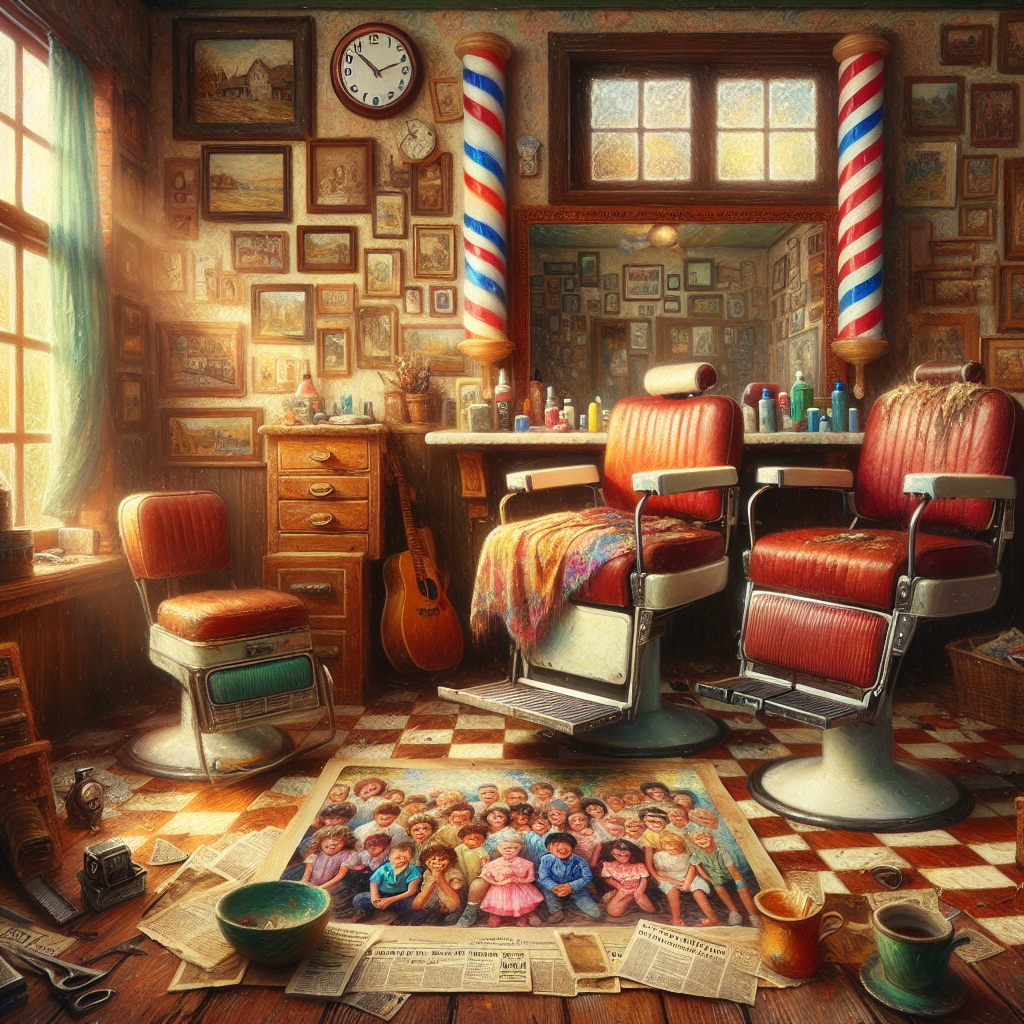
Pastor Peeler tried to pray the image away. Evelyn demanded the Polaroid be turned face-down for decency. Coach Freddie called it “team-building from another era.”
Shelley Wexler wandered in with a bowl of moon-blessed mung beans and announced, “This is clearly a portal to our collective shame chakra.”
Trixie Jo Bartlett, who had skipped school after sensing “an emergency in the glitter-justice continuum,” declared a temporary Youth Moratorium on Mayoral Behavior. She issued pink citations to everyone over 50.
Chester Ray began laminating the notes from the box, noting that one of them described a lost annexation map Boot had sworn was burned in the Bicentennial Bonfire of ‘76. Boot demanded immediate protective custody for the entire box.
Then Doughboy Teeter entered with his drone.
“This is what I was born for,” he whispered, sending it into the rafters to scan for more boxes.
It immediately crashed into Pastor Peeler’s coffee cup and knocked over the emergency communion crackers.
Mabel Dean, once revived, insisted that the Polaroid be sealed under church laminate and exorcised by Sister Lila Mae.
Lurleen Davenport filed a formal aesthetic grievance, citing “emotional clutter.”
Dr. Neil Cowgill began citing French theorists on performative shame and suggested a community forum on historical misrepresentation in rural iconography.
Sonny Morales offered tacos and said nothing, but left a chalkboard by the door reading: “1973 was spicy. Eat accordingly.”
Tiffany created a 3-part docuseries titled: Scandal in Sepia: The Clyde Tuttle Coverup, complete with dramatic reenactments starring Coach Freddie as the mannequin. It reached 74,000 views in 24 hours.
Meanwhile, RT Mullins attempted to sell the shoebox as an NFT.
After four hours, three procedural pauses, one glitter-based filibuster from Trixie Jo, and Kenny Joe Teeter’s intervention (“Y’all, maybe the past is tired and just wants a nap”), the town agreed to the following:
- The shoebox would be stored in a locked cabinet at Blevins Print Shop, behind the emergency laminator.
- The Polaroid would be blurred using analog methods and stored separately in a sealed envelope labeled Highly Historical but Mildly Inappropriate.
- A town plaque would be created, reading: In 1973, Sequatchie Was Human. Let Us All Learn.
- A yearly event, “Shoebox Day,” would be held to remember that every town has secrets—and sometimes those secrets have nipples.
Disclaimer: This is a work of fiction. But if your great-aunt claims she knew what happened at the 1973 Square Dance, we suggest offering her cobbler and recording everything she says. Just in case. Any resemblance to real people, living or just stubborn, is purely accidental—but also maybe a little flattering. Sequatchie Crossing exists only in the minds of those brave enough to imagine a town where zoning laws, casseroles, and conspiracy cassettes collide in glorious disarray.
At Sequatchie Crossing, we tell the stories of Sequatchie Crossing.
Please share this post with your friends, family, or business associates who may want help telling the stories of their legacy.

0 Comments