


A Rhythmic Rebellion Divides Altos and Sopranos
By Tom Seest
At Sequatchie Crossing, we tell the stories of Sequatchie Crossing.
Please share this post with your friends, family, or business associates who may want follow the news from Sequatchie Crossing.
🎤 Audio Overview
I. Prelude to Dissonance
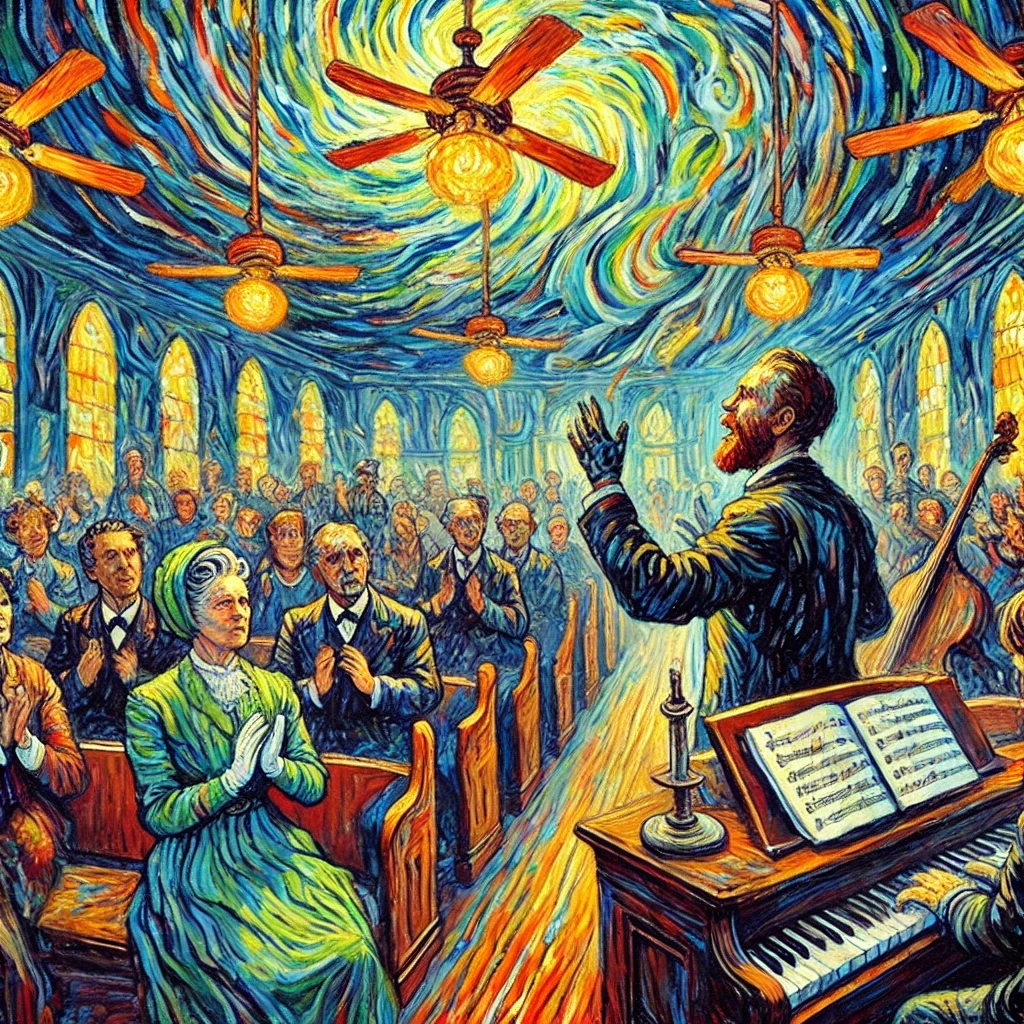
It all started innocently enough on a humid Wednesday evening at First Unaffiliated Missionary Temple during choir rehearsal. The church fans were barely keeping pace with the humidity, and Evelyn Grace Tipton was already testy over a questionable eighth note in the new arrangement of “I’ll Fly Away.” Pastor Peeler had just finished a mini-sermonette about joy being rhythmic when it happened: Mabel Dean Ashcroft, matriarch of mannerly authority, refused to clap on beat.
She did not miss the beat.
She ignored it.
Mabel Dean clapped when her spirit led her, which was almost always about one-eighth of a measure behind the others. To make matters worse, she insisted on wearing white gloves, which muffled her clap into something that sounded like a goose sighing.

II. Initial Tremors
Trixie Jo Bartlett, Youth Mayor and soprano section leader (self-appointed), attempted to lead a synchronization exercise using glitter-covered popsicle sticks and a portable metronome app that played dubstep. This only made Mabel Dean more determined to maintain her personal rhythm, claiming, “It’s not about timing, child. It’s about testimony.”
Brett and Alyssa Crenshaw arrived late, floating in on a wave of sage smoke and kombucha breath, immediately identifying the disharmony as a “frequency misalignment.” Brett offered to recalibrate the choir’s aura using a triangle and essential oils, while Alyssa chanted something allegedly in Sanskrit.
Evelyn refused to let them near the piano.
III. Choir Schism
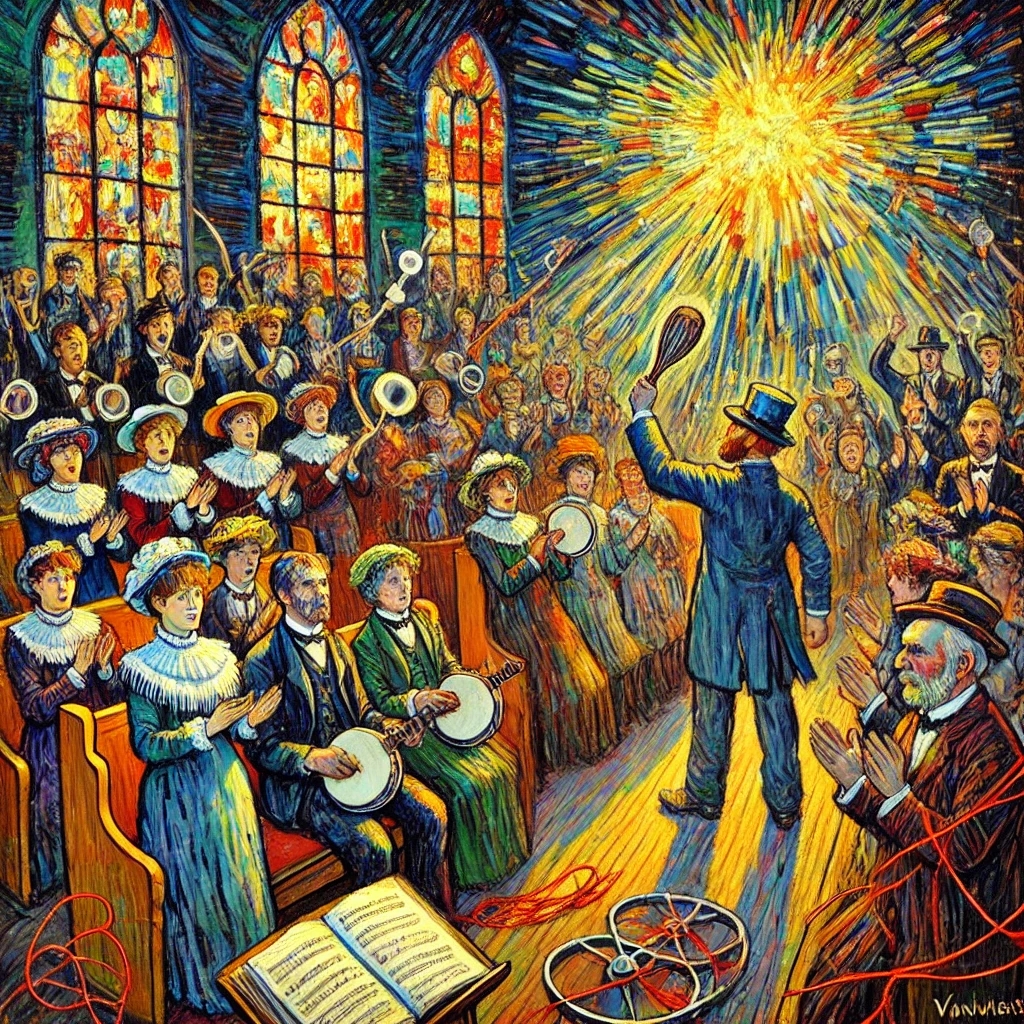
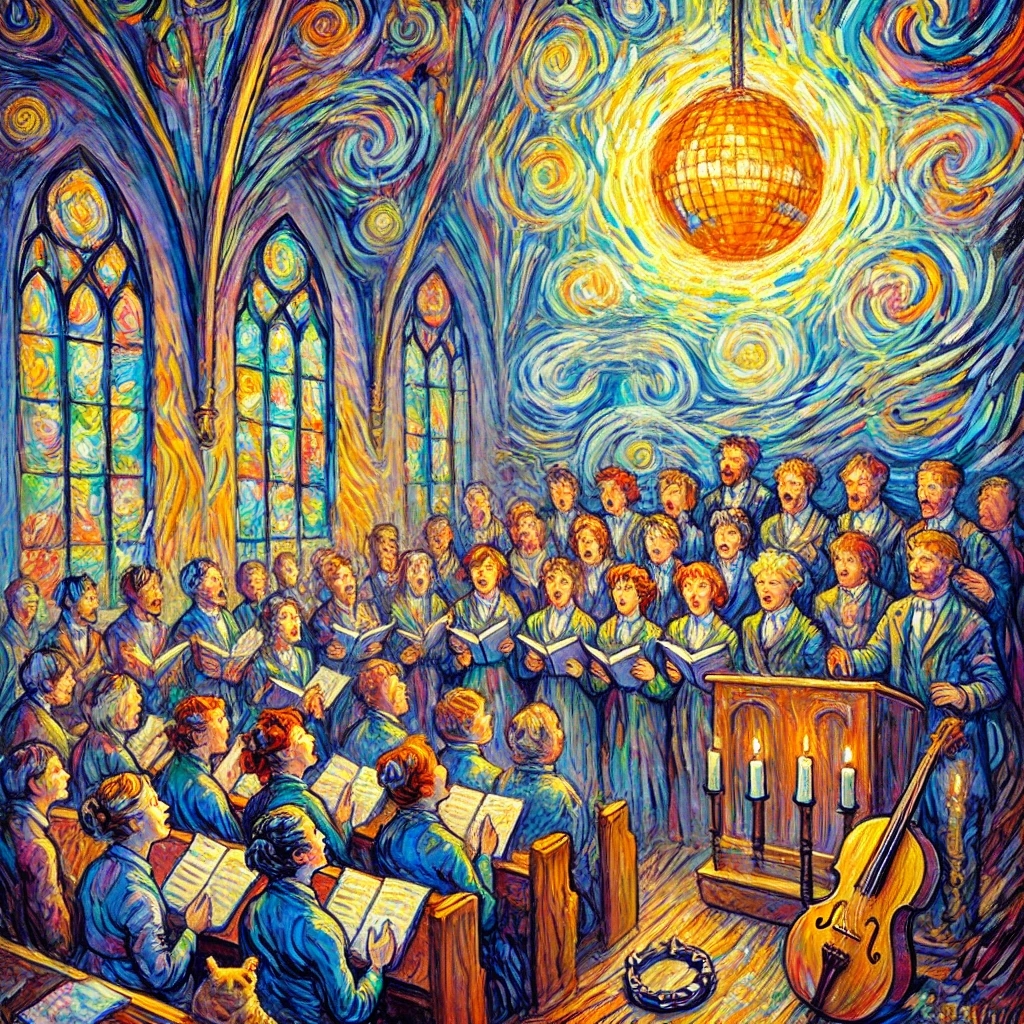
By Sunday morning, the choir loft had a visible line of division. The Altos (now known as “The Traditionalists”) huddled behind Mabel Dean in defiant asynchrony. The Sopranos (“Team Tempo”) were fronted by Trixie Jo, who had rewritten the second verse of “Victory in Jesus” as a chant with accompanying claps and interpretive sign language.
Clovis Strickland claimed the whole ordeal was a smokescreen for data collection via smart hymnals. He filed an anonymous report with the FCC and brought his spoon-based lie detector to rehearsal.
Coach Freddie tried to reunite the factions by leading a halftime-style clap drill that ended with Shelley Wexler fainting from over-smudging the choir robes.

IV. The Great Choir Council
A town-wide emergency meeting was held at the Fellowship Hall under a banner hastily printed by Chester Ray Blevins: “CHRONOMETRIC COHERENCE IN CHURCH MUSIC: A FORUM.
Dr. Neil Cowgill delivered a 47-minute lecture on the sociology of group harmony, using color-coded pie charts and an unrelated PowerPoint about birdsong and late-stage capitalism. Boot Barnes accused Neil of confusing the issue with “academic flapdoodle” and reminded the crowd that “back in ’79, we clapped when the Spirit moved and when the piano allowed.
Lurleen Davenport passed out laminated copies of the 1983 Choir Conduct Guidelines, annotated and highlighted. Wade Langston attempted to enforce spacing standards between clappers, which led to an awkward moment when Evelyn Grace Tipton whacked his clipboard mid-crescendo.
V. The Turning Point
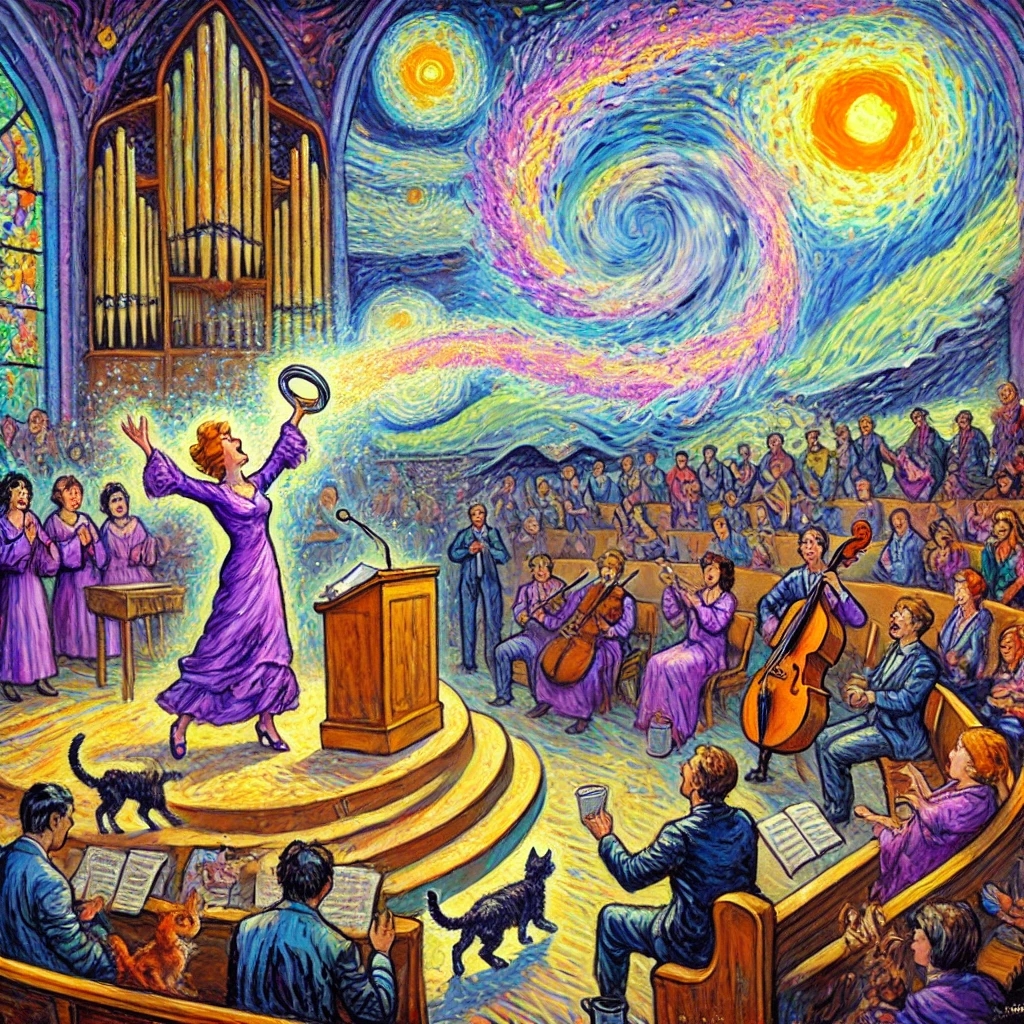
Tensions came to a head during the church’s 5th Sunday Sing, when Mabel Dean, in open rebellion, introduced tambourines to the alto section. Trixie Jo responded with jazz hands. Shelley attempted a unifying energy chant, but accidentally summoned seventeen feral cats.
At the climax of “I Saw the Light,” Brett’s chakra triangle vibrated off-key, Evelyn slammed the piano lid shut, and Pastor Peeler burst into spontaneous rhyme:
“The Lord loves rhythm, yes it’s true,
But chaos ain’t what we should do.
So tap your foot or pat your pew,
But clap on beat—or sit in pew two.”
VI. Resolution in Harmony (Mostly)
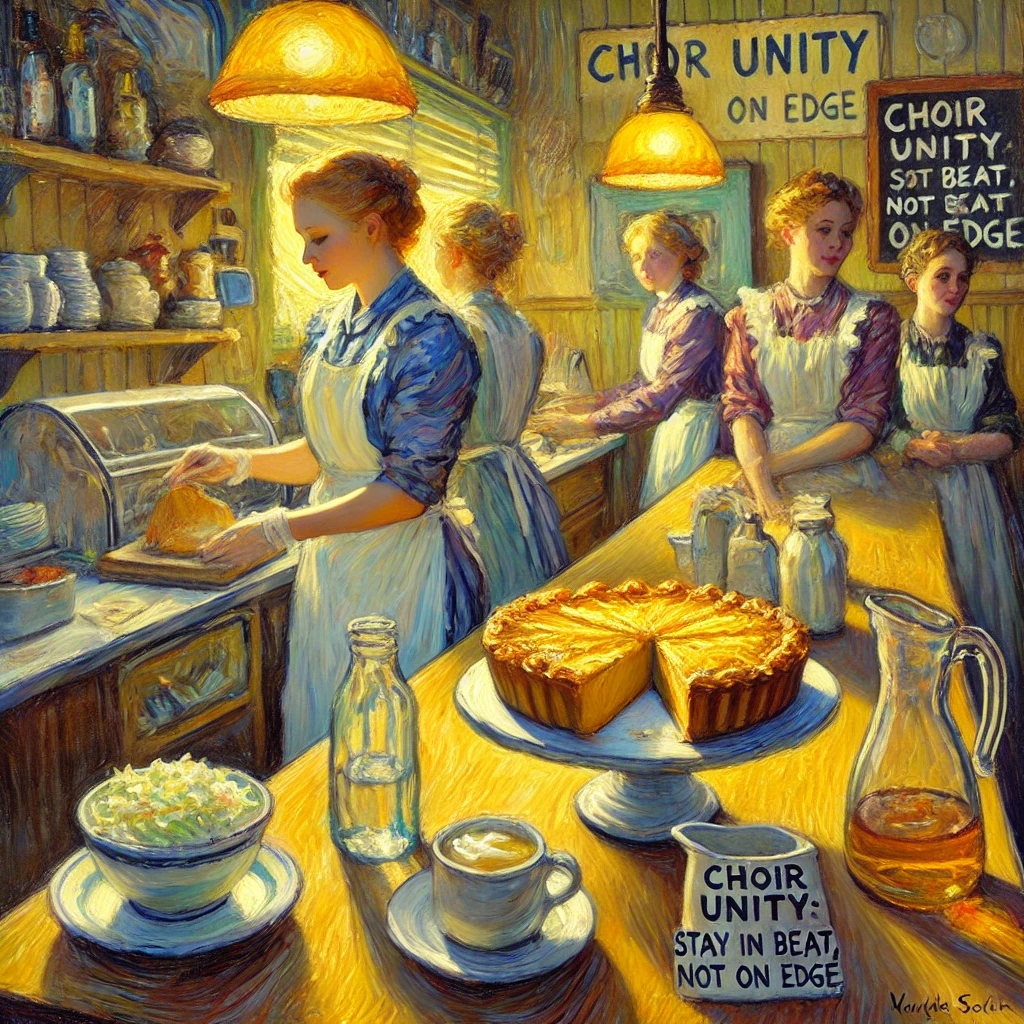
After the Sing, Maggie Sue Dillard declared a truce over coconut cake and coleslaw diplomacy. She proposed a compromise: clapping would be allowed during odd-numbered verses only, and tambourines must be pre-registered with the Worship Coordination Subcommittee.
Evelyn returned to the piano, sighing, “Fine, but if anyone brings a djembe, I walk.”
Mabel Dean agreed to practice with a metronome app but insisted it be downloaded by someone “without tofu in their pocket.”
Boot drafted a new sign: “Choir Unity: Stay on Beat, Not on Edge” and laminated it personally.
VII. Final Chorus
By the next week’s rehearsal, harmony was mostly restored. There were still stray syncopations and a passive-aggressive triangle ring, but in the end, they sang together—offbeat, maybe, but not off love.
Disclaimer: The Sequatchie Crossing Dispatch is a work of fiction rooted in satire, folklore, and the uniquely combustible charm of small-town life. This story is entirely fictional. Any resemblance to real church choirs, passive-aggressive clappers, or rebellious tambourine enthusiasts is purely coincidental—though not implausible in Sequatchie Crossing. Sequatchie Crossing exists only in the minds of those brave enough to imagine a town where zoning laws, casseroles, and conspiracy cassettes collide in glorious disarray.
Real Places Behind the Ruckus – From The Dunlap Directory

Real Places Behind the Ruckus – From The Dunlap Directory
Yes, this story was fictional; even the parts that weren’t true. These places? Absolutely real. Stop by, support local, and keep the Wi-Fi away from livestock:
- The Butter Dish
- Bigfoot Adventure TN Zipline
- Coops Creek Greenway
- Sequatchie Valley Electrical Pros
- TN Waterfront Vacation Rental
- Dunlap Building Stone
- Tiger Rock Dunlap
- The Chef’s Restaurant
- Signal Mtn And Dunlap Sell, Trade, Buy
- ChattaBOOga Ghost Walk
- UT Performance
- JV’s BBQ
- Shackleford Ridge County Park
- Western Union – Walmart
- Standifer Orthodontics
- The Ridge
- John Griswold Recreation Park
- Mountain Valley Bank
- American Legion Post 190 – Dunlap
Real Places Behind the Ruckus – From The Dunlap Directory
At Sequatchie Crossing, we tell the stories of Sequatchie Crossing.
Please share this post with your friends, family, or business associates who may want follow the news from Sequatchie Crossing.

0 Comments