


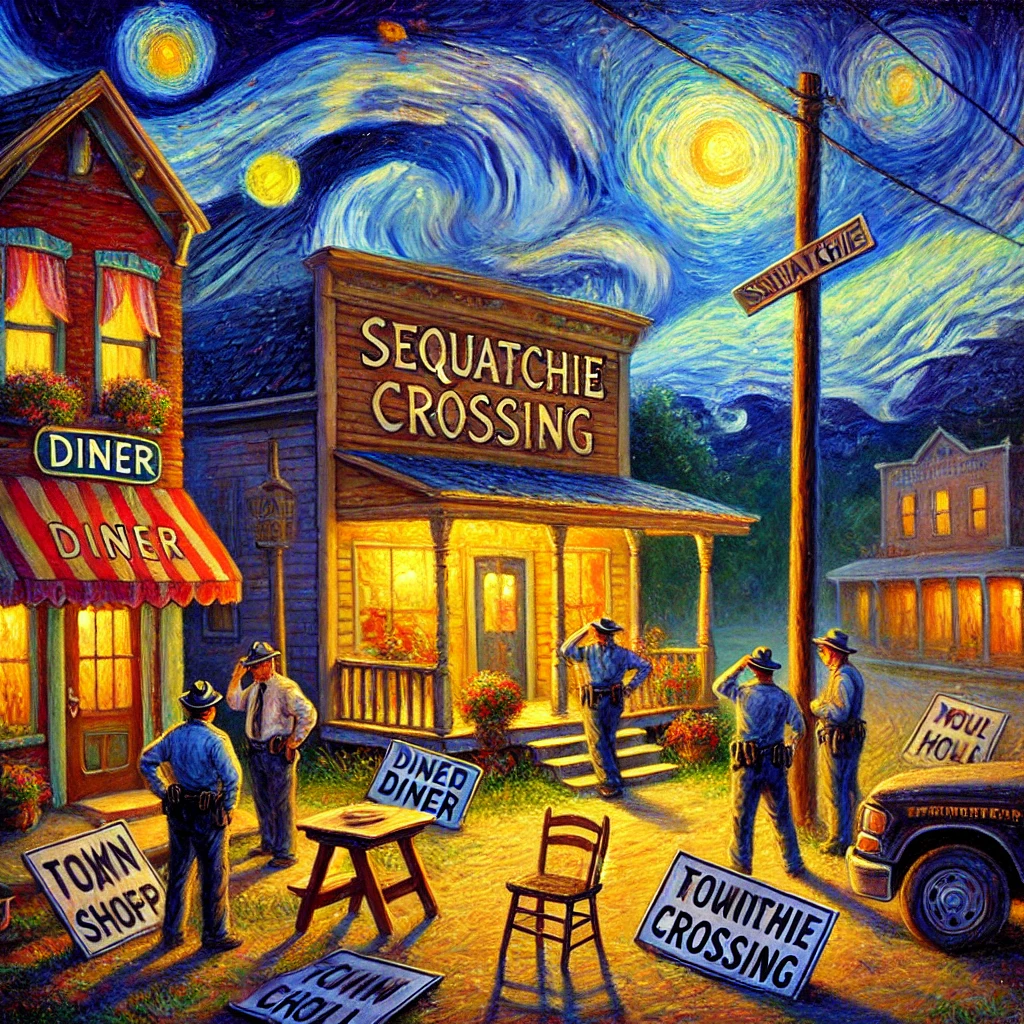
No One Saw Anything, Everyone Noticed
By Tom Seest
At Sequatchie Crossing, we tell the stories of Sequatchie Crossing.
Please share this post with your friends, family, or business associates who may want help telling the stories of their legacy.
🎤 Audio Overview
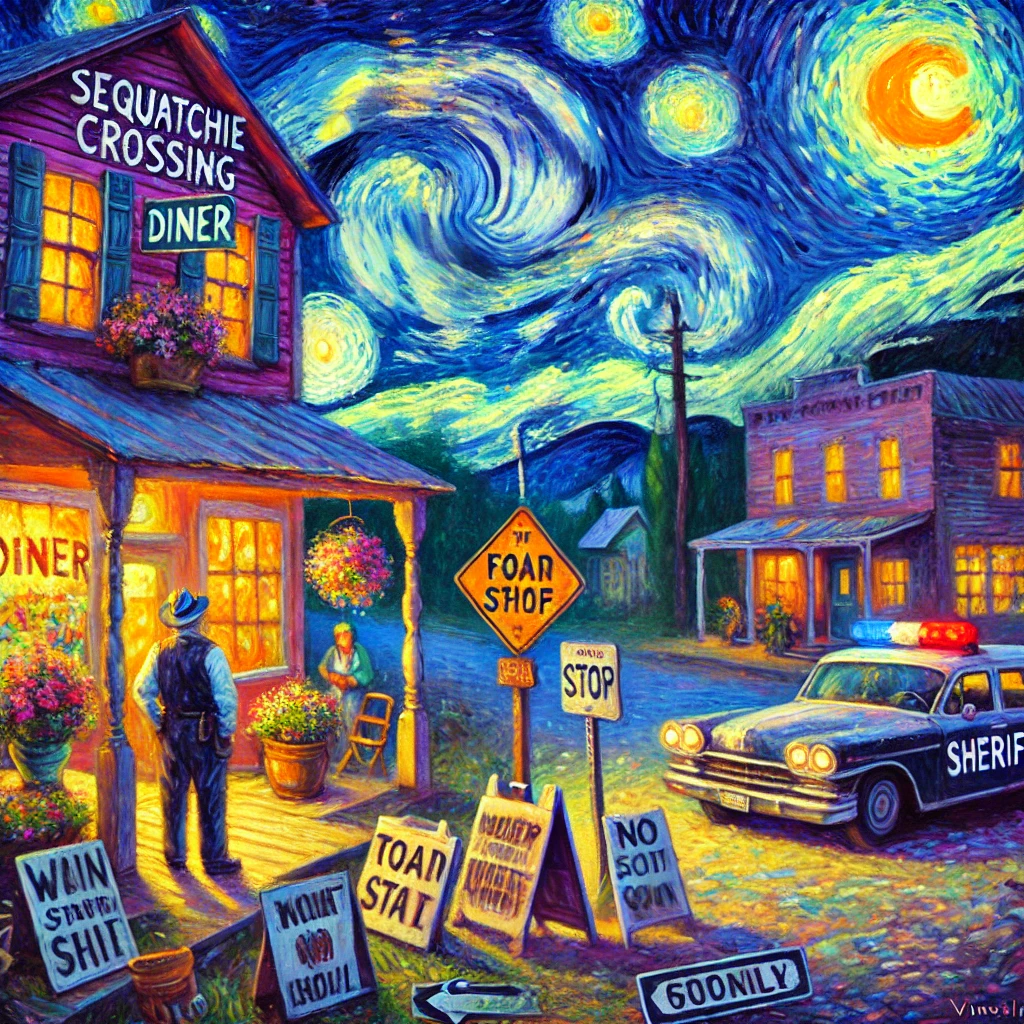
The Midnight Sign Migration
There are some mysteries in Sequatchie Crossing that arrive with thunder and sirens and casseroles. Those are the easy ones. A shed roof tears off, a goat wanders into fellowship hall, somebody says the mayor’s nephew has started a side business in decorative gravel that may or may not be legal, and by lunch the whole town has a full narrative, three conflicting witness statements, and a pie on somebody’s porch.
Then there are the quieter mysteries.
The ones that move in the dark.
The ones that leave no fingerprints except inconvenience.
The ones that, by their very silence, make everybody in town louder.
The Midnight Sign Migration began on a Tuesday, though by Wednesday half the county had agreed it had surely been happening for weeks and the other half said it had all started when the town finally began enforcing the eleven-year-old sign ordinance nobody had read until it started affecting them personally.
At 6:14 that morning, Wrenzie Pike, owner of Pike Feed & Hardware, unlocked his store with a coffee in one hand and his usual expression of preemptive disappointment already set in place. He had the look of a man who expected life to hand him a problem before breakfast and had decided long ago to save time by being mildly irritated in advance.
What he saw in the dawn light stopped him on the sidewalk.
His portable banner, which the previous evening had been chained with a bicycle lock to a cast-iron planter and angled to catch the morning traffic, was gone.
Not stolen.
Not exactly.
It was standing, perfectly upright, across the street in front of Honeycutt Insurance, where it had no earthly business being.
The banner itself read:
SPRING CHICK DAYS — FEED, FENCING, & FARM SUPPLIES
which was not, under any known interpretation, an insurance slogan.
Wrenzie stood still for a long moment. He took one sip of coffee, squinted across the street, and looked up and down the block like the culprit might be hiding in plain sight behind a mailbox enjoying himself.
Then he crossed over, examined the banner, and discovered that the lock was still attached. The chain had not been cut. The planter side of the chain, however, had been slipped cleanly off because—something Wrenzie had never considered until that moment—the planter itself was decorative, not anchored, and apparently light enough for determined people or one motivated person with no respect for property.
At 6:21 he called Sheriff Peeler.
Sheriff Peeler answered on the fourth ring with the slow, cautious tone of a man who had learned that calls before sunrise never improved as they developed.
“Tell me nobody’s bleeding.”
“Nobody’s bleeding,” said Wrenzie. “But my sign has moved.”
There was a pause. “Moved where?”
“Across the street.”
Another pause. “On its own?”
“You come down here and ask it.”
By 7:00, three people were standing near the migrated banner and discussing it with the gravitas usually reserved for sinkholes, tax notices, or weather radar. Sheriff Peeler stood with his thumbs tucked into his belt, staring at the sign as if it might confess under pressure. Mabel Dean stood two steps back with her church tote bag and a face lit with the special energy she reserved for civic disorder. Clovis Strickland had already arrived with a legal pad, two sharpened pencils, and the air of a man who considered mystery both a public emergency and a private hobby.
“Could be kids,” said Peeler.
“Kids don’t re-secure the chain neatly,” said Clovis.
“Could be adults,” said Mabel.
“Adults don’t usually do this much work without a message,” said Clovis.
“Oh, there’s a message,” said Mabel. “The question is whether it’s from Heaven, vengeance, or commerce.”
Sheriff Peeler sighed. “Mabel, not everything is theological sabotage.”
“That is exactly what a man says right before discovering it is.”
By eight-thirty, the story had spread through town with the efficiency of smoke.
By nine, people were checking their own signs.
By ten-thirty, a second incident was discovered.
Darla Quincey’s hand-painted yard sign for Quincey Floral & Gifts, which had stood beside the road outside her shop, now appeared two lots down in front of the closed laundromat, leaning gently against a newspaper box as though it had paused to reflect on its life.
At noon, a third sign appeared in a place so pointed that it upgraded the matter from nuisance to intrigue: the giant “VISIT OUR OPEN HOUSE” sign belonging to Buckley Tate Realty was found planted squarely in front of the municipal building, facing the council room windows like an accusation.
That was when people stopped using phrases like prank and began using phrases like pattern.
Act I – The First Night After People Started Watching
The town responded in the usual way: badly, publicly, and with confidence unsupported by evidence.
At Norma Lou’s Diner, breakfast became a rolling symposium of suspicion. Men with biscuit crumbs in their beards advanced theories involving rival businesses, rebellious teenagers, former sign owners radicalized by zoning language, and one particularly agitated argument about raccoons that got more elaborate the less plausible it became.
“What I’m saying,” said Boot Barnes from the corner booth, “is you assume raccoons don’t understand civil disobedience because you underestimate both thumbs and bitterness.”
Across from him, Deke Lunsford chewed slowly and said, “You’ve been waiting a long time to say that.”
Boot pointed with his fork. “Because nobody asks the right questions.”
At the counter, Mabel Dean was telling anyone who would listen that the thing felt “morally targeted.”
“How so?” asked Darla Quincey, who had come in already exhausted by being the second victim.
“Because signs don’t just move,” said Mabel. “They are repositioned. That’s not chaos. That is opinion.”
Clovis entered halfway through this sentence carrying a folder now labeled in block letters:
MIDNIGHT SIGN MIGRATION — CHRONOLOGY / THEORIES / POSSIBLE MOTIVES
He sat down without ordering and said, “I have a working map.”
“You have a map already?” Darla asked.
“I had a map by 8:40,” said Clovis modestly. “Now I have pins.”
Sheriff Peeler came in ten minutes later, removed his hat, and stood at the end of the counter looking like a man who regretted every life choice that had led him to being the chief investigator in what sounded increasingly like a ghost story for zoning officials.
“I’m telling you all right now,” he said, “nobody is to start staking out other people’s signs with firearms, drones, or homemade alarms.”
This instruction was met with a silence that was too long to be comforting.
Peeler narrowed his eyes. “Why is that not obvious?”
From a back booth, Vernon Sapp muttered, “Because the drone seemed reasonable till you said it out loud.”
By evening, the town had done what towns do when frightened by ambiguity: it overcorrected into theater.
Signs across Sequatchie Crossing were photographed, measured, initialed, and in some cases prayed over. One antique dealer tied silver bells to her sandwich board. A tire shop coated the bottom edge of its sign frame in white flour “for footprints.” Mabel Dean, after initially condemning vigilantism, placed a porcelain angel figurine at the base of her church auxiliary bake sale sign and said plainly that she considered it both deterrent and witness.
Buckley Tate went furthest.
Act I – The First Night After People Started Watching
He parked his truck across from his own real estate sign and announced he would sit watch until morning.
By 10:00 p.m. half the town knew this.
By 10:20 p.m. the other half assumed he was bluffing.
By dawn, it turned out he had done worse than bluffing: he had fallen asleep with the seat back and a blanket over his knees, snoring lightly beneath a ball cap that read LAND SELLS ITSELF IF YOU LET IT.
His sign was gone.
Not gone gone.
Relocated.
Someone had moved it, in the middle of the night, around to the back of his own truck and planted it in the gravel directly beneath his rear bumper so that when he woke, started the truck, and put it in reverse, he nearly flattened his own face smiling beside the words OPEN HOUSE SUNDAY.
He slammed the brakes, stumbled out, and stared at the sign while two joggers passing on the shoulder slowed just enough to memorize the scene for community use.
By 7:15, the town considered the matter no longer mischievous but strategic.
“No one heard anything?” Sheriff Peeler asked when he arrived.
Buckley, insulted by the shape of the question, said, “If I’d heard anything, we would not be standing here discussing my humiliation.”
Clovis crouched near the sign and studied the gravel. “Minimal drag marks. Whoever did this lifted properly.”
Mabel folded her arms. “That rules out half the men in town.”
“It rules out men who bend with their knees,” said Clovis.
“That rules out most of the county,” Peeler said.
Act I – The First Night After People Started Watching
Act II – Suspicion Spreads Faster Than Truth
By the third morning, the migrations had become the only thing anyone discussed without needing an introduction.
A handmade produce sign vanished from one roadside stand and reappeared beside the veterinarian’s office. A pressure-washing placard ended up leaning against the war memorial. A banner advertising a church revival migrated to the parking lot of a tax preparer, where it flapped in the morning wind with a kind of bureaucratic holiness.
The moves were never random enough to be meaningless.
That was what unsettled people.
Each relocation suggested wit.
Not cruelty exactly, but commentary.
A bait shop’s sign appeared by the mayor’s office after a contentious council meeting. A boutique’s GRAND REOPENING board turned up outside the library after a rumor that the town website was being redesigned again. A lawn care sign materialized in front of the cemetery, which several people found tasteless and two people described as “uncomfortably efficient.”
The town began reading intent into placement the way ancient civilizations read omens into birds.
Every move became a sentence.
Every sentence needed an author.
And because no one had proof, everyone supplied personality.
By Thursday, three dominant theories had emerged.
The first was that the migrations were being carried out by a coalition of angry sign owners protesting selective enforcement of the ordinance through nonviolent nocturnal repositioning. This theory had emotional appeal, but it ran into a logistical problem: the victims were inconsistent, and at least twice the signs of loud ordinance critics had themselves been relocated, which either suggested internal factionalism or a prankster committed to balance.
The second theory was that a group of local teenagers had turned the whole town into a game. This theory pleased older residents because it allowed them to be morally certain about the decline of civilization. Unfortunately, no teenager questioned about the matter showed the slightest sign of having the patience required to quietly move signage without filming it, posting it, or boasting about it before lunch.
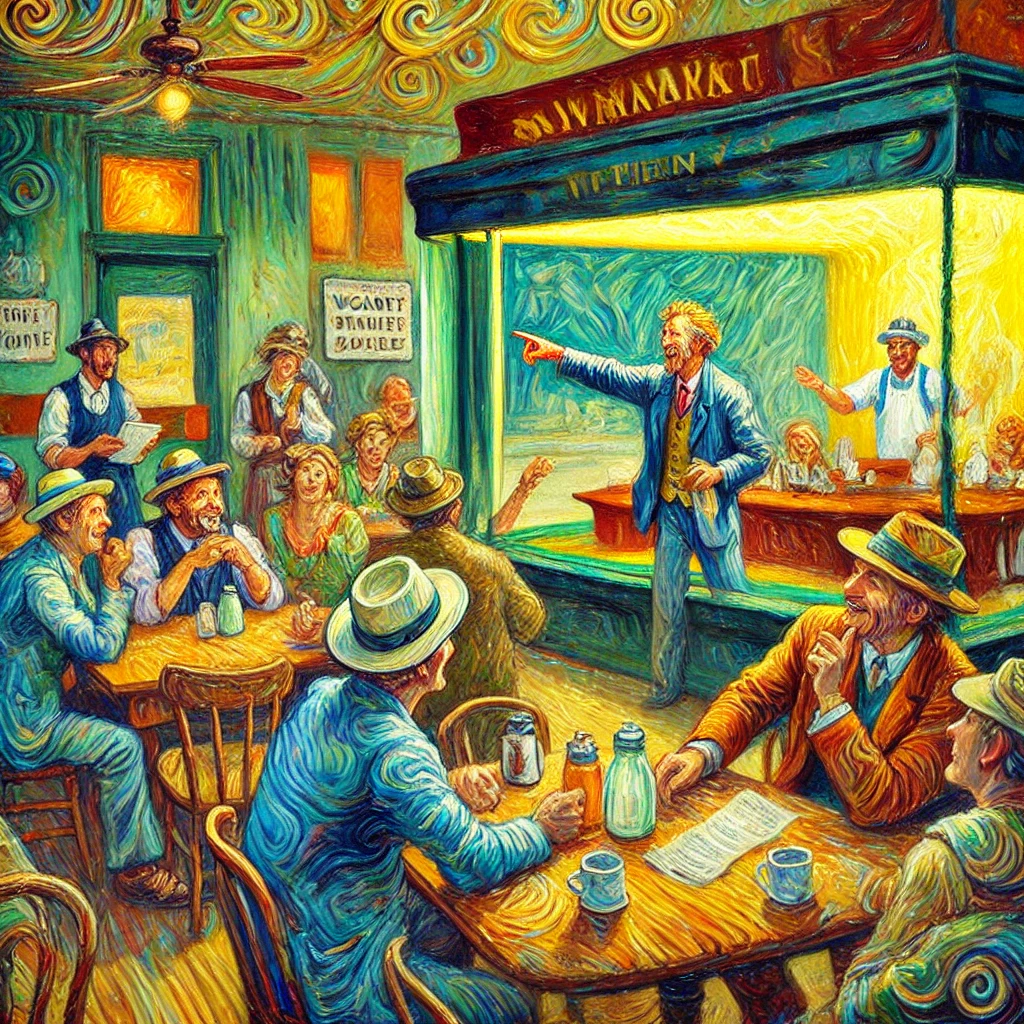
Act II – Suspicion Spreads Faster Than Truth
The third theory was the one Mabel Dean advanced with increasing sophistication every day: that the migrations represented “a social correction by person or persons unknown, motivated by unresolved grievance and probably disappointment.”
“What does that even mean?” asked Sheriff Peeler at a meeting held in the council annex.
“It means,” Mabel said, “this isn’t mischief for fun. It’s mischief with standards.”
They had gathered that afternoon because the council, which had created the conditions for the present absurdity by suddenly enforcing an ordinance it had ignored for eleven years, now wished to appear concerned without acknowledging causation. Mayor Willoughby Pickett sat at the folding table with his glasses low on his nose and a stack of complaint forms before him, as though paperwork might reestablish control.
“This town,” said the mayor, pressing his fingers together, “will not descend into sign-based vigilantism.”
Boot Barnes, seated in the back, said, “It already has. We’re discussing whether it’s artisanal.”
“You’re not helping,” the mayor replied.
“I’m observing.”
Sheriff Peeler gave his report. It was brief because facts were scarce. No surveillance footage had captured anything useful. The hardware store camera showed moths, one wandering cat, and the back half of a pickup truck at 1:13 a.m. with no readable plate. Footprints were inconclusive because people had spent the first morning trampling every area of interest while speculating loudly.
Clovis stood next and unrolled a large paper map of Sequatchie Crossing with colored strings connecting sign origins and destinations.
“I have identified,” he said, tapping the map with academic gravity, “three notable patterns.”
Mayor Pickett looked tired already. “I’m afraid to hear them.”
“Pattern one: the signs are rarely moved more than three blocks. Pattern two: the destination is almost always symbolically relevant. Pattern three: the relocations cluster near roads with easy access and low late-night traffic.”
Boot raised a hand. “Counterpoint: pattern four, whoever’s doing it enjoys irony.”
Clovis nodded. “That’s not a pattern. That’s motive shading.”
Nobody liked that phrase, but everybody accepted it.
Then Miss Darlene Hoss, who ran the print shop and had been quiet until that moment, cleared her throat.
The room turned.
Miss Darlene did not speak often in meetings, which gave her words an effect similar to lightning: infrequent, memorable, and usually clarifying.
“I’d like to say something,” she said.
Mayor Pickett gestured politely. “Please.”
“I print about eighty percent of the signs in this town,” she said. “People come to me for banners, boards, placards, church announcements, estate sales, bake sales, ribbon cuttings, blood drives, and one unfortunate gender reveal. I know what signs mean to people. They aren’t just directions. They are declarations. Most people put a sign somewhere because they want the world arranged in a way that confirms they exist.”
The room went still.
Darlene continued. “Which is why moving one is worse than stealing it. Stealing says, ‘You don’t get to have this.’ Moving it says, ‘I get to decide where your message belongs.’”
Clovis, delighted by this phrasing, scribbled furiously.
Sheriff Peeler rubbed his forehead.
Mabel whispered, “I told y’all it was moral.”
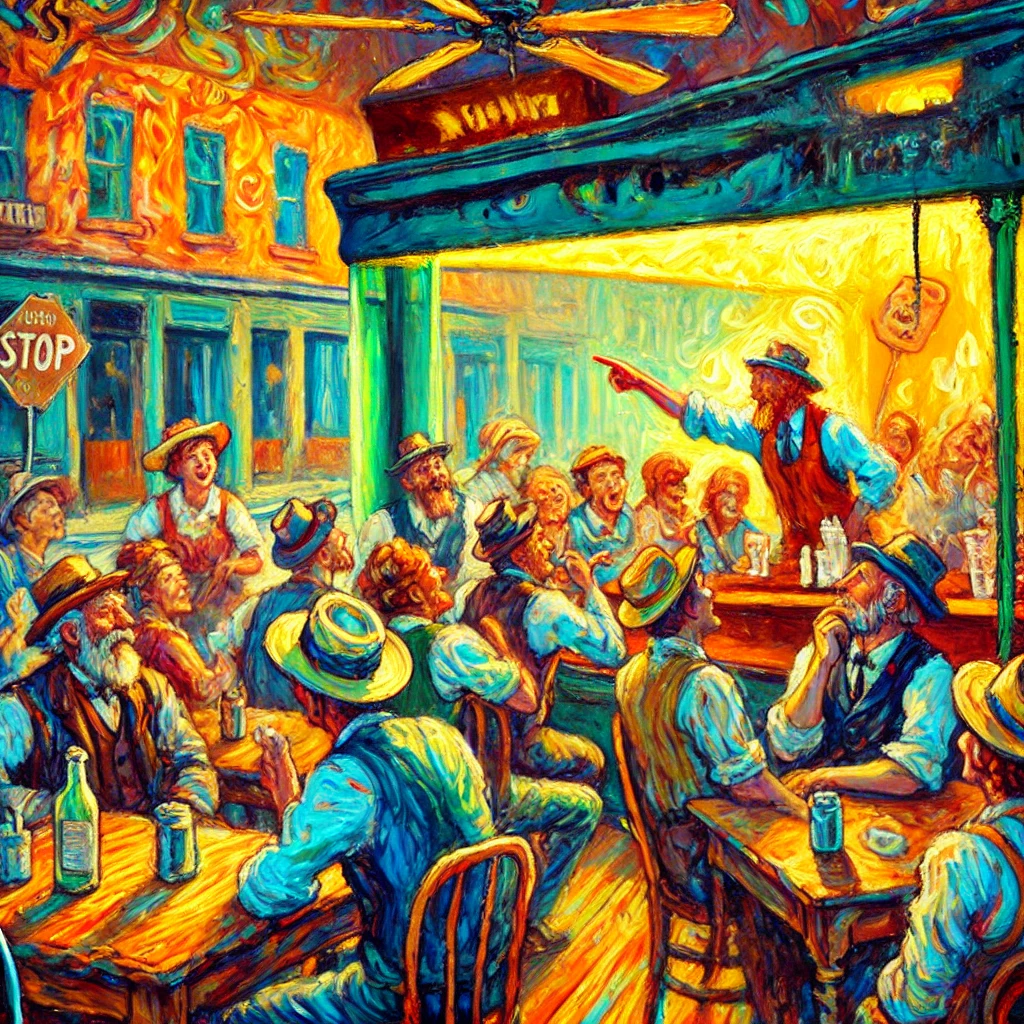
Act II – Suspicion Spreads Faster Than Truth
Act III – The Town Watches Itself Watching
The trouble with mystery in a small town is that eventually people stop investigating the event and begin investigating each other.
By the weekend, suspicion had become recreational.
Neighbors who had lived beside each other for twenty years now observed curtain movements, porch lights, engine noises, and bedtime inconsistencies with renewed interest. People discovered they had always found certain others “capable of a thing like this,” though until recently they could not have defined what this was.
Vernon Sapp accused his brother-in-law on the grounds that “he’s always had strong feelings about typography.”
The brother-in-law retaliated by saying Vernon was “the kind of man who’d move a sign just to have a story.”
Darla Quincey stopped speaking to two customers after overhearing them refer to the whole matter as “the best civic engagement we’ve had in years.”
At church on Sunday, prayer requests included one for “peace in the town regarding confusion and nighttime behavior,” which everybody understood precisely.
Reverend Calhoun attempted a sermon on order, humility, and bearing one another’s burdens, but he lost half the room when someone noticed that the temporary sign advertising Wednesday supper had been moved from the church lawn to the cemetery gate sometime between sunrise and service.
There was no laughter at first. Only a collective inhale.
Then a small, appalled sound from the choir section.
Then, despite heroic efforts, a collapse of decorum in three rows near the back.
Mabel Dean did not laugh. She closed her eyes in personal offense and said, “Now they have crossed into liturgical territory.”
After service, groups formed in the parking lot with the seriousness of battlefield councils. Sheriff Peeler was called again. He arrived just as two deacons were debating whether the move indicated hostility to the church, hostility to supper, or hostility to the font choice on the sign itself.
“Did anyone see anything last night?” Peeler asked.
No one had.
That was the worst part.
Sequatchie Crossing was not a town accustomed to invisibility. People knew who passed on the road, who parked where, who bought mulch out of season, who got new tires unexpectedly, and whose cousin was “back in the picture, unfortunately.” Yet here was a person—or persons—walking nightly through the edges of public life, touching visible things, and leaving without a witness.
It offended the town’s whole understanding of itself.
So the watching intensified.
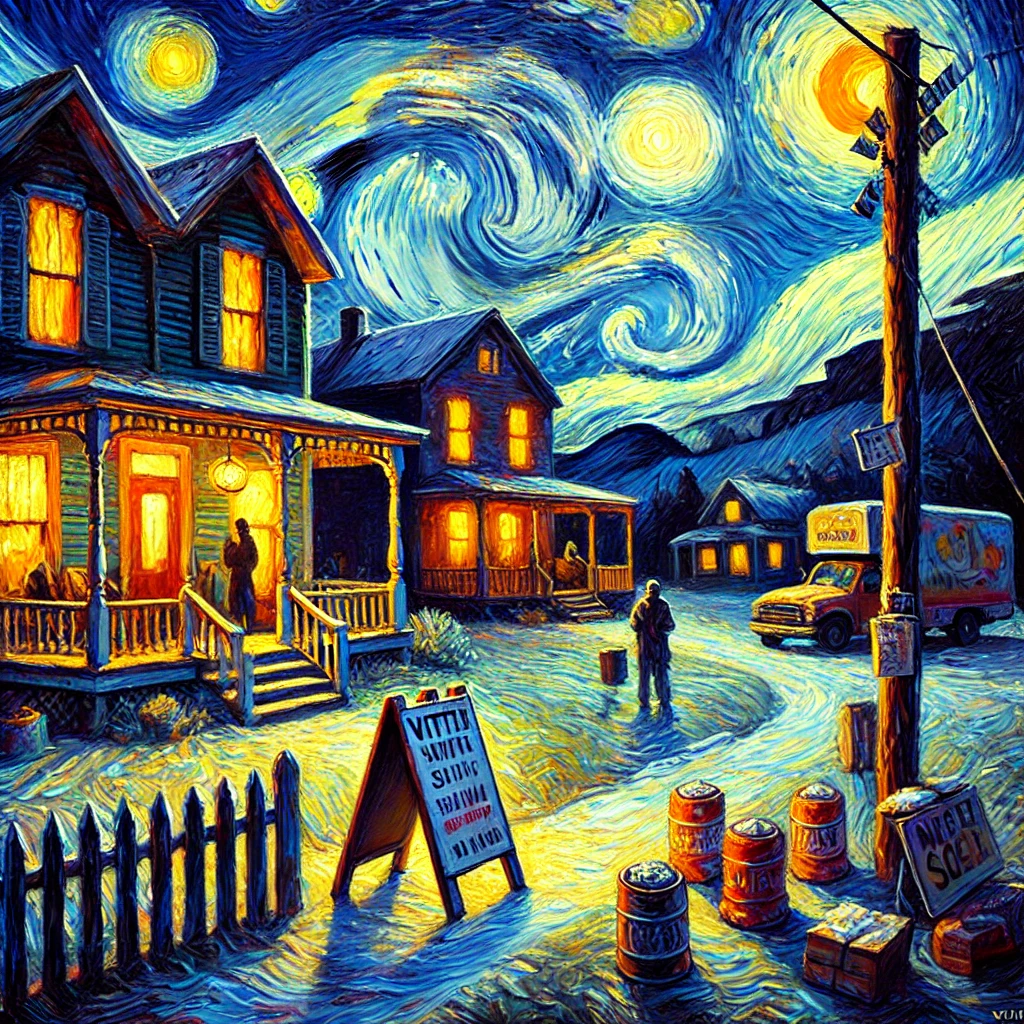
Act III – The Town Watches Itself Watching
Porch lights stayed on later. Window blinds twitched at all hours. A run developed on motion sensor lights at Pike Feed & Hardware, which Wrenzie found cynical but profitable. Miss Darlene printed a small wave of signs reading SMILE, YOU ARE PROBABLY BEING SUSPECTED, which sold out in one afternoon and may have made everything worse.
Clovis, meanwhile, established what he called an “informal observation network,” which was just a more self-important phrase for a phone tree of insomniacs.
He divided the town into sectors.
He assigned note-taking templates.
He asked participants to record time, weather, vehicle sounds, and “unusual shadow behavior.”
When Sheriff Peeler learned of this, he said, “Clovis, you have accidentally founded a neighborhood watch for irony.”
Clovis looked almost proud. “History seldom announces itself in simpler terms.”
On the fifth night, the observation network produced its first near-success.
At 12:47 a.m., Mrs. Elene Voss on Ridge Street reported hearing “a metallic clink and a muffled grunt suggestive of exertion.” By the time her nephew crossed the yard with a flashlight, the street was empty—but a roofing company sign that had stood near the highway was now leaning neatly against the town welcome marker beneath the painted words COME SEE WHAT’S BLOOMING IN SEQUATCHIE CROSSING.
The symbolism was so sharp it landed like satire.
By breakfast, people were no longer merely rattled. They were impressed against their will.
“That’s the problem,” Darla said at the diner. “You can’t have a criminal with a sense of composition.”
“Sure you can,” Boot said. “History’s full of them.”
“This isn’t history,” Darla snapped. “This is my blood pressure.”
Miss Darlene sipped her coffee. “Maybe the point is not damage. Maybe the point is rearrangement.”
Everyone looked at her.
She shrugged. “Somebody wants the town to see what it’s been saying all along.”
“That sounds like something from a documentary narrated over slow banjo,” said Boot.
“Doesn’t make it false,” she replied.
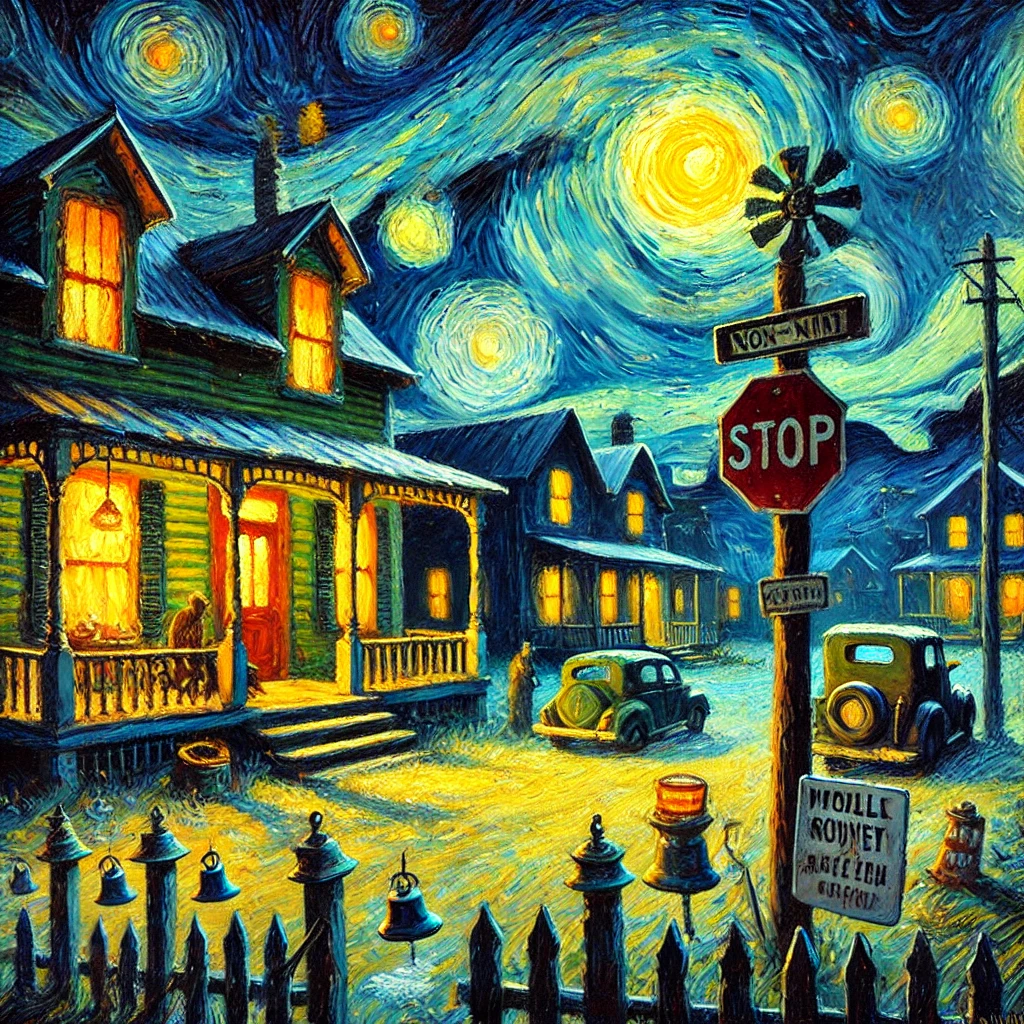
Act III – The Town Watches Itself Watching
Act IV – The Night of Too Many Traps
The mayor, increasingly aware that the town was becoming a regional joke, called for decisive action.
This was a dangerous phrase in Sequatchie Crossing. Decisive action usually meant one meeting too many and several men borrowing tools for reasons no one had approved.
At an emergency session Monday evening, new measures were proposed.
No civilian roadblocks.
No amateur spike strips.
No paint bombs, flour cannons, fishing line, bear traps, or “other means of detention improvised from garage materials,” this last clause added after Vernon Sapp asked a question he should never have had.
Instead, Sheriff Peeler authorized a simple coordinated watch involving marked patrol sweeps, volunteer porch observers, and temporary camera placements at three likely target zones.
The town agreed.
Then quietly did additional things anyway.
By midnight, the place had become a landscape of subtle incompetence.
A beauty salon owner had strung holiday jingle bells between tomato stakes around her sign. Someone else dusted sidewalk chalk powder over a curb line. Buckley Tate placed an upside-down plastic rake near his banner “as an alarm system,” then forgot about it and stepped on it himself before 11:00. Mabel Dean left a note taped to her church auxiliary sign reading:
WHOEVER YOU ARE, THE LORD SEES YOU. ALSO MABEL DOES.
Clovis, operating in Sector Three with a thermos and field notebook, felt certain they were close.
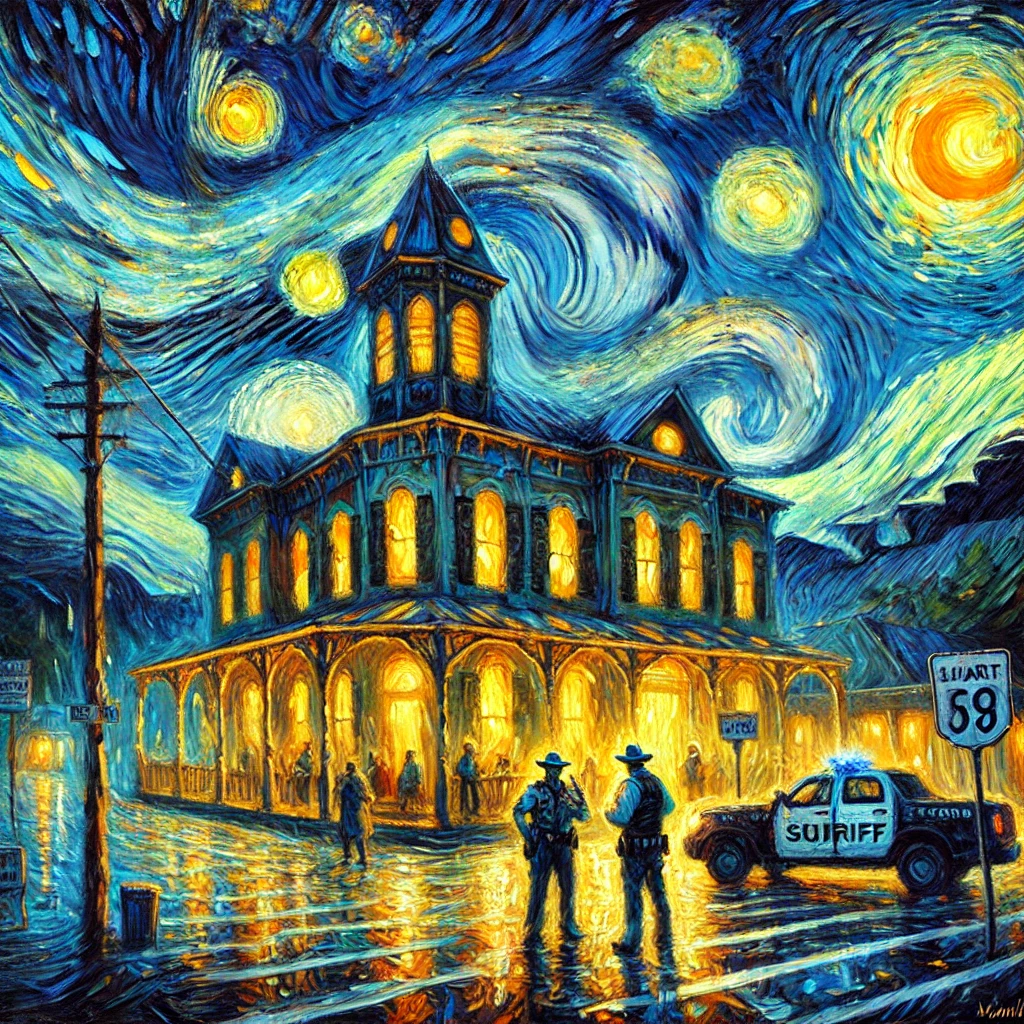
At 1:08 a.m. he heard a distant scrape near the old pharmacy lot and signaled with his flashlight—far too eagerly—to Sheriff Peeler’s cruiser two blocks away. Peeler rolled up, engine low, lights off. The two men advanced down the alley behind Norma Lou’s in what each later described as “a law enforcement-adjacent manner.”
They found nothing.
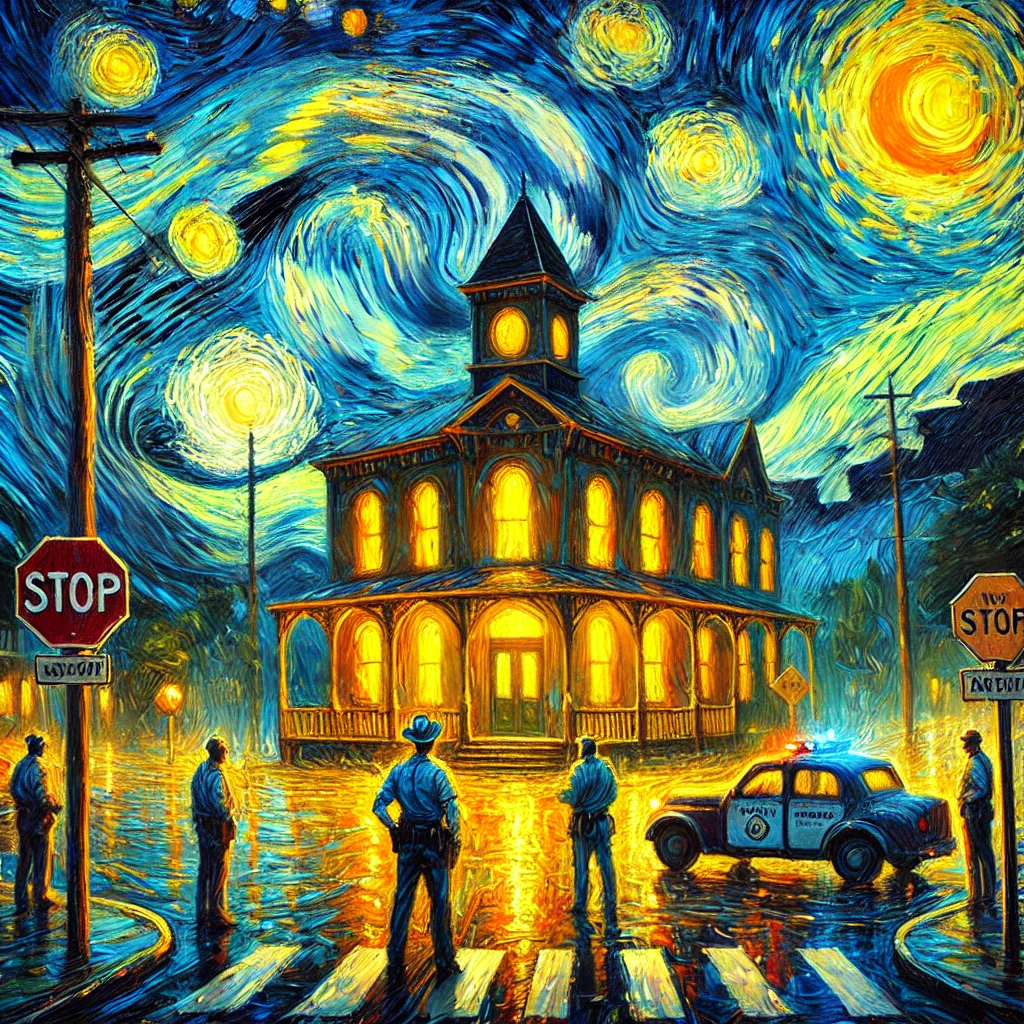
Except that while they had been searching the alley, the sign outside City Hall had changed.
Not stolen.
Not defaced.
Rearranged.
The freestanding board that usually announced meetings, boil-water notices, and bland civic reminders had been replaced with a migrated church banner that read:
COME AS YOU ARE
Below it, propped carefully at the base, stood the removed city board with that week’s official message:
SPECIAL CALLED SESSION ON COMPLIANCE PROCEDURES
Even Sheriff Peeler had to look away for a moment.
Clovis whispered, awed, “That’s advanced.”
Peeler muttered, “That’s mocking.”
“What if it’s both?”
Act IV – The Night of Too Many Traps
By dawn, the photo had spread town-wide through texts, calls, and one laminated printout somebody carried physically into the diner. People were shaken by the boldness. The prankster—if prankster was still the word—had crossed from peripheral targets into the symbolic center of governance.
Mayor Pickett was furious, though even he struggled against the placement’s undeniable precision.
“It is an affront to municipal process,” he declared.
Boot Barnes looked at the photo and said, “It’s also the clearest sign outside City Hall in fifteen years.”
The mayor did not appreciate this.
But the effect of that night was not merely official embarrassment. It was escalation through elegance. The town now knew, in its bones, that whoever was doing this could work under heightened watch, avoid cameras, exploit distraction, and compose scenes with unnerving taste.
Which meant one of two things.
Either an outsider had come among them with highly specific knowledge of local grievances—
or it was someone from town.
That possibility changed the emotional weather completely.
Because if it was someone from town, then all the laughter, offense, inconvenience, and symbolism had been curated by a person who listened to the same sermons, waited at the same red light, bought tomatoes from the same stand, and nodded hello in daylight.
Suspicion turned inward.
People stopped speaking as freely around each other.
Every joke became evidence.
Anyone too amused was suspect.
Anyone too angry was suspect.
Anyone physically capable of lifting a sign without grunting was very suspect indeed.
Miss Darlene Hoss became the subject of mild whispers because she knew where every sign in town had originated. She was offended for exactly twelve minutes, then began keeping a typed log of who had implied what about her and when.
Buckley Tate was suspected because the migrations often involved an understanding of placement and curb visibility. He defended himself passionately by pointing out that no serious real estate professional would undermine trust in signage. This helped until Boot asked whether a serious real estate professional might nevertheless enjoy drama.
Mabel Dean was suspected briefly after someone noticed that many of the church-related migrations exhibited what Clovis called “symbolic layering.” She rejected this with withering force.
“I do not haul vinyl in the dead of night,” she said. “I correct people in daylight where God can monitor tone.”
Act IV – The Night of Too Many Traps
Act V – What the Town Learns Before It Learns the Truth
The answer, when it finally came, disappointed almost everybody in the specific way truth often disappoints people who have been enjoying themselves.
It happened because of rain.
A hard, steady overnight rain rolled in on Thursday, flattening the dust, damping the roads, and driving most volunteer watchers indoors around midnight. The town expected either a pause in operations or, if the culprit were truly committed, another masterwork executed in weather.
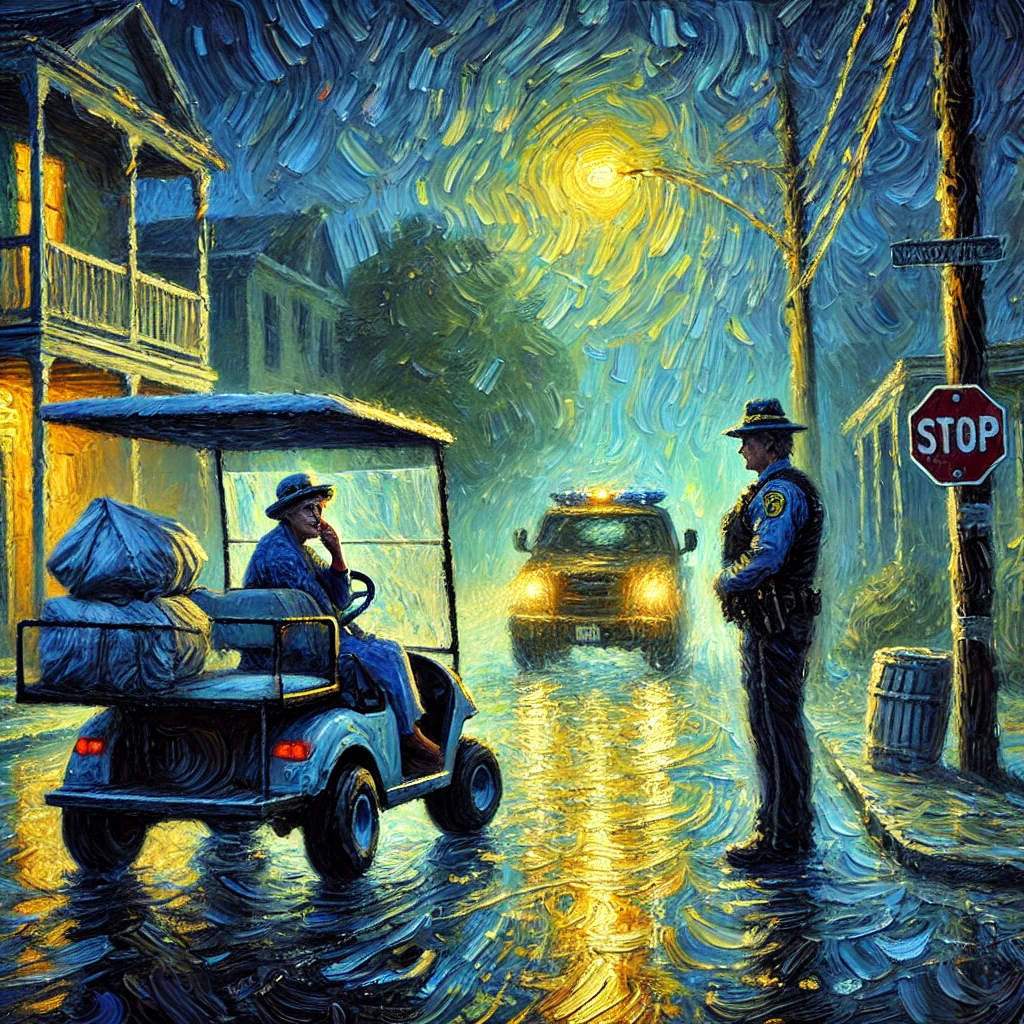
Instead, around 2:15 a.m., Earlie June Ketter—widowed, sharp-eyed, and incapable of sleeping through any sound involving metal, tires, or gossip potential—saw headlights pause near the old pharmacy lot. She rose from her recliner, crossed to the window, and watched a small utility cart creep down the side road with its lights low.
Not a truck.
Not teenagers.
Not a conspiracy.
A golf cart.
With a tarp.
And beneath the tarp, the clean outline of bundled sign stakes.
Earlie June called Sheriff Peeler at once, who—credit where it was due—was already awake because the rain had set off a motion alert on one of the temporary cameras and he had learned not to ignore absurdity anymore.
He met the cart two blocks later near the Methodist annex.
When Peeler stepped into the road and raised his flashlight, the cart stopped.
The driver sat very still for a long moment, rain ticking on the tarp overhead.
Then the driver sighed.
Not the sigh of a cornered criminal mastermind.
The sigh of someone deeply tired of carrying both a secret and a practical burden.
Sheriff Peeler approached slowly.
When the driver finally looked up, it was Miss Geneva Bell.
Age seventy-two.
Retired school custodian.
Volunteer groundskeeper at two churches.

Act V – What the Town Learns Before It Learns the Truth
Known for lilacs, blunt assessments, and an abiding dislike of things left “crooked for no reason.”
Sheriff Peeler stared.
Miss Geneva stared back.
Neither spoke for five full seconds.
Then Peeler said, “Geneva.”
She said, “You’d better let me explain before you get theatrical.”
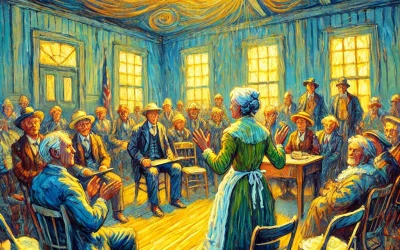
By sunrise, half the town had gathered in the council annex for the explanation, still damp from rain, carrying the facial expressions of people prepared for a revelation and not yet aware how human it would be.
Miss Geneva sat at the folding table with a paper cup of coffee and no visible remorse, only fatigue.
Mayor Pickett asked, “Were you responsible for the sign movements?”
“Yes,” she said.
“By yourself?”
“Mostly.”
“Mostly?”
She waved a hand. “A couple of times my nephew lifted the heavier frame stands because I have shoulders but I do have limits.”
The room rippled.
Clovis, who had prepared himself for a manifesto, looked almost injured by the simplicity.
Sheriff Peeler said, “Geneva, why?”
She set the cup down.
Then she told them.
For eleven years, said Miss Geneva, the ordinance had existed on paper while signs multiplied everywhere. Portable banners, leaning boards, temporary arrows that stayed six months, church notices that outlived the events they advertised, real estate signs layered over old campaign stakes, homemade plywood rectangles zip-tied to fence posts. She had not liked the clutter, but that was not the reason.
The reason was what happened when enforcement finally began.
“The town started acting,” she said, “like signs were the problem.”
She looked around the room, making sure they understood.
“Not the inconsistency. Not the selective fussing. Not the fact that some people got warned while others got a wink. Not the fact that y’all have spent more energy arguing over portable fabric than you have over drainage, sidewalks, and that boarded-up storefront by the highway. The signs became the argument because they were easier to move around than the truth.”
Silence settled hard.
“So I moved them,” she said.
Mayor Pickett blinked. “To make a point.”
“To make several,” Geneva replied. “Mostly that placement changes meaning. And all of you know that. Every one of you. Put a church sign by the cemetery and suddenly folks feel doctrine. Put a hardware banner by insurance and people see absurdity. Put the city notice under a revival slogan and folks notice what language sounds like when it stops wearing a tie.”
Boot Barnes put a hand over his mouth, either from admiration or to keep from laughing.
Geneva continued. “I wasn’t trying to destroy anything. I wasn’t stealing. I was showing you that half this mess is not about signs. It’s about who gets to decide what belongs where, and how long they get to leave it there, and whether the rule matters only when somebody inconvenient is doing the displaying.”
Mabel Dean, to her credit, did not interrupt.
Clovis asked faintly, “How did you avoid everybody?”
Geneva gave him a look usually reserved for children asking where rain comes from.
“I was a school custodian for thirty-one years. I moved tables, risers, supply carts, folding stages, and one panicked peacock from the ag barn during fair week. I know how to work quietly, and I know that people who say they’re watching usually mean they are sitting in the dark thinking accusing thoughts.”
Several people looked down.
“And the irony?” asked Clovis softly.
Geneva shrugged. “If you’re going to communicate with a town that only half-reads, symbolism helps.”
It should have ended there: revelation, embarrassment, the re-entry of oxygen.
But small towns are not built to conclude cleanly. They are built to continue.
The room fractured immediately into emotional factions.
One group felt betrayed.
One group felt delighted.
One group felt that, though the act was technically wrong, it was also the most effective public commentary the town had seen in a decade.
One group—largely composed of people whose signs had migrated more than once—wanted restitution, apology, and possibly a formal statement.
Miss Geneva offered the apology first.
“I am sorry,” she said, “for the inconvenience, the confusion, and the fact that Buckley nearly backed over his own face.”
Buckley, despite himself, nodded. “That was a difficult morning.”
“But I am not sorry,” she said, “that the town finally had to look at itself through placement.”
That sentence traveled farther than any sign ever had.
Act V – What the Town Learns Before It Learns the Truth
Epilogue – After the Moving Stopped
The migrations ceased.
Not because the town solved itself, but because the performance had made its point and the artist, if that is what Miss Geneva was, had stepped down from the stage voluntarily once the audience understood enough to become uncomfortable.
For a week, people wandered through town glancing at signs with newly suspicious respect.
Messages looked different now.
Placement looked different.
Even the ordinance looked different, stripped of its old illusion that it was about simple compliance. Suddenly everyone saw discretion, bias, habit, memory, convenience, and social rank tangled up in the wording.
At the next council meeting, Mayor Pickett—still stiff from public embarrassment but apparently educable—proposed forming a review committee to revisit enforcement priorities and clarify the ordinance’s temporary-use language. This was received with guarded approval and one audible snort from Boot Barnes.
Clovis volunteered immediately.
So did Mabel.
So did Miss Darlene.
Sheriff Peeler declined with unusual wisdom.
Buckley Tate requested that any future civic reforms include “protections against symbolic misuse of real estate marketing materials.”
Miss Geneva attended the meeting from the back row and said nothing. But when the council began debating whether community input should be allowed before revisions were drafted, half the room turned instinctively to look at her anyway.
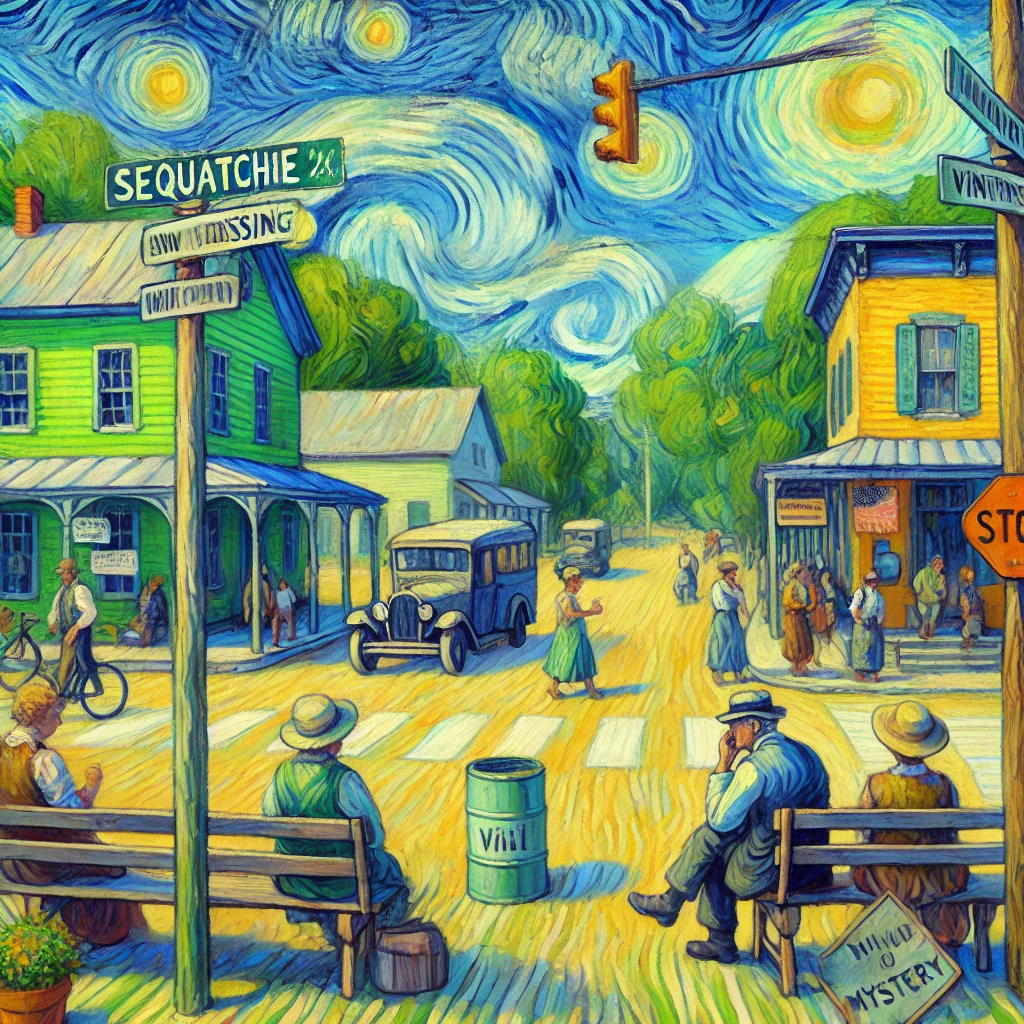
Outside, the signs stood where people had left them.
Mostly.
Epilogue – After the Moving Stopped
A few were removed voluntarily.
A few were re-anchored.
A few owners, chastened by how foolish their signs had looked in other contexts, quietly chose smaller replacements.
And a few, in what might have been the town’s first honest gesture in months, left their lots empty for a while and discovered that silence could also be a statement.
At Norma Lou’s Diner, the story settled into legend almost immediately. Newcomers heard it in pieces. Old-timers told it with adjustments. By the second retelling, some swore Geneva had moved a twelve-foot banner alone in the rain uphill. By the fifth, the golf cart had become “nearly invisible.” By summer, at least one person would claim the signs moved better under moonlight because everybody knows vinyl carries judgment after midnight.
As for Miss Geneva Bell, she became something rare in Sequatchie Crossing: not exactly a hero, not exactly a criminal, but a local standard.
When people tried to posture too hard in meetings after that, someone would say, “Careful, or Geneva’ll relocate your argument.”
And the room would quiet down just enough to become useful.
Because that was the true legacy of the Midnight Sign Migration.
Not the mystery, though the mystery had helped.
Not the comedy, though the comedy had carried it.
It was the humiliation of discovering that a town full of loud certainty could be educated by a woman in a golf cart with a tarp, strong opinions about fairness, and an understanding that meaning depends almost entirely on where you place a thing.
In Sequatchie Crossing, that counted as revelation.
And like all revelation there, it arrived after midnight, disturbed everybody, and looked much clearer by morning.
Epilogue – After the Moving Stopped
Disclaimer
Sequatchie Crossing is a fictional town populated by fictional people, stubborn institutions, exaggerated local customs, and the kind of civic tension that thrives wherever ordinances outlive memory. Any resemblance to real persons, places, meetings, golf carts, portable banners, symbolic acts of rearrangement, or municipal discomfort is coincidental, accidental, or evidence that small towns everywhere are working through the same material with different casseroles.
Disclaimer – The Midnight Sign Migration
Real Places Behind the Ruckus – From The Dunlap Directory

Real Places Behind the Ruckus – From The Dunlap Directory
Yes, this story was fictional; even the parts that weren’t true. These places? Absolutely real. Stop by, support local, and keep the Wi-Fi away from livestock:
- Jim Garren – State Farm Insurance Agent
- Andy’s Pizza and Steakhouse
- Fast Access Healthcare Dunlap
- Sequachee Valley Electric Cooperative
- Rigsby Farm Equipment
- Coops Creek Cabins
- Cedar Springs Bakery
- The Old Tar Woodworker
- Buy & Sell, Pikeville & Dayton & Dunlap
- Avon Representative Brandy Wilkey
- Coal & Iron Diesel Performance
- JJ Farms Dunlap
- Hunt & Nest Realty
- Friends Of The Park Of Sequatchie County
- Fast Pace Health

Real Places Behind the Ruckus – From The Dunlap Directory
At Sequatchie Crossing, we tell the stories of Sequatchie Crossing.
Please share this post with your friends, family, or business associates who may want help telling the stories of their legacy.

0 Comments