


It Cannot, But the Question Is Noted
By Tom Seest
At Sequatchie Crossing, we tell the stories of Sequatchie Crossing.
Please share this post with your friends, family, or business associates who may want follow the news from Sequatchie Crossing.
🎤 Audio Overview

Sheriff Peeler Asks If Civility Can Be Enforced
Prologue – The Question Nobody Wanted to Answer
Sheriff Peeler did not mean to ask the question out loud.
It slipped out the way most trouble does in Sequatchie Crossing – halfway between a sigh and a sentence, spoken during a pause when nobody else seemed willing to fill the space. He had been standing in the doorway of the Sheriff’s Office, one boot braced against the frame, hat tilted back just enough to suggest fatigue without fully admitting defeat.
“Can civility be enforced?” he asked the room.
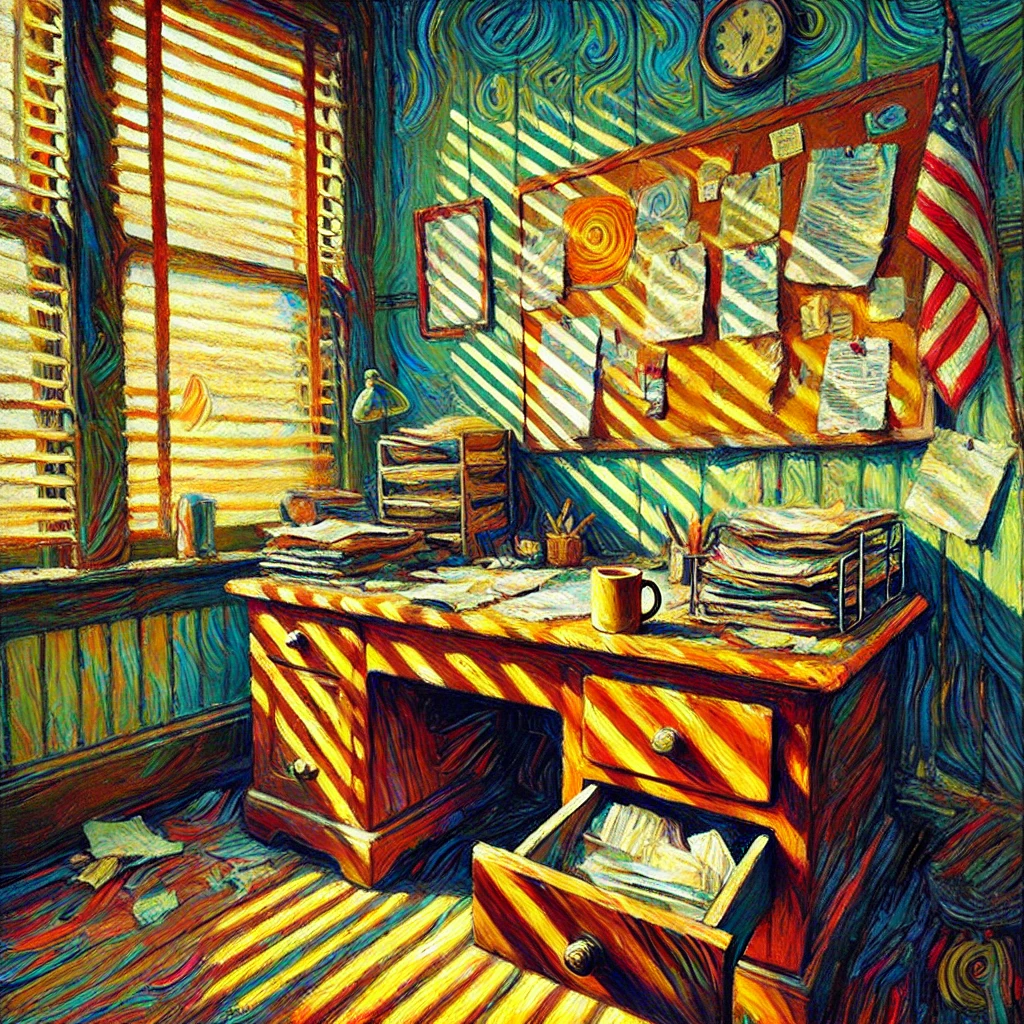
The room – consisting of a dented filing cabinet, a humming coffee maker, and a corkboard pinned with outdated flyers – did not respond.
Peeler nodded anyway, as if it had.
He had been thinking about the question for weeks. Maybe months. Possibly since the Tuesday when someone yelled “READ THE CONSTITUTION” at a stop sign, or the Thursday when two neighbors nearly came to blows over whose dog was more emotionally aggressive. It was hard to pin down an exact moment. In Sequatchie Crossing, escalation rarely announced itself. It arrived quietly, sat down, and asked if anyone minded.
Peeler rubbed his face, reached for his coffee, and immediately remembered why he’d stopped drinking it.
Civility. Enforcement. The two words felt like magnets that repelled each other when brought too close.
Still, the question had been asked. And in Sequatchie Crossing, once a thing was said out loud, it had a way of becoming policy-adjacent.

Sheriff Peeler Asks If Civility Can Be Enforced
Act I – A Sheriff With a Notebook
Sheriff Peeler kept a notebook he did not officially acknowledge.
It was not evidence. It was not a log. It was not part of any formal record. It lived in the bottom drawer of his desk, beneath spare batteries and a flashlight that only worked when threatened. The cover was plain, the pages unlined, the contents a mixture of dates, names, arrows, and phrases that made sense only to the man who wrote them.
On the first page, circled twice, was a sentence he had written after the question escaped him:
“Is civility a behavior or a condition?”
He stared at it for a long moment, then added underneath:
“If it’s a behavior, someone will want it ticketed.”
Peeler had learned long ago that Sequatchie Crossing had a special talent for turning abstract ideas into actionable complaints. Noise. Appearance. Tone. Intent. Feelings. If it could be sensed, someone believed it could be regulated.

Act I – A Sheriff With a Notebook
That morning alone, he’d received calls about:
-
A man who waved “too aggressively”
-
A woman who posted “sarcastically”
-
A yard sign that “felt hostile”
-
A meeting where “the silence was pointed”
None of these were crimes. All of them were reported with confidence.
Peeler closed the notebook and stood. He needed air. He needed movement. He needed to remind himself that the world still existed outside of grievances and phone calls.
He stepped onto the sidewalk just as Miss Lurleen passed by, pushing a cart that had once been a stroller and now contained only coupons and judgment.
“Mornin’, Sheriff,” she said.
“Mornin’, Miss Lurleen.”
She squinted at him. “You look tired.”
He considered lying. “Thinking,” he said instead.
“Well don’t do it too loud,” she replied. “Some folks get offended.”
Peeler watched her roll away, then wrote her exact wording in the notebook later, just in case.
Act I – A Sheriff With a Notebook
Act II – The Meeting That Made It Official
The trouble became official on a Thursday.
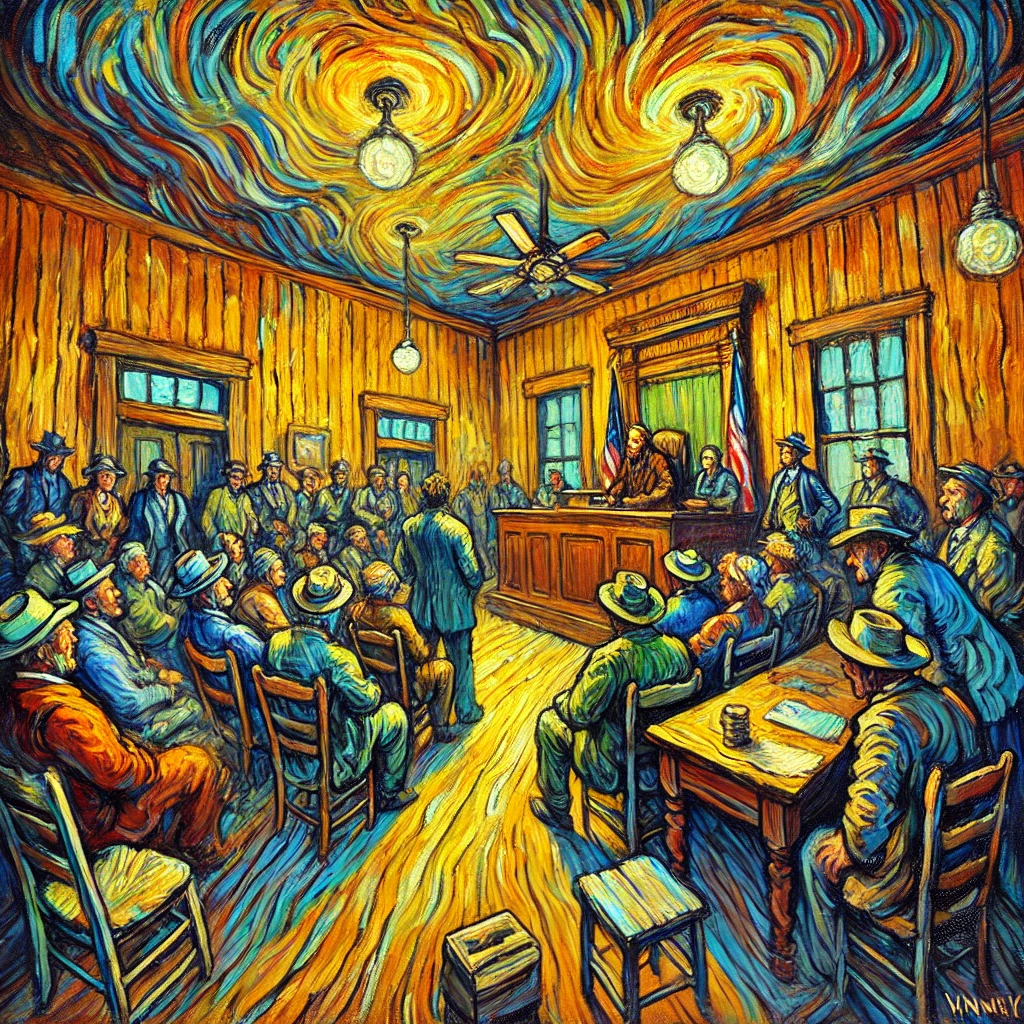
That was when the Town Council convened to discuss a completely unrelated agenda item – parking – but somehow arrived at civility by way of tone, posture, and the way someone sighed before speaking.
It began innocently.
A man stood and said, “With all due respect – ” and did not finish the sentence before someone else interrupted him to say he had not, in fact, used any respect at all.
A woman crossed her arms, which another attendee described as “visually dismissive.”
Someone laughed. Someone else said the laugh was “weaponized.”
Act II – The Meeting That Made It Official
By the time Sheriff Peeler was called to the podium, the room had shifted from disagreement into something thicker. Something with elbows.
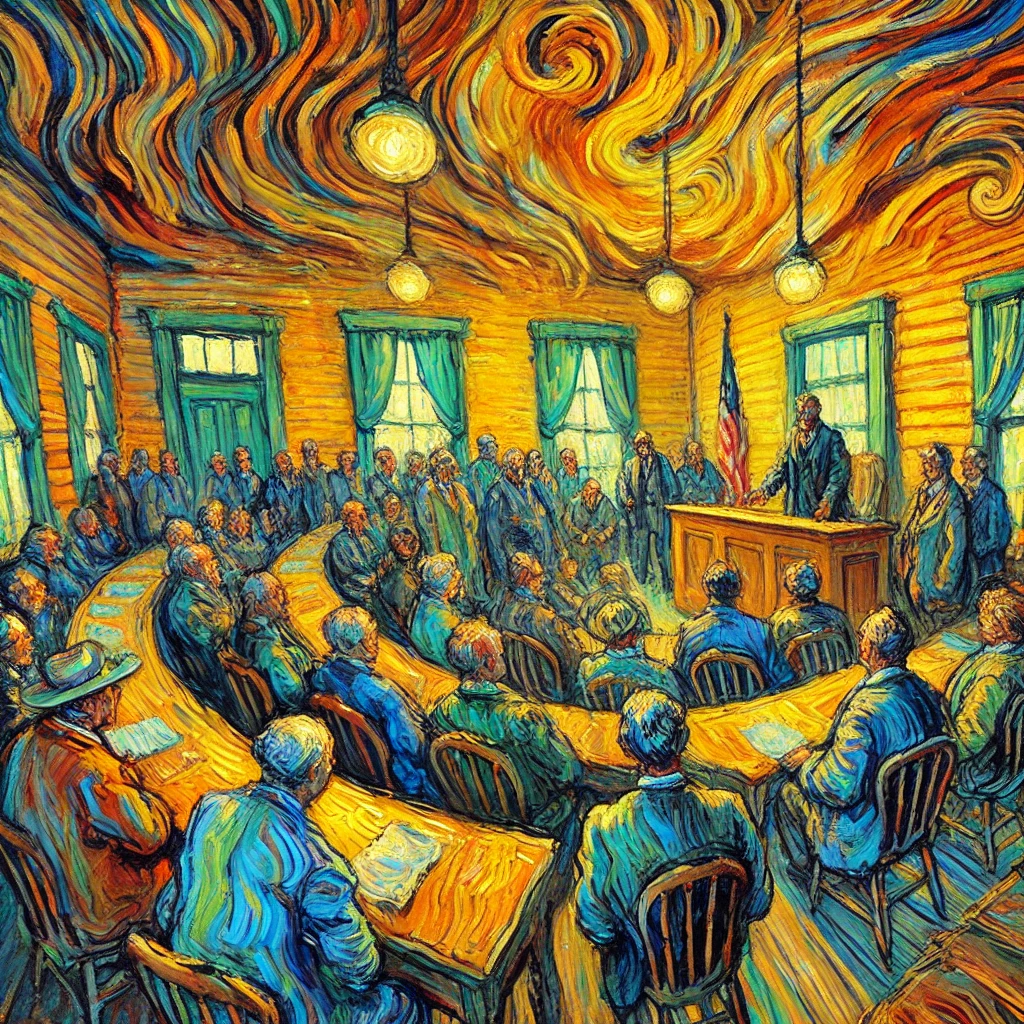
“Sheriff,” the chairwoman said, “can you clarify whether civility falls under your jurisdiction?”
Peeler adjusted the microphone. It squealed, as microphones do when they sense fear.
“I can clarify,” he said carefully, “that we don’t currently have a statute for manners.”
A murmur rippled through the room. Not relief. Interest.
“But,” Peeler continued, already regretting the word, “if the council wants to explore guidance – ”
That was as far as he got.
A man in the back shouted, “You gonna arrest me for my tone?”
Another asked, “Is eye-rolling a misdemeanor?”
A third simply yelled, “THIS IS WHAT I’M TALKIN’ ABOUT.”
The chairwoman banged the gavel until it sounded tired.
And just like that, a committee was proposed.
Act II – The Meeting That Made It Official
Act III – The Civility Working Group
They called it the Civility Working Group because anything shorter sounded accusatory.
Membership was open. Attendance was theoretical.
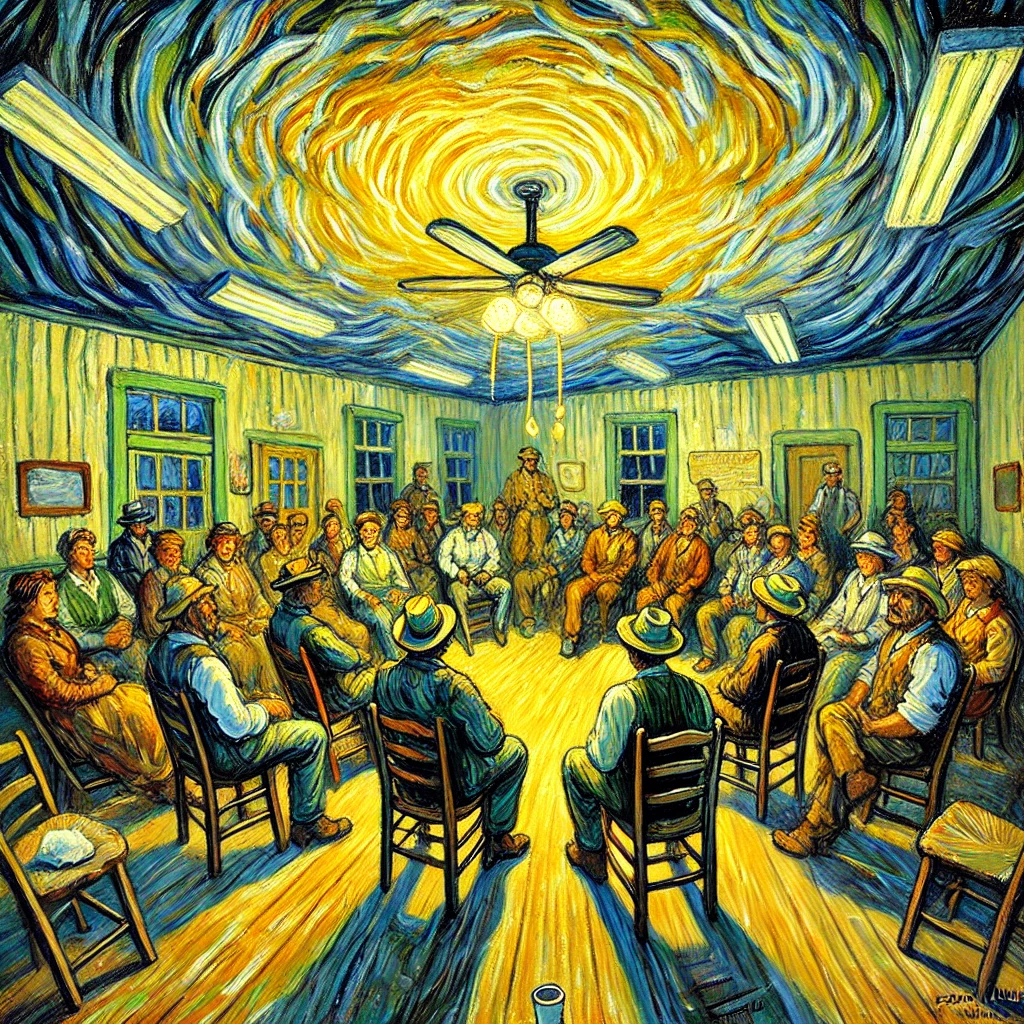
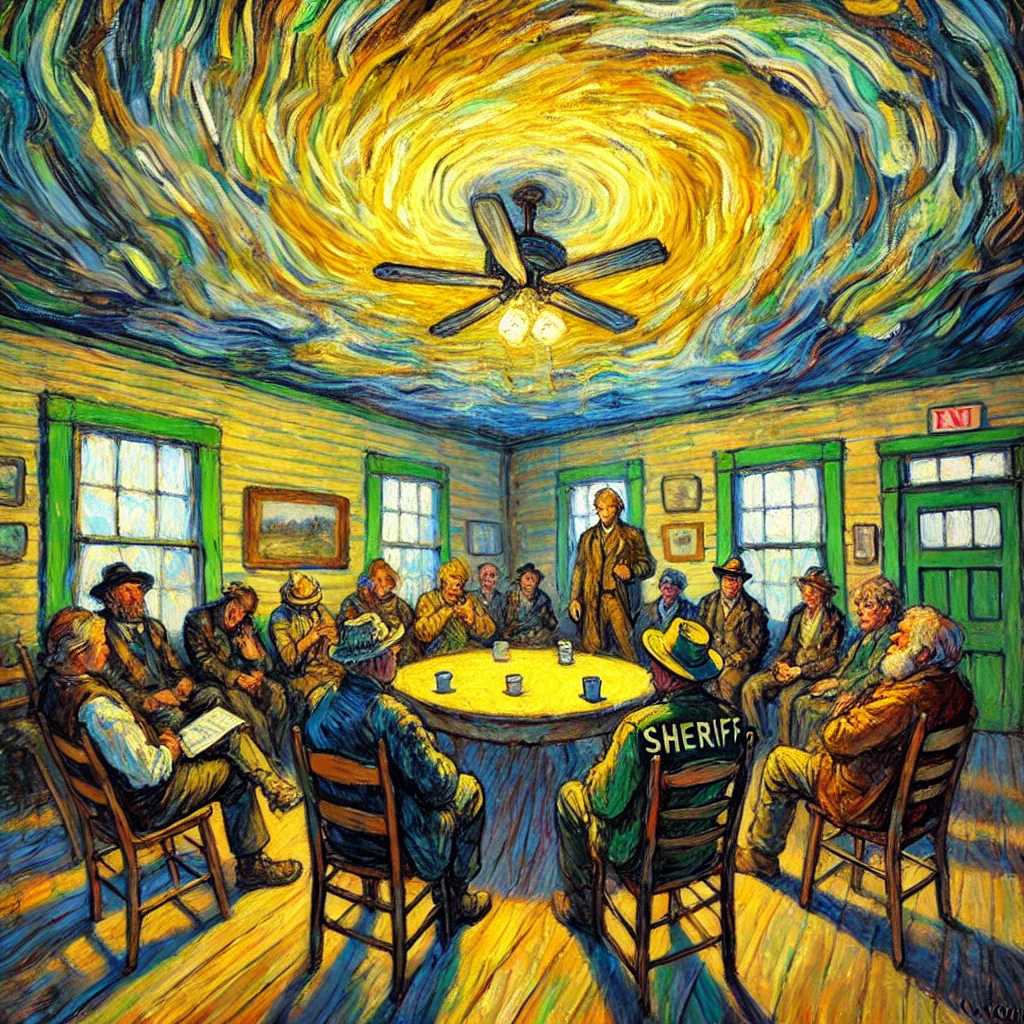
The first meeting was held in the community room, where the chairs were arranged in a circle to encourage equality, which immediately made people suspicious.
Sheriff Peeler attended in an observational capacity. He brought his notebook. He did not open it yet.
The facilitator – a man who introduced himself as “neutral” – began by asking everyone to share what civility meant to them.
Act III – The Civility Working Group
Responses included:
-
“Not being rude unless provoked.”
-
“Being allowed to speak without being corrected.”
-
“Not having my motives questioned.”
-
“Common sense.”
-
“The way things used to be.”
Someone suggested civility involved “knowing your place,” which ended the sharing portion of the evening.
Peeler listened. He watched. He noticed how people leaned forward when agreeing and leaned back when offended. He noticed the way silence grew louder than words.
At one point, a woman asked him directly, “Sheriff, could you enforce this if we wrote it down?”
He paused.
“I can enforce what’s clear,” he said. “And I can document what’s repeated.”
“What about what’s implied?” she pressed.
Peeler closed the notebook without writing anything.
“Implied,” he said, “is where arguments go to reproduce.”
Act III – The Civility Working Group
Act IV – Trial Runs and Test Cases
Despite Peeler’s reservations, the Working Group produced a draft.
They called it The Community Civility Framework, which was not a law but had bullet points and therefore felt powerful.
It included phrases like:
-
Respectful engagement is encouraged
-
Disruptive conduct may be addressed
-
Intent will be considered
Peeler read it three times.
“Intent,” he muttered. “That’ll go well.”
The first test came quickly.
Two men argued over a fence line. Voices were raised. One man said the other “always does this.”
A neighbor called it in as a “civility breach.”
Peeler arrived, listened, asked questions, and finally said, “Gentlemen, I’m going to ask you to lower your voices.”
One man replied, “Is that a request or an order?”
Peeler thought for a moment. “It’s a hope,” he said.
The report was filed anyway.

Act IV – Trial Runs and Test Cases
Act V – The Limits of Authority
Within weeks, Peeler’s office received a new category of complaints.
Not noise. Not trespassing. Not threats.
Vibes.
Someone’s tone felt dismissive. Someone’s silence felt intentional. Someone’s apology felt sarcastic.
Peeler wrote in his notebook:
“Civility is being used as a mirror.”
He began declining to act unless there was a clear action tied to a clear outcome. He explained, patiently, repeatedly, that enforcement required boundaries, not feelings.
This did not go over well.
At a subsequent meeting, someone asked why the Sheriff “wasn’t taking civility seriously.”
Peeler stood.
“I take people seriously,” he said. “I can’t take interpretations into custody.”
The room went quiet. Not the good kind.

Act V – The Limits of Authority
Act VI – A Conversation With Himself
Late one night, alone in the office, Peeler reopened the notebook.
He flipped past notes and arrows until he reached the first page.
Is civility a behavior or a condition?
He added beneath it:
“It’s a choice.”
Then, after a pause:
“And choices don’t like uniforms.”
He closed the notebook and turned off the light.
Outside, Sequatchie Crossing continued as it always had – people talking, arguing, misunderstanding, reconciling, failing, trying again.
Unenforced. Unenforceable.

Act VI – A Conversation With Himself
Epilogue – The Question, Noted
The Civility Working Group eventually dissolved due to scheduling conflicts and philosophical fatigue.
The framework was archived.
The complaints slowed.
Sheriff Peeler never asked the question again out loud.
But the notebook remained, and on the last page he wrote:
“Civility can’t be enforced.
But it can be noticed.”
And in Sequatchie Crossing, that was about as close to resolution as anyone expected.
Here’s a clean, reusable Sequatchie Crossing–style disclaimer that fits this story and the broader canon. Neutral, lightly wry, and deliberately non-defensive.

Epilogue – The Question, Noted
Disclaimer
This story is a work of fiction set in the fictional town of Sequatchie Crossing.
All characters, meetings, committees, complaints, and interpretations of tone, intent, posture, silence, eye contact, or vibes are fictional and exaggerated for narrative purposes.
Any resemblance to real people, real events, real meetings, or real arguments – past, present, or ongoing – is purely coincidental and likely unavoidable.
This story does not claim that civility can be enforced, legislated, ticketed, cited, warned, or meaningfully defined.
It merely observes that the question has been asked, recorded, discussed, revisited, misunderstood, and quietly shelved.
No ordinances were passed in the making of this story.
No citations were issued.
No one technically won.
The notebook exists only in fiction.
The tension does not.
Reader discretion is advised, particularly for those sensitive to irony, procedural ambiguity, or the uncomfortable realization that some problems remain unsolved because they are not problems – only people.

Disclaimer – Sheriff Peeler Asks If Civility Can Be Enforced
Real Places Behind the Ruckus – From The Dunlap Directory
Real Places Behind the Ruckus – From The Dunlap Directory
Yes, this story was fictional; even the parts that weren’t true. These places? Absolutely real. Stop by, support local, and keep the Wi-Fi away from livestock:
- Time To Improve
- Lodge At Fall Creek Falls
- Wildwood Enterprise
- Dunlap Restaurant
- The Ridge
- Wendy’s
- Friends Of The Park Of Sequatchie County
- D&W Window Cleaning and Pressure Washing
- Lee Outdoors
- Scott’s Transmissions
- Legacy RV
- Dunlap Ballet School
- Jim Garren – State Farm Insurance Agent
- Dunlap Tennessee Overview
- King’s Pig BBQ
- New Dimensions Complex
- Dunlap Grapevine 2.0
- HUBNER Component Solutions LLC
- Americas Best Value Inn Dayton

Real Places Behind the Ruckus – From The Dunlap Directory
At Sequatchie Crossing, we tell the stories of Sequatchie Crossing.
Please share this post with your friends, family, or business associates who may want follow the news from Sequatchie Crossing.


0 Comments