


History Removed with Zip Ties
By Tom Seest
At Sequatchie Crossing, we tell the stories of Sequatchie Crossing.
Please share this post with your friends, family, or business associates who may want help telling the stories of their legacy.
🎤 Audio Overview
The First Banner Comes Down
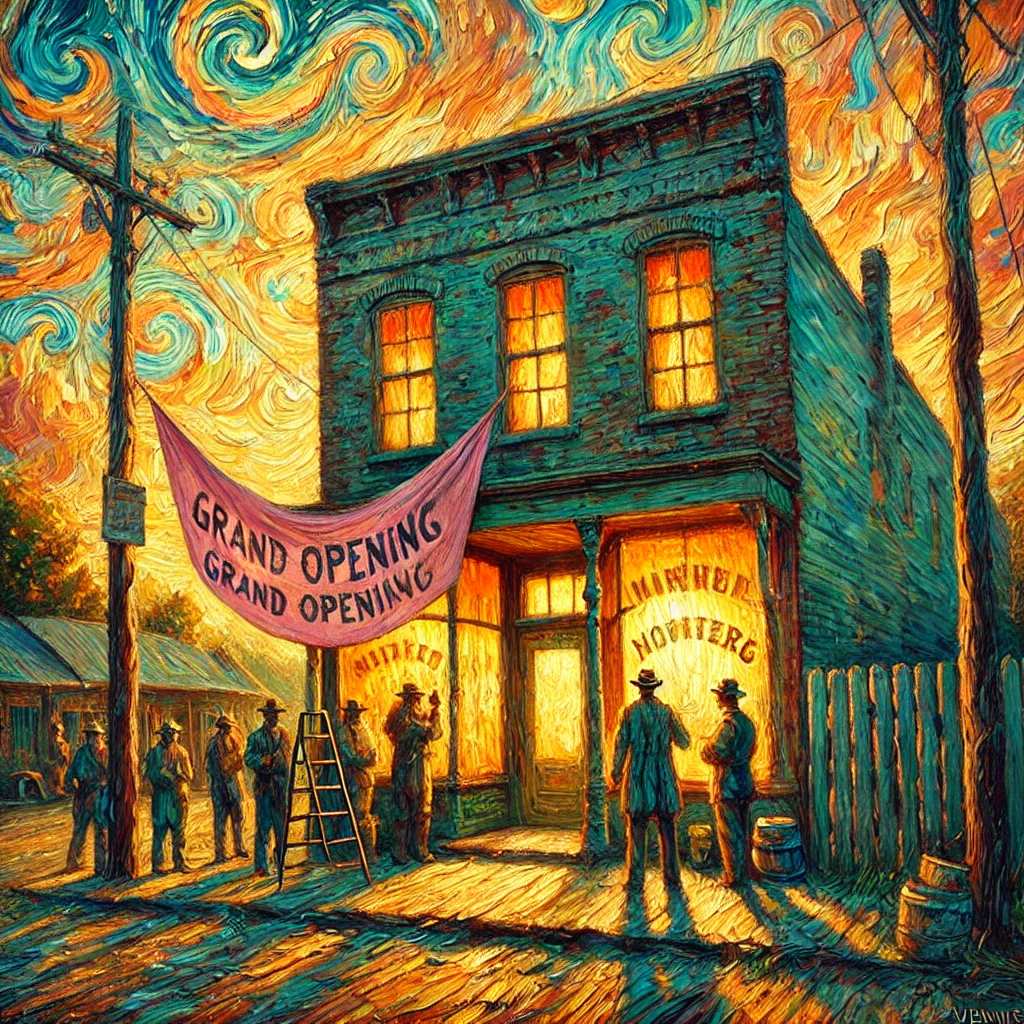
The first banner had been there so long that no one remembered when it wasn’t.
It hung between two fence posts that had once been straight and now leaned toward one another like old men sharing a secret. The vinyl had faded from fire-engine red to a soft, uncertain pink, and the white letters – GRAND OPENING – had long ago surrendered their edges to the sun. The word GRAND was cracked down the middle, as if the heat itself had tried to pry it apart. The word OPENING sagged, dignified in its fatigue.
The banner did not advertise an opening anymore. It advertised continuity.
It belonged to a small business on the edge of Sequatchie Crossing – a business that had survived three mayors, two floods, a brief flirtation with artisanal mayonnaise, and a summer when everyone insisted on being gluten-free but no one could define it. The banner had outlasted arguments, rebrandings, and the brief municipal experiment with tasteful brown signage.
When the new ordinance passed, it did not mention this banner by name.
But everyone knew.
I. The Ordinance
The ordinance had arrived quietly, as most consequential things do.
It was titled something like Regulation of Temporary Promotional Materials in Public-Facing Corridors, which sounded less like a rule and more like a pamphlet one might find at the DMV. It concerned portable banners, A-frame signs, and anything attached to chain-link fences that could reasonably be described as flapping.
The town had debated it for months.
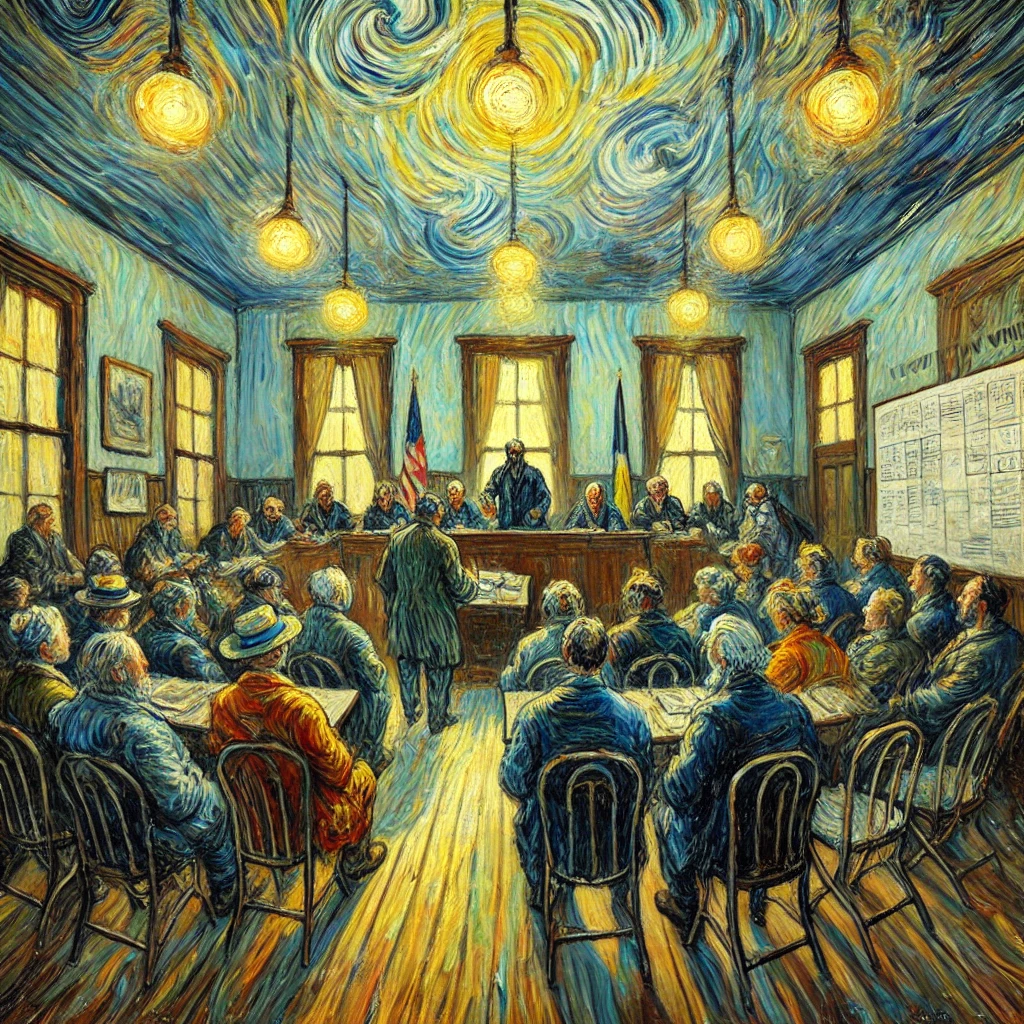
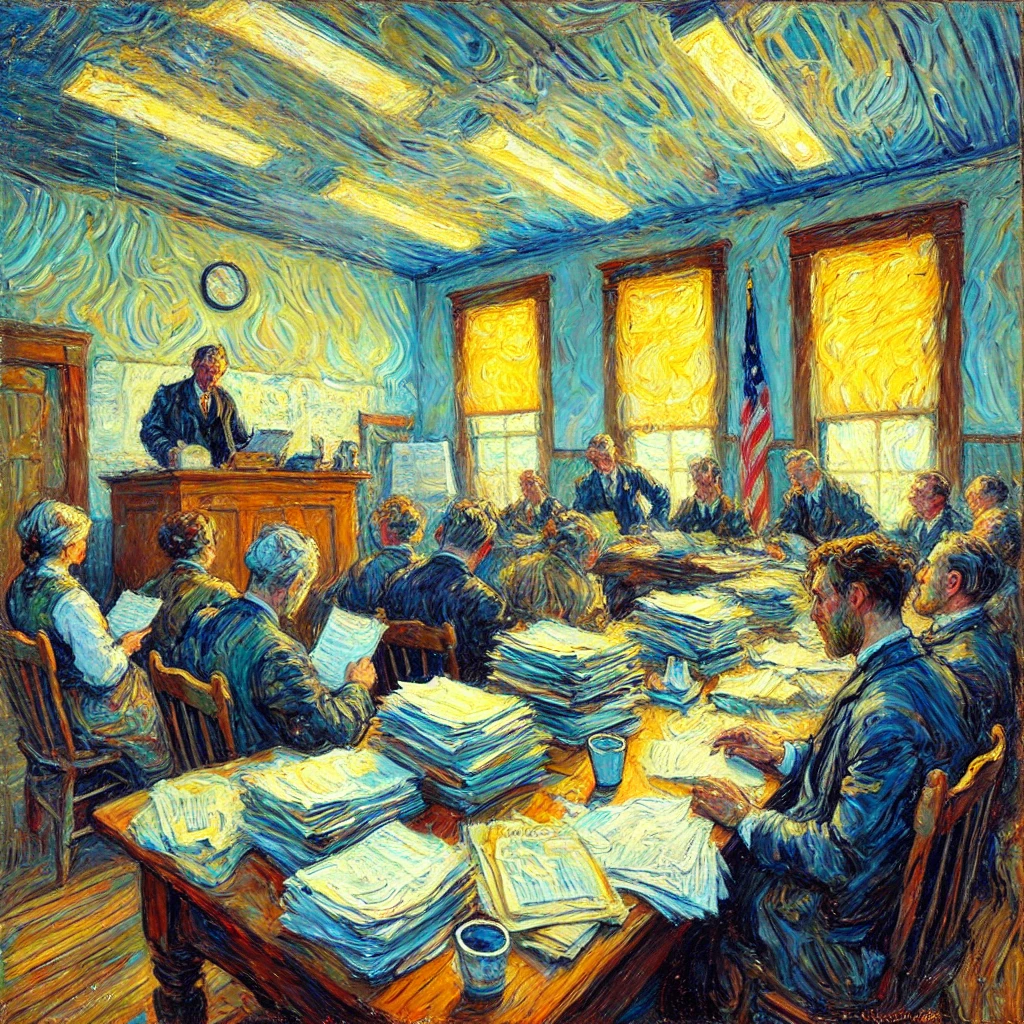
There were charts. There were maps. There were heated exchanges about whether vinyl counted as fabric. There was a subcommittee that produced an eight-page addendum clarifying the definition of “temporary.” It was determined, after robust civic engagement, that “temporary” meant anything that had been up less than 90 days.
No one said what happened after 91.
That was implied.
The vote passed with an air of administrative necessity. The clerk read the language in a voice that implied compliance was an act of love. A few residents nodded. A few frowned. A few typed vigorously on their phones.
Most people assumed it would apply to the banners that looked new.
The shiny ones.
The ones with gradients and QR codes and slogans that used the word experience.
They did not imagine it would reach back in time.
They did not imagine it would tug at memory.
ACT I – The Ordinance
II. The Business
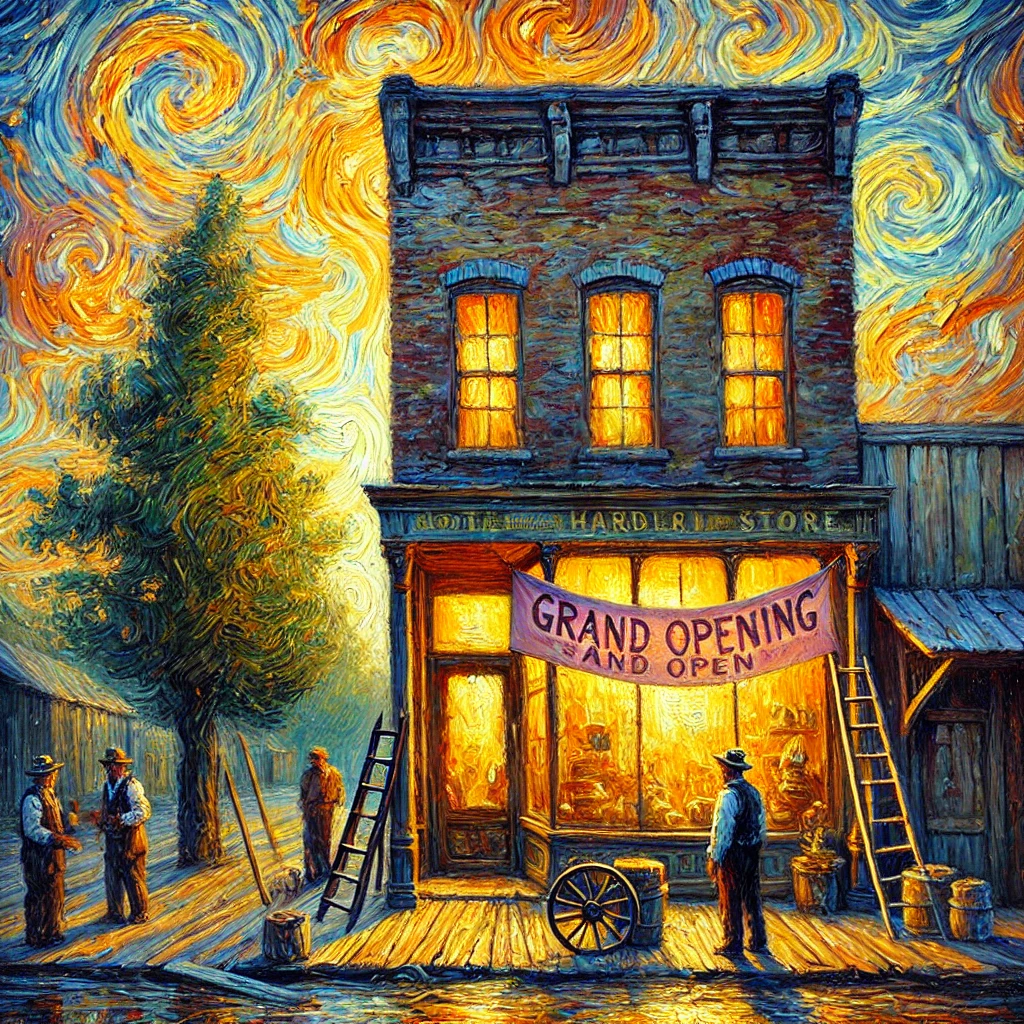
The banner belonged to a hardware store that had once been a feed store and before that a place that sold tires in a way that felt like a favor rather than a transaction.
The current owner – Mr. Leland Pike – did not think of himself as a custodian of history. He thought of himself as a man who sold bolts in exactly the right thread.
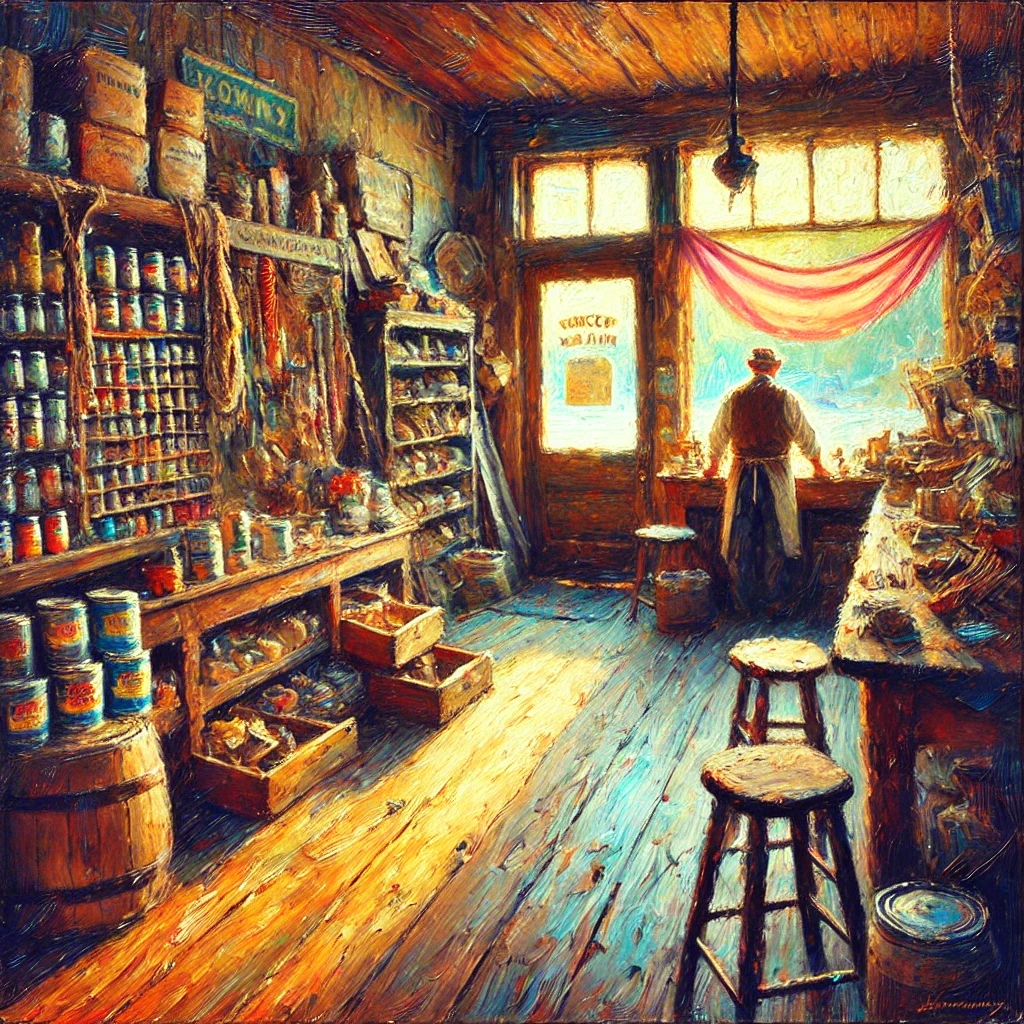
His store had creaky floors and a bell that rang when the door opened, even if the door had been propped open since dawn. The shelves bowed slightly under the weight of inventory that no big-box retailer had thought to carry since 1997.
The banner had gone up when Leland bought the place from his uncle.
It was not meant to stay. It was meant to herald a beginning.
It had become a landmark.
“Turn left at the old Grand Opening banner,” people would say.
“If you pass the pink one with the cracked O, you’ve gone too far.”
It was not beautiful. It was familiar.
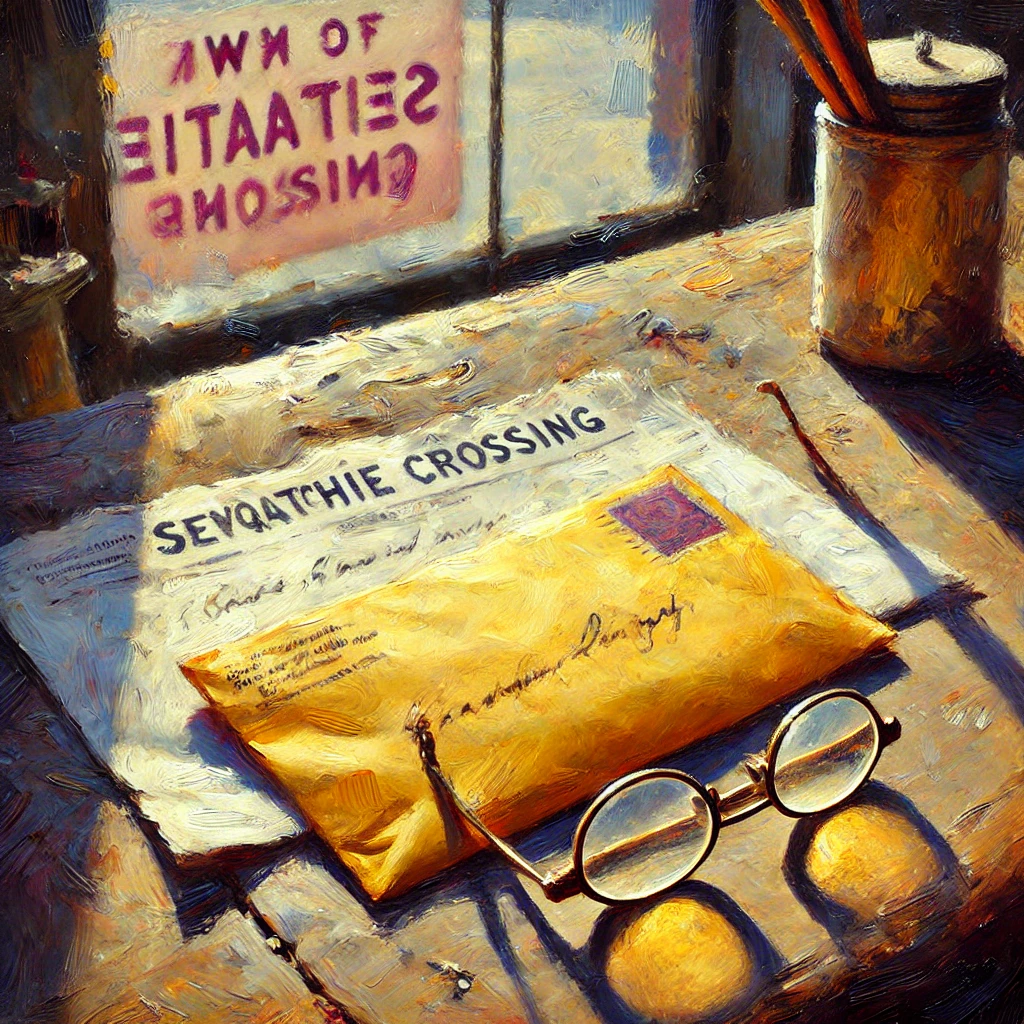
When the ordinance passed, Leland received a letter.
It was written in polite language, the kind that suggested compliance was inevitable but regrettable. It informed him that his banner – classified as a portable promotional material – exceeded the allowable duration under the new code.
He had 30 days.
Thirty days to remove something that had hung for 14 years.
ACT II – The Business
III. The Town Reacts
The news spread the way most news spreads in Sequatchie Crossing: through interpretation.
By noon, the story was no longer about vinyl.
It was about erasure.
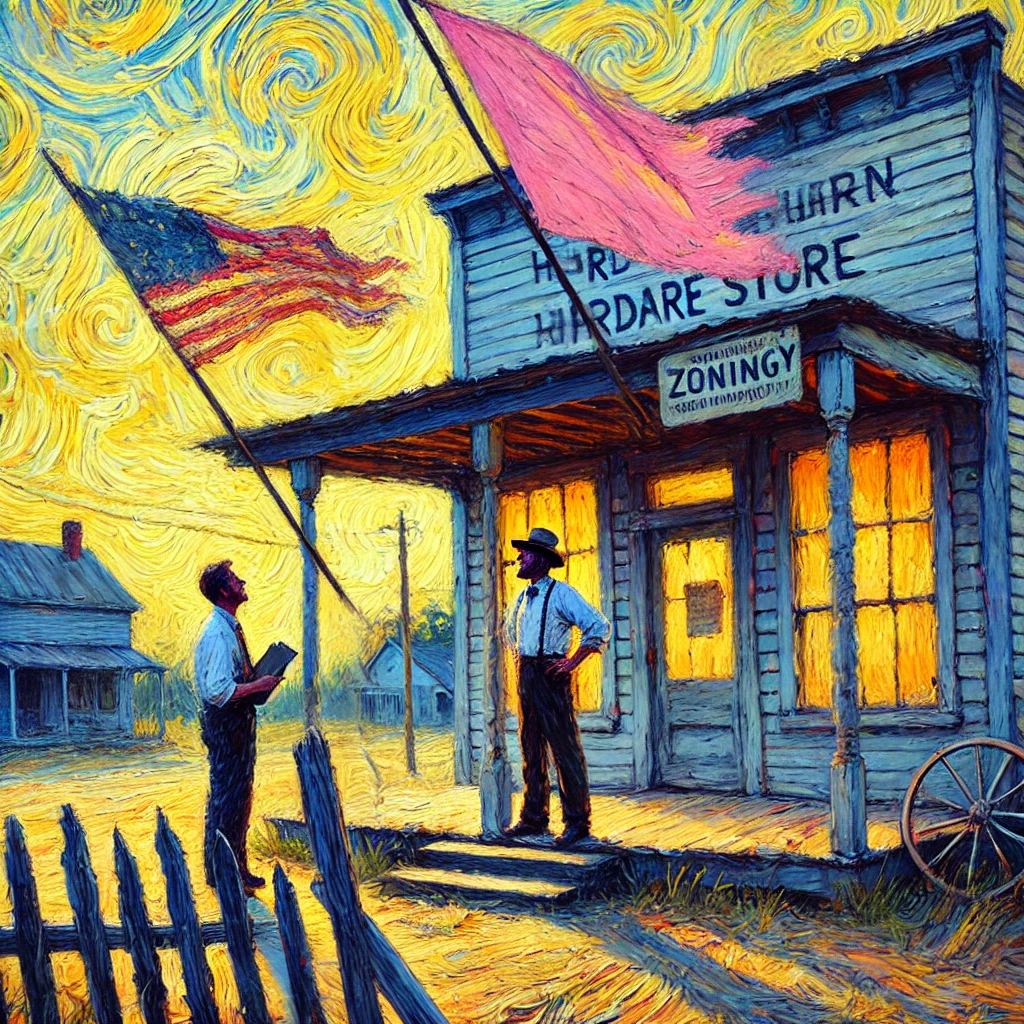
“First they take the banners,” someone said at the diner, “next it’s porch swings.”
“Looks like they’re tidying us into oblivion,” someone replied, buttering toast with unnecessary vigor.
On social media, a photo of the banner circulated with the caption: If this goes, what’s next?
The ordinance itself was rarely quoted. Its text was less compelling than the idea of it.
Clovis Strickland, who had a filing cabinet labeled Matters of Concern, printed the ordinance and highlighted sections with color-coded precision. He noted that enforcement discretion rested with the zoning officer.
Discretion.
The word felt larger than the vinyl.
Boot Barnes declared that the banner was “basically a historical artifact” and suggested it be listed as such.
No one knew how to list a banner as historic.
But the suggestion lingered.
ACT III – The Letter
IV. The Zoning Officer
The zoning officer, Ms. Harriet Cole, did not relish the task.
She had taken the job because she liked order. She believed in clarity. She enjoyed the quiet satisfaction of a correctly measured setback.
She did not wake up in the morning hoping to remove nostalgia.
But the ordinance had passed. The letter had been sent. The 30 days were ticking.
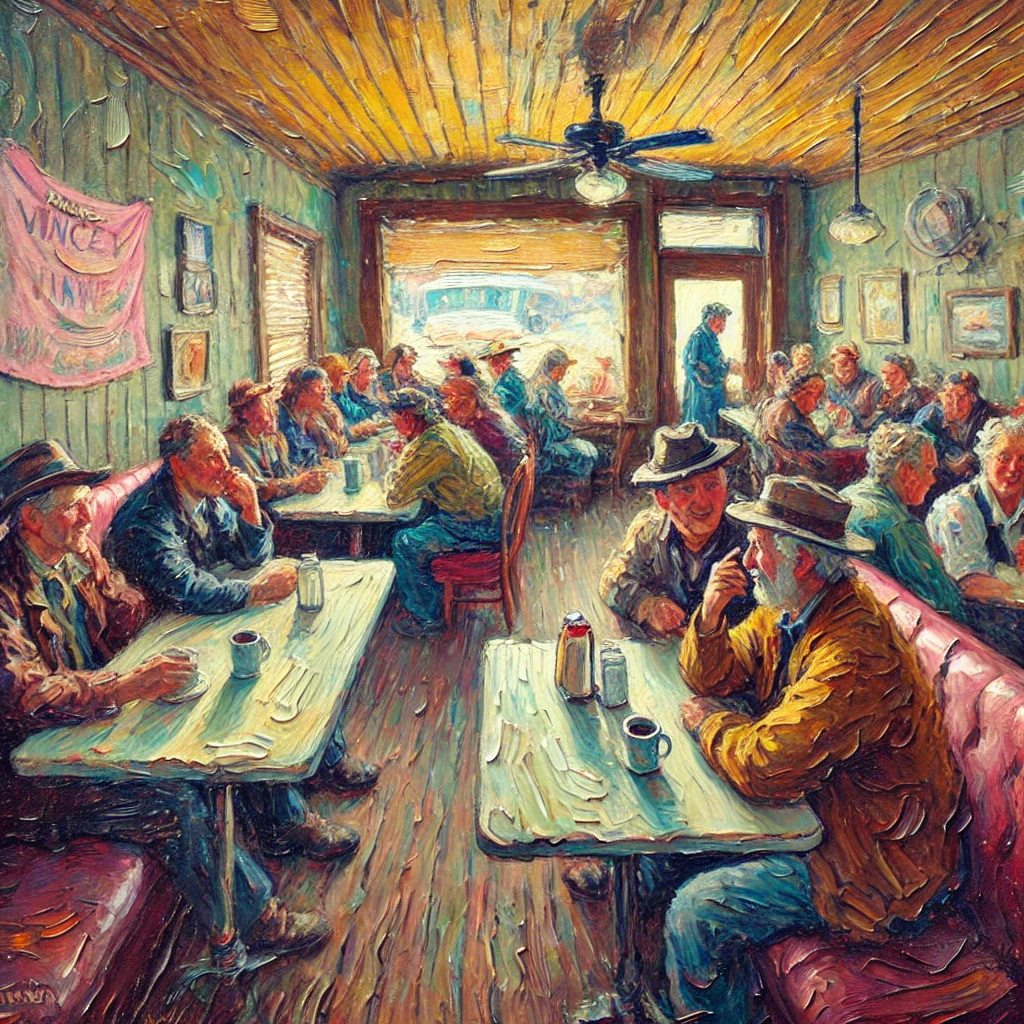
When she visited Leland’s store, she did so with a clipboard and an expression that attempted neutrality.
The banner flapped gently behind her as she approached.
“It’s been there a while,” she said, as if observing weather.
“Long enough,” Leland replied.
They stood side by side, looking at it.
The cracks in the letters had widened since summer. One of the zip ties had been replaced with baling twine during a windstorm in 2018.
“It’s technically non-compliant,” Harriet said.
“Technically,” Leland agreed.
The word hovered between them like a verdict.
ACT IV – Public Reaction
V. The Meaning of Removal
If the ordinance had required repainting a line or adjusting a sign height by two inches, it might have passed unnoticed.
But this required subtraction.
Removal is a louder act than adjustment.
It leaves a shape.
When something that has always been there disappears, the absence speaks.
The banner had not merely advertised; it had narrated. It told newcomers that this place had been open long enough to fade. It told old-timers that some things, even if frayed, endure.
Taking it down felt less like compliance and more like editing.
The town did not like being edited.
ACT V – The Visit
VI. The Day Arrives
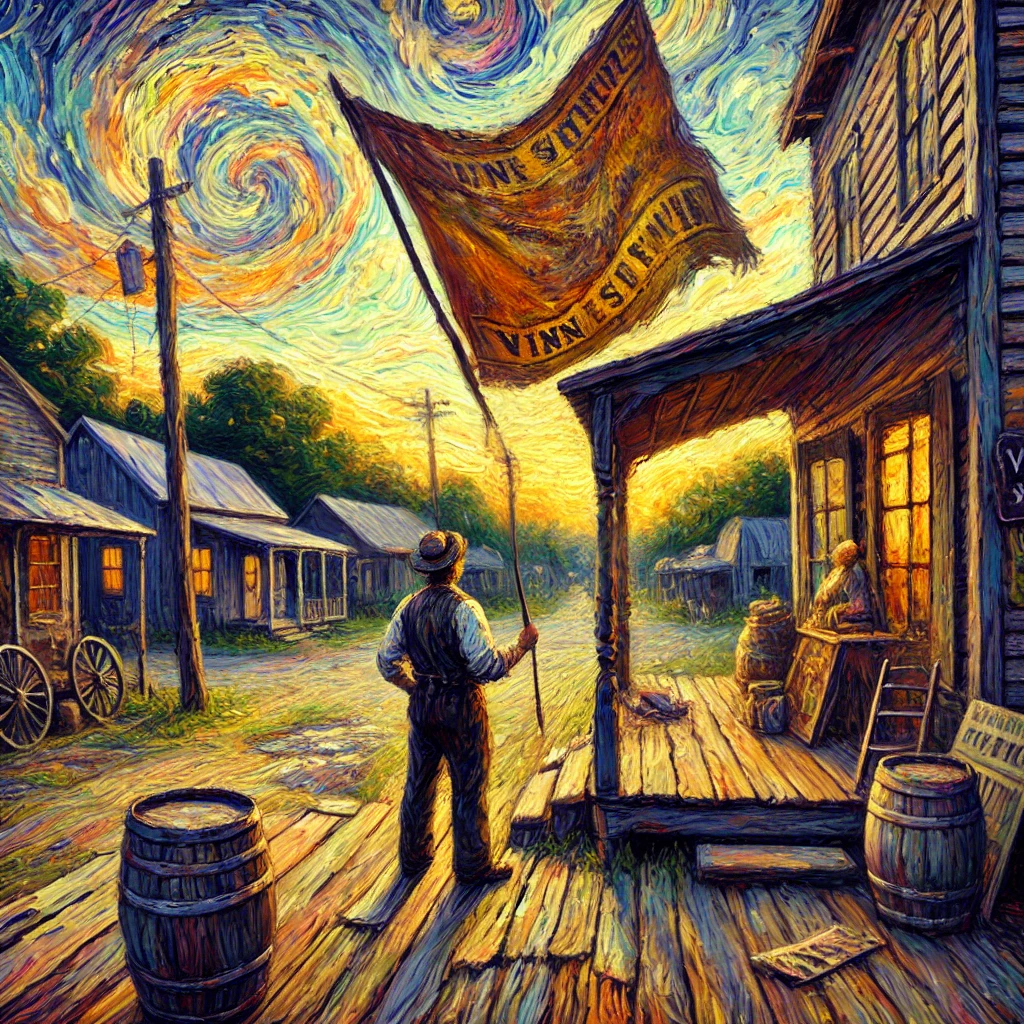
On the thirtieth day, a small group gathered.
They did not call it a protest. They called it “being present.”
There were lawn chairs. There was coffee in paper cups. Someone brought a folding table as if a bake sale might break out at any moment.
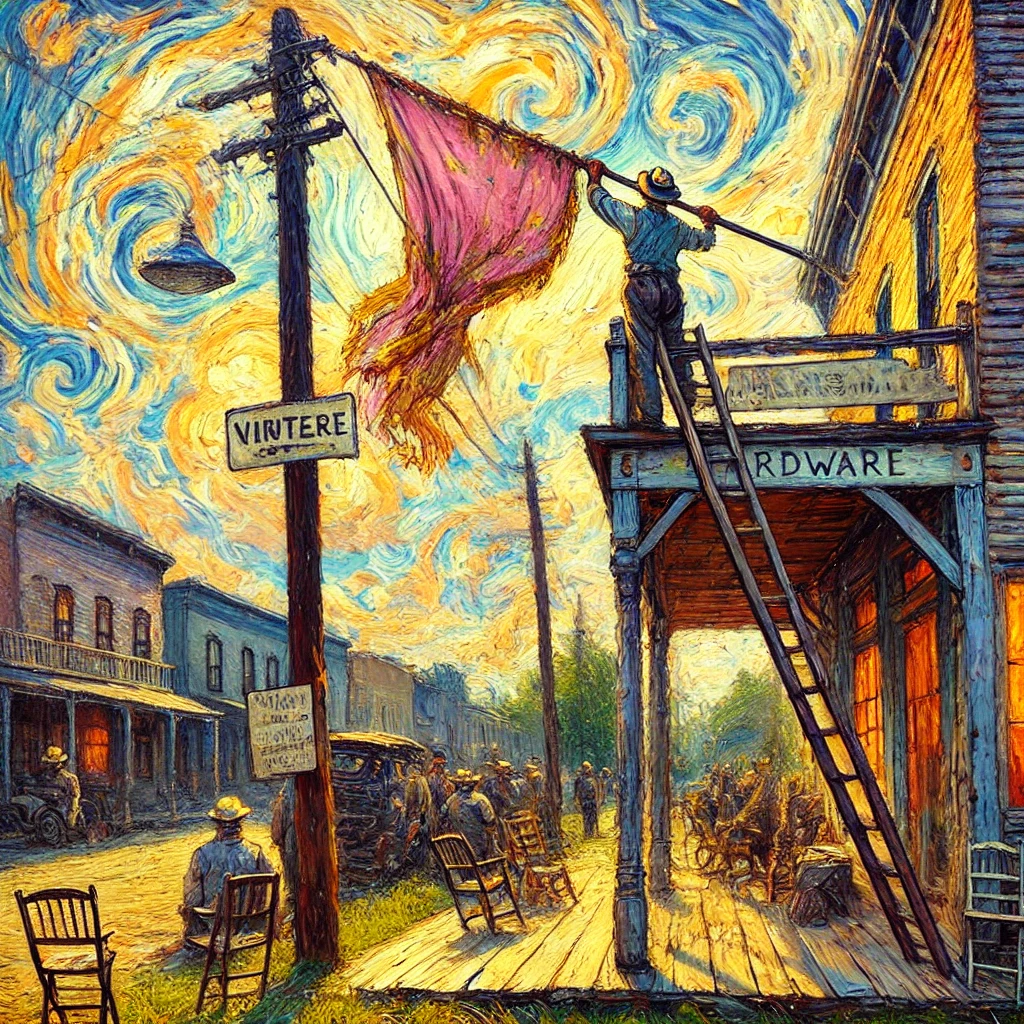
Leland arrived with a ladder.
Harriet arrived with a file folder.
Boot arrived with commentary.
Clovis arrived with documentation.
No one had expected it to feel ceremonial.
And yet.
The banner stirred in the morning breeze, unaware of its impending demotion from fixture to memory.
Leland positioned the ladder.
He climbed slowly, not because he was hesitant, but because ladders demand respect.
The first zip tie snapped with a sound that was both insignificant and final.
A thin crack of plastic.
The second required scissors.
The banner sagged.
Someone inhaled sharply.
When the last tie gave way, the vinyl folded into itself like a tired sail.
Leland carried it down.
No one clapped.
Applause would have implied performance.
This was something else.
ACT VI – The Removal
VII. The Space It Left
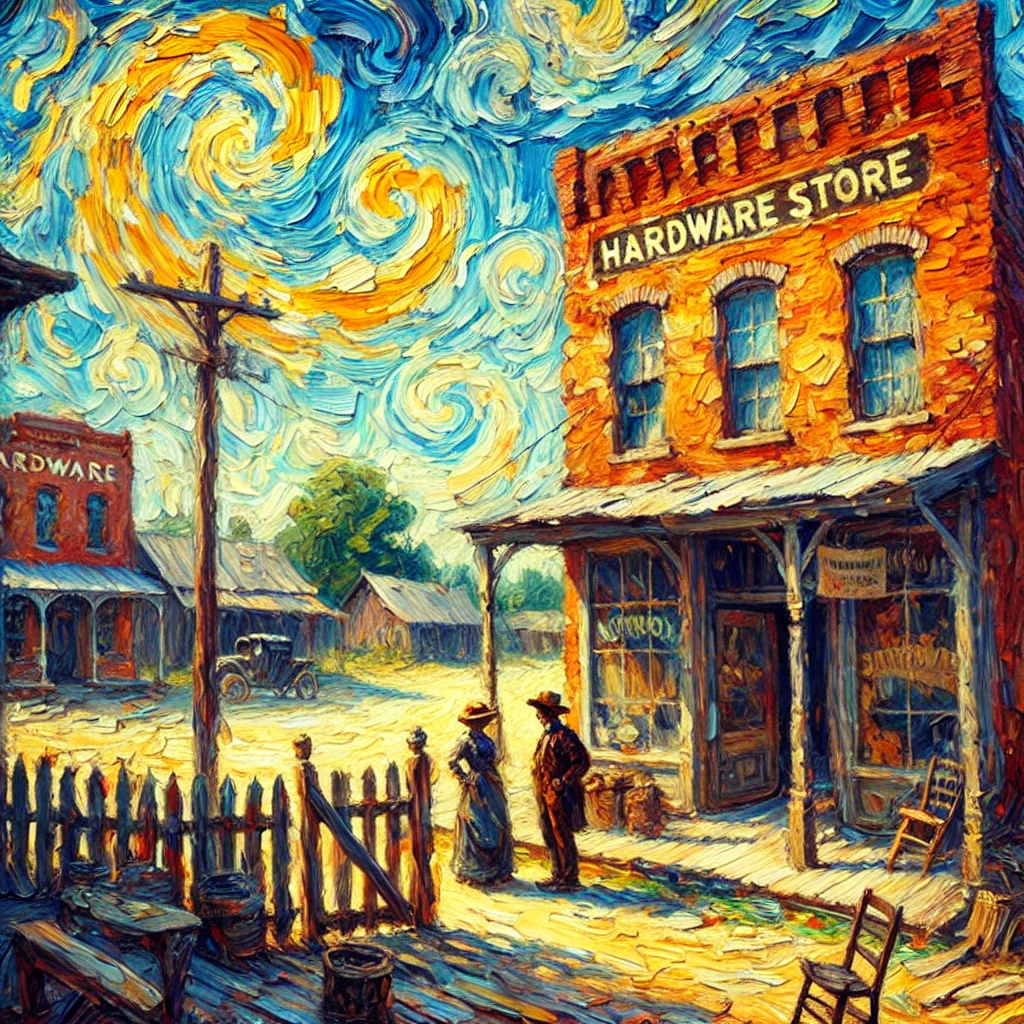
The fence posts remained.
Between them was air.
It was startling how much space a banner had occupied.
Without it, the storefront looked larger and somehow more exposed.
The faded pink had masked imperfections. Now the brick seemed raw.
People stared at the gap as if expecting the banner to reappear through sheer insistence.
“Looks naked,” someone said.
“Naked,” Boot echoed, as if the town itself had been undressed.
Harriet noted the compliance in her folder.
The act was complete.
But it did not feel concluded.
ACT VII – The Empty Space
VIII. The Aftermath
By afternoon, the absence had become a subject.
“Did you see it?” people asked, meaning the space.
The town did what towns do: it told the story.
Some said the removal had been gentle.
Some said it had been forced.
Some said it was overdue.
Some said it was the beginning of a trend toward “corporate neatness.”
The ordinance remained unchanged. Its language did not swell or shrink in response to feeling.
But its impact had grown.
What had been a policy now felt like precedent.

ACT VIII – Folding the Banner
IX. Larger Than Vinyl
The banner’s removal became a shorthand for a broader anxiety.
Were they smoothing themselves into something else?
Were they tidying away the evidence of endurance?
In a place like Sequatchie Crossing, history was not preserved in plaques. It was preserved in habit.
In the way a sign leaned.
In the way a paint color faded.
In the way something stayed long past its original purpose.
The banner had been temporary. It had simply overstayed.
But so had many beloved things.
The town did not fear regulation as much as it feared forgetting.
ACT IX – The Ripple Effect
X. Leland’s Decision
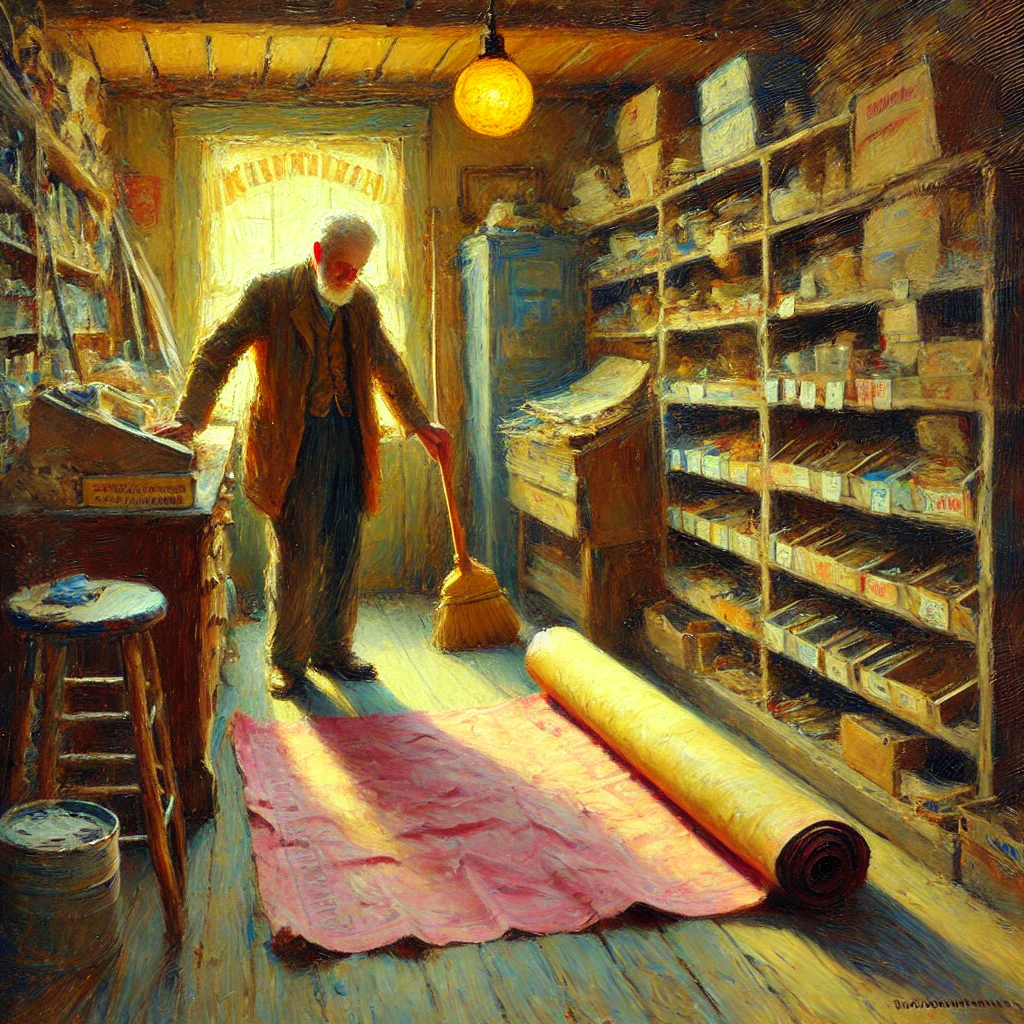
That evening, Leland unrolled the banner in the back of the store.
It lay across the concrete floor, creased and soft.
He ran a hand over the cracked letters.
He did not consider defiance.
He considered framing it.
He considered cutting out the word GRAND and hanging it inside, where no ordinance could reach.
In the end, he folded it carefully and slid it behind a shelf.
Not discarded.
Not displayed.
Preserved in potential.
ACT X – Leland’s Decision
XI. The Second Thought
A week later, someone suggested creating a “Historic Banner Day.”
Another proposed an exemption for banners older than a decade.
Clovis drafted language.
Harriet read it with professional caution.
The town, having experienced removal once, had become alert to future subtractions.
The ordinance remained intact.
But its enforcement would now be watched.
The first banner had come down.
It had not fallen quietly.
ACT XI – The Second Thought
XII. What Remains
Over time, the gap became normal.
New customers did not notice what had once been there.
Old customers gestured at air when giving directions.
The town adjusted.
It always did.
But something subtle had shifted.
The people of Sequatchie Crossing had discovered that compliance could feel like loss.
That tidiness could resemble erasure.
That a zip tie, when cut, could sound like a chapter closing.
The ordinance had aimed for order.
It had achieved attention.
The banner was gone.
The memory remained.
And in a town that measures time by what stays, that was no small thing.
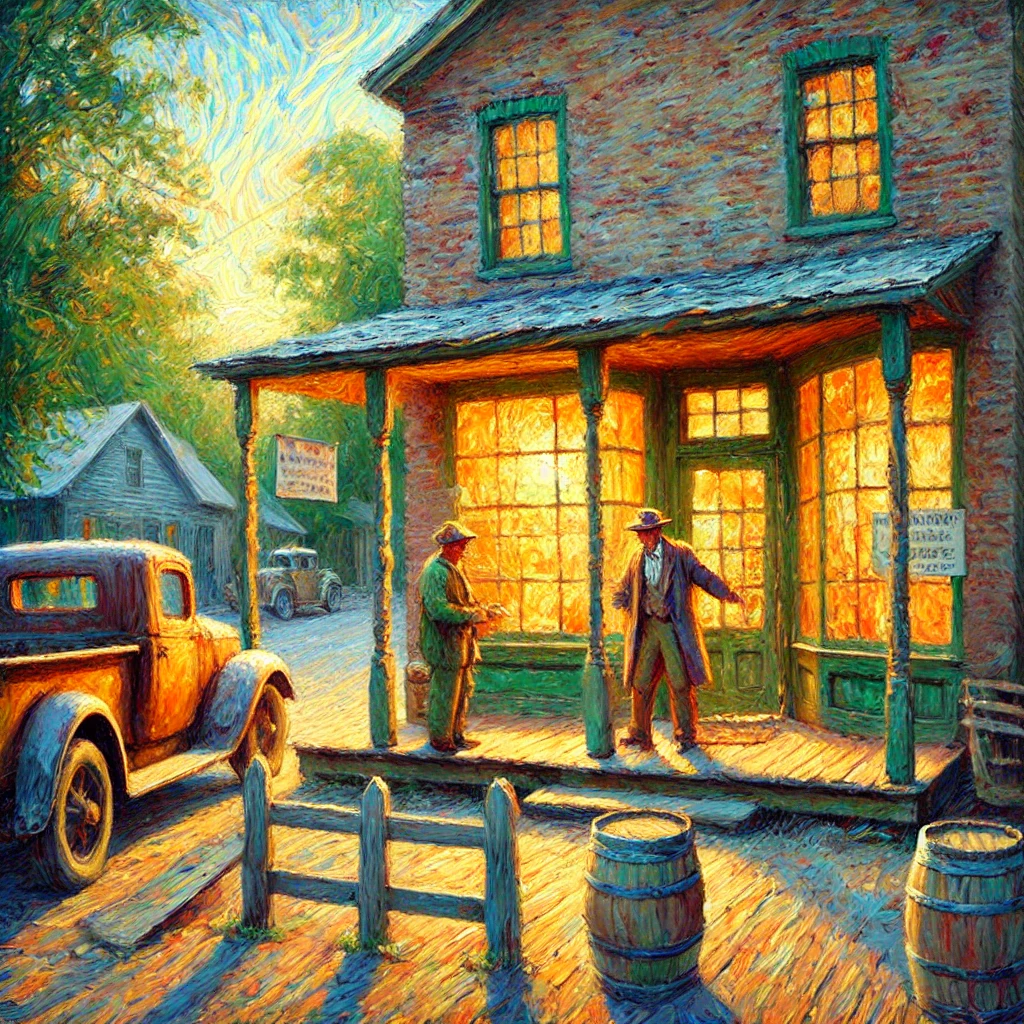
ACT XII – What Remains
Epilogue: The Next Banner
Across town, another business examined its own aging sign.
The letters were peeling.
The rope was frayed.
It had not received a letter yet.
But it knew.
The first banner had come down.
History had been removed with zip ties.
And now everyone was listening for the sound.
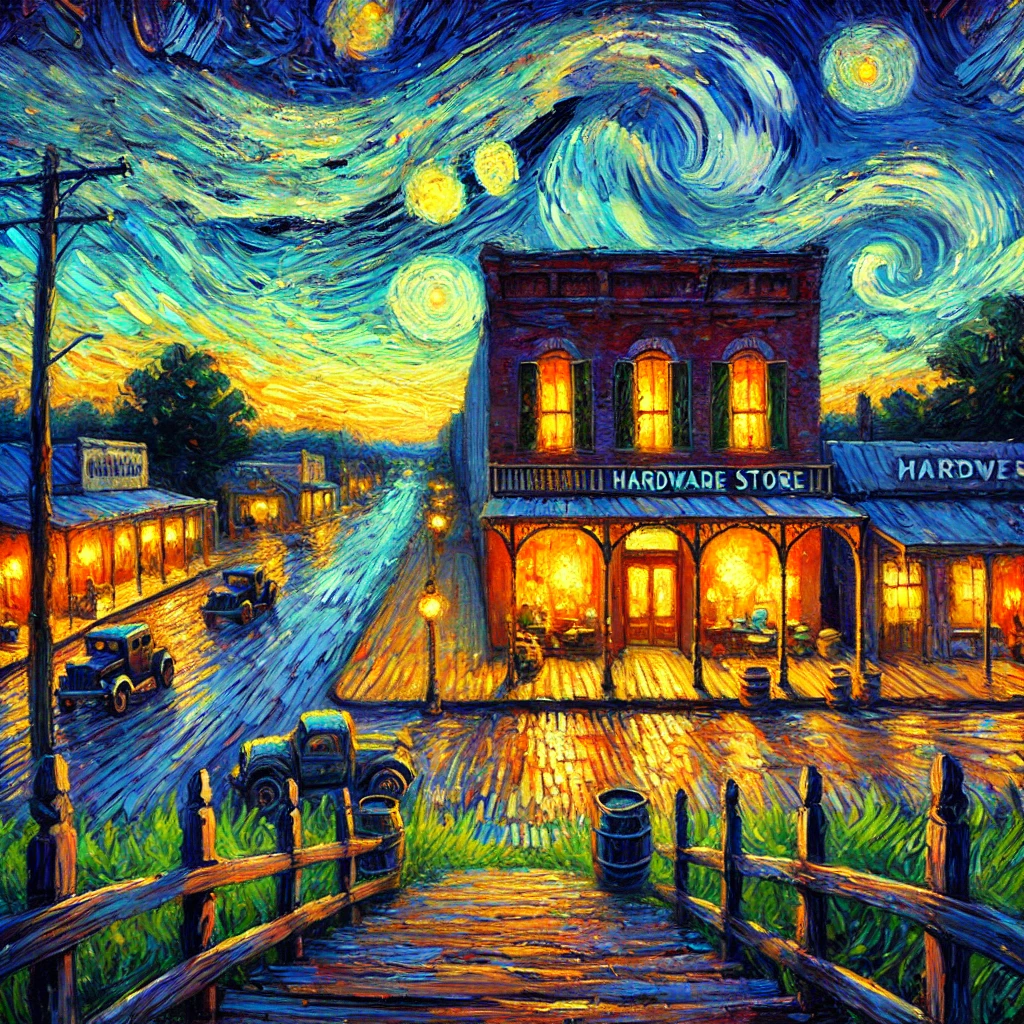
EPILOGUE – The Listening Town
Disclaimer
The events, businesses, ordinances, banners, fence posts, and emotionally significant zip ties depicted in this installment of Sequatchie Crossing are works of fiction.
Any resemblance to actual towns, real ordinances, existing hardware stores, zoning officers, or portable promotional materials – past, present, or gently flapping – is purely coincidental.
No real banner was targeted, cited, measured, or removed in the writing of this story. No municipality was consulted regarding acceptable durations of vinyl display. Any similarities to real policy debates about signage, aesthetics, or the preservation of community character are reflective of the universal human condition and not a specific governing body.
The story explores themes of change, memory, regulation, and the way ordinary acts can feel symbolically large. It is not intended as legal commentary, zoning advice, historical classification guidance, or an official interpretation of any municipal code.
If you are currently in possession of a long-standing portable banner, please consult your local regulations before attaching or detaching anything with zip ties.
All characters and situations are fictional, even when they feel familiar.
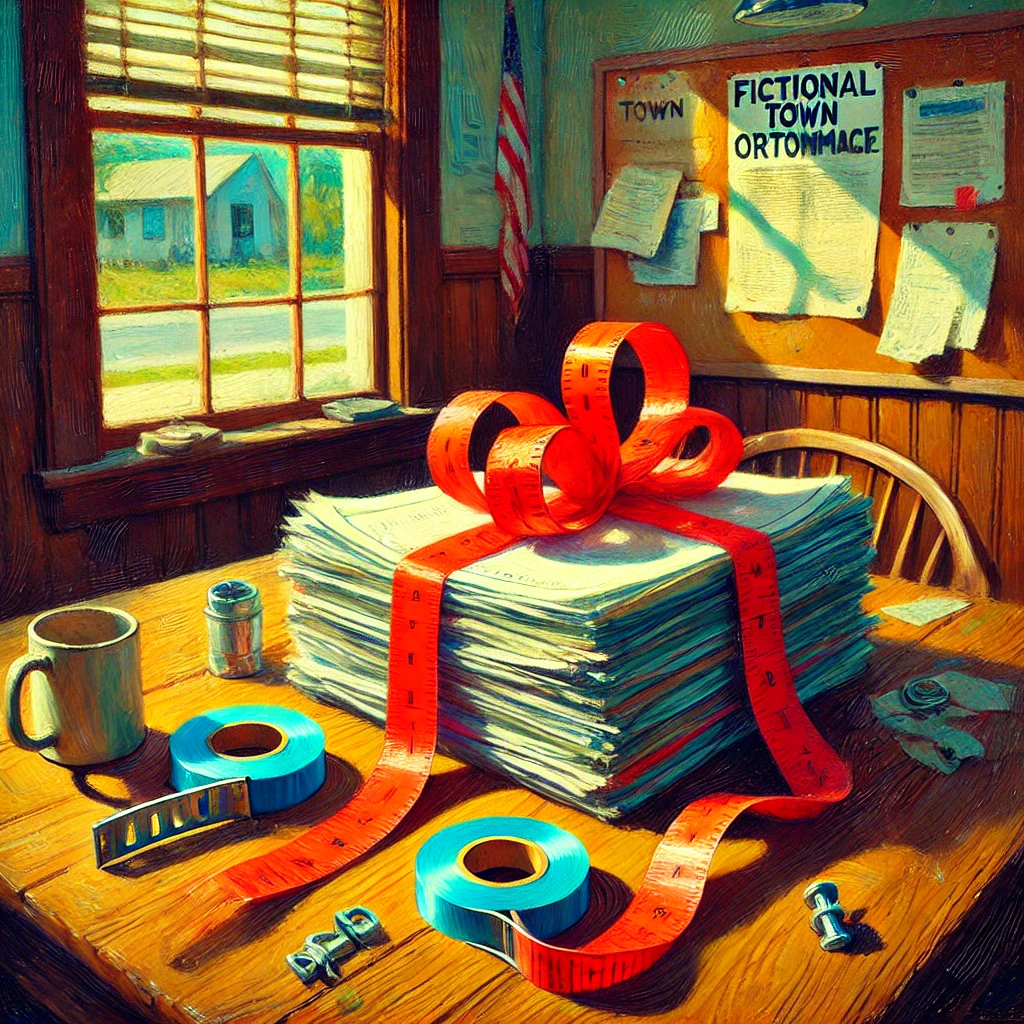
DISCLAIMER – The First Banner Comes Down
Real Places Behind the Ruckus – From The Dunlap Directory

Real Places Behind the Ruckus – From The Dunlap Directory
Yes, this story was fictional; even the parts that weren’t true. These places? Absolutely real. Stop by, support local, and keep the Wi-Fi away from livestock:
- Creation Station
- Reynolds Seal Coating Company
- Best Western Heritage Inn
- Sequatchie County Food Bank
- Signal Electric
- Dunlap Community Lost & Found Animals
- Mountain Valley Bank
- Tennessee Cumberland Plateau Campground
- Real Stone Veneers of TN
- The Ridge
- Sequatchie Valley Automotive & Off-Road
- Coops Creek RV Campground
- Flowers & Thyme
- Harrison Bay State Park
- Needful Things General Store
- Sequatchie County Rescue Squad
- Carbon Black Global
- Cascade Inn at Fall Creek Falls
- Avon Representative Brandy Wilkey

Real Places Behind the Ruckus – From The Dunlap Directory
At Sequatchie Crossing, we tell the stories of Sequatchie Crossing.
Please share this post with your friends, family, or business associates who may want help telling the stories of their legacy.

0 Comments