


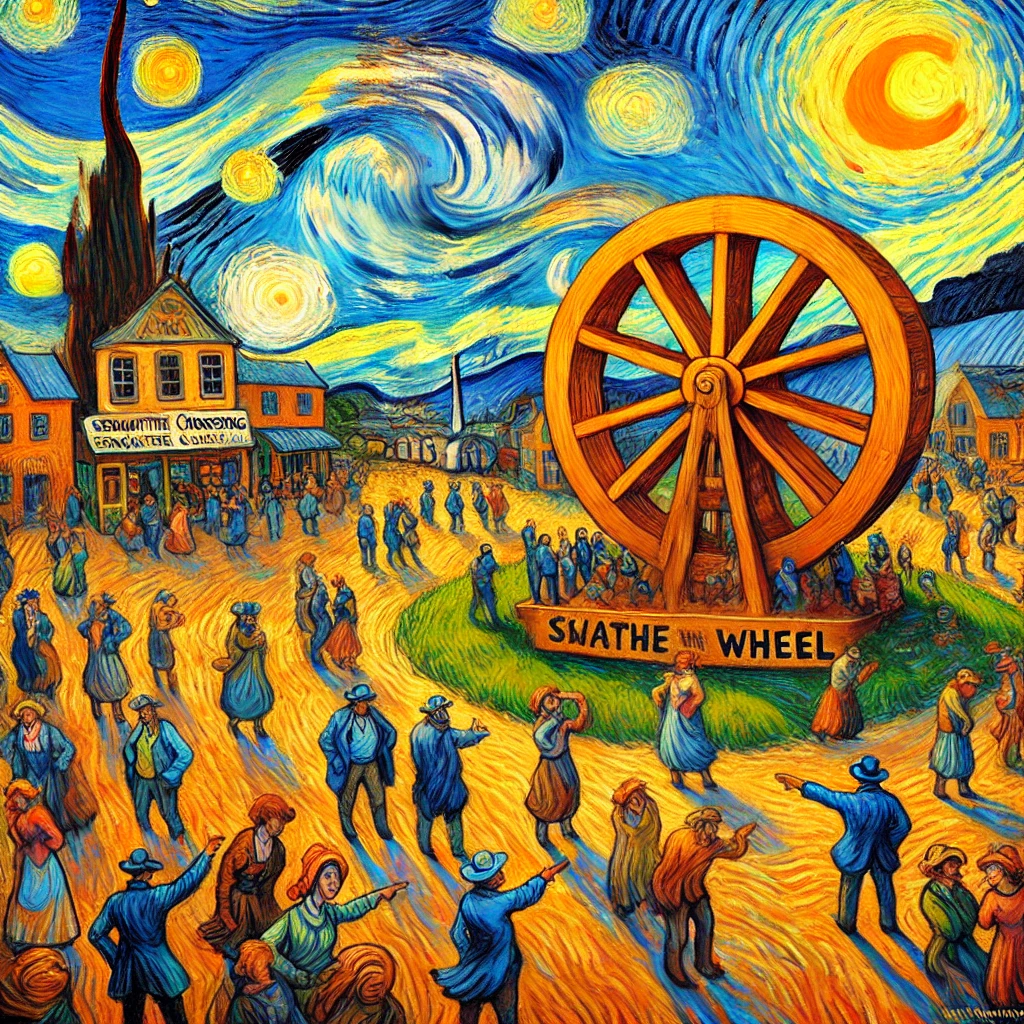
Committee Formed to Assign Permanent Blame Rotation Schedule.
By Tom Seest
At Sequatchie Crossing, we tell the stories of Sequatchie Crossing.
Please share this post with your friends, family, or business associates who may want follow the news from Sequatchie Crossing.
🎤 Audio Overview
When a Town Divided Over Growth Agreed on One Thing – Blaming the Wrong People Is Easier

When a Town Divided Over Growth Agreed on One Thing – Blaming the Wrong People Is Easier
ACT I – THE DAY GROWTH BECAME A FOUR-LETTER WORD
Sequatchie Crossing had always prided itself on being the kind of place where nothing changed unless three church committees and one grudge agreed to it. Unfortunately, the rest of the world didn’t get the memo, and so growth – sneaky, rude, and without signing in at City Hall – had begun creeping in.
New houses. New businesses. A new yoga studio that Clovis insisted was either a cult meeting site or an undercover military recruiting outpost. New people with ideas like:
-
“What if we had sidewalks?”
-
“What if the stop sign was visible from both directions?”
-
“What if our zoning map wasn’t hand-drawn on the back of a diner placemat?”
Naturally, these suggestions offended several long-time residents on principle alone.
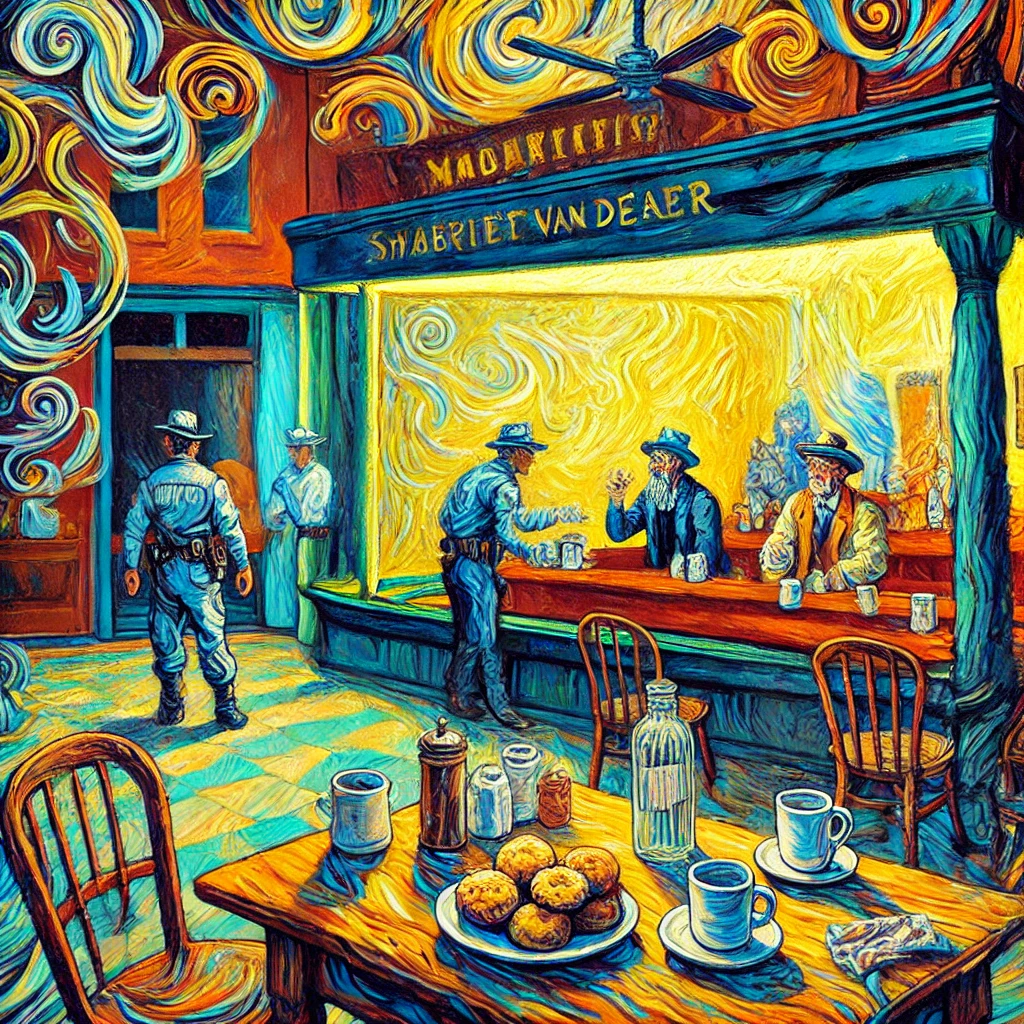
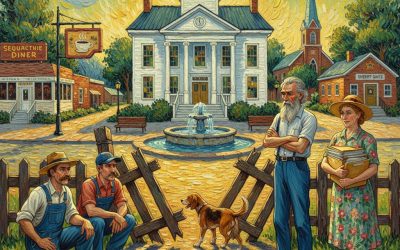
Boot Barnes, sitting on the cracked bench outside Mabel Dean’s diner, summed up the town’s anxiety with one sentence:
“Growth ain’t the problem. It’s the people growing.”
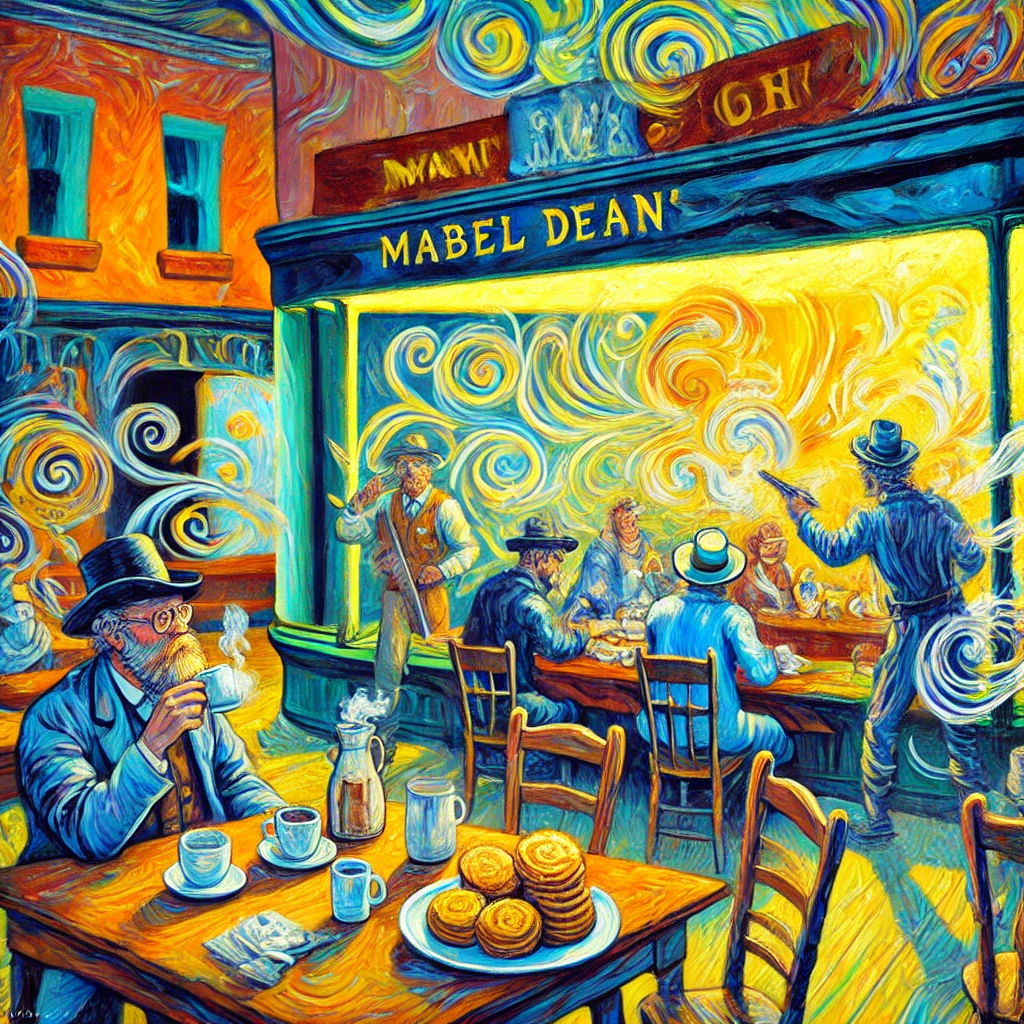
Sheriff Peeler, sipping a coffee that had gone cold during a three-hour Facebook argument about short-term rentals, nodded with the expression of a man who didn’t care to check whether Boot had meant something deep or just flubbed the sentence.
Inside the diner, Mabel Dean was aggressively stirring a pot of biscuits-and-gravy base, listening to the escalating chatter from her breakfast regulars.
Clovis Strickland entered with the look of a man who had been up all night researching something that nobody should research past midnight.
ACT I – THE DAY GROWTH BECAME A FOUR-LETTER WORD
“Town’s growing too fast,” he declared.
“We need answers. We need accountability. We need… well – someone to blame!”
This last word got everyone’s attention. Sequatchie Crossing folks came alive when blame became available, like fire ants discovering a bare ankle.
But the problem was that nobody could agree who to blame.
The newcomers accused the old-timers of resisting every improvement except the improved ability to complain.
The old-timers accused the newcomers of bringing in coffee shops where you couldn’t order “just coffee” without first declaring your milk preference, ethical worldview, and whether you wanted a dome lid.
The business owners blamed developers.
The developers blamed the County Commission.
The County Commission blamed the state.
The state blamed the federal government.
And the federal government – well, Sequatchie Crossing blamed it regardless of what it did.
By lunchtime, the temperature in the diner was hotter than Mabel’s biscuit oven.
Something had to give.
ACT I – THE DAY GROWTH BECAME A FOUR-LETTER WORD
ACT II – THE MEETING THAT SHOULD HAVE BEEN AN EMAIL
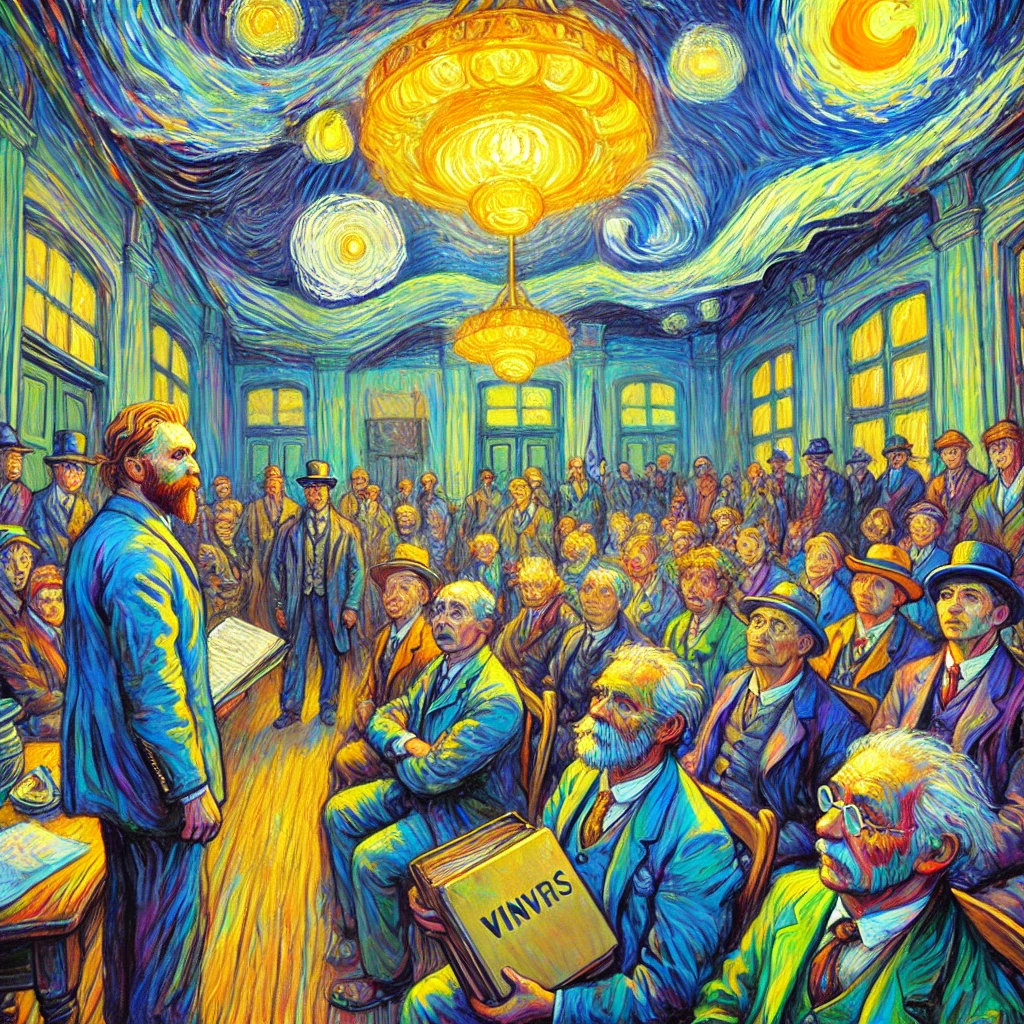
Mayor Honora “Honey” Cline – who had mastered the art of looking productive while doing absolutely nothing – called an emergency Town Hall meeting.
“Emergency” in Sequatchie Crossing meant only that snacks would not be provided.
The meeting room filled quickly:
-
Old-timers clutching printed screenshots of outrageous comments from the Facebook group.
-
Newcomers clutching reusable water bottles and a sense of optimism that would soon be worn down.
-
Developers clutching land maps that looked suspiciously like treasure charts.
-
Clovis clutching a binder labeled “CONFIRMED TRUTHS (MAYBE).”
-
Boot Barnes holding a donut and looking like he hoped this meeting would end before his sugar crash.
Mayor Honey began with her trademark greeting:
“Thank y’all for coming and expressing your concerns. I hear you, I see you, and I will now ignore you while moving on to the agenda.”
The first issue: Growth.
The second issue: Whose fault growth was.
And the third issue: Where to assign ongoing, rotating responsibility for future fault.
A hand shot up – newcomer, tall, wearing a Patagonia vest that immediately lowered his credibility in the eyes of half the room.
“I’d like to suggest something constructive – ”
Groans.
Eye rolls.
A hiss from someone in the back.
Clovis whispering, “That vest has developer energy.”
ACT II – THE MEETING THAT SHOULD HAVE BEEN AN EMAIL
The man continued.
“What if we focus on solutions instead of blame?”
Silence.
Then laughter, bitter and unanimous, broke out like applause at a comedy show.
Mabel Dean stood up.
“Mister, around here, solutions last five minutes. Blame lasts three generations.”
Sheriff Peeler added, “Some families still ain’t talking over the Great Canning Lid Shortage of ’78.”
The mood had shifted. Something was needed – a mechanism to channel the town’s desire to blame into something organized, something official, something pointless but satisfying.
Boot Barnes cleared his throat.
“I motion to form a committee.”
This sentence always landed like a thunderclap in Sequatchie Crossing.
Committees meant bureaucracy. Bureaucracy meant delays. Delays meant the town would never actually have to fix anything.
Mayor Honey brightened.
“As your mayor, I support any motion that results in more meetings and fewer expectations.”
And thus was born:
The Committee for Responsible and Recurring Rotational Blame Assignment.
CRRRBA.
Pronounced “crab-bah,” which several residents said sounded vaguely biblical.

ACT II – THE MEETING THAT SHOULD HAVE BEEN AN EMAIL
ACT III – THE COMMITTEE DISCOVERS BLAME HAS WEIGHT LIMITS
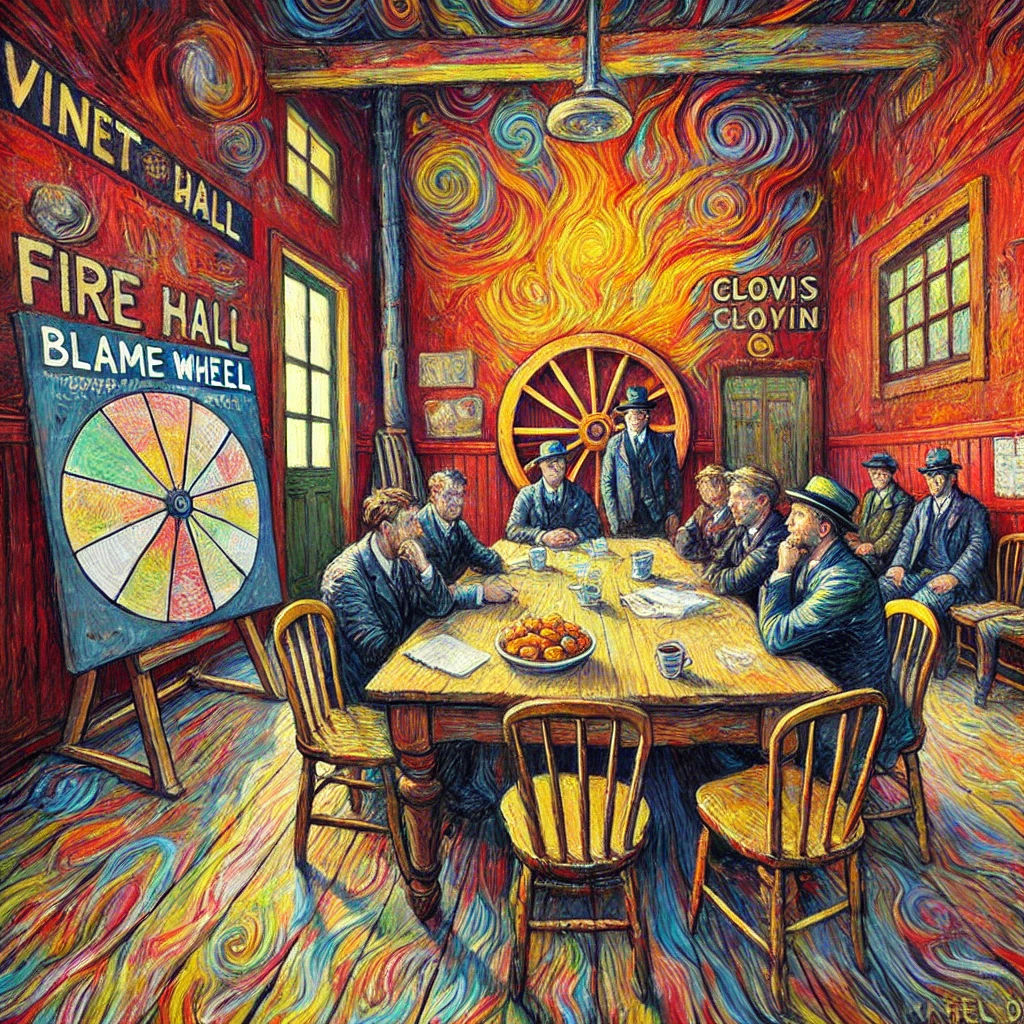
CRRRBA met for the first time in the old fire hall, because the new fire hall wasn’t built yet, because zoning hadn’t approved the parking plan, because the county said the state said the federal guidelines didn’t match local ordinances, because someone objected based on a rumor Clovis posted about electromagnetic wave pollution near hose storage.
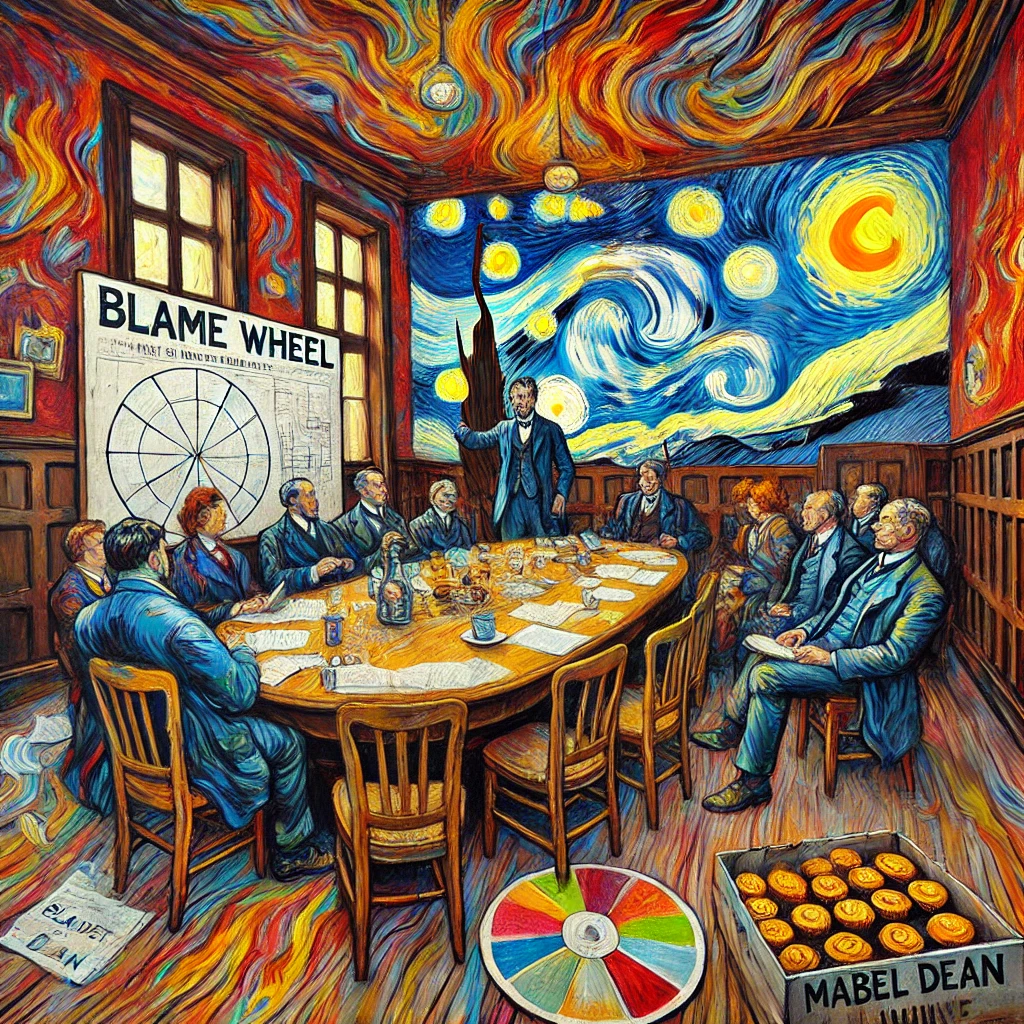
Honey Cline sat at the head of the table.
Boot Barnes sat beside her because he thought there might be snacks.
Clovis had brought color-coded charts.
Sheriff Peeler had brought headache medication.
And among the citizens were:
-
Newcomers hoping to “engage civically,” unaware they were about to regret this.
-
Old-timers ready to re-establish dominance.
-
Developers who wanted to know where they ranked in the Blame Rotation.
Mabel Dean had volunteered to bring muffins, but she arrived late, explaining,
“I burnt the first batch because I was reading comments about growth from 2012. Still relevant.”
ACT III – THE COMMITTEE DISCOVERS BLAME HAS WEIGHT LIMITS
The committee began by deciding who should be blamed first.
Option 1: The developers
Pros: Easy targets, wear polo shirts tucked in, drive trucks suspiciously clean.
Cons: They actually do bring money into the town.
Option 2: The newcomers
Pros: They moved here willingly, so obviously they should have known better.
Cons: They claim to boost the local economy and eat a lot of biscuits.
Option 3: The old-timers
Pros: They resist change harder than a rusted gate hinge.
Cons: Also the voting base holding the town together.
Option 4: A rotating schedule so everyone gets blamed equally
Pros: Fairness.
Cons: Nobody wanted fairness.
Honey sighed.
“We need consensus.”
Clovis raised a hand.
“I propose we blame whoever isn’t present at any given meeting.”
This idea stopped everyone cold.
It was brilliant.
Elegant.
Simple.
Blissfully irresponsible.
Boot Barnes slapped the table.
“That’s it. If you cared enough to show up, you’re safe. If you didn’t – you’re the reason the town’s in trouble.”
Sheriff Peeler nodded.
“That tracks with our usual investigative strategy.”
And so CRRRBA adopted its founding rule:
Blame shall be assigned to the absent.
ACT III – THE COMMITTEE DISCOVERS BLAME HAS WEIGHT LIMITS
ACT IV – WHEN BLAME GOES PUBLIC
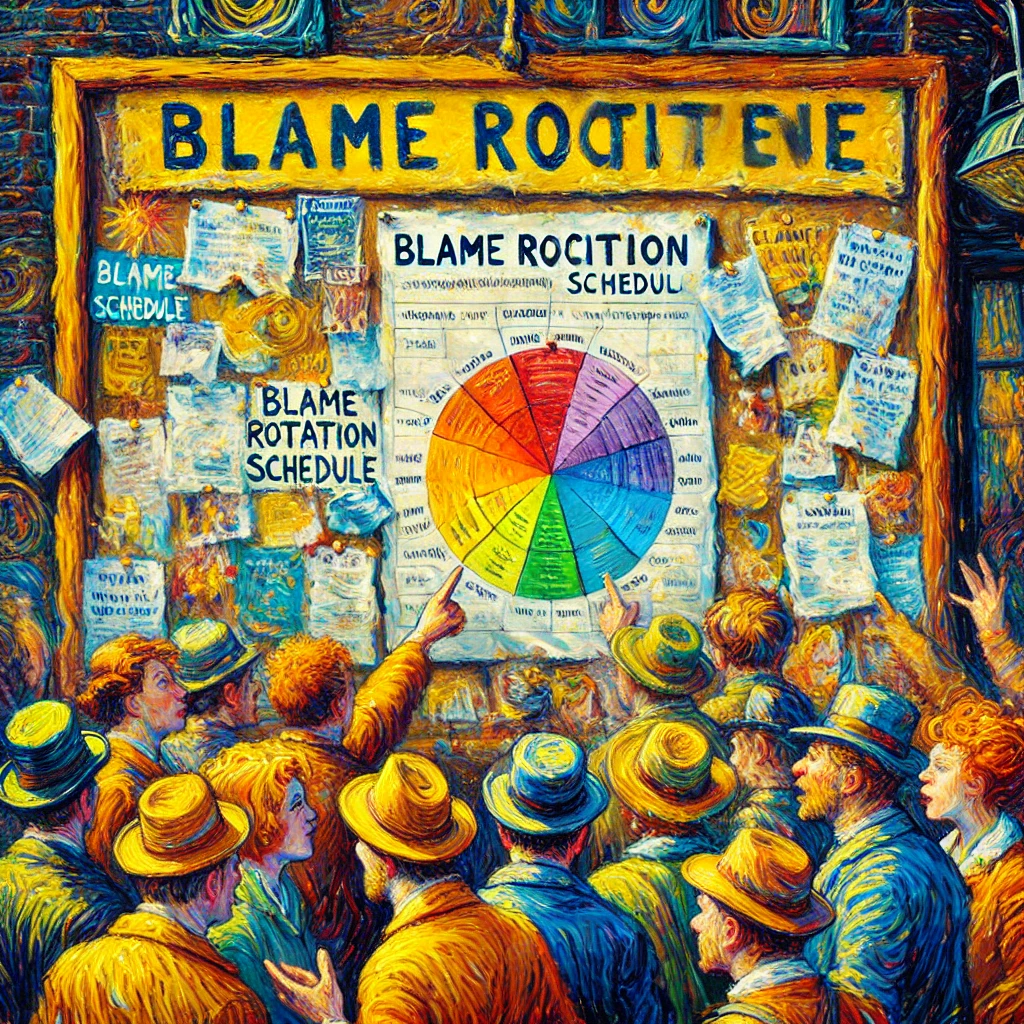
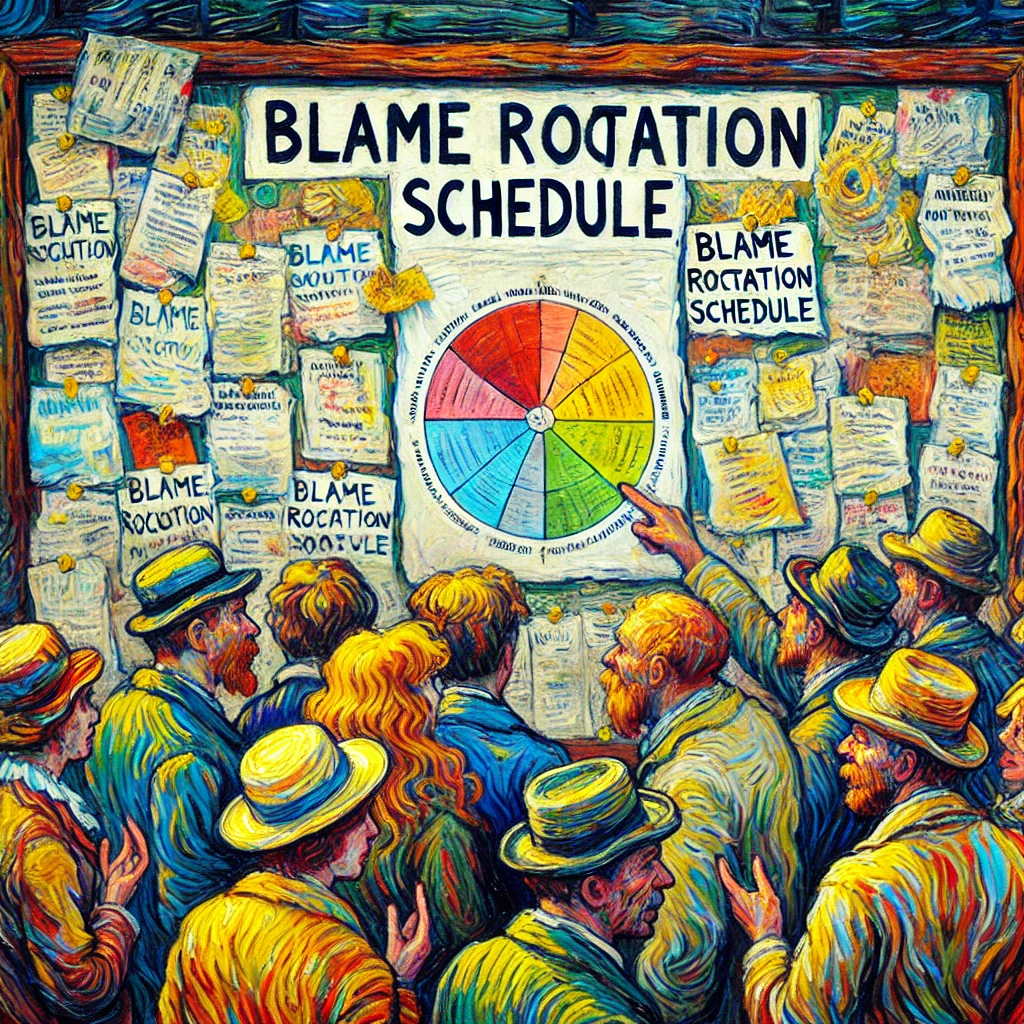
The CRRRBA committee issued its first official Blame Schedule, posted on the bulletin board inside Mabel Dean’s diner underneath the laminated “No Outside Snacks Unless They’re Good” sign.
The first weekly targets of blame:
-
Week 1: Residents who didn’t attend the meeting
-
Week 2: People who work in Chattanooga but live in Sequatchie Crossing
-
Week 3: Anyone renting rather than owning
-
Week 4: Anyone owning rather than renting
-
Week 5: Homeowners with “too fancy” mailboxes
-
Week 6: Homeowners with “not fancy enough” mailboxes
By Week 7, the committee had already contradicting itself twice, but nobody noticed because the rotation was printed in Comic Sans, which somehow made it look official.
ACT IV – WHEN BLAME GOES PUBLIC
Within days, people were using the schedule to win arguments:
-
“It ain’t my fault the creek flooded, check the rotation – it’s Week 3, blame renters!”
-
“Don’t yell at me about traffic, it’s Week 2 – blame commuters!”
-
“Clovis, the internet is down again.”
“Not my week, talk to the mailbox people.”
Newcomers were horrified.
Old-timers were delighted.
Developers quietly sponsored snacks for all CRRRBA meetings under strict instruction: make sure their week never comes.
Meanwhile, Boot Barnes began selling laminated copies of the Blame Schedule for $4 each ($5 if you wanted it blessed by the Committee Chair, who was Boot himself).
Mabel, noticing opportunities, added a “Blame Biscuit” breakfast special – served with three sides because “growth touches everything.”
Even Sheriff Peeler got into the spirit, issuing a new form:
Unofficial Citation: Misassigned Blame, Class C Misdemeanor (Morale Only)
He gave Clovis five of them.
ACT IV – WHEN BLAME GOES PUBLIC
ACT V – WHEN GROWTH GETS REAL AND THE BLAME WHEEL BREAKS
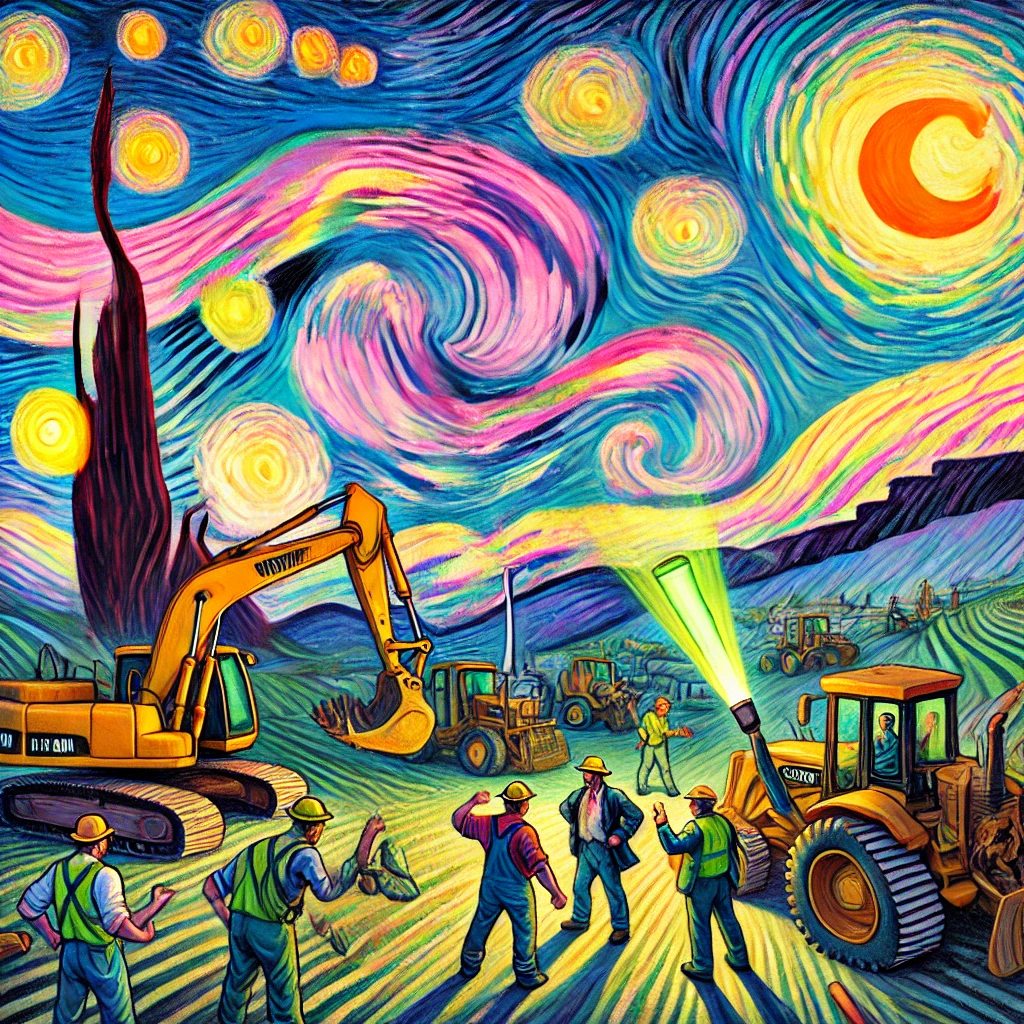
One morning, Sequatchie Crossing woke to the sound of construction – real construction, not Clovis hammering metal sheets together to improve “alien deflection.”
A new subdivision was finally breaking ground.
This triggered:
-
Three Facebook petitions
-
Two prayer chains
-
One threat of a peaceful protest that quickly turned unpeaceful when someone suggested holding it near the new yoga studio
The mood soured quickly.
The newcomers blamed the old-timers for refusing to update zoning.
The old-timers blamed developers for “sneaking in after dark with backhoes.”
The developers blamed the Federal Wetlands Map, which Clovis had messed with using a highlighter last year to “see what would happen.”
CRRRBA met in emergency session.
Boot read the schedule.
It was Week 10.
Week 10’s designated target:
People named Earl.
ACT V – WHEN GROWTH GETS REAL AND THE BLAME WHEEL BREAKS
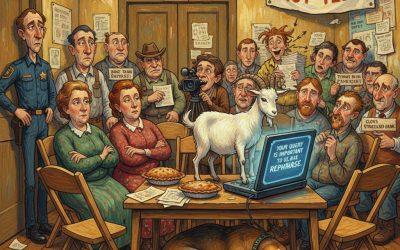
Unfortunately, Earl Haskins – the town’s most peace-loving chicken farmer – was sitting in the front row, holding a basket of eggs he intended to donate.
Earl blinked slowly.
“What’d I do?”
The committee panicked.
Their entire system hinged on the target being absent.
They instantly spun the Blame Wheel.
Clovis had built it from an old tractor tire and plywood, and it wobbled like a raccoon on roller skates.
The needle landed on:
“Anyone with strong opinions.”
This created two major problems:
-
Everyone in town had strong opinions.
-
Nobody believed their opinions were strong – only correct.
The room erupted.
Voices rose.
Accusations flew.
Someone blamed Mabel Dean for making biscuits “too good,” thus driving demand for more newcomers.
Someone blamed the sheriff for not stopping development by “squinting harder.”
Someone blamed Boot Barnes for inventing the committee in the first place.
Boot stood up.
“Now wait just a minute – ”
“Boot, sit down,” Mabel commanded.
“You’re Week 11.”
It was the first time the Blame Schedule turned inward, and the town hated it.

ACT V – WHEN GROWTH GETS REAL AND THE BLAME WHEEL BREAKS
ACT VI – THE RESOLUTION NOBODY EXPECTED
The crisis peaked during a Town Hall meeting so crowded that Clovis attempted to set up overflow seating inside his truck bed parked outside with a loudspeaker jury-rigged to his CB radio.
Mayor Honey called the room to order.
“Folks, we have lost the plot. Growth isn’t our enemy. People aren’t our enemy. The schedule isn’t our enemy.”
A beat.
“Spreadsheets are our enemy,” someone muttered.
Honey shook her head.
“No. The real issue is that blaming people won’t stop anything. It just keeps us busy.”
This was dangerously close to wisdom.
Boot Barnes reluctantly nodded.
Clovis sighed.
Mabel Dean crossed her arms but stayed quiet.
A newcomer stood up.
“Maybe instead of rotating blame, we rotate responsibility?”
Gasps.
Fainting.
Someone dropped a muffin.
But slowly… the idea took hold.

EPILOGUE – THE ONE THING THEY STILL AGREED ON
The town began to realize something uncomfortable:
It wasn’t growth causing chaos.
It was growth exposing chaos the town already had.**
By the end of the night, CRRRBA voted to restructure itself into something productive:
The Committee for Rotational Responsibility & Better Actions.
CRRBA.
Similar acronym.
Different mission.
Possibly effective, though optimism wasn’t guaranteed.
Boot Barnes still sold laminated schedules – but now they listed volunteer shifts, cleanup days, zoning input sessions, and potluck rotations.
People complained at first.
Then they showed up anyway.
Sheriff Peeler even installed a new traffic cone system that almost worked.
Mabel created a “Unity Biscuit” – half whole-wheat (for the newcomers) and half white flour (for the old-timers). It tasted terrible, but people bought it to show support.
Clovis produced a 78-page document titled “Probable Technical Solutions and Maybe a Few Problems I Accidentally Made Worse.”
It was, ironically, helpful.
Sequatchie Crossing, for the first time in months, wasn’t yelling.

EPILOGUE – THE ONE THING THEY STILL AGREED ON
EPILOGUE – THE ONE THING THEY STILL AGREED ON
The town made progress.
Small progress.
Messy progress.
Progress that involved shouting, biscuits, misunderstandings, and two zoning maps accidentally set on fire.
But progress.
At the first anniversary of CRRBA (formerly CRRRBA), the town gathered at the fairgrounds for a festival that combined:
-
speeches,
-
food trucks,
-
music,
-
a kids’ art booth,
-
and Clovis’s unauthorized drone demonstration.
Boot stood at the mic.
“We learned something important this year,” he said.
“That blame’s easy. Responsibility’s harder. Growth’s gonna happen whether we like it or argue about it on Facebook.”
He paused.
“But there’s still one thing we all agree on.”
The crowd leaned in.
Boot grinned.
“Blaming the wrong people is still easier.”
And Sequatchie Crossing cheered –
not because the statement was true,
but because laughing at themselves was the first real unity the town had found in years

Disclaimer – When a Town Divided Over Growth Agreed on One Thing – Blaming the Wrong People Is Easier
DISCLAIMER
This Dispatch, its events, its committees, and its entirely unproductive civic processes are fictional. Any resemblance to real small-town decision-making is purely the result of statistics, sociology, and the unstoppable power of people to blame whoever is closest rather than whoever is responsible.

Disclaimer – When a Town Divided Over Growth Agreed on One Thing – Blaming the Wrong People Is Easier
Real Places Behind the Ruckus – From The Dunlap Directory

Real Places Behind the Ruckus – From The Dunlap Directory
Yes, this story was fictional; even the parts that weren’t true. These places? Absolutely real. Stop by, support local, and keep the Wi-Fi away from livestock:
- Hillcrest Farm
- Gigi’s Sweet Stop
- Backwoods Fence and Decking
- Dunlap Garden Apartments
- Fast Access Healthcare Dunlap
- AMC Northgate 14
- Berg’s Diesel Repair
- Wimpie’s Country Restaurant
- Raccoon Mountain Caverns and Campground
- Smopfy Smoke Shop
- Deakins Underground
- Newson Stone & Masonry
- Austin Mitchel Jennifer
- Tacos El Valle
- Sequatchie County Rescue Squad
- Marion County Veterans Memorial Park
- Campbell’s Tree Service

Real Places Behind the Ruckus – From The Dunlap Directory
At Sequatchie Crossing, we tell the stories of Sequatchie Crossing.
Please share this post with your friends, family, or business associates who may want follow the news from Sequatchie Crossing.


0 Comments