


The Word “Prohibited” Lands Harder Than Expected
By Tom Seest
At Sequatchie Crossing, we tell the stories of Sequatchie Crossing.
Please share this post with your friends, family, or business associates who may want help telling the stories of their legacy.
🎤 Audio Overview
Town Hall Reads Page 47 Out Loud
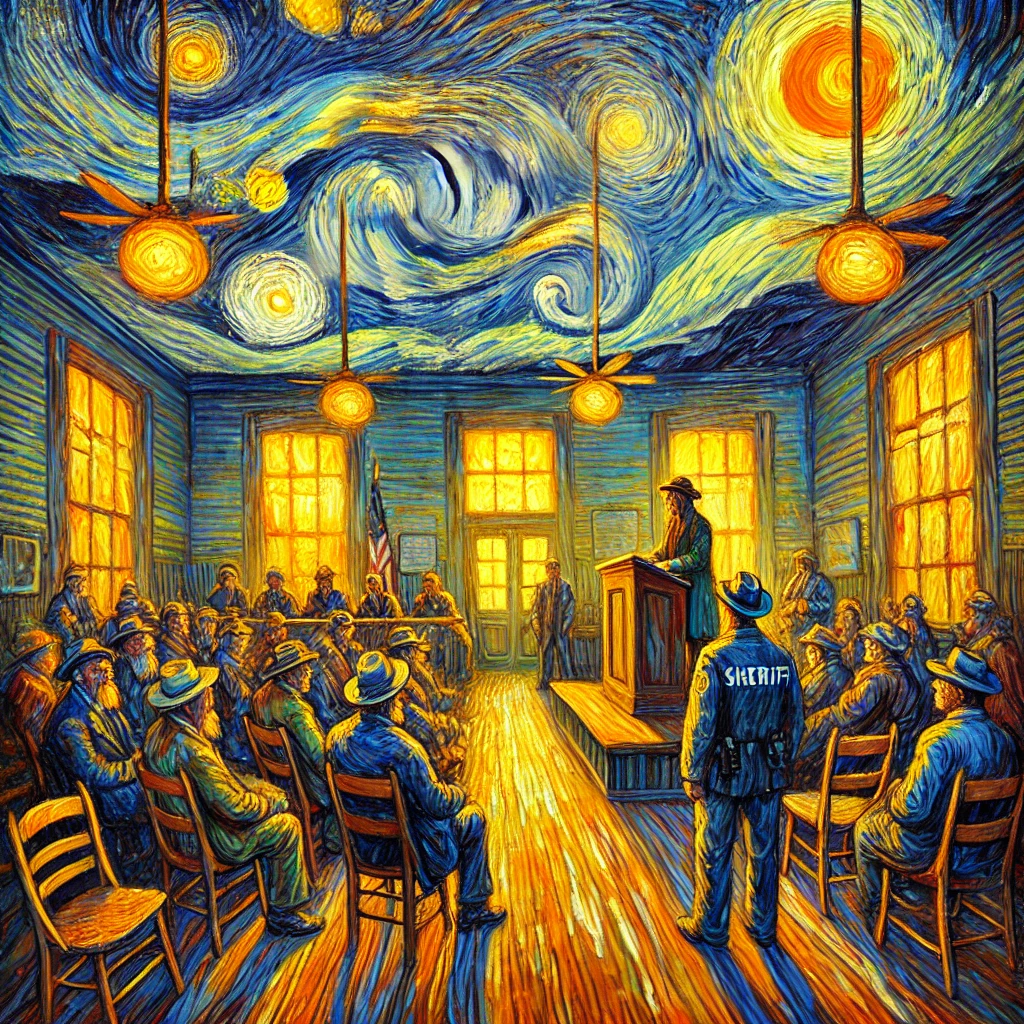
Town Hall Reads Page 47 Out Loud
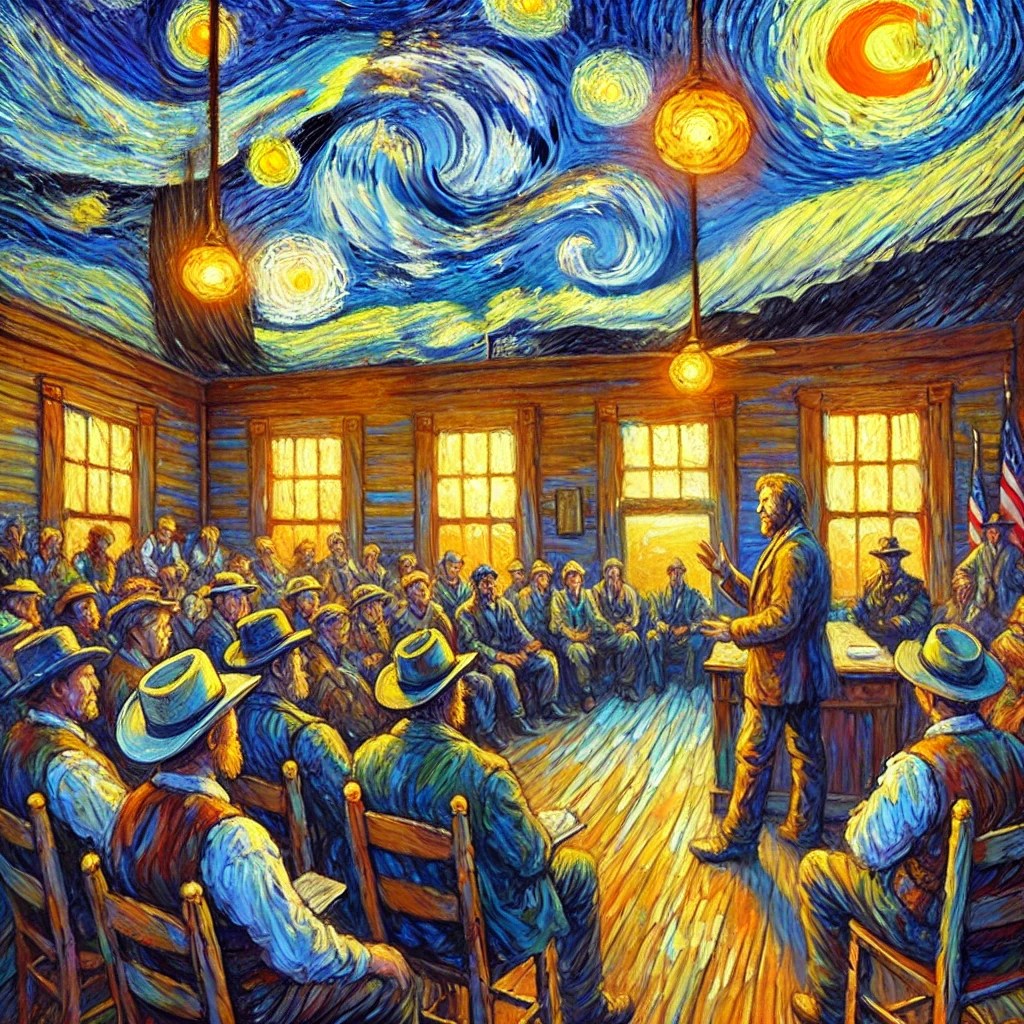
On the second Tuesday of the month, which had already disappointed several people by arriving on time, the citizens of Sequatchie Crossing gathered beneath the humming fluorescent lights of Town Hall for what was scheduled to be a “routine clarification of minor language.”
There are phrases that promise peace and deliver weather.
“Routine clarification” is one of them.
By six o’clock, the folding chairs were arranged in their familiar grid-metal, slightly bent at the back legs, each one bearing the faint scent of past civic anxiety. Sheriff Peeler stood near the entrance with his arms folded loosely, as though he were guarding not the door but the concept of order itself. Clovis Strickland, already seated in the third row, had a yellow legal pad balanced on his knee and three pens aligned in ascending ink capacity.
Boot Barnes occupied the aisle seat in row two. He preferred the aisle. It allowed for strategic exits, dramatic turns, and, if necessary, the slow, meaningful pivot toward the audience during public comment.
Mabel Dean slipped into a chair near the back, clutching her purse with both hands like it contained either baked goods or a petition. The Reverend Gentry sat near the center, his expression thoughtful in the way of a man who had seen PowerPoint misbehave and survived.
Mayor Harold Pickett tapped the microphone. It responded with a squeal that felt like an omen.
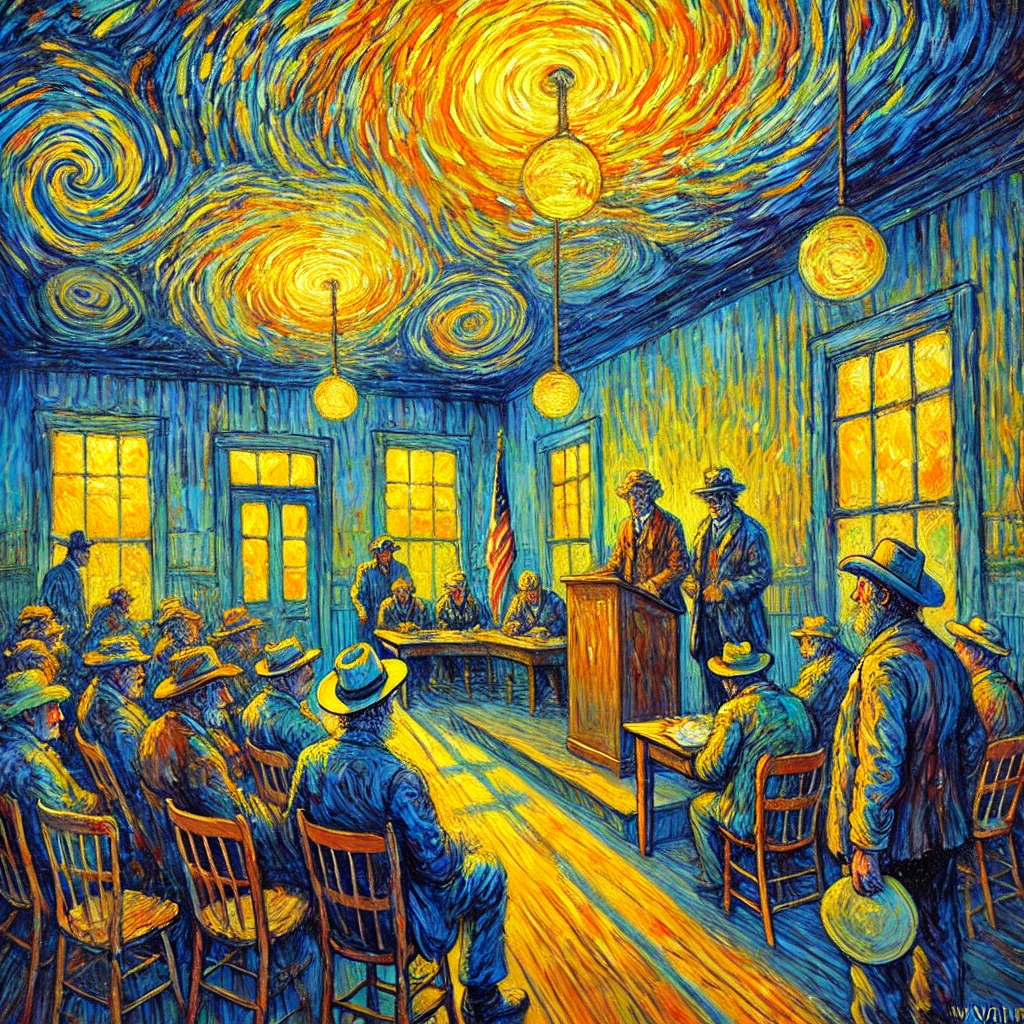
Town Hall Reads Page 47 Out Loud
“Good evening,” he began. “Tonight we’re here to address some confusion regarding Ordinance 12-47-B, subsection three, paragraph C-commonly referred to as Page Forty-Seven.”
There was a ripple in the room. Page Forty-Seven had not been discussed in several years. Some residents had never heard of it. Others remembered hearing about it and then deciding not to pursue the matter further, which is how many local legends begin.
Clovis raised his pen.
The Clerk, Miss Darlene Whitmore, adjusted her glasses. She had brought the binder. It was thicker than anyone remembered.
“It’s just a reading,” Mayor Pickett assured the room. “Line by line. So we’re all clear.”
The phrase “line by line” hovered like a ceiling fan blade.
Miss Darlene opened the binder. The pages made the soft, authoritative sigh of official paper.
She began.
Act I: The Language Returns
“Ordinance 12-47-B, subsection three, paragraph C,” she read. “Any structure, installation, display, gathering, or activity conducted within municipal limits that-”
A cough erupted in the back.
“-that materially interferes with, obstructs, imitates, resembles, or could reasonably be interpreted as replacing a sanctioned municipal function-”
Boot leaned forward.
“-shall be considered prohibited unless otherwise expressly permitted by the Commission under extraordinary circumstances.”
The word arrived with more weight than the others.
Prohibited.
It landed like a dropped skillet.
Mabel’s purse tightened.
Clovis underlined it twice.
Sheriff Peeler shifted his weight.
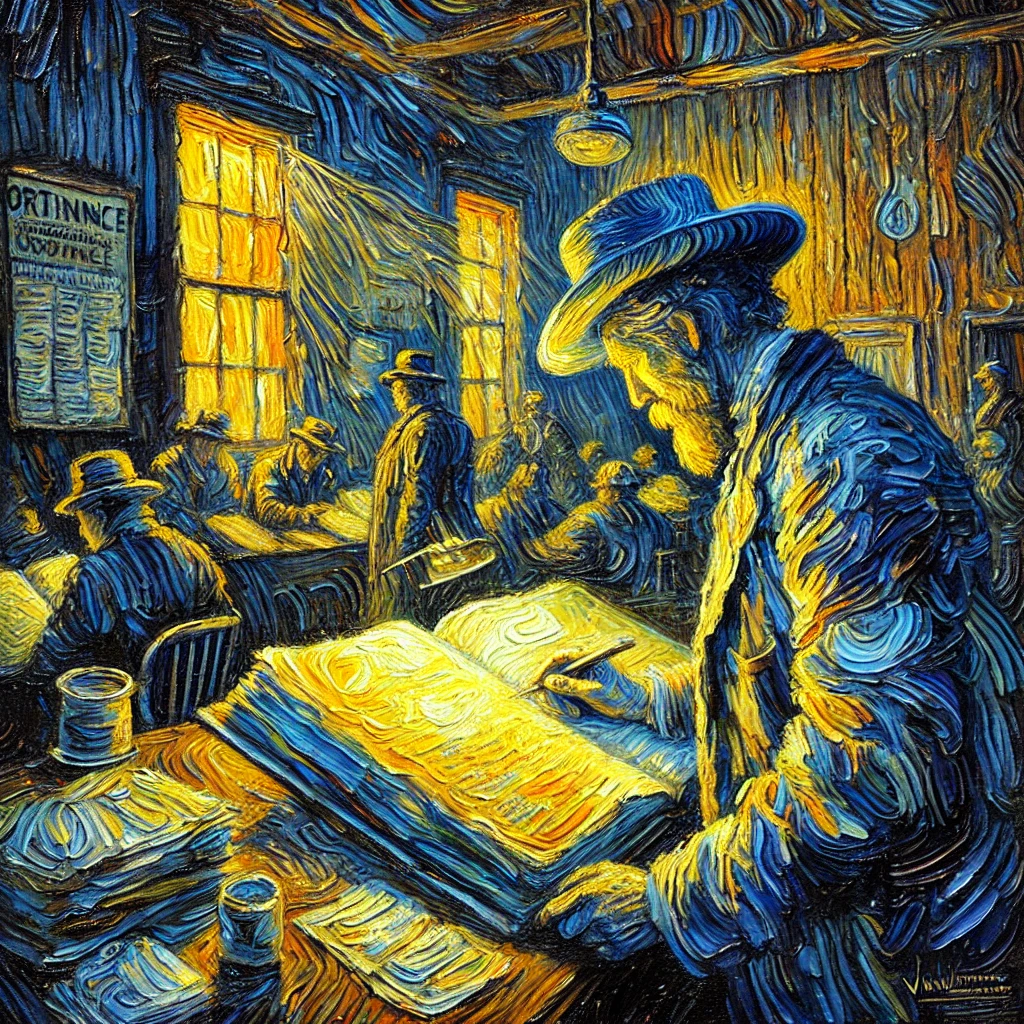
ACT I – The Language Returns
Mayor Pickett cleared his throat. “Just to be clear, this ordinance was originally passed in 1987 during-”
“We don’t need the history,” Boot interrupted gently. “We need the meaning.”
The room murmured approval. Meaning was preferred to history. History had a way of implicating people who were still alive.
Miss Darlene continued.
“Examples of prohibited activities include but are not limited to: unauthorized public festivals, unsanctioned parades, temporary installations simulating municipal signage, independent emergency signaling systems-”
Clovis’s pen paused.
“-and the operation of private committees purporting to represent the town’s official position.”
There it was.
A draft of recognition moved through the chairs.
The “Sky Defense Committee.”
The “Ad Hoc Committee on Public Morale.”
The “Temporary Subcommittee on Roundabout Aesthetics.”
Boot’s jaw flexed.
“That’s vague,” someone muttered.
“It’s specific,” someone else countered.
The difference between vague and specific in Sequatchie Crossing often depended on who was currently being described.

ACT I – The Language Returns
Act II: Interpretations Begin
Miss Darlene continued reading.
“Any resident who erects, installs, circulates, or convenes an activity in violation of this paragraph shall be subject to civil penalties not exceeding five hundred dollars per occurrence and may be required to remove said installation or dissolve said gathering at their own expense.”
“Per occurrence?” Mabel whispered.
“Define occurrence,” Boot said aloud.
Mayor Pickett rubbed his temples. “Let’s allow the Clerk to finish.”
Clovis raised a finger. “Clarification request. Does an ‘occurrence’ refer to each meeting of an unsanctioned committee, or does it refer to the existence of the committee itself?”
Miss Darlene consulted the footnotes.
“It appears,” she said slowly, “that an occurrence may be interpreted as any instance in which the prohibited activity is observable by more than three residents.”
The air shifted.
Observable.
Boot glanced at Clovis.
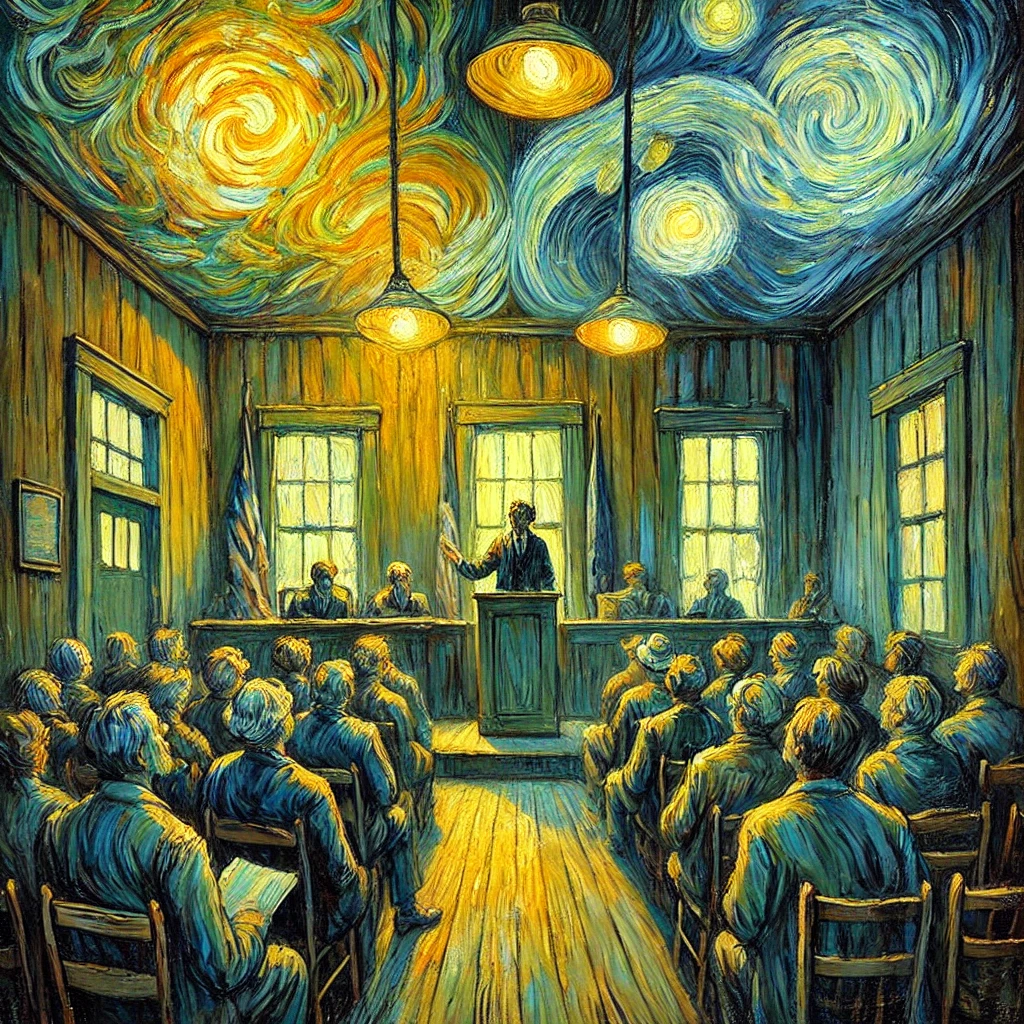
ACT II – Interpretations Begin
Clovis glanced at Sheriff Peeler.
Sheriff Peeler glanced at the exit.
Observable by more than three residents.
“Define residents,” Boot said.
A ripple of nervous laughter broke out, then retreated.
Mayor Pickett held up a hand. “Let’s stay focused.”
But the focus had already begun to fracture into personal inventories.
Who had erected signage?
Who had convened gatherings?
Who had imitated municipal function?
Mabel thought about the Ring camera incident and briefly wondered whether ghosts counted as residents.
The Reverend Gentry closed his eyes for a moment. The room had acquired a tone.
Miss Darlene turned the page.
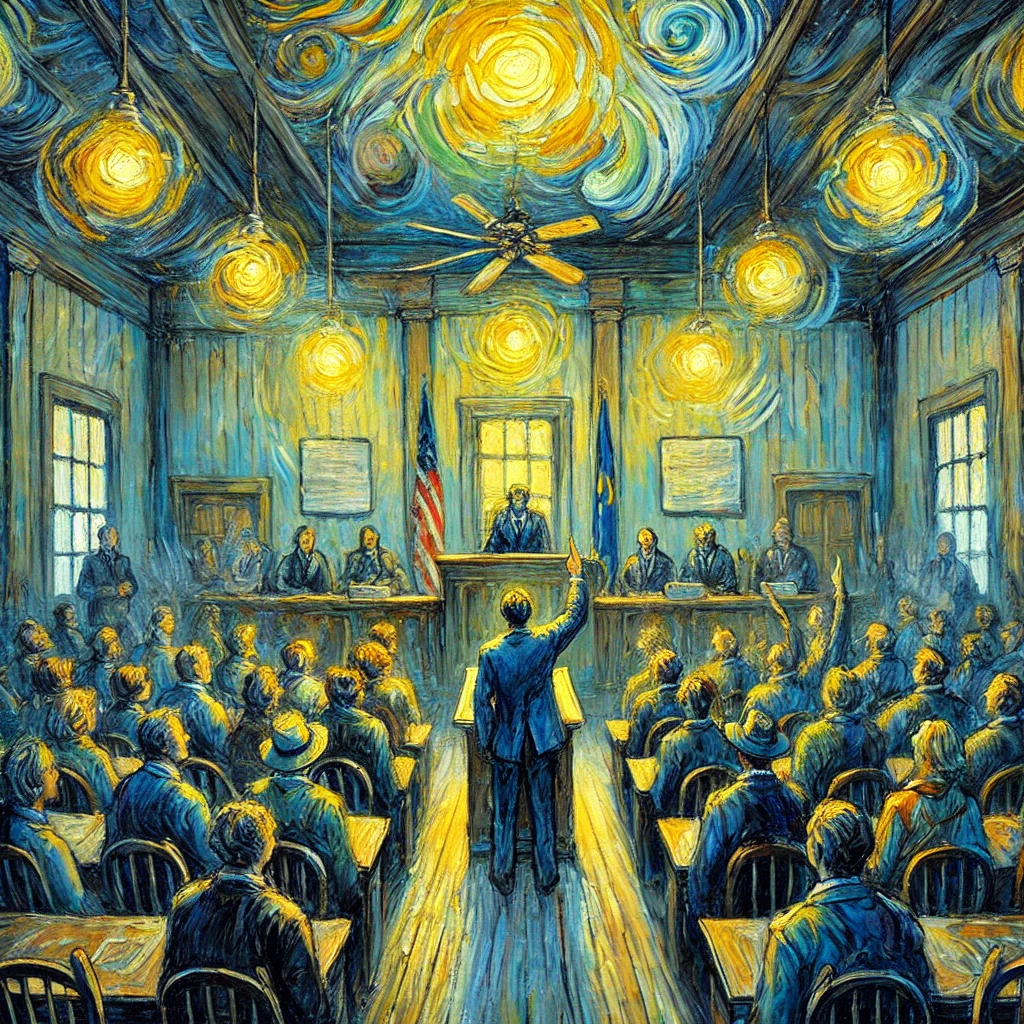
ACT II – Interpretations Begin
Act III: The Examples Grow Specific
“Prohibited installations include, but are not limited to,” she read, “temporary informational kiosks resembling official municipal directories.”
Boot blinked.
Clovis stopped writing.
The Dunlap Directory.
The air grew attentive.
“Temporary?” Boot asked. “Define temporary.”
“It’s been five months,” Clovis said helpfully. “Which is temporary in geological terms.”
Mayor Pickett’s voice thinned. “The ordinance predates the directory.”
“Language doesn’t expire,” Clovis replied.
Miss Darlene continued.

ACT III – The Examples Grow Specific
“Prohibited displays further include signage, digital or otherwise, that may cause confusion regarding the town’s official communication channels.”
Mabel exhaled.
“Are we talking about Facebook groups?” someone whispered.
“Or the Overlook?” someone else murmured.
Sheriff Peeler shifted again.
The word prohibited echoed now, not as a law but as a possibility.
Boot stood.
“Are we to understand,” he said carefully, “that community initiatives which supplement municipal communication-”
“Imitate,” Clovis corrected softly.
“-which supplement municipal communication,” Boot continued, “are at risk?”
Mayor Pickett looked at Miss Darlene.
Miss Darlene looked at Page Forty-Seven.
“It depends on whether they could reasonably be interpreted as replacing a sanctioned municipal function.”
“Reasonably by whom?” Boot asked.
Silence pooled.
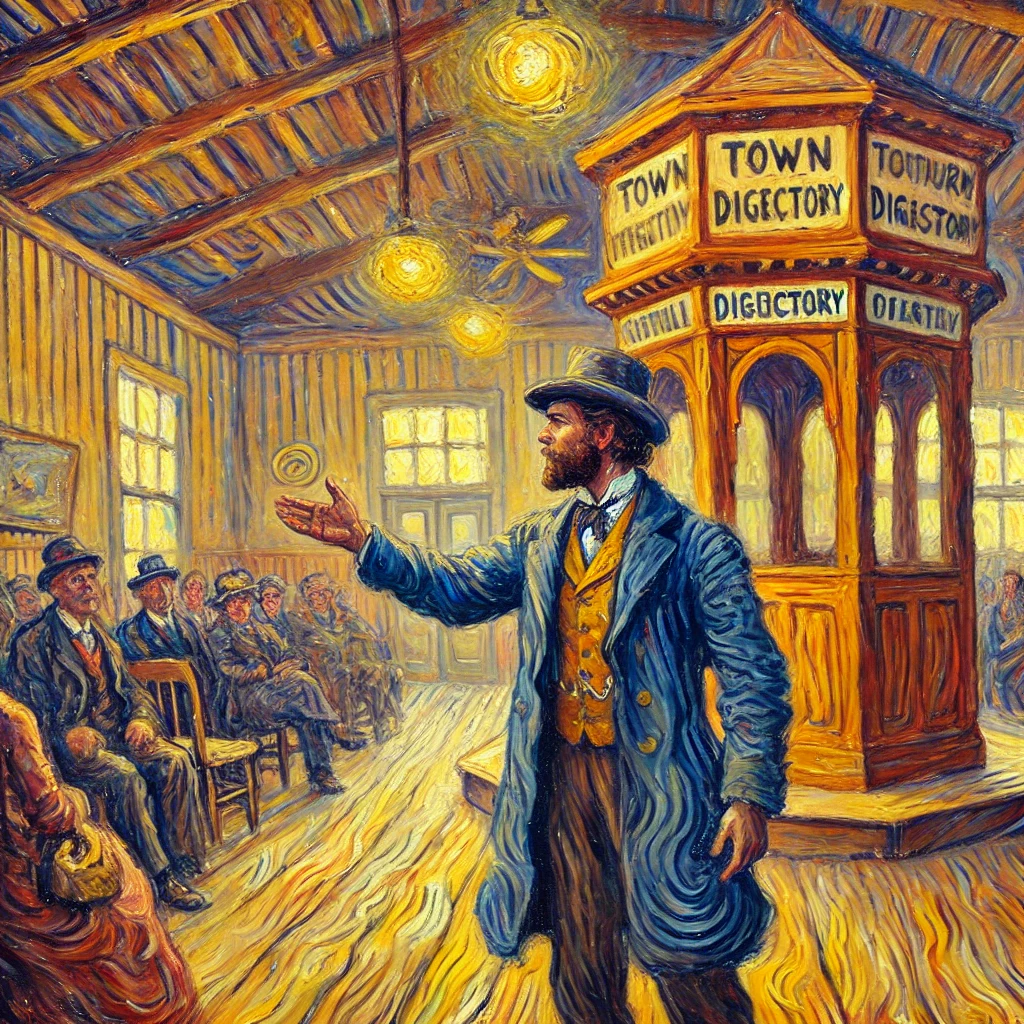
ACT III – The Examples Grow Specific
Act IV: The Room Divides
By the time Miss Darlene reached line twenty-three, the room had become a geography of concern.
On the left side sat the Improvers-residents who believed civic enthusiasm should be encouraged, even if occasionally misdirected.
On the right side sat the Protectors-residents who believed civic enthusiasm required supervision, ideally written in triplicate.
The center seats, occupied by the Tired, watched both sides and hoped for adjournment.
“Prohibited,” Miss Darlene read again, this time with the slow caution of someone handling glass.
“Could reasonably be interpreted.”
“Civil penalties.”
The words were no longer theoretical. They had faces now.
Boot’s Sky Defense Committee.
Clovis’s unofficial meeting transcripts.
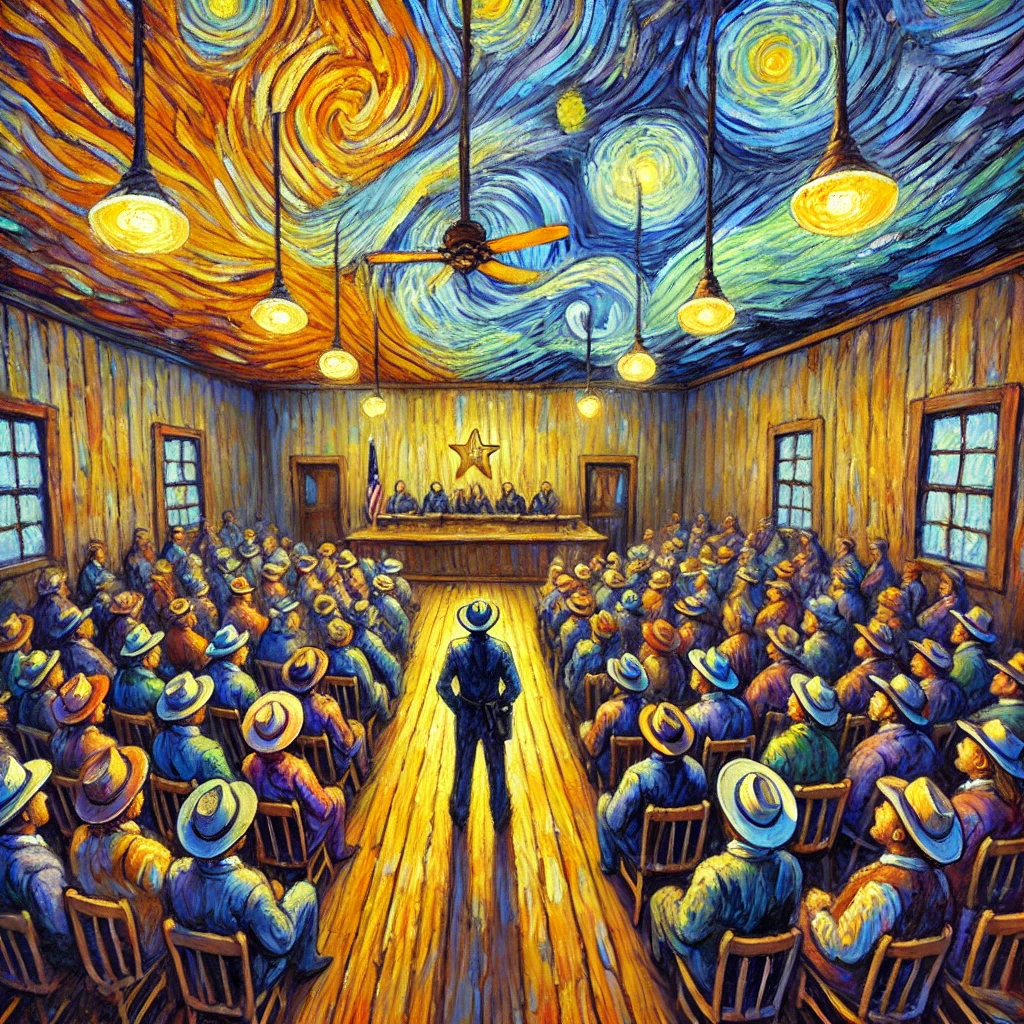
ACT IV – The Room Divides
Mabel’s Blessing Box expansion proposal.
The Reverend’s youth outreach flyer that had accidentally resembled a municipal notice.
Sheriff Peeler stepped forward.
“Let’s remember,” he said, “that enforcement requires discretion.”
Discretion.
The word softened the edges slightly.
Clovis wrote it down and circled it.
Mayor Pickett exhaled. “This ordinance was written during a time when three separate residents attempted to establish independent trash collection systems.”
A murmur of faint recollection.
“We’re not trying to stifle initiative,” the Mayor continued. “We’re trying to prevent duplication of official function.”
Boot tilted his head. “What if official function isn’t functioning?”
There it was.
The question hung like a bell.
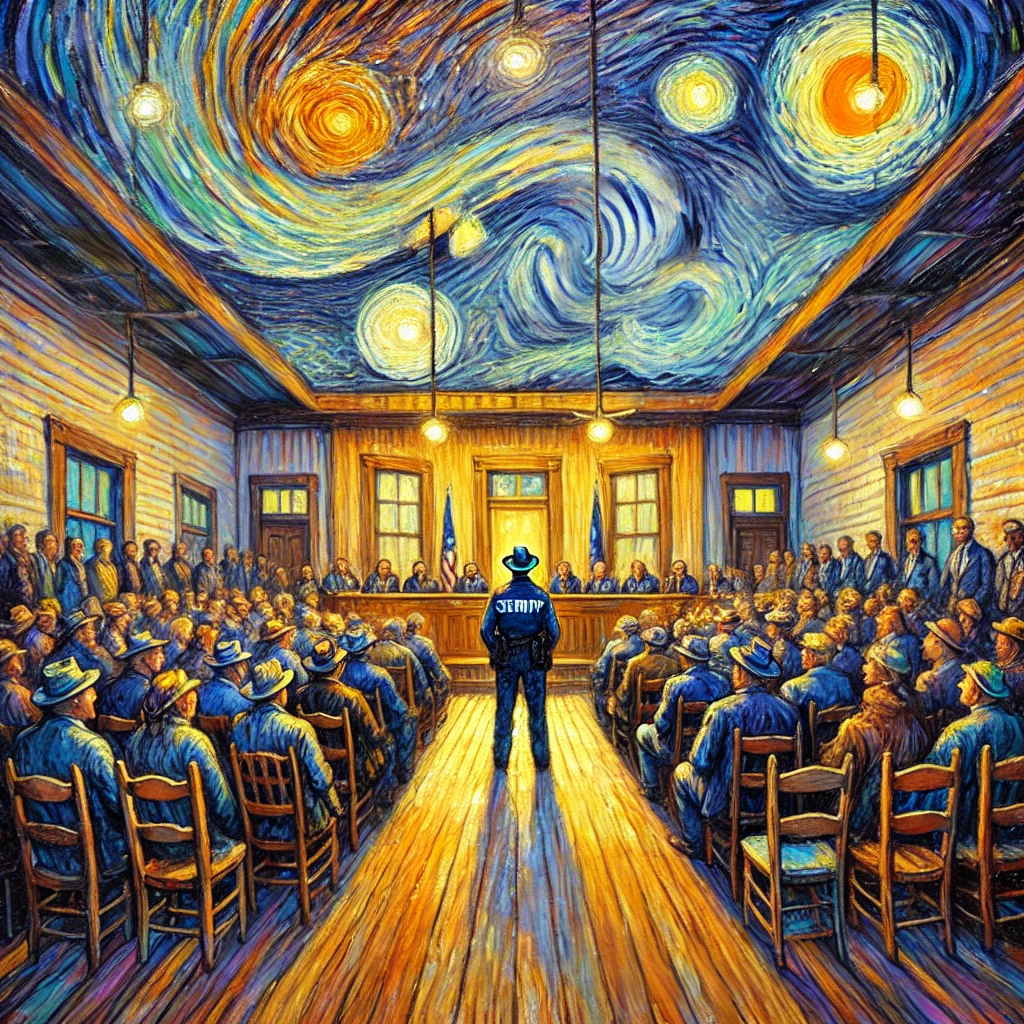
ACT IV – The Room Divides
Act V: The Meaning Shifts
The reading resumed.
“Nothing in this paragraph shall be construed to prohibit volunteer efforts that operate in coordination with municipal oversight.”
Coordination.
Oversight.
The room leaned in.
Clovis raised his hand. “Define coordination.”
Miss Darlene turned to the appendix.
“Coordination shall mean prior notification submitted in writing and acknowledged by the Commission.”
Boot laughed softly. “So if I notify you that I plan to defend the sky-”
“Boot,” Sheriff Peeler said gently.
“-and you acknowledge receipt-”
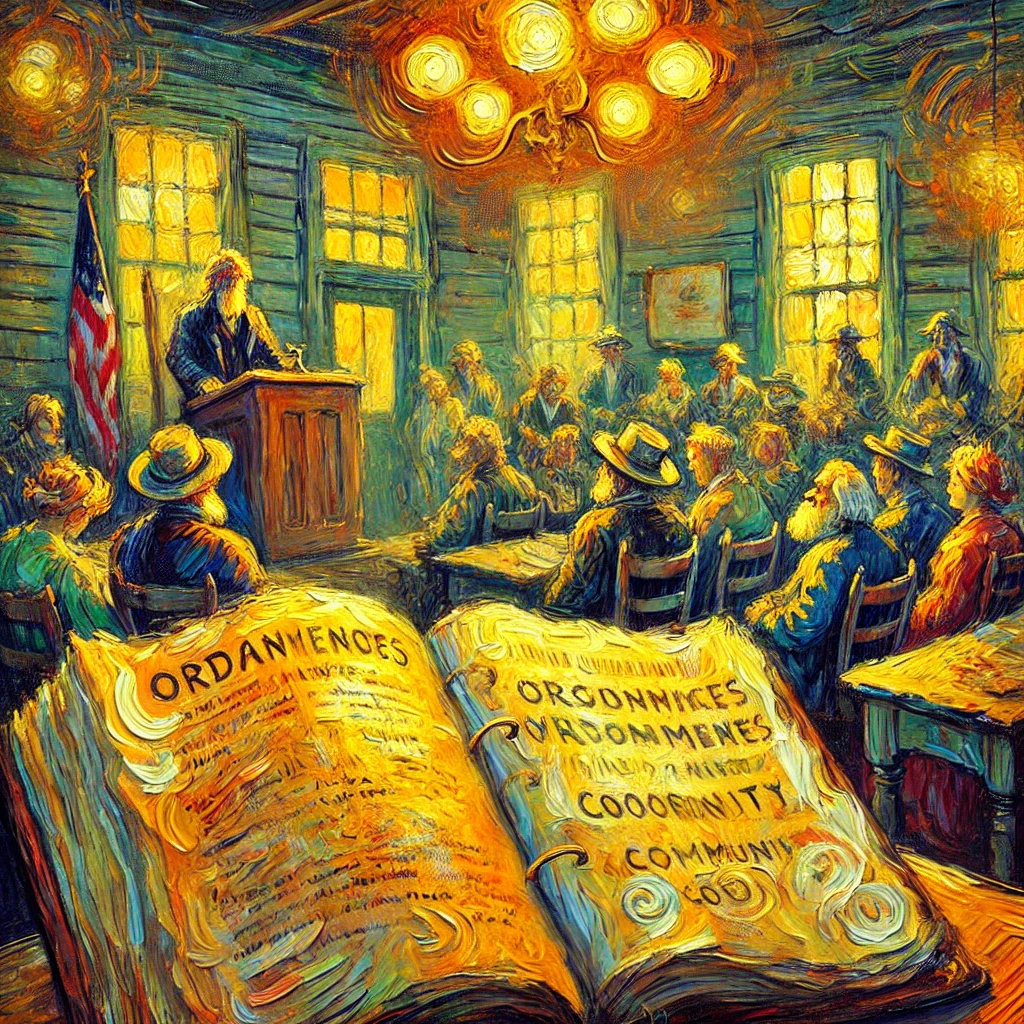
ACT V – The Meaning Shifts
“Boot.”
“-then it’s permitted?”
Mayor Pickett swallowed. “In theory.”
The Improvers brightened.
The Protectors narrowed their eyes.
Mabel whispered, “Could we coordinate the bake sale?”
“Depends,” Clovis murmured. “Is the bake sale replacing a sanctioned municipal function?”
“Is there a municipal muffin?” Mabel asked.
No one answered.
The room, once tense, now felt porous. People were no longer defending positions; they were testing interpretations.
The word prohibited was losing some of its edge, replaced by a more delicate inquiry:
What are we afraid of?
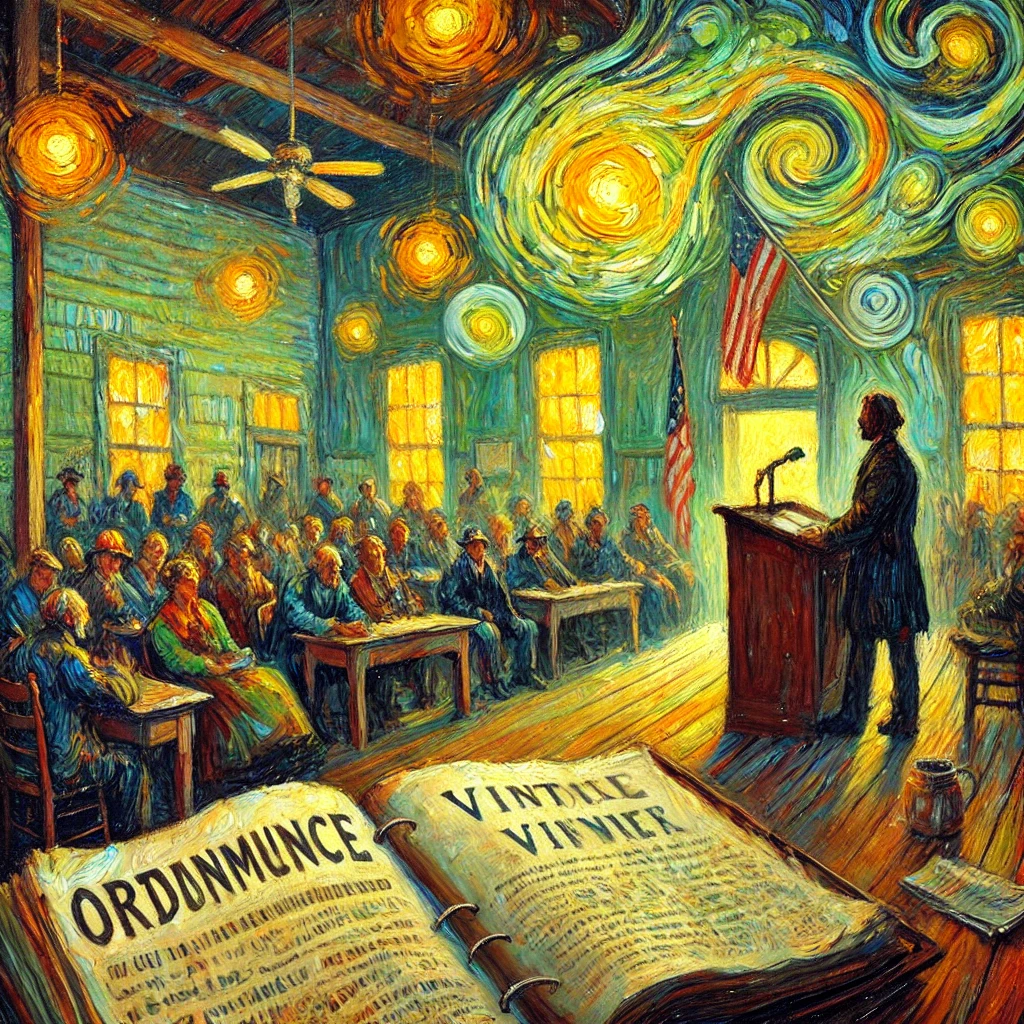
ACT V – The Meaning Shifts
Act VI: Page Forty-Seven in Full
Miss Darlene reached the final lines.
“This ordinance is intended to preserve clarity of governance, prevent confusion among residents, and maintain a single, accountable municipal voice.”
Accountable.
The word settled differently.
Boot sat down.
Clovis stopped writing.
The Reverend Gentry opened his eyes.
Sheriff Peeler let his arms fall to his sides.
Mayor Pickett looked at the room, not as an assembly but as a collection of neighbors.
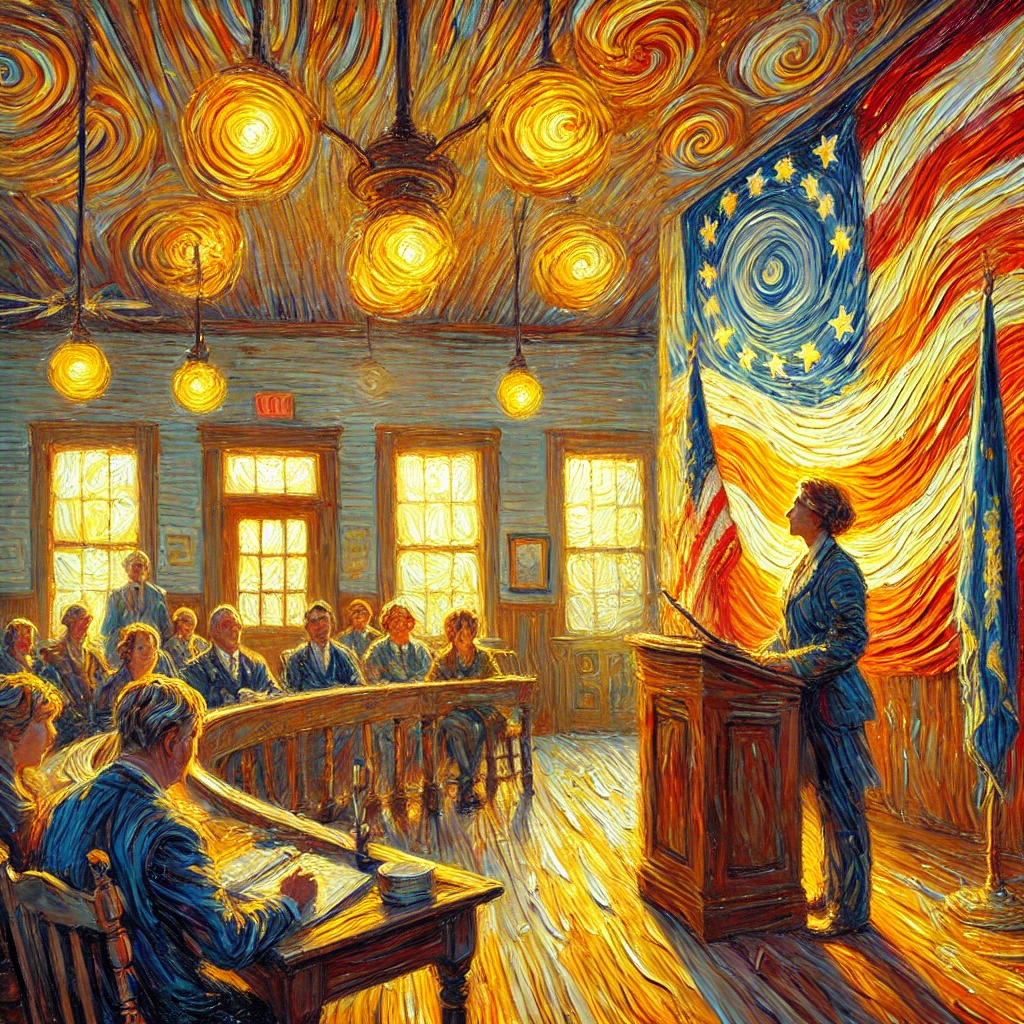
ACT VI – Page Forty-Seven in Full
“Perhaps,” he said slowly, “we have been less concerned with duplication than with uncertainty.”
The Protectors shifted.
The Improvers leaned back.
Clovis closed his notebook.
“Is the ordinance clear?” he asked.
Miss Darlene closed the binder.
“It is written,” she said.
“And is it fair?” Mabel asked quietly.
Silence again-but this time not defensive.
Reflective.
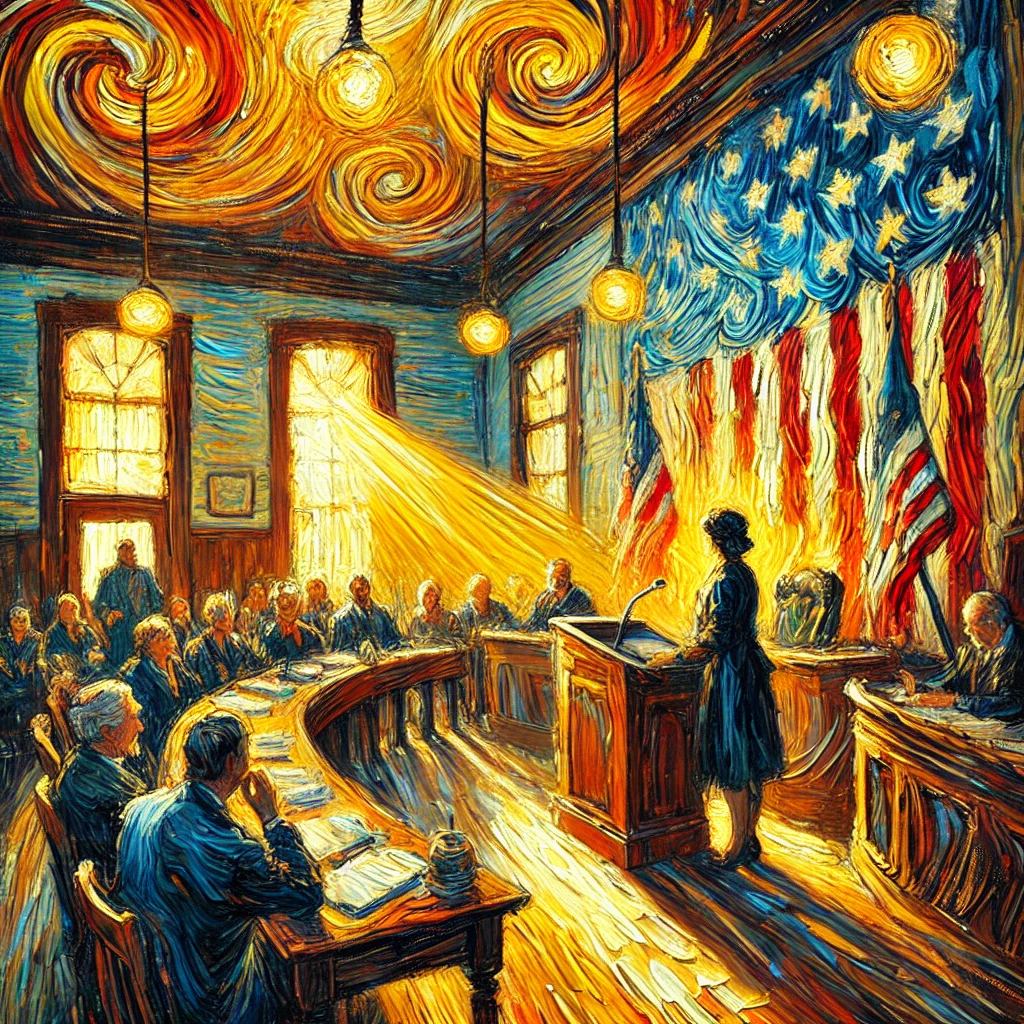
ACT VI – Page Forty-Seven in Full
Act VII: The Room Changes
It happened gradually.
The chairs did not move. The lights did not dim. But something in the room recalibrated.
Boot stood again, but without his earlier sharpness.
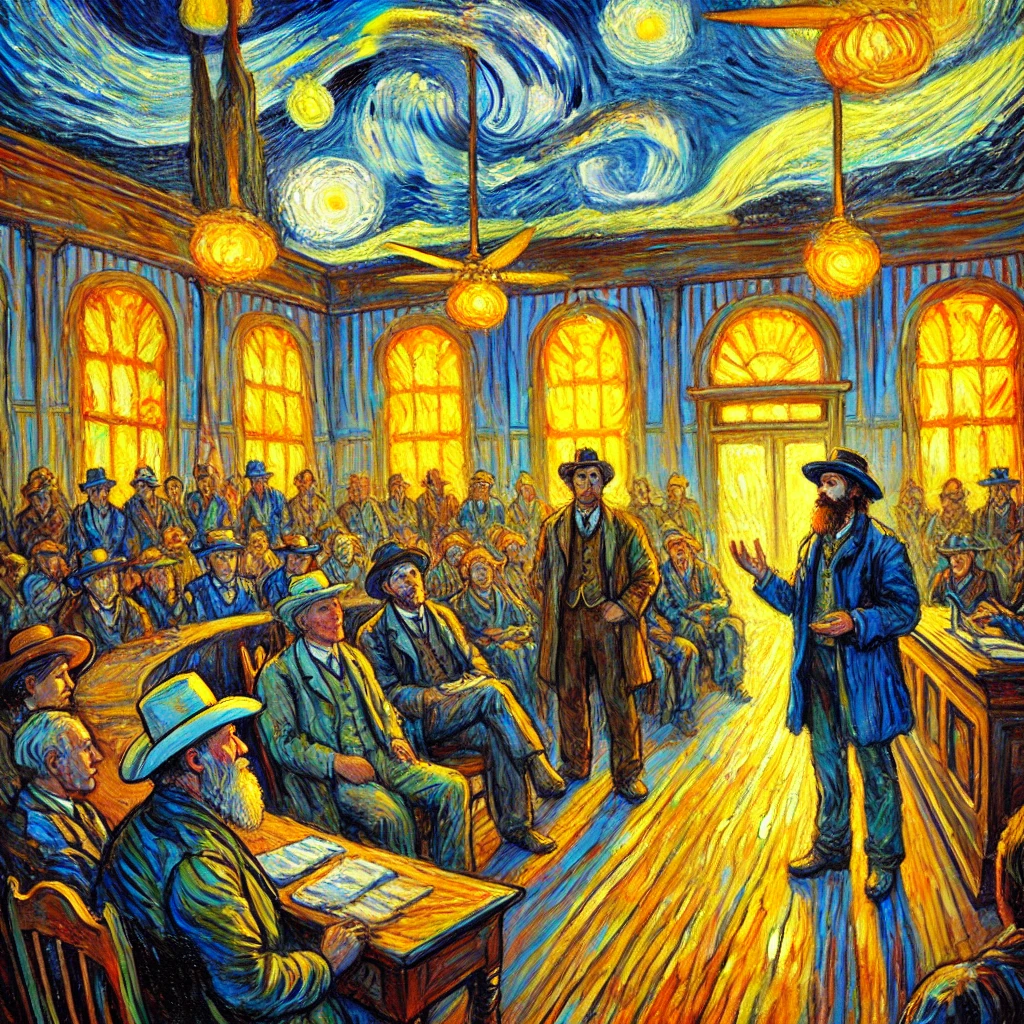
“If the concern is confusion,” he said, “then perhaps the solution is communication, not prohibition.”
Clovis nodded once.
Sheriff Peeler spoke. “Enforcement has always been the last resort.”
Mayor Pickett looked at Miss Darlene.
Miss Darlene, who had read every line without commentary, adjusted her glasses.
“We can amend language,” she said. “Clarify definitions. Invite coordination rather than require it.”
The Protectors glanced at one another.
The Improvers exchanged cautious hope.
Mabel raised her hand.
ACT VII – The Room Changes
“Yes?” the Mayor said.
“Could we read it again?” she asked.
A few people laughed softly.
But Miss Darlene reopened the binder.
And they did.
Line by line.
The second reading sounded different.
Prohibited did not land like a skillet.
It sounded like a boundary marker.
Observable did not sound like surveillance.
It sounded like accountability.
Coordination did not sound like control.
It sounded like conversation.
By the end of the second reading, the room no longer felt divided.
It felt responsible.
ACT VII – The Room Changes
Act VIII: Motion to Amend
Clovis stood.
“I move,” he said carefully, “that we form a committee-”
Groans erupted.
“-a sanctioned committee,” he clarified, “to propose amendments clarifying definitions and inviting volunteer coordination.”
Boot grinned despite himself.
Mayor Pickett looked at Sheriff Peeler.
Sheriff Peeler shrugged. “If it’s coordinated.”

ACT VIII – Motion to Amend
Miss Darlene wrote down the motion.
Mabel whispered, “Do we notify ourselves?”
The Reverend smiled faintly.
The vote was not unanimous, but it was close.
The Protectors voted yes, provided language remained precise.
The Improvers voted yes, provided language remained welcoming.
The Tired voted yes, because it promised eventual resolution.
The motion passed.

ACT VIII – Motion to Amend
Act IX: After the Reading
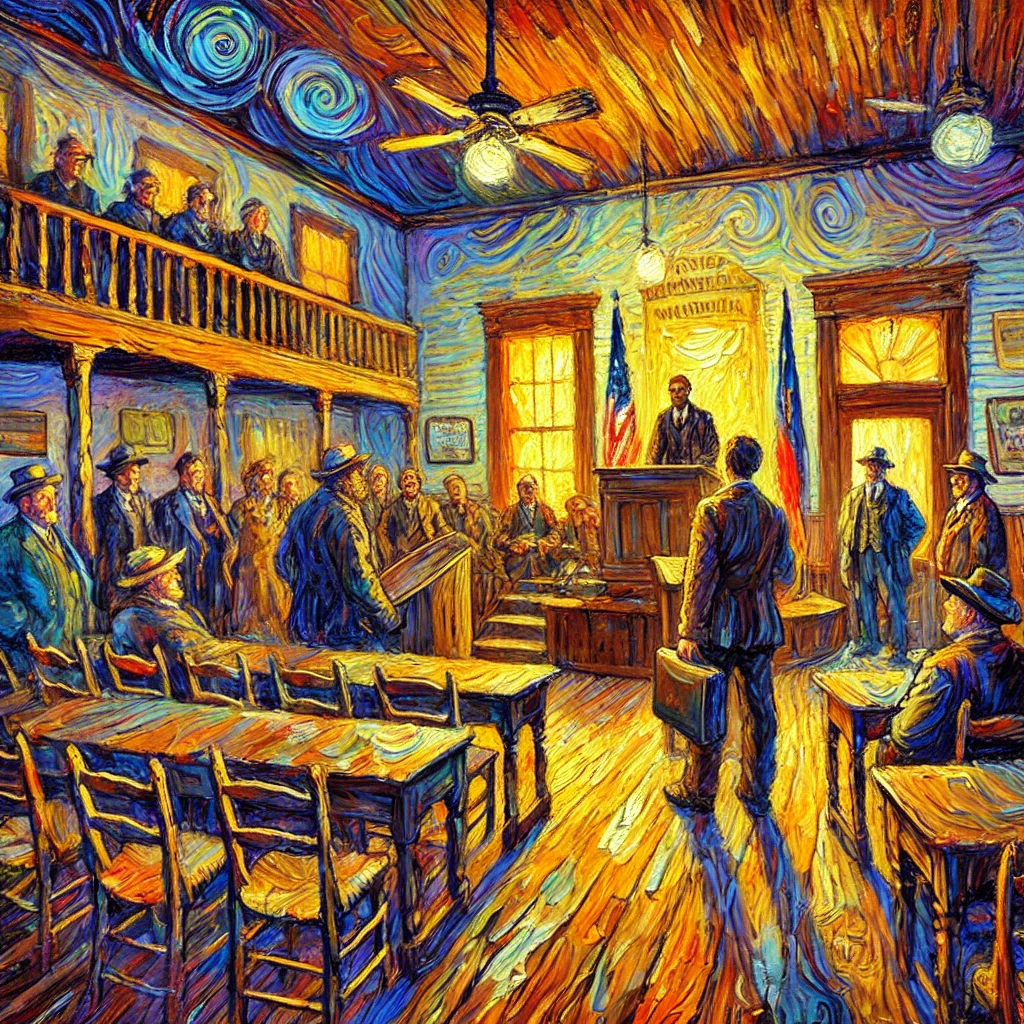
As chairs folded and conversations resumed, Page Forty-Seven lay closed but no longer forgotten.
Boot approached Mayor Pickett.
“I don’t want to replace the town,” he said.
“I know,” the Mayor replied.
Clovis approached Miss Darlene.
“I’ll submit written clarification requests,” he said.
“I expect nothing less,” she replied.
Mabel approached the Reverend.
“Is a bake sale an imitation of governance?” she asked.
“Only if it establishes foreign policy,” he answered.
Sheriff Peeler lingered near the door, watching the room empty not with tension but with something like relief.
Outside, the air was cool. The courthouse clock ticked with impartial rhythm.
ACT IX – After the Reading
Epilogue: The Word That Changed
In the weeks that followed, Page Forty-Seven did not disappear.
It evolved.
Definitions were added.
Language softened without losing structure.
Prohibited remained-but it now sat within sentences that invited participation rather than discouraged it.
The Sky Defense Committee filed notification paperwork.

EPILOGUE – The Word That Changed
The Directory submitted a coordination letter.
The bake sale included a small municipal acknowledgment at the bottom of the flyer.
No installations were dismantled.
The room, on that second Tuesday, had not erupted.
It had listened.
And listening, it turned out, was neither prohibited nor extraordinary.
It was simply municipal.

EPILOGUE – The Word That Changed
Disclaimer
Sequatchie Crossing is a fictional town. Any resemblance to real meetings, ordinances, committees, or individuals-living, retired, coordinated, or prohibited-is purely coincidental. No municipal functions were replaced in the telling of this story.

DISCLAIMER IMAGE – Town Hall Reads Page 47 Out Loud
Real Places Behind the Ruckus – From The Dunlap Directory

Real Places Behind the Ruckus – From The Dunlap Directory
Yes, this story was fictional; even the parts that weren’t true. These places? Absolutely real. Stop by, support local, and keep the Wi-Fi away from livestock:
- Elder’s Ace Hardware-Dunlap
- Dunlap TENNESSEE For Free/Giveaway
- Athena Bitcoin ATM
- StorageSmith
- Affordable Storage Guys – North Dunlap
- Cagle Mountain Restaurant
- On The Go Mobile Mechanic Service
- Land’s Properties
- Long Restoration
- Sequachee Valley Electric Cooperative
- Sequatchie County Rescue Squad
- Sequatchie Valley Bouncers
- Cagle Mountain Trading Post
- Stone For You LLC
- George Hamilton Real Estate & Management Co.
- Mountain Top Diesel Repair

Real Places Behind the Ruckus – From The Dunlap Directory
At Sequatchie Crossing, we tell the stories of Sequatchie Crossing.
Please share this post with your friends, family, or business associates who may want help telling the stories of their legacy.



0 Comments