


By Tom Seest
At Sequatchie Crossing, we tell the stories of Sequatchie Crossing.
🎤 Audio Overview
The Great Possum Relocation Referendum – Wildlife, Yard Signs, and Marsupial Misunderstanding
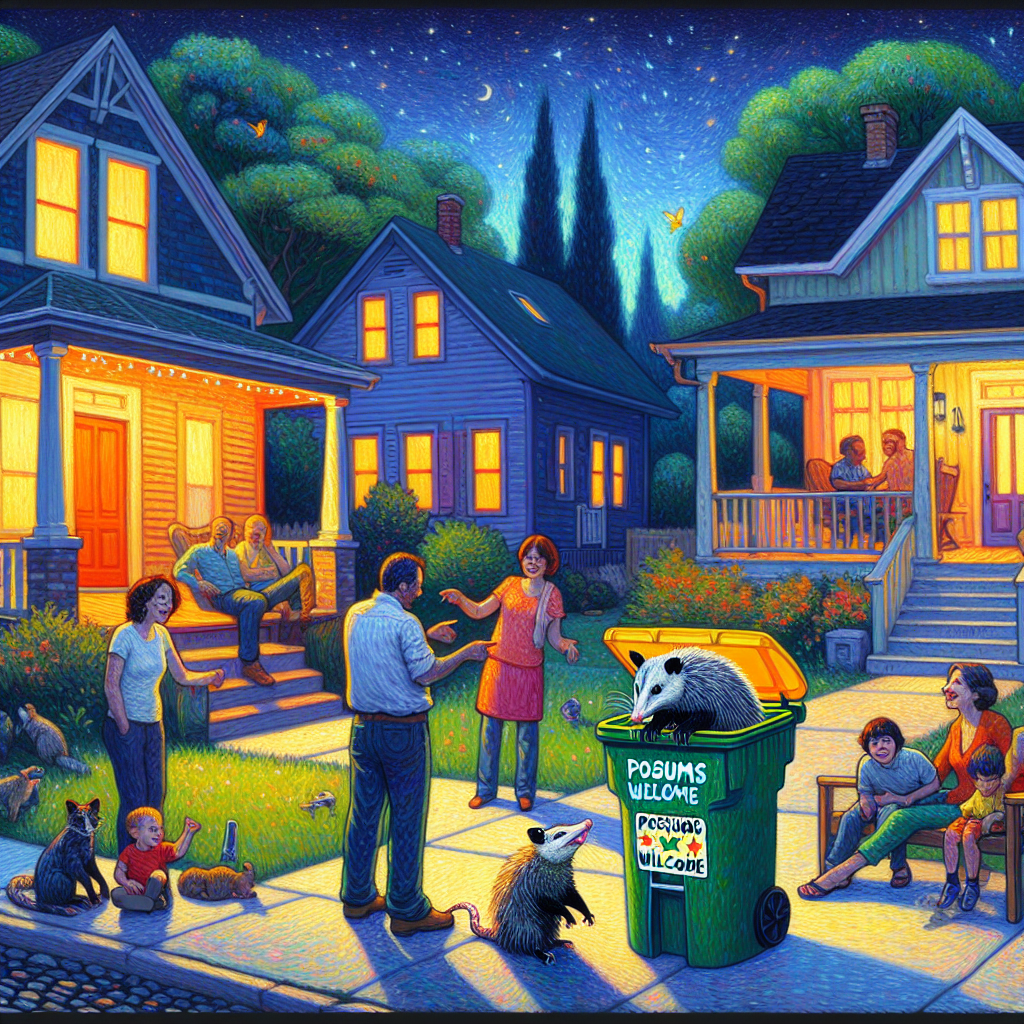
It’s been said that all politics are local—but in Sequatchie Crossing, they’re also furry, nocturnal, and liable to hiss when cornered. I’m speaking, of course, about the recent explosion of debate over what has come to be known around here as The Great Possum Relocation Referendum.
Now, possums have always been part of the Sequatchie landscape. They outnumber church hymnals, live beneath porches rent-free, and occasionally disrupt revival meetings by waddling through the baptismal aisle. But things came to a head when Lurleen Davenport discovered a family of eight nesting in her hydrangeas.
Rather than handle the matter with the traditional broom-and-prayer combo, Lurleen proposed a countywide possum relocation initiative—complete with humane traps, a taxpayer-funded marsupial sanctuary, and a ban on outdoor pet food bowls after 7 p.m.
She called it “Operation Peaceful Pouch.”
Not everyone was on board.
Clovis Strickland immediately filed a motion with the town clerk to investigate whether possums had been domestically weaponized by federal surveillance agencies. He brought charts, a cassette tape, and what may have been a baby monitor glued to a hubcap. “They’ve got prehensile tails and night vision,” he warned. “That’s elite operative behavior.”
Boot Barnes argued that possums were Sequatchie’s “original street cleaners” and warned of historical consequences. “Back in ’58, we tried to cull the groundhog population. Next thing you know, beetles took over the fairgrounds. You want beetles again? I didn’t think so.”
Pastor Arnold Peeler feared theological implications. “The Lord created all beasts with a purpose—even if that purpose is to scare us into repentance.” He later clarified during his Sunday sermon that “God loves the possum, but maybe not enough to give it tax-subsidized relocation.”
The Great Possum Relocation Referendum – Wildlife, Yard Signs, and Marsupial Misunderstanding
Meanwhile, Shelley Wexler claimed to have communicated with the possums through intuitive animal dialogue and insisted they were “open to compromise if we respected their energetic boundaries.” She performed a moonlight listening ceremony in her backyard and reported that the possums were “feeling misrepresented by the local media.”
Brett and Alyssa Crenshaw designed a line of artisanal possum habitats made from recycled yoga mats and ethically harvested moss. They called them “marsupial meditation modules.” One included a cedar-scented yurt and a possum-scale swing. A few were purchased by accident through Facebook Marketplace by someone trying to order a birdbath.
Trixie Jo Bartlett formed her own campaign: “Possums Are People Too.” She held a press conference on the courthouse lawn with a stuffed animal wearing a bow tie and read a poem titled “Pouch Strong.” She is now leading in all third-grade polls and has reportedly formed a lobbying wing called The Littlest PAC.
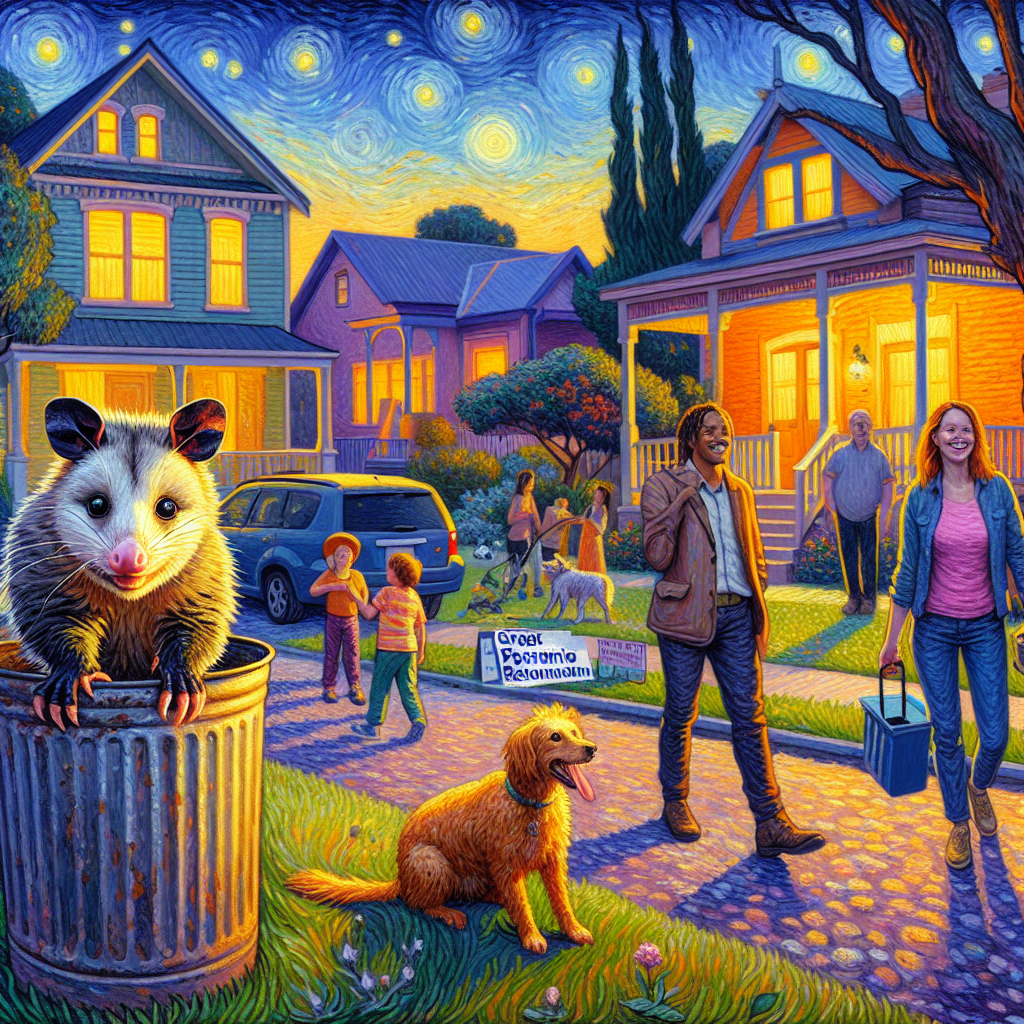
The town’s sidewalks turned to battlegrounds. Posters and yard signs popped up like spring dandelions:
- “No Possums, No Peace”
- “Marsupials Are Not the Enemy”
- “Keep Sequatchie Wild (But Not That Wild)”
- “Don’t Tread on My Trash Night”
Debate reached a fever pitch when Doug “Doughboy” Teeter released a video showing a prototype drone he claimed could airlift possums to “undisclosed wilderness retreats.” The drone, fashioned from leftover parts of a leaf blower and a Christmas angel decoration, managed to carry one possum about four feet before the harness broke. The possum escaped and now lives comfortably behind the AutoZone, where it’s been named “Lieutenant Grits” by the night shift employees.
The Great Possum Relocation Referendum – Wildlife, Yard Signs, and Marsupial Misunderstanding
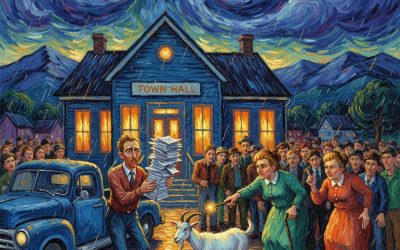
A town hall meeting was called. Chaos ensued.
Mabel Dean Ashcroft brought a binder labeled “Possum Hygiene Incidents – 1994 to Present.” It included eyewitness reports, speculative sketches, and one blurry photo of a possum she claimed “looked directly into her soul.”
Chester Ray ‘Print Shop’ Blevins handed out a pamphlet titled Marsupials: A Town Divided, with fonts so small even Clovis needed readers to see them. He recommended possum identification tags and a registry “just for data purposes.”
Officer Kenny Joe Teeter tried to mediate but mostly stood in the corner with a walkie-talkie he never used, sipping from a “World’s Okayest Cop” mug. “I don’t do rodents,” he was overheard saying. “That’s a spiritual issue.”
The mayor read a poem during closing remarks titled “Ode to the Unwanted Guest”, which was later revealed to have been AI-generated and incorrectly included a verse about platypuses. The audience booed gently but with unity.
In the end, the measure failed by two votes.
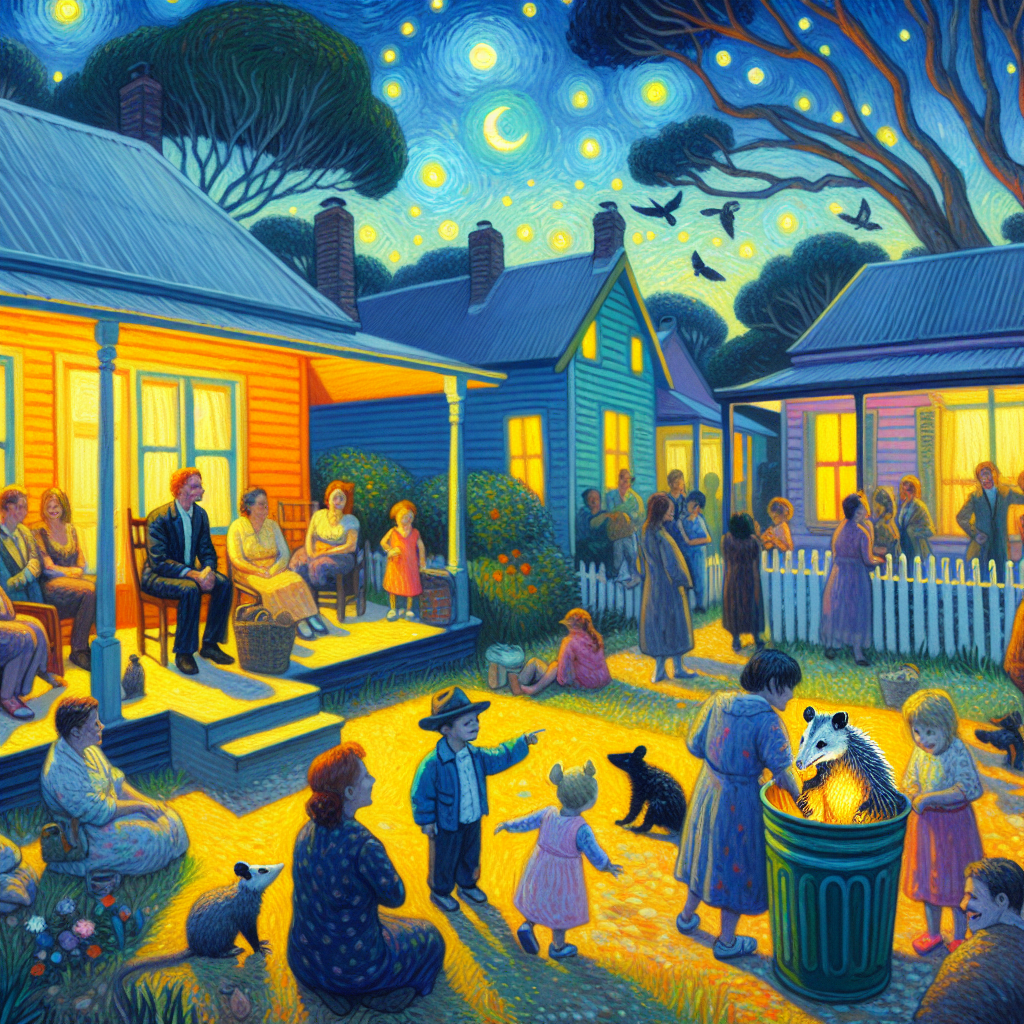
The possums, unfazed, celebrated by knocking over three trash cans and eating half a watermelon behind the VFW.
As for Lurleen, she’s now proposing a motion to make hydrangeas a protected plant under county code. Nobody’s told her possums also like begonias.
Conclusion
At Sequatchie Crossing, we tell the stories of Sequatchie Crossing.
Disclaimer: This story is entirely fictional except for the parts that aren’t true. Any resemblance to real people, living or just stubborn, is purely accidental—but also maybe a little flattering. Sequatchie Crossing exists only in the minds of those brave enough to imagine a town where zoning laws, casseroles, and conspiracy cassettes collide in glorious disarray.

0 Comments