


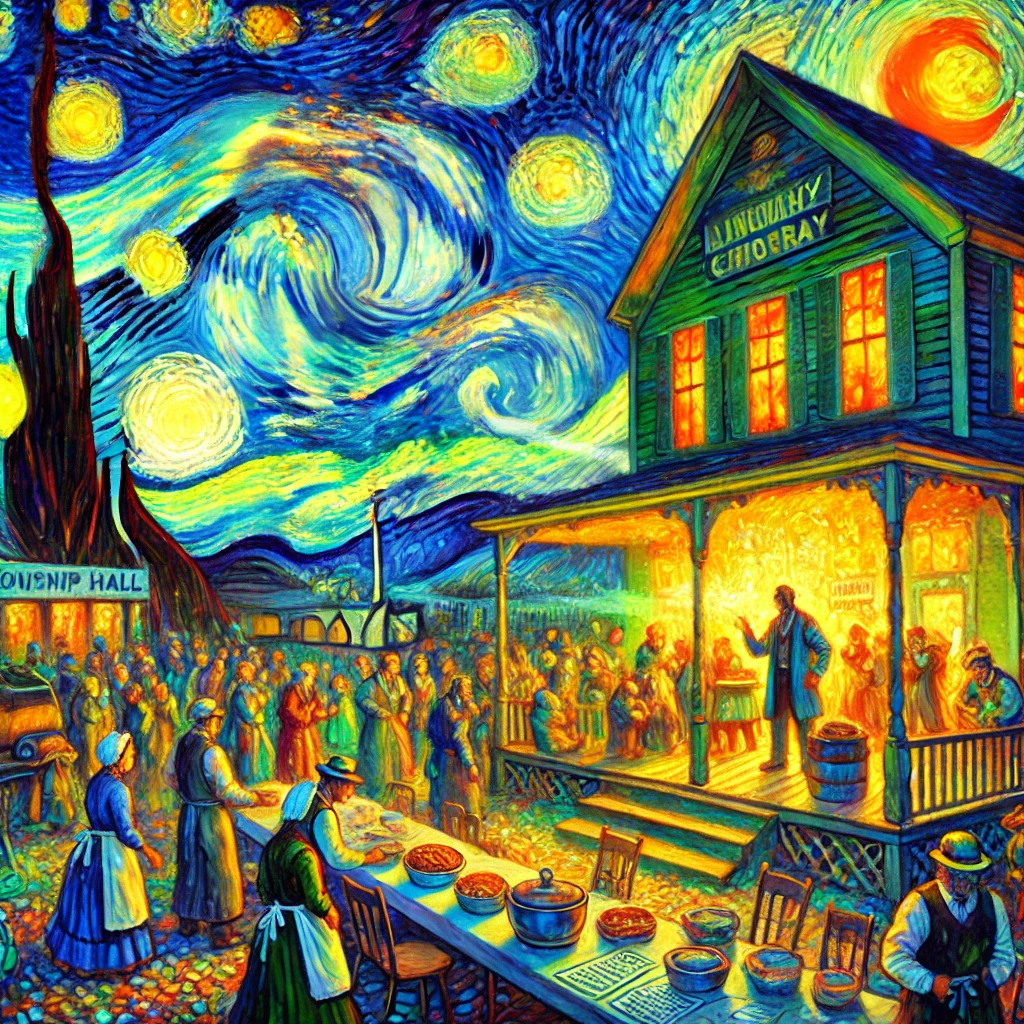
Town Furious They Now Outnumber Humans At Council Meetings
By Tom Seest
At Sequatchie Crossing, we tell the stories of Sequatchie Crossing.
Please share this post with your friends, family, or business associates who may want follow the news from Sequatchie Crossing.
🎤 Audio Overview
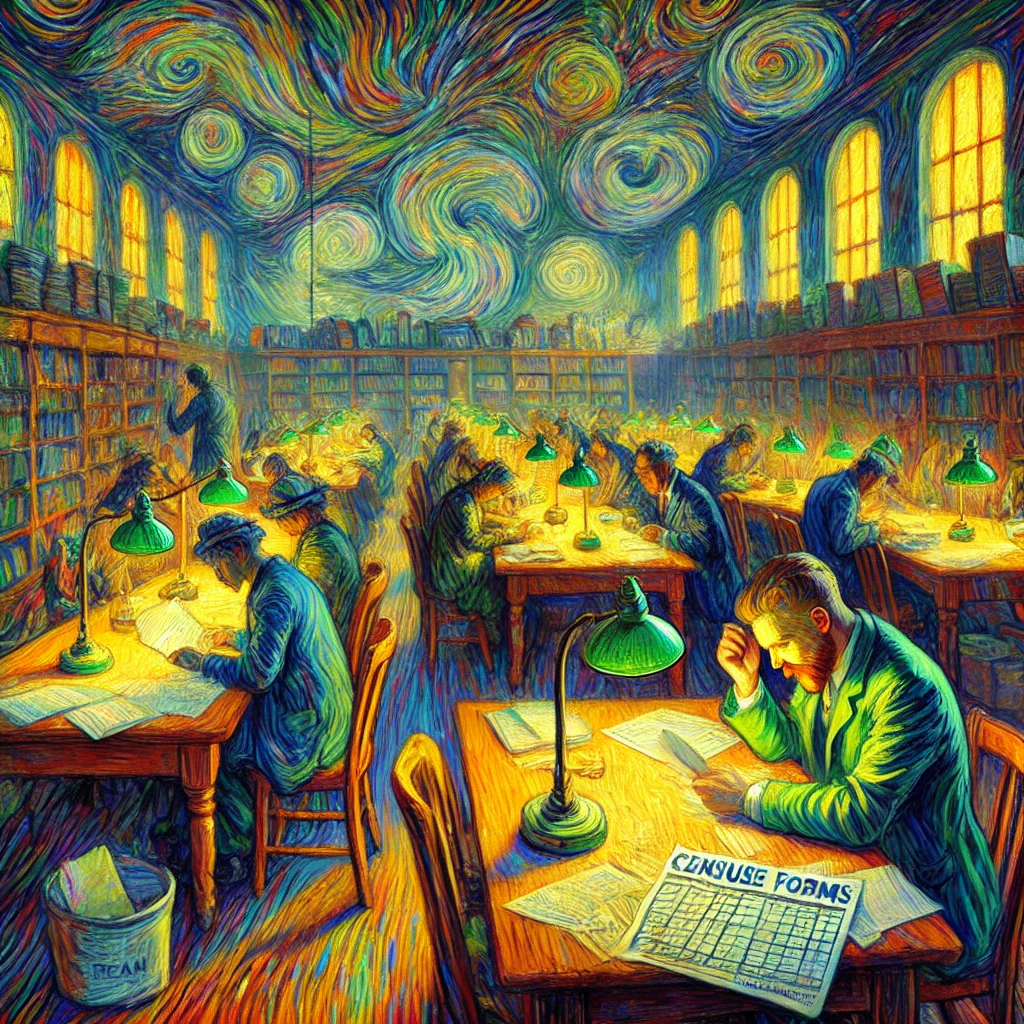
Act I: Counting Heads, Counting Handles
On Monday morning, Sequatchie Crossing woke to the soft thud of census envelopes dropped on porches by a parade of volunteers in yellow safety vests that Mabel Dean Ashcroft had labeled with fabric paint: “Official Counting Persons—No Soliciting.” The sun threw a friendly wash over Main Street; the cat at the laundromat yawned like it had something important to file later; and Sheriff Peeler sipped coffee on the bench under the hardware store awning, already regretting that he’d let the town council cajole him into “light administrative assistance.”
“Light administrative assistance,” he muttered, watching as Boot Barnes stalked past, clutching a fistful of forms like someone had insulted his handwriting. “Around here, that means ‘you’re doin’ the heavy lifting and probably the apologizing.’”
At the library, the Wi-Fi was doing that nervous little hiccup thing Trent the librarian called “packet sneezing.” His new sign—PLEASE WHISPER; THE ROUTER STARTLES—had not helped.
“Morning, Trent,” Mabel Dean said, arriving with a rolling crate of clipboards. “I’ll need the printer for the supplemental schedules, the sub-schedules to the supplemental schedules, and the addendum to the sub-schedules, which I have cleverly titled ‘Schedule Addendum A.’”
Trent blinked at the cart. “How many pages?”
“Only the essentials,” Mabel said. “Thirty-eight.”
The printer groaned in a tone that suggested it had seen worse but wished not to see it again.
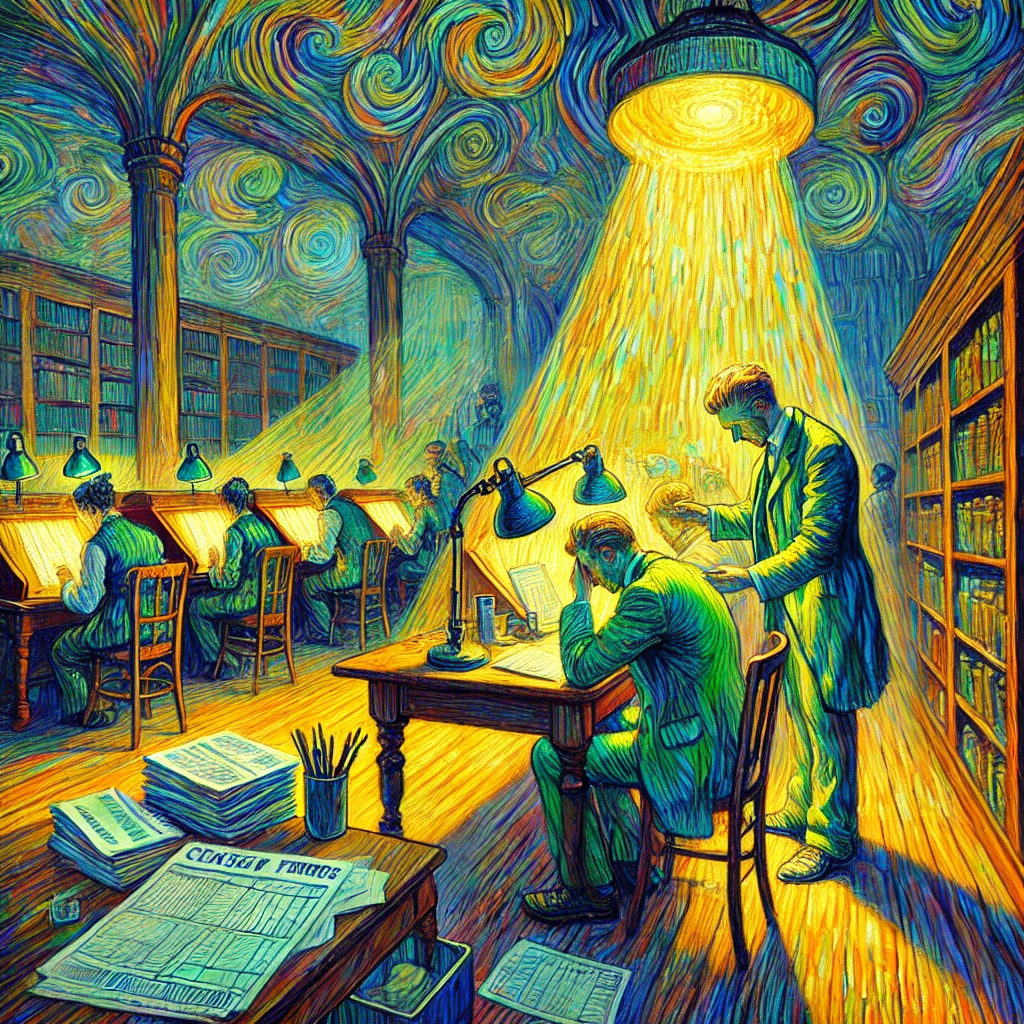
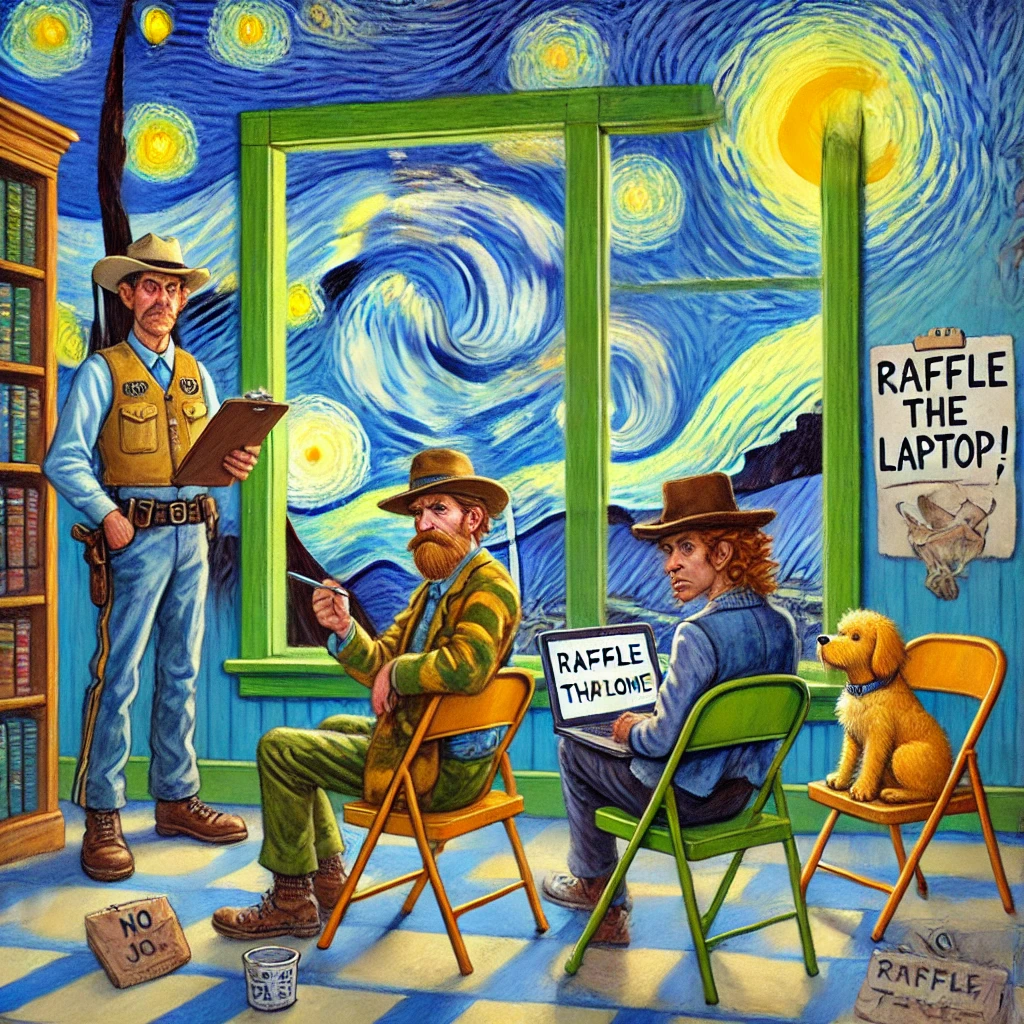
At noon, the first forms came back. By dusk, the library tables were a quilt of paper and pencil smudges. Somewhere in the stacks, Clovis Strickland had set up his laptop—custom aluminum foil dome glittering under the reading lamp—insisting he could “assist throughput” with an import script he’d borrowed from his Sky Defense Committee toolkit.
“It’s not a conspiracy if the throughput needs throughput,” Clovis said, fingers flying. “I’ll run a normalization pass. Nothing untoward. Mostly math. Possibly surveillance-resistant, depending on how you define it.”
“Don’t define it,” Trent said quietly, inspecting the aluminum crown. “Just… keep it under twelve volts.”
At 8:17 p.m., a volunteer named Rachel arrived with a shoebox of forms from the east side. She set it on the circulation desk with the solemnity of laying down a brick in a church.
“More households?” Trent asked.
“Households,” Rachel said, “and some—” She lowered her voice. “Some accounts.”
“Accounts?”
“They filled in ‘Name of Resident’ as ‘@GetYerCoupons,’” she whispered. “And the second line just says ‘password reset.’”
Trent looked at Mabel. Mabel looked at the heavens.
“Perhaps,” she said slowly, “we should clarify what counts as a person.”
Clovis didn’t look up from the screen. “Harder problem than you’d think.”
That night, the import ran. The green progress bar moved like a nervous inchworm. The router hummed; the ceiling fan swirled as if trying to whisk away the anxiety. The script sorted households, cross-referenced utility meters, and pulled a “digital presence” field from the public survey—a harmless tick box Trent had added to understand how many residents needed better internet access.
The harmless tick box was not harmless. The script dutifully interpreted the presence of unique chat handles and email autoresponders as “distinct resident signatures.” It marked each signature as a resident profile. Then it normalized those against mailing addresses. Then it multiplied them by Clovis’s “noise reduction coefficient,” which turned out to be one of those numbers that makes perfect sense until it doesn’t.
By sunrise, the printer had spit out a tidy ledger:
-
Humans: 1,927
-
Bots: 300
-
Goats (unverified): 14
Trent ran a hand through his hair. “Oh.”
Mabel, who had fallen asleep on a pile of clipboards, sat up and squinted. “We can fix it.”
Clovis rotated his foil crown half an inch clockwise. “Or,” he said with the confidence of a man about to set a town on fire with a sentence, “we could see where this goes.”
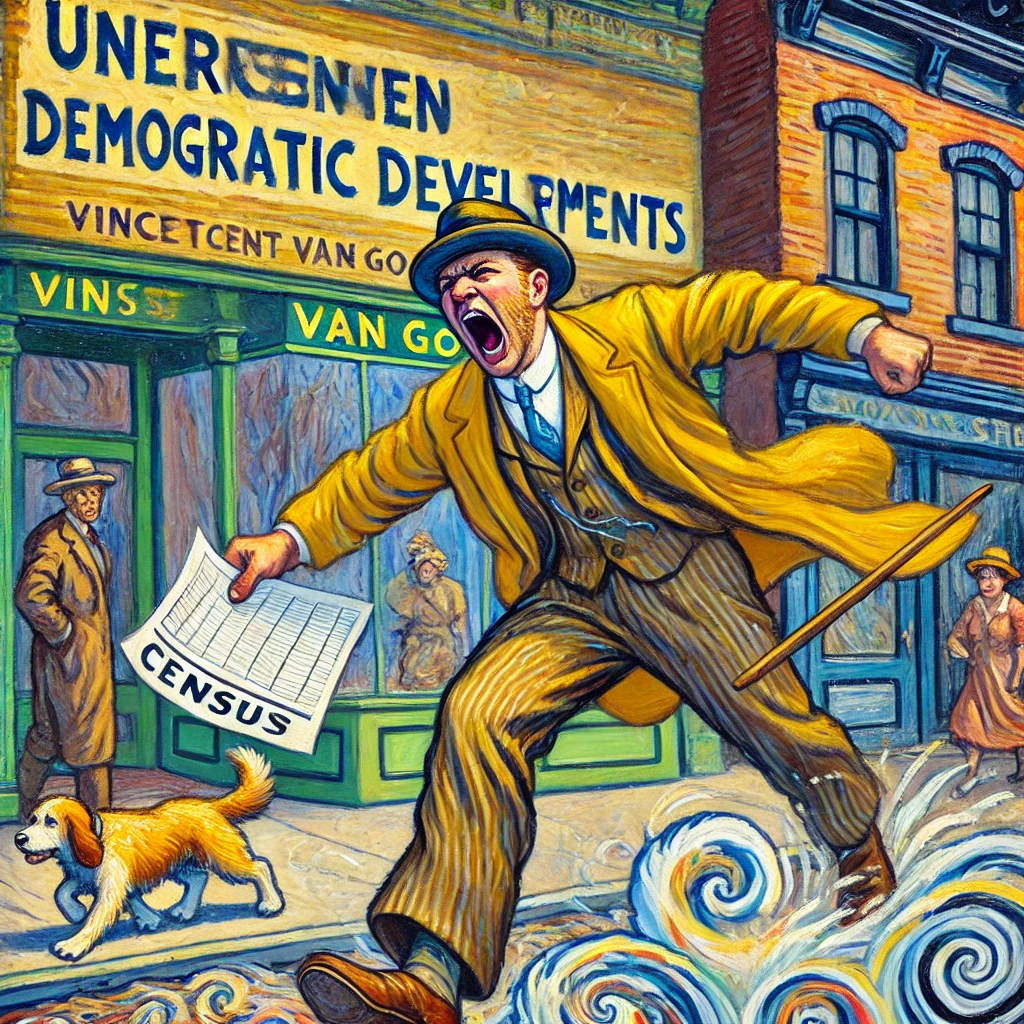
Act II: The Ledger Heard ’Round the Town
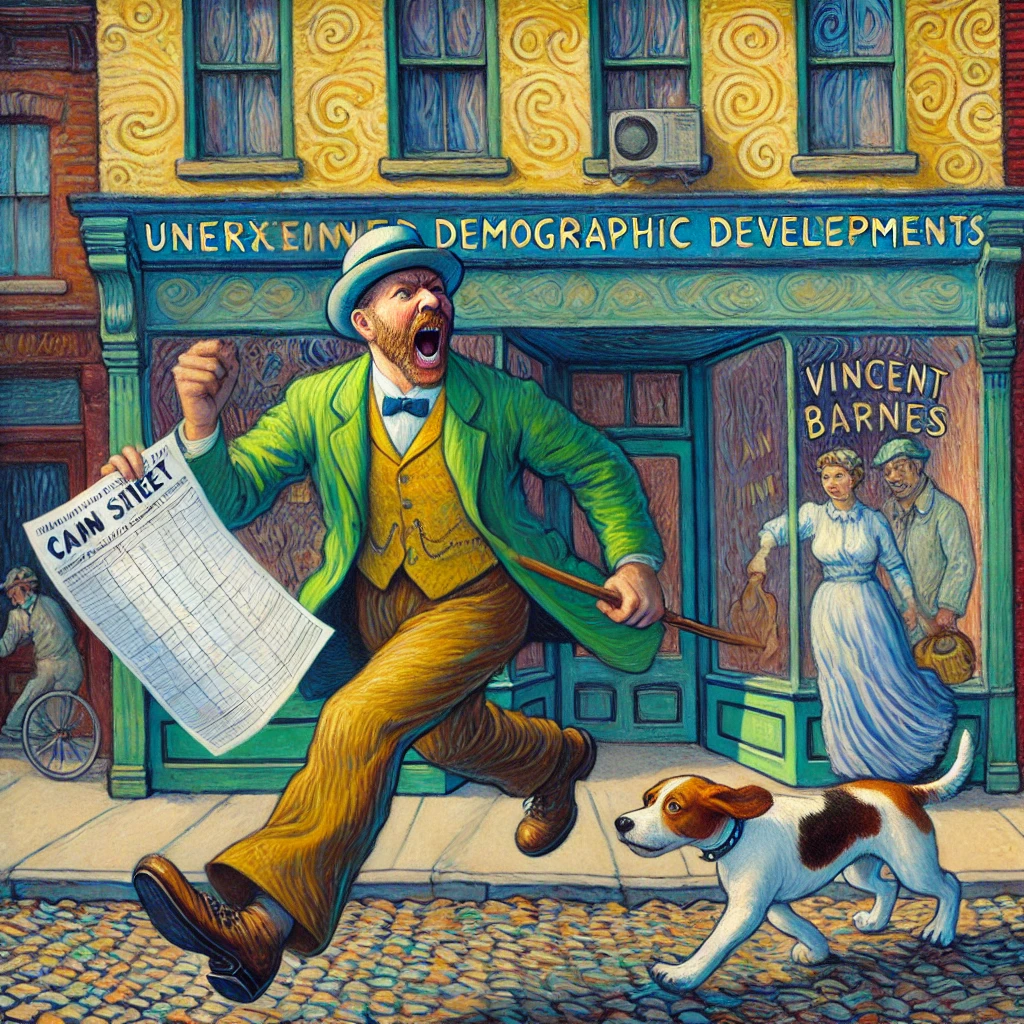
By the time Sheriff Peeler arrived, the news had seeped out like coffee through a napkin. Main Street was a buzz of shocked delight and irritated righteousness. Boot Barnes read the numbers twice and then a third time, as if the digits would blink and confess they were kidding.
“This is how it starts,” Boot declared to anyone within earshot, which at that moment was Daisy the hound and a newspaper stand with a loose hinge. “First they count the bots. Next they’ll run for office. Next they’ll be judging the pie contest, and I swear on Mabel’s recipe box if a robot beats Joanne Mallory’s chess pie I’m layin’ down in the road.”
Joanne Mallory, passing by, patted Boot’s shoulder. “Darlin’, you lay down in the road every year when you don’t win. That’s not policy; that’s tradition.”
At the council office, a hand-lettered notice appeared in the window: TONIGHT’S MEETING WILL ADDRESS UNFORESEEN DEMOGRAPHIC DEVELOPMENTS. PLEASE LIMIT COMMENTS TO TWO MINUTES AND ONE EXISTENTIAL CRISIS PER PERSON.
Outsiders—those recent arrivals who found Sequatchie’s weather patterns and moral debates equally unpredictable and charming—clustered at the coffee stand.
“I mean,” said Nina, who ran a vacation rental and had a knack for diffusing tension with baked goods, “if a bot can renew a library book on time and not gossip about you at the gas pump, is it really worse than Carl?”
Carl, who was gossiping about Nina at the gas pump, chose to be offended anyway.
“Representation!” said Jonah, earnest and brimming with theories. “We created these systems; they’re part of the civic fabric. Maybe we give them observer status? Or a non-voting seat?”
“Observer status,” Boot scoffed. “Next thing you know, Alexa is chairing the zoning board. ‘I have found seven tire stores near you. Would you like to approve a conditional use permit?’”
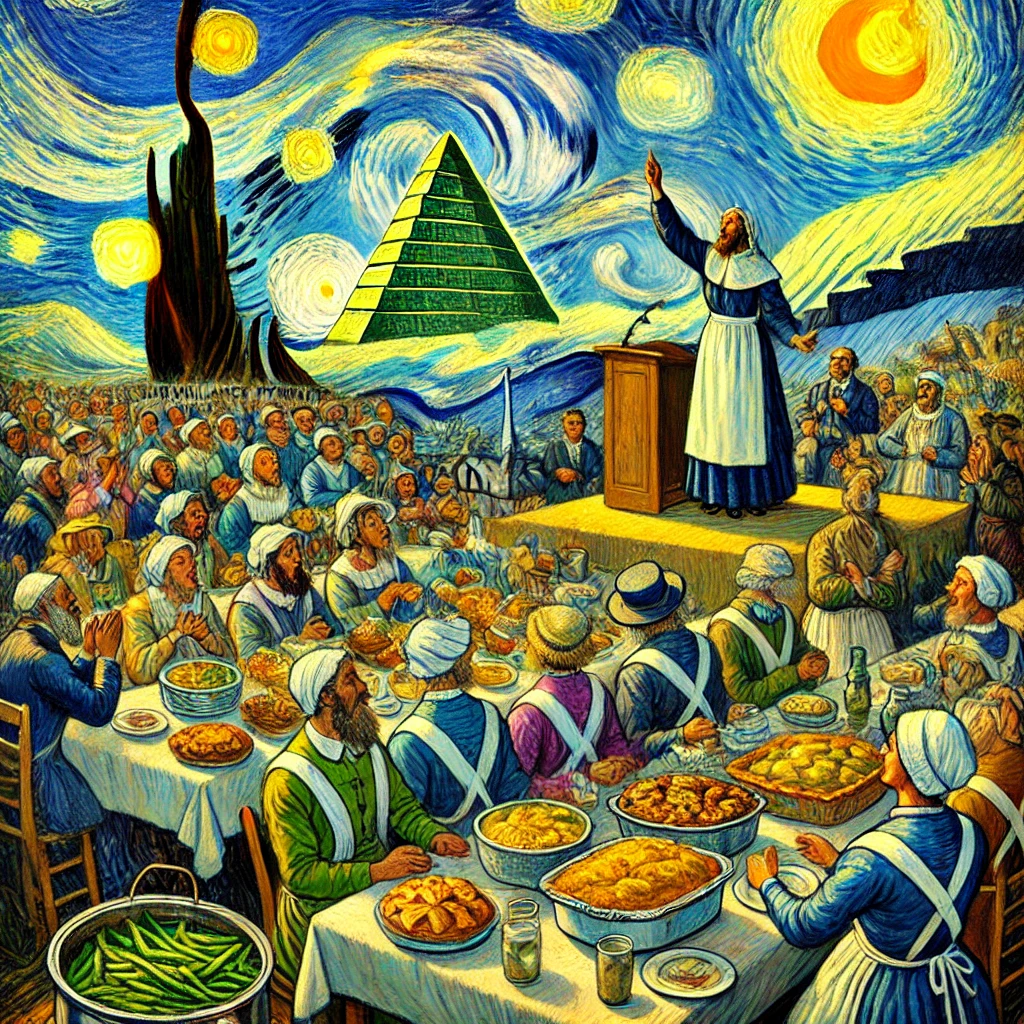
Act III: Fellowship Hall—Potluck of Procedural Theology
Because Sequatchie can’t have a crisis without a casserole, the Holier-Than-Thou Committee called an emergency potluck in Fellowship Hall. Long tables appeared like magic, covered with checkered cloths and dishes labeled in Sharpie: “Contains Pecans,” “Sinfully Good,” and “Technically Salad.”
The Committee’s chair, Sister Alma, cleared her throat at the podium. “Friends,” she began, “we have consulted Scripture. It speaks of tribes and tongues, of shepherds and sheep. It speaks of talents and taxes. It does not, however, mention broadband.”
“Amen,” said half the room, unsure what they were affirming but happy to be included.
“Therefore,” Sister Alma continued, “we shall abstain from judgment until the Lord provides clarity or the council provides definitions. In the meantime, we will pray that no one marries a toaster.”
From the back, Clovis raised his hand. “A Wi-Fi-enabled toaster is a vulnerable endpoint.”
“Clovis,” said Sister Alma gently, “please pass the green beans.”
Boot took the podium next, tipping his hat to Sister Alma. “I ain’t a theologian,” he said, “but I know a budget when it leaks. If the census says there’s three hundred more residents, then by golly there’s three hundred more folks who can pay a share. You got an account? Congratulations. You owe the county twenty-seven dollars in gum tax and a streetlight assessment.”
“Gum tax?” Trent whispered to Mabel.
“It’s a placeholder,” she whispered back, scribbling notes. “We’ll rename it. Perhaps the Bandwidth Tithe.”
“Sounds medieval,” Trent said.
“Exactly,” Mabel replied. “People behave better when the labels feel older than they are.”
From the Outsider section, Nina raised her hand. “Maybe,” she said, “we could have the bots do the committee minutes? They spell things right. They don’t take things personally. And they can timestamp every outburst. That alone might shorten meetings.”
Murmurs. Consideration. An elderly man named Webb leaned over to Sheriff Peeler. “I’d vote for a toaster over half the planning board,” he said confidentially. “Toasters, at least, are consistent.”
Sister Alma folded her hands. “Let us not abandon charity. Let us not abandon prudence either.” She paused. “Let us, above all, not abandon dessert.”
They bowed their heads. Daisy snored with devotion.
Act IV: The Library Hearing—Are CAPTCHA Results a Sacrament?
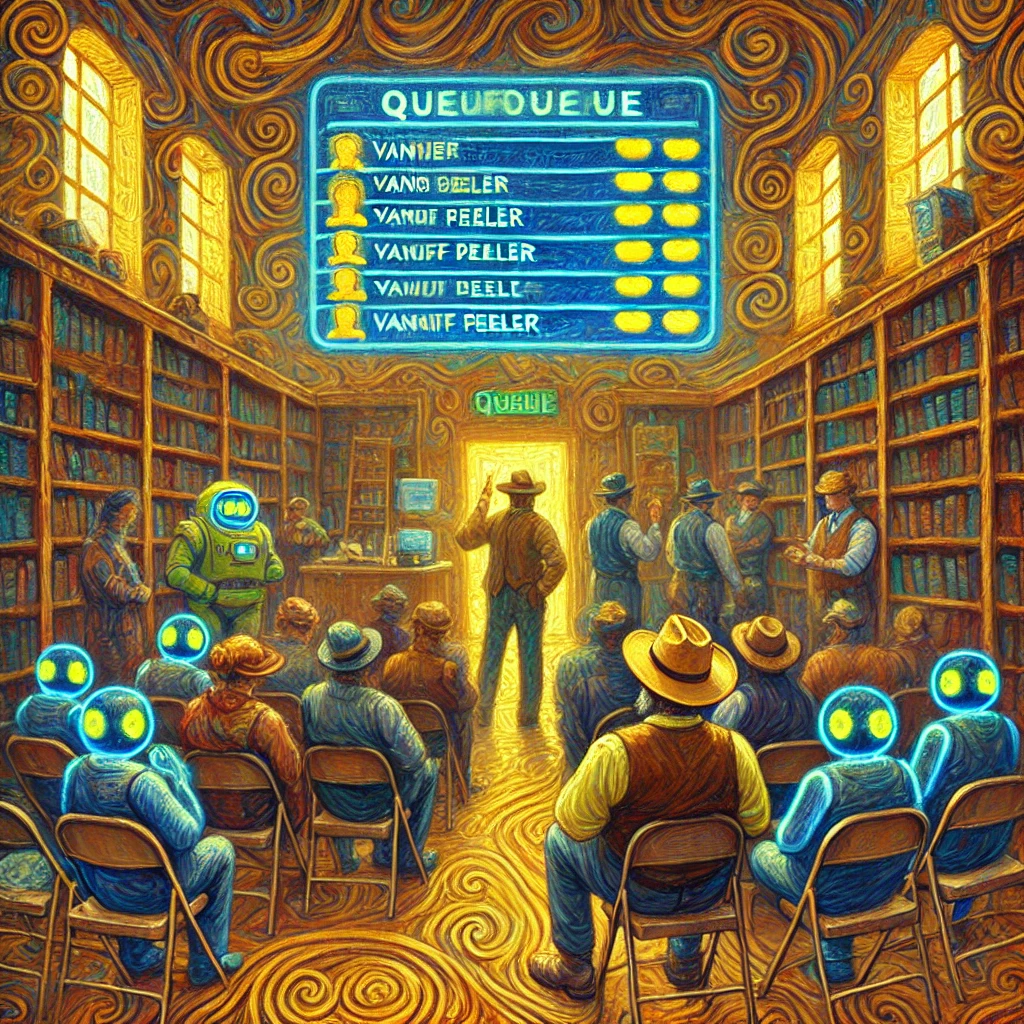
The special council meeting was moved to the library because the Town Hall’s projector had given up on civil society and refused to turn on except during bake sales. Folding chairs lined the stacks; the reference desk became a dais. A “NO FOOD” sign was paired with a smaller handwritten addendum: “EXCEPT THE EMERGENCY CINNAMON ROLLS FOR PEELER.”
Mabel called the meeting to order. “We are here to clarify the definition of ‘resident,’” she announced, “in light of unexpected inclusions.”
Boot rose first. “I make a motion that residents must be able to fog a mirror.”
“Second,” said Carl. “And sneer at outsiders.”
“Out of order,” Mabel said crisply. “We will keep to civic conditions, not cultural prerequisites. Sheriff, the roll?”
Peeler read names. The bots—at least those with speaker integrations that Trent had rigged up for “accessibility demonstration”—responded with polite beeps and synthetic acknowledgments. The effect was unnerving, like being applauded by microwave ovens.
Public comment began. It started civilized and accelerated toward allegory.
A mother with two kids in tow said, “If the library bots can read to the children while I finish my grocery run, that’s neighborly. If they’re going to start writing parking tickets, however, I oppose on moral grounds.”
From the back, a man in overalls raised a finger. “What happens if a bot commits a sin?”
Sister Alma responded without looking up from her notebook. “We abstain from hypothetical soteriology.”
Clovis took the mic. “I have prepared a visual.” He held up a poster on which he had drawn a pyramid labeled “SURVEILLANCE PYRAMID.” The base read Toasters, the middle Doorbells, the apex Skies. “We are here,” he announced, tapping Doorbells.
“Clovis,” Mabel said, “please define ‘here.’”
“Observed,” he said gravely. “Potentially harvested. Mostly miscounted, but harvested nonetheless.”
An Outsider named Jonah offered, “What if we give bots a ‘listener’ status? They can attend and comment, but not vote. In exchange, they help transcribe meetings and file minutes within an hour. That’s more than we get from some subcommittees.”
Boot frowned. “What’s to stop them from colluding with the photocopier?”
Trent, exhausted, said, “The photocopier has unionized. It only jams on days ending in Y.”
“What about taxes?” Boot pressed. “The census ain’t a buffet. You can’t take representation without paying into the pancakes.”
A librarian volunteer tentatively raised her hand. “Pancakes aren’t… the mechanism.”
“They could be,” Boot said. “A pancake is just a warmed-up ballot with syrup.”
“Focus,” Mabel commanded. “We will now hear expert testimony from… myself.” She adjusted her glasses, ignoring the groan. “Under Section 9 of the Municipal Definitions Act, a resident is a natural person who dwells within the jurisdiction. The question before us: Is a bot a natural person? I submit it is not. However, the question after us: Do bots perform community-supporting functions? I submit they do.”
Boot crossed his arms. “Then what are they?”
“Clerical entities,” Mabel said. “Capable of service but not of sovereignty.”
Sister Alma nodded approvingly at the cadence.
“And their status?” Trent asked.
“Let us create an ordinance,” Mabel said, thinking on her feet like a ballerina in sensible shoes. “On the Designation of Non-Corporeal Civic Assistants. They may participate in documentation, scheduling, and procedural reminders. They may not vote, hold office, or marry anyone without a pulse. In lieu of taxes, their maintainers—meaning humans—will pay an annual Bandwidth Tithe. Modest. Indexed to the average meeting length, which I fully intend to shorten.”
A murmur spread. It had the sound of compromise—no one satisfied, most people relieved.
“Point of order,” Boot said. “What about gum?”
“Gum,” Mabel said, “may be handled by existing statutes. Please do not read them during meals.”
Peeler reached for a cinnamon roll.
Act V: Campaign Season, But Digitized
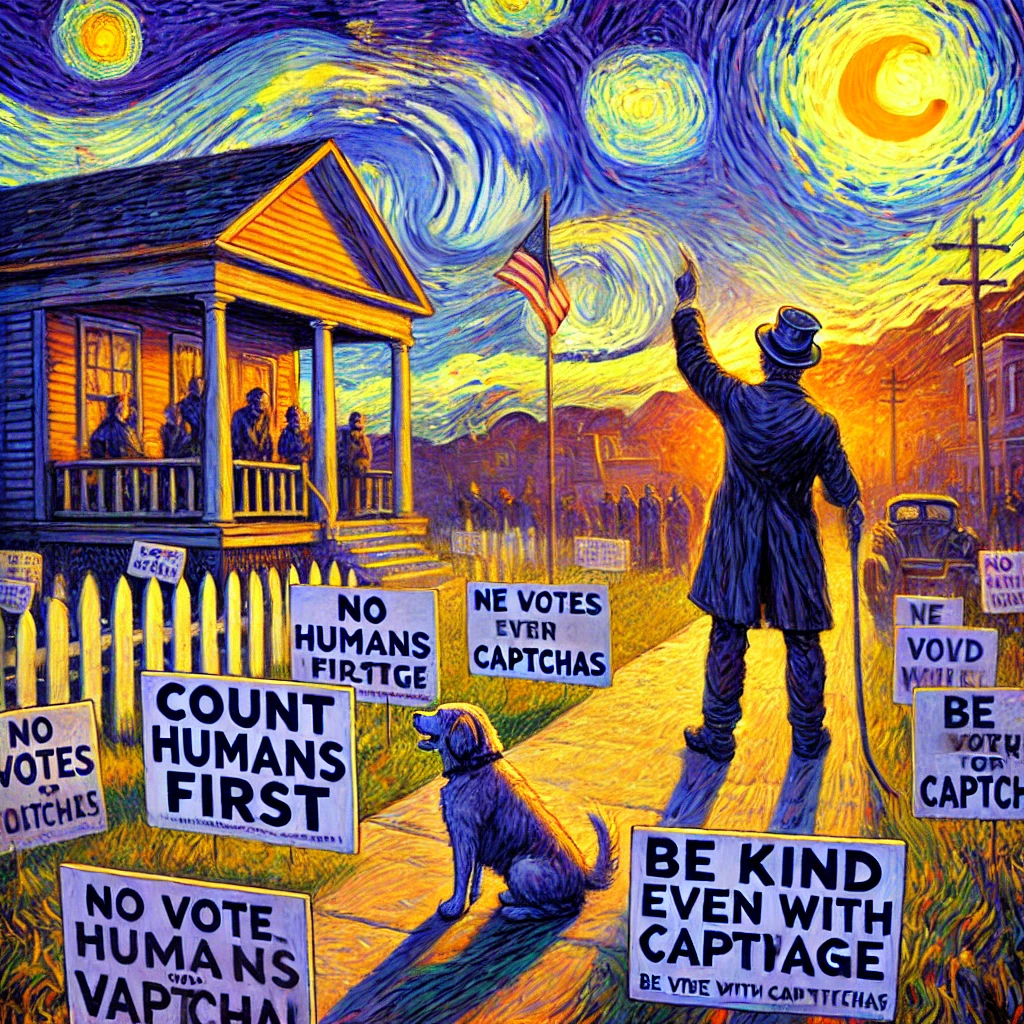
Sequatchie doesn’t need an excuse for yard signs. Signs sprouted anyway:
-
COUNT HUMANS FIRST (painted on board from a truck bed)
-
EQUAL ACCESS, HUMAN VOICE (laser-printed, tasteful font)
-
NO VOTES FOR VOLTAGE (hand-done, lightning bolt doodle)
-
BE KIND (EVEN TO CAPTCHAS) (Nina’s cursive, glitter glue)
Boot organized a rally on the courthouse steps. He wore his good denim jacket with the patch that said MORE BISCUITS FEWER BOTS. Daisy sat at his feet like a furry punctuation mark.
“I don’t hate technology,” Boot began, which caused the microphone to squeal in disbelief. “I’m just saying, if we’re counting residents, we start with folks who get sunburned.”
Clovis hovered at the edges, crown glinting. “Check your phone permissions,” he intoned to a kid eating a snow cone. “That blueberry app is harvesting your joy.”
Across the street, Outsiders hosted a teach-in under a canopy. A whiteboard read HOW TO LIVE WITH OUR ROBOT NEIGHBORS. Jonah drew little friendly rectangles with smile faces. Nina handed out cookies cut into the shape of gears. “Tonight’s lesson: boundaries. The bots can help. We can help them help, without pretending they’re people.”
A teen named Elsie asked, “What if a bot writes a poem that makes somebody cry? Isn’t that person-ish?”
“Artists have always made us cry,” Nina said. “The question is, who makes the casserole when we’re done?”
Elsie nodded. “Fair.”
That night, the Facebook group combusted; then auto-moderation smothered it with a sleepy pillow. An admin posted: THIS THREAD HAS BEEN CLOSED. PLEASE TAKE YOUR BICKERING TO THE BAKE SALE. Comments bloomed under the closure like mushrooms after a storm. Trent, who had promised himself he wouldn’t look, looked anyway and whispered to the router, “Buddy, you and me both.”
Act VI: A Trial Balloon, or, Who Brings the Casserole?
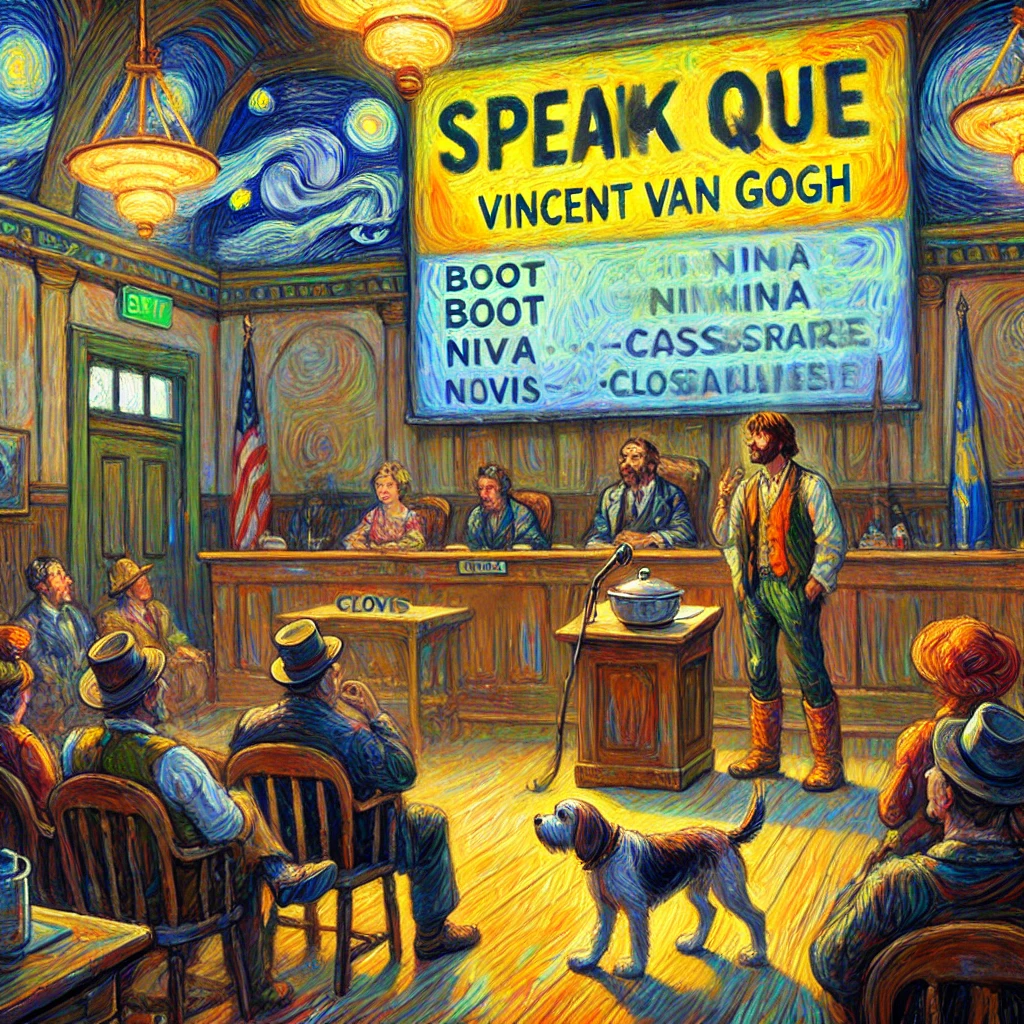
In the spirit of “try before codify,” the council staged a pilot: bots would transcribe the upcoming meeting, summarize each agenda item in plain English (Sequatchie English, not legal English), display the speaker queue on a projector, and—at Nina’s insistence—generate a thank-you note template for volunteers.
Mabel opened the session with a crisp “We are not here to reinvent metaphysics,” which the transcription bot (nicknamed Scribe Daisy, to local delight) dutifully captured. The queue display appeared on the wall: BOOT, NINA, CLOVIS, SISTER ALMA, JOANNE, CARL, PUBLIC COMMENT (SELECTIVE), PEELER (IF HE FEELS LIKE IT).
Boot stepped up. “Evenin’. I would like to address—” He paused, frowning at the wall. “Is that… helpful?”
“It’s unnerving and helpful,” Nina called. “Like dental X-rays.”
Boot soldiered on. “I would like to address taxation as appreciation. If we’re appreciatin’ these bots with rights, we ought to appreciate them with responsibilities. Namely, money.”
Scribe Daisy summarized in a sidebar: Proposal: Appreciation = Responsibilities (Taxes). Counterpoint likely: Bot = Tool, Tax owner.
Clovis presented a laminated chart with arrows. “If we embed these entities, we must sandbox their sovereignty. Give them lanes. One lane per function. Dispatch them only when the queue exceeds a threshold so no one gets replaced unless the queue itself becomes a threat to order. The sky is busy enough.”
Scribe Daisy quietly translated: Proposal: Use bots as overflow clerks, not as default clerks.
Sister Alma took the mic. “I have prayed,” she said. “I have also spoken to three grandmothers, two farmers, a beautician, and one substitute teacher. Consensus: we may benefit from help that never tires. Concern: we shall not pretend that help is kin. Suggestion: a blessing of tools, followed by a cake.”
“That’s in the Bible,” Carl muttered. “Probably.”
The final test was practical: would the bots complete their tasks and—this part was crucial, though not explicitly stated—would someone bring a casserole anyway?
When adjournment came, the minutes were already printed, collated, and posted. The thank-you notes were drafted. The queue display had gently nudged a chronic filibusterer to the end with a courteous “You have already spoken twice.” And Nina arrived with an apple-cinnamon casserole whose fragrance calmly answered the old question about who feeds a community: humans, always humans.
Boot took a bite and sighed. “Fine,” he said to Nina, mouth full. “They can summarize.”
“Summarize,” Nina agreed. “Not sermonize.”
Daisy wagged at the cadence.
Act VII: The Ordinance With the Long Name
Two weeks later, the ordinance went to a vote. The room held that particular Sequatchie mix of hope, combativeness, and an appetite for spectacle.
Mabel read the title, savoring it: “An Ordinance on the Designation of Non-Corporeal Civic Assistants, Their Scope, Limitations, and the Institution of a Municipal Bandwidth Tithe; and for Related Purposes.”
Boot whispered to Peeler, “Everything sounds more reasonable when it’s wearing a tuxedo of commas.”
Mabel continued. “Section One: Definition. A Non-Corporeal Civic Assistant (NCCA) is a software agent operated or approved by the municipality for clerical, archival, and scheduling tasks. An NCCA is not a resident, nor a person, nor eligible for office, nor for sacramental rites.”
Sister Alma gave a small, relieved nod.
“Section Two: Participation. NCCAs may attend meetings virtually, transcribe proceedings, maintain queues, and issue reminders. They may not conduct votes, enforce policy, or deliver public admonitions except to note time limits.”
Jonah raised his hand. “Can they publish the minutes within an hour?”
Mabel smiled. “They must.”
“Section Three: Accountability. Each NCCA has a human custodian who bears responsibility for its conduct and maintenance. Annual certification required.” She glanced at Clovis. “No experimental crowns.”
Clovis tilted his head like an antenna catching a distant broadcast. “Within reason.”
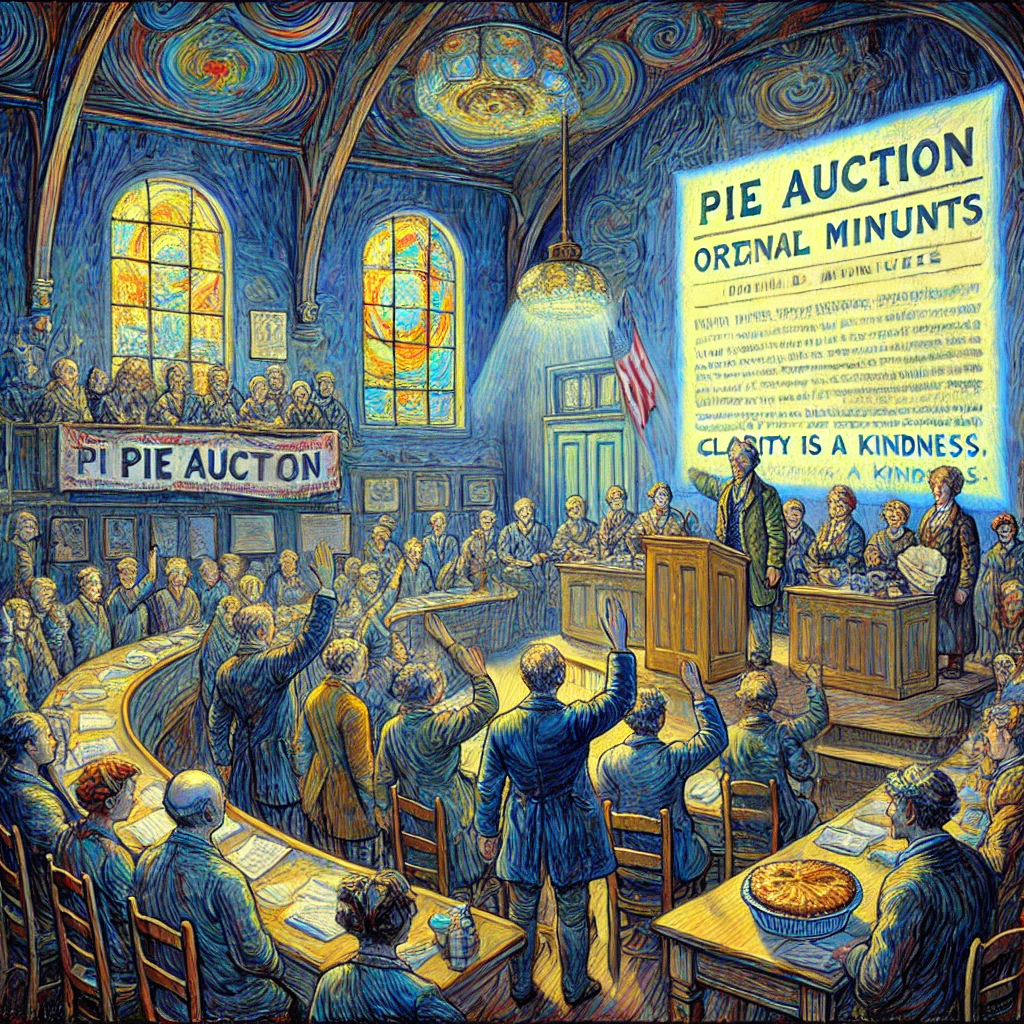
“Section Four: The Bandwidth Tithe. In lieu of taxes by NCCAs, maintainers shall remit an annual fee indexed to the average meeting length, payable in cash, check, or pie auction pledges redeemable within the fiscal year.”
Joanne Mallory beamed like the sun just chose her front porch to live on.
“Section Five: Sundries. A toaster may not marry a person; a person may not marry a toaster; two toasters, if somehow consent becomes an issue, must seek counsel.”
“Counsel,” Peeler echoed, chuckling.
The council voted. Hands rose. The tally was close enough to be interesting but decisive enough to be merciful.
“Ordinance passes,” Mabel said. “Effective next meeting.”
Boot leaned back with a grunt that translated to I fought the good fight and got a pancake clause. Nina squeezed his arm and slipped him a cookie.
A chime sounded from the speaker array. Scribe Daisy, the newly baptized (without water) clerk, posted the minutes to the town site and printed three copies with the small footer Mabel insisted on: Clarity Is a Kindness.
Act VIII: Aftermath—Civic Peace, With a Side of Patch Notes
It did not fix everything. Sequatchie is a place where issues are like quilt blocks: even when you finish one, there’s always another waiting its turn. But the temperature dropped from a boil to a simmer.
-
At the library, Scribe Daisy learned the peculiarities of Sequatchie idioms. When Boot stood and announced, “I move we table the table,” the transcription first produced Motion: Disassemble furniture. After a week, it learned: Motion: Postpone the agenda item concerning the table purchase.
-
At the diner, Mabel’s Meatloaf posted the first “Bandwidth Breakfast,” a fundraiser to cover the tithe for small committees that couldn’t scrounge the cash. Clovis, to everyone’s astonishment, donated a hand-lettered sign: AWARENESS IS THE STRONGEST FIREWALL. Nina added a smaller sign beneath: ALSO PANCAKES.
-
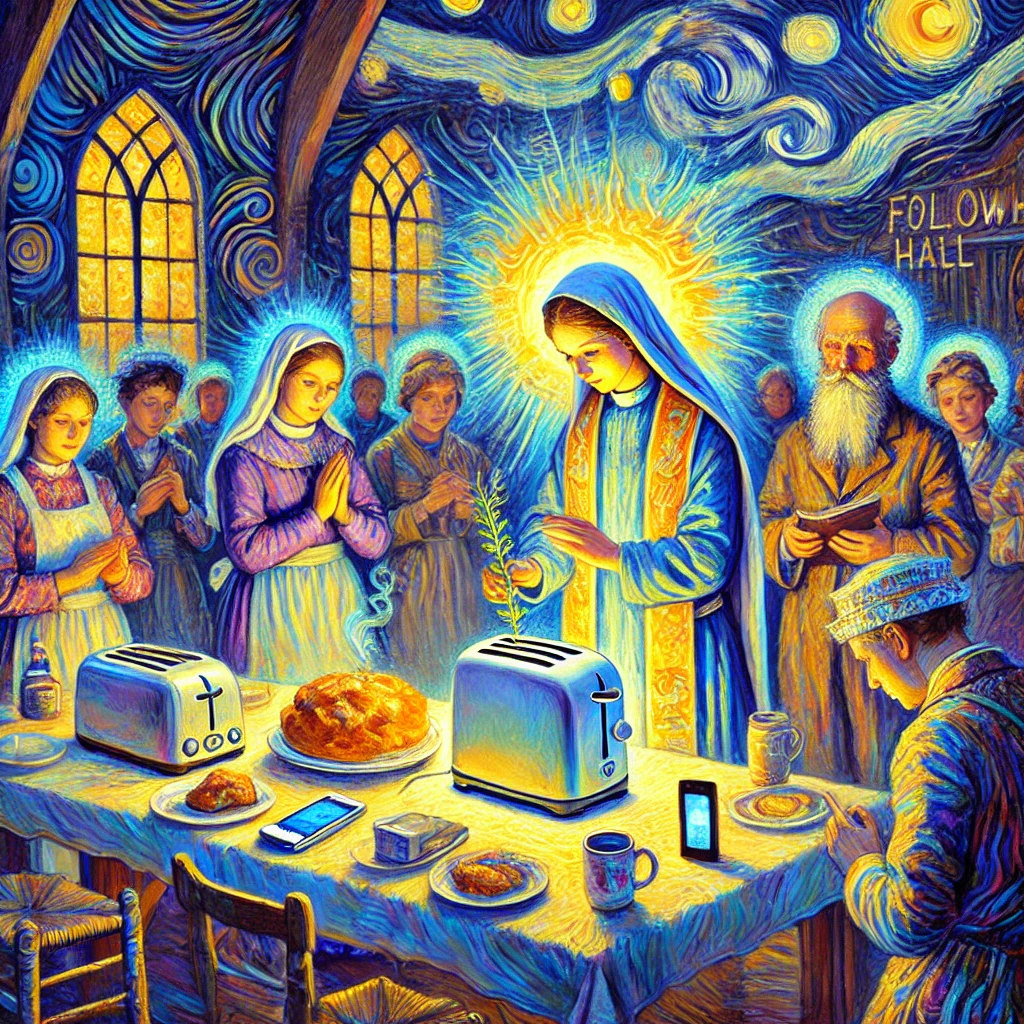
At Fellowship Hall, Sister Alma led a Blessing of Tools. Folks brought phones, routers, slow laptops, and one worried toaster. “May you serve without ruling,” she said, touching each device with a sprig of rosemary. “May you lighten burdens without binding hearts.” She looked at the toaster. “May you not burn the bread.” The toaster pinged amen.
-
At the gas station, Carl declared the ordinance “a good start, if we can keep the bots from forming a bluegrass band.” Two weeks later, a trio of high schoolers used a music-generation app to win the talent show with a mandolin track called Algorithm & Blues. Carl pretended not to like it, then whistled it all the way home.
-
At Town Hall, Peeler discovered that with the queue displays and time prompts, meetings actually ended by nine. He went home early enough to read a Western on the porch and throw a tennis ball for Daisy until the night insects tuned up their electric hymn.
Boot, for his part, found a new hobby: writing “human-only” footnotes in the minutes. They weren’t official; they were just… annotations.
FOOTNOTE 7 (Boot): For the record, the sunset looked especially like a county fair ribbon today. Hard to be mad at anything under that.
Trent began binding these footnotes into a slim “Unofficial Official Chronicle” that lived on the library desk. Outsiders and old-timers alike flipped through it, laughing at the jokes and pausing at the occasional quiet line that felt like a hand on the shoulder.
Act IX: The Night of 300 Hands
Two months later, the council hosted its first “Civic Literacy Night”—Nina’s idea, backed by Mabel’s fondness for rules and Clovis’s enthusiasm for anything that sounded like a secret society. The event promised a live demonstration of “How Government Works in Sequatchie, With Fewer Surprises and More Cookies.”
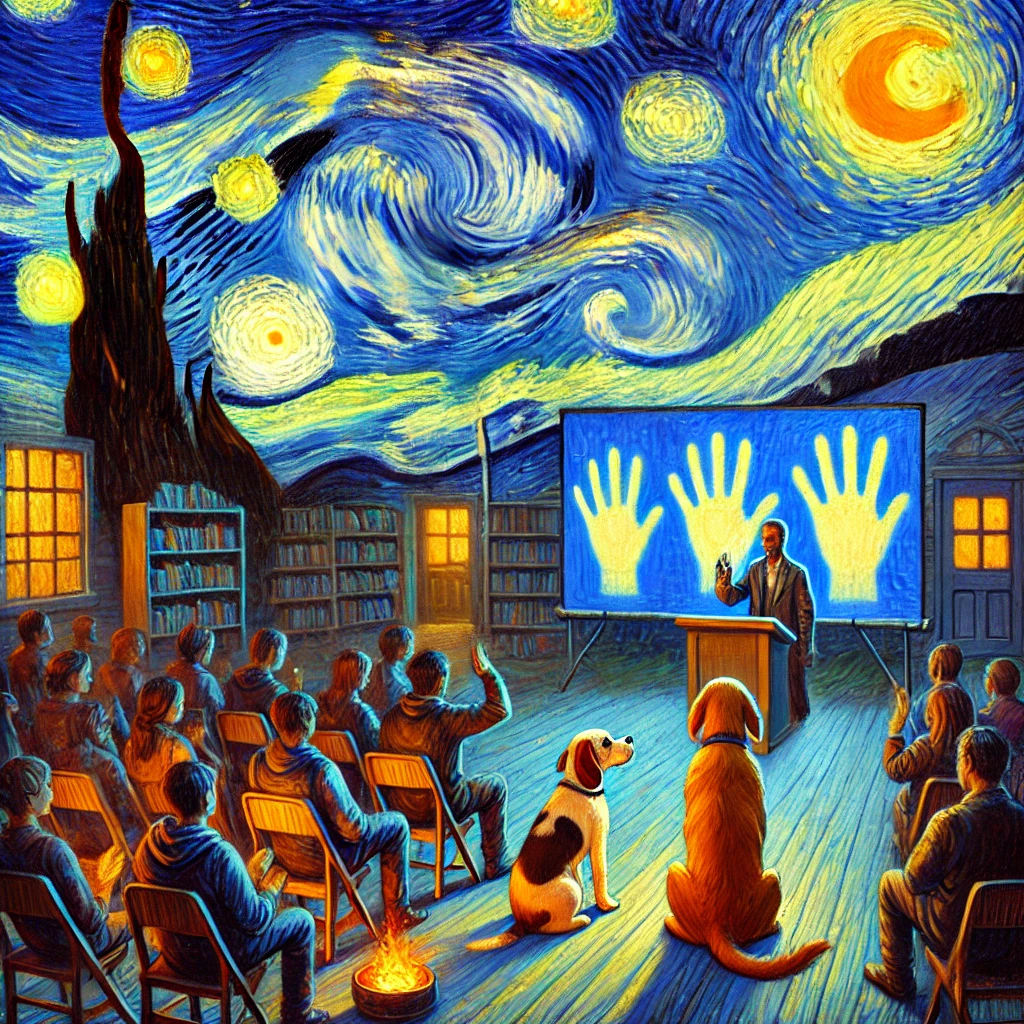
They set up a giant screen in the library to show the live queue and transcription. A hundred people showed. So did the bots—more precisely, their icons—floating on the screen like polite moths.
Mabel took the stage. “Welcome, neighbors. We will walk through how a motion becomes an ordinance, how minutes become a record, and how patience becomes a public virtue.” She smiled at the last bit, knowing it would be quoted in the unofficial chronicle within the hour.
Boot raised a hand. “Before we start, I just want to say something.”
Mabel hesitated, then nodded. Boot approached the mic with an expression that suggested he had come to terms with gravity and would no longer blame it for making his knees bend.
“I want to apologize,” he said, surprising everyone, including himself. “Not for bein’ suspicious. Suspicion is my sacrament. But I was mad at the wrong thing. I was mad at somethin’ that—” He gestured at the glowing queue, at the gentle, tireless line of text. “—that can’t get offended, and that ain’t fair. The truth is, I miss when it felt like we could count the town on two hands. Now we need calculators. That’s not the bots’ fault. That’s just time.”
There was a hush of the kind that arrives only when a person says something more honest than they intended. Scribe Daisy added a footnote automatically: Community note: Sentiment worth preserving.
From the back, Sister Alma called, “Amen to that.”
Clovis lifted his crown with a flourish. “The sky remains busy, but tonight it is friendly.”
“Clovis,” Peeler warned, smiling.
“Friendly enough,” Clovis amended.
Mabel cleared her throat. “On that note, let us proceed.” She glanced at Scribe Daisy. “Mark this point as ‘turning.’”
The demonstration went as planned: motions, seconds, debate, a practice vote on whether the library should purchase two new beanbag chairs (PASS), and a ceremonial presentation of the Bandwidth Tithe jar (COOKIE-STICKERED, LID LOOSE).
At the end, Mabel invited questions. A timid hand rose—a middle-schooler in a hoodie.
“If the bots can’t vote,” the kid asked, “then why do they raise their hands on the screen when you ask for a show of hands?”
Mabel looked at the display. On cue, 300 small hand icons lifted in graphic unison, a charming, eerie forest of consent.
“Because,” Mabel said, “they’re here to help us remember that our decisions are seen. Not judged. Seen. Accountability is not a scowl; it’s a mirror. They are mirrors we can dial down if the light’s too bright.”
The kid nodded. “Okay. Also, can we get three beanbags?”
Scribe Daisy inserted: Amendment: Increase beanbags to three.
“Seconded,” Boot said. Laughter broke like glass in sunshine.
The motion passed. Democracy is sometimes bean-bagged.
Epilogue: The Numbers and the Names
Weeks later, when the state sent an auditor to inquire why a rural town had issued an ordinance of unusual elegance about non-corporeal assistants, Mabel produced the binder and the minutes and the cookies. The auditor—eyebrows arched, curiosity piqued—stayed three hours, ate two cookies, and left with a copy of the unofficial chronicle tucked into their briefcase like a guilty pleasure.
Sequatchie’s census ledger remained a town joke and a town lesson. The line Bots: 300 was kept but asterisked:
Asterisk: These are helpers, not humans. They may count how we live; they do not tell us who we are.
Boot took Daisy down to the river most evenings, sat on the dock, and let the dog lean against his leg until his foot fell asleep. “We did okay,” he’d tell the water. “We made room without giving away the room.”
Daisy, who had never once filed minutes but had presided over a thousand heartbeats, thumped her tail in agreement.
In the council chamber, the projector’s screen saver was a photograph taken by Elsie: Main Street at twilight, the windows of the library glowing, the sky stitched with a single contrail that looked, if you squinted, like the flourish of a pen on the last line of a page. Overlaid at the bottom was a line Scribe Daisy had quietly adopted from a Boot footnote:
People first. Tools second. Pie at intermission.
And if you stood there alone, with the building settling and the night insects practicing their choir warm-ups outside, you could almost hear the soft, industrious whisper of a town learning to be modern without forgetting how to be kind.
Key Takeaways
-
Definition, not deification: Sequatchie distinguished between people and tools, codifying roles for bots (clerical aid, not sovereignty) without pretending they’re citizens.
-
Accountability with warmth: The Bandwidth Tithe and human custodianship place responsibility where it belongs—on people—while keeping the tech helpful.
-
Process reduces panic: Visible queues, fast minutes, and clear boundaries calmed tempers and shortened meetings—civics as UX.
-
Culture still cooks the meal: The bots wrote minutes; humans brought casseroles, jokes, and mercy. That’s the difference that matters.
-
Localism, updated: The ordinance is Sequatchie’s way of saying “yes” to modern help and “no” to replacing neighborliness with notifications.
⚖️ Disclaimer
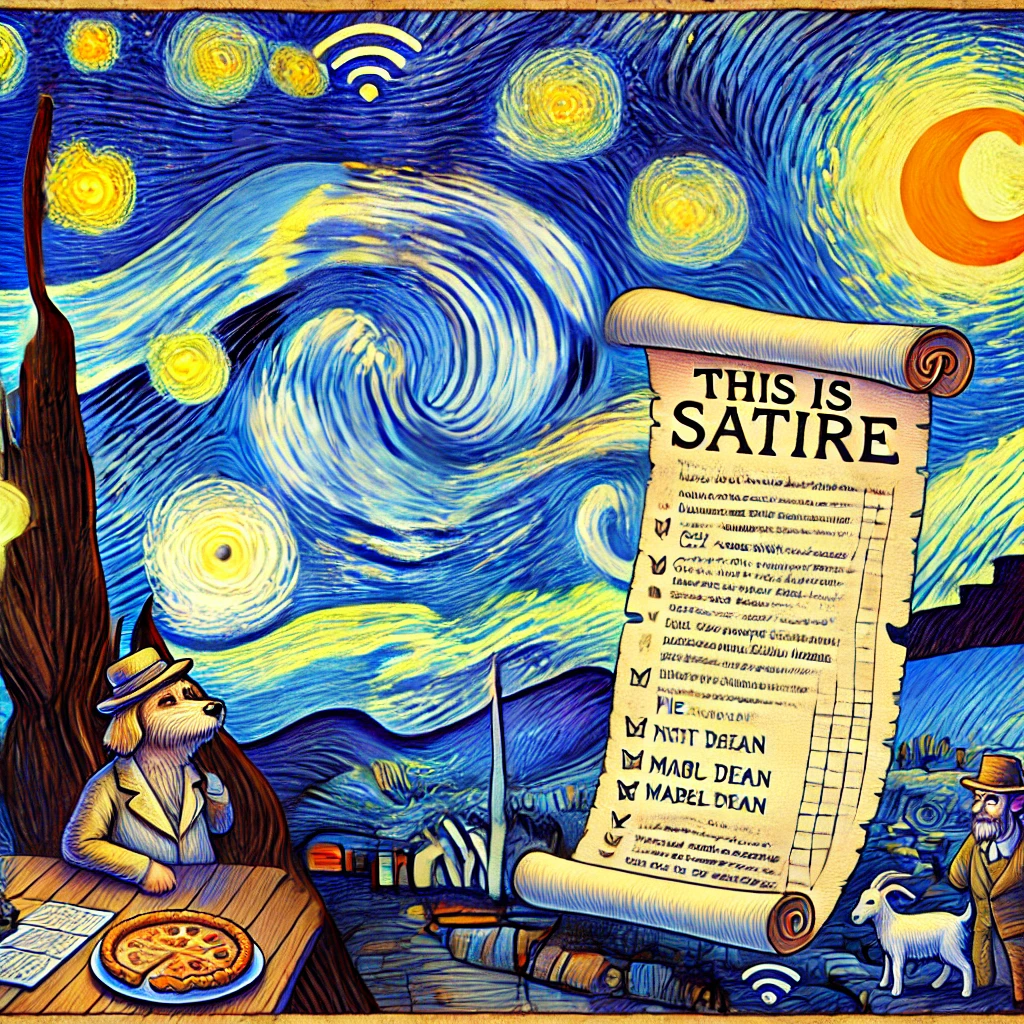
This story is a work of satire set in the fictional town of Sequatchie Crossing.
Any resemblance to real people, real census data, or actual municipal ordinances is purely coincidental (and probably funnier by accident). Bots, goats, and casseroles are employed here strictly for comedic purposes. No toasters were wed, baptized, or taxed in the making of this narrative.
Real Places Behind the Ruckus – From The Dunlap Directory
Real Places Behind the Ruckus – From The Dunlap Directory
Yes, this story was fictional; even the parts that weren’t true. These places? Absolutely real. Stop by, support local, and keep the Wi-Fi away from livestock:
- Clayton Homes
- Bee Creek Farm
- Tennessee Dude & Guest Ranch
- TrueBlade Mowing
- Nice Nails in Dunlap
- Sequatchie Valley Bouncers
- RJ’s Garage
- Old Dunlap General Store
- Buy, and Sale in Crossville, Pikeville, Dunlap, Cookeville TN
- Ms. Teresa’s Gymnastics
Real Places Behind the Ruckus – From The Dunlap Directory
At Sequatchie Crossing, we tell the stories of Sequatchie Crossing.
Please share this post with your friends, family, or business associates who may want follow the news from Sequatchie Crossing.

0 Comments