


By Tom Seest
At Sequatchie Crossing, we tell the stories of Sequatchie Crossing.
🎤 Audio Overview
In most towns, a folding chair is just a piece of metal and vinyl. In Sequatchie Crossing, it’s currency, territory, and occasionally a weapon of last resort.
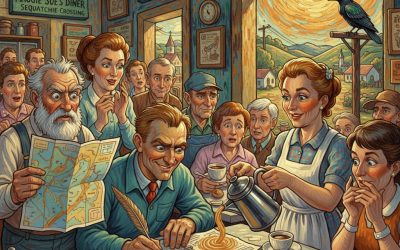
The whole thing came to light during last Monday’s Joint Civic Action Committee & Biscuit Oversight Panel meeting—a standing-room-only affair meant to review both zoning reform and whether the sausage gravy at the Rotary breakfast was “within acceptable viscosity guidelines.”
Only 23 chairs were available.
Now, our town has at least 80 folding chairs. Everyone knows this. They were purchased back in 1997 after the infamous “Donut Day Collapse,” when a triple-occupancy pew at the county fair stage gave way under the weight of a choir and an accordion player.
So when half the room had to stand, people noticed.
Mabel Dean Ashcroft, who was seated comfortably in a chair bearing her name in Sharpie, immediately called for an audit.
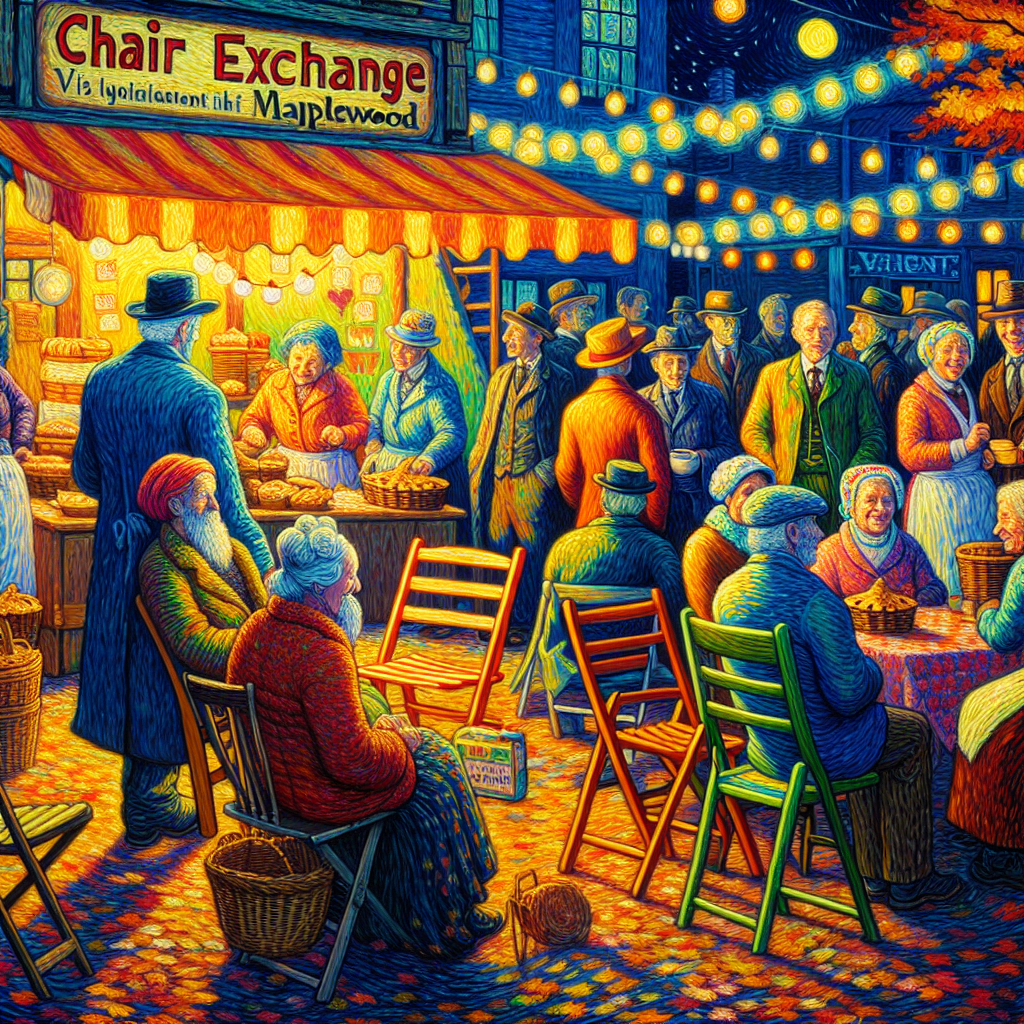
The Great Folding Chair Shortage – Town Meetings, Turf Battles, and a Black Market Beneath The Fellowship Hall
Boot Barnes offered a theory: “I bet they’re all being held hostage in the Baptist Fellowship Hall again. Last time we loaned ‘em out, they came back covered in VBS glitter and regret.”
Officer Kenny Joe Teeter launched a formal inquiry. Within 48 hours, 17 chairs were located:
- 6 in the Methodist Church’s storage shed (used for teen game night)
- 4 at the back of Sonny Morales’ taco truck (he claimed they were “on loan” for salsa tastings)
- 2 holding up a porch swing at Clovis Strickland’s place (“temporary infrastructure,” he said)
- 5 had been borrowed by Trixie Jo Bartlett, who was using them for “press conferences and talent show practice”
That still left 50+ chairs unaccounted for.
The search took a wild turn when Doug “Doughboy” Teeter posted a Craigslist ad under the name “ChairDaddy69” offering “vintage municipal seating solutions—cash only.” He was confronted outside the IGA with a shopping cart full of folding chairs and an “inventory manifest” scribbled on the back of a pancake festival program.
Meanwhile, a new black-market economy sprang up beneath the Fellowship Hall:
- 2 chairs were traded for a slab of peach cobbler.
- 4 were bartered for early seating rights at the next potluck.
- 1 was briefly offered as collateral in a heated church bingo debt dispute.
Shelley Wexler tried to introduce a system of “energetic seat claiming” based on personal chakra alignment. She brought mood-color ribbons to tie on chairs. This confused everyone and sparked rumors of occult rituals, which Pastor Peeler gently discouraged during Sunday announcements.
Clovis suggested putting QR codes on each chair to track movement using “the same tech the government uses on cows.” No one followed up.
The Great Folding Chair Shortage – Town Meetings, Turf Battles, and a Black Market Beneath The Fellowship Hall
By the time Mayor Wilburn Otis Hargrove called an emergency Chair Task Force meeting, tensions had escalated. “Standing-only meetings are undemocratic,” declared Lurleen Davenport, while balancing on a step stool she’d stolen from the church nursery.
The final resolution came when Chester Ray “Print Shop” Blevins offered to sponsor new folding chairs—each printed with quotes like:
- “Sit Down and Hush – Sequatchie Style”
- “This Chair Is Being Watched by Jesus (and Kenny Joe)”
- “I Survived the Chair Crisis of ’25”
The new chairs are expected next week. In the meantime, seating is on a bring-your-own-bottom basis.
Conclusion
At Sequatchie Crossing, we tell the stories of Sequatchie Crossing.
Disclaimer: This story is entirely fictional except for the parts that aren’t true. Any resemblance to real people, living or just stubborn, is purely accidental—but also maybe a little flattering. Sequatchie Crossing exists only in the minds of those brave enough to imagine a town where zoning laws, casseroles, and conspiracy cassettes collide in glorious disarray.

0 Comments