


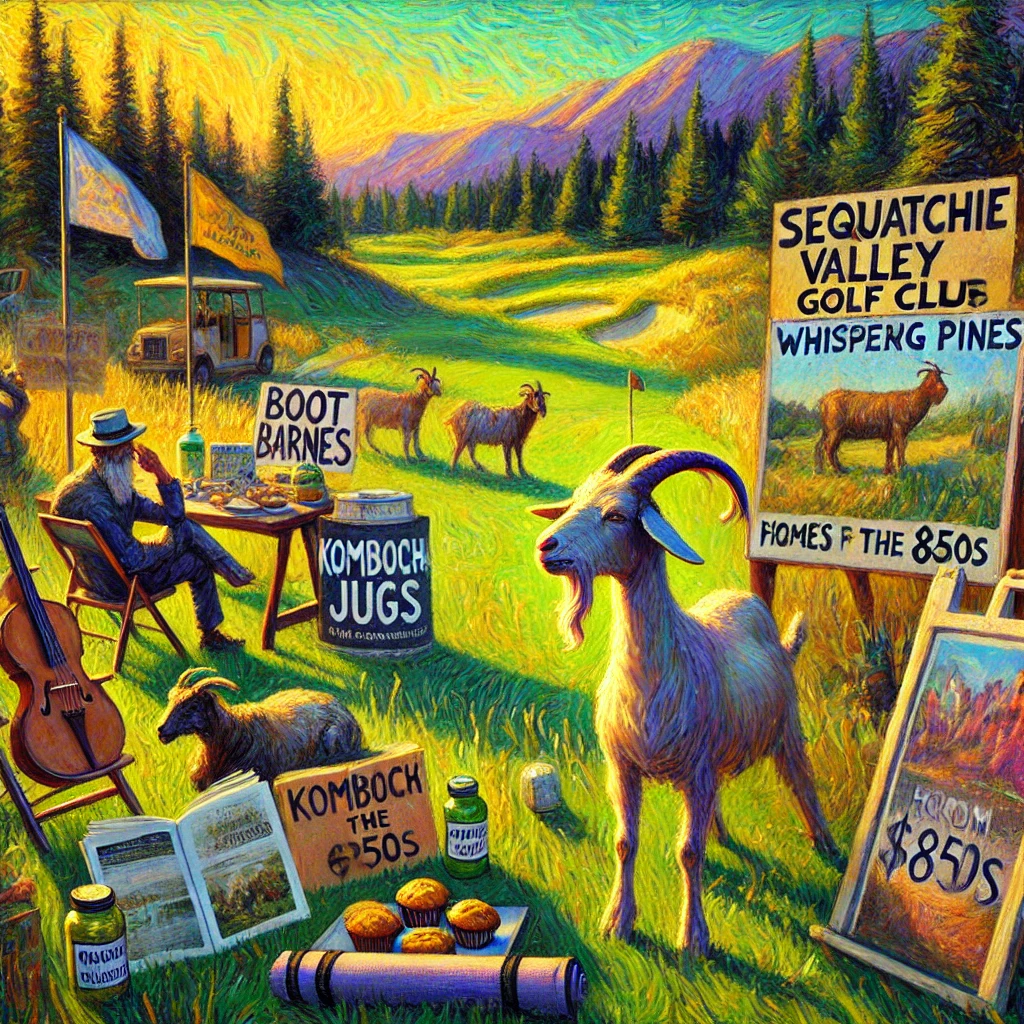
A Town Divided By Fences, Fortunes, and Fairways
By Tom Seest
At Sequatchie Crossing, we tell the stories of Sequatchie Crossing.
Please share this post with your friends, family, or business associates who may want help telling the stories of their legacy.
🎤 Audio Overview
Green Fees & Gated Dreams
An old golf course, some slick developers, and a whole mess of opinions have stirred the quiet dirt roads of Sequatchie Crossing. What once was a patchy playground for goats and retired farmers is now ground zero for the town’s identity crisis—and nobody’s driving straight.
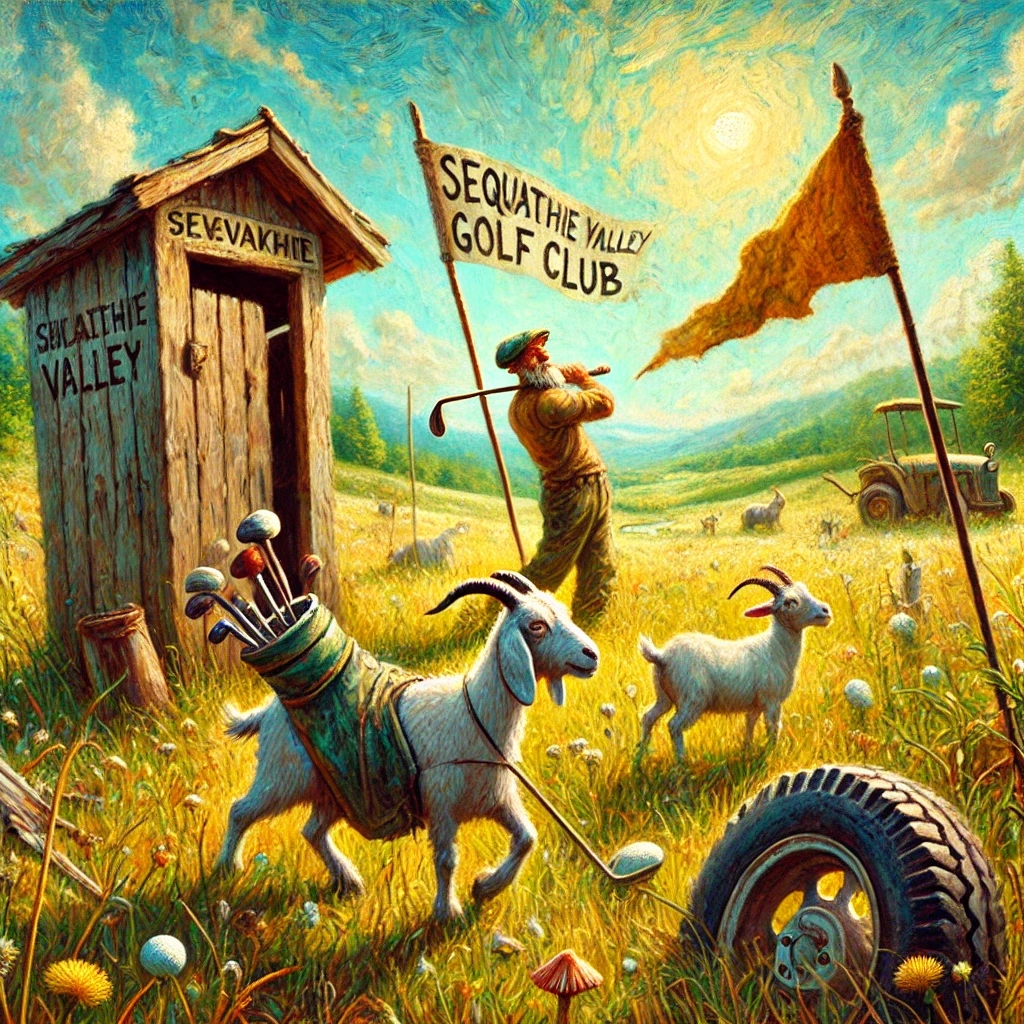
Back When It Was Just Grass and Goats
The Sequatchie Valley Golf Club wasn’t really a golf club so much as it was a loosely-defined agreement between the town’s older men and the weeds that neither would try too hard. It had nine holes, six flags, and one port-a-john that had become a nesting site for barn swallows. Boot Barnes once described it as “a fine walk interrupted by regrettable decisions,” which incidentally described most of his relationships as well. The fairways were more “dandelion-laced meadows” than manicured turf, and the only caddies were a trio of goats—Ezekiel, Percy, and Midge—who followed folks around in hopes of dropped crackers or errant Slim Jims.
Every now and then someone from the next town over would come by, squint, and ask, “Is this really a golf course?” To which the standard reply was, “Depends. Are you lookin’ to play or complain?” But nobody complained. Not until now.
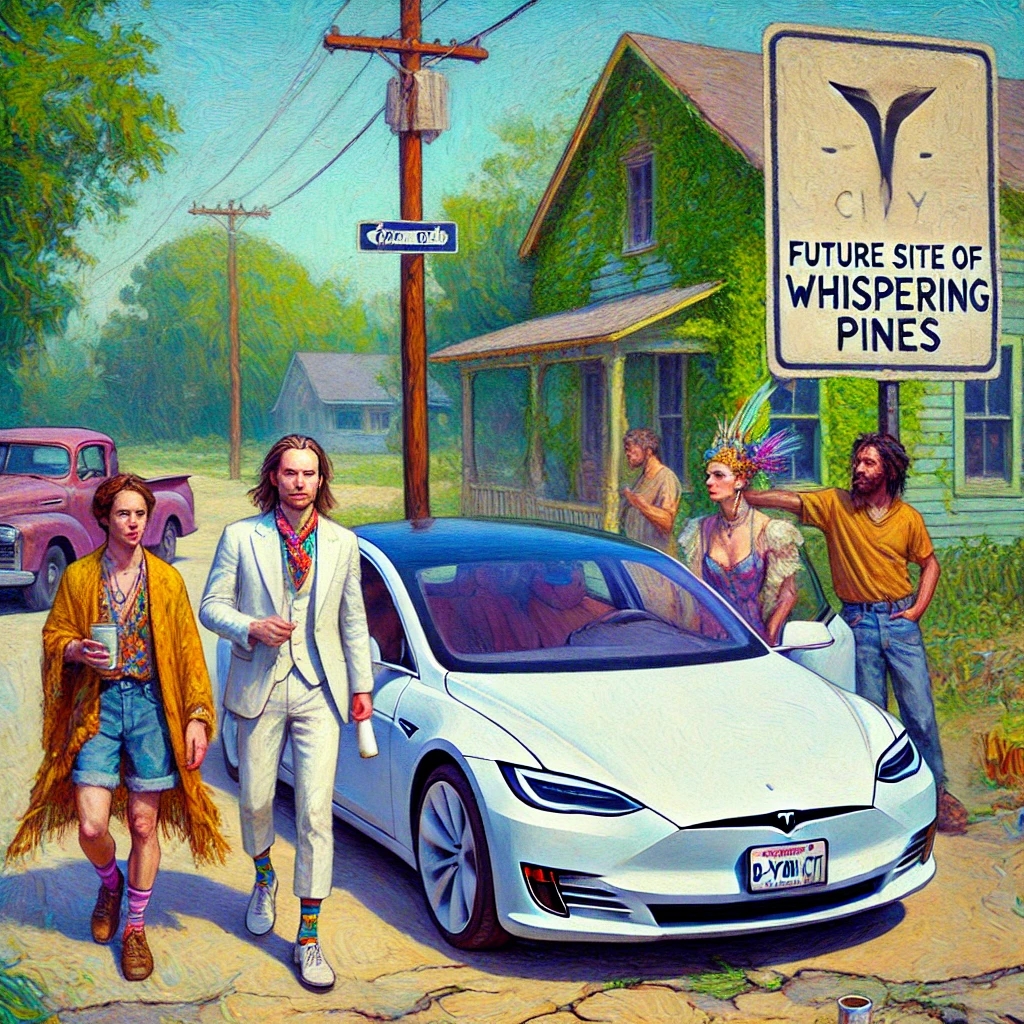
Invasion of the Vision Boards
That all changed when a Nashville developer named Sterling Langford III rolled into town in a white Tesla with personalized plates that read “B-YON-CITY.” Accompanying him were his “project vision team,” which included a former Disney resort planner, a kombucha sommelier named Jasper, and a woman named Trillie who wore feather earrings and used “vibe” as a noun and a verb. They came bearing glossy brochures and phrases like “eco-luxury” and “integrated living concept.”
Their plan? To transform the old golf course into Whispering Pines at Sequatchie—a gated “lifestyle community” with artisan street lamps, pickleball courts, a dog psychic, and homes “starting in the $850s.” There was to be a Himalayan salt room for “emotional detox,” a shared garden with professional gardeners (to reduce resident stress), and a “quiet circle” where no electronic sounds would be allowed on Wednesdays after 2 p.m.
Trillie explained the concept at the town meeting: “We believe in harmonizing curated stillness with Appalachian authenticity.”
To which Harold Dean muttered, “If she harmonizes anything near my barn again, I’m gettin’ the hose.”
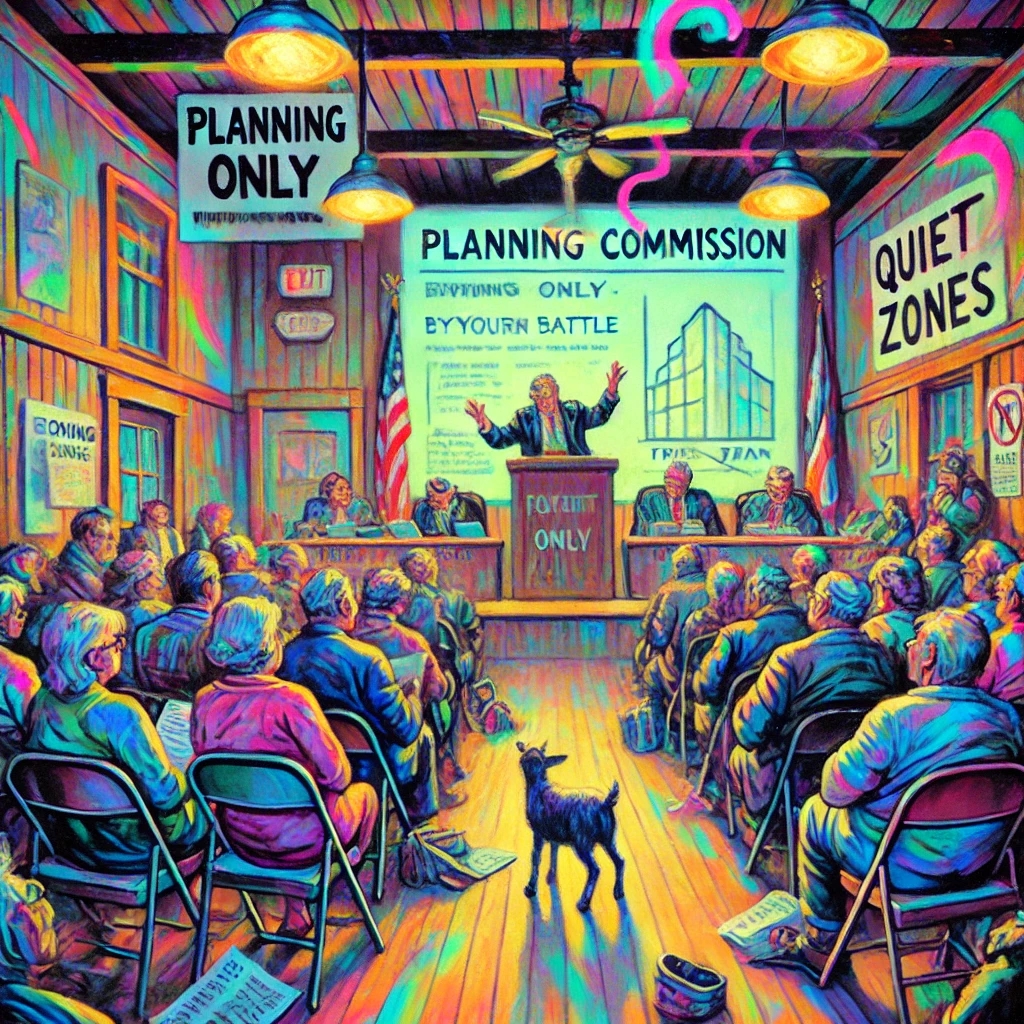
Planning Commission or Gladiator Arena?
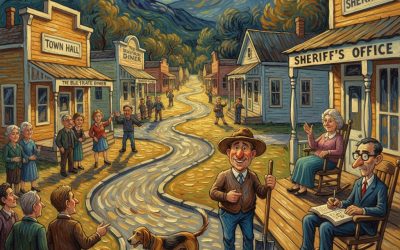
Mayor Lucille Halpern, already four muffins deep by the time the Planning Commission meeting began, opened with a frazzled sigh and a heat rash that spelled trouble. The room was over capacity. Folks spilled into the hallway, clutching folding chairs, homemade signs, and the occasional emotional support casserole.
Boot Barnes sat front row in a stained “Bass Pro or Bust” T-shirt, arms crossed, muttering curses under his breath. Mabel Dean brought a clipboard and an air of righteous fury. Sheriff Holloway leaned against the back wall sipping sweet tea, quietly making bets with Deputy Lynn on which townsperson would get ejected first.
“You can’t build homes people around here can’t afford!” shouted Eula May, owner of the local laundromat-slash-tarot-shop. “This ain’t Beverly Holler!”
Sterling Langford countered with a calm smile. “We see this as an investment in your community’s future. A place where mountain charm meets curated elegance.”
Boot stood up. “You wanna meet mountain charm? I got a goat outside named Midge who can curate your pants off.”
At that moment, Midge—possibly sensing her cue—trotted in through the side door, dragging what appeared to be a ripped yoga mat in her teeth. Applause broke out. Two council members resigned mid-meeting. The fire marshal called in sick the next day.
Goat Blockades and Muffin Diplomacy
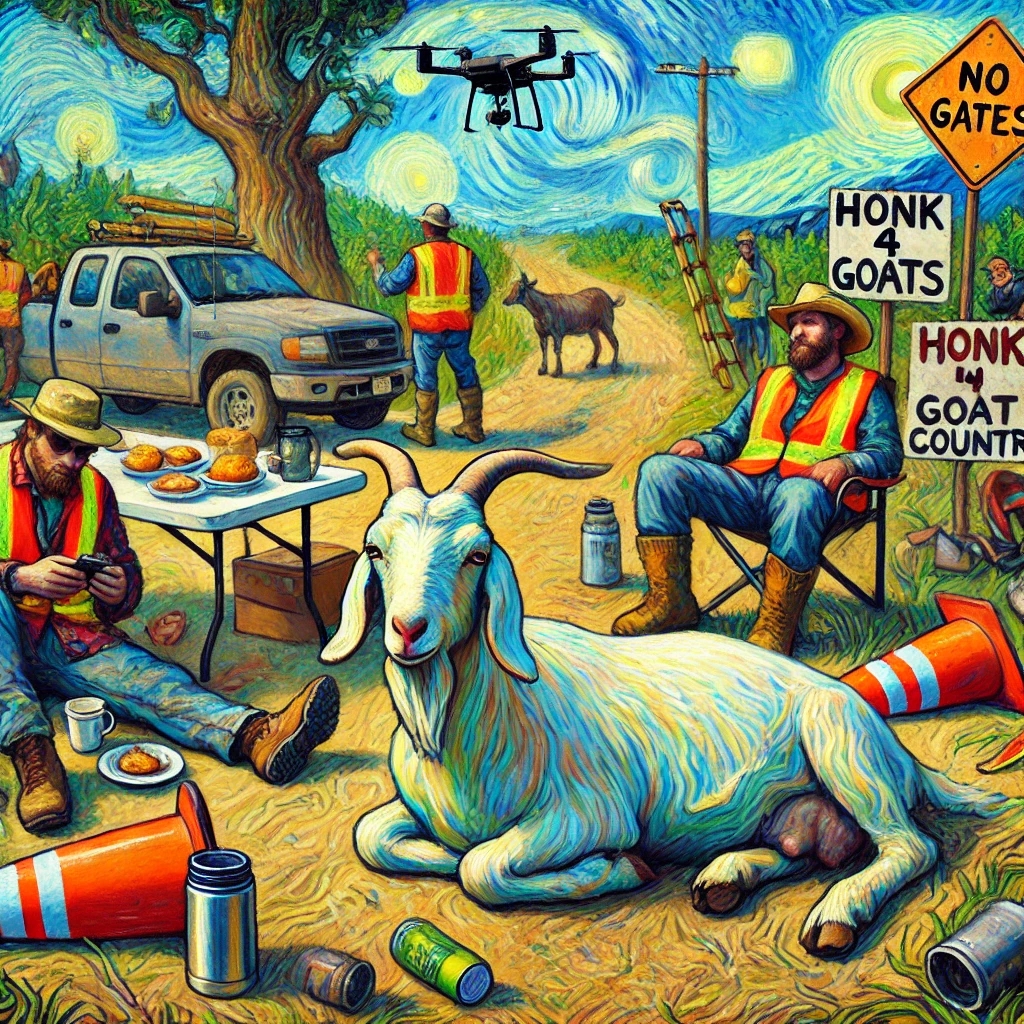
By Thursday morning, the goats had become symbols of resistance. Ezekiel lay across the construction access road like a woolly sandbag. Midge headbutted a surveyor’s drone out of the sky. Percy staged a brief occupation of the developer’s van, emerging only after being lured out with a packet of saltines and a tin of sardines from Clovis Strickland’s fishing vest.
Meanwhile, a group of concerned citizens—calling themselves the “Friends of Fairway Freedom”—began hosting pancake breakfasts to fund a lawsuit. T-shirts were printed. The slogan: Keep It Patchy, Keep It Ours.
Across town, the newcomers—many of whom had moved in for “the quiet life” and now found themselves in a showdown with livestock—started their own group called Future Forward Sequatchie. They hosted kombucha tastings and curated listening circles where people could talk about their feelings regarding property values.
Tensions reached a boiling point during a Saturday event when both groups mistakenly booked the same church pavilion for dueling fundraisers. Pancakes and kefir collided. There were brief chants, a meringue pie was thrown, and Harold Dean was found sleeping under the donation table with two protest signs and a harmonica.
Reality Check or Real Estate Checkmate?
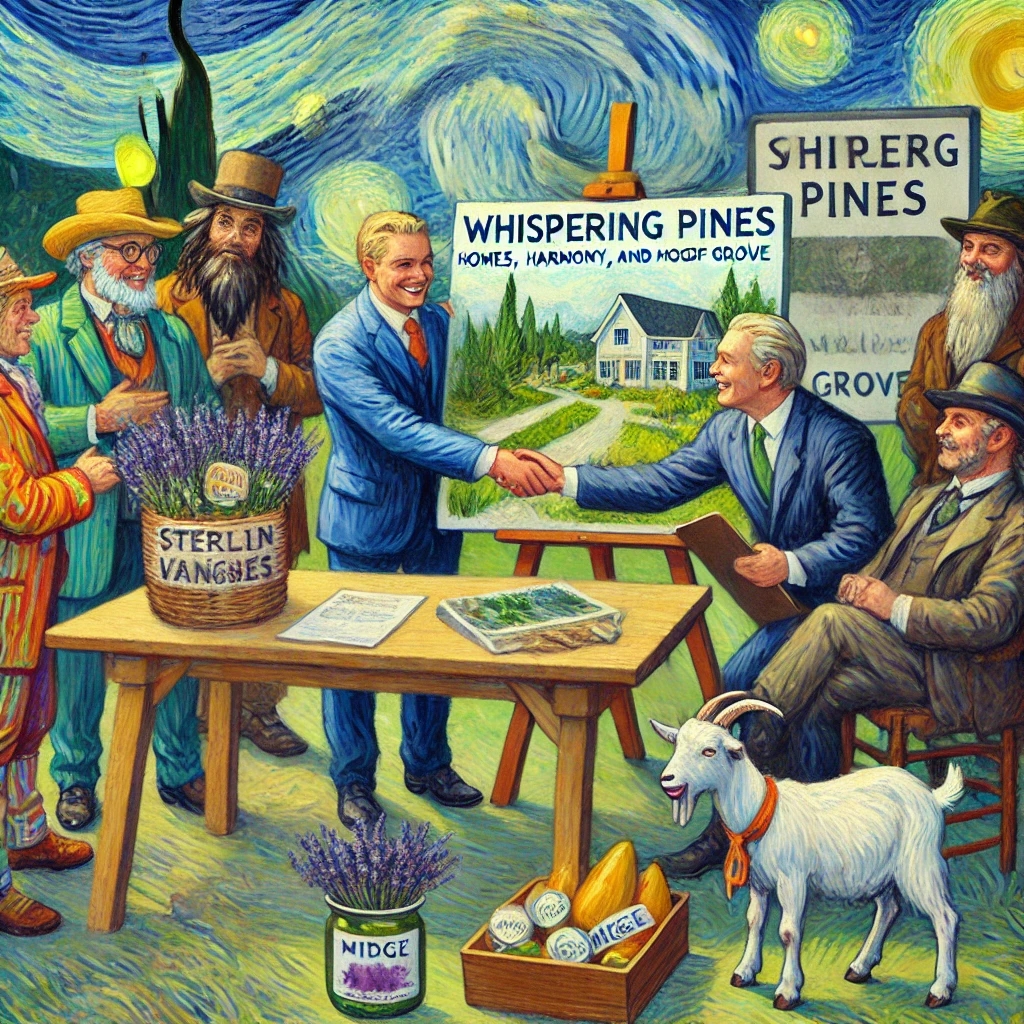
Eventually, a compromise was offered. The developers would scale down from 42 homes to 29, include a “heritage space” near the old clubhouse to honor the site’s past (read: goat sculpture garden), and construct a small public path where locals could “interact with curated nature.” Boot Barnes asked if that meant peeing behind trees was still allowed. The answer was a noncommittal shrug.
The zoning board approved the revised plan in a 3-2 vote, though two of the yes votes were later found to have received gift baskets filled with jam, aromatherapy candles, and something labeled “stress-relieving pine bark tincture.” Sheriff Holloway investigated, then declared it “a minor bribe with good intentions.”
The sign now reads:
Whispering Pines at Sequatchie – A Tranquil Landing for New Beginnings
(Now featuring goat access and scenic resentment.)
One Valley, Two Stories
In the end, the old course didn’t just become a housing development. It became a fault line. On one side, the people who came here for the view. On the other, the ones who never needed a brochure to know it was worth something.
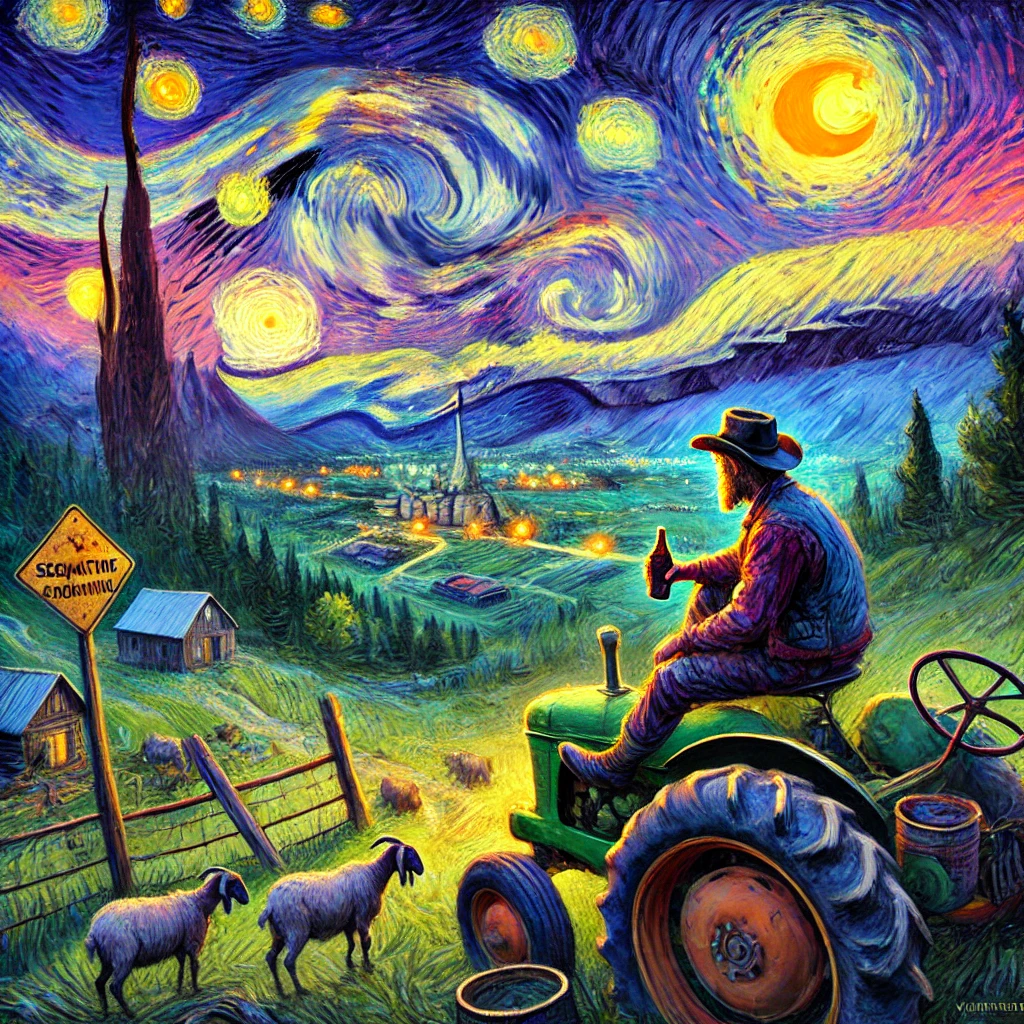
Sequatchie Crossing has always had room for both. But as Boot Barnes put it from atop a rusty tractor at dusk, watching a backhoe idle beneath the fading light:
“You can plant a fancy house on this land, but it’ll still know who fed the goats.”
At Sequatchie Crossing, we tell the stories of Sequatchie Crossing.
Please share this post with your friends, family, or business associates who may want help telling the stories of their legacy.

0 Comments