


By Tom Seest
At Sequatchie Crossing, we tell the stories of Sequatchie Crossing.
🎤 Audio Overview
The Pancake Supper Schism Of Sequatchie Creek
You can always count on Sequatchie Crossing to turn a good cause into a full-blown ecclesiastical incident. This time, it was the volunteer fire department’s annual pancake supper that left the town divided—mostly by syrup preference, sausage alignment, and the ever-contentious “flapjack fellowship clause.”
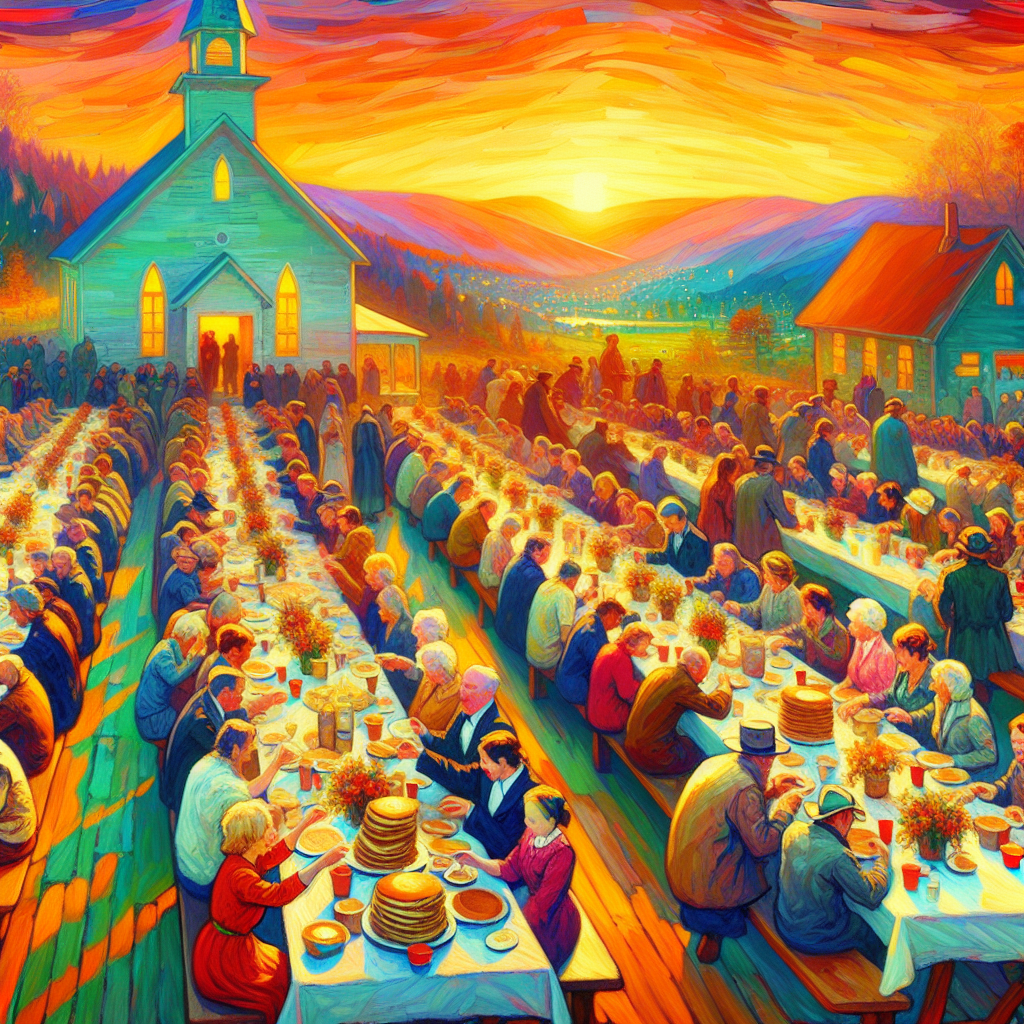
Now, this wasn’t just any breakfast-for-dinner affair. This was a decades-old tradition, a once-a-year culinary truce where Baptists, Methodists, and the unaffiliated all agree that God can be found somewhere between the butter dish and the donation jar.
The event was held, as usual, in the Sequatchie Creek Community Center—a building that doubles as a polling place, tornado shelter, and occasional gymnasium for Little Miss Sequatchie practice. The folding chairs were out, the aprons were starched, and everything was running smoother than warm syrup—until the menu was revealed.
Mabel Dean Ashcroft insisted the pancakes be served with turkey sausage, citing “heart health, modest grease levels, and spiritual clarity.”
The Pancake Supper Schism Of Sequatchie Creek
Mabel Dean Ashcroft insisted the pancakes be served with turkey sausage, citing “heart health, modest grease levels, and spiritual clarity.”
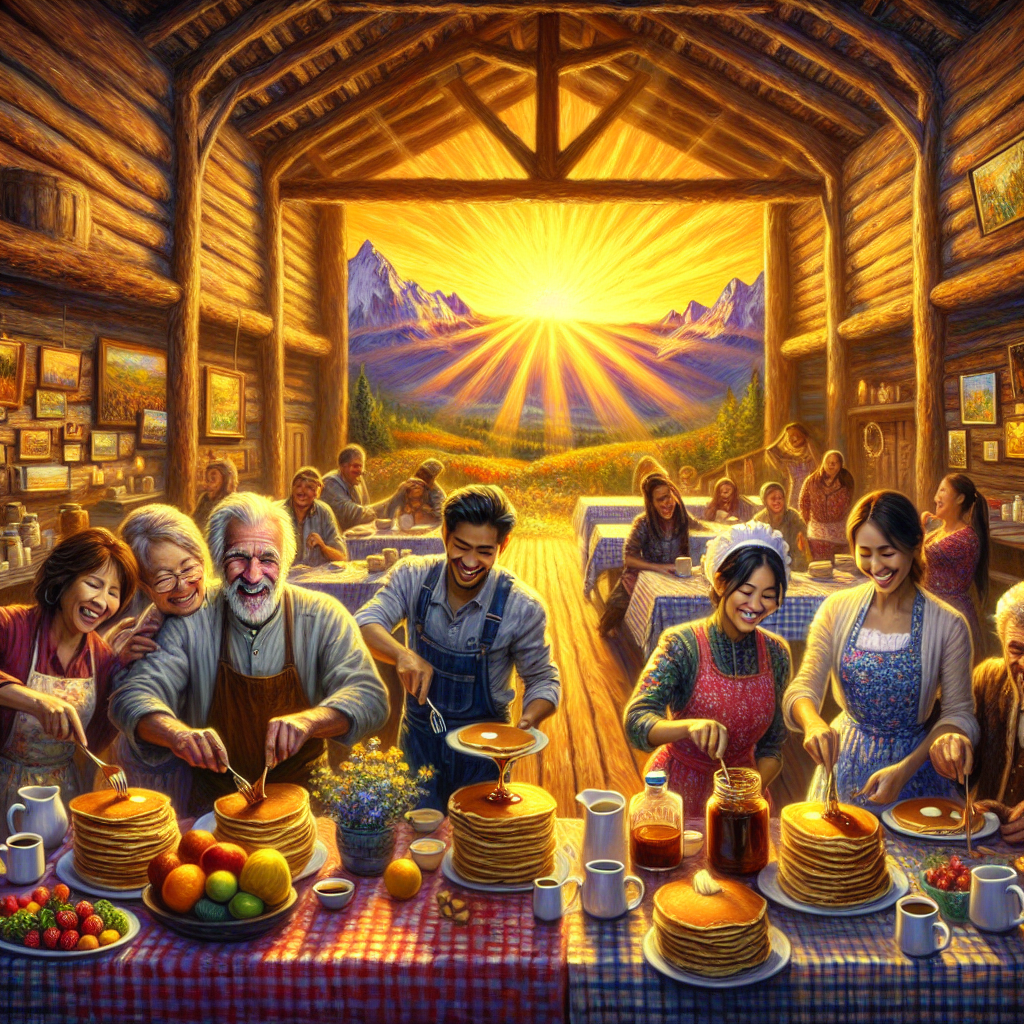
Sonny Morales, who volunteered to run the griddle this year, brought in chorizo links as a “flavor-forward act of fellowship.”
Pastor Arnold Peeler, who believes anything spicier than pepper is inviting sin, loudly objected. “The Lord never needed paprika to get His point across,” he declared, holding a maple syrup bottle like a chalice.
Lurleen Davenport came prepared with a three-ring binder containing syrup ingredient comparisons. She accused Sonny’s offering of being “culturally disruptive” and raised concerns about cinnamon being a gateway spice.
Doug “Doughboy” Teeter suggested using a drone to drop samples of every sausage variant to each table, triggering a minor panic when his prototype flew through a ceiling tile.
Meanwhile, Trixie Jo Bartlett, age 9 and self-appointed event host, took the stage with a glitter-covered spatula and demanded “equal syrup access for lactose-free citizens.” Nobody was sure what that meant, but she had already started a petition and gathered 41 signatures—including one from the coffee urn.
The tipping point came when Boot Barnes suggested we revert to the 1957 recipe which called for molasses “and just a pinch of compromise.” Shelley Wexler countered that molasses was “colonial and emotionally heavy.” Someone gasped. Someone else fainted into a plate of pancakes.
The Pancake Supper Schism Of Sequatchie Creek
Officer Kenny Joe Teeter, who was there mostly for the food, declared the situation “unfolding” and called for a 10-minute syrup cooldown. He was ignored.
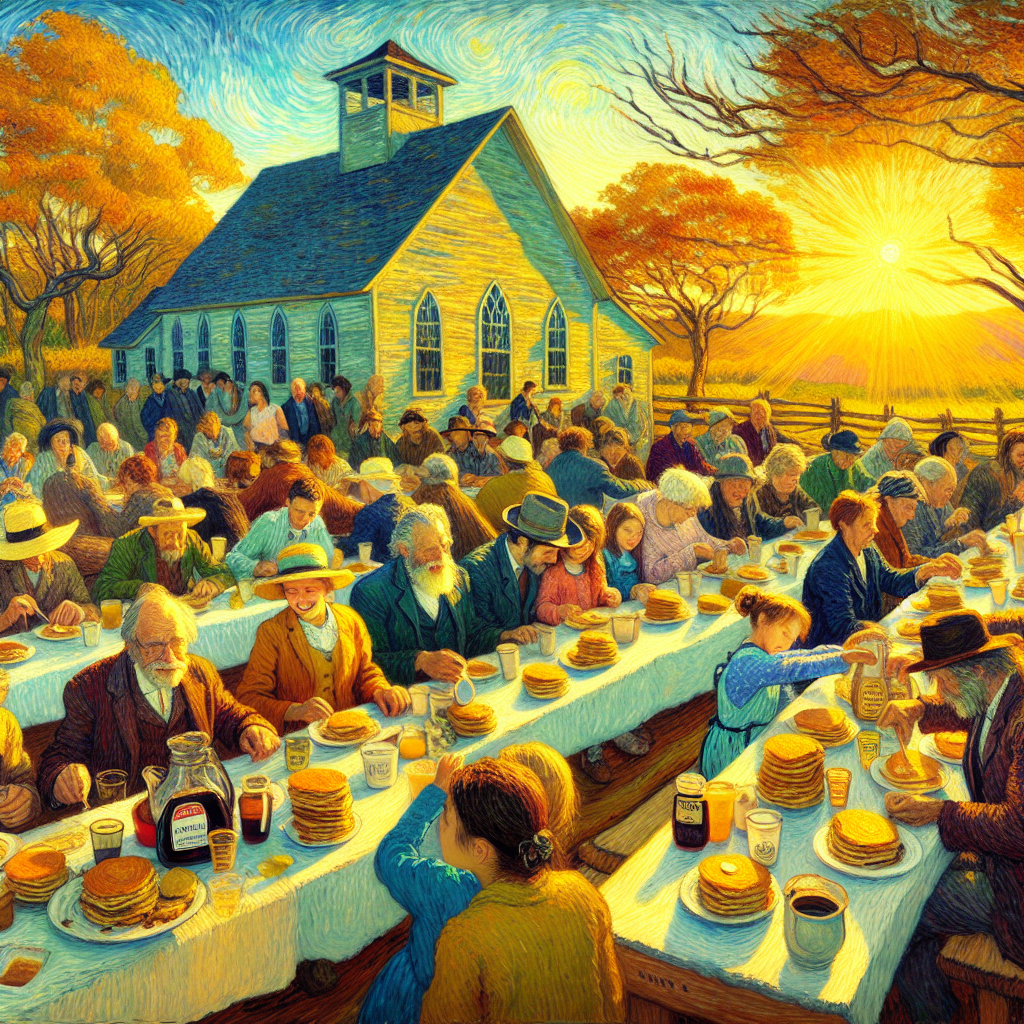
In the end, half the town walked out, two tables flipped, and Pastor Peeler declared the syrup bar “a moral gray area.” But enough funds were raised to replace the fire truck’s backup hose—and that’s what really matters.
Well, that and the fact that Evelyn Grace Tipton’s pancakes were declared “Too Dry” by public vote, which will surely be discussed in every obit she writes for the next decade.
Conclusion
At Sequatchie Crossing, we tell the stories of Sequatchie Crossing.
Disclaimer: This story is entirely fictional except for the parts that aren’t true. Any resemblance to real people, living or just stubborn, is purely accidental—but also maybe a little flattering. Sequatchie Crossing exists only in the minds of those brave enough to imagine a town where zoning laws, casseroles, and conspiracy cassettes collide in glorious disarray.

0 Comments