



The Choir Robe Laundry Scandal – Shrinkage, Sequins, and a Soloist with Nothing to Lose
By Tom Seest
At Sequatchie Crossing, we tell the stories of Sequatchie Crossing.
Please share this post with your friends, family, or business associates.
🎤 Audio Overview
The Choir Robe Laundry Scandal – Shrinkage, Sequins, and a Soloist with Nothing to Lose
It began, as most wardrobe disasters do, with good intentions and low heat. The Sequatchie Crossing Community Choir, preparing for their spring cantata, entrusted their robes to Doug ‘Doughboy’ Teeter, who had recently acquired an industrial washer-dryer combo he claimed was “sanctified for starch and spin.”
Choir robes—100% polyester, 40% prayer—were normally hand-washed by Mabel Dean Ashcroft. But Mabel was out of town for a wellness retreat hosted by Shelley Wexler (which included silent humming, sage bundles, and three kinds of herbal pudding). Doug volunteered. Mabel hesitated. The choir relented.

The Choir Robe Laundry Scandal – Shrinkage, Sequins, and a Soloist with Nothing to Lose
Twenty-two sequined robes entered Doug’s garage on Thursday night with solemn ceremony and a few stray pins. By Friday morning, they emerged looking like satin bibs fit only for rebellious toddlers and unusually theatrical pets.
Trixie Jo Bartlett, soloist for “He Touched Me (And My Hem Shall Shine),” attempted to squeeze into her robe and promptly declared, “I can’t lead praise looking like a figure skater on a mission trip.” Her robe barely made it past her hips and shimmered ominously under fluorescent lights.
Boot Barnes couldn’t raise his arms past his waist without sequins ricocheting like tiny shrapnel. “Every time I breathe, the Holy Spirit loses a rhinestone,” he whispered, looking betrayed.

Deacon Ellis, already nursing his pride from the Picnic Flag Football Incident, tried to step into his robe and promptly tore the back seam open with what witnesses described as “the sound of spiritual defeat.”
Doug, unaware of the chaos unfolding in the choir room, arrived late with a tray of cheese cubes and a printout of robe care instructions he had clearly Googled minutes earlier. “They shrank because y’all stored too much pride in them,” he explained, earning a simultaneous gasp from five altos and one soprano.
Shelley Wexler attempted to salvage the moment by waving sage over the robes and declaring it “a symbolic rebirth of the choir’s humble essence.” This resulted in a fire alarm and a 15-minute evacuation.

A heated emergency meeting was called in the fellowship hall:
- Doug offered to staple robes together for larger singers.
- Clovis Strickland suggested ditching robes altogether in favor of camo choir vests.
- Trixie Jo threatened to sing solo from the baptistry, “robe or no robe.”
Eventually, Pastor Peeler retrieved the 1987 choir ponchos from the archives. These were faded, mothballed, and smelled faintly of Lent, but they fit. Mostly. One was worn backward. One had a mysterious pocket filled with butterscotch candies and a miniature hymnal.
The cantata proceeded with tambourines, makeshift waist belts, and what can only be described as an interpretive banner dance when Trixie Jo’s second robe malfunctioned mid-bridge.
Photos from the event were edited to sepia tone “for the dignity of the vestments.”
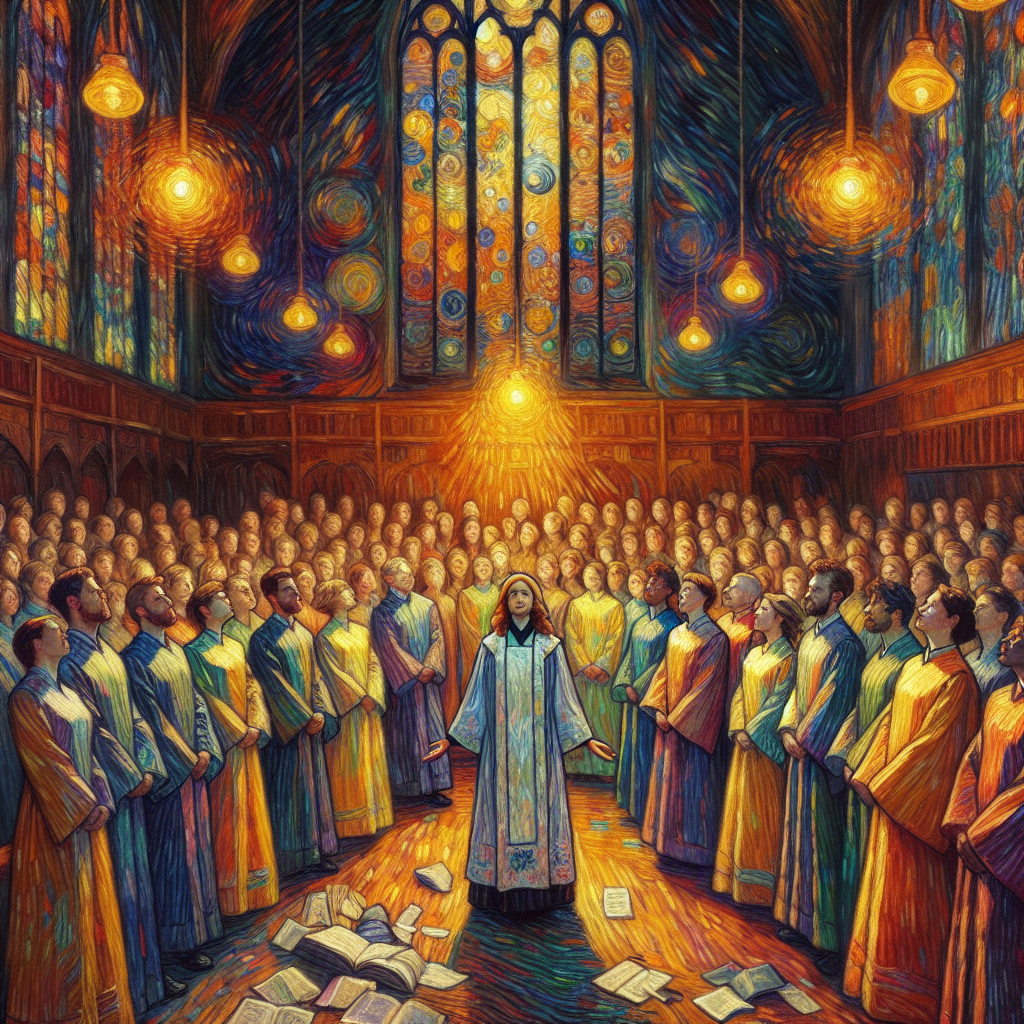
The shrunken robes have since been placed in a plastic tub labeled “DO NOT TRUST DOUG”, now displayed in the church lobby as a warning and minor tourist attraction.
Doug has proposed a new fundraising dinner called Sequins & Suppers, promising “robust starching demos and a meatloaf you can meditate to.” Mabel Dean has returned, reclaimed all laundry duties, and issued a stern decree: “If it zips, I wash it. If it shines, you better ask twice.”
At Sequatchie Crossing, we tell the stories of Sequatchie Crossing.
Please share this post with your friends, family, or business associates.
Disclaimer: This story is entirely fictional. Any resemblance to real people, living or just stubborn, is purely accidental—but also maybe a little flattering. Sequatchie Crossing exists only in the minds of those brave enough to imagine a town where zoning laws, casseroles, and conspiracy cassettes collide in glorious disarray.



0 Comments