


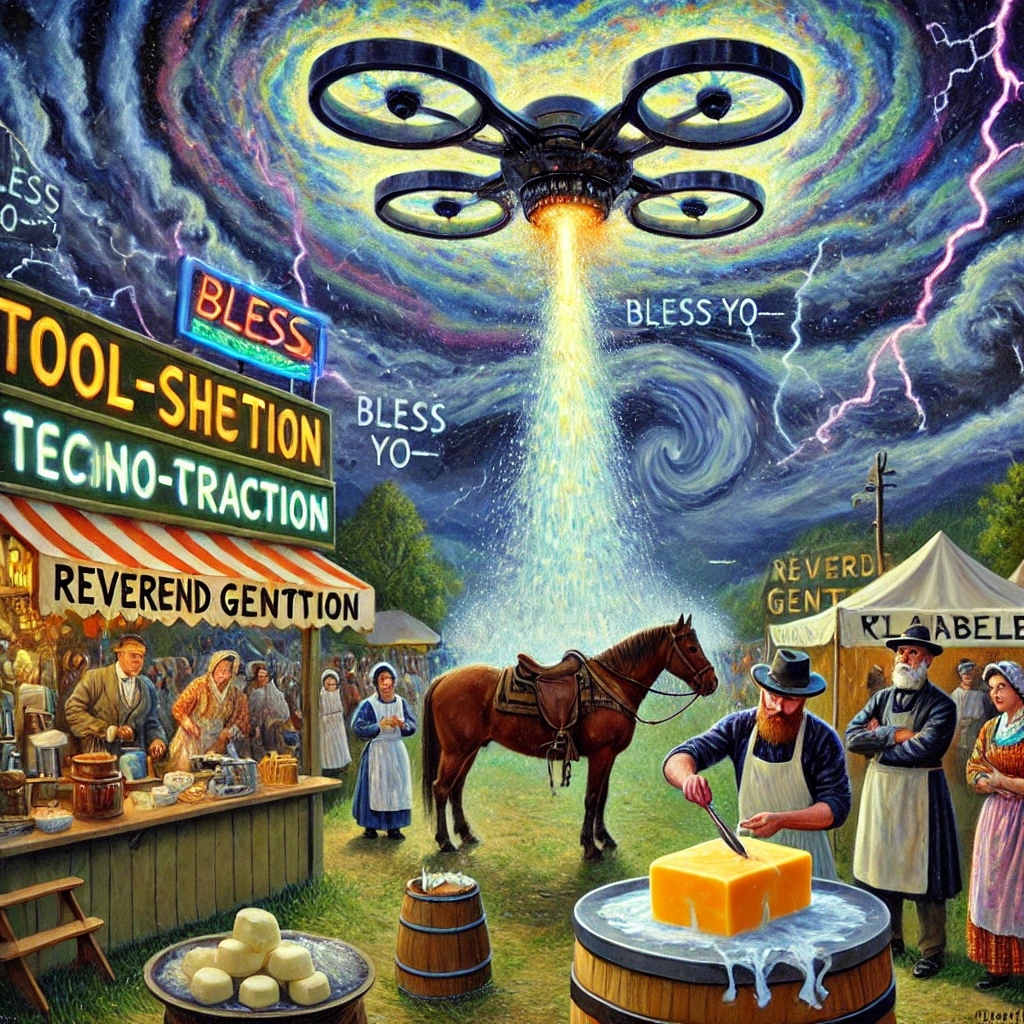
In Which Sequatchie Crossing Splits Into Two Camps, Techno-Traction and The Back-To-Hand-Tools Brigade, and Is Saved By a Quiet Man In a Straw Hat with a Pocketful Of Wisdom and a Horse Named Ezekiel.
By Tom Seest
At Sequatchie Crossing, we tell the stories of Sequatchie Crossing.
Please share this post with your friends, family, or business associates who may want help telling the stories of their legacy.
🎤 Audio Overview
The Great Divide: AI, Anvils, and Mennonite Mediation
Sequatchie Crossing had survived ice storms, church split-offs, and the brief but ill-advised town-wide kombucha cleanse. But nothing prepared it for the summer showdown between the artificially intelligent and the traditionally indignant.
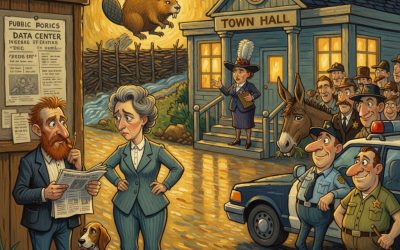
It all began when the town council, with a 3-2 vote (Boot Barnes abstained due to indigestion), approved the installation of an AI-powered Suggestion Box named Clarabelle. Housed in a repurposed soda machine outside City Hall, Clarabelle could take complaints, generate apology letters, recommend sermon topics, and even compose mildly passive-aggressive notes to neighbors about lawn maintenance.
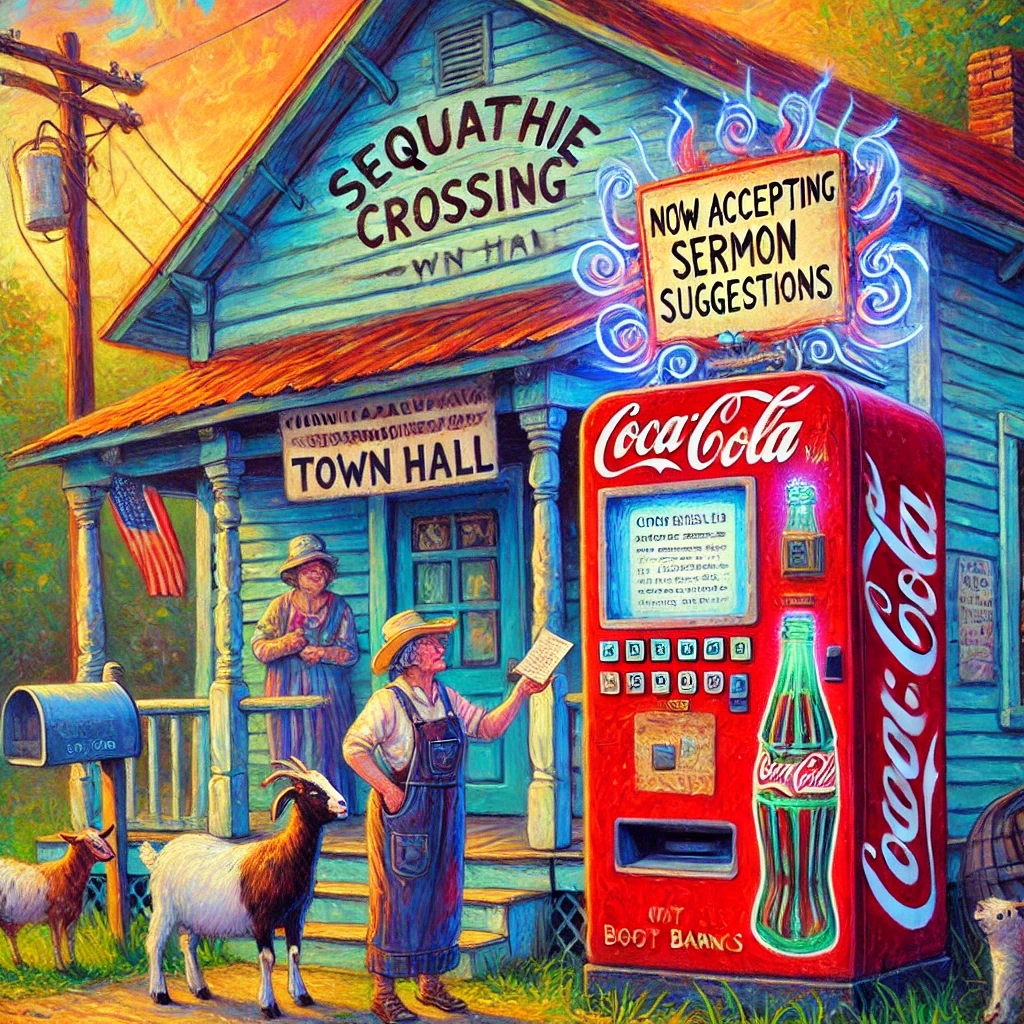
The AI Suggestion Box That Started it All
Trixie Jo Bartlett loved it. Clarabelle helped me rewrite my peach cobbler recipe to account for altitude. We ain’t got altitude, but still—it’s fluffier.”
Boot Barnes fed Clarabelle prompts like, “What would Paul write to the Corinthians if they were on Instagram?” and got back a newsletter-worthy epistle. Clovis Strickland tried to train Clarabelle to milk his goats. That went poorly and ended with a broken pressure washer, a fried Alexa speaker, and two deeply confused goats named Harold and Beans.
Shelley Wexler consulted Clarabelle for spiritual affirmations, which she printed out in three fonts, laminated, and buried around town to “reprogram the town’s electromagnetic field.”
Enter Mabel Dean Ashcroft and her newly-formed community group: “Hands Only, Hearts Pure.” Their first meeting, held in the basement of Grace United Methodist, featured no electricity, no printed agendas, and refreshments prepared exclusively with hand-whisked flour and moral judgment.
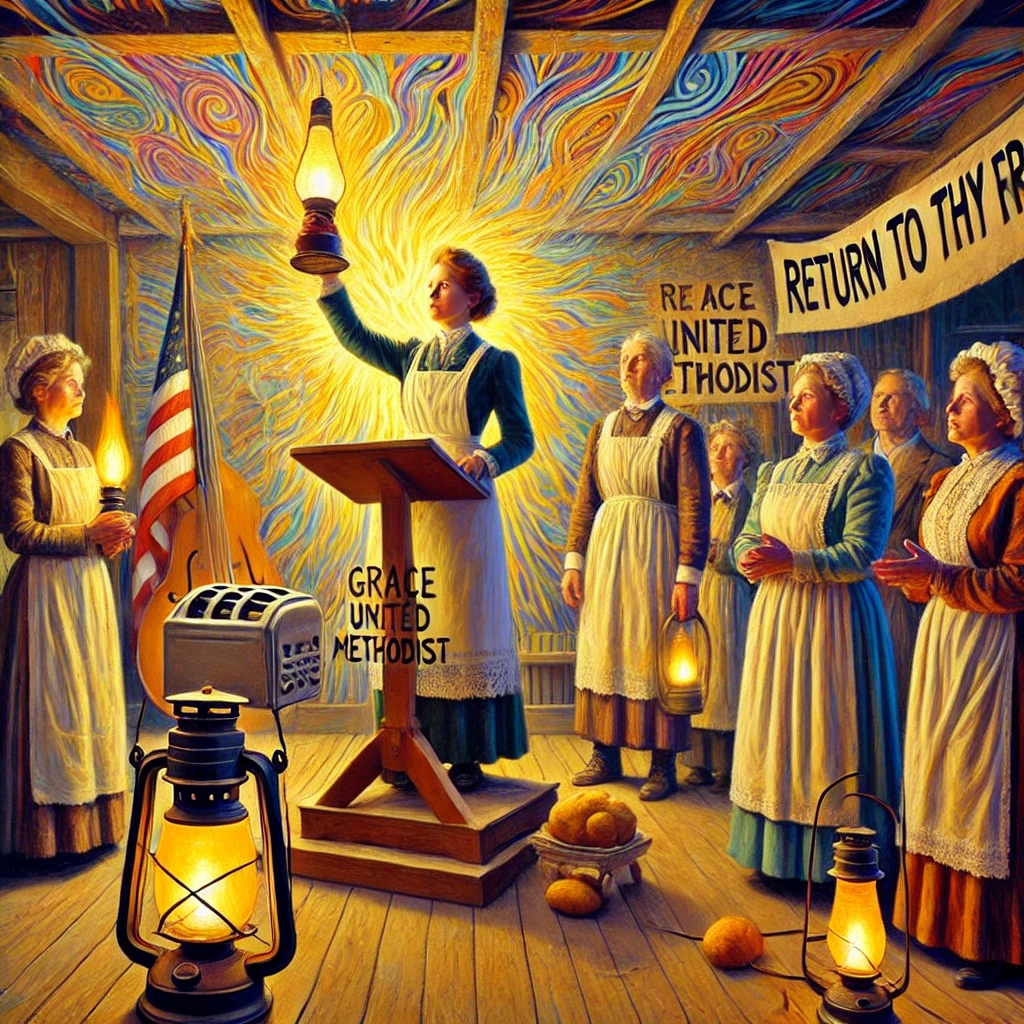
The Butter Churn Rebellion Begins Underground
“We have strayed too far from the butter churn!” Mabel Dean cried. “We’re lettin’ machines think for us. Next thing you know, Clarabelle will be pickin’ the church hymns and marryin’ couples by QR code.”
Her followers nodded solemnly, clutching hymnals and cast-iron trivets. Elaine #1 brought a kerosene lantern. Elaine #2 showed up with an unplugged toaster as a symbol.
The group’s platform was simple: less screens, more scrubbing boards. They printed handbills using a potato press. One read, “Return to thy roots—ye shall find peace in the churn.”
Tensions rose when Wade Langston proposed a Town Tech Fair to showcase AI innovations. That same afternoon, a flyer appeared around town showing a butter churn, a hand saw, and the words: “We churn our own path. No wires required.”
Lines were drawn.
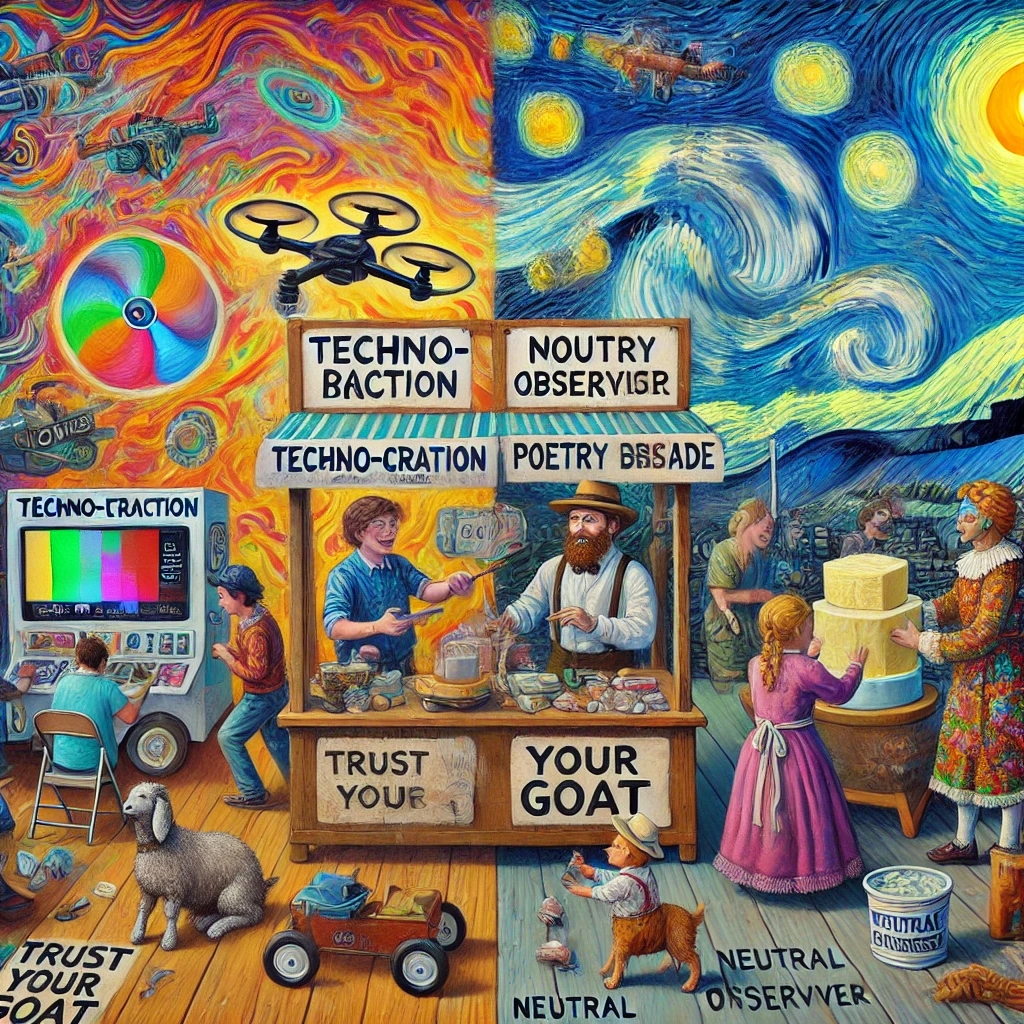
One Town, Two Booths, and a Whole Lotta Churned-up Tension
The Techno-Traction supporters wore name badges printed by Clarabelle. The Back-to-Hand-Tools Brigade wore aprons embroidered by hand with the slogan: “Unplugged but United.” Buttons the choir dog wore a bandana that read “Neutral Observer.”
At the Annual Tool Shed Festival, both factions set up opposing booths. The AI booth featured a ChatGPT-powered poetry station, AI-generated crop rotation guides, and a drone that spelled “Bless Your Heart” in biodegradable foam letters over the pickleball court.
The hand-tools booth held live whittling demonstrations, butter churning, a spoon-carving workshop led by Elaine #2, and a butter sculpture of Reverend Gentry in mid-hymn.
Verbal skirmishes broke out. Mabel Dean accused the drone of being “the devil’s hummingbird.” Trixie Jo claimed the AI had improved her cobbler and her sleep schedule. Clovis started selling bumper stickers that said, “Trust Your Goat, Not the Cloud.”
Boot Barnes, trying to mediate, asked Clarabelle for a diplomatic resolution. Clarabelle printed a 42-page proposal comparing Swiss neutrality to sourdough starters. Nobody read it, except Shelley Wexler, who claimed it caused a mild chakra realignment.
Dusty Teeter livestreamed the entire event on Facebook and TikTok under the hashtag #AIvAnvil, narrating the showdown with commentary that ranged from insightful to mildly fermented.
Just as the town was about to vote on whether Clarabelle would stay, a thunderstorm rolled in. The voting tent collapsed. The drone short-circuited mid-flight and landed on the butter sculpture, melting Reverend Gentry’s face into a holy puddle.
When Anvils Speak Louder Than Words
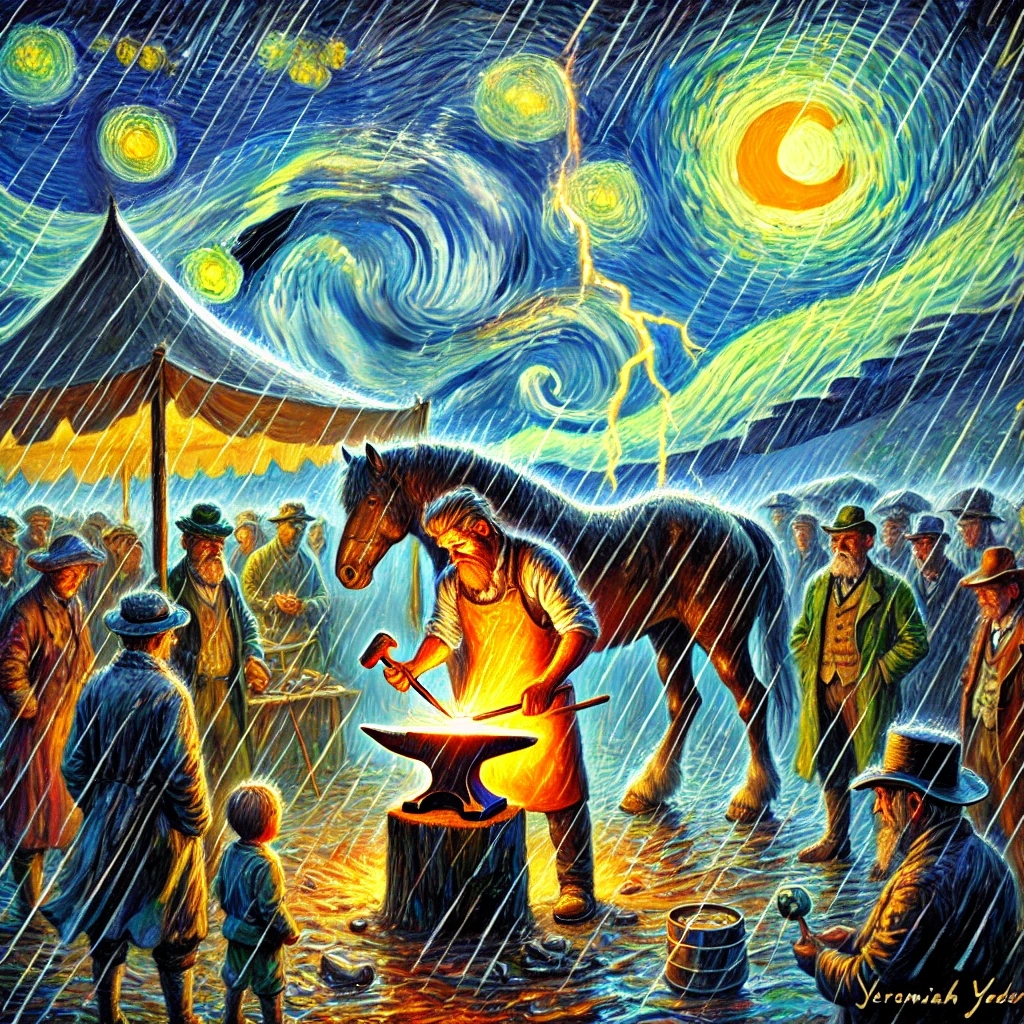
That’s when Jeremiah Yoder, the quiet Mennonite farrier from just outside town, stepped forward. He’d said little all day, just offered farrier services, gave Ezekiel (his stoic draft horse) a steady supply of apples, and nodded at everyone like he knew something they didn’t.
Now he spoke.
“Y’all are fussin’ over who holds the plow, not how straight the rows are.”
The crowd went still. Even Buttons sat down like he’d heard gospel.
Jeremiah continued, “A good tool—whether it runs on elbows or electricity—serves a purpose. But neither replaces kindness, and neither should divide kinfolk.”
He then pulled out a small anvil he’d brought “just in case” and, during the thunderstorm, forged a simple horseshoe on the spot under a pop-up tent. Lightning cracked. Thunder rumbled. The rhythmic ping of hammer on steel echoed through the fairgrounds like a hymn.
“Make peace like this,” he said, offering the still-warm horseshoe to Mabel Dean, who began to cry and whispered something about sourdough and forgiveness.
Peace Found in Programming and Butter Churning
Clarabelle was moved to the library and designated “advice only, no automation.” Mabel Dean agreed to let Clarabelle help rewrite the minutes from church committee meetings—provided they were printed in cursive and read aloud by Wade Langston in a respectful tone.
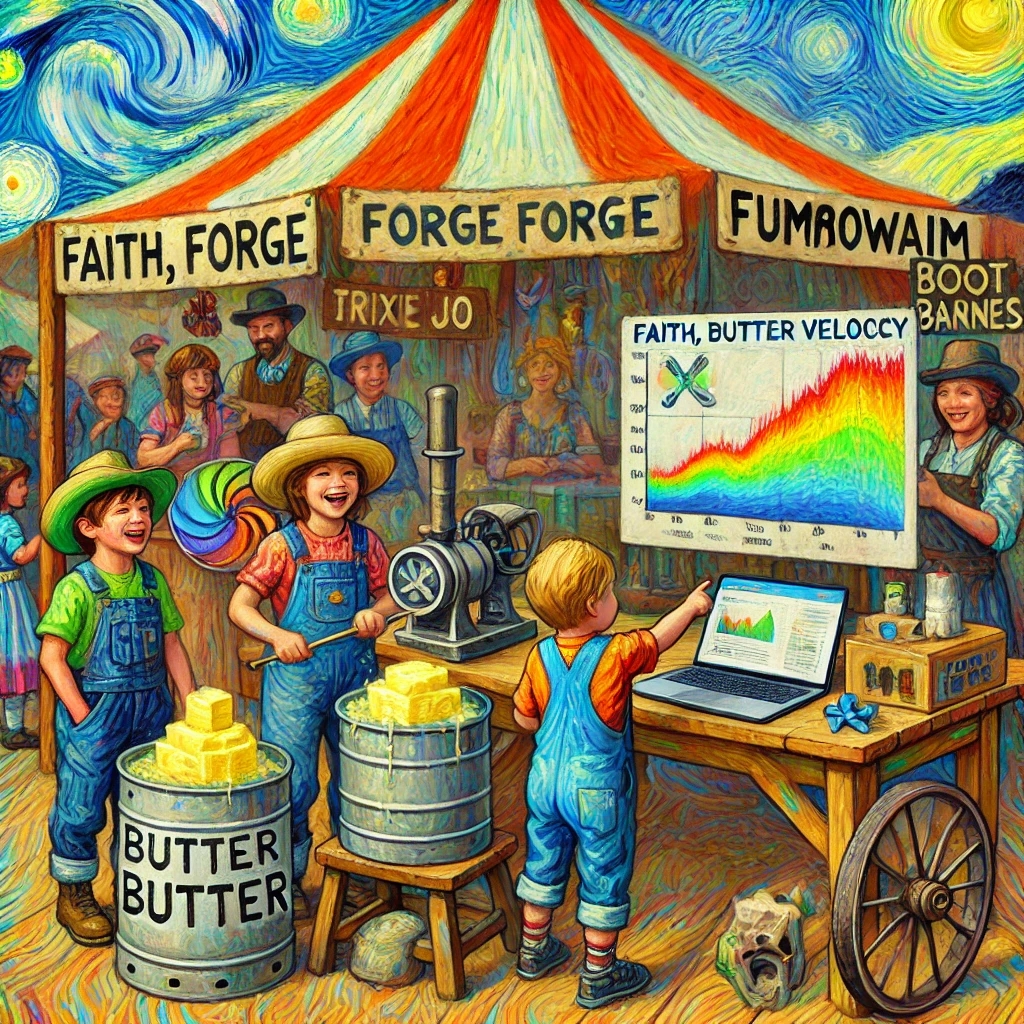
Jeremiah’s horseshoe was hung above the voting booth as a symbol of balance. Boot Barnes started selling trucker hats that read “Faith, Forge, and Firmware.” Shelley Wexler launched a fusion meditation series called Binary Breaths, featuring candlelit breathing alongside AI-generated mantras.
And every year since, the Tool Shed Festival includes a new booth: the Hand-and-Code Tent, where kids learn to program chatbots and churn butter by hand—sometimes simultaneously. Last year, one enterprising child coded an app to track butter churn velocity. Trixie Jo framed the graph.
In Sequatchie Crossing, wisdom is measured in both kilobytes and calluses. And if you ever find yourself caught between a drone and a butter sculpture, just look for the man with the anvil.
Disclaimer: This is a work of fiction. Any resemblance to real Mennonites, malfunctioning drones, emotionally influential butter sculptures, or low-lying thunderstorms is entirely coincidental—but in Sequatchie Crossing, entirely plausible. Just in case. Any resemblance to real people, living or just stubborn, is purely accidental—but also maybe a little flattering. Sequatchie Crossing exists only in the minds of those brave enough to imagine a town where zoning laws, casseroles, and conspiracy cassettes collide in glorious disarray.
At Sequatchie Crossing, we tell the stories of Sequatchie Crossing.
Please share this post with your friends, family, or business associates who may want help telling the stories of their legacy.

0 Comments