


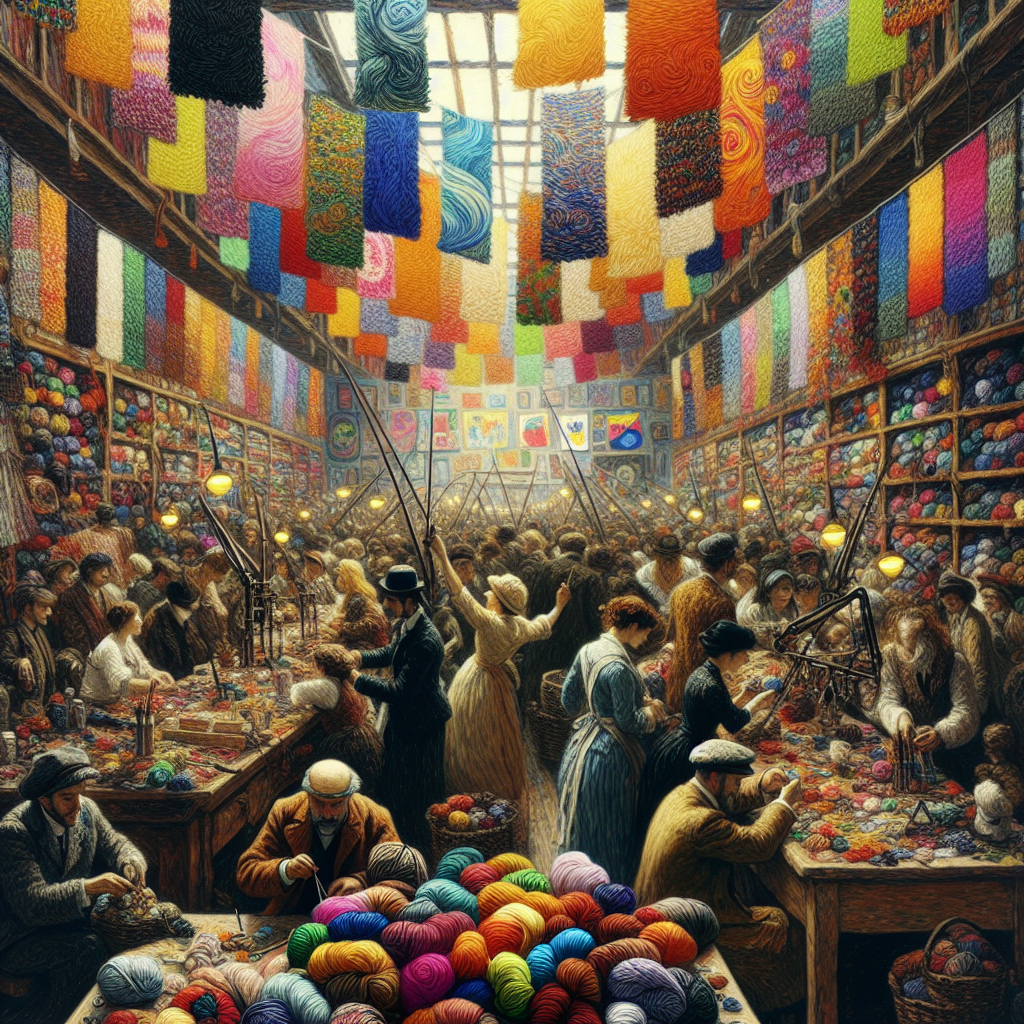
The owner bans acrylic yarn. A rogue crochet underground emerges.
By Tom Seest
At Sequatchie Crossing, we tell the stories of Sequatchie Crossing.
Please share this post with your friends, family, or business associates.
🎤 Audio Overview
The Yarn Shop Rebellion – Crochet Uprising After Acrylic Yarn Gets Banned
It began with a sign taped to the inside of the Yarn Barn’s antique glass door:
“Due to a recent vibrational revelation, we will no longer carry synthetic fibers. Only natural, spiritually-aligned yarns allowed. – Alyssa Crenshaw”
Mabel Dean Ashcroft read it once. Then twice. Then fainted into the discount bin of alpaca blend.
The next morning, a hushed outrage simmered over coffee at Earl’s Market. Boot Barnes, still chewing on a slice of banana bread like it held legal precedent, declared, “This is how civil wars start. First it’s yarn. Then it’s biscuits.”
Coach Freddie nodded solemnly. “Synthetic grit builds character.”
Maggie Sue Dillard agreed, in theory, but only because the church prayer shawl ministry had just lost its $12.99 three-pound roll of lavender acrylic. “You try crocheting through grief with bamboo fiber,” she muttered, stirring the pot of pinto beans like it owed her an apology.
By Wednesday, Evelyn Grace Tipton was editing angry letters to the editor for women too furious to type and too polite to say so in public. Each began with some variation of “With all due respect to Alyssa Moon Crenshaw…” and spiraled from there.
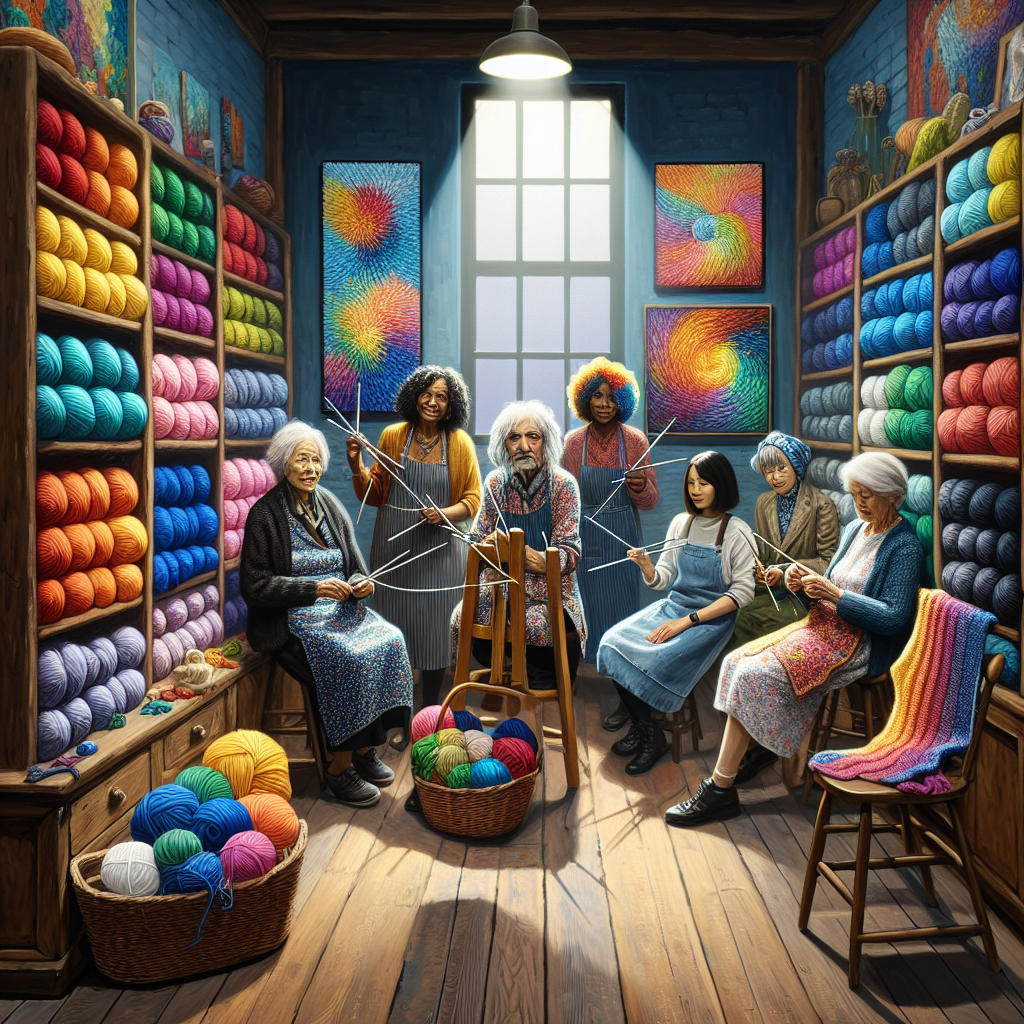
The Yarn Shop Rebellion – Crochet Uprising After Acrylic Yarn Gets Banned
Thursday night’s Quilting Guild meeting was relocated to the VFW due to ‘spiritual incompatibility’ with the Yarn Barn’s new energy.
Alyssa arrived in a hand-dyed hemp poncho, holding a tambourine and trailing the scent of patchouli and peppermint oil. “I invite us to elevate beyond plastic-based creativity,” she said, setting down a centerpiece made of reclaimed wool and judgment.
She was booed. Quietly, of course. But it was spiritually resonant booing.
That same night, Chester Ray Blevins distributed laminated flyers titled “THE ACRYLIC CONSPIRACY: A Timeline of Yarn-Based Oppression.” He claimed to have uncovered a secret amendment in the town’s 1987 bylaws protecting “crafting choice in matters spiritual, material, and chemical.”
Boot Barnes supported this with a box of what he called “yarn receipts” from 1979, including a faded Polaroid of Mabel Dean in what appeared to be a polyester poncho—though she insists it was “cotton-adjacent.”
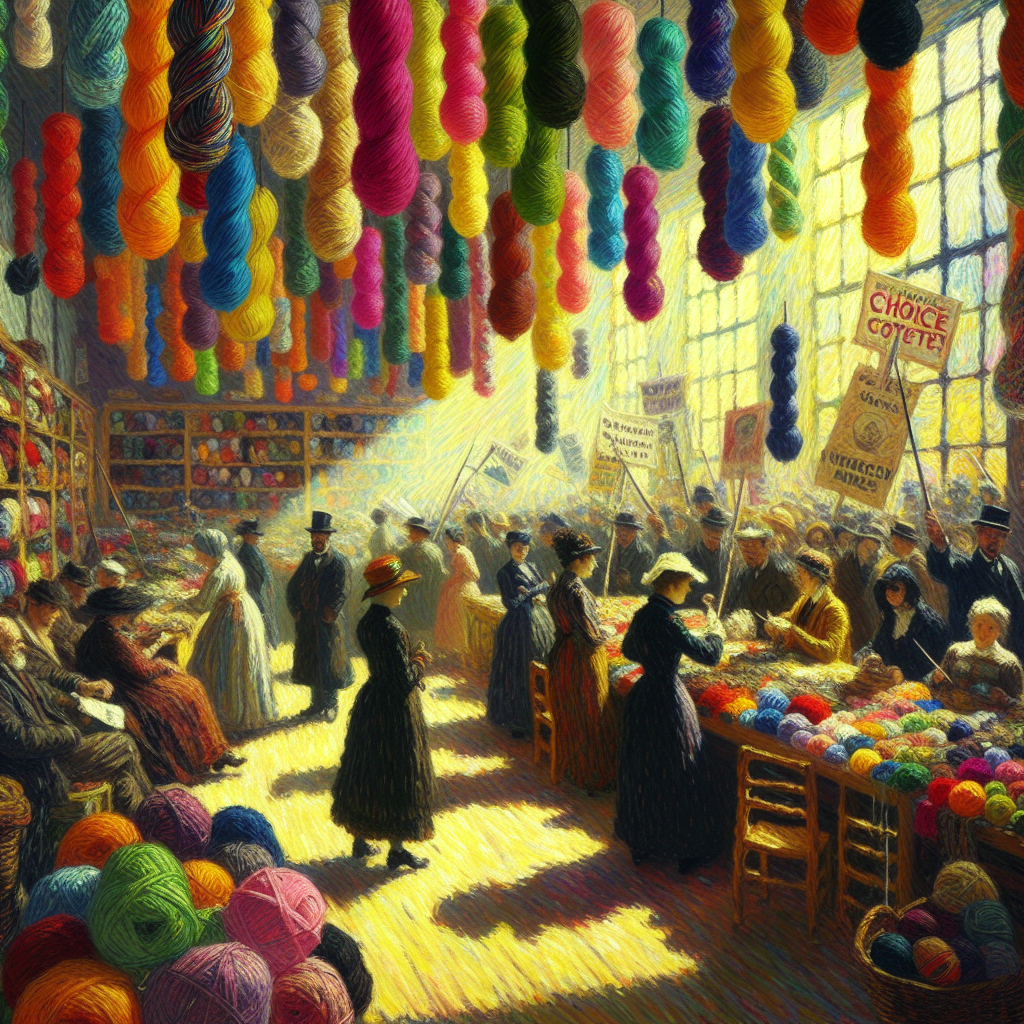
By Friday, an anonymous crochet cell calling itself Yarnarchy began meeting under the old bleachers behind the high school.
Their motto? “Loops before laws.”
They wore black hoodies adorned with covert granny squares and communicated in coded stitch patterns. Their leader? Rumored to be Tiffany Roark, who went live with a stream titled “Fiber Freedom: Reclaim the Stitch!”
Within 12 hours, she’d gained 2,000 followers, a cease-and-desist from Lurleen Davenport for “nonconforming aesthetic rebellion,” and a restraining order from Wade Langston, who called her crochet graffiti “borderline whimsical.”
Pastor Peeler tried to intervene with a sermon titled “Blessed Are the Wool-Makers,” but it was drowned out by the chant, “No knots, no peace!” and one particularly vocal protestor (Clovis) claiming yarn bans were “a precursor to full textile surveillance.”
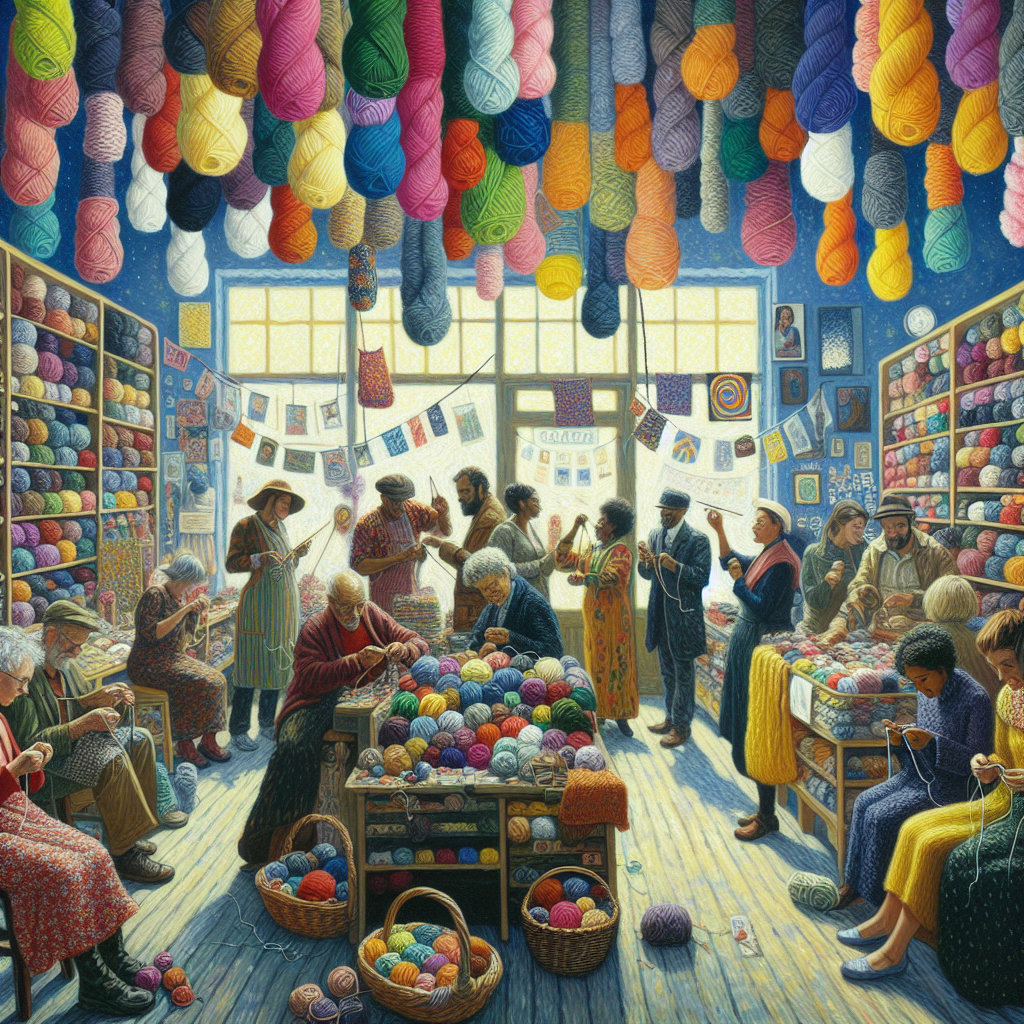
Mayor Tillie Tuttle called an emergency town hall in the community center, moderated by Evelyn Grace Tipton (who brought both a gavel and a lavender sachet “for tone regulation”).
Alyssa and Brett opened with a PowerPoint titled “Yarn, Chakras, and the Sacred Skein.” Halfway through, Coach Freddie stormed out muttering about “fiber fascism” and promising to knit his feelings into a football cozy.
Dr. Neil Cowgill took the floor to read a 12-page dissertation on “Material Symbolism in Appalachian Thread Culture.” He was shouted down after page three by Sister Lila Mae Pruitt, who declared the entire meeting “a den of thread-witches.”
Chester Ray passed out flyers demanding yarn neutrality, while Doughboy Teeter live-streamed the chaos with augmented-reality overlays identifying everyone’s probable crafting alignment.
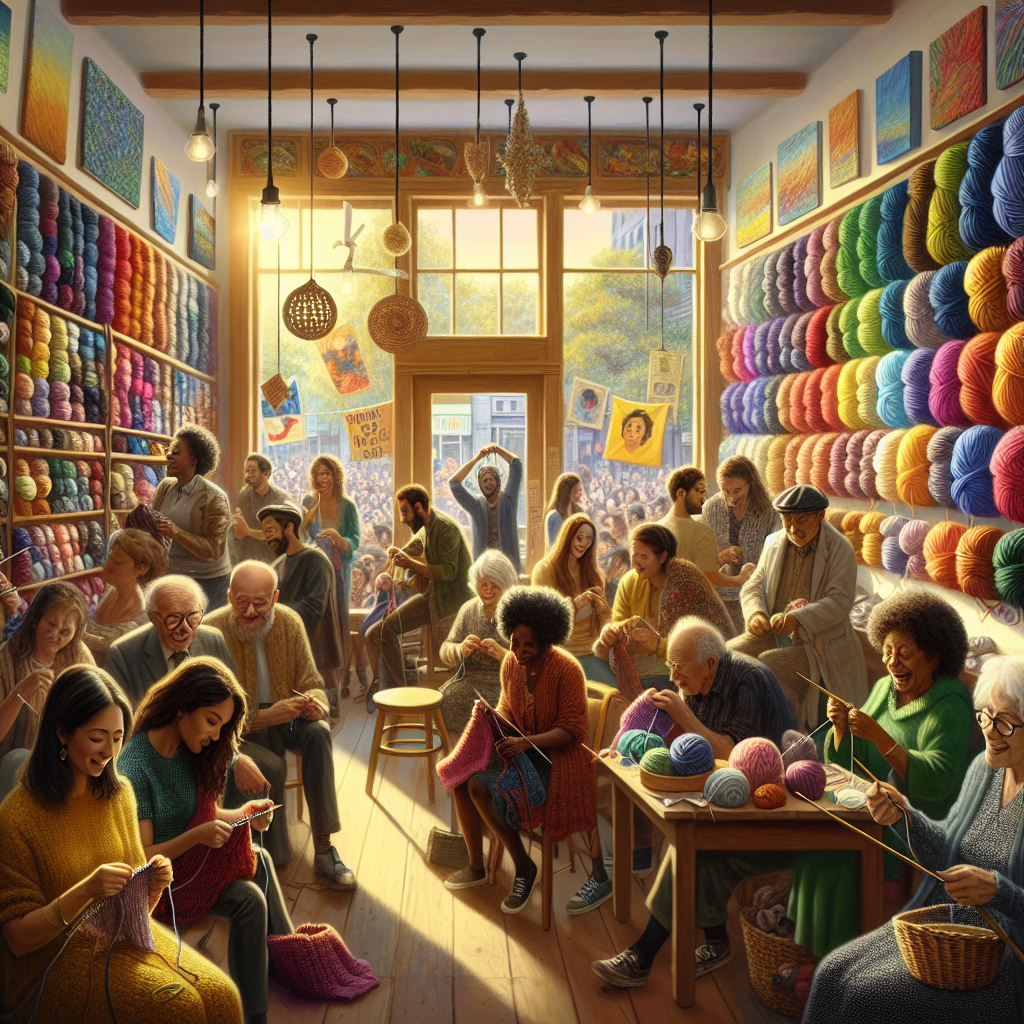
After three hours, a compromise was brokered by Maggie Sue Dillard: Alyssa could keep her natural-only Yarn Barn, but a new “Poly Blend Pavilion” would be established in the storage closet behind the church fellowship hall—supervised jointly by Chester and Boot.
Trixie Jo Bartlett immediately declared the space “The People’s Crochet Annex,” passed a glitter-free resolution of purpose, and formed the Sequatchie Junior Yarn Tribunal.
The first order of business? Investigating the suspicious disappearance of the rainbow chenille.
In Sequatchie Crossing, even peace is hand-stitched, color-coded, and contested.
Disclaimer: This is a work of fiction except for the parts that aren’t true. Any resemblance to real yarn shops, underground knitting movements, or tambourine-wielding fiber activists is purely coincidental. Probably. But if your town bans acrylic, don’t say we didn’t warn you. Any resemblance to real people, living or just stubborn, is purely accidental—but also maybe a little flattering. Sequatchie Crossing exists only in the minds of those brave enough to imagine a town where zoning laws, casseroles, and conspiracy cassettes collide in glorious disarray.
At Sequatchie Crossing, we tell the stories of Sequatchie Crossing.
Please share this post with your friends, family, or business associates who may want help telling the stories of their legacy.

0 Comments