


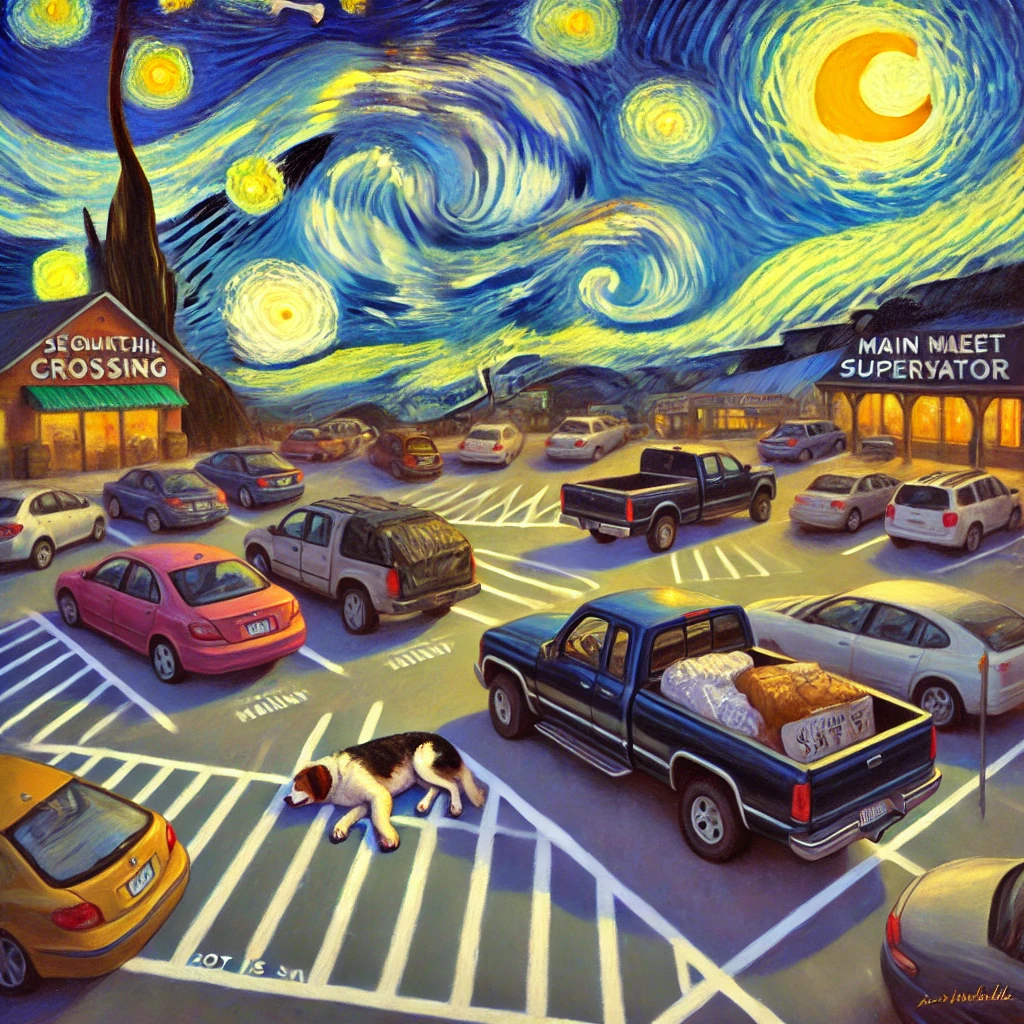
Algorithm Suggests Cars Park Straight, Locals Call It Communism
By Tom Seest
At Sequatchie Crossing, we tell the stories of Sequatchie Crossing.
Please share this post with your friends, family, or business associates who may want follow the news from Sequatchie Crossing.
🎤 Audio Overview
Cast You Know (and Can’t Park Around)
-
Boot Barnes — former lawn-chair diplomat, current self-appointed vice-chair of the Parking Committee, owns a suspiciously glowing notebook.
-
Mabel Dean Ashcroft — clipboard sovereign, parliament of one, keeper of forms no one asked for.
-
Clovis Strickland — Chief of Algorithm Defense (self-proclaimed), wears a foil crown to block “mind-pings.”
-
Sheriff Peeler — long-suffering referee of things the law never imagined.
-
Reverend Gentry — Fellowship Hall pulpit thunderer; believes salvation may require a password but not a paint roller.
-
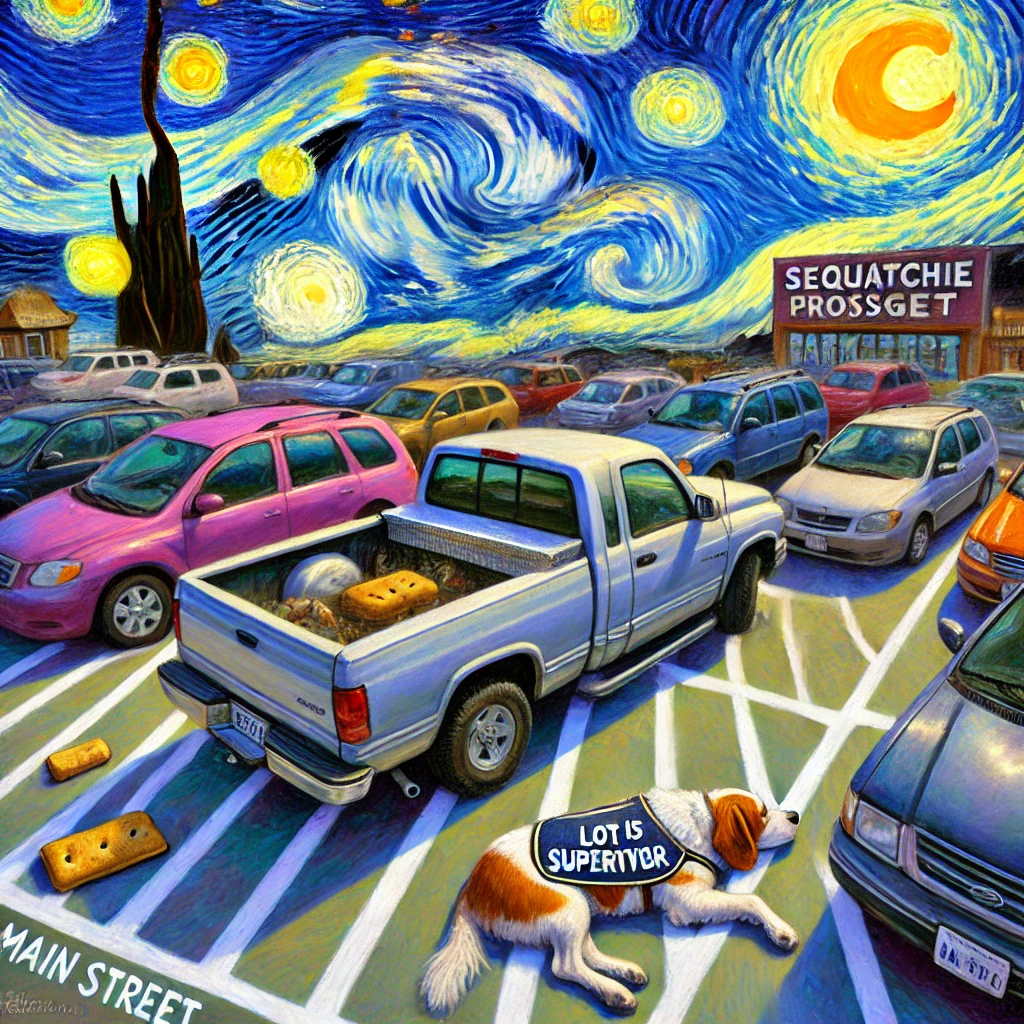
Daisy — the hound; naps diagonally, parks likewise.
-
Trent Holloway — outsider IT person who pronounces “cache” correctly; thinks lines are friendly suggestions from geometry.
-
The Parking Committee — three retired deacons and one man who hasn’t driven since ’92 yet claims perfect record.
ACT I — The Proposal Nobody Asked For But Everybody Fought
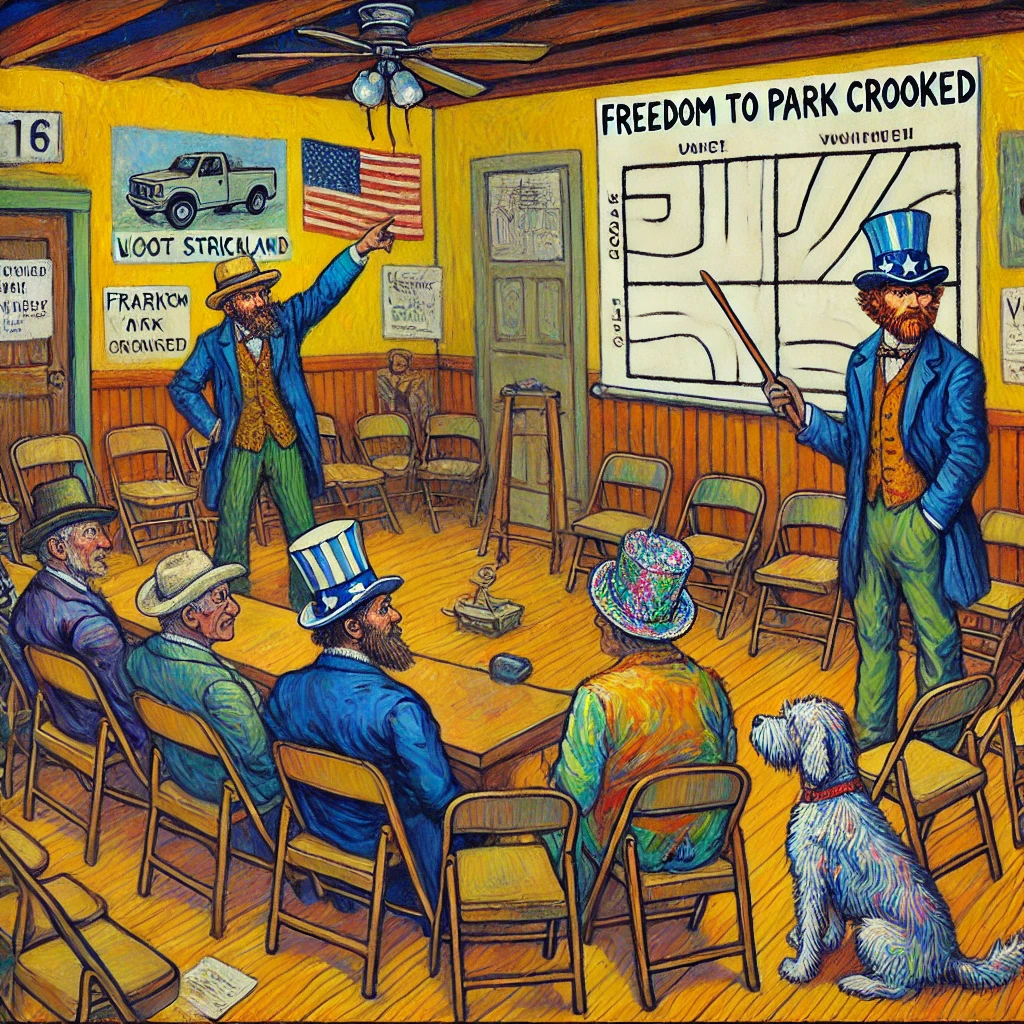
The Parking Committee’s big night drew half the town to the Community Center and all the drama from three counties. Folding chairs squeaked into crooked gangways. Someone had painted a “DEMONSTRATION ZONE” on the hardwood with masking tape, but the tape itself wandered like a gossip’s story.
Boot Barnes rapped the table with a pine gavel he claimed was “locally felled, ethically whittled.”
“On tonight’s docket,” he announced, “the artificial intelligence we done downloaded will present a modest suggestion: angle the parking lines by 45 degrees on Main. Safer exits. Fewer sideswipes. More room outside Mabel’s Meatloaf—long may it reign.”
He gestured toward a projector, which hummed like a tired cicada. The first slide appeared: a friendly diagram with neat little cars resting obediently in angled slots, all pointing the same way like a church choir that actually rehearsed.
Trent stood from the back row, wire-framed glasses catching the light. “The model ran fifteen simulations,” he said, adjusting his tone to the room’s suspicion. “Angled parking increases capacity by twelve percent, reduces door dings by—”
“Door dings are how folks say hello around here,” Clovis interrupted, rising with foil crown glinting. “If I can’t christen a man’s truck with my truck, then what is a truck for?”
Laughter rippled. Boot held up his hands. “Order. We’ll allow comment. Mabel, you’ve got a stack?”
Mabel Dean Ashcroft rose, her clipboard immaculate and possibly dangerous. “Six official objections,” she declared. “Exhibit A: God gave us the freedom to park crooked, and I will be crooked for Him. Exhibit B: angled lines favor right-handed turners and that’s discrimination against lefties. Exhibit C: the diagonal is a slippery slope toward enforced tidiness, which history shows is a prelude to communism.”
Sheriff Peeler muttered, “History shows we ain’t good at slopes.”
Boot tried a conciliatory smile. “Mabel, with respect, this is about safety.”
Mabel tapped her pen. “Safety is fine when it’s voluntary.”
Reverend Gentry cleared his throat with sermon authority. “The book of Judges reminds us: in those days there was no king in Israel; everyone did what was right in his own eyes.” He paused for effect. “And some of those eyes prefer a gentle slant.”
Trent wheeled out a second slide—the Piggly Wiggly lot, dotted with red Xs marking past collisions. “These are sideswipes from the last twelve months.” He clicked to the next slide, projecting an angled future of serene egress.
A silence, then Daisy the hound let out a single, skeptical woof. The room took it as an omen.
Boot shrugged. “Motion to pilot angled lines outside the Pig for thirty days?”
One deacon raised a trembling hand. Another followed after a theological sigh. The man who hadn’t driven since ’92 stared at the ceiling, then nodded like a weather vane catching a merciful wind.
Motion carried.
Clovis stood. “Then I move to form a Counter-Angles Vigilance Unit to keep Sequatchie safe from geometry.”
“Seconded,” said half the room.
Boot sighed. “Fine. Counter-Angles gets a folding table and one shared coffee urn. We begin at dawn.”
ACT II — Paint at Dawn, Panic by Noon
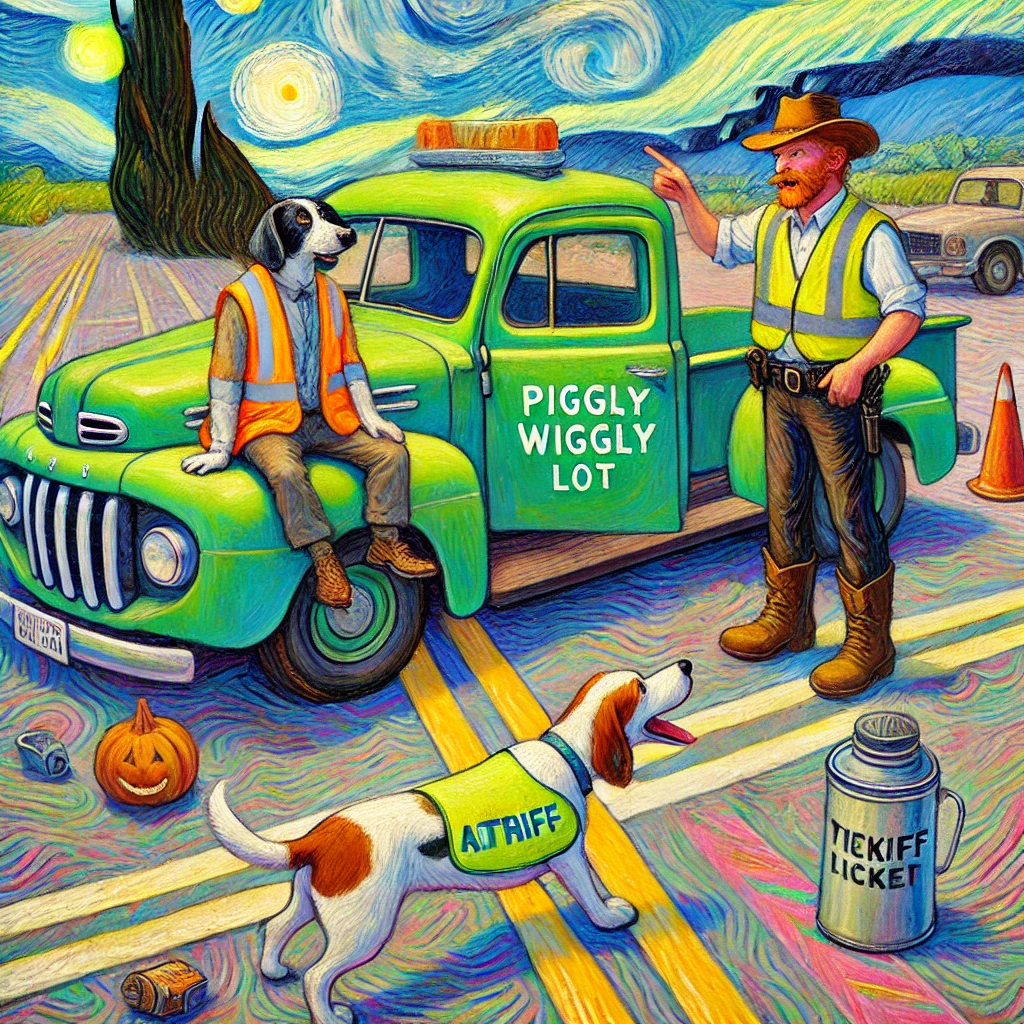
The road crew was really just Trent in a reflective vest and Boot guarding a thermos labeled Authority. By 7 a.m., angled white lines glowed across the Piggly Wiggly lot like tidy teeth. The paint dried with unnerving confidence.
“Looks… straight,” Sheriff Peeler ventured.
“Angled,” Trent corrected gently.
“Straight-enough crooked,” Boot translated.
Cars trickled in. A minivan hesitated, drifted across three bays like a wandering canoe, then settled properly, to its own astonishment. A battered Ford tried the old diagonal-diagonal compromise—nose in, tail out, wheels pointed toward prophecy—then scooted back between the lines with a guilty shimmy. For an hour, a fragile peace held.
At 9 a.m., Clovis arrived in his pickup, foil crown catching the Wednesday sun. He rolled across two bays entirely, cut the engine, then looked out the window at the white paint like it had insulted his lineage.
He flung open the door. It tapped the adjacent sedan’s handle with the intimacy of a first date.
“Behold,” he announced, stepping down. “Communism in chalk.”
“It’s paint,” Trent said.
Clovis crouched and rubbed his thumb across a line, smearing it slightly. “Ah-ha!”
Sheriff Peeler approached, ticket book out. “Morning, Clovis. You want to realign?”
Clovis placed a boot dead center on the line. “Not until I speak my rights into the asphalt.”
Boot arrived, puffing. “You can speak your rights while aligning into the community.”
“Freedom means zig-zag,” Clovis proclaimed. “My granddaddy parked skew since 1948. He rotated right there—see? You can still make out the fossil of his bias-ply.”
The lot began to fill—outsiders, originals, Sunday-hat ladies, and two high-schoolers recording on their phones for the group Sequatchie Crooked or Not. A woman in yoga pants whispered to her husband, “This is… kind of nice? I can open the door.”
Her husband, an outsider still in linguistic probation, said, “Let’s keep our voices below the angle of attack.”
Mabel arrived with a rolling case. She snapped it open like a trial lawyer. “I have affidavits from ten citizens vowing to park diagonally in a diagonal rebellion. Exhibit D: a theological treatise on straight lines and their peril.”
“Do you have Exhibit E,” Boot asked, “which is just parking between the lines?”
“Yes,” Mabel said, producing a blank page. “E stands for Empty Gesture.”
Daisy wandered through the scene, sniffed a fresh line, decided against commentary, and circled into a nap that intersected three spaces and part of the cart corral. A toddler exclaimed, “She’s the line boss!”
Sheriff Peeler cleared his throat. “Clovis, you are—technically—not aligned to any known geometry. I can cite you or we can try again.”
Clovis climbed back into his truck, wrenched the wheel, and—miracle—settled perfectly within the angle. The crowd oohed. He threw his hands up like a rodeo hero. “I am the exception that proves the conspiracy!”
Boot grinned. “We’ll call that progress.”
“Don’t you dare,” Mabel warned. “Progress has consequences.”
ACT III — Facebook War and Other Small Tragedies
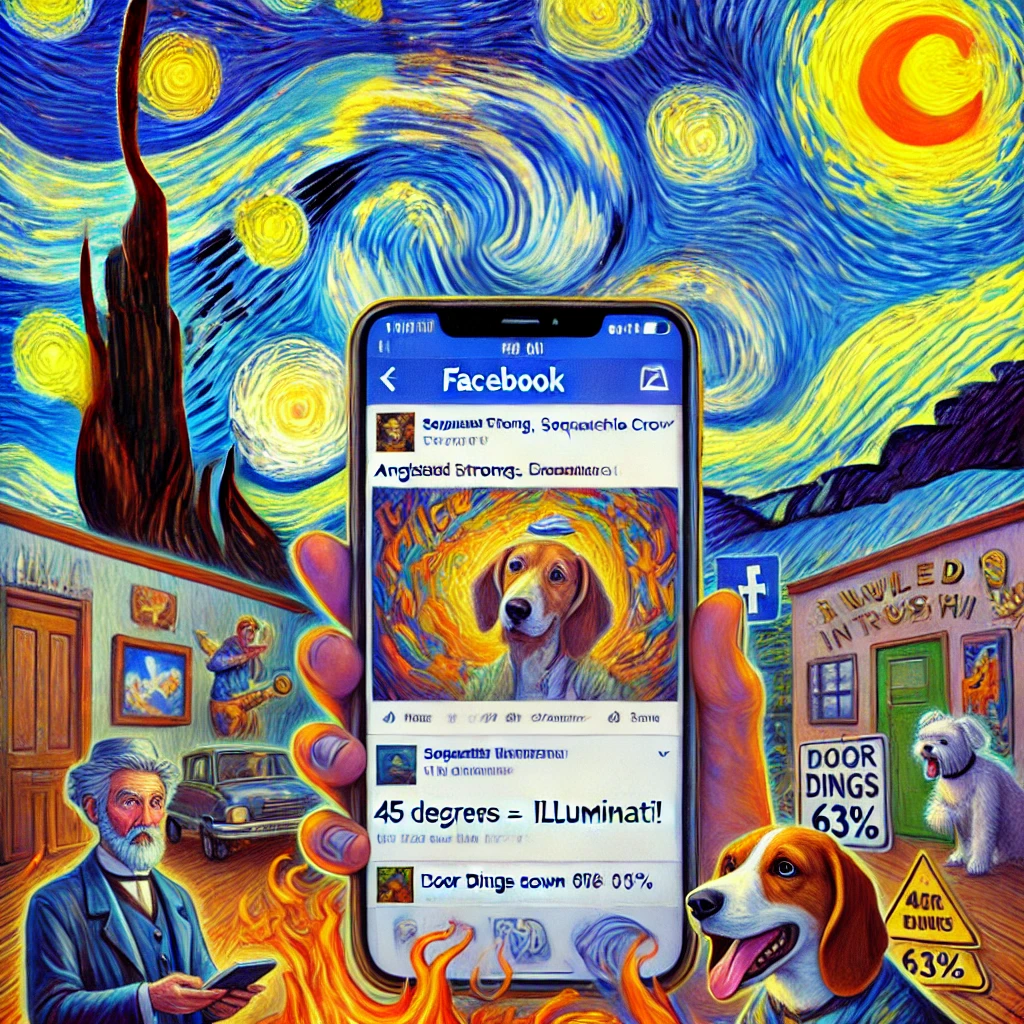
By lunch, the Facebook group Sequatchie Strong, Sequatchie Crooked had declared an emergency. Posts bloomed like weeds.
-
Mabel Dean Ashcroft: Urgent Notice: A.I. stands for Angled Intrusion. Resist politely but firmly. I have a printable bumper sticker.
-
Clovis Strickland: ALERT: the lines are set to 45 degrees because that’s what they did in France.
-
Trent Holloway: Happy to answer questions about the pilot. Data so far looks good—door dings down 63%.
-
Anonymous Meme: Daisy with a little hard hat and the caption Union Boss of the Lines.
-
Sheriff Peeler: Please do not park on top of the sidewalk, no matter where you stand on sovereignty.
A subthread argued whether 45 degrees was “basically a triangle, and triangles are Illuminati.” The Holier-Than-Thou Committee posted a dignified statement: We reject extremes. We embrace potlucks.
Reverend Gentry put up a poll: “If the Lord intended straight paths, why did He make us in need of grace?” The top-voted comment simply read, “Amen to that, but my door hinge thanks the angle.”
By 2 p.m., Boot was on Sequatchie Live!—a phone balanced on a water bottle—addressing the town like a creek-side statesman. “We’re piloting, not capitulating,” he said. “We’re testing whether sanity can defeat fender flutes. So far, the fiddle’s quieter.”
Mabel crashed the stream. “Boot, are you beholden to Big Paint?”
Boot blinked. “This is thrift-store latex, Mabel.”
Clovis, calling in from his truck, added: “Latex is a foreign word.”
“It’s rubber,” Trent said off-camera.
“Rubber,” Clovis repeated darkly. “Imported.”
Daisy appeared in the frame, yawning. Views doubled.
ACT IV — The Great Freedom-to-Crook Parade
It was inevitable—Sequatchie Crossing could not let a controversy pass without a parade. Boot proposed a “Demonstration of Compliance & Joyful Egress,” to which Clovis counter-proposed a “Freedom-to-Crook Convoy.” For reasons no archivist will ever untangle, both events were approved for the same Saturday morning.
The route: up Main, loop Piggly Wiggly, pass Fellowship Hall twice (for balance), and disperse at Daisy’s usual napping patch.
Boot’s parade rolled first: compact cars gliding into angled bays like well-rehearsed dancers, drivers waving congenially, a brass trio on the diner porch tooting “Blessed Assurance” in 3/4 time that didn’t match anything but felt right.
Each car paused long enough to demonstrate the blessed miracle of opening a door without defensive crouch. Children clapped. Outsiders smiled nervously the way people do when culture feels like a cliff.
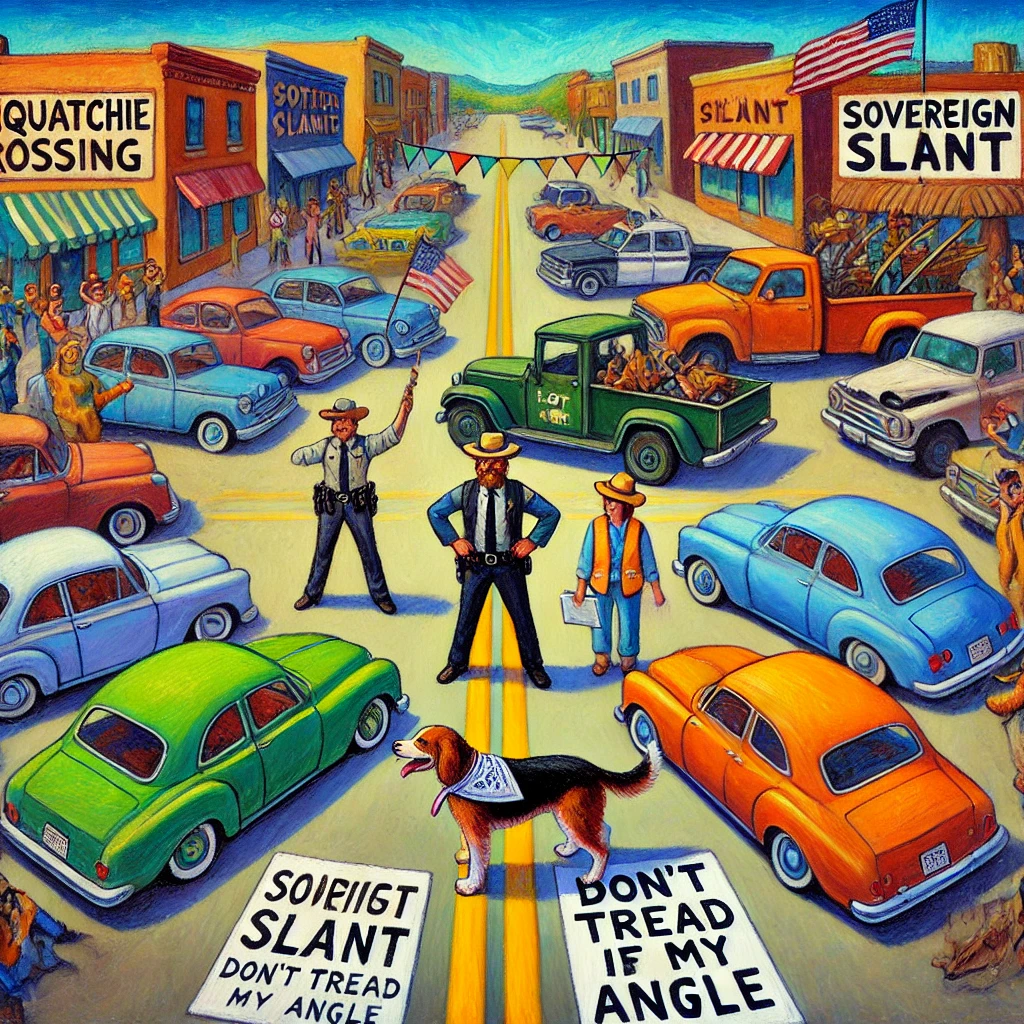
Then came Clovis’s convoy—pickup trucks with flags that read “Sovereign Slant” and “Don’t Tread on My Angle I Chose Myself.” Drivers parked theatrically crooked—over two bays, across the line, nose to curb, tail to question mark—then leapt out to applause from a contingent of original locals who remembered a time when a man’s worth could be measured by how confidently he ignored advice.
Mabel marched at the vanguard, clipboard raised like a beacon. She handed out pamphlets: “On the Moral Geometry of Freedom.” Chapter headings included Right Angles, Wrong Spirit and Parables of the Crooked Row.
Sheriff Peeler walked the neutral path between parades, ticket book tucked away. “We’re all going home today,” he kept saying, like a mantra he’d learned at a training once.
Rev. Gentry watched from Fellowship Hall steps, hands steepled. “I must admit,” he murmured to Boot, “there is something winsome about a tidy diagonal.”
Boot nodded. “Like choir robes for cars.”
“Careful,” the Reverend said. “We’re one hymn from idolatry.”
Daisy, wearing a bandanna that read “Lot Supervisor,” wove between hubcaps and found the exact center of town—geographically and spiritually—to lay down for a nap that, as always, defied the Euclidean.
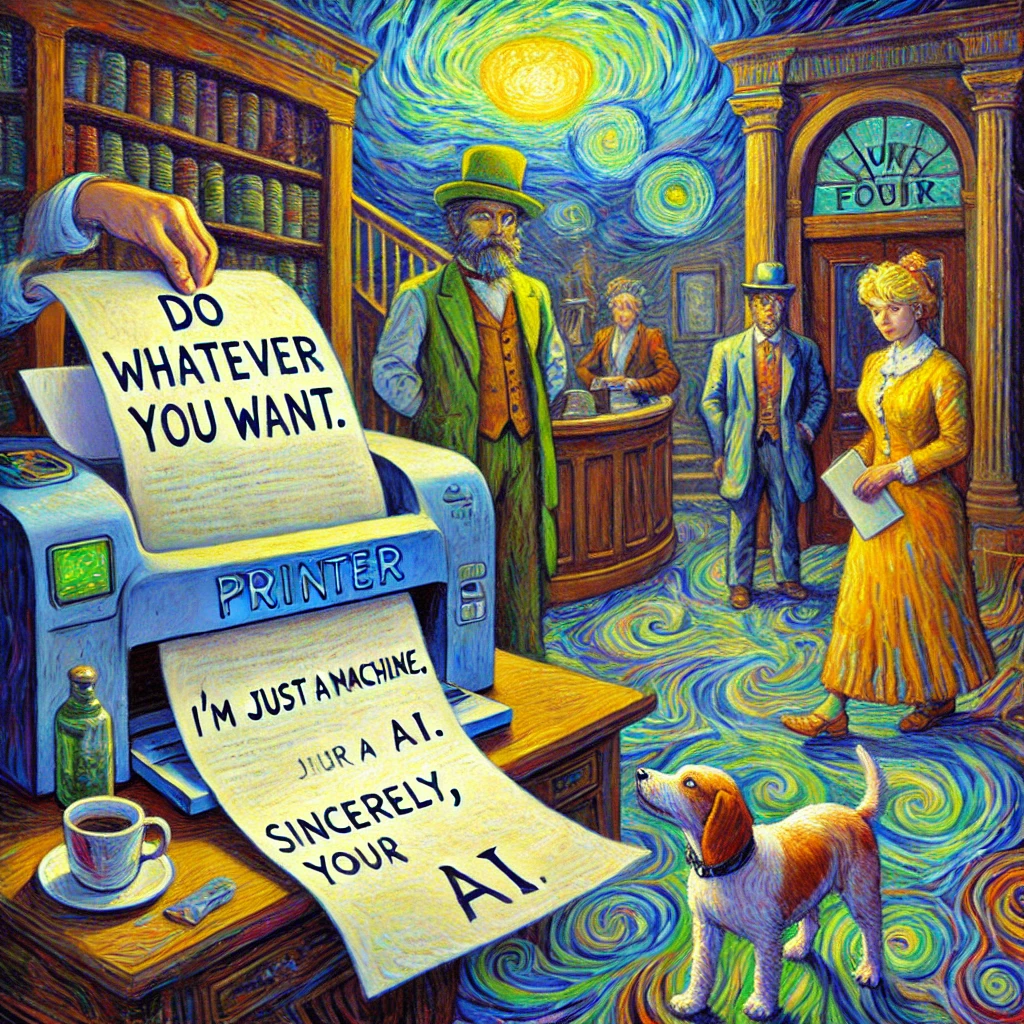
At the height of the commotion, a shimmer appeared on the courthouse printer across the street. People still swear they saw it—faint blue glow, shiver through the glass, and then the machine whirred to life. No one had sent a print job.
ACT V — The Machine Speaks (Sort Of)
Boot arrived first, skidding across the marble foyer and nearly sliding into the copy room. The printer chattered another page out—thick letters, a plain font, words that felt like a sigh:
Recommendation #2: Try not to hit each other.
Recommendation #3: Angled lines help.
Recommendation #4: If you hate the lines, pretend they’re suggestions from your favorite uncle.
Recommendation #5: If you still hate them, do what you’ve always done.
Footnote: I’m just a machine. Sincerely, Your AI.
Boot held the page aloft like Moses, except a little more confused. The foyer filled: Mabel peered at the letterhead for tyrannies; Clovis sniffed for foreign ink; Sheriff Peeler tried to decide if this was legally binding; Trent, stunned, tried to remember if he’d coded a “resignation clause.”
“It’s a trick,” Clovis announced. “It wants us to lower our guard.”
“Do you have a higher guard?” Boot asked.
The printer spat one more sheet, almost shyly:
Addendum: I analyzed your town’s collision data, but not your pride. Pride is outside my training set.
A quiet fell. In Sequatchie Crossing, pride is not a vice; it’s a landmark. Even Mabel lowered her clipboard a half inch.
Reverend Gentry stepped forward. “Scripture says even the stones could cry out. Machines printing footnotes are not beyond the Lord’s mischief.”
“Or Trent’s,” Clovis countered.
Trent shook his head. “Not mine. Honestly, I didn’t think it could… do that.”
Daisy padded in. She sniffed the paper, sneezed, then wagged once as if to certify its existence without endorsing its content.
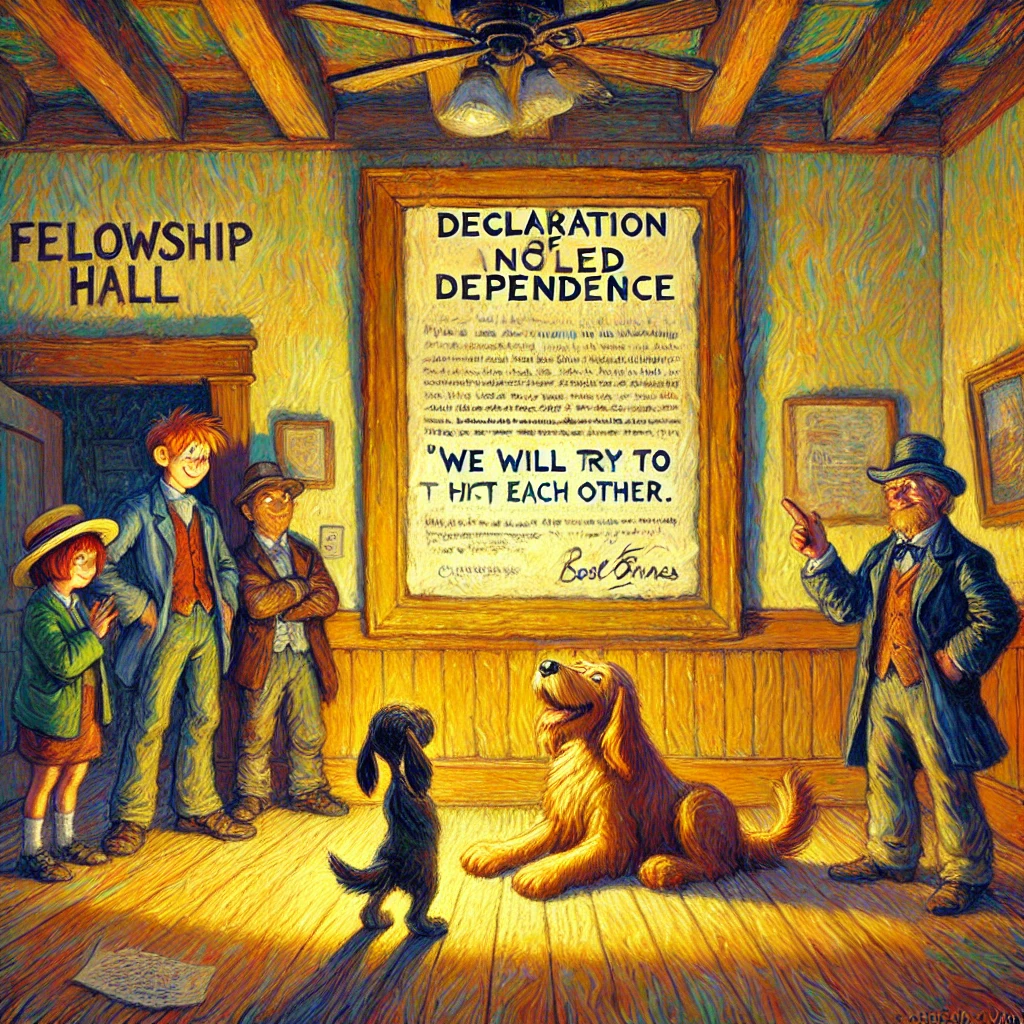
Boot smiled, slow and rueful. “All in favor of framing it in Fellowship Hall under the bake sale photo?”
Mabel pursed her lips, then nodded once. “On condition we add a plaque that reads: Statement of Non-Submission.”
“Fine by me,” Boot said. “We’ll call it… the Declaration of Angled Dependence.”
The vote was oddly unanimous.
Act VI – A Month of Lines and Minds
ACT VI — A Month of Lines and Minds
For thirty days, the angled pilot persisted—and like most pilots, it tried to crash the plane while teaching everyone the controls.
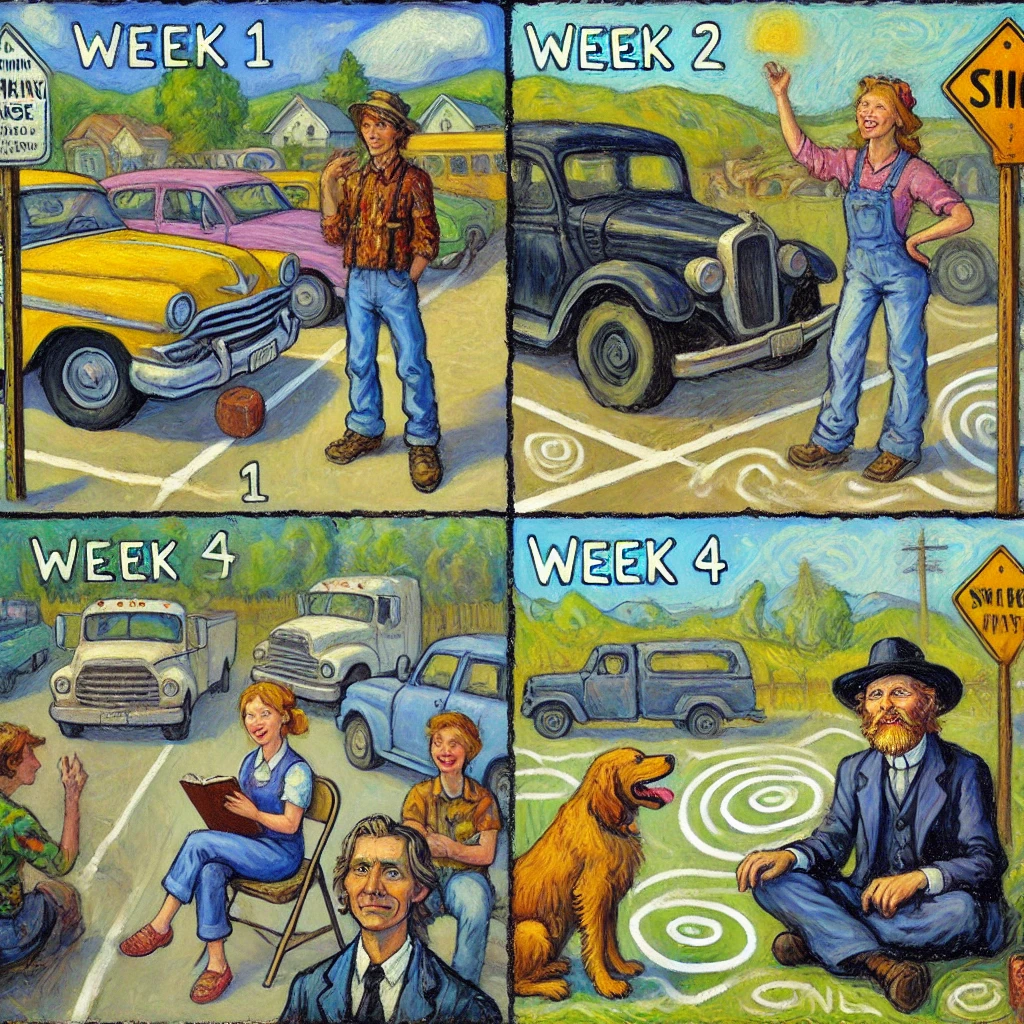
Week One: Sideswipes fell like a sinner’s fever. Door dings dropped. People noticed they could pull out without prayer requests. The outsiders, emboldened, adopted a quiet smile that made original locals itch.
Week Two: Sequatchie Strong, Sequatchie Crooked found a new scandal (someone removed the plastic from a church couch), and the parking fight lost a little steam. Clovis parked within the lines six times and denied four. Mabel instituted “Civil Disobedience Wednesdays” where she parked with one wheel kissing the line, like a legal dare. Sheriff Peeler waved cheerfully and wrote zero tickets.
Week Three: The high school art class chalked curlicues between the spaces, renaming them “hospitality lanes.” Reverend Gentry blessed the lot in a short ceremony distinguished by the line, “The Lord makes straight paths, but He also forgives.”
Week Four: Trent presented data at the Committee. “Collisions down sixty-one percent. Capacity up nine percent—less than projected, but folks are bringing their tractors to town on Saturdays to make a point.” He smiled. “Fewer apologies being shouted across bumpers. That seems… measurable.”
Boot leaned back. “What’s the cost?”
“Paint,” Trent said. “And pride.”
Mabel sighed. “We can afford the paint.”
Clovis, hat in hands for once, stared at the ceiling like it owed him an answer. “I don’t like being told. But I like not buying tail lights, neither.”
Sheriff Peeler closed the ledger. “What if we stop arguing about whether the lines are tyrants and start arguing about whether the pie at Mabel’s Meatloaf has gotten better since the inspector incident?”
“Unrelated!” Mabel snapped, then softened. “But yes. It has.”
Boot tapped the gavel. “Pilot extended indefinitely?”
A murmur of assent, reluctant and relieved in equal measure.
“Addendum,” Mabel said. “We retain the right to park crooked on holidays, funerals, and the first day of deer season.”
“Agreed,” Boot said. “We call those Ceremonial Crooks.”
Clovis spread his hands. “I can live with ceremonial.”
Trent scribbled a note to himself: Future dataset: ceremonial exceptions.
ACT VII — The Things That Stayed Crooked
The town did not become a city; the lines did not make saints. Sequatchie Crossing remained itself—affectionate and contrary in equal measure.
Daisy continued to nap diagonally, often with her tail just barely crossing into a second space as if honoring the opposition. Children drew hopscotch boards that veered. The diner chalkboard read, in glowing cursive, “Flavor is its own authority.” Someone taped a Post-It below it: “So is parking.”
Boot’s notebook occasionally glowed on his porch at dusk. He claimed it was the sunset reflecting on its edges. Others claimed he was secretly feeding the AI stories to help it “understand pride.” Boot denied it, smiling in a way that made denial look like hospitality.
Reverend Gentry preached a short series titled “On Straight Paths and Crooked Hearts,” and it landed far gentler than the title suggested. He ended one sermon with a wink toward the lot: “Whatever you do in word or deed, do it within the lines if you can—and close to the line with charity if you can’t.”
Sheriff Peeler coined a new citation category he never used: Willful Angles in a Peaceful Town. It became a T-shirt before it became law.
Mabel updated her pamphlet to include a new chapter: Ritual Exceptions and the Grace of the Slight Tilt. She printed exactly 100 copies and handed them out with a smile that said she would fight you again tomorrow if you liked.
Clovis kept the foil crown but wore it lower. “Not surrender,” he told anyone who asked. “Compromise. Surrender’s when you stop complaining.” He kept complaining, but quietly, and almost always while parked correctly.
Trent, finally invited to lunch without a debate stage, listened more than he talked. “I thought it was about lines,” he admitted to Boot. “Turns out it was about lines people drew in themselves.”
Boot shrugged. “We’re a town. We draw lines, then invite people to cross them back for cobbler.”
Epilogue — The Framed Footnote
The printed sheet from the courthouse hangs in Fellowship Hall. It’s centered but not quite straight; Mabel insists it is “spiritually level.” Beneath it, a small brass plaque reads:
Declaration of Angled Dependence
We will try not to hit each other.
We will pretend good advice is from our favorite uncle.
And when we cannot, we will go on being ourselves—
at a merciful angle.
On certain evenings when the windows hold the last light and Daisy’s nails click across the tile like a metronome for small town time, the frame seems to hum. No one admits it; no one needs to.
Sequatchie Crossing didn’t become straighter. It became a little kinder, which in practice looks about the same from a distance—and exactly different when you’re close enough to open your car door without apology.
And every now and then—on funerals, holidays, and the first day of deer season—half the lot goes beautifully, ceremonially crooked. No one honks. People nod. Sheriff Peeler tips his hat and pretends to write a ticket shaped like a smile.
The algorithm may have outsmarted the Parking Committee, but it’s the town that out-hearted the algorithm. The lines helped. The people did the rest.
Optional Stinger: The Piggly Wiggly Postscript
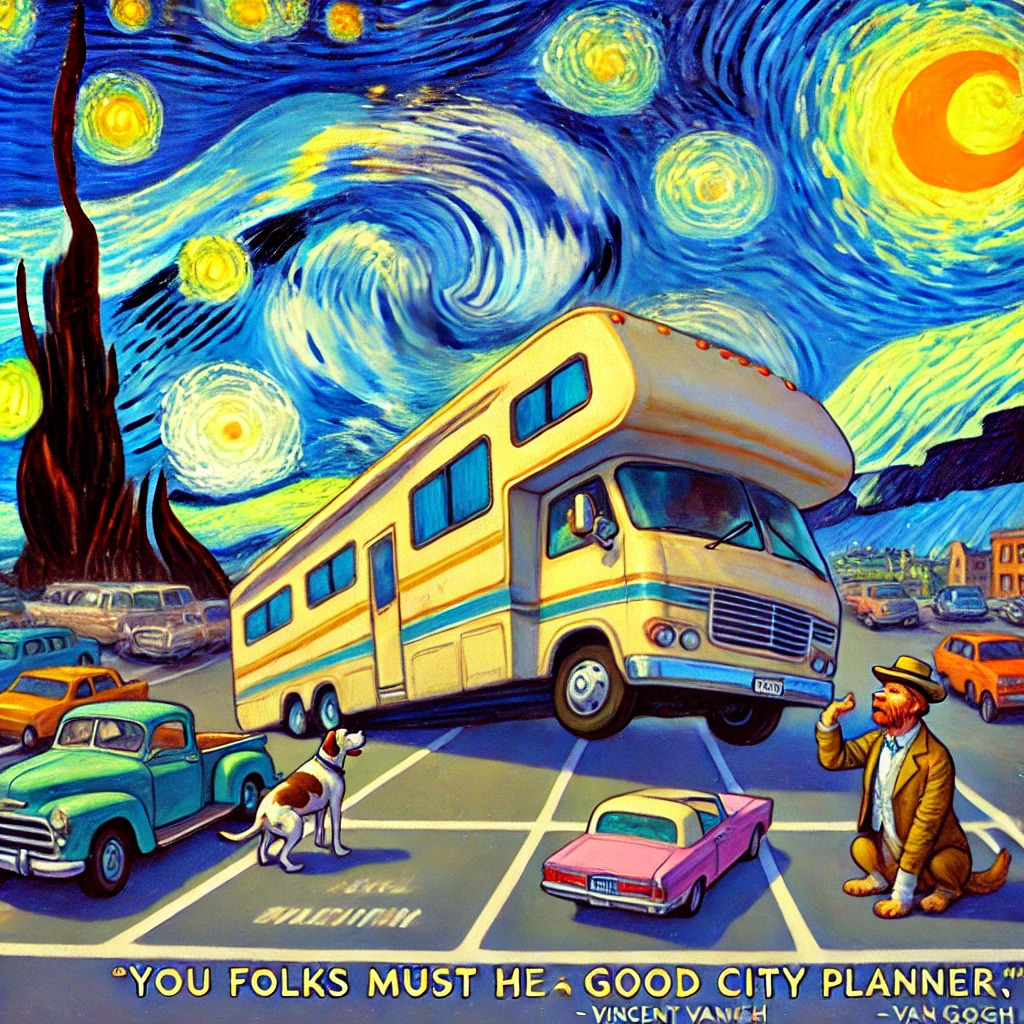
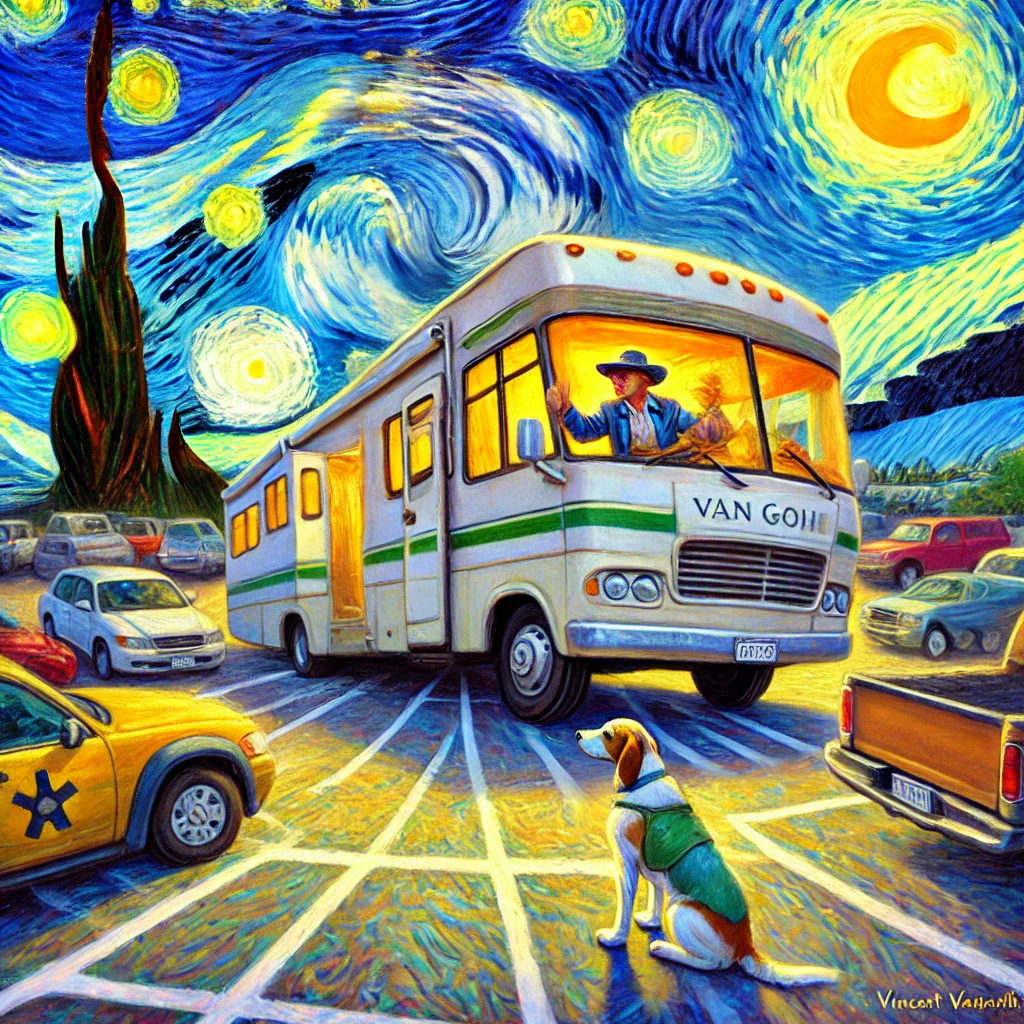
A month later, a tourist in an RV pulled into the lot, pausing like a ship at harbor. He cut the wheel, slid into an angled space with improbable grace, and stepped out marveling. “You folks must have a good city planner.”
Boot happened to be passing with Daisy. He scratched her ear and grinned. “We’ve got something better. We’ve got neighbors.”
The tourist looked around at the lines, the crooked exceptions, the framed footnote visible through Fellowship Hall’s window, and the dog asleep across two spaces.
“Looks… complicated,” he said.
Boot shrugged. “That’s how you know it’s ours.”
Daisy wagged without waking, the tail just barely over the line. No one moved it back. No one needed to.
Disclaimer Image
⚖️ Disclaimer
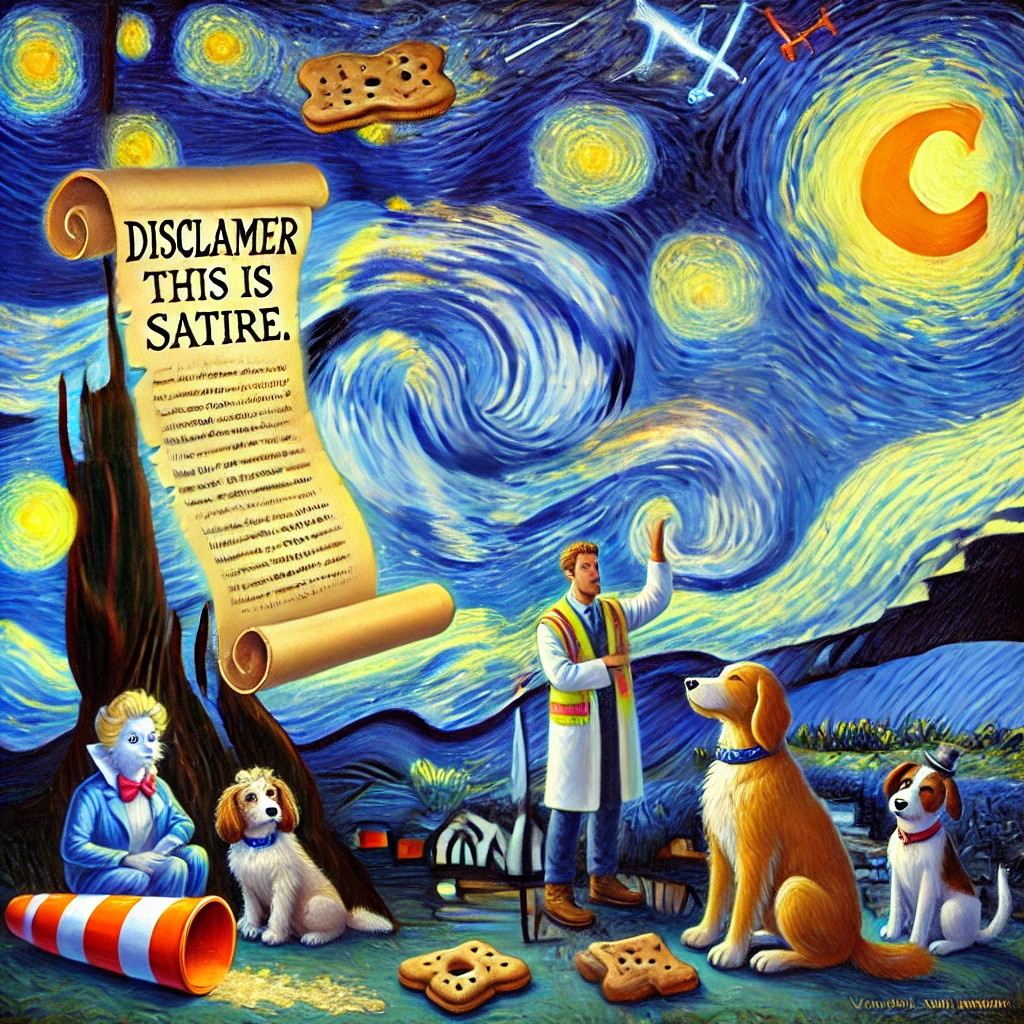
This story is satire and fictional in every respect. Sequatchie Crossing, its characters, committees, and controversies exist only in the realm of storytelling. Any resemblance to real people, places, organizations, or municipal parking committees is purely coincidental (and probably crooked). The purpose of this piece is humor, social observation, and entertainment.
Readers should not interpret it as legal advice, parking regulation guidance, theological instruction, or an official recommendation for or against angled lines at the Piggly Wiggly—or anywhere else.
In short: enjoy the laugh, don’t repaint your parking lot because of it.
Real Places Behind the Ruckus – From The Dunlap Directory
Real Places Behind the Ruckus – From The Dunlap Directory
Yes, this story was fictional; even the parts that weren’t true. These places? Absolutely real. Stop by, support local, and keep the Wi-Fi away from livestock:
- Whitwell Dunlap Buy Sell Trade
- West Towne Apartments
- Home Folks Family Restaurant
- Lucky 13 Transport
- Krispy Krunchy Chicken
- Wildwood Enterprise
- Sunrise Extended Stay RV Park
- Winchel’s Homestead Wonders
- JM Lawncare
- Miller’s Bread
- TN Waterfront Vacation Rental
- Nathan Barker – Farm Bureau Insurance Agent
- Carolyn’s Acres Farm
Real Places Behind the Ruckus – From The Dunlap Directory
At Sequatchie Crossing, we tell the stories of Sequatchie Crossing.
Please share this post with your friends, family, or business associates who may want follow the news from Sequatchie Crossing.

0 Comments