


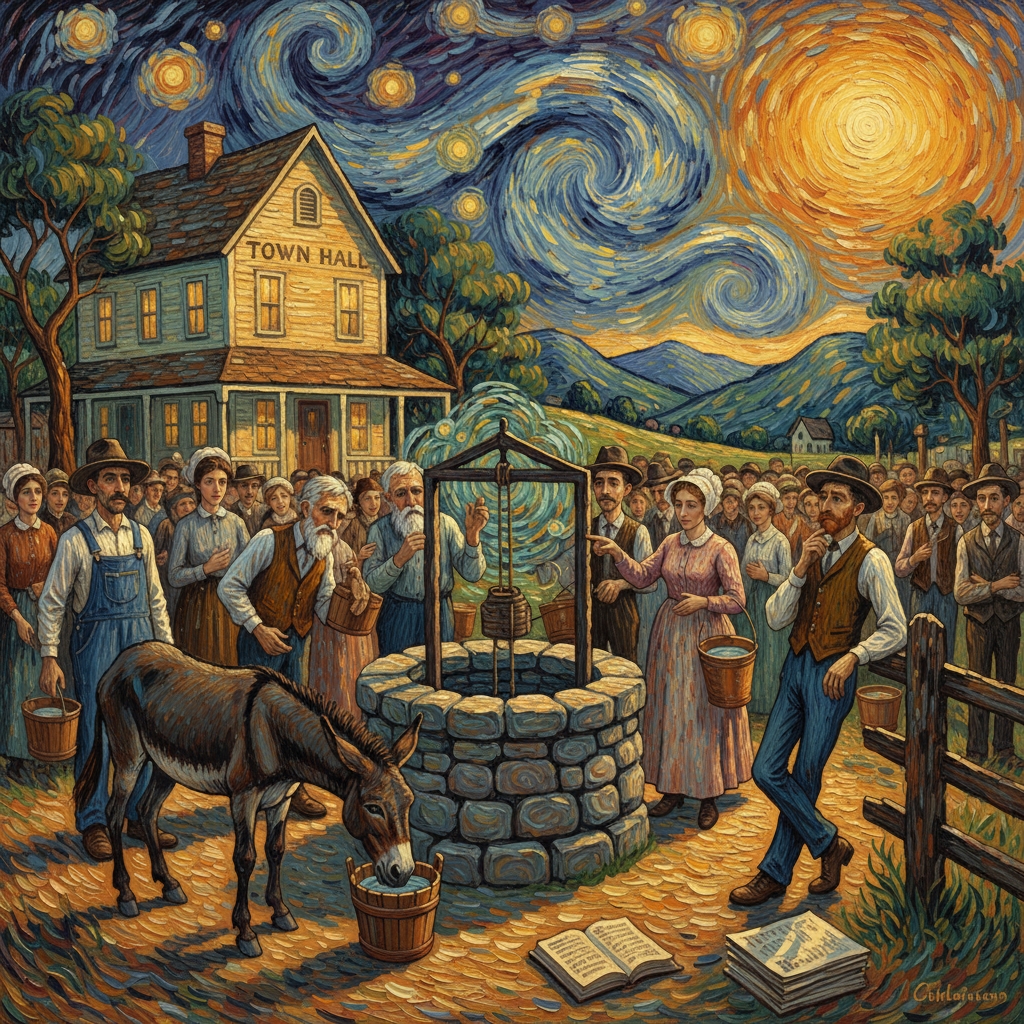
When Every Bucket Looks Like Competition
By Tom Seest
At Sequatchie Crossing, we tell the stories of Sequatchie Crossing.
Please share this post with your friends, family, or business associates who may want follow the news from Sequatchie Crossing.
🎤 Audio Overview
The Well That Everyone Claimed First
Act I — The Notice on the Bulletin Board
The trouble began on a Tuesday morning, which was considered by most residents of Sequatchie Crossing to be an unreasonable day for trouble to begin.
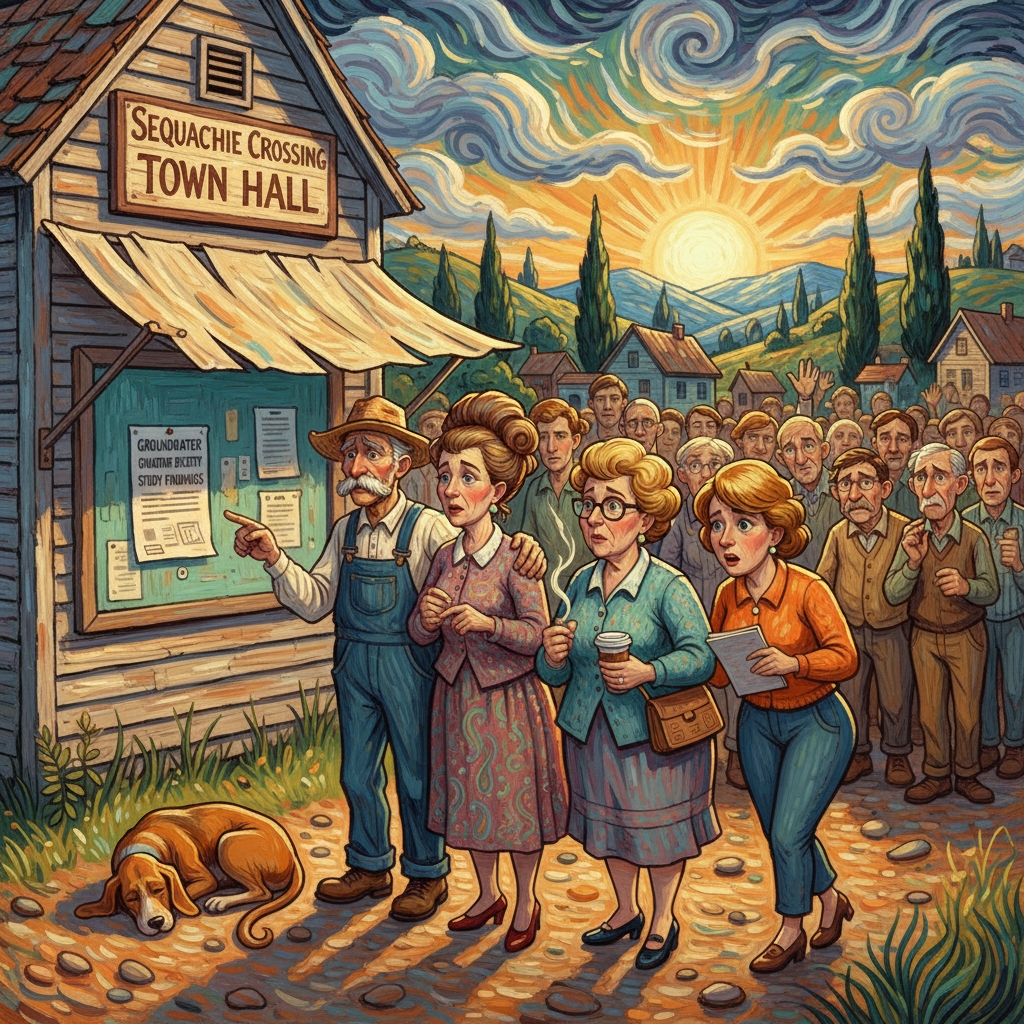
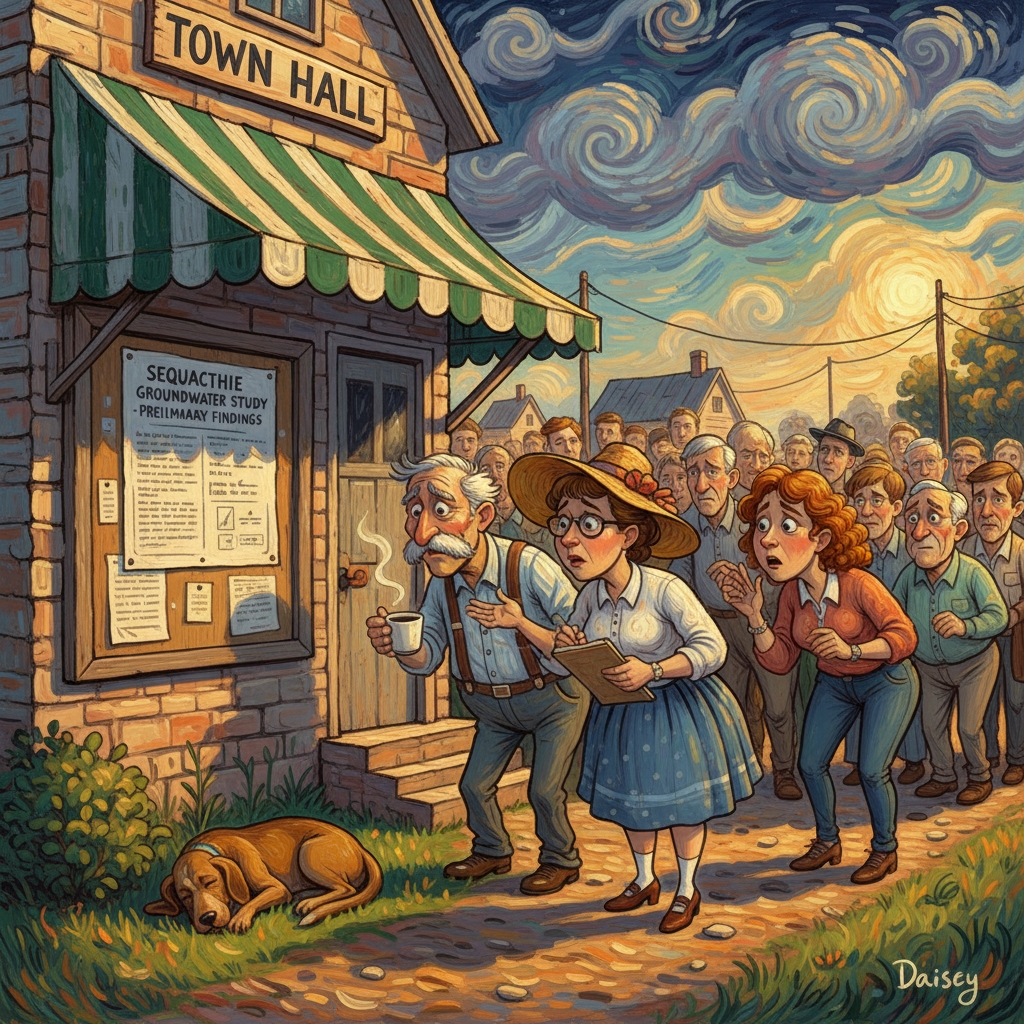
The bulletin board outside Town Hall stood beneath a crooked awning that had survived three hailstorms, two election cycles, and one mysterious incident involving a runaway smoker grill.
Clovis Strickland stood before it with his hands in his pockets.
“Huh.”
That was all he said.
People trusted Clovis’s “huh” more than most official reports.
Mabel Dean Ashcroft stepped beside him carrying a sack of tomatoes.
“What kind of huh?”
“The concerning kind.”
“There are six kinds.”
“This one’s between suspicious and expensive.”
Mabel adjusted her glasses and read the notice.
A consulting company hired by a proposed industrial development outside town had requested groundwater studies.
The notice itself was dry enough to put a squirrel to sleep.
Yet Clovis kept staring.
“You know what this means?”
Mabel folded her arms.
Act I – The Notice on the Bulletin Board
“It means consultants are getting paid.”
“It means somebody’s looking at water.”
“Everybody looks at water.”
“Not usually with a team of lawyers.”
That attracted attention.
Trixie Jo Bartlett emerged from the diner carrying coffee.
Shelley Fawn Wexler appeared moments later with a notebook.
Tiffany Annette Roark arrived because she had seen Shelley arrive and assumed something was happening.
Within ten minutes a semicircle of residents had formed.
Nobody knew anything.
That never prevented discussion.
Mabel tapped the notice.
“Groundwater study.”
Shelley nodded.
“Probably routine.”
“Routine is what people say before something becomes complicated.
Trixie sipped coffee.
“You saying they’re stealing our water?”
“I didn’t say that.”
“You implied it.”
“I implied I don’t trust paperwork that requires fourteen pages to say hello.”
The diner door opened.
Boot Barnes emerged carrying a biscuit.
“What’re we worried about today?”
“Water.”
Boot took a bite.
“Still got some.”
“For now,” Mabel replied.
Boot stared at her.
“You planning to drink it all?”
“No.”
“Then I’m going back to breakfast.”
But he didn’t.
Nobody ever did.
The moment somebody mentioned water in Sequatchie Crossing, every resident became an expert hydrologist.
Across the street, Daisy the hound slept through the entire discussion.
The town would later envy her wisdom.
Act I – The Notice on the Bulletin Board
Act II — Buckets and Boundaries
By noon the conversation had migrated to the porch of Mister Wade Langston’s feed store.
This was how public policy usually traveled through town.
Officially, discussions occurred at Town Hall.
Actually, they occurred on porches.
Mayor Bea Crowe stood listening while residents debated.
Earl Womack leaned against a post.
“I’ve seen this before.”
“You’ve seen everything before,” said Mabel.
“Because everything keeps happening again.”
Jolene Pickett arrived carrying a tablet.
“I think everybody’s overreacting.”
Several people looked offended.
Overreaction was considered a cherished local tradition.
Jolene continued.
“A development could bring jobs.”
“A drought could bring problems,” Mabel answered.
“Nothing says there’s going to be a drought.”
“Nothing says there won’t.”
Clovis pointed toward the hills.
Act II – Buckets and Boundaries
“My well dropped six feet during that dry spell three summers ago.”
Earl nodded.
“Mine too.”
Shelley opened her notebook.
“What exactly are people afraid of?”
That question produced six different answers immediately.
Farmers worried about irrigation.
Homeowners worried about private wells.
Developers worried about restrictions.
Businesses worried about future growth.
Retirees worried about reliability.
Everyone worried somebody else might get preference.
Mayor Crowe rubbed her temples.
“Nobody even knows what the proposal is yet.”
“That’s why we’re discussing it,” Mabel replied.
The mayor sighed.
Reasoning with townspeople before they formed opinions was like trying to herd smoke.
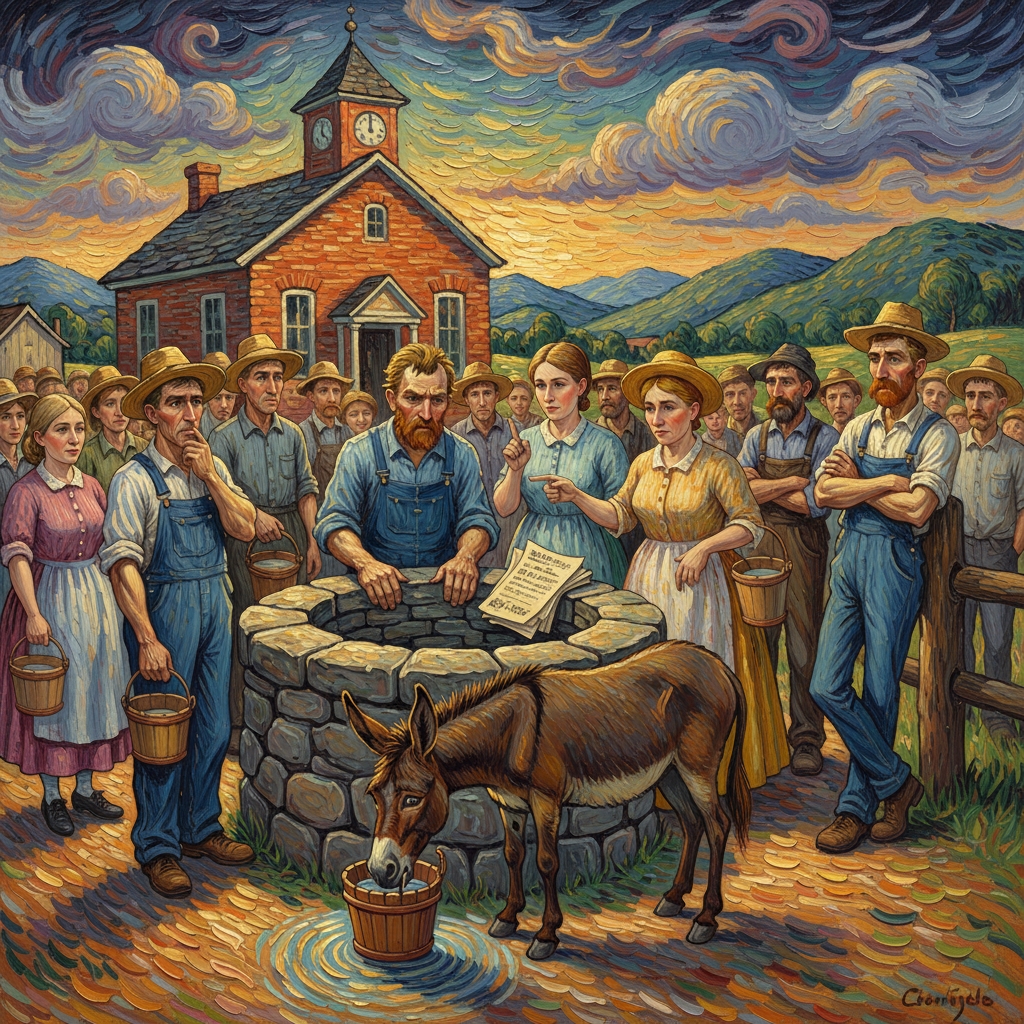
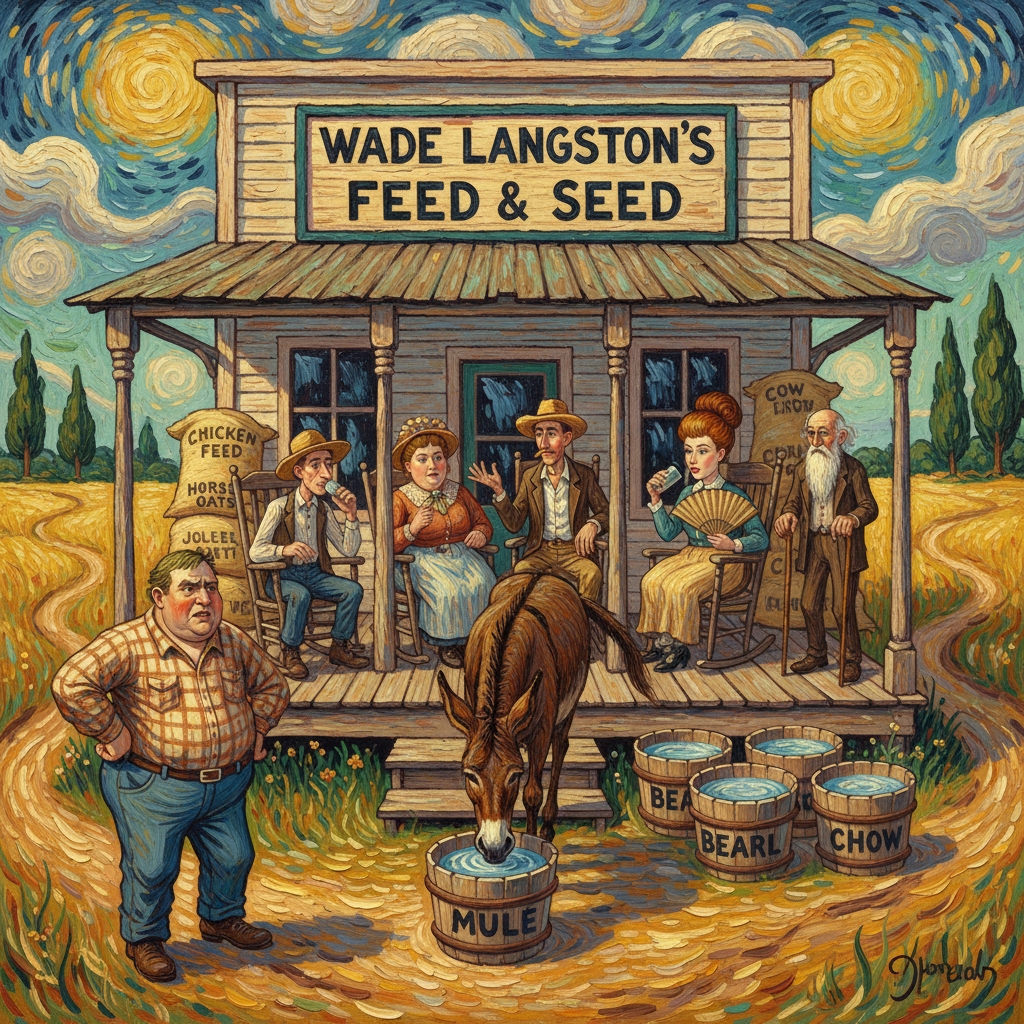
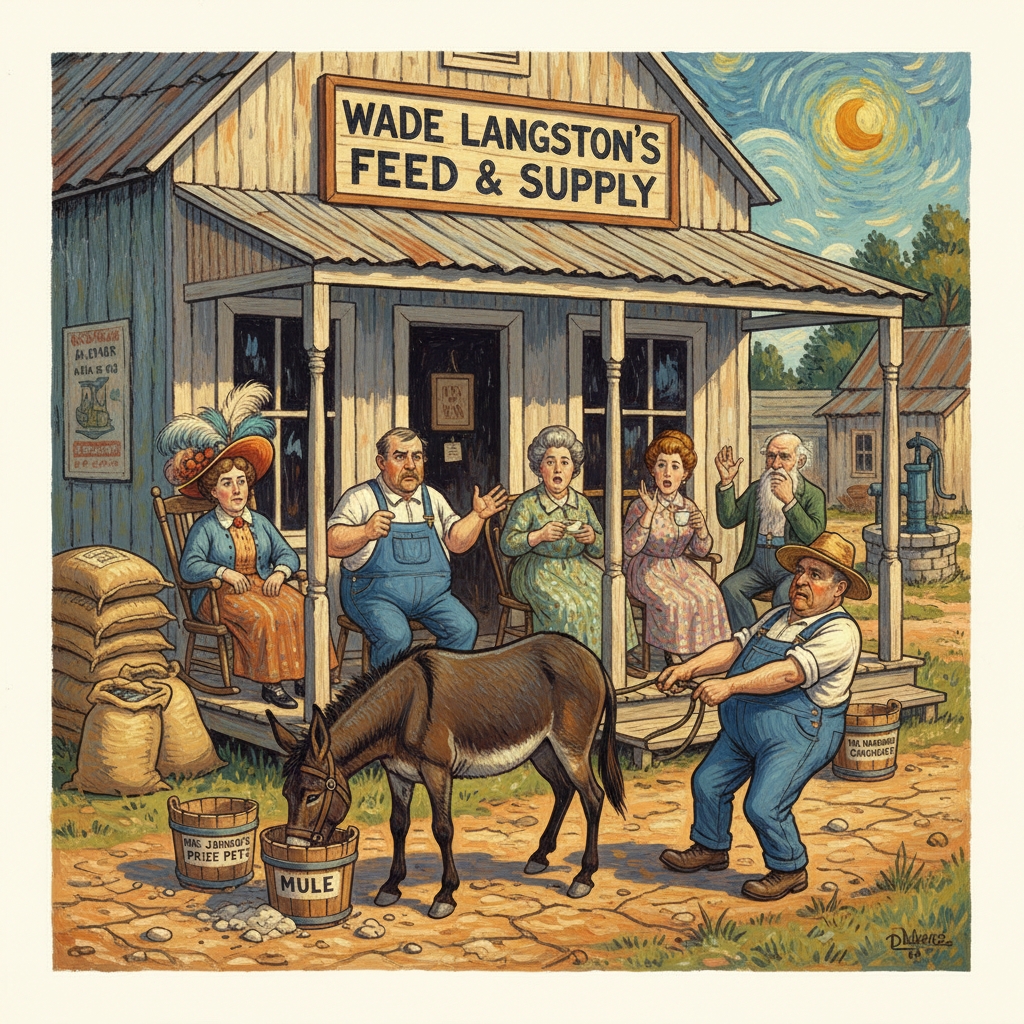
At that moment the mule belonging to Doug Doughboy Teeter wandered into view.
Doug carried three water buckets.
One bucket had been labeled MULE.
One bucket had been labeled HORSE.
One bucket had been labeled DO NOT TOUCH.
The mule walked directly past his own bucket.
He drank from the horse bucket.
Doug moved him.
The mule walked away.
Then drank from the DO NOT TOUCH bucket.
Everyone watched.
Clovis pointed.
“There.”
“There what?” asked Shelley.
“The entire problem.”
The mule ignored them.
Doug sighed.
“Every bucket he has is full.”
“Then why drink from the others?”
Doug shrugged.
“Because they’re not his.”
Nobody laughed.
Because suddenly the mule seemed to be making a political statement.
Act II – Buckets and Boundaries
Act III — Rumors Reach the Sheriff’s Office
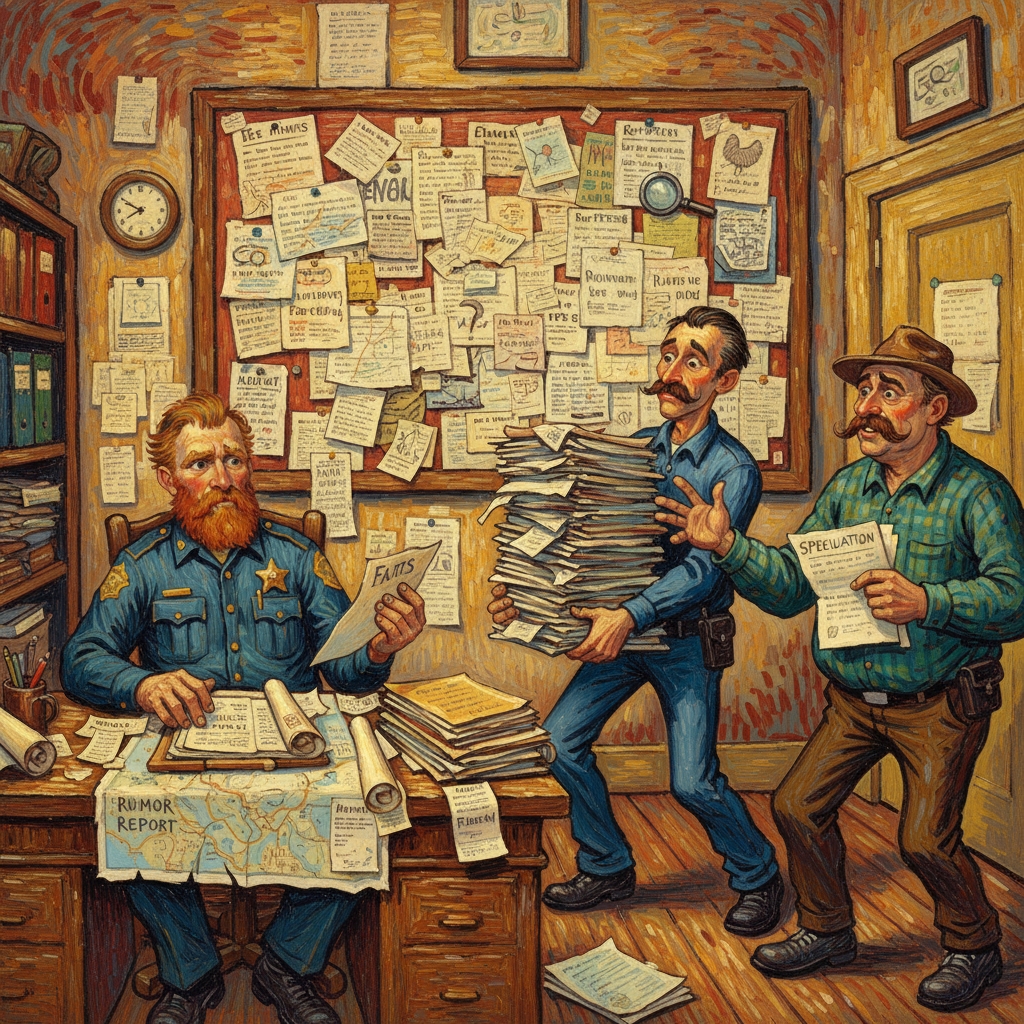
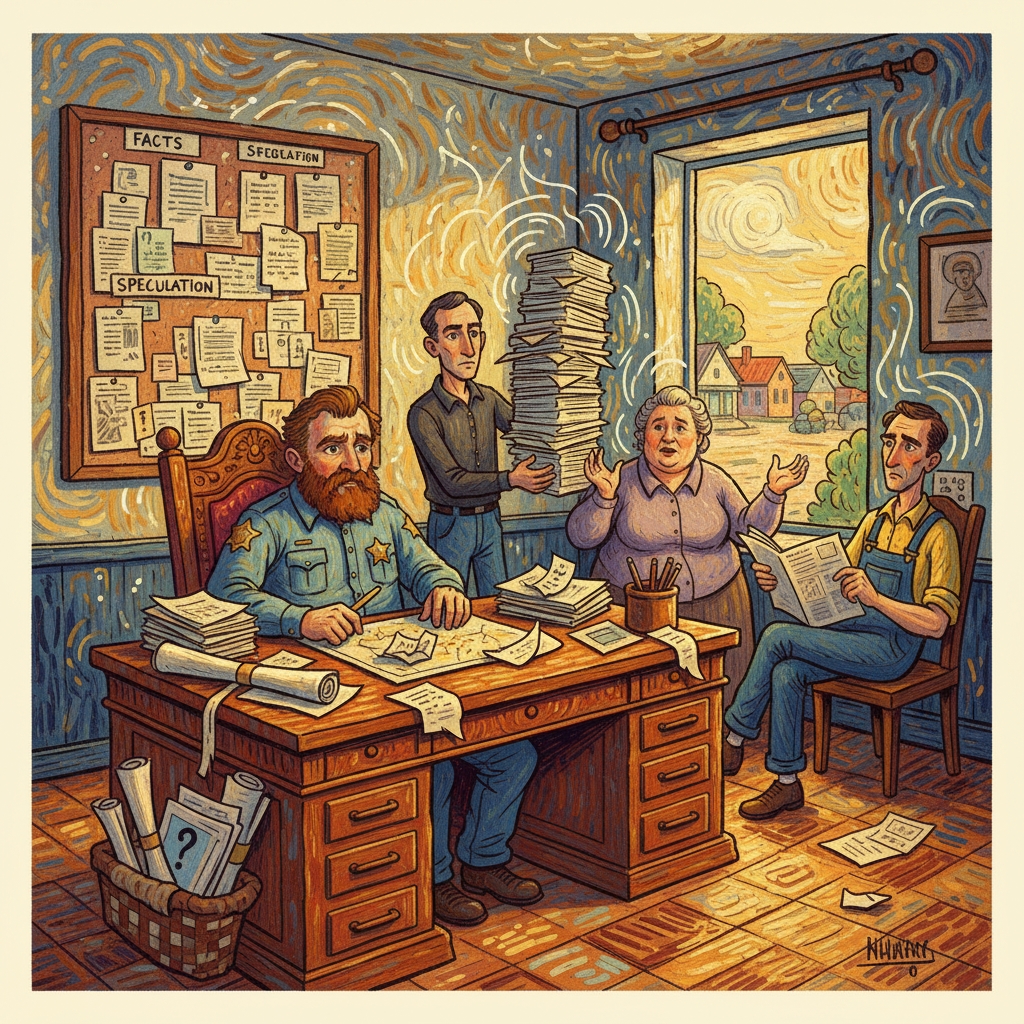
By Wednesday morning the sheriff’s office had become headquarters for rumor management.
Sheriff Peeler sat behind his desk reviewing notes.
Officer Kenny Joe Teeter entered carrying a stack of papers.
“You got a minute?”
“I’ve got twelve rumors and three facts. Which are those?”
“Probably rumors.”
“Set them over there.”
Kenny dropped the papers.
“One says a data center is coming.”
Sheriff Peeler nodded.
“Heard that.”
“Another says a factory.”
“Heard that.”
“One says a bottled-water company.”
“Heard that.”
“One says a secret government bunker.”
The sheriff looked up.
“That’s a new one.”
Kenny nodded proudly.
“I thought so too.”
The phone rang.
Sheriff Peeler answered.
Act III – Rumors Reach the Sheriff’s Office
Listened.
Then hung up.
“Add underground submarine base.”
Kenny blinked.
“We don’t have an ocean.”
“I know.”
Outside the office, Clovis and Boot arrived.
Sheriff Peeler waved them inside.
“Tell me something useful.”
Boot sat down.
“The useful thing is nobody knows anything.”
“Best information I’ve heard all week.”
Clovis leaned forward.
“The concern isn’t the project.”
“It’s the water.”
Sheriff Peeler nodded.
“That’s what I’ve been hearing.”
“Everybody assumes somebody else will get priority.”
Boot shrugged.
People think shortages work like raffle tickets.”
The sheriff folded his hands.
“What happens if there actually is a shortage?”
Nobody answered immediately.
That silence carried more weight than the rumors.
Eventually Boot spoke.
“Then we’re going to find out how many people believe water belongs to them.”
Nobody liked that answer.
Because everybody already suspected they knew.
Act III – Rumors Reach the Sheriff’s Office
Act IV — The Diner Mathematics of Scarcity
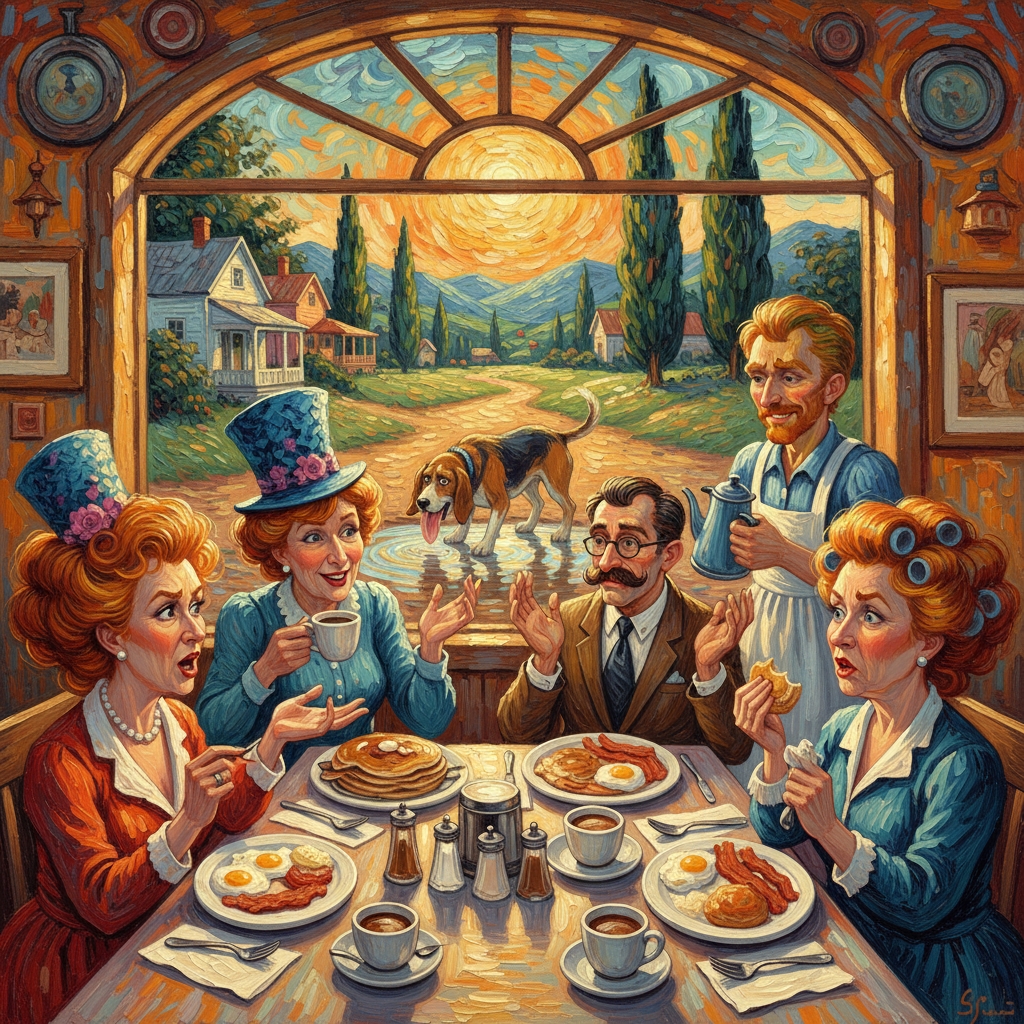
The diner was full by Thursday morning.
Lurleen Davenport worked the coffee pot like a diplomat managing a border dispute.
Maggie Sue Dillard occupied her usual booth.
Evelyn Grace Tipton sat beside her.
Dr. Neil Cowgill joined them carrying pancakes.
The conversation was already underway.
“If a farm feeds people,” Maggie said, “shouldn’t farms get priority?”
Evelyn nodded.
“Maybe.”
“What do you mean maybe?”
“I mean homeowners need water too.”
Dr. Cowgill poured syrup.
“People need hospitals too.”
“You’re comparing wells to medicine?”
“I’m comparing necessities.”
Across the room, Tiffany listened carefully.
Shelley took notes.
Trixie recorded opinions on her phone.

Act IV – The Diner Mathematics of Scarcity
The town had accidentally formed three committees without meaning to.
Mabel entered.
Everyone noticed.
Because Mabel entering a conversation about resources was like introducing a lit match to dry leaves.
She sat down.
“Here’s the problem.”
Nobody interrupted.
“When water is plentiful, everybody believes sharing is easy.”
The table nodded.
“When water becomes scarce, everybody starts calculating.”
Dr. Cowgill smiled.
“That’s human nature.”
“No. That’s bucket nature.”
“Bucket nature?”
“Everybody measures fairness by the size of their own bucket.”
Lurleen laughed so hard she nearly dropped a coffee pot.
Meanwhile outside, Daisy the hound drank from a puddle.
Nobody had assigned ownership.
Nobody had written regulations.
Nobody had held hearings.
The dog simply drank and moved on.
Inside, humans continued constructing increasingly complicated theories.
Act IV – The Diner Mathematics of Scarcity
Act V — Town Hall Opens the Floor
Friday evening brought the official Town Hall meeting.
Every chair filled.
Additional chairs appeared.
Then additional additional chairs.
Mayor Bea Crowe stood at the podium.
Behind her sat Sheriff Peeler, Pastor Arnold Peeler, Shelley Wexler, Dr. Cowgill, and several county representatives.
The room buzzed.
Mayor Crowe struck the gavel.
“Let’s begin.”
Nobody stopped talking.
She struck it again.
Still talking.
A third strike finally worked.
“Tonight is for discussion.”
That statement alone generated disagreement.
A consultant presented maps.
Charts appeared.
Graphs appeared.

Act V – Town Hall Opens the Floor
Technical language appeared.
By the third slide, half the audience looked suspicious.
The other half looked sleepy.
Then questions began.
Farmers stood.
Homeowners stood.
Business owners stood.
Developers stood.
Every group explained why their use mattered most.
Not one person claimed their use mattered least.
Clovis noticed this immediately.
When his turn came, he stood.
“I have a question.”
The room quieted.
“If water became limited tomorrow, who decides who gets priority?”
The consultant hesitated.
People noticed.
Badly.
Mabel leaned forward.
“That sounds like somebody who doesn’t know.”
The consultant adjusted his tie.
“There are regulatory frameworks—”
Mabel raised a finger.
“That wasn’t the question.”
Applause erupted.
Mayor Crowe sighed.
The consultant tried again.
“It depends on circumstances.”
More applause.
Because everyone interpreted that answer differently.
Jolene stood next.
“What if development creates jobs that help families?”
Earl answered before anybody else.
“What if losing water hurts families?”
Jolene frowned.
“That’s not what I asked.”
“It’s what I heard.”
The discussion spiraled.
Yet somehow remained civil.
Sequatchie Crossing considered shouting an acceptable substitute for hostility.
Pastor Peeler finally rose.
The room quieted immediately.
“May I suggest something?”
Heads nodded.
“We are discussing who deserves water.”
“That’s the issue,” Mabel said.
“No.”
The pastor smiled.
The issue is everybody believes they are discussing someone else’s dependence.
The room fell silent.
Because suddenly everybody realized they depended on the same thing.
Even if they used it differently.

Act V – Town Hall Opens the Floor
Act VI — The Church Basement Perspective
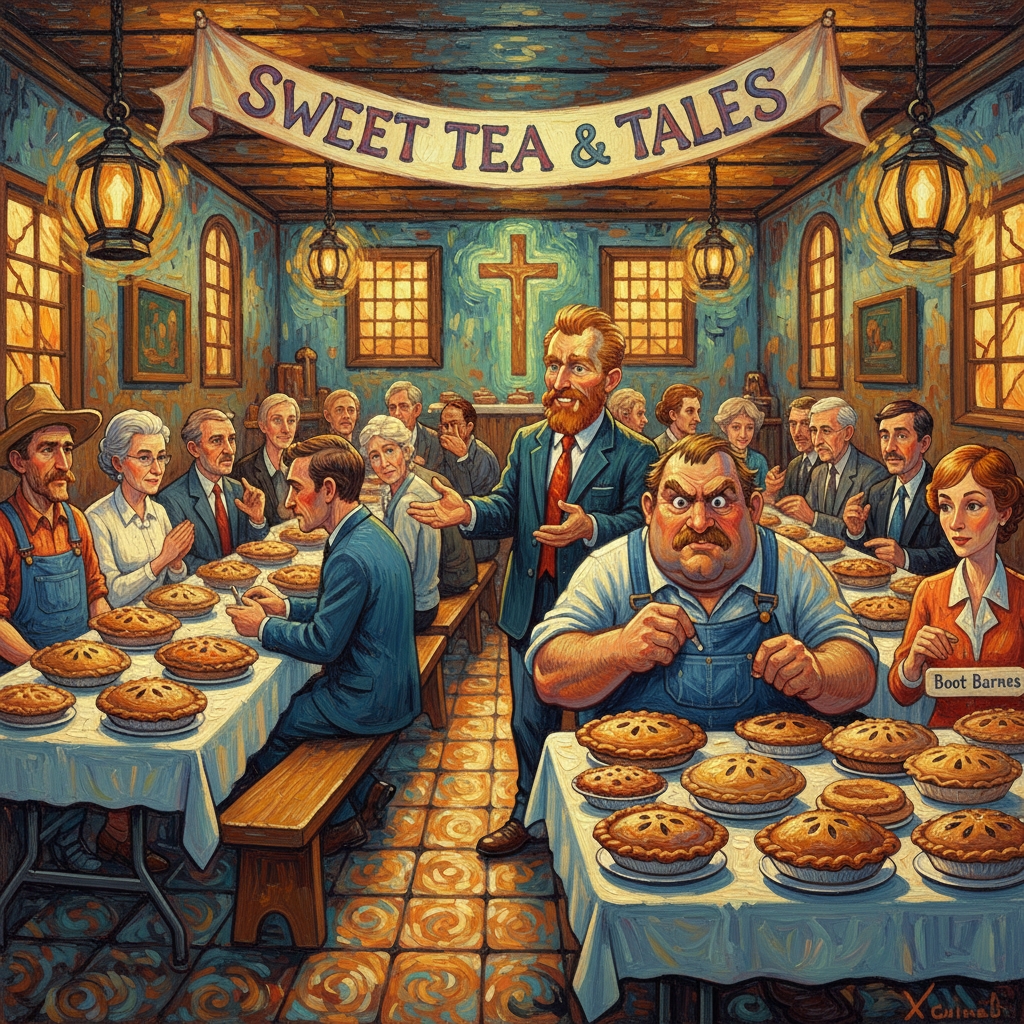
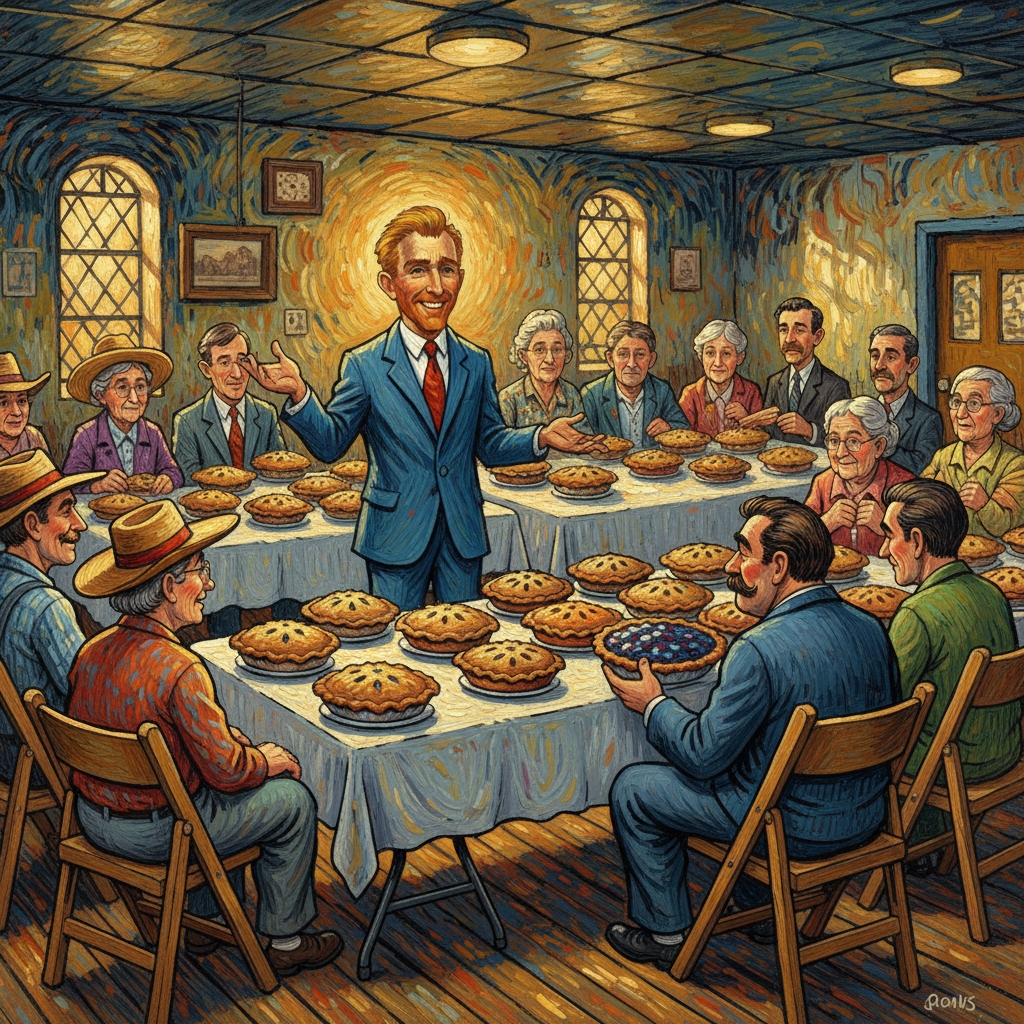
The next afternoon a community gathering formed in the church basement.
No votes.
No agenda.
Just pie.
Pastor Peeler believed pie solved approximately forty percent of social conflict.
Possibly more.
Boot stood beside a table studying homemade desserts.
“What’s the purpose of this meeting?”
Pastor Peeler smiled.
“Perspective.”
“Pie?”
“Pie first. Perspective second.”
People gathered in small groups.
Farmers spoke with retirees.
Developers spoke with business owners.
Residents compared stories about wells.
One family described hauling water during a drought.
Another described crop losses.
Another discussed future housing.
Another discussed grandchildren who needed jobs.
For the first time, people listened longer than they argued.
Shelley noticed.
“So that’s the trick.”
Pastor Peeler nodded.
Act VI – The Church Basement Perspective
“What trick?”
“Make everybody tell stories instead of positions.”
The pastor smiled.
“Positions compete.”
“Stories?”
“Stories explain.”
Across the room, Clovis sat with Earl and Jolene.
The conversation surprised all three.
They disagreed on almost everything.
Yet they shared identical concerns about uncertainty.
Not outcomes.
Uncertainty.
Nobody knew what future shortages might look like.
Nobody knew what future growth might require.
The realization changed the discussion.
Not entirely.
But enough.
Meanwhile outside, the mule again ignored his assigned bucket.
This time he sampled water from four different containers.
Doug threw up his hands.
“He’s doing it on purpose.”
The mule stared blankly.
Which somehow made the behavior seem even more intentional.
Act VI – The Church Basement Perspective
Act VII — Measurements
The following week Dr. Neil Cowgill proposed something unusual.
“Let’s gather actual information.”
The suggestion was controversial.
Not because anyone opposed information.
But because information sometimes interfered with certainty.
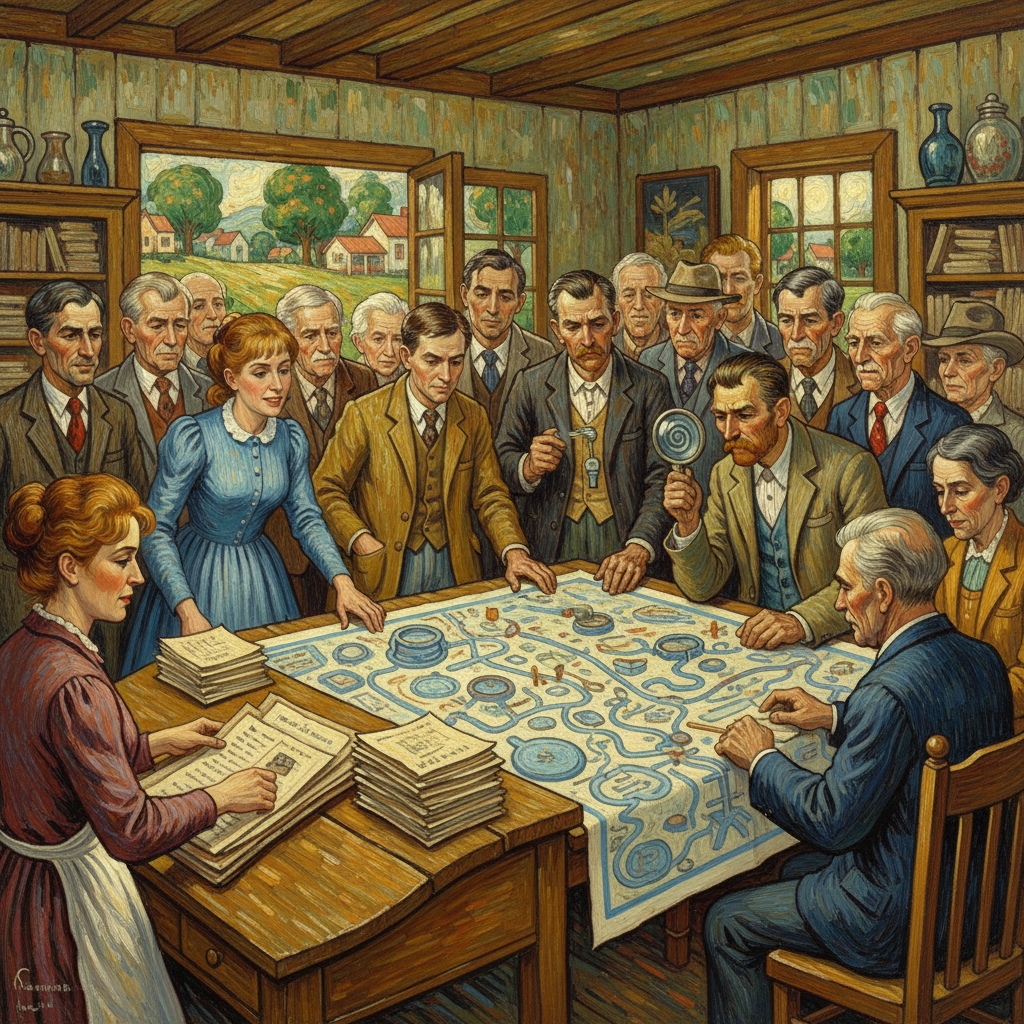
At Town Hall, volunteers assembled.
Shelley organized records.
Tiffany interviewed residents.
RT Mullins helped document well depths.
Sonny Morales coordinated mapping.
Coach Freddie Stubblefield supplied students eager for extra credit.
Brett and Alyssa Crenshaw contributed technical expertise.
Chester Ray Blevins printed charts.
The entire town became unexpectedly scientific.
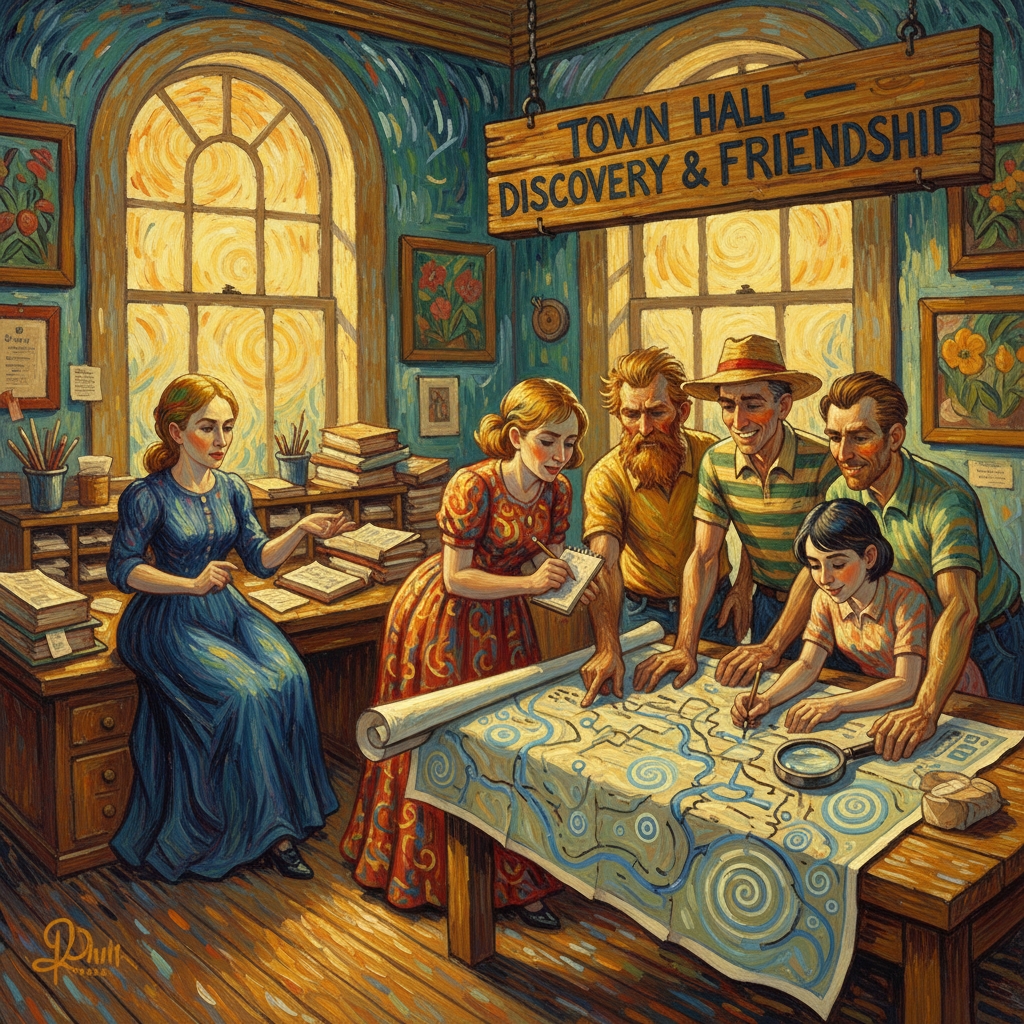
Clovis examined a map.
“This is interesting.”
“What?” asked Shelley.
“Our wells connect more than people thought.”
Act VII – Measurements
The room grew quiet.
Researchers had expected overlap.
Not this much overlap.
Underground water ignored property lines.
Ignored politics.
Ignored opinions.
Ignored social media.
Ignored campaign slogans.
Ignored everything.
It simply moved where geology allowed.
Mabel studied the results.
“Well.”
Everyone looked at her.
“That’s inconvenient.”
“How?”
“We keep acting like we’re protecting separate supplies.”
The room nodded.
“But?”
“We aren’t.”
That realization landed heavily.
Because it transformed the argument.
Nobody was defending individual wells.
They were defending portions of a shared system.
The difference mattered.
Even if nobody liked it.
Act VII – Measurements
Act VIII — The Meeting Nobody Wanted
Another Town Hall meeting followed.
Attendance exceeded the first.
Which proved citizens preferred unresolved issues.
Mayor Crowe opened proceedings.
“We’ve gathered new information.”
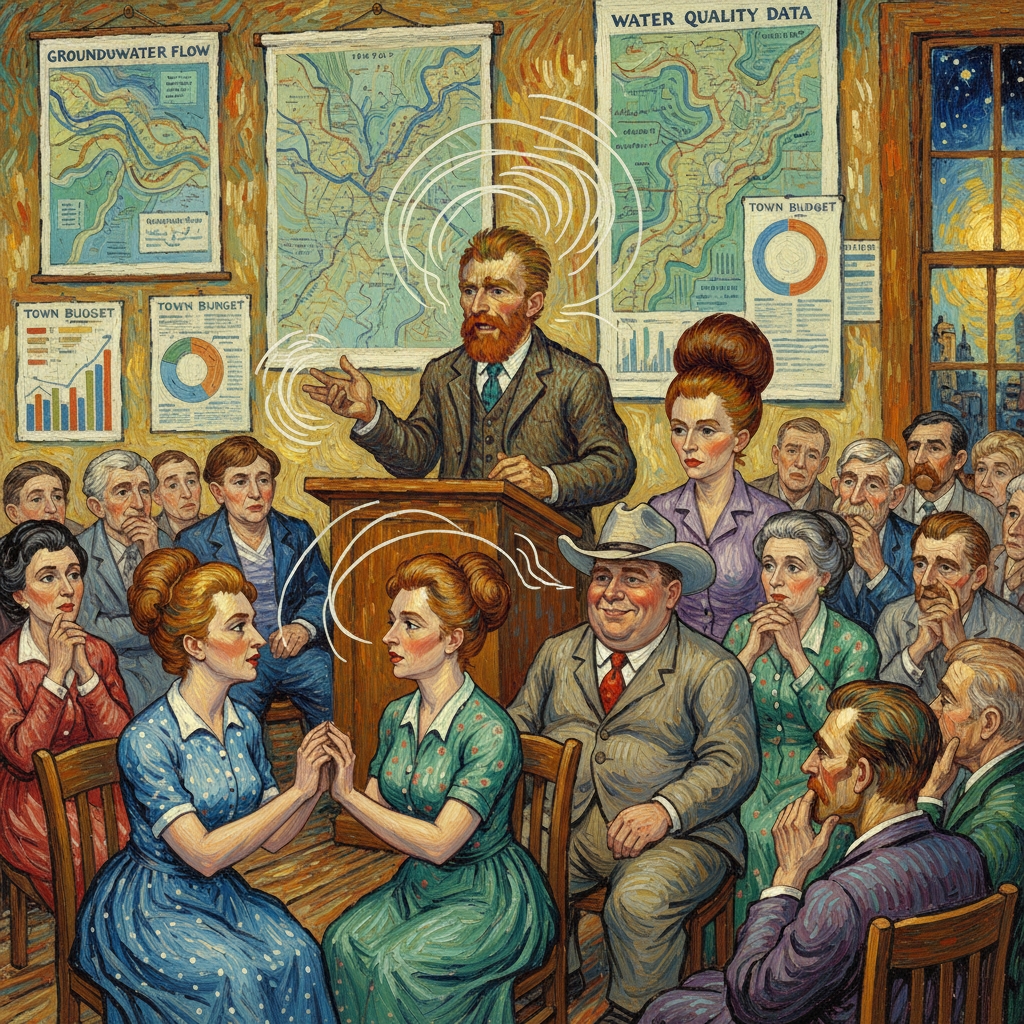
Charts appeared.
Maps appeared.
Facts appeared.
People listened carefully.
Then argued anyway.
But differently.
That was progress.
Jolene stood.
“I still support responsible development.”
Mabel nodded.
“I still distrust promises.”
The room laughed.
Mabel continued.
“But now I distrust them with better information.”
More laughter.
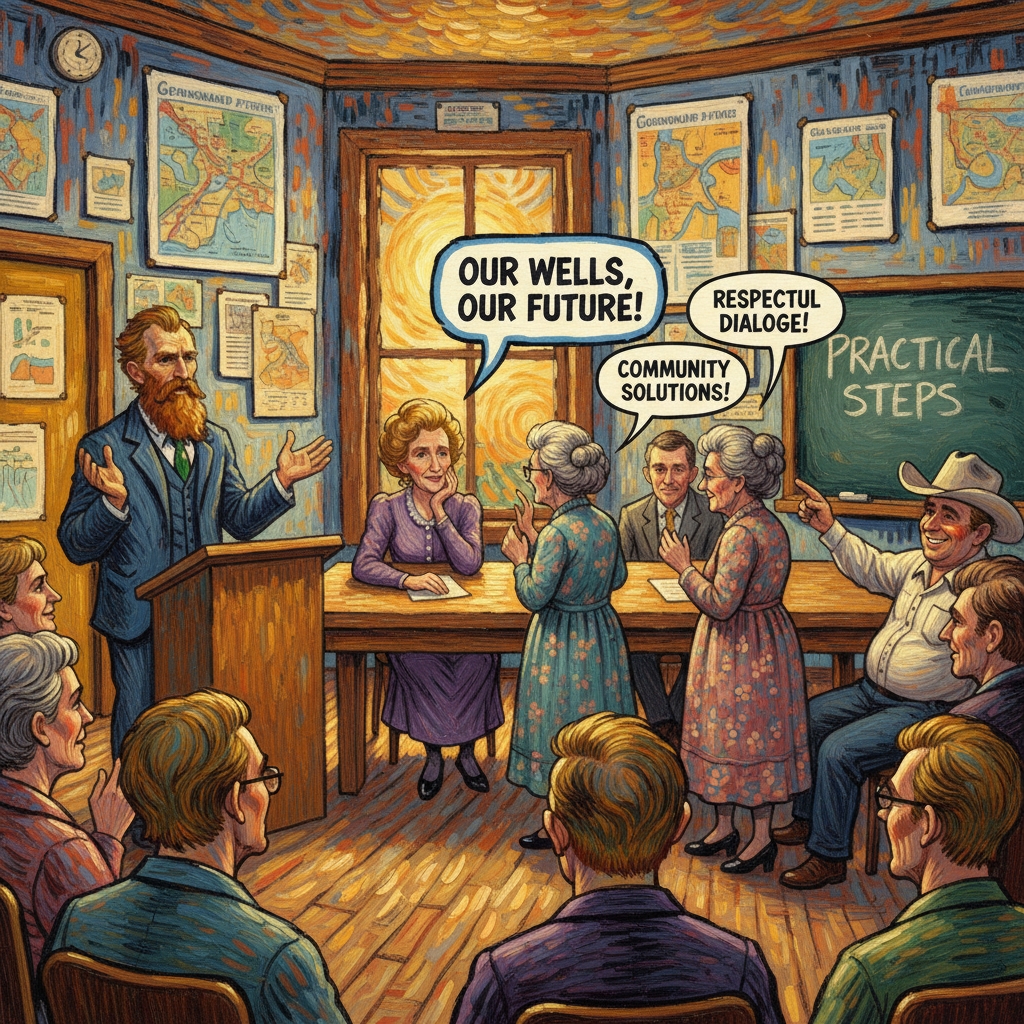
Clovis stood next.
“We’ve spent two weeks arguing about who should come first.”
Act VIII – The Meeting Nobody Wanted
“That’s right,” someone shouted.
“Maybe that’s the wrong question.”
Silence followed.
The town hated when Clovis made sense.
Because it usually complicated things.
“What question should we ask?” Mayor Crowe said.
Clovis looked around.
“How do we reduce the chances of shortages?”
The room paused.
It was annoyingly practical.
Boot grinned.
“Now we’re getting somewhere.”
Discussions shifted.
Storage.
Conservation.
Monitoring.
Infrastructure.
Contingency planning.
Emergency procedures.
Backup systems.
For the first time, people discussed solutions instead of rankings.
Nobody abandoned their positions.
But they expanded them.
Which was close enough.
Act VIII – The Meeting Nobody Wanted
Act IX — The Well and the Mule
Weeks later the controversy had not vanished.
No controversy ever truly vanished in Sequatchie Crossing.
It simply evolved into a less energetic form.
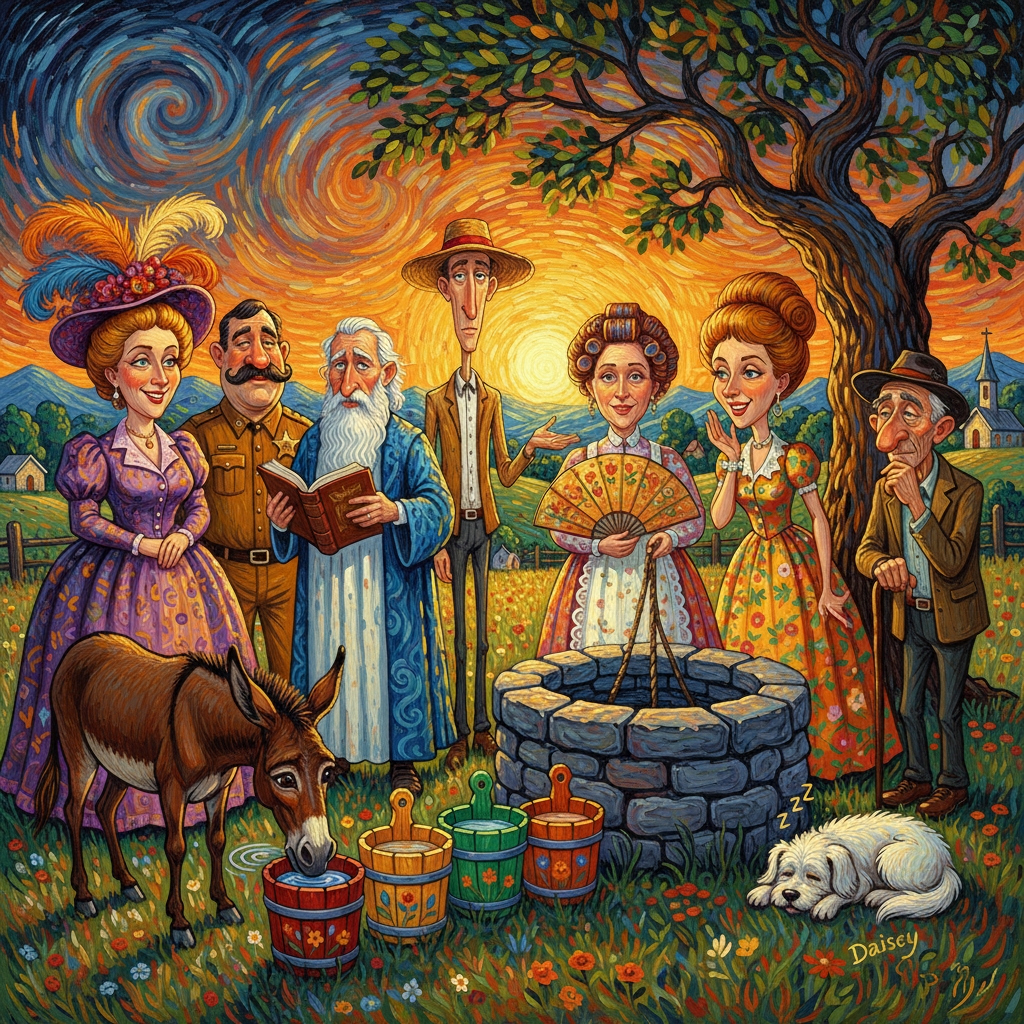
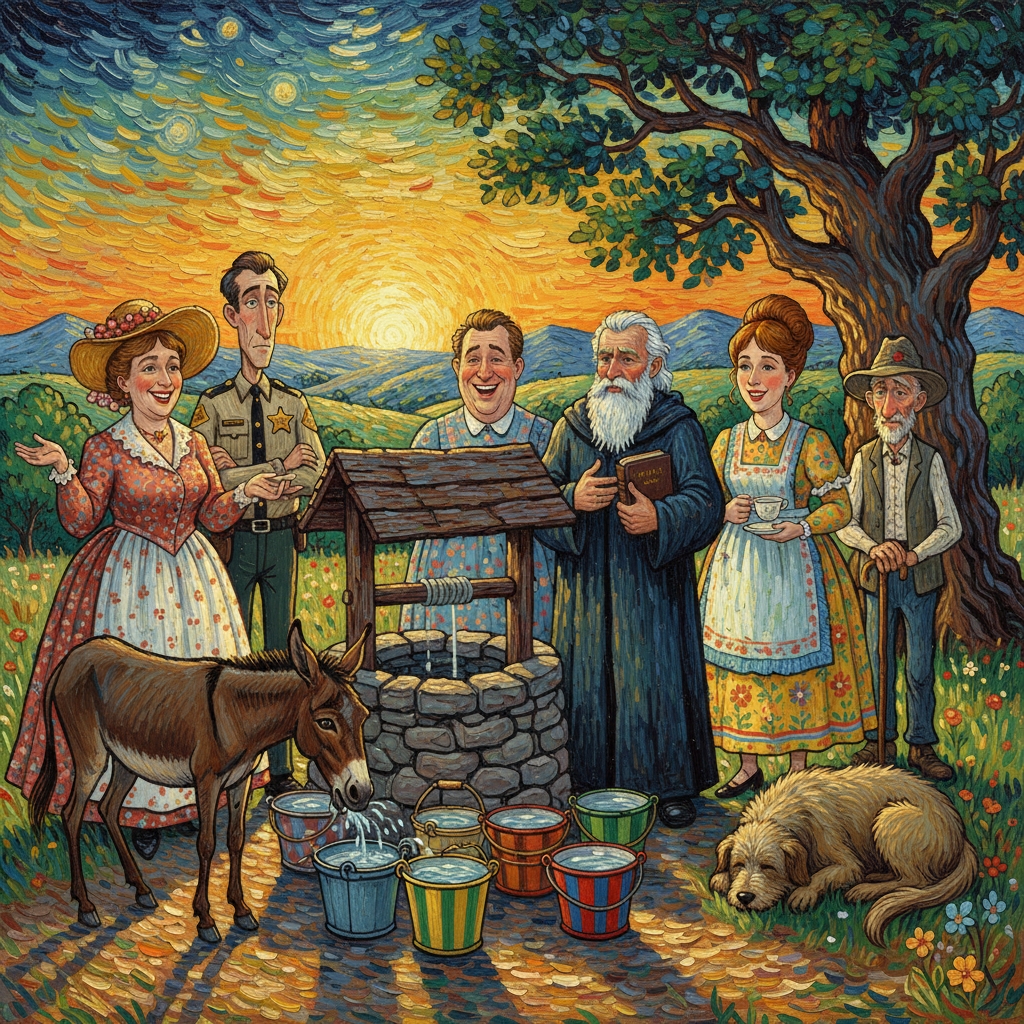
One evening townspeople gathered near an old community well.
The sun lowered across the valley.
Conversations drifted.
Children played nearby.
Daisy slept beneath a tree.
The mule wandered among residents.
Mayor Crowe looked around.
“We still don’t have complete agreement.”
“No town ever does,” Sheriff Peeler said.
Pastor Peeler nodded.
“Agreement isn’t always the goal.”
“What is?” asked Tiffany.
“Understanding.”
The group stood quietly.
A rare event.
Act IX – The Well and the Mule
Mabel studied the well.
“When I was younger, I thought ownership solved everything.”
“And now?” asked Shelley.
“Now I think dependency explains more.”
Boot chuckled.
“That’s surprisingly philosophical.”
“Don’t get used to it.”
Laughter spread.
The mule approached a row of buckets.
Each bucket belonged to someone different.
Each contained water.
Everyone watched.
The mule sniffed one.
Ignored it.
Sniffed another.
Ignored it.
Then drank a little from every single bucket.
One after another.
Methodically.
Without preference.
Without permission.
Without concern.
The crowd stared.
Doug groaned.
“See?”
Pastor Peeler smiled.
I think he’s become symbolic.”
“He’s become annoying.”
The pastor pointed toward the buckets.
“Maybe.”
The mule continued drinking.
Leaving each bucket slightly lower.
Never empty.
Just connected.
Clovis watched thoughtfully.
“You know.”
“What?” said Earl.
“That mule may be the smartest participant we’ve had.”
The mule immediately walked into a fence post.
Everyone laughed.
“Never mind,” Clovis said.
Act IX – The Well and the Mule
Epilogue — The Water Beneath the Arguments
The proposal remained under review.
The studies continued.
Experts analyzed data.
Officials considered options.
Citizens attended meetings.
Rumors survived despite overwhelming evidence.
Normal life resumed.
Mostly.
Yet something had changed.
People still disagreed about priorities.
Farmers continued defending agriculture.
Homeowners continued defending private wells.
Developers continued defending growth.
Businesses continued defending opportunity.
Nobody surrendered their perspective.
But most had learned something unexpected.
The groundwater beneath Sequatchie Crossing did not recognize categories.
It flowed beneath farms.
Beneath homes.
Beneath churches.
Beneath businesses.
Beneath fields.
Beneath the sheriff’s office.
Beneath the diner.
Beneath every argument.
The resource everyone wanted most turned out to be the one thing nobody entirely possessed.
And perhaps that was why discussions became so difficult.
People often find it easier to divide ownership than responsibility.
The old well remained where it had always been.

Epilogue – The Water Beneath the Arguments
Quiet.
Unimpressed.
Patient.
It had listened to generations of certainty.
Generations of predictions.
Generations of disputes.
It would likely outlast the current ones too.
Meanwhile the mule continued drinking from whichever bucket belonged to somebody else.
Nobody ever solved that problem.
Some residents suspected it was stubbornness.
Others suspected curiosity.
A few suspected philosophy.
The mule offered no comment.

Epilogue – The Water Beneath the Arguments
Disclaimer
Sequatchie Crossing is a work of fiction. All characters, businesses, events, organizations, locations, and situations depicted in this story are fictionalized for storytelling, satire, commentary, and entertainment purposes.
Any resemblance to actual persons, living or deceased, businesses, organizations, public officials, projects, developments, or events is purely coincidental.
This story explores public questions surrounding water resources, development, community planning, infrastructure, and competing priorities through fictional characters and fictional situations. It does not advocate for or oppose any specific project, company, policy, political position, development proposal, or regulatory action.
The purpose of Sequatchie Crossing Dispatch stories is to encourage thoughtful discussion through humor, observation, and small-town storytelling while illustrating the complexities that often exist beneath seemingly simple public debates.

Disclaimer – The Well That Everyone Claimed First
Real Places Behind the Ruckus – From The Dunlap Directory
Real Places Behind the Ruckus – From The Dunlap Directory
Yes, this story was fictional; even the parts that weren’t true. These places? Absolutely real. Stop by, support local, and keep the Wi-Fi away from livestock:
- Dunlap Flower Shop
- Switchgrass Farm
- The Ridge
- Everlee & Co Construction
- Cedar Springs Cumberland Presbyterian Church
- River Valley AgCredit
- Lifted Hearts Farm
- Backwoods Fence and Decking
- SHAZAM ATM at Citizens Tri-County Bank
- Coops Creek Commons
- Sequatchie County High School
- Pine Ridge Store
- Possum Creek RV Park & Campground
- Ponderosa Construction Company
- Highland Building Supply
- Savage Gulf State Natural Area
- Encanto Foods
- Hidden Cattle Cove
- Boo and Bitty’s Campground
- S & S Farmers Market

Real Places Behind the Ruckus – From The Dunlap Directory
At Sequatchie Crossing, we tell the stories of Sequatchie Crossing.
Please share this post with your friends, family, or business associates who may want follow the news from Sequatchie Crossing.


0 Comments