


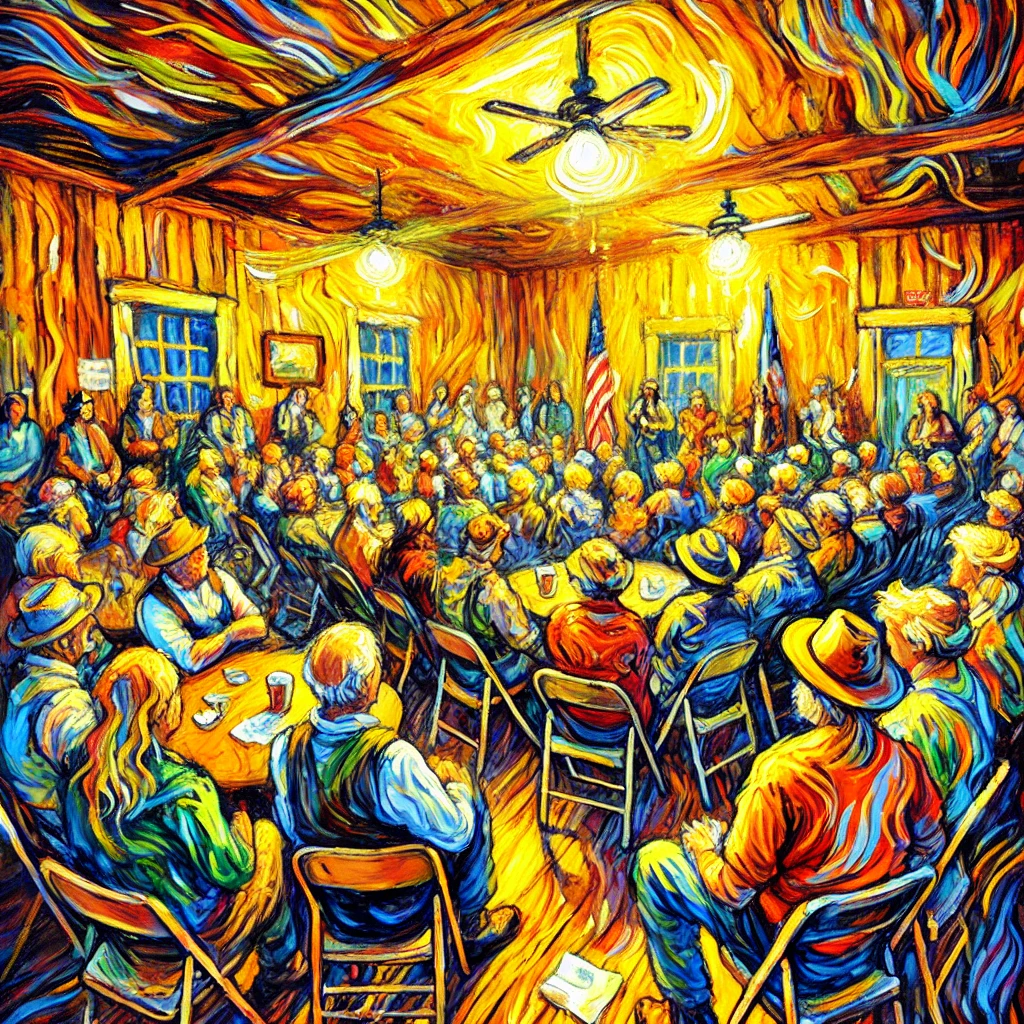
Silence Responds By Refusing to Clarify
By Tom Seest
At Sequatchie Crossing, we tell the stories of Sequatchie Crossing.
Please share this post with your friends, family, or business associates who may want follow the news from Sequatchie Crossing.
🎤 Audio Overview

Residents Argue Whether Silence Is a Form Of Protest
Act I: The Absence Is Noticed
It began, as many civic crises in Sequatchie Crossing do, with a sentence uttered too loudly in a room already tired of listening.
“I just find it interesting,” Eugene “Boot” Barnes said, leaning back in his folding chair as though it had personally wronged him, “that some people don’t say anything.”
There was a pause.
Then another.
Then the kind of pause that makes you aware of your own breathing.
Boot gestured broadly toward the back half of the Fellowship Hall, where several residents sat perfectly still, hands folded, faces neutral, eyes fixed forward in a way that could not be mistaken for sleep but could not be confidently identified as engagement either.
“They come to meetings,” Boot continued, “they sit, they listen, and they don’t contribute. At some point, silence becomes a statement.”
No one from the silent group responded.
This, too, was noted.
Clovis Strickland, seated at the clerk’s table with a yellow legal pad and a pen that had not yet forgiven him for previous meetings, wrote:
Observation: Silence accused of having opinions.
The chairperson, Martha Lee Gentry (no relation to the Reverend, which she reminded people of frequently and with visible effort), cleared her throat.
“For the record,” she said, “public comment is voluntary.”
Boot nodded vigorously. “That’s exactly my point.”
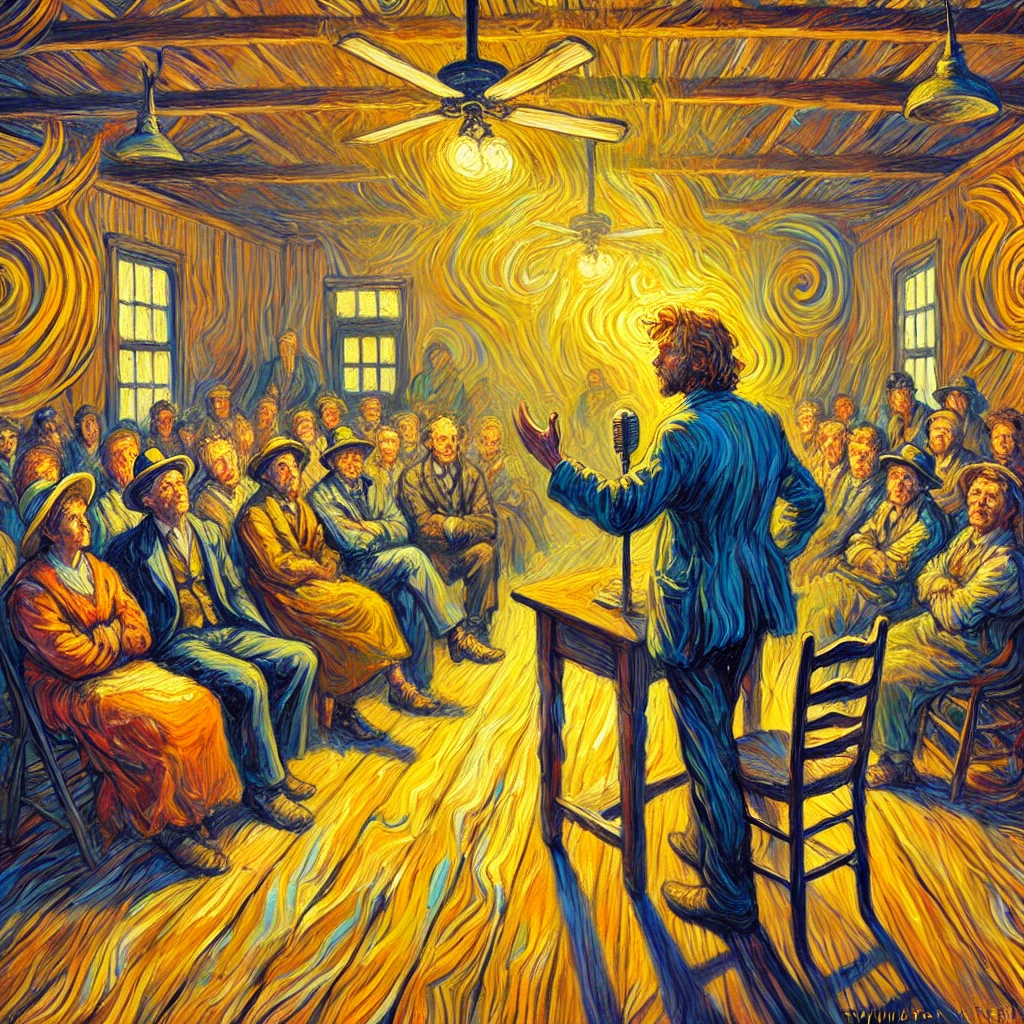
Act I – The Absence Is Noticed
Act II: Silence Is Defined (Poorly)
The next meeting’s agenda included an item that had not been there previously:
Item 7B: Discussion Regarding the Nature of Silence
No one could recall who had added it.
The clerk insisted it arrived via email, but the sender field was blank.
“That feels intentional,” said Deputy Clerk Randall, who had once taken a philosophy class at Chattanooga State and brought it up whenever possible.
Boot was prepared.
“I’ve done some thinking,” he announced, holding up three printed pages stapled unevenly. “Silence, historically, has been used as protest. Gandhi. Civil rights. That time my cousin didn’t talk to me for six months.”
A murmur rippled through the room.
From the silent group: nothing.
“This,” Boot said, pointing at them, “is not neutral silence. This is strategic silence.”
One of the silent attendees – Mrs. Nadine Fulp, retired, widowed, and known for finishing crossword puzzles in pen – blinked slowly.
She did not speak.
The room reacted as though she had.
Sheriff Peeler, standing near the back wall with his arms crossed, leaned toward Clovis and whispered, “Is blinking participation?”
Clovis wrote:
Unclear whether blinking constitutes comment.
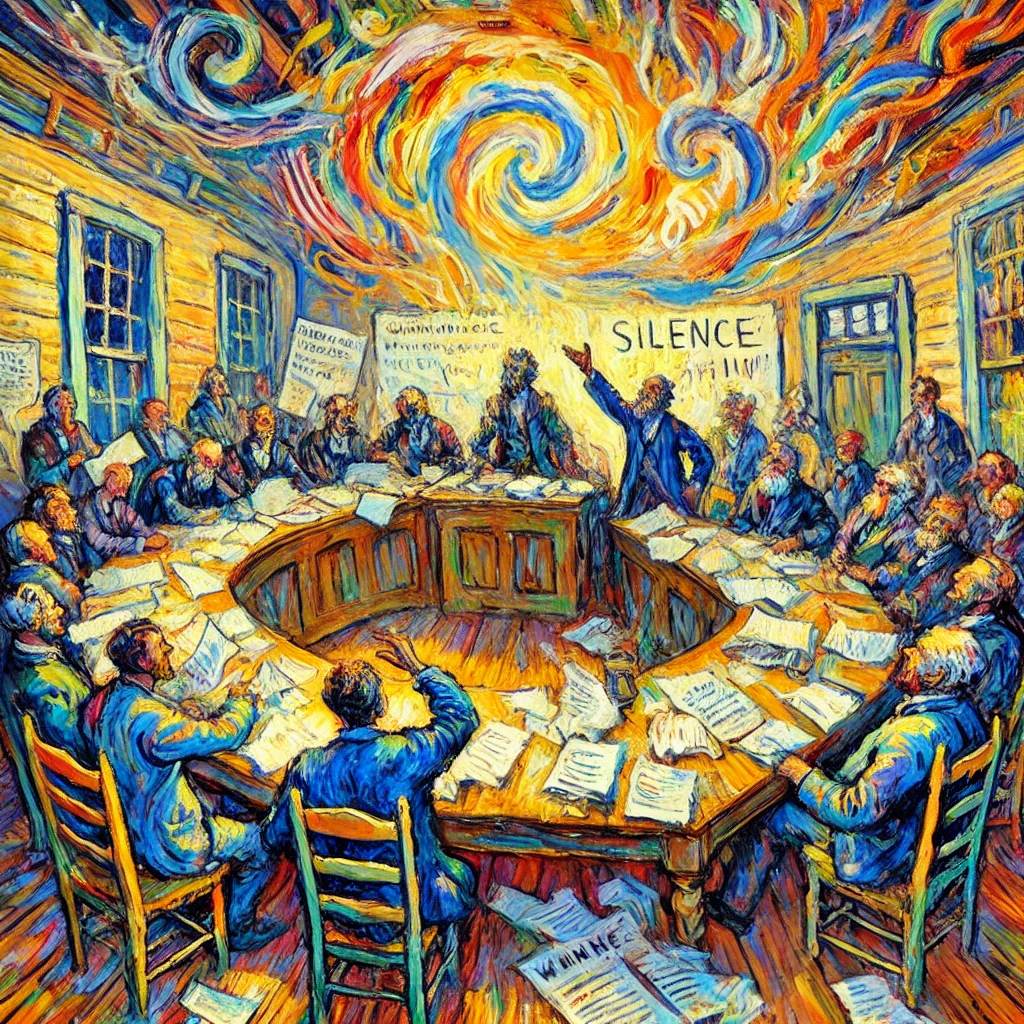
Act II – Silence Is Defined (Poorly)
Act III: Silence Is Accused of Being Loud
By the third meeting, silence had become the loudest presence in the room.
People referenced it constantly.
“They’re doing it again,” whispered someone in the second row.
“Look at that posture,” said another. “That’s a position.”
A man no one could remember inviting stood up and said, “I don’t mind people being quiet. I mind them being quiet at us.”
This received applause.
From the silent group: nothing.
Boot seized the moment.
“If silence is allowed,” he said, “what’s next? Sitting with intent? Folding arms in dissent? Excessive nodding?”
Martha Lee Gentry banged the gavel.
“Please refrain from assigning motives to body language.”
“But that’s all they’re giving us!” Boot replied.
At this point, the silence had taken on an almost architectural quality. It occupied space. It pressed against the walls. It waited.
Clovis underlined something three times and added a margin note:
Silence appears to be winning without campaigning.
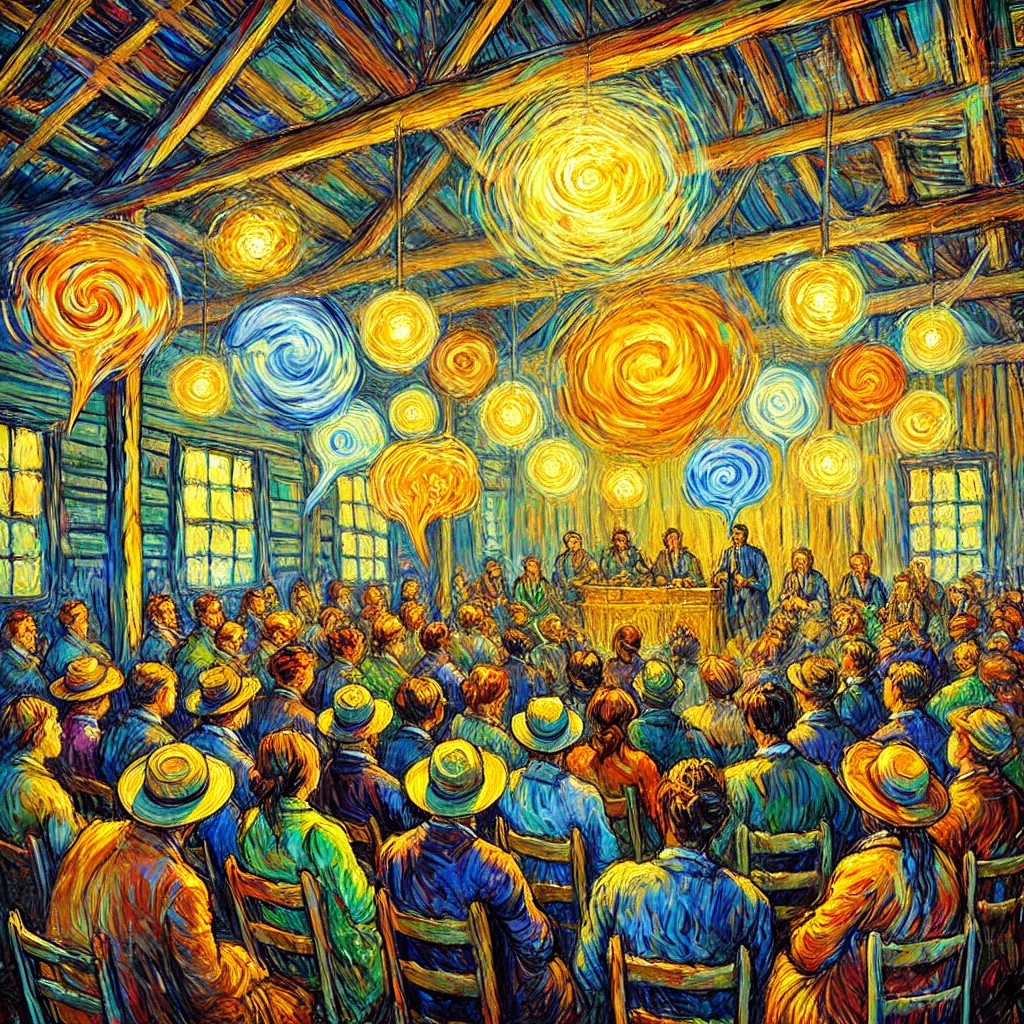
Act III – Silence Is Accused of Being Loud
Act IV: The Committee Is Formed
No issue in Sequatchie Crossing is complete without a committee.
Thus, by unanimous vote – excluding, notably, the silent members, who did not vote – the Committee to Study Silent Participation was formed.
Its mandate was broad and undefined.
Its membership included Boot Barnes, Deputy Clerk Randall, and Mrs. Lurleen Phelps, who had once chaired a committee for three years after the original purpose had been forgotten.
Their first meeting lasted two hours.
They defined silence four different ways and rejected all of them.
“Silence could be protest,” Randall said, drawing a diagram involving arrows and question marks.
“Or it could be confusion,” Lurleen offered.
“Or disrespect,” Boot said firmly.
“Or,” Randall said slowly, “it could just be silence.”
This suggestion was met with suspicion.
They voted to table that possibility.

Act IV – The Committee Is Formed
Act V: Silence Is Given the Floor
In an attempt to resolve matters, Martha Lee announced a special session.
“Tonight,” she said, “we will hear from Silence.”
She paused.
“I mean – we will allow silent participants the opportunity to speak, should they choose.”
The silent group remained seated.
Unmoved.
Unchanged.
Boot stood.
“This is exactly what I’m talking about.”
Martha Lee gestured toward Mrs. Fulp. “Ma’am, would you like to comment?”
Mrs. Fulp looked at the microphone.
Then at Martha Lee.
Then down at her hands.
She did not move.
A bead of sweat appeared on Boot’s temple.
“This,” he said, “is performative.”
Sheriff Peeler cleared his throat. “For clarity, nobody is required to speak.”
“But shouldn’t they want to?” Boot asked.
Silence, still, did not respond.
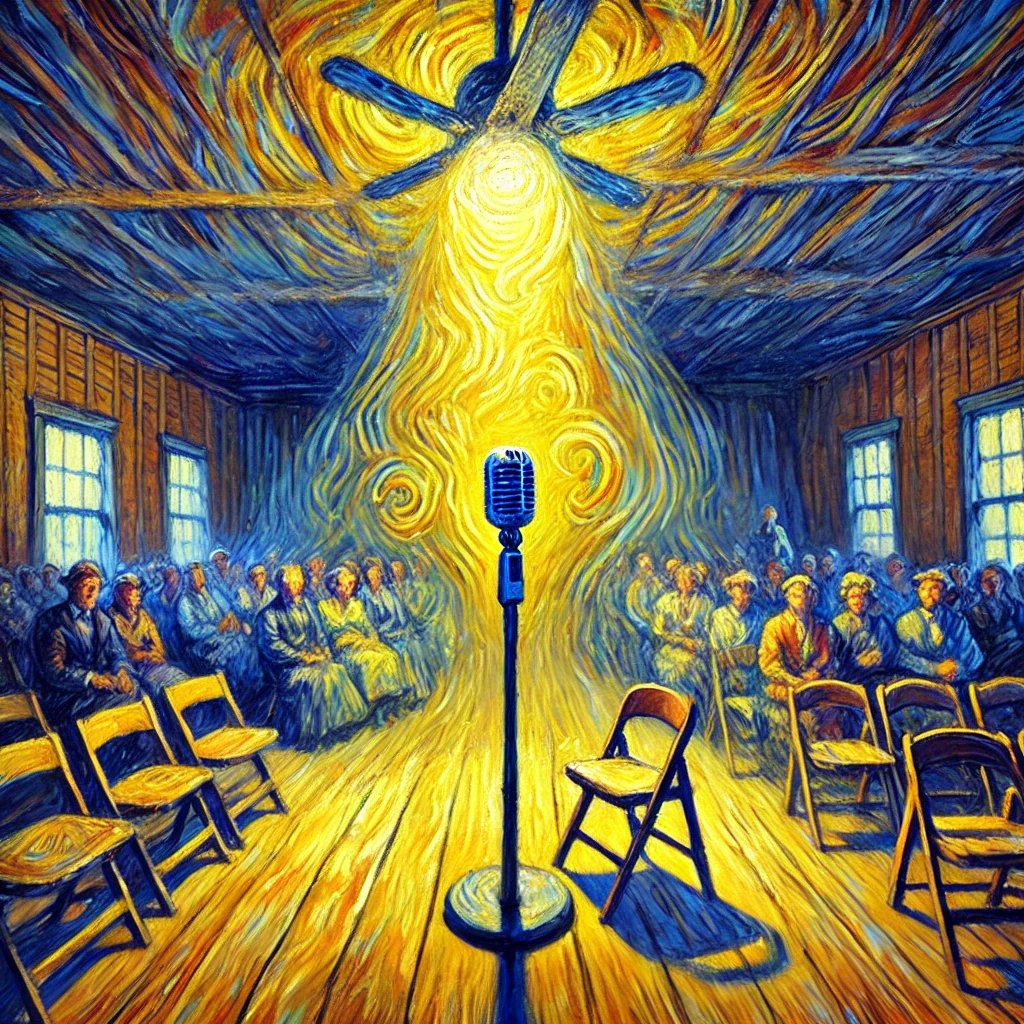
Act V – Silence Is Given the Floor
Act VI: Silence Goes Viral
Someone posted about it.
No one knew who.
The post read:
Interesting how some folks think not talking makes them better than everyone else.
Comments followed.
Screenshots circulated.
Silence was tagged in spirit, if not in fact.
Mrs. Fulp did not comment online.
This, too, was interpreted.
“She’s consistent,” someone said, accusingly.
A counter-post appeared:
Choosing not to engage is also a choice.
This enraged people who had engaged for years without results.
Boot printed the posts and brought them to the next meeting.
“Exhibit A,” he said. “Online silence.”
“That’s just…not posting,” said Randall.
“Exactly,” Boot replied.

Act VI – Silence Goes Viral
Act VII: Silence Is Proposed as Policy
Things escalated when someone suggested codifying silence.
“What if,” Randall said carefully, “we designate silent participation as a recognized form of civic engagement?”
Boot stood so fast his chair folded itself.
“No. Absolutely not.”
Martha Lee tried to regain control.
“This is a hypothetical.”
“But hypotheticals become precedents,” Boot warned.
A motion was made to draft guidelines for acceptable silence.
It failed.
A motion was made to limit silence to three minutes.
This caused confusion.
“How do you time silence?” someone asked.
Clovis wrote:
Silence resistant to stopwatch.

Act VII – Silence Is Proposed as Policy
Act VIII: Silence Is Accused of Escalation
By now, the silence was unbearable.
People filled it with speeches.
Long ones.
Circular ones.
Boot spoke for fifteen uninterrupted minutes about how silence made him feel excluded.
Mrs. Fulp sat quietly through all of it.
Someone accused the silent group of smugness.
Someone else accused them of restraint.
Neither accusation was confirmed or denied.
Sheriff Peeler finally spoke.
“I’ve dealt with loud disputes,” he said. “This one’s new. Hard to de-escalate something that’s not doing anything.”
Silence did not object.

Act VIII – Silence Is Accused of Escalation
Act IX: Silence Wins by Default
Attendance dropped.
People grew tired.
The committee stopped meeting.
The agenda item disappeared.
Silence remained.
At the final meeting before summer recess, Martha Lee looked out at the room.
“We appear to have reached…an understanding.”
No one clarified what that meant.
Mrs. Fulp gathered her purse and left quietly.
No one stopped her.
No one followed.
Clovis closed his notebook.
On the last page, he had written:
Conclusion: Silence neither confirmed nor denied.
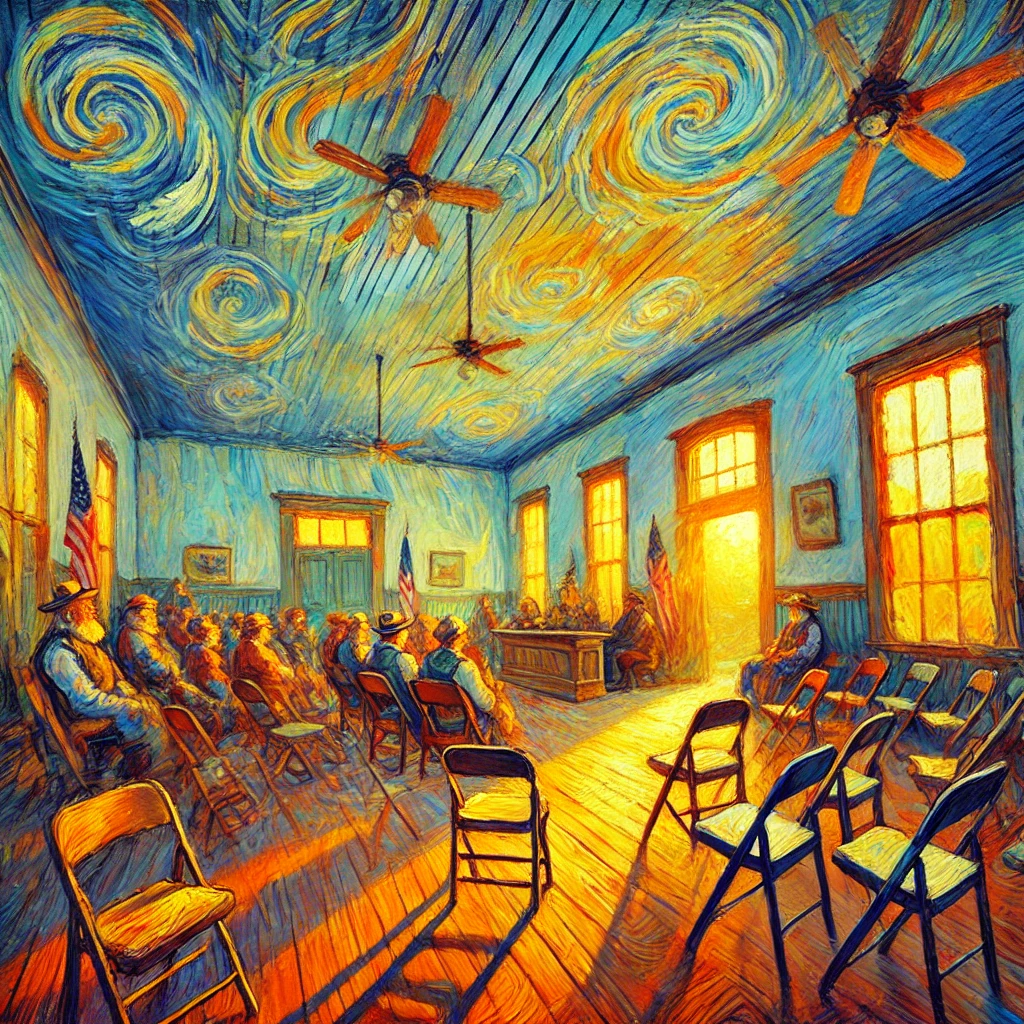
Act IX – Silence Wins by Default
Epilogue: Silence Continues Not Explaining Itself
Weeks later, someone asked Boot if the issue had been resolved.
He frowned.
“I still think they were making a point.”
Mrs. Fulp was later seen at the library, reading.
She did not comment when asked.
Silence, as it turned out, required no defense.
It simply persisted.

Epilogue – Silence Continues Not Explaining Itself
Disclaimer
This story is a work of fiction.
All characters, meetings, committees, silences, prolonged pauses, meaningful non-responses, perceived intentions, inferred attitudes, unverified motivations, and aggressively interpreted absences are entirely fictional.
Any resemblance to real people, real towns, real public meetings, real civic processes, or real situations where silence was loudly debated is purely coincidental – or the result of observers drawing conclusions without sufficient evidence.
No statements were made by Silence during the creation of this story.
Silence declined to confirm whether it felt represented.
Opinions attributed to Silence were inferred by others and may not reflect Silence’s actual position, if any.
Silence has not issued a correction.
This Dispatch does not endorse silence, condemn silence, regulate silence, or clarify whether silence constitutes participation, protest, resistance, compliance, strategy, neutrality, or simply not talking.
Readers are encouraged to interpret responsibly, speak if they wish, remain silent if they prefer, and avoid filing formal complaints against abstract concepts.
Silence, as always, has no comment.
Disclaimer – Residents Argue Whether Silence Is a Form Of Protest
Real Places Behind the Ruckus – From The Dunlap Directory

Real Places Behind the Ruckus – From The Dunlap Directory
Yes, this story was fictional; even the parts that weren’t true. These places? Absolutely real. Stop by, support local, and keep the Wi-Fi away from livestock:
- INPOWERD
- Sanders Associates
- Jiffy Junction Market
- S & S Farmers Market
- Bee Creek Farm
- Swafford Septic Services
- Stone For You LLC
- Uplift Fitness Dunlap
- Heritage Painting
- Valley Transmission’s LLC
- UT Performance
- Fireside Camp + Lodge
- Dunlap Lions Club
- Martinez Mobile Auto Detailing
- Holloways
- Scott’s Transmissions
- Bird Fork Farm

Real Places Behind the Ruckus – From The Dunlap Directory
At Sequatchie Crossing, we tell the stories of Sequatchie Crossing.
Please share this post with your friends, family, or business associates who may want follow the news from Sequatchie Crossing.



0 Comments