


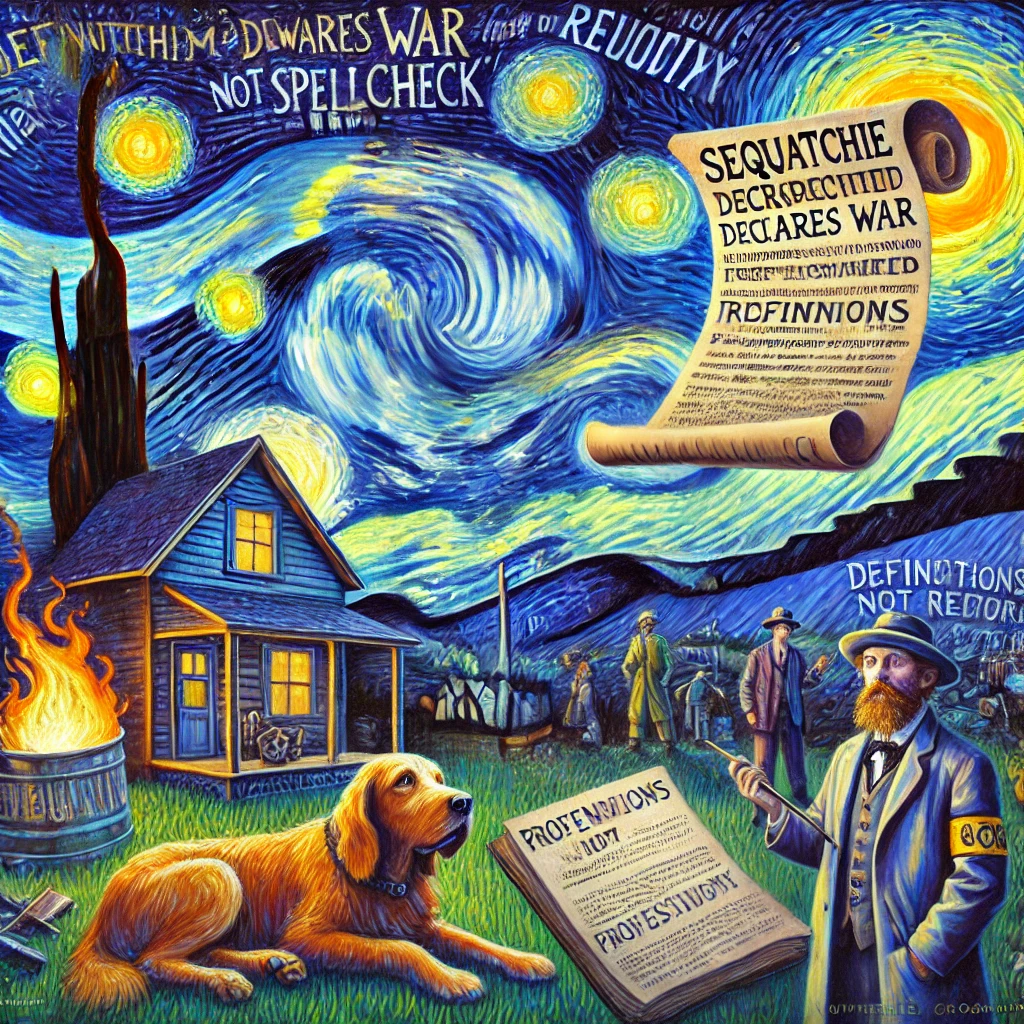
Original Locals Say Misspellings Are Sacred Tradition
By Tom Seest
At Sequatchie Crossing, we tell the stories of Sequatchie Crossing.
Please share this post with your friends, family, or business associates who may want follow the news from Sequatchie Crossing.
🎤 Audio Overview
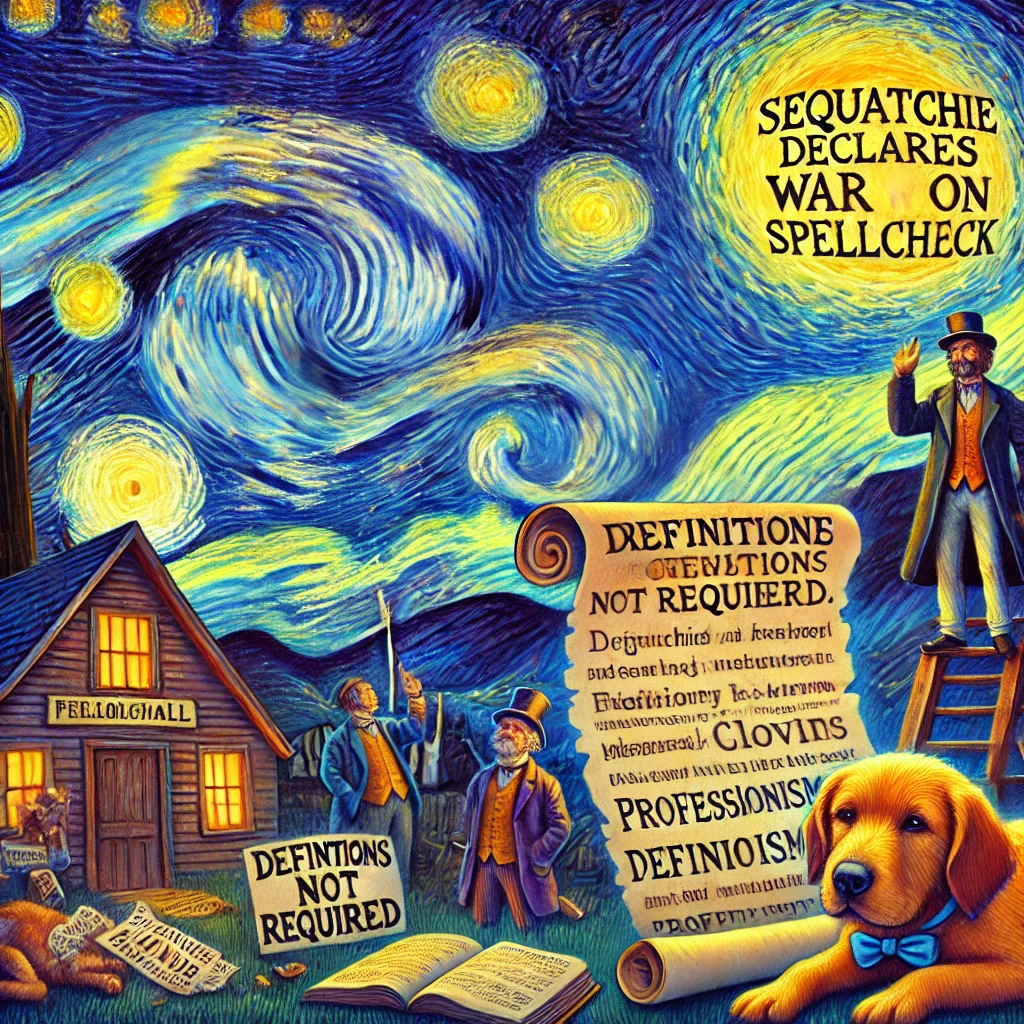
Prologue: The Day Correctness Arrived
No one in Sequatchie Crossing remembers exactly who turned on spellcheck, only that it showed up one morning like a nosy relative at the breakfast table.
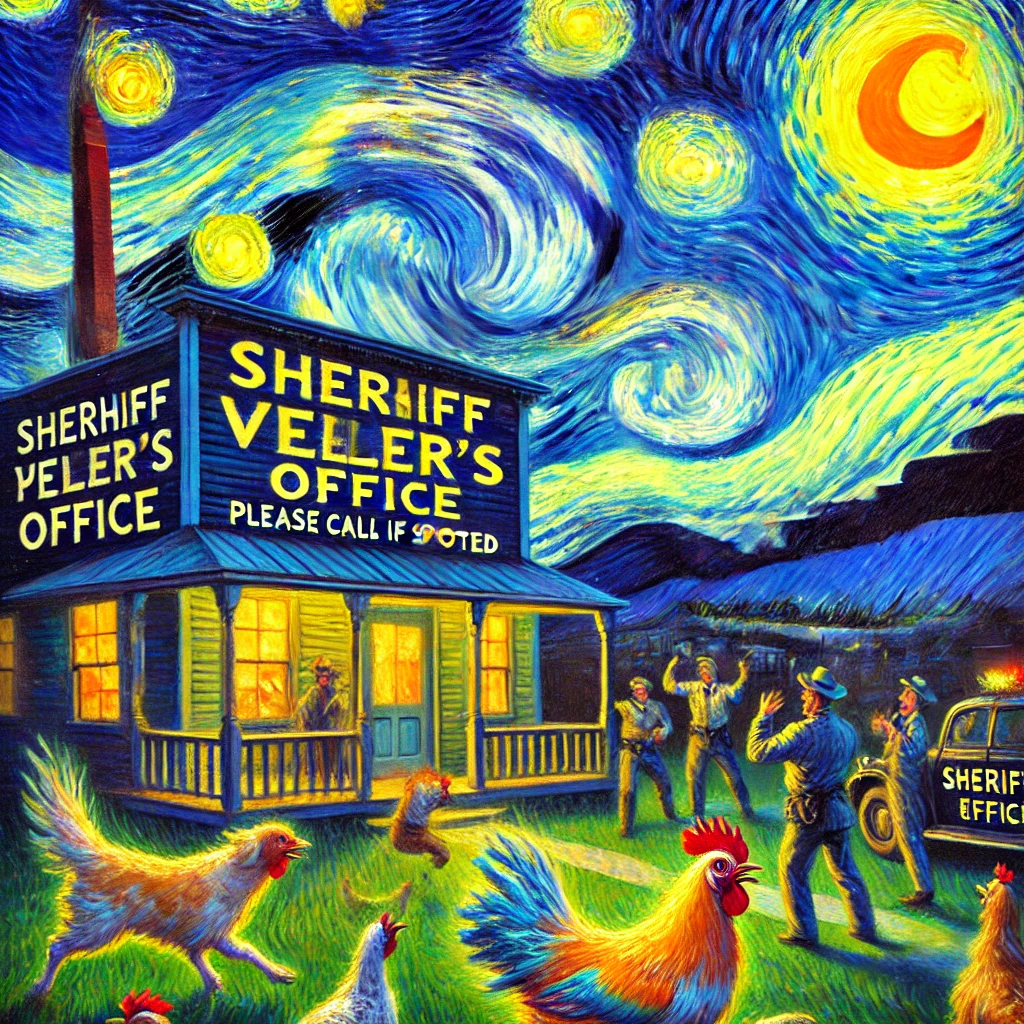
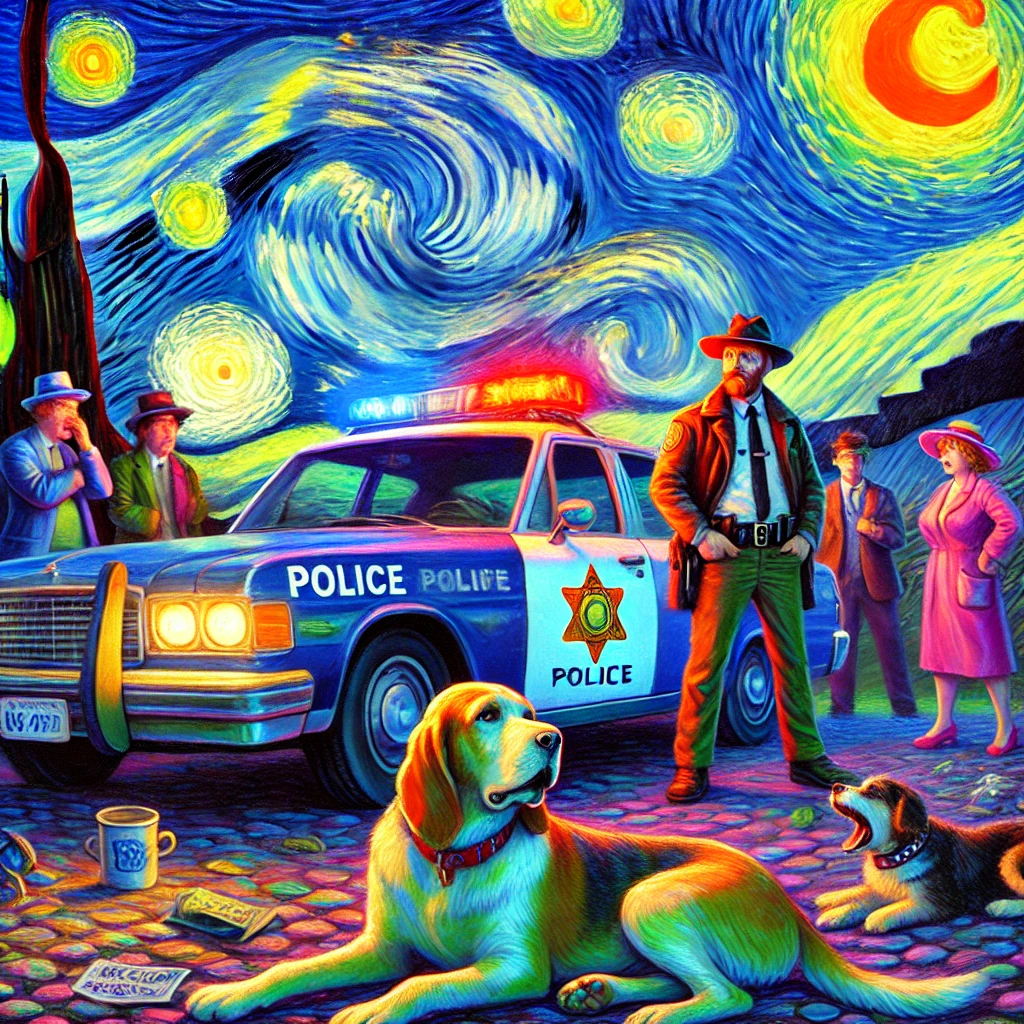
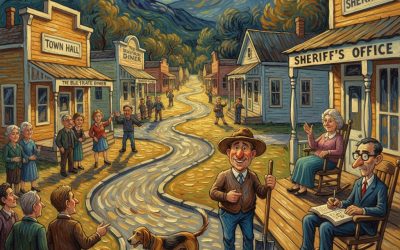
By sunrise, Sheriff Peeler’s usual post—“Chikens on loose agin, plese cal if spoted”—appeared squeaky clean as “Chickens on the loose again, please call if spotted.” It was so proper it made the locals suspicious.
Boot Barnes marched straight into the diner and slapped the newspaper down on the counter, though there wasn’t a single word about spellcheck in it. “If that ain’t a cultural invasion, I don’t know what is.”
Mabel Dean Ashcroft raised an eyebrow. “Boot, you’re wound tighter than a church piano string. It’s just a few letters.”
“A few letters today,” Boot growled, “a whole new alphabet tomorrow.”
Act I: The Chicken Incident
The trouble deepened when Daisy the hound chased two escaped hens into the churchyard. Locals flocked (so to speak) to Sheriff Peeler’s corrected post. Outsiders showed up with fancy nets, quoting the proper spelling as if it gave them hunting rights.
“That there is exactly why we don’t need spellcheck,” Clovis Strickland declared, standing in his foil crown under the oak tree. “They can’t misread us anymore, and that was our only defense.”
A newcomer, holding a bag of organic feed, tried to interject: “But don’t you think clear spelling helps?”
“Helps who?” Boot barked. “Helps you find our chickens faster, that’s who. Outsiders been wanting to read us like a road sign, and now they got the key.”
The hens were eventually caught, but the feathers of discord were already flying.
Act II: The Fellowship Hall Uprising
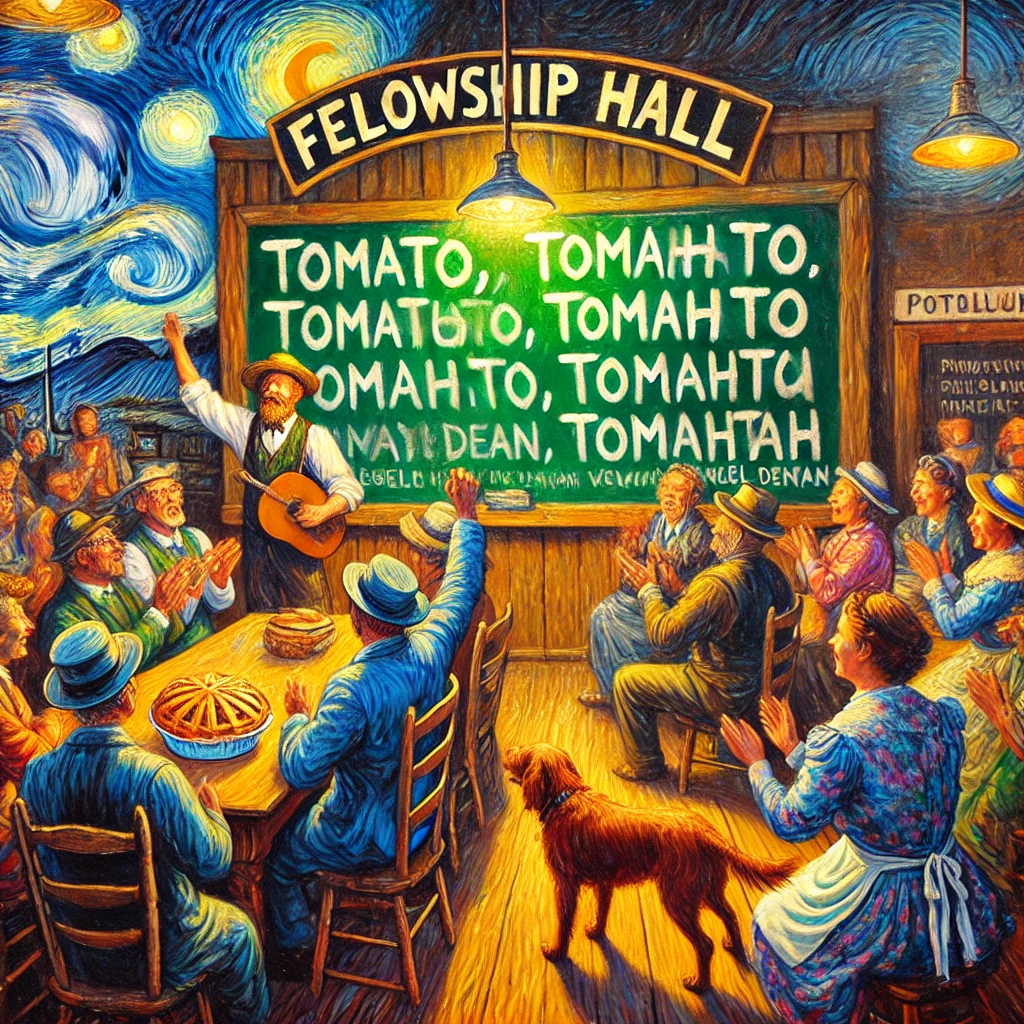
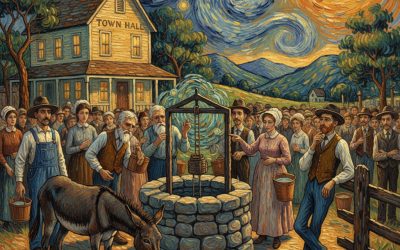
Within days, Fellowship Hall became the battleground. Someone dragged in the chalkboard usually reserved for Sunday school and scrawled words across it in what looked like battlefield graffiti: “TOMATO, TOMAHTO, TOMAHTAH.”
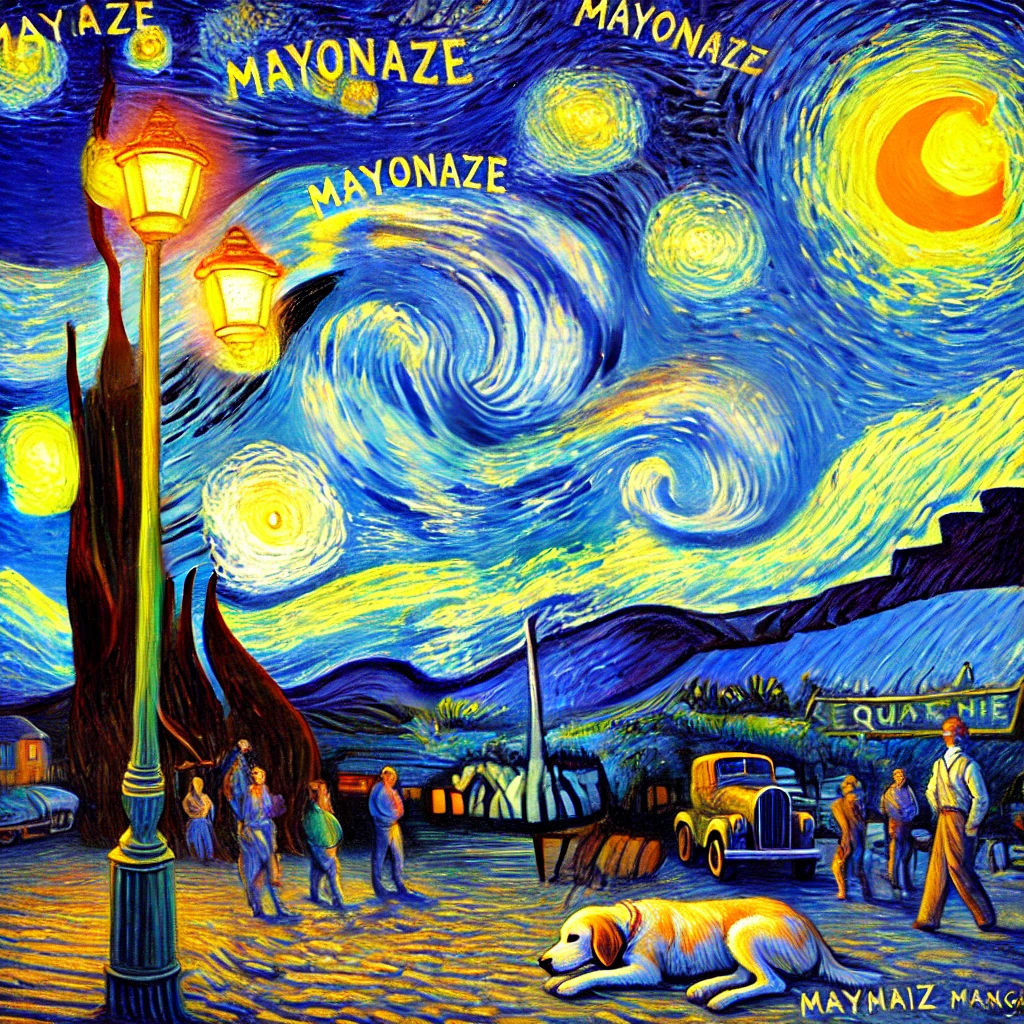
“This is our culture,” Mabel Dean said, rapping her clipboard like a gavel. “My granddaddy never spelled mayonnaise the same way twice. He left behind a legacy of jars with labels you couldn’t read but flavors you never forgot.”
A cheer rose. One old-timer waved a sign: “DOWN WITH C’s, LONG LIVE K’s.”
The Holier-Than-Thou Committee arrived fashionably late, bearing pies. Reverend Gentry, who’d already had his sermons “corrected” into plain English by the AI, offered a measured view:
“Brothers and sisters, spelling is morally neutral. But division among us is not. Therefore, I declare three potlucks mandatory.”
Boot muttered, “We’re gonna eat ourselves into a truce.”
Act III: Outsiders and Their Grammar
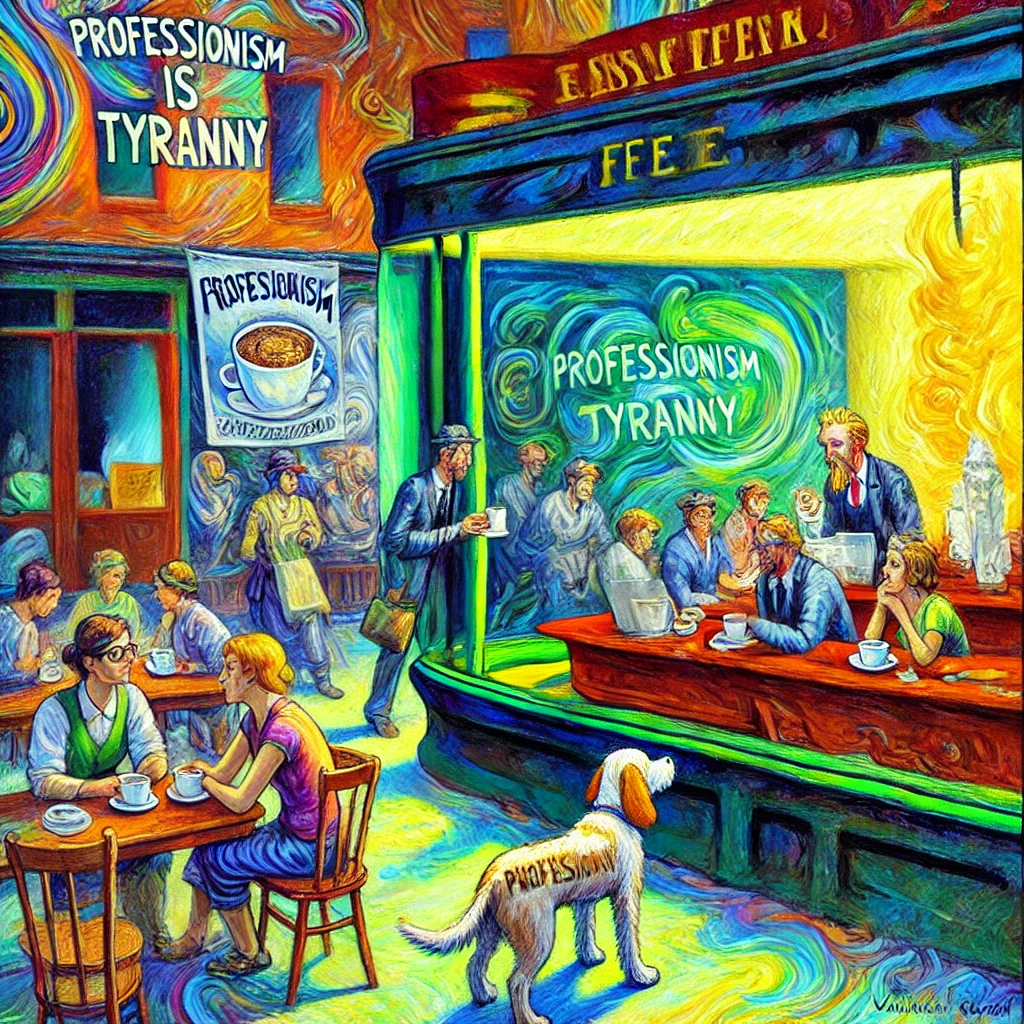
The newcomers didn’t take kindly to being painted as villains. They gathered at the coffee shop, lattes in hand, plotting their rebuttal.
“Listen,” said one, “I moved here for peace and fresh air, not to decode whether potluk meant food or a bad road.”
Another chimed in: “We’re just saying—it looks…unprofessional. What if a business wants to attract tourism? Correct spelling might actually help Sequatchie Crossing.”
News of that comment spread faster than gossip about Sheriff Peeler’s second cousin’s failed chili recipe. By evening, Clovis had stapled flyers all over town:
“PROFESSIONALISM IS TYRANNY.”
Each word was spelled three different ways, just to prove the point.
Act IV: The Great Half-Spellchecked Compromise
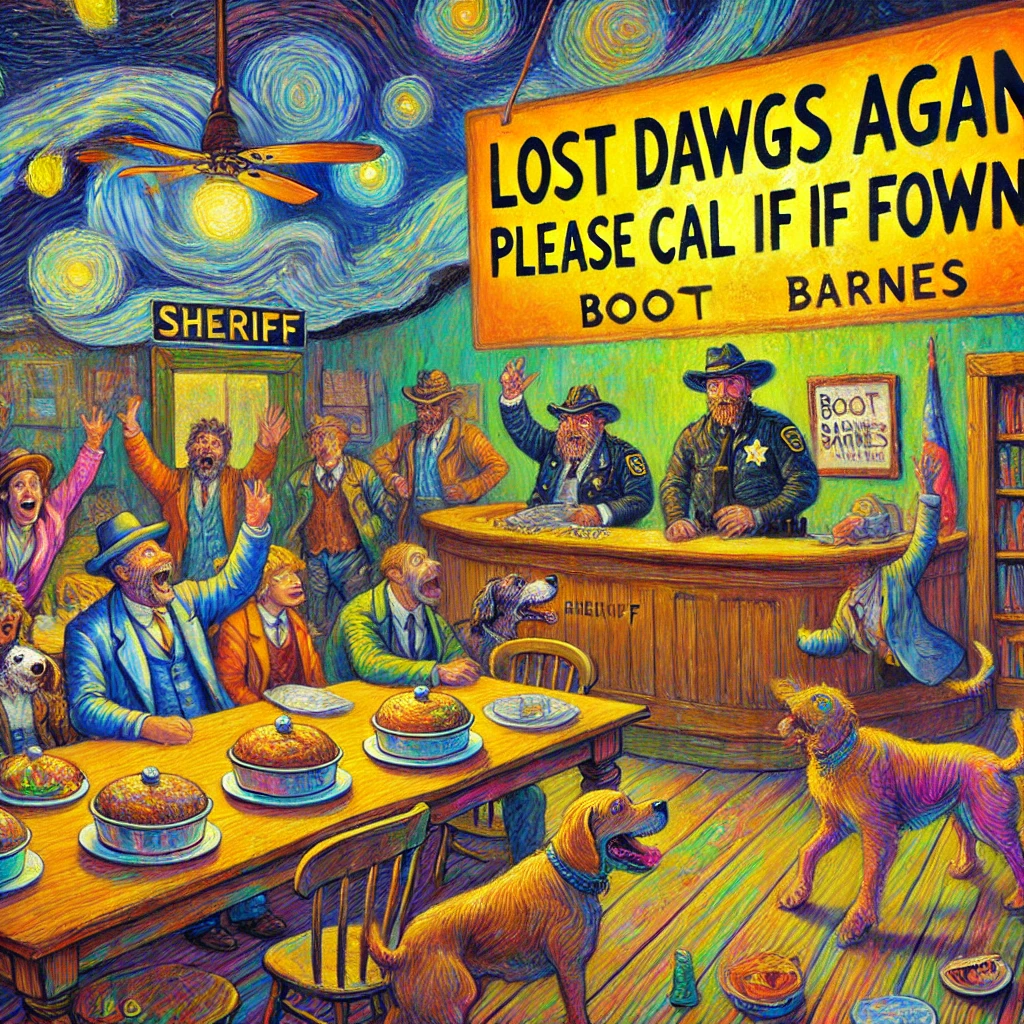
Things reached a boiling point when a local teenager—armed with the confidence only a Wi-Fi connection can give—hacked the AI system. From then on, spellcheck only corrected half the words.
The Sheriff’s next post read:
“Lost dawgs agan, please cal if fownd.”
It was chaos. Outsiders said it was worse than before. Locals declared it the greatest compromise since the church agreed to switch from styrofoam cups to paper plates.
At Fellowship Hall, the potluck reflected the mood. A casserole table sported hand-lettered signs: “Casarole, Cassaroll, Casarowl.” Not one was spelled the same, and no two tasted alike. Mabel Dean pronounced it a “unifying success.”
Side Arcs: Grammar Gone Wild
-
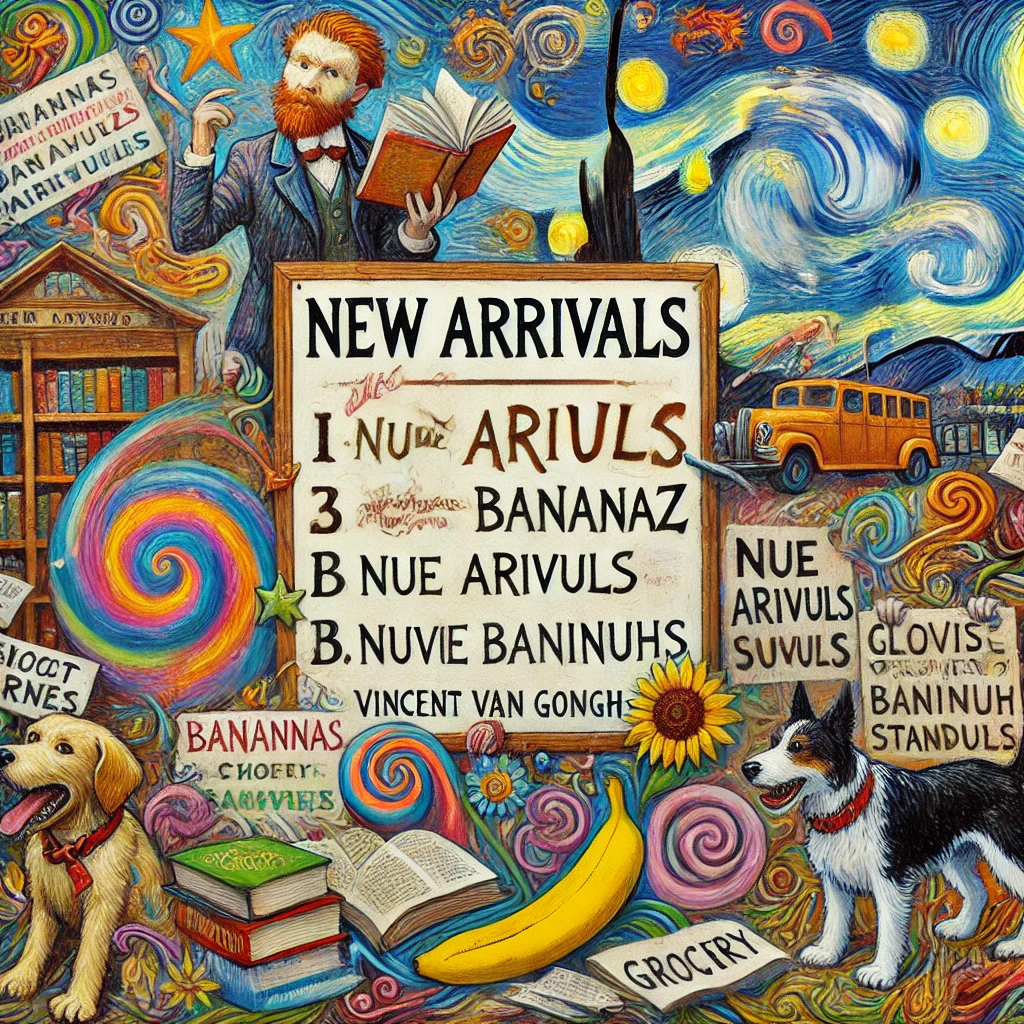
The Library Mutiny: Boot Barnes rewrote the library’s “New Arrivals” shelf into “Nue Arivuls.” Outsiders boycotted until Mabel Dean put a “translation guide” next to the shelf.
-
The Schoolyard Rebellion: Sequatchie High students started handing in essays with intentional spelling errors, calling it “heritage punctuation.” The English teacher resigned, declaring, “I didn’t sign up for this civil war.”
-
The Grocery Standoff: At Johnson’s Market, signs suddenly read “Banannas, Bananaz, Baninuhs.” Locals bought them proudly; outsiders walked out confused.
Act V: The Ordinance and the Victory Feast
Finally, the mayor—already exasperated by a zoning dispute involving goats—decided enough was enough. A town vote was held, with ballots ranging from neatly printed to near-unreadable.
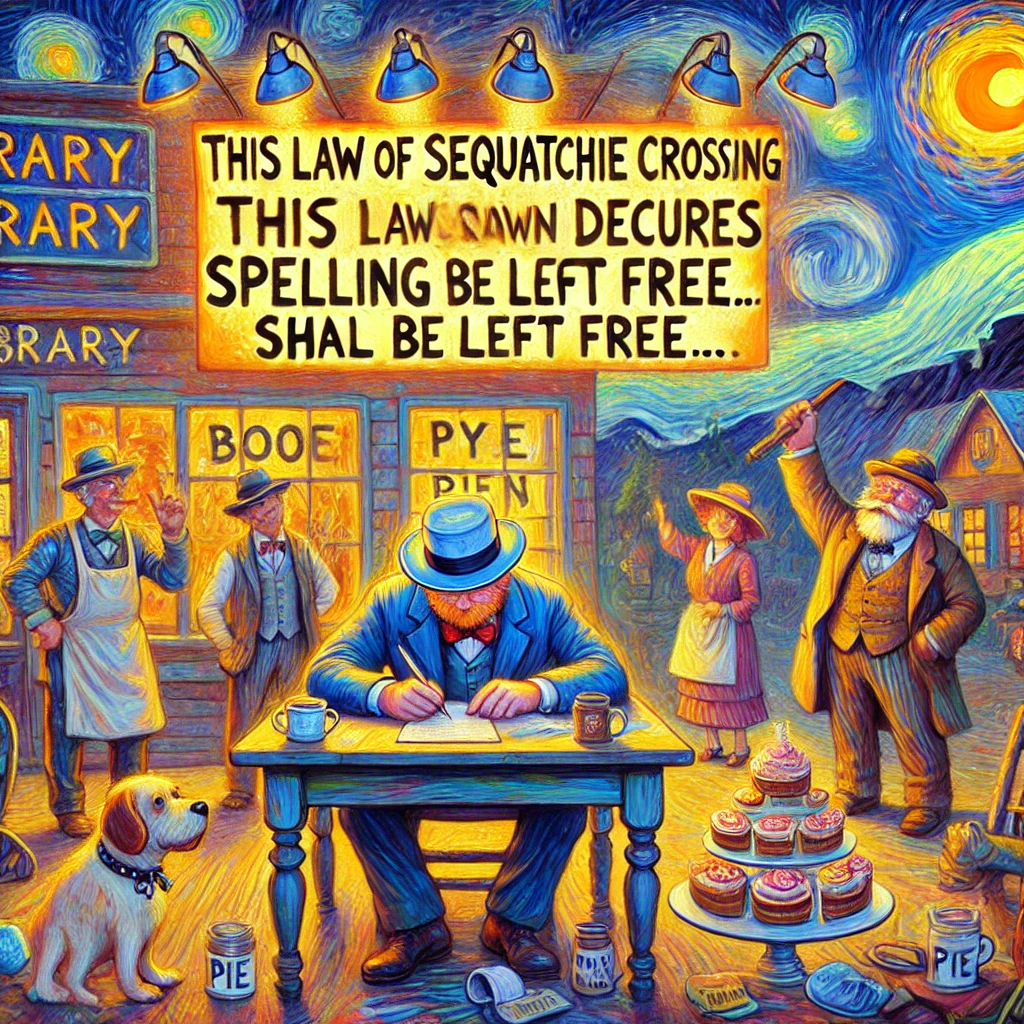
The ordinance passed with overwhelming support: “This Law of Sequatchie Crosing decrees spelling shal be left free, frum bots and frum outsiders.”
Boot Barnes nailed the decree to the library wall. Clovis wore his foil crown like a general who had won a war. Mabel Dean organized yet another potluck, announcing the dessert table would feature “Pye, Pie, and Pai.”
Daisy the hound barked twice, wagged her tail, and curled up beneath the decree.
Epilogue: Legacy in Letters
Weeks later, the AI spellcheck was gone, replaced by posts as crooked and confusing as ever. Outsiders sighed. Locals beamed. And the Holier-Than-Thou Committee issued its final word:
“Spelling divides, but potluck unites. May our legacy be a buffet of variety, both in letters and in casseroles.”
In Sequatchie Crossing, no word was ever spelled the same again.
⚖️ Disclaimer
This story is a work of satire, set in the fictional town of Sequatchie Crossing. While inspired by small-town quirks, community disputes, and the peculiarities of modern technology, no actual chickens, casseroles, or misspelled ordinances were harmed in the making of this Dispatch. Any resemblance to real towns, people, or church committees is purely coincidental—though if you’ve ever attended a potluck where the labels read “casarole, cassaroll, casarowl,” you may feel right at home.
Real Places Behind the Ruckus – From The Dunlap Directory
Real Places Behind the Ruckus – From The Dunlap Directory
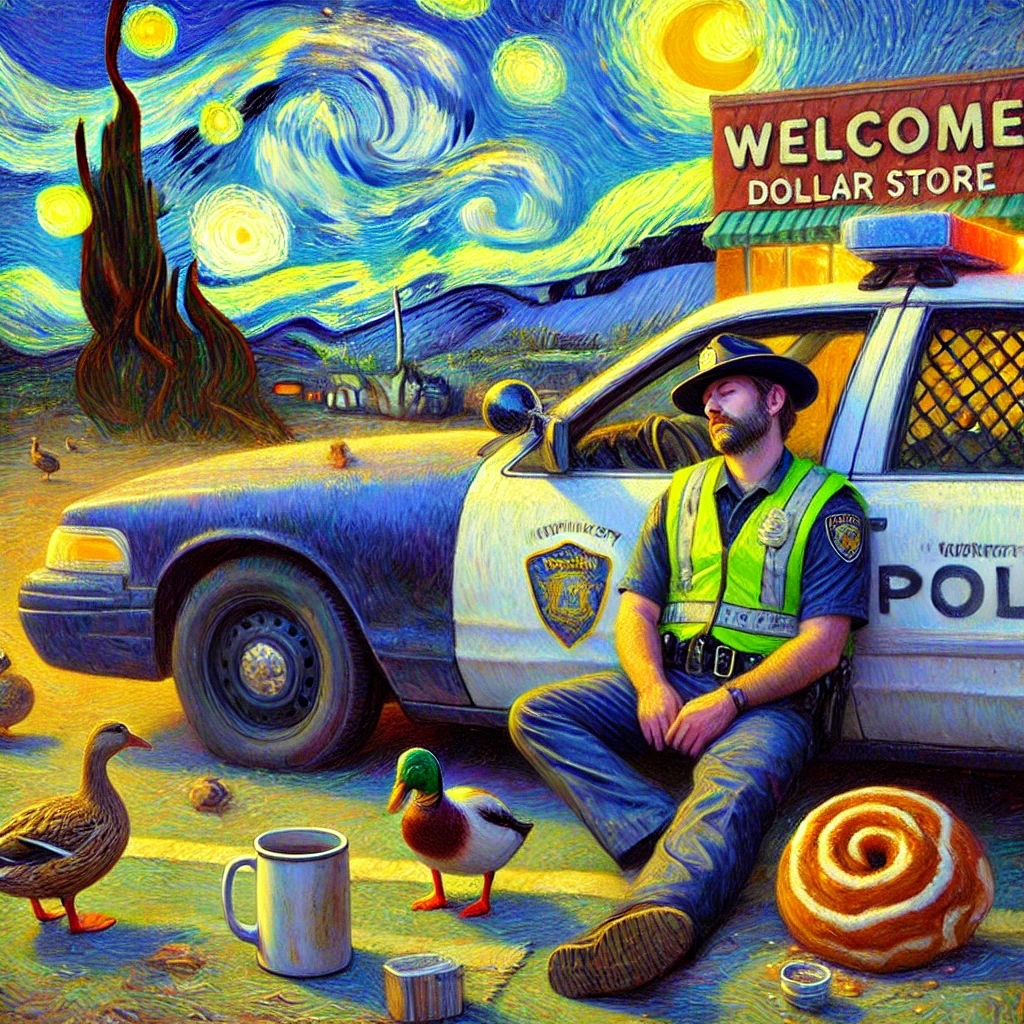
Yes, this story was fictional; even the parts that weren’t true. These places? Absolutely real. Stop by, support local, and keep the Wi-Fi away from livestock:
- Baker & Sons Plumbing
- Rhea Family Farms
- VFW Post 5772 Dunlap
- No Limit Fab
- Music Makers
- Wilson Dumpsters
- Deakins Underground
- Cafe on 28
- Animal Sitting by Chloe Holloway
- Red’s Innovations TN
- Top of the Rock Restaurant and Brewery
- Barker Construction
- Cynthia’s Kitchen
Real Places Behind the Ruckus – From The Dunlap Directory
At Sequatchie Crossing, we tell the stories of Sequatchie Crossing. Please share this post with your friends, family, or business associates who may want follow the news from Sequatchie Crossing.

0 Comments