


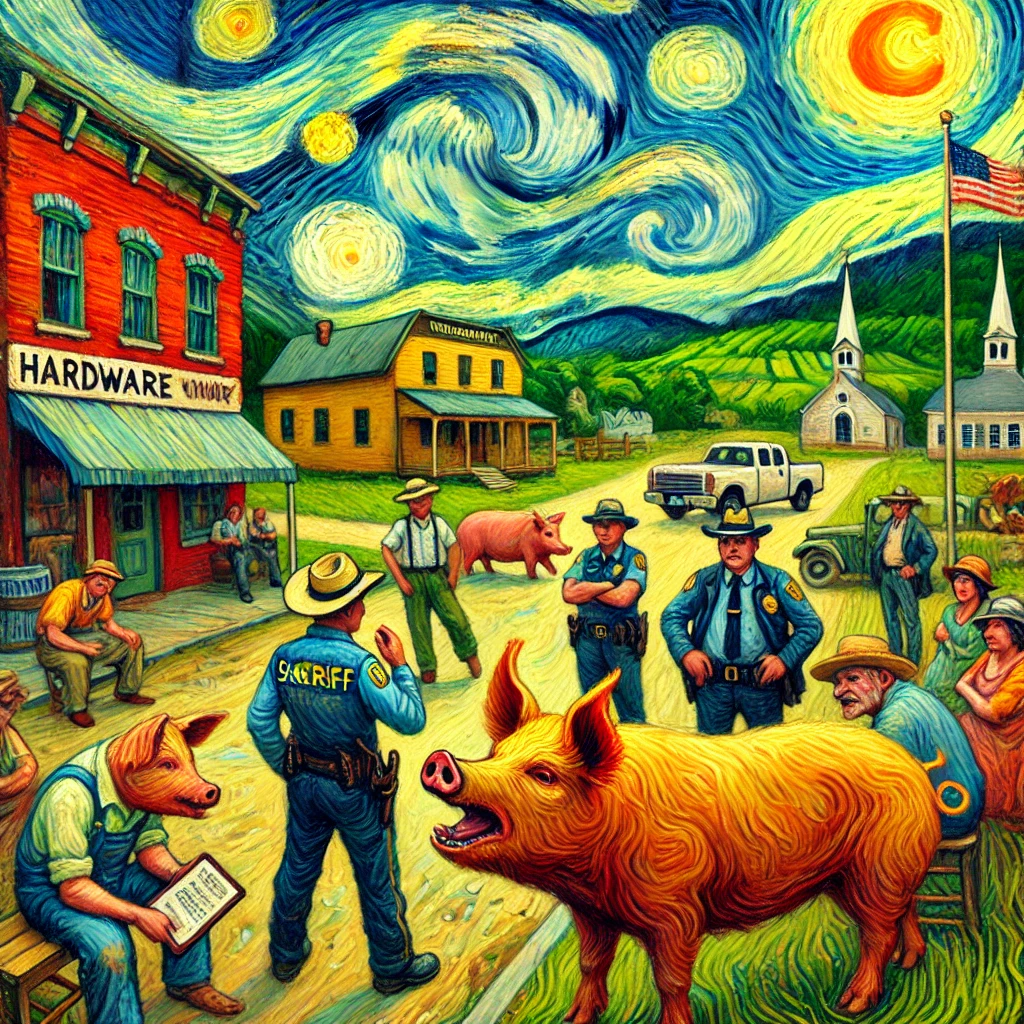
No One Owned Them. Everyone Blamed Someone.
By Tom Seest
At Sequatchie Crossing, we tell the stories of Sequatchie Crossing.
Please share this post with your friends, family, or business associates who may want follow the news from Sequatchie Crossing.
🎤 Audio Overview
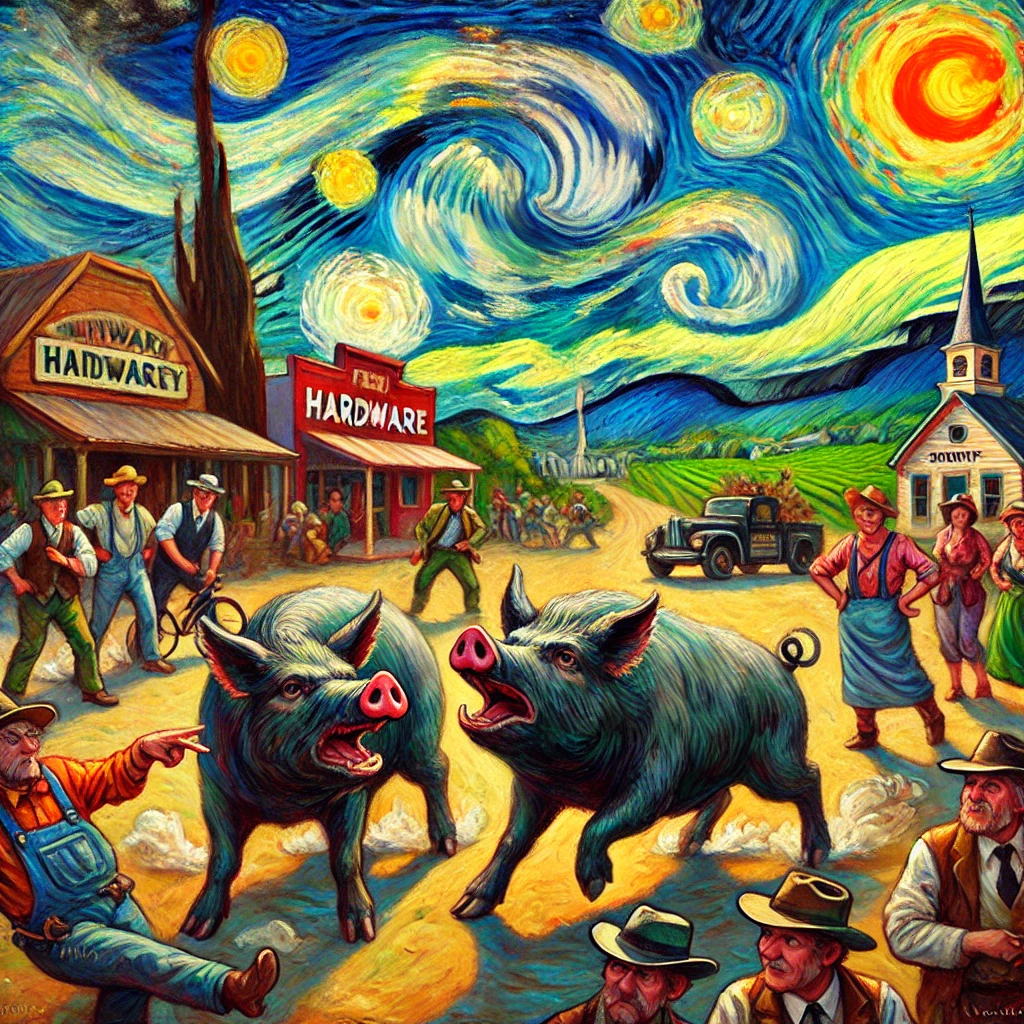
The Day the Hogs Took the Long Way Home
Act I – The First Sighting
It started, as most things in Sequatchie Crossing do, with a sighting that nobody could quite agree on.
“I’m telling you,” said Clovis Strickland, standing just outside Honeycutt Hardware with a clipboard that had seen more theories than confirmations, “those ain’t ordinary hogs.”
“What makes a hog extraordinary?” asked Boot Barnes, leaning against a stack of fertilizer bags like a man who had seen enough hogs in his life to form a reasonable baseline.
Clovis adjusted his glasses. “Their directionality.”
Boot blinked. “Their what now?”
“They’re headed east,” Clovis said, pointing as if the hogs themselves had drawn him a map. “No hog with a proper home goes east at 9:14 in the morning without cause.”
“Maybe they got somewhere to be,” Boot said.
“That’s exactly what worries me.”
By 9:30, the hogs had crossed Main Street.
By 9:45, they had names.
Nobody agreed on those names, but they had them.
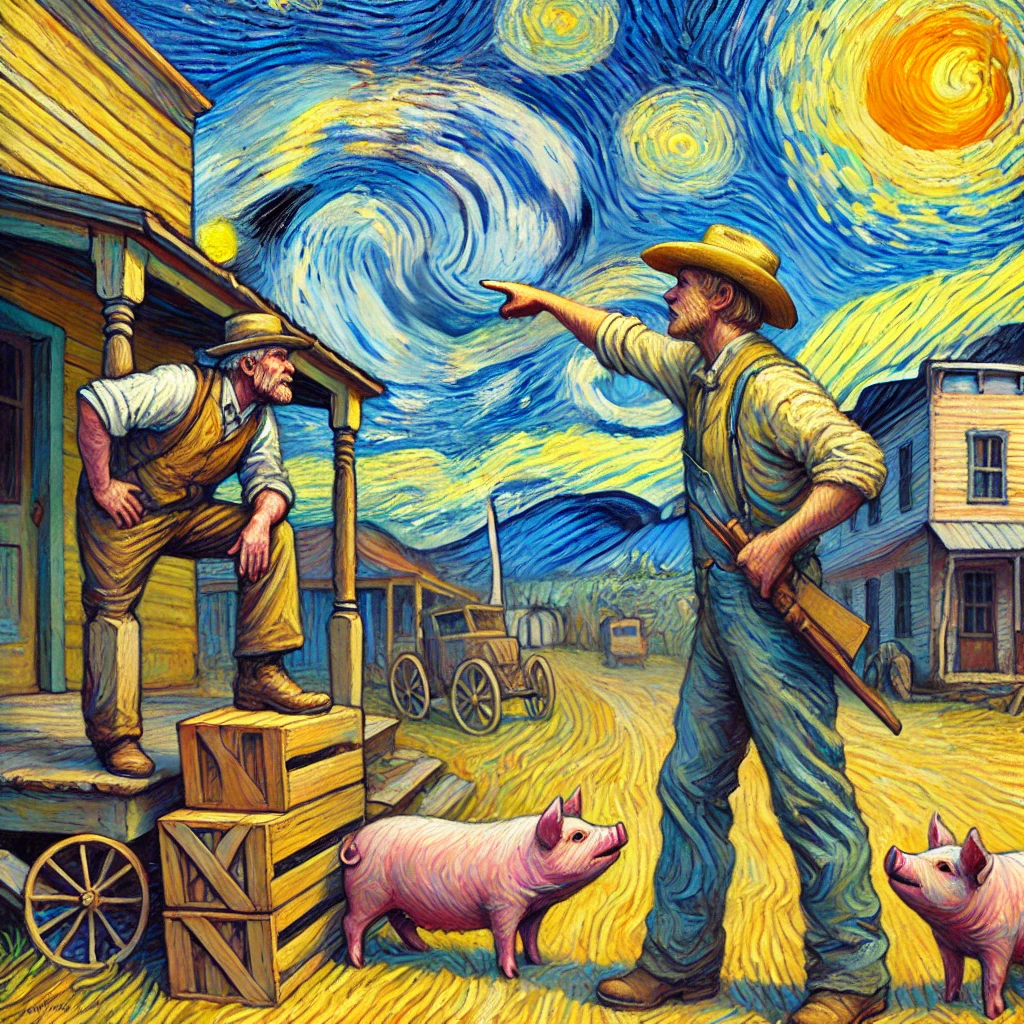
ACT I — The First Sighting
Act II – The Ownership Problem
The first official complaint came in at 10:03 a.m., filed by Mabel Dean Ashcroft, who claimed the hogs had “looked at her hydrangeas with intent.”
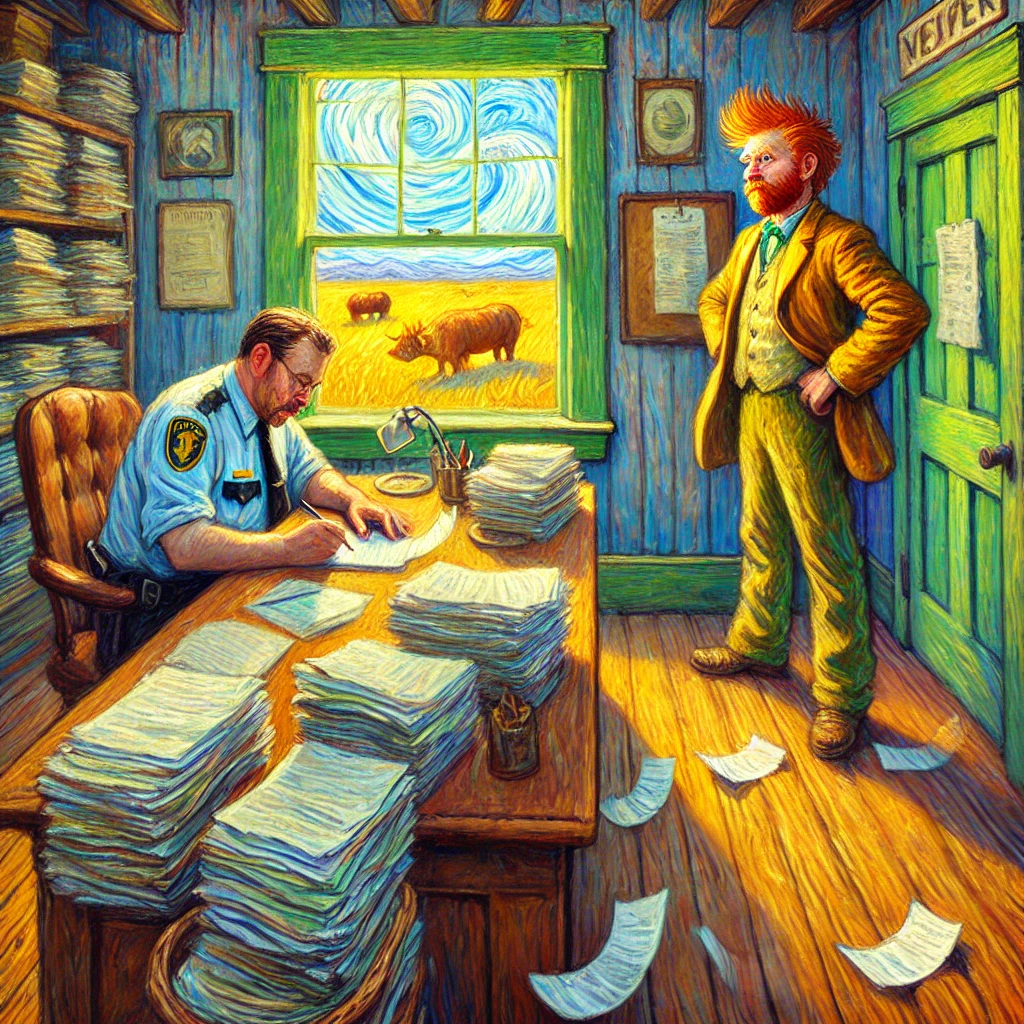
Sheriff Sheriff Peeler arrived shortly after, chewing something that might have been gum or might have been a piece of beef jerky he’d been working on since Tuesday.
“Anybody own these hogs?” he asked.
The crowd—now numbering somewhere between “concerned” and “entertained”—looked at one another.
“Nope.”
“Not mine.”
“I had hogs once, but they knew better.”
Mabel crossed her arms. “They’re somebody’s.”
Sheriff Peeler nodded. “Everything’s somebody’s. That’s how we got laws.”
Clovis raised a finger. “Unless they’re not.”
The sheriff sighed. “Clovis, don’t start.”
But it was too late.
“They could be transitional hogs,” Clovis said.
Boot scratched his chin. “What does that mean?”
“They might not belong to anyone yet,” Clovis explained. “In between owners. Like luggage.”
“They’re hogs, Clovis. Not a layover.”
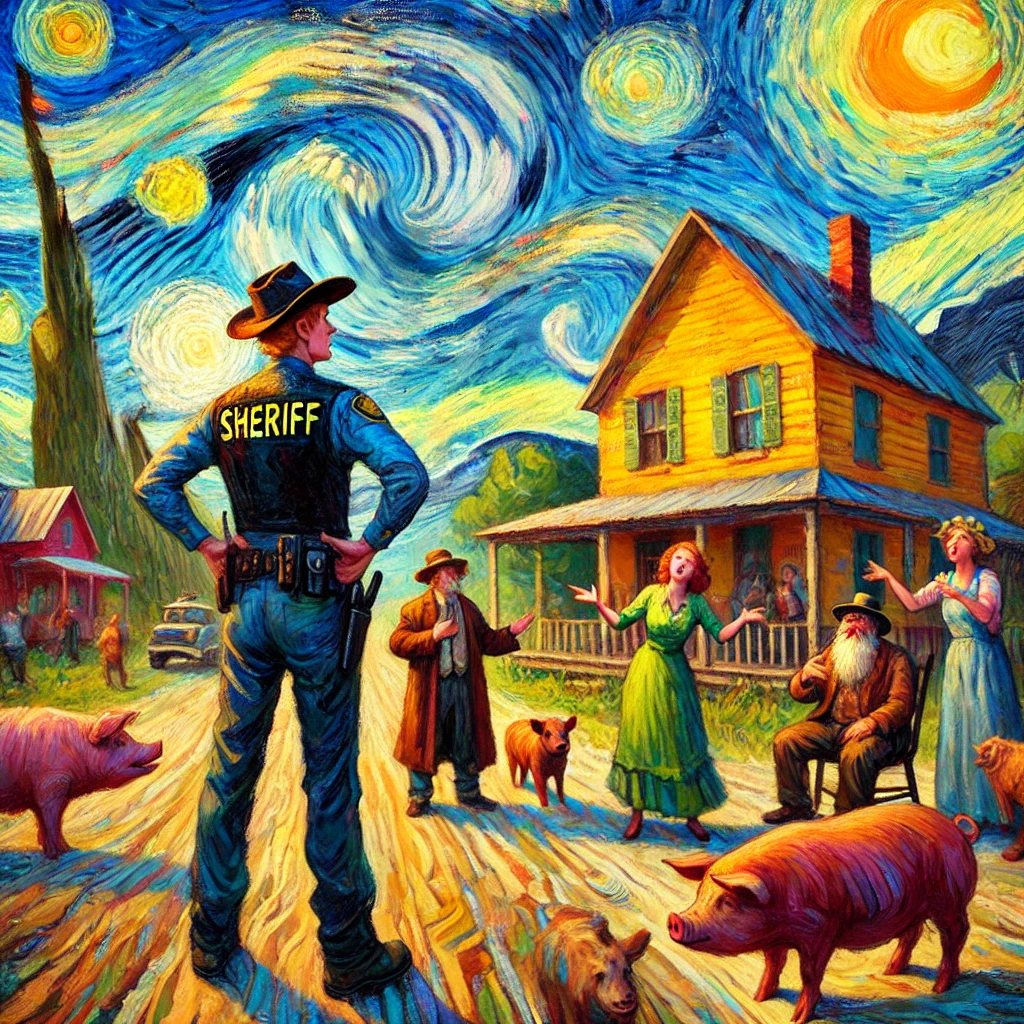
ACT II — The Ownership Problem
Act III – The Spread of Blame
By noon, the hogs had been blamed on:
- A farmer up on Ridge Road who hadn’t owned hogs since 1998
- A traveling petting zoo that had passed through two weeks prior
- The county government (general blame, no specifics)
- Outsiders
- Teenagers
- “That new couple who keeps their lights on past 9 p.m.”
The most popular theory, however, was that the hogs belonged to nobody because nobody wanted them to belong to them.
“They got a look about ‘em,” Mabel said.
“What kind of look?” Boot asked.
“A look that says responsibility.”
Sheriff Peeler nodded slowly. “That’s the kind folks tend to avoid.”
Meanwhile, the hogs themselves were doing remarkably well for creatures at the center of a civic crisis.
They had discovered a ditch.
They liked the ditch.
They lingered.
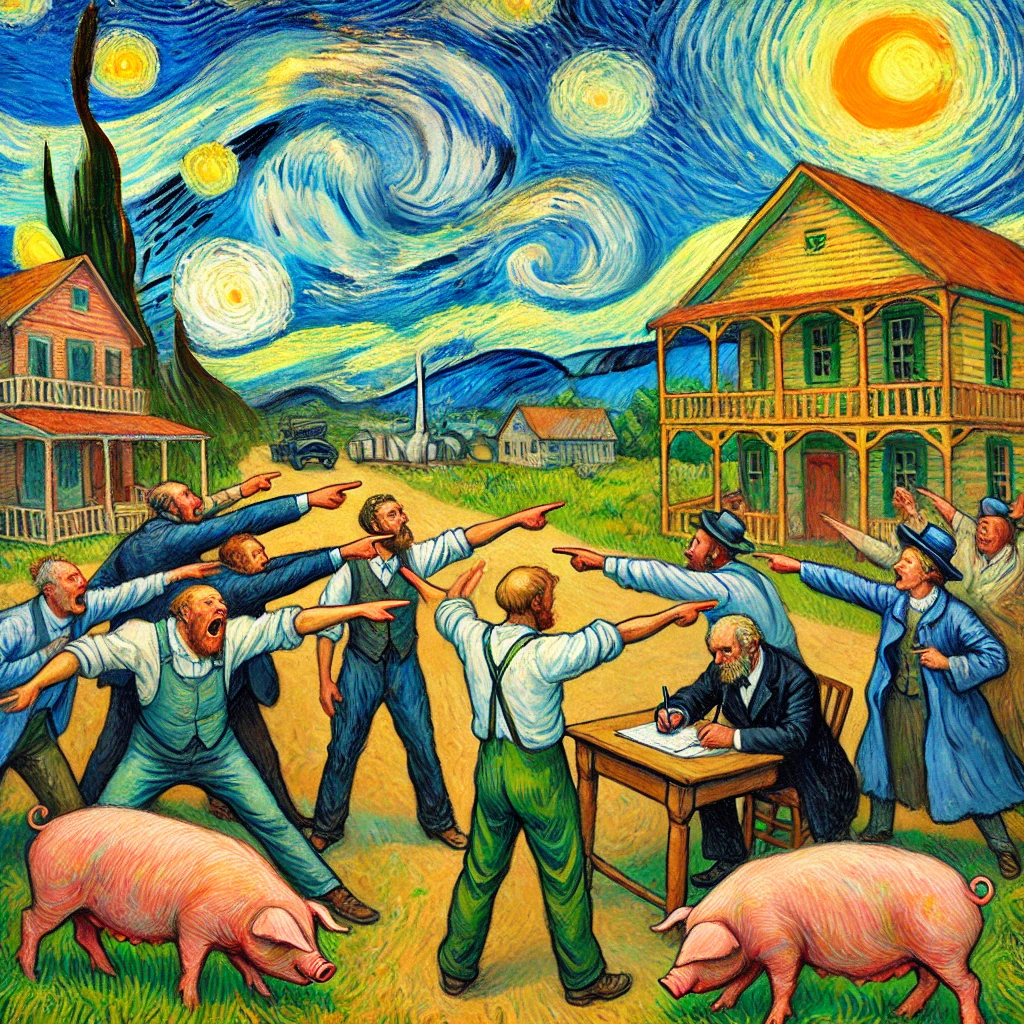
ACT III — The Spread of Blame
Act IV – The Committee Forms
At 1:15 p.m., Clovis announced the formation of the Hog Directionality and Ownership Committee, or HDOC, which he insisted could be pronounced “hay-dock” for efficiency.
“Efficiency of what?” Boot asked.
“Meetings,” Clovis said.
“You just made the meetings.”
“Exactly. And now they’re efficient.”
The first meeting was held immediately, attended by Clovis, Boot, Mabel, Sheriff Peeler, and a man named Earl who had wandered in thinking there would be refreshments.
“There are no refreshments,” Clovis clarified.
Earl stayed anyway.
The committee established three working theories:
- The Hogs Were Lost
- Counterpoint: They didn’t seem lost
- The Hogs Were Abandoned
- Counterpoint: By whom?
- The Hogs Were On Purpose
- Counterpoint: That raised more questions than answers
Mabel leaned forward. “What if they’re testing us?”
“Who?” Boot asked.
“The hogs.”
There was a pause.
Clovis wrote it down.
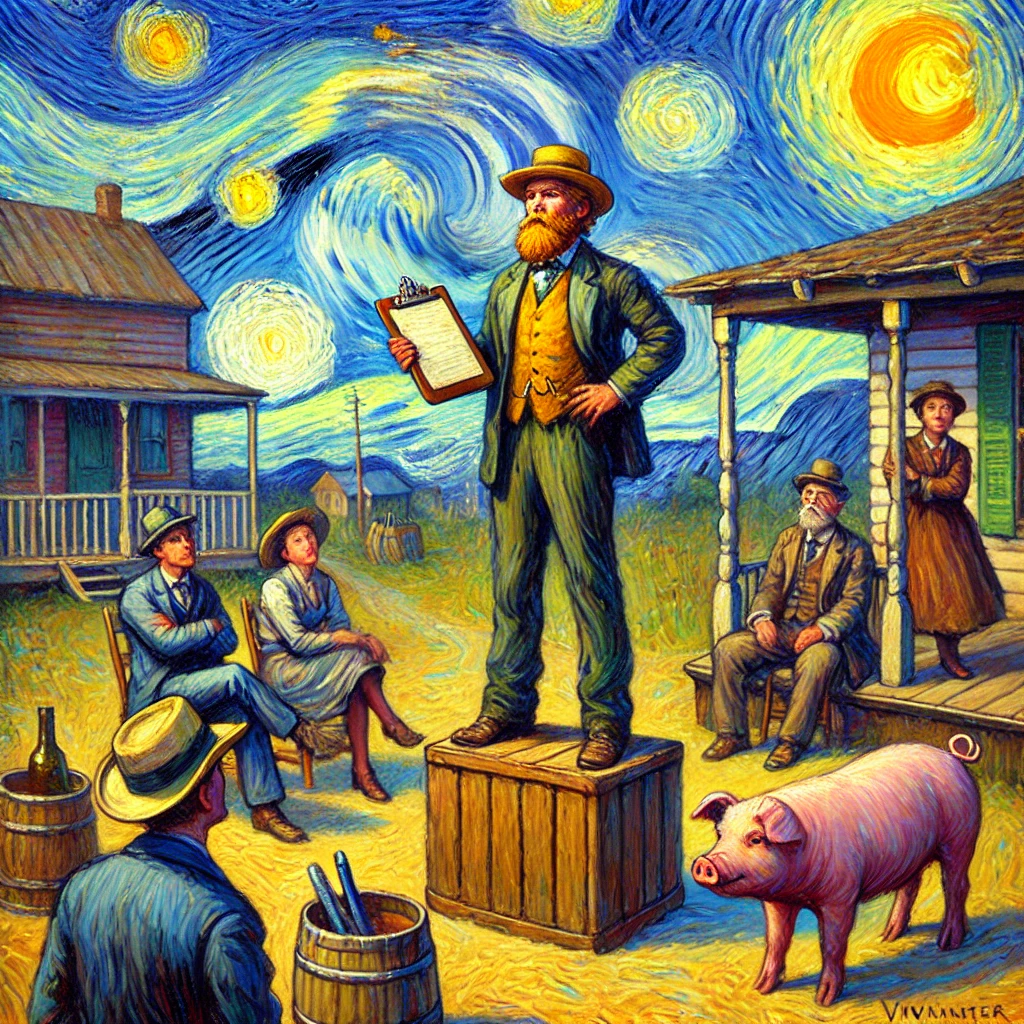
ACT IV — The Committee Forms
Act V – The March Continues
At 2:30 p.m., the hogs resumed their journey.
They crossed the parking lot of the diner, where they were briefly mistaken for a promotion.
“They part of the lunch special?” someone asked.
“No,” said the waitress, “but if they stick around long enough, we might reconsider.”
The hogs ignored the menu.
They had direction.
They moved as a unit, like a decision had been made that no one had been consulted on.
Sheriff Peeler followed at a respectful distance.
“I ain’t chasing ‘em,” he said. “I’m observing.”
“That’s just slower chasing,” Boot pointed out.
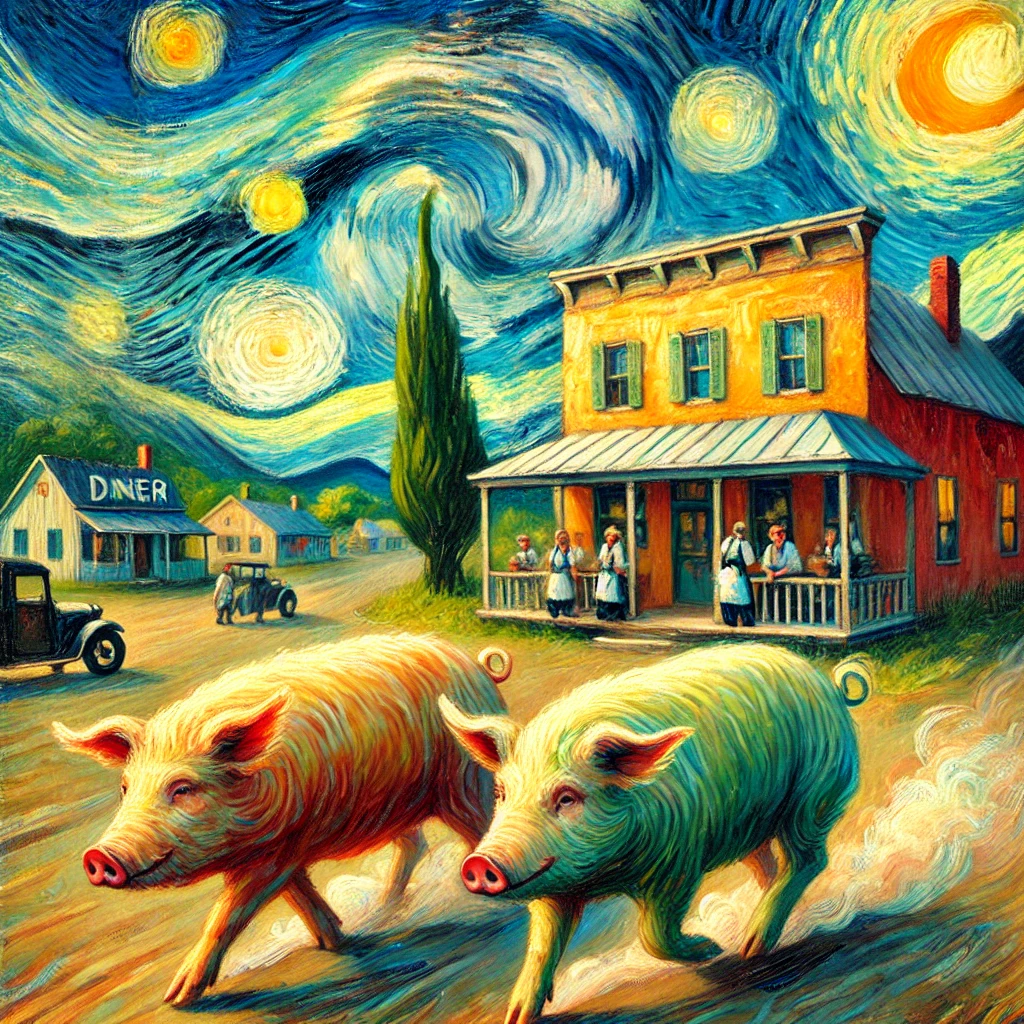
ACT V — The March Continues
Act VI – The Town Reacts
By late afternoon, Sequatchie Crossing had divided itself into camps:
- The Capture Group
- “We need to do something.”
- The Observation Group
- “Let’s see what happens.”
- The Blame Group
- “This is somebody’s fault.”
- The Philosophical Group
- “What is ownership, really?”
Clovis chaired all four groups.
“It’s a layered situation,” he explained.
Boot shook his head. “It’s two hogs walking down the road.”
“That’s how it starts.”
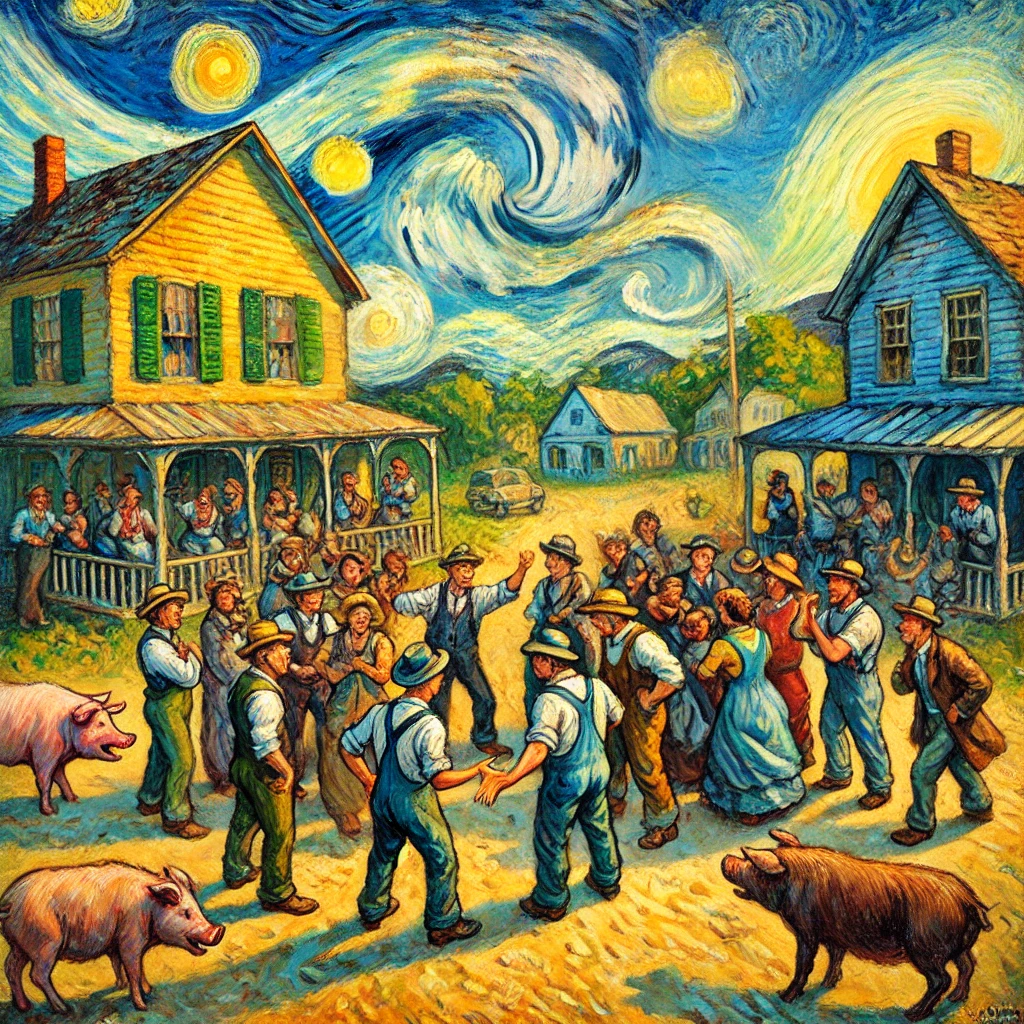
ACT VI — The Town Reacts
Act VII – The Unexpected Turn
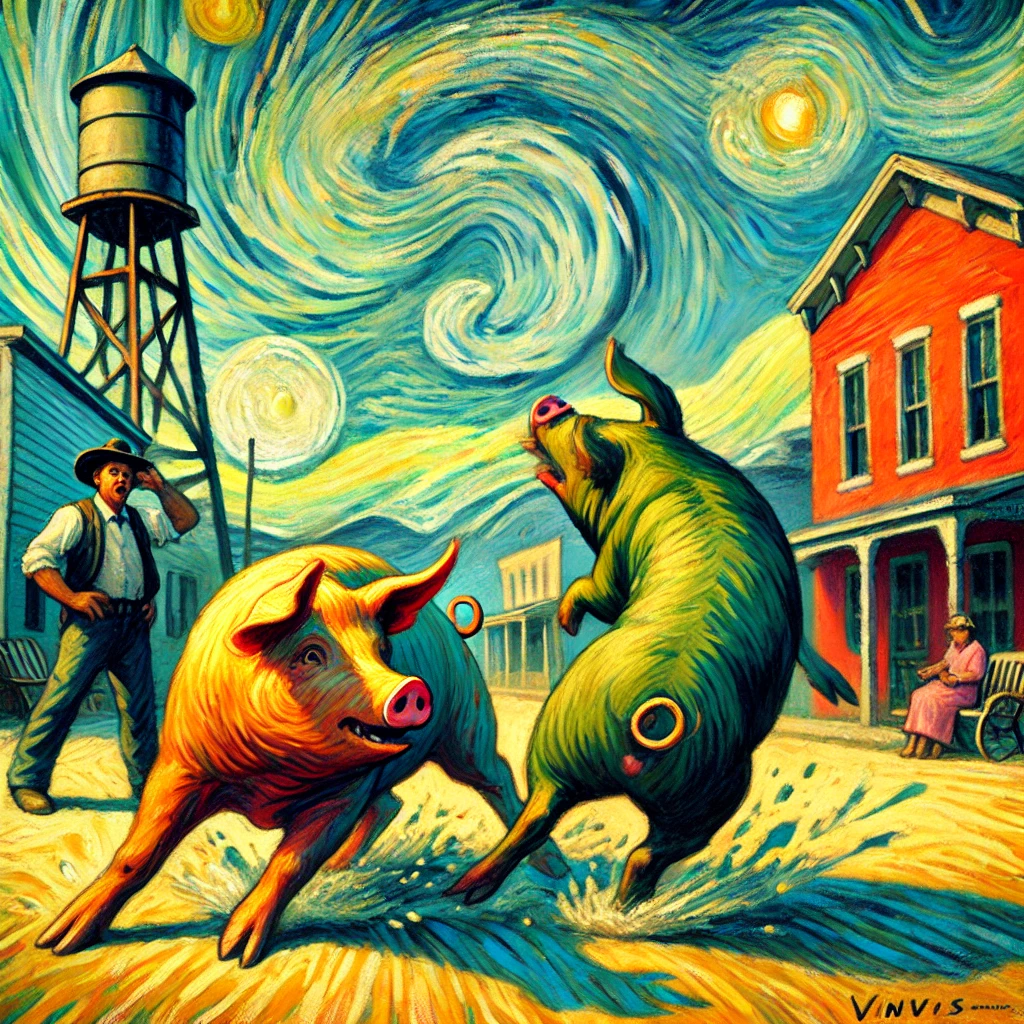
At 5:12 p.m., the hogs did something no one expected.
They turned.
Not sharply. Not dramatically.
Just enough to suggest that wherever they had been going… they were now going somewhere else.
Clovis gasped. “They’ve adjusted their trajectory.”
“They turned left, Clovis.”
“Exactly.”
“People turn left all the time.”
“These ain’t people.”
Boot paused. “Fair.”
The turn sent the hogs toward the old water tower, a structure that had not been relevant to anything in years but suddenly felt very important.
“They’re heading for elevation,” Clovis said.
“They’re heading for shade,” Sheriff Peeler corrected.
ACT VII — The Unexpected Turn
Act VIII – The Revelation That Wasn’t
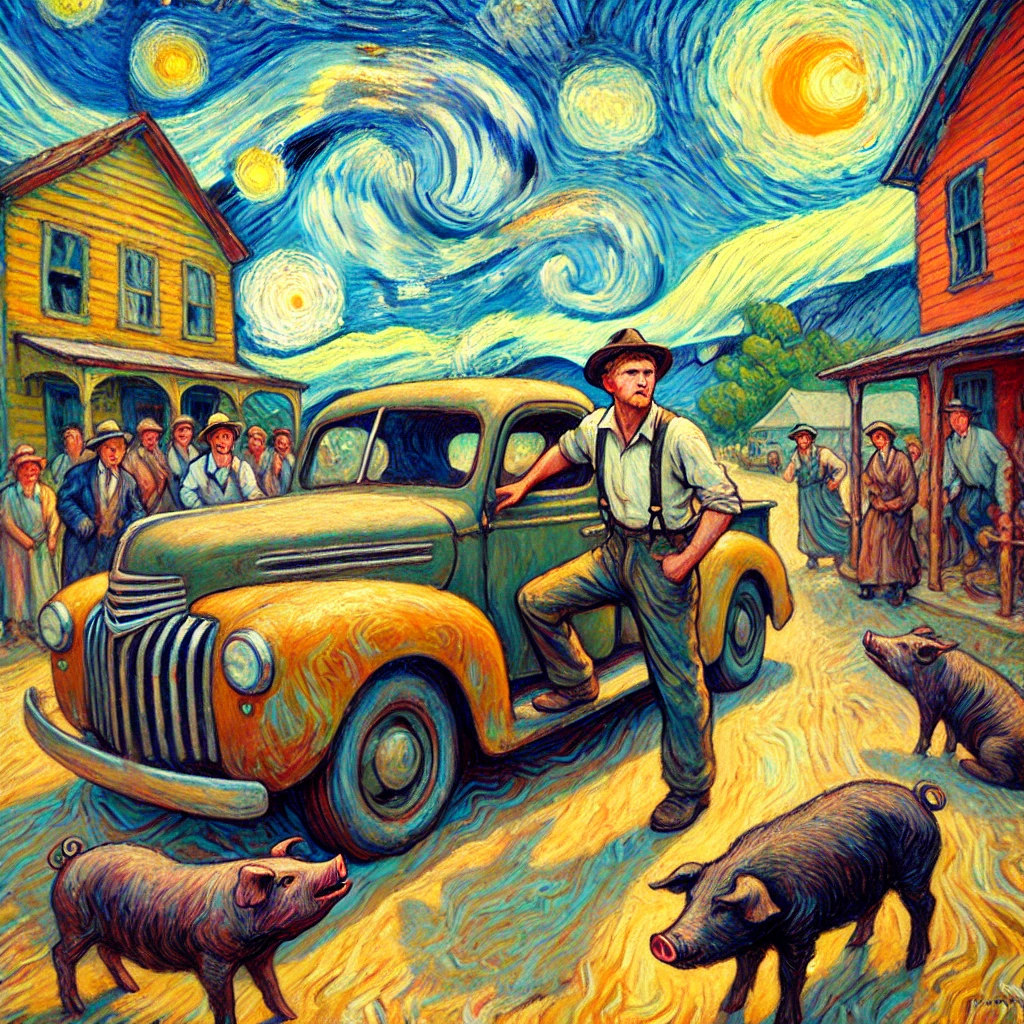
At 6:00 p.m., just as the sun began to settle into that golden hue that makes everything look more meaningful than it probably is, a truck pulled up.
Out stepped a man nobody recognized.
He looked at the hogs.
The hogs looked at him.
“Well,” he said, “there they are.”
The crowd leaned in.
“Yours?” Sheriff Peeler asked.
The man considered this.
“I wouldn’t say ‘mine,’” he said.
Mabel narrowed her eyes. “Then whose?”
The man shrugged. “They were with me this morning.”
“That’s ownership-adjacent,” Clovis said, writing furiously.
The man nodded. “I had a gate situation.”
“A what?” Boot asked.
“A gate situation.”
“That sounds like a you problem.”
“It was,” the man said. “Now it’s a y’all problem.”
Sheriff Peeler stepped forward. “You planning to take them back?”
The man looked at the hogs, then at the town, then at the sky, as if hoping for guidance that wasn’t coming.
“They seem settled,” he said.
“They’re in a ditch,” Mabel snapped.
“Comfortable ditch,” he countered.
ACT VIII — The Revelation That Wasn’t
Act IX – The Debate Peaks
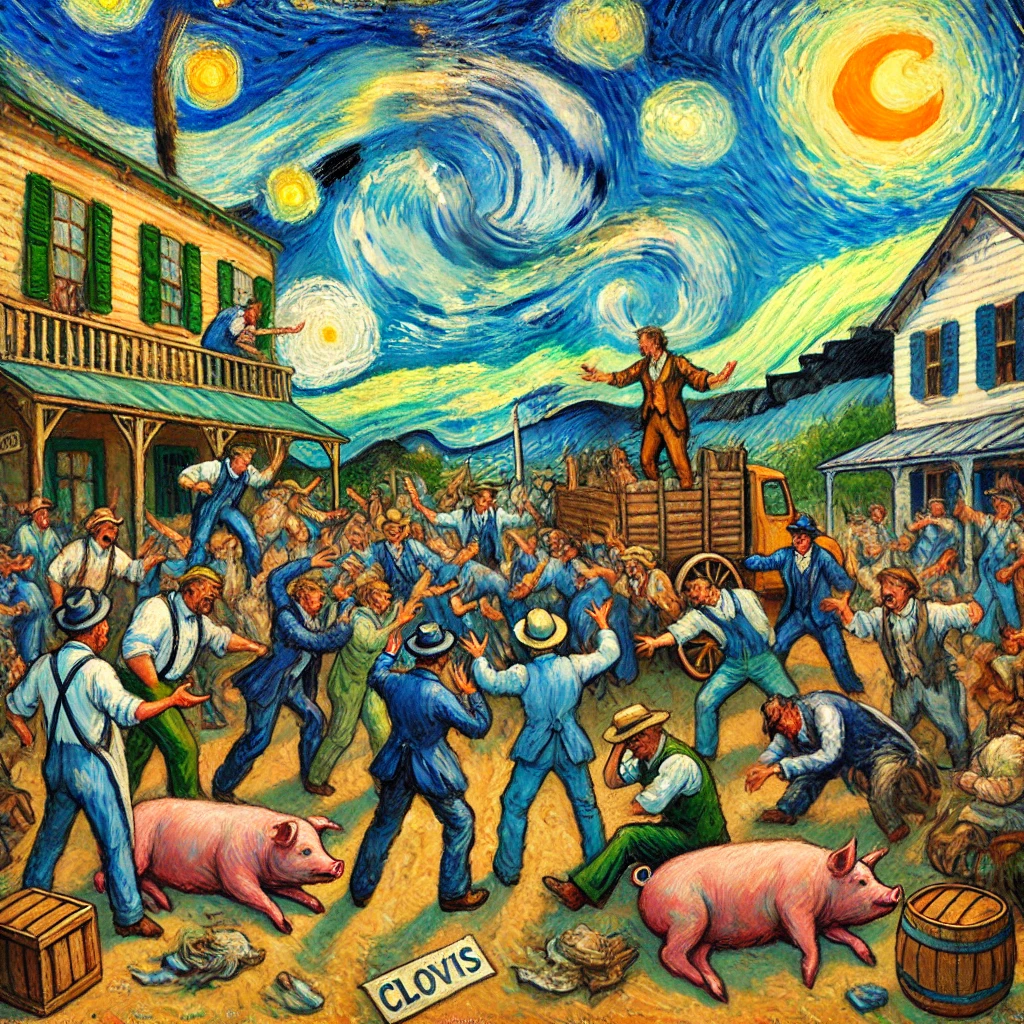
What followed was less a discussion and more a collection of strongly held positions spoken at the same time.
“You can’t just leave ‘em!”
“They walked here on purpose!”
“That ain’t purpose, that’s wandering!”
“Wandering with intent!”
“Everything has intent if you look at it long enough!”
Clovis stood on a cooler to regain control. “We need to establish a framework.”
Boot looked up. “For hogs.”
“For responsibility.”
“They’re still hogs, Clovis.”
“Responsibility doesn’t discriminate.”
Sheriff Peeler raised a hand. “Alright. Either they belong to somebody, or they don’t.”
“That narrows it down,” Boot said.
ACT IX — The Debate Peaks
Act X – The Decision
In the end, the solution was less a decision and more a mutual exhaustion.
The man with the gate situation agreed to “keep an eye on them.”
The town agreed to “monitor the situation.”
Clovis agreed to “document everything.”
Mabel agreed to “not let them near her hydrangeas.”
Boot agreed to “see how it plays out.”
Sheriff Peeler agreed to “be nearby.”
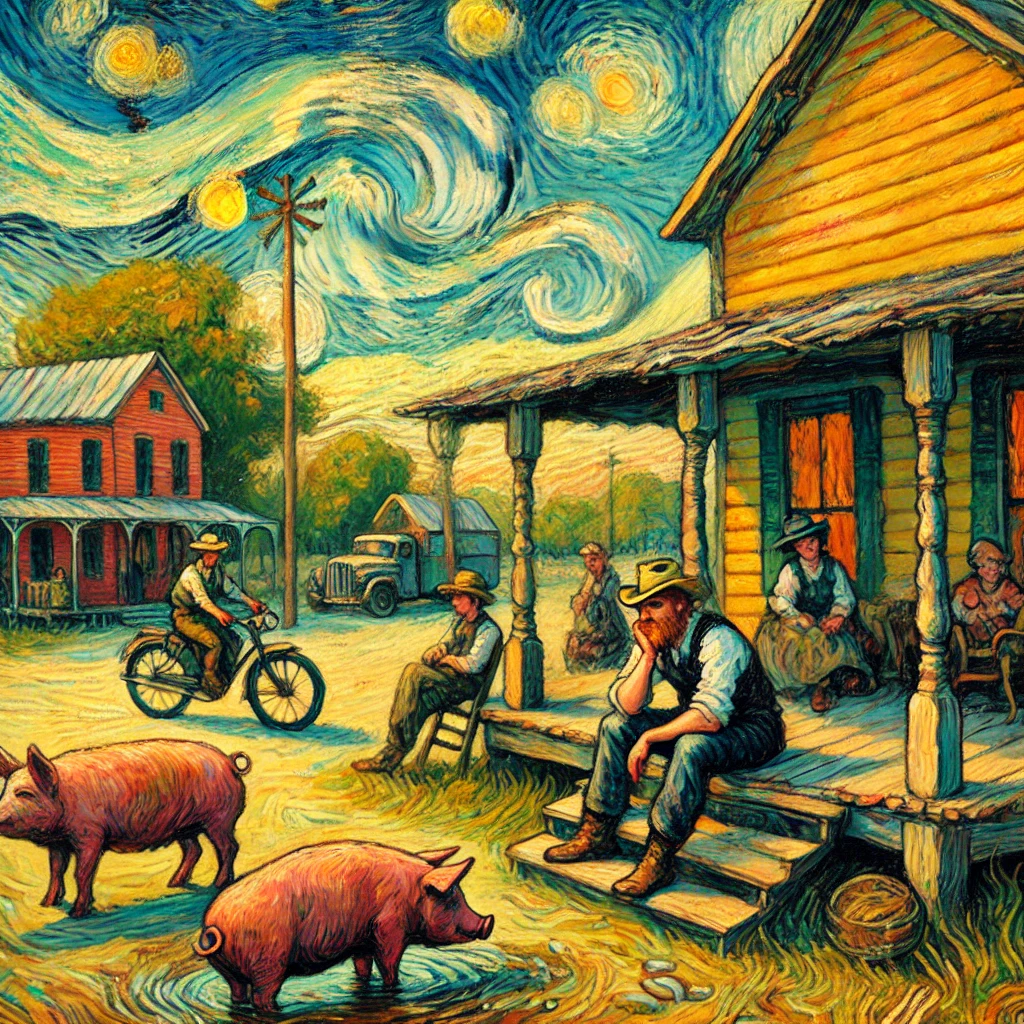
And the hogs…
The hogs lay down.
Right there in the ditch.
As if the whole thing had been about finding that exact spot all along.
ACT X — The Decision
Act XI – The Aftermath
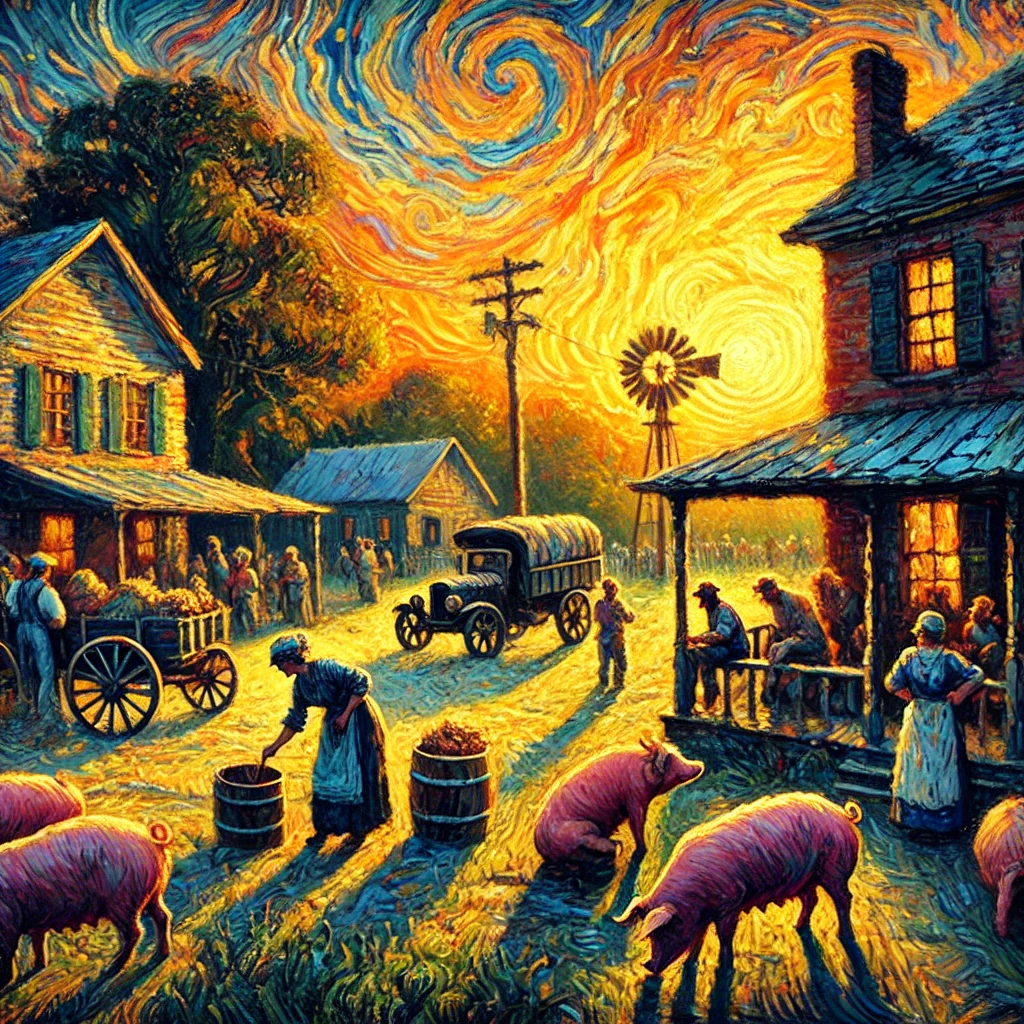
By nightfall, the crowd had thinned.
The arguments had softened into stories.
“Well, I always knew something like this would happen.”
“I said from the start, those hogs had a plan.”
“I’m not saying I predicted it, but I wasn’t surprised.”
Clovis filed his notes under “Ongoing.”
Mabel watered her hydrangeas with a watchful eye.
Boot went home, satisfied that nothing had been resolved in a way that felt permanent.
Sheriff Peeler leaned against his truck, looking at the hogs.
“You boys done?” he asked.
The hogs did not answer.
But they did not move.
ACT XI — The Aftermath
Act XII – The Long Way Home
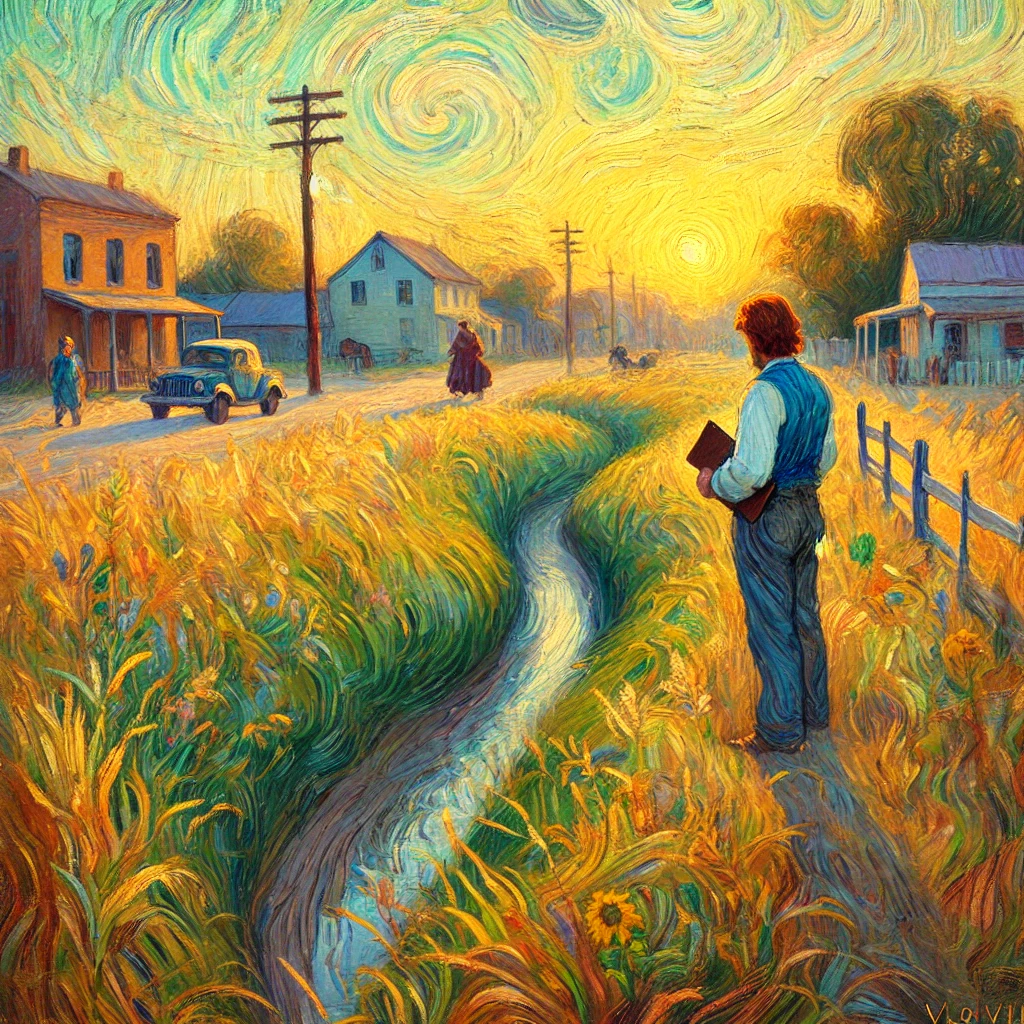
The next morning, the hogs were gone.
No one saw them leave.
No one knew when.
But the ditch was empty.
Clovis arrived first, naturally.
“They’ve completed their cycle,” he announced.
Boot arrived second. “Or they walked off.”
Mabel arrived third. “They better not come back.”
Sheriff Peeler arrived last. “Anybody claim ‘em yet?”
“Nope.”
The man with the gate situation never returned.
The hogs were never officially owned.
But for one full day, they belonged to everyone.
In the way that problems do.
In the way that responsibility circulates until it settles somewhere—or doesn’t.
Clovis closed his notebook. “I’m calling this one unresolved.”
Boot nodded. “That sounds about right.”
ACT XII — The Long Way Home
Epilogue – The Direction of Things
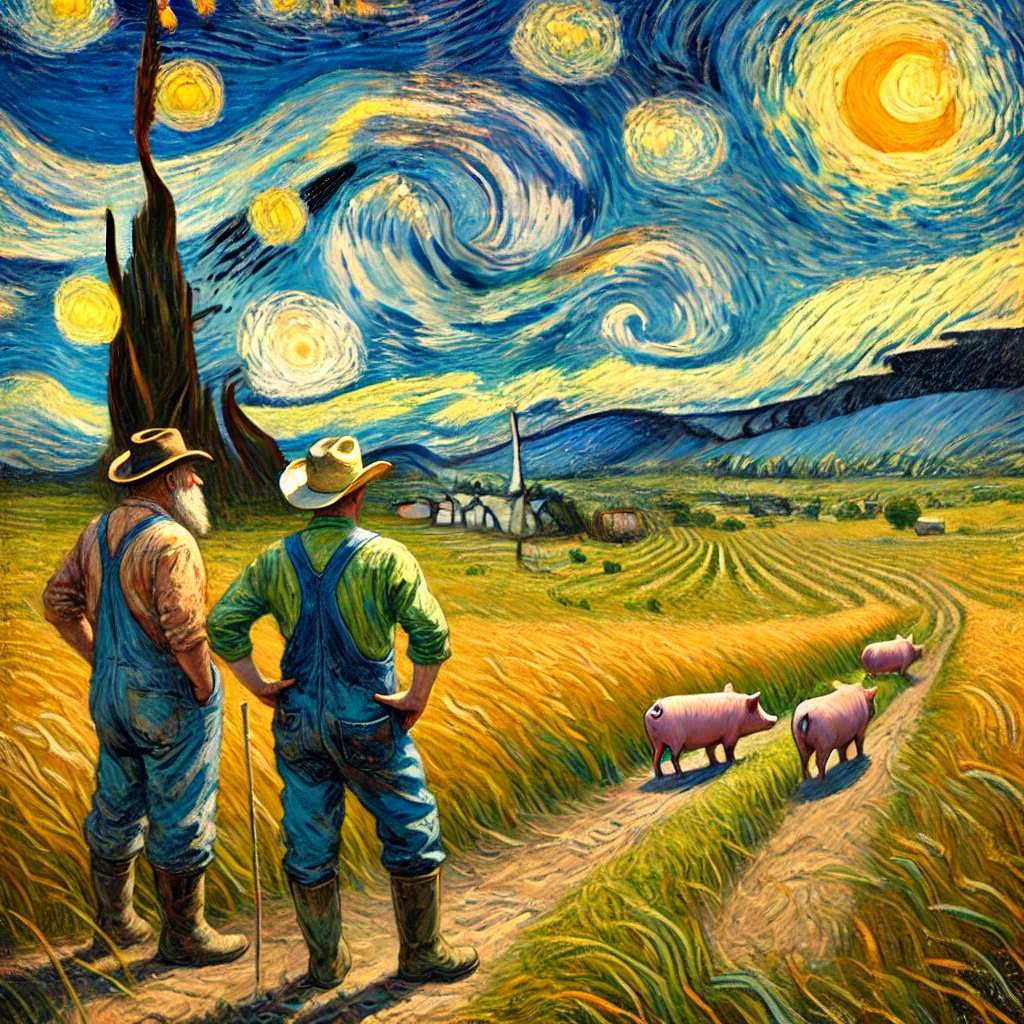
A week later, someone reported seeing two hogs heading west.
Clovis updated his map.
“They’re correcting,” he said.
Boot didn’t ask what that meant.
Some things in Sequatchie Crossing didn’t need explanation.
They just needed to happen.
EPILOGUE — The Direction of Things
Disclaimer
No hogs were formally interviewed during the creation of this report. All interpretations of hog intent, directionality, and philosophical stance remain speculative and should not be used in official livestock proceedings. Any resemblance to real hogs, living or wandering, is entirely coincidental—though not unexpected.
DISCLAIMER – The Day the Hogs Took the Long Way Home
Real Places Behind the Ruckus – From The Dunlap Directory
Real Places Behind the Ruckus – From The Dunlap Directory
Yes, this story was fictional; even the parts that weren’t true. These places? Absolutely real. Stop by, support local, and keep the Wi-Fi away from livestock:
- Campbell Tire
- Udder Yum Ice Cream Shoppe
- Dunlap Farmers Market
- Kintz s Creations
- Bryans Painting & Decorating
- Dead Zero Shooting LLC
- Sequatchie Valley Homestead
- Highland Drive Warehouse
- Abilis Home Health
- Smalltown Ceramics
- Cascade Inn at Fall Creek Falls
- Top of the Rock Restaurant and Brewery
- The Honey Bee Motel
- Standefer-Reed Funeral Home
- Adoration Home Health and Hospice
- Cooperative Response Center
Real Places Behind the Ruckus – From The Dunlap Directory
At Sequatchie Crossing, we tell the stories of Sequatchie Crossing.
Please share this post with your friends, family, or business associates who may want follow the news from Sequatchie Crossing.

0 Comments