


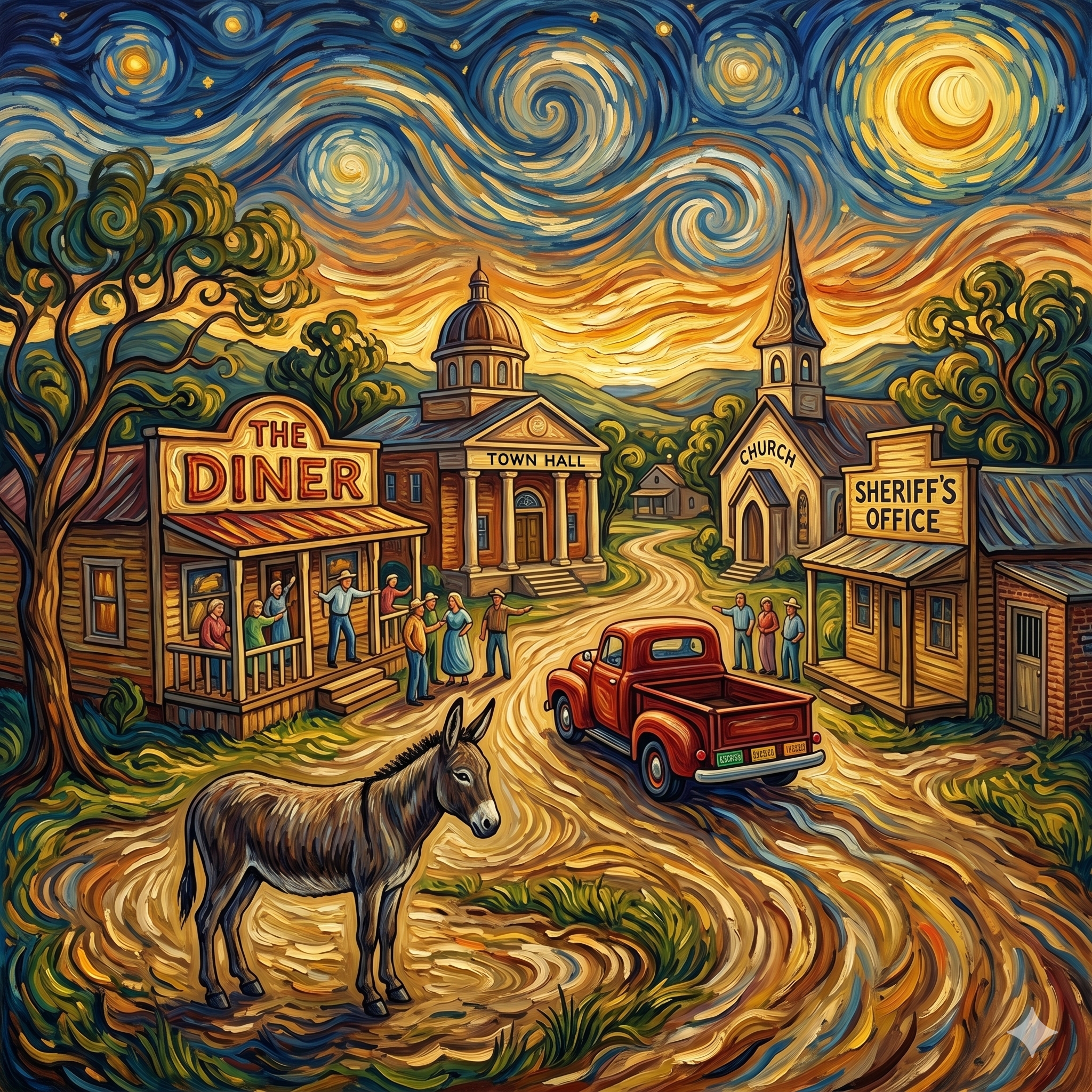
Presence Identified As Primary Mechanism Of Disruption.
By Tom Seest
At Sequatchie Crossing, we tell the stories of Sequatchie Crossing.
Please share this post with your friends, family, or business associates who may want follow the news from Sequatchie Crossing.
🎤 Audio Overview
🎤 Song For This Story
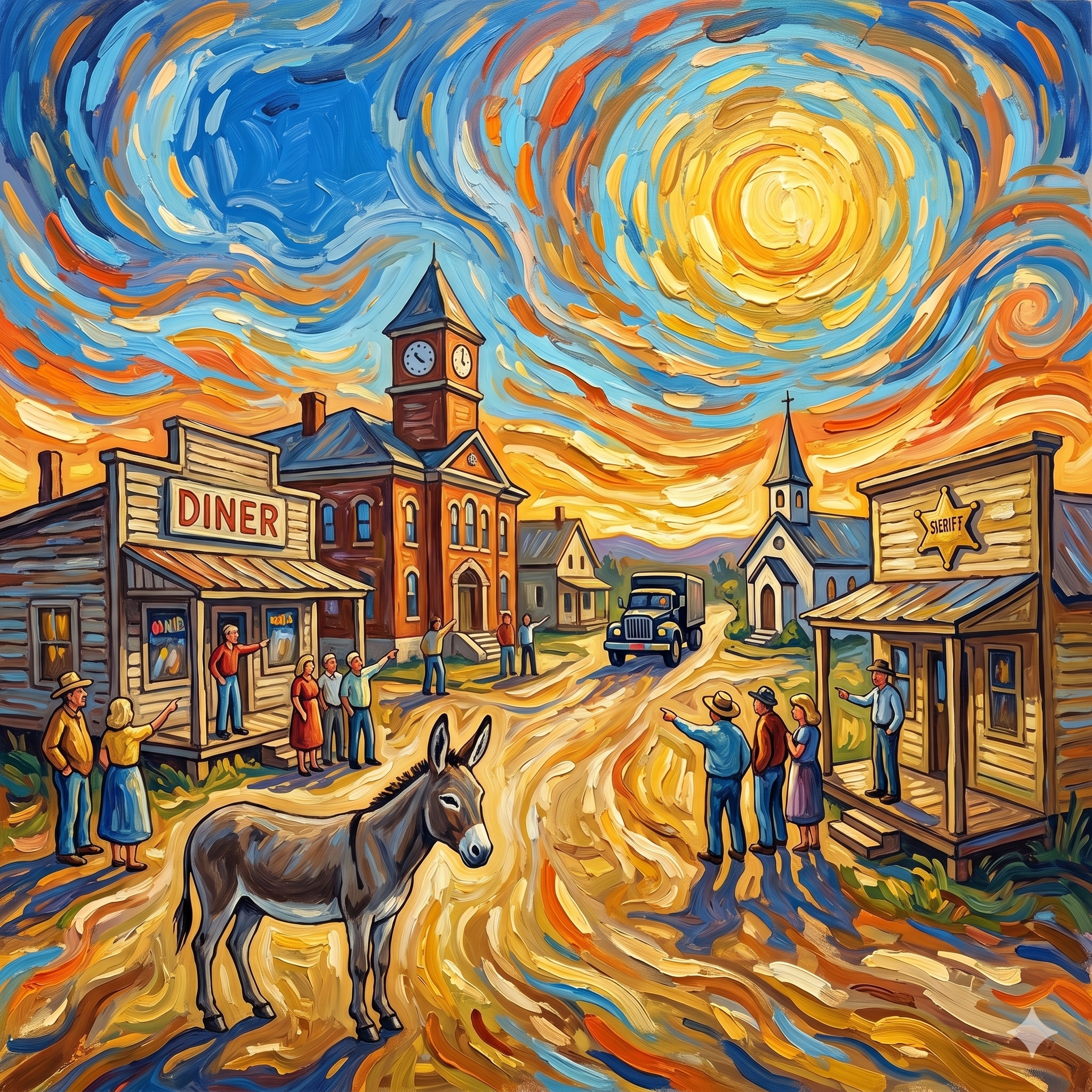
Out-of-Towners Accused of Changing Things by Being Here
Act I – The First Complaint Was Filed Before Breakfast
The morning started, as it often did in Sequatchie Crossing, with a complaint that had no clear origin but carried the tone of something long overdue.
Boot Barnes sat on the wide wooden porch outside the diner, rocking in a chair that had been repaired enough times to qualify as a community artifact. Daisy the hound lay beside him, one eye open, one ear tilted toward the gravel road.
Clovis Strickland came marching up with a clipboard, his expression already set to “documenting.”
“They’re here,” Clovis said.
Boot didn’t look up. “Who’s that?”
“Them.”
Boot leaned forward slowly, like a man giving gravity one last chance to reconsider. “Clovis, that word’s been in circulation since 1978. You’re gonna need to specify.”
Clovis flipped a page. “Out-of-towners. Visitors. Temporary occupants with long-term consequences.”
Daisy thumped her tail once, as if marking attendance.
“Well,” Boot said, “are they causing trouble?”
Clovis tapped the clipboard. “That’s what I’m trying to establish.”
Mabel Dean Ashcroft stepped out of the diner, carrying a plate of biscuits that she had not yet decided whether to serve or withhold depending on how the morning unfolded.
“It was getting crowded anyway,” Mabel said, setting the plate down between them.
Boot picked up a biscuit. “We’ve had six people move in and four people move out this month.”
Clovis nodded grimly. “Exactly.”
“That ain’t crowded,” Boot said.
Clovis pointed at the road. “Look at that truck.”
A pickup rolled slowly past, out-of-state plates gleaming like a declaration.
“Looks like a truck,” Boot said.
“It’s not from here,” Clovis said.
Mabel squinted. “That road’s been there longer than the truck.”
Clovis made a note. “Infrastructure strain.”
Boot chewed his biscuit. “Clovis, you’re measuring things that ain’t moving.”
Clovis shook his head. “Everything’s moving.”
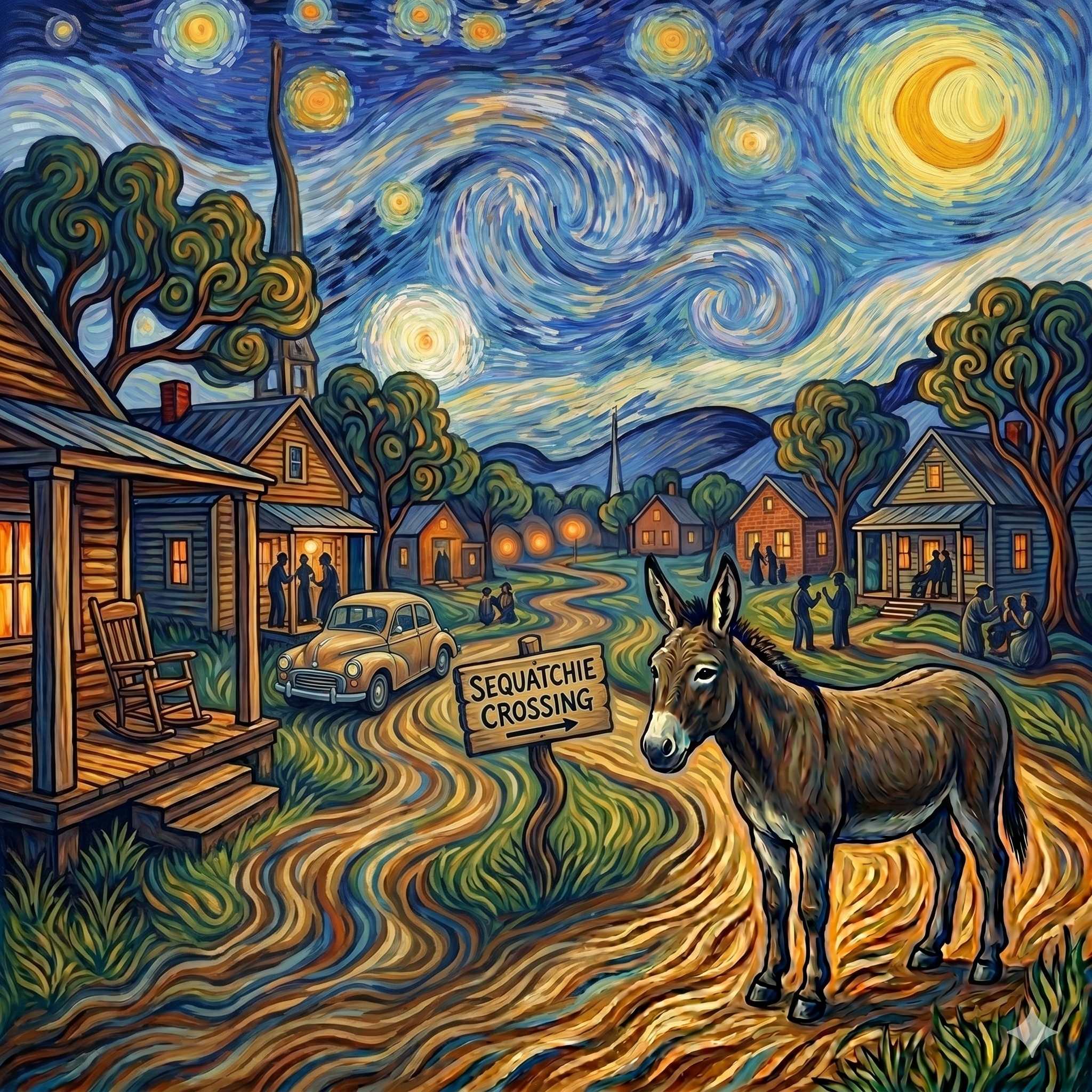
Just then, the donkey—Earl, though no one remembered naming him—stood perfectly still in the field across the road.
Traffic passed. Conversations rose and fell. A breeze moved through the trees.
Earl did not move.
Boot pointed. “There’s your control group.”
Clovis looked at the donkey and wrote something down.
“Baseline resistance to change,” he muttered.
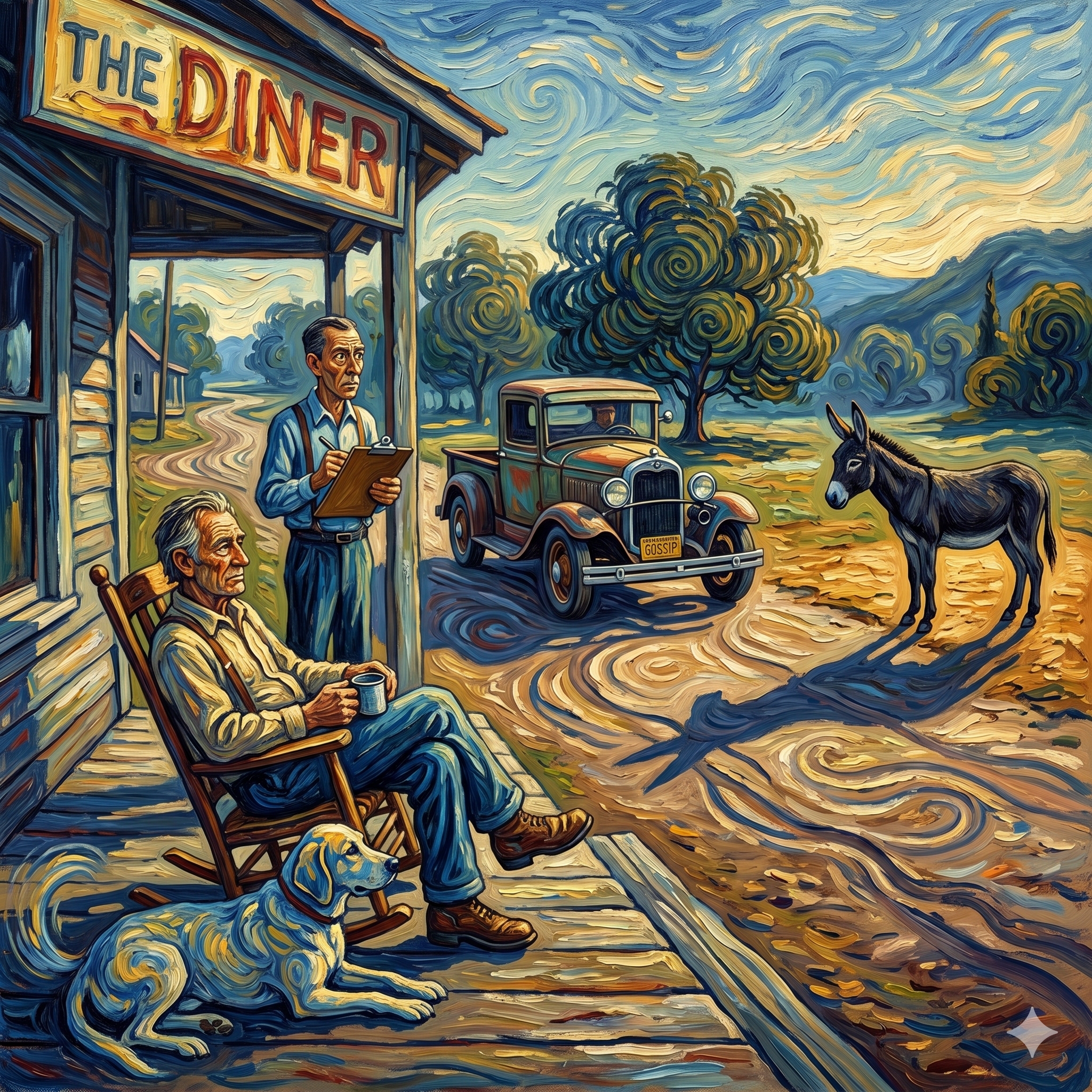
Act I – The First Complaint Was Filed Before Breakfast
Act II – Town Hall Convenes to Observe the Obvious
By mid-morning, the issue had reached Town Hall, which meant it had already been discussed at the diner, the gas station, and halfway through a sermon that hadn’t yet started.
Sheriff Peeler stood at the front of the room, hat in hand, scanning a crowd that had assembled without formal invitation.
“We’re here to discuss reports of… changes,” he said carefully.
“Caused by being here,” Tiffany Annette Roark added from the second row, typing rapidly into her phone.
Shelley Fawn Wexler adjusted her scarf. “There’s been an observable shift in tone.”
RT Mullins leaned back in his chair. “Shift in what?”
Shelley gestured broadly. “General tone. Spatial tone. Environmental tone.”
“That’s not a thing,” RT said.
“It is now,” Shelley replied.
Clovis stood up with his clipboard. “Population metrics indicate a net increase in unfamiliar faces.”
Maggie Sue Dillard frowned. “Unfamiliar to who?”
“To us,” Clovis said.
Mister Wade Langston nodded. “I’ve noticed it too. People walking around like they don’t know where they are.”
“That’s because they don’t,” Boot said from the back.
Lurleen Davenport raised a hand. “I saw someone looking at a map yesterday.”
Gasps rippled through the room.
“A map?” Sheriff Peeler said.
“Yes,” Lurleen confirmed. “Paper.”
Evelyn Grace Tipton clutched her purse. “That’s how it starts.”
Dr. Neil Cowgill leaned forward. “Starts what?”
Evelyn lowered her voice. “Navigation.”
Pastor Arnold Peeler cleared his throat. “Let’s remember our values. Hospitality, kindness—”
“They’re raising prices,” Chester Ray Blevins interrupted.
“How?” Sonny Morales asked.
“By being here,” Chester Ray said firmly.
Coach Freddie Stubblefield scratched his head. “I don’t follow.”
Clovis stepped in. “Increased demand leads to price adjustments.”
“Demand for what?” Boot asked.
Clovis paused. “General presence.”
Sheriff Peeler rubbed his temples. “We’re blaming people for existing?”
The room fell silent.
Then Tiffany typed, “Consensus forming.”
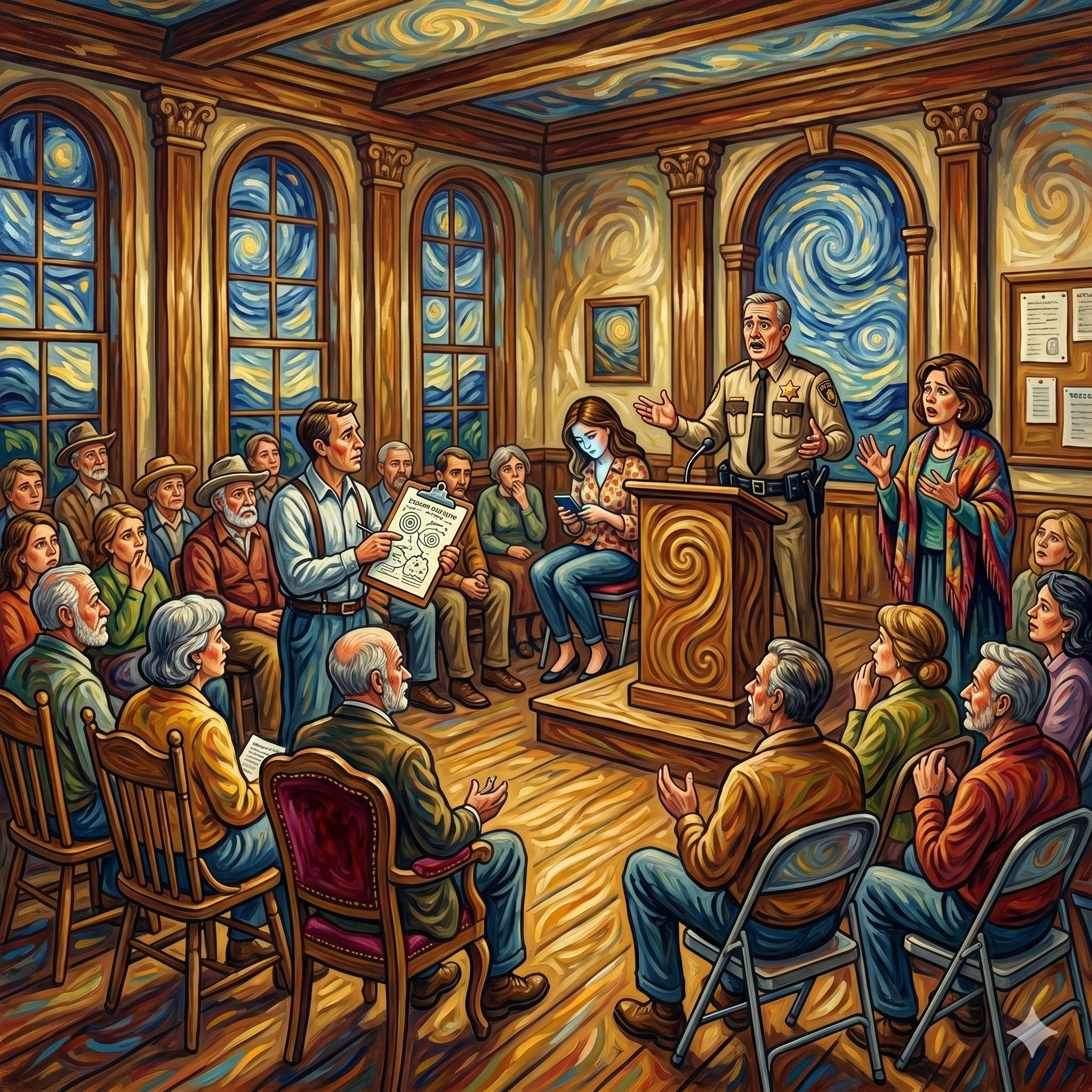
Act II – Town Hall Convenes to Observe the Obvious
Act III – The Donkey Remains Unconvinced
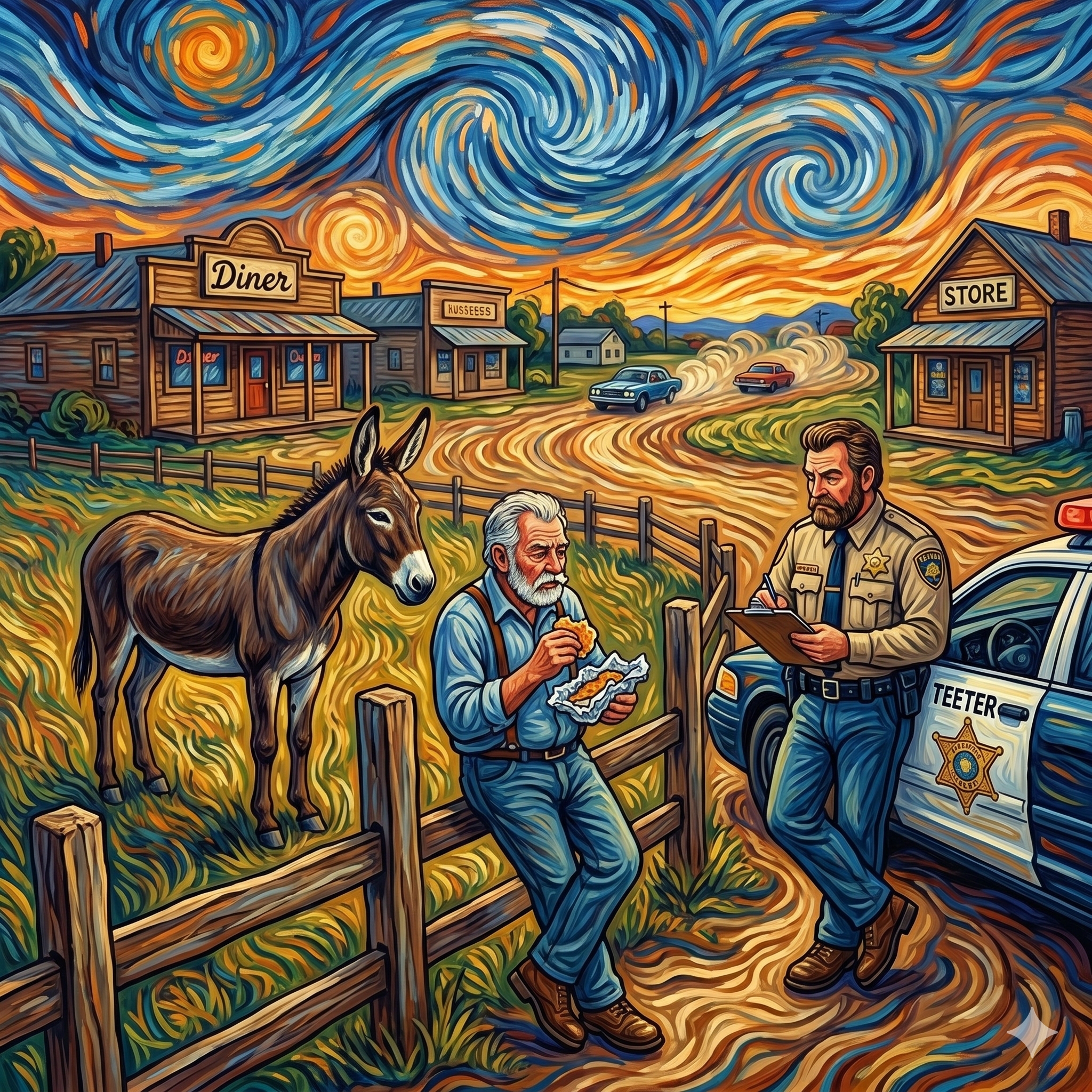
Out near the edge of town, where the road curved just enough to make people slow down without realizing why, Earl the donkey stood exactly where he had been all morning.
Doug “Doughboy” Teeter leaned against the fence, eating something wrapped in foil.
“You notice anything different?” Doug asked the donkey.
Earl did not respond.
Doug nodded. “Yeah, me neither.”
Officer Kenny Joe Teeter pulled up in his patrol car and stepped out, adjusting his belt.
“Got reports of unusual activity,” Kenny Joe said.
Doug gestured around. “Looks like regular activity to me.”
Kenny Joe squinted at the road. “More cars than usual.”
Doug shrugged. “It’s Saturday.”
Kenny Joe nodded slowly. “That checks out.”
They both looked at the donkey.
Earl blinked once.
“You think he notices?” Kenny Joe asked.
Doug shook his head. “He’s been here longer than all of us. If something was changing, he’d have moved.”
Kenny Joe wrote that down in a small notebook.
“Subject remains stationary despite external variables,” he read aloud.
“Sounds like wisdom,” Doug said.
Act III – The Donkey Remains Unconvinced
Act IV – The Church Addresses the Situation Directly
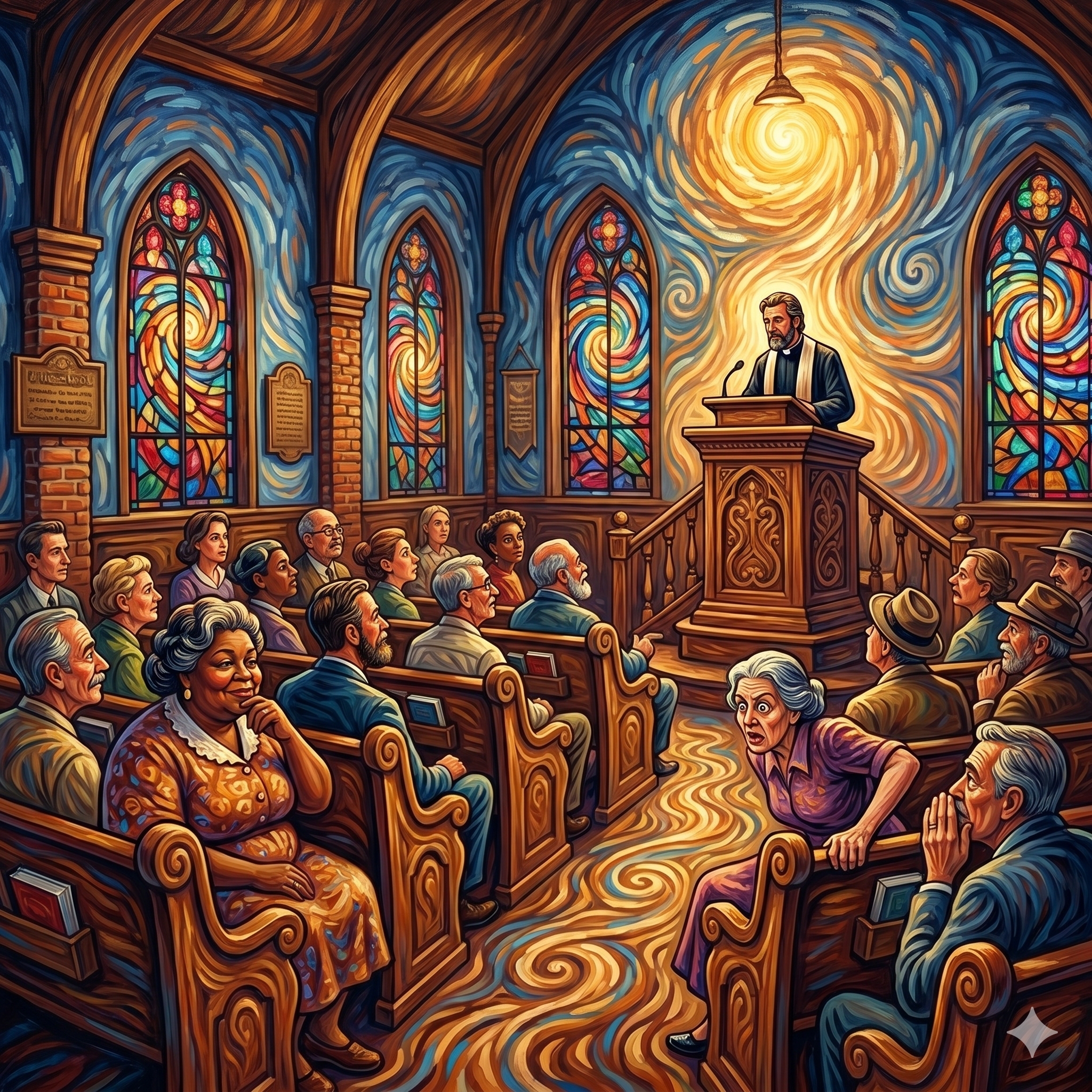
At the church, Pastor Arnold Peeler stood at the pulpit, hands resting gently on either side, as if holding the room steady.
“We’ve been discussing the presence of newcomers,” he began.
Sister Lila Mae “Hallelujah” Pruitt leaned forward. “And what about it?”
Pastor Peeler smiled. “We’re called to welcome strangers.”
Mabel Dean Ashcroft, seated near the front, nodded. “It was getting crowded anyway.”
“Crowded with what?” Sister Lila Mae asked.
Mabel thought for a moment. “Expectations.”
Boot, sitting near the back, whispered to Clovis, “That’s a new one.”
Clovis wrote it down.
Pastor Peeler continued, “Change is not always caused by those who arrive.”
Santiago “Sonny” Morales raised a hand. “Then what causes it?”
Pastor Peeler paused. “Time.”
The room went quiet.
“That’s been here longer than anyone,” Boot said.
Sister Lila Mae stood up. “So we’re blaming time now?”
Pastor Peeler shook his head. “We’re understanding it.”
“That don’t sound as satisfying,” RT muttered.
Tiffany typed, “Shift in narrative tone.”
Act IV – The Church Addresses the Situation Directly
Act V – The Diner Hosts an Unofficial Inquiry
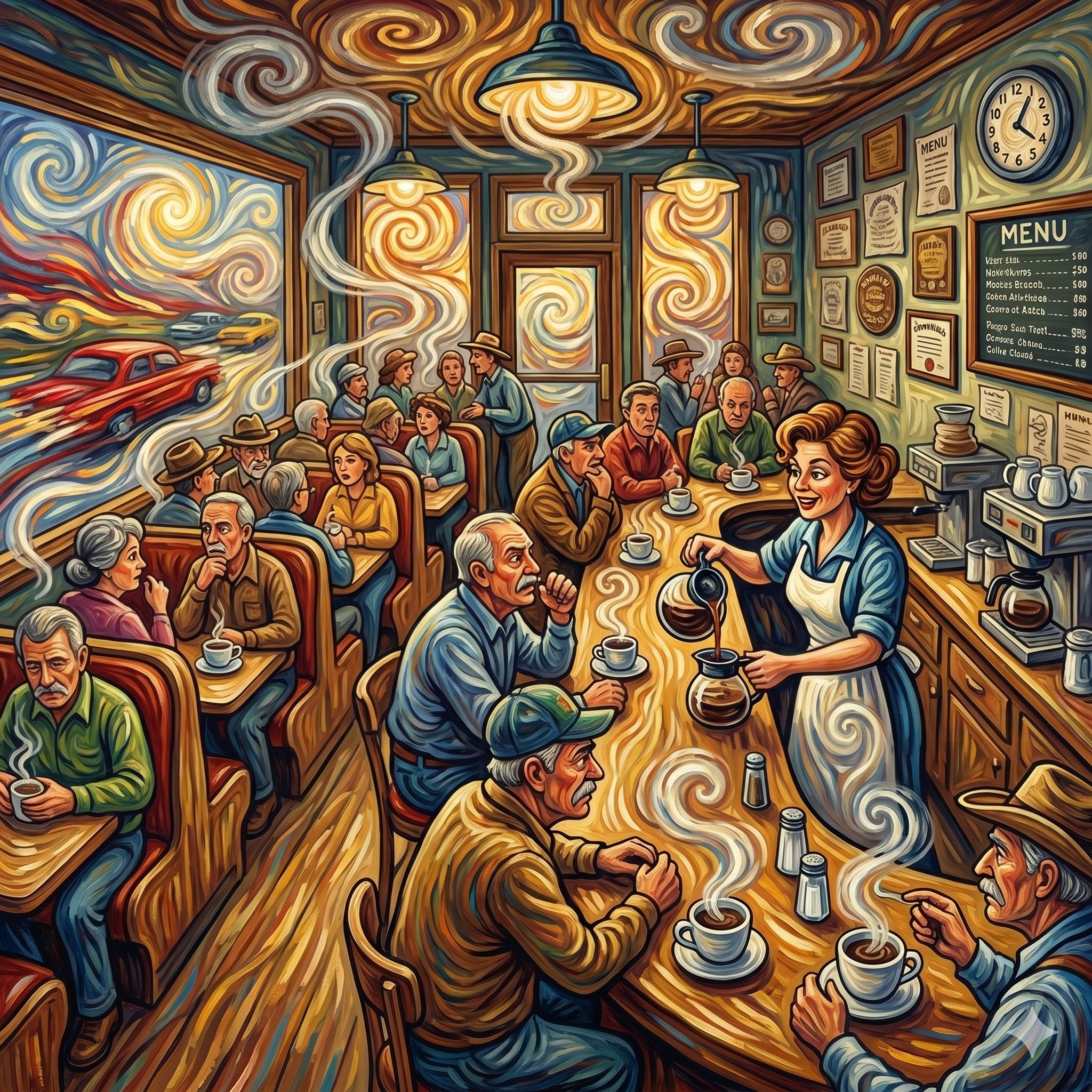
Back at the diner, the booths filled up faster than usual, which was immediately noted as evidence of something.
Maggie Sue poured coffee with the precision of someone who had seen arguments escalate over less.
“So what’s the conclusion?” she asked.
“That they’re changing things,” Lurleen said.
“How?” Maggie Sue asked.
Lurleen hesitated. “By being here.”
Maggie Sue nodded slowly. “And before they were here?”
Evelyn Grace Tipton spoke softly. “Things were different.”
“How?” Maggie Sue asked again.
Evelyn looked around. “They just were.”
Boot leaned forward. “Different ain’t a cause.”
Clovis tapped his clipboard. “It’s a baseline.”
Shelley adjusted her scarf. “We’re experiencing a transition.”
“To what?” RT asked.
Shelley smiled. “That’s the part we’re still identifying.”
Act V – The Diner Hosts an Unofficial Inquiry
Act VI – The Data Becomes Self-Aware
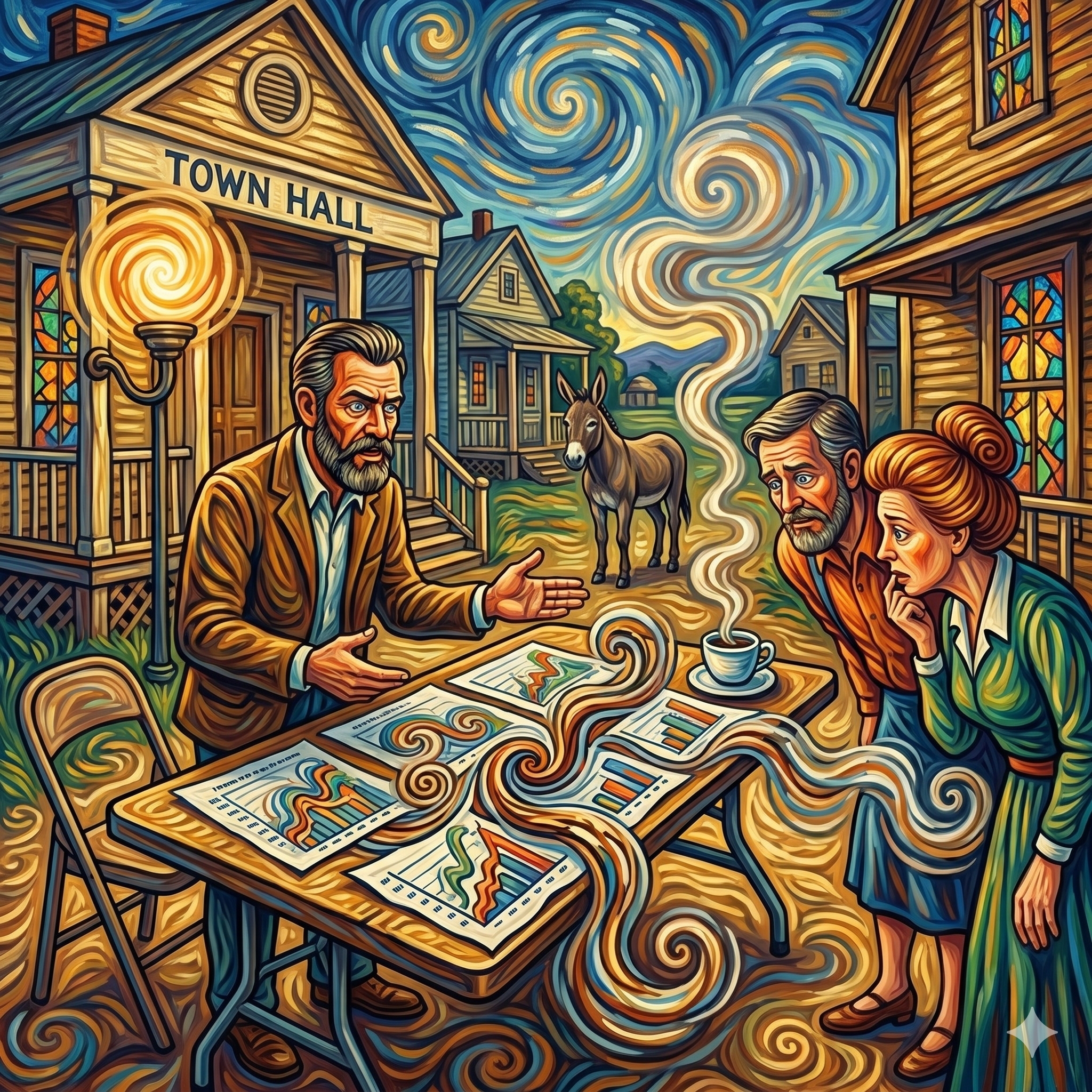
Clovis set up a folding table outside Town Hall, covered in charts, graphs, and at least one diagram that appeared to connect dots that had not previously acknowledged each other.
“This shows population fluctuation,” Clovis explained to a small crowd.
Brett and Alyssa Crenshaw leaned in.
“That line goes up and down,” Brett said.
“Yes,” Clovis confirmed.
“Has it always done that?” Alyssa asked.
Clovis hesitated. “Yes.”
“So what’s new?” Brett asked.
Clovis looked at the chart, then at the road, then at the donkey in the distance.
“The awareness,” he said finally.
Alyssa nodded slowly. “We noticed it.”
Clovis wrote that down.
Act VI – The Data Becomes Self-Aware
Act VII – Sheriff Peeler Attempts Resolution
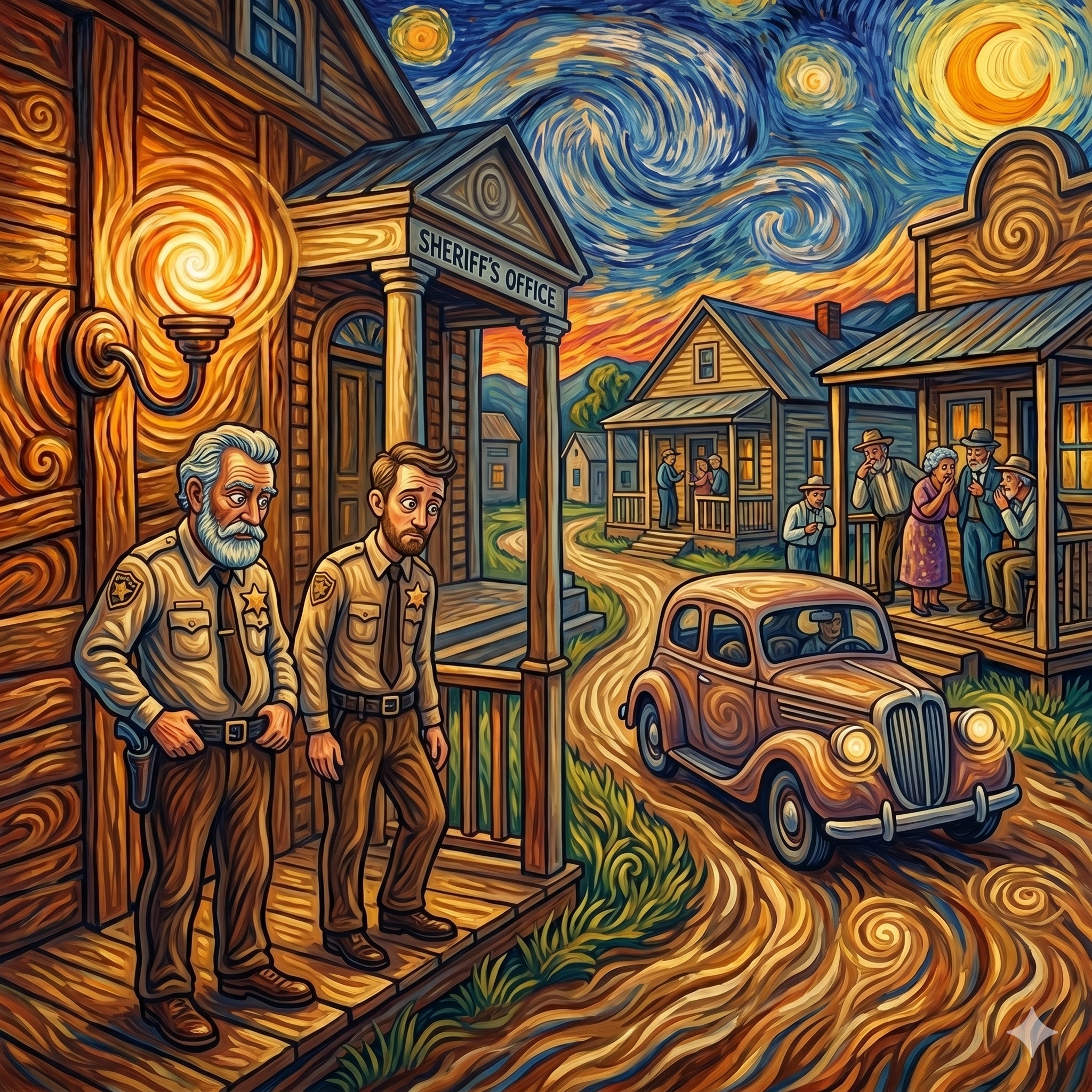
Sheriff Peeler stood outside his office, hands on his hips, looking at a town that had not changed in any way that could be proven, but had somehow shifted in every conversation.
“What’s the plan?” Kenny Joe asked.
Sheriff Peeler sighed. “We can’t arrest people for arriving.”
“Not yet,” Kenny Joe said.
Sheriff Peeler gave him a look. “Not ever.”
Kenny Joe nodded. “Right.”
They both looked at the road.
A car passed.
“Did that change anything?” Kenny Joe asked.
Sheriff Peeler watched it disappear. “No.”
“Then what’s the problem?” Kenny Joe asked.
Sheriff Peeler thought for a long moment.
“People noticed it,” he said.
Act VII – Sheriff Peeler Attempts Resolution
Act VIII – Boot Asks the Question No One Wants
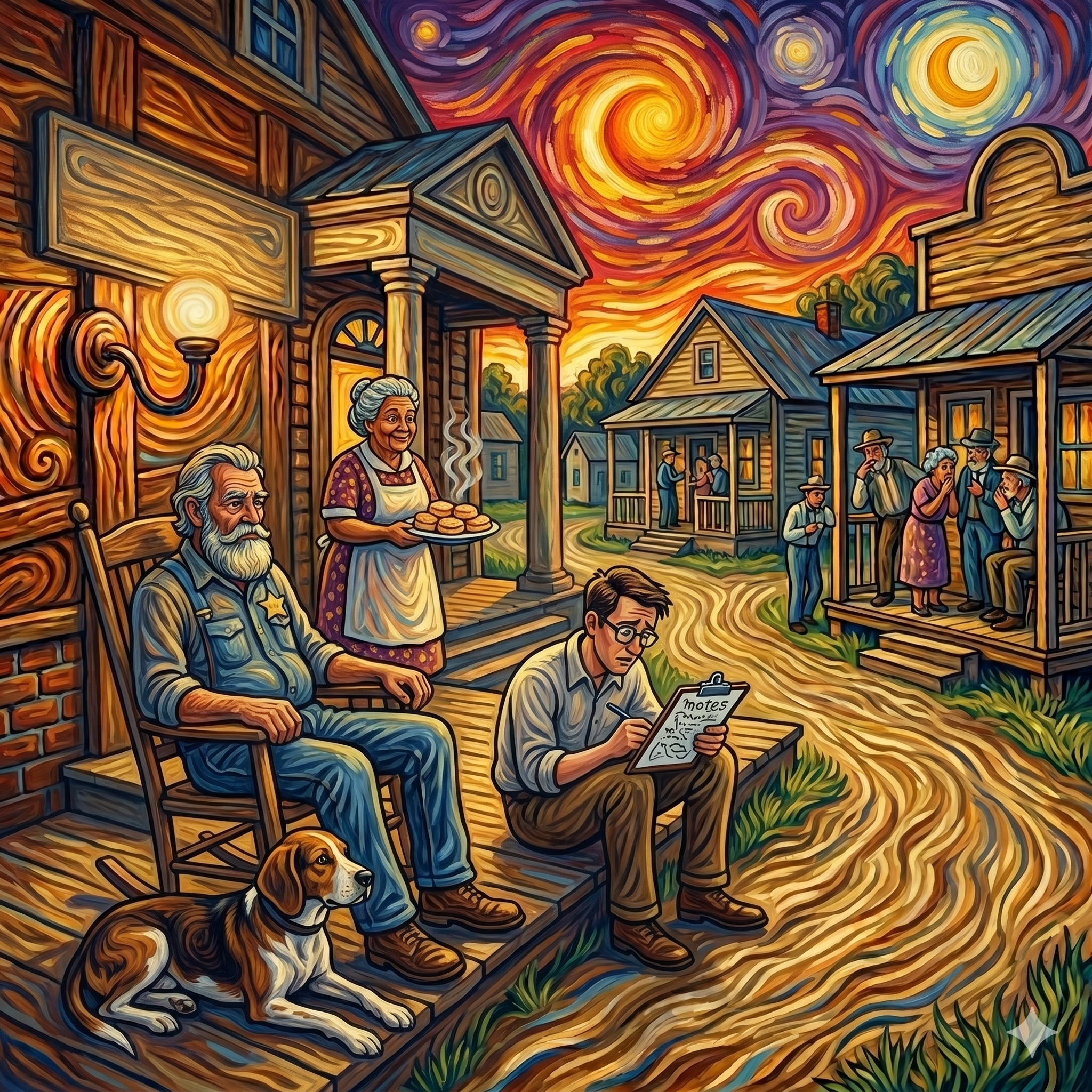
That evening, back on the porch, Boot rocked slowly, Daisy beside him, the sun setting in a way that had been happening consistently for years.
Clovis sat nearby, reviewing his notes.
“So,” Boot said, “anyone leaving?”
Clovis looked up. “What?”
“Everyone’s talking about who’s coming in,” Boot said. “Anyone leaving?”
Clovis flipped through his pages. “Some.”
“Then it balances out,” Boot said.
Clovis frowned. “Not exactly.”
Boot smiled. “Exactly enough.”
Mabel stepped out with another plate of biscuits. “It was getting crowded anyway.”
Boot took one. “With what?”
Mabel looked at the horizon. “Ideas.”
Act VIII – Boot Asks the Question No One Wants
Act IX – The Donkey Concludes the Matter
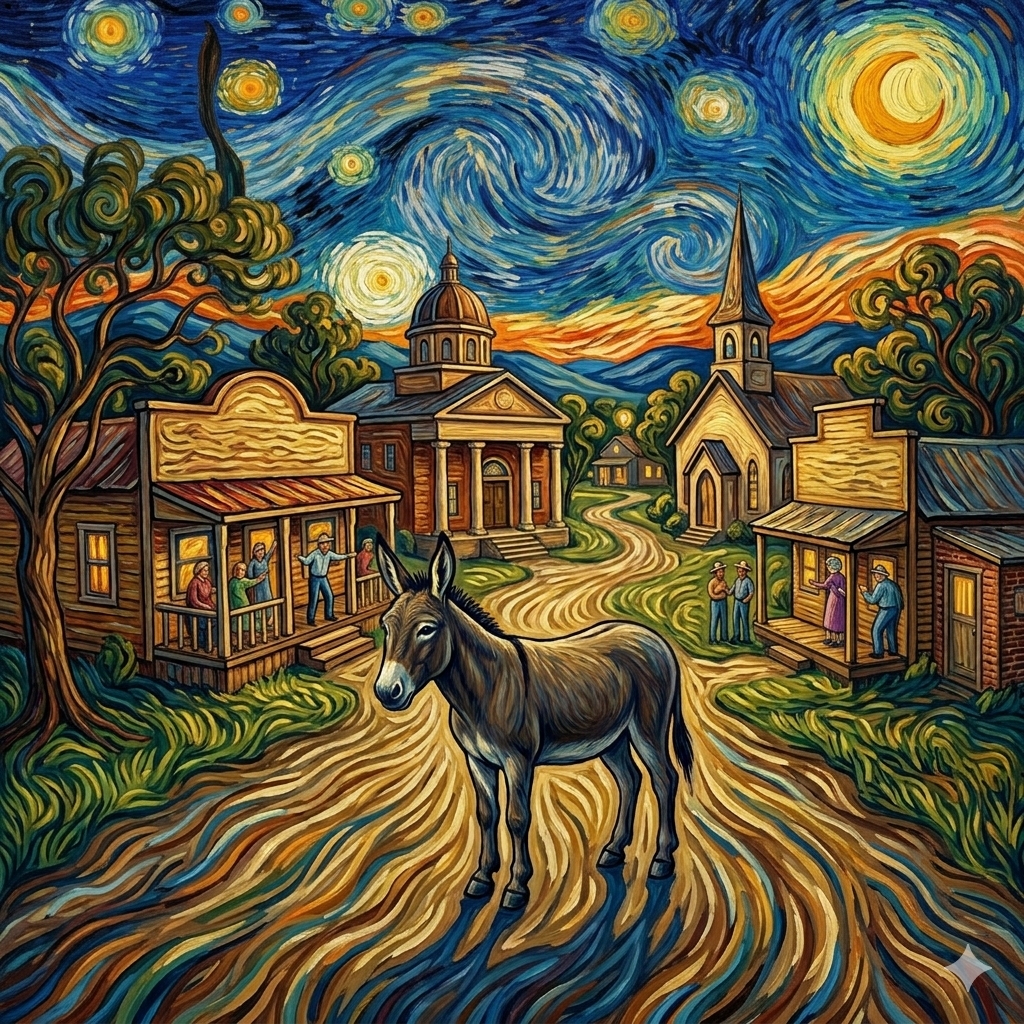
As night settled over Sequatchie Crossing, Earl the donkey stood exactly where he had been all day.
Lights flickered on. Conversations quieted. The town exhaled.
Nothing had been resolved.
Everything had been discussed.
Earl did not move.
Act IX – The Donkey Concludes the Matter
Epilogue – Presence as Explanation
The next morning, the complaints continued, slightly refined, marginally more specific, but still rooted in the same observation:
Things were different.
No one could say exactly how.
Or why.
But they could say who.
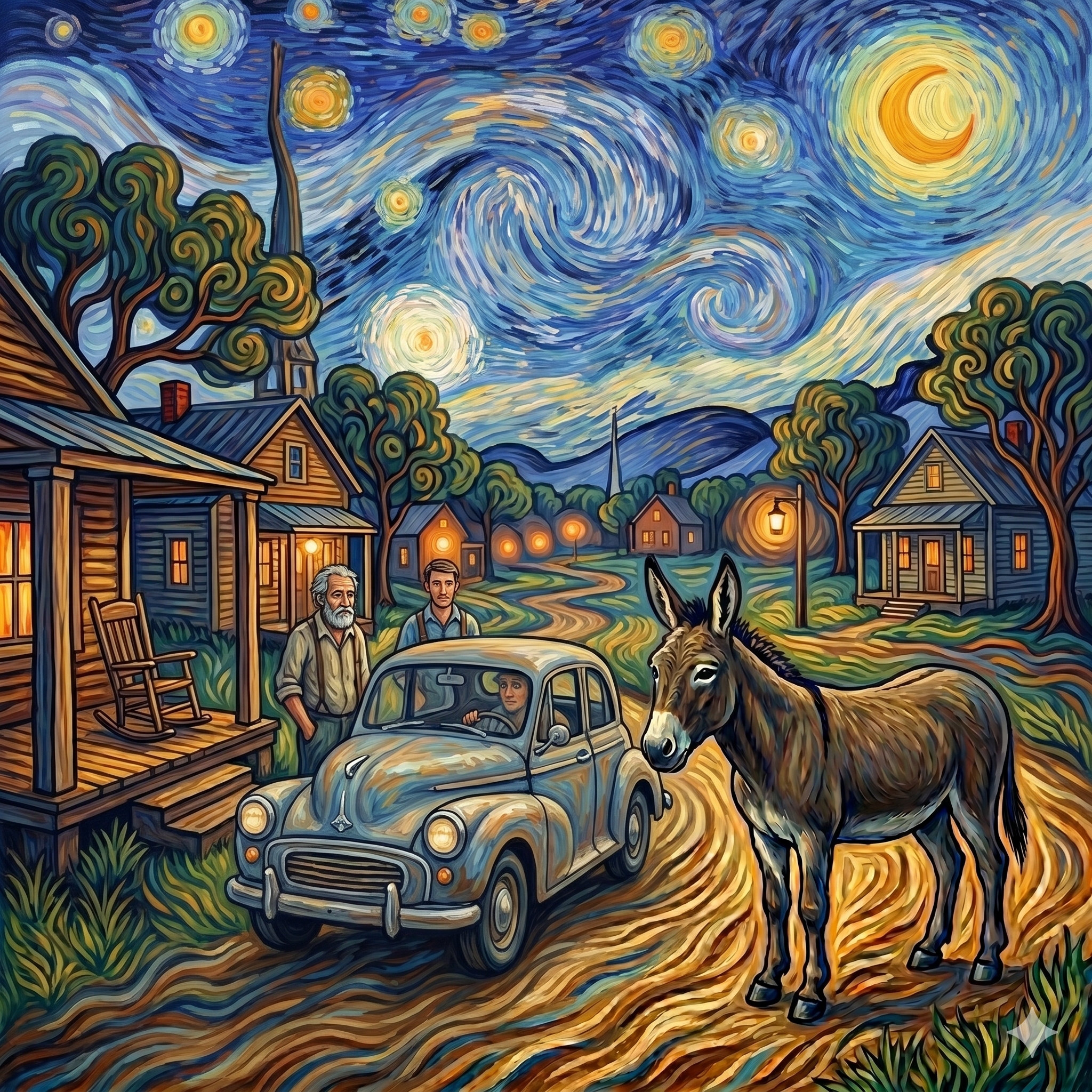
“They’re here,” Clovis said.
Boot nodded. “So are we.”
The donkey blinked.
Epilogue – Presence as Explanation
Disclaimer
The events, characters, and donkey described in this story are entirely fictional, though the patterns they represent may feel uncomfortably familiar. Any resemblance to real towns, real people, or real complaints about change is coincidental, inevitable, and probably already under discussion somewhere.
Disclaimer – Out-of-Towners Accused of Changing Things by Being Here
Real Places Behind the Ruckus – From The Dunlap Directory

Real Places Behind the Ruckus – From The Dunlap Directory
Yes, this story was fictional; even the parts that weren’t true. These places? Absolutely real. Stop by, support local, and keep the Wi-Fi away from livestock:
- Three Star Cinema
- Artistic Expressions Salon
- Sequatchie Valley Homestead
- Krispy Krunchy Chicken
- Harris Mowing Service
- Dunlap Garden Apartments
- Dunlap Flower Shop
- Dunlap Fast Lube
- Sequatchie County Veterans Service Office
- Dunlap Animal Clinic
- Flour & Bloom
- Sugar Mama’s Cakes by Keisha
- The Game Shack
- Standefer-Reed Funeral Home
- Cane Creek Camp
- ChattaBOOga Ghost Walk
- Lodge At Fall Creek Falls
- Nice Nails in Dunlap
- Best Western Heritage Inn
- Renegade Foods

Real Places Behind the Ruckus – From The Dunlap Directory
At Sequatchie Crossing, we tell the stories of Sequatchie Crossing.
Please share this post with your friends, family, or business associates who may want follow the news from Sequatchie Crossing.

0 Comments