


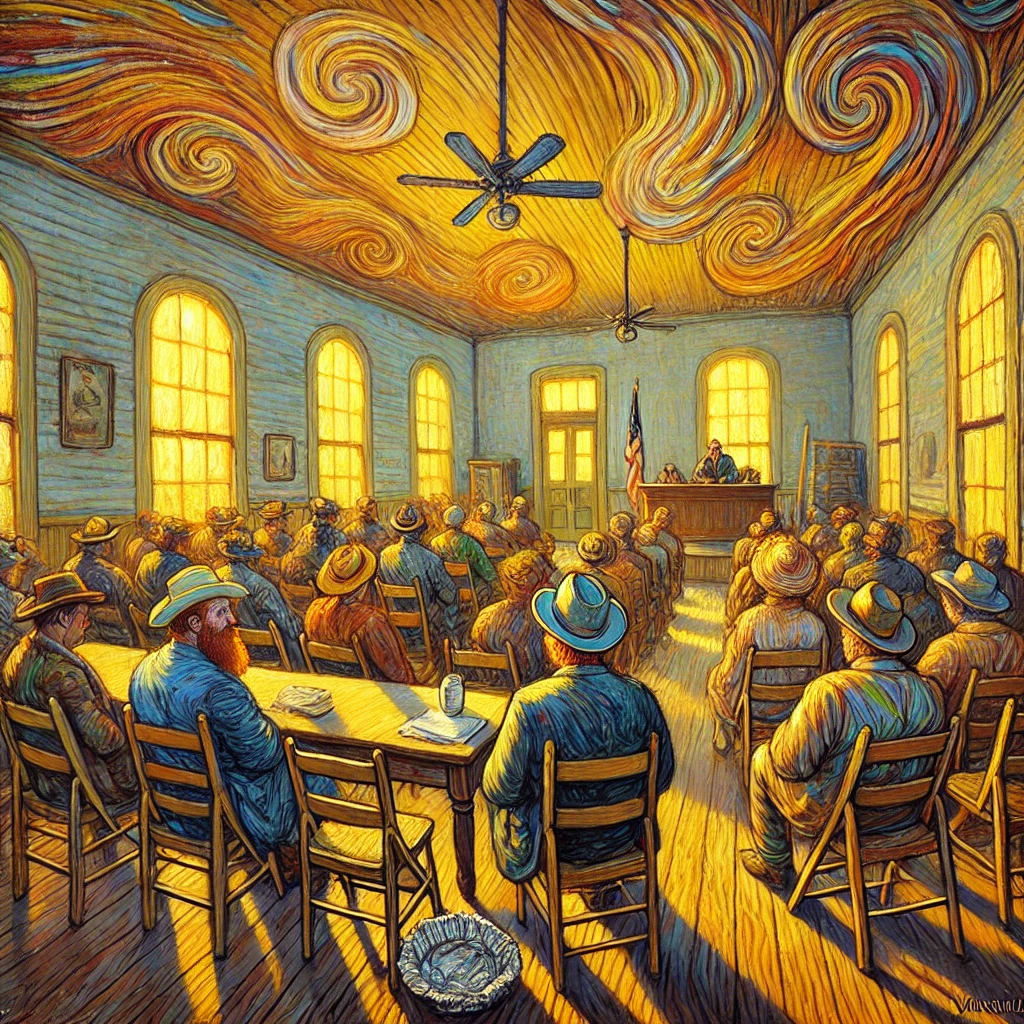
Voters Express Confusion and Strong Opinions
By Tom Seest
At Sequatchie Crossing, we tell the stories of Sequatchie Crossing.
Please share this post with your friends, family, or business associates who may want follow the news from Sequatchie Crossing.
🎤 Audio Overview
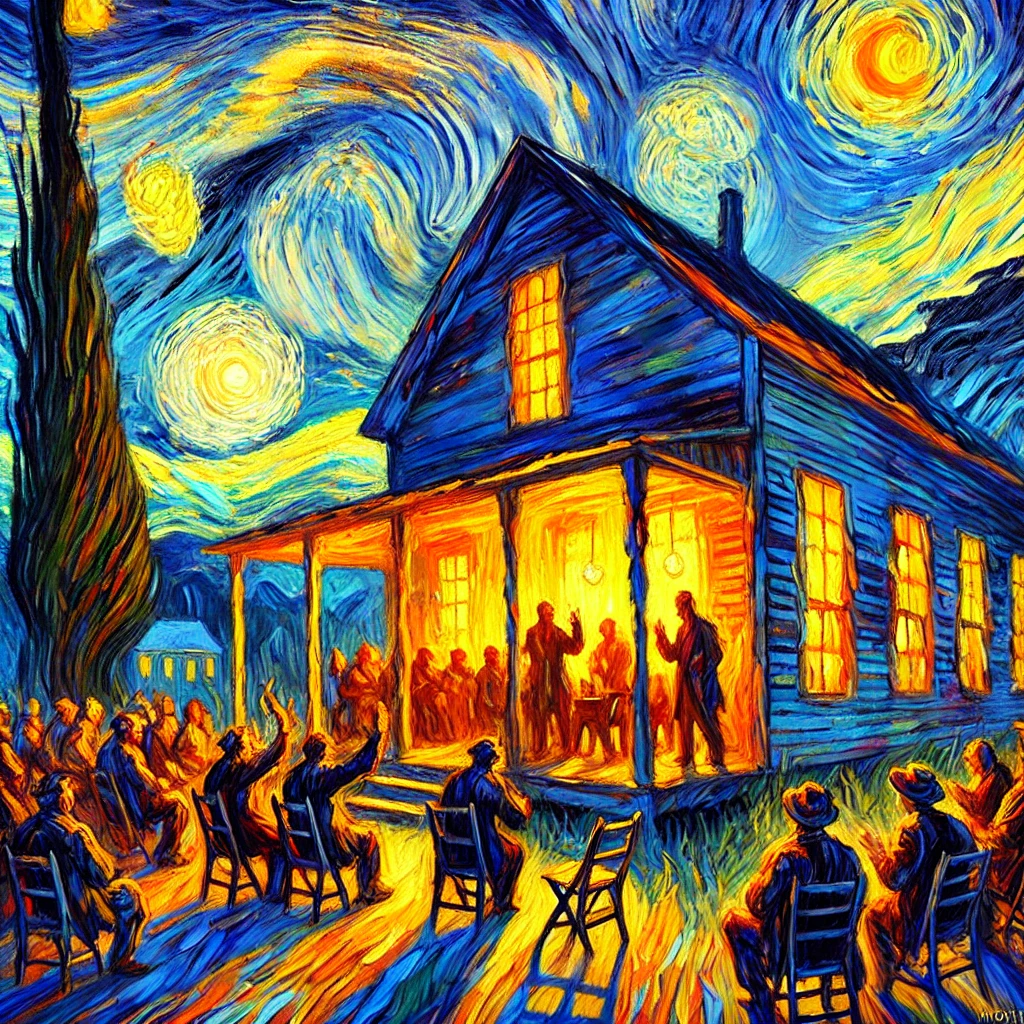
Referendum Proposed to Decide Whether Meetings Need Referendums
Act I: The Meeting About the Meeting About the Vote
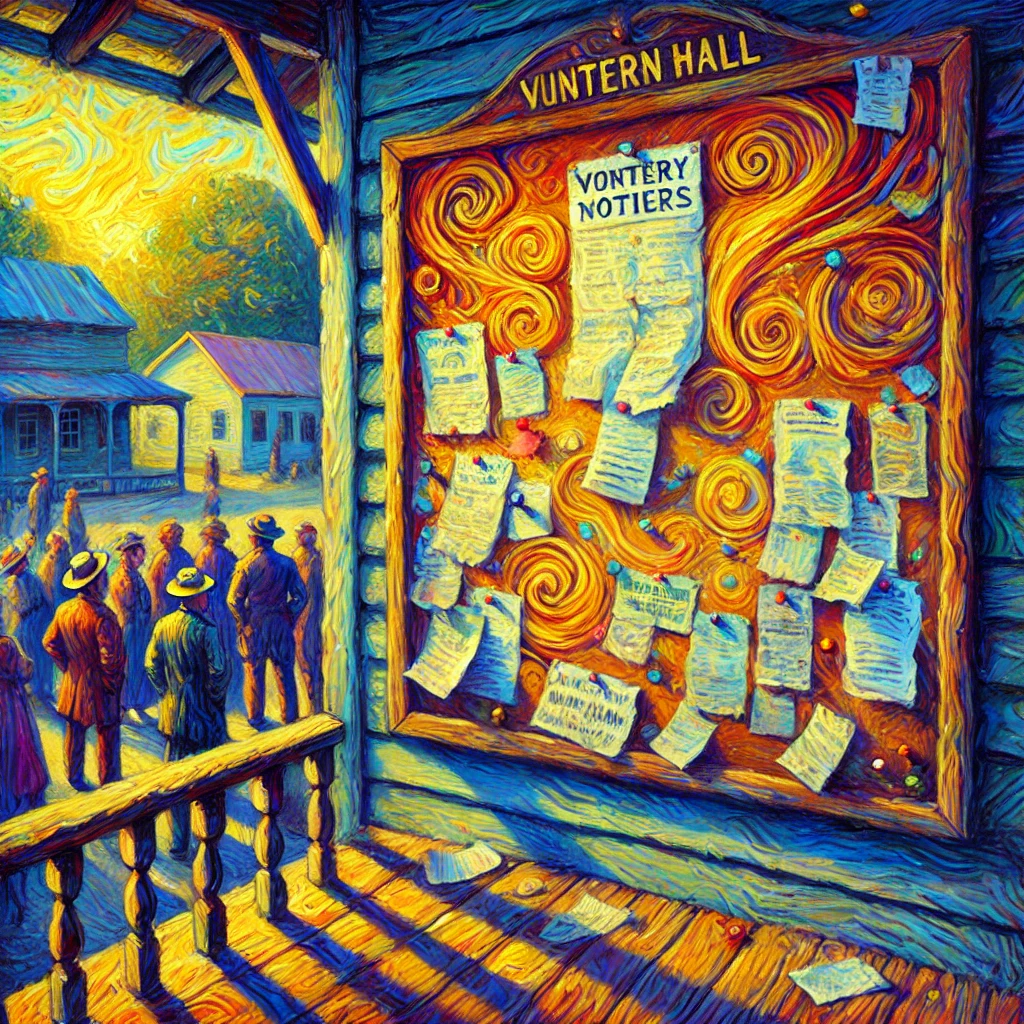
The notice appeared on the corkboard outside Town Hall sometime between the disappearance of the pushpins and the return of the pushpins with stronger opinions.
PUBLIC MEETING
TOPIC: Consideration of a Referendum
PURPOSE: To determine whether future meetings require voter approval
TIME: 6:00 PM (Doors open at 5:30, opinions open immediately)
No one could later agree on who posted it.
Clovis Strickland insisted it had always been there.
Boot Barnes insisted it had not been there yesterday, which, in Boot’s mind, constituted a sworn affidavit.
Mabel Dean said she didn’t care who posted it but wanted to know whether the word referendum was singular or plural, because she was tired of learning new words without being asked.
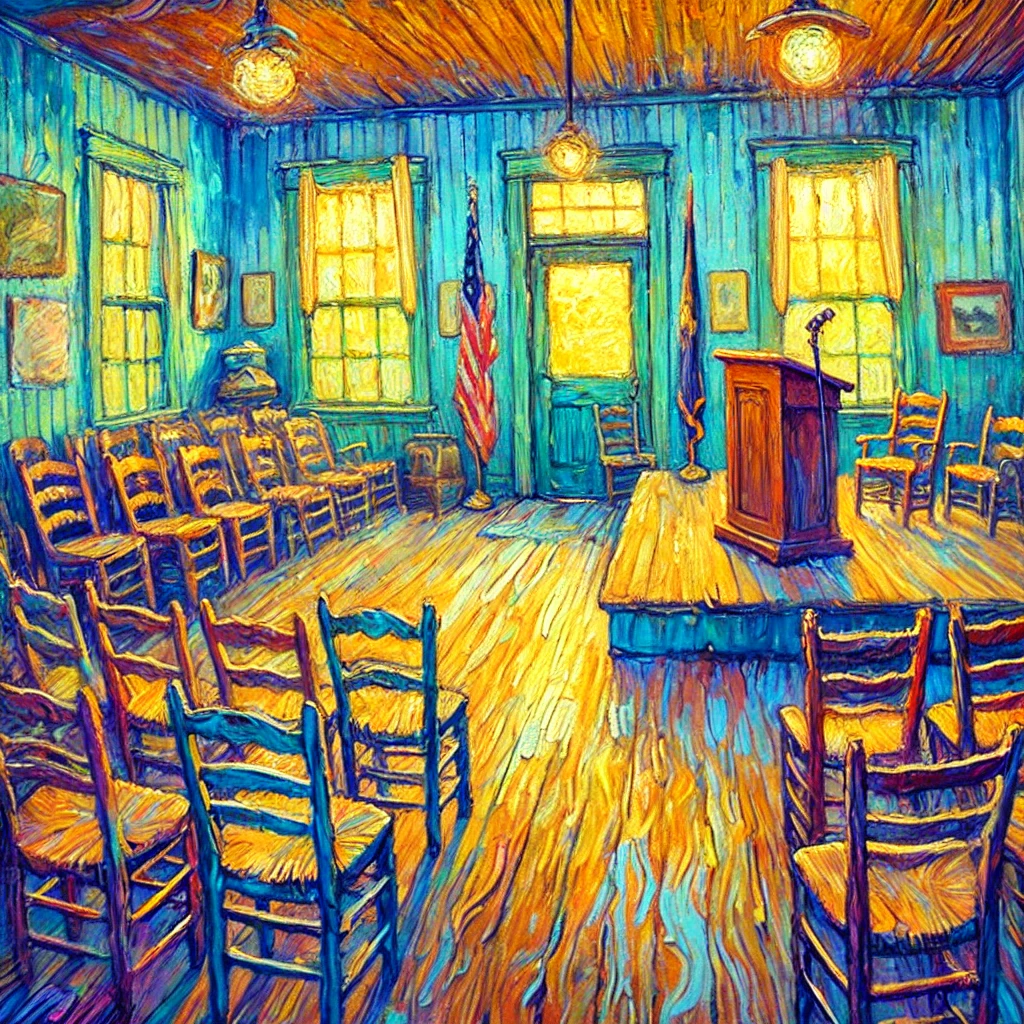
By 5:12 PM, folding chairs were already being arranged in rows that suggested an intention toward order without a firm commitment to it. Sheriff Peeler stood near the back wall, hands folded, expression calibrated somewhere between professional patience and the quiet dread of a man who suspected he would be asked to enforce something no one could define.
The Clerk, whose nameplate read “Town Clerk” because no one had ever voted on whether to include her actual name, shuffled papers at the front table. She had printed agendas. She had printed backup agendas. She had printed a third version of the agenda titled Agenda (In Case This Changes).
At 5:47 PM, the first argument began – not about the topic, but about whether it was appropriate to begin arguing before the meeting had officially started.
“This isn’t the meeting yet,” said Reverend Gentry, glancing at his watch.
“That’s what they want you to think,” said Boot Barnes.
“Who is ‘they’?” asked Mabel.
“The people who don’t want us voting on whether we get to vote,” Boot replied, confident this was a sentence.
Clovis Strickland wrote all of it down.
Act I – The Meeting About the Meeting About the Vote
Act II: Defining the Undefinable
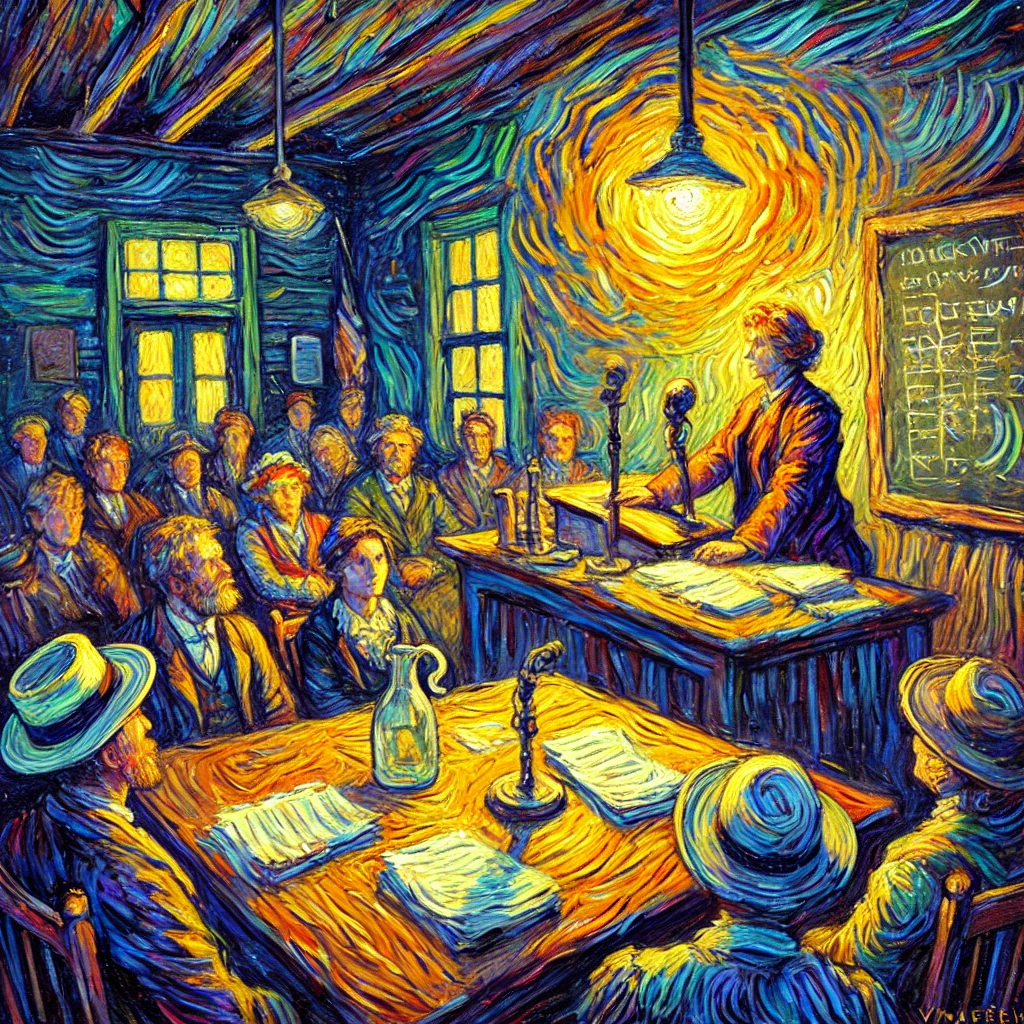
At precisely 6:03 PM – because the clock in Town Hall had never agreed with anyone – the Clerk tapped the microphone.
“This meeting is now called to order,” she said. “We are here to discuss a proposal to place on the ballot a referendum to decide whether future town meetings require voter approval.”
A hand shot up immediately.
“Is this meeting already approved?” asked someone from the second row.
“Yes,” the Clerk said carefully. “This meeting was scheduled under existing rules.”
“So it didn’t need a referendum?” another voice asked.
“Correct.”
“So if we vote that meetings need referendums,” said Boot Barnes, standing now, “does that mean this meeting shouldn’t be happening?”
The Clerk paused. She consulted the agenda. She consulted the backup agenda. She consulted the backup backup agenda.
“No,” she said. “Because this meeting predates the referendum.”
“But the discussion is happening now,” Boot pressed. “Which means we’re already violating the spirit of the thing we haven’t voted on yet.”
Murmurs rippled through the room – approval from some, existential dread from others.
Sheriff Peeler shifted his weight. He had learned, over the years, that when conversations began to reference spirit, enforcement options narrowed dramatically.
Act II – Defining the Undefinable
Act III: Public Comment Opens, Immediately Regrets It
The Clerk announced the opening of public comment, reminding everyone of the five-minute limit, which immediately triggered a ten-minute argument about whether limits themselves should be subject to voter approval.
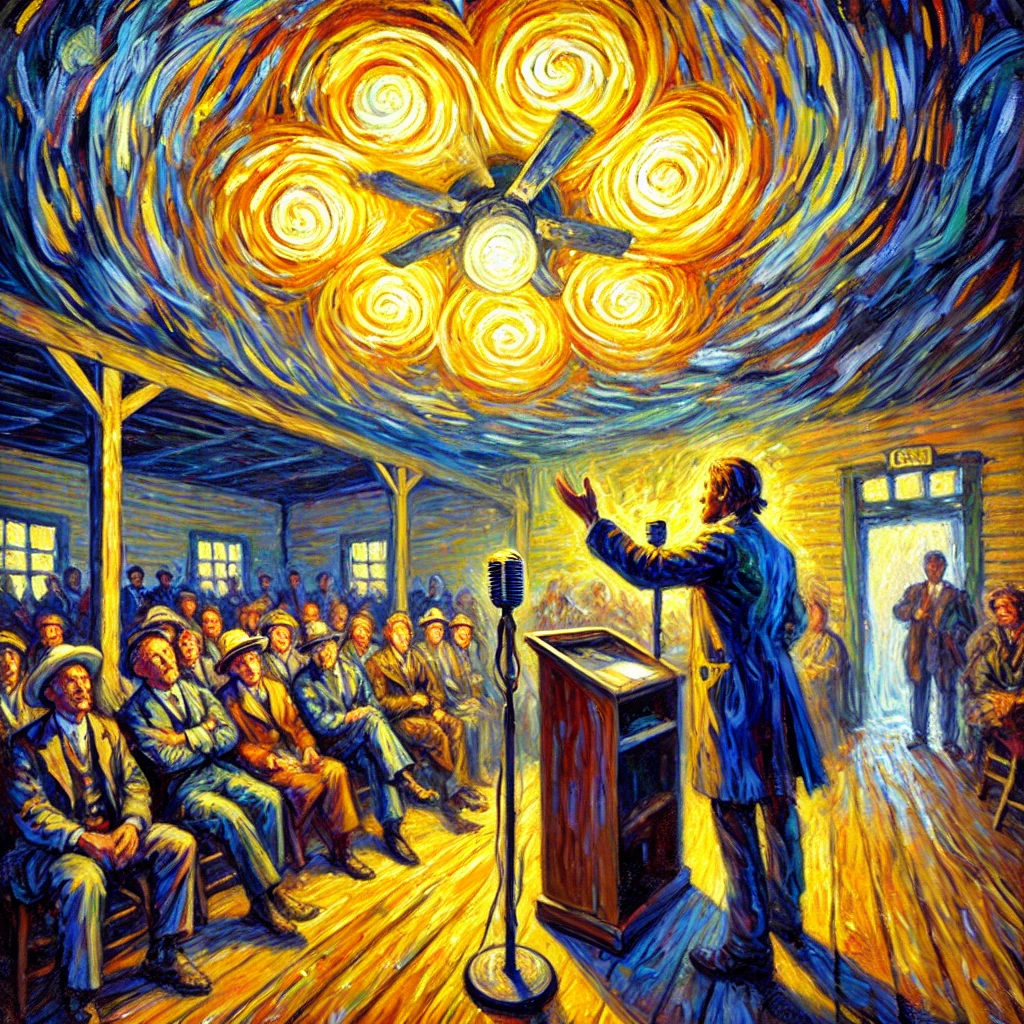
The first speaker approached the microphone.
“I don’t like referendums,” said Mr. Haskins, a man whose opinions were usually delivered in bulk. “I vote for people so they can decide things so I don’t have to keep coming out here.”
A woman behind him nodded vigorously.
“That’s what representation is,” she said.
“But what if they decide to decide things without asking us whether they should decide things?” Boot Barnes interjected from his seat.
“That’s literally what deciding things is,” Mr. Haskins replied.
The Clerk rang the small brass bell that technically indicated time warnings but in practice mostly expressed frustration.
Next speaker.
“I think every meeting should require a referendum,” said a young man no one recognized. “It’s about transparency.”
“Where are you from?” someone called out.
“Nearby,” the man said.
“Nearby where?” another voice demanded.
“Close enough to care.”
The room erupted.
Clovis Strickland wrote: Speaker unidentified. Suspicious proximity.
Act III – Public Comment Opens, Immediately Regrets It
Act IV: The Language Problem
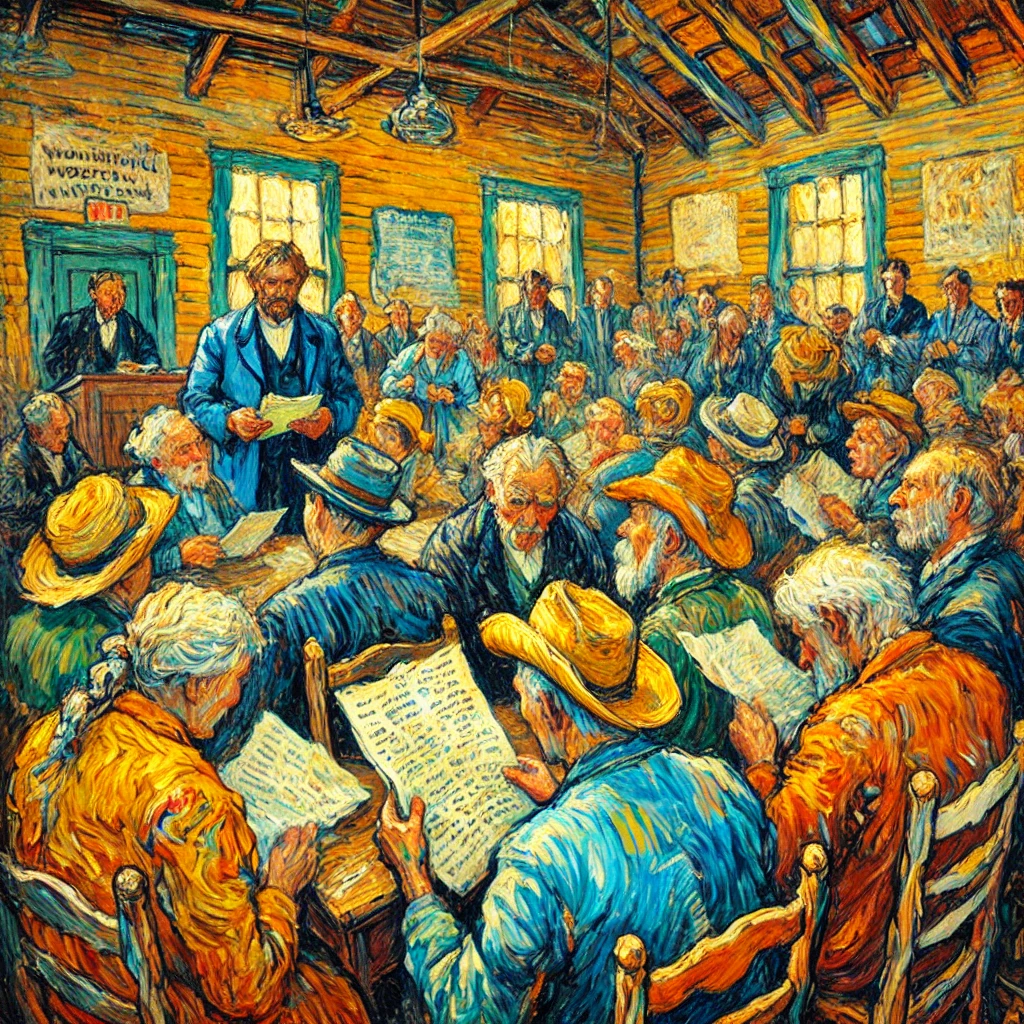
By 6:41 PM, the meeting had become bogged down in the word referendum itself.
“Isn’t that just a fancy word for vote?” asked Mabel Dean.
“Yes,” the Clerk replied.
“So why don’t we just say vote?”
“Because a referendum is a specific kind of vote,” the Clerk said.
“So we need a vote to decide whether to vote about voting?” Mabel said, slowly, as if tasting something unfamiliar.
“That’s correct.”
“Well,” Mabel said, sitting back, “I don’t like that.”
Several people applauded.
Boot Barnes stood again.
“If meetings need referendums,” he said, “then how do we decide to have the referendum meeting?”
The Clerk closed her eyes briefly.
“That meeting would be authorized by the charter,” she said.
“And who approved the charter?” Boot asked.
“The voters.”
“When?”
“Years ago.”
“Were they us?” Boot demanded.
A silence followed – not because anyone didn’t want to speak, but because too many people were doing the math.
Act IV – The Language Problem
Act V: A Motion Is Made, Nature Objects
At 7:02 PM, someone finally made a motion.
“I move that we place on the ballot a referendum asking voters whether town meetings should require prior voter approval,” said Council Member Atkins, who had not spoken until now and looked like he regretted breaking his streak.
“I second,” said another council member, too quickly.
Discussion resumed immediately.
“What if the voters say no?” someone asked.
“Then meetings continue as normal,” the Clerk said.
“And if they say yes?”
“Then future meetings would require voter approval.”
“How would we get that approval?” Mabel asked.
“Through a referendum.”
“So we’d need a meeting to approve the referendum to approve the meeting?” Boot asked.
“Yes,” the Clerk said, voice thin but intact.
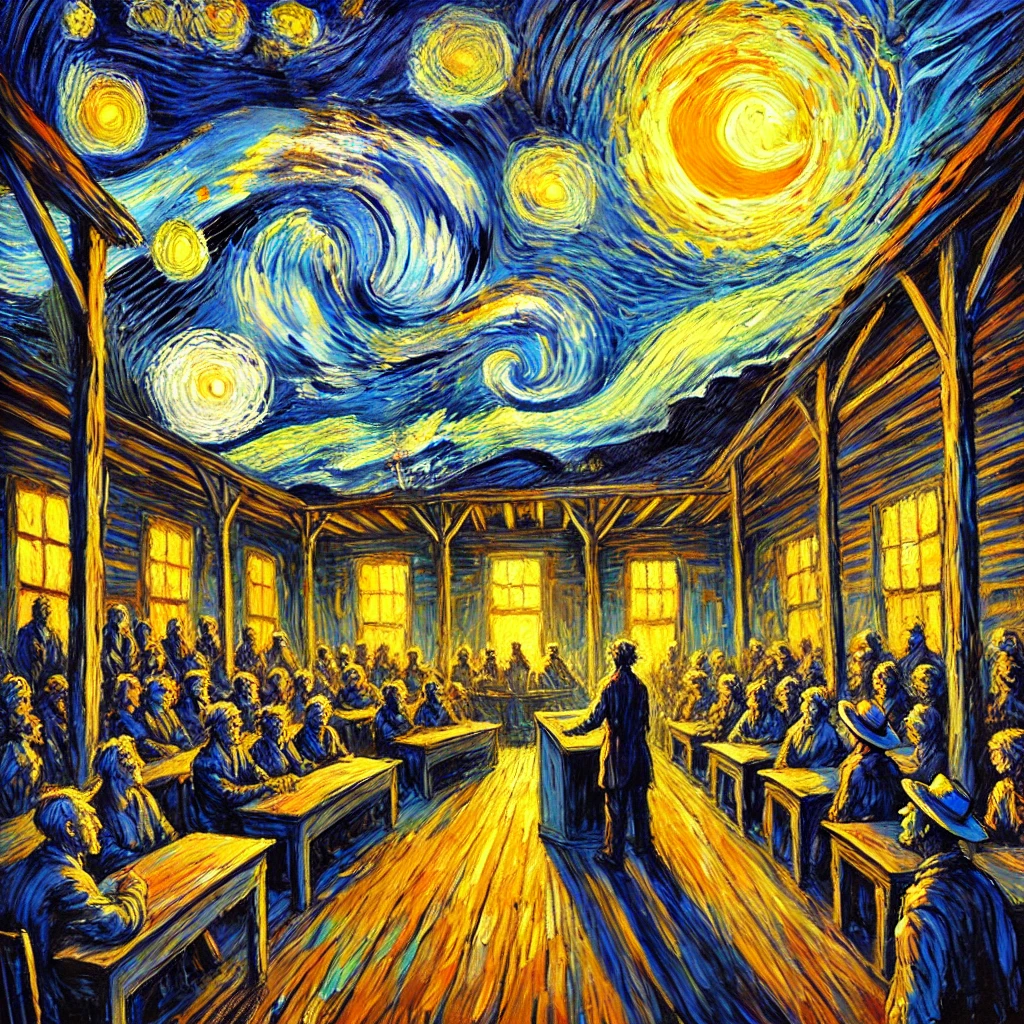
At that exact moment, the lights flickered.
Several people gasped.
“I told you,” someone whispered. “The building doesn’t like this.”
Sheriff Peeler checked the breaker panel out of habit, then realized that even electricity probably wanted no part of the decision tree forming in this room.
Act V – A Motion Is Made, Nature Objects
Act VI: The Hypotheticals Take Over
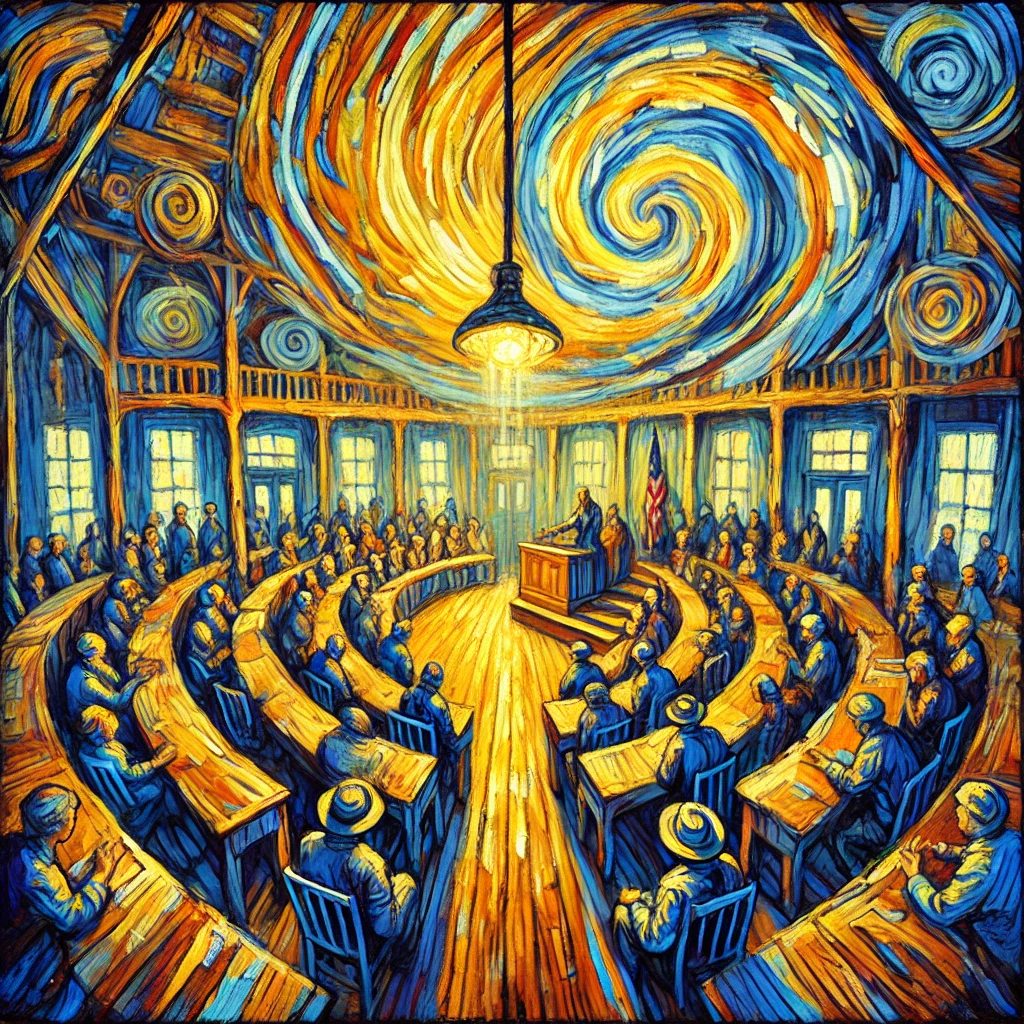
Once hypotheticals entered the room, they refused to leave.
“What about emergency meetings?” asked Reverend Gentry.
“They would be exempt,” the Clerk said.
“Who decides what’s an emergency?”
“The council.”
“Without a referendum?” Boot said.
“Yes.”
“So they can meet without permission whenever they feel like it’s urgent?”
“Yes.”
“That sounds like a loophole,” Boot declared triumphantly.
Clovis underlined loophole three times.
“What about meetings to decide whether something is an emergency?” Mabel asked.
Those would be… complicated.
A man in the back suggested creating a standing committee to define emergencies.
“Would that committee need voter approval?” someone asked.
The man sat down.
Act VI – The Hypotheticals Take Over
Act VII: The Crowd Divides
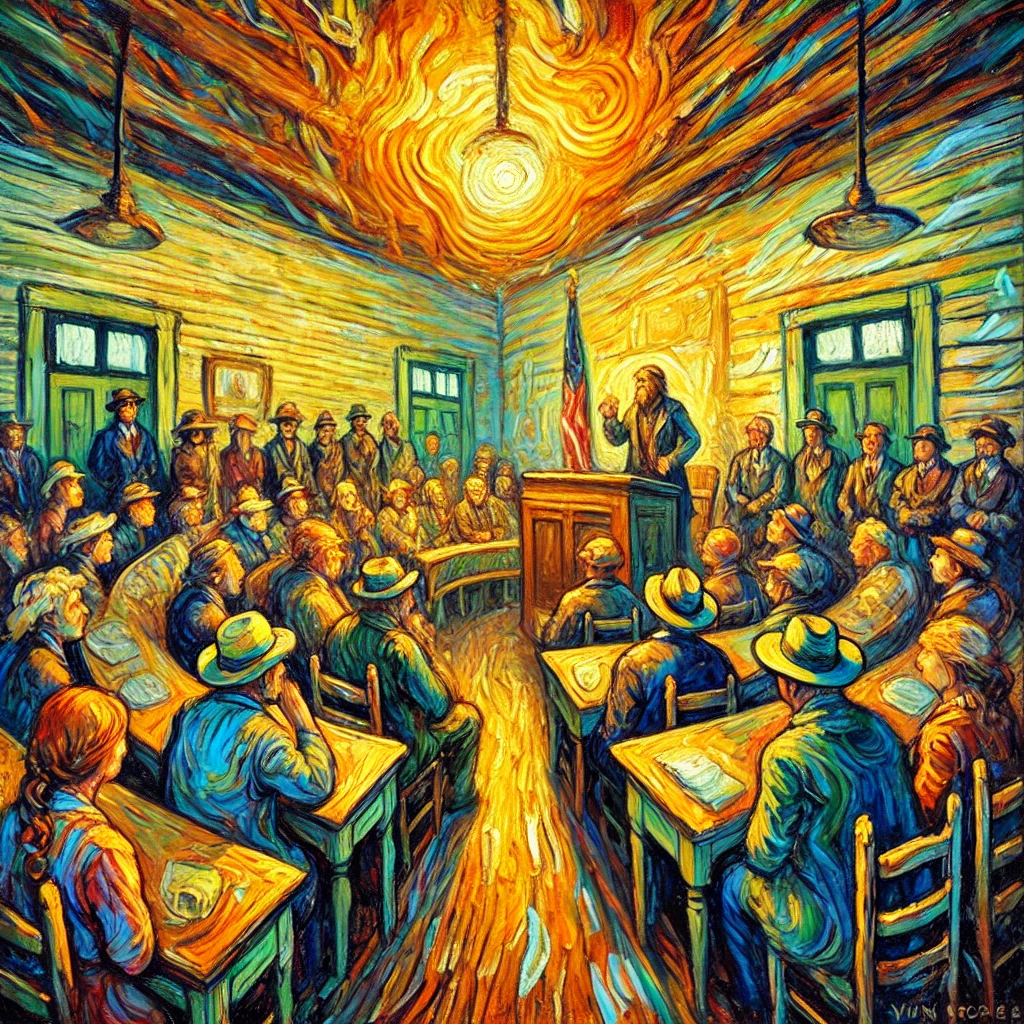
By 7:38 PM, the room had divided neatly into factions:
-
The Approvalists – who believed nothing should happen without a vote.
-
The Traditionalists – who believed too many votes were happening already.
-
The Suspicious – who believed the real issue hadn’t been mentioned yet.
-
The Confused – who had arrived for something else entirely but stayed out of pride.
Each group applauded different sentences, often mid-sentence, sometimes mid-word.
Sheriff Peeler observed that no one appeared angry enough to be removed, but everyone appeared irritated enough to be quoted later.
Act VII – The Crowd Divides
Act VIII: The Vote About the Vote About the Vote
At 8:01 PM, the Clerk called for a vote – not the referendum, but whether to advance the referendum to the ballot.
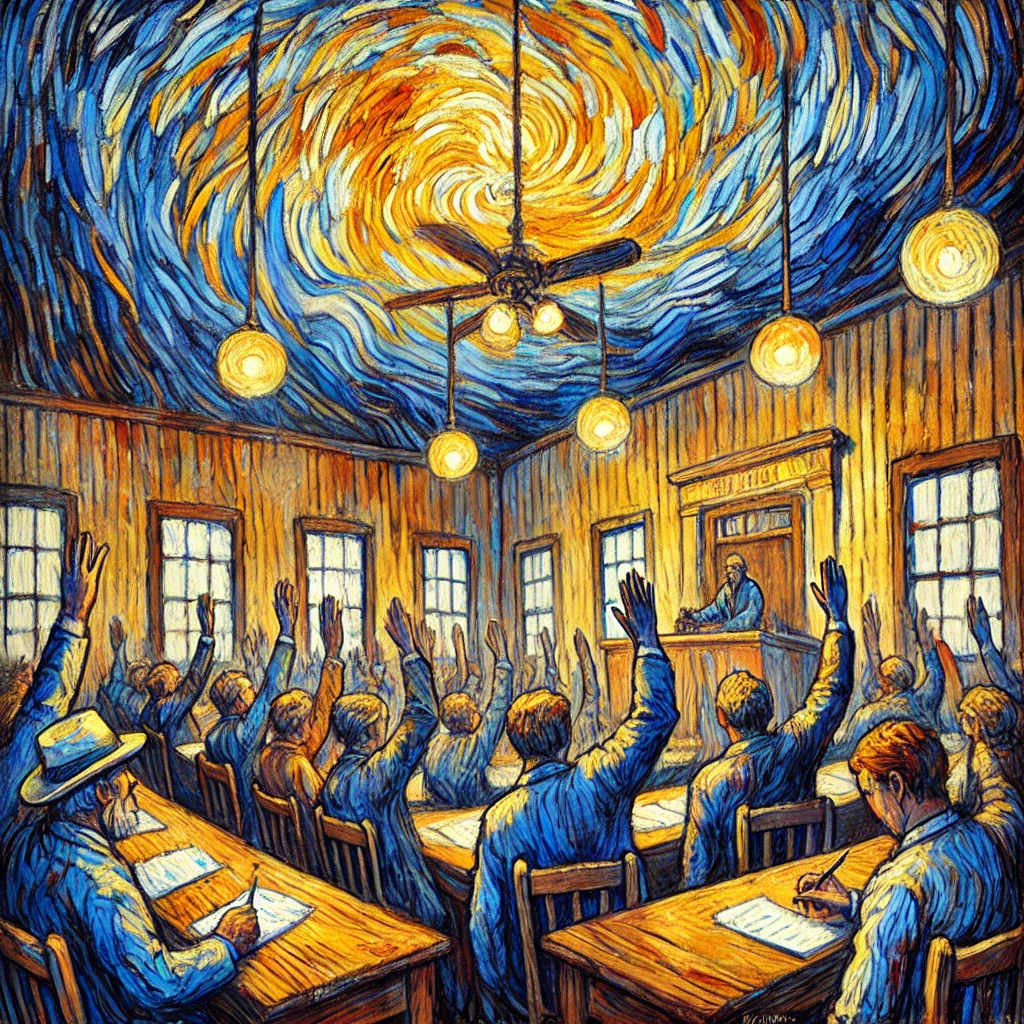
“Raise your hands,” she said.
Hands rose. Some hesitated. Some rose halfway, then lowered, then rose again when neighbors reacted.
The Clerk counted.
She counted again.
She asked Clovis to confirm.
Clovis adjusted his glasses, consulted his notes, and said, “I have eleven, possibly twelve, depending on how we’re counting uncertainty.”
The Clerk sighed.
“The motion passes,” she said. “Barely.”
Applause erupted, mixed with groans.
“So when do we vote?” someone shouted.
“In November,” the Clerk said.
“And until then?” Boot asked.
“Meetings continue as usual.”
“That feels dangerous,” someone said.
Act VIII – The Vote About the Vote About the Vote
Act IX: Aftermath in the Parking Lot
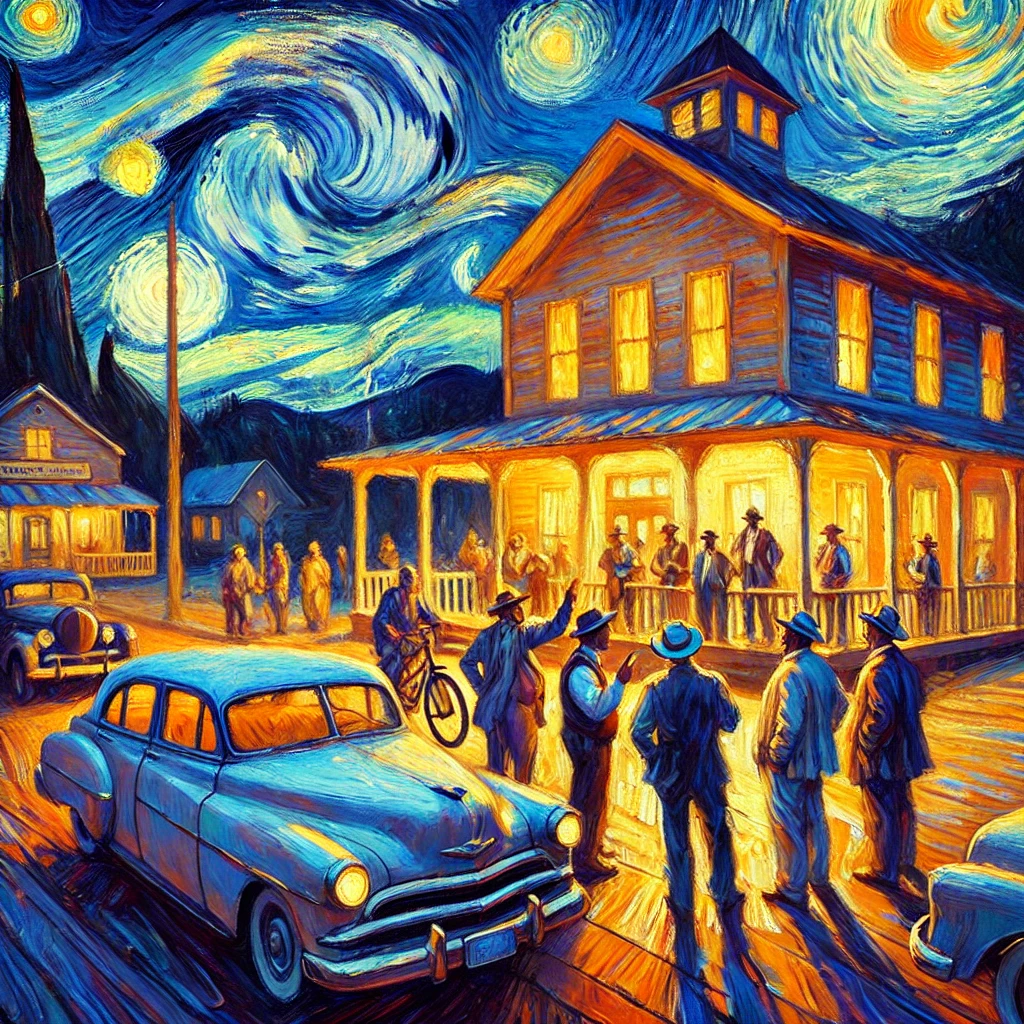
The parking lot discussion lasted longer than the meeting.
People stood near their cars, explaining their positions more clearly now that nothing could be done about them.
Boot Barnes declared victory.
Mabel Dean declared exhaustion.
Clovis Strickland declared that his notes would be available “once the truth settled down enough to sit still.”
Sheriff Peeler locked the doors and wondered, not for the first time, whether civic engagement came with a return policy.
Act IX – Aftermath in the Parking Lot
Epilogue: The Ballot Arrives
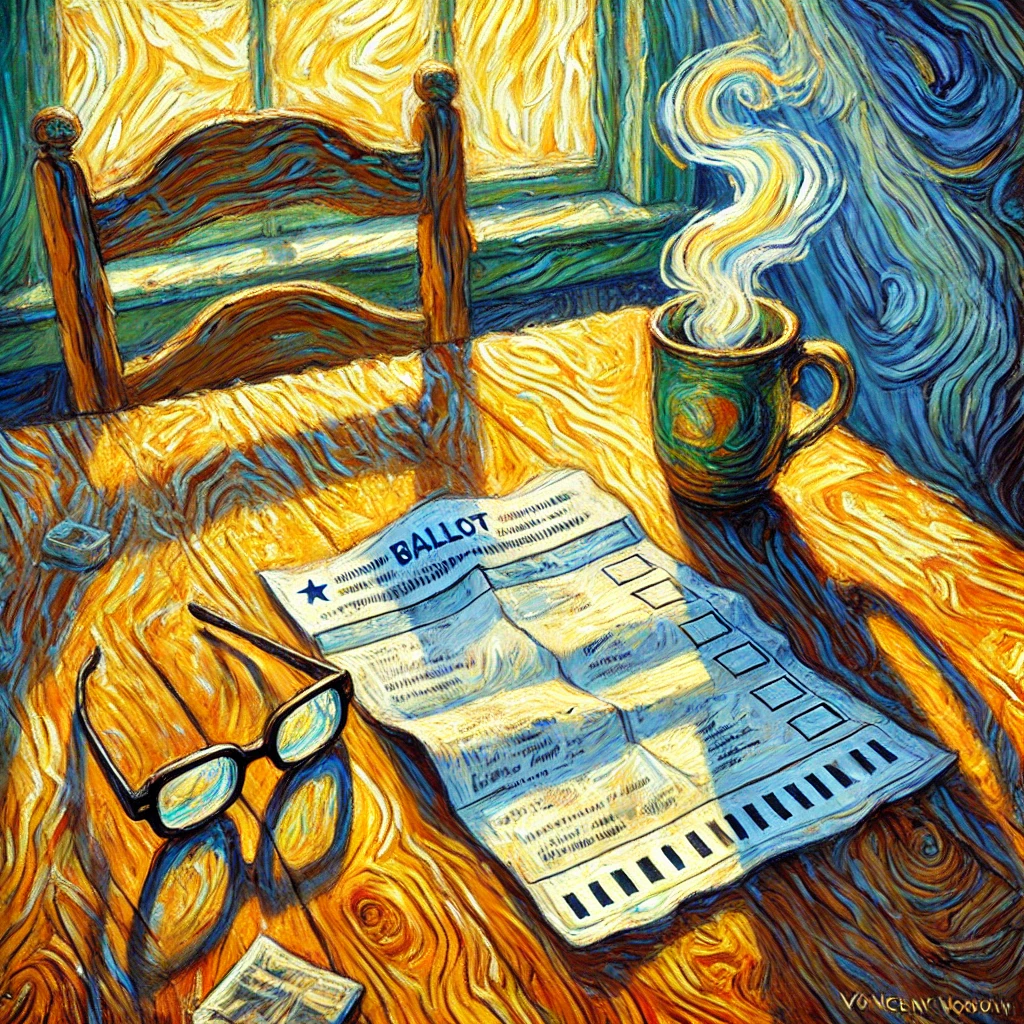
Weeks later, voters received their ballots.
The question read:
Shall the Town of Sequatchie Crossing require voter approval for town meetings, except where exempted, as defined by existing authority, subject to interpretation?
Below it were two options:
-
Yes
-
No
-
Unsure (counts as interest)
Early turnout was high.
Explanations were not.
By the time results came in, no one was entirely certain what had been decided – but everyone agreed it had been important.
Town Hall scheduled a meeting to discuss the outcome.
Pending approval.
Epilogue – The Ballot Arrives
Disclaimer
This story is a work of satire and fiction. All characters, meetings, votes, referendums, procedures, motions, second motions, substitute motions, emergency exceptions, interpretive clauses, implied authorities, and expressions of confidence are fictional.
Any resemblance to real towns, real officials, real meetings, real ballots, or real situations – especially those involving confusion about process, disagreement over participation, or strong opinions formed with limited clarity – is purely coincidental and, frankly, unavoidable.
Sequatchie Crossing exists only as a narrative device used to explore civic life, human behavior, and the universal truth that people care deeply about how decisions are made, particularly when no one agrees on what the decision actually is.
This story is not intended to represent any specific municipality, governing body, or legal framework. It should not be interpreted as commentary on any real referendum, ordinance, election, or meeting – past, present, or future.
No town clerks were harmed in the making of this story, though several were likely tired.
Disclaimer – Referendum Proposed to Decide Whether Meetings Need Referendums
Real Places Behind the Ruckus – From The Dunlap Directory

Real Places Behind the Ruckus – From The Dunlap Directory
Yes, this story was fictional; even the parts that weren’t true. These places? Absolutely real. Stop by, support local, and keep the Wi-Fi away from livestock:
- Little Tail Farms
- United Country Southeast Land Solutions
- Davis Pond Camping Area
- Raccoon Mountain Caverns and Campground
- Ed’s Lawn Care
- Smiley Farms Store
- Little Cove Campground
- Wheeler Service Inc.
- Berg’s Diesel Repair
- On The Go Mobile Mechanic Service
- L & C Concrete Finishing
- Heatwave
- Firefly on Rankin
- King’s Pig BBQ

Real Places Behind the Ruckus – From The Dunlap Directory
At Sequatchie Crossing, we tell the stories of Sequatchie Crossing.
Please share this post with your friends, family, or business associates who may want follow the news from Sequatchie Crossing.

0 Comments