


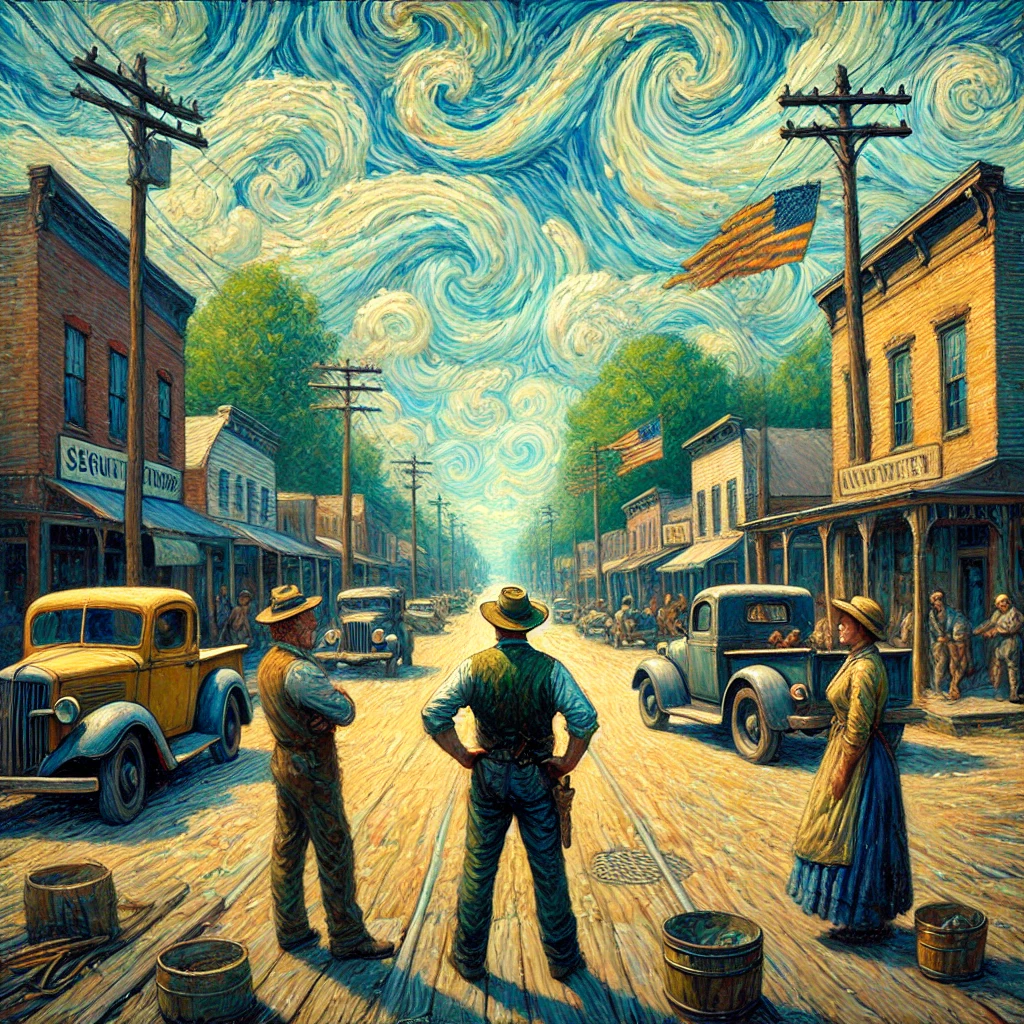
We Built This Town on Vinyl
By Tom Seest
At Sequatchie Crossing, we tell the stories of Sequatchie Crossing.
Please share this post with your friends, family, or business associates who may want help telling the stories of their legacy.
🎤 Audio Overview
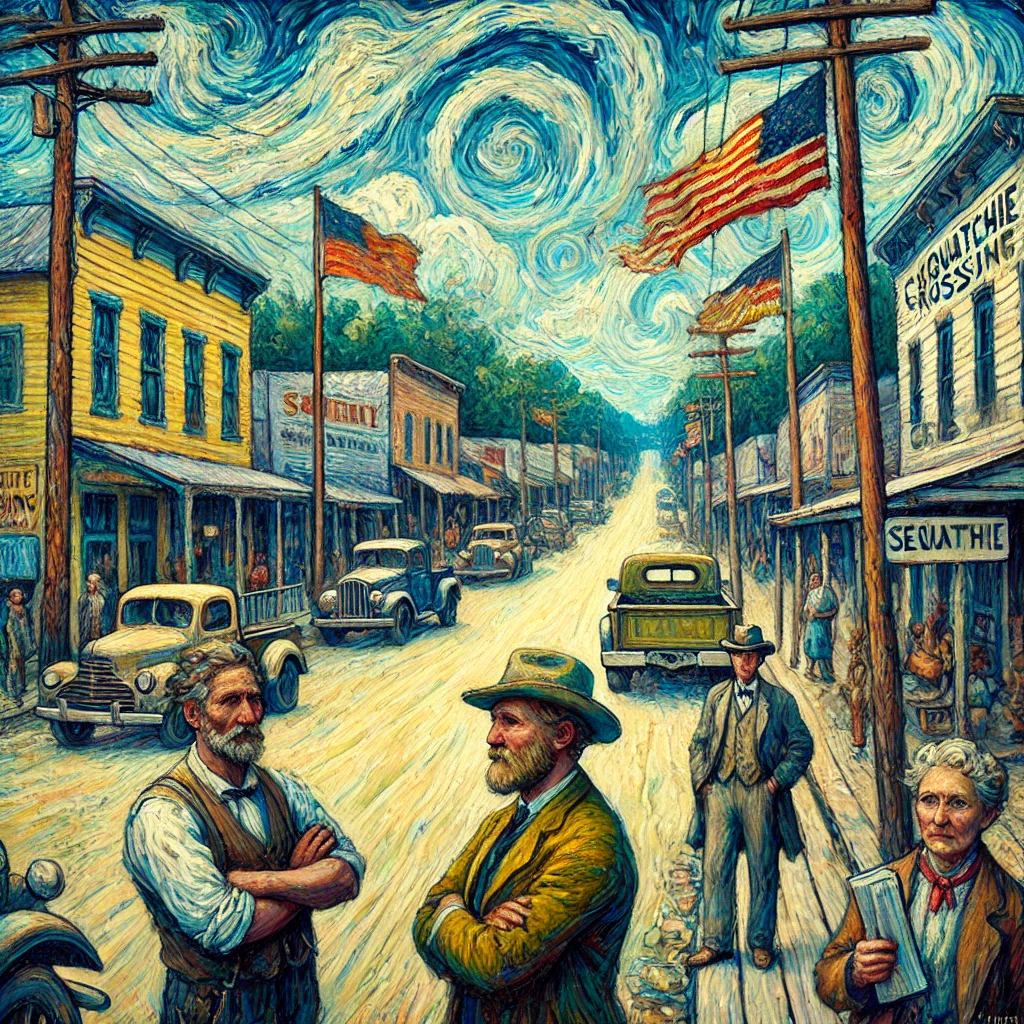
Boomers Defend the Banner Era
Act I – The Day the Wind Stopped Flapping
The banners had always been there.
Nobody in Sequatchie Crossing could quite remember the first one, the way you can’t remember the first cloud you ever saw or the first time the wind blew down Main Street carrying the smell of fried catfish from the diner. But the banners had long ago become part of the town’s weather.
They flapped.
They creaked.
They faded from proud red to a sort of dignified pink.
They curled at the edges like old campaign promises.
And most importantly, they announced things.
“GRAND OPENING.”
“YARD SALE THIS SATURDAY.”
“REVIVAL MEETING—ALL ARE WELCOME.”
“BAIT – LIVE & OTHERWISE.”
Act I – The Day the Wind Stopped Flapping
Some were stretched between telephone poles.
Some hung from storefront awnings.
Some leaned on metal frames that had outlived at least three local mayors.
And then one quiet Tuesday morning, the flapping stopped.
Not because the wind died.
Because the banners were gone.
At least the first few of them.
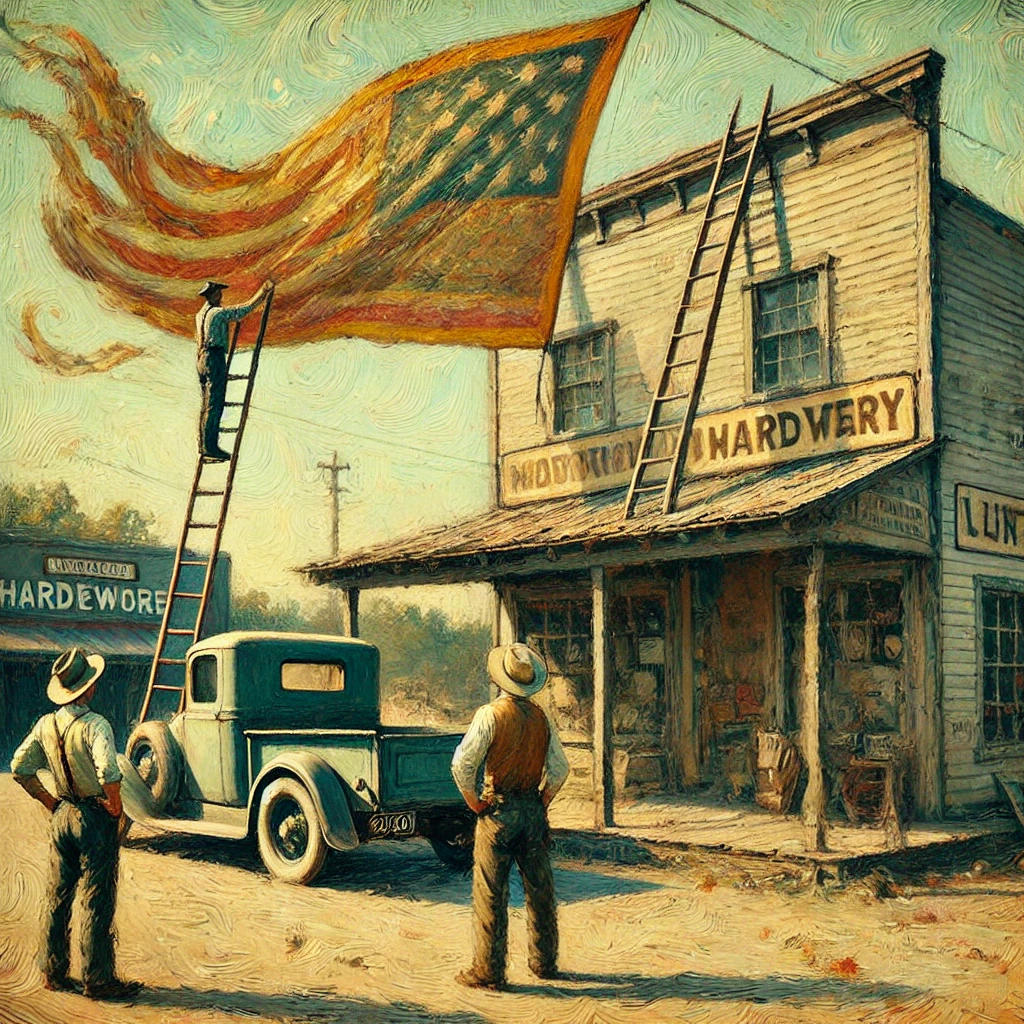
It started outside Earl’s Hardware, where for twelve years a banner had hung proudly over the parking lot that read:
SPRING SALE – STILL GOING.
The banner had originally been intended for a weekend promotion. But Earl—who believed deeply in the philosophy that if a banner was still readable, the sale was still valid—had simply never taken it down.
On Tuesday morning, two men from the town office arrived with a ladder, a clipboard, and a roll of orange enforcement stickers.
By lunchtime, the banner was gone.
By dinner, the town had opinions.
Act I – The Day the Wind Stopped Flapping
Act II – The Ordinance Nobody Remembered Passing
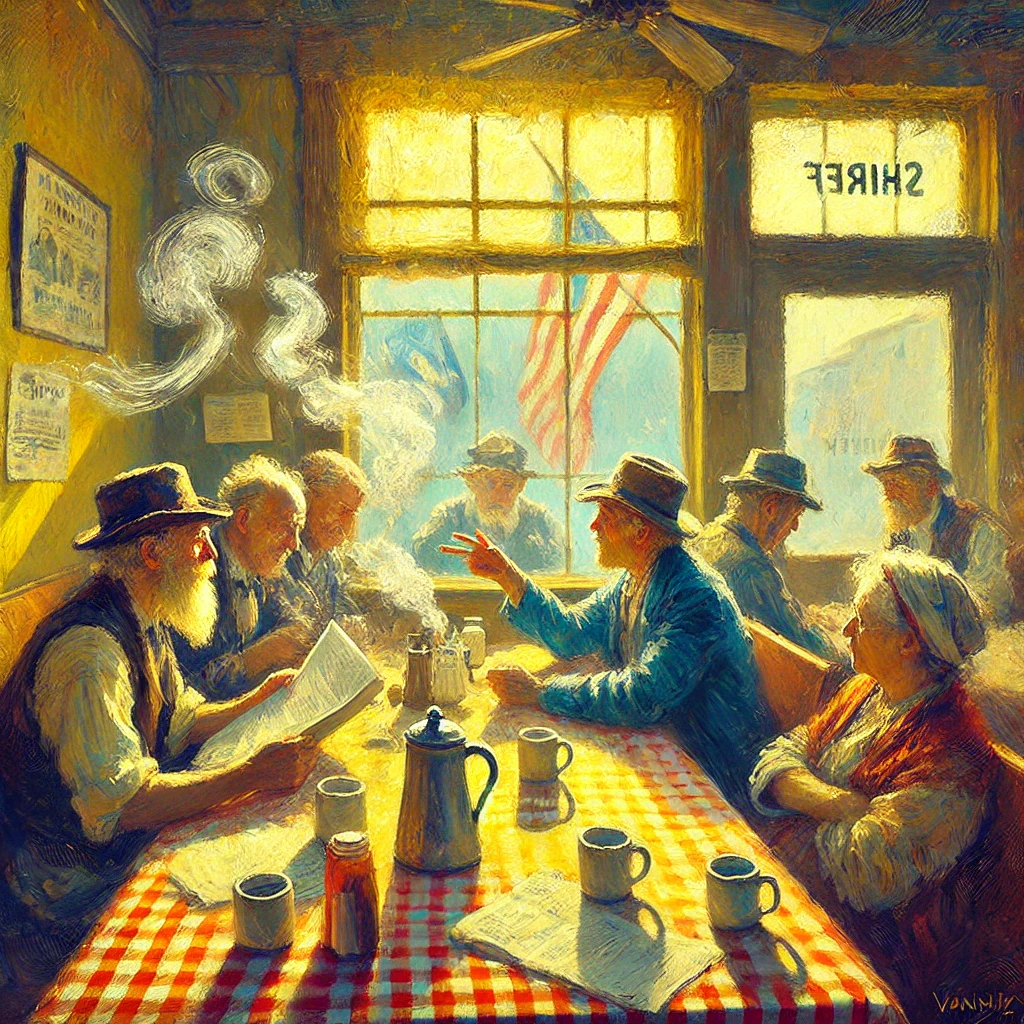
At the Bean & Biscuit Café, where news moved faster than Wi-Fi and twice as accurately, the banner situation dominated conversation.
Boot Barnes sat at the corner table stirring his coffee with the intensity of a man preparing to defend civilization itself.
“They took Earl’s banner,” he said.
The table went quiet.
Clovis Strickland adjusted his glasses.
“You mean the banner?”
“The one that’s been there since the George W. Bush administration,” Boot said.
“That banner predates three pothole repairs,” Mabel Dean added solemnly.
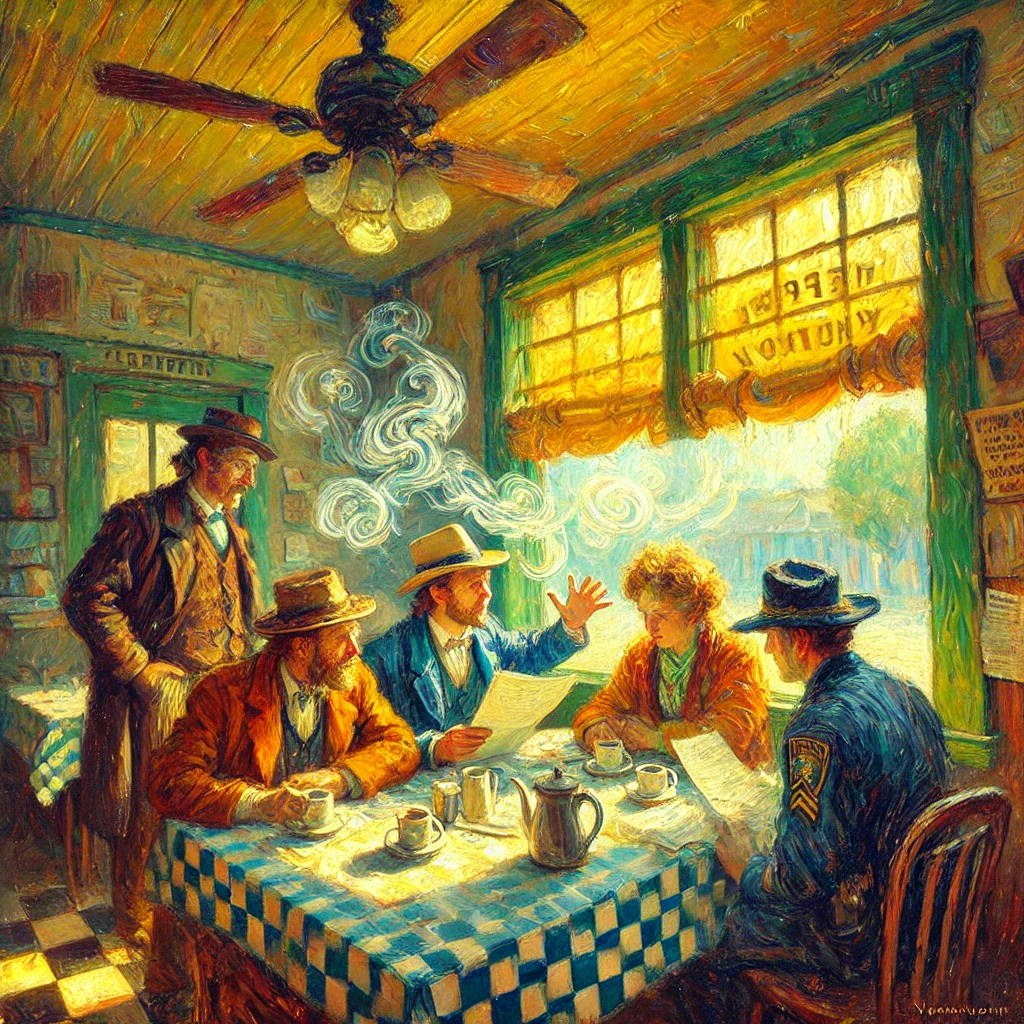
Clovis opened a thick binder that he carried everywhere, which locals believed contained either municipal records or recipes for historical revenge.
He flipped through the pages.
“Technically,” he said, “that banner qualifies as infrastructure.”
Sheriff Peeler leaned back in his chair.
Act II – The Ordinance Nobody Remembered Passing
“What’s the reason?” he asked.
Boot slapped a printed sheet onto the table.
“Sign ordinance.”
The words hung in the air like a thundercloud.
Mabel squinted.
“We have a sign ordinance?”
Clovis nodded slowly.
“Apparently we’ve had one for eleven years.”
Boot leaned forward.
“And apparently,” he said, “someone has decided that now is the time to enforce it.”
The table absorbed that information the way a sponge absorbs gasoline.
Dangerously.
Act II – The Ordinance Nobody Remembered Passing
Act III – The Boomers Hold a Meeting
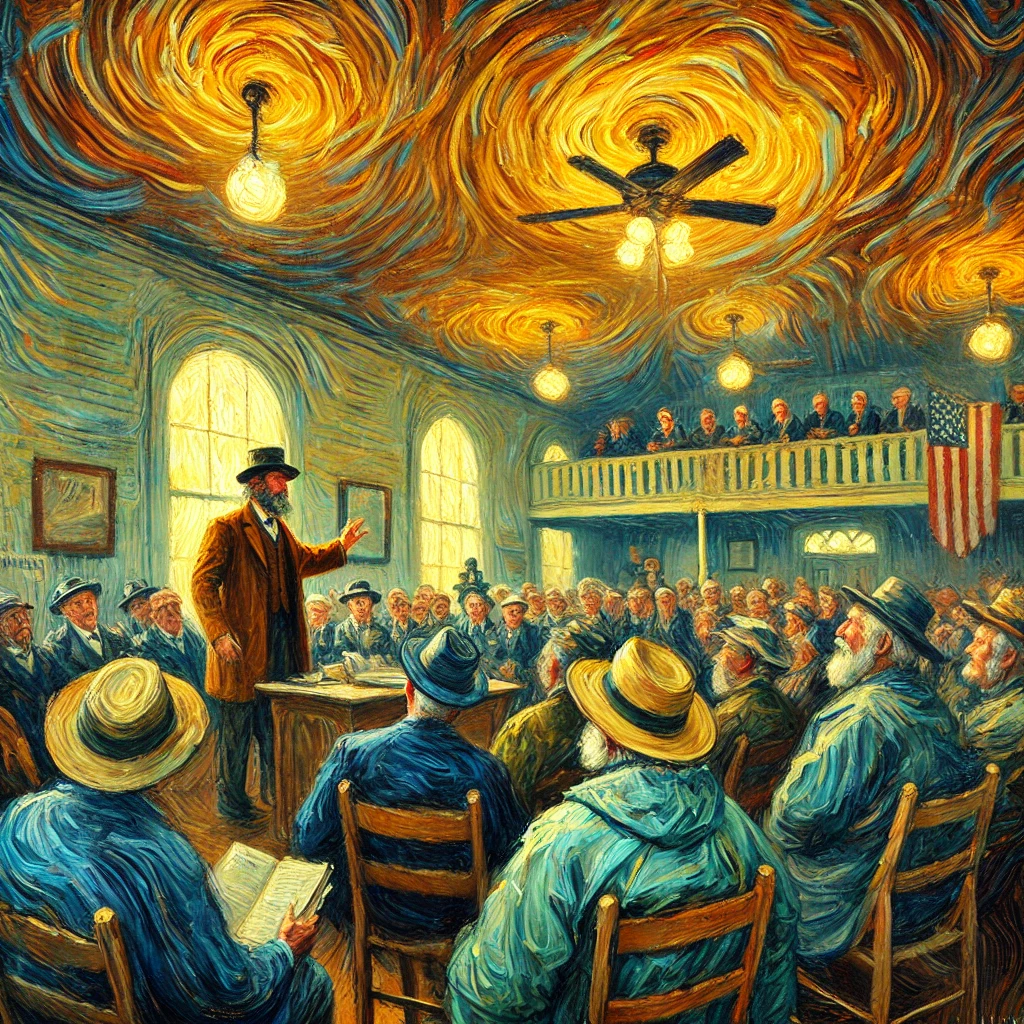
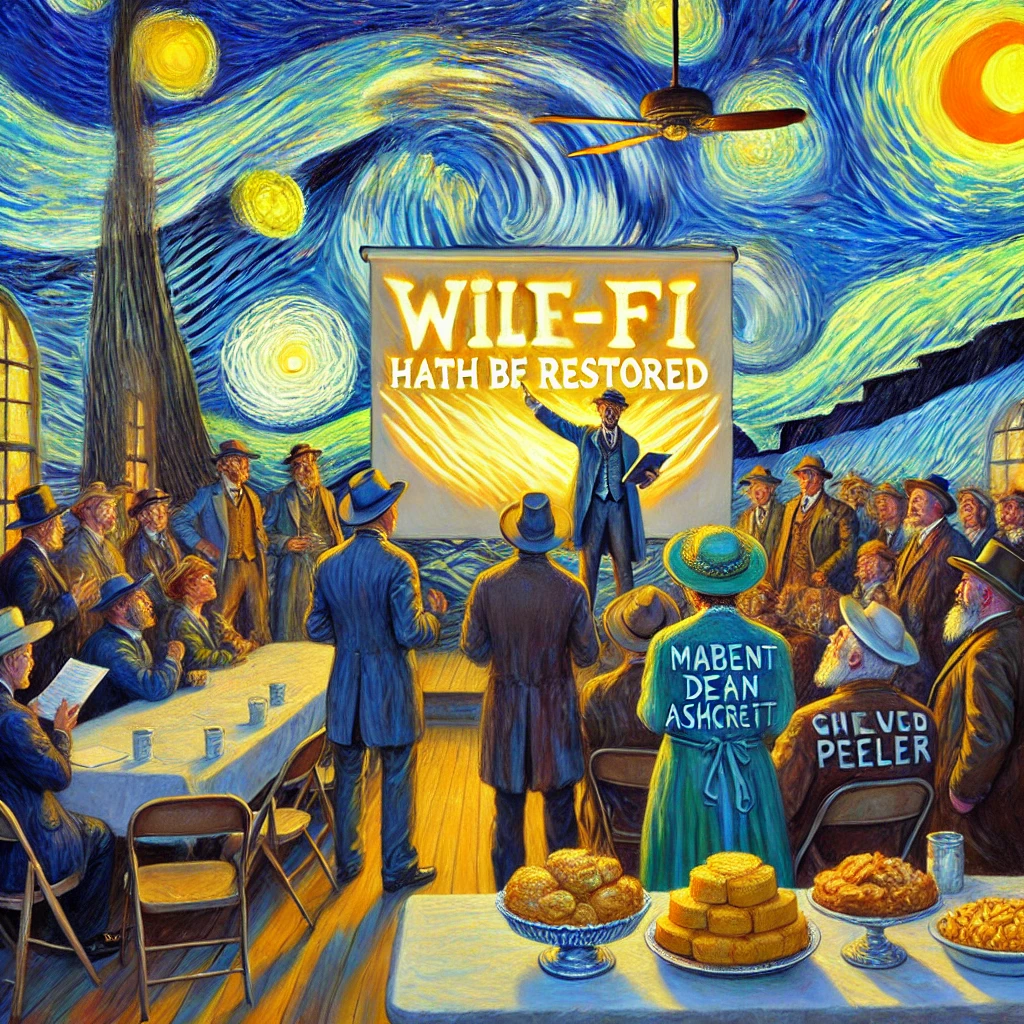
By Thursday evening, a meeting had formed in the Fellowship Hall.
Not an official meeting.
A generational meeting.
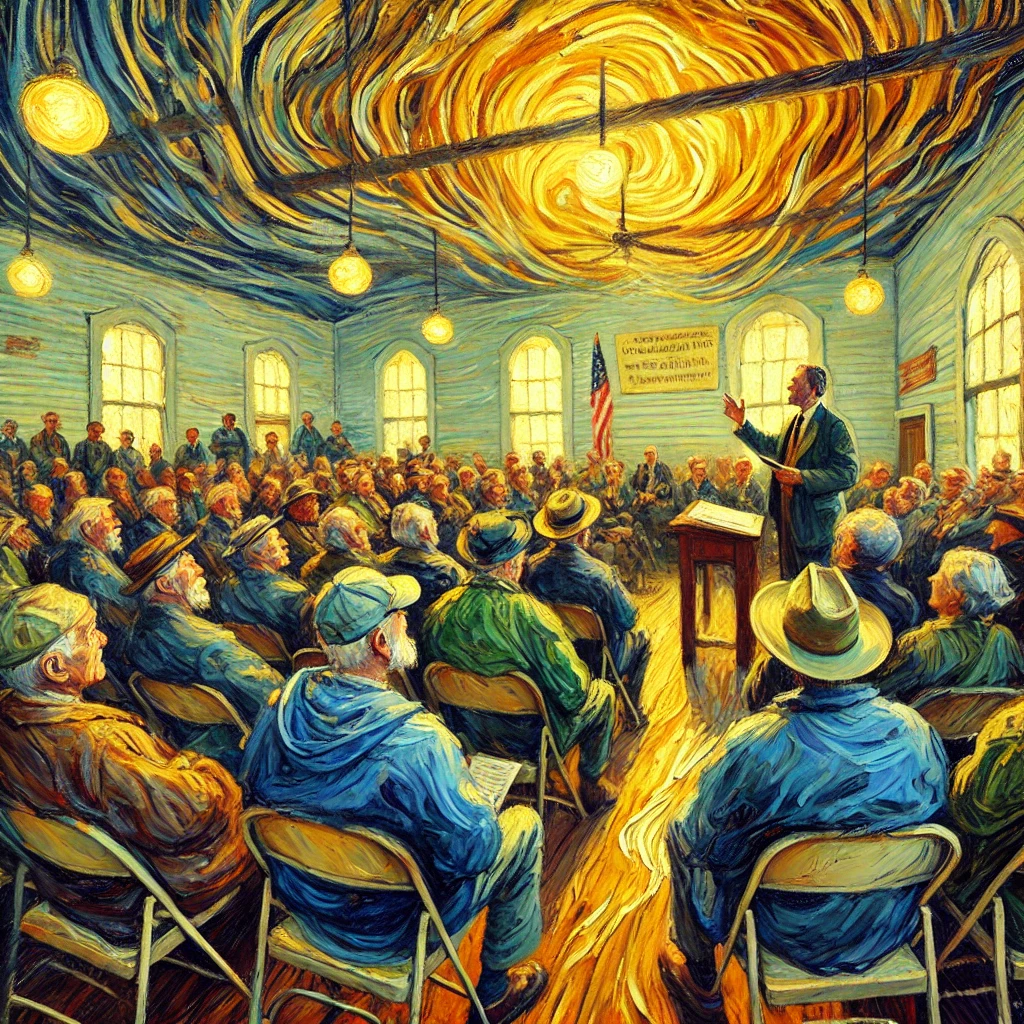
The Boomers had arrived.
Some wore windbreakers from golf tournaments that no longer existed.
Others wore baseball caps advertising farm equipment companies that had been bought out twice since.
Every chair filled.
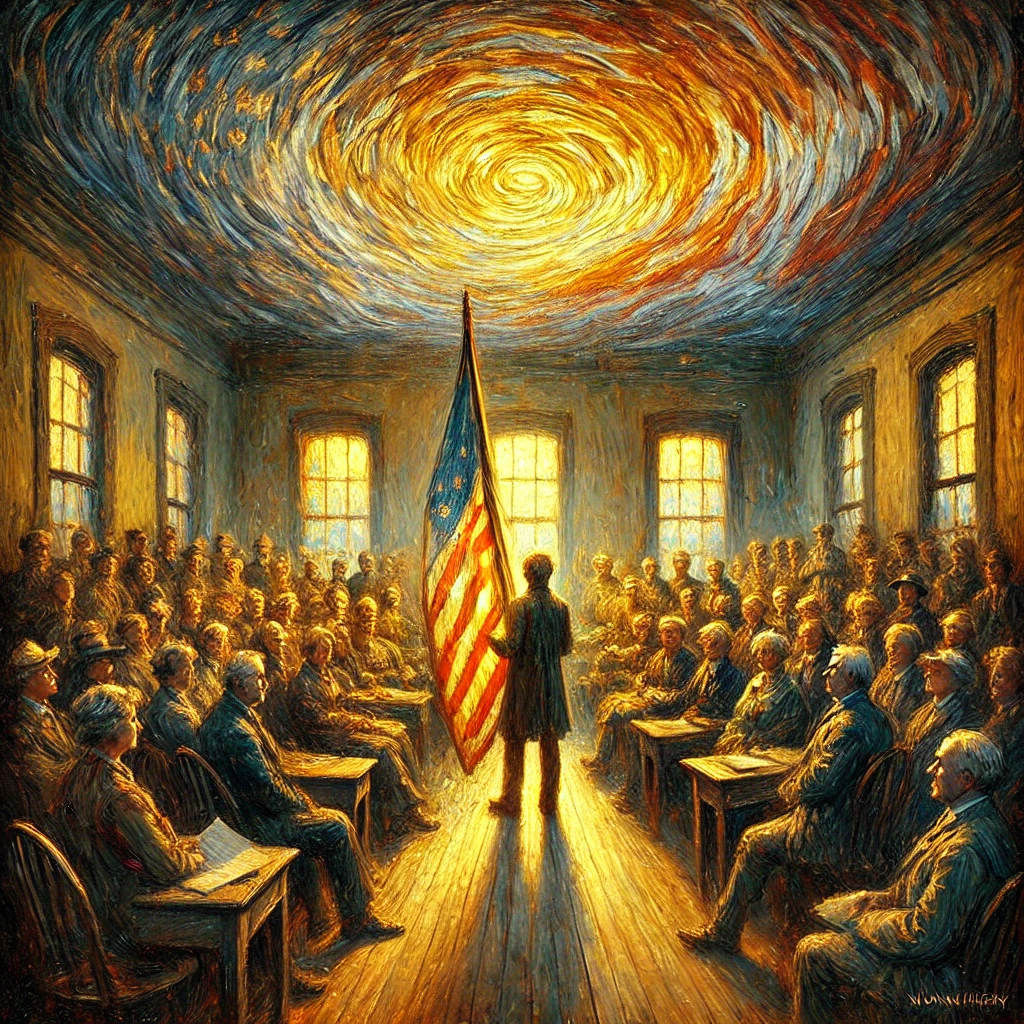
Boot stood at the front.
Behind him hung a banner that read:
COMMUNITY DISCUSSION NIGHT
Nobody could remember who put it up.
Nobody dared remove it.
Boot cleared his throat.
“Folks,” he said, “we need to talk about banners.”
Murmurs of agreement rippled through the room.
“These banners built this town,” he continued.
“They announced every fish fry, every church picnic, every fundraiser, every yard sale where someone tried to sell a treadmill they never used.”
Act III – The Boomers Hold a Meeting
A man in the back raised his hand.
“That treadmill sale put my grandson through band camp.”
Applause.
Boot nodded.
“Young people today,” he said carefully, “say everything happens online.”
Suspicious murmuring.
“But banners,” Boot continued, “are how you know something is happening right now.”
Clovis stood.
“Digital ads disappear when you scroll,” he said.
“But a banner,” he continued dramatically,
“flaps until the wind itself gets tired.”
The room erupted.
Act III – The Boomers Hold a Meeting
Act IV – The Millennials Offer an Opinion
Not everyone in town agreed.
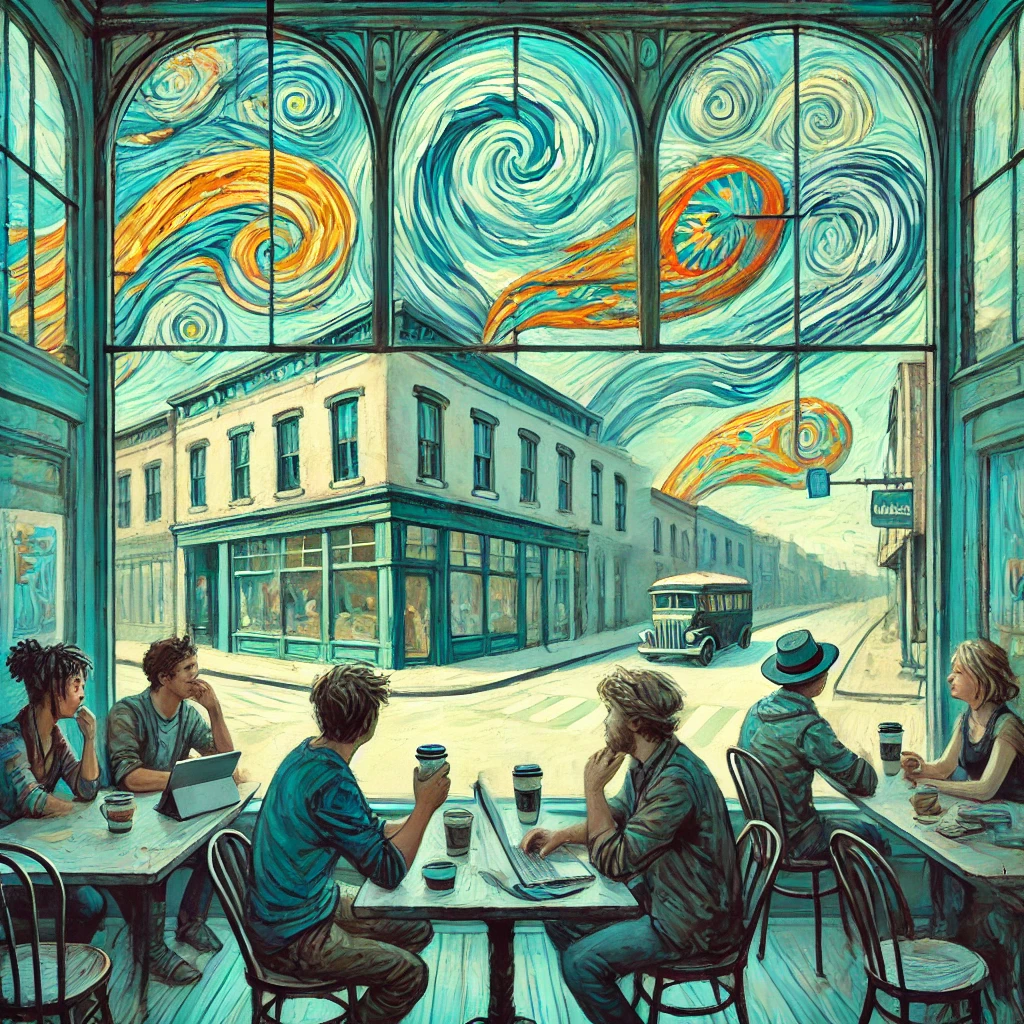
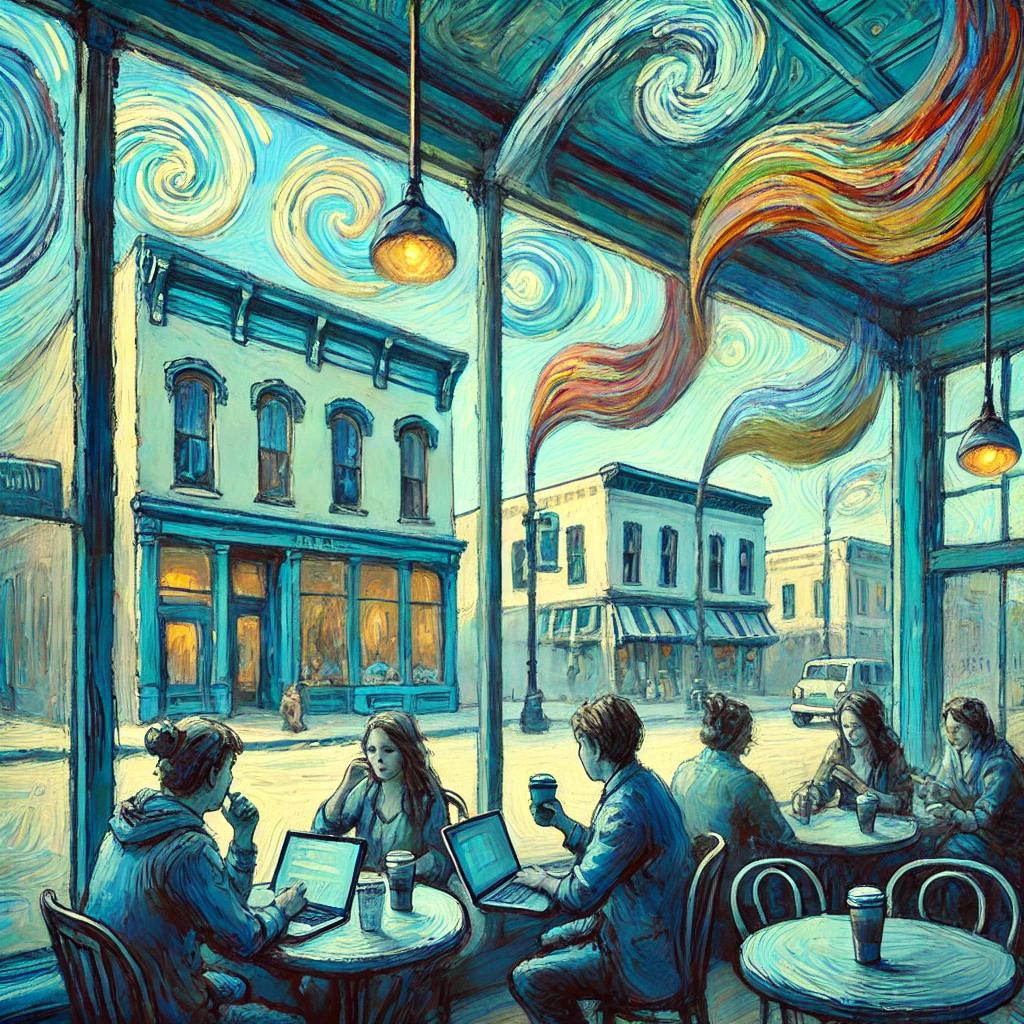
At the other end of Main Street, a group of younger residents gathered at a coffee shop that served drinks with foam designs resembling endangered birds.
The topic was also banners.
But from a different perspective.
“They look messy,” said Tyler, who had recently moved to town to start a remote design business.
“They block the view of the mountains,” added Jordan.
“And they’re not exactly… sustainable,” someone else said carefully.
Across the table, longtime resident Annie Lou—technically a Gen-X mediator in most town disputes—sipped her coffee.
“Let me ask you something,” she said.
Act IV – The Millennials Offer an Opinion
“When you moved here, how did you know there was a chili cookoff?”
Tyler thought.
“Well… there was a banner.”
“And how did you know the high school needed volunteers for the fall carnival?”
“Banner.”
“And how did you find the used kayak you bought last summer?”
Tyler paused.
“Banner.”
Annie Lou smiled.
“Welcome to Sequatchie Crossing.”
Act IV – The Millennials Offer an Opinion
Act V – Visibility vs. Order
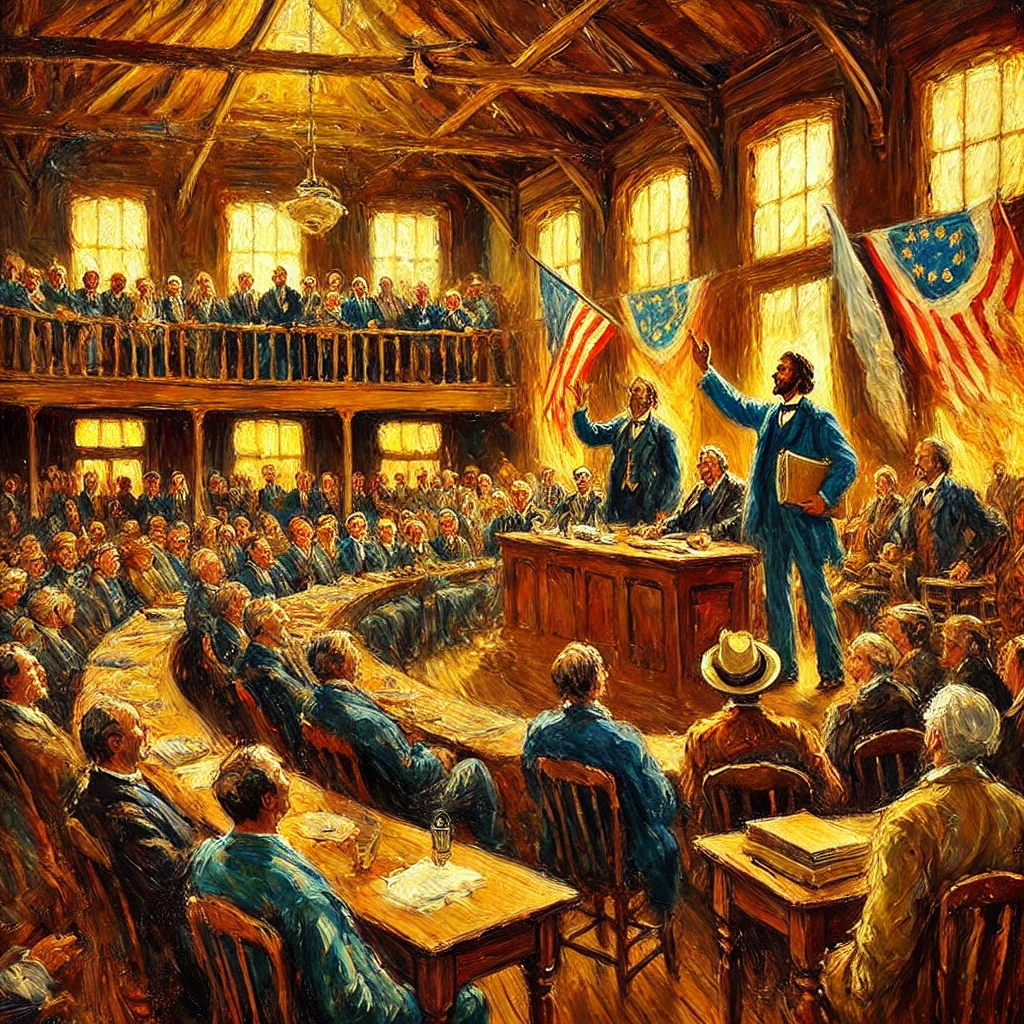
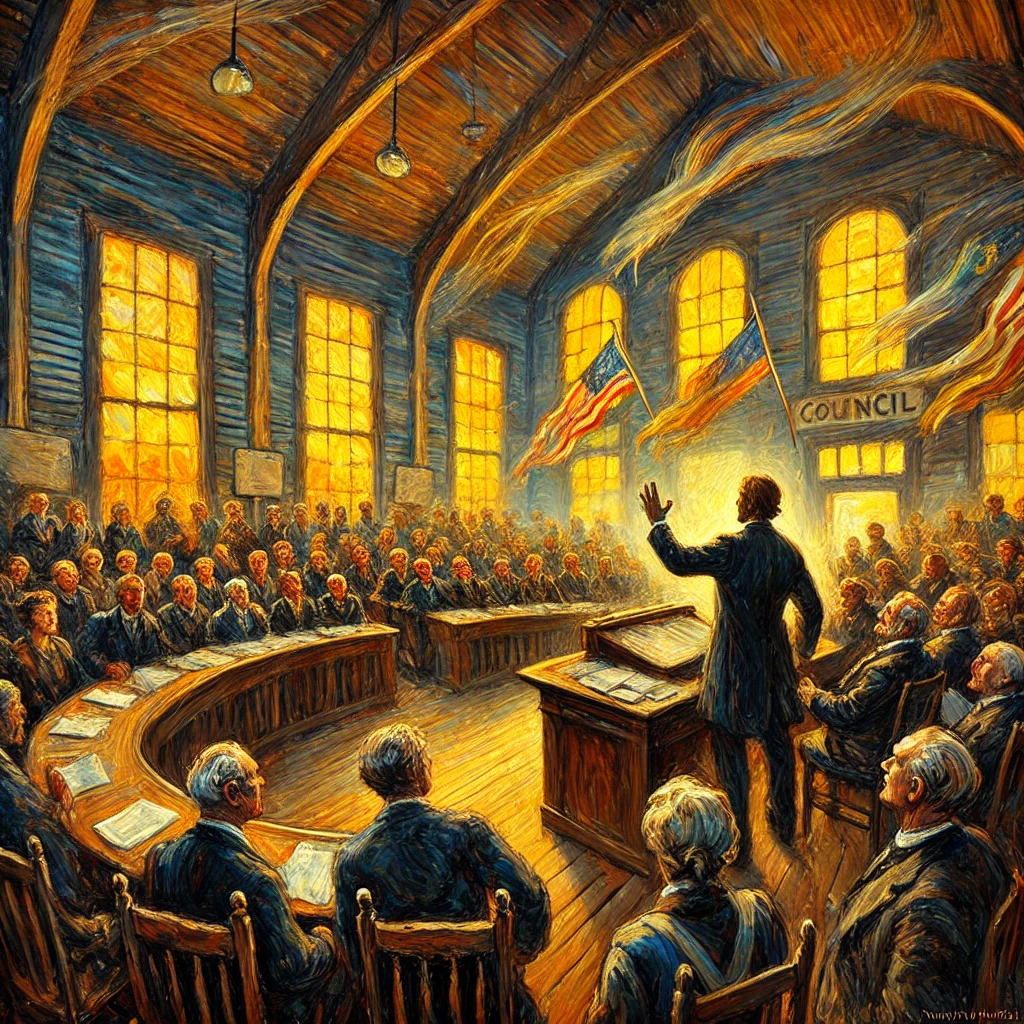
The town council meeting that followed was the most attended gathering since the Great Goat Revival of 2018.
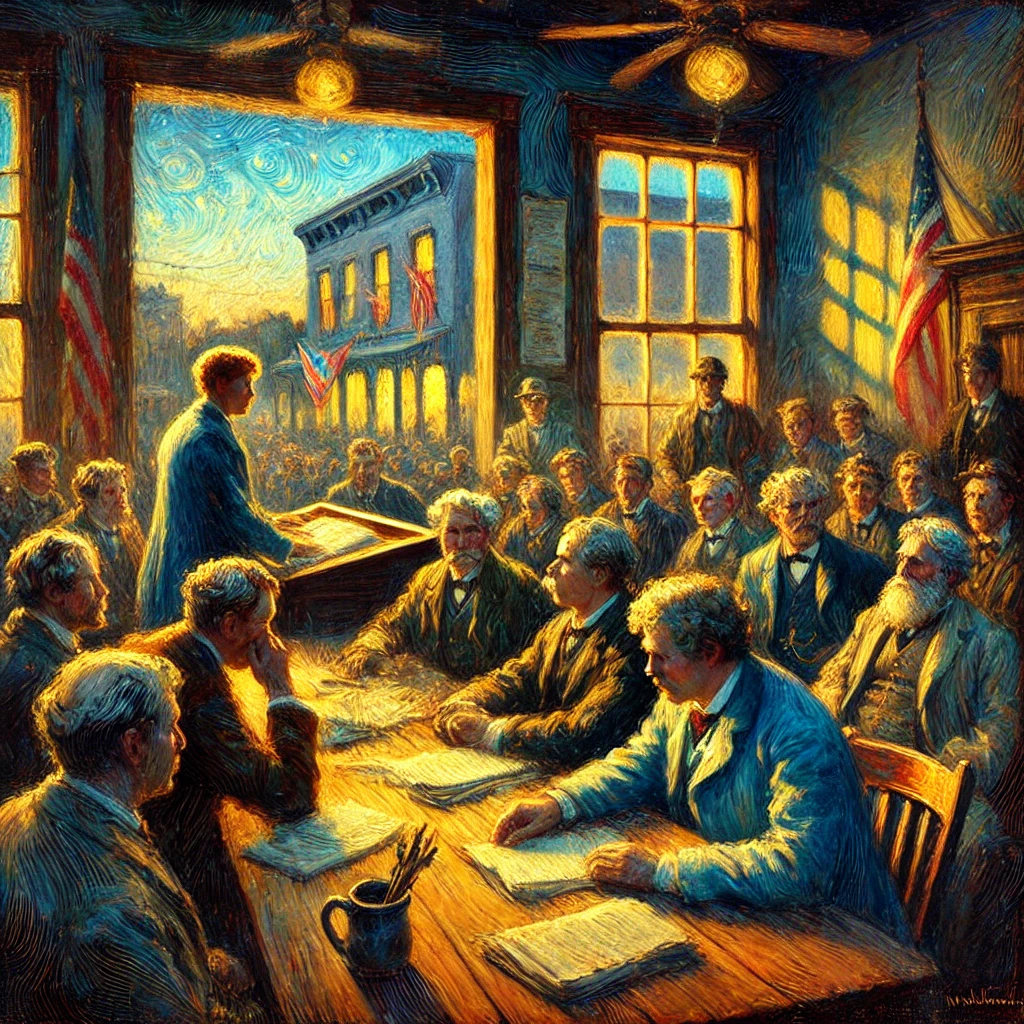
Mayor Pickett opened the floor.
“We are here,” he said, “to discuss signage.”
Boot rose first.
“When we were building businesses here,” he said,
“we didn’t have algorithms.”
Clovis stood beside him.
“We had ladders.”
Mabel added:
“And duct tape.”
Sheriff Peeler spoke carefully.
“Banners told people where life was happening,” he said.
“They weren’t advertising.”
“They were announcements of existence.”
A younger resident stepped forward.
Act V – Visibility vs. Order
“But the ordinance says portable signage isn’t allowed.”
Clovis lifted his binder.
“And yet,” he said, “for eleven years it existed peacefully.”
He paused.
“If something is ignored long enough,” he added thoughtfully,
“it stops being illegal and starts being tradition.”
A murmur rolled across the room.
Mayor Pickett leaned forward.
“So the real question is this,” he said.
“Are banners clutter…”
“…or culture?”
Act V – Visibility vs. Order
Act VI – The Banner Philosophy
The debate lasted three hours.
During that time, several truths emerged.
Boomers believed banners represented visibility.
They came from a time when businesses survived by physically announcing themselves.
If a banner hung outside your shop, people knew you were open.
If it flapped hard enough, people assumed the food inside was good.
If it faded slowly over ten years, people assumed the business was stable.
Younger residents believed something else.
They valued order.
Clean streets.
Clear sightlines.
Digital communication.
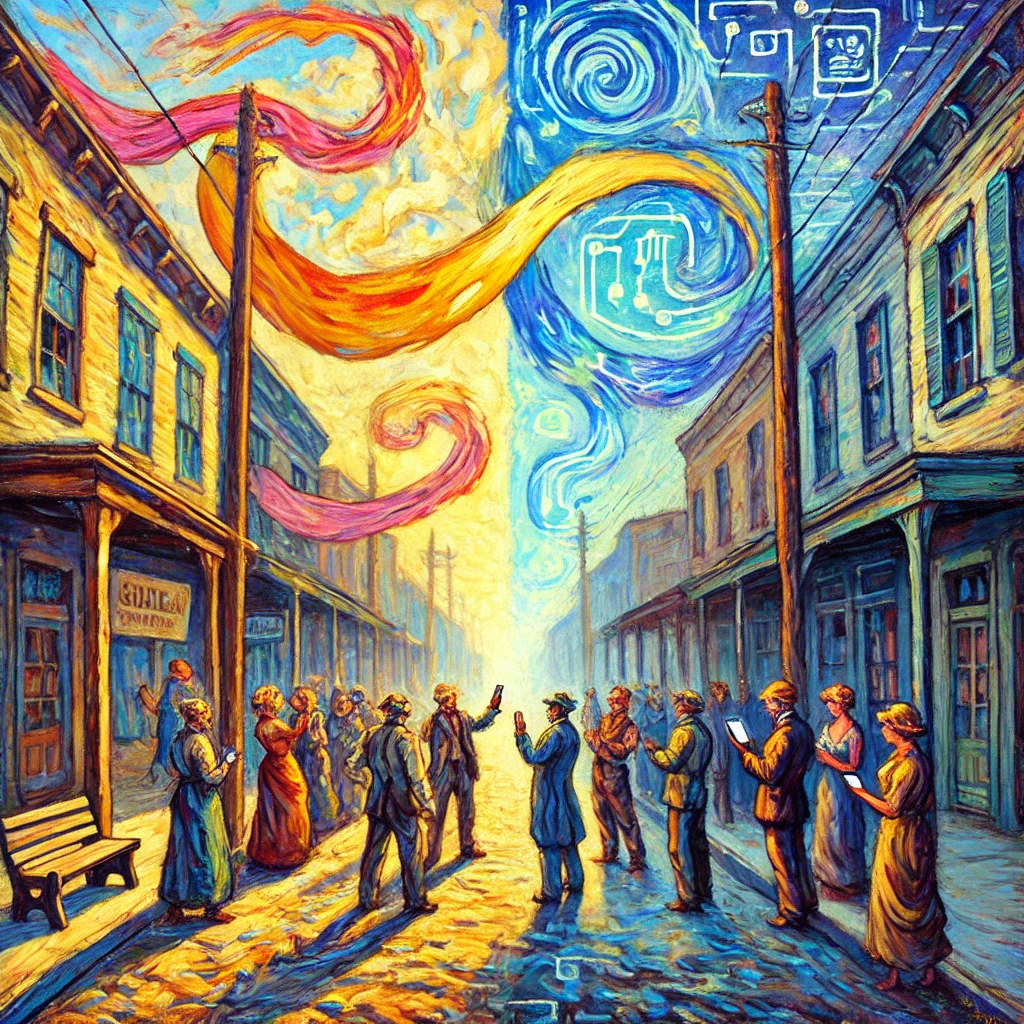
To them, information lived in phones.
To the Boomers, information lived in wind.
At one point, Boot summarized the generational difference perfectly.
“Young folks think visibility comes from search engines,” he said.
“But in this town,” he added,
“visibility comes from fabric.”
Act VI – The Banner Philosophy
Act VII – Earl Speaks
Finally, Earl from the hardware store stood up.
He had not spoken all evening.
But he carried the removed banner folded over his arm like a retired flag.
“This banner,” he said, holding it up,
“has survived six storms, two roof leaks, and a raccoon incident.”
The crowd nodded respectfully.
“It has sold paint,” Earl continued.
“It has sold nails.”
“And once,” he added proudly,
“it sold a lawn chair to a man who came here looking for the DMV.”
Laughter rolled through the room.
Earl cleared his throat.
“When that banner came down,” he said quietly,
“something else came down too.”
The room leaned in.
“The feeling that businesses here are allowed to exist loudly.”
Act VII – Earl Speaks
Act VIII – The Compromise Nobody Expected
Late that night, the council announced a proposal.
A new category.
“Heritage Signage.”
Banners that had existed for more than five years could remain—provided they were maintained.
Portable signs could still be restricted.
But the old ones…
…the ones that had become part of the town’s visual memory…
…would stay.
The Boomers approved.
The younger residents accepted.
And the town quietly realized something.
Tradition wasn’t about resisting change.
It was about remembering why something existed in the first place.
Act VIII – The Compromise Nobody Expected
Epilogue – The Banner Returns
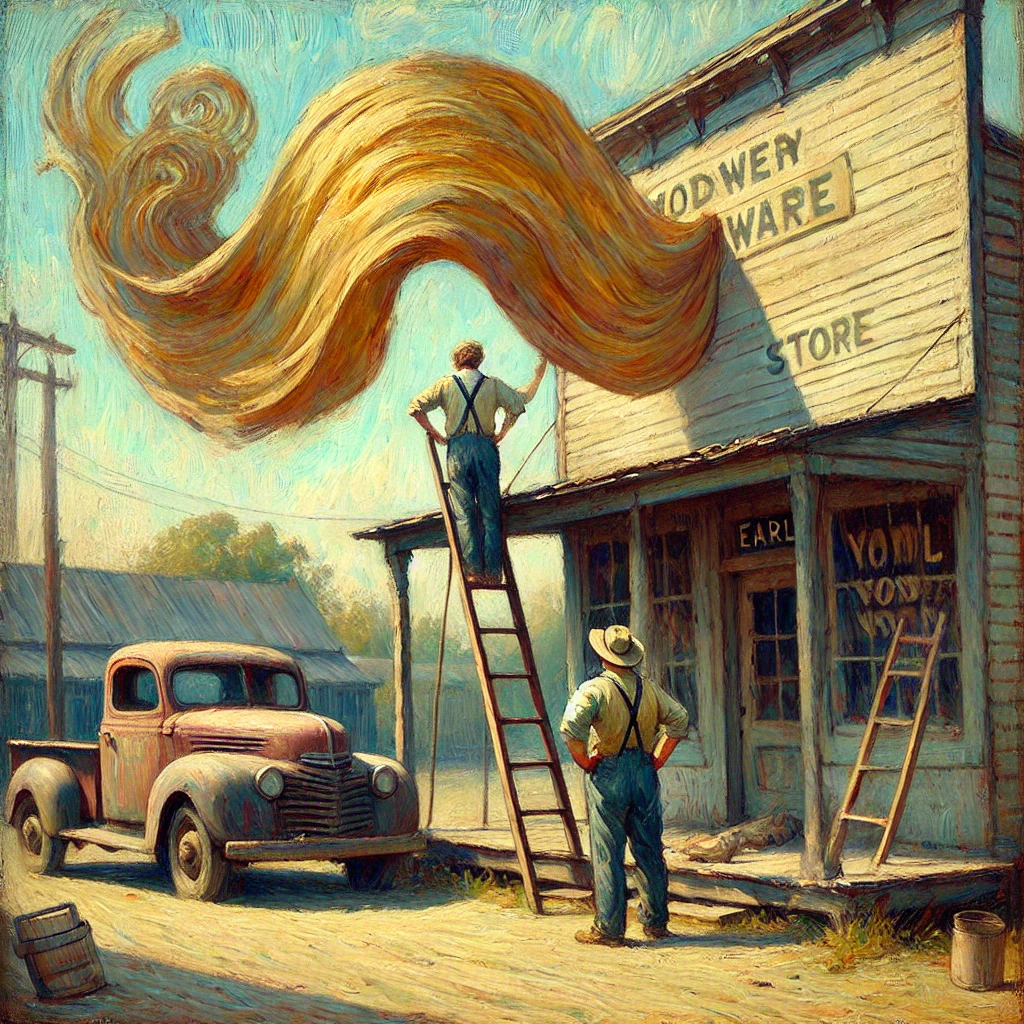
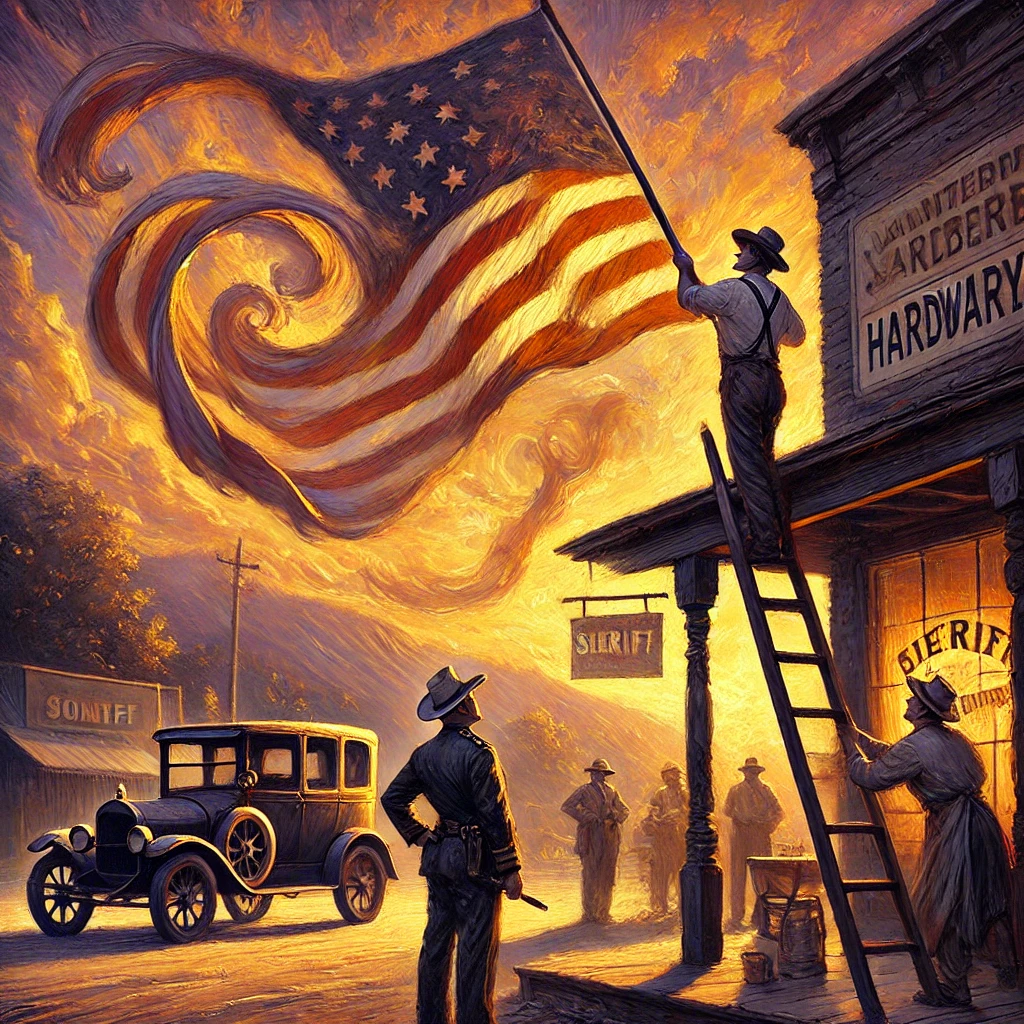
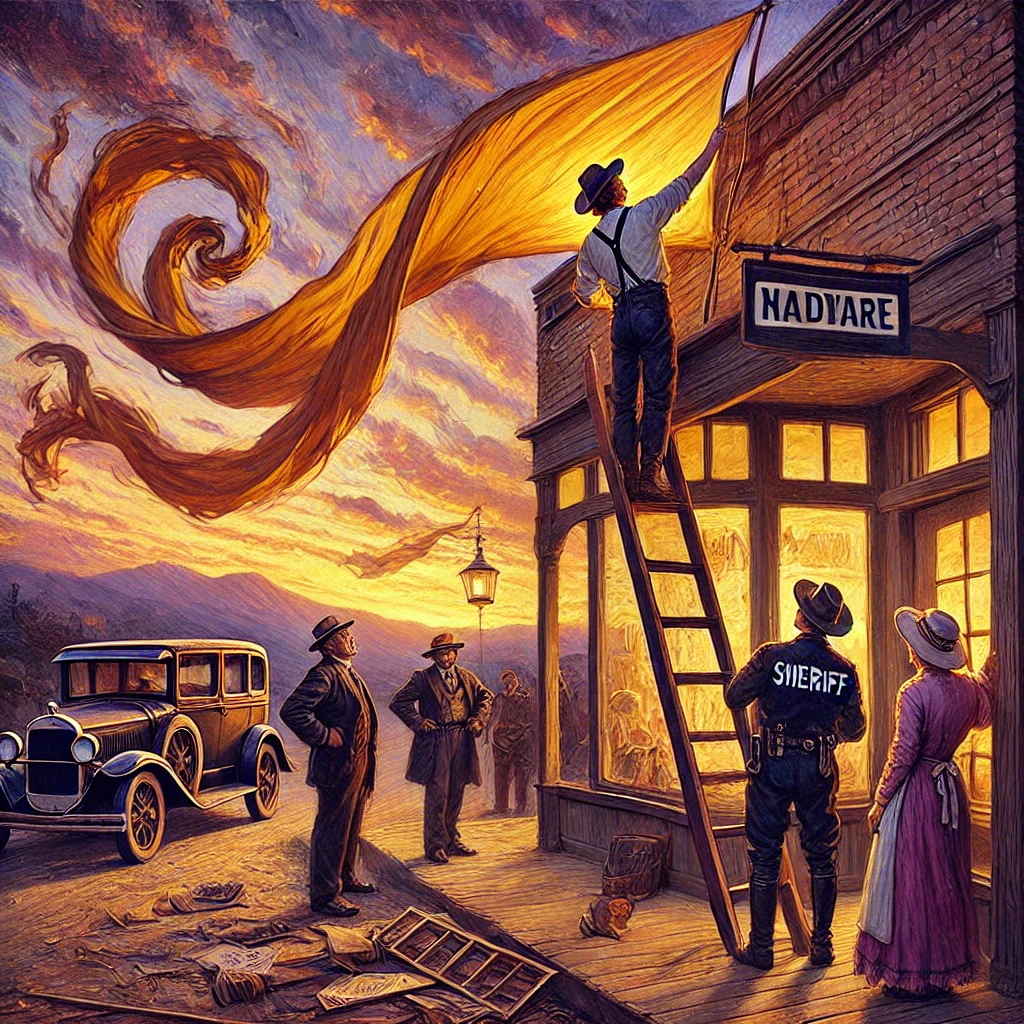
The next morning, Earl climbed a ladder.
Sheriff Peeler held the bottom.
Clovis supervised.
Boot handed up zip ties with ceremonial gravity.
Slowly, the banner went back up.
The wind caught it immediately.
It flapped once.
Then twice.
Then proudly.
And somewhere down Main Street, someone driving through town slowed down and read the words.
SPRING SALE – STILL GOING
They pulled into the parking lot.
Because banners, as it turns out, still work.
Epilogue – The Banner Returns
Closing Reflection
The Banner Era was never really about advertising.
It was about presence.
Boomers built businesses in a world where if people couldn’t see you, they couldn’t find you.
Visibility meant survival.
Younger generations built businesses in a world where visibility came from screens.
Both perspectives held truth.
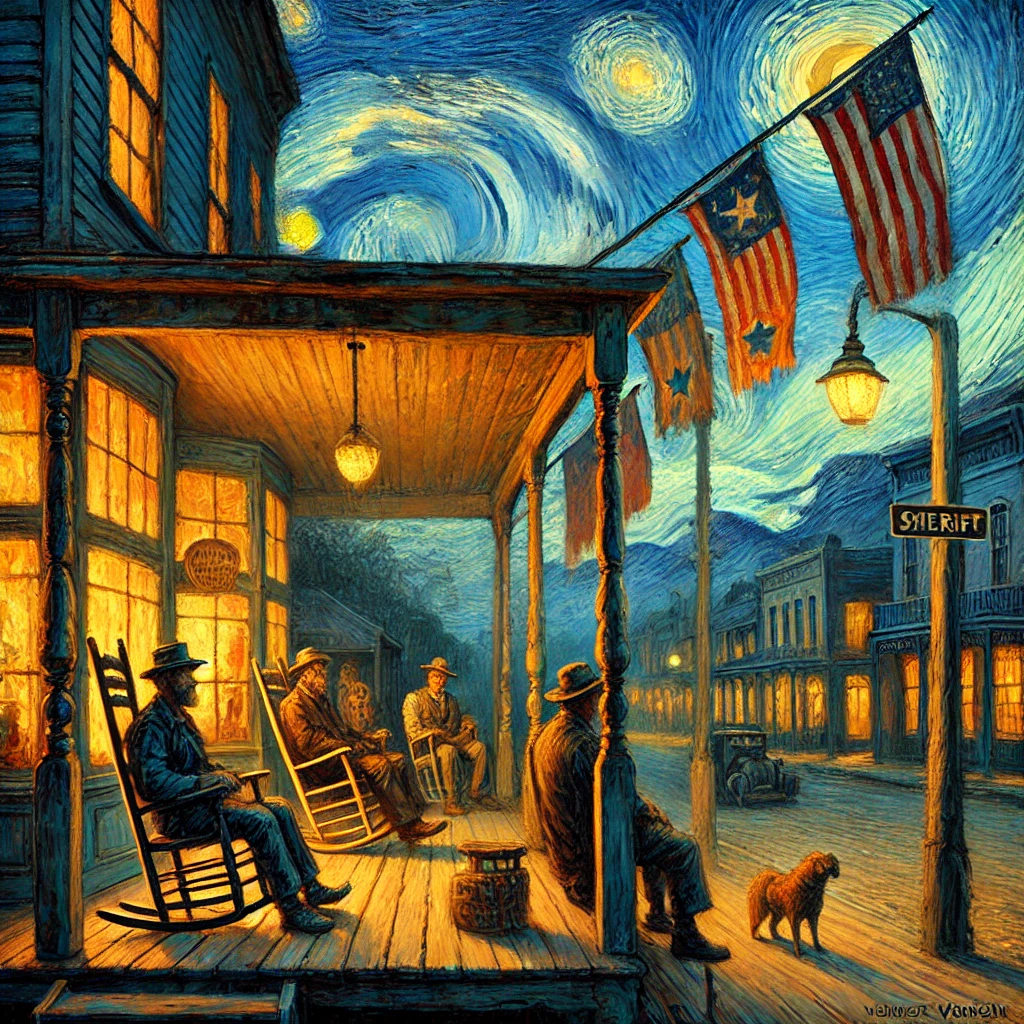
But in Sequatchie Crossing, where wind still moved through the valley and stories still traveled porch to porch…
…vinyl still had something to say.
Epilogue – The Banner Returns
Disclaimer
The events described in this story are fictional and belong to the ongoing world of Sequatchie Crossing, where ordinances appear without warning, banners develop emotional significance, and town meetings frequently resolve philosophical questions that nobody intended to ask.
Any resemblance to real towns, real signage debates, or real arguments about whether duct tape counts as structural reinforcement is purely coincidental—though entirely plausible.
Disclaimer – Boomers Defend the Banner Era
Real Places Behind the Ruckus – From The Dunlap Directory
Real Places Behind the Ruckus – From The Dunlap Directory
Yes, this story was fictional; even the parts that weren’t true. These places? Absolutely real. Stop by, support local, and keep the Wi-Fi away from livestock:
- Coops Creek Veterinary Clinic
- Carolyn’s Acres Farm
- Heritage Painting
- Campbell’s Tree Service
- Appalachian Armament LLC
- Dunlap Plumbing Company
- Home Town Inn Soddy-Daisy
- Lucky 13 Transport
- Dolce In Dunlap
- Accident Attorneys Greer, Swafford & Adams
- American Trust Cash Advance
- Dunlap Farmers Market
- Hardee’s Dunlap
- Local Depot
- Walker’s Dirt Work LLC

Real Places Behind the Ruckus – From The Dunlap Directory
At Sequatchie Crossing, we tell the stories of Sequatchie Crossing.
Please share this post with your friends, family, or business associates who may want help telling the stories of their legacy.

0 Comments