


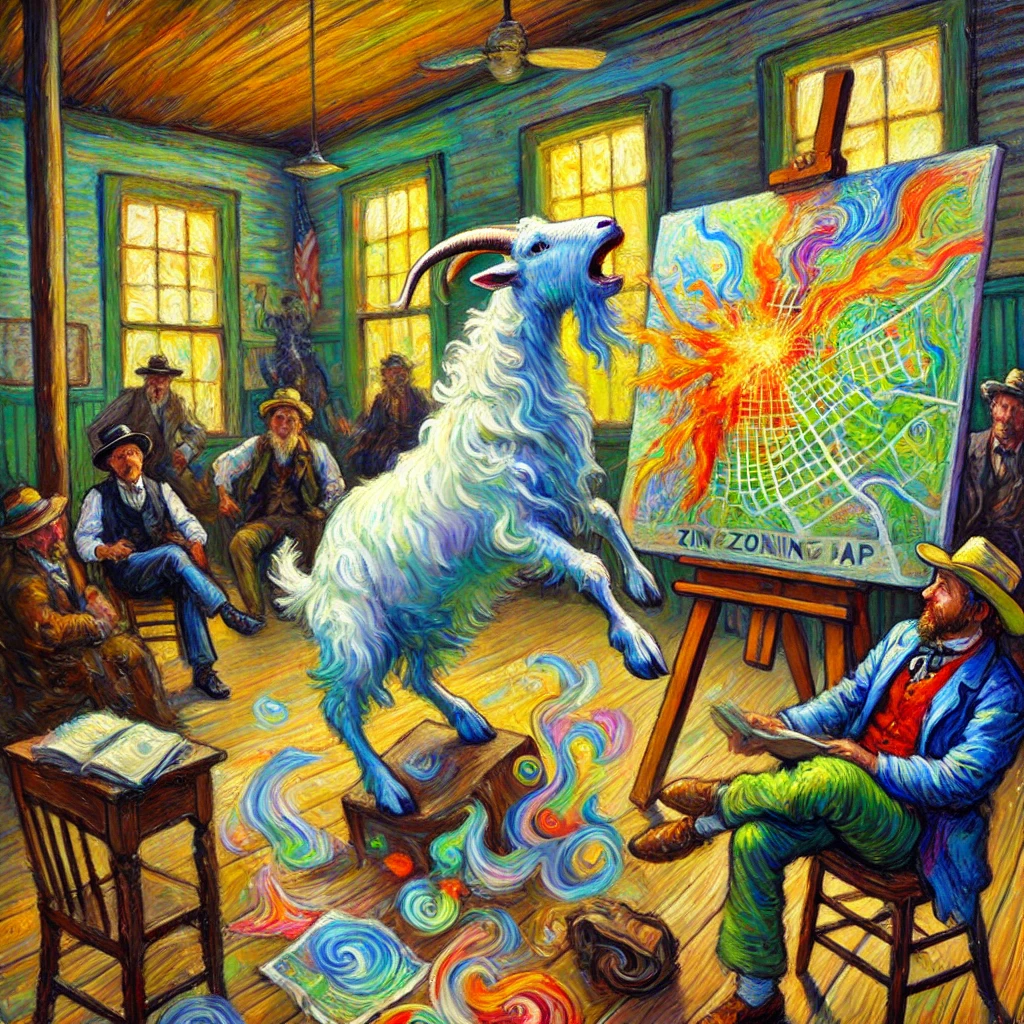
Some Boundaries Are More Digestible Than Others
By Tom Seest
At Sequatchie Crossing, we tell the stories of Sequatchie Crossing.
Please share this post with your friends, family, or business associates who may want follow the news from Sequatchie Crossing.
🎤 Audio Overview
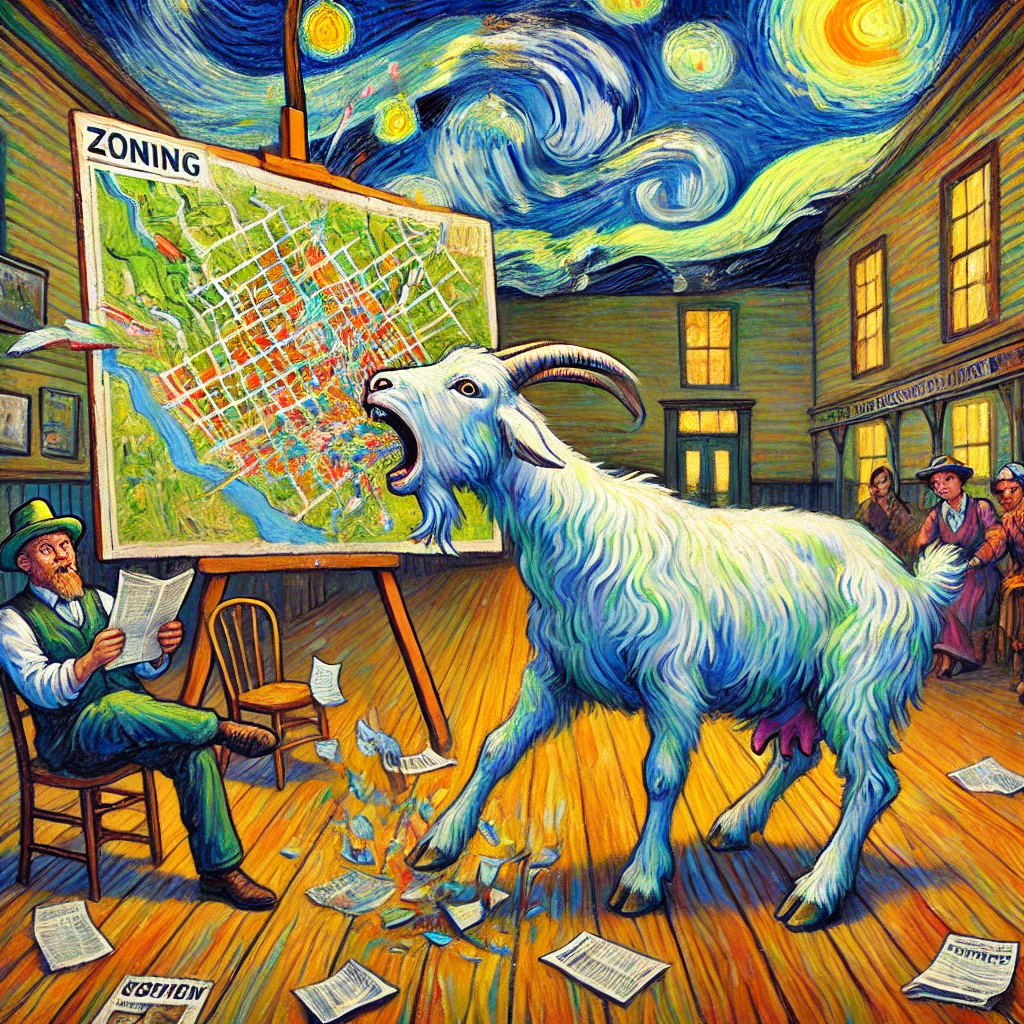
The Goat That Ate the Zoning Map
Act I – The Map That Meant Everything (Until It Didn’t)
It began, as most things in Sequatchie Crossing do, with a meeting that no one planned to attend and everyone planned to complain about later.
The Zoning Board had called a “Special Session,” which in town terms meant two things:
- Something mildly important was happening.
- It would be discussed with the seriousness of a constitutional convention and the outcomes of a bake sale.
Inside Town Hall, folding chairs creaked under the weight of suspicion, thermoses, and long memories. Sheriff Peeler stood near the back wall with his arms folded, not because he expected trouble, but because he preferred to look like he did.
At the front, a large laminated map—freshly printed and smelling faintly of toner and ambition—was mounted on an easel. It showed the entirety of Sequatchie Crossing in bold, color-coded zones:
- Residential (Soft Yellow)
- Commercial (Optimistic Blue)
- Agricultural (Confident Green)
- “Mixed Use” (Confusing Purple)
And, in a small section near the creek:
- “Pending Review” (Uneasy Gray)
Clovis Strickland sat in the second row with a legal pad, three pens, and the quiet intensity of a man who had been waiting his entire life for a zoning map to arrive.
Boot Barnes lounged in the back, one leg hooked over the chair in front of him, eating something from a paper bag that no one had confirmed was food.
Mabel Dean Ashcroft sat near the aisle, clutching her purse like it contained either baked goods or classified information.
“Now,” began Chairman Wexler, adjusting his glasses and tapping the map, “this here represents the future of Sequatchie Crossing.”
There was a murmur. Not agreement. Not disagreement. Just… murmuring. The town’s native language.
“This zoning framework,” he continued, “will help us grow responsibly. It will bring order. Structure. Clarity.”
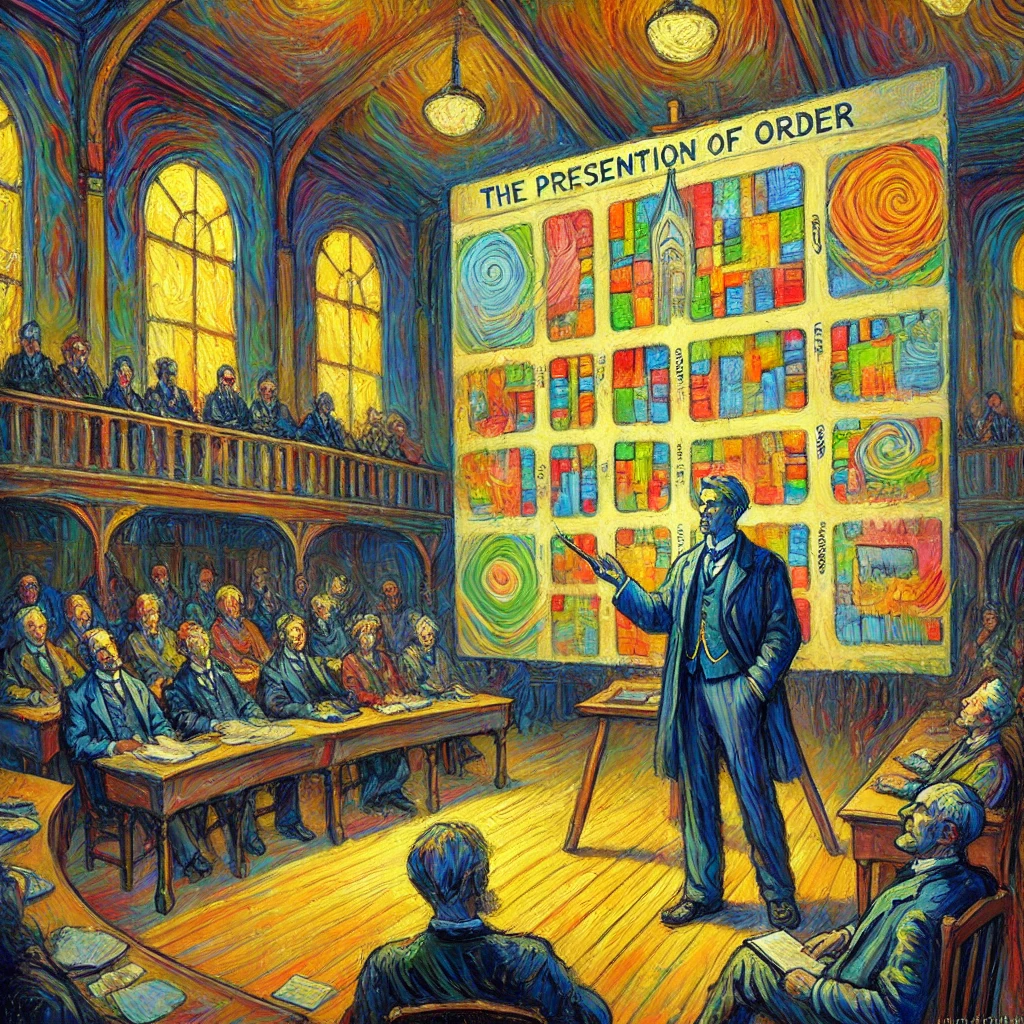
Act I – The Map That Meant Everything
At the word clarity, someone coughed in a way that suggested they had never once seen clarity successfully applied in this town.
Clovis raised his hand immediately.
“Yes, Clovis?”
“Is the purple zone transitional or experimental?”
“It’s… flexible,” Wexler said carefully.
“That’s not a zoning term.”
“It is now.”
Boot leaned forward. “Can I put a tire fire business in the purple?”
“No,” Wexler said.
“What about a tire fire museum?”
“Also no.”
Boot nodded. “You’re limiting culture.”
Mabel leaned over to the woman beside her. “He’d charge admission. That’s the worst part.”
Chairman Wexler pressed on. “Now, once this map is approved, it becomes the official zoning authority for all land use decisions.”
That’s when the door opened.
And everything changed.
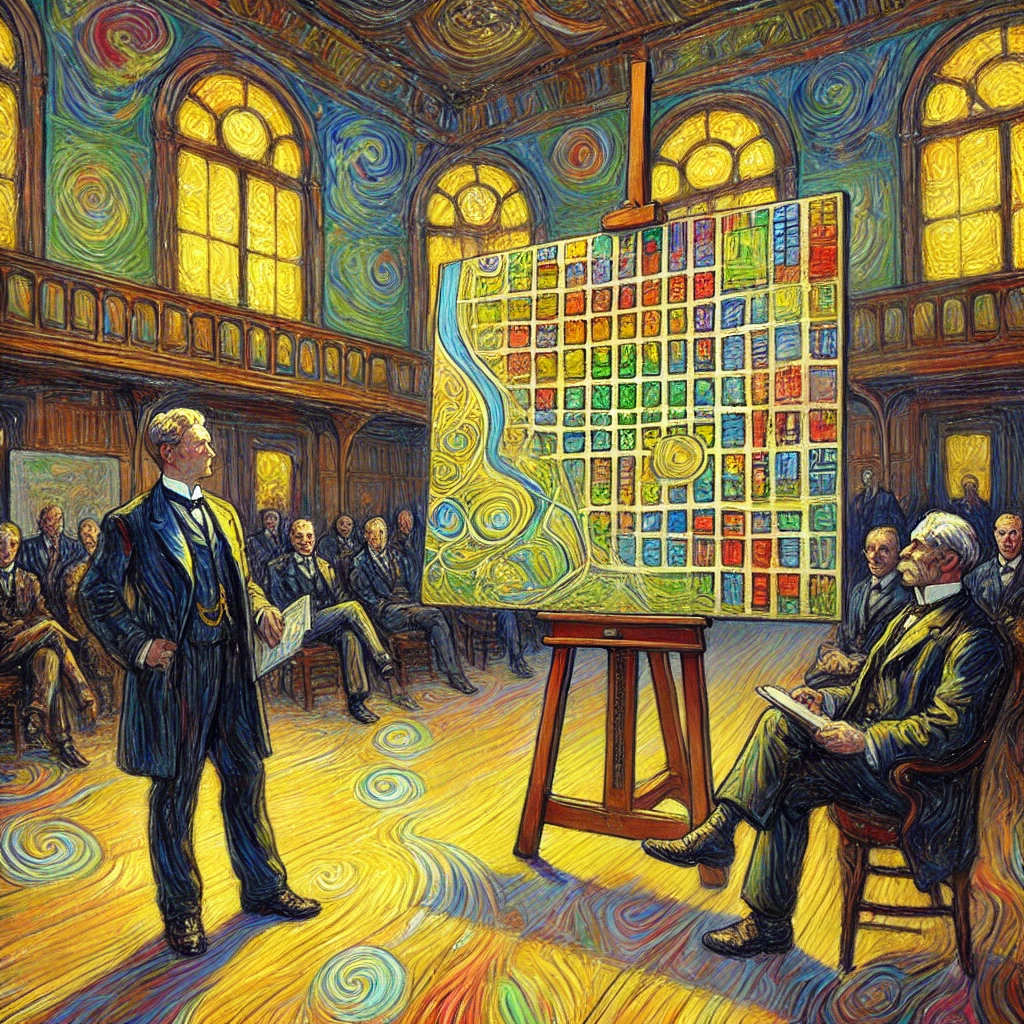
Act I – The Map That Meant Everything
Act II – The Entrance of Unregulated Livestock
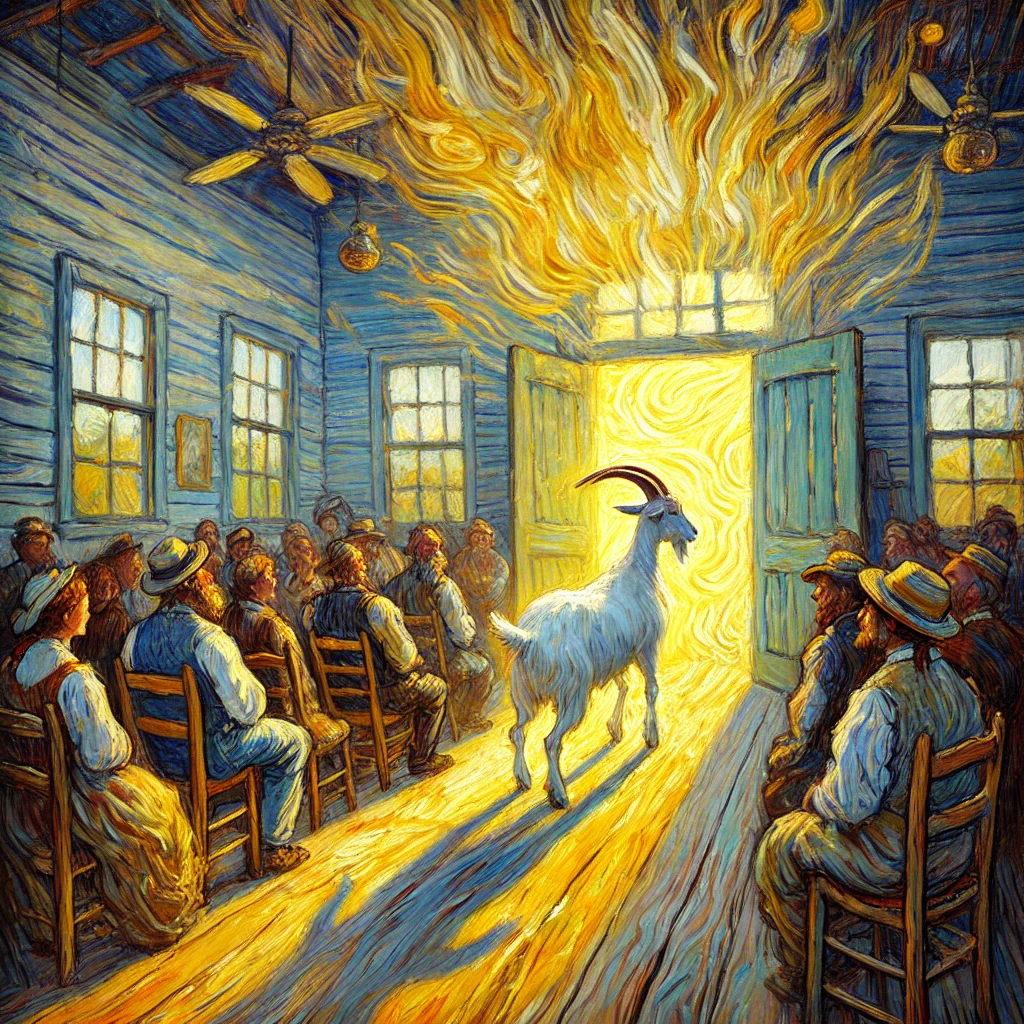
The goat did not enter quietly.
It entered like it owned the room.
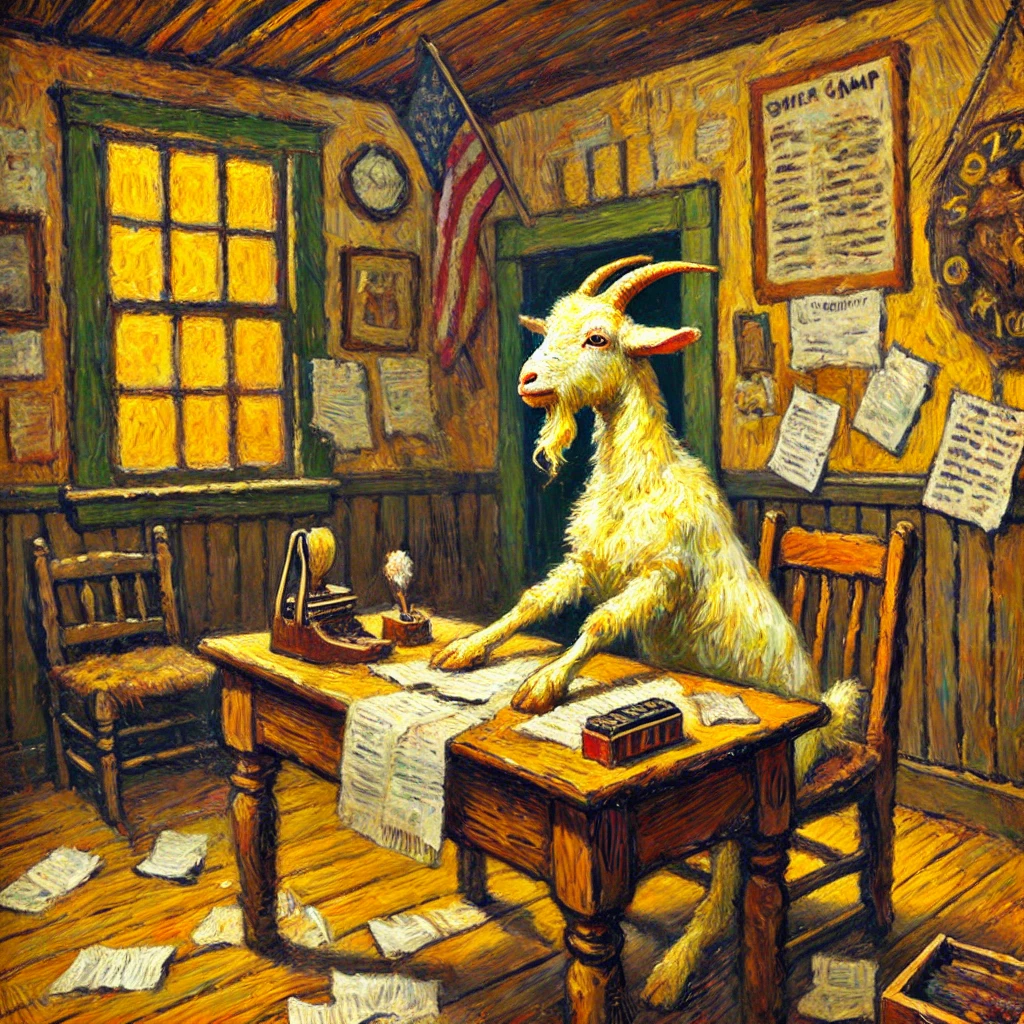
White, broad-shouldered, and wearing an expression that suggested both curiosity and long-standing grievances, the goat stepped through the doorway and paused just long enough for everyone to notice it.
“Whose goat is that?” someone whispered.
“Don’t look at me,” Boot said immediately. “I’m off goats.”
“That’s not true,” Mabel said.
“It’s mostly true.”
The goat sniffed the air, surveyed the room, and then—without hesitation—walked straight down the center aisle toward the zoning map.
Clovis stood halfway up. “That animal is not authorized to be here.”
Sheriff Peeler didn’t move. “Let’s see what it wants.”
The goat reached the front, looked at the map, and tilted its head.
Chairman Wexler blinked. “Well… that’s… unexpected.”
Then the goat did something no one had planned for.
It took a bite.
Act II – The Entrance of Unregulated Livestock
Act III – The Consumption of Authority
There are moments in a town’s history when time slows down.
This was not one of them.
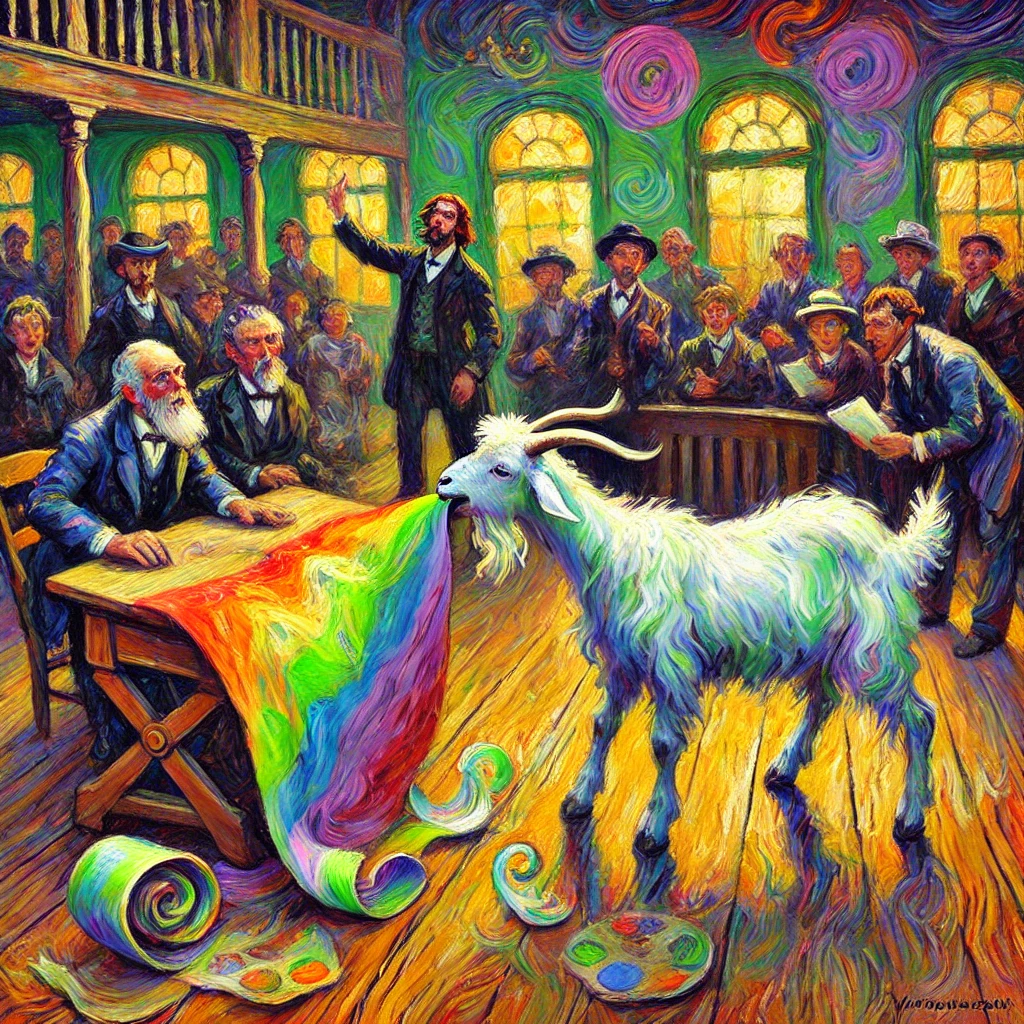
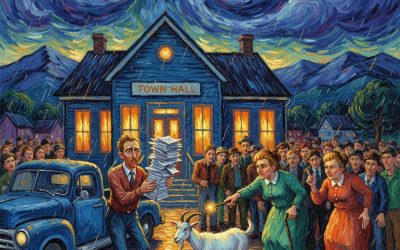
The goat tore a clean, confident strip from the bottom corner of the zoning map—right through the “Agricultural” section—and chewed thoughtfully.
The room erupted.
“Stop it!” Wexler shouted, lunging forward.
“Don’t antagonize it!” someone yelled.
“That’s laminated!” Clovis cried, horrified.
Boot stood up, impressed. “That’s commitment.”
The goat chewed, swallowed, and then went back for more.
This time, it targeted the “Mixed Use” purple zone.
“Well,” Boot said, “at least somebody understands it.”
Clovis rushed forward, waving his legal pad. “You cannot consume regulatory documents!”
The goat paused, stared directly at Clovis, and took another bite.
There was something deeply intentional about it.
“Is it… targeting sections?” Mabel asked.
Sheriff Peeler stepped closer. “Looks like it.”
“Why would it do that?” someone asked.
Boot shrugged. “Maybe it don’t believe in zoning.”
The goat moved upward, chewing through commercial, then residential, then—after a brief hesitation—paused at the “Pending Review” section.
The room held its breath.
The goat sniffed it.
Then ate it entirely.
Act III – The Consumption of Authority
Act IV – The Aftermath of an Eaten Future
Silence.
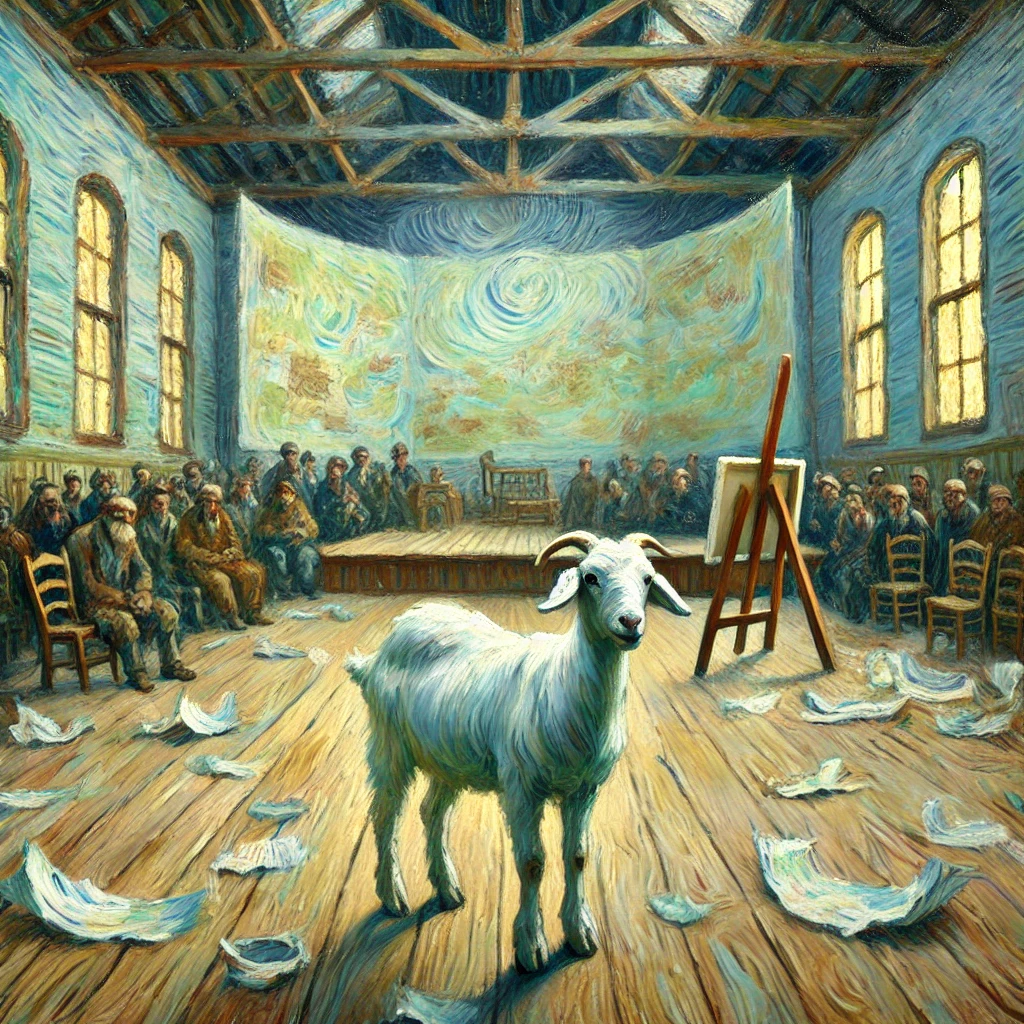
Where there had once been a map, there was now… a partial outline, a few dangling scraps, and a goat chewing with the calm satisfaction of a job well done.
Chairman Wexler stood frozen.
Clovis sat down slowly, his legal pad slipping from his hands.
“That,” he said, voice hollow, “was the finalized zoning draft.”
Boot nodded. “Well, not anymore.”
Mabel fanned herself with a church bulletin. “I always said that map looked hungry.”
Sheriff Peeler approached the goat.
“Alright,” he said calmly. “You’ve made your point.”
The goat looked at him.
There was a long pause.
Then it stepped back, turned, and walked out the door the same way it came in.
No one stopped it.
No one followed.
It simply left.
Taking the future of Sequatchie Crossing with it.
Act IV – The Aftermath
Act V – The Reinterpretation of Boundaries
By the next morning, the town had divided into three distinct camps:
1. The “It Was an Accident” Group
They believed the goat had wandered in randomly and done what goats do.
“These things happen,” they said. “You can’t blame a goat for being a goat.”
2. The “It Was Intentional” Group
They believed the goat had acted with purpose.
“That animal knew exactly what it was doing,” Clovis insisted. “It targeted key sections. That’s not random.”
3. The “It Was Symbolic” Group
Led primarily by Boot Barnes.
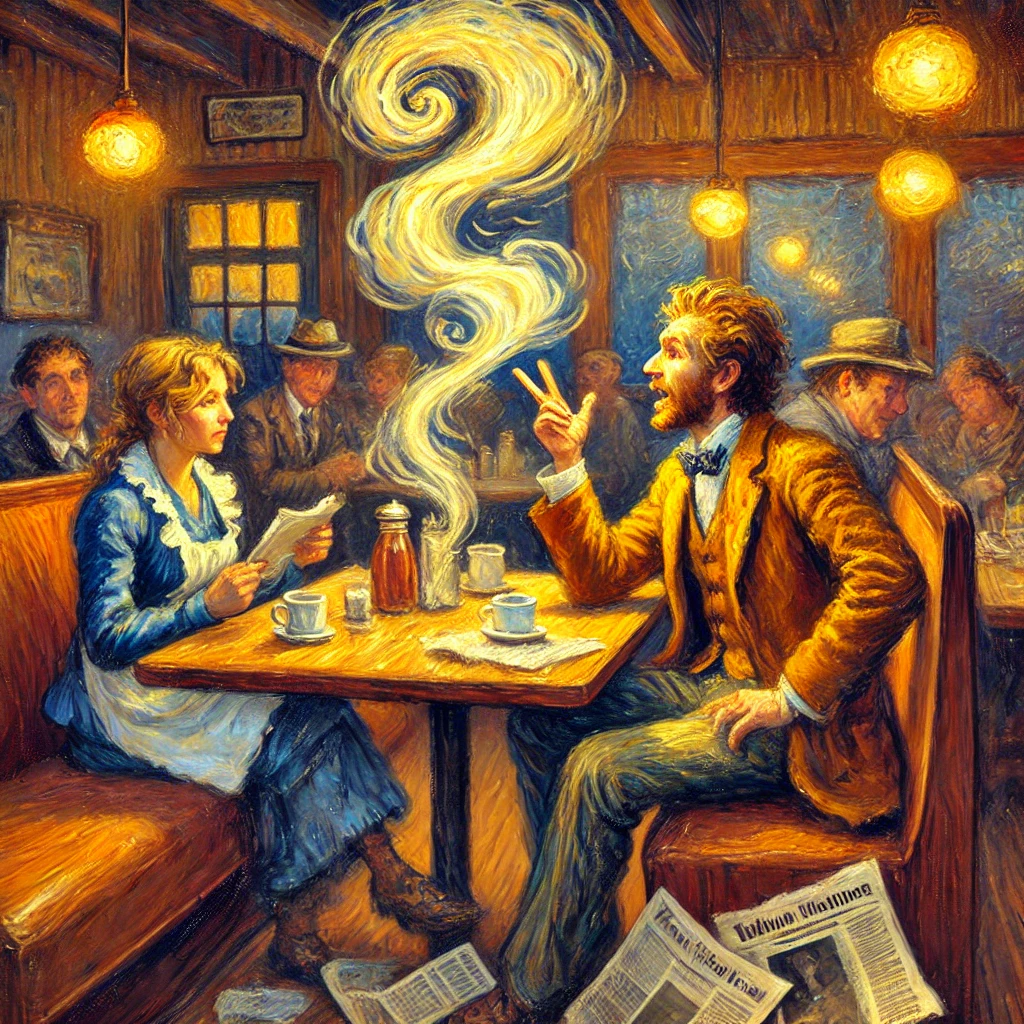
“That goat,” Boot said at the diner, “just freed us from bureaucracy.”
“You’re saying it ate the government?” someone asked.
“I’m saying it simplified it.”
Mabel stirred her coffee. “It ate the parts people didn’t understand.”
“That’s most of it,” Boot said.
Clovis, seated nearby with three newspapers and a growing sense of existential distress, shook his head.
“This is not how zoning works.”
“Seems like it worked just fine for the goat,” Boot replied.
Act V – The Reinterpretation
Act VI – The Emergency Re-Meeting
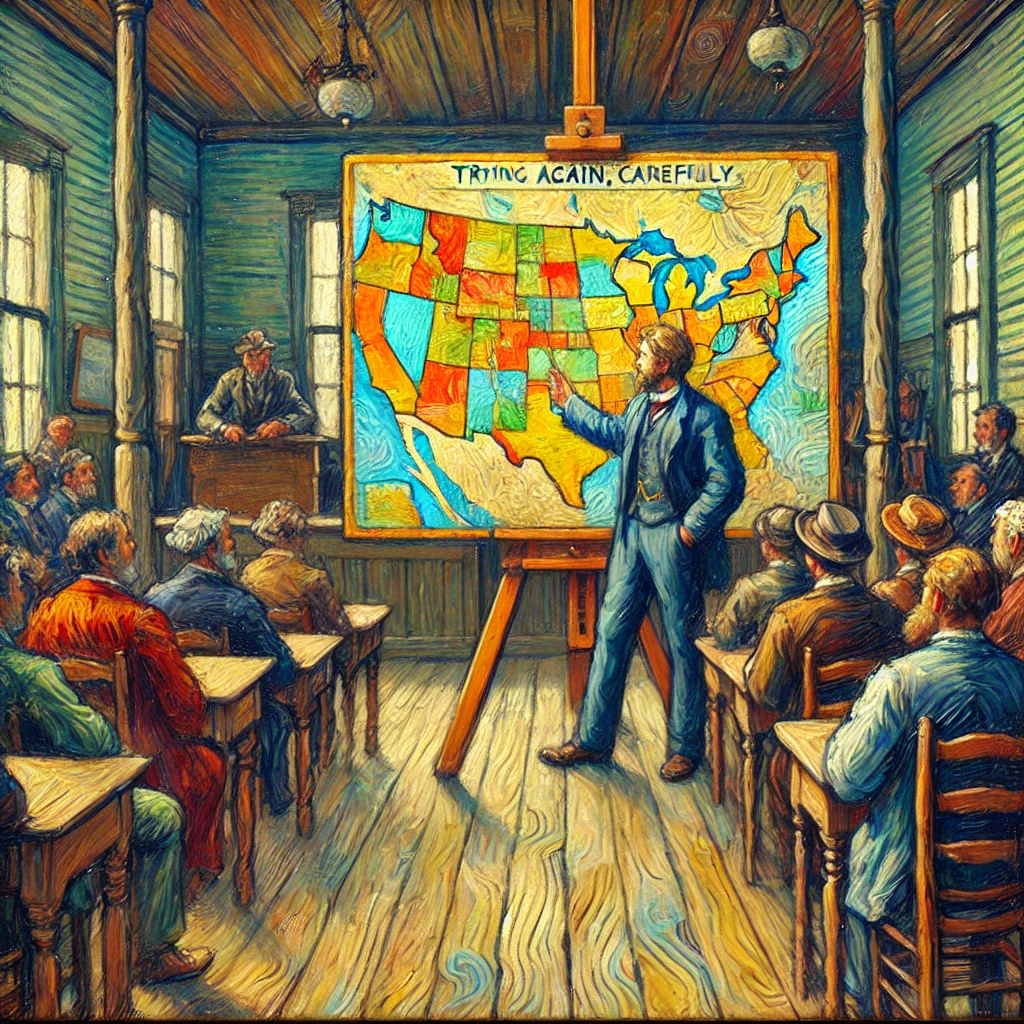
Three days later, the Zoning Board reconvened.
This time, the map was printed on thicker material and placed behind a folding table.
“No animals will be allowed in this meeting,” Chairman Wexler announced firmly.
“Define animal,” Boot said.
“Not now, Boot.”
Clovis stood. “Before we proceed, I’d like to address the implications of the previous… incident.”
“Go ahead.”
“The selective consumption of the zoning map raises serious concerns about the integrity of our planning process.”
“Because a goat ate it,” Wexler clarified.
“Yes,” Clovis said. “But what it ate matters.”
He approached the new map.
“It consumed agricultural first, then mixed use, then commercial, then residential, and finally pending review.”
“That’s just the order it reached it,” someone said.
“Or,” Clovis countered, “it was prioritizing based on structural weakness.”
Boot leaned back. “You’re saying the goat exposed flaws?”
“I’m saying the goat revealed something.”
Mabel nodded slowly. “It didn’t eat the whole thing.”
Everyone looked at the map.
There, untouched, was a small corner.
A narrow strip labeled:
“Historical Preservation Overlay”
Act VI – The Emergency Re-Meeting
Act VII – The Goat Returns
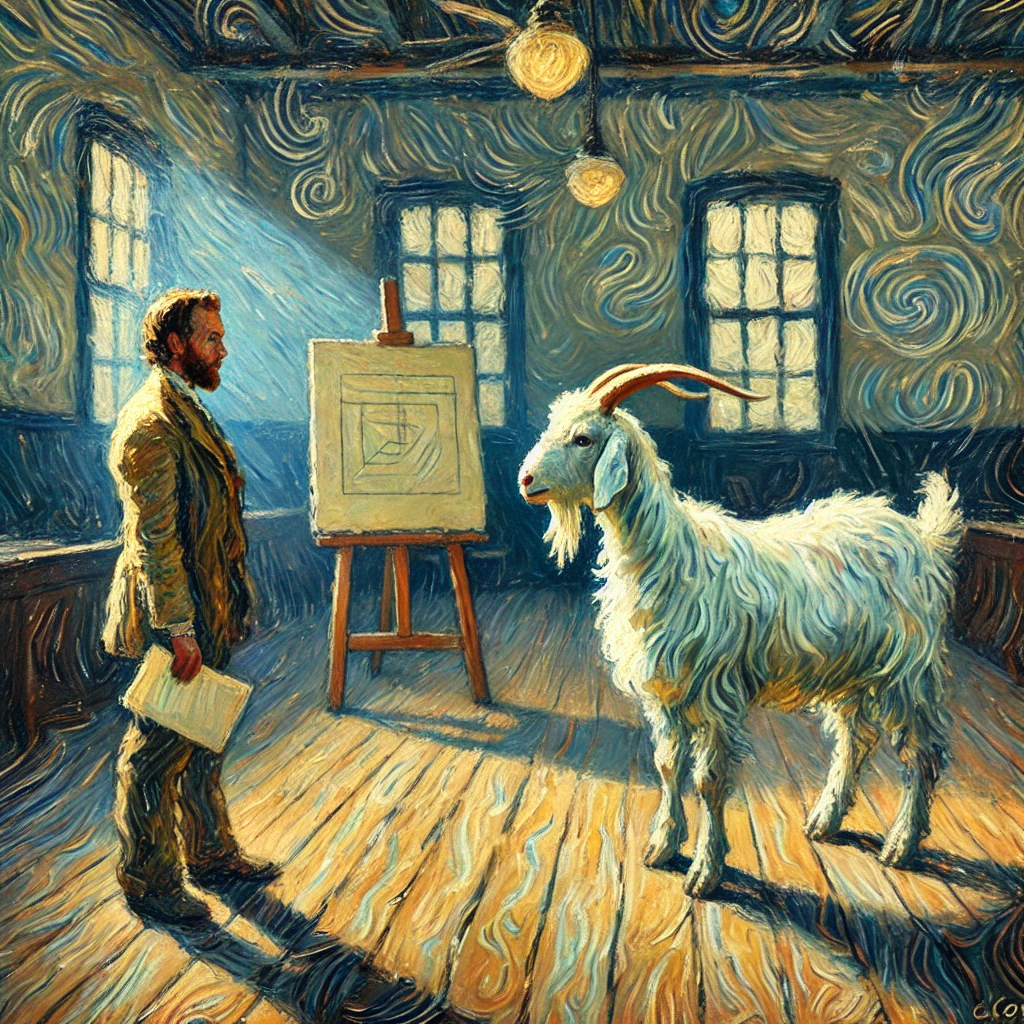
No one saw it come in this time.
They only noticed it when it was already at the front.
The same goat.
Calm. Focused.
Intentional.
“Well,” Boot said, “round two.”
Sheriff Peeler stepped forward. “Let’s handle this differently.”
The goat looked at the map.
Then at the room.
Then back at the map.
It approached slowly.
Paused.
And then—
It ignored the map entirely.
Instead, it walked over to Clovis.
Stared at him.
And nudged his legal pad off the table.
Act VII – The Goat Returns
Act VIII – The Redrawing of Sequatchie Crossing
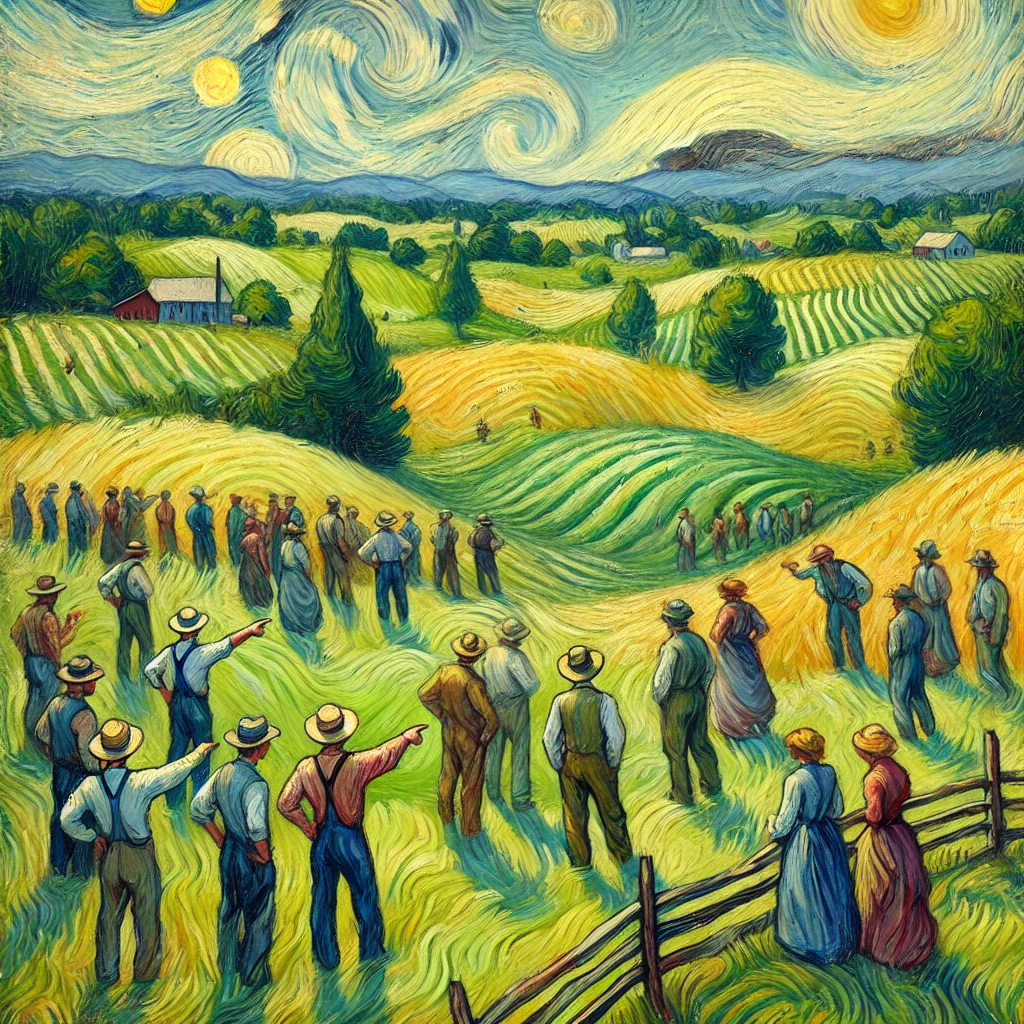
By the end of the week, the town had done something unprecedented.
They stopped trying to recreate the map.
Instead, they began to describe it.
- “This area feels like residential.”
- “That corner’s always been commercial, whether we like it or not.”
- “That field? That’s where goats make decisions.”
Clovis attempted to formalize it into a document titled:
“Adaptive Zoning Framework Based on Observed Livestock Preferences”
Boot called it “common sense with fewer steps.”
Mabel called it “the first thing that’s made sense in years.”
Sheriff Peeler just called it “done.”
Act VIII – The Redrawing of Sequatchie Crossing
Epilogue – The Boundaries That Remain
No one ever claimed the goat.
No one ever stopped it.
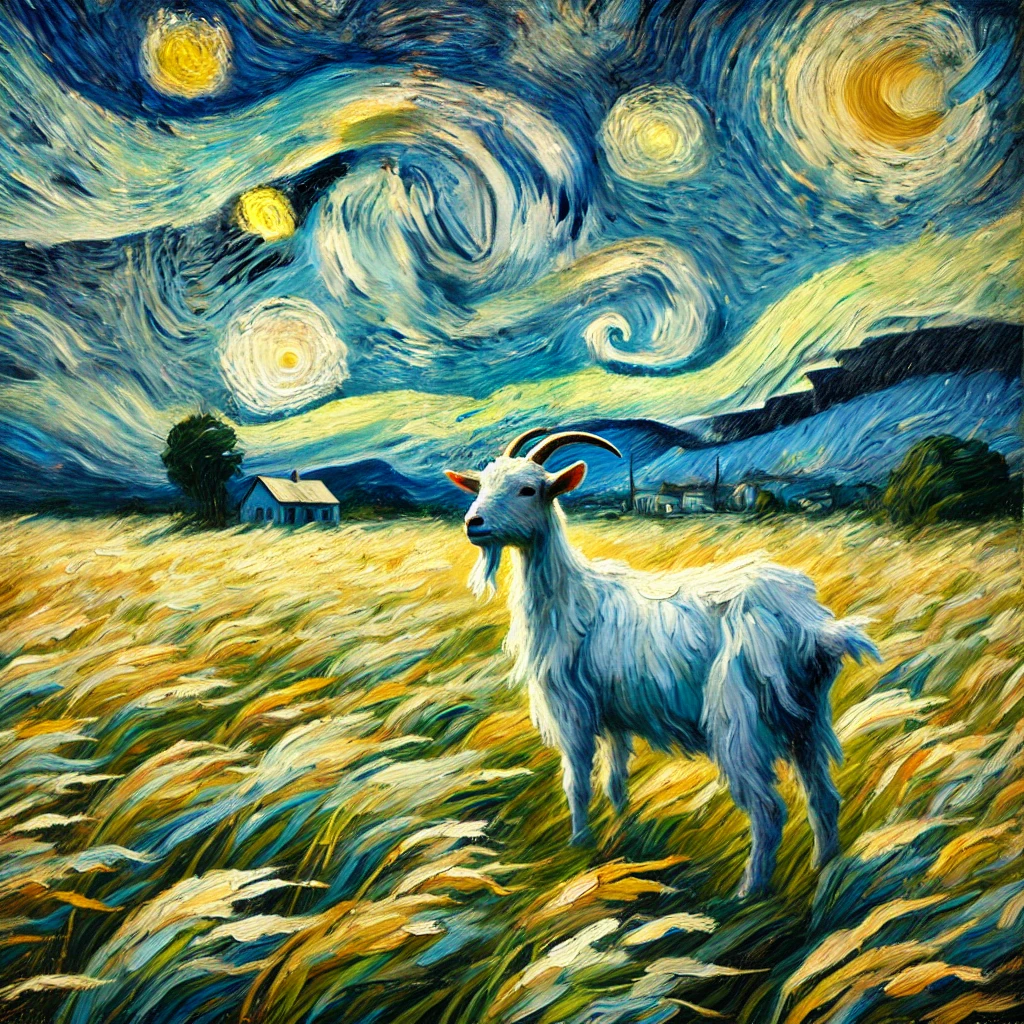
And occasionally, late in the afternoon, it could be seen near the edge of town, standing in a field, watching.
Not grazing.
Not wandering.
Just… observing.
As if making notes.
As if waiting.
Because in Sequatchie Crossing, boundaries are rarely drawn by lines.
They’re drawn by stories.
And sometimes—
They’re eaten.
Epilogue – The Boundaries That Remain
Disclaimer
No official zoning maps were permanently harmed in the making of this story, though several were reconsidered, reinterpreted, and quietly set aside. Any resemblance between goats and regulatory oversight is purely coincidental, though not entirely inaccurate. Residents are advised that livestock-based governance is not currently recognized by state authorities, but continues to outperform expectations locally.
Disclaimer – The Goat That Ate the Zoning Map
Real Places Behind the Ruckus – From The Dunlap Directory

Real Places Behind the Ruckus – From The Dunlap Directory
Yes, this story was fictional; even the parts that weren’t true. These places? Absolutely real. Stop by, support local, and keep the Wi-Fi away from livestock:
- Affordable Storage Guys – South Dunlap
- The Game Shack
- Studio Dunlap
- Cascade Inn at Fall Creek Falls
- White Oak Ranch TN
- R and R RV Campground
- Jiffy Junction Market
- Friends Of The Park Of Sequatchie County
- Avon Representative Brandy Wilkey
- Omni Rehab Dunlap Office
- Farm 58
- Wendy’s
- The Southern Oven
- ATM Jiffy Junction Market
- Nice Nails in Dunlap
- New Shade Painting & Co
- Standefer-Reed Funeral Home
- Greenehouse Children’s Center

Real Places Behind the Ruckus – From The Dunlap Directory
At Sequatchie Crossing, we tell the stories of Sequatchie Crossing.
Please share this post with your friends, family, or business associates who may want follow the news from Sequatchie Crossing.

0 Comments