


Nostalgia Enters the Discussion
By Tom Seest
At Sequatchie Crossing, we tell the stories of Sequatchie Crossing.
Please share this post with your friends, family, or business associates who may want follow the news from Sequatchie Crossing.
🎤 Audio Overview
Town Hall Considers Doing Nothing Again, for Old Times’ Sake
Act I: Call to Order, Call to Memory
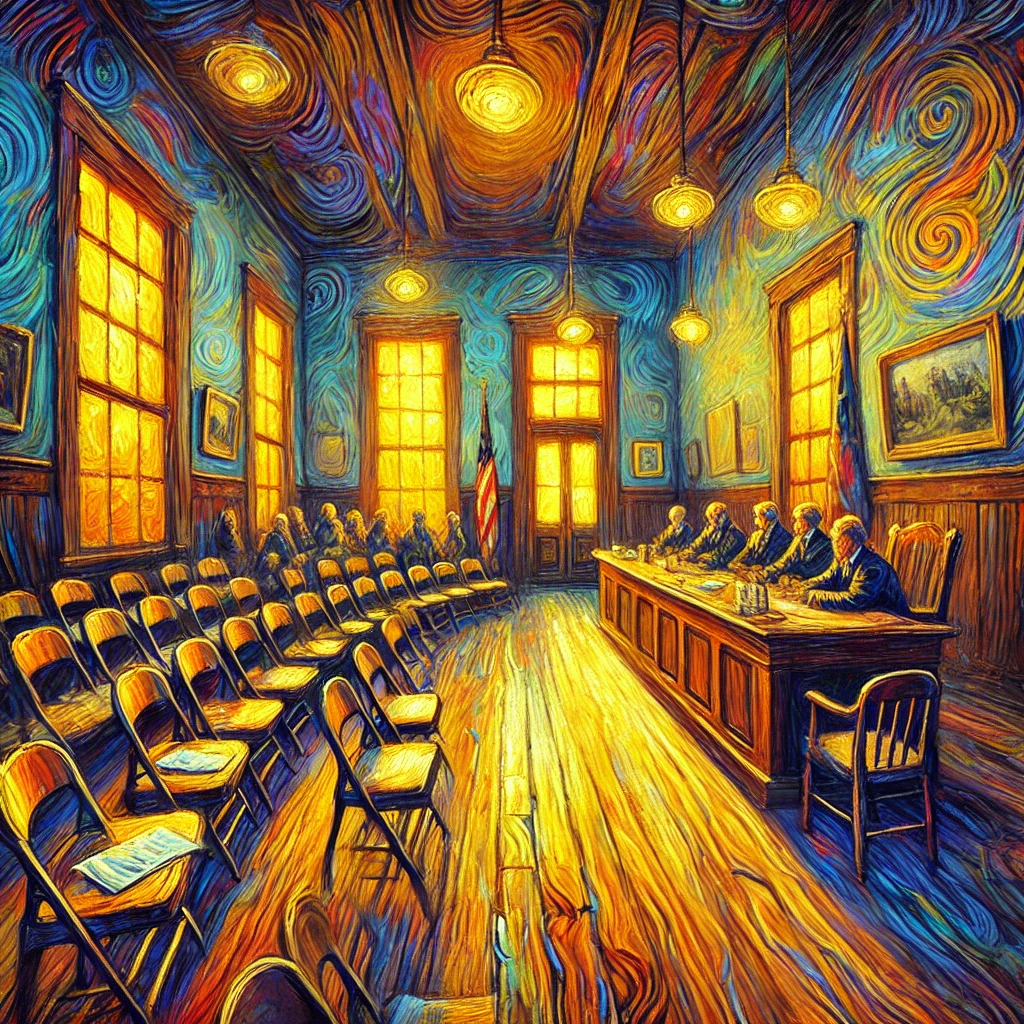
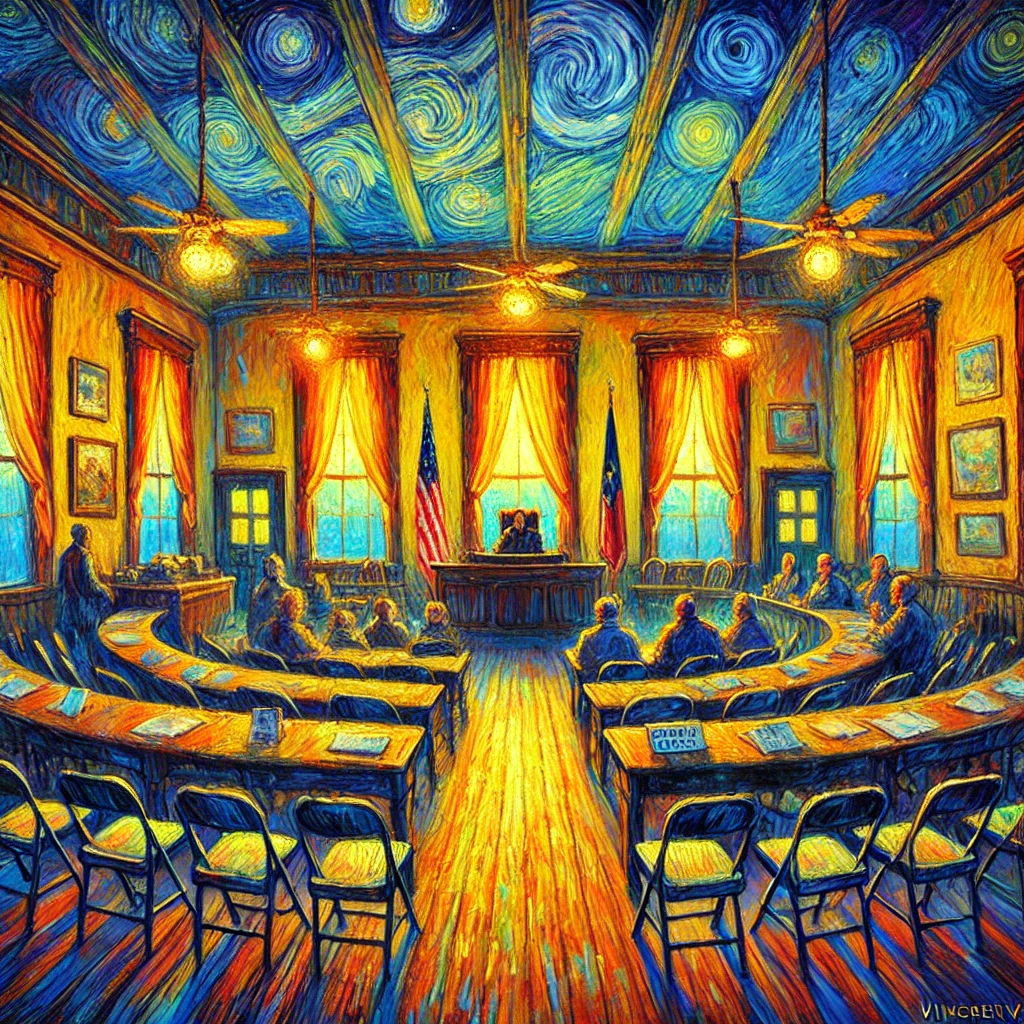
The meeting was called to order at 6:01 p.m., which was notable because it had been scheduled for 6:00 p.m., and because no one could remember the last time anything in Sequatchie Crossing had begun on time without a lengthy explanation as to why it hadn’t.
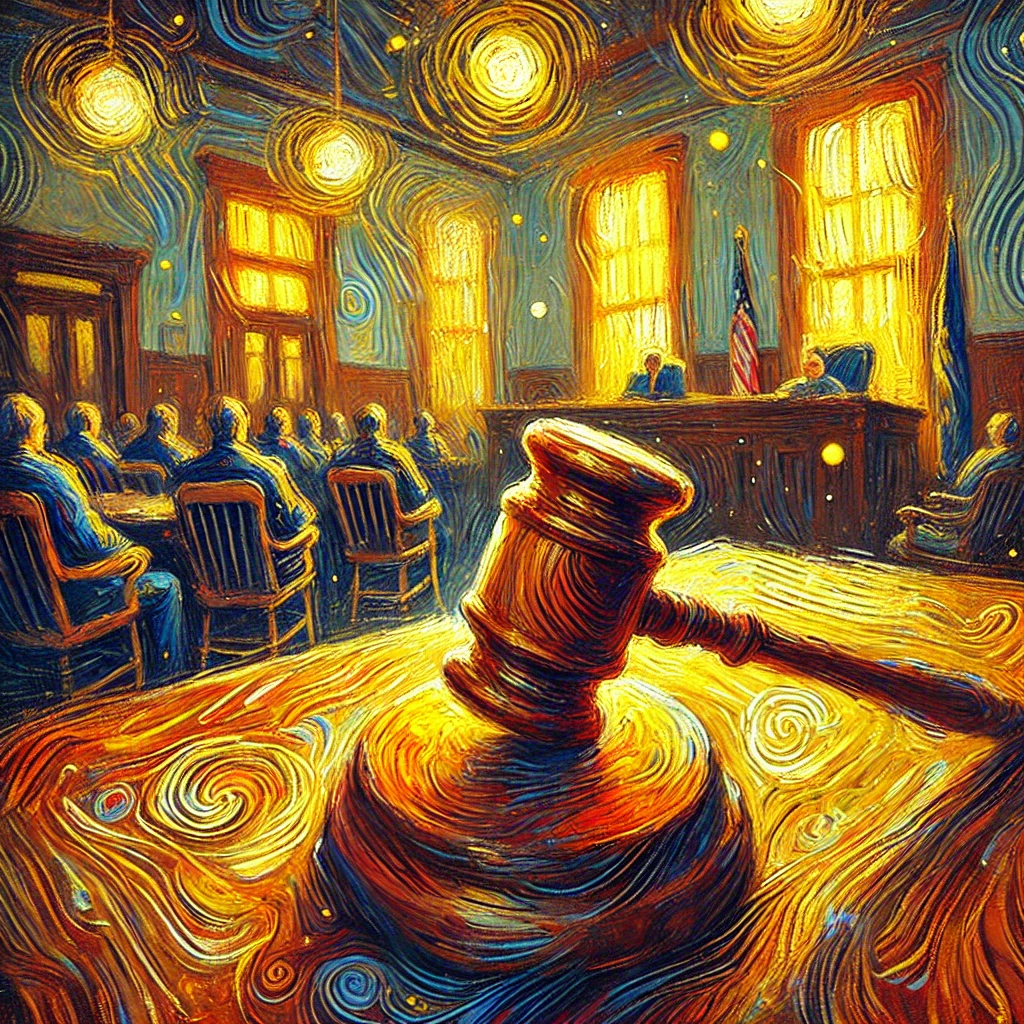
The mayor tapped the gavel twice, paused, then tapped it again, as if the first two taps had been more of a suggestion.
“All right,” he said. “Let’s get started.”
No one moved. No one spoke. A chair squeaked in the back row and was immediately shushed by its owner, who looked around as if noise itself might violate some unspoken rule.
The agenda – printed, stapled, and placed neatly at every seat – was titled in bold:
AGENDA ITEM 4: CONSIDERATION OF NO ACTION
This had already caused confusion in the parking lot.
“Is that a typo?” one resident had asked.
“No,” another replied. “It’s a proposal.”
The mayor cleared his throat. “As everyone knows, tonight we are here to discuss whether the town should, formally and intentionally, do nothing. Again.”
A murmur rolled through the room – not disagreement, not agreement, but recognition. The kind that settles in when people hear an old song on the radio and don’t quite remember when it first mattered to them, only that it once did.
Act I – Call to Order, Call to Memory
Act II: A Proud Tradition of Inaction
The clerk read the minutes from the previous meeting, which included a motion to table a discussion about a future discussion regarding whether a committee should be formed to explore possible options for addressing concerns that had not yet been fully identified.
That motion had passed unanimously.
When the clerk finished, she looked up. “Do we approve the minutes?”
A hand went up. Then another. Then, hesitantly, a third.
“All in favor?”
Every hand rose.
“Opposed?”
No hands.
The clerk nodded. “Minutes approved.”
This was, technically, progress.
The mayor leaned forward. “Before we open the floor, I want to remind everyone that Sequatchie Crossing has a long and honorable history of restraint.”
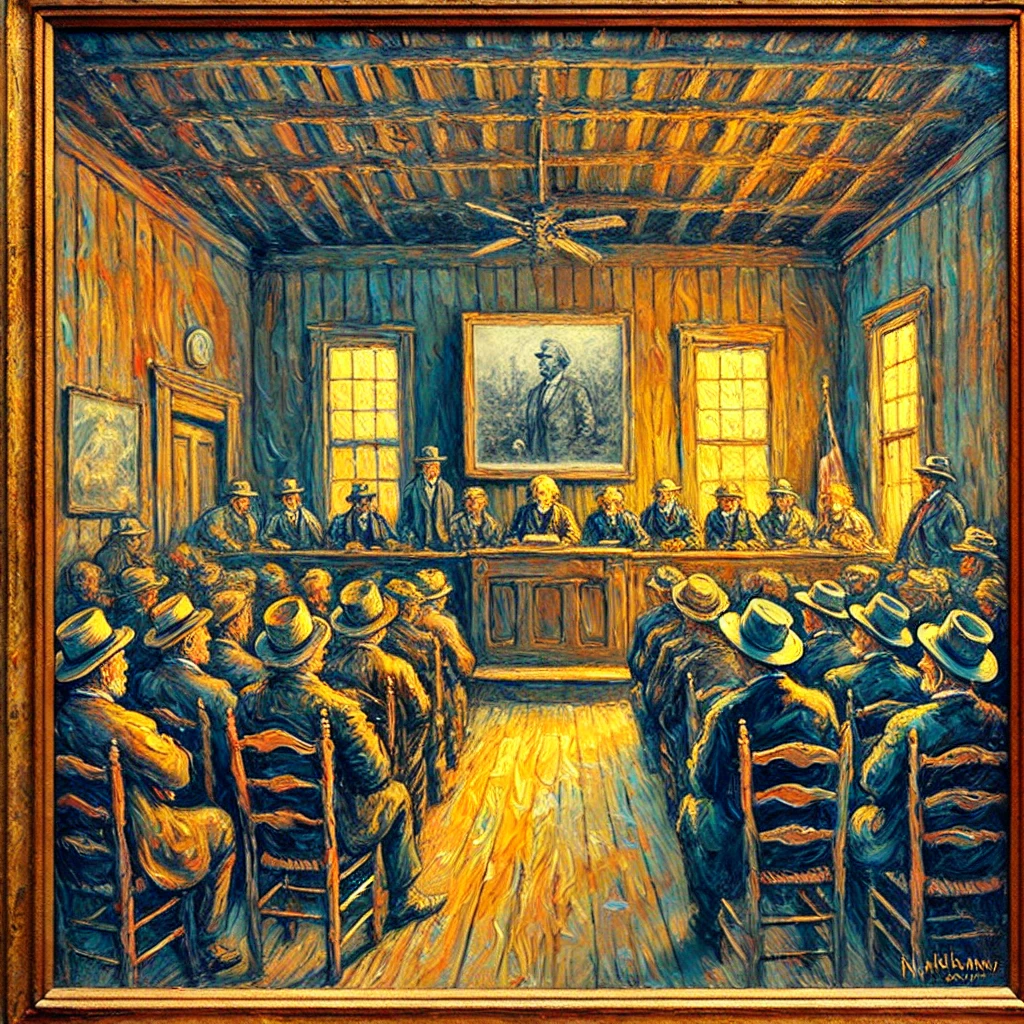
He gestured toward a framed photograph on the wall: a grainy black-and-white image of a town meeting from decades earlier. The men wore hats indoors. The women clutched purses with both hands. Everyone looked stern, tired, and deeply uninterested in changing anything.
“That,” the mayor said, “was the meeting where we decided not to pave Ridge Cut Road.”
A voice from the back: “Still hasn’t been paved.”
“Exactly,” the mayor replied. “Consistency.”
Act II – A Proud Tradition of Inaction
Act III: Public Comment, Carefully Managed
Public comment opened with the usual disclaimer: three minutes per speaker, no personal attacks, and no shouting unless absolutely necessary.
The first speaker approached the podium slowly, like someone visiting a relative they hadn’t quite forgiven.
“I just want to say,” he began, “that I remember when we didn’t used to do anything around here, and nobody complained about it.”
Several heads nodded.
“Now,” he continued, “every time we don’t do something, there’s paperwork.”
A woman in the second row whispered, “That’s true.”
The speaker warmed to his topic. “We used to not fix things because we didn’t want to. Now we don’t fix things because there’s a process.”
He stepped back from the microphone, satisfied.
Polite applause followed – short, respectful, and quickly suppressed.
The next speaker took the podium and unfolded a piece of paper that had been folded and refolded so many times it seemed less like paper and more like fabric.
“I wrote this down,” she said, “because I didn’t want to forget.”
She paused. Forgot what she was about to say. Laughed softly.
“That’s kind of my point.”
She explained that when she was younger, the town didn’t rush into decisions. Or out of them. Or sideways into them.
“We waited,” she said. “And sometimes the problem went away. Or we did.”
The room sat with that for a moment.
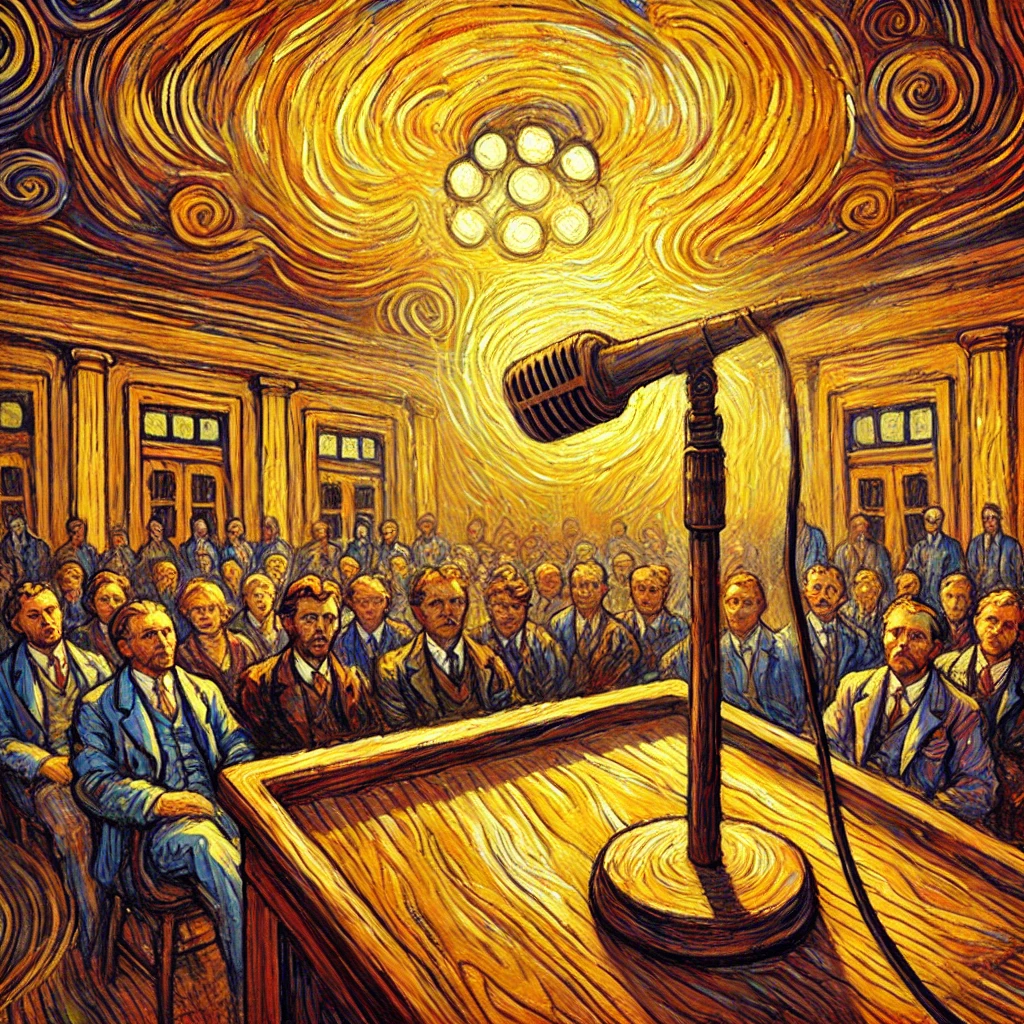
Act III – Public Comment, Carefully Managed
Act IV: The Committee That Wasn’t
A council member raised his hand. “If I may,” he said, “I’d like to address the elephant we are carefully not acknowledging.”
The mayor nodded.
“There’s been talk,” the council member said, “about forming a committee to study the benefits of not forming committees.”
A ripple of uneasy laughter.
“I just want to say,” he continued, “that in my opinion, forming a committee to decide not to act defeats the entire purpose.”
Someone muttered, “Amen.”
The council member pressed on. “In the old days, we didn’t need committees. We had inertia.”
This earned a stronger response – actual applause, quickly followed by guilt.
The mayor banged the gavel once. “Let’s keep it orderly.”
The council member sat down, having accomplished exactly nothing, which felt appropriate.
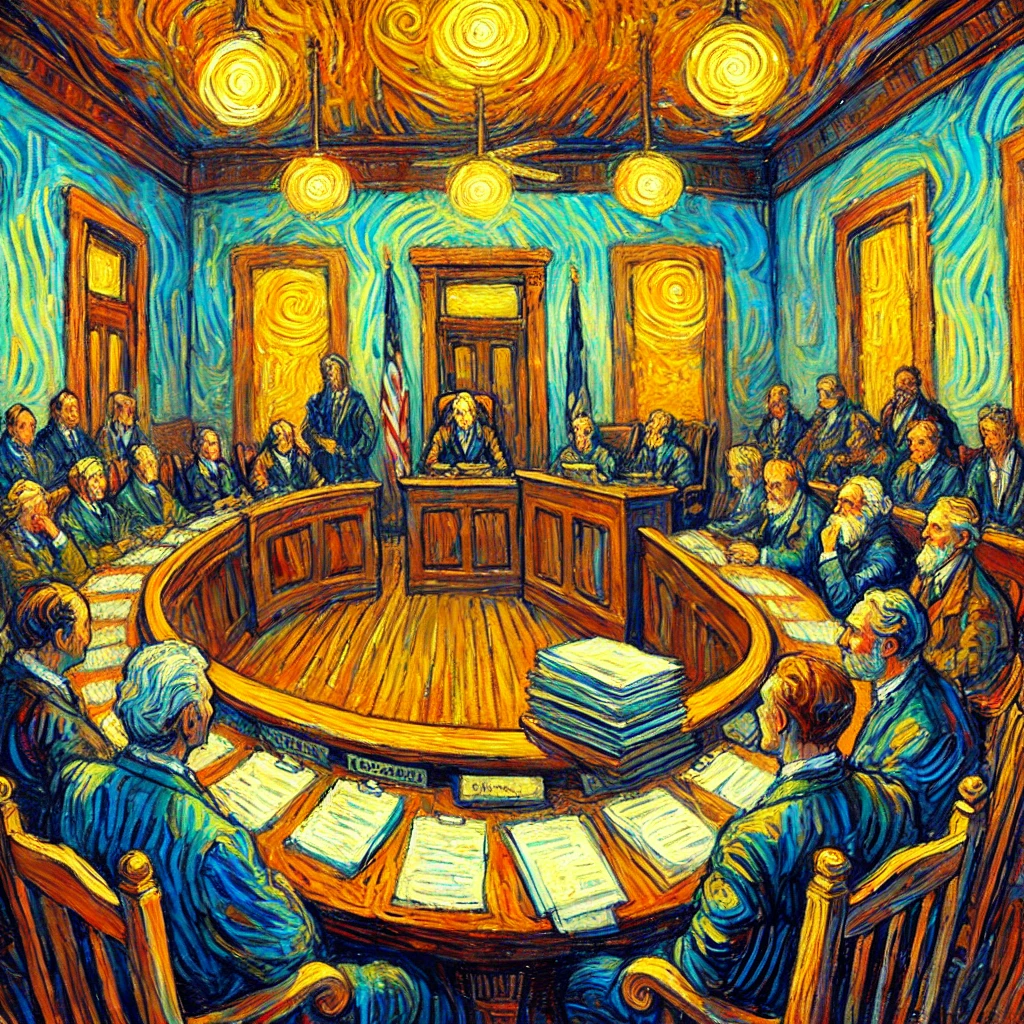
Act IV – The Committee That Wasn’t
Act V: The Historian We Didn’t Appoint
Someone suggested inviting the town historian to speak, only to be reminded that the town had never formally appointed one.
“Still,” someone said, “he sort of exists.”
They allowed him to speak anyway.
He stood, adjusted his glasses, and began without notes.
“Sequatchie Crossing,” he said, “was founded on the principle that if something truly needed doing, someone else would handle it.”
Laughter.
“This worked remarkably well for generations,” he continued. “Roads remained roads. Buildings remained standing or didn’t. People adapted.”
He gestured vaguely. “The problem now is that we have documentation.”
Groans.
“Once something is written down,” he said, “it starts to feel like a promise.”
He paused, letting that sink in.
“And we are not, historically speaking, a town that enjoys promises.”
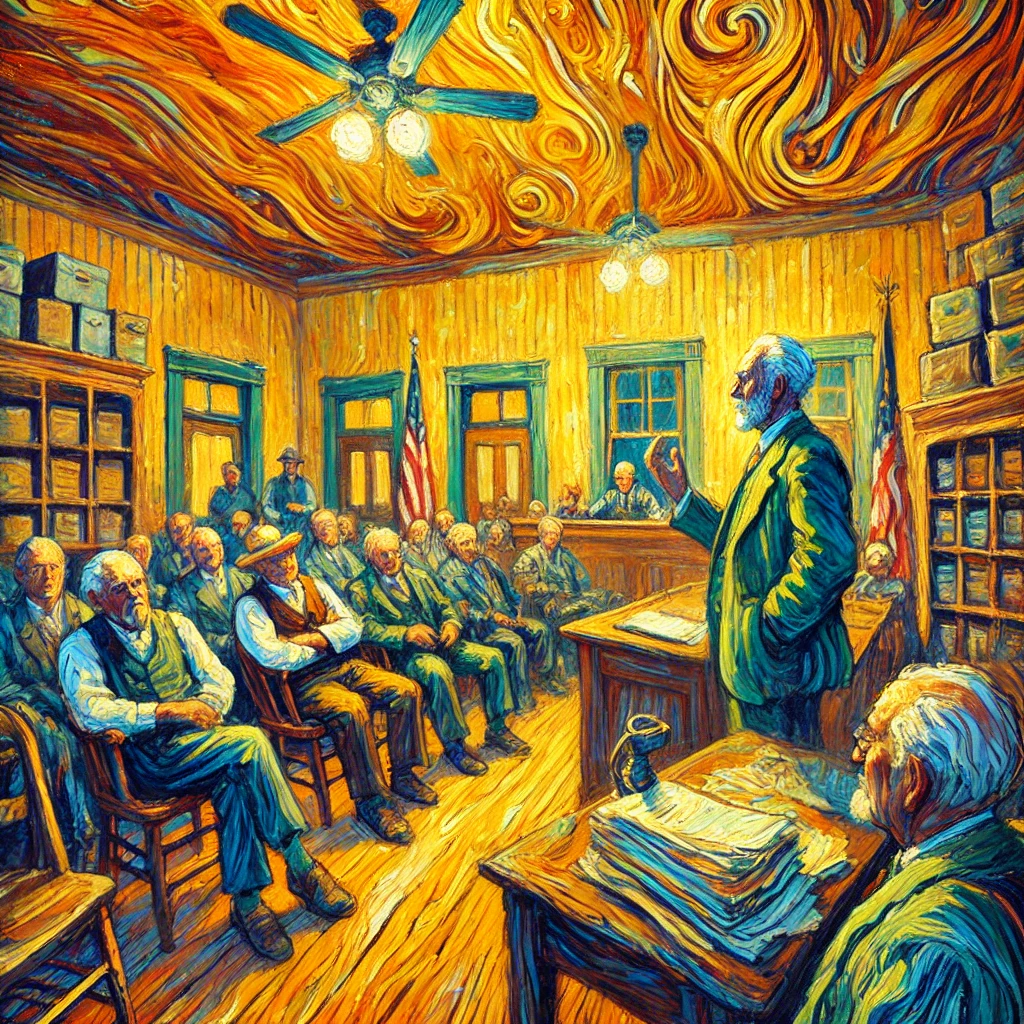
Act V – The Historian We Didn’t Appoint
Act VI: Nostalgia Takes the Floor
A man who hadn’t spoken in years stood up without going to the podium.
“I just miss when nothing happened,” he said.
The room went still.
He explained that he wasn’t against progress. He just preferred when progress was accidental.
“When the library got air conditioning,” he said, “it was because someone donated it. Not because we planned it.”
Heads nodded again.
“Planning,” he said, “is stressful.”
The mayor thanked him for his comments, though it wasn’t clear what the comments were, exactly.
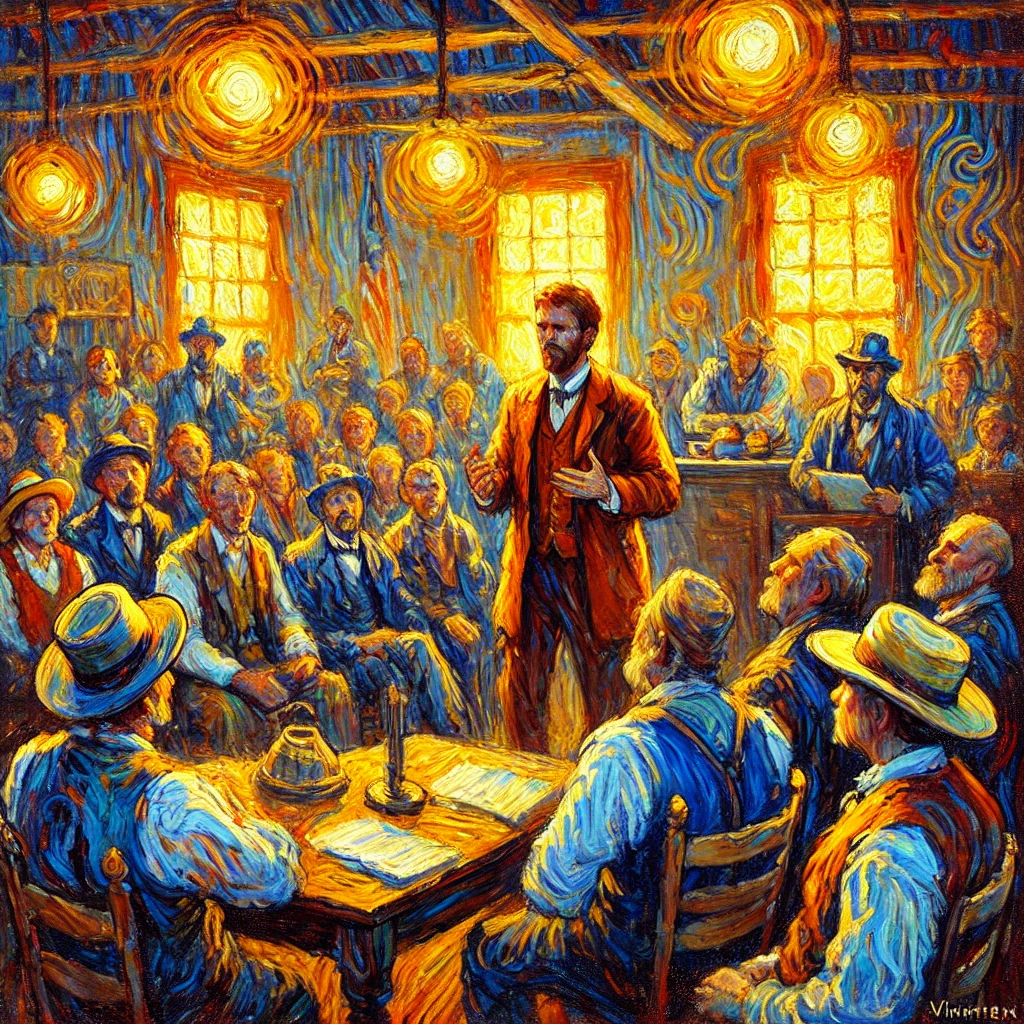
Act VI – Nostalgia Takes the Floor
Act VII: The Motion
Finally, the mayor leaned back and sighed the sigh of someone who knew exactly how this would end.
“All right,” he said. “Is there a motion regarding Agenda Item 4?”
Silence.
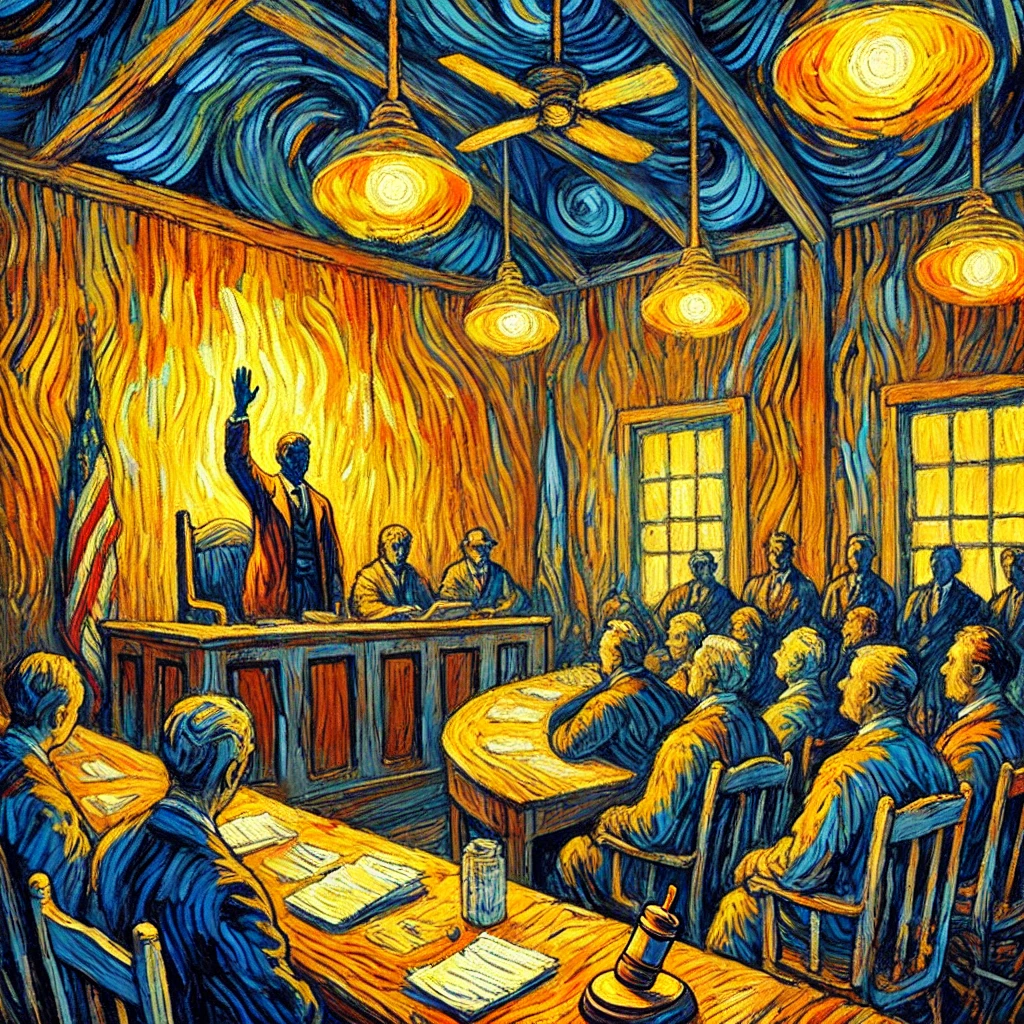
Then, carefully, a council member raised her hand. “I move,” she said, “that we continue doing nothing, but that we acknowledge we are doing so intentionally.”
Another council member frowned. “Is that different from before?”
“Yes,” she said. “Before, we were just doing nothing. Now we’re choosing it.”
The distinction seemed to matter.
A second was offered, slowly, like someone placing a fragile object on a table.
Discussion opened.
Act VII – The Motion
Act VIII: Debate, Mild and Circular
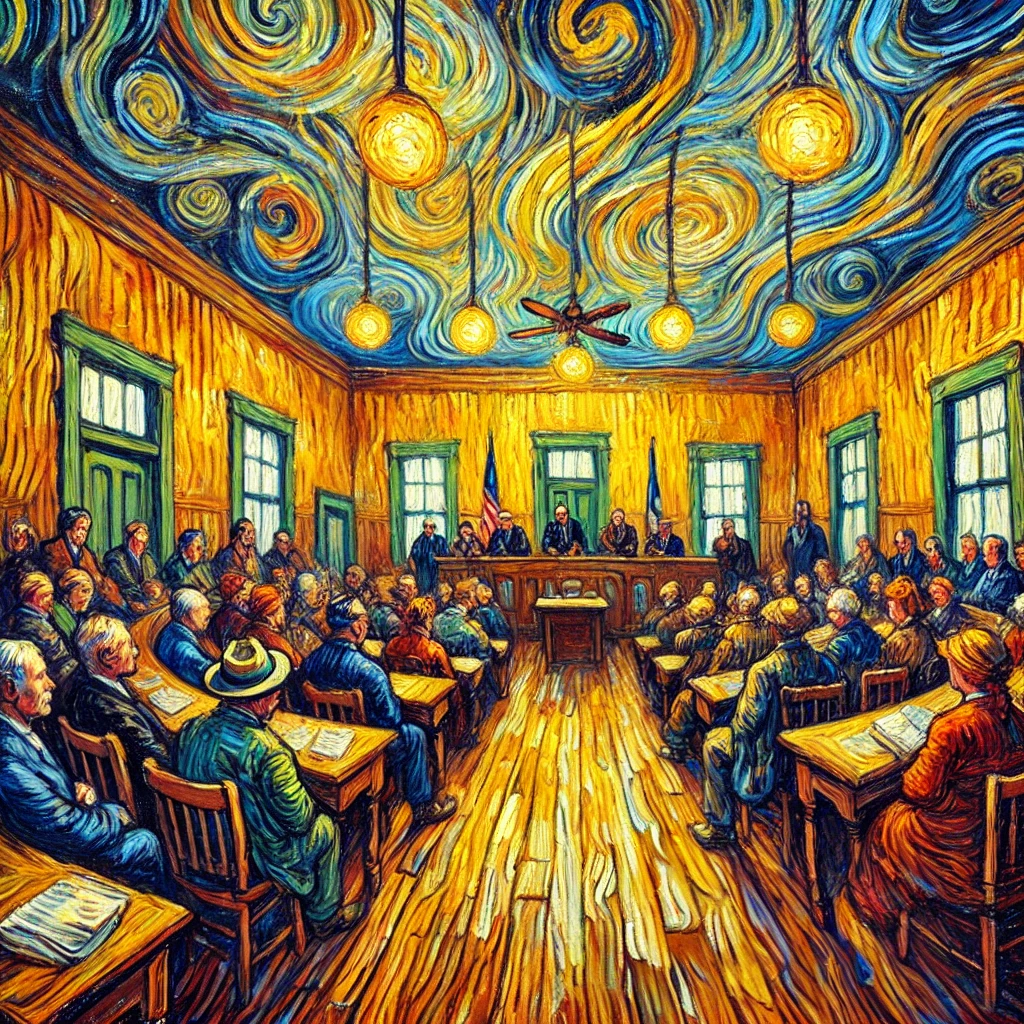
“What if people think we’re lazy?” someone asked.
“We’ve managed so far,” someone else replied.
“What if this sets a precedent?”
“For what?” another voice said. “Inaction?”
“Yes,” came the reply. “Formalized inaction.”
The historian nodded approvingly.
The mayor checked his watch. They were nearing the hour when attention traditionally waned.
“All right,” he said. “Let’s vote.”
Act VIII – Debate, Mild and Circular
Act IX: The Vote That Changed Nothing
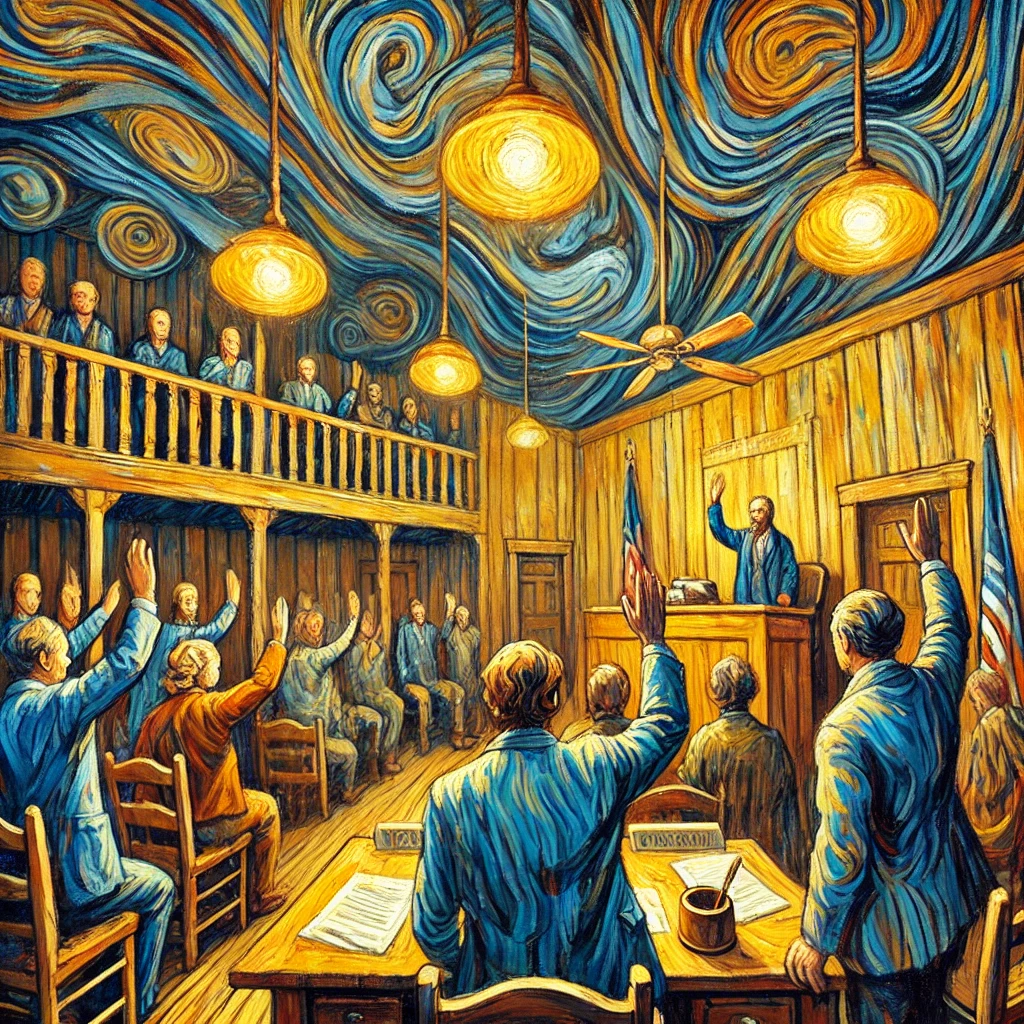
“All in favor of continuing to do nothing, for old times’ sake?”
Hands went up. Slowly. Comfortably.
“All opposed?”
No hands.
The motion passed.
There was no cheer. No sense of victory. Just relief.
The mayor smiled faintly. “Motion carries.”
Act IX – The Vote That Changed Nothing
Epilogue: Leaving Things As They Are
As people filed out, conversations were hushed and oddly cheerful.
“Feels right,” someone said.
“Like coming home,” said another.
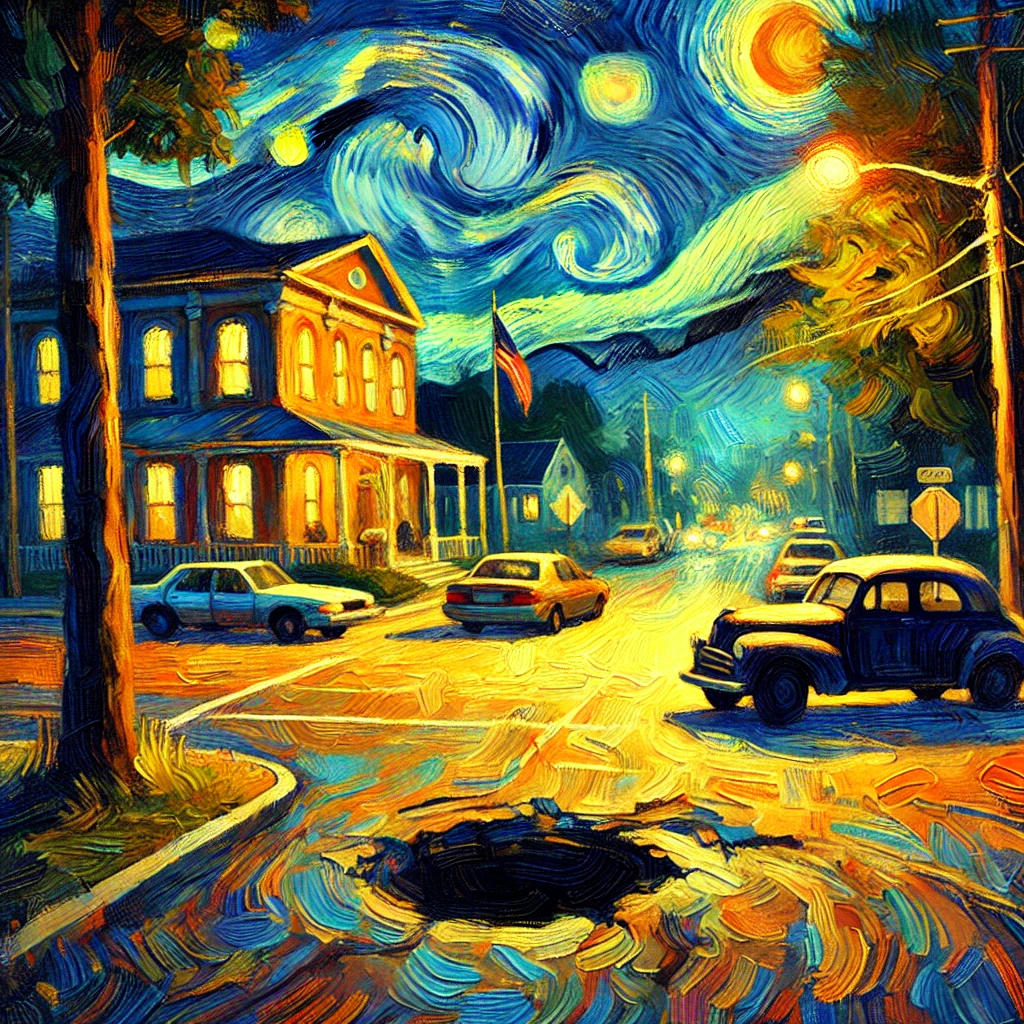
Outside, the parking lot lights flickered the way they always had. A pothole near the exit remained exactly where it had been for years, a small, familiar obstacle everyone knew how to avoid.
The town had chosen, once again, not to change.
And for now, that was enough.
Epilogue – Leaving Things As They Are
Disclaimer
The following account is a work of fiction.
Sequatchie Crossing is an imagined town populated by fictional characters, recurring archetypes, and exaggerated situations inspired by the universal rhythms of small-town life. Any resemblance to real people, real meetings, real ordinances, or real frustrations – past, present, or perpetually postponed – is entirely coincidental and probably unavoidable.
No actual town council formally voted to do nothing for nostalgic reasons.
No real mayor put “Consideration of No Action” on a legally binding agenda.
And no official record should be interpreted as endorsing inertia, resistance to progress, or the comforting belief that problems sometimes solve themselves if left alone long enough.
This story is satire. It reflects patterns, not participants.
It pokes at processes, not people.
And it celebrates the peculiar truth that communities everywhere occasionally long for the calm that existed before they started documenting their disagreements.
Proceed with humor, affection, and the understanding that if this feels familiar, that familiarity belongs to the reader – not the town.

Disclaimer – Town Hall Considers Doing Nothing Again, for Old Times’ Sake
Real Places Behind the Ruckus – From The Dunlap Directory

Real Places Behind the Ruckus – From The Dunlap Directory
Yes, this story was fictional; even the parts that weren’t true. These places? Absolutely real. Stop by, support local, and keep the Wi-Fi away from livestock:
- Jack’s Dunlap
- Crumb & Co.
- Love Cleaning
- Sequatchie Valley Homestead
- Sunset Hill Coops
- Grays Plumbing LLC
- Pinpoint Customs Collision
- Dunlap Masonic Lodge #693
- Amy Painter Photography
- Liquidambar Art Gallery
- Rocky Top Woodcraft
- Ladd Construction
- Dunlap Community Lost & Found Animals
- Chris Albright
- Southeast Tennessee Human Resource Agency
- TA Surveys
Real Places Behind the Ruckus – From The Dunlap Directory
At Sequatchie Crossing, we tell the stories of Sequatchie Crossing.
Please share this post with your friends, family, or business associates who may want follow the news from Sequatchie Crossing.

0 Comments