


In Which Virtual Real Estate Collides with Actual Dirt Roads, and The Amish Learn About Pixels The Hard Way
By Tom Seest
At Sequatchie Crossing, we tell the stories of Sequatchie Crossing.
Please share this post with your friends, family, or business associates who may want help telling the stories of their legacy.
🎤 Audio Overview
The Billboard Brouhaha Of Sequatchie Crossing
“It Blocked the Butter: A Billboard Tale”
Sequatchie Crossing hadn’t seen such a ruckus since the Great Goatscapade of 2017, when Ezekiel (the goat, not the preacher) broke into the Dollar General and ate half a display of decorative pumpkins. But this latest upheaval didn’t involve livestock—at least not directly. No, this was a full-on turf war. And the battleground? A patch of land just off County Road 12, where a hand-painted sign once proudly read:
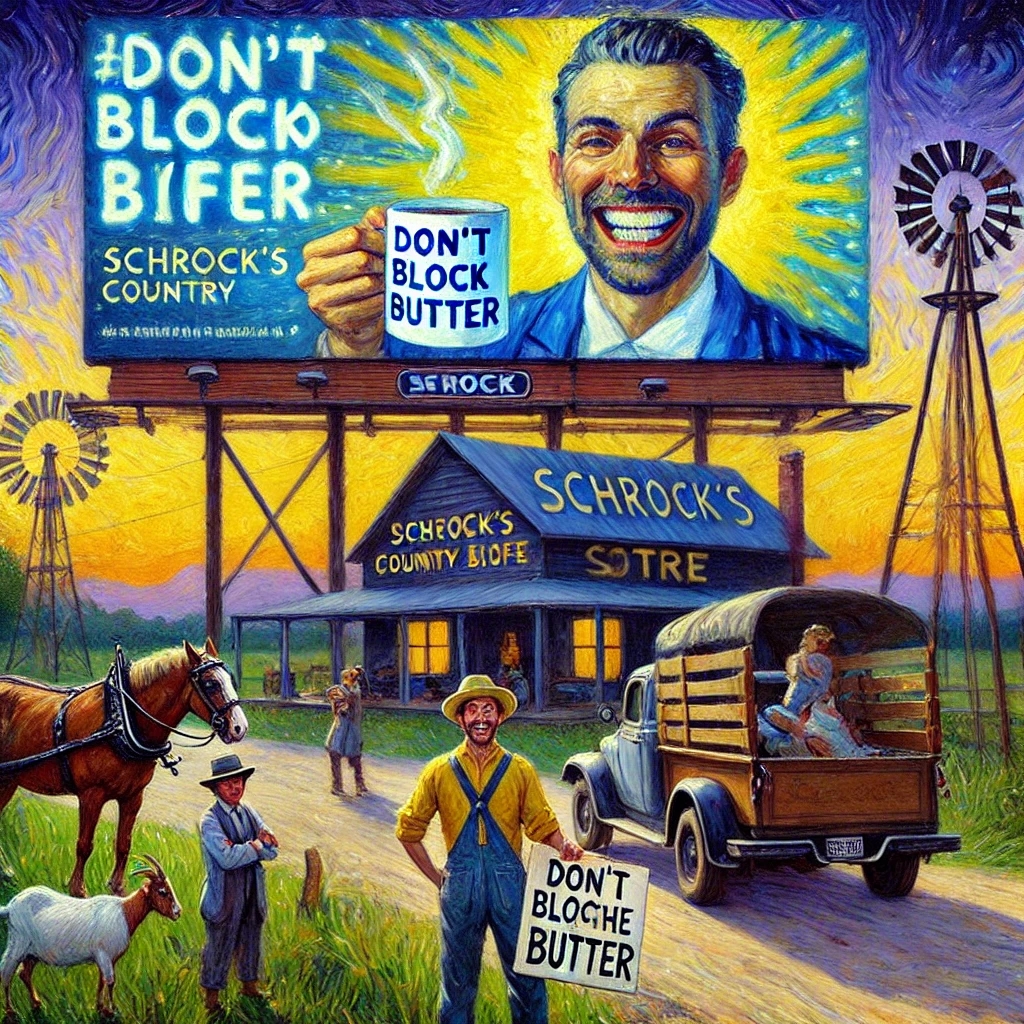
“Schrock’s Country Store – Hand-churned butter, fresh jams, and modesty bonnets.”
That simple sign had stood there for 17 years, propped lovingly between two posts made from reclaimed barn wood, aging gracefully like the butter it advertised. The Schrock family, a quiet but fiercely respected Amish clan, had earned the town’s affection over the years with their honesty, horse-drawn humility, and unparalleled sourdough.
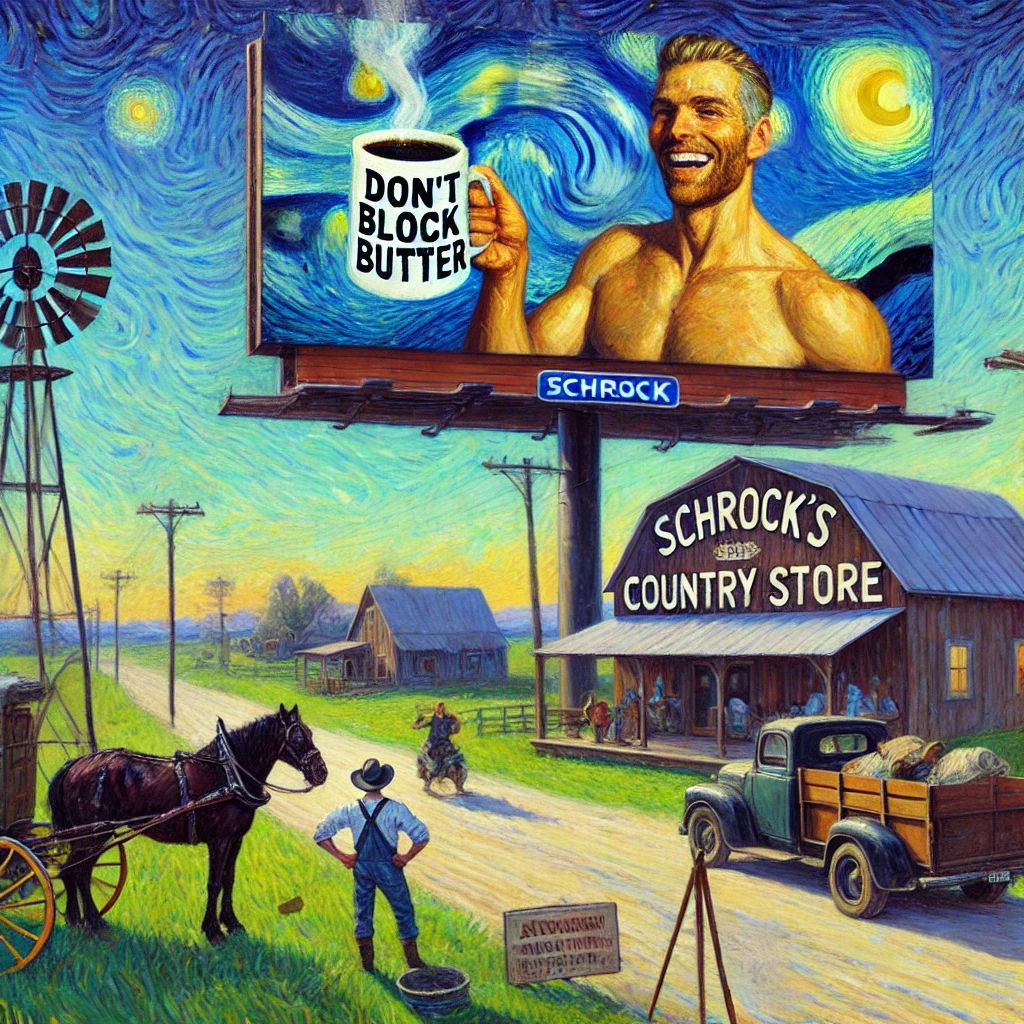
So when a new, blindingly glossy 20-foot LED billboard appeared directly in front of the Schrock sign—featuring a shirtless realtor holding a coffee mug and the slogan “Live Bold. Build Bold. Buy Bold Acres.”—the town erupted.
When the Real World Fails, Sequatchie Crossing Logs on – With Avatars, Tambourines, and Virtual Goats
The Real World Meltdown
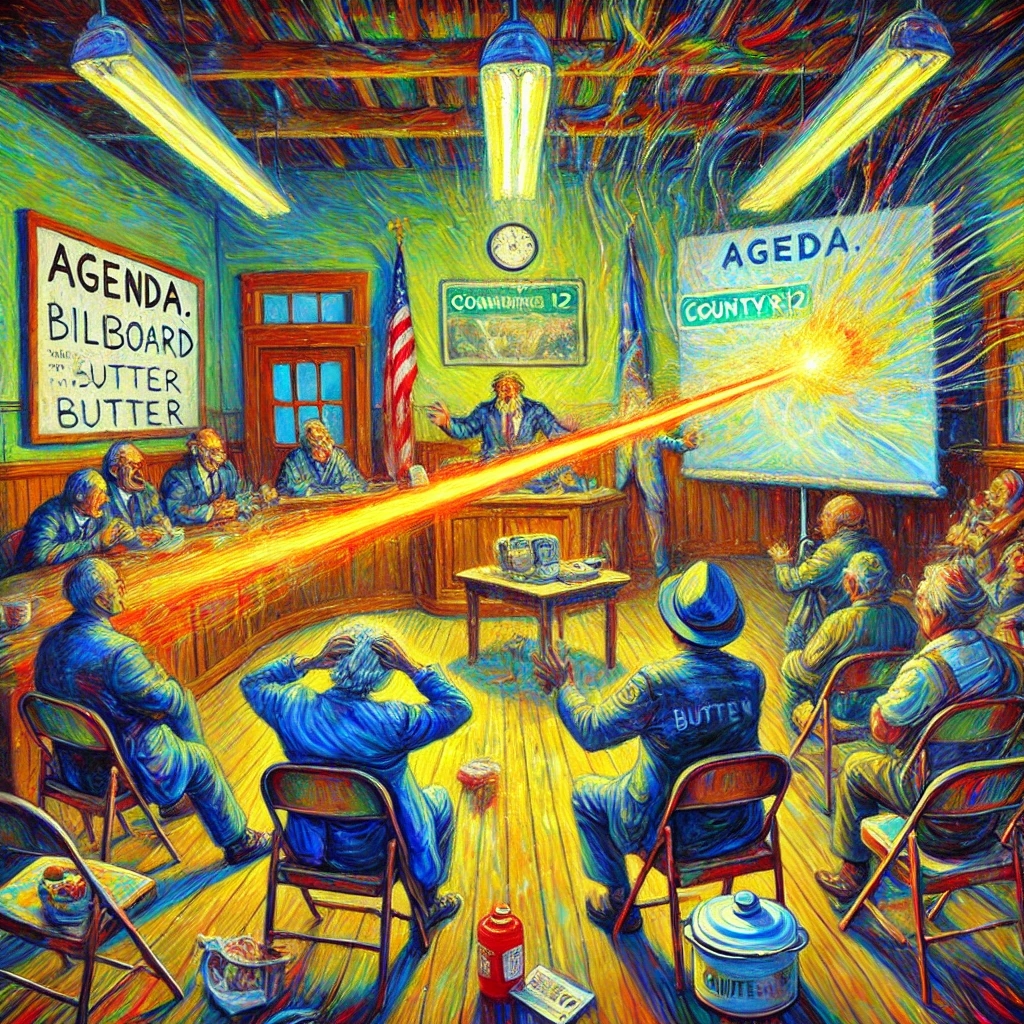
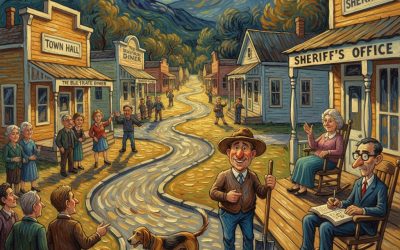
Mayor Lucille Halpern called an emergency town council meeting, which took place in the old fire hall between a rack of out-of-service helmets and a crockpot of baked beans someone mistakenly thought would calm things down.
Boot Barnes arrived with a protest sign that read, “Don’t Block the Butter,” and Mabel Dean brought a laser pointer, which she used to indicate—very precisely—how the billboard’s glare was causing temporary blindness to early-morning buggy commuters.
Reverend Gentry quoted scripture about pride going before destruction, while Shelley Wiggins wept openly for the loss of “aesthetically pleasing roadside curation.”
Clovis Strickland, misunderstanding the whole ordeal, thought the Amish had installed the LED billboard themselves and declared, “I knew they had electricity in that butter churn.”
Meanwhile, in the Virtual World…
Sequatchie Crossing had recently joined the 21st century by creating a Virtual Town Square—a local metaverse where residents could attend zoning meetings without putting on pants. The platform, built by Jeremiah Yoder’s nephew, featured pixelated versions of local landmarks and allowed townsfolk to meet as custom avatars.
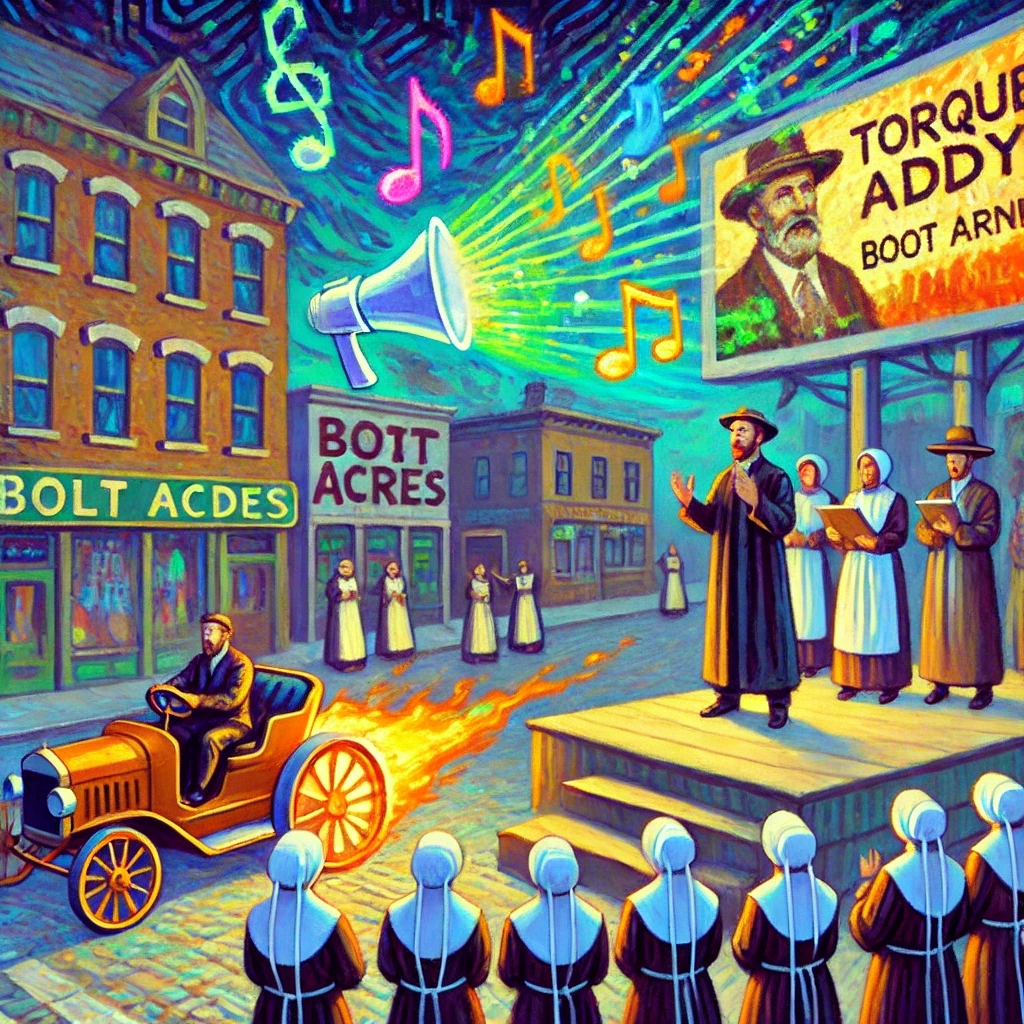
Mabel Dean’s avatar, “HolyMabel_41,” wore choir robes and wielded a protest tambourine. Boot Barnes showed up as “TorqueDaddy69,” riding a flaming lawn mower. The Schrocks? They reluctantly logged in via their neighbor’s Wi-Fi and appeared as low-res faceless characters labeled “AmishGeneric_1” through “AmishGeneric_6.”
The virtual billboard had, shockingly, been placed in exactly the same location as the real one—covering the digital replica of Schrock’s sign. This, according to Jeremiah’s nephew, was “just a data migration issue,” though many suspected the land developer’s intern, working remotely from Chattanooga, had decided visibility > ethics.
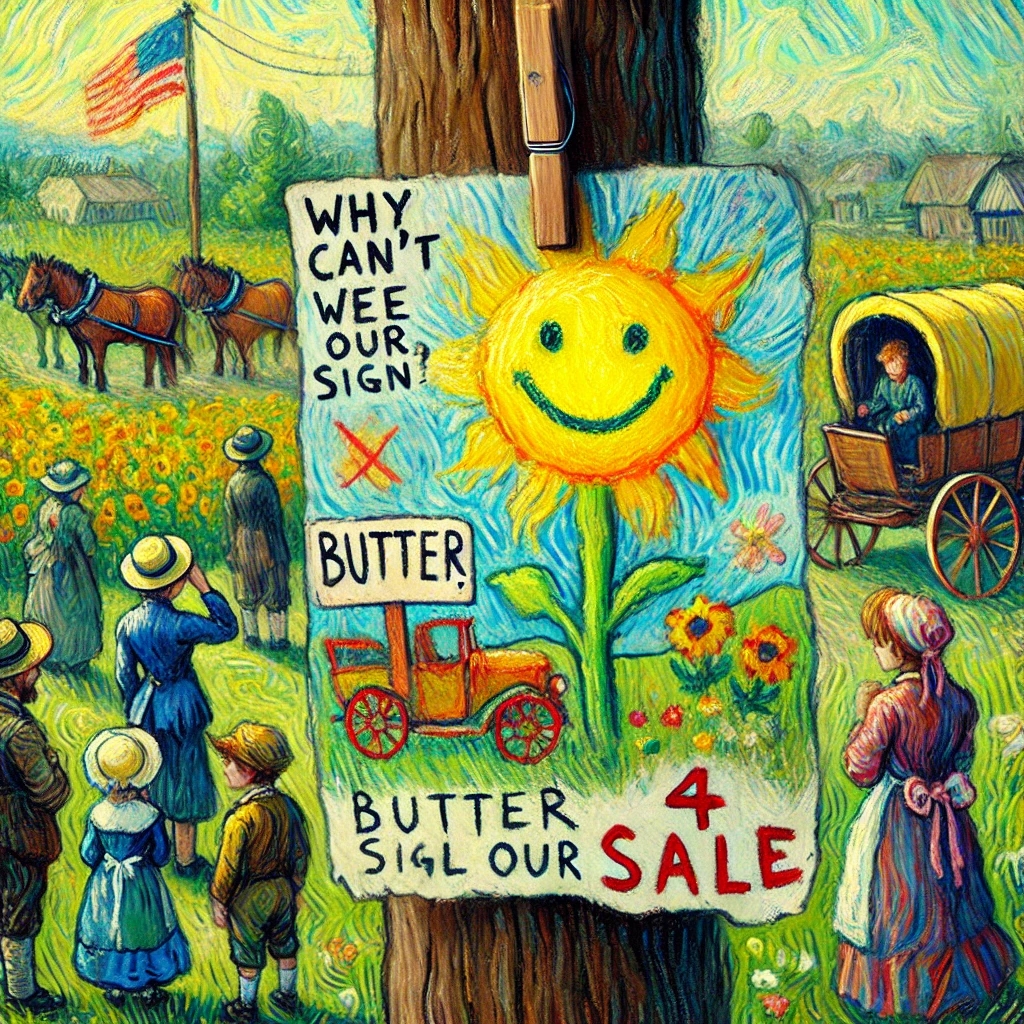
The virtual fallout was immediate. Protest emotes were spammed. Mabel Dean led a virtual hymn sit-in coded entirely in MIDI files. Ezekiel the goat, digitized by a fan mod, headbutted the billboard repeatedly until it glitched and displayed nothing but static and ASCII butter churns.
The Escalation
It came to a head when little Ruthie Schrock, aged 9, wrote a heartfelt letter titled “Dear Town, Please Let People See Our Butter Sign Again.” Boot Barnes printed the letter on an old plotter and affixed it to the side of his truck, which he then parked sideways in front of the developer’s sales office.
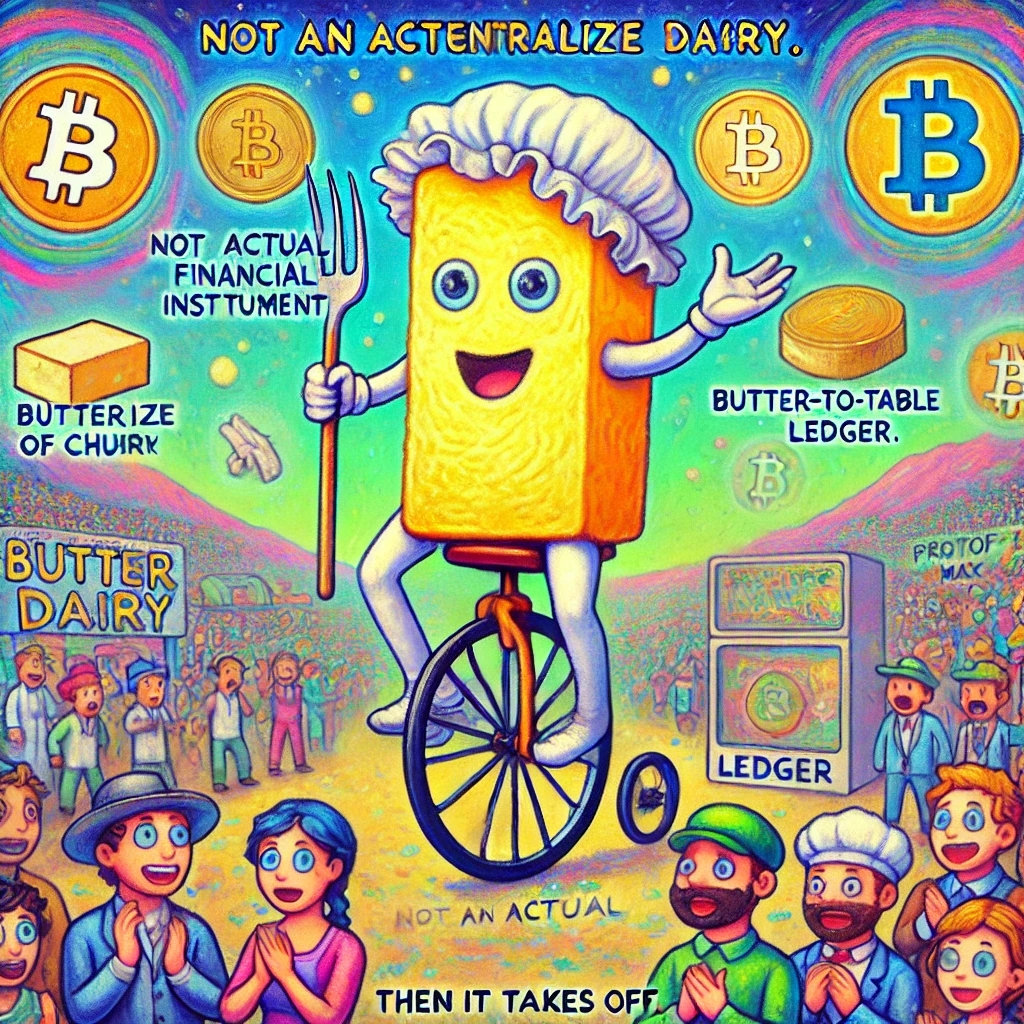
Meanwhile, in the virtual world, the butter wars continued as rival billboards began popping up. One offered “Free Wi-Fi and Tiny Homes.” Another? A competing ad for “SchrockCoin,” which nobody understood but assumed was satire.
Mabel Dean accused the developer of “algorithmic gentrification,” a term no one had heard before but immediately agreed sounded bad.
The Resolution
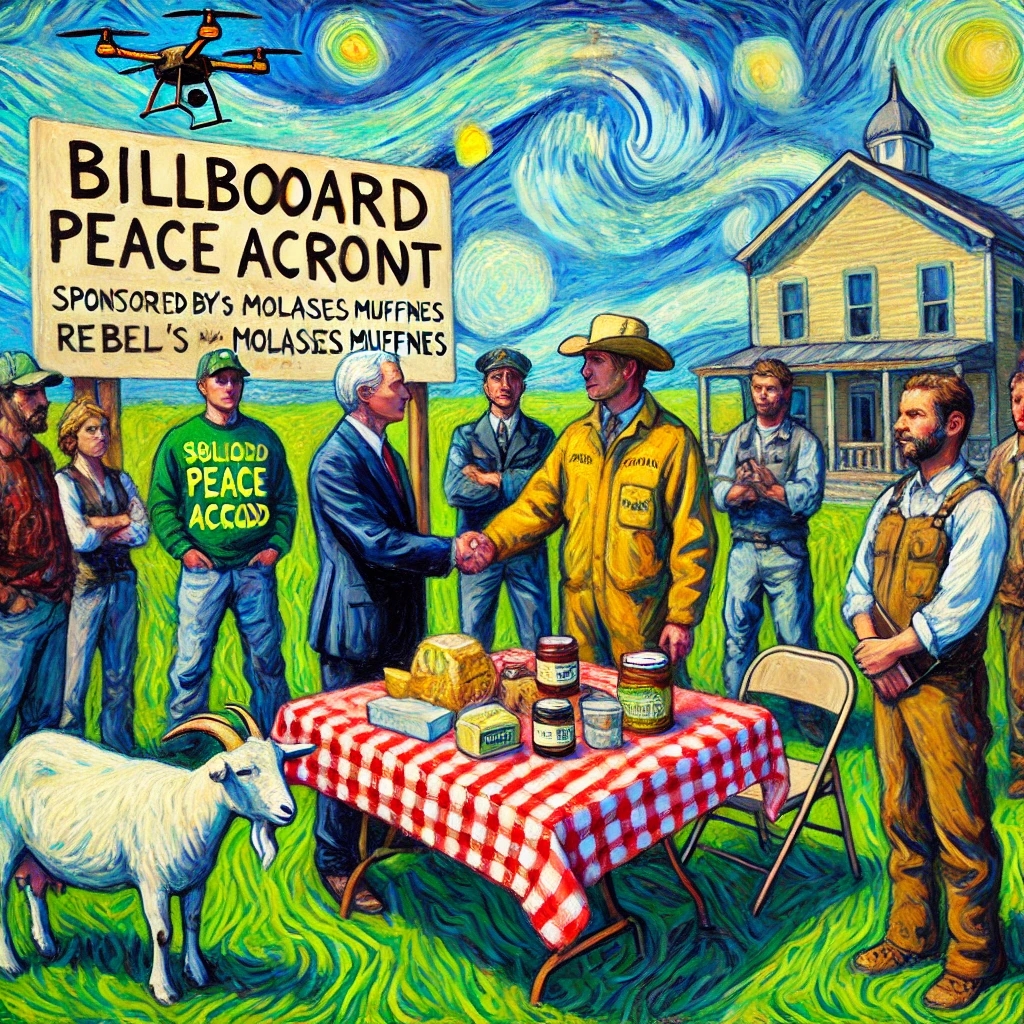
Mayor Halpern brokered a peace accord with a compromise: the LED billboard would be moved 12 feet to the left (just enough to reveal the Schrock sign), the virtual version would display a rotating banner featuring both ads, and Clovis would be barred from offering unsolicited technical support for a year.
The developer issued a formal apology at the Sunday potluck, where he offered coupons for “Bold Acres” model homes. They were universally rejected.
As for the Schrocks? Business doubled. People came from as far away as Pikeville to support the store and take selfies in front of the now-partially-revealed sign, which had become a symbol of rural resistance.
Epilogue: Butter Prevails
Back in the virtual town square, the developers patched in a new “Billboard Ethics” plugin. Mabel Dean got her own digital megaphone, and Boot Barnes launched a mod allowing avatars to throw digital butter sticks at any sign that violated taste or decency.
It didn’t solve everything, but in Sequatchie Crossing—real or pixelated—it was a start.
Disclaimer: The Sequatchie Crossing Dispatch is a work of fiction rooted in satire, folklore, and the uniquely combustible charm of small-town life. The events, characters, and digital goat uprisings described in this story are entirely fictional—or at least highly embellished. While Sequatchie Crossing may resemble small towns you’ve known (and gossiped in), it exists only in the realm of satire, sweet tea, and speculative storytelling. Any resemblance to real shirtless realtors, butter-based cryptocurrencies, or metaverse protests is purely coincidental, though we sincerely hope someone’s working on SchrockCoin. This tale is meant for entertainment, light-hearted reflection, and a gentle reminder that sometimes the smallest signs—especially the hand-painted wooden ones—carry the biggest meaning. Please do not attempt to fix zoning disputes with a tambourine. Unless you’re Mabel Dean. This is a work of fiction. Any resemblance to real bake-offs, sweet cornbread heresy, or historic skillets is entirely coincidental—but in Sequatchie Crossing, entirely plausible. Just in case. Any resemblance to real people, living or just stubborn, is purely accidental—but also maybe a little flattering. Sequatchie Crossing exists only in the minds of those brave enough to imagine a town where zoning laws, casseroles, and conspiracy cassettes collide in glorious disarray.
At Sequatchie Crossing, we tell the stories of Sequatchie Crossing.
Please share this post with your friends, family, or business associates who may want help telling the stories of their legacy.

0 Comments