


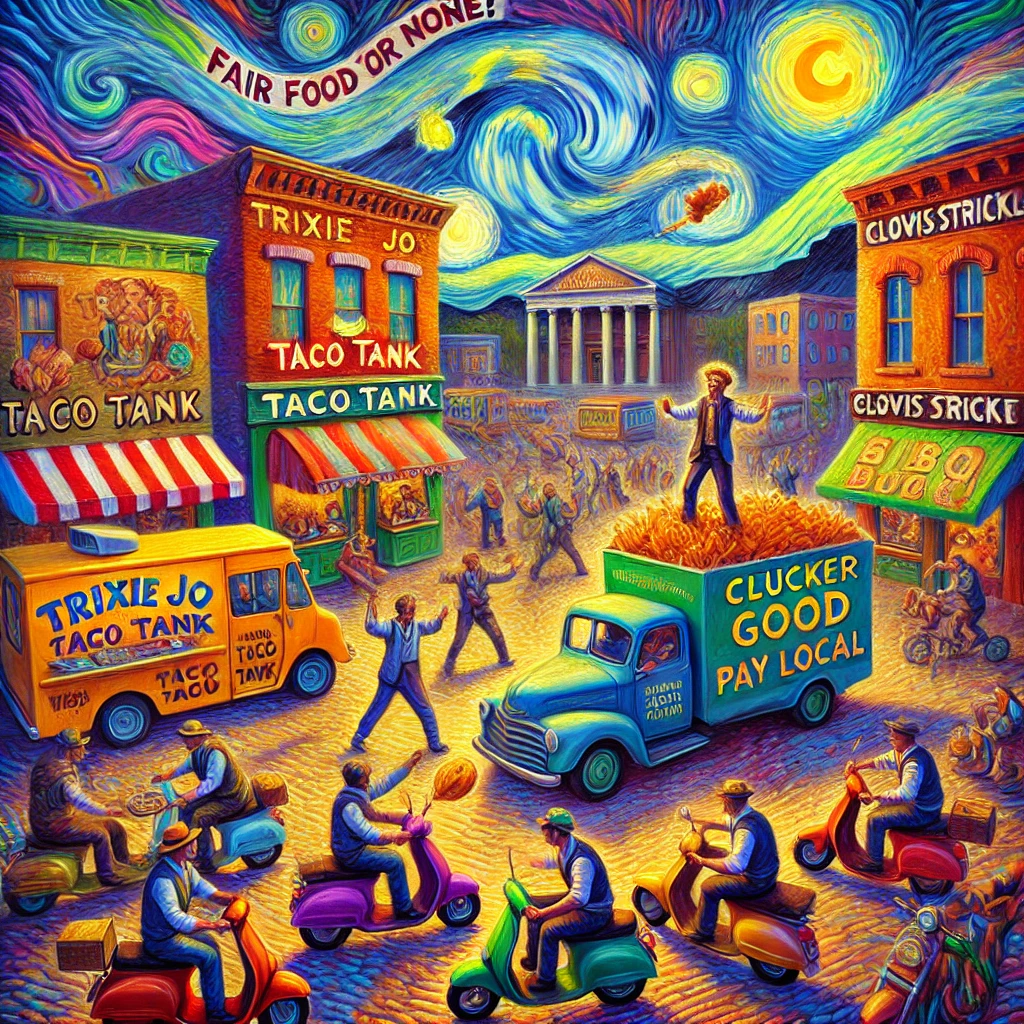
If Everyone’s Eating, Someone’s Cheating.
By Tom Seest
At Sequatchie Crossing, we tell the stories of Sequatchie Crossing.
Please share this post with your friends, family, or business associates who may want follow the news from Sequatchie Crossing.
🎤 Audio Overview
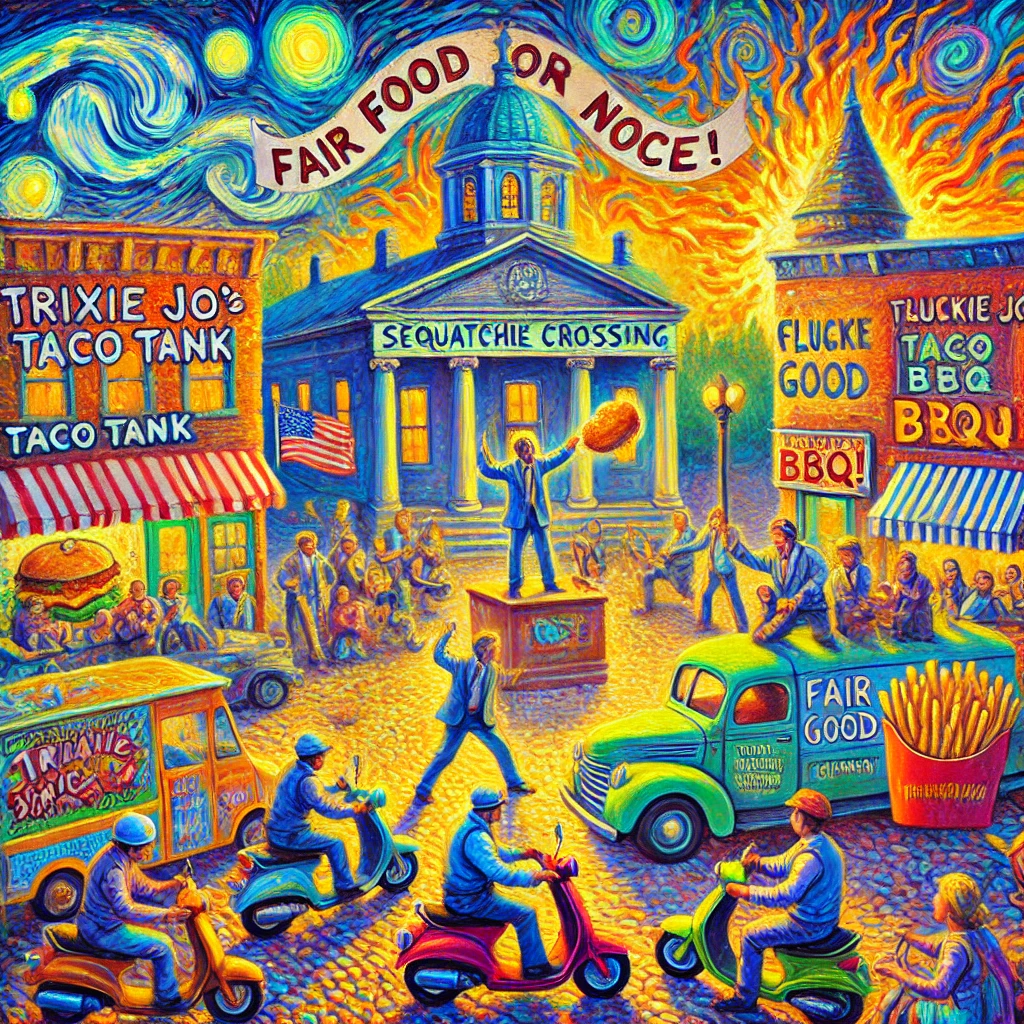
The Fair Food War of Sequatchie Crossing
Act I – The Fairness Epidemic
The trouble began, as Sequatchie troubles often do, over breakfast.
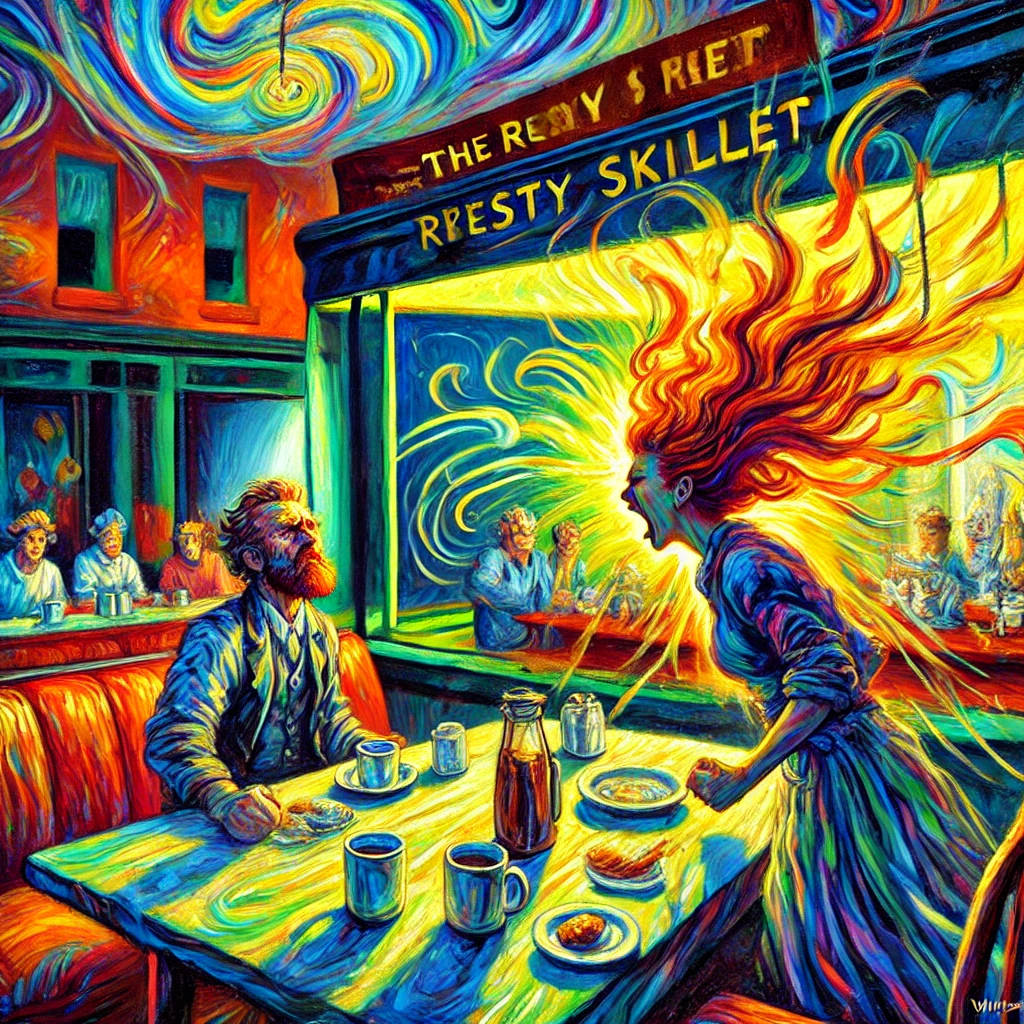
It was a sunny Monday at The Rusty Skillet, where the Chamber of Commerce held its monthly “Biscuits & Business” meeting. The coffee was burnt, the bacon was perfect, and the conversation turned – inevitably – to jealousy.
Mabel Dean Ashcroft, proud owner of The Gravy Boat Café and self-proclaimed defender of “culinary decency,” slammed her fork down on the table.
“I’ve had it up to my elbows in lard,” she said, her voice sharp enough to cut butter. “These food trucks roll in on a Friday night, steal our customers, then roll right out without payin’ rent or taxes. It’s time we level the skillet.”
Her proposal was simple: a Food Mobility Fairness Tax.
If your kitchen had wheels, you’d pay double.
If your wheels had chrome, triple.
Across the room, Clovis Strickland – local gadfly, part-time mechanic, and full-time loudmouth – nodded approvingly. “I’ve said it before and I’ll say it again: you can’t spell ‘commerce’ without ‘com’ – as in completely unfair.”
But not everyone agreed.
Trixie Jo Bartlett, owner of Trixie Jo’s Taco Tank, stood up so fast her chair fell backward. “You restaurant folks just mad ’cause people like their tacos fast, their prices low, and their windows optional.”
“You don’t pay no property tax!” Mabel shot back.
“You don’t pay no generator tax!” Trixie countered.
“Well maybe I should start!” Mabel said, missing the irony entirely.
The meeting ended with the sound of silverware clattering and someone accidentally setting fire to a napkin in protest. By the time the biscuits cooled, Sequatchie Crossing had declared war – on itself.
Act I – The Fairness Epidemic
Act II – The Kitchen Equality Movement
By Wednesday, every diner, food truck, and church potluck was taking sides. The Sequatchie Courier headline read:
“Food Fairness Feud Boils Over: Town Divided Between Fork and Wheel.”
The restaurant owners formed the Sequatchie Crossing Restaurant Alliance, chaired by Mabel Dean, whose slogan was “Eat Local, Tax Mobile.”
The food truck owners retaliated by forming the Mobile Meal Guild, chaired by Trixie Jo, whose slogan was “Move Fast, Feed Furious.”
Then came an unexpected third faction: the Home Kitchen Federation, led by none other than old Mrs. Gentry – wife of Reverend Gentry – who took offense to the entire notion of culinary licensing.
“They’ll tax your toast next,” she told the ladies’ quilting circle. “Then your butter knife. Then your appetite.”
Within days, protest signs sprouted like dandelions across town:
-
“BAN THE VAN GRAVY PLAN”
-
“DON’T TAX MY TACO”
-
“NO PERMIT FOR POTATO SALAD”
-
“HOME COOKS DESERVE RIGHTS TOO”
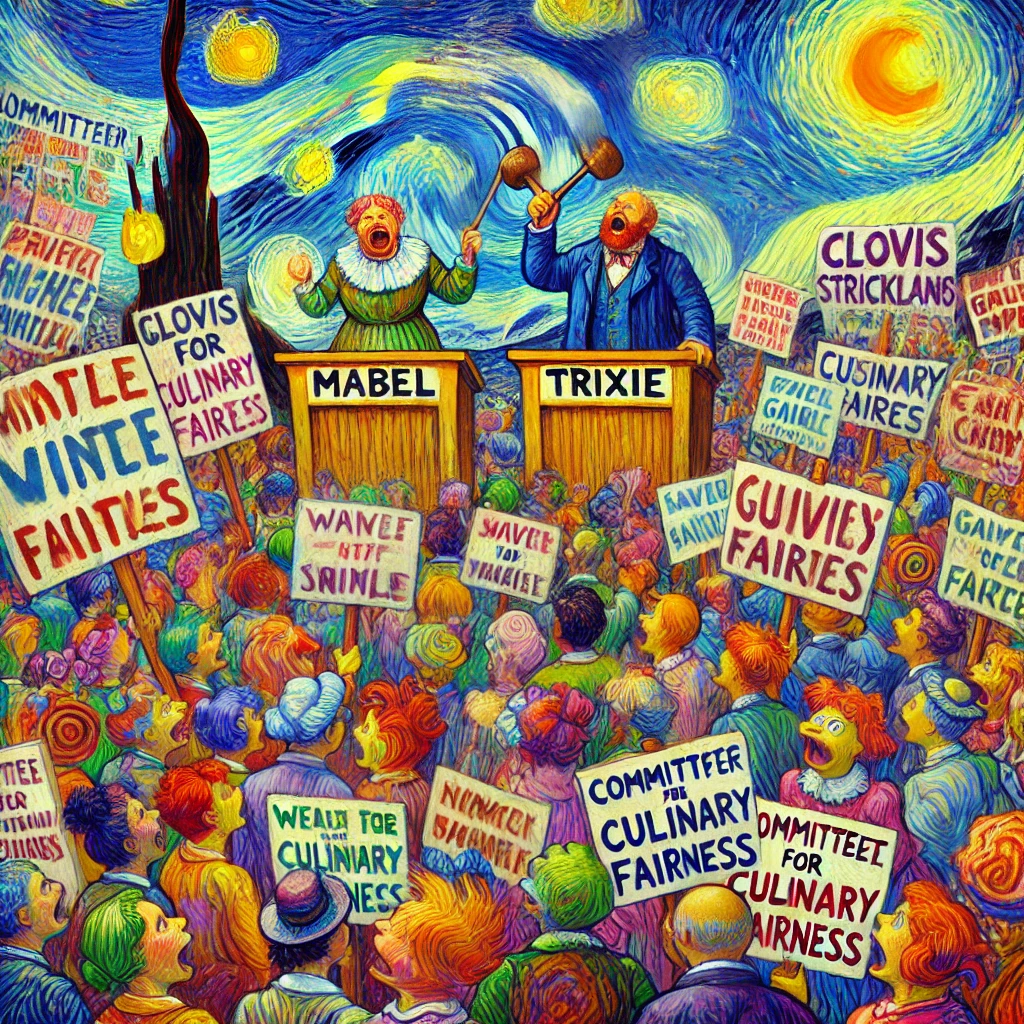
The County Commission chambers were soon packed tighter than Mabel Dean’s biscuit dough. Clovis Strickland was elected chair of the Committee for Culinary Fairness, largely because nobody else wanted to miss lunch.
“Sequatchie Crossing has reached a crossroads,” Clovis declared at the first meeting. “Either everyone pays, or no one eats.”
Reverend Gentry murmured, “There’s got to be a verse against that,” but no one heard him.
Act II – The Kitchen Equality Movement
Act III – Taxation Without Mastication
The first draft of the new Fair Food Ordinance was forty-seven pages long and written entirely in pencil by County Clerk Bernice Cargill, who had a flair for drama and a weakness for snacks.
It proposed:
-
A Residential Culinary Activity Fee for every home-cooked meal exceeding three ingredients.
-
A Portable Vendor Equity Assessment for food trucks that crossed municipal lines more than twice a day.
-
A Sustenance Neutrality Tax for all delivery drivers making more than two deliveries per hour without expressing gratitude.
There was even a section about “unauthorized nibbling.”
During the public reading, Boot Barnes stood up from the back row. “What about cookouts?” he asked.
Bernice adjusted her glasses. “Are they private or commercial?”
“They’re burgers, ma’am.”
“Then that’ll depend on condiment classification,” she said solemnly.
Mabel Dean nodded approvingly. “Finally, someone’s taking mustard seriously.”
When the ordinance passed the first round of voting, Trixie Jo drove her taco truck straight to City Hall and parked it on the mayor’s lawn in protest.
“This is tyranny!” she shouted through a megaphone. “If y’all gonna tax me for feeding people, then I say we tax home kitchens! If you fry, you pay!”
Within hours, the Home Kitchen Federation retaliated with its own proposal: a “Storefront Grease Surcharge.”
Then the delivery drivers joined in, demanding reparations for “unfair plate privileges” enjoyed by sit-down diners.
The debate reached philosophical levels. One councilman asked whether a frozen dinner counted as “pre-taxed,” and another wondered aloud if chewing gum was technically “food.”
By then, nobody was sure if they were legislating or losing their minds.
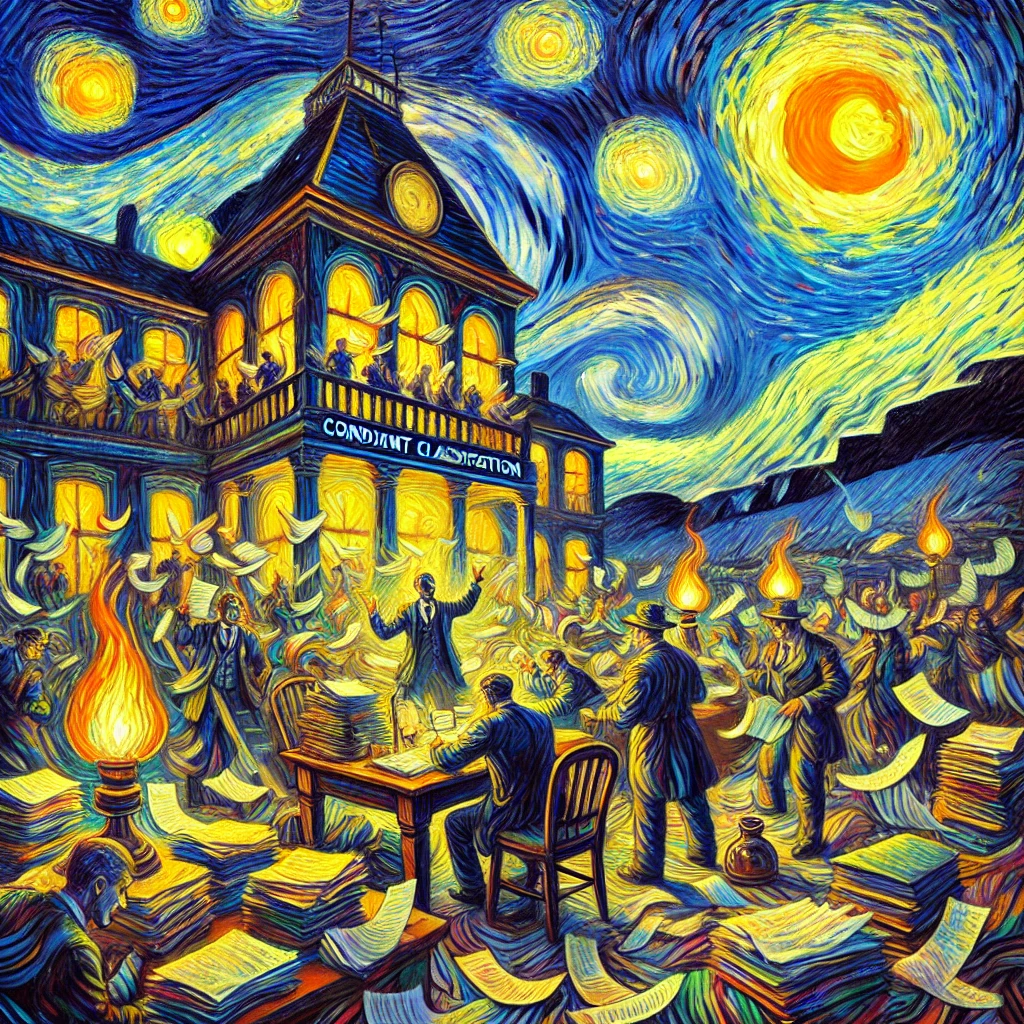
Act III – Taxation Without Mastication
Act IV – The Great Culinary Collapse
The first casualty of the Fair Food War was The Rusty Skillet itself.
Its regular customers couldn’t afford the new Meal Equity Surcharge, and Mabel Dean’s biscuit supply was seized for “caloric redistribution.”
Meanwhile, food trucks began issuing their own currency – Taco Tokens – to avoid paying in “taxable tender.”
Home cooks resorted to secrecy, whispering recipes like contraband. The smell of lasagna became grounds for investigation.
Reverend Gentry tried to preach reconciliation. “Let us break bread together,” he said.
But the ushers fined him for serving unauthorized communion.
One night, under the glow of the courthouse streetlamp, Boot Barnes met Trixie Jo by the taco truck.
“This whole thing’s gone stupid,” Boot said.
“It was stupid when they taxed biscuits,” Trixie replied. “Now it’s a full-blown casserole of chaos.”
They decided to stage an act of civil disobedience: the Underground Supper Club.
They invited locals to a secret dinner in the high school gym, charging no fee, filing no forms.
Each guest brought something home-cooked, unlicensed, and delicious.
Word spread fast.
By the time the sheriff arrived, even he couldn’t resist the smell of cornbread. He joined in, hat off, chewing thoughtfully.
When Mabel Dean stormed in, her eyes softened as she saw everyone – restaurant owners, truck vendors, delivery drivers, and home cooks – eating side by side.
She sighed. “Maybe fairness ain’t the same thing as justice. Or flavor.”
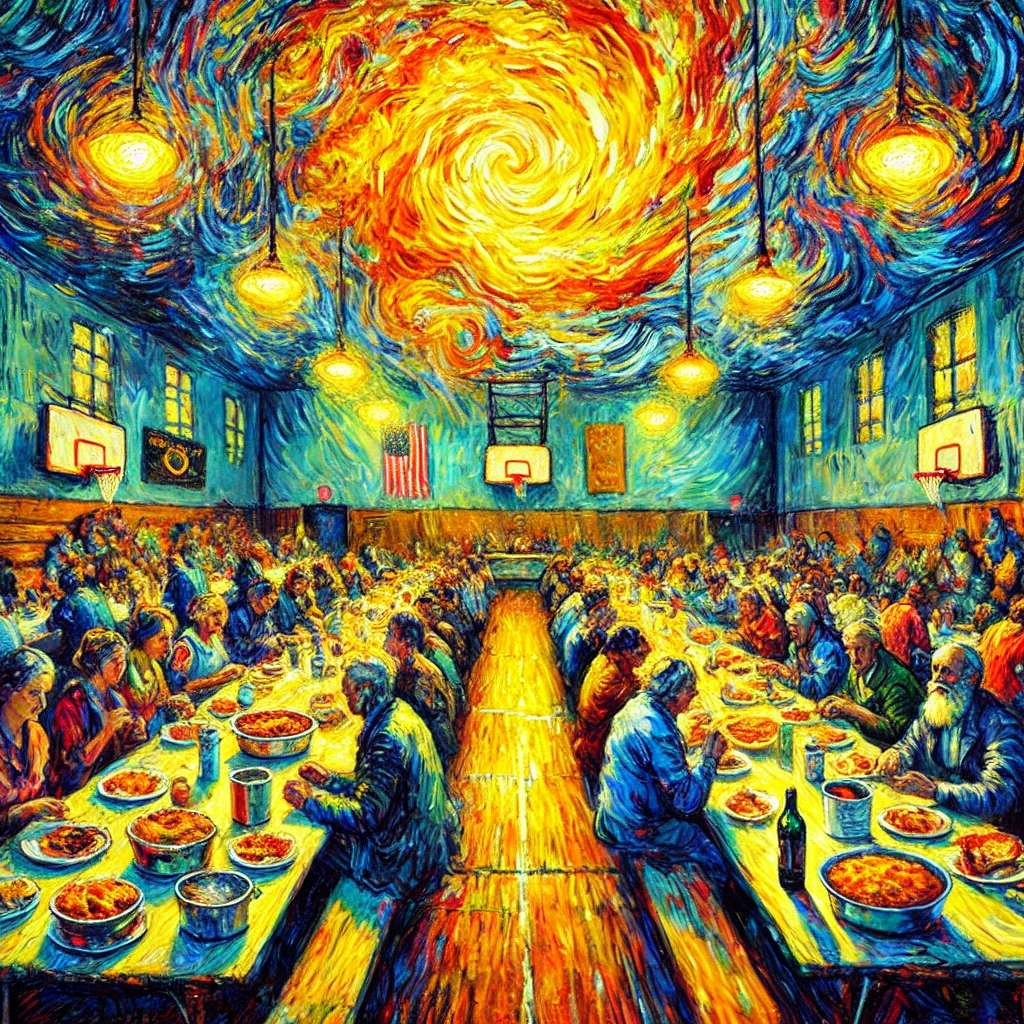
Act IV – The Great Culinary Collapse
Epilogue – The Equal Bite Accord
The next day, the County Commission repealed all food-related taxes, declaring them “inefficient, unenforceable, and impolite.”
Instead, they passed the Sequatchie Culinary Freedom Resolution, which stated simply:
“Let all who hunger, eat. And let none be fined for doing so.”
Food trucks were granted permanent parking near City Hall.
Restaurants got a tax credit for good gravy.
Delivery drivers were honored with free biscuits for life (Mabel Dean insisted they’d need to pick them up in person).
And Boot Barnes was appointed Commissioner of Common Sense, a position that paid nothing but came with unlimited leftovers.
Sequatchie Crossing went back to what it did best – complaining about everything while secretly enjoying it all.
On the anniversary of the repeal, they held a community feast called The Fair Fare Festival.
Everyone was required to share a bite from someone else’s plate.
No money changed hands. No taxes collected.
Just the sound of laughter, forks clinking, and one small town remembering that fairness doesn’t come from a law – it comes from a good meal shared without judgment.
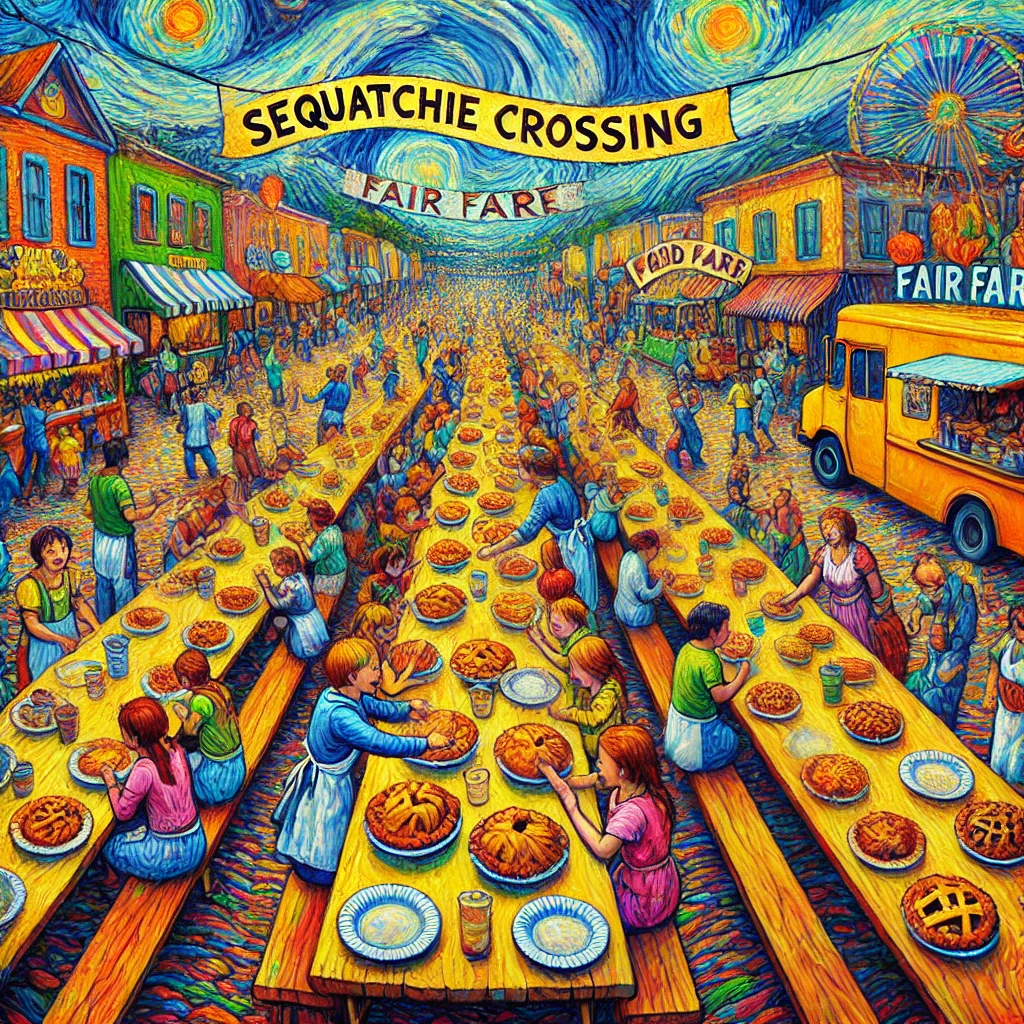
Epilogue – The Equal Bite Accord
Disclaimer
The events, characters, and ordinances in this story are fictional and exist only in the ever-hungry imagination of Sequatchie Crossing. Any resemblance to real legislation or actual municipal attempts to regulate fairness, food, or fun is entirely coincidental – though not implausible.
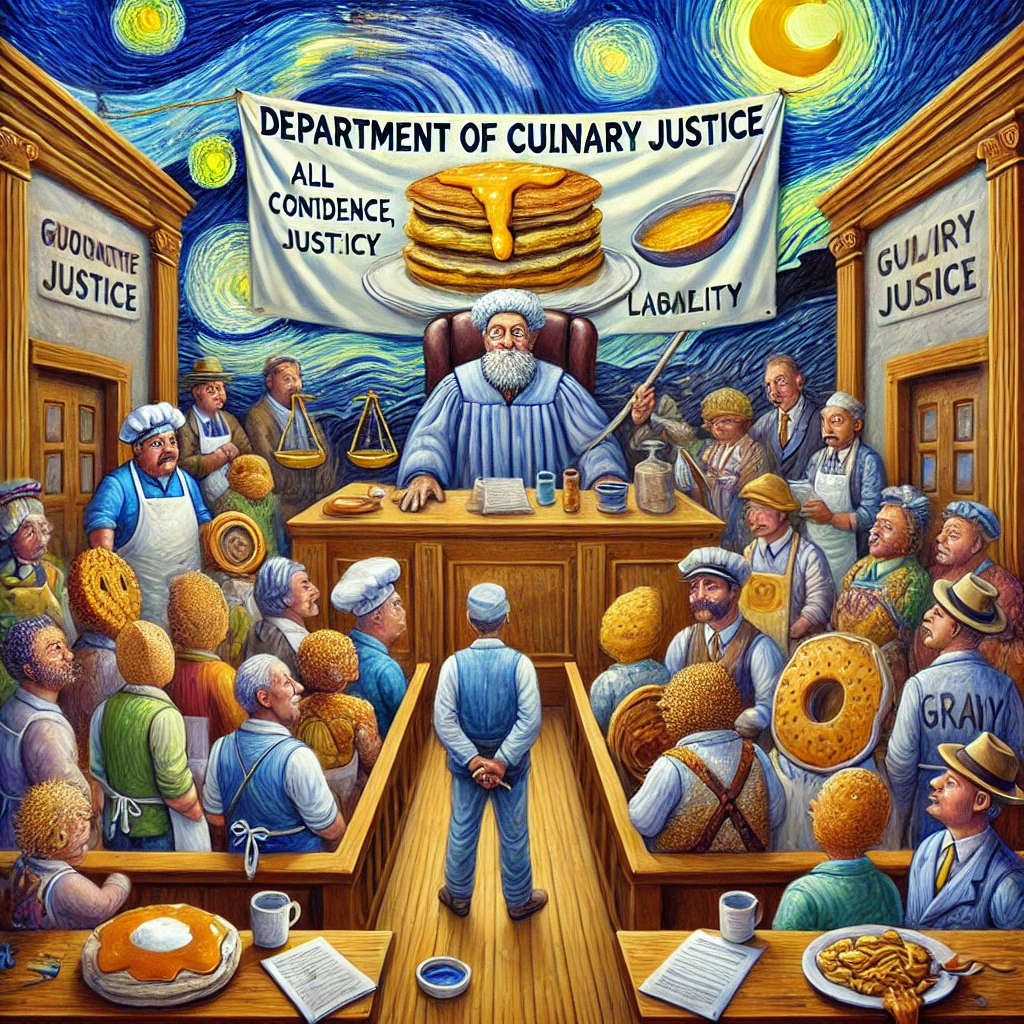
Disclaimer – The Fair Food War of Sequatchie Crossing
Real Places Behind the Ruckus – From The Dunlap Directory
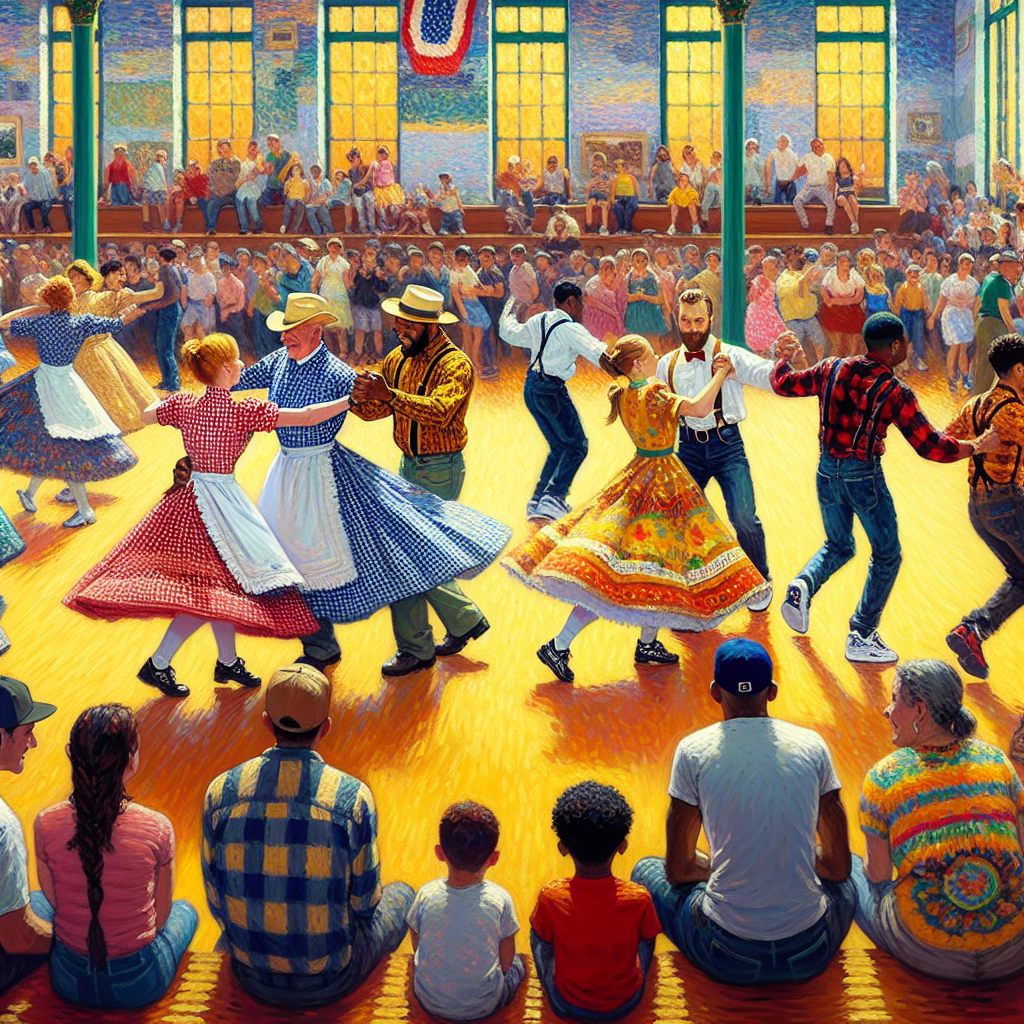
Real Places Behind the Ruckus – From The Dunlap Directory
Yes, this story was fictional; even the parts that weren’t true. These places? Absolutely real. Stop by, support local, and keep the Wi-Fi away from livestock:
- Happy Bottom Office Services
- Sequatchie Cove Farm
- River Life RV Resort
- Affordable Seamless Gutter
- Home Town Inn Soddy-Daisy
- Tennessee Dude & Guest Ranch
- Reed Electric
- RJ’s Garage
- Dunlap Mobile Phone Repair
- L&W Electric, LLC
- Natural Affinity – Handcrafted Herbal Essentials
- Sprouse Insurance Group, LLC
- Chattanooga VIP Tours
- Swafford Septic Services
- The Frozen Frenzy
- Garrett’s Garage Towing & Recovery
- Eco Home Solutions

Real Places Behind the Ruckus – From The Dunlap Directory
At Sequatchie Crossing, we tell the stories of Sequatchie Crossing.
Please share this post with your friends, family, or business associates who may want follow the news from Sequatchie Crossing.

0 Comments