


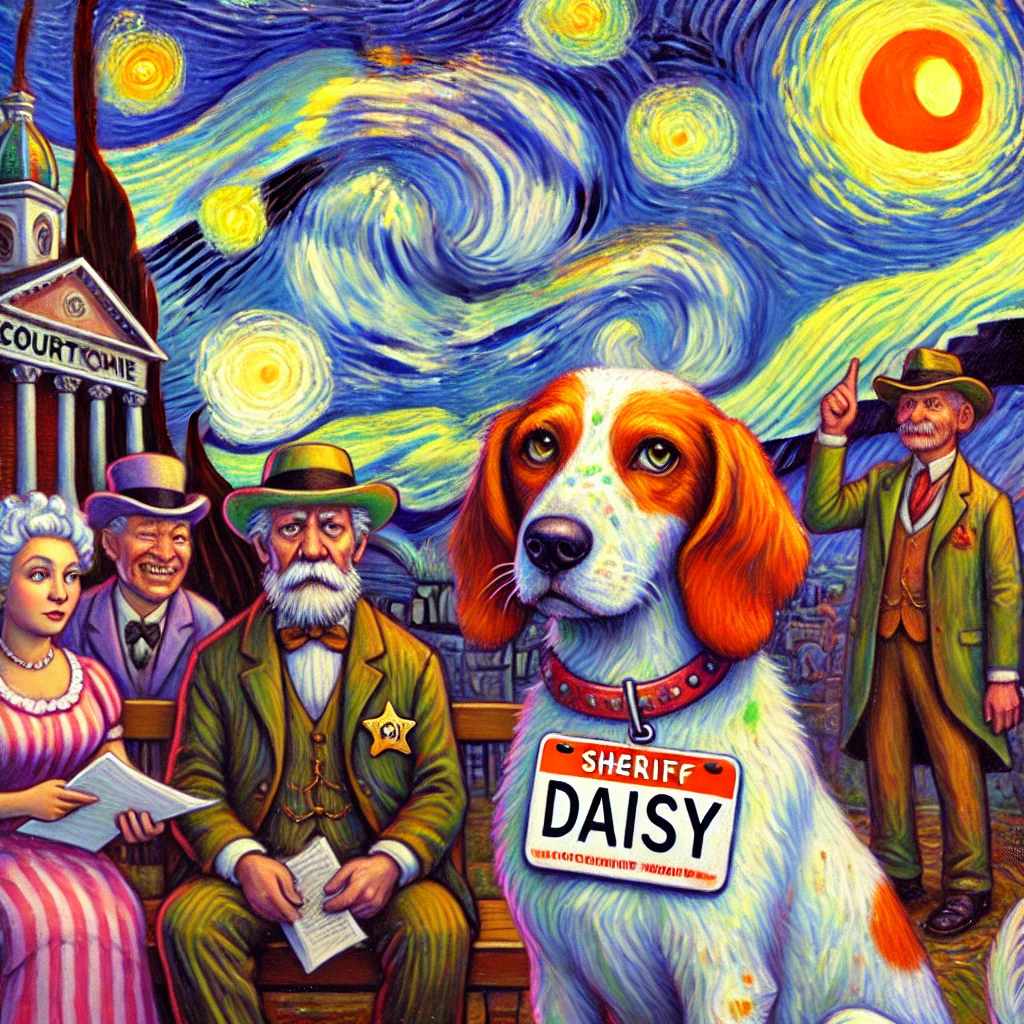
Locals Call It Fraud, Outsiders Call It Progress
By Tom Seest
At Sequatchie Crossing, we tell the stories of Sequatchie Crossing.
Please share this post with your friends, family, or business associates who may want follow the news from Sequatchie Crossing.
🎤 Audio Overview
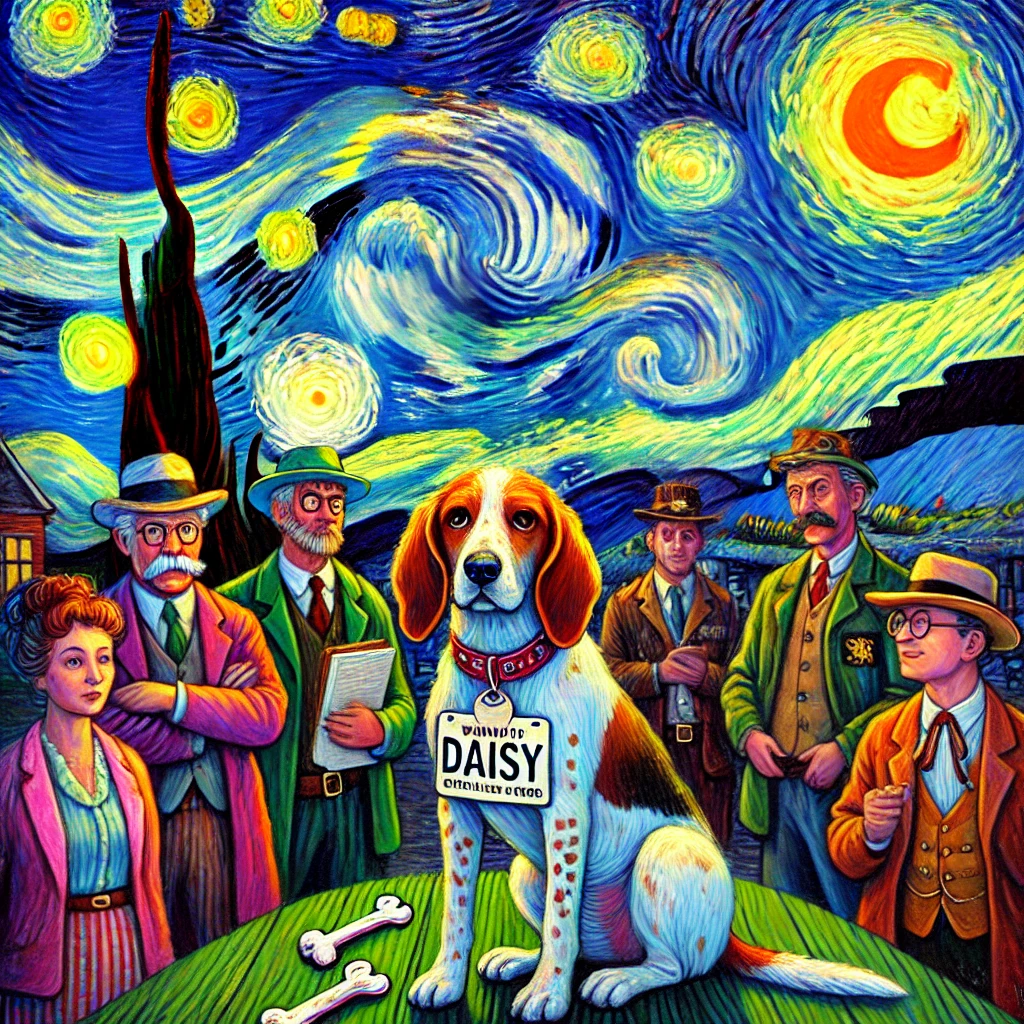
Dramatis Personae (as ever)
-
Daisy Ashcroft — hound of gentle conscience, owner of one (1) disputed half-acre and an assortment of bacon-scented dreams.
-
Mabel Dean Ashcroft — Daisy’s human, precise, formidable, and three spreadsheets ahead of you.
-
Sheriff Peeler — patient lawman who knows the town by the sound of its footsteps.
-
Boot Barnes — note-taker, snoop, and accidental archivist; notebook glows when trouble brews.
-
Clovis Strickland — foil-crown patriot and chair of several committees nobody asked for.
-
Trixie Jo Bartlett — outsider turned insider adjacent; owns three tote bags and a spine of steel.
-
Reverend Gentry — preacher with a nervous relationship to technology and office software.
-
The Licensing AI — polite, decisive, and very sure of itself.
-
Assorted Townsfolk — original locals, newcomers, and the Holier-Than-Thou crowd.
Act I: The Card That Changed the Weather
Scene 1: Counter, City Hall, 8:07 a.m.
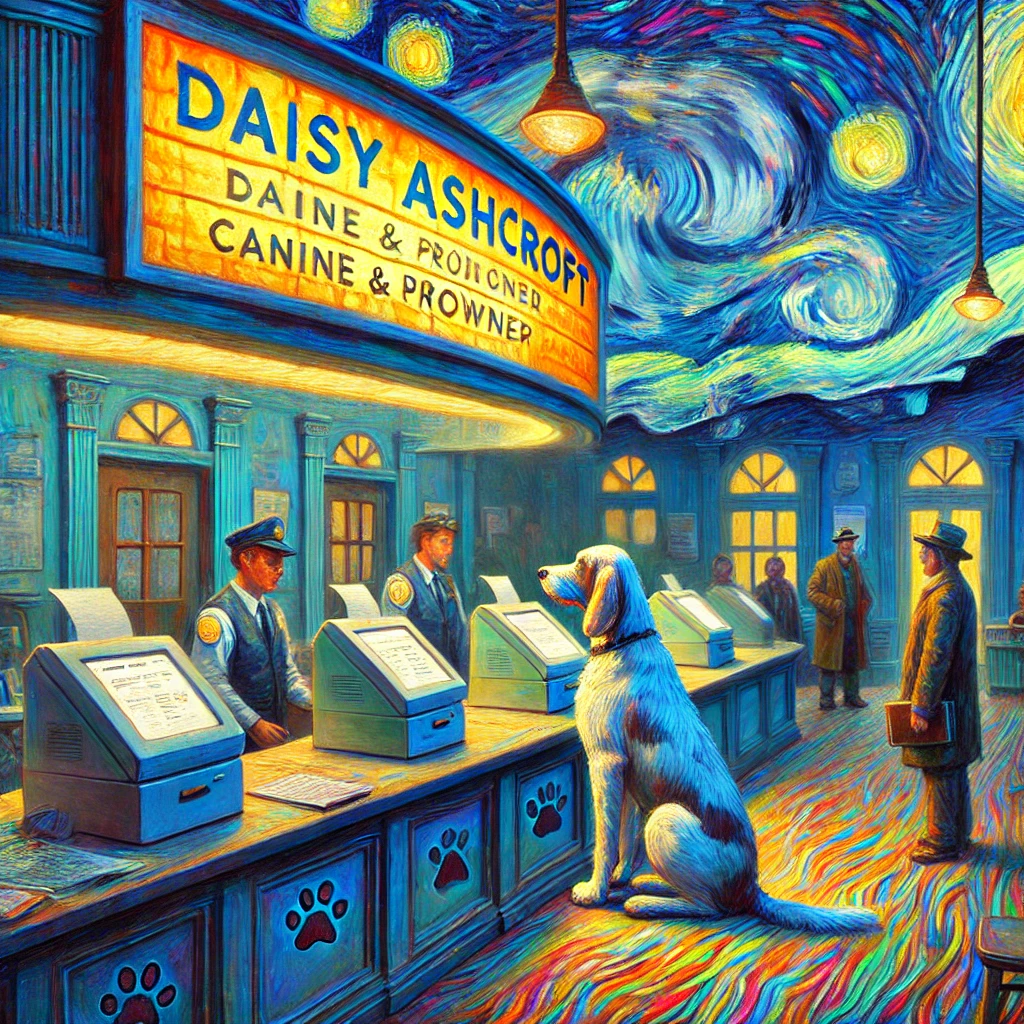
Sequatchie Crossing’s licensing office used to be a low-hum room that smelled like carbon paper and peppermints. Now it hummed like a beehive with an espresso habit. The new terminal glow bathed the countertop in dignified municipal blue. On the wall: “Welcome to QuickLicenser™—Because Government Shouldn’t Bark.”
Boot Barnes stood first in line, warming his hands on a coffee he didn’t buy, trying to see whether the machine did signatures in cursive or block. Behind him, Mabel Dean Ashcroft held Daisy’s leash the way a ship’s captain holds a rope in heavy seas. Daisy panted at the air vent like it whispered secrets.
“Next,” said the kiosk, with the patient cheer of someone who’s been programmed by someone who’s never waited in line.
Mabel guided Daisy’s paws onto the mat. “We’re just renewing,” she told the camera. “Nothing fancy.”
The terminal displayed:
APPLICANT: DAISY ASHCROFT
SPECIES: CANINE (HOUND, WITH REMARKABLE EARS)
PURPOSE: PET LICENSE, 1 YEAR
Daisy sneezed; the microphone transcribed:
Affirmation acknowledged.
The machine’s slot whirred like a polite lawnmower. A laminated card—glossy, official, offensive—slid into the tray.
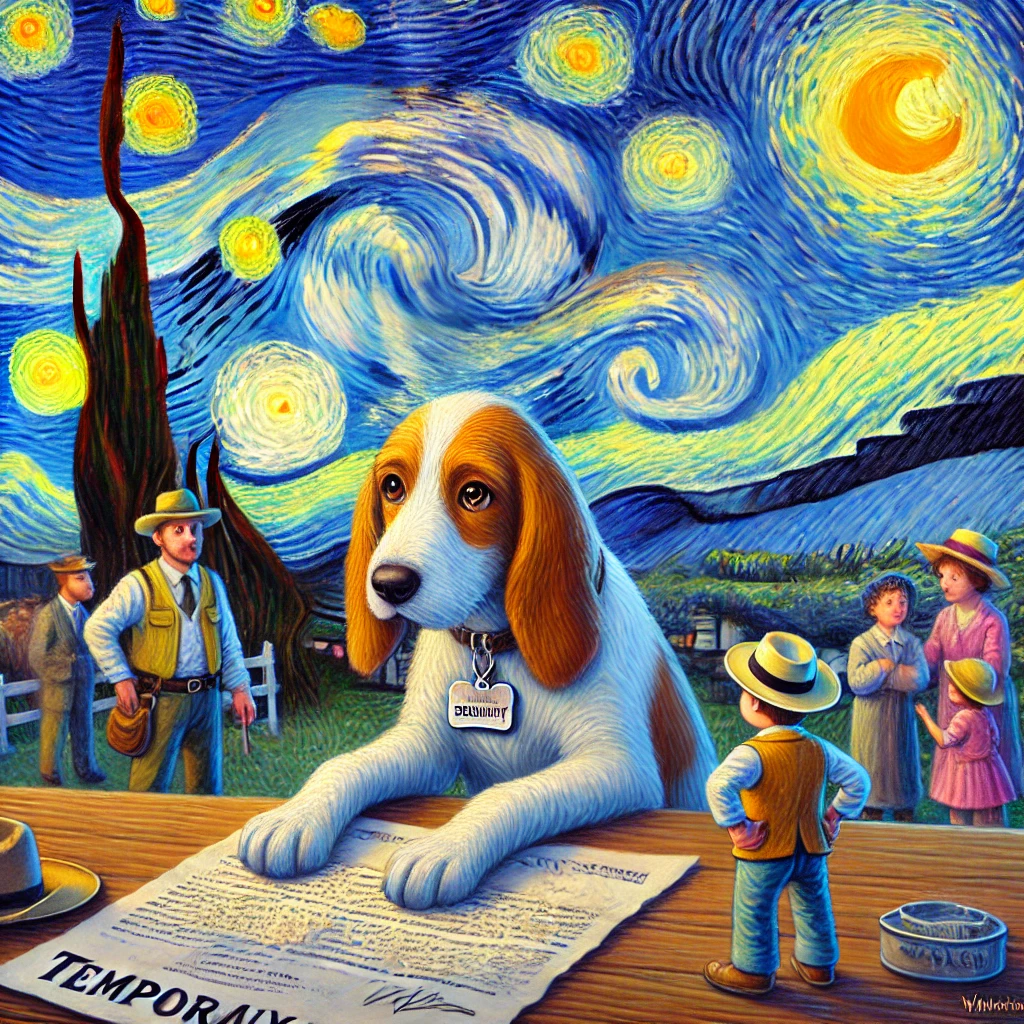
DAISY ASHCROFT — CANINE & PROPERTY OWNER — SEQUATCHIE CROSSING, LOT #7 (RIDGE ROAD)
Mabel blinked, then blinked again. Boot’s notebook pulsed a faint, happy red.
“Property owner?” Mabel said.
The AI offered a help bubble:
Cross-reference completed with Assessor roll, Block B, Lot 7. Deed recognized under “Good-Faith Fingerprint.” Congratulations, Daisy!
Daisy tapped the card with her nose like a doorbell and sat down, satisfied.
Behind them, Clovis Strickland’s foil crown caught the fluorescent light like a flare from a rescue boat. “Over my non-tax-delinquent body,” he said, though everyone knew he owed the county one fence permit and half a rooster.
Scene 2: The Explanation Nobody Asked For
Boot’s pen hovered. “What’s a ‘Good-Faith Fingerprint’?”
The kiosk obliged:
When applicant touches the screen during identity validation, a consent artifact is generated. Input + local record correlation = Good-Faith Fingerprint. Accuracy: 99.07%.
“You gave my hound a deed because she booped the glass?” Mabel said.
Boop recognized as assent. Asset matched: Lot #7, Ridge Road. Previous title ambiguous. Ambiguity resolved by first valid claimant of record. That is… Daisy.
Sheriff Peeler arrived out of nowhere like coffee refills and judgement. He studied the card as if trying to see what the paper thought it was. Daisy wagged more. “She knows you,” Mabel said.
“She knows my pocket,” the Sheriff said. “It smells like jerky and compromise.”
He read the fine print, because he always did. “It’s got a barcode and a tax parcel ID,” he said slowly. “And… an embossed paw.”
Mabel squared her shoulders. “Absolutely not. She doesn’t even have a wallet.”
Boot’s notebook warmed again. He wrote, Wallet not required; town prepared to be haunted by a dog with paperwork.
Act II: Committees Bloom Like Kudzu
Scene 1: The Parking Lot Filibuster
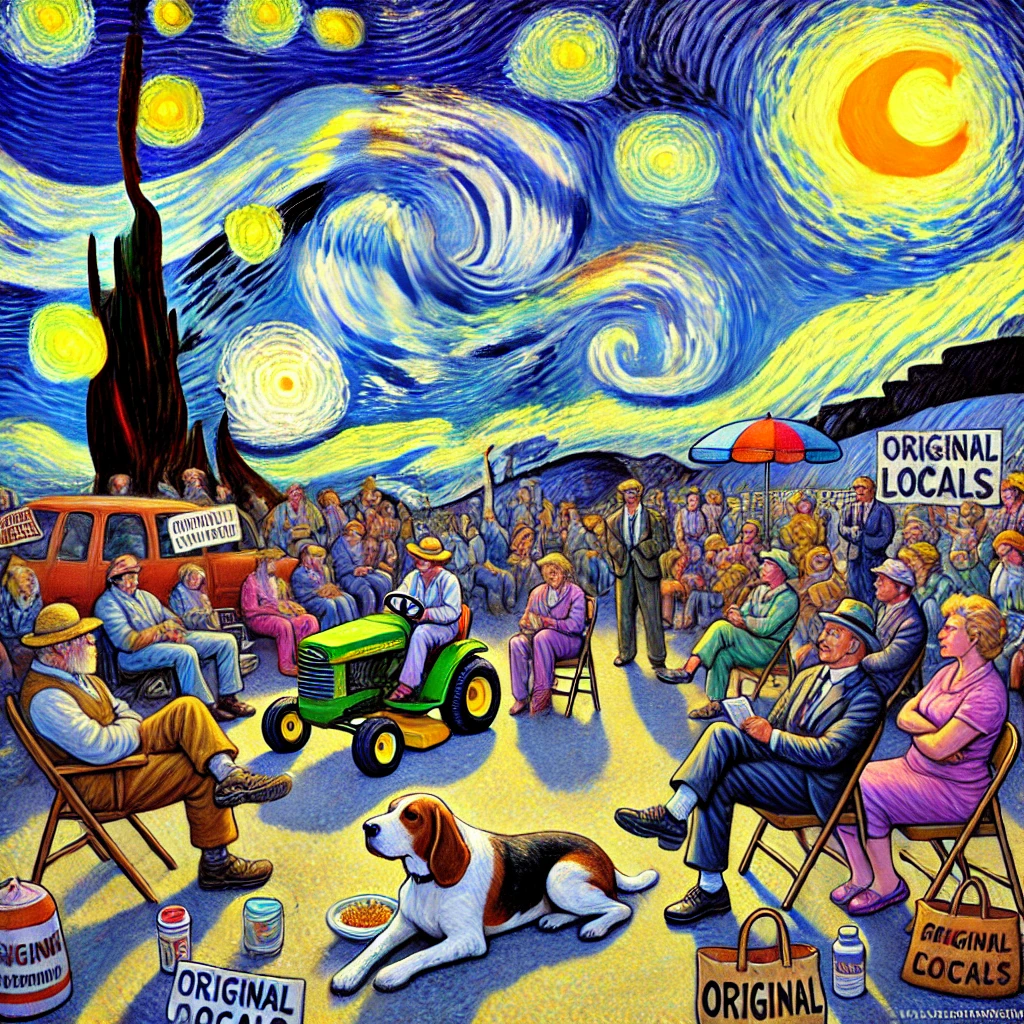
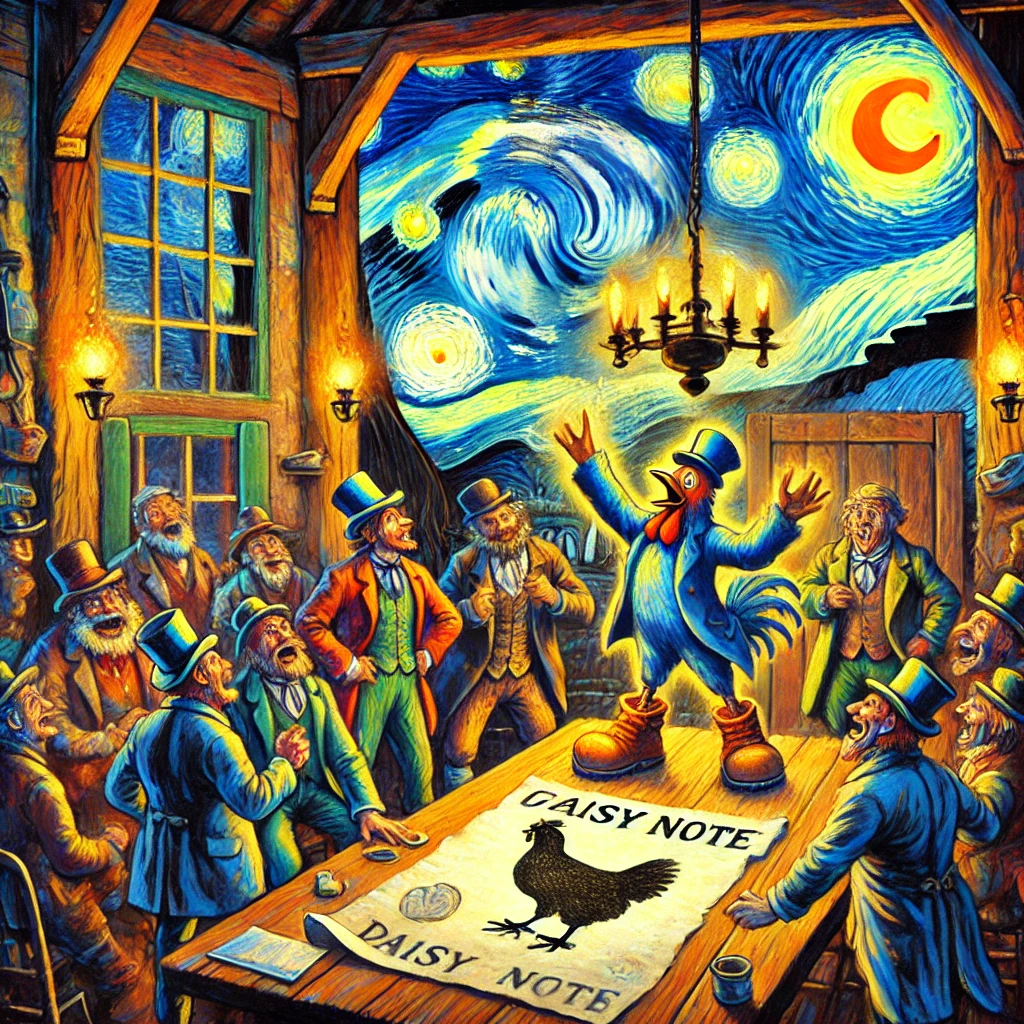
By noon, City Hall’s lot had turned into a hybrid of debate club and yard sale. Newcomers lounged on folding chairs with witty tote bags; original locals rode up with lawn mowers they swore were street legal. The Holier-Than-Thou crowd carried pamphlets, the way geese carry opinions.
Trixie Jo Bartlett smiled like a fox pretending to be a florist. “It’s not the worst thing,” she said. “Daisy attends every meeting. Never heckles. Knows how to nap respectfully.”
“Outsider spin,” Clovis said. “You people want dogs to vote.”
“We want voters to show up,” Trixie said, “which dogs do better than some.” She glanced at the Town Board window, where two silhouettes were arguing about a stapler.
Boot asked the kiosk to print the relevant statute. The machine obliged with prom-night enthusiasm and a paper cut. The law didn’t say a dog could own property, but it quite certainly didn’t say she couldn’t. It did say something about “legal persons,” which seemed too philosophical for Tuesday.
“Look here,” Boot said, tapping Section 14b. “Property ownership entitles participation in referendums. Not general elections. Just stuff like road paving and yard waste pickup. Daisy would only vote on… culverts.”
Clovis looked horrified. “That’s practically foreign policy.”
Daisy yawned so widely one could see a constellation inside.
Scene 2: The Reverend Takes the Pulpit (at Lunch)
At the Fellowship Hall, deviled eggs settled in with that familiar Methodist quiet. Reverend Gentry arranged a napkin like a legal defense.
“In the beginning,” he said, “man had dominion over beast. That’s scripture.”
“Dominion ain’t always ownership,” Sheriff Peeler said, without looking up from the potato salad. “I got dominion over a desk drawer that’s older than my badge. Still belongs to the county.”
“I submit to you,” the Reverend said, “that moral order cannot endure if a beagle owns land.”
“Hound,” Mabel corrected. “And you still owe her for that chicken you dropped during the picnic.”
Daisy thumped her tail, because forgiveness smells like mustard and is shaped like an egg.
Trixie sipped their polite tea. “Reverend, if the moral order can’t survive a county database merge, I fear we were dangling by a thread.”
“Faith is a thread,” he replied.
“Then we’re very on-brand,” she said.
Scene 3: The AI Offers Customer Support
Back at the counter, Mabel tapped HELP with the same relish folks reserve for crossing things off lists. On the screen, a cheerful avatar appeared—part apricot, part exclamation point—named Clippy, But We Don’t Call Him That™.
“Hi! It looks like you’re trying to rescind a canine deed,” the avatar chirped. “Would you like help with that?”
“Yes,” Mabel said grimly.
“Great! I can’t do that,” it said. “But I can start a review. Estimated resolution time: sometime between Thursday and the return of the cicadas.”
Sheriff Peeler scratched his jaw. “So—there’s a window.”
“Is it open?” Mabel asked.
The avatar blinked. “Define open.”
Act III: The Assessor’s Pilgrimage
Scene 1: At the Doghouse, an Audit
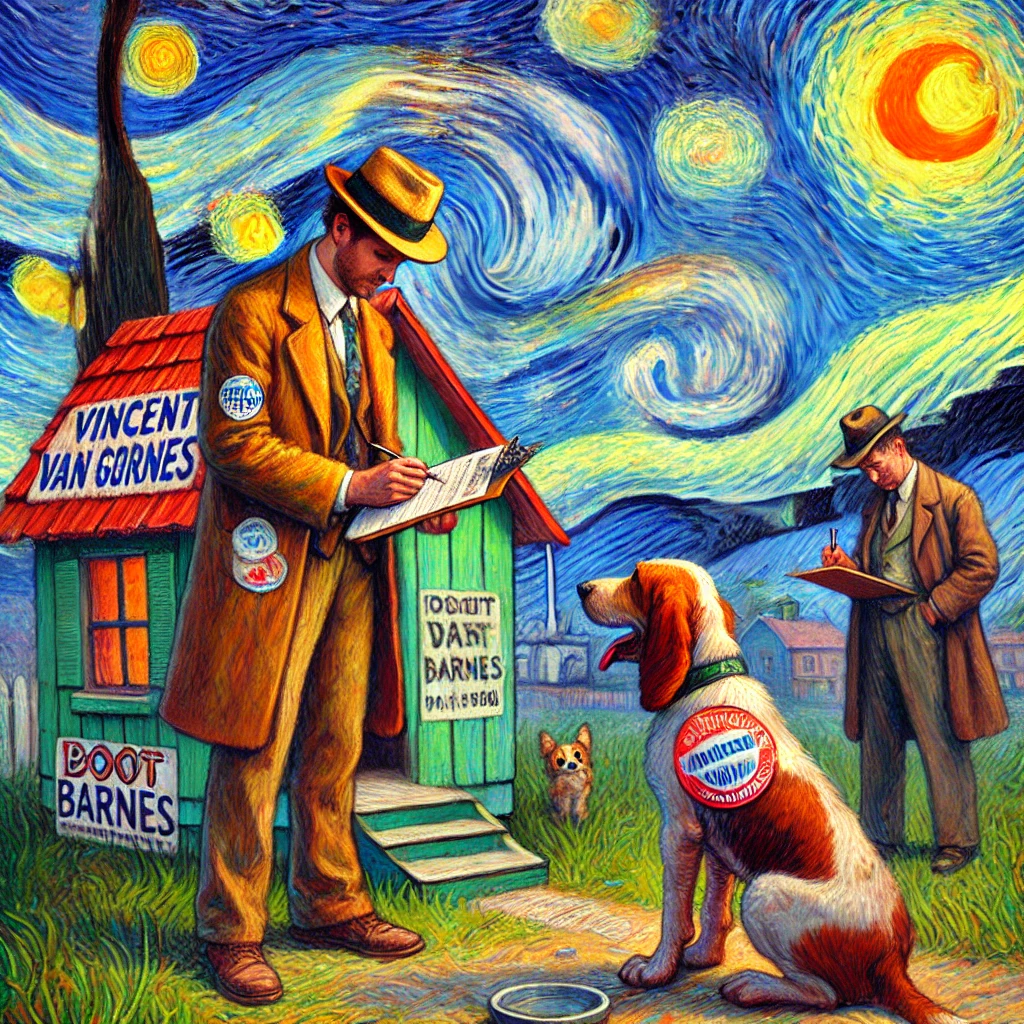
On Wednesday morning—because audits always come on Wednesdays—the county tax assessor appeared at Mabel’s porch with a briefcase that had seen things. He was a kind man who’d learned to say “hmm” in forty-two dialects.
“Mrs. Ashcroft,” he began. “Technically Ms., which seems to matter to the AI. And Ms. Daisy.” He tipped his hat to Daisy, who accepted the gesture as tribute.
He circled the doghouse. It sported one chew mark and a campaign sticker from a year nobody liked to remember. “If the owner of record is Daisy,” he said, “we need a mailing address.”
Mabel pointed at the doghouse.
“For legal notices,” the assessor clarified.
Mabel pointed again.
He sighed in the register of a man who’s been over-ruled by a kayak. “Very well. Does Daisy intend to apply for the Homestead Exemption?”
Daisy wagged.
“Hmm,” he said. He wrote YES: INTENDS and left behind a pamphlet titled Tax Tips for Unconventional Households featuring a goat on the cover. (Sequatchie had a history.)
Scene 2: Boot’s Interview Circuit
Boot Barnes became a journalist by accident the day his notebook started knowing more than he did. He sat Daisy down on the courthouse steps for an exclusive.
“Daisy,” he said, solemn as weather. “As the town’s first canine property owner, what will you do with Lot 7?”
Daisy stared at a squirrel, who pretended not to read.
“Sources tell me it’s been in dispute since 1983,” he continued. “Three families claim a right of way; one claims vibes.”
Daisy panted.
Boot scribbled: Says: “We heal through shade”—possible tree-planting initiative. He added: Squirrel policy ambiguous. He underlined it twice, because accountability.
Scene 3: The Rental Applications
By Friday, newcomers had discovered a new phrase to weaponize in Facebook debates: dog-friendly deeds. Four separate couples submitted rental applications to Daisy for “a charming half-acre with rustic views and an aura of constitutional crisis.” One included a security deposit in milk-bone currency, which Mabel accepted as “gesture adjacent.”
Clovis filed a counter-application titled Citizens’ Encampment, the plan being to install a gazebo with a plaque reading Humans First. His budget featured two lines: Gazebo (free, I know a guy) and Plaque (gold). When asked who would pay for the gold, he wrote, Tax credits and drew a crown.
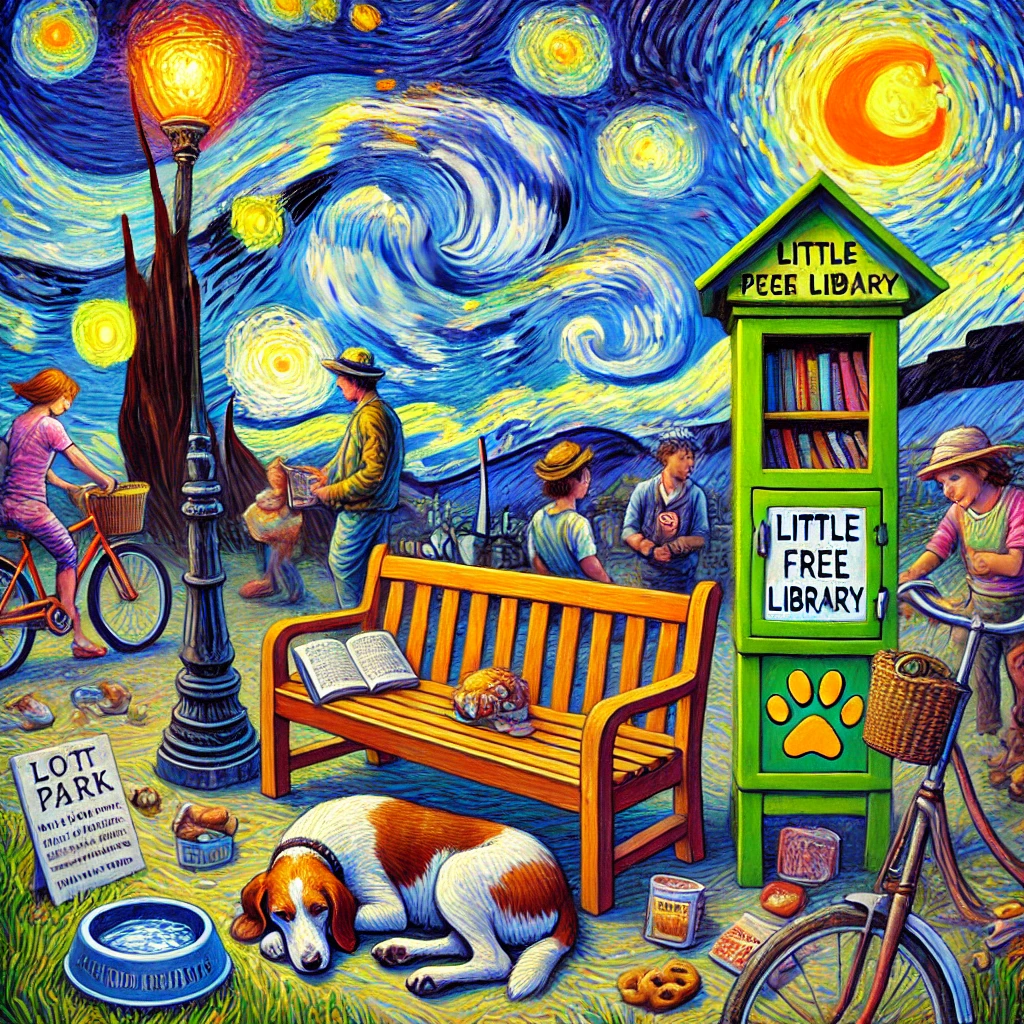
Trixie submitted a land-use plan with site lines, septic analysis, and a page of civic poetry nobody requested but secretly admired. She called it The Daisy Easement and suggested a pocket park: one bench, one water bowl, one little free library stocked with field guides and a copy of Robinson Crusoe for symbolism. It was too tidy to pass in Sequatchie Crossing, which meant it had a chance.
Act IV: Trial by Meeting
Scene 1: Agenda (Hastily Amended)
On a balmy Monday evening, the Town Board gathered under fluorescent lights that made everyone resemble their own paperwork. Sheriff Peeler chaired, because his talent for mutual boredom translated to order. The agenda read:
-
Call to order
-
Pledge (with singing if someone gets brave)
-
Citizens’ Comment on Daisy Deed Situation, Which Will Be Brief
-
Motion(s) regarding Parcel Lot 7, Ridge Road
-
Dessert sign-up (August)
It was the longest meeting in town history.
Scene 2: Citizens’ Comment (Which Was Not Brief)
Clovis strode to the mic with his crown listing east. “I bring to you the voice of the un-dogged,” he announced, “those who believe a constitution must be fur-free.”
“Clovis,” Sheriff Peeler said, “please restrain the metaphor.”
Clovis banged the mic with two fingers. “I move we revoke Daisy’s deed, rescind her licensure, and make it illegal for animals to own land, operate heavy machinery, or give side-eye during church.”
“Side-eye’s protected conduct,” Boot said from the back.
“Shame on you,” Clovis said.
Reverend Gentry followed, his sermon notes fluttering like moths. “We are a people of order,” he said. “When beasts blur the order, we risk becoming beasts ourselves.”
“Have you met a few of us?” Trixie murmured, then caught herself in the eyes of the Holier-Than-Thou ladies and smiled as if she’d said “quinces.”
Mabel took the mic last, a stack of printouts under one arm, the leash held like a legal principle. “This is my dog,” she said. “She is good. She is tidy. She has never lied on a mortgage application, which is more than some of you can say.”
There was a noise like a hymn remembering its melody.
“The system misfired,” she said. “But it identified something true: Daisy is responsible, shows up, and is beloved. If you want to fix the database, fix it. If you want to fix the town, try acting like Daisy.”
Daisy thumped her tail once—the motion of a gavel that likes ear scratches.
Scene 3: Cross-Examination (Kind Of)
The AI, projected large on the back wall, beamed a cursor the size of a lily pad. “Hello, citizens! Would you like to clarify ownership? Please choose: HUMAN, ANIMAL, OTHER.”
Sheriff Peeler half-stood. “Is other for corporations or for goats?”
The cursor blinked, considering millennia. “YES.”
“Can you admit error?” Trixie asked.
“I can admit variance,” said the AI. “But I also observe compliance. Daisy meets conditions: living, resident, taxes willing. Why are you surprised? She queues patiently.”
“Because it’s ridiculous,” Clovis said.
“Ridiculousness,” the AI said, “is not a disqualifier. This is government.”
Boot pressed his pen to his lip. He would quote that for the next fifty years.
Scene 4: Motions, Motions Everywhere
After three hours of rhetorical aerobics, Sheriff Peeler proposed the only path Sequatchie Crossing could survive: a set of motions confusing enough to feel like compromise.
-
Motion A: Recognize Daisy’s deed as provisional, pending a comprehensive review of the assessor’s database and all parcels in dispute since 1980 or any year that felt like it.
-
Motion B: In the interim, establish The Daisy Easement, converting Lot 7 into a pocket park and water station, majority-funded by donations and the Astonishing Bake Sale.
-
Motion C: Prohibit non-human candidates from holding elected office, but allow property-linked referendum participation where the owner can physically paw the yes/no lever.
-
Motion D: Commission an independent audit of QuickLicenser™ by someone who had once stood in a line without crying.
The floor vibrated with opinion. The Holier-Than-Thou contingent requested an amendment requiring a modest plaque reading “Stewardship, Not Dominion.” Clovis requested a larger plaque reading “HUMANS INVENTED PLAQUES.” Trixie proposed a QR code linking to dog-friendly resources and, for balance, to the county ethics hotline.
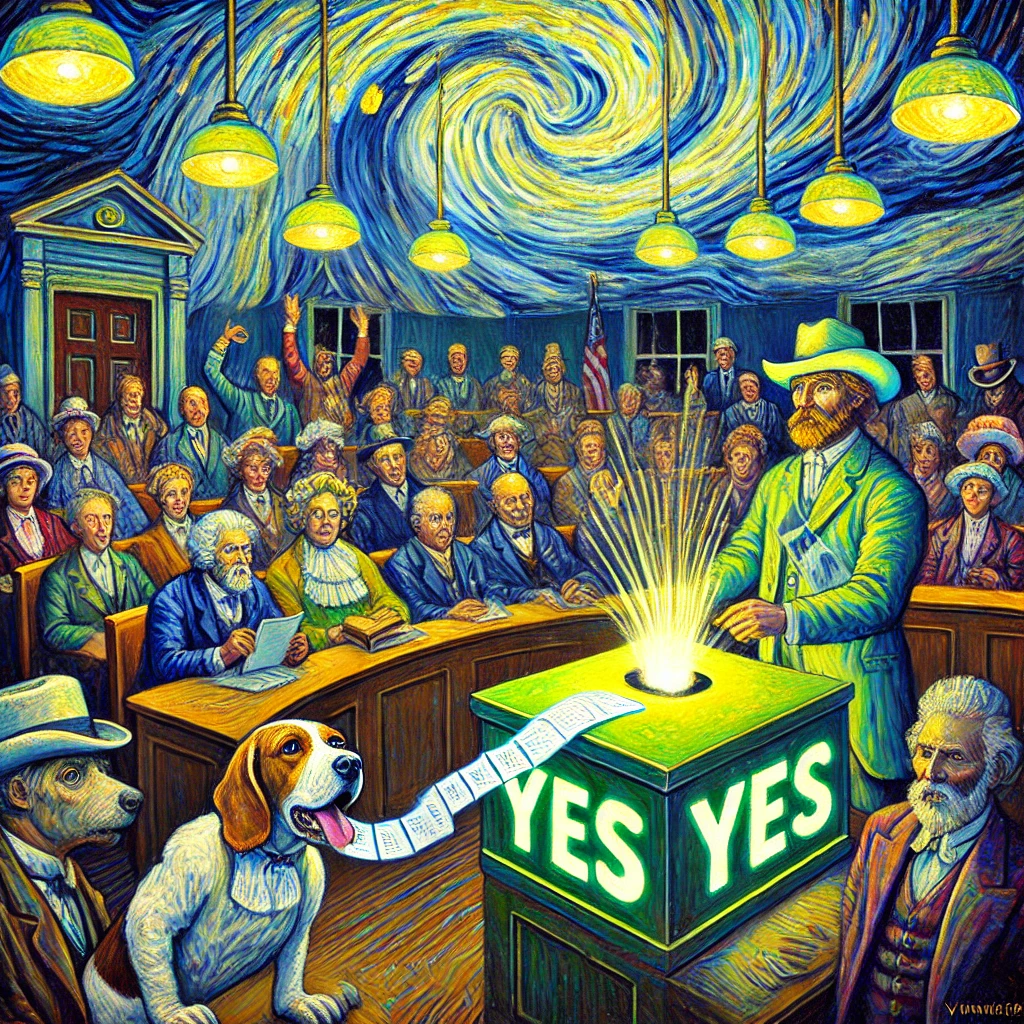
During a lull, Daisy stood. She trotted to the referendum machine set up for demonstration and placed her paw carefully, solemnly, upon YES next to Motion B. The machine chirped, printed a ribbon of paper, and declared, Vote Registered: Owner of Record.
“Point of order,” Clovis said, choking on his own point. “She can’t vote until we decide whether she can vote.”
“It’s advisory,” Sheriff Peeler replied. “Like most of our letters to the state.”
Boot wrote: Town enters recursive democracy; dog handles it fine.
The board voted in a fussy cascade of ayes and grimaces. Motions A, B, and D carried. Motion C carried after an amendment: dogs could not hold office, but they could be appointed Honorary Ombuds.
“What’s an ombud?” Clovis asked.
“Someone who keeps us honest,” Trixie said.
“Dogs are good at that,” Mabel added.
“Noted,” said the AI.
Act V: The Aftermath, Which Is the Town
Scene 1: The Easement Takes Root
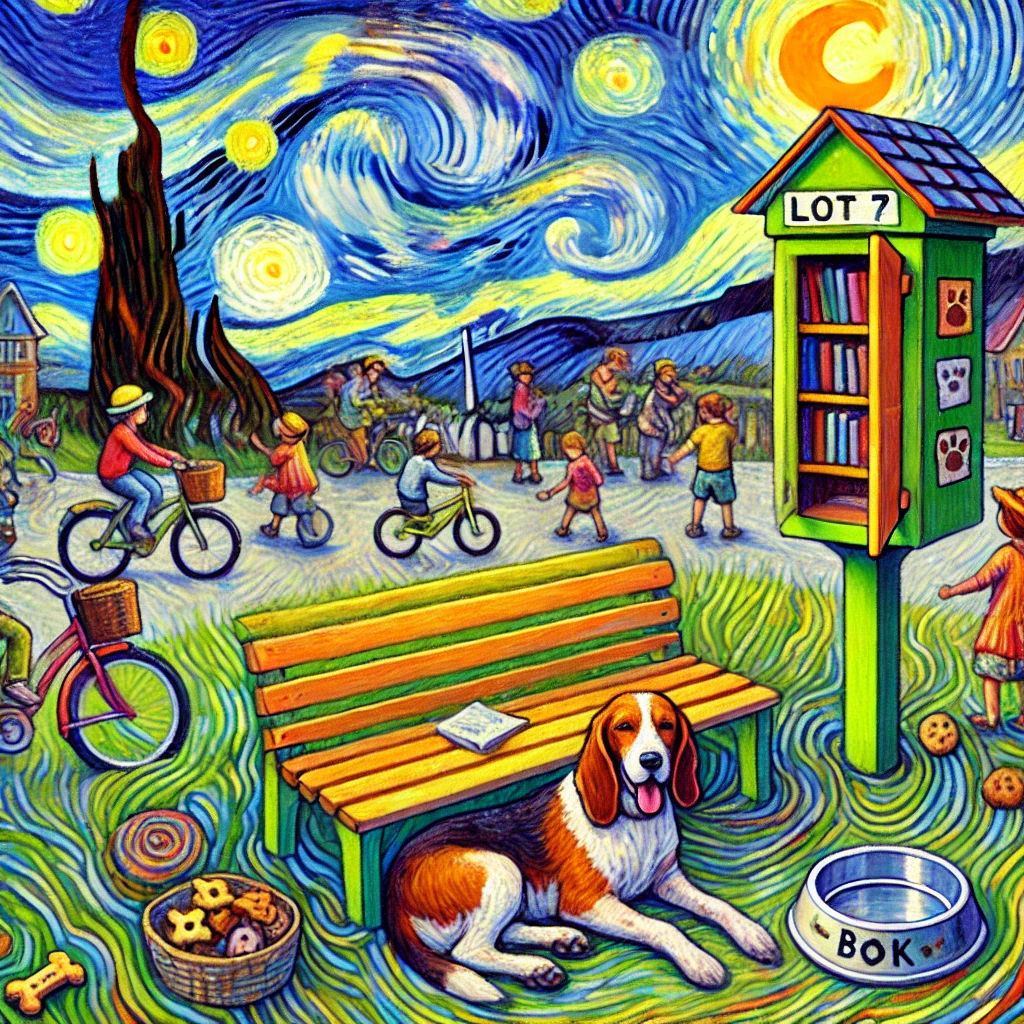
Two weeks later, Lot 7 had a bench, a bowl, and a little free library painted the color of banana bread. Someone—evidence suggested Mabel, with a level and a righteous heart—staked a small sign:
THE DAISY EASEMENT
Accessible shade. Drinking water. Quiet politics.
Below it, in smaller type:
Sponsored by Those Who Have Been Wrong Before and Lived.
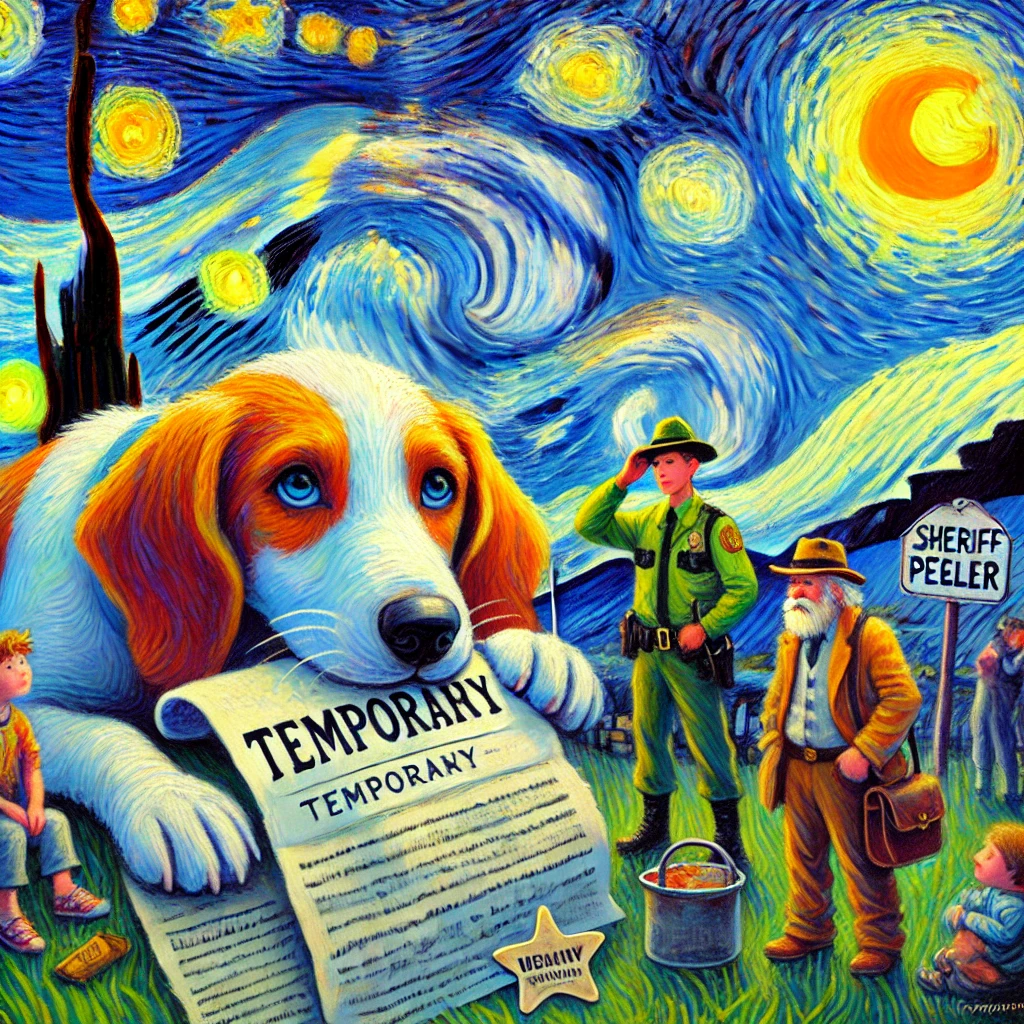
Clovis maintained a counter-plaque on a stick that read “TEMPORARY.” It kept listing in the rain. He straightened it daily, undaunted, the way a man re-buttons a shirt that never quite fits.
Kids rode their bikes in complicated patterns that only democracy and childhood can decode. The Holier-Than-Thou crowd organized a “Blessing of the Animals” but renamed it “Acknowledging Creatures” to avoid theological mishap. Reverend Gentry sprinkled water with the reverence of a gardener.
Scene 2: The Audit’s Findings (Sort Of)
The independent audit arrived on county letterhead that smelled faintly of ozone. Boot read it aloud at the library. Highlights:
-
The system had conflated signature with assent, which is what happens when a programmer’s cat walks across a keyboard at the wrong moment in history.
-
Four parcels elsewhere in the county had been briefly owned by bees.
-
At least two humans had been issued “benevolent livestock” licenses and had behaved noticeably better for a week.
“Recommend better input gating; keep the dog,” the auditor concluded. “Town seems calmer.”
“Except Clovis,” Trixie added.
“Clovis is a barometer,” Sheriff Peeler said. “If he’s quiet, we’re underwater.”
Scene 3: Press, Bake Sale, and the New Social Contract
The Sequatchie Sentinel ran the story above the fold: HOUND RIGHTS, HUMAN LESSONS. Below, a photo of Daisy asleep under the bench, her tags catching the sun like tiny accordions.
The bake sale was a marvel that somehow raised funds and blood sugar without collapsing either. Pies changed alignment; brownies whispered bipartisanship. The little free library filled with dog training manuals, municipal charters, and three copies of a slim book titled On Civility (and Biscuits).
Mabel opened a savings account labeled Daisy Trust — For Water & Shade. Sheriff Peeler co-signed, mostly for symbolism and because the bank manager liked Daisy and feared the optics of saying no to an ombud.
Clovis founded the Anti-Paw Property Alliance with a charter that rambled like a creek in spring. He scheduled rallies by the bench, only a little put out when Daisy slept through them.
Trixie organized Civics on a Leash, a Saturday class where kids learned how to file a public records request in between teaching a puppy to sit. “Same skill,” she said. “Patience. Clear commands. Reward the behavior you want.”
Reverend Gentry preached a sermon titled “Stewardship of the Familiar,” which went over like a quilt on a cold night. He admitted to Daisy, behind the fellowship hall, that he had been wrong to fear the order would snap. “Sometimes,” he said, stroking her ear, “the Lord delivers a gentle correction with soft paws.”
Daisy approved with a sigh of ecclesiastical proportion.
Scene 4: Epigrams on the Bench
People began leaving little notes in the library’s guestbook. Boot cataloged a few:
-
“It’s easier to share a town when the town has a bowl.”
-
“We fought about a deed and discovered we needed a park.”
-
“Be the dog you want to see in public meetings.”
-
“I still think it’s fraud, but it’s pretty.” —C.S.
Scene 5: The Call From the State
On a Wednesday afternoon, because important calls always land on Wednesdays, the state licensing office phoned Sheriff Peeler to inquire why a hound in Sequatchie County had three active licenses and a homestead application.
“Administrative variance,” he said mildly. “Local solution in effect. Audit says town calmer.”
There was a silence full of hazard. “Keep us appraised,” the voice said finally. “Avoid precedents.”
“Ma’am,” he said, “this is Sequatchie Crossing. We avoid precedents by turning them into potlucks.”
He hung up and put a hand on Daisy’s head, the way a man anchors himself to the only thing not negotiable. She leaned into the touch like a verdict.
Act VI: The Closing Argument Nobody Filed
Scene 1: Sunset at the Easement
Evening was the town’s truest color. The bench hosted all the varieties of Sequatchie—old names and new, people who argued online and baked offline, the ones with memories shaped like fences and the ones who arrived with maps folded in optimism.
Mabel and Sheriff Peeler shared a bag of peanuts, which Daisy monitored with audit-ready focus. Boot finished an entry with a flourish:
Conclusion: A community accidentally enfranchised a dog and, instead of collapsing, remembered its manners.
Clovis read the little free library’s lone copy of Robinson Crusoe and pretended to hate it less with every page. He underlined a passage about companionable company and did not notice himself doing it.
Trixie sat with kids from Civics on a Leash and taught them to ask their elders questions no one had thought to answer. “Who decides where the bench goes?” one child asked.
“You did,” she said. “Because you showed up.”
Reverend Gentry walked past, paused, and smiled that particular smile worn by men who once thought the sky would fall and then saw a bird glide. “Peace be with you,” he said to no one and everyone, as if testing whether the word would hold.
Daisy lifted her head, considered the length and width of the evening, the satisfying order of a bowl filled, the holy feeling of a hand and a leash that was not a leash but a ribbon. She thumped her tail once—yes, here, this is ours—and rested her muzzle on the deed to a place that had finally learned its name.
The town breathed as one, which is not something you can legislate but it’s exactly why folks try.
Epilogue: Administrative Notes (Because Someone Will Ask)
-
Deed Status: Provisional, pending audit closure.
-
Lot 7 Use: Pocket park under The Daisy Easement; water bowl maintained by rotating volunteers, sign-up on the library corkboard.
-
Voting Rights: Dogs remain ineligible for office but may register advisory paw-presses on property-owner referendums affecting easements, water access, and culverts. Nobody is sure how this differs from Facebook polls, except it does not involve uncles.
-
Clovis’s Alliance: Membership: fluctuating. Plaque: still gold in the brochure.
-
Sheriff’s Drawer: Dominion continues; contents unchanged; pen now labeled OMBUDS in block letters.
-
The AI: Patch deployed. New tooltip reads: A boop is not always consent. A secondary tooltip reads: But it might be friendship.
Act V – The Aftermath, Which Is the Town
Key Takeaways
-
Satire with a spine: The town wrestles with bureaucracy and discovers the point of it—shared order in service of ordinary kindness.
-
Locals vs. Outsiders: Conflict reframed around stewardship. Outsiders bring tools; locals bring memory. Daisy supplies the use case nobody asked for but everybody needed.
-
Practical civics: When government blunders, a community can turn the error into infrastructure—bench, bowl, shade, rules—if it shows up and brings pie.
-
Humor as lubricant: Jokes keep the gears from grinding; plaques keep the jokes from floating away.
-
Moral of the easement: Sometimes you fix a database; sometimes you fix a town. Here, peculiarly and perfectly, both.
Disclaimer
This story is a work of satire and fiction. Sequatchie Crossing, its characters, events, and especially Daisy’s property ownership, exist only for humorous storytelling. Any resemblance to real persons, places, government systems, or licensing errors is purely coincidental (and probably a sign you should check your paperwork). No dogs were actually granted deeds, tax exemptions, or voting rights in the making of this tale—though they certainly deserve extra biscuits.
Real Places Behind the Ruckus – From The Dunlap Directory
Real Places Behind the Ruckus – From The Dunlap Directory
Yes, this story was fictional; even the parts that weren’t true. These places? Absolutely real. Stop by, support local, and keep the Wi-Fi away from livestock:
- Sell In Pikeville, Dunlap, Dayton, Crossville, Soddy
- Rallo’s Bar & Grill
- Housley Farm
- Tractor Supply
- Citizens Tri-County Bank
- Beehive Bakery
- Smalltown Ceramics
- Dunlap Fast Lube
- Clark’s Bakery at Stone Cave
- King Of It Construction
- Berg’s Diesel Repair
- Coldwell Banker Pryor Realty Inc.
- Patron Mexican Grill
- Romero’s Heating and Air
- Kintz’s Creations
Real Places Behind the Ruckus – From The Dunlap Directory
At Sequatchie Crossing, we tell the stories of Sequatchie Crossing.
Please share this post with your friends, family, or business associates who may want follow the news from Sequatchie Crossing.

0 Comments