


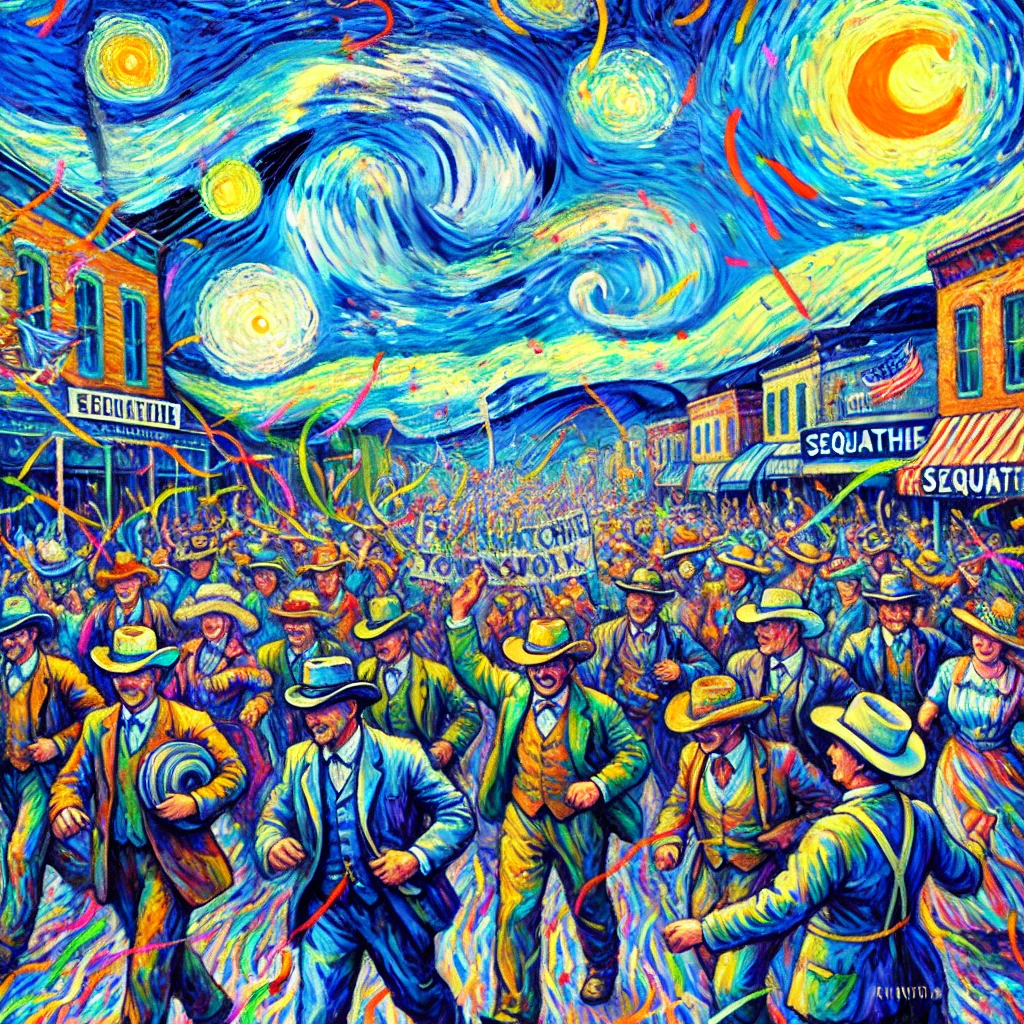
From Red Hats to Hard Hats, the Town’s Fashion Sense Took a Left Turn At Sensible.
By Tom Seest
At Sequatchie Crossing, we tell the stories of Sequatchie Crossing.
Please share this post with your friends, family, or business associates who may want follow the news from Sequatchie Crossing.
Hat Wars: the Day Sequatchie Declared Headwear Independence
🎤 Audio Overview
Act I – The Red Hat Revelation
Act I – The Red Hat Revelation
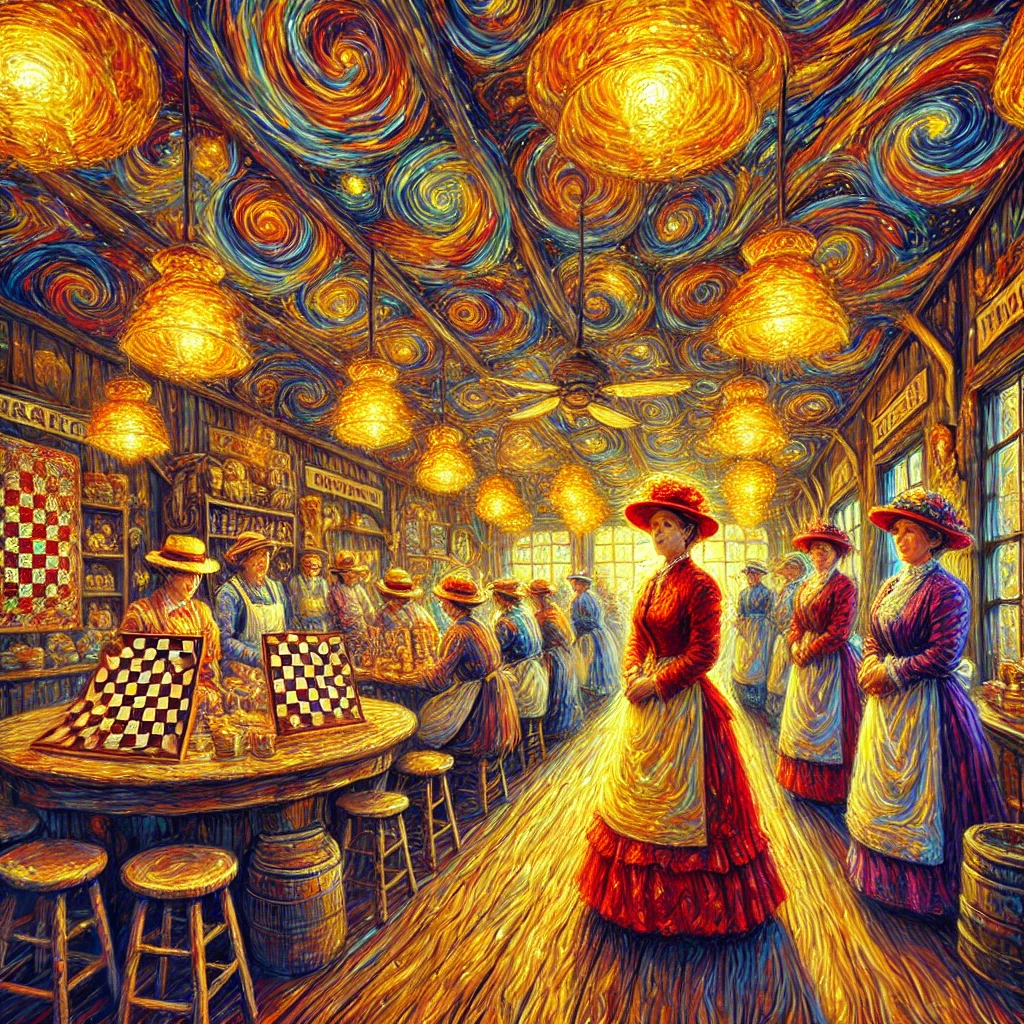
Mabel Dean Ashcroft didn’t mean to start a revolution. She only meant to stop for a biscuit.
She was on a coat-hook mission at the Dunlap Cracker Barrel—boot-cut slacks, floral blouse, purse like a carry-on—with a coupon folded so tight you could use it as a shim. That’s when the bus door sigh-opened and a stream of women stepped down like queens returning from a coronation: red hats perched high, purple blouses shimmering, and smiles like they’d already sent their regrets to responsibility.
Mabel froze by the checkerboard table.
“Excuse me,” she murmured to the hostess, “what… church is… that?”
The hostess glanced. “That’s not a church, honey. That’s a club. Red Hat Society ladies.”
“Society,” Mabel repeated, tasting the word like a peppermint. She watched them float past, a crimson tide of giggles and waiter-flustering. There was confidence there—a conspirator’s confidence. It wasn’t just clothing. It was a way of being. A way of entering lunch like you meant it.
By the time Mabel got home, the bun in her hair had loosened two notches. She put her biscuit in the icebox and drove straight to the Fellowship Hall, where the Wednesday Lunch was well into ladling. She stood by the covered-dish table and tapped a spoon against the punch bowl.
“Ladies,” she announced, “I have seen the future, and it’s accessorized.”
From the back, Boot Barnes whispered to Clovis Dillard, “You reckon she means fanny packs are back?”
Clovis shook his head. “I think she means a head thing.”
Mabel continued, “There is a Society—capital S—of women in red hats, and they move through the world like grocery carts that never squeak. I suggest—no, I propose—we be likewise. We shall rise as one brim.”
“Is that sanitary?” asked Irene Pritchard.
“It is aspirational,” Mabel said. “And if you need a scriptural angle, Proverbs 31:25 says ‘strength and dignity are her clothing.’ It doesn’t specify the hat, but I feel the permission.”
Reverend Gentry nodded cautiously, like a man blessing a crockpot he didn’t plug in.
Boot lifted a tentative hand. “I have a red John Deere cap. Does it translate?”
“It… rhymes,” Mabel said kindly. “But we’re looking at ladies, Boot.”
Boot lowered the cap, chastened. “Just trying to participate in modernity.”
By evening, library books were checked out: The Anthropology of Hats, Hats Through History, and a coffee-table tome on Ascot that made the whole town feel underdressed just by touching it. Mabel made a list of shades—scarlet to merlot—then circled “cheerful but dignified” in a red pen. Vonda Sue Worthington started a group thread titled Sequatchie Ladies of Distinguished Brim, which autocorrect kept turning into Ladies of Disturbed Bream, confusing the fishermen.
By morning, the rumor had matured into a certainty: a new Society was forming. And in Sequatchie Crossing, nature abhors a vacuum almost as much as it loves a copycat.
Act II – The Copycat Epidemic
Act II – The Copycat Epidemic
The first splinter group arrived on roller walkers.
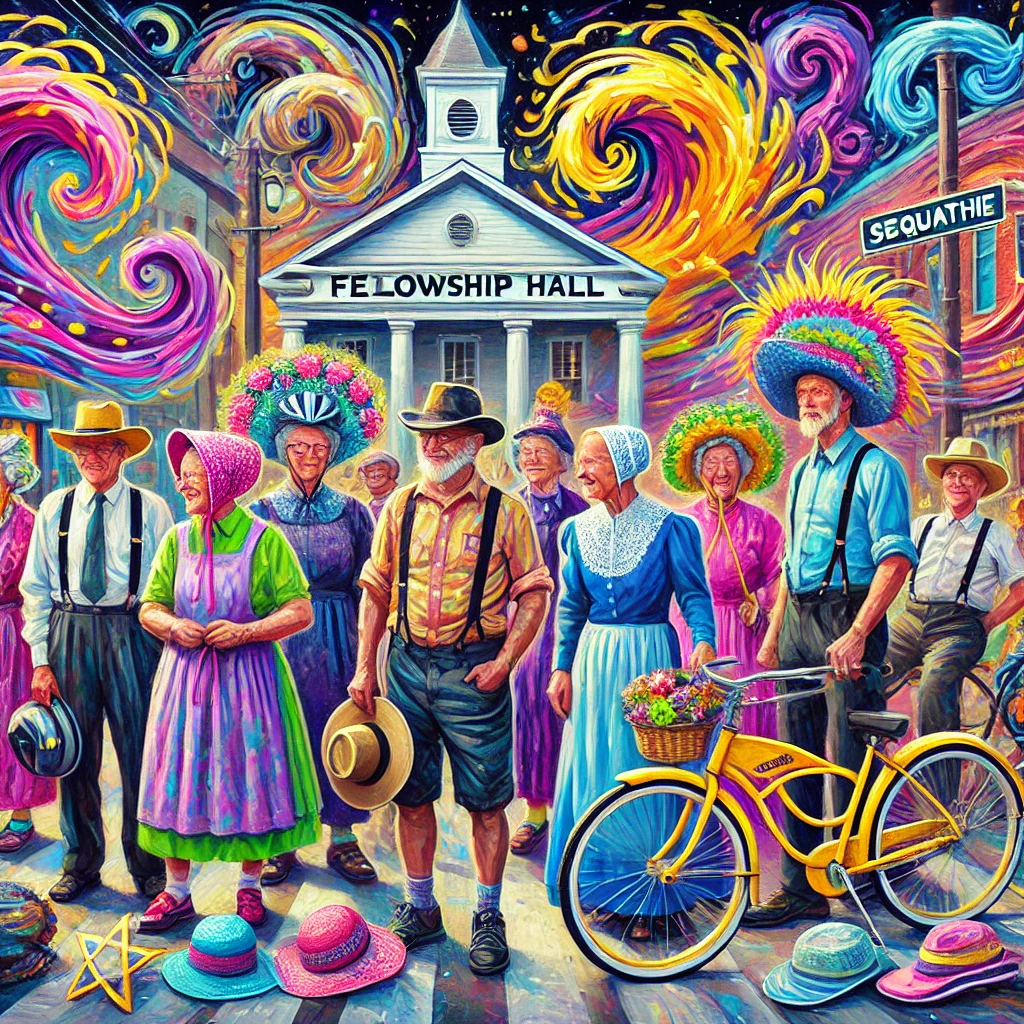
“We are,” announced Judith Ray, whacking her walker’s tennis ball foot for emphasis, “The Short Shorts Society. Motto: If you’ve got it, flaunt it before gravity wins.”
The Fellowship Hall inhaled.
Judith revealed a parade of hem decisions unseen since the county pool incident of ’94. Knees appeared like relics. Sheriff Peeler—who had wandered in for a tea refill—stared into the middle distance as if recalling a training module that never existed.
“Is there,” he asked no one, “an ordinance on inseam?”
Reverend Gentry cleared his throat. “Isaiah speaks of the hem of the garment—reverently.”
Judith beamed. “We’re very reverent!”
The second splinter group showed up with chin straps.
“The Bicycle Helmet Brotherhood,” announced Halbert Drew, tapping his helmet with a knuckle that produced a satisfying thunk. “Safety is fellowship. Fellowship is safety. Also, we get a discount at Speedy Wheels.”
“How is that a hat?” Vonda Sue asked.
Halbert lifted a laminated chart. “Look at the taxonomy: headwear spectrum runs from decorative to defensive. We respect the whole gradient.”
They wore their helmets everywhere: choir practice, PTA, even inside the sanctuary. A deacon asked whether the Lord’s protection was insufficient. Halbert said the Lord invented polymer science.
Not to be outdone, a group of men who had never once lacked a hat declared themselves The Cowboy Hat Coalition and demanded recognition not as a fad but as an indigenous way of life. Clovis Dillard led them in on Friday, thumbs tucked, brims broad enough to create their own climate.
“We been coalishin’ since before Facebook,” Clovis said. “We was offline before offline was a mood.”
“Welcome,” Mabel said, “to the umbrella of headwear.”
“Ma’am,” Clovis replied, touching his brim respectfully, “what we got here ain’t an umbrella. It’s weather control.”
The Amish Appreciation League followed—well-intended, confused, and enthusiastic. They’d watched enough craft tutorials that their bonnets had structural integrity you could roof a shed with.
“We admire plain excellence,” declared Beverly Kay, whose bonnet had dovetail joinery. “We are not pretending to be Amish. We are celebrating the aesthetic restraint.”
“How restrained are we?” asked Irene.
“On a scale of Bedazzled to Gregorian Chant,” Beverly said, “we are at a firm Psalm.”
All of this happened in seventy-two hours. By Sunday, the bulletin board at the Community Center looked like a milliner’s manifesto: Visor Visionaries (pickleball splinter), Welding Mask Ministry (don’t ask), The Fascinator Faction (birdcages for weddings), The Fedora Fellowship (Boot joined this one by accident; the hat felt persuasive), and The Salad Bowl Society (satirical at first, then oddly practical in rain).
Sequatchie wasn’t a quiet town, but it was not prepared for open brim warfare.
Act III – The Mennonite Misunderstanding
Act III – The Mennonite Misunderstanding
If this had been the end—just a week of fashion civil disobedience—the town would have laughed, filed it under “Colorful,” and gone on with casserole. But word traveled, as it does when someone’s second cousin’s feed store shares a post: the Red Hat Society ladies were planning another group lunch swing through the valley.
The Mennonite ladies heard talk of “honoring our visitors with local color.” They took it… literally.
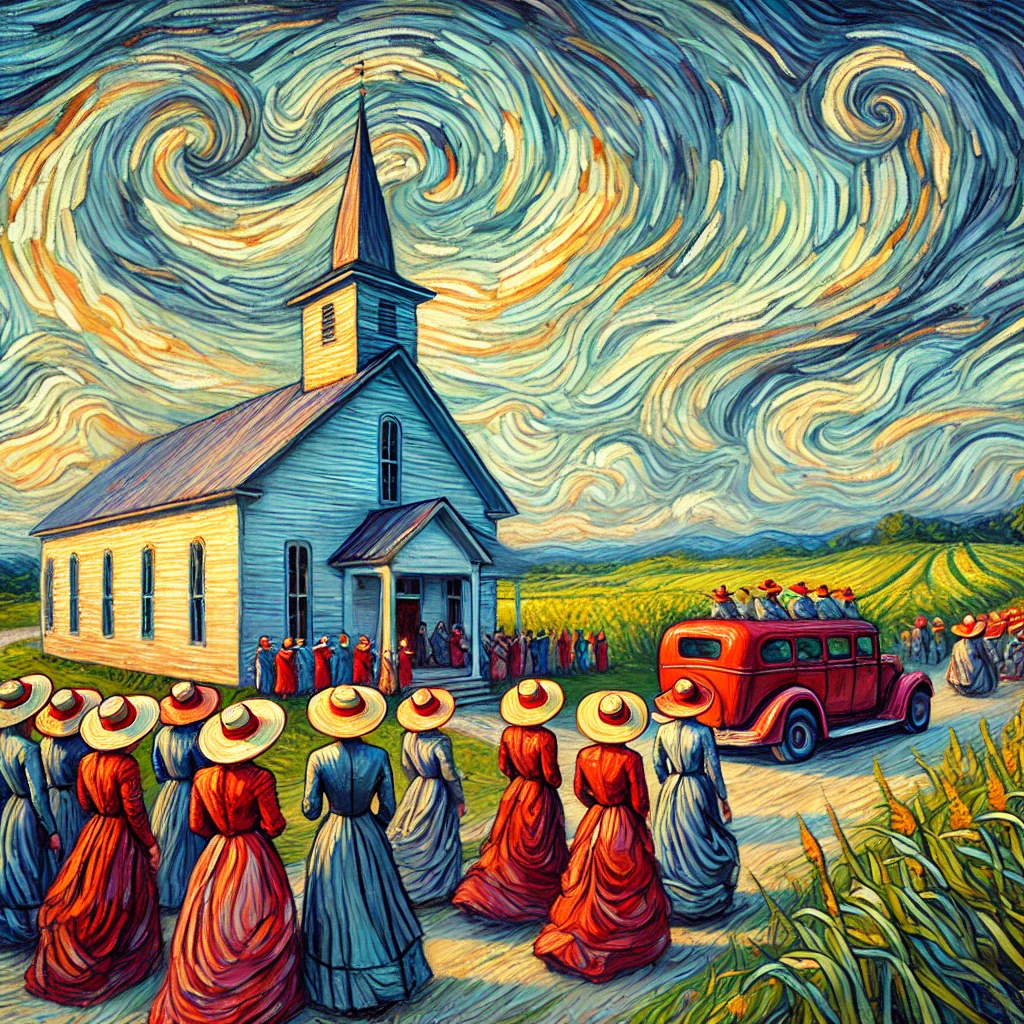
On Sunday morning, twenty-four Mennonite women arrived at church in wide-brimmed straw hats dipped in careful, vivid red. The brims were crimson. The ties were crimson. Grace itself was tinted scarlet.
Mabel, mid-hymn, gasped. “It’s like they baptized a Hobby Lobby.”
Reverend Gentry kept singing, eyes forward. The congregation sang with the tense concentration of folks navigating a high wire over a social media canyon.
After service, the Mennonite women explained their intention—plain yet powerful admiration. “We wanted,” said Mrs. Lapp, “to say welcome in a way that was… plainer, but not invisible.”
Mabel pressed a hand to her heart. “You ladies look radiant.”
From behind them, the Bicycle Helmet Brotherhood shuffled anxiously. “Is the paint low-VOC?” Halbert asked. “For air quality.”
Boot, meanwhile, drifted toward the Fascinator Faction, who were demonstrating how to attach a spiral of netting that made every head look like a tiny fairground ride.
“You look like a fancy rooster,” Boot told Marlene Tippit, admiringly.
“Better than a battery hen,” she said, fluffing her plume.
Then the Red Hat bus actually arrived, and confusion metastasized into spectacle. The Red Hat women stepped into the lot—fully aware of their own pageantry—and were immediately embraced by the Mennonite ladies, who thought they were being thanked for the tribute. Hugs. Photos. A shared chant of “Hats on, heads high.”
The Cowboy Hat Coalition tipped their brims in synchronized greeting, which seemed gallant until someone stepped on a bonnet tie and there was a minor untangling followed by a major opinion exchange.
By 2 p.m., rumors had hardened: the Mennonites had defected to the Red Hats; the Red Hats had adopted plain dress; the Fascinator Faction was opening a nest box; and the Salad Bowl Society was being scouted by Tupperware for a collab.
“Peace,” Reverend Gentry implored, lifting a hand. “We are all under one sky.”
“We are,” Halbert agreed. “And under one ANSI standard.”
Act IV – Committee on Brim Harmony
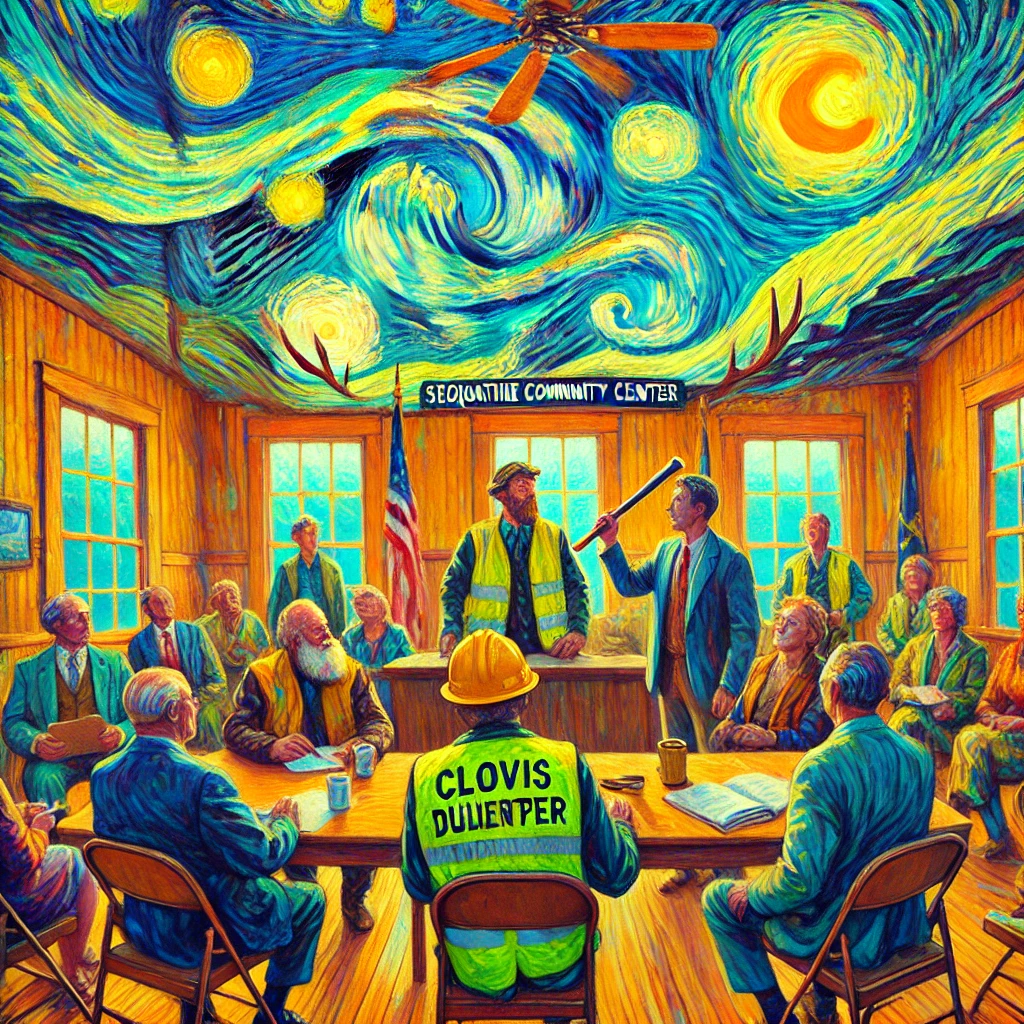
Act IV – The Meeting (a.k.a. Committee on Brim Harmony)
Mayor Pro Tem Nadine Culpepper convened an emergency session at the Community Center. Nadine was a woman who treated a gavel like a metronome—steady, patient, and relentless. She’d risen from Chair of the Floral Beautification Committee to Acting City Steward during a season of administrative musical chairs, and she had the calm of someone who can label a tote while breaking up a fistfight.
“Friends and milliners,” she began, “Sequatchie has always been a town of strong heads. It appears we are now a town of strong headwear.”
A murmur, mostly positive.
“We will resolve this with courtesy and a parade.”
“A parade?” Mabel asked, brightening.
“A parade,” Nadine confirmed, “called The Great Hat of Sequatchie. We will celebrate all hats. We will not litigate inseams at this time.”
Judith Ray of the Short Shorts Society looked both relieved and bereft. “So we’re… grandfathered?”
“You’re grandmothered,” Nadine said gently. “Please bring a shawl for the evening chill.”
“We also need standards,” Halbert said. “You can’t glue antlers to a hard hat and call it compliant.”
All eyes turned. Clovis Dillard stepped in from the hallway wearing a construction hard hat with antlers epoxied majestically to the crown. He looked like a foreman blessed by the forest.
“It is,” Clovis declared, “a merging of labor and nature.”
“It is,” Halbert countered, “a violation of common sense.”
Nadine’s gavel touched wood. “Mr. Dillard, you are hereby appointed Hat Marshal for parade day. Your duties include lane spacing, brim clearance, and antler awareness.”
Clovis squared his shoulders. “I will serve, ma’am.”
“And Mr. Drew,” Nadine continued, “you are Safety Liaison. You will coordinate with the Marshal to ensure nobody gets poked into repentance.”
Halbert considered this a sacred calling.
“Finally,” Nadine said, “each faction will submit a float plan. Nothing flammable except memories. No livestock unless it’s already trained to ignore applause.”
Boot raised a hand. “What if the livestock enjoys applause?”
“Then it’s show choir,” Nadine said. “And that’s a separate permit.”
The room settled into purposeful chatter. The town’s mood shifted from brinkmanship to choreography. Sequatchie loved a good list.
Act V – Subplots at Brim Level
Act V – Subplots at Brim Level
1) The Short Shorts Society vs. The Hemline Task Force
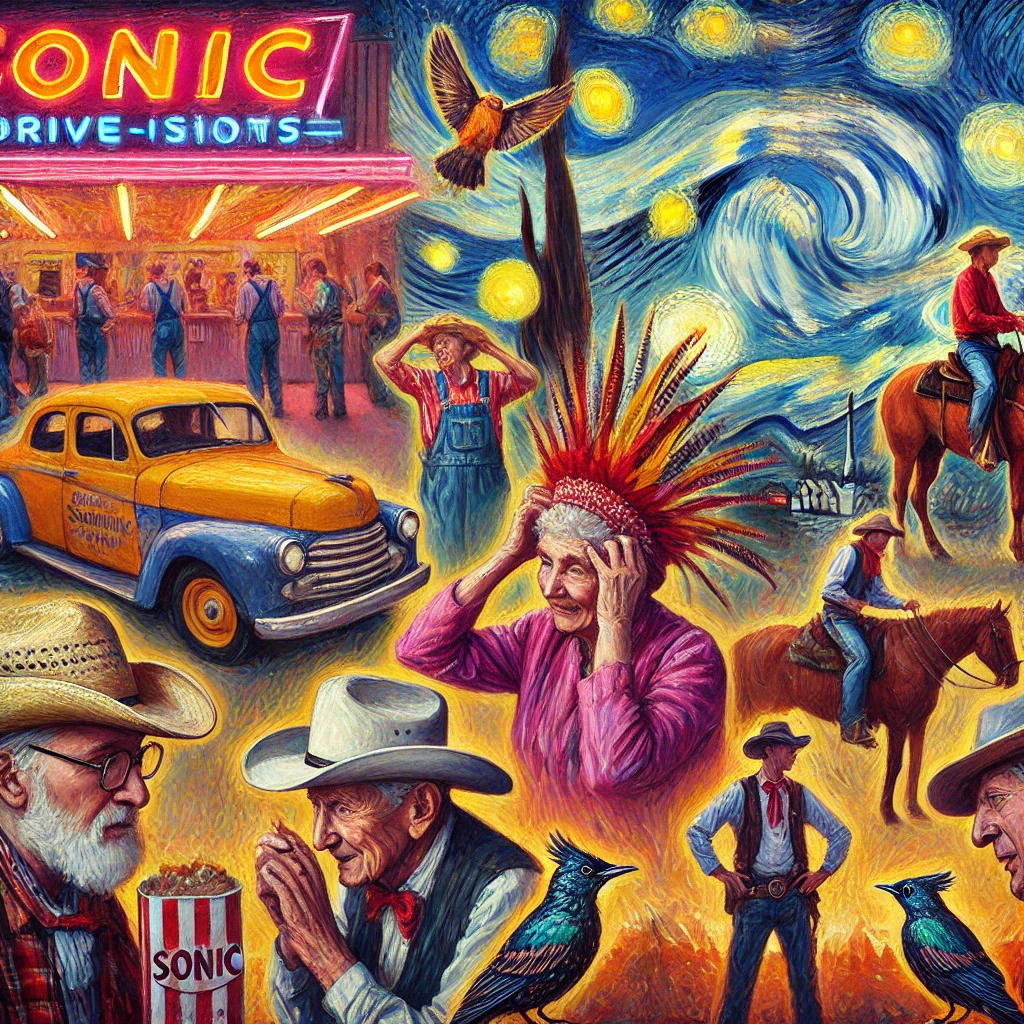
Judith’s group met at Sonic to workshop parade-length. Sheriff Peeler arrived with a laminated card that said Hemline Advisory: Town Optics Edition.
“We’re not here to shame,” he told them. “We just need you to maintain a gait that won’t cause… civic discourse.”
Judith took the card and winked. “We’ll march like respectable flamingos, Sheriff.”
They practiced stepping in time to the carhop’s skates, which improved matters until someone suggested sequins and the Amish Appreciation League had to lie down.
2) The Fascinator Faction vs. The Wild Birds
Marlene Tippit discovered that her fascinator’s feathery flourish was irresistible to starlings. “They think I’m a feed store,” she complained, shooing enthusiasm from her bangs.
Boot tried to help by inventing the Fascinator Face Guard—a loop of window screen attached by clothespins. It worked and also made Marlene look like a beekeeper at a Derby. Boot took notes in case of patent.
3) The Cowboy Hat Coalition’s Choreography
Clovis drilled his men like a county fair drill team: tip on one, twirl on two, boot heel click on three (optional for those with knee history). During rehearsal, Clovis’s antlers scraped a gym banner and knocked off the “O” in GO EAGLES, leaving G EAGLES, which was misinterpreted as a fundraiser and briefly raised $86.
4) The Mennonite Color Dilemma
The Mennonite ladies met to reconsider the paint. Mrs. Lapp proposed Ribbon of Welcome instead: a small crimson ribbon woven into a natural straw hat—meaningful, reversible, and airing out nicely. Mabel endorsed the compromise with a hug and a pie she just happened to have.
5) The Bicycle Helmet Brotherhood’s Wrist-Safety Crusade
The Brotherhood decided clapping was a repetitive stress risk. They designed Silent Applause Paddles—small signs printed with “YAY,” “BRAVO,” and “CONTINUE.” During rehearsal, the paddles flapped like a flock of rectangular birds, which would have been fine if they hadn’t startled the Short Shorts Society, whose instinctive defense was to scold at volume. A mediation circle restored the peace, and Halbert agreed to remove the “CONTINUE” paddle due to tone ambiguity.
Act VI – The Great Hat Parade
Act VI – The Great Hat Parade
Saturday dawned scandalously blue.
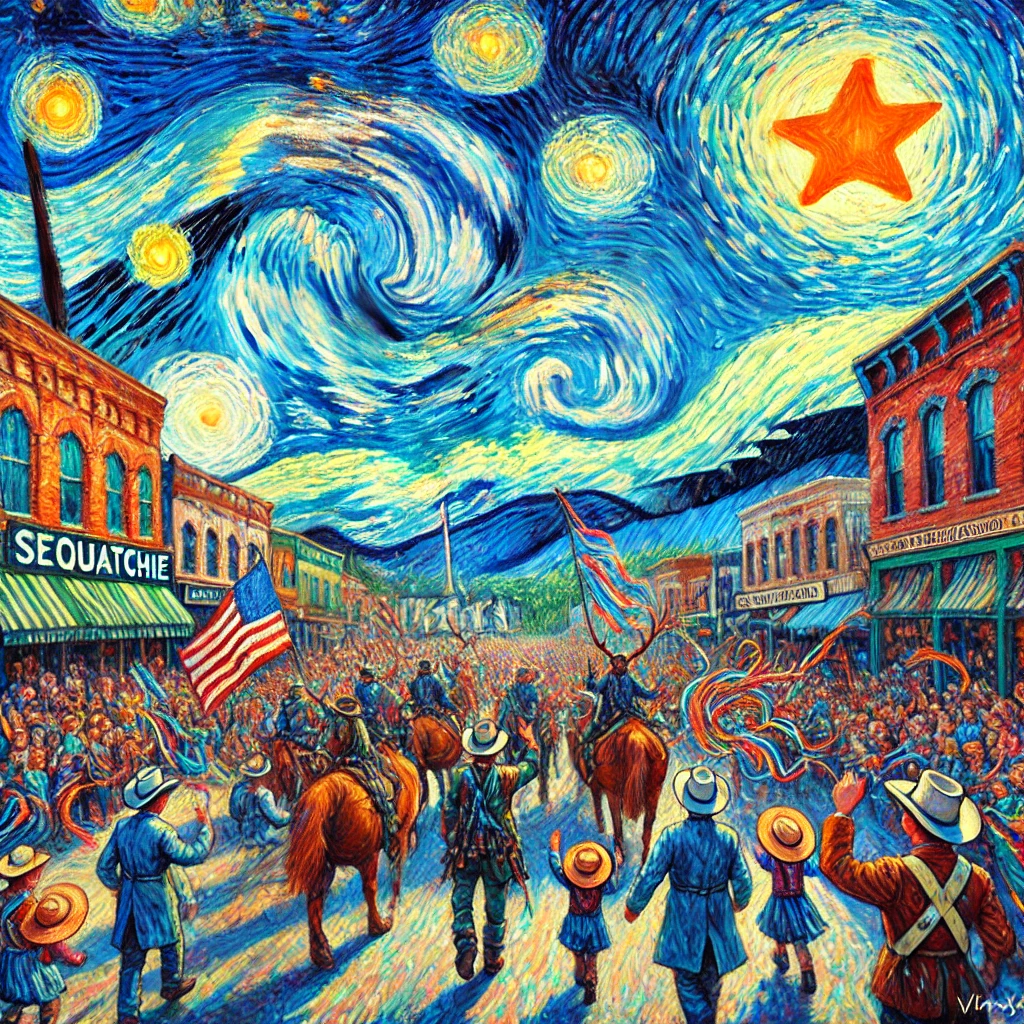
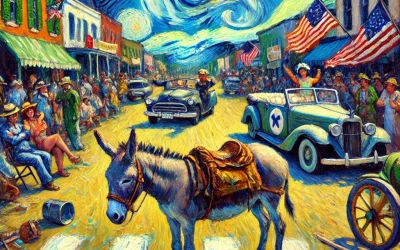
Sequatchie Crossing Main Street smelled like kettle corn and ambition. The Hat Marshal strode the centerline, antlers gleaming, clipboard in hand. Safety Liaison Halbert moved at his flank, helmet polished, carrying a tape measure like a talisman.
“Brim clearance,” Halbert announced, measuring the space between a visor and a wagon of potted mums. “Acceptable.”
“Antler sweep,” Clovis said to two toddlers eyeing the display. “Don’t run into destiny, boys.”
The Cowboy Hat Coalition led off, brims tipping in sequence, a ripple of dignity like wheat in a kind wind. Behind them came the Red Hat Visitors, flanked by local ladies in crimson ribbons and sensible shoes. The Mennonite Ribbon Unit received a gentle ovation, Silent Paddles fluttering like a restrained flock.
A murmur rose as the Short Shorts Society appeared, shawls tied just so, knees marching with proud restraint. Judith carried a hand-lettered sign: Hems of Glory, Hearts of Gold. Sheriff Peeler tipped his hat and stared at the horizon.
The Fascinator Faction glimmered like a flock of celebratory birdhouses: spirals, loops, delicate filigree that made everyone stand a little taller. A cardinal landed on Marlene’s brim, decided it was decorative, and rode the float like a dignitary.
Boot Barnes marched between factions, carrying the banner Mabel lettered on her kitchen table:
“Freedom of the Headwear—for All Who Dare to Wear.”
“Boot!” called Mabel from the curb, her own hat sturdy and red in the sun. “Tilt the banner up; the ‘wear’ is drooping!”
“Story of my laundry life,” Boot called back, adjusting.
The Bicycle Helmet Brotherhood followed, wheels absent but energy high. They clacked their Silent Paddles, but halfway down Main, one paddle flipped to reveal a child’s drawing of a dinosaur in a helmet, and the Brotherhood broke formation to applaud—silently but fervently. Halbert wept discreetly, wiping his eyes with a microfiber cloth.
A small crisis sparked at the intersection: the Welding Mask Ministry had bedazzled their masks against earlier church advice, and sunlight refracted into a disco on the feed store’s facade. For twenty glorious seconds, Sequatchie experienced spontaneous line dancing—then Hat Marshal Clovis adjusted the angle and the town sipped water reflectively.
Mayor Pro Tem Nadine Culpepper, on the reviewing stand, kept time with her gavel, which somehow made the parade step together like a single long sentence.
At the finale, all factions converged into the town square. Mabel stepped up to the microphone, the crowd settling like confetti on still air.
“Neighbors,” she said, “look at us. We don’t share the same brim, but we share the same sky.”
“ANSI-rated,” Halbert murmured, and someone patted his shoulder.
Mabel continued, “Some of us wear hats for flair. Some for function. Some for faith. But a hat is just a little roof for the person you’re already becoming. Today we tipped those roofs at one another and said, ‘I see you.’ May we keep saying it, with or without feathers.”
Applause—silent, loud, shawled, brimmed—rose like a gentle wave.
Clovis stepped forward, antlers at a respectful pitch. “By authority vested in me by the Office of Hat Marshal, I declare this parade concluded, this town unified, and these antlers… removable with mineral spirits.”
Laughter.
The Red Hat visitors presented Mabel with a small pin in the shape of a teacup. The Mennonite Ribbon Unit gifted her a jar of homemade strawberry jam. The Short Shorts Society offered sunscreen. The Bicycle Helmet Brotherhood gave her a reflective sticker that said HEAD UP. Mabel pinned it to her purse like a medal.
Boot sidled over, brim of his new fedora tugged at a philosophical angle. “Miss Mabel,” he said, “I been thinking. If hats are little roofs, socks are…”
“Basements,” Mabel said. “We are not founding a Sock Society, Boot.”
“Right,” Boot said, glancing toward Clovis, who was carefully measuring the shadow length of his antlers as if that, too, might be regulated. “Not this week.”
Act VII – Aftermath, Tidying, and the Evidence Locker
Act VII – Aftermath, Tidying, and the Evidence Locker
By Monday, Main Street had returned to its regular personality: mailboxes, porch swings, and that one bench that always leans. But trace evidence of the Great Hat remained: a feather tucked in a drainspout, a rhinestone on the courthouse steps, a ribbon tied around Mrs. Lapp’s mailbox post like a whispered joke.
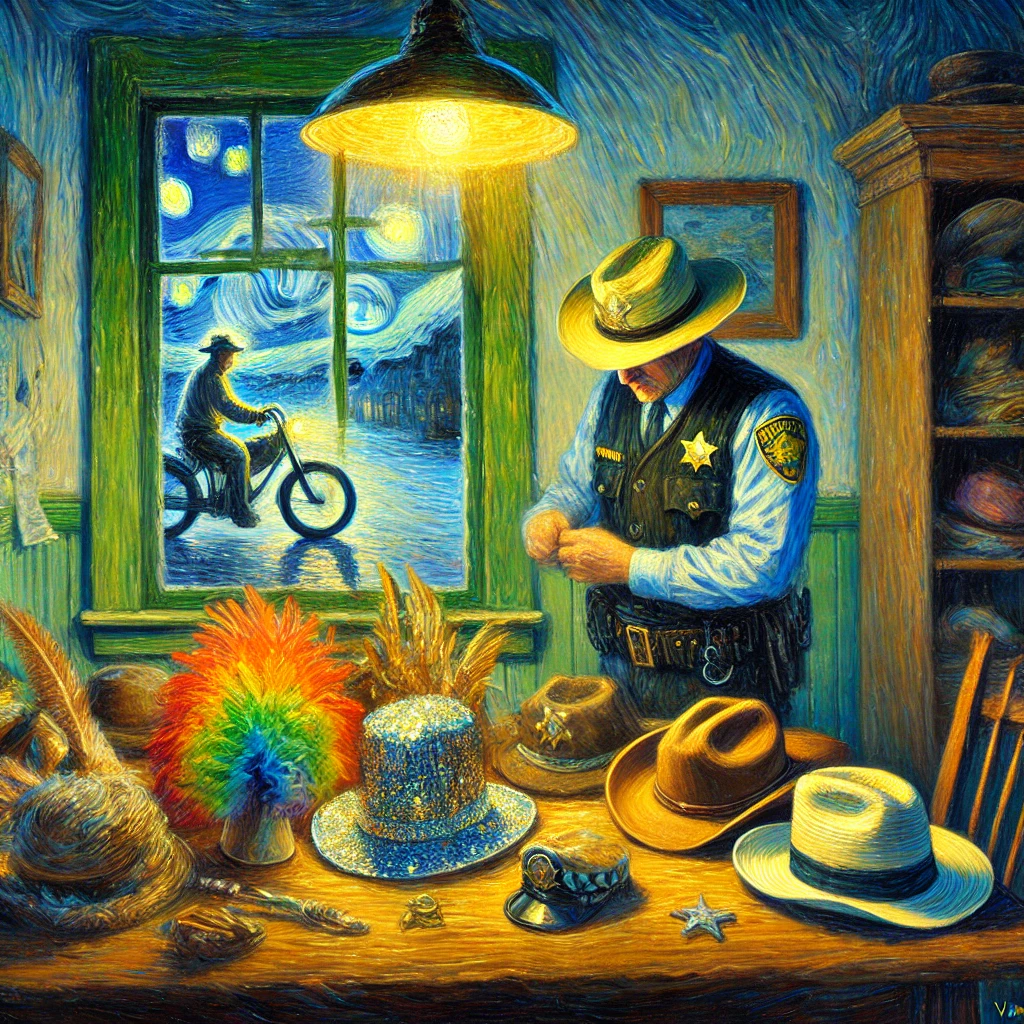
The Sheriff’s Office posted a laminated sign:
NOTICE
All hats found abandoned in public buildings will be considered neutral and redistributed.
Lost: 2 fascinators (left, right)
Found: 1 salad bowl (vinaigrette residue)
Claimed by Boot: “for research”
The evidence room looked like a thrift store had exhaled. Sheriff Peeler, holding a sequined visor at arm’s length, sighed. “We got to start labeling these better.”
Reverend Gentry stopped by with a box of hymnals. “It was good,” he said. “It was very good.”
Peeler nodded. “I didn’t write a single citation for brandishing a brim. That’s progress.”
“Any injuries?” Gentry asked.
“Just pride,” Peeler said. “And a cardinal who won’t stop visiting Marlene’s mailbox.”
Out front, a child pedaled by in a toy helmet decorated with construction paper antlers. He rang his bell twice, solemn, in honor of the Marshal.
Across town, Mayor Pro Tem Nadine Culpepper filed the parade plan under Annual Traditions, subfolder Hats. She initialed the Safety Annex, added a ribbon to the tab, and poured the office a celebratory lemonade.
Mabel, at her kitchen table, taped the Red Hat teacup pin beside a Polaroid of the day: Clovis in antlers; Halbert with paddles tucked under his arm like a flight crew; Boot holding the banner like it might carry him off if the wind caught right; Mennonite ribbons in sunlight; Short Shorts shawls fluttering like cheerful flags.
She took a pen and wrote on the white border: We saw each other.
Then—because Sequatchie is a town that believes in momentum—she opened a fresh notebook and wrote Ideas across the top. She considered jotting Sock Society? and thought better.
Instead, she wrote: Hat Closet for the Community Center: Borrow a Brim. Underneath, she wrote, Sizes: Everyone.

Epilogue – The Roof Over Everyone
Epilogue – The Roof Over Everyone
On Tuesday night, the sky over Sequatchie did that thing it does when it forgets to be practical: it turned the soft navy of fresh-ink paper and tossed stars like sugar. People sat on porches beneath ball caps and bonnets, visors and nothing at all, and felt—briefly, distinctly—roofed by something kind. A town of strong heads. A town that tried on laughter like a crown and found that it fit.
And somewhere on a hat rack by the door of the Community Center, the Hat Marshal’s antlered helmet waited, clean of epoxy, ready for next year—because of course there’d be a next year. Someone had already filed the permit.
Boot, passing by, tried it on. It slid down to his eyebrows.
“Too much destiny,” he said, and set it back carefully.
Disclaimer Image – Sequatchie Crossing Signature
Disclaimer
This story is a work of satire and fiction from SequatchieCrossing.com. Any similarity to real persons, offices, or events is coincidental or used for humorous effect. The presiding official depicted, Mayor Pro Tem Nadine Culpepper, is entirely fictional.
Real Places Behind the Ruckus – From The Dunlap Directory
Real Places Behind the Ruckus – From The Dunlap Directory
Yes, this story was fictional; even the parts that weren’t true. These places? Absolutely real. Stop by, support local, and keep the Wi-Fi away from livestock:
- Booker T. Washington State Park
- Sunrise Extended Stay RV Park
- Christy Cartwright Real Estate Agent
- Dunlap Mobile Phone Repair
- Montes Stone Products
- Grays Plumbing LLC
- Bird Fork Farm
- Dunlap Natural Gas System
- Jim Garren – State Farm Insurance Agent
- Bolt Farm Treehouse Tennessee
- Marshall Renovations
- Tractor Supply
- Signal Mtn And Dunlap Sell, Trade, Buy
- Bouffant Beauty Salon
- Sequatchie Valley Construction
Real Places Behind the Ruckus – From The Dunlap Directory
At Sequatchie Crossing, we tell the stories of Sequatchie Crossing.
Please share this post with your friends, family, or business associates who may want follow the news from Sequatchie Crossing.


0 Comments