



A Special Investigative Edition for Residents Who Prefer Straight Roads, Four-Way Stops, and the Occasional Yield Sign When the County Budget Runs Short.
By Tom Seest
At Sequatchie Crossing, we tell the stories of Sequatchie Crossing.
Please share this post with your friends, family, or business associates who may want follow the news from Sequatchie Crossing.
🎤 Audio Overview
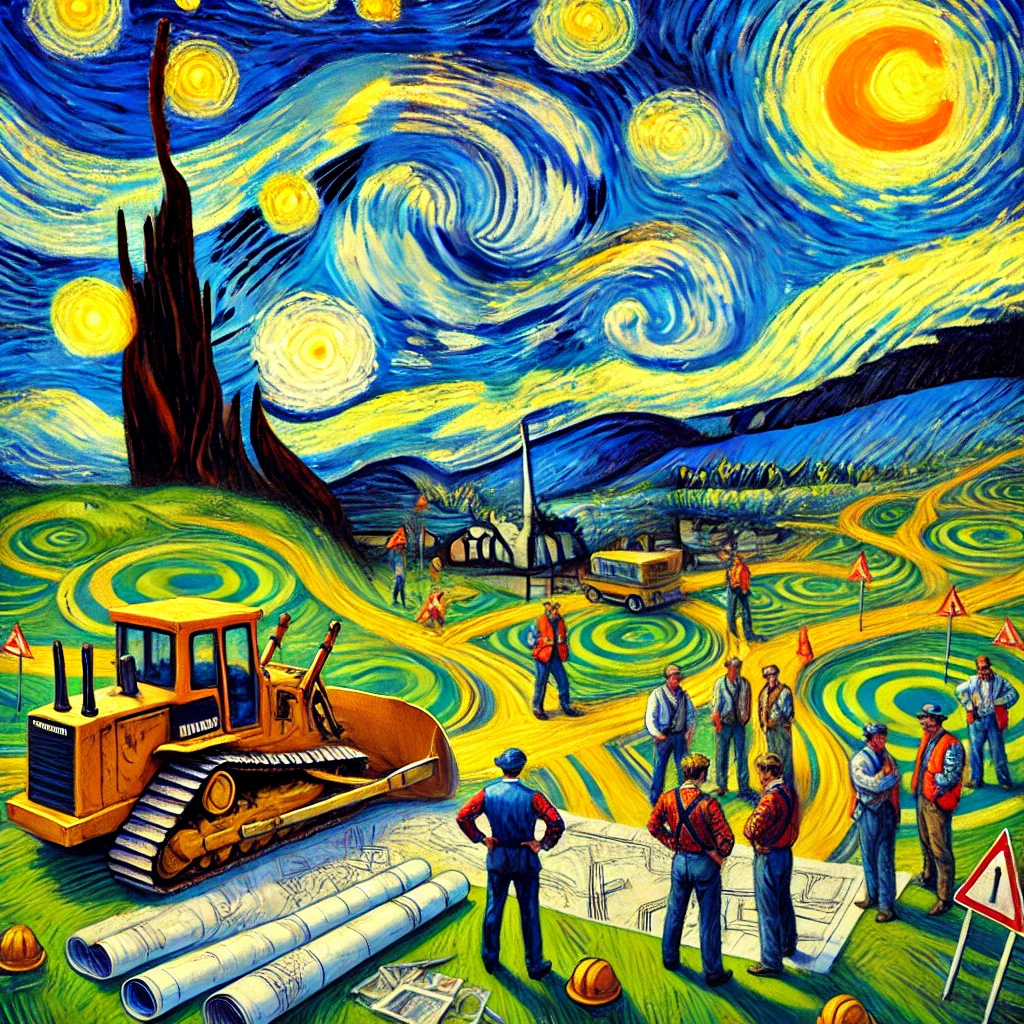
Roundabouts of Wrath – The Developer Who Tried to Confuse a County
Act I – The Old Golf Course Sold (Again… but This One Feels Different)
In Sequatchie Crossing, the old golf course had lived more lives than any cat in the county. It opened in the 80s as “Sequatchie Valley Greens,” closed in the 90s because someone mismanaged the fertilizer budget, reopened in the 2000s as “Eagle’s Whisper,” closed again when the greenskeeper ran off to join a band, reopened as “The Fairway Project,” closed after a storm that experts say was only slightly related to poor drainage, and then sat abandoned for nearly a decade.
The land became known mostly for:
-
teenage couples parking at dusk
-
deer wandering freely
-
a rumor that a bobcat lived in the old concessions shed
-
Clovis Strickland practicing disc golf alone (“it’s competitive with myself,” he claimed)
Nothing much ever changed.
Until one Monday morning.
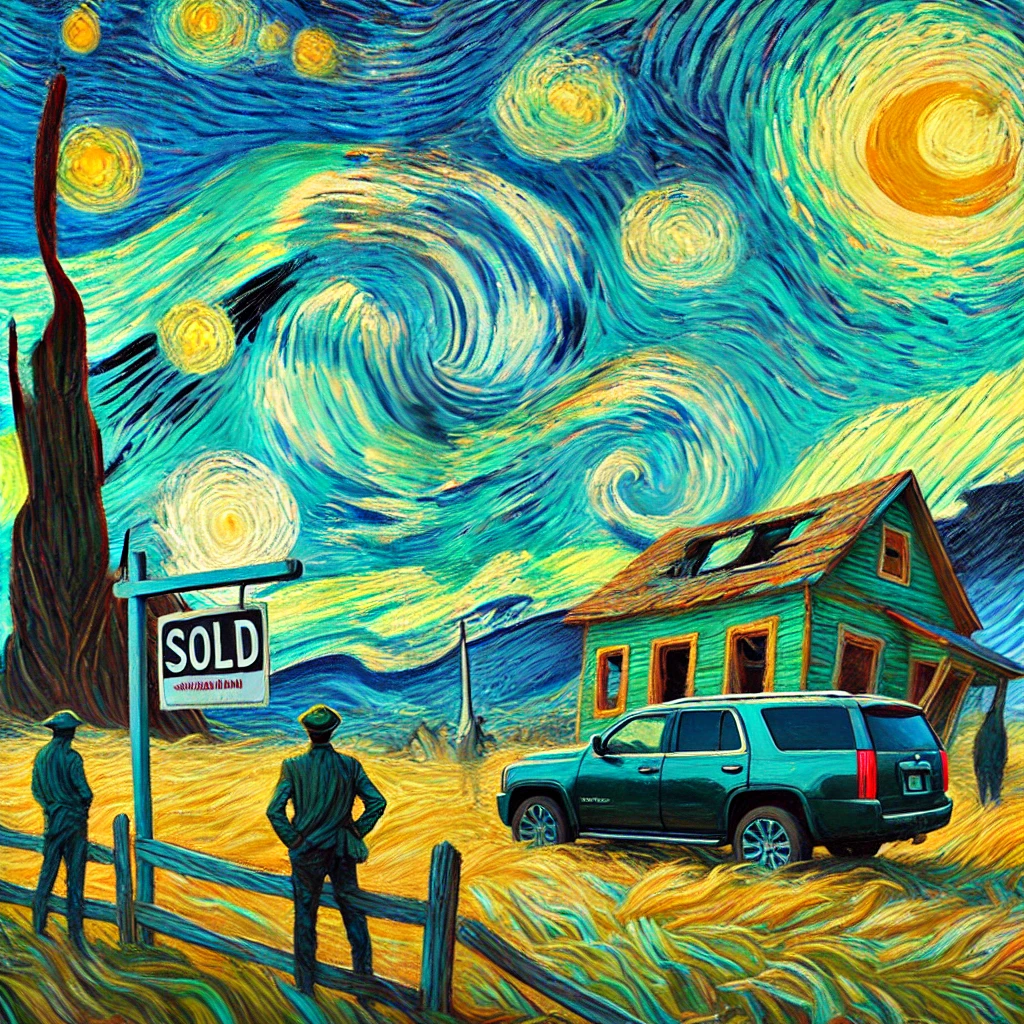
A brand-new, shiny, suspiciously expensive SUV rolled down Golf Course Road – one of those SUVs that looks like it’s never carried groceries or a muddy dog – finally stopping in front of the long-abandoned clubhouse.
Out stepped a man nobody recognized.
He wore shoes too clean for county soil, sunglasses that didn’t come from the pharmacy rotating rack, and a blazer sharp enough that it seemed capable of cutting bacon.
His name, he announced loudly to the single squirrel eavesdropping nearby, was Victor Roundsworth III.
The “III” was said with such confidence that even the squirrel hesitated before skittering away. Sequatchie locals are suspicious of multi-generational Roman numerals. It usually means big money or big trouble, and neither mixes well with county politics.
By noon, Victor had met with a real estate attorney, signed papers, toured the property while muttering words like “profit potential,” and declared the land officially his.
By supper, locals already hated him.
Someone posted in the Sequatchie Crossing Community Discussion Group (the one not run by admins, because those admins are “biased”):
“A feller from Florida done bought the course. Brace yourselves.”
This was followed by:
-
63 likes
-
132 angry emojis
-
14 predictions of doom
-
one “watch your property values”
-
and a GIF of a chicken panicking
Everyone feared condos. Or luxury cabins. Or something involving a gate and a guard shack.
Nobody predicted roundabouts.
Act I – The Old Golf Course Sold
Act II – The Plan Unveiled (And Immediately Regretted)
Victor rented the Fellowship Hall to present his development plan, which already offended many since the hall was historically used only for funerals, potlucks, baby showers, and the annual Pie Revival (long story).
He wheeled in a projector, a laptop, and a stack of printed brochures. Too thick. Too glossy. Too “city.”
Boot Barnes whispered to Pastor Peeler, “That there pamphlet costs more than our vacation Bible school budget.”
Pastor Peeler nodded grimly.
Victor tapped the projector remote like a showman at a Vegas magic act.
“Ladies and gentlemen of Sequatchie Crossing,” he announced, “I’m thrilled to introduce… The Roundabout Estates at Sequatchie Crossing.”
The slide changed.
And gasps filled the room like someone had driven a tractor through the buffet table.
On the screen emerged the most baffling neighborhood map ever drawn:
-
Seven standard roundabouts
-
Three mini roundabouts
-
Two double roundabouts stacked like pancakes
-
Twenty-six cul-de-sacs sprouting like forks on a spaghetti noodle
-
One “figure-eight flow circle”
-
A “traffic calming zone” labeled serene mobility experience
Not a single straightforward road. Not one.
Locals stared at the map like it was a Rorschach test sponsored by supernatural forces.
Trixie Jo Bartlett raised her hand.
“Is this a joke? Like modern art? Are we supposed to clap?”
Victor smiled too widely. “It’s urban innovation. The future of intentional community design.”
Mabel Dean Ashcroft let out a soft gasp. “Intentional? Like a trap?”
Clovis squinted from the back row. “Why does it look like a maze you’d give a hamster?”
Victor waved the laser pointer across the map.
“Residents will enjoy tranquil living with minimal local interference.”
This froze the room.
Locals do not like being referred to as interference.
Boot stood so abruptly his folding chair screeched across the floor.
“Sir, are you telling us you designed this… this tornado diagram… to keep Sequatchie folks out?”
Victor blinked. “Not out. Just… around.”
That did not help.
Pastor Peeler murmured, “Lord give me strength,” which everyone recognized as the polite church version of This fool is out of his mind.

Act II – The Plan Unveiled
Act III – Scouting the Property (Chaos Ensues)
By the next morning, locals organized an unofficial reconnaissance mission.
Team members:
-
Boot Barnes – general leadership, honorary traffic expert
-
Clovis Strickland – driver, liability risk
-
Trixie Jo Bartlett – note-taker
-
Daisy the Dog – unofficial emotional support analyst
They carried with them:
-
a hand-drawn copy of the roundabout map
-
three Yeti tumblers full of sweet tea
-
a bag of pork rinds
-
and a prayer
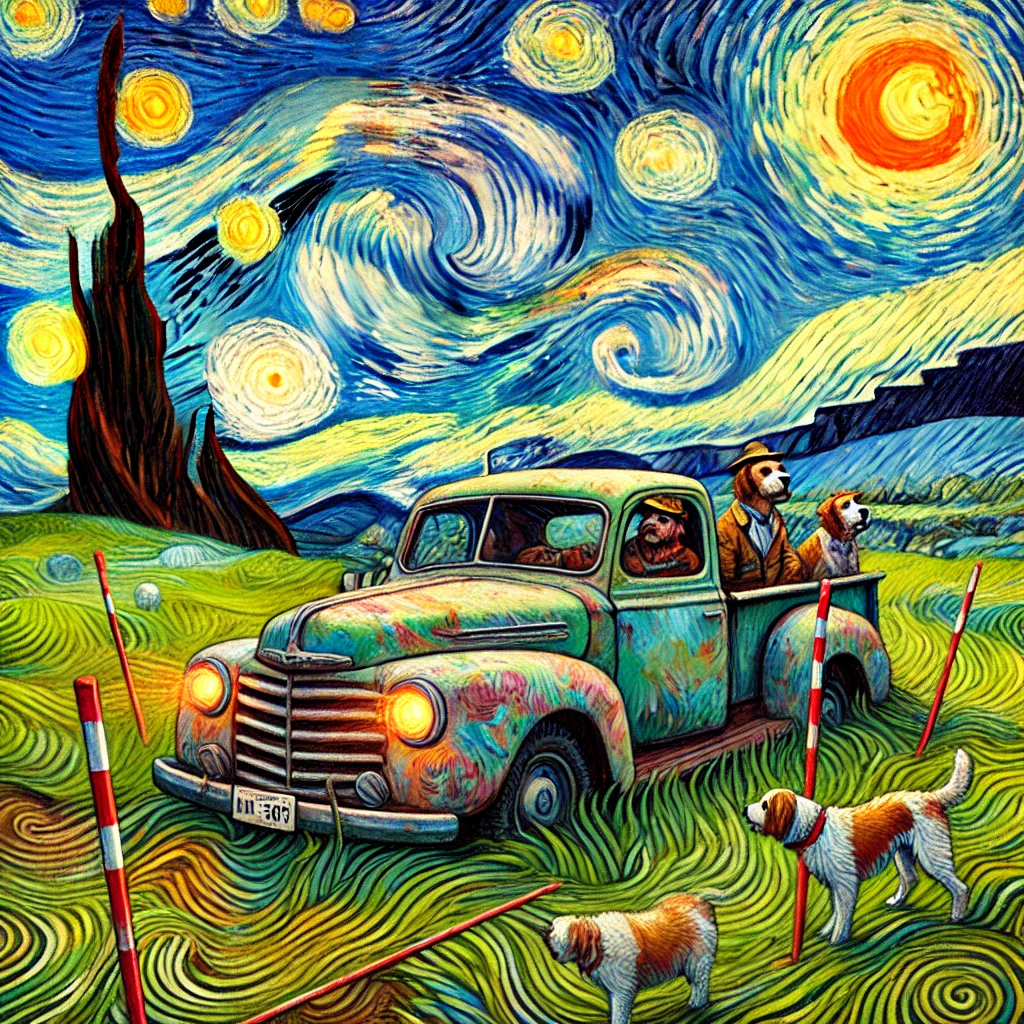
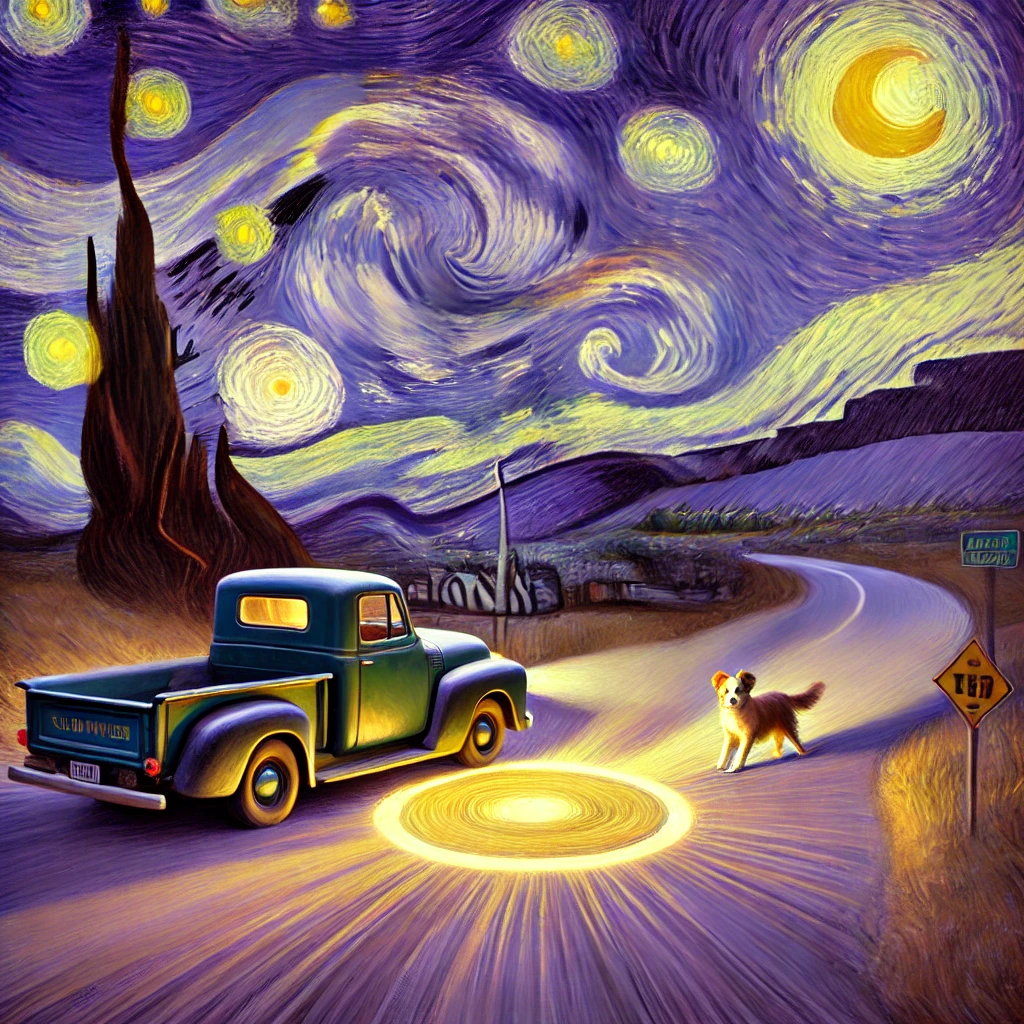
Clovis drove his pickup onto the abandoned course following the survey stakes Victor’s crew had already planted.
Within minutes Clovis faced his first confusion.
The stakes looped into a spiral.
“Which way is the road?” Trixie asked.
Clovis answered by default: “Left.”
He turned.
The truck looped around in a wide curve that led… nowhere.
They circled again.
Boot leaned forward. “Try straight through.”
“There ain’t no straight-through!” Clovis insisted.
On the third loop, Daisy began whining.
On the fourth, Boot began praying.
On the fifth loop, Trixie declared, “If we get stuck here forever, I’m suing the county.”
Finally, Clovis aimed for a gap in the stakes – not a marked road, but a place where the stakes hadn’t been finished.
After jolting through it, he exhaled. “Freedom.”
Boot shook his head. “Victor’s designs ain’t just confusing – they’re dangerous.”
Daisy barked in agreement.
Locals treat dogs as the final authority on suspicious happenings, and Daisy had spoken.
Act III – Scouting the Property
Act IV – The Public Emergency Meeting
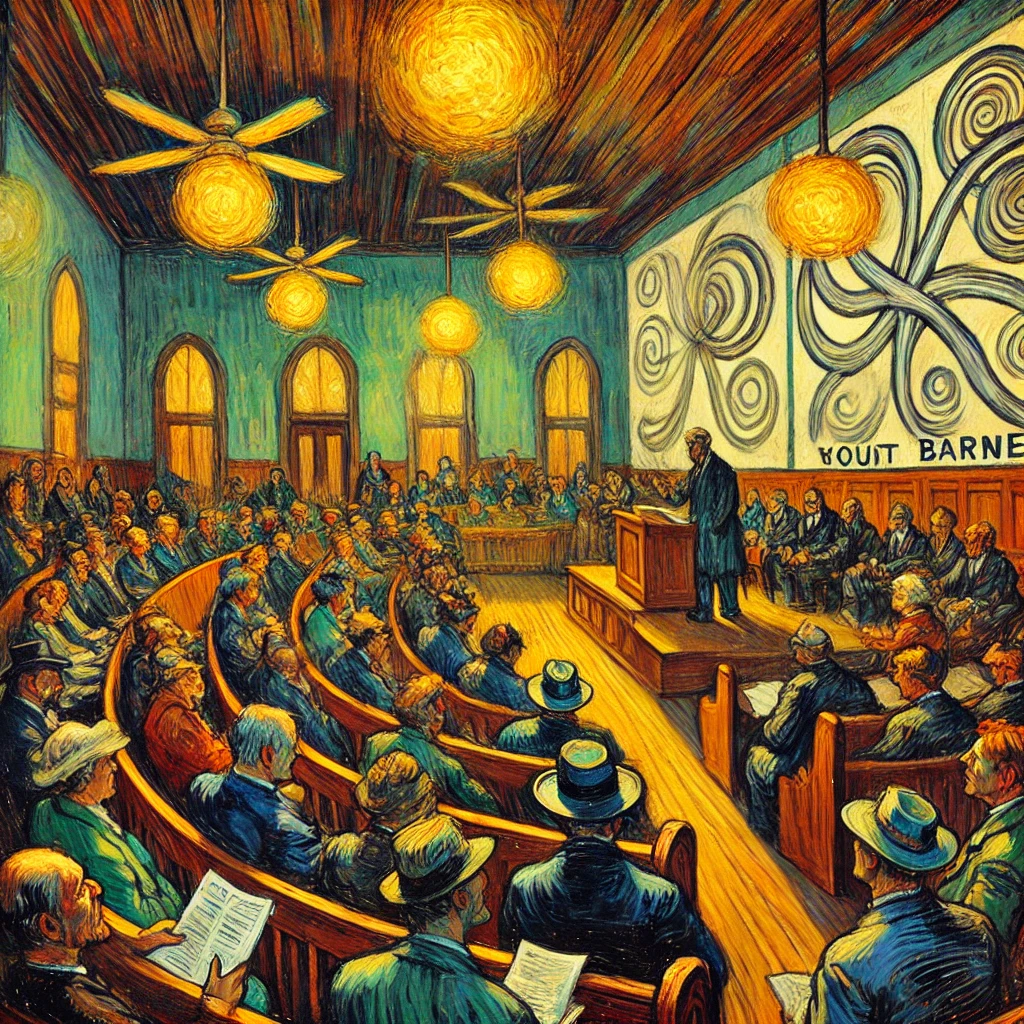
The county called a special evening zoning meeting. Twenty-eight locals spoke against the development. Two spoke in favor (one thought roundabouts look “European,” and another misread the agenda and thought the meeting was about taxation).
Boot was first to the podium.
“We’re mountain people,” he said. “We don’t need to be driven around in circles to get where we’re going.”
Loud applause.
Trixie added, “Roundabouts ain’t natural. Nothing in Sequatchie County is designed to spin except carnival rides and gossip.”
More applause.
Clovis stepped up next.
He unfolded the hand-drawn map, stepped back, and announced, “I drove this. My truck nearly had an existential crisis.”
Laughter.
“Also,” Clovis added, “I swear I passed the same imaginary road three times. The universe folded in on itself.”
There were gasps.
If there’s one thing Sequatchie fears more than traffic confusion, it’s anything remotely quantum.
Victor finally rose to speak.
“Roundabouts,” he began confidently, “increase safety, reduce speed, add charm, and prevent congestion.”
This was met with:
-
snorts
-
scoffs
-
one person muttering “Not in my county, city boy”
-
and a baby crying
Victor continued, “They are modern. Progressive. Efficient.”
The room fell silent.
He had used the three words Sequatchie Crossing distrusts most when uttered together.
Finally Pastor Peeler addressed the room.
“My flock gets dizzy walking in a circle around the fellowship hall for the Christmas pageant rehearsal,” he said. “I do not believe this town is prepared for such… rotational living.”
The zoning board took notes furiously.
Act IV – The Public Emergency Meeting
Act V – Developer Outreach Event (A Catastrophic Mistake)
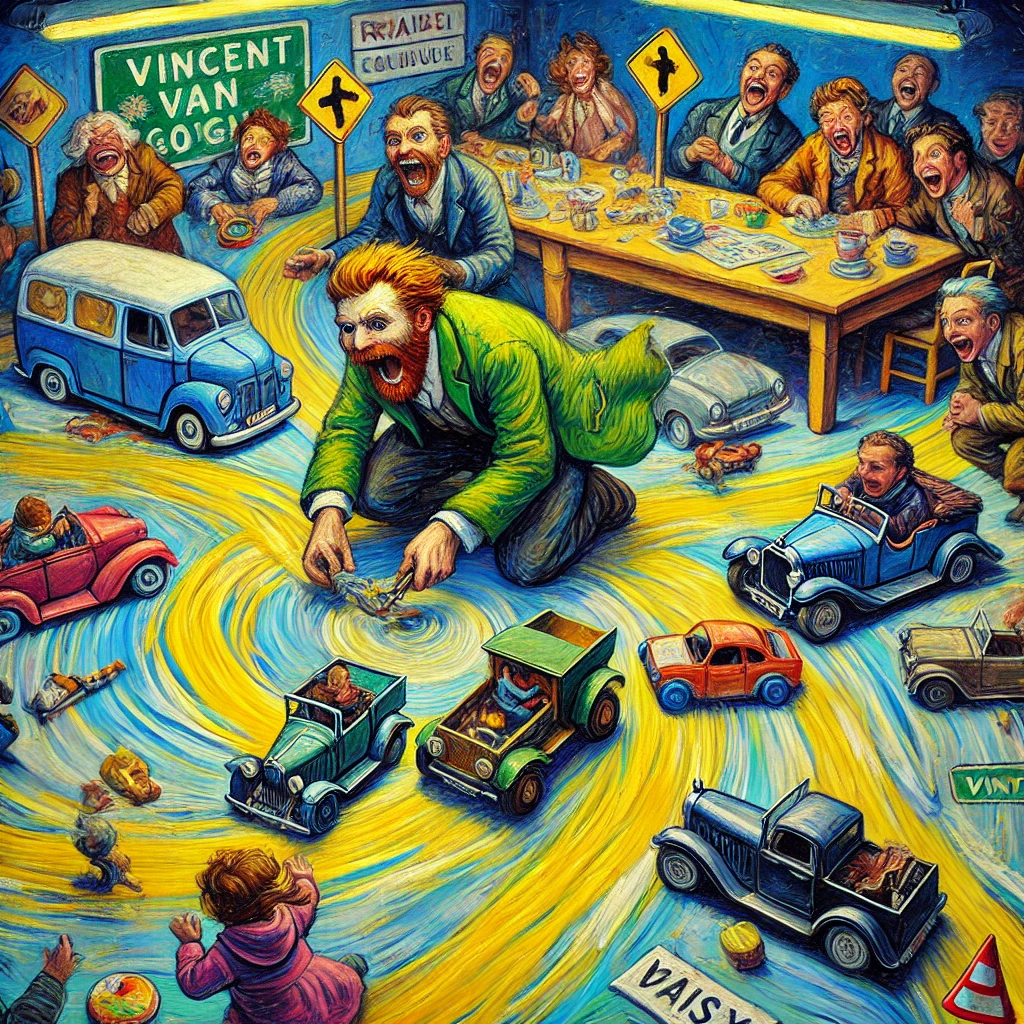
To win support, Victor held a “Traffic Flow Learning Experience Day.”
He meant well.
But the demonstration table featured:
-
miniature toy cars
-
a scale model of the neighborhood
-
and a sign reading:
“Roundabouts Are Fun!”
This alone nearly started a boycott.
Boot stepped up first to test the model.
He misunderstood immediately and drove straight across the center island, scattering tiny cars everywhere.
Victor said, “No, no, no – that’s a violation of the intended movement pattern!”
Boot frowned. “Not the way I drive.”
Trixie attempted next.
She entered the roundabout, panicked, and shot straight into a cul-de-sac.
“There’s no way out!” she yelled.
Victor cheerfully corrected her, “Cul-de-sacs are designed as cozy turnarounds.”
“Feels like a coffin!”
Daisy the dog placed her paw on the model and toppled two roundabouts at once.
The crowd applauded the dog.
Victor did not.
Act V – The Developer’s Outreach Event
Act VI – The Counterproposal: A Straight Road Revival
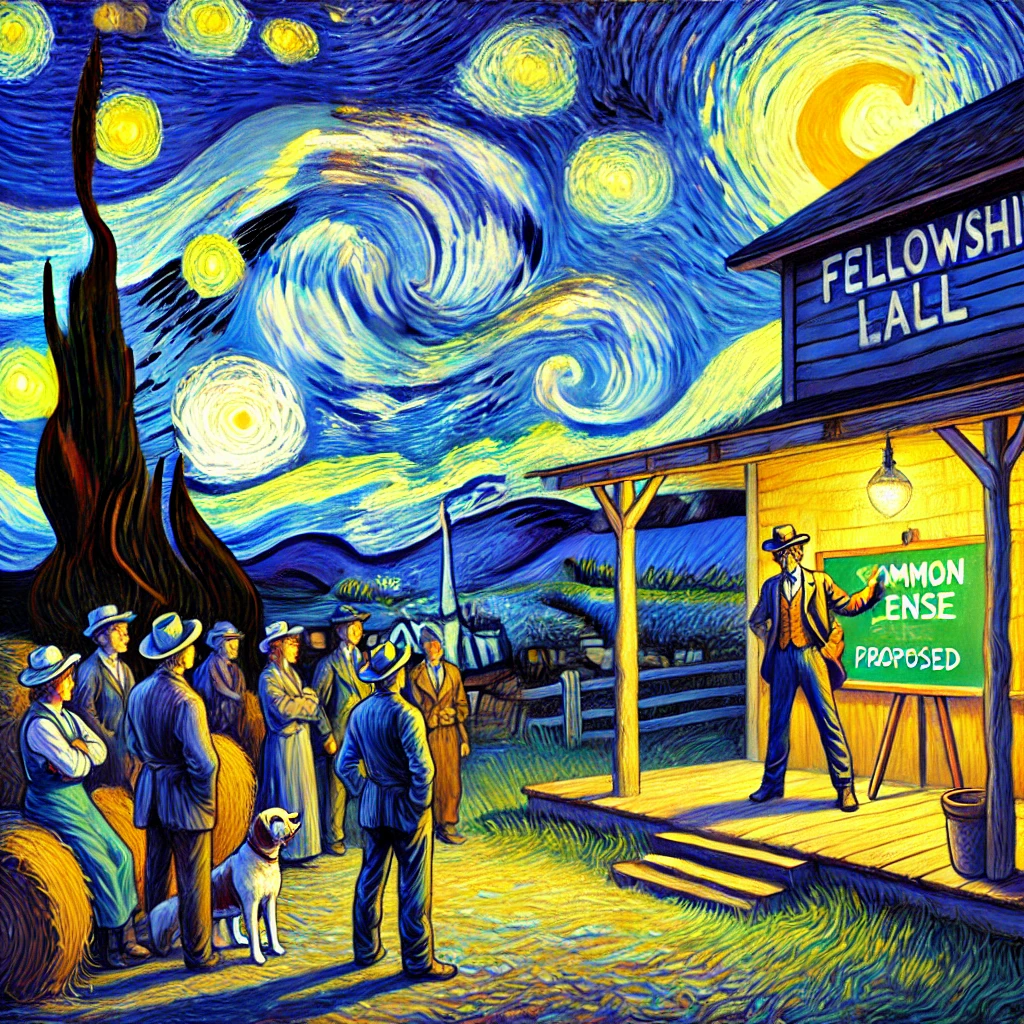
Locals met again and drafted the following counterproposal:
-
Replace all roundabouts with straight roads.
-
Keep one cul-de-sac – for novelty.
-
Include a road called Common Sense Lane.
-
Add signage that says “Slow Down, Y’all” instead of yield arrows.
Boot presented the plan to Victor.
Victor laughed.
He shouldn’t have.
Because Sequatchie Crossing takes being laughed at very personally.
Pastor Peeler even quoted Scripture – slightly out of context but powerfully:
“Let your path be straight and your footing sure.”
He then added, “Nowhere does the Lord ask us to merge into eternal circles.”
Applause thundered.
Victor paled.
Act VI – The Counterproposal – Straight Road Revival
Act VII – Standoff at the Old Golf Course
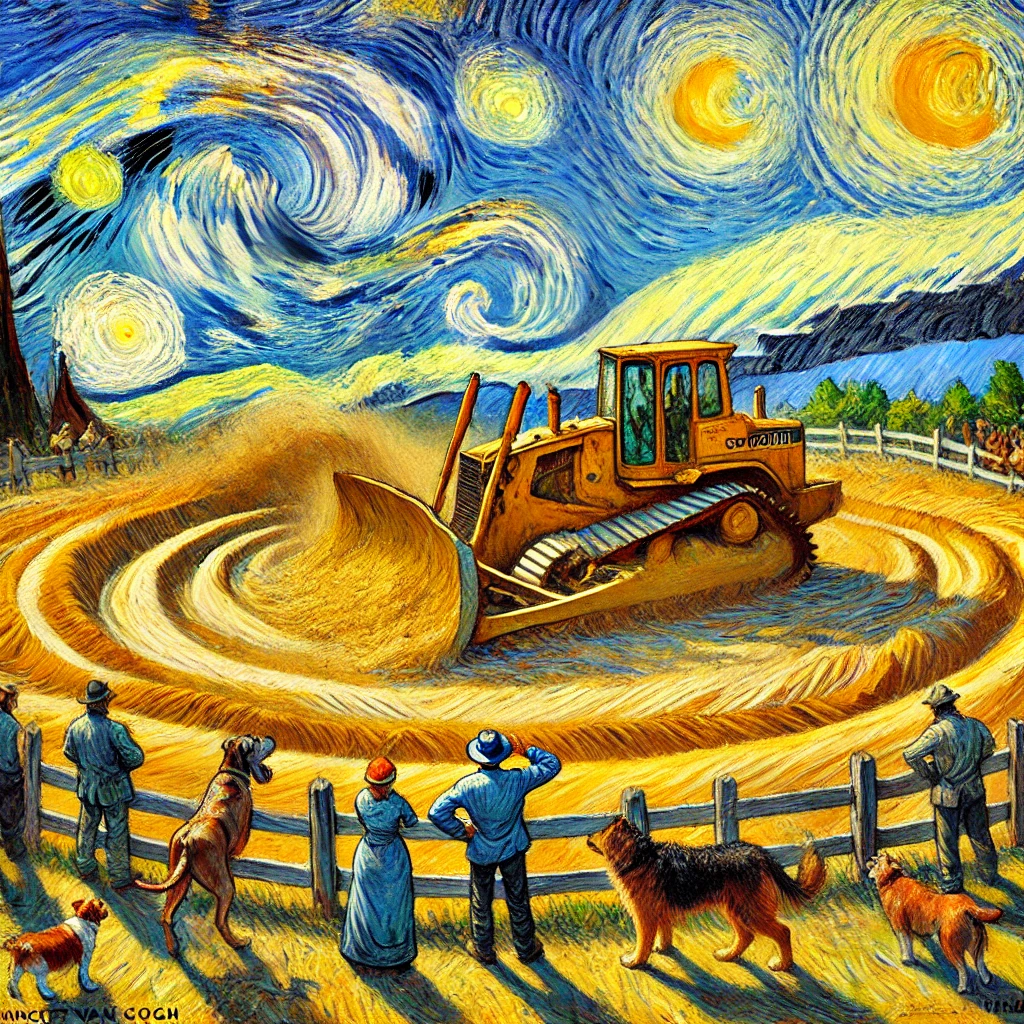
Construction began anyway.
Locals gathered like spectators at a slow-motion rodeo.
A bulldozer attempted to follow Victor’s markings but accidentally traced a perfect roundabout before the operator even realized it.
“See?” Clovis shouted. “The land itself rejects this foolishness!”
The operator admitted, “I can’t tell where the road is supposed to go. This thing is confusing me spiritually.”
Even the survey flags seemed to blow in circles.
Victor tried to explain the concept again.
“Roundabouts reduce congestion!”
Boot yelled, “There is no congestion in Sequatchie Crossing except when we’re all waiting for the same gas pump!”
Victor argued, “They’re safer!”
Trixie replied, “Not if half the county passes out from dizziness before they exit.”
The standoff lasted three days.
Eventually the zoning board stepped in.
Act VII – Standoff at the Old Golf Course
Act VIII – The Final Compromise
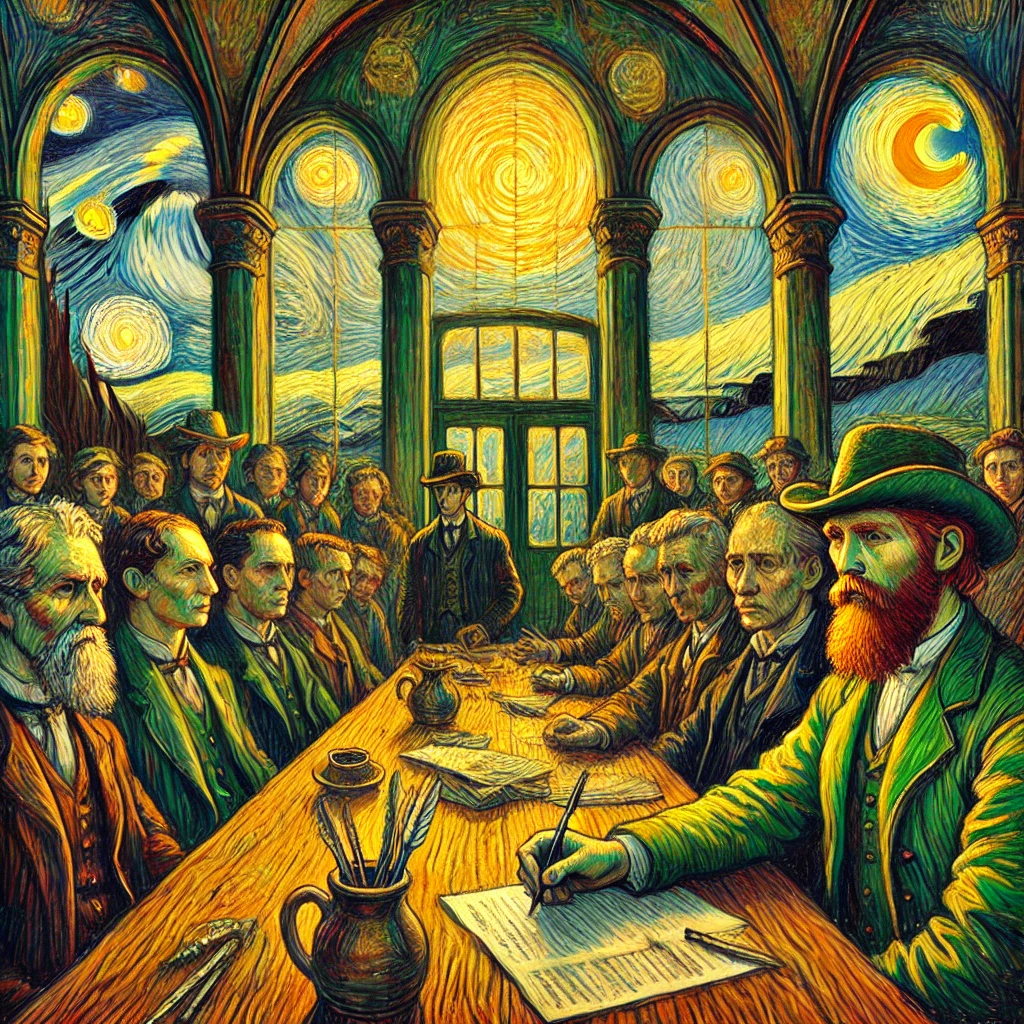
A truce was brokered.
Victor would be allowed to build his development under strict local conditions:
-
Only two roundabouts – and they must be normal-sized.
-
Cul-de-sacs must have signs reading “Not a Trap.”
-
At least two roads must be straight. Straight all the way through.
-
Locals get input on street names.
(Top contenders: “Mind Your Business Drive,” “Not Today Circle,” “Don’t Confuse Me Lane.”) -
Victor must undergo an educational session on rural traffic expectations.
Victor accepted the terms with an expression similar to a man swallowing a porcupine.
Boot summarized the mood of the town:
“We lost the war against circles, but we saved Sequatchie from becoming a hamster maze. That counts as victory.”
Act VIII – The Final Compromise
Act IX – Epilogue: Sequatchie Crossing Drives On
Months later, the first roundabout was completed.
Locals drove by slowly, staring at it the way people stare at strange animals at the fair.
Clovis was the first to test it. He entered cautiously, whispered a prayer, circled, exited, and declared, “It didn’t kill me. But I don’t trust it.”
Trixie nodded. “Unnecessary. Like extra buttons on overalls.”
Mabel Dean Ashcroft avoided it entirely by cutting across the construction lot. (“Shortcut,” she explained.)
Daisy barked at it daily.
And the town continued on – slightly annoyed, mildly baffled, and firmly unified in its belief that Sequatchie never needed a circle to define its roads or its people.
Straight paths and honest directions were good enough.
Always had been.
Act IX – Epilogue – Sequatchie Crossing Drives On
Key Themes Reinforced
-
Locals find roundabouts confusing, unnecessary, suspicious, circular nonsense.
-
They see them as anti-Sequatchie, anti-common-sense, and anti-human.
-
They tolerate one or two but do not trust them.
-
Cul-de-sacs feel like traps.
-
Straight roads = dignity, clarity, and Sequatchie values.

Disclaimer – Roundabouts of Wrath – The Developer Who Tried to Confuse a County
Disclaimer Section
Required Legal-ish Note for the Fictionally Impaired
Sequatchie Crossing is fictional. The events, people, zoning boards, bewildered dogs, dizzy drivers, roundabout patterns, and any references to Satan’s cinnamon roll are invented purely for entertainment. No real developers, golf courses, counties, or public officials were harmed, confused, or trapped in cul-de-sacs during this story.
Real Places Behind the Ruckus – From The Dunlap Directory

Real Places Behind the Ruckus – From The Dunlap Directory
Yes, this story was fictional; even the parts that weren’t true. These places? Absolutely real. Stop by, support local, and keep the Wi-Fi away from livestock:
- FedEx OnSite At Walgreens
- Ketner’s Mill
- Dunlap Industries
- UT Performance
- Dunlap Buy Sell and Trade
- Rosewood Farm Weddings & Events Venue
- Pinpoint Customs Collision
- Creative Discovery Museum
- Smopfy Smoke Shop
- Tiger Rock Dunlap
- Coops Creek Greenway
- Sugar Mama’s Cakes by Keisha
- Roberts Construction

Real Places Behind the Ruckus – From The Dunlap Directory
At Sequatchie Crossing, we tell the stories of Sequatchie Crossing.
Please share this post with your friends, family, or business associates who may want follow the news from Sequatchie Crossing.

0 Comments