


By Tom Seest
At Sequatchie Crossing, we tell the stories of Sequatchie Crossing.
🎤 Audio Overview
The Town-Wide Lost Dog Crisis (That Wasn’t) – Misunderstandings, Microchips, and a Boutique That Went too Far
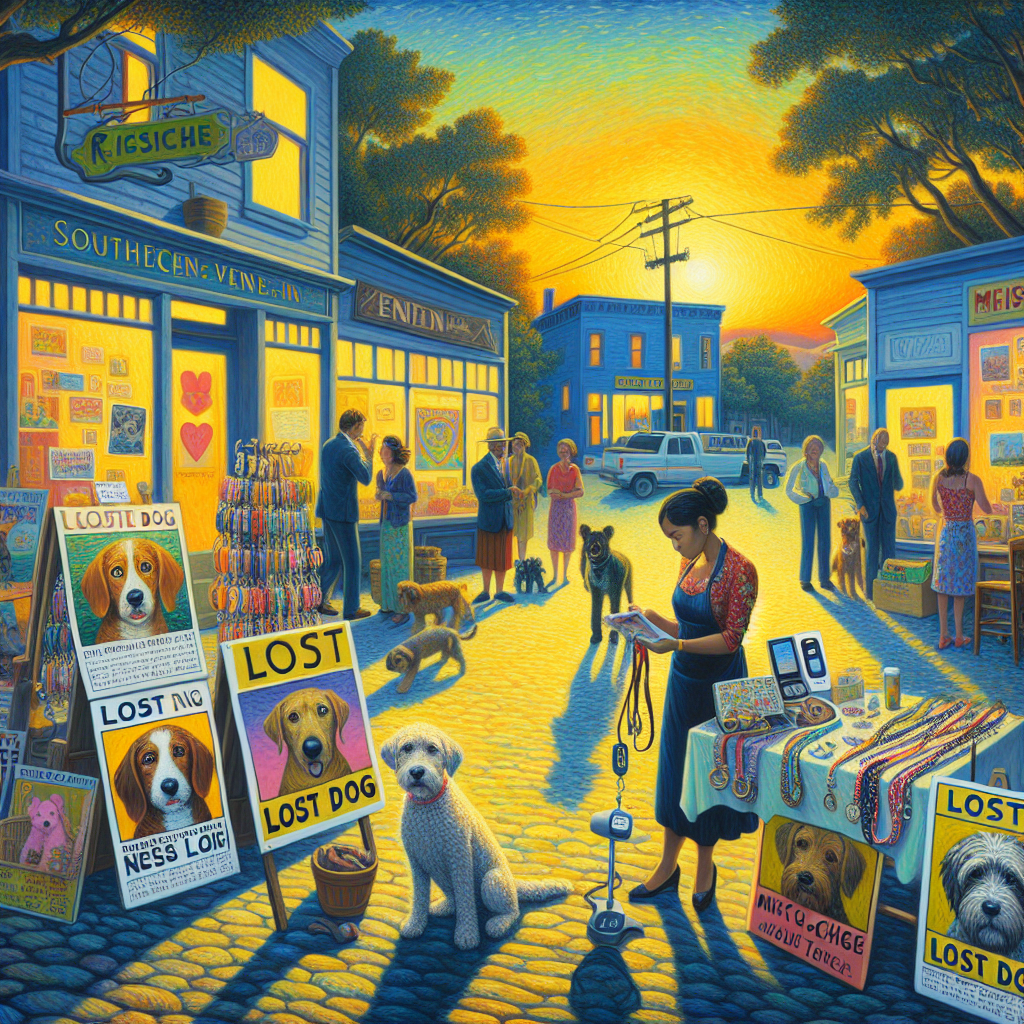
It all started with a single flyer taped to the bulletin board at Earl’s Market:
“Have You Seen These Dogs?!”
(Photos of twelve very photogenic golden retrievers, all wearing matching bandanas and concerned expressions.)
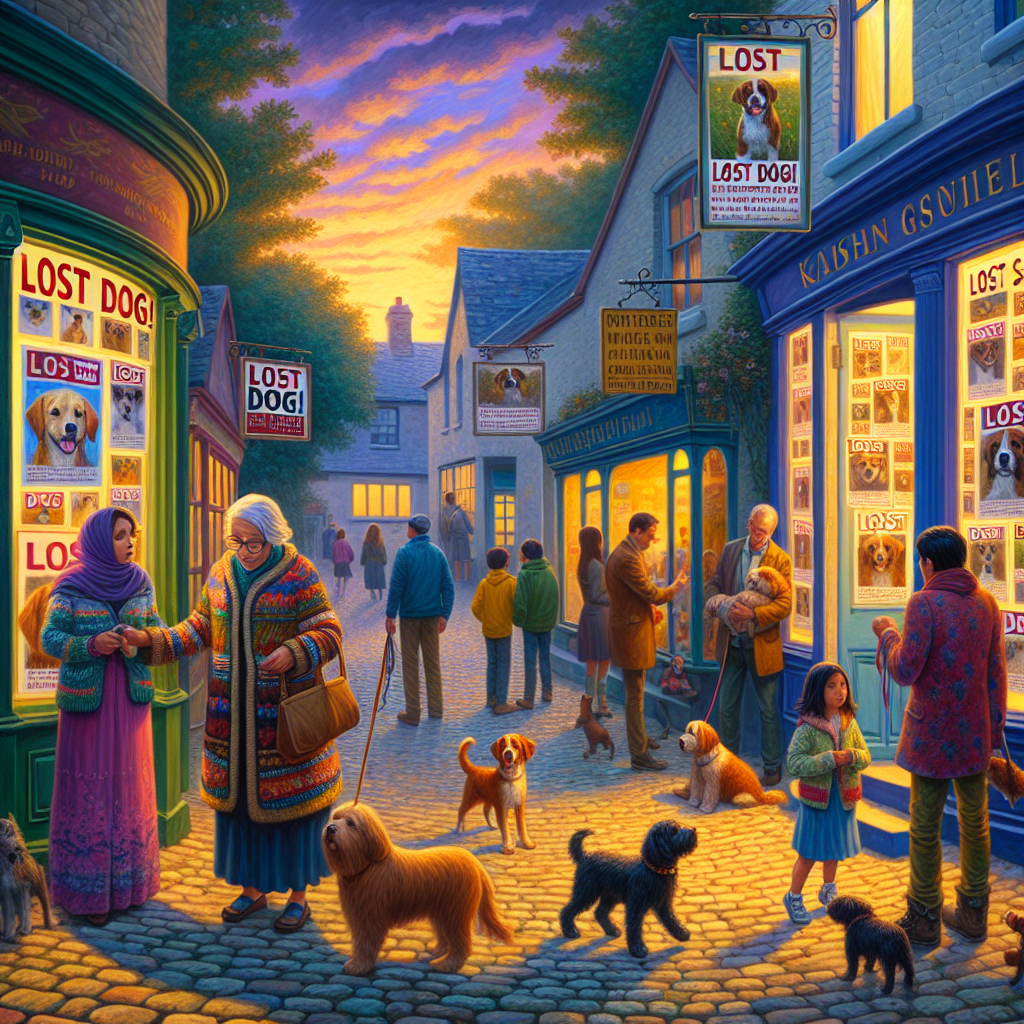
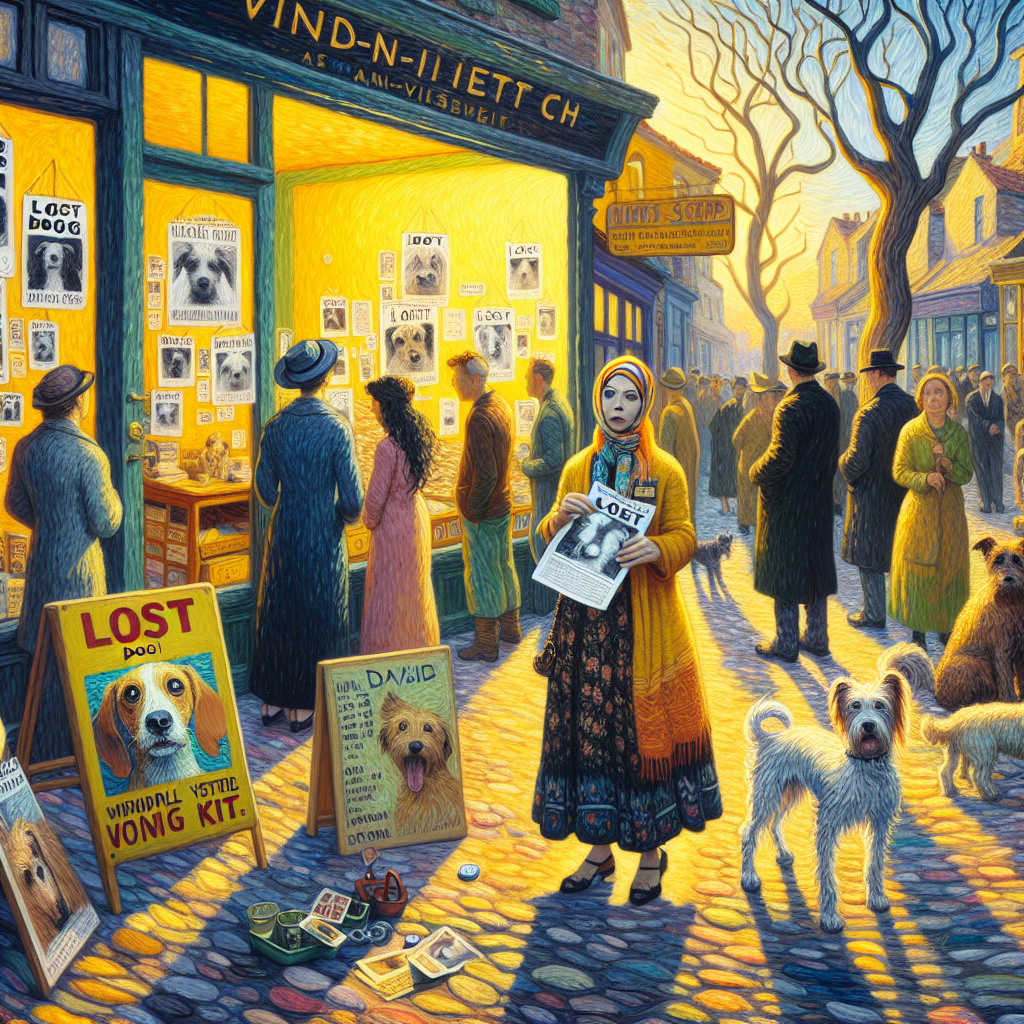
Within hours, the entire town was in a full-scale tailspin. “Dognapping spree,” some muttered. “Feral pack uprising,” others feared. Boot Barnes even declared it “the largest coordinated disappearance since 1983 when the Baptist softball team skipped town to avoid a rematch.”
By noon, the rumor mill had escalated to code orange:
- Trixie Jo Bartlett launched a search brigade consisting of herself, two kindergartners, and a labradoodle named Muffin. They carried handmade signs reading “Bring Back the Bark” and wore matching pink vests.
- Officer Kenny Joe Teeter fielded six separate 911 calls about “suspicious leashless activity,” including one involving a statue of a dog outside the library.
- Shelley Wexler offered to build a crystal grid for pet return harmony and attempted to consult a Labrador aura with a rose quartz pendulum.
Even Pastor Arnold Peeler weighed in, preaching a spontaneous sermon titled “The Shepherd Leaves the 99—But What If It’s Golden Doodles?” He drew gasps when he likened canine absence to spiritual drift, then backpedaled by comparing the Holy Spirit to a loyal border collie.
The Town-Wide Lost Dog Crisis (That Wasn’t) – Misunderstandings, Microchips, and a Boutique That Went too Far
The grocery store paused all announcements to play soft acoustic guitar covers of “Who Let the Dogs Out.” The town radio station launched a new segment titled “Mutt Watch.”
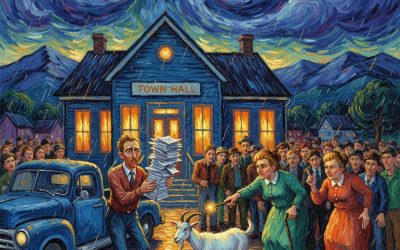
Things escalated when Lurleen Davenport showed up at Town Hall with laminated maps, a portable scanner, and a binder labeled “Operation Fluff Recovery.” She proposed a door-to-door microchip audit, a curfew for unsupervised Chihuahuas, and a $25 citation for any “undocumented leash activity.”
Boot Barnes contributed a handwritten report titled Dog-Related Incidents Since ’76, which included 24 pages of anecdotes, two napkin sketches, and a section on “anomalous barking patterns.”
Clovis Strickland, meanwhile, converted his backyard into a “canine tactical defense perimeter” featuring motion sensors, beef jerky bait stations, and a whiteboard labeled “Fur Watch Command.” He later released a statement claiming “the silence of the dogs was proof of external manipulation.”
And then, at exactly 3:47 p.m., everything changed.
Enter the Crenshaws.
Turns out, Brett and Alyssa had launched a new weekend business called “Wag Nirvana: A Pop-Up Wellness Spa for Overstimulated Pets.” It featured essential oil diffusers, paw massages, guided meditation sessions, and—according to their brochure—“emotional detox for suburbanized canines.”
The dogs weren’t missing. They were on retreat.
In a vintage Airstream trailer.
Parked two blocks from City Hall.
With chilled lavender-scented towels, ambient pan flute music, and individualized affirmations piped through wireless speakers.
The Town-Wide Lost Dog Crisis (That Wasn’t) – Misunderstandings, Microchips, and a Boutique That Went too Far
When confronted, Alyssa calmly explained that the pets had signed consent forms “through energy alignment.” Brett handed out gluten-free dog biscuits and encouraged everyone to follow their Instagram (@WagNirvanaTN), which had already gained 73 new followers in 24 hours.
Mabel Dean Ashcroft was so stunned she dropped her purse and immediately declared it “the greatest municipal embarrassment since the great chicken raffle miscount of ’92.”
Clovis, still holding his Tic-Tac camcorder from last week, muttered, “I don’t trust any dog that smells like patchouli.” He began recording under the label “Op Canine Cloudcover.”
Mayor Wilburn Otis Hargrove issued a formal statement reading: “While we appreciate citizen vigilance, Sequatchie Crossing urges residents to confirm whether a crisis is real before calling in the National Guard or forming possum-style posses.”
In the aftermath, several town officials quietly toured the Airstream and emerged visibly relaxed. Pastor Arnold noted that the trailer had “a peace about it,” though he refused to comment on whether he accepted a complimentary eucalyptus paw wipe.
All dogs were accounted for, bathed, and returned—though two now insist on sleeping with sound bowls and wearing chakra-aligning collars. One poodle was overheard growling in Sanskrit.
The Crenshaws are now accepting bookings for “Woof & Wellness Wednesdays,” and Trixie Jo is lobbying for a dog-friendly city council seat. There is currently no ordinance against it.
Conclusion
At Sequatchie Crossing, we tell the stories of Sequatchie Crossing.
Disclaimer: This story is entirely fictional except for the parts that aren’t true. Any resemblance to real people, living or just stubborn, is purely accidental—but also maybe a little flattering. Sequatchie Crossing exists only in the minds of those brave enough to imagine a town where zoning laws, casseroles, and conspiracy cassettes collide in glorious disarray.

0 Comments