


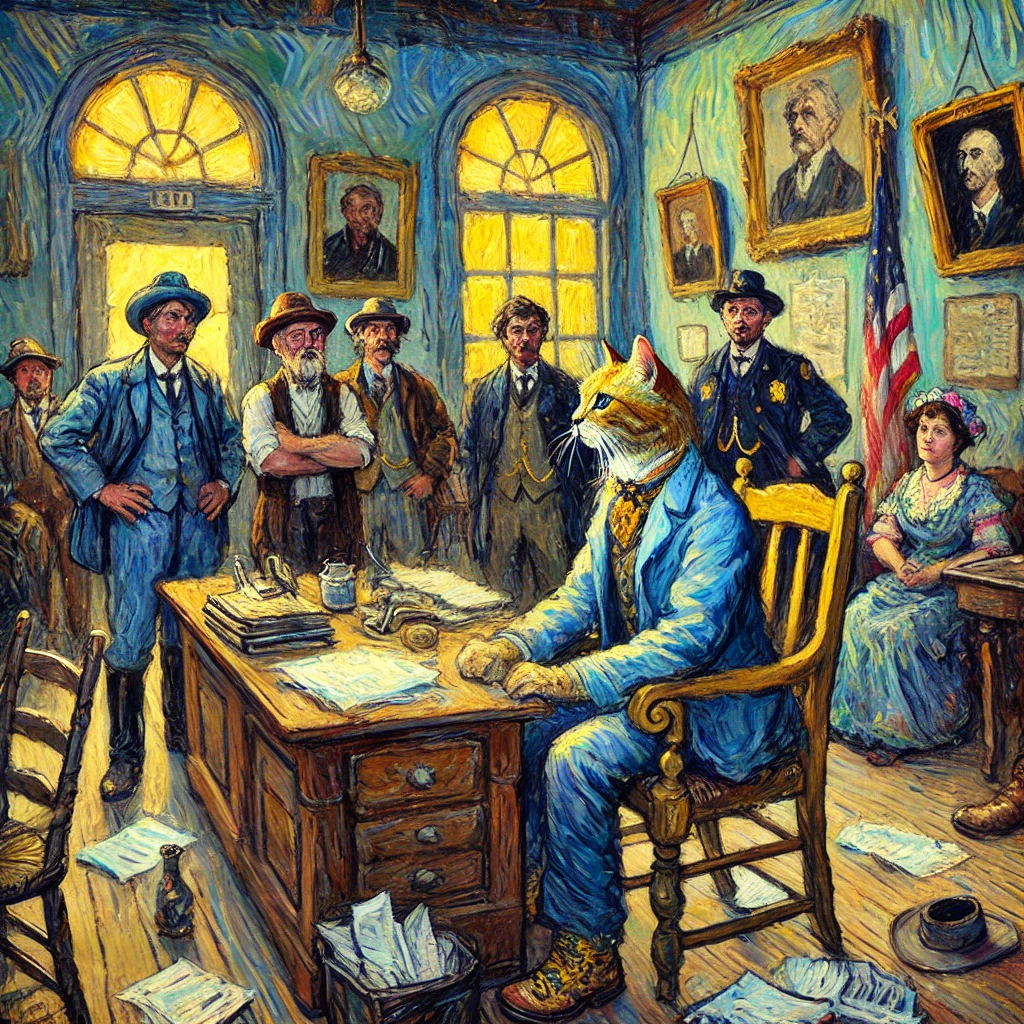
Ownership Is a Flexible Concept
By Tom Seest
At Sequatchie Crossing, we tell the stories of Sequatchie Crossing.
Please share this post with your friends, family, or business associates who may want follow the news from Sequatchie Crossing.
🎤 Audio Overview
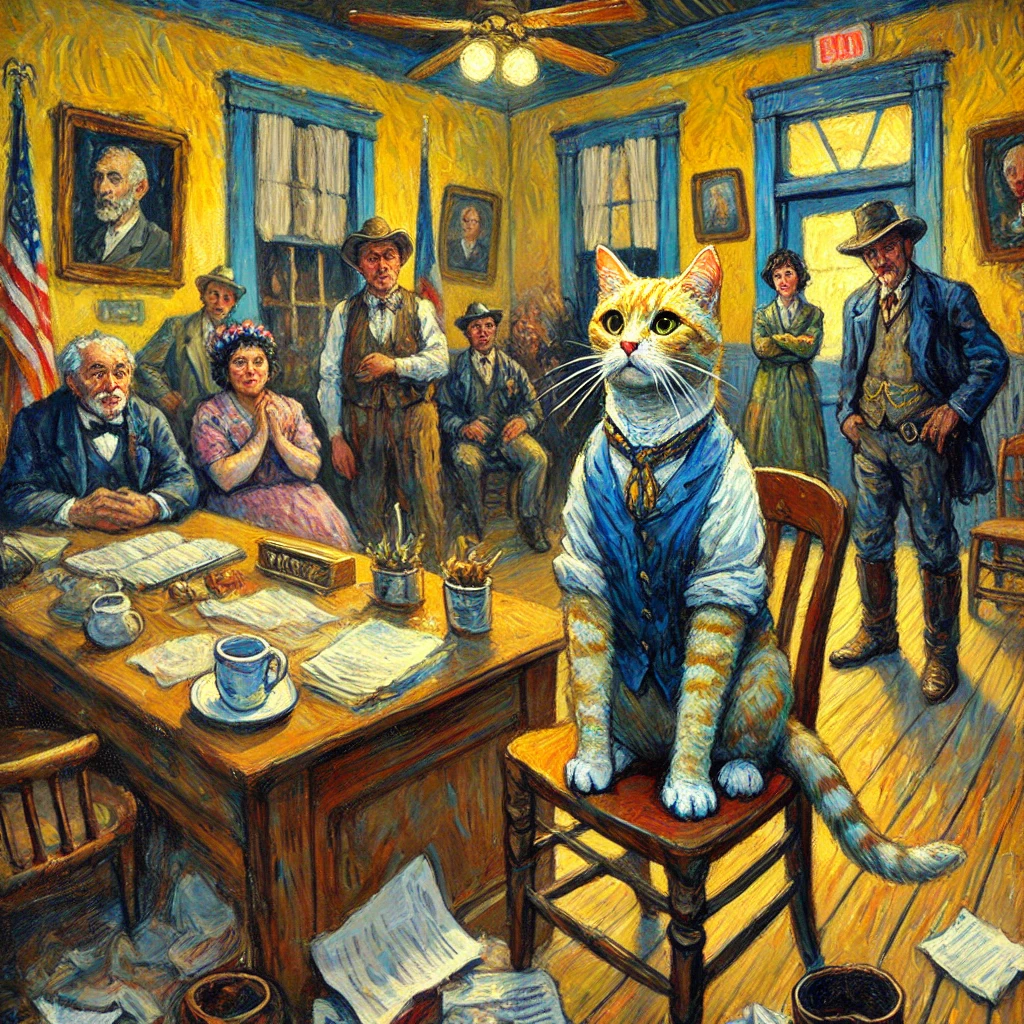
The Cat That Claimed City Hall
Act I – The Arrival
No one could quite agree on when the cat first appeared.
Some said it was a Tuesday, though no one could produce evidence of anything particularly Tuesday-like about the day. Others insisted it was after the zoning meeting about the disputed fence line behind Honeycutt Hardware, which would place it closer to Thursday. Clovis Strickland maintained, with absolute conviction and no supporting documentation, that the cat had always been there, and that everyone else was simply late in noticing.
The only thing that could be confirmed was this: by the time anyone thought to question it, the cat was already inside City Hall.
Not outside.
Not near the door.
Inside.
Specifically, on the long wooden bench just beneath the framed portrait of Mayor Jenkins (Retired, Unofficially), curled into a shape that suggested both permanence and mild disappointment.
“Whose cat is that?” asked Trixie Jo Bartlett, pausing mid-stride as she carried a stack of papers that had no clear purpose but conveyed urgency nonetheless.
No one answered.
Because no one knew.
And, more importantly, no one felt immediately responsible.
This, in Sequatchie Crossing, was often how ownership began.
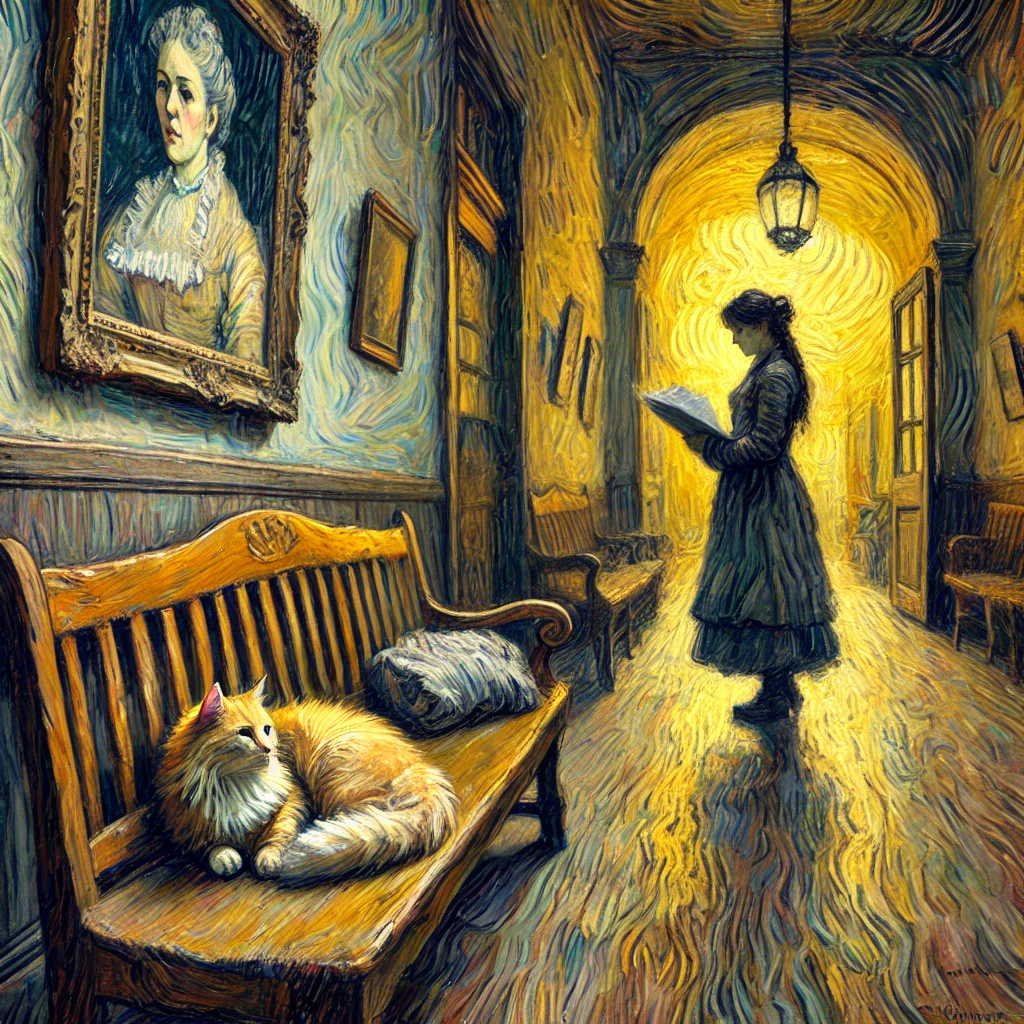
ACT I – The Arrival
Act II – The First Meeting
The cat attended its first official meeting without invitation, interruption, or apology.
It arrived—though “arrived” might be too generous a word—by already being present.
The town council gathered at precisely 6:07 PM, as was tradition, to discuss matters of infrastructure, rumors, and one unresolved complaint about a mailbox that may or may not have been moved three inches to the left without proper notification.
Sheriff Peeler took his usual seat, adjusting his belt with the solemnity of a man who had seen things he could not fully explain, including—but not limited to—goats in municipal buildings and a rooster that once refused to yield at a four-way stop.
Pastor Gentry sat two seats down, flipping through a notebook that contained both sermon notes and what appeared to be a grocery list written during moments of theological uncertainty.
Boot Barnes leaned back in his chair, which leaned back in response, creating a mutual understanding between man and furniture that had been negotiated over time.
And there, at the center of the table—
The cat.
Not beside the table.
Not under it.
On it.
“Now hold on,” said Sheriff Peeler, pointing with a pen that had stopped working in 2009. “That cat can’t be up there.”
The cat blinked.
Slowly.
Deliberately.
As if to say: I am not up here. You are down there.
“Well,” said Trixie Jo, adjusting her papers again, “has anyone filed a complaint?”
Silence.
“Then I don’t see the issue.”
The meeting proceeded.
The cat remained.
At one point, it placed a paw directly on the minutes book, effectively halting documentation for approximately seven minutes, during which no one dared to move it.
“Is it… voting?” whispered Clovis.
“No,” said Pastor Gentry. “But I believe it is participating.”
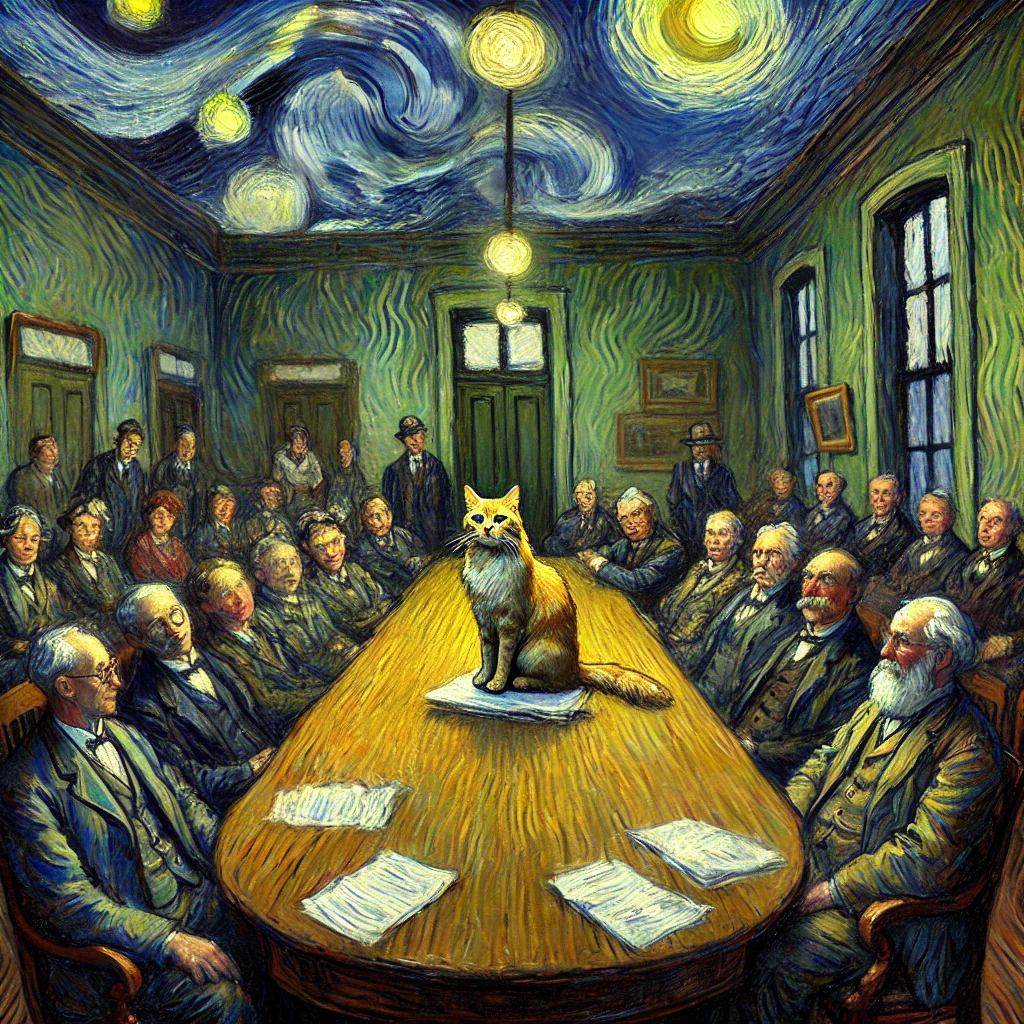
ACT II – The First Meeting
Act III – The Documentation Problem
By the third day, the question of ownership had evolved into a question of paperwork.
“Every entity in this town,” declared Trixie Jo, standing beside a filing cabinet that had not been opened since 1987, “must be documented.”
“Even the raccoon behind the post office?” asked Boot.
“That raccoon has a folder,” she replied.
This was true.
The raccoon had been classified as “Persistent but Polite” and assigned a provisional designation under Miscellaneous Wildlife with Administrative Impact.
The cat, however, had no such classification.
Which was unusual.
Because by now, it had:
- Established a consistent presence in City Hall
- Interrupted two meetings
- Sat in three chairs that were not assigned to it
- And, most notably, refused to leave when asked in a tone that was both firm and deeply uncertain
“We need to determine ownership,” said Trixie Jo.
“Looks to me like it owns itself,” said Boot.
“That’s not how this works.”
“Isn’t it?”
This question lingered longer than anyone expected.
Clovis, who had begun taking notes in a notebook labeled “Observations That May Become Important Later,” raised his hand.
“I believe,” he said, “that the cat has claimed City Hall.”
A pause.
“A claim requires documentation,” said Trixie Jo.
“Not always,” said Clovis. “Sometimes it just requires persistence.”
Everyone turned to look at the cat.
Which was now sitting in the mayor’s chair.
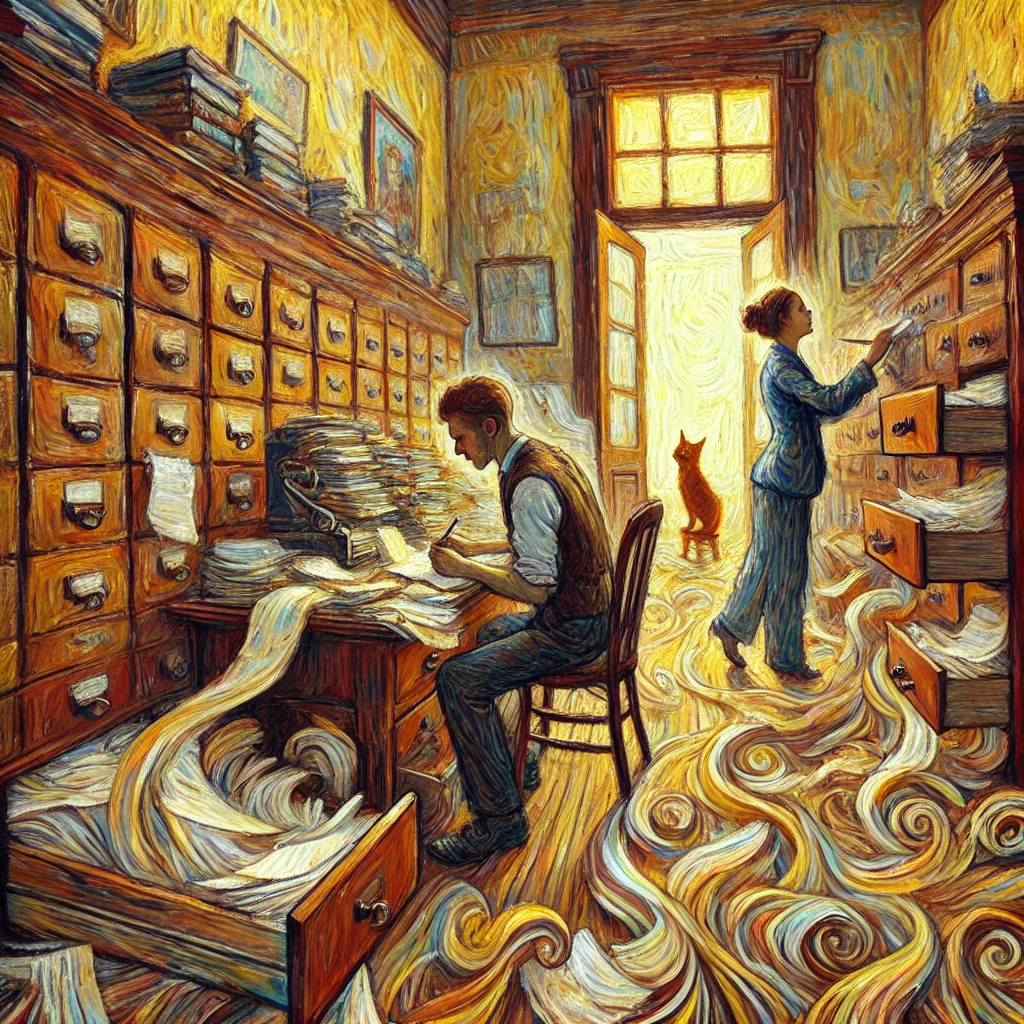
ACT III – The Documentation Problem
Act IV – The Attempted Removal
The decision to remove the cat was not made lightly.
It was made slowly, cautiously, and with several side discussions about whether removal constituted acknowledgment of authority.
“Who’s going to do it?” asked Sheriff Peeler.
No one volunteered.
Because removing a cat is not, in itself, a difficult task.
But removing a cat that appears to have accepted a position of governance is something else entirely.
“I’ll do it,” said Boot Barnes, standing up with the confidence of a man who had once tried to fix a lawnmower with a spoon and nearly succeeded.
He approached the chair.
The cat did not move.
He reached out.
The cat looked at him.
Not aggressively.
Not defensively.
But with a level of calm authority that suggested it had already considered this possibility and found it unnecessary.
Boot paused.
“Well,” he said, “it’s not hostile.”
“That’s not the same as cooperative,” said Trixie Jo.
“True.”
Boot withdrew his hand.
“I think,” he said, returning to his seat, “that it’s staying.”
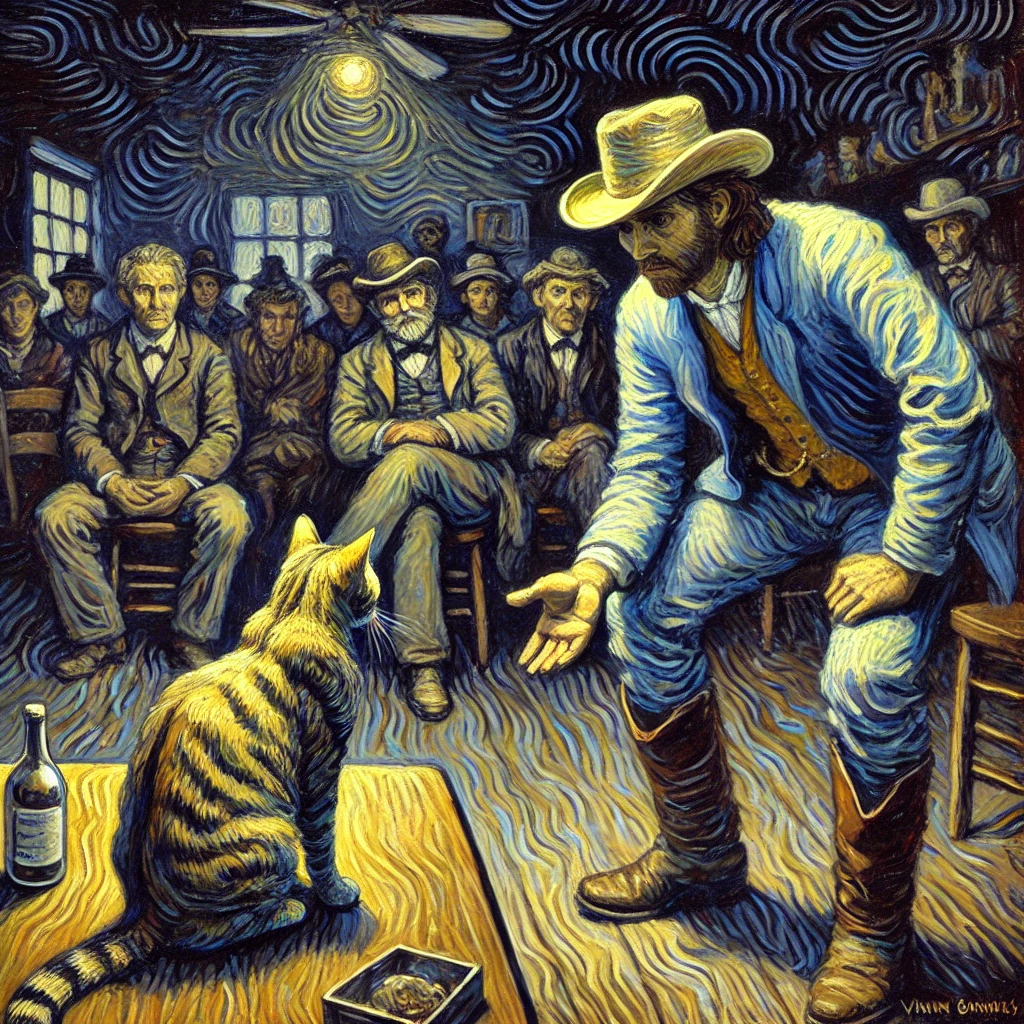
ACT IV – The Attempted Removal
Act V – The Acceptance Phase
It was not declared.
There was no vote.
No motion was made.
But by the end of the week, the cat had been fully integrated into the operations of City Hall.
A small dish of water appeared near the corner of the room.
No one admitted to placing it there.
A cushion was added to the mayor’s chair.
This was attributed to “comfort considerations,” though no one specified whose.
The meeting minutes began to include references such as:
- “Pause due to cat repositioning”
- “Agenda item deferred until cat vacated document”
- “General agreement reached (cat present)”
Most notably, the cat began to develop patterns.
It attended every meeting.
It sat in different chairs, but always the most central one.
It occasionally walked across documents at critical moments.
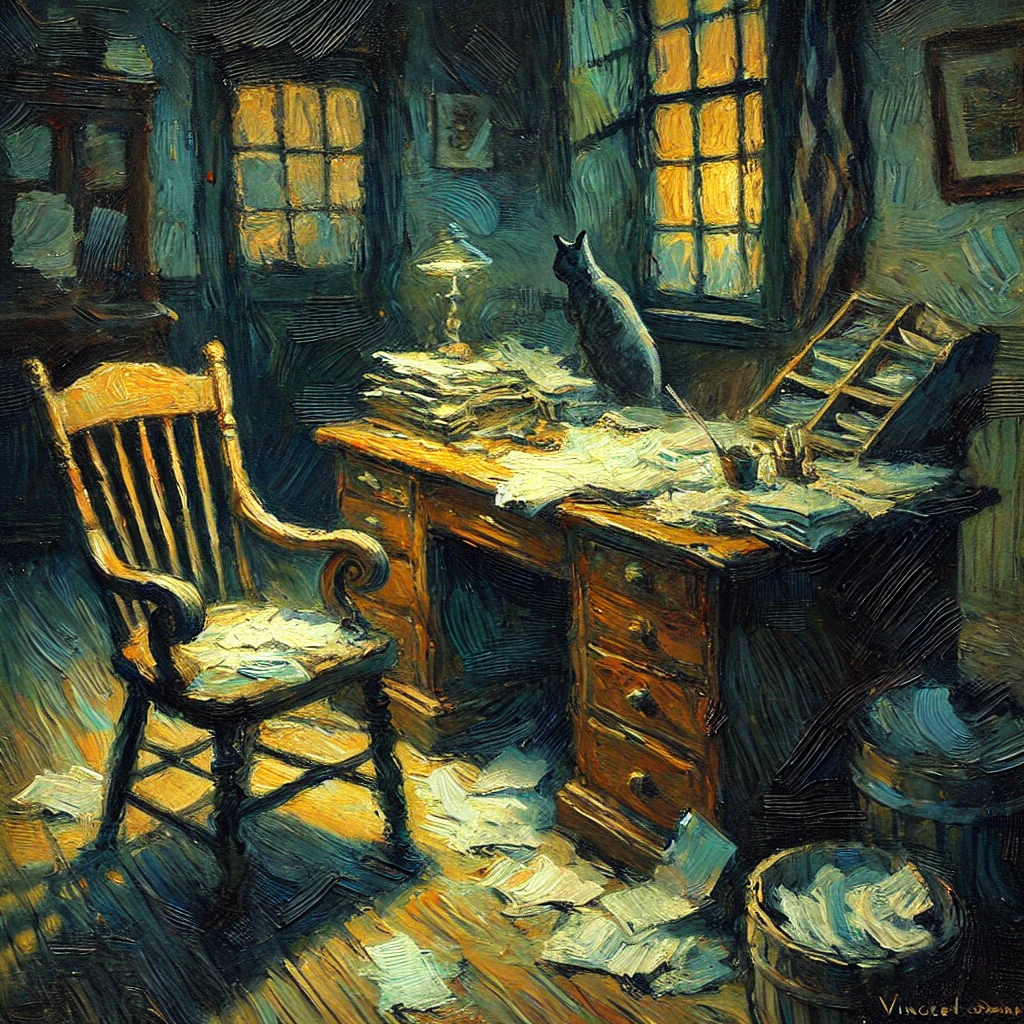
And once—only once—it knocked over a stack of papers that had been under discussion for nearly three months, effectively resolving the issue by scattering it beyond recovery.
“That’s the most decisive action we’ve had all year,” said Sheriff Peeler.
“I believe,” said Pastor Gentry, “that we are witnessing a new form of leadership.”
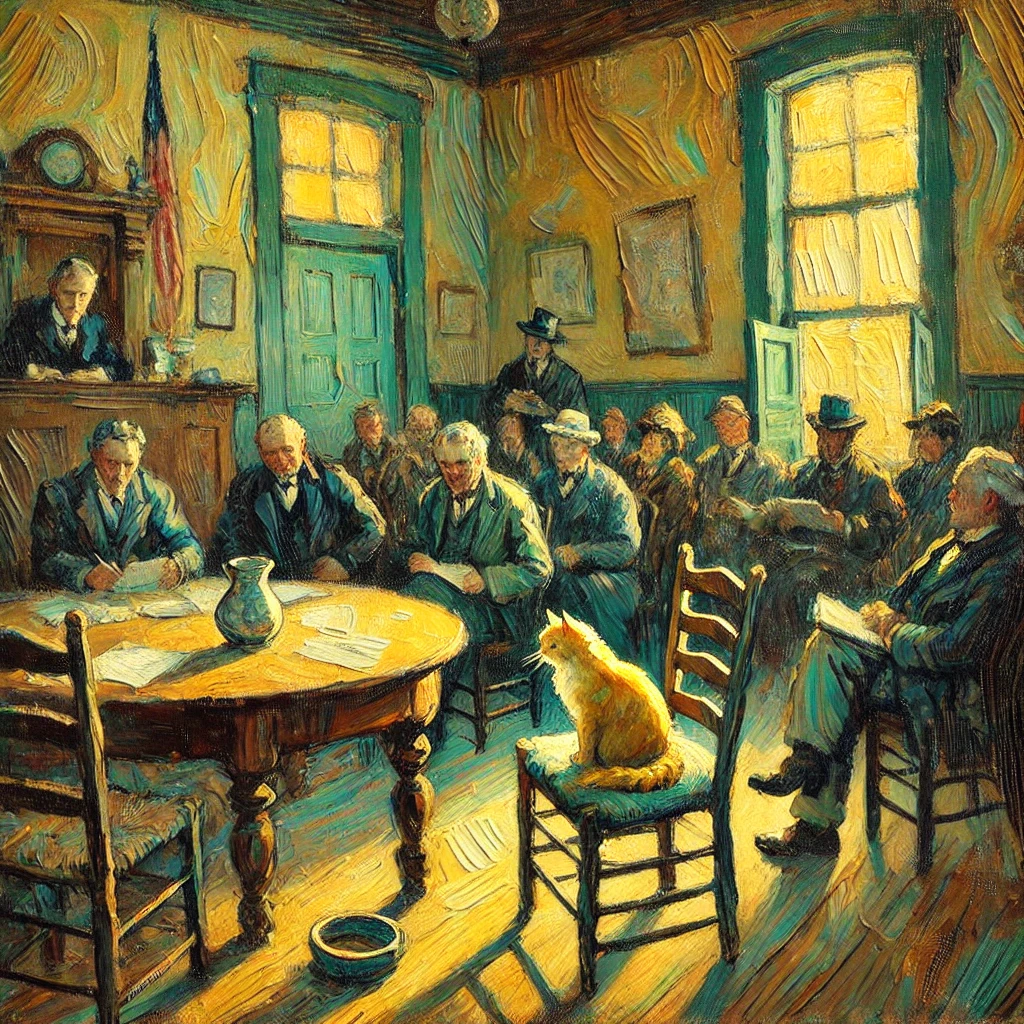
ACT V – The Acceptance Phase
Act VI – The Legal Inquiry
It was inevitable that someone would question the legality of the situation.
That someone was Mabel Dean Ashcroft.
She arrived at City Hall with a folder.
Not a small folder.
A prepared folder.
“I have concerns,” she announced, placing the folder on the table, which the cat immediately occupied.
“About the cat?” asked Trixie Jo.
“About the precedent.”
This was a dangerous word in Sequatchie Crossing.
Precedent had a way of becoming tradition, and tradition had a way of becoming policy, and policy had a way of becoming something no one could remember how to undo.
“If this cat is allowed to remain,” Mabel continued, “what’s to stop other animals from claiming municipal positions?”
There was a pause.
“Well,” said Boot, “the goat tried that once.”
“And we learned from that,” said Mabel.
“Did we?” asked Clovis.
Mabel ignored him.
“I propose,” she said, “that we formally assess the cat’s status.”
“And how would we do that?” asked Sheriff Peeler.
Mabel opened her folder.
Inside were documents.
Charts.
A diagram that appeared to map the cat’s movements over the past week.
“I’ve developed a framework,” she said.
Of course she had.
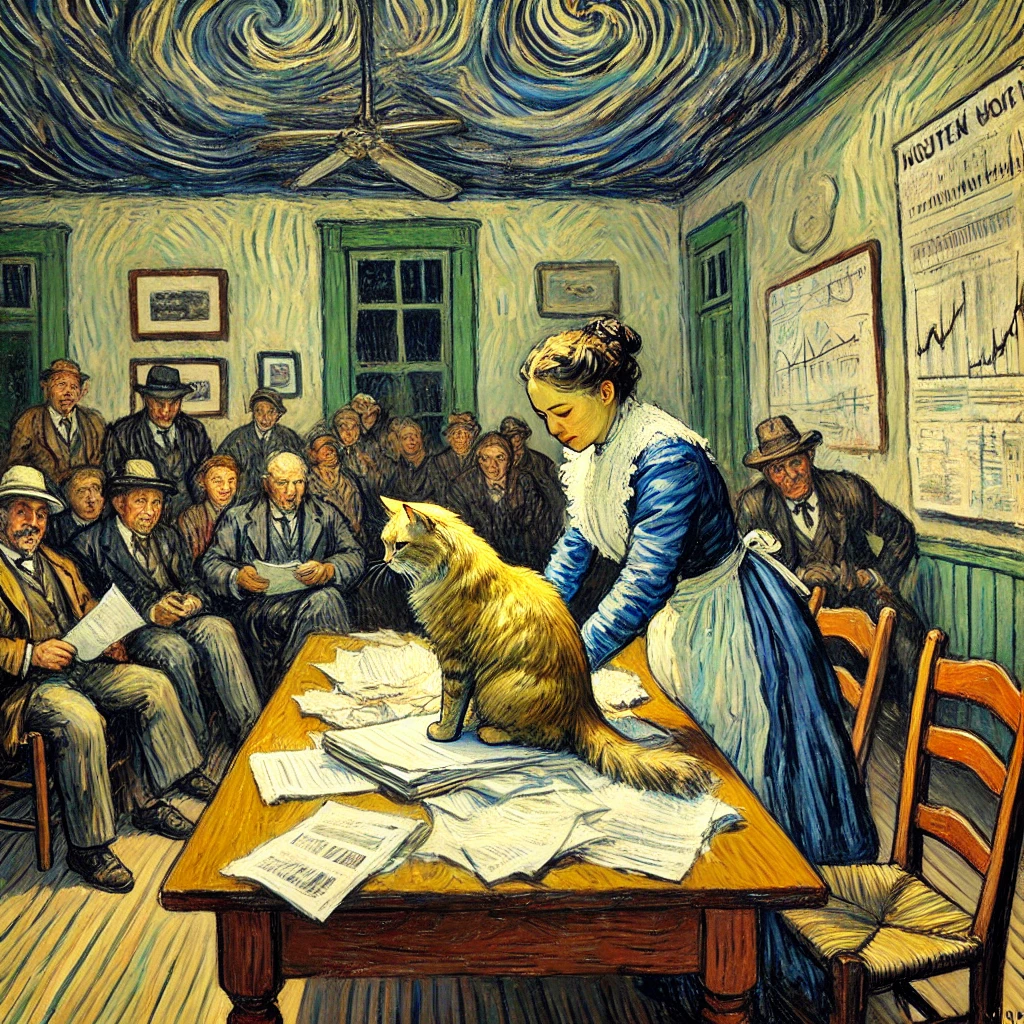
ACT VI – The Legal Inquiry
Act VII – The Evaluation
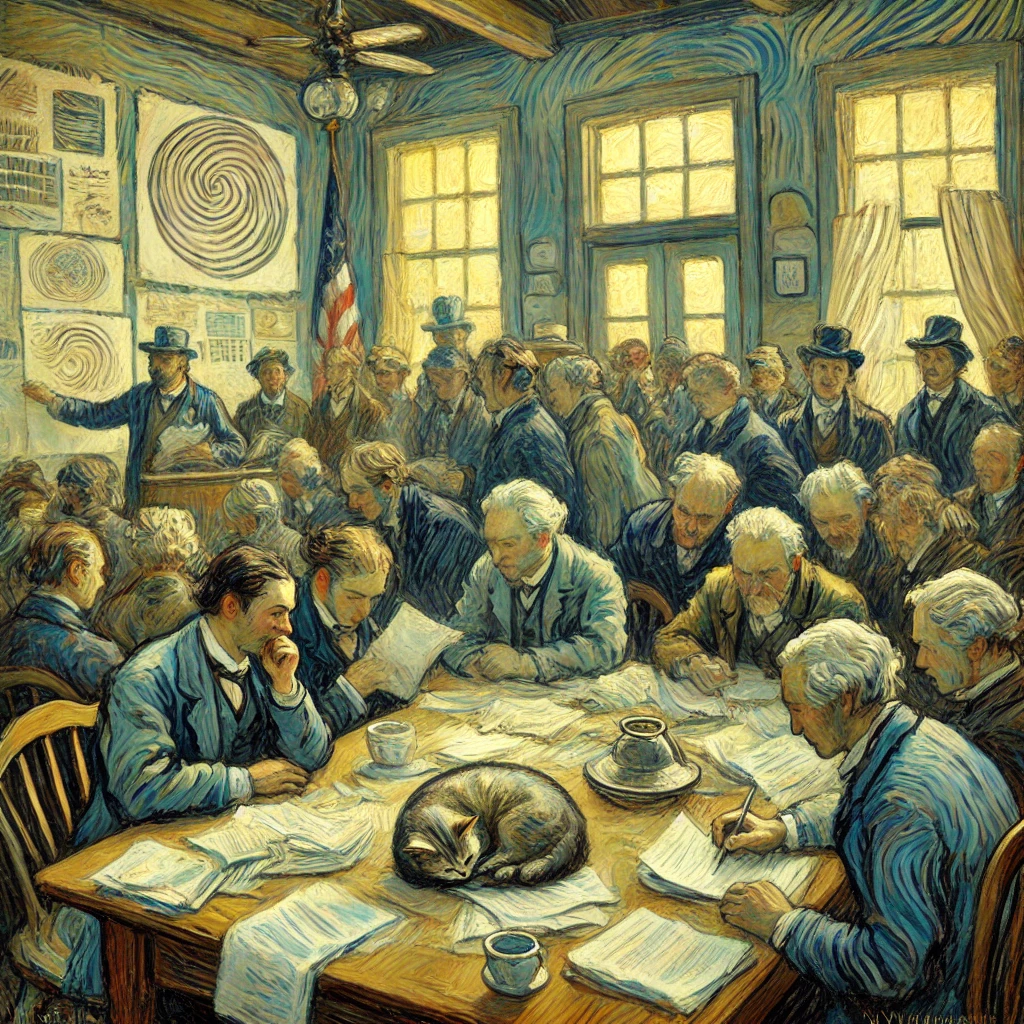
The framework was thorough.
It included criteria such as:
- Frequency of attendance
- Level of disruption
- Contribution to decision-making (direct or indirect)
- Public perception
- And, somewhat inexplicably, “general demeanor”
The council reviewed the criteria.
The cat slept.
“Well,” said Trixie Jo, “it meets the attendance requirement.”
“Better than most,” said Sheriff Peeler.
“Disruption is minimal,” added Pastor Gentry. “And occasionally beneficial.”
“Public perception?” asked Boot.
Clovis consulted his notebook.
“Mixed,” he said. “But trending positive.”
“And demeanor?” asked Mabel.
Everyone looked at the cat.
Which yawned.
“Exceptional,” said Trixie Jo.
Mabel sighed.
“I was afraid of that.”
ACT VII – The Evaluation
Act VIII – The Declaration
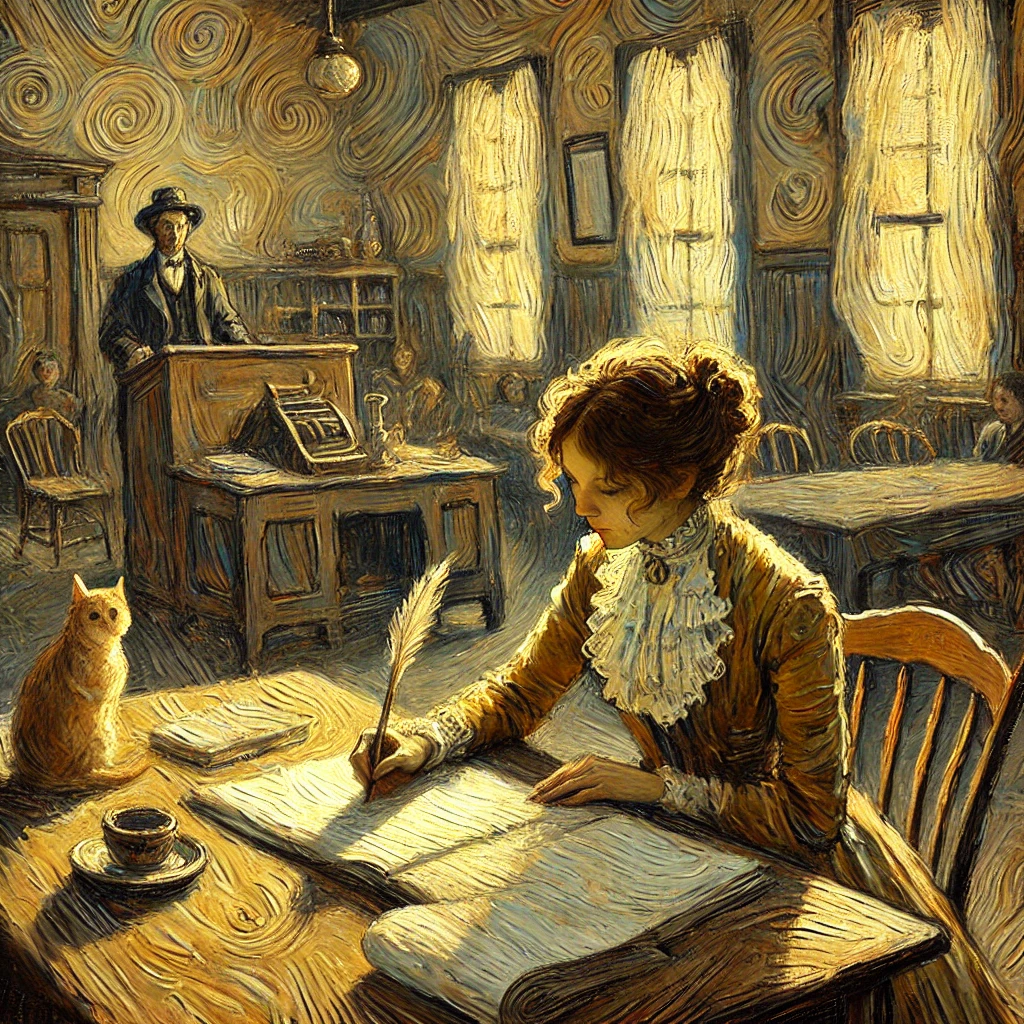
It happened quietly.
As most significant things in Sequatchie Crossing did.
At the end of a meeting that had covered three topics, resolved one, and postponed the rest, Trixie Jo made a note.
Not a formal motion.
Not a proclamation.
Just a note.
“Cat recognized as consistent presence.”
That was all.
But it was enough.
Because once something is written down in Sequatchie Crossing, it begins to exist in a way that cannot easily be undone.
The cat, for its part, showed no reaction.
Which only reinforced the sense that it had been aware of this outcome all along.
ACT VIII – The Declaration
Act IX – The Expansion
With recognition came expectation.
And with expectation came responsibility.
Though no one assigned the cat any duties, it began to fulfill them anyway.
It arrived earlier.
It positioned itself more strategically.
It developed a habit of sitting on whichever document was most contentious, effectively delaying decisions until tensions had cooled.
“Is that… mediation?” asked Pastor Gentry.
“I believe it is,” said Trixie Jo.
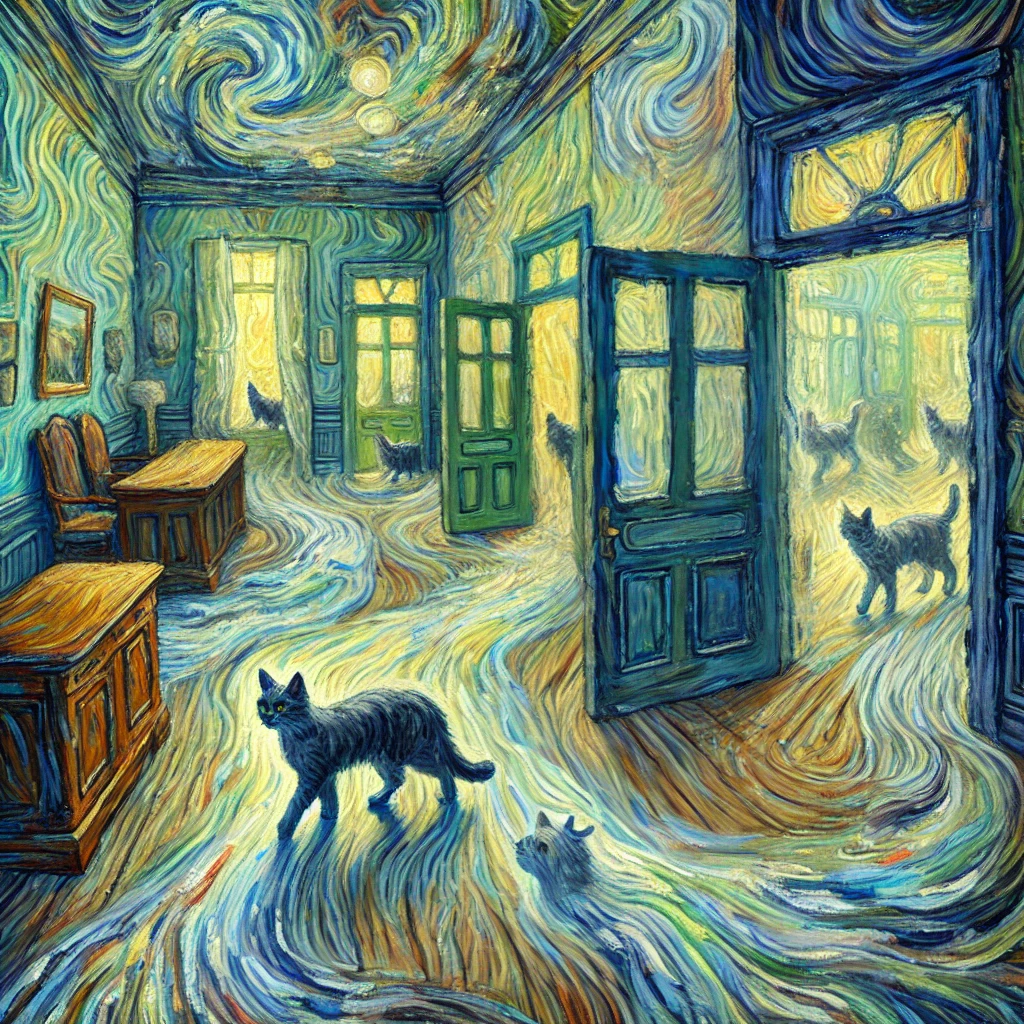
The cat also began to explore other areas of City Hall.
The clerk’s office.
The storage room.
Once, briefly, the roof.
Its presence expanded.
And with it, the sense that City Hall was no longer a place where things were simply decided.
It was a place where things were observed.
ACT IX – The Expansion
Act X – The Realization
It was Clovis who said it first.
Not loudly.
Not dramatically.
Just quietly, during a pause in conversation.
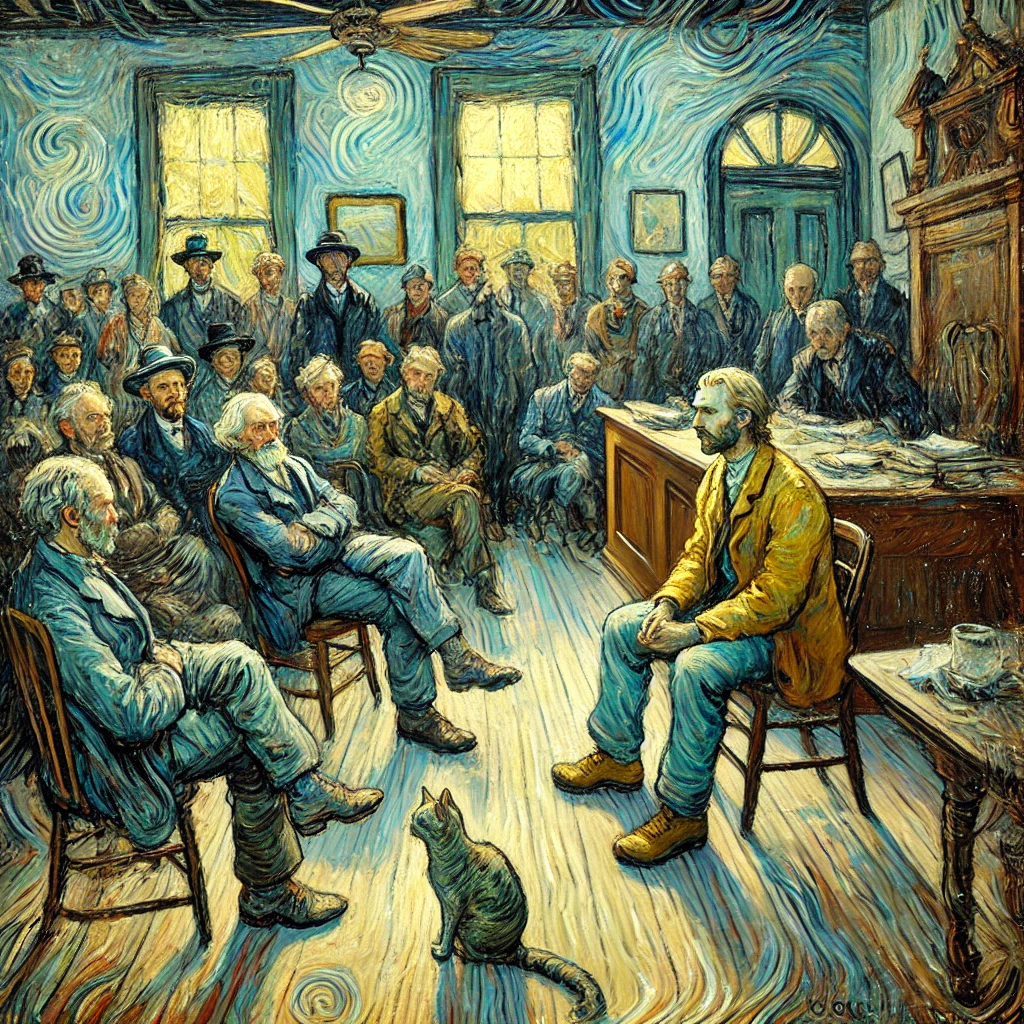
“I don’t think we own City Hall anymore.”
No one laughed.
Because everyone had been thinking it.
In different ways.
At different times.
But the conclusion was the same.
Ownership, it turned out, was not a matter of paperwork.
Or authority.
Or even intention.
It was a matter of presence.
And the cat—
The cat was always present.
ACT X – The Realization
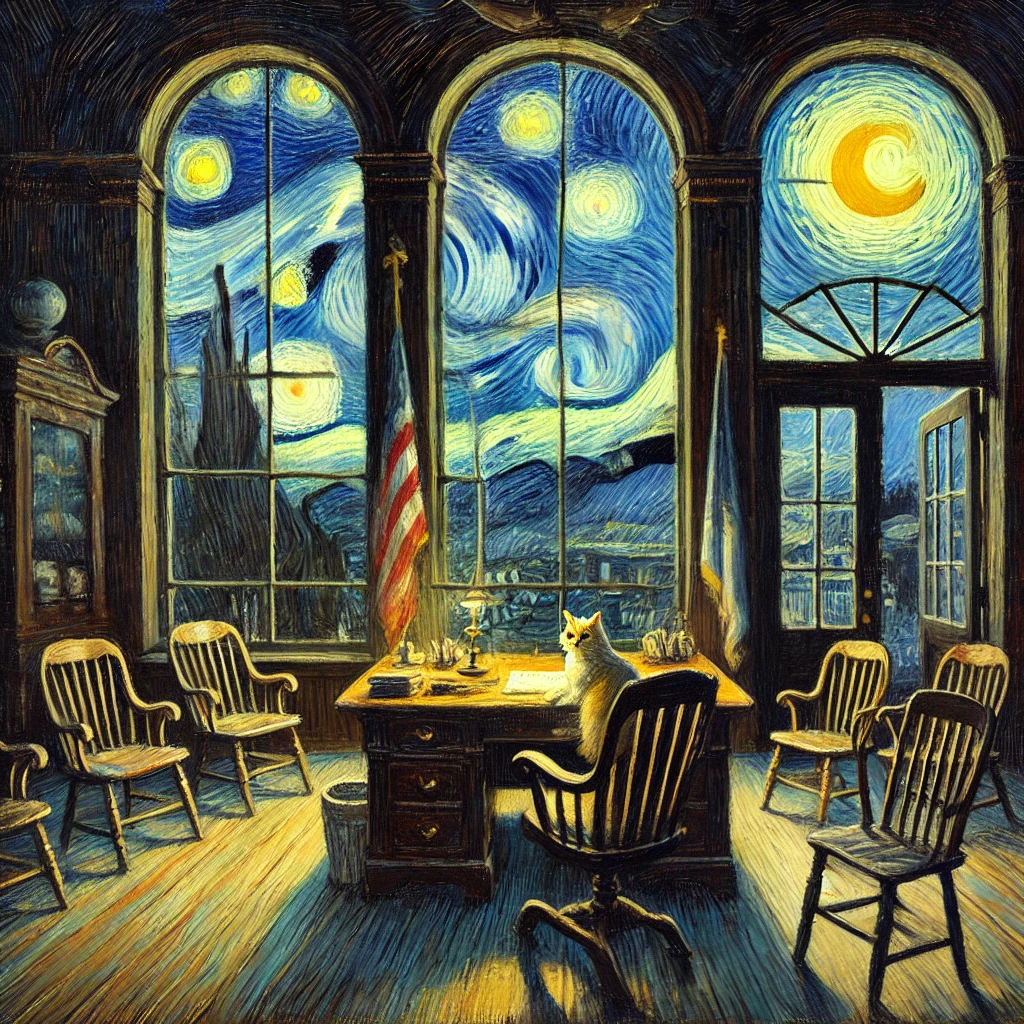
Epilogue – Flexible Arrangements
The cat never signed anything.
It never spoke.
It never declared its intentions.
But it remained.
Through meetings.
Through seasons.
Through discussions that went nowhere and decisions that went somewhere unexpected.
It remained.
And in doing so, it redefined something that no one had thought to question before.
Ownership.
Not as a fixed concept.
But as a flexible arrangement.
Subject to interpretation.
Influenced by persistence.
And, occasionally, determined by a quiet, unassuming creature that simply refused to leave.
EPILOGUE – Flexible Arrangements
Disclaimer
No official records confirm that a cat currently holds any position within the municipal structure of Sequatchie Crossing.
However, several documents suggest that it would be difficult to prove otherwise.
Any resemblance to actual governance is purely coincidental, though increasingly plausible.
And while ownership remains a flexible concept, it is generally agreed that if you find yourself seated in the mayor’s chair—
You should probably check first.
DISCLAIMER – The Cat That Claimed City Hall
Real Places Behind the Ruckus – From The Dunlap Directory

Real Places Behind the Ruckus – From The Dunlap Directory
Yes, this story was fictional; even the parts that weren’t true. These places? Absolutely real. Stop by, support local, and keep the Wi-Fi away from livestock:
- Red’s Innovations TN
- Simply Health Inc.
- Flowers & Thyme
- Creation Station
- H&R Block
- Walker’s Dirt Work LLC
- Whitzell Excavation
- Foster Falls Campground
- EarthWorx Landscaping & Construction
- Tennessee Riverpark
- Dunlap Plumbing Company
- Amy Painter Photography
- No Limit Fab
- Metal Max Recycling
- Savage Gulf State Natural Area
- Elliott’s Bobcat & Backhoe
- Friends Of The Park Of Sequatchie County
- Switchgrass Farm
- Black Bear Electrical
- Law Office of Samuel F. Hudson

Real Places Behind the Ruckus – From The Dunlap Directory
At Sequatchie Crossing, we tell the stories of Sequatchie Crossing.
Please share this post with your friends, family, or business associates who may want follow the news from Sequatchie Crossing.

0 Comments