


Glass Metaphor Strained
By Tom Seest
At Sequatchie Crossing, we tell the stories of Sequatchie Crossing.
Please share this post with your friends, family, or business associates who may want follow the news from Sequatchie Crossing.
🎤 Audio Overview
Residents Ask for Transparency, Object When It’s Visible
Prologue: The Window
The problem began, as many problems in Sequatchie Crossing do, with a window.
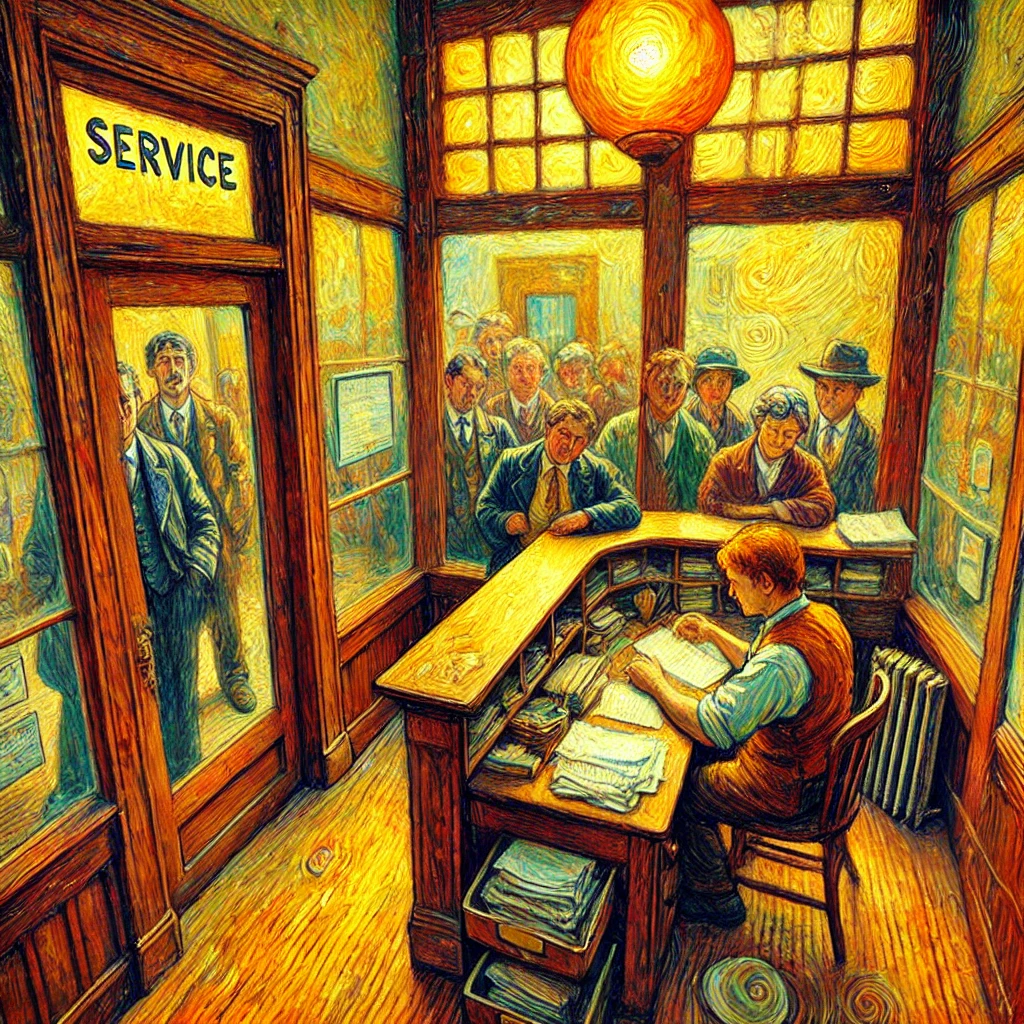
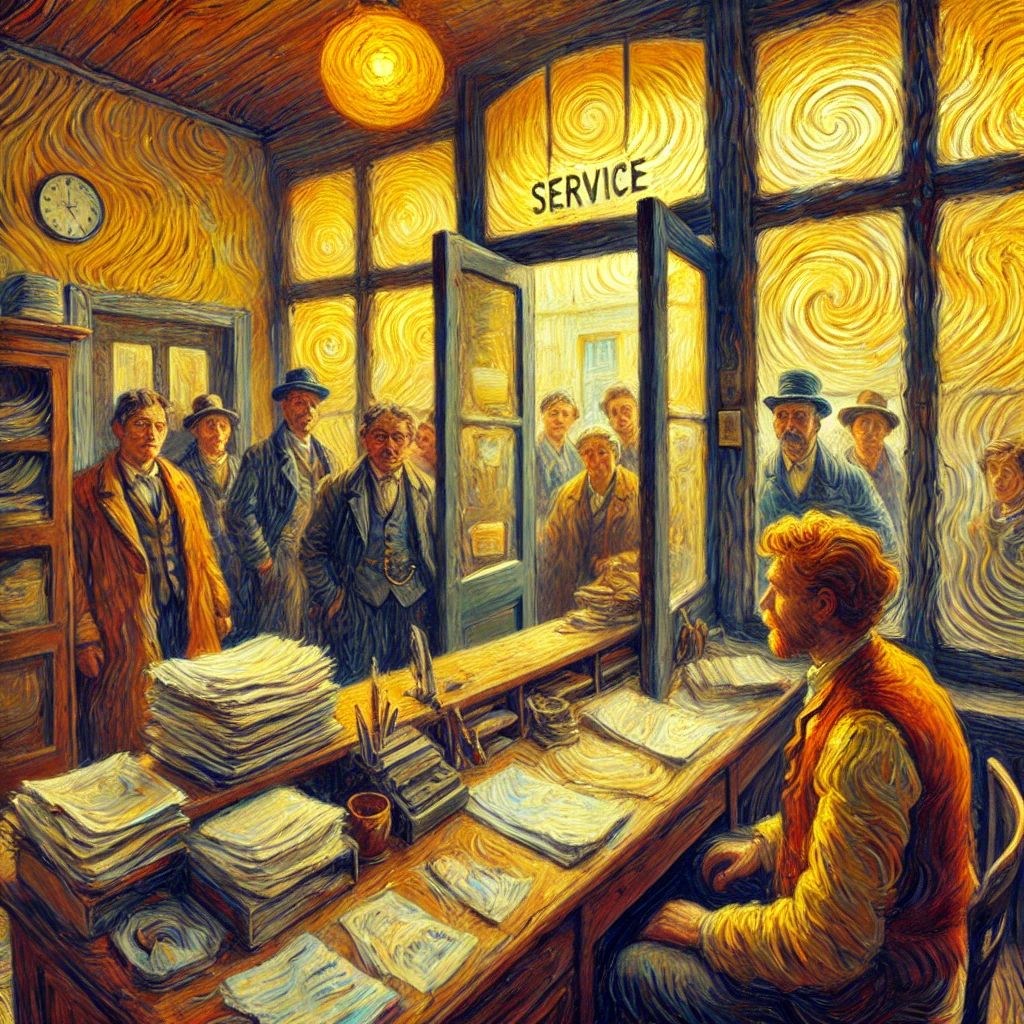
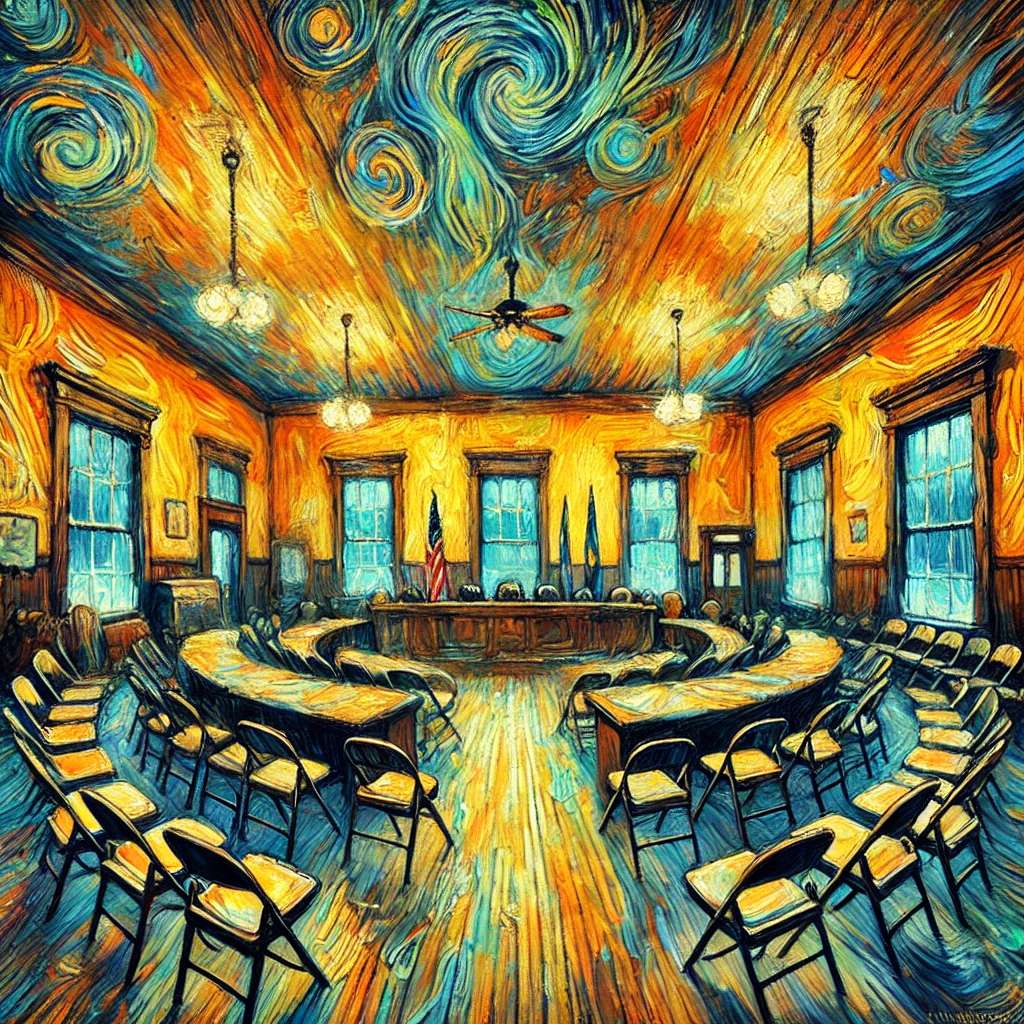
It was not a large window. It was not particularly clean. It was not even new. It was, by most architectural standards, deeply unremarkable – an interior pane installed between the clerk’s office and the small conference room that doubled as City Hall’s overflow area, storage annex, and emergency pie-cooling facility.
But the window was clear.
And clarity, it turns out, is dangerous.
The decision to install it had come from a subcommittee – one of those temporary subcommittees that, by the end of its second meeting, had acquired letterhead, a mission statement, and a surprising amount of authority. The Subcommittee on Transparency and Civic Confidence, formed after a series of public comments demanding that “things stop happening behind closed doors,” had recommended that at least one door be replaced with glass.
“Symbolic,” the report said.
“Cost-effective,” the report added.
“Non-binding,” the report promised, which was technically true but emotionally misleading.
The glass was installed on a Tuesday.
By Thursday, residents were requesting that it be covered.
Act I – The Demand
Act I: The Demand
No one could remember exactly when the word transparency entered Sequatchie Crossing’s civic vocabulary, but once it did, it refused to leave.
It appeared in Facebook posts, often in all caps.
It appeared in public comments, usually followed by a pause and then, “You know what I mean.”
It appeared in letters to the editor, sometimes misspelled but always underlined.
“We just want transparency,” residents said, in tones ranging from polite concern to righteous exhaustion.
“Nothing fancy.”
“Just tell us what’s going on.”
“We deserve to see how decisions are made.”
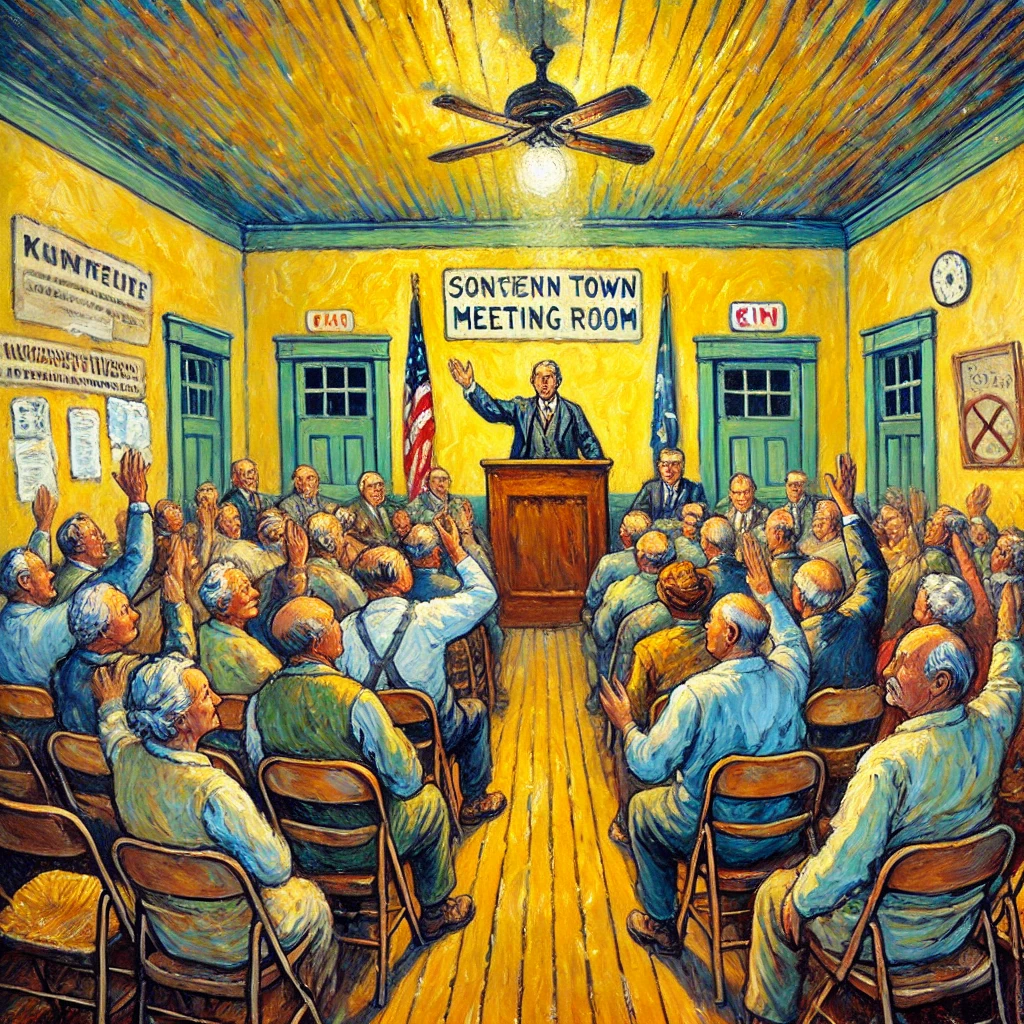
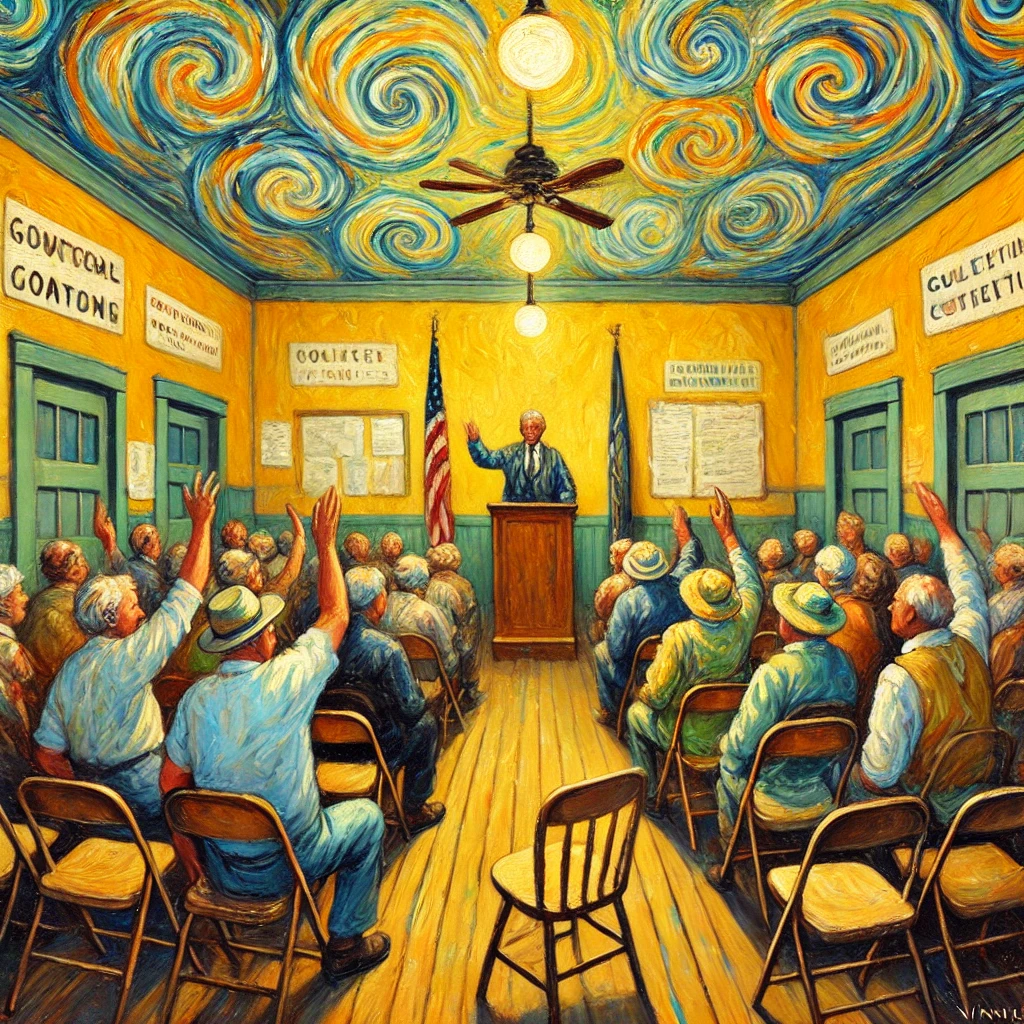
This sentiment reached its peak during the budget workshop that no one attended and everyone later complained about. The accusation was simple: decisions were being made in secret.
“They’re back there,” one resident said, pointing vaguely toward City Hall, “doing things.”
“What things?” asked another.
“Exactly,” came the reply.
Thus, the Subcommittee was born.
Chaired by Clovis Strickland – who had never asked to chair anything but somehow always ended up holding a pen – the Subcommittee met three times and produced a seven-page document, four pages of which were footnotes clarifying that the committee was not legally binding, advisory only, and not responsible for how its recommendations might be interpreted.
The key recommendation: Make the process visible.
No one asked what would happen if the public saw it.
Act I – The Demand
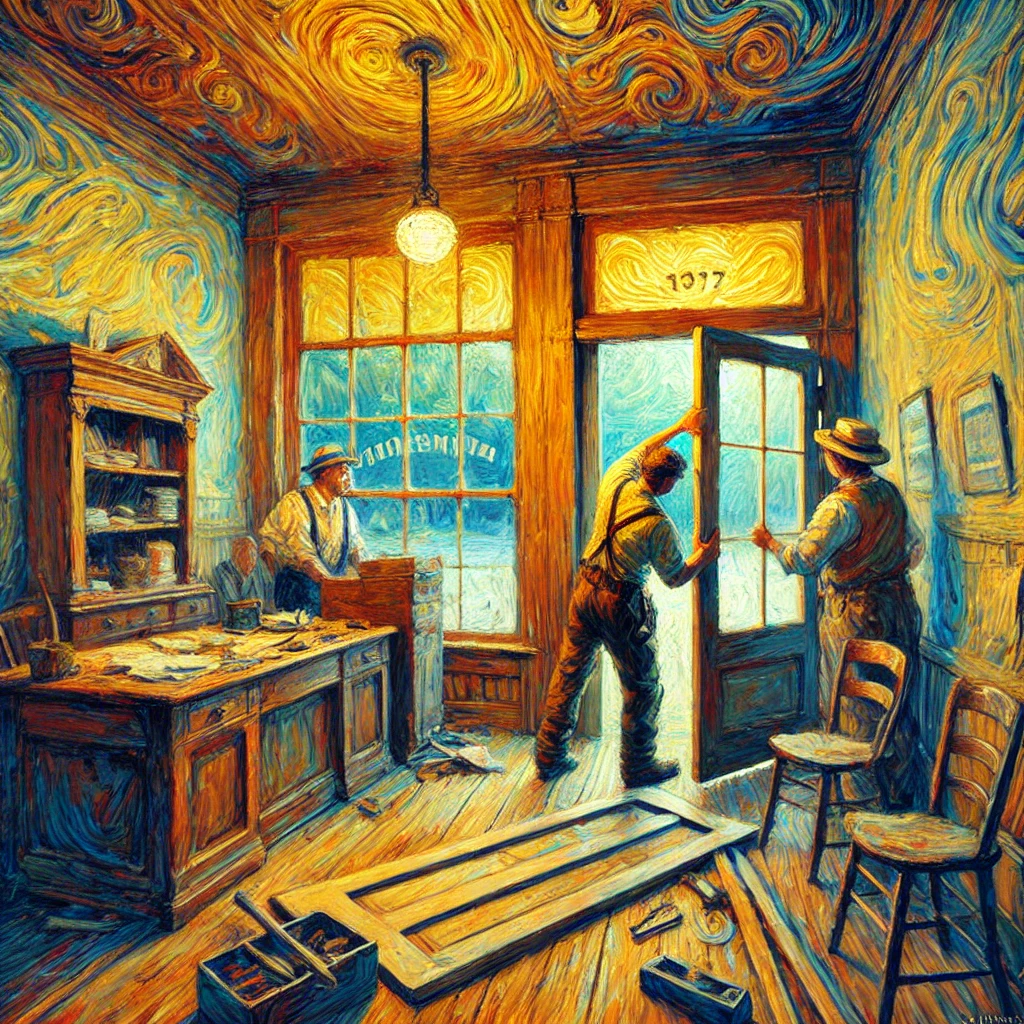
Act II: The Installation
The window replaced a solid oak door that had been installed sometime in the late 1970s, back when civic opacity was considered a feature.
Installation took twenty minutes and was overseen by the town maintenance supervisor, who measured once, shrugged, and declared it “close enough for democracy.”
When finished, the glass revealed the clerk’s office in its natural state:
-
Two filing cabinets, both labeled “TEMPORARY”
-
A desk with three calendars, none set to the current month
-
A corkboard holding five notices, all expired
-
The clerk herself, calmly stamping something while sipping coffee from a mug that read ASK ME AGAIN LATER
The effect was immediate.
People stopped in the hallway.
They leaned.
They squinted.
They stared.
Someone took a photo.
Act II – The Installation
Act III: The First Objection
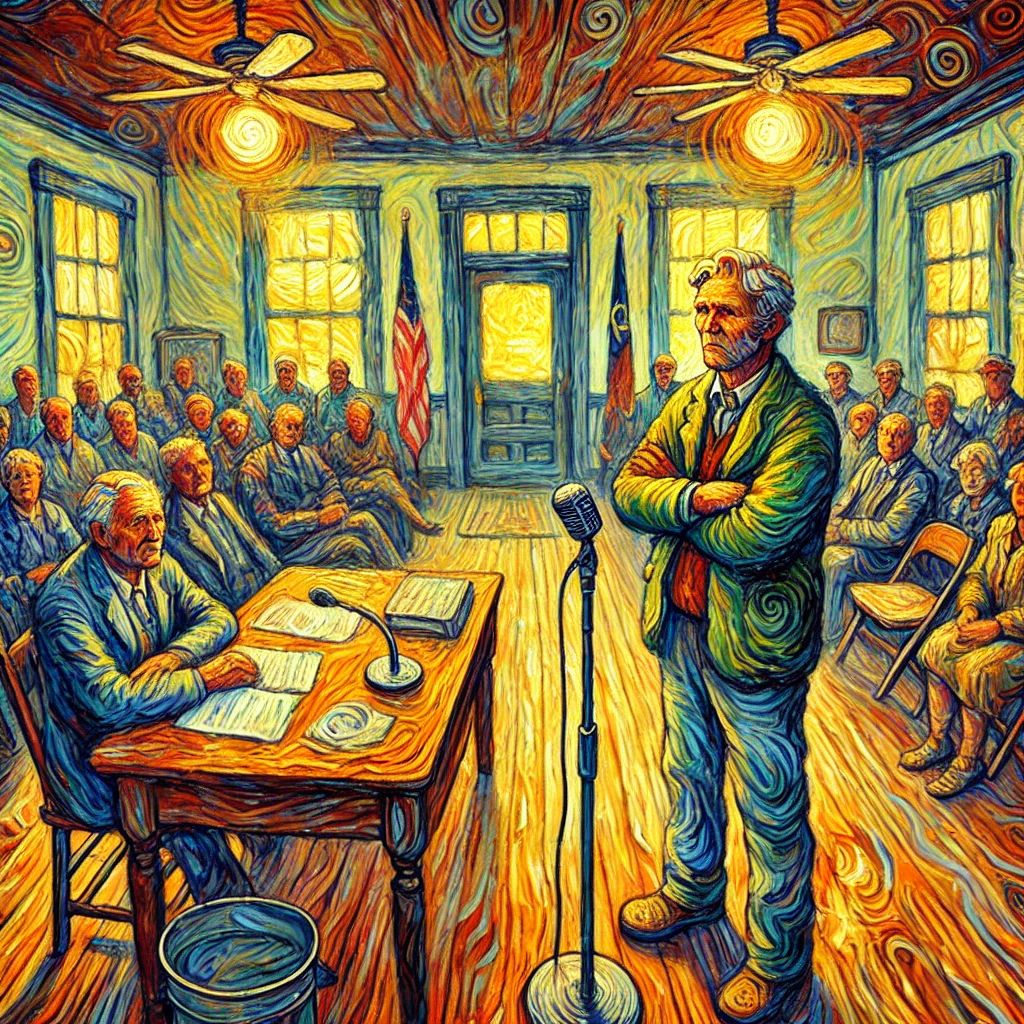
The first formal objection came during public comment that same week.
“I don’t like that,” said a man who had previously demanded transparency with such enthusiasm that he’d used quotation marks in the air. “I don’t think it’s appropriate for us to be watching people work like that.”
The clerk looked up from behind the glass.
“I’m just filing,” she said.
“Well, I don’t know that,” the man replied. “That’s the problem.”
Others chimed in.
“It feels invasive.”
“It’s distracting.”
“It makes me uncomfortable knowing things are happening where I can see them but don’t fully understand them.”
One resident suggested frosting the glass.
Another suggested blinds.
A third asked if the glass could be one-way, preferably in the direction that benefited them personally.
The Subcommittee reconvened.
Act III – The First Objection
Act IV: The Meeting About the Window
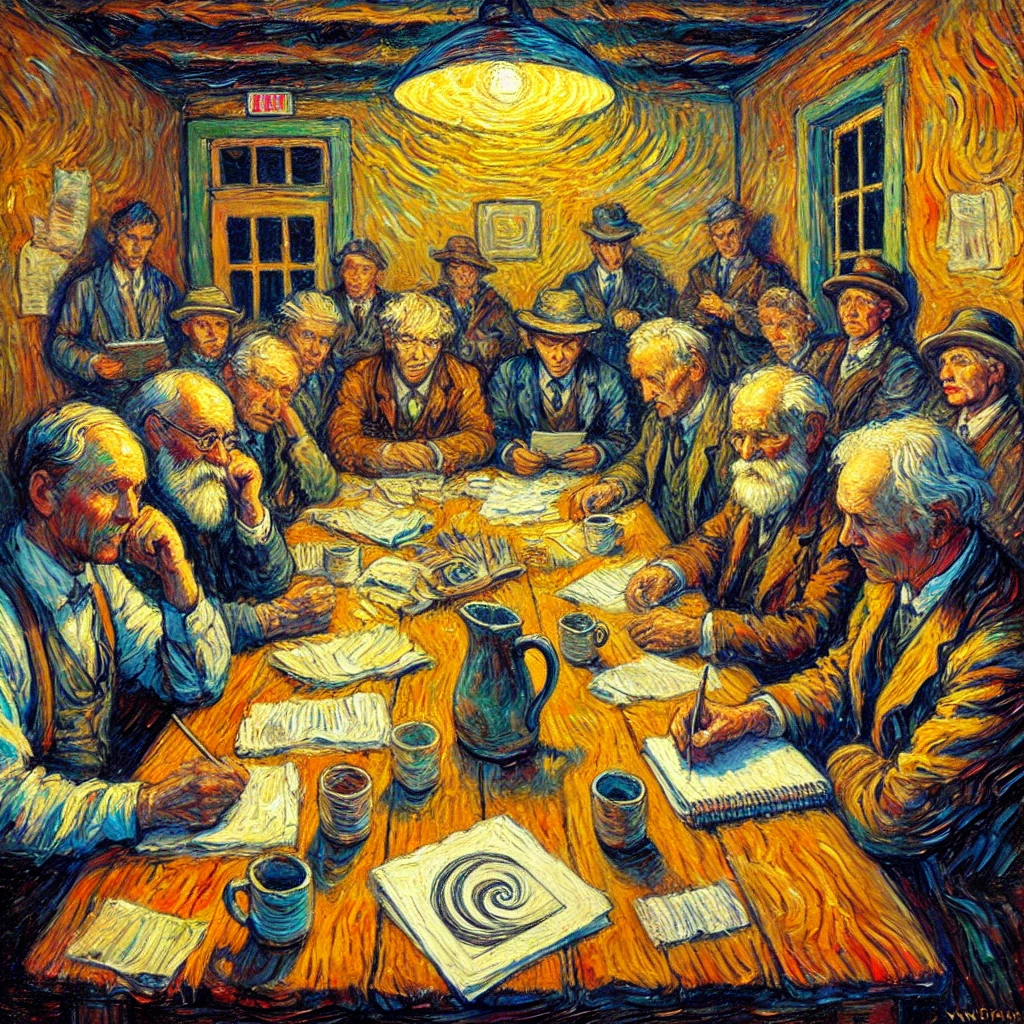
The meeting about the window lasted longer than the meeting that approved it.
Clovis Strickland took notes, as he always did, writing carefully and with visible effort, as though the act itself were a public service.
Agenda Item One: Public Reaction to Visibility
“People don’t like it,” said one member.
“But they asked for it,” said another.
“Yes,” came the reply, “but not like this.”
The phrase not like this appeared three times in the minutes.
Someone suggested the problem wasn’t transparency itself, but uncontextualized transparency.
“People see something,” they explained, “and then they imagine the rest.”
This was widely agreed upon.
The solution, therefore, was not to remove the glass, but to explain it.
A placard was proposed.
Act IV – The Meeting About the Window
Act V: The Placard
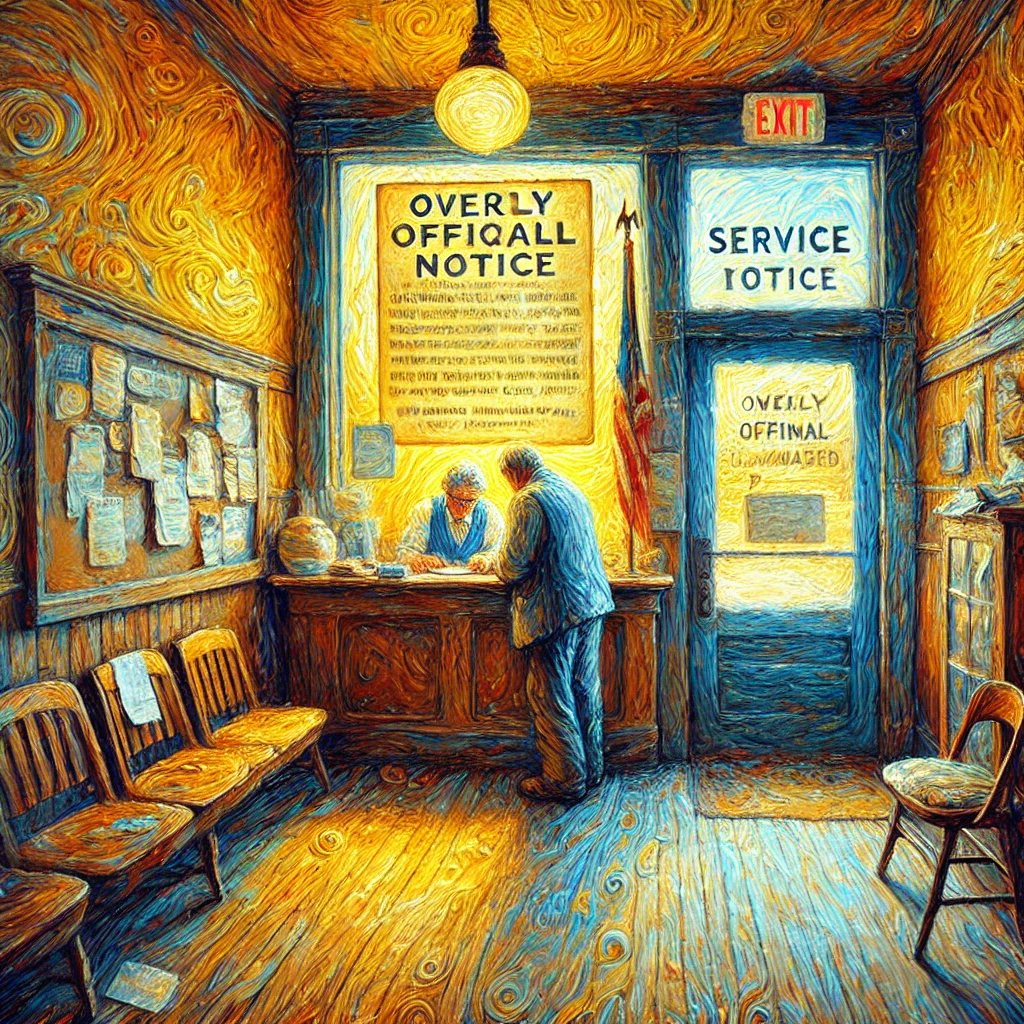
The placard was laminated.
It read:
YOU ARE SEEING NORMAL ADMINISTRATIVE ACTIVITY.
NO DECISIONS ARE BEING MADE AT THIS TIME.
PLEASE DO NOT INTERPRET FACIAL EXPRESSIONS AS POLICY.
It did not help.
In fact, it made things worse.
Now people weren’t just watching – they were reading.
Someone pointed out that the phrase at this time implied other times when decisions were being made.
Another resident questioned the definition of normal.
A third asked whether sighing counted as administrative activity.
The clerk stopped sipping coffee.
Act V – The Placard
Act VI: Transparency Fatigue
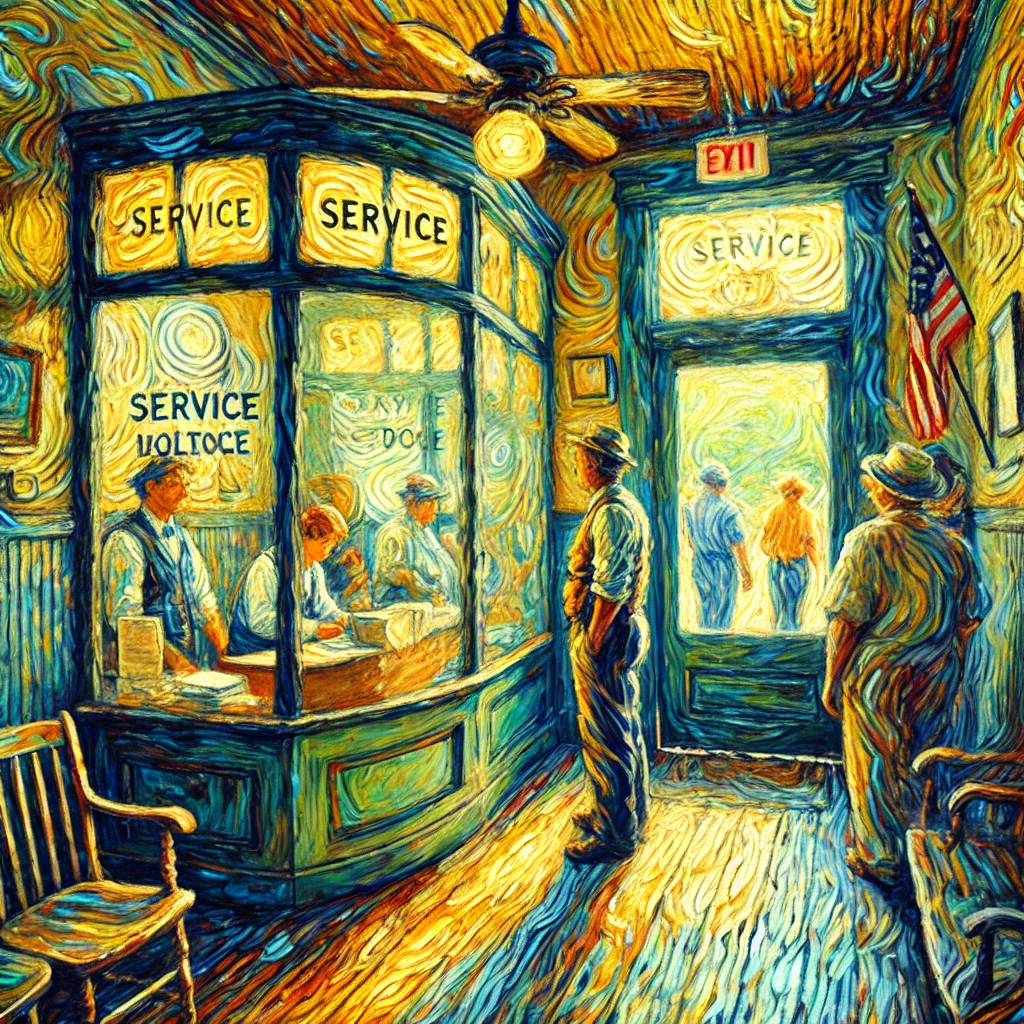
By the following month, residents reported feeling overwhelmed.
“I’m tired of seeing it,” one woman said. “It’s too much information.”
“I didn’t realize how boring it would be,” admitted another. “I thought there’d be more… movement.”
Some complained that the glass made it harder to focus on meetings.
Others said it made meetings too real.
“You can see the binder,” one resident whispered. “I don’t like knowing there’s a binder.”
The Subcommittee added a new agenda item: Managing Visibility Expectations.
Act VI – Transparency Fatigue
Act VII: The Escalation
In an effort to compromise, the town experimented.
The glass was covered halfway up.
Complaints followed.
The glass was uncovered during meetings only.
More complaints.
Someone suggested rotating opacity based on agenda items.
Someone else proposed a Transparency Schedule.
This was rejected when no one could agree on what should be visible when.
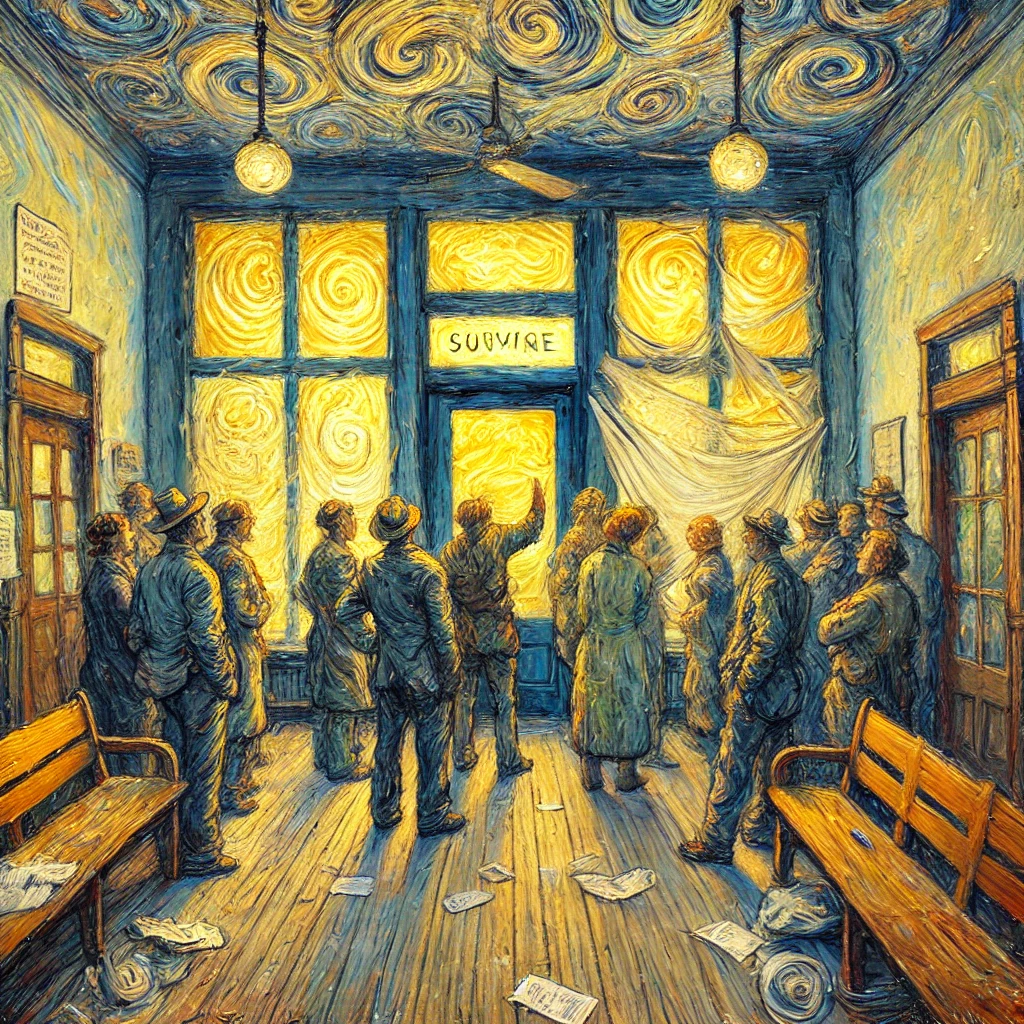
Eventually, a resident stood and said what many were thinking:
“We asked for transparency so we could trust the process. But now I see the process, and I don’t trust it any more than before.”
This was recorded in the minutes.
Act VII – The Escalation
Act VIII: The Philosophy of Glass
The debate spilled beyond City Hall.
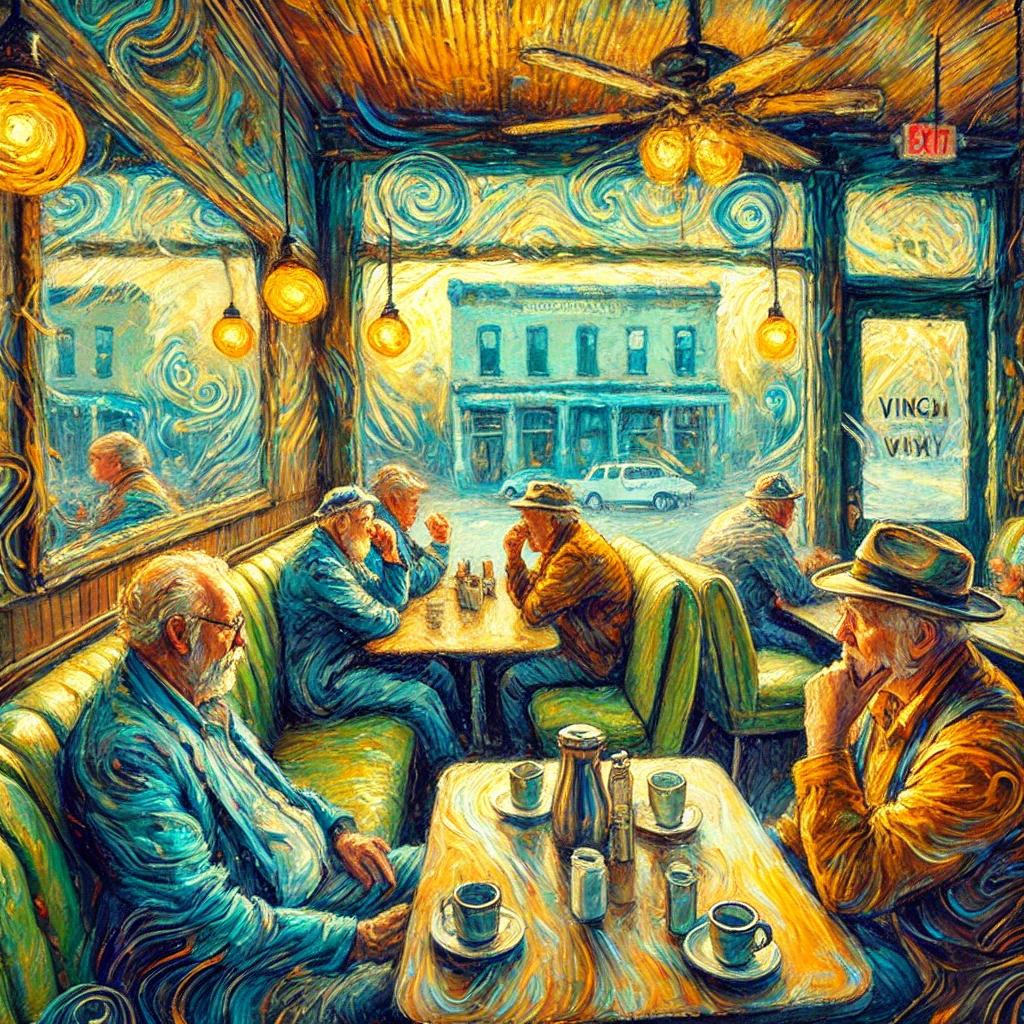
At the diner, residents argued over hash browns.
“At least now we know,” said one.
“Know what?” asked another.
“That… things are happening.”
A retired teacher offered a theory: “Transparency only works when people already agree on what they’re seeing.”
This was ignored.
Meanwhile, Clovis added a personal note to his notebook:
Glass does not create trust.
It only reveals how much we bring with us when we look.
He underlined it twice.
Act VIII – The Philosophy of Glass
Act IX: The Resolution
The final decision came quietly.
The glass stayed.
The placard was removed.
No announcement was made.
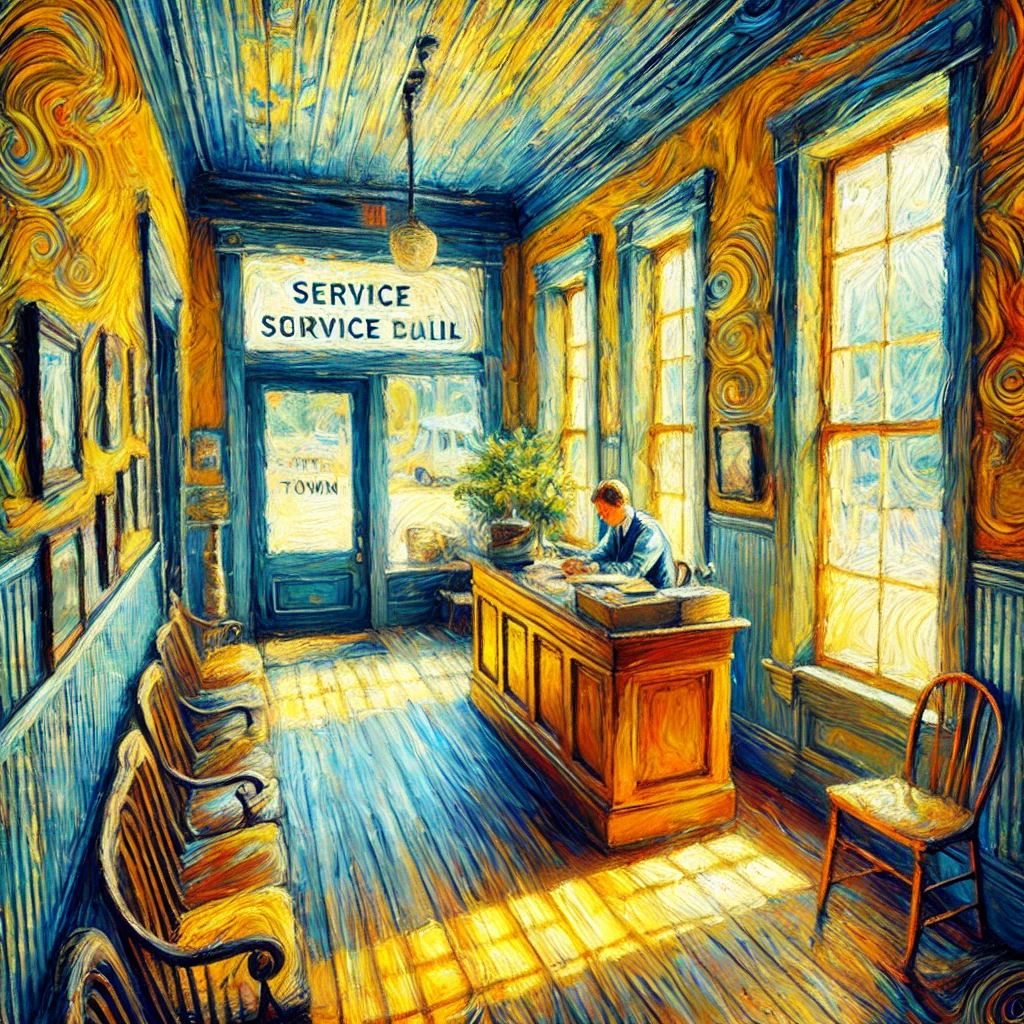
People gradually stopped watching.
The hallway returned to normal foot traffic.
Occasionally, someone would glance in, nod, and move on.
The clerk went back to sipping coffee.
And transparency – officially achieved, unofficially tolerated – settled into the background, where it could do the least amount of harm.
Act IX – The Resolution
Epilogue: The Reflection
Months later, a resident would say, “I still think they should be more transparent.”
Another would reply, “About what?”
The first would pause.
“Well,” they’d say, “whatever it is they’re doing now.”
And somewhere behind the glass, a pen would continue moving across a page, recording it all.

Epilogue – The Reflection
Disclaimer
This story is a work of fiction. All characters, committees, subcommittees, windows, placards, binders, facial expressions, and administrative sighs are entirely imaginary. Any resemblance to actual people, meetings, buildings, procedures, or debates – past, present, or accidentally live-streamed – is purely coincidental.
Sequatchie Crossing is not a real town, though it behaves suspiciously like one. The events described did not occur, the glass was not installed, and no clerk was formally evaluated based on posture, coffee consumption, or the way a pen was held during normal administrative activity.
This story is intended as satire. It does not represent the views of any real municipality, governing body, transparency initiative, or laminated signage vendor. No public records were harmed in the making of this narrative, and no decisions were made behind closed doors, glass doors, or doors that were briefly open and then quietly shut again.
Readers are encouraged to enjoy the story responsibly, resist the urge to demand additional transparency about the disclaimer itself, and remember that seeing something does not always mean understanding it – and that understanding it does not always make it more comfortable to look at.
Disclaimer – Residents Ask for Transparency, Object When It’s Visible
Real Places Behind the Ruckus – From The Dunlap Directory
Real Places Behind the Ruckus – From The Dunlap Directory
Yes, this story was fictional; even the parts that weren’t true. These places? Absolutely real. Stop by, support local, and keep the Wi-Fi away from livestock:
- Lee Outdoors
- Adobe Enterprises LLC
- Worth Coffee Co
- Backwoods Fence and Decking
- Daniels Business Solutions
- Edward Jones – Financial Advisor: Tom Vennero
- Signal Mtn And Dunlap Sell, Trade, Buy
- Valhalla Acres Campground
- Mary Kay with Natalie
- Firefly on Rankin
- Winchel’s Homestead Wonders
- Dunlap Animal Clinic
- Kubota of Chattanooga
- Montes Stone Products
- The Southern Oven
Real Places Behind the Ruckus – From The Dunlap Directory
At Sequatchie Crossing, we tell the stories of Sequatchie Crossing.
Please share this post with your friends, family, or business associates who may want follow the news from Sequatchie Crossing.


0 Comments