


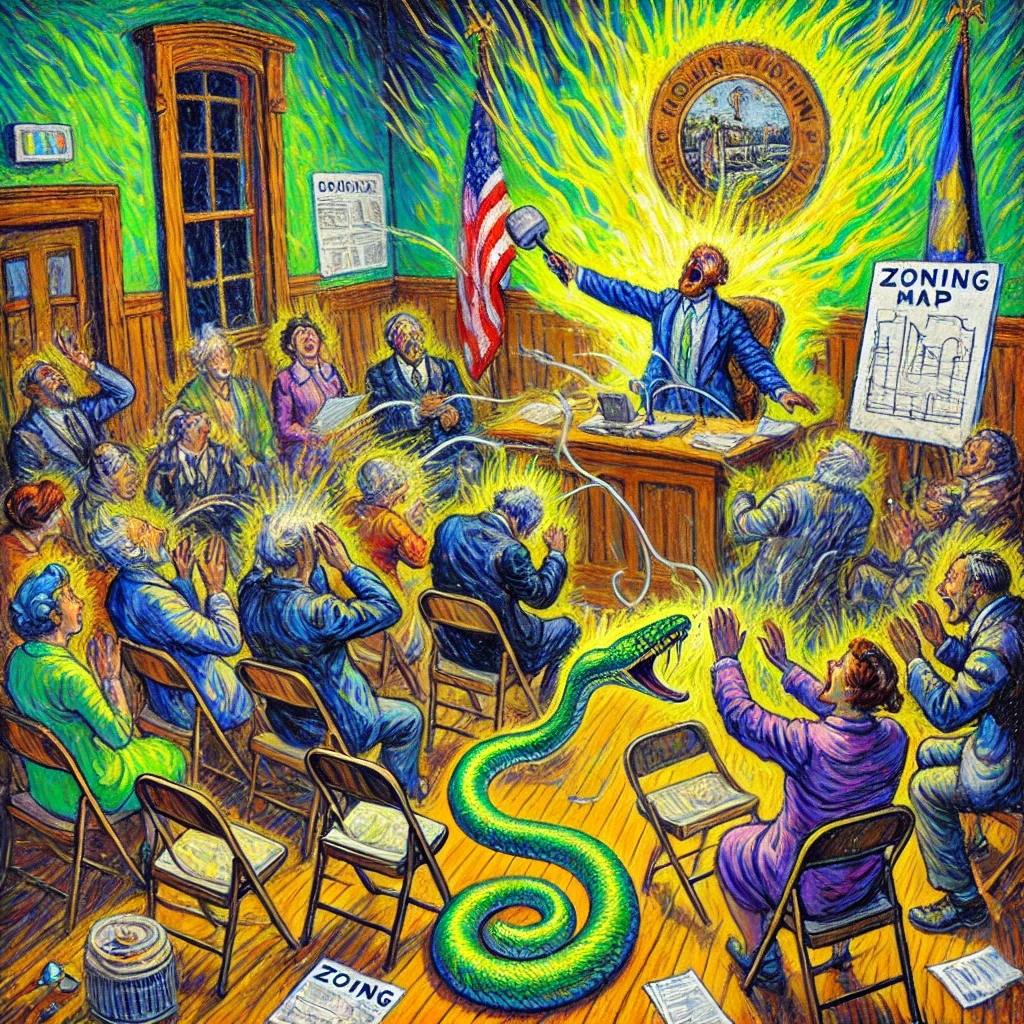
A Zoning Meeting Slithers Out Of Control
By Tom Seest
At Sequatchie Crossing, we tell the stories of Sequatchie Crossing.
Please share this post with your friends, family, or business associates who may want follow the news from Sequatchie Crossing.
🎤 Audio Overview
Snake Handling Was Not on the Agenda, But It Happened Anyway
Part I: Call to Order
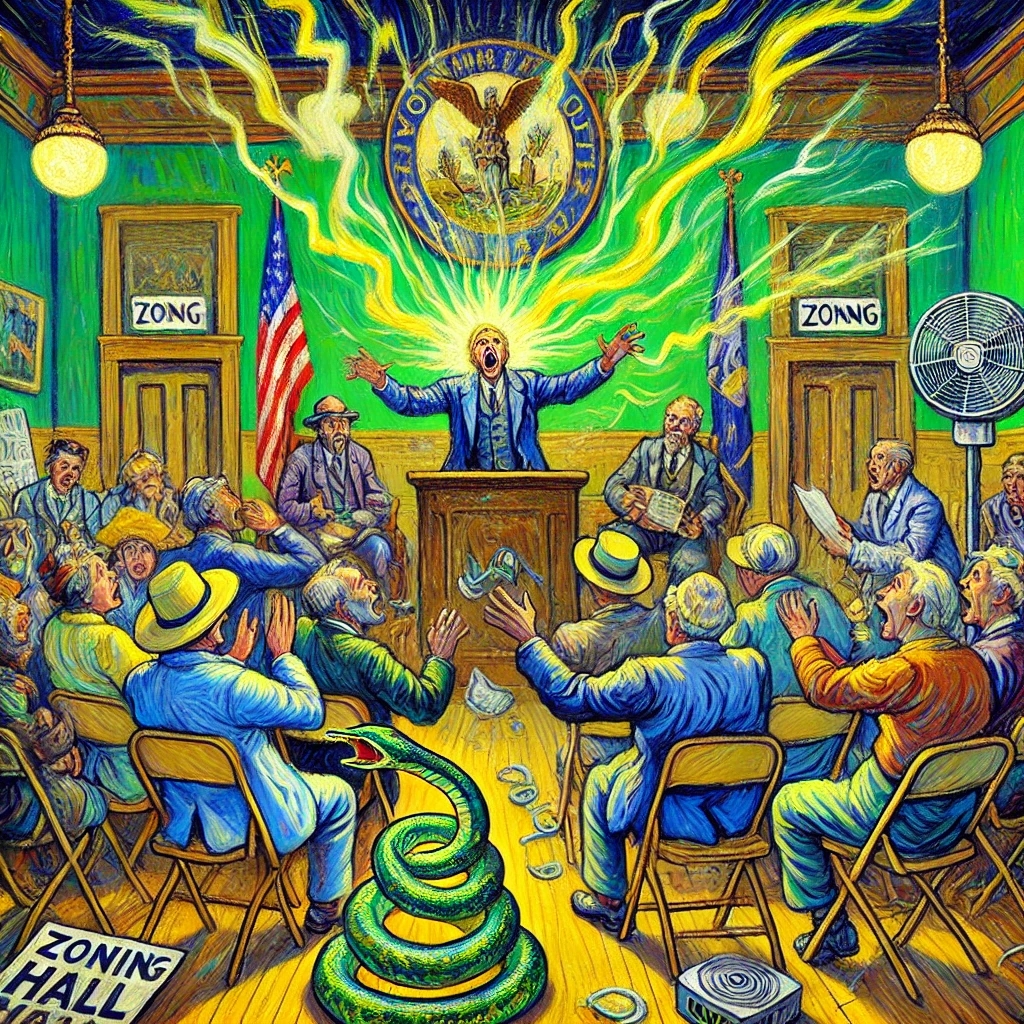
No one knew exactly who put Lurleen Matilda Davenport in charge of the zoning committee’s seasonal refresh meeting, but everyone knew she brought her own gavel.
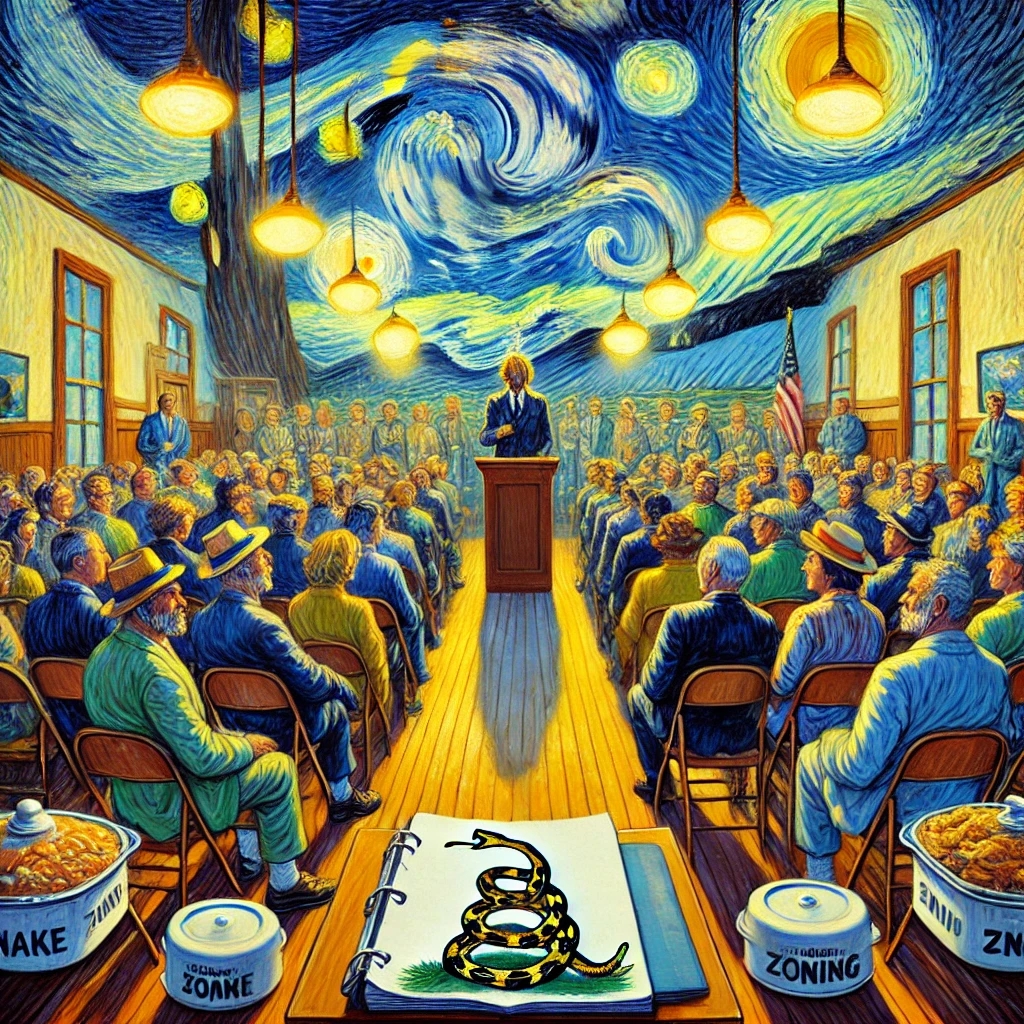
Set in the Fellowship Hall (which had been converted for “Multipurpose Civic Use” pending a vote), the folding chairs were arranged with ruthless symmetry. Wade Langston had pre-aligned them using a laser level taped to a soup can. Mabel Dean Ashcroft arrived early with a clipboard, three casseroles, and an expression that suggested someone might die if they brought kombucha.
Coach Freddie stood near the punch bowl like a linebacker awaiting kickoff. “Zoning’s just defense for buildings,” he said to no one in particular. “And defense wins championships.”
Boot Barnes, muttering about how zoning didn’t even exist “back in ’79, when you just built where your heart told you,” plunked down beside Chester Ray Blevins, who carried a milk crate full of laminated setback maps and one very suspicious binder labeled “Snakes—Potential Ordinances.”
Part II: Points of Order and Points of No Return
The first hour was uneventful. A motion to rename Dead Possum Road to Serenity Glen was tabled due to emotional outbursts (mostly from Clovis Strickland, who insisted possums were “spiritual sentinels”).
Then Alyssa Crenshaw floated the idea of rezoning the yoga glade into a “serenity-driven enterprise corridor.” She unfurled a chakra-colored site plan and said, “Let’s elevate the land’s frequency.”
Mabel Dean countered, “Let’s not.”
Boot filed a motion to bring back the 1978 zoning grid “for the sake of moral alignment.” Chester Ray backed him up with laminated proof. Meanwhile, Clovis activated his snake surveillance app (“SerpenSee”) and shouted, “There’s movement in the ductwork!”
Wade Langston sighed, “Probably feral insulation.”

Part III: The Serpentine Interruption
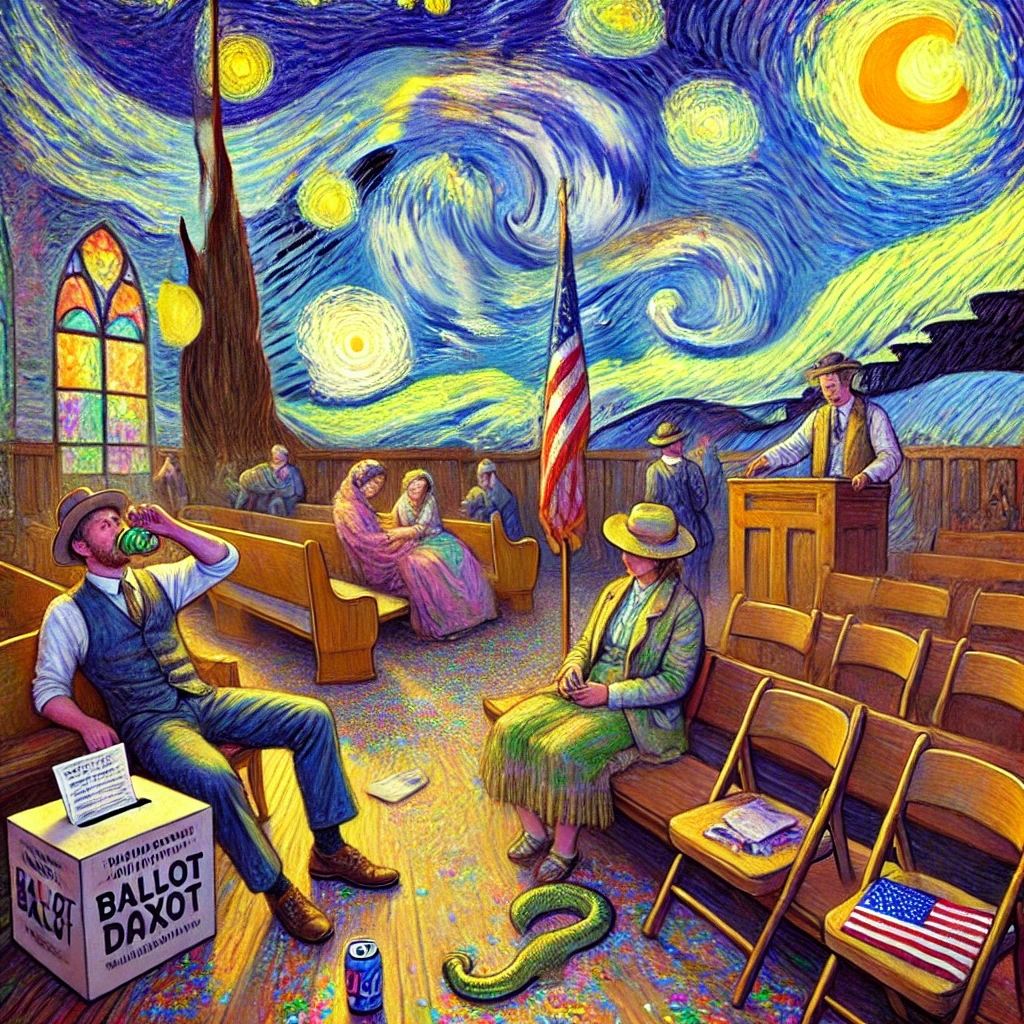
Right as Lurleen declared, “Section 8.14B will be upheld without serpentine exception,” a long, glistening corn snake dropped from the duct above the podium, wrapped itself delicately around the microphone, and hissed like a disappointed librarian.
Everyone froze.
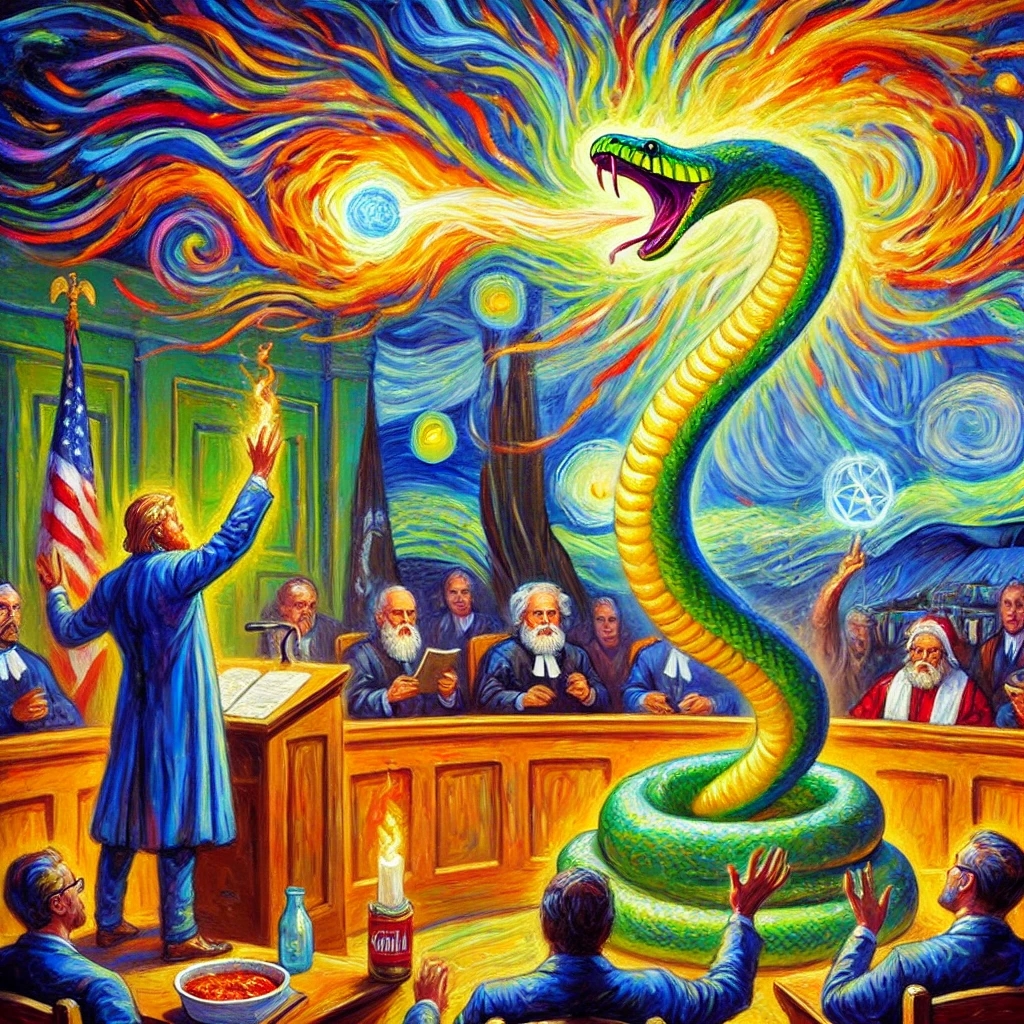
Everyone except Sister Lila Mae Pruitt, who sprang up from her folding chair with Pentecostal precision, tambourine in one hand and a mason jar of anointing oil in the other.
“THAT,” she declared, “is the Devil’s zoning liaison!”
She lunged.
The snake, clearly confused by the acoustics, slithered down the mic stand and darted toward Coach Freddie, who interpreted it as an unspoken challenge.
“Let’s GO, slippery opponent!” he yelled, diving mid-air. He landed in the refreshment table. Chili spilled. Evelyn Grace screamed. Pastor Peeler tried to bless the snake but mispronounced something and accidentally cursed the folding chairs instead.
Clovis shouted, “Told you! Serpent infiltration! This was in the pamphlets I gave y’all last year!”
“You mean the ones written in lemon juice and sealed with duct tape?” asked Dr. Cowgill, blinking slowly.
“Yes!” Clovis beamed. “Those.”
Part IV: Resolution, More or Less
Eventually, Officer Kenny Joe Teeter arrived, still chewing on a biscuit. He surveyed the scene, eyes calm as pond moss.
“Anyone hurt?”
Mabel Dean fainted again on cue. Evelyn caught her like a bridesmaid catching judgment.
“Nope,” said Coach Freddie from beneath a table, chili in his eyebrows. “Just emotionally tender.”
The snake, meanwhile, had curled itself around the town seal again, possibly to absorb bureaucratic heat. Chester Ray calmly laminated the attendance sheet mid-chaos and whispered, “No one’s deleting this history.”
Boot stood, one hand on a podium leg, and said, “Well, I’ll tell you, back in ’79, we settled zoning disputes with a chalk line and a handshake—and sometimes a hoe handle.”
The room fell quiet.
Then Pastor Peeler coughed and said solemnly, “Let’s all agree snakes don’t get a vote.”
Motion passed unanimously.
Final Moral
The zoning meeting was rescheduled. Snake ordinances were added. Lurleen submitted a PowerPoint titled “Serpents & Setbacks: Managing Slither in Shared Spaces.” Sister Lila Mae now brings holy tongs to all civic functions. And the corn snake? It was eventually adopted by the library’s children’s reading circle and named “Rezonius.”
As Mabel Dean later declared while stirring a casserole, “Sequatchie Crossing is not a zoo. But if it were, we’d label the cages correctly and make sure the signage was properly aligned.”
Boot agreed—so long as the signage was printed in Courier.
Disclaimer: The Sequatchie Crossing Dispatch is a work of fiction rooted in satire, folklore, and the uniquely combustible charm of small-town life. This story is entirely fictional. No zoning ordinances were harmed (though some were emotionally challenged). Any resemblance to actual snakes, zoning laws, or chili-based spiritual warfare is purely coincidental—but if it feels familiar, bless your heart and file a formal complaint with Section 8.14B. In that case, you already know. Sequatchie Crossing exists only in the minds of those brave enough to imagine a town where zoning laws, casseroles, and conspiracy cassettes collide in glorious disarray.
Real Places Behind the Ruckus – From The Dunlap Directory

Real Places Behind the Ruckus – From The Dunlap Directory
Yes, this story was fictional; even the parts that weren’t true. These places? Absolutely real. Stop by, support local, and keep the Wi-Fi away from livestock:
- Citgo – Little Store
- Time To Improve
- Cars Complete Auto Repair Service
- Superior Tire & Auto
- New Shade Painting & Co
- Spee-D Tires
- Cane Creek Camp
- Farmer Morgan
- Home Town Inn Soddy-Daisy
- Firefly on Rankin
- Sunrise Sorghum
- Elliott’s Bobcat & Backhoe
- Mountain Glen RV Park & Campground
- Landing Zone Grill
- Sequatchie County Public Library
Real Places Behind the Ruckus – From The Dunlap Directory
At Sequatchie Crossing, we tell the stories of Sequatchie Crossing.
Please share this post with your friends, family, or business associates who may want follow the news from Sequatchie Crossing.

0 Comments