


The Only Complete Record Of Meetings No One Agrees On
By Tom Seest
At Sequatchie Crossing, we tell the stories of Sequatchie Crossing.
Please share this post with your friends, family, or business associates who may want follow the news from Sequatchie Crossing.
🎤 Audio Overview

Clovis Strickland Takes Notes, Regrets Nothing
Act I: The Notebook Appears
No one noticed when Clovis Strickland began taking notes.
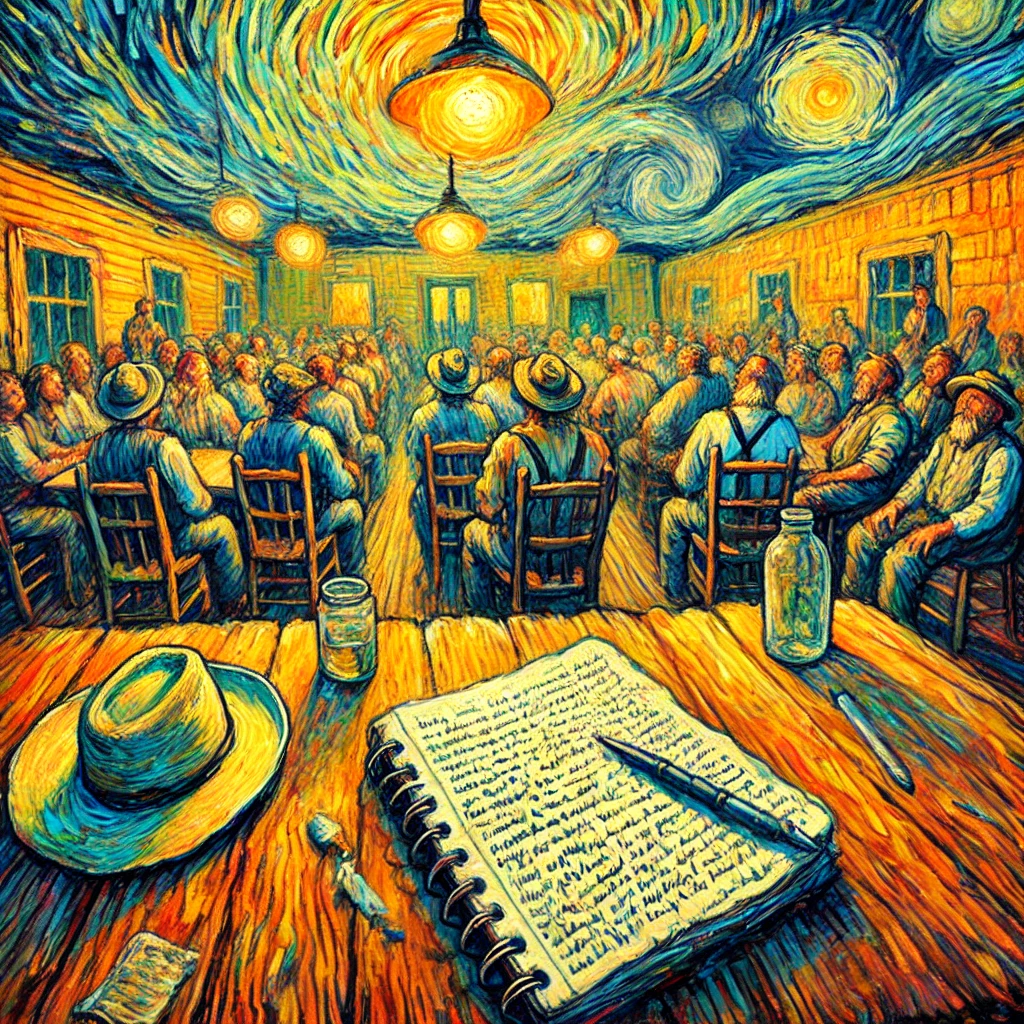
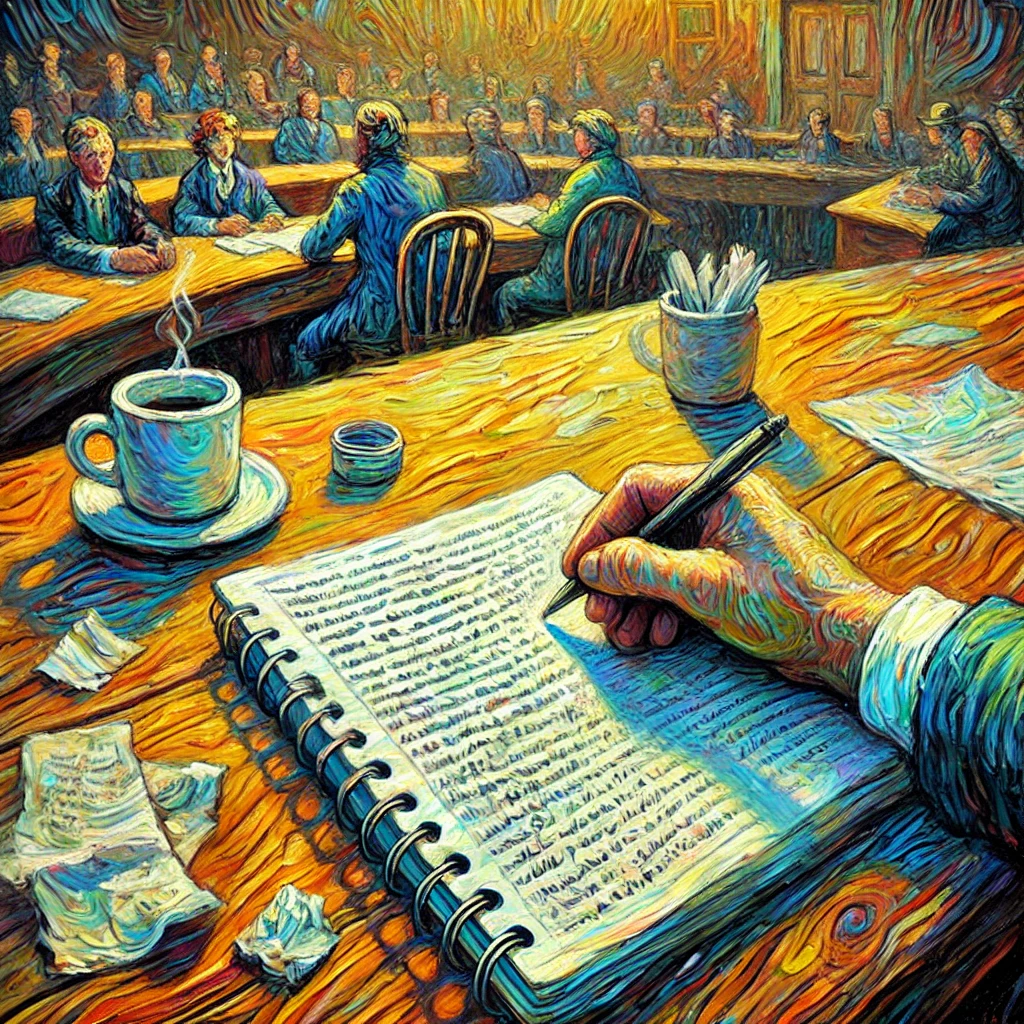
This was not because the notebook was small. It was not. It was a thick, spiral-bound thing with a black plastic cover and a red elastic strap that suggested both permanence and judgment. It lay on the table during the first meeting of the month like an animal waiting to be fed.
What no one noticed – at least not at first – was that Clovis had begun writing everything down.
Not summaries. Not bullet points. Not the approved minutes, which the town clerk typed later in a calm, forgiving font.
Everything.
He wrote when people spoke. He wrote when people interrupted. He wrote when someone sighed audibly and when someone whispered “this again” without meaning to be heard. He wrote down the order in which coffee refills occurred. He noted that the folding chair under Earl Dempsey squeaked twice, both times during the word “procedural.”
At one point, he paused, tapped the pen against his teeth, and added a marginal note:
Tone: defensive but optimistic.
Clovis was not the chair of any committee. He was not a clerk, nor a secretary, nor anyone who had ever been asked to document anything formally. He was, in the most accurate sense of the word, present.
When asked later why he started taking notes, he would say, “I realized we were forgetting things we were actively disagreeing about.”
Act I – The Notebook Appears
Act II: The First Disagreement About What Happened
The trouble did not begin immediately.
The meeting adjourned normally – if “normally” can be used to describe a two-hour discussion that resolved nothing but did include a vote to revisit a previous vote that had already been revisited.
People went home, slightly irritated but not alarmed.
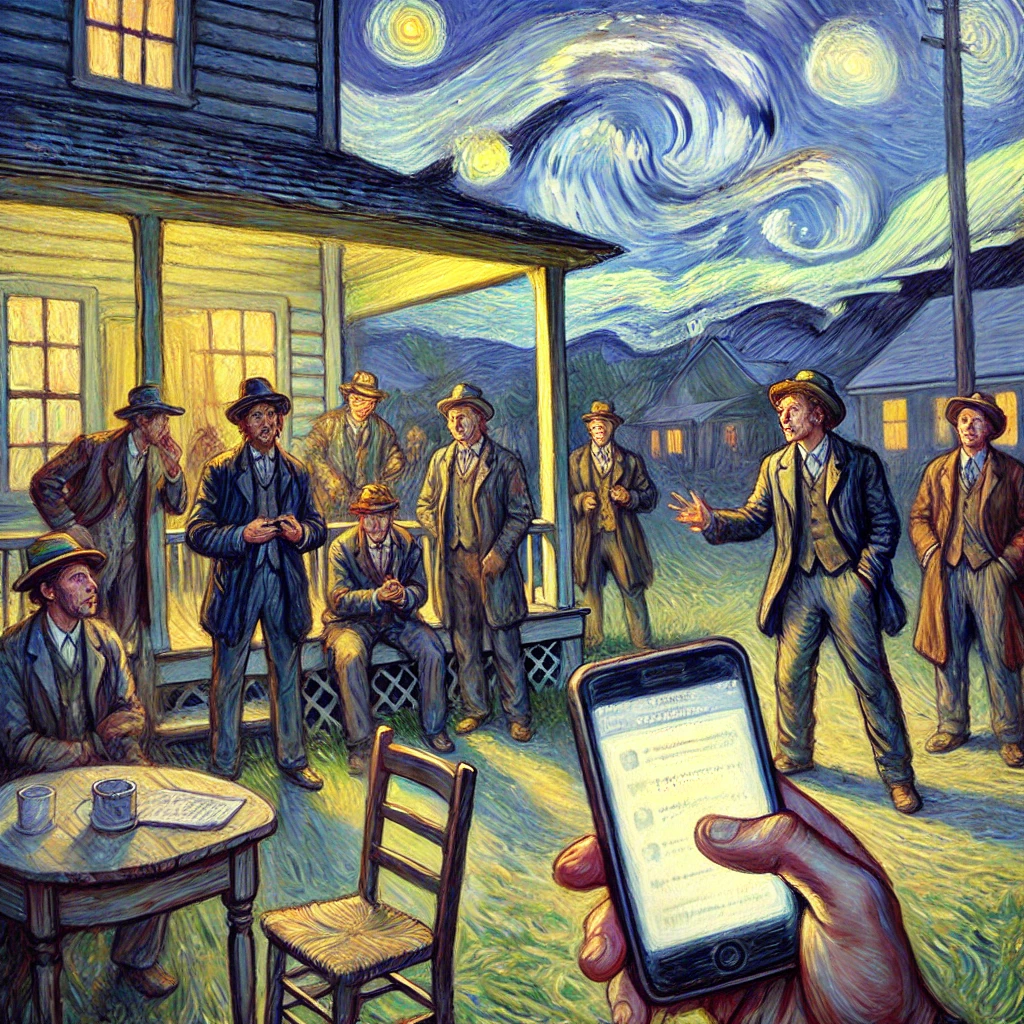
It was the next morning that the Facebook posts started.
“That’s not what was said.”
“I was there, and that’s not how it happened.”
“Funny how the minutes leave out the part where – ”
This was also normal.
What was not normal was that Clovis replied.
He did not argue. He did not editorialize. He simply posted photographs – clean, legible, timestamped – of his notebook pages.
The reaction was immediate and deeply uncomfortable.
Someone commented, “Those aren’t official.”
Clovis replied, “They’re contemporaneous.”
Someone else said, “You can’t just write things down and call it a record.”
Clovis, again, was polite.
“I didn’t call it anything,” he wrote. “I just wrote it.”
By noon, three separate versions of the same argument were circulating online, and Clovis’s notebook was quietly becoming the fourth.
Act II – The First Disagreement About What Happened
Act III: The Sheriff Notices
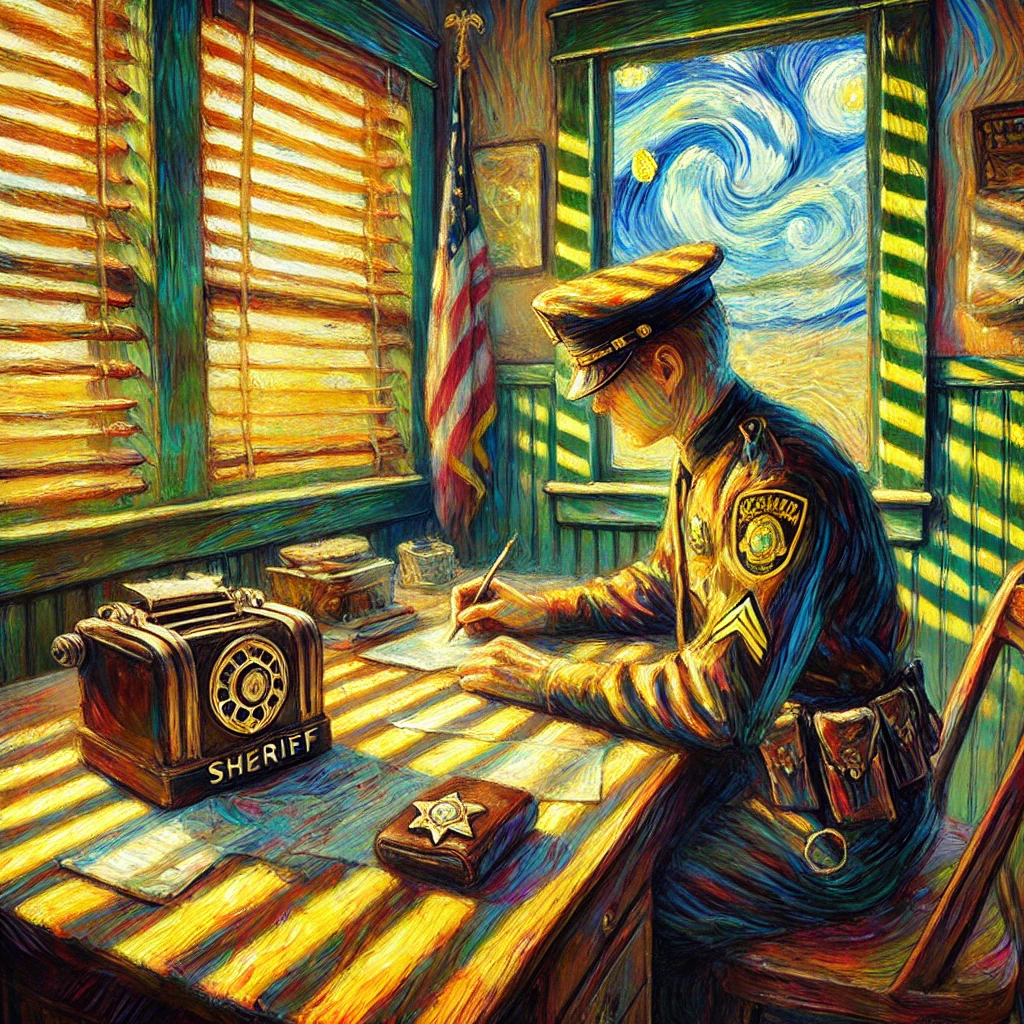
Sheriff Peeler noticed when someone slid a photocopy of Clovis’s notes across the counter at the station.
It was folded neatly, the way important things often are when someone doesn’t want to say they’re important.
Peeler read it slowly. He read the dialogue. He read the annotations. He read the side note that said:
Laughter unclear. Possibly nervous.
He looked up.
“Is this… accurate?” he asked.
The person shrugged. “Depends who you ask.”
Peeler nodded. That tracked.
Later that afternoon, he called Clovis.
“Are you recording meetings?” the sheriff asked.
“No, sir,” Clovis said. “I’m writing.”
“Are you publishing them?”
“I’m sharing them when people say they didn’t happen.”
Peeler paused. He had dealt with many things in his career – escaped goats, misdirected ambulances, budget hearings that turned into shouting matches about parking – but this was new.
“Well,” he said carefully, “keep doing whatever it is you’re doing. Just… keep it legible.”
Clovis took that as encouragement.
Act III – The Sheriff Notices
Act IV: The Notebook Gains Authority
By the second meeting, people had noticed the notebook.
They spoke differently.
Some spoke slower. Some spoke louder. A few leaned forward and said things like, “Let the record show – ” before remembering there was no record they agreed on.
Clovis wrote anyway.
He noted when someone corrected themselves mid-sentence. He noted when a motion was seconded reluctantly. He noted that someone left early and someone else pretended not to notice.
At one point, a committee member stopped mid-complaint and said, “Are you writing this down?”
Clovis looked up, pen still moving.
“Yes,” he said. “Do you want me to stop?”
The room went quiet.
“No,” the member said finally. “Just… keep going.”
This was the moment the notebook stopped being a curiosity and started being a presence.
People disagreed not just about policy, but about what the notebook meant.
Some said it was accountability.
Some said it was surveillance.
One person said it felt “judgmental,” which Clovis noted verbatim.

Act IV – The Notebook Gains Authority
Act V: Competing Minutes
The clerk released the official minutes a week later.
They were tidy. Neutral. Forgiving.
They also differed, in small but meaningful ways, from Clovis’s notes.
Where the minutes said “discussion ensued,” Clovis had written three pages.
Where the minutes said “consensus unclear,” Clovis had written:
Raised voices. No consensus. One person clapped ironically.
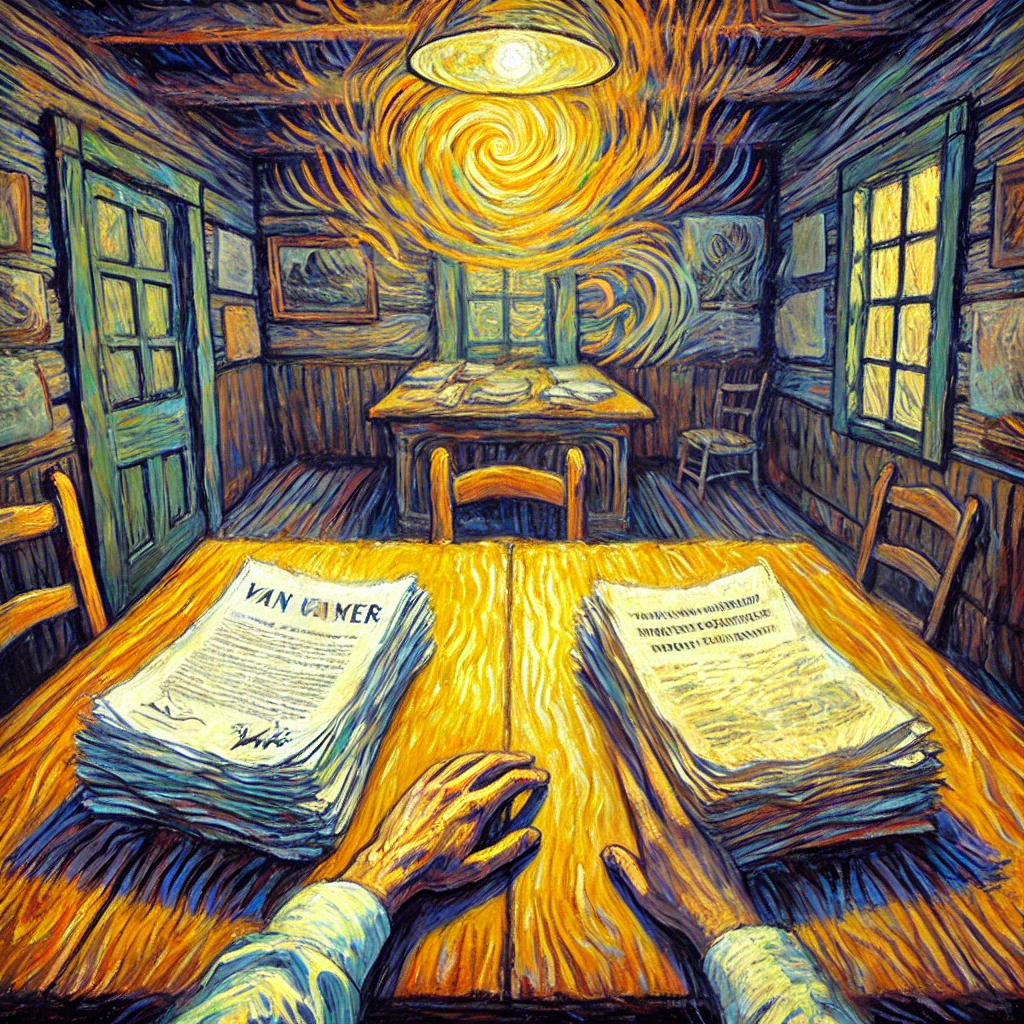
People began bringing printouts of Clovis’s notes to meetings.
They cited them.
“I refer you to page 12,” someone said once, holding up a highlighted photocopy.
“That’s not official,” someone else said.
“It’s more detailed,” came the reply.
The town now had two records of the same reality, and neither side trusted the other.
Clovis did not comment on this.
He just kept writing.
Act V – Competing Minutes
Act VI: The Attempt to Stop Him
Eventually, someone tried.
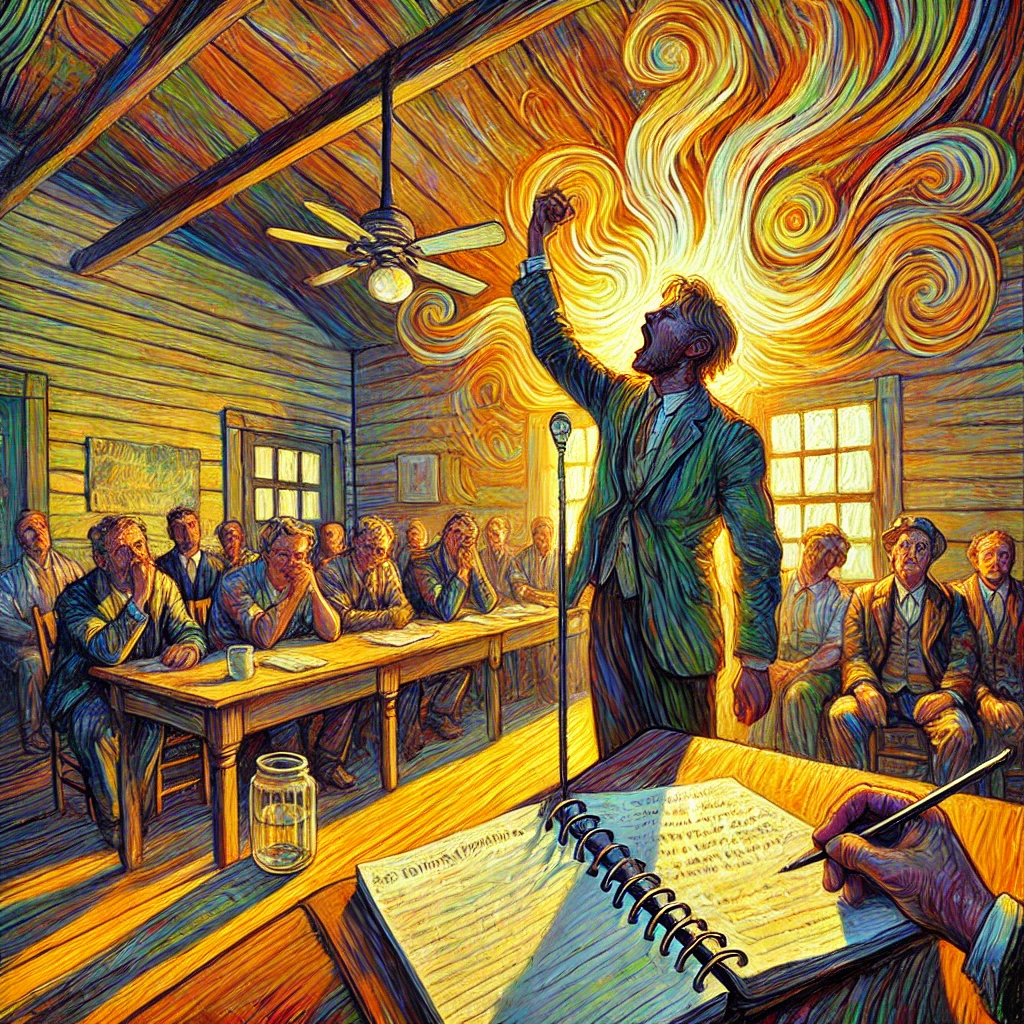
During a particularly tense meeting, a motion was made – not about zoning, not about budgets, but about note-taking.
The wording was vague, which Clovis underlined twice.
“Is this about me?” he asked, genuinely curious.
“No,” the chair said quickly. “This is about maintaining order.”
Clovis nodded and wrote:
Order referenced. Definition unclear.
The motion failed.
Not because people supported Clovis, exactly – but because no one could agree on what they were voting against.
Afterward, someone muttered, “He’s writing that down too.”
Clovis was.
Act VI – The Attempt to Stop Him
Act VII: The Notebook Becomes Canon
Weeks passed.
Disagreements came and went.
But when arguments resurfaced – as they always did – someone would inevitably say, “What did Clovis write?”
This was not always flattering to Clovis.
Sometimes his notes contradicted everyone.
Sometimes they showed that both sides were wrong in different ways.
Once, they revealed that an entire argument was based on a misunderstanding of a sentence no one could remember saying.
Clovis had it.
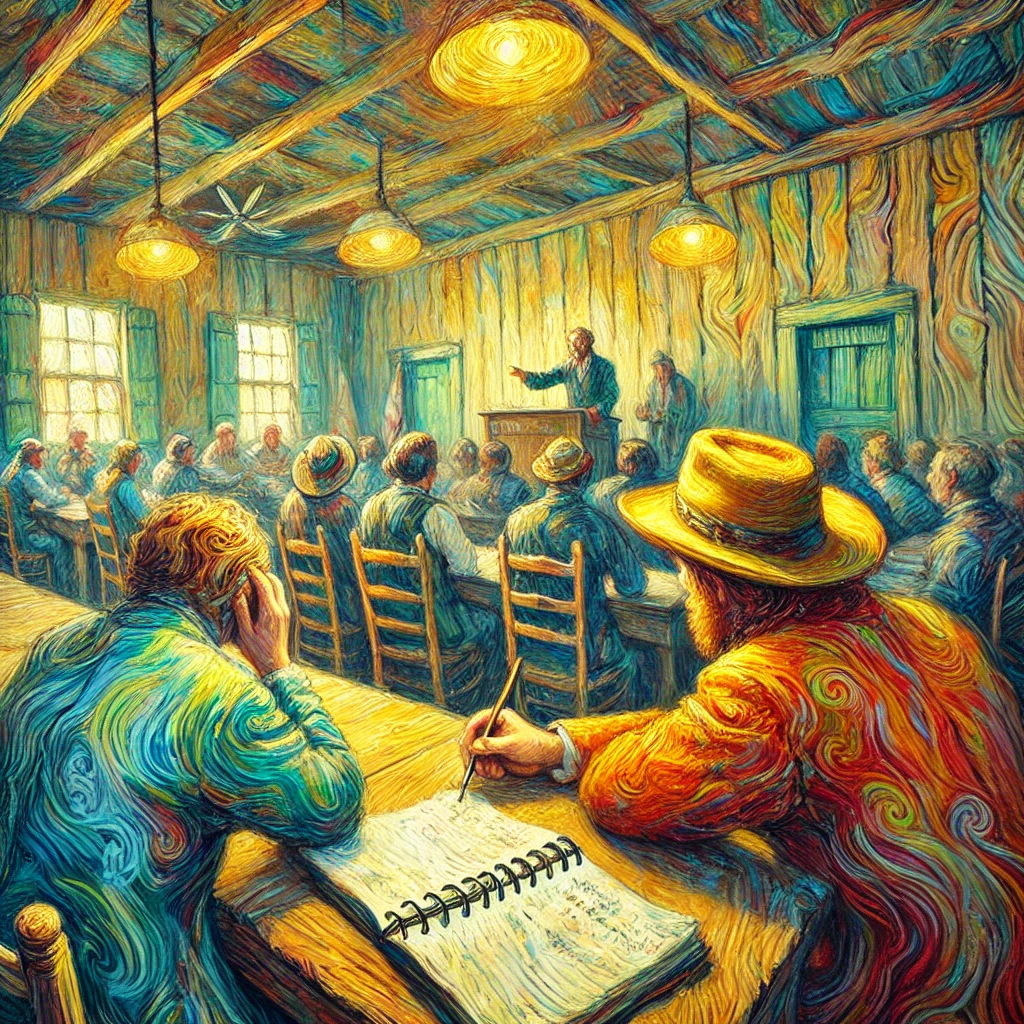
It became common to see his notebook referenced in side conversations, in emails, even in sermons that began, “As noted during the meeting…”
No one voted to make it official.
It just… became so.
Act VII – The Notebook Becomes Canon
Act VIII: Clovis Explains Himself
Someone finally asked him why he did it.
They caught him after a meeting, packing up his notebook carefully, aligning the edges.
“Why write all this down?” they asked. “Don’t you get tired of it?”
Clovis thought for a moment.
“I don’t trust memory,” he said. “And I don’t trust summaries. People remember what they need to remember. Writing doesn’t.”
“Do you agree with what you write?”
“Sometimes,” he said. “Sometimes not. That’s not the point.”
“What is?”
He smiled, just a little.
“Later,” he said, “when everyone is certain they were right, it helps to know what actually happened.”

Act VIII – Clovis Explains Himself
Act IX: Regrets, or the Lack Thereof
If Clovis regretted anything, no one knew.
He never editorialized. Never defended himself. Never stopped.
The notebook grew thicker.
New ones appeared.
People adjusted.
Meetings were no calmer. Consensus no more likely. But something had shifted.
The town no longer argued solely about ideas.
It argued about reality.
And in Sequatchie Crossing, that was progress of a sort.

Act IX – Regrets, or the Lack Thereof
Epilogue: The Shelf
In Clovis’s house, there is a shelf.
On it sit notebooks – neatly labeled, chronologically ordered.
They are not locked away. They are not displayed.
They simply exist.
Occasionally, someone asks to see one.
Clovis always says yes.
He hands it over without commentary.
He does not insist it be believed.
He only insists it be read.
And that, in Sequatchie Crossing, may be the most radical act of all.

Epilogue – The Shelf
Disclaimer
This account is a work of fiction.
Sequatchie Crossing is not a real town, though it may resemble places you know, meetings you have attended, or conversations you wish had gone differently. Any similarities to actual events, organizations, procedures, or individuals – living, retired, or perpetually speaking out of turn – are entirely coincidental.
Clovis Strickland is a fictional character. His notes are imaginary. Their accuracy, completeness, and relevance are not guaranteed, nor are they endorsed by any governing body, committee, subcommittee, working group, or person who left early.
This story does not represent official minutes, approved records, or a consensus of any kind. It should not be cited in meetings, court proceedings, Facebook arguments, or family dinners. No motions were passed in its creation.
Readers are advised that memory may vary, reality is negotiable, and documentation has a way of complicating things.
Regret, if any, remains unrecorded.

Disclaimer – Clovis Strickland Takes Notes, Regrets Nothing
Real Places Behind the Ruckus – From The Dunlap Directory
Real Places Behind the Ruckus – From The Dunlap Directory
Yes, this story was fictional; even the parts that weren’t true. These places? Absolutely real. Stop by, support local, and keep the Wi-Fi away from livestock:
- Sequatchie Valley Homestead
- Coops Creek Commons
- Deakins Underground
- Long Restoration
- King Of It Construction
- George Hamilton Real Estate & Management Co.
- Harris Mowing Service
- Subway
- Hickerson Land Management
- Tennessee Tree Toppers Club
- Nathan Barker – Farm Bureau Insurance Agent
- River Life RV Resort
- Daus Building Supply & Hardware
- Walgreens
- Sequatchie County Public Library
- Main Street Automotive

Real Places Behind the Ruckus – From The Dunlap Directory
At Sequatchie Crossing, we tell the stories of Sequatchie Crossing.
Please share this post with your friends, family, or business associates who may want follow the news from Sequatchie Crossing.

0 Comments