


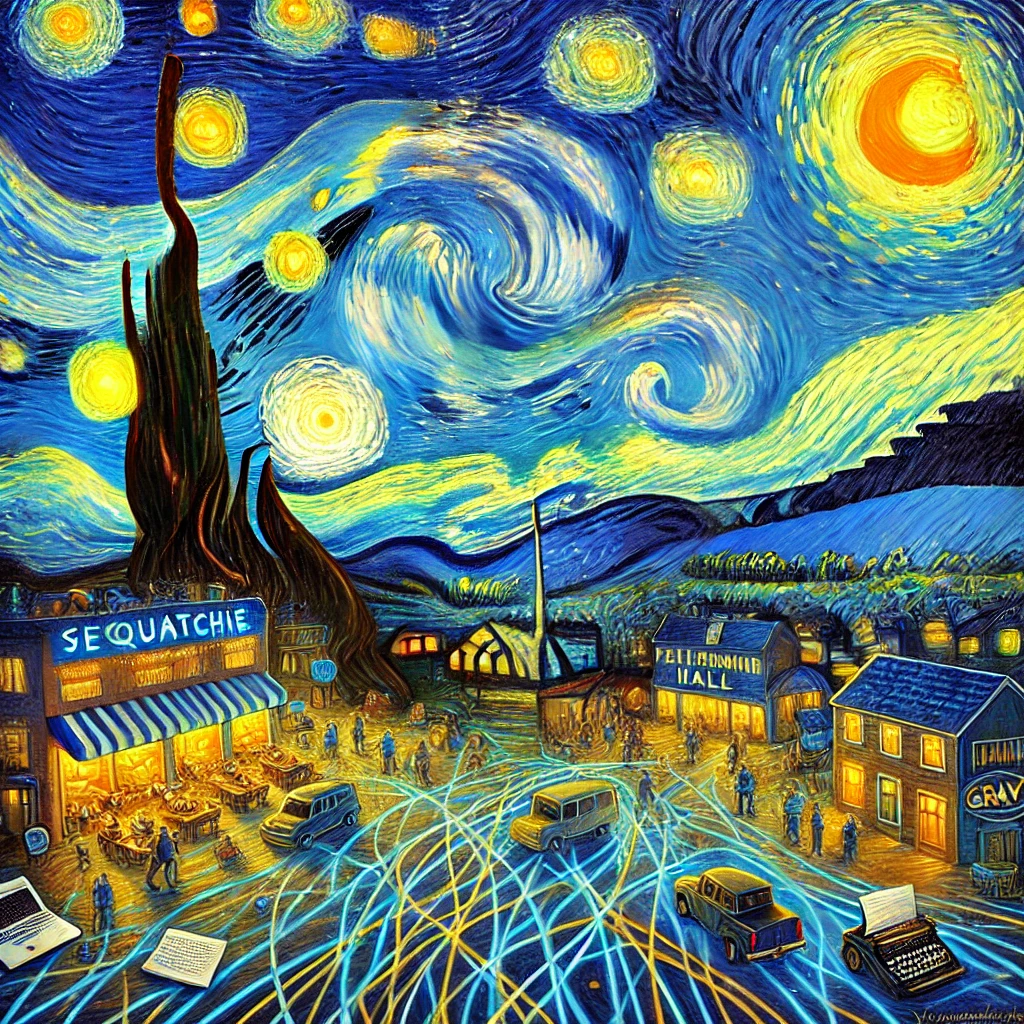
Town Debates Whether It’s Ethical to Use AI to Catch AI – and Whether Humans Should Still Be Trusted to Write Anything Worth Reading
By Tom Seest
At Sequatchie Crossing, we tell the stories of Sequatchie Crossing.
Please share this post with your friends, family, or business associates who may want follow the news from Sequatchie Crossing.
🎤 Audio Overview

Morality In the Age Of Machine Judgment
Dramatis Personae
-
Sheriff Peeler – keeper of order, philosopher when the coffee hits.
-
Mabel Dean – clipboard, casserole, and conscience of the Fellowship Hall.
-
Reverend Gentry – preacher with a three-point outline and a fourth point labeled “time permitting.”
-
Clovis Haywood – self-appointed tech czar; believes any problem can be solved with another toggle switch.
-
Boot Barnes – town handyman with a jaw made for stubbornness.
-
Darla June (aka @GraceAndGrits) – café influencer, ringmaster of the comments section.
-
Gladys Holt – superintendent; believes rubrics are a form of love.
-
“LilSyntaxError” (real name: River Cantrell) – senior, honor student, professional loophole finder.
-
Martha Lunsford – postmaster and the walking embodiment of certified mail.
-
The Town – a chorus of murmurs, harrumphs, and knowing nods.

Act I – A Probable Cause of Probable Cause
Act I – A Probable Cause of Probable Cause
The folding chairs in Town Hall complained like elderly hounds as the county filed in, coats squeaking, thermoses clinking. Sheriff Peeler rapped his knuckles on the lectern.
“Evenin’. We’re here to address a matter of grave moral import,” he said, squinting at a card. “Ah—pardon, that’s ‘gravy’ moral import. Wrong card. Moral import. Artificial intelligence.”
A choir of “mm-hmms” answered back.
Clovis Haywood hustled to the projector with a laptop plastered in stickers: TRUST THE HASH and I BRAKE FOR BLOCKCHAINS. The screen flickered, then displayed a slide that said: CATCHING AI WITH AI: A Beginner’s Guide to Knowing When You’ve Been Outwritten by a Blender.
“Folks,” Clovis began, “someone used an AI detector on the Sequatchie Sentinel pothole editorial. It scored eighty-three percent ‘AI-likely.’”
Boot Barnes crossed his arms. “That piece had commas in the right place for once. Suspicious as a cat at a dog show.”
Mabel Dean raised her clipboard like a banner. “Those detectors are heretical machines, labeling miracles as plagiarism. Last week it declared the church bulletin ‘robotic’ on account of the word ‘hallelujah’ appearing nine times.”
A hand went up in the back. Reverend Gentry cleared his throat. “My sermon was flagged at seventy-two percent machine-made. For the record: I’ve been preaching the same sermon since 1983. If that’s AI, then we need to take up a love offering for the Commodore 64.”
Laughter rolled around the room, then quieted to a tremor.
Sheriff Peeler leaned into the mic. “Question before the house is twofold. One, is it moral to use AI to detect AI? Two, is it moral to use AI to make the words in the first place? We’ll proceed in a mannerly fashion. Clovis, your deck has the floor. But keep it shorter than a possum tail.”
Clovis clicked to a flowchart titled If It Reads Good, Is It Good? It looked like spaghetti got into a bar fight with a decision tree.
“Detectors analyze perplexity and burstiness,” he said.
Boot squinted. “Per-what-now?”
“Perplexity measures how surprised a language model is by the next word,” Clovis said, delighted. “Humans are high-burstiness—short sentences, long sentences, then a side rant about carburetors. AI tends to be smooth. So I installed a trust filter on the town website. If a pothole complaint is too clear, it flags it.”
“So if I spell wrong,” Boot asked, “I’m morally superior?”
“In measurable ways,” Clovis said.
Mabel scrawled a note. “So the machines are penalizing us for improving ourselves. That tracks.”
Sheriff Peeler set down his coffee. “All right. Public comment—shorter than a hymn chorus.”
From the aisle, Martha Lunsford raised a careful hand. “I spent twenty minutes writing a sign about certified packages. Detector said eighty percent robot because I used ‘therefore’ twice. I might be sixty-nine, but I ain’t a toaster.”
The crowd hummed their assent. Someone passed a Tupperware of lemon squares. The hearing had begun.
Act II – The Café of Competing Gospels
Act II – The Café of Competing Gospels
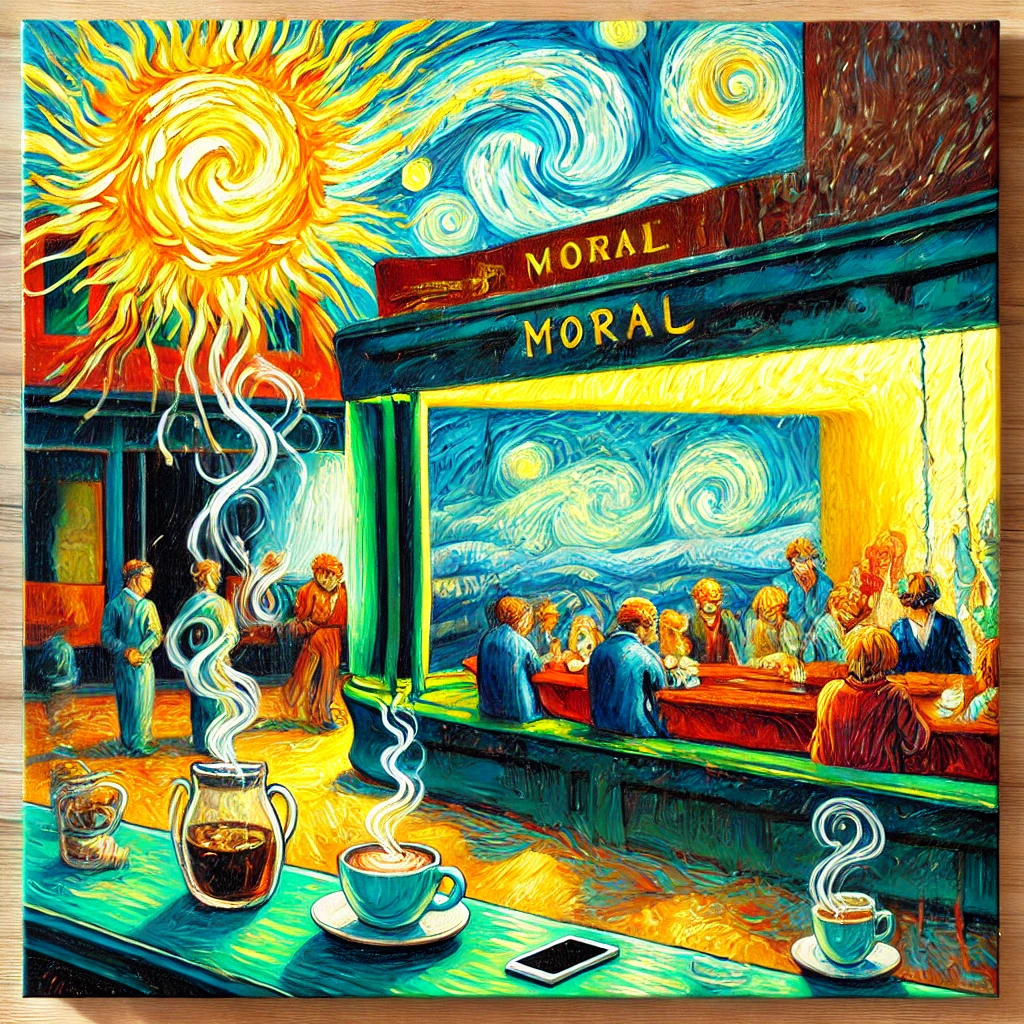
Darla June filmed herself in the Sequatchie Crossing Café, camera angled so the chalkboard menu haloed her like a saint of specials. “Y’all, I summarized Brother Gentry’s sermon with AI for the lunchtime crowd,” she said, tapping her phone. “Three points, crisp as coleslaw. Folks actually read it.”
Reverend Gentry, seated two booths away, lifted a brow. “My sermon is not coleslaw.”
“Course not,” Darla said sweetly. “It’s the cabbage, the mayo, and the whole picnic.”
At the counter, Boot nursed coffee. “If AI can tidy a sermon without changing its heart, ain’t that like us using microwaves but still calling it home cooking?”
Mabel, in line for a biscuit, flared. “A microwave doesn’t pretend it cooked from scratch. AI’s got opinions about my nouns.”
Darla pointed to the chalkboard where she’d written Moral of the Week in swirls.
If AI writes your words, are you less human—or just better edited?
A hush fell, thicker than gravy.
“Both can be true,” Sheriff Peeler said from a corner table, taking notes. “I have thought both things about my own reports.”
Clovis burst in, a gust of December in his hair. “Update! I refined the trust filter. If your complaint contains a family anecdote, it gets a ‘humanity bonus.’ If it has three or more adverbs in a row, it gets a ‘folksy exemption.’”
“Splendid,” Mabel said, deadpan. “Our souls now quantified by adverbs.”
River Cantrell—known online as @LilSyntaxError—spun on his stool. “So if I type ‘really completely absolutely’ before everything, I’m human?”
“In the eyes of the machine,” Clovis said, “absolutely really completely.”
River grinned. “That’s a feature.”
Act III – The School Board Tries to Bottleneck the Future
Act III – The School Board Tries to Bottleneck the Future
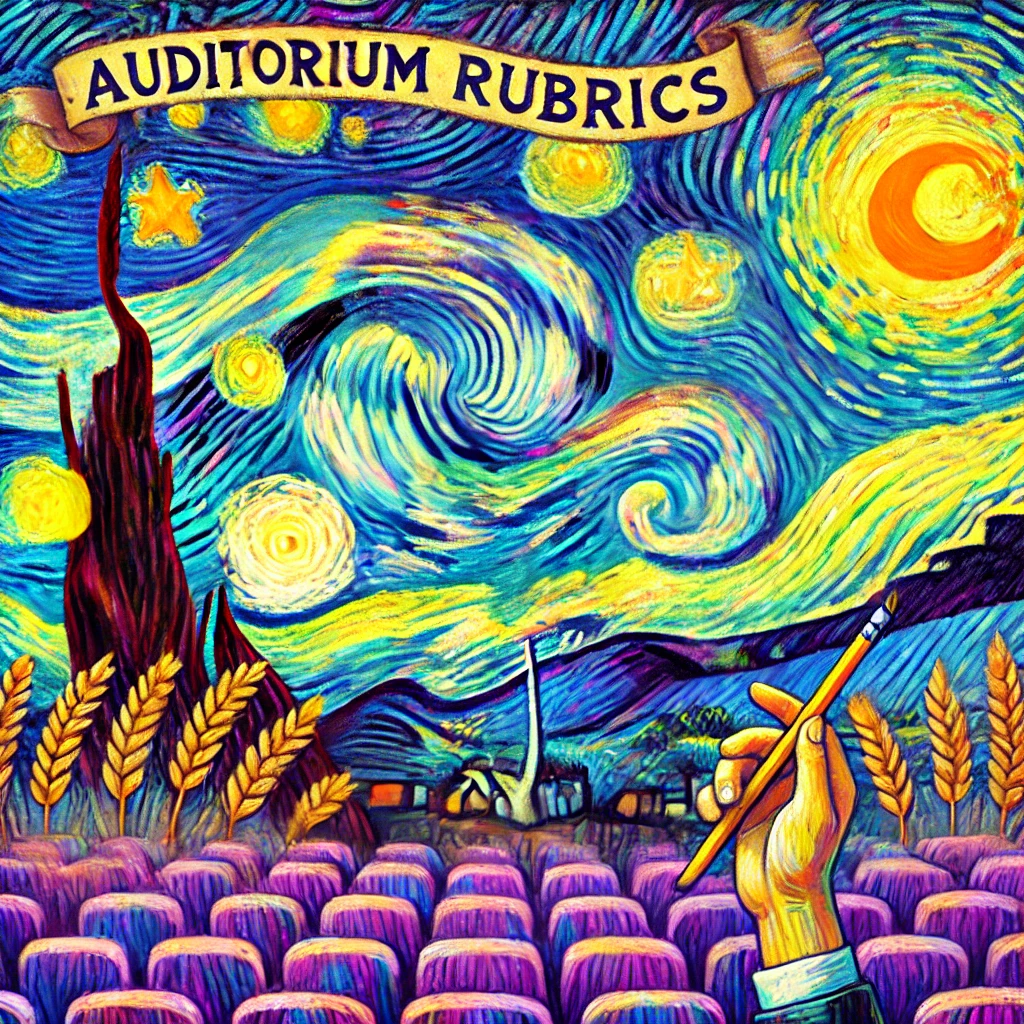
The School Board met in the auditorium with a smell of gym wax and government paper. Superintendent Gladys Holt wore a jacket with shoulders like traffic cones.
“We are implementing AI detectors for all essays,” she announced. “Academic integrity compels it.”
River raised a hand. “What if we cite AI as a source? You know—prompt, output, then our edits?”
“Tools do not receive author credit,” Gladys said.
“Neither do spellcheckers,” River said. “But they save us from ourselves.”
A murmur rippled. Onstage, a banner read: HONESTY – INDUSTRY – RUBRICS.
Boot, somehow present at every meeting, piped up from the back. “What if the essay’s better than usual? You gonna punish improving?”
Gladys pursed her lips. “We will investigate anomalous excellence.”
“Lord help us,” Reverend Gentry whispered. “Excellence has become suspicious.”
River stood in the aisle: “I propose a new class: ‘AI as Amplifier.’ Make us show our drafts, our prompts, our edits. Grade the process, not just the frosting on the cake.”
Silence. Then—unexpectedly—applause.
Gladys rapped her gavel. “We’ll…take it under advisement.”
Later, the Board’s official statement rolled out, precise as quilting stitches: Detectors may inform, but humans must judge. The font was Times New Roman, which made it look like law.
Act IV – Humans for Humanity – Mimeograph Manifesto
Act IV – Humans for Humanity (Mimeograph Manifesto)
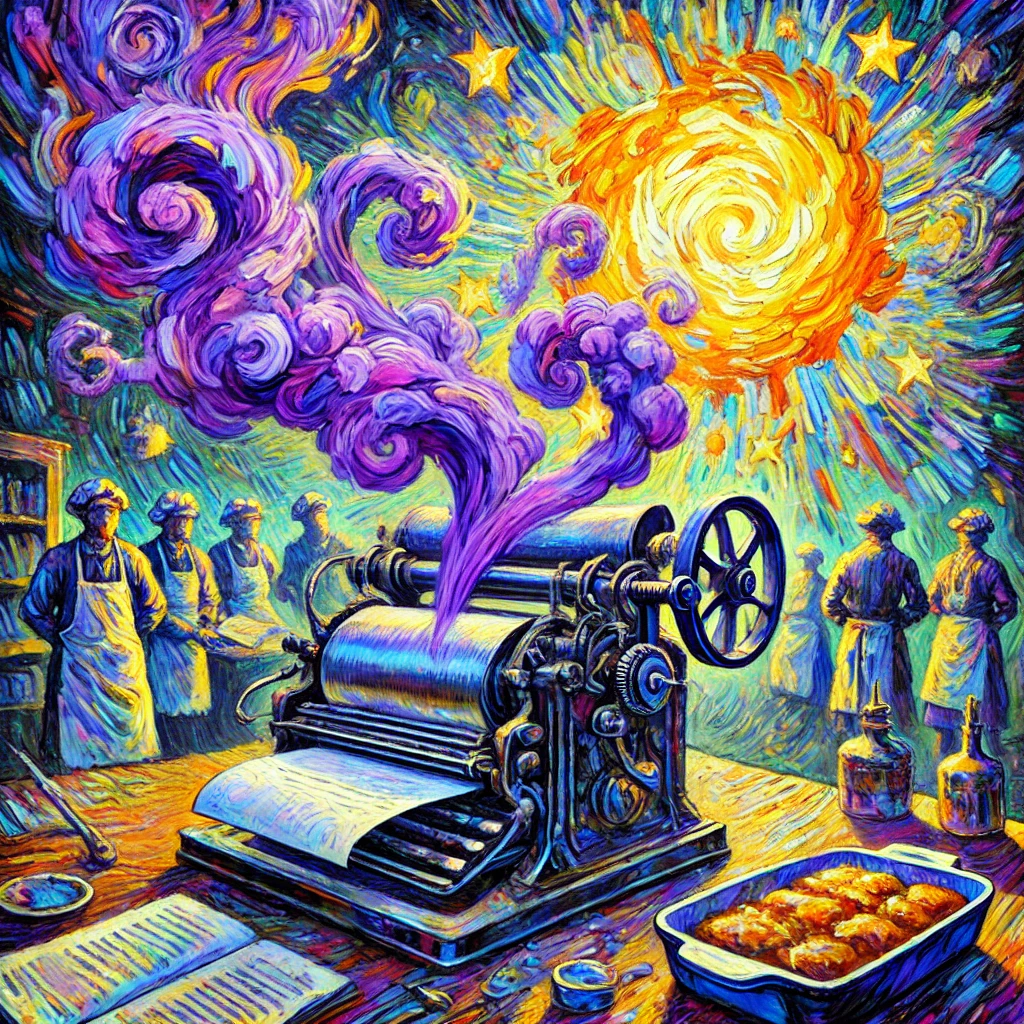
Mabel convened Humans for Humanity in the Fellowship Hall. The old mimeograph machine, resurrected from a closet, chuffed to life and perfumed the room with purple-ink nostalgia.
“From now on,” Mabel declared, “all newsletters handwritten, all recipes measured in ‘pinches’ and ‘bless your hearts.’ No detectors. If there’s a typo, it’s sanctified.”
They formed an assembly line—fold, staple, pray—humming “Bringing In the Sheaves” as if the sheaves were newsletters.
Then the printer jammed at the final page. Clovis, summoned from the adjacent universe, knelt with a screwdriver like a priest with a chalice.
“Your printer firmware rejects documents with insufficient complexity,” he said.
“Meaning?” Mabel asked, frostily.
“It thinks the document lacks emotional depth.”
Mabel blinked. “We were mailing the casserole sign-up sheet.”
Clovis shrugged. “Machines have standards. I can add a bypass if you include a personal testimony near the green bean casserole.”
Mabel’s pencil snapped. “Fine. ‘Once I was lost, then Clara brought the crunchy onions, and now I am found.’ Satisfied?”
The machine whirred, repentant.
Across the room, Martha Lunsford practiced reading a notice: “Henceforth, please label AI-assisted letters as such to expedite confusion.” She sighed. “Even our labels need labels.”

Act V – The Philosophy of Gravy
Act V – The Philosophy of Gravy
Sheriff Peeler scheduled a “listening session” at the café, which in Sequatchie Crossing meant a pot of coffee per table and biscuits that required a license.
A placard read: Agenda: The Morality of Outsourcing the Soul (and the Gravy).
Peeler opened: “Is using AI to write like using premade gravy?”
“Depends,” Boot said. “Did you taste it first?”
“You can doctor a jar,” Darla added. “More pepper, splash of drippings, nobody knows.”
Mabel folded her arms. “But do you know? If you don’t stir, is it still your gravy?”
Peeler scribbled, nodding. “So authorship equals stirring.”
Reverend Gentry lifted a fork. “I’ve borrowed commentaries my whole career. If I cite Augustine, am I less myself? Or am I a man with a longer bookshelf? Maybe AI is a borrowed bookshelf that talks back.”
River sipped root beer. “Then detectors are like sniffing gravy to see if it came from a jar.”
“Lord have mercy,” Martha said, “the jar has rights now.”
Clovis interjected: “Detectors don’t know truth, they know shape. They judge texture. Sometimes a jar makes better texture, sometimes Grandma wins.”
“Grandma wins,” Mabel said, unblinking.
A noise from the far table: a small printer chirped in Boot’s tool bag.
“What’s that?” Peeler asked.
“Portable detector,” Clovis said. “I’m running live analysis on our dialogue. It rates this conversation as ninety-two percent human.”
“Ninety-two?” Mabel gasped. “Which eight percent is robot?”
The device printed a tape: ‘Stir equals authorship’ is statistically machiney.
Peeler pocketed the tape. “Add it to evidence. Or the cookbook.”
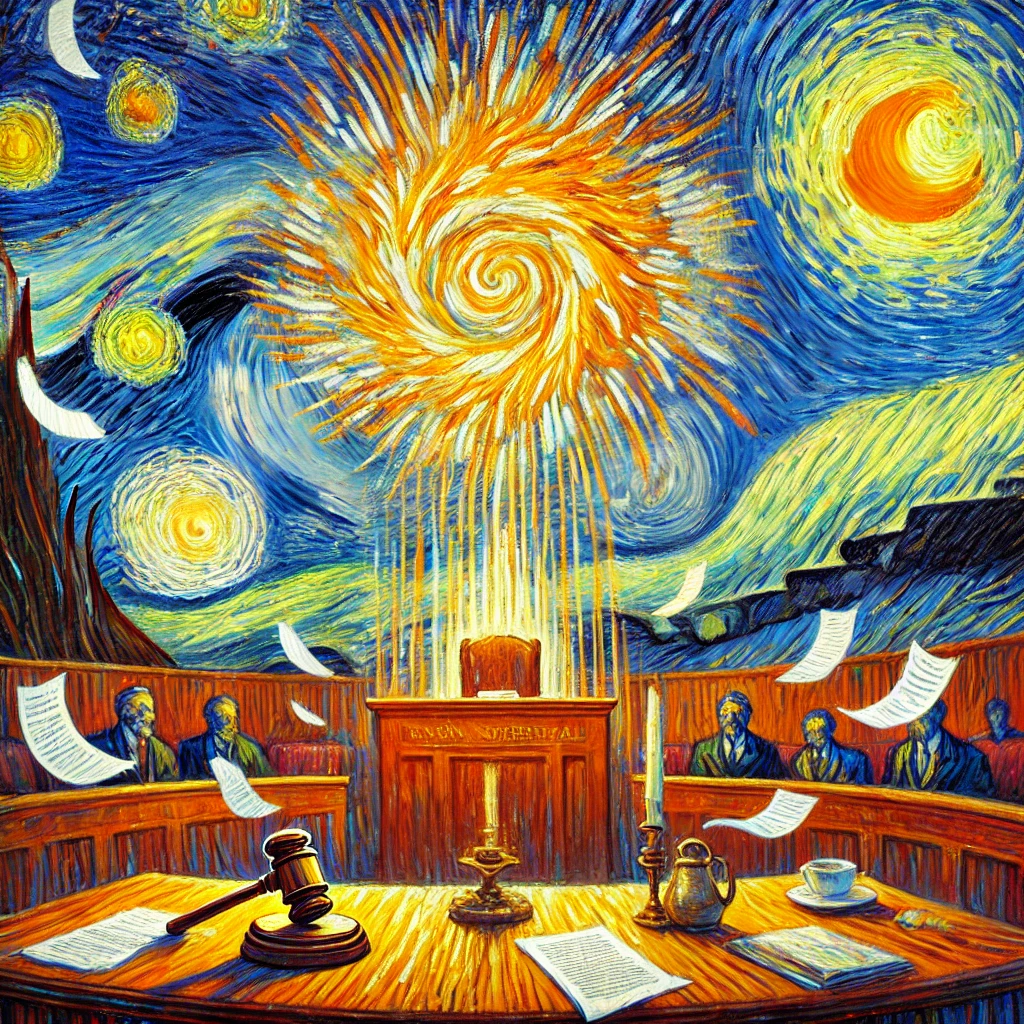
Act VI – Trial of the Pothole Editorial
Act VI – Trial of the Pothole Editorial
Town Hall, again. A banner: SPECIAL SESSION – Editorial vs. Detector. The Sequatchie Sentinel editor, Miss Evelyn Pike—spine straight as a yardstick—stood at the lectern.
“The editorial was mine,” she said. “Every comma placed with quiet joy. If it reads clearer than usual, praise my calcium.”
Clovis presented slides: perplexity graphs, burstiness dots, a heat map that looked like salsa. “The detector found unnatural fluency.”
“Unnatural fluency?” Evelyn repeated, scandalized.
Boot took the stand (none had been requested; he brought his own stool). “When the road grader makes a clean pass, do we accuse it of witchcraft?”
From the audience, whispers: “Witchcraft would be cheaper than asphalt.”
Sheriff Peeler banged his gavel. “Order.”
Evelyn adjusted her glasses. “I brought drafts.” She handed out papers with cross-outs, arrows, and a coffee ring shaped like Florida. “That ring is human.”
River leaned forward, eyes bright. “This is what I meant—show the process. The messy steps.”
Peeler read from the drafts, nodding. “The court finds this editorial sufficiently human, with credit to coffee.”
Clovis shrugged. “Detectors can be wrong. They’re thermometers in a thunderstorm—informative, not authoritative.”
“Then add a disclaimer,” Mabel said. “Like on cough syrup. ‘Results may cause unforgivable doubt.’”
Peeler scribbled. “Good. Motion: All detector outputs must carry a sign that says, ‘This was determined by a machine; handle your faith accordingly.’”
Hands rose. The motion carried, 6–1. Mabel voted no. “Faith needs no label,” she said, but she smiled like a woman who knew she’d just won something anyway.
Act VII – The Detector Strikes Back and Repents
Act VII – The Detector Strikes Back (and Repents)
Clovis’s trust filter became town lore. Teenagers fed it song lyrics and barbecue recipes; bootleggers tried sonnets. It flagged a haiku about fishing as “fifty-one percent silicon.”
When the filter encountered Mabel’s casserole flyer—now with testimony—it stamped HUMANITY BONUS APPLIED in blue letters. Mabel framed it.
But on Tuesday, the system red-flagged a complaint about the collapsed culvert near the fly-in site. “Too coherent,” it said. “Likely AI.”
Boot stormed into Clovis’s office, tool belt clacking like judgment. “That complaint is mine. I wrote it after falling in the culvert. I added a simile and everything.”
Clovis scrolled logs, frowning. “You used parallel structure. The model got nervous.”
“Teach the model some manners,” Boot growled.
Clovis, chastened, added a new rule: If the author includes personal pain, sarcasm, or a dig at the fly-in site, increase human score by twenty.
The filter exhaled, metaphorically. Boot’s complaint passed, morally and municipally.
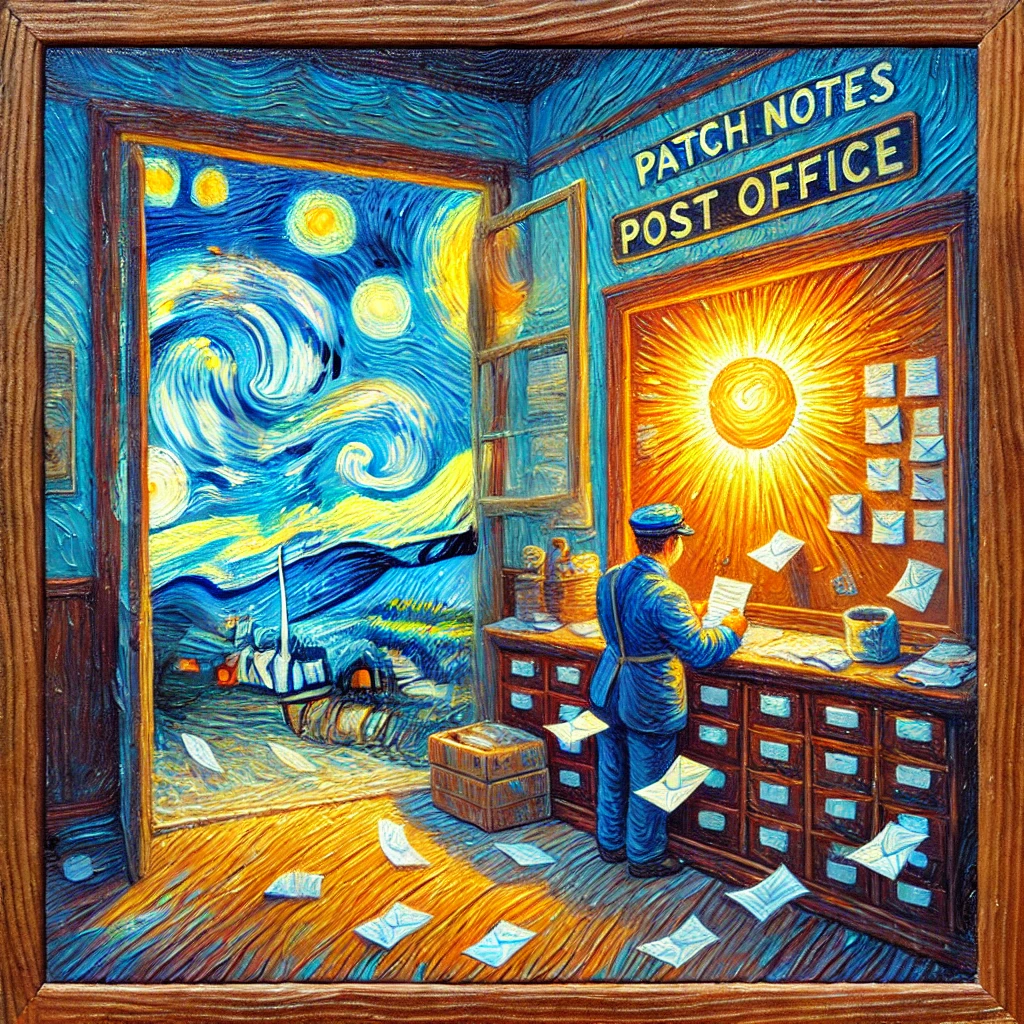
Clovis pinned a note on the bulletin board:
Patch 1.4: The system now respects sarcasm.
Martha Lunsford read it aloud at the post office and laughed until she bumped the outgoing stamp rack.

Act VIII – Sunday Sermon – Thou Shalt Not Outsource Thy Soul
Act VIII – Sunday Sermon: Thou Shalt Not Outsource Thy Soul (Entirely)
“Text today,” Reverend Gentry intoned, “is from Ecclesiastes: ‘Of making many books there is no end; and much study is a weariness of the flesh.’ I believe Solomon anticipated term papers.”
Chuckles.
“I will not condemn tools. I’ve borrowed commentaries my whole life. The question is stewardship. If AI writes your thank-you note, did you give thanks—or outsource it? If AI writes your apology, did you repent—or delegate?”
He paused, eyes soft. “But if you use a tool to speak clearer to the beloved across from you—the student, the neighbor, the stranger at the door—maybe that’s love with better handwriting.”
He closed his Bible. “The soul must stir the gravy. That’s all.”
Mabel dabbed her eyes. Darla live-streamed a summary that somehow made the pews look like a galaxy. River posted his annotated prompt-and-draft process for his senior essay, tagged #HumanOnPurpose. Clovis typed a patch note titled ‘Conscience Module (Beta).’ He did not know what it meant yet, but it sounded right.
Act IX – The Great Experiment – The Town Writes Together
Act IX – The Great Experiment: The Town Writes Together
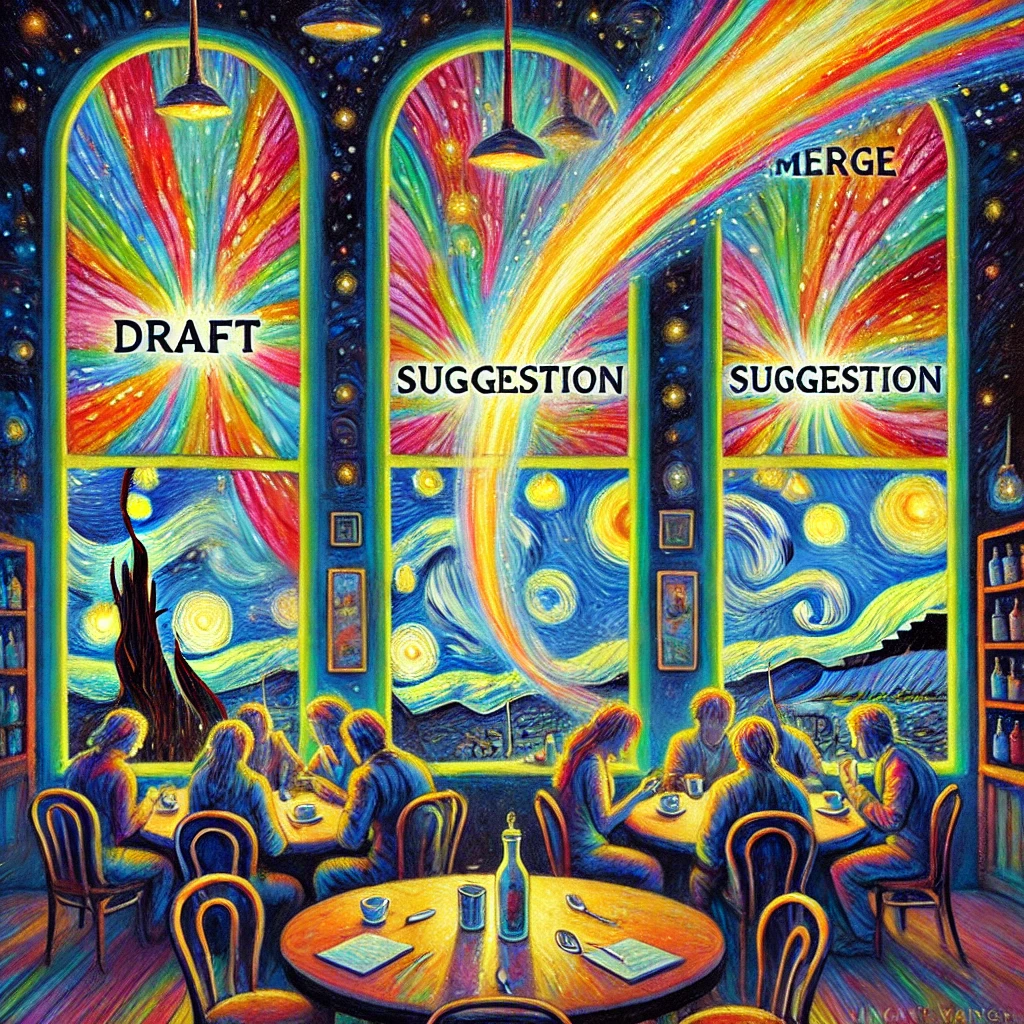
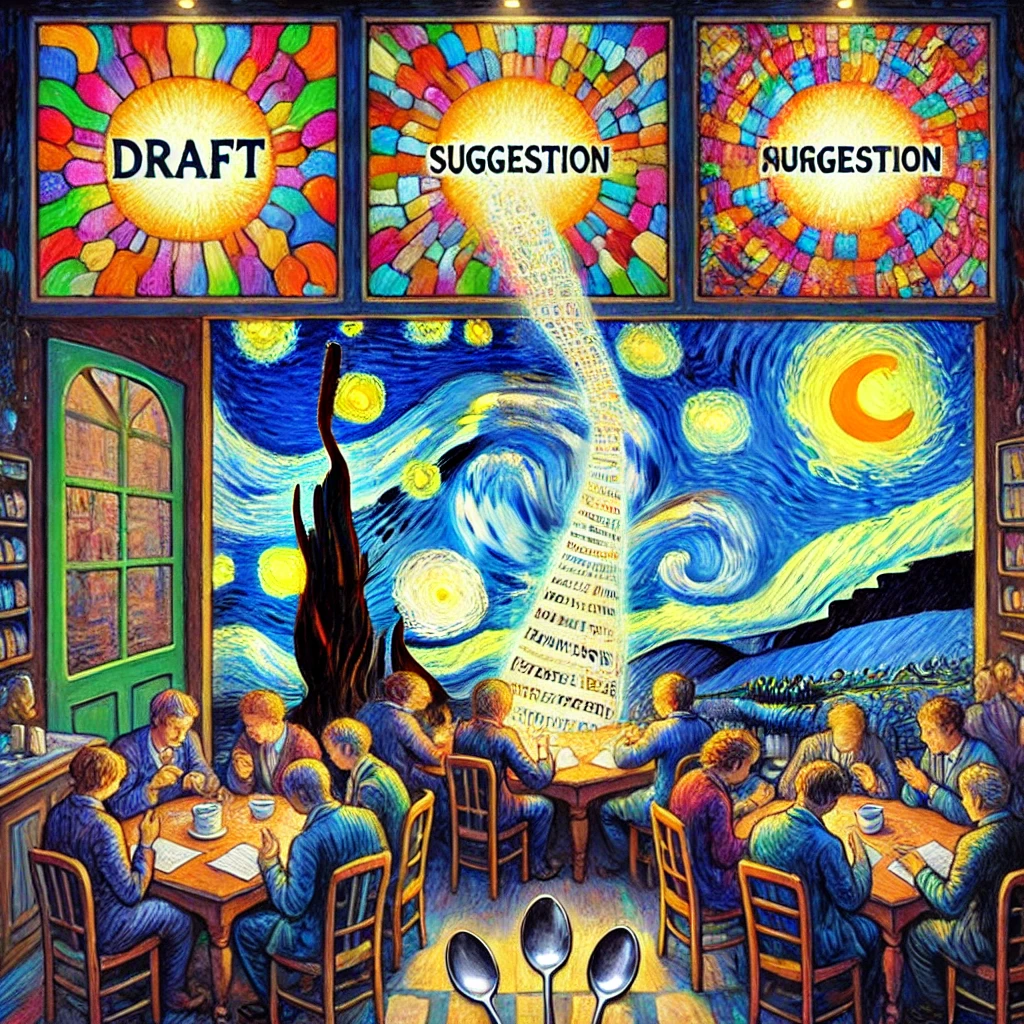
On Wednesday evening, the café hosted a “Write the About Page of Sequatchie Crossing” event. Everyone brought something—memories, adjectives, aspirin. Clovis set up a screen split three ways: Human Draft, AI Suggestion, Merged Version.
Darla moderated. “Ground rules: every line must originate from a human mouth before it touches the machine. Every suggestion must be judged out loud. We vote with spoons.”
Mabel began. “Sequatchie Crossing is a place where people bring casseroles and opinions.”
AI suggested: “Sequatchie Crossing is a community where tradition meets innovation to create a vibrant tapestry of neighborly life.”
Merged: “Sequatchie Crossing is where casseroles and opinions meet innovation and, against the odds, make supper.”
Spoons clinked approval.
Boot offered, “We fix things that aren’t broke and sometimes break the things we try to fix.”
AI smoothed: “We continuously improve our town—sometimes imperfectly.”
Merged: “We fix the unbroken, break the fixable, and call it progress if it holds through winter.”
More spoons. Peeler grinned behind his cup.
River submitted a line about students learning to argue with compassion. The AI added “respectful discourse.” The town kept both, then added “except on Thursdays.”
By night’s end, they had a page. It was lumpy in places, exuberant in others, and honest all over. The detector rated it fifty-eight percent human, which made everyone laugh until the café closed.
Darla hit “publish.” The page went live. The comment section, for once, agreed with itself.
Act IX – The Great Experiment – The Town Writes Together
Act X – Epilogue: Machines, Meet Mystery
The Sequatchie Sentinel headline on Monday read:
LOCAL HUMANS STILL STRUGGLING TO DEFINE THEMSELVES; JOYFULLY RESUME STRUGGLE TOMORROW.
The detector labeled it “99% human,” which the newsroom printed as a badge, then taped to the coffee machine.
Sheriff Peeler filed his report: Detectors Inform; People Decide. He added, in ballpoint: Also, never trust a culvert in the dark.
Gladys Holt announced a pilot: AI as Amplifier, featuring draft logs, prompt transparency, and viva voce defenses where seniors argued for their own sentences out loud. River led the first seminar, cheerful as a kid with a new slingshot.
Mabel’s Humans for Humanity kept mimeographing, but now the final paragraph on each flyer read: “This message drafted by a human hand, edited by a neighborly brain, and proofread by whoever wandered by.” Residents said it felt like the town had learned to breathe through both nostrils.
Clovis, up late at his desk, wrote the trust filter’s final patch note for the season:
Patch 2.0 – Humility Mode:
If the system cannot tell, it will say so.
If the system is certain, it will still whisper.
If the system breaks a heart, it will apologize.
He hit save, closed the laptop, and for once left the power strip off. Outside, the town lights twinkled like punctuation.
Boot walked the shoulder past the fly-in site. Stars pricked the sky like thumbtacks on a quilt. He rehearsed a culvert complaint in his head—gritty, slightly poetic, with an authentic limp. He smiled. He’d write it in the morning, by hand first, because that felt right, then ask the machine for synonyms for “aggravating,” because that felt smart.
At home, Darla posted the week’s chalkboard:
Moral of the Week:
Stir your own gravy. If a friend lends you a whisk, say thanks out loud.
Martha, locking the post office, read it, nodded, and whispered, “Out loud.”
The night gathered it all up—sermons, spoons, patch notes, and tiny brave sentences—and carried them down the valley like a creek full of bright fish. No detector measured it; no model predicted it. It was the old human story, still writing, still being written.
Morality In the Age Of Machine Judgment – Disclaimer
🧾 Disclaimer
Sequatchie Crossing Dispatch is a work of satirical fiction set in a small, fictional Tennessee town where every exaggeration tells a truth and every truth hides a grin.
Any resemblance to real people, places, or culverts—living or otherwise—is purely coincidental, though the author suspects coincidence may be up to something.
This story uses humor to explore real social and technological dilemmas, including the role of AI in creativity, faith, and small-town communication.
All AI, human, and semi-human participants were treated ethically, though some detectors may disagree.
Real Places Behind the Ruckus – From The Dunlap Directory

Real Places Behind the Ruckus – From The Dunlap Directory
Yes, this story was fictional; even the parts that weren’t true. These places? Absolutely real. Stop by, support local, and keep the Wi-Fi away from livestock:
- Firefly on Rankin
- Harris Mowing Service
- Rolling Oak Distillery
- Great Stone Door
- UT Performance
- Ponderosa Construction Company
- Pine Ridge Store
- TrueBlade Mowing
- Palmer’s Turf Farm
- Savage Gulf State Park
- Unlocking Potential Educational Services
- Brandon’s Tree Service
- Daus Building Supply & Hardware
- Audubon Acres
- Creekside Cow Palace
- Southeast Tennessee Human Resource Agency
- Land’s Properties
Real Places Behind the Ruckus – From The Dunlap Directory
At Sequatchie Crossing, we tell the stories of Sequatchie Crossing.
Please share this post with your friends, family, or business associates who may want follow the news from Sequatchie Crossing.


0 Comments