


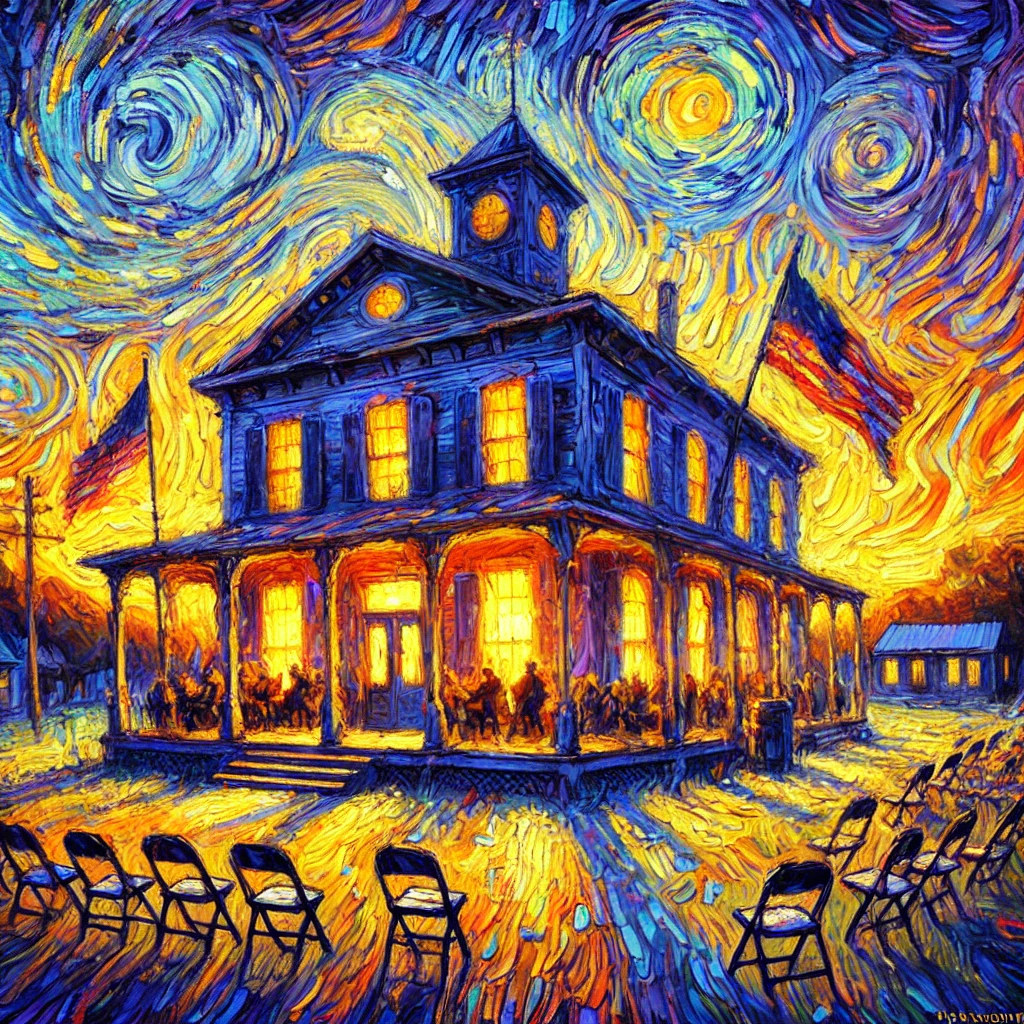
First Meeting Ends with Three Subcommittees and No Minutes
By Tom Seest
At Sequatchie Crossing, we tell the stories of Sequatchie Crossing.
Please share this post with your friends, family, or business associates who may want follow the news from Sequatchie Crossing.
🎤 Audio Overview

Civic Engagement Committee Formed, Immediately Divided
Act I: The Idea That Couldn’t Possibly Go Wrong
Sequatchie Crossing had always been proud of two things:
-
its scenic overlook, and
-
its ability to have strong opinions without the inconvenience of being involved.
People in town believed in civic engagement the way they believed in vitamins: generally positive, theoretically important, and best taken by someone else.
So when the mayor announced the formation of a Civic Engagement Committee, the town received the news with the exact emotional balance it preferred: mild suspicion, followed by loud certainty.
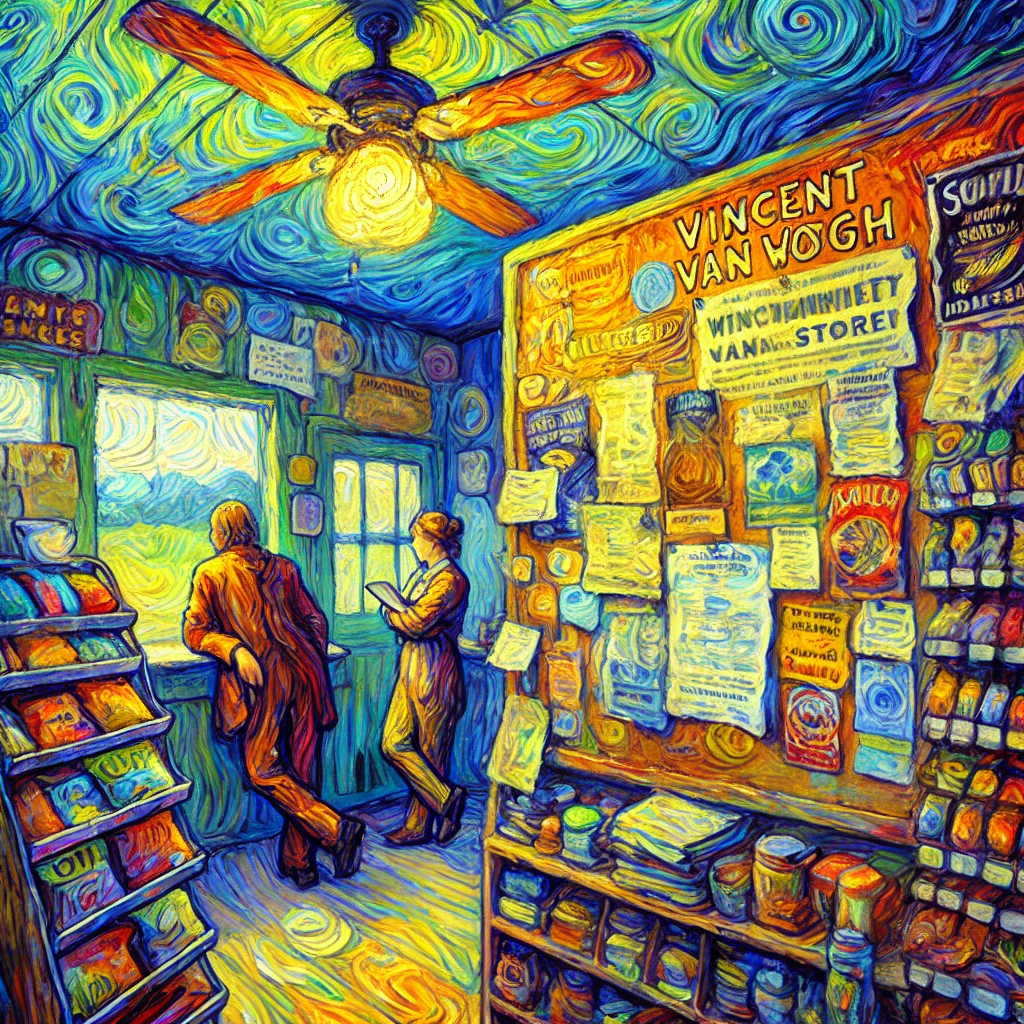
The announcement came, as most important things now did, via a laminated flyer taped to the front door of Town Hall and also to the drink cooler at the MegaMart Gas & Bait. It read:
CIVIC ENGAGEMENT COMMITTEE
Because Democracy Works Best When People Show Up
First Meeting: Tuesday, 6:30 PM
Location: Town Hall (unless moved due to feelings)
Bring: A pen, an open mind, and your patience.
Below it, in smaller print, someone had written in black marker:
“Do we have to bring our patience or is there a sign-up sheet?”
No one knew who wrote it, but everyone suspected Boot Barnes.
Boot was not the mayor. Boot had never been the mayor. Boot was, however, the town’s unofficial mayor of knowing better, which was a position with no salary but plenty of public speaking opportunities.
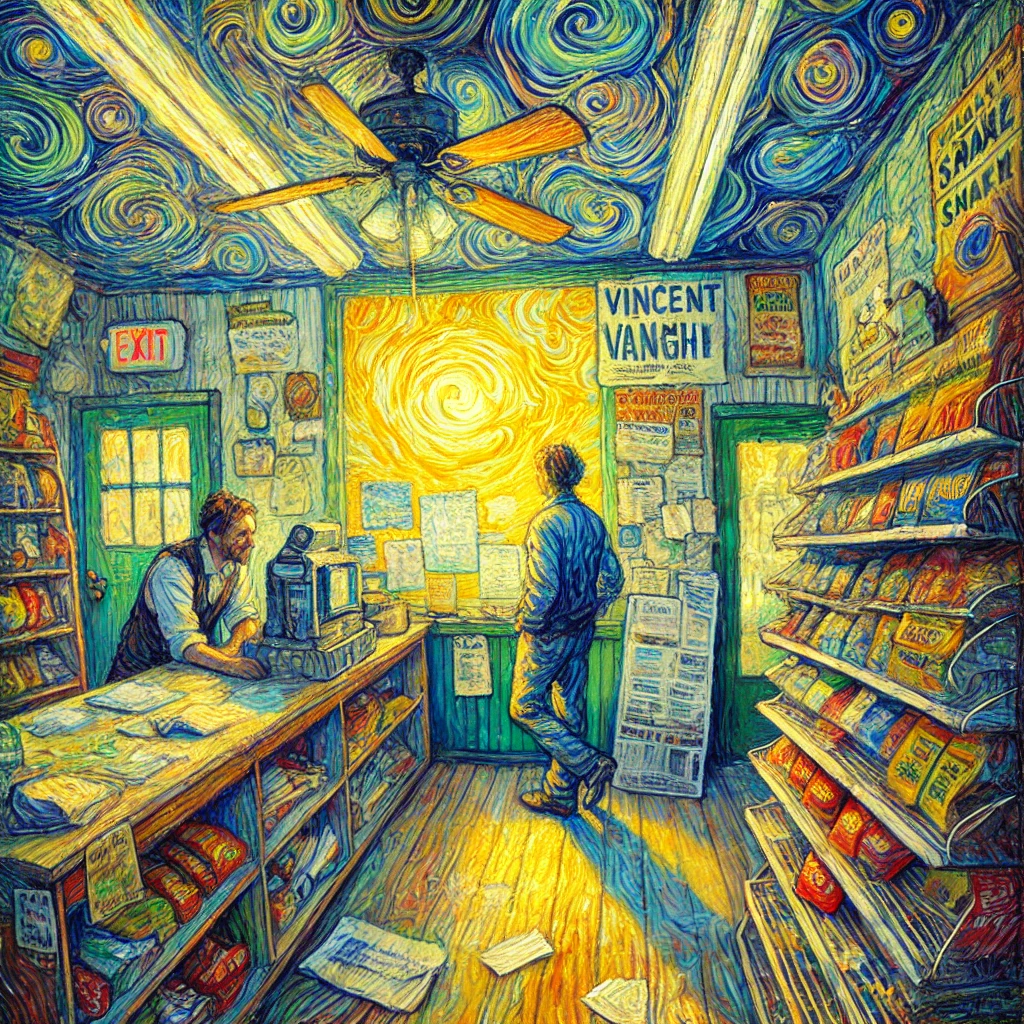
He stood at the MegaMart bulletin board reading the flyer like it was a personal insult.
“This is the problem,” he said to nobody in particular, which was his favorite audience. “You get committees. Committees create paperwork. Paperwork creates policies. Policies create—” he paused dramatically— “the loss of freedom to park diagonally.”
A woman reaching for a diet soda didn’t even look up. “Boot, you already park diagonally.”
“That’s my point,” Boot said. “It’s a right.”
Behind him, Clovis Strickland was taking a photo of the flyer with his phone, then writing the date in a small notebook as if he were collecting evidence for a future trial.
Clovis wasn’t the mayor either. Clovis wasn’t even on most ballots because he didn’t trust the ballot box. But Clovis held himself like a man who believed history was happening around him constantly and required documentation before it got slippery.
Act I – The Idea That Couldn’t Possibly Go Wrong
He flipped to a fresh page and wrote:
CIVIC ENGAGEMENT COMMITTEE — FIRST MEETING
Prediction: will dissolve into smaller committees before reaching agenda item #2.
Additional prediction: someone will demand “transparency” while blocking the lights.
He clicked his pen shut and looked up.
“Boot,” he said, “this committee is either going to save the town or create a new category of argument.”
Boot squinted at him. “How’s that different than usual?”
Clovis considered that. “It’ll be written down.”
Boot shuddered as if Clovis had threatened him with a filing cabinet.
Across town, Sheriff Peeler heard about the committee the way he heard about most community initiatives: a deputy brought it up during a complaint about parking, dogs, and an unrelated rumor involving someone’s cousin and a trampoline.
Peeler had learned long ago that civic engagement always produced one predictable thing: requests for enforcement.
“You can’t enforce engagement,” he said, rubbing his temple. “You can’t even enforce silence. We tried.”
The deputy nodded like a man remembering an injury. “That was a bad week.”
Peeler stared out the window toward Town Hall, which looked peaceful from a distance, like a building that had never hosted an argument powerful enough to turn a microphone into a weapon.
“Still,” he said, “it might be good. People have been complaining nobody participates.”
The deputy laughed.
Peeler sighed. “And if they do participate, they’ll complain about that too.”
“Sounds balanced,” the deputy said.
Peeler didn’t laugh. He never laughed when he knew the punchline was coming for him.
Act I – The Idea That Couldn’t Possibly Go Wrong
Act II: Town Hall Arrives at Itself
Tuesday came with a damp chill and the kind of cloud cover that made every porch light look like it had something to hide.
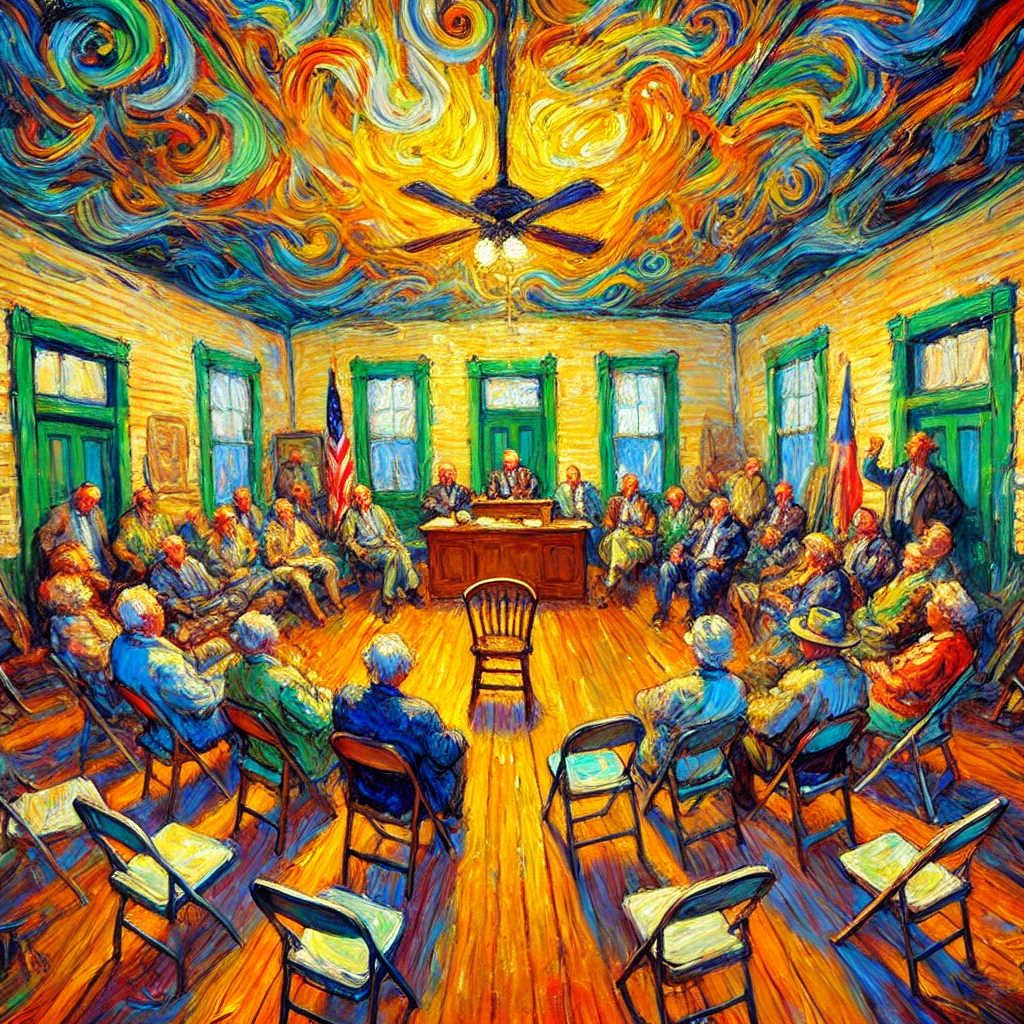
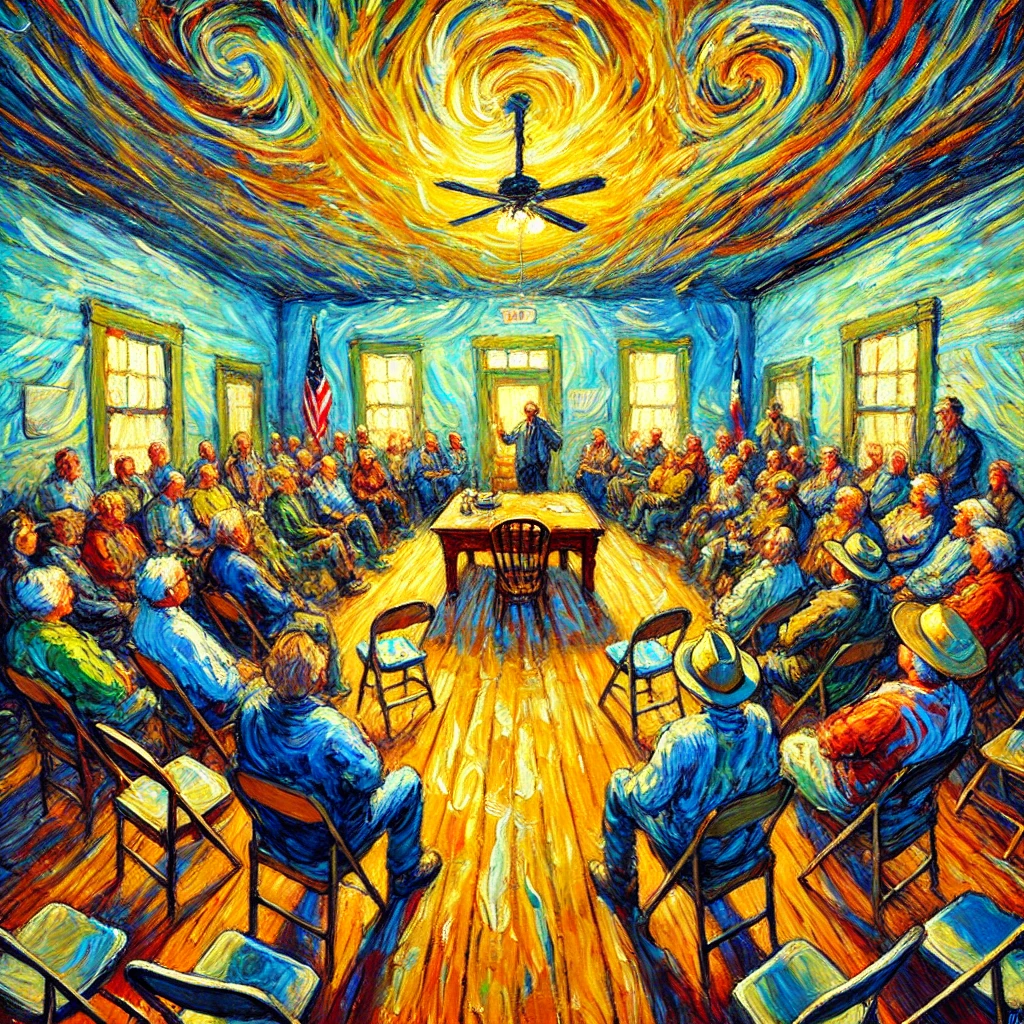
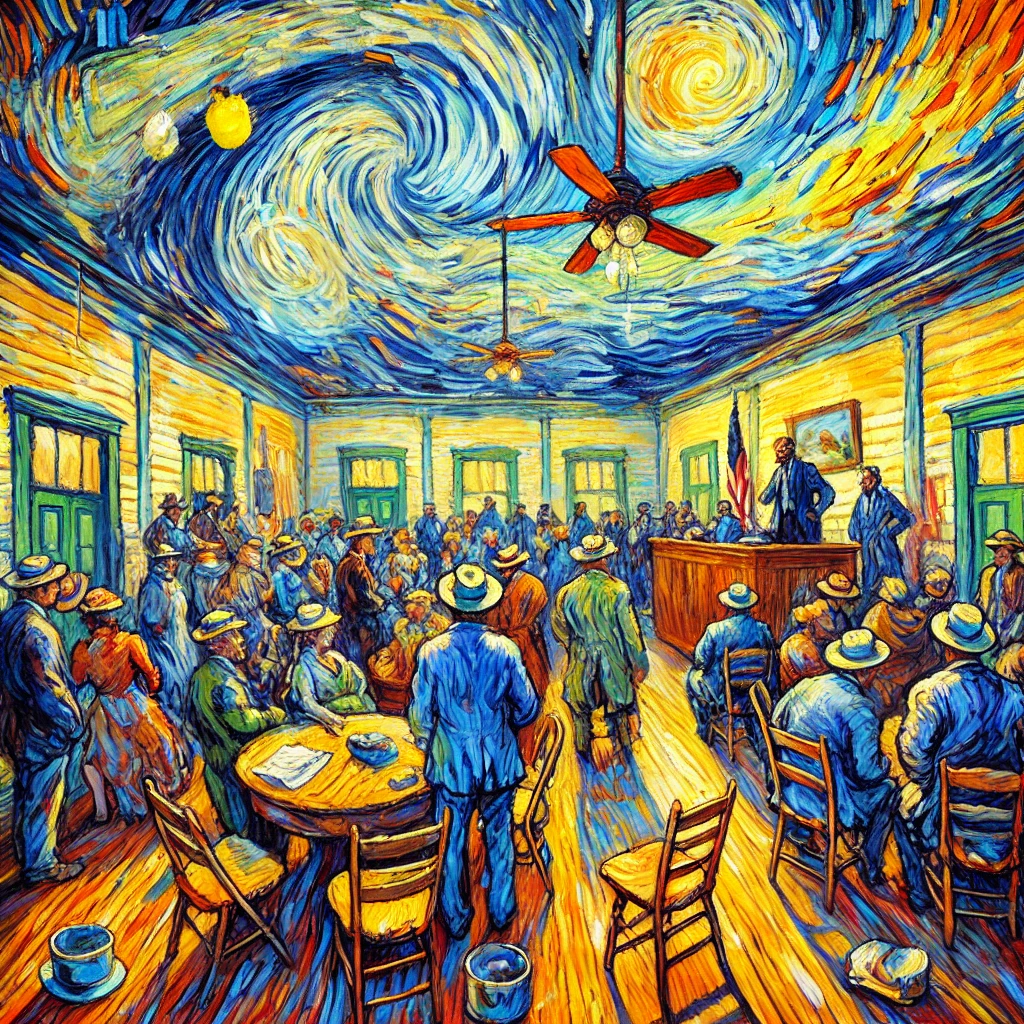
By 6:15 PM, Town Hall had begun to fill with chairs.
Not people—chairs.
The building had always been short on seats and long on opinions, so residents brought their own. Folding chairs. Camping stools. One person dragged in a padded office chair with armrests like a throne.
The room smelled faintly of old carpet, lemon cleaner, and something that might’ve been a historical grudge.
On the front table sat a battered gavel, a pitcher of water, and a stack of papers labeled:
Civic Engagement Committee — Draft Agenda (Version 1 of 7)
At 6:29, the mayor entered with the cautious posture of a man walking into a surprise party where the surprise was hostility.
He smiled anyway.
“Evenin’, folks,” he said. “I’m glad y’all came.”
Boot Barnes was already seated in the second row, legs spread, arms crossed, occupying space like a philosophical statement.
“I came,” Boot said, “because nobody else was going to keep an eye on this.”
“Keep an eye on what?” the mayor asked gently.
Boot leaned forward. “The part where you try to make people do things.”
The mayor held up his hands. “This is voluntary.”
“Everything starts voluntary,” Boot said. “Then it turns into a form.”
Clovis sat on the other side of the aisle with his notebook open, pen hovering, eyes bright with the thrill of possible disaster.
Near the back, two ladies whispered about whether the committee would require membership cards. One of them had already designed one in her head and didn’t like it.
At 6:33, the mayor tapped the gavel.
It made a soft sound, like an apology.
“Alright,” he said. “Let’s call this first meeting of the Civic Engagement Committee to order.”
A man in a camouflage hat raised his hand immediately.
The mayor pointed. “Yes, sir?”
The man said, “Do we get to vote on whether this meeting exists?”
Boot nodded approvingly. “Now we’re talkin’.”
The mayor blinked. “No. We’re already here.”
The man squinted. “That’s what they want you to think.”
Clovis wrote: Reality contested at minute one.
The mayor cleared his throat. “The purpose of this committee is to improve civic participation—get more folks involved in town decisions. Meetings, votes, public comment. That kind of thing.”
A woman near the front raised her hand. “Will there be snacks?”
“Potentially,” the mayor said. “But first—”
Boot raised his hand without waiting to be recognized. “Why is civic participation down?”
The mayor said, “That’s what we’re here to discuss.”
Boot shook his head. “No. I’m asking why.”
Another voice from the middle: “Because meetings are too long.”
A voice from the back: “Because meetings are too short and nothing gets said.”
A voice near the door: “Because you can’t hear nobody.”
Boot pointed. “See? That’s already three reasons. And if we name three reasons, we’ll have to solve ’em. Which means policies.”
Clovis wrote: Boot fears policies more than bear sightings.
The mayor tried again. “Okay. Let’s follow the agenda.”
He lifted the paper like it was a shield. “Item one: Introductions. Let’s go around—name, and why you came.”
Boot said, “Boot Barnes. I came because y’all were going to do it wrong.”
Clovis said, “Clovis Strickland. I came to document the process.”
A woman said, “I’m Willa Jo. I came because my sister said this would be entertaining.”
A man said, “I’m Earl. I came because I thought this was about community volunteer hours and my wife signed me up.”
A teenager near the wall said, “I’m just here because my grandma made me drive her.”
The grandma said, “And I’m here because I’m tired of people saying nobody cares when I been caring since before you were born.”
The mayor smiled. “Great. Great. Item two: Define ‘civic engagement’ for Sequatchie Crossing.”
Boot leaned back. “It means leaving me alone.”
The room laughed—half because it was funny, half because it was true.
Clovis raised his hand politely. The mayor pointed. “Clovis.”
Clovis said, “Civic engagement is the structured participation of citizens in the governance of their community, through attendance, informed discussion, voting, and volunteering.”
Boot stared at him. “You swallowed a dictionary.”
Clovis didn’t blink. “I digested it.”
The mayor nodded. “Okay. So we have definitions. Now item three: Identify barriers.”
Boot’s hand shot up again like it was spring-loaded by moral certainty.
“Time,” Boot said. “People don’t have time. Meetings are at dinner.”
A woman said, “Make them earlier.”
A man said, “Make them later.”
Someone else said, “Make them online.”
From the back: “No. Online turns people mean.”
Boot said, “So do meetings.”
The room hummed with agreement, which was the closest thing to unity Sequatchie Crossing ever achieved.
The mayor wrote “TIME” on a whiteboard.
Then “SCHEDULE.”
Then “ACCESSIBILITY.”
Then Boot said, “Also: the chairs.”
The mayor paused. “The chairs?”
Act II – Town Hall Arrives at Itself
Boot gestured at the mismatched forest of seating. “Ain’t nobody going to engage civically in a chair that pinches their thighs.”
Clovis wrote: Barrier identified: furniture hostility.
The mayor sighed and wrote “COMFORT” on the board.
He turned back. “Alright. Let’s brainstorm solutions.”
That’s when it began.
Not the brainstorming. The splitting.
Because the moment you asked Sequatchie Crossing to solve something, it could not help but first decide who was qualified to solve it.
A man in a denim jacket stood up. “We need a subcommittee for scheduling.”
A woman in the padded office chair said, “We need a subcommittee for outreach.”
A third voice said, “We need a subcommittee to define outreach so it don’t become propaganda.”
Boot slapped his knee. “Now we’re gettin’ somewhere.”
The mayor looked alarmed. “We don’t need subcommittees yet.”
Clovis lifted his pen, poised to capture history. “We do, actually,” he murmured, as if he were rooting for weather.
The denim jacket man said, “You can’t schedule without scheduling experts.”
The padded-chair woman said, “You can’t engage people without marketing.”
Boot said, “You can’t do any of it without common sense, which I seem to be the only one packin’.”
The mayor tried to speak but got overtaken by the momentum of civic ambition.
Within five minutes, the Civic Engagement Committee had formed three subcommittees:
-
Scheduling & Meeting Logistics
-
Outreach & Recruitment
-
Definition & Standards (also known as “What Exactly Are We Doing Here?”)
The mayor stared at the whiteboard as if it had betrayed him personally.
“We haven’t even taken minutes,” he said.
Clovis looked up. “I have.”
Boot snapped his head toward him. “Those ain’t official.”
Clovis smiled slightly. “They exist.”
Boot looked like a man who had just discovered a new category of threat: documentation.
Act II – Town Hall Arrives at Itself
Act III: The Scheduling Subcommittee Schedules Itself Into the Ground
The Scheduling & Meeting Logistics Subcommittee claimed the left side of the room near the coffee pot, which had not been refilled since an earlier era when people trusted each other.
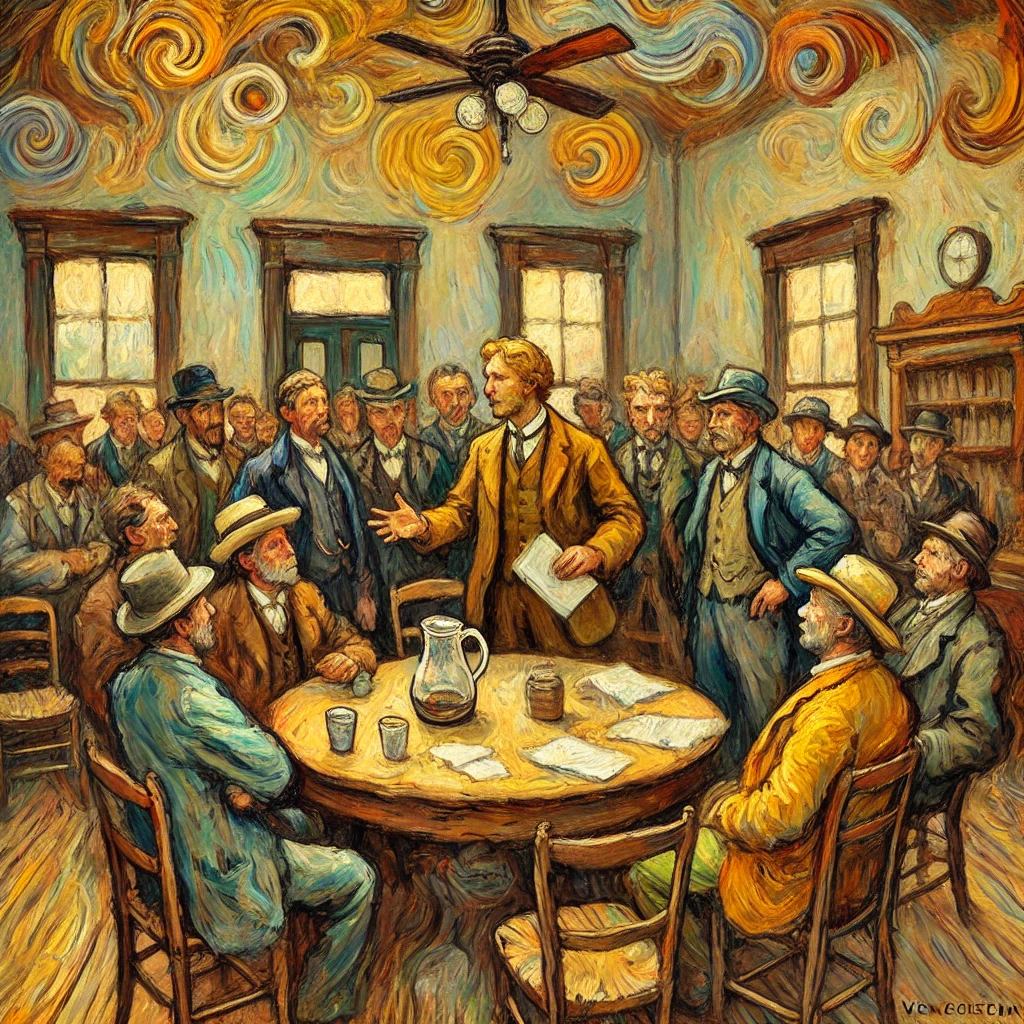
Earl, the man who’d been signed up by his wife, somehow became the de facto chair because he had a clipboard.
No one knew where he got it.
Possession of a clipboard in Sequatchie Crossing was like holding a ceremonial sword.
Earl cleared his throat. “Okay. We need to decide when meetings should be held to maximize attendance.”
Boot, who had drifted over because he refused to miss an argument, said, “Saturday morning.”
A woman immediately objected. “That’s when I do errands.”
A man objected. “That’s when I fish.”
Someone else said, “That’s when I sleep.”
Boot said, “You see? That’s the problem. Everybody’s busy doin’ something that ain’t this.”
Earl tried another approach. “What about weekday evenings?”
A man said, “That’s dinner.”
A woman said, “That’s church practice.”
A teenager said, “That’s when my friends are alive.”
Act III – The Scheduling Subcommittee Schedules Itself Into the Ground
Boot said, “Don’t schedule based on teenagers.”
The teenager said, “Don’t schedule based on old men who like to talk.”
Boot pointed. “That right there is disrespect.”
The teenager said, “That right there is accurate.”
Earl looked down at his clipboard like it might offer him escape.
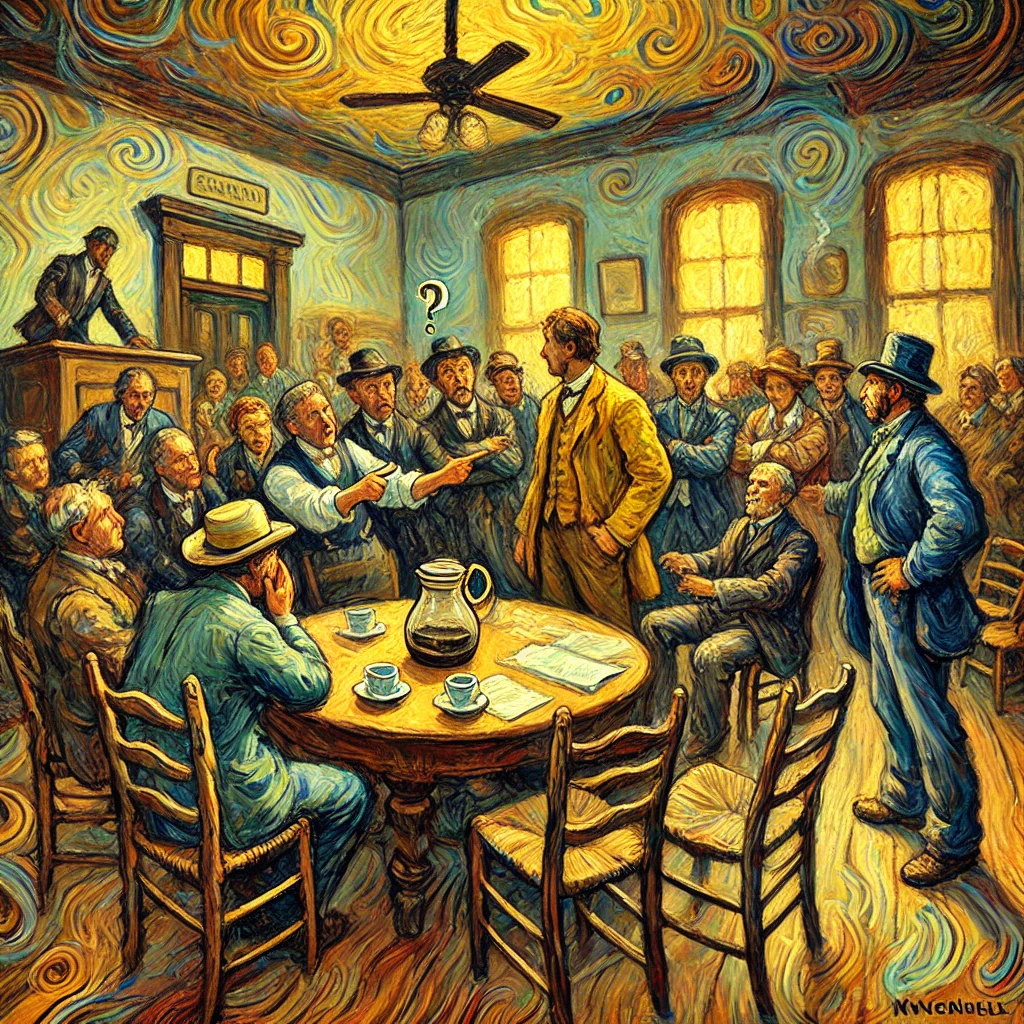
“Okay,” he said, “what about online meetings?”
Half the group recoiled as if Earl had suggested summoning spirits.
A man said, “Online is where people get brave.”
A woman said, “Online is where people get cruel.”
Boot said, “Online is where people can screenshot you.”
Clovis, who had wandered close enough to overhear, scribbled: Fear of screenshots is fear of accountability.
Earl tried to mediate. “We could do hybrid.”
Boot said, “Hybrid means nobody knows when to talk and everybody blames the microphone.”
A woman said, “That’s already true.”
Earl nodded slowly. “Fair.”
They debated time slots. They debated days. They debated whether daylight savings time was a government plot to reduce public comment.
In the end, the Scheduling Subcommittee produced exactly one outcome:
They agreed to meet later to decide when to meet.
Earl wrote it down, which made it feel official.
Act III – The Scheduling Subcommittee Schedules Itself Into the Ground
Act IV: Outreach & Recruitment Discovers the Town Doesn’t Want to Be Recruited
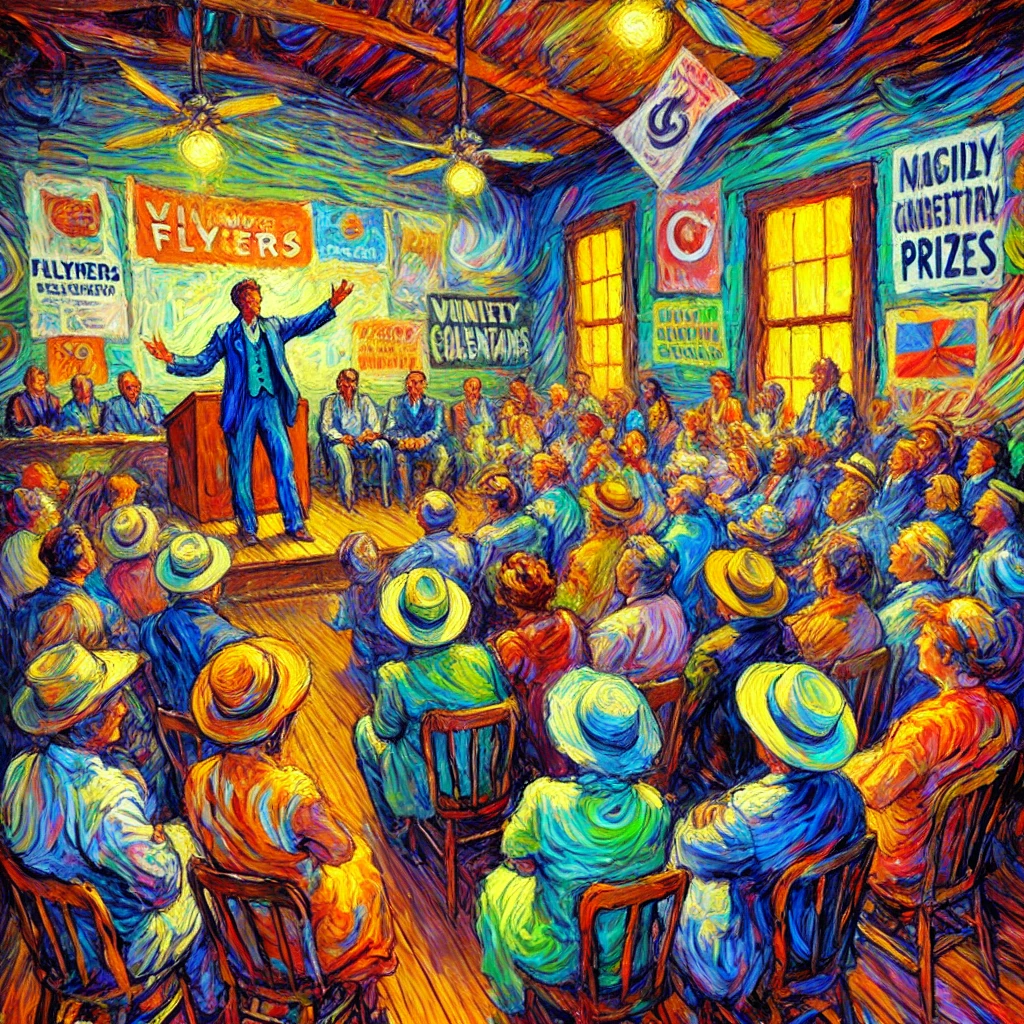
Across the room, the Outreach & Recruitment Subcommittee gathered near the front, led by Willa Jo, who had the energy of someone who’d never met an idea she couldn’t improve with colorful paper.
She clapped her hands. “Alright. We need to get more people to show up. So first question: who aren’t we reaching?”
Boot called out from his side of the room, “People with sense.”
Willa Jo ignored him. “I’m talking about demographics. Working families, young adults, folks in the hollers, folks who don’t feel welcomed.”
A man in the back scoffed. “They’re welcomed. They just don’t come.”
Willa Jo smiled tightly. “Sometimes people don’t come because they don’t feel like they belong.”
A woman murmured, “Or because they don’t want to listen to Boot.”
Boot shouted, “I heard that.”
Willa Jo pressed on. “We could do social posts, flyers, a newsletter—”
A voice cut in: “A newsletter is just gossip with punctuation.”
Willa Jo nodded as if that was a compliment. “Yes. Exactly. We can use it.”
She proposed:
-
a monthly “Civic Calendar” mailed out,
-
a “Bring-a-Neighbor Night,”
-
a booth at the festival with a “Democracy Wheel” people could spin to win stickers that said I Participated,
-
and, for younger residents, an “Engagement Challenge” with points.
A man frowned. “Points for what?”
“For attending,” Willa Jo said. “For volunteering. For reading the agenda.”
Boot stood up. “Now we’re gamifying government.”
Willa Jo smiled. “People will do anything for a free t-shirt.”
Boot said, “That’s how you get corruption.”
A teenager perked up. “Wait. There are t-shirts?”
Willa Jo wrote it down. “Potential.”
A man said, “If you hand out prizes, you’ll get people who only come for prizes.”
Willa Jo said, “Yes. And while they’re here, we’ll accidentally educate them.”
The man looked horrified. “That sounds like trickery.”
Willa Jo nodded. “It’s outreach.”
Meanwhile, the subcommittee realized the town wasn’t a blank canvas—it was a stubborn mural painted over itself for decades.
Someone suggested door-to-door canvassing.
That idea died immediately, not because it was bad, but because it required going to doors.
Someone suggested texting alerts.
Half the group didn’t text. The other half texted so much they didn’t want government involved.
Someone suggested putting the agenda in the church bulletin.
A voice said, “Which church?”
Act IV – Outreach & Recruitment Discovers the Town Doesn’t Want to Be Recruited
The room went quiet in the way it did when someone accidentally stepped on the invisible line between unity and religious geography.
Willa Jo quickly pivoted. “Okay. Maybe we focus on neutral spaces. The library.”
A man said, “The library closes early.”
A woman said, “Also people think the library is political now.”
Willa Jo blinked. “How is the library political?”
The woman shrugged. “Books.”
Willa Jo wrote down: barrier: books.
She took a breath. “Alright. Outreach solution: we identify trusted messengers. People listen to people they already know.”
A man nodded. “Like Boot.”
Boot perked up. “Finally.”
Willa Jo continued, “Or like the mail place. Or the barber. Or the feed store.”
Boot deflated slightly. “Still could be me.”
Someone said, “Not if we want people to come.”
Willa Jo tapped her pen. “So we need ambassadors.”
That’s when Outreach & Recruitment did what all committees do when faced with a hard problem:
They proposed another committee.
Ambassador Subcommittee.
Willa Jo announced it proudly.
Boot muttered, “Committee inflation.”
Clovis, overhearing again, wrote: Civic engagement achieved by multiplying paper.
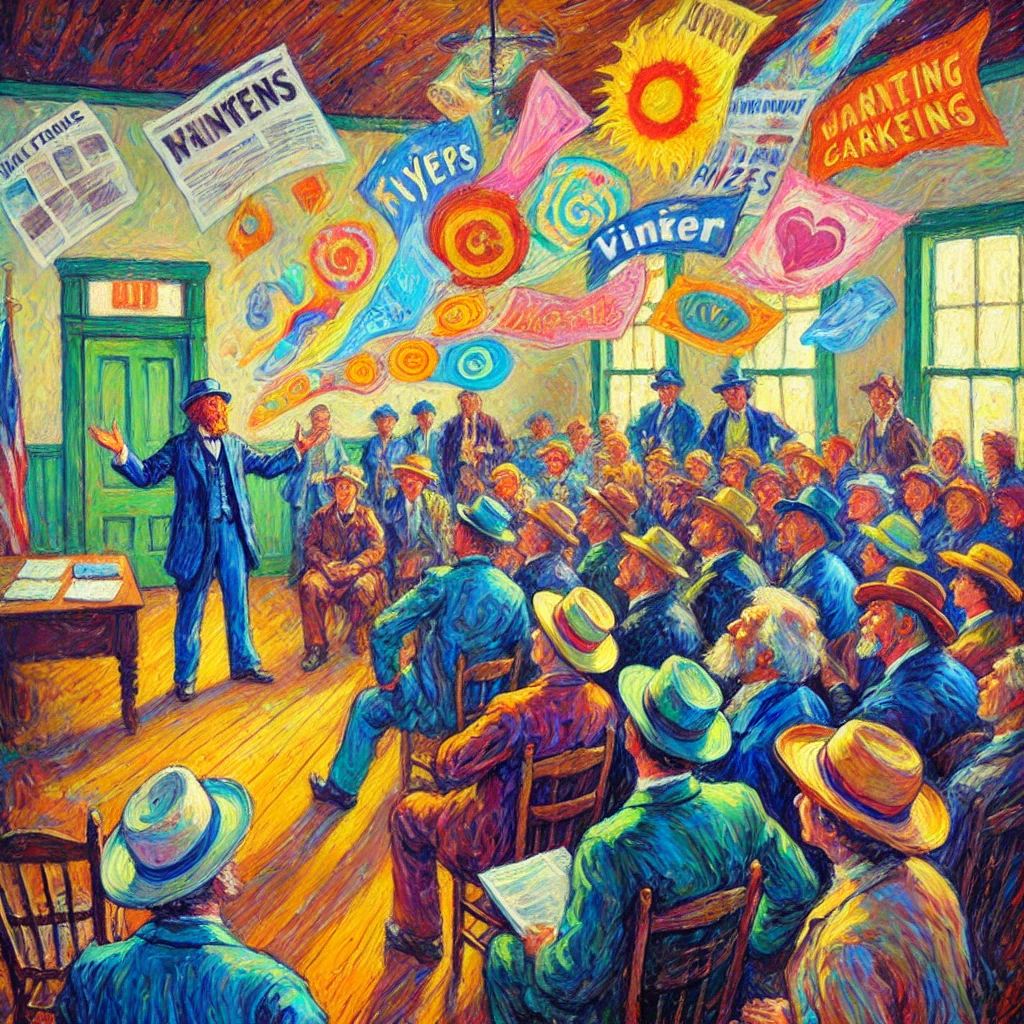
Act IV – Outreach & Recruitment Discovers the Town Doesn’t Want to Be Recruited
Act V: Definition & Standards Tries to Define Reality
The Definition & Standards Subcommittee had claimed the right side of the room, near the old flag that leaned slightly like it was tired of being symbolized.
This group was led by a woman named Lucinda Crowe, who had the calm demeanor of a person who’d read bylaws recreationally.
She started with a question that felt harmless.
“What,” she said, “counts as civic engagement?”
A man said, “Voting.”
A woman said, “Attending meetings.”
Boot, still roaming like a watchdog, said, “Not getting in my way.”
Lucinda wrote “VOTING” and “ATTENDING” on a sheet of paper.
Clovis wandered close, hovering at the edge like an eager historian. “Also submitting comments,” he offered.
Someone else said, “Volunteering.”
Someone else said, “Serving on boards.”
Lucinda nodded. “Okay. Now: what doesn’t count?”
A man said, “Complaining online.”
A woman said, “Calling the mayor at midnight.”
Boot said, “Depends on what they did.”
Lucinda wrote “ONLINE COMPLAINING” and underlined it twice.
Then someone asked the question that cracked the room open again:
“Does watching a meeting count?”
Half the people said yes. Half said no. One person said, “Only if you pay attention.” Another said, “Attention is private.”
Lucinda tried to bring order. “We need standards. Otherwise we can’t measure improvement.”
Boot snapped, “The moment you measure people, you start controlling them.”
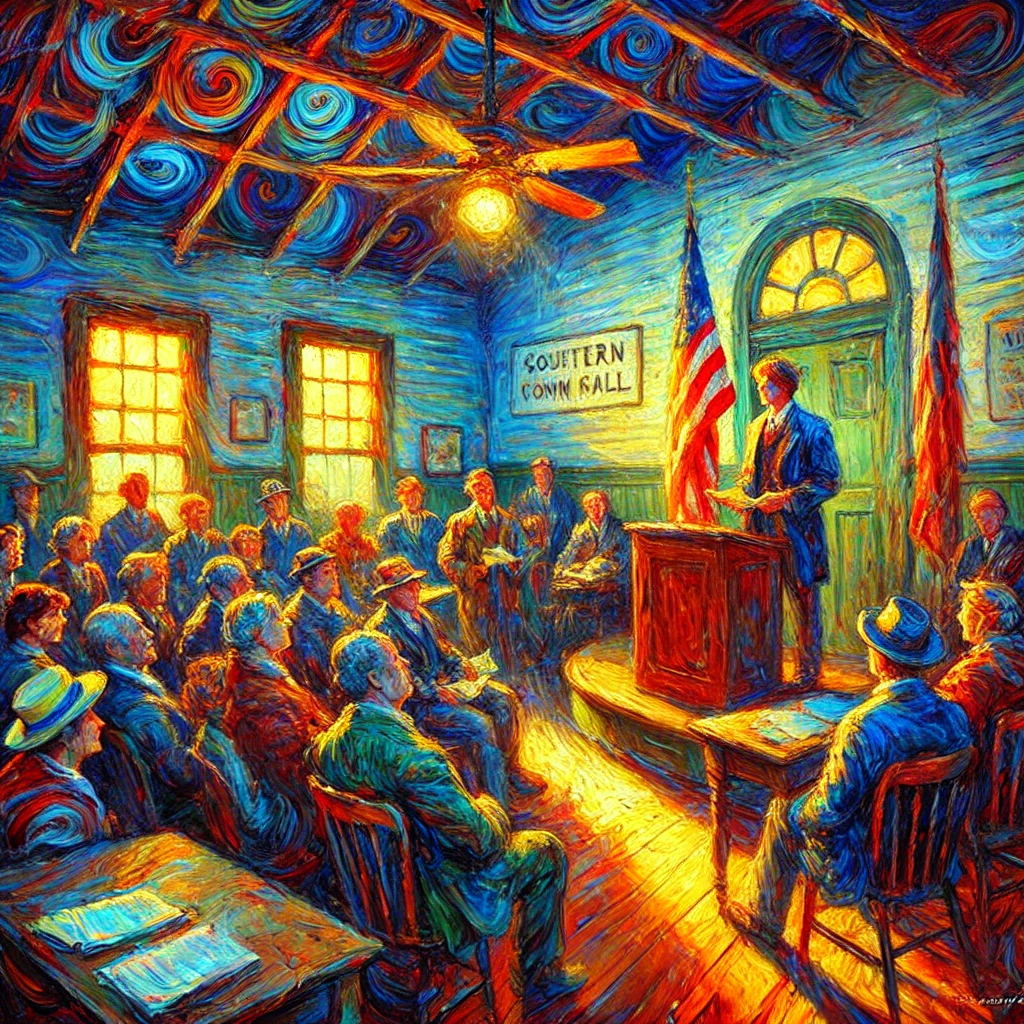
Act V – Definition & Standards Tries to Define Reality
Lucinda looked at him evenly. “Boot, you measure people all the time.”
“That’s different,” Boot said. “I’m good at it.”
Clovis wrote: Boot claims moral exemption from metrics.
Lucinda said, “If we can’t define it, we can’t improve it.”
A man objected. “Improving it sounds like changing it.”
Lucinda nodded slowly. “Yes.”
The man looked offended, as if he’d been accused of modernization.
They moved to the topic of meeting minutes—because the mayor, wandering between groups, had started to look increasingly pale whenever someone said the word “official.”
Lucinda said, “Minutes matter. They create record. They provide clarity.”
Boot said, “Minutes create evidence.”
Lucinda replied, “Yes. That’s the point.”
Boot turned to the room. “See? She admitted it.”
Lucinda didn’t blink. “Boot, reality creates evidence. Minutes just organize it.”
Clovis scribbled excitedly like he’d just been fed.
Then the debate shifted into something deeper and more dangerous: who writes the minutes.
Someone suggested the town clerk.
Someone said the clerk was biased.
Someone suggested rotating volunteers.
Someone said volunteers couldn’t be trusted.
Someone suggested AI.
The whole room froze as if someone had said “snake” in a baptism.
Boot said, “Absolutely not.”
Lucinda asked, “Why not?”
Boot said, “Because then the minutes will be written by something that doesn’t know what it means to be from here.”
Clovis quietly wrote: In Sequatchie Crossing, belonging is the highest credential.
Lucinda said, “Okay. Then we need a neutral recorder.”
Boot said, “There ain’t no such thing.”
Clovis lifted his notebook slightly. “I can do it.”
Boot stared at him like he’d offered to adopt everyone’s pets.
“No,” Boot said.
Lucinda asked, “Why not?”
Boot said, “Because Clovis writes things down like he’s building a case.”
Clovis smiled. “I am.”
Lucinda, unfazed, said, “Alright. We’ll form a Minutes Subcommittee.”
The mayor, overhearing, made a sound somewhere between a cough and a prayer.
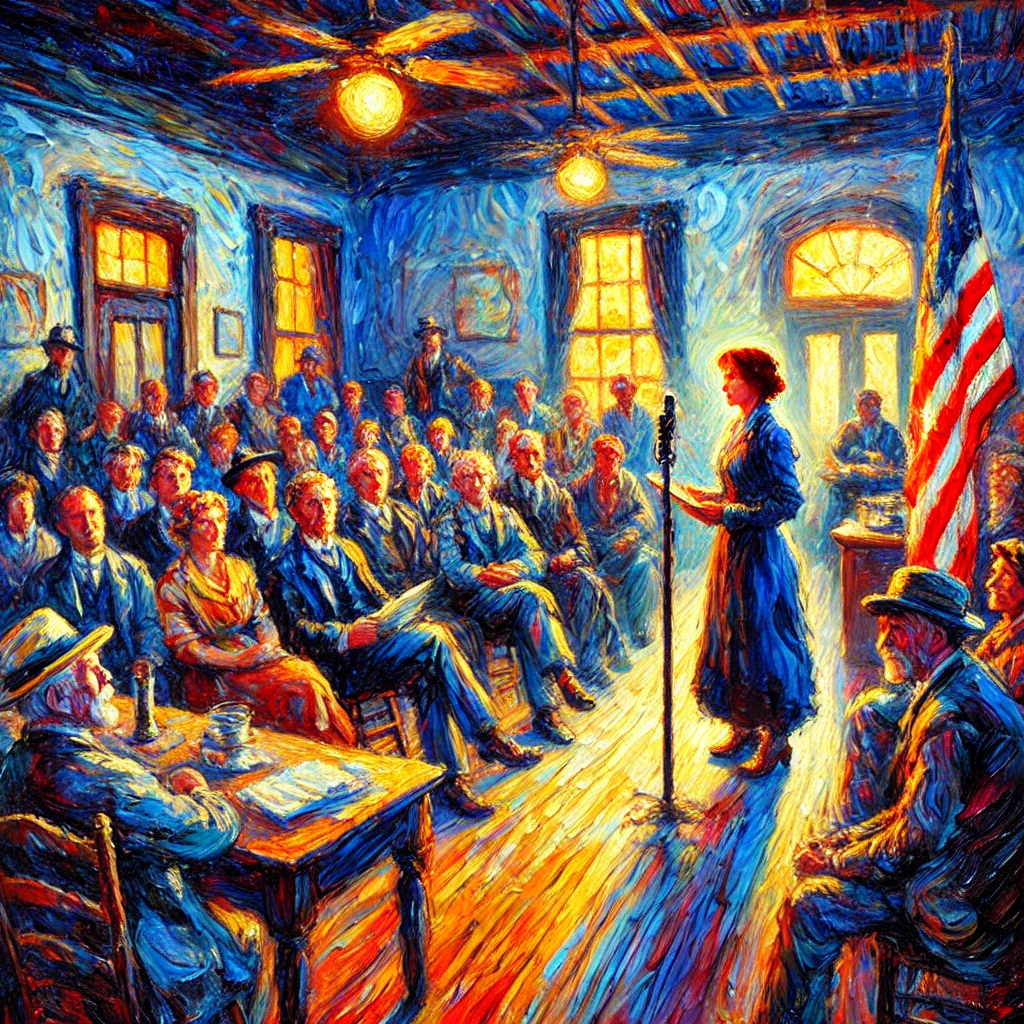
Act V – Definition & Standards Tries to Define Reality
Act VI: The First Meeting Ends Without Beginning
At 7:41 PM, the mayor attempted to reconvene the full committee.
He tapped the gavel again. Softer this time. Like he was asking permission.
“Alright, folks,” he said. “Let’s bring it back. We need to—”
Boot stood up immediately. “Point of order.”
The mayor’s eye twitched. “Yes, Boot.”
Boot said, “We have formed three subcommittees.”
The mayor nodded, relieved at least something had been recognized. “Yes.”
Boot continued, “But we haven’t voted on whether those subcommittees are valid.”
The denim jacket man shouted from the Scheduling corner, “They’re valid because we said so.”
Lucinda called from the Standards side, “Validity requires a recorded motion.”
Willa Jo called from Outreach, “We have ambassadors now!”
The mayor stared at the room like it was a blender someone had turned on without a lid.
Clovis raised his hand, polite as a librarian. “Mr. Mayor, would you like me to read back the minutes I have?”
Boot barked, “Those ain’t minutes!”
Clovis said, “They are notes that happened in time.”
Boot said, “That’s the same thing!”
Clovis shrugged. “Yes.”
The mayor took a breath. “Okay. Let’s simplify. Each subcommittee will report out. Scheduling first.”
Earl stood, clipboard trembling with responsibility. “We have decided to meet again to decide when to meet.”
The mayor blinked. “So… no decision.”
Earl looked wounded. “We made a decision to delay the decision.”
Boot nodded as if this was prudent governance.
The mayor turned. “Outreach.”
Willa Jo stood and beamed. “We propose: flyers, social posts, a civic calendar, possible t-shirts, and an Ambassador Subcommittee.”
The mayor slowly wrote “T-SHIRTS?” on his paper like it was a symptom.
“Standards,” he said, turning to Lucinda.
Lucinda stood. “We propose defining civic engagement, establishing measurement criteria, deciding who records minutes, and creating a Minutes Subcommittee.”
The mayor’s pen stopped moving.
He looked up. “A Minutes Subcommittee?”
Lucinda nodded. “Someone has to.”
Boot crossed his arms triumphantly. “See? This is what happens.”
The mayor tried to salvage. “Alright. Can we at least approve minutes of this meeting?”
Silence.
Then Boot said, “We don’t have any.”
Clovis raised his notebook.
Boot said, “We don’t have any official ones.”
Clovis offered, “We could vote to make mine official.”
The room erupted instantly:
-
“No, he’s biased!”
-
“Everybody’s biased!”
-
“I’m not biased!”
-
“That’s what bias says!”
-
“You can’t call it minutes if it ain’t typed!”
-
“Typed by who?”
-
“Not AI!”
-
“Not Clovis!”
-
“Not the clerk!”
-
“Not Boot!” (several people, together, with feeling)
The mayor banged the gavel harder this time.
The gavel made the same apologetic sound, but louder.
“Order!” he said.
Boot raised his hand. “Point of order.”
The mayor’s shoulders slumped.
“Yes, Boot.”
Boot said, “We need a subcommittee to manage points of order.”
Clovis, delighted beyond measure, wrote:
At 7:54 PM, committee achieved full self-replication.
The mayor looked down at his agenda—Version 1 of 7—and realized they were still technically on item three, except the agenda had lost meaning about forty minutes ago.
He inhaled, then made the only executive decision Sequatchie Crossing respected:
he ended the meeting.
“Alright,” he said, voice steady in the face of chaos. “We’re adjourned.”
A man shouted, “Can we vote on that?”
The mayor paused, then said, “No.”
And, for a moment, the room went quiet—not because they agreed, but because they were impressed by the audacity of finality.
People began folding chairs. Grabbing purses. Packing coolers. Reassembling their personal sovereignty.
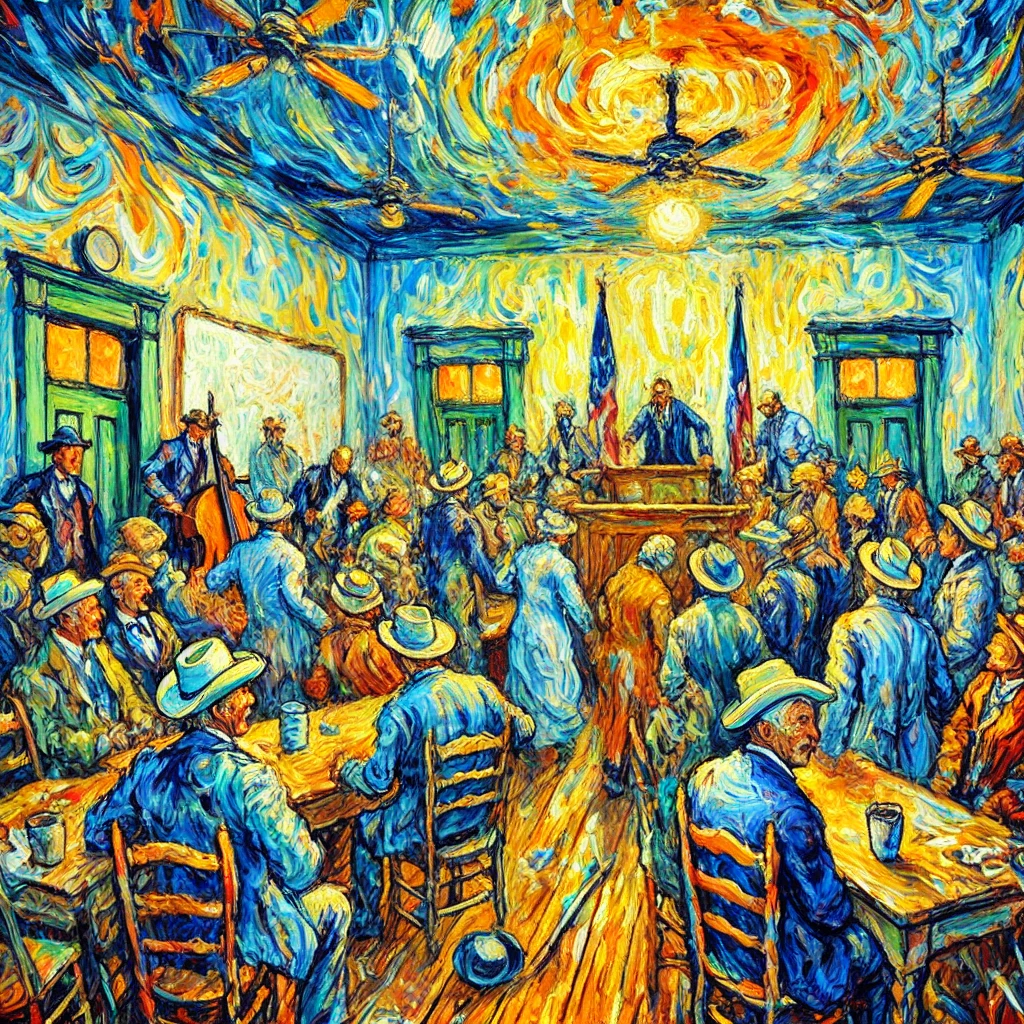
Act VI – The First Meeting Ends Without Beginning
Boot approached the mayor on his way out.
“Well,” Boot said, “that went about like I expected.”
The mayor forced a smile. “At least people showed up.”
Boot nodded. “For the first meeting.”
The mayor asked, “You think they’ll come back?”
Boot considered. “Depends on whether they leave mad enough to tell everybody.”
Across the room, Clovis carefully tore a page from his notebook and handed it to Lucinda.
“What’s this?” she asked.
“Unofficial minutes,” Clovis said. “Until someone makes them official.”
Lucinda scanned the page and nodded slowly. “These are… surprisingly thorough.”
Clovis smiled. “Chaos is detail-rich.”
Lucinda tucked the paper into her folder like it was a sacred text.
Sheriff Peeler, who had come by to “observe,” stood in the doorway as people filed out, listening to arguments spill into the parking lot.
He heard someone say, “Nobody cares,” and someone else reply, “Too many people care,” and he realized the town had finally achieved the perfect civic circle:
complaining about silence, then complaining about noise.
He turned to leave, but the mayor called after him.
“Sheriff,” the mayor said, “you think this is gonna be a problem?”
Peeler paused. He looked at the crowd dispersing into the dark, still talking, still certain, still allergic to agreement.
He sighed.
“Depends,” he said. “Do they want me to enforce it?”
The mayor didn’t answer.
Peeler nodded, as if that was answer enough.
As the lights in Town Hall clicked off, the whiteboard still stood at the front with its list of barriers:
TIME
SCHEDULE
ACCESSIBILITY
COMFORT
And, at the bottom—added in smaller handwriting when no one was looking—
MINUTES
In the parking lot, Boot Barnes climbed into his truck and muttered, “A committee for engagement.”
He shook his head like he’d tasted something sour.
Then he smiled, just slightly.
Because deep down, Boot loved nothing more than being present for the thing he didn’t approve of.
And Sequatchie Crossing, for all its complaining, had done something remarkable:
it had shown up.
Even if it couldn’t agree on what happened.
Act VI – The First Meeting Ends Without Beginning
Epilogue: The Three Subcommittees Multiply
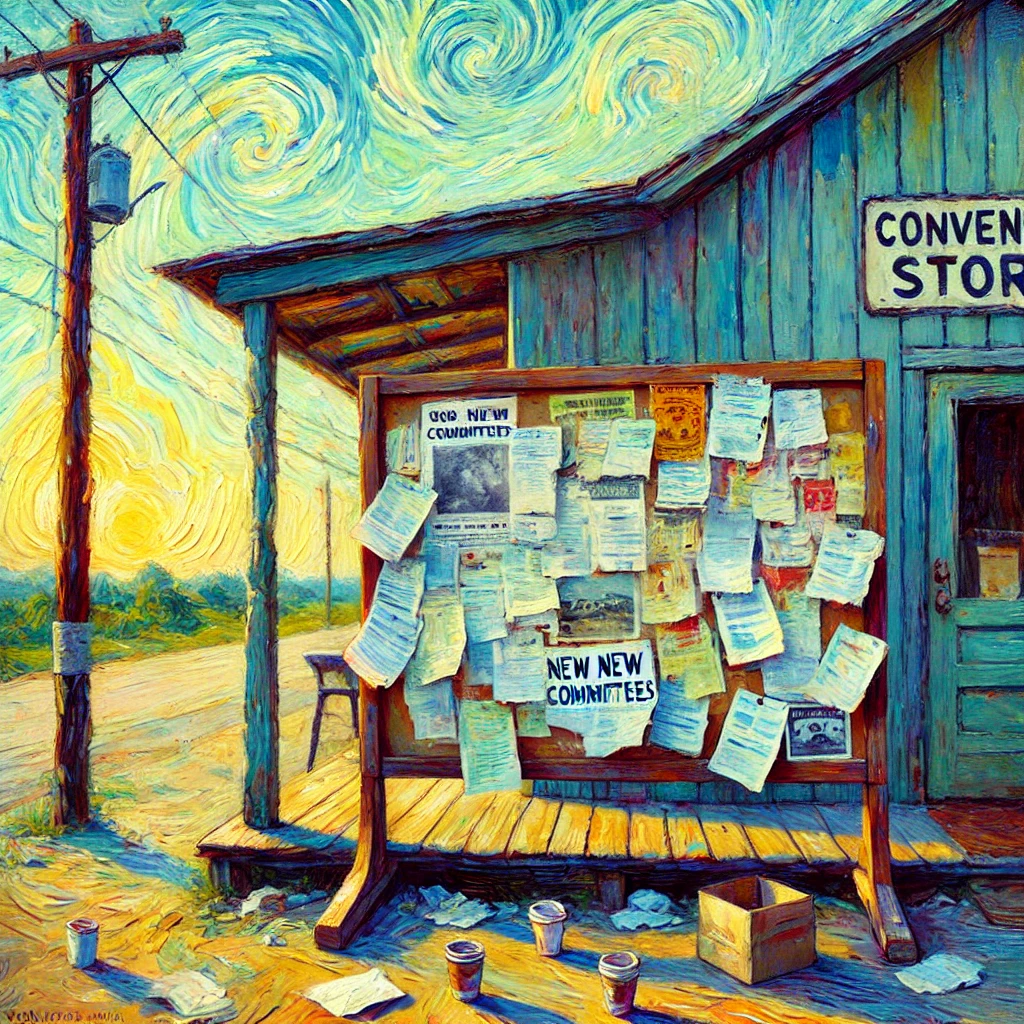
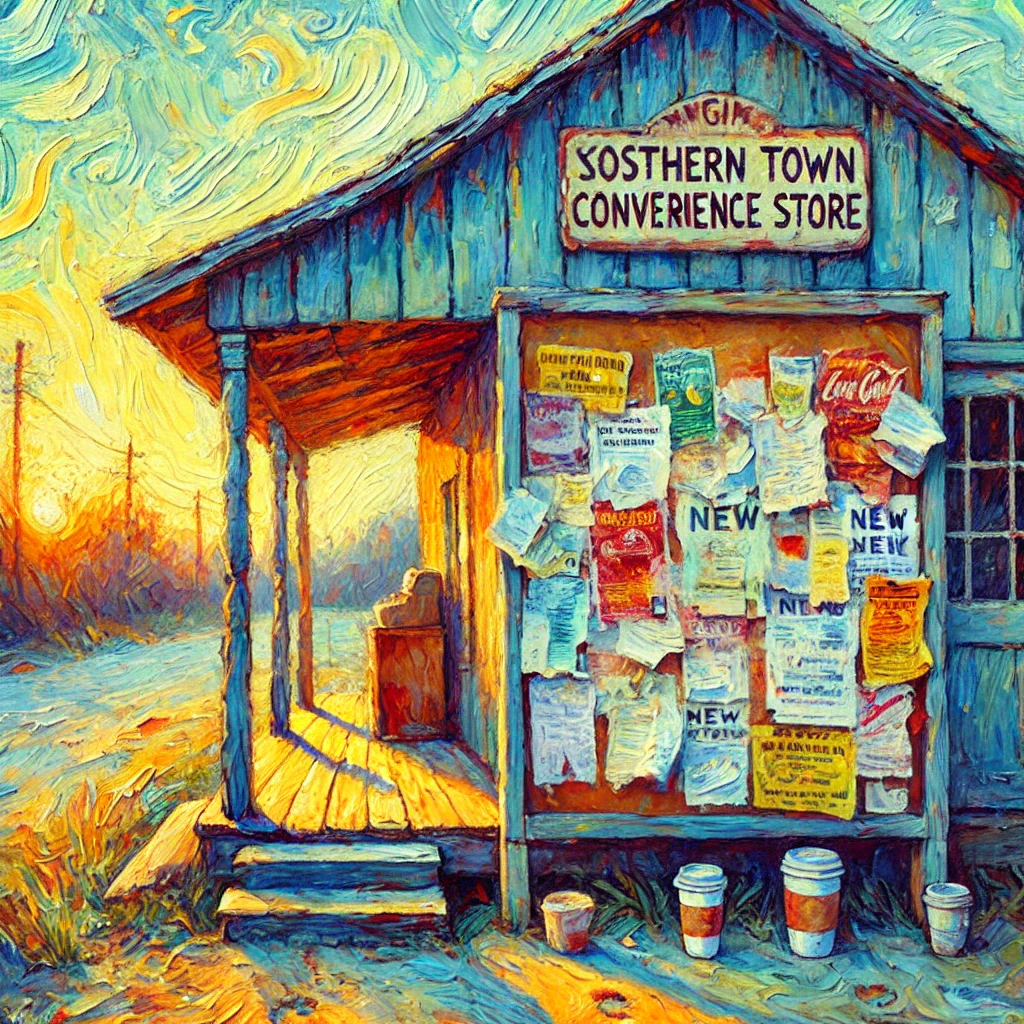
The next morning, the MegaMart flyer had been updated.
Someone—almost certainly not the mayor—had taped a second sheet beneath it:
CIVIC ENGAGEMENT COMMITTEE UPDATES
Now includes:
-
Scheduling Subcommittee
-
Outreach Subcommittee
-
Standards Subcommittee
-
Minutes Subcommittee (pending dispute)
-
Points of Order Subcommittee (proposed)
Epilogue – The Three Subcommittees Multiply
In black marker, someone had written:
“This is starting to feel like a pyramid scheme but with feelings.”
Clovis photographed the update, smiled to himself, and wrote in his notebook:
If civic engagement is participation, then Sequatchie Crossing is thriving.
If civic engagement is agreement, then Sequatchie Crossing is doomed.
Both statements can be true at the same time.
He clicked his pen shut, satisfied.
Boot Barnes walked past, read it, and snorted.
“Y’all keep writing,” he said. “I’ll keep watchin’.”
And in Sequatchie Crossing, that counted as involvement.
Whether anybody wanted it to or not.
Key takeaways
-
Sequatchie Crossing finally got people to show up—then immediately argued about what “showing up” means.
-
The Civic Engagement Committee achieved peak small-town efficiency by becoming three subcommittees before producing a single official minute.
-
The town’s core civic talent remains unchanged: strong opinions, quick division, and a deep belief that documentation is both dangerous and necessary.
Epilogue – The Three Subcommittees Multiply
Disclaimer
This story is a work of fiction. All characters, committees, meetings, motions, subcommittees, clipboards, gavel sounds, and suspiciously detailed minutes are entirely invented.
Any resemblance to real towns, real officials, real meetings, or real civic processes—especially those that begin with optimism and end with additional committees—is purely coincidental and deeply unfortunate.
Sequatchie Crossing is not a real place, though it may feel uncomfortably familiar. Events described herein did not occur, could not occur, and yet somehow feel like they already have.
No actual public records were consulted. No real minutes were approved. No quorum was harmed in the making of this story.
This piece is intended for satirical and entertainment purposes only. It does not reflect the views, policies, competence, or intentions of any real municipality, government body, committee, subcommittee, or person living or deceased—though it may resemble several at once.
Reader discretion is advised for those sensitive to:
-
procedural confusion
-
prolonged public comment
-
committee multiplication
-
clipboard authority
-
or the phrase “point of order”
If you recognize your town in this story, it is almost certainly a coincidence.
If you recognize yourself, please note that self-awareness is not a required qualification for civic engagement.

Disclaimer – Civic Engagement Committee Formed, Immediately Divided
Real Places Behind the Ruckus – From The Dunlap Directory

Real Places Behind the Ruckus – From The Dunlap Directory
Yes, this story was fictional; even the parts that weren’t true. These places? Absolutely real. Stop by, support local, and keep the Wi-Fi away from livestock:
- Mid-Tenn Diesel Truck Repair
- Sanders Associates
- John Pauls Cycle Shop
- R and R RV Campground
- Church Trainer
- Dunlap Tennessee Overview
- Martins Mold Remediation
- L & C Concrete Finishing
- Wimpie’s Country Restaurant
- River Valley AgCredit
- Results Physiotherapy Dunlap Clinic
- Sequatchie Valley Brewing Co.
- Four Point Lounge
- Joe’s Transmission Shop
- Trail Life Troop TN 1613
- Lookout Mountain Incline Railway
- Tacos El Valle

Real Places Behind the Ruckus – From The Dunlap Directory
At Sequatchie Crossing, we tell the stories of Sequatchie Crossing.
Please share this post with your friends, family, or business associates who may want follow the news from Sequatchie Crossing.


0 Comments