


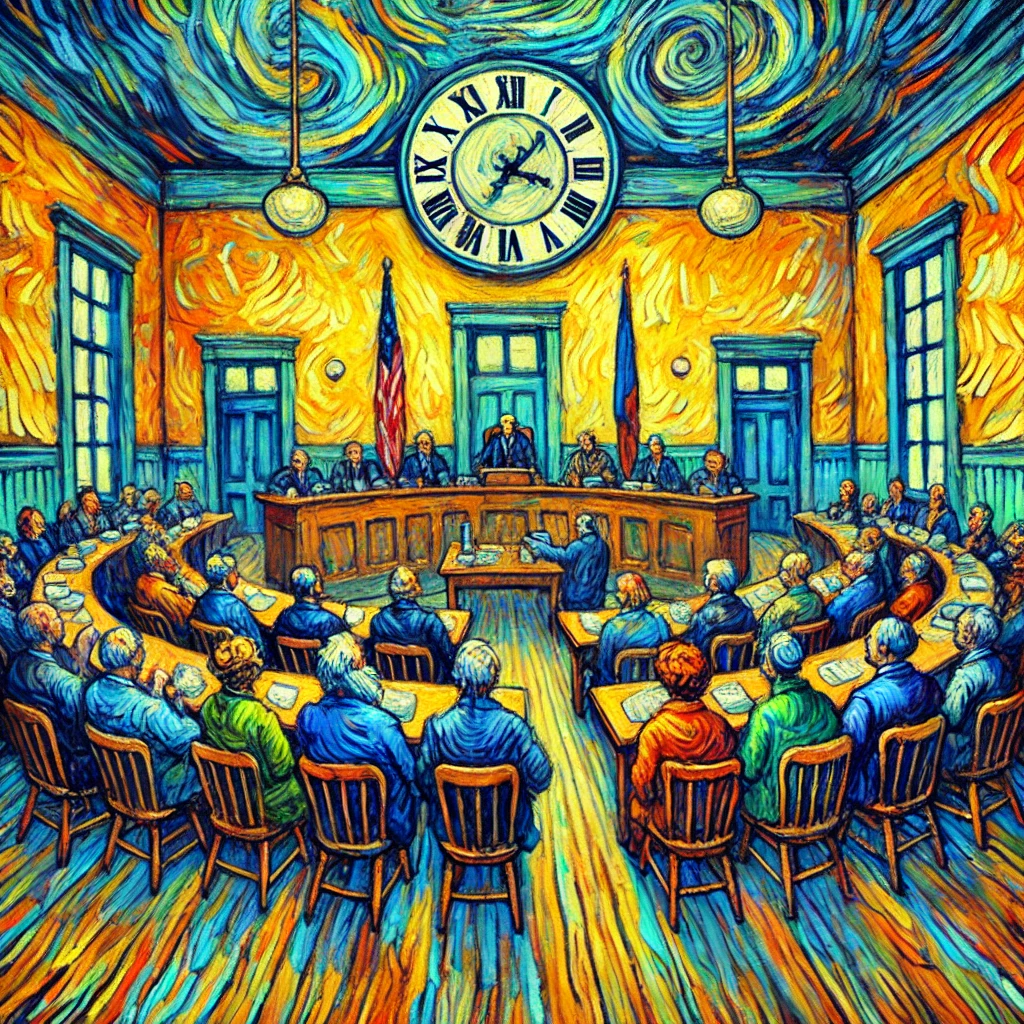
Talking Permitted Only In Approved Windows
By Tom Seest
At Sequatchie Crossing, we tell the stories of Sequatchie Crossing.
Please share this post with your friends, family, or business associates who may want follow the news from Sequatchie Crossing.
🎤 Audio Overview
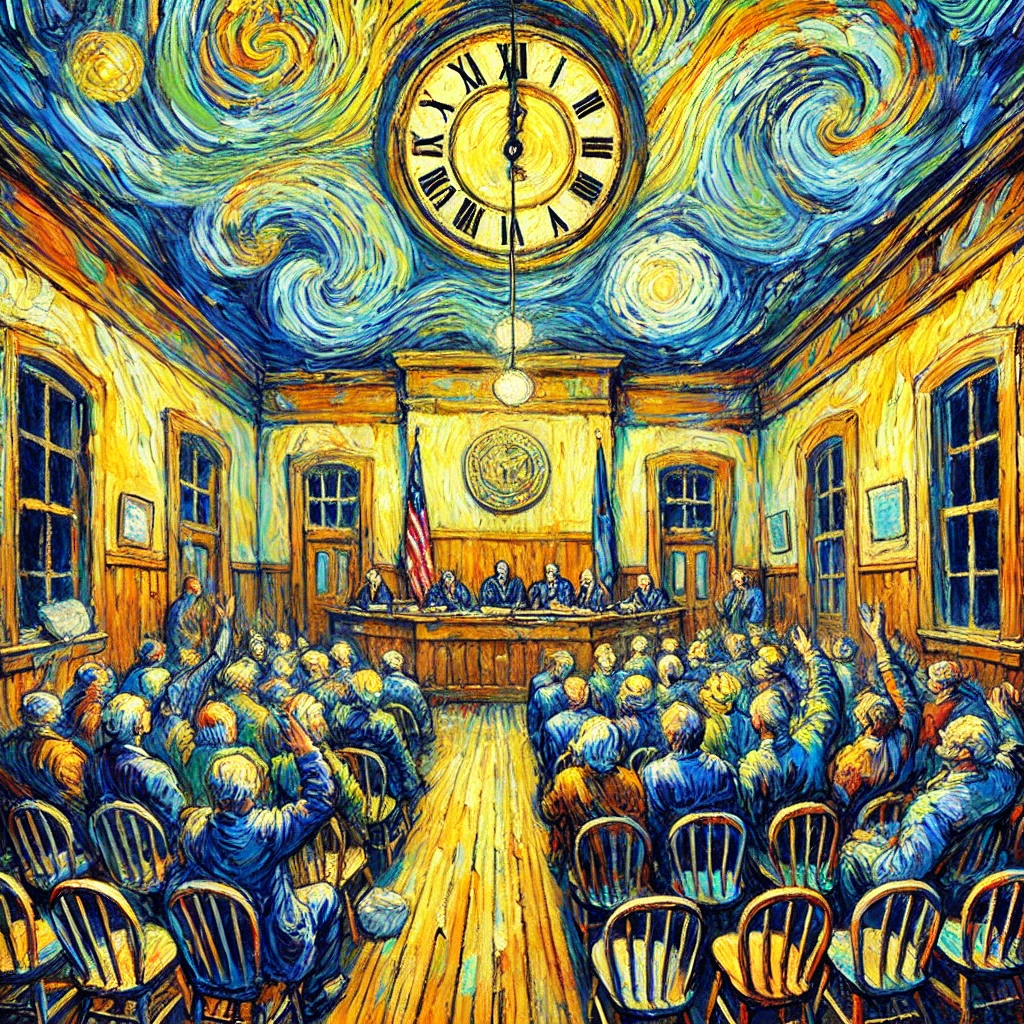
Mandatory Silence Hours Proposed for Civic Harmony
Act I: The Volume Problem Nobody Could Measure
The problem, according to the agenda, was tone.
Not tone as in music – though the choir had opinions about that too – but tone as in how people spoke to one another, which was now officially being discussed under New Business, Item 4B, following a forty-minute clarification of whether Item 4A had actually occurred at the previous meeting.
Clerk Hazel Womack read the item aloud carefully, the way one does when the sentence has already been argued three times before being spoken.
“Discussion of possible community standards regarding… volume, frequency, and timing of civic expression.”
Boot Barnes leaned forward immediately, hands flat on the table.
“So we’re regulating talking now.”
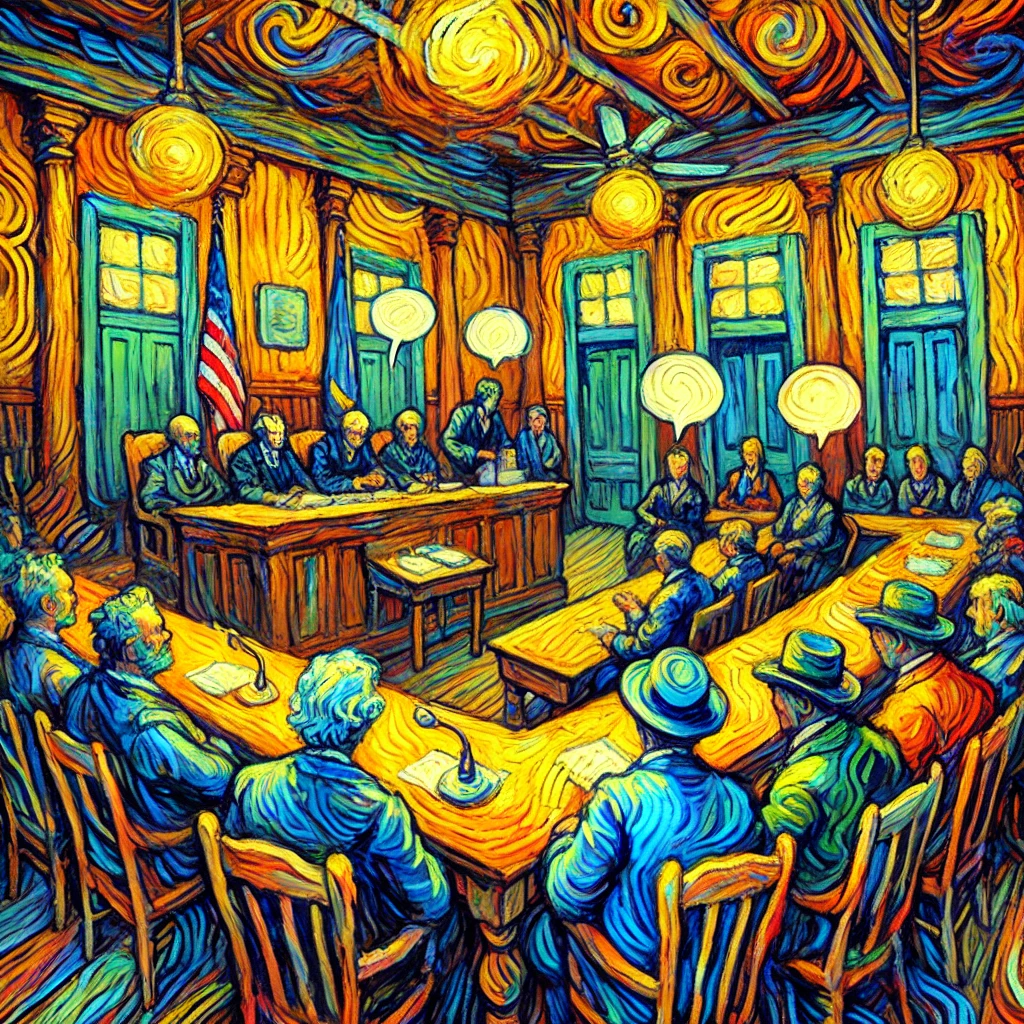
Act I – The Volume Problem Nobody Could Measure
“No,” said Councilman Roy Pendergrass, already tired. “We’re regulating when talking happens.”
“That’s worse,” Boot said. “That’s clocks.”
Clovis Strickland, seated two chairs down with his yellow legal pad already half full, underlined the word timing twice and added a small arrow. He did not look up.
The Mayor cleared his throat.
“This proposal comes after… several months of complaints.”
That part was undisputed.
Complaints about meetings being too loud. Complaints about meetings being too quiet. Complaints about side conversations, main conversations, parking-lot conversations, post-meeting conversations, online conversations about conversations, and one particularly confusing complaint about a conversation that may have happened but “felt loud in spirit.”
Sheriff Peeler had logged three calls in the last quarter that involved no actual disturbance, just the anticipation of one.
“We had a situation,” Peeler said, “where two people were nodding aggressively.”
“That’s body language,” Boot said.
“They were nodding at each other,” Peeler replied. “That’s escalation.”
Someone in the back laughed. Someone else shushed them.
Hazel wrote unintentional irony in the margin of her notes, then crossed it out because she didn’t want to explain it later.
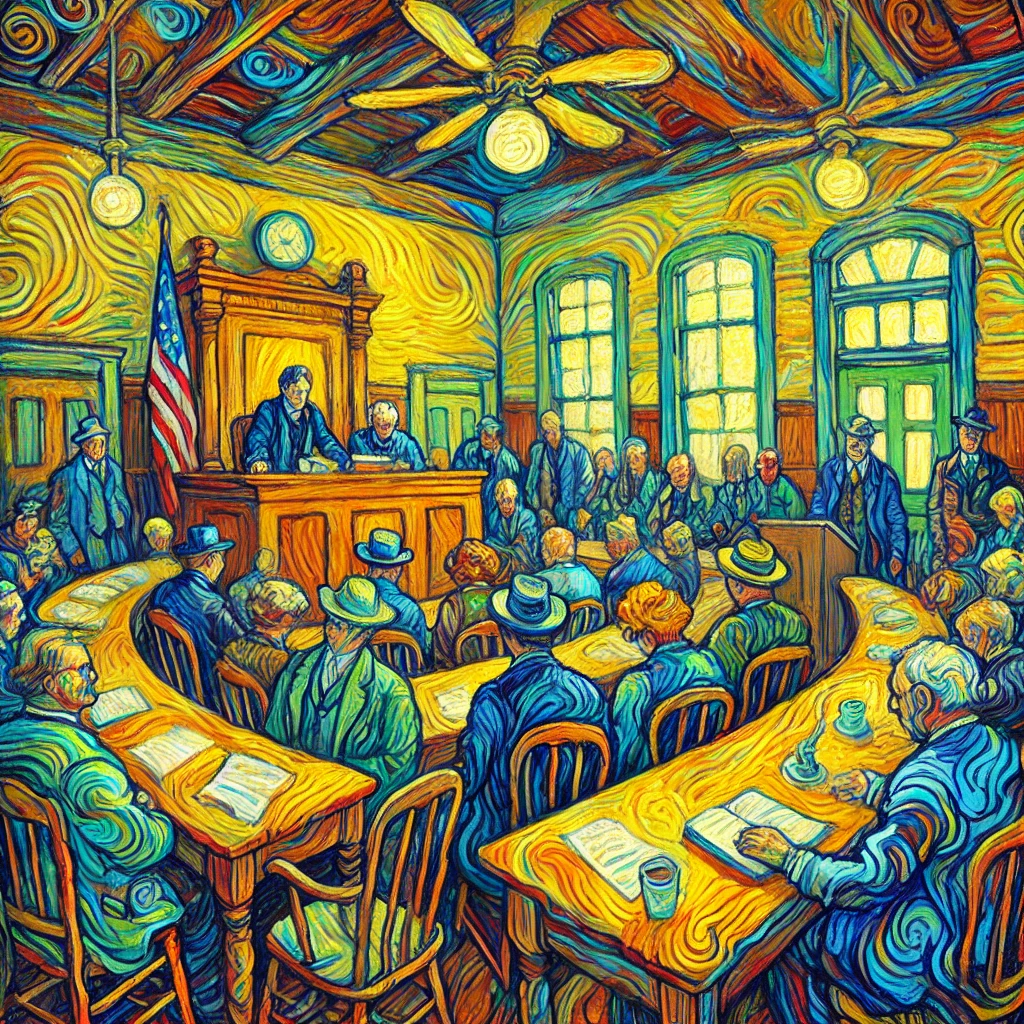
Act I – The Volume Problem Nobody Could Measure
Act II: The Proposal Gains a Shape
The idea itself had come from a subcommittee that had technically not been formed but had nonetheless met twice at The Bee’s Knees, where all unofficial policy work now occurred.
Councilwoman Marlene Hicks presented it with laminated slides.
“The concept,” she said, clicking to the next page, “is Silence Hours.”
The room leaned forward.
“Like quiet hours?” someone asked.
“Stricter,” Marlene said.
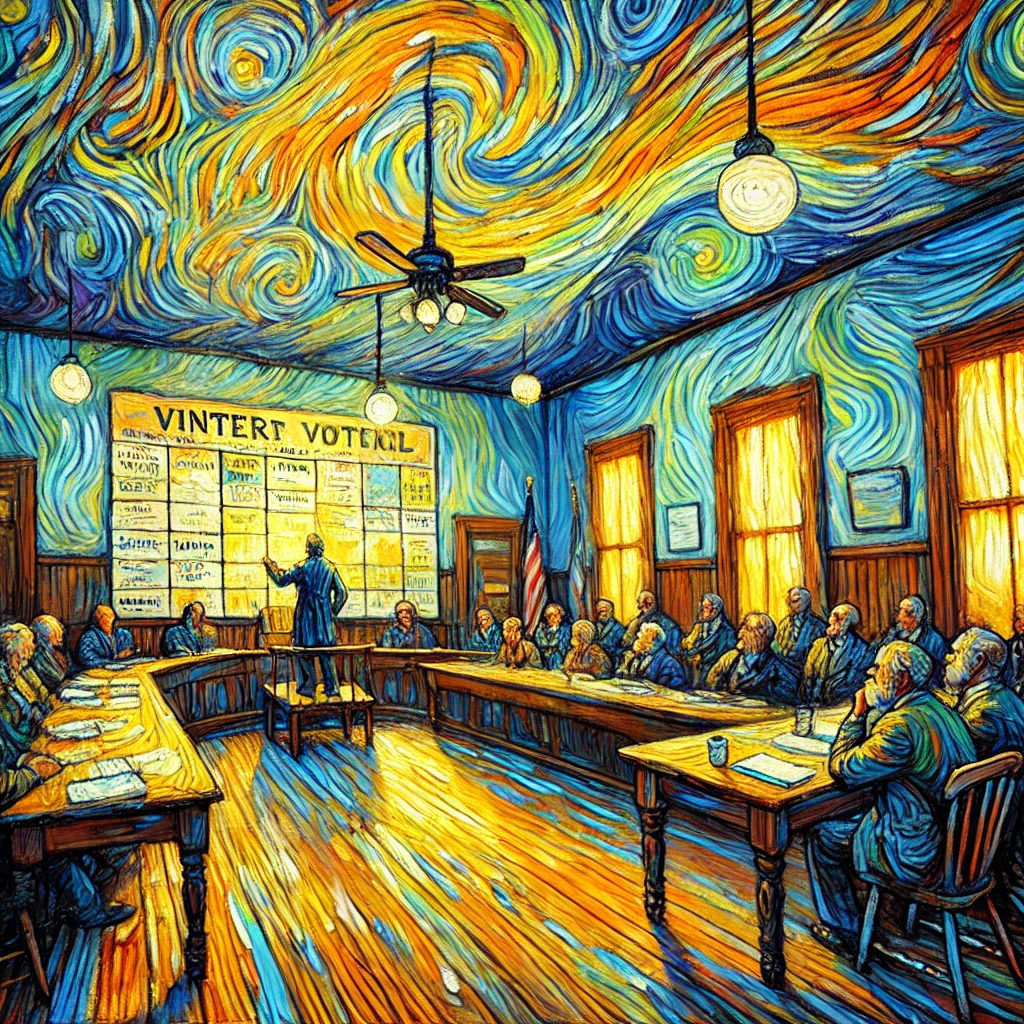
Act II – The Proposal Gains a Shape
She gestured to the screen.
MANDATORY SILENCE HOURS (DRAFT)
– Weekdays: 6:00 a.m. – 9:00 a.m. and 7:00 p.m. – 10:00 p.m.
– Weekends: 7:00 a.m. – 10:00 a.m. and 8:00 p.m. – 11:00 p.m.
– Exceptions: Emergency services, livestock, toddlers, and pre-approved civic speech
“Pre-approved what now,” Boot said.
“Civic speech,” Marlene repeated.
Clovis’s pen paused.
Hazel looked up. “Define ‘pre-approved.’”
Marlene flipped to the appendix.
“Speakers may apply for a Talking Permit, valid for fifteen minutes, renewable once, subject to availability.”
“Availability of what,” Boot asked.
“Time,” Marlene said.
“That’s all we’ve got,” he said. “Time.”
The Mayor raised a hand. “The goal here is harmony.”
“Silence isn’t harmony,” someone muttered.
“That was not recognized,” the Mayor said automatically.
Clovis wrote: Unrecognized harmony objection – audible but not logged.

Act II – The Proposal Gains a Shape
Act III: The First Objection Becomes Twelve
Public comment opened.
Immediately, nobody spoke.
This lasted nearly a full minute.
The Mayor blinked.
“Is… is anyone – ”
Boot stood up.
“I object to the premise.”
“You’ll need a permit,” Hazel said gently.
Boot froze. “For now?”
“For speaking,” Hazel replied.
He sat back down slowly, as if gravity had changed.
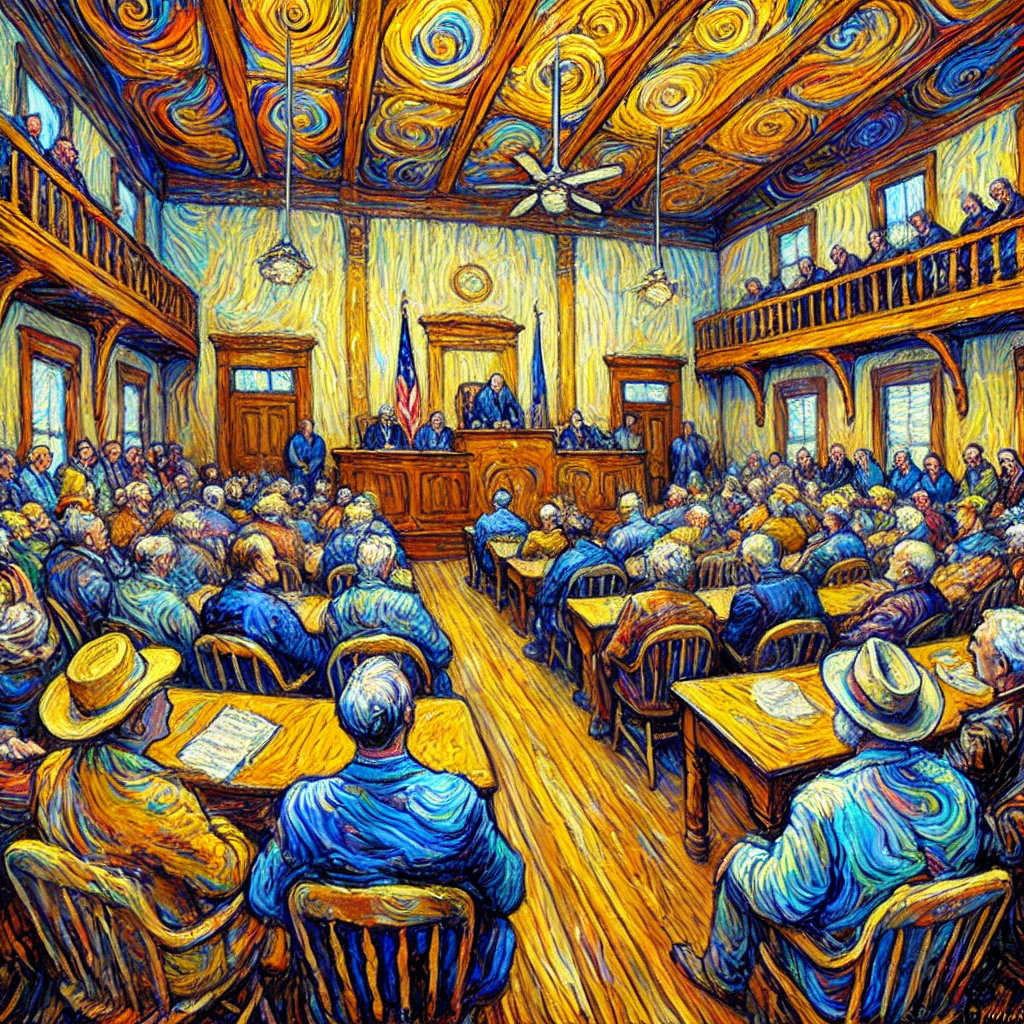
Act III – The First Objection Becomes Twelve
A woman in the second row raised her hand.
“I’m not speaking,” she said loudly. “I’m asking if asking counts.”
“Yes,” Hazel said. “Asking counts.”
“Well then I – ”
“That’s speaking.”
She sat down, affronted.
A man near the door shouted, “This is unconstitutional!”
Hazel flipped pages. “Is that a legal argument or an emotional one?”
“Both!”
“Then you’ll need two permits.”
The room erupted – not loudly, but simultaneously.
Peeler stood.
“All right,” he said. “Let’s keep it civil.”
“That’s literally what we’re doing,” Marlene said.
“That’s not what civil looks like,” Peeler replied.
Clovis wrote: Civil defined as post-facto condition.

Act III – The First Objection Becomes Twelve
Act IV: The Whispering Incident
The first citation happened on a Tuesday.
It was 6:42 a.m.
Mabel Dean was on her porch, explaining – quietly but with commitment – to her sister on the phone why the recycling bins had been moved again.
Deputy Franks drove by, stopped, reversed.
“Ma’am,” he said, rolling down the window. “Are you aware of the Silence Hours?”
“I’m whispering,” Mabel said.
“Yes, but with intent.”
“With what?”
“Expression.”
Mabel stared at him.
“I raised three boys,” she said. “This is not expression.”
She was issued a warning.
The Facebook post went up by noon.
By dinner, there were diagrams.
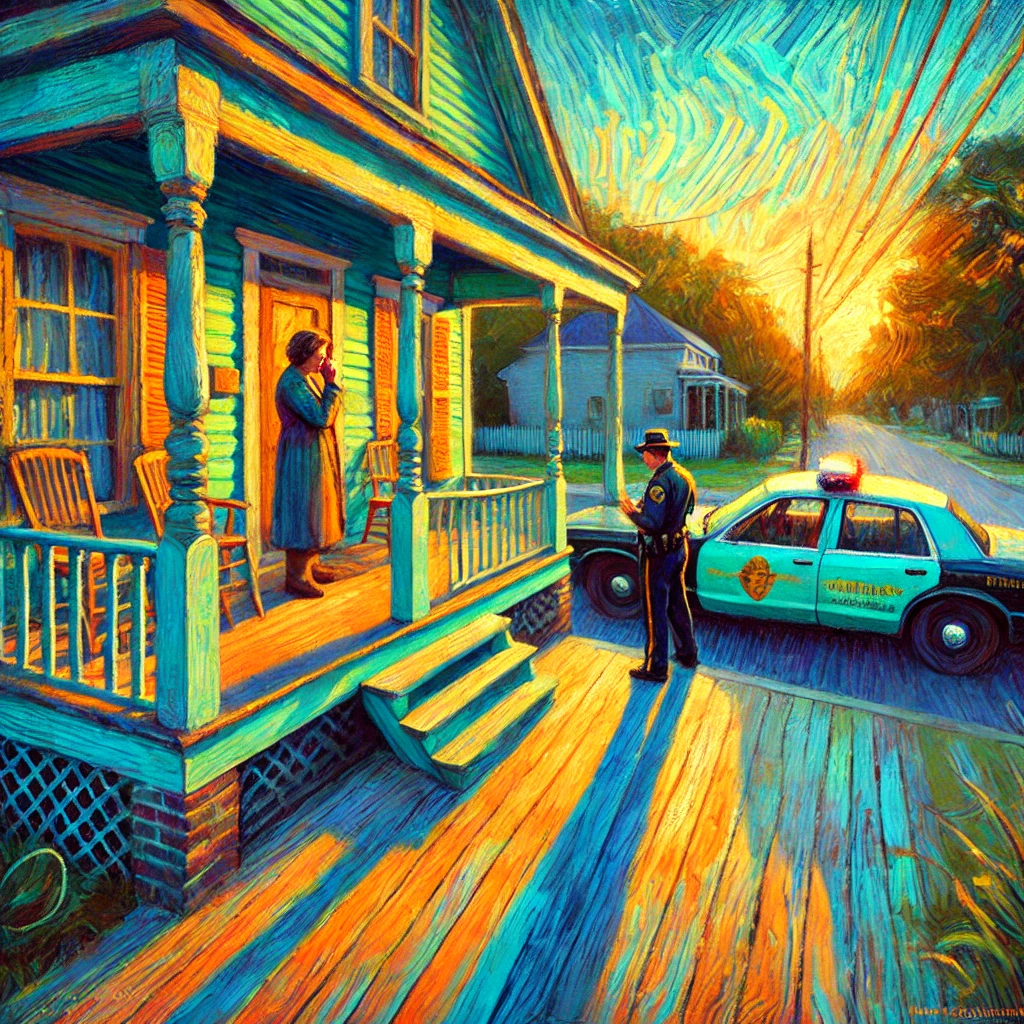
Act IV – The Whispering Incident
Act V: The Talking Windows Emerge
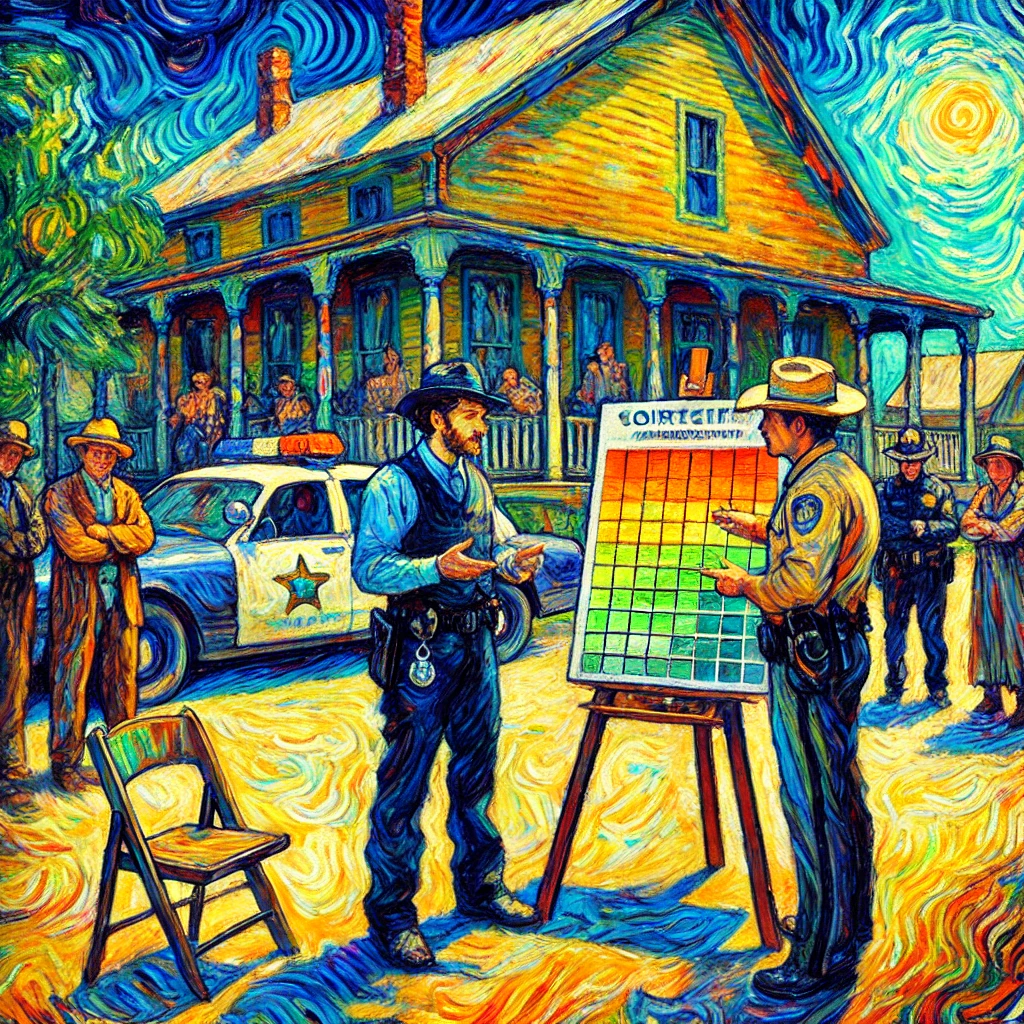
To address confusion, the town released a Talking Windows Schedule.
It was color-coded.
Green blocks indicated General Speech Allowed.
Yellow indicated Low-Intensity Civic Commentary.
Red indicated Silence Required Except by Permit.
Blue blocks were labeled Ambiguous.
“What’s blue,” someone asked.
“We’ll know it when we hear it,” Marlene said.
Businesses began posting signs.
NO COMPLAINTS BEFORE 9 A.M.
QUESTIONS AFTER 2 P.M. ONLY
SUGGESTIONS BY EMAIL
The library instituted a Pre-Speech Area.
The church moved announcements to a printed insert titled Things We Would Have Said.
Boot Barnes applied for a permit out of spite.
He was approved for Tuesday at 1:15 p.m.
He spoke for fourteen minutes and fifty-nine seconds.
On the last second, he nodded meaningfully.
Act V – The Talking Windows Emerge
Act VI: Enforcement Gets Creative
Sheriff Peeler did not want to enforce silence.
He wanted to enforce order.
Unfortunately, silence had been categorized as order.
So deputies began carrying laminated charts.
“Sir,” they would say, “you’re in a Yellow Zone.”
“I’m just sighing.”
“Extended sighs count.”
One man was cited for sarcastic eyebrow movement.
The town attorney said they could probably make it stick if they called it nonverbal commentary.
Clovis attended every citation hearing.
He never spoke.
He wrote everything down.
Act VI – Enforcement Gets Creative
Act VII: The Meeting About the Meetings
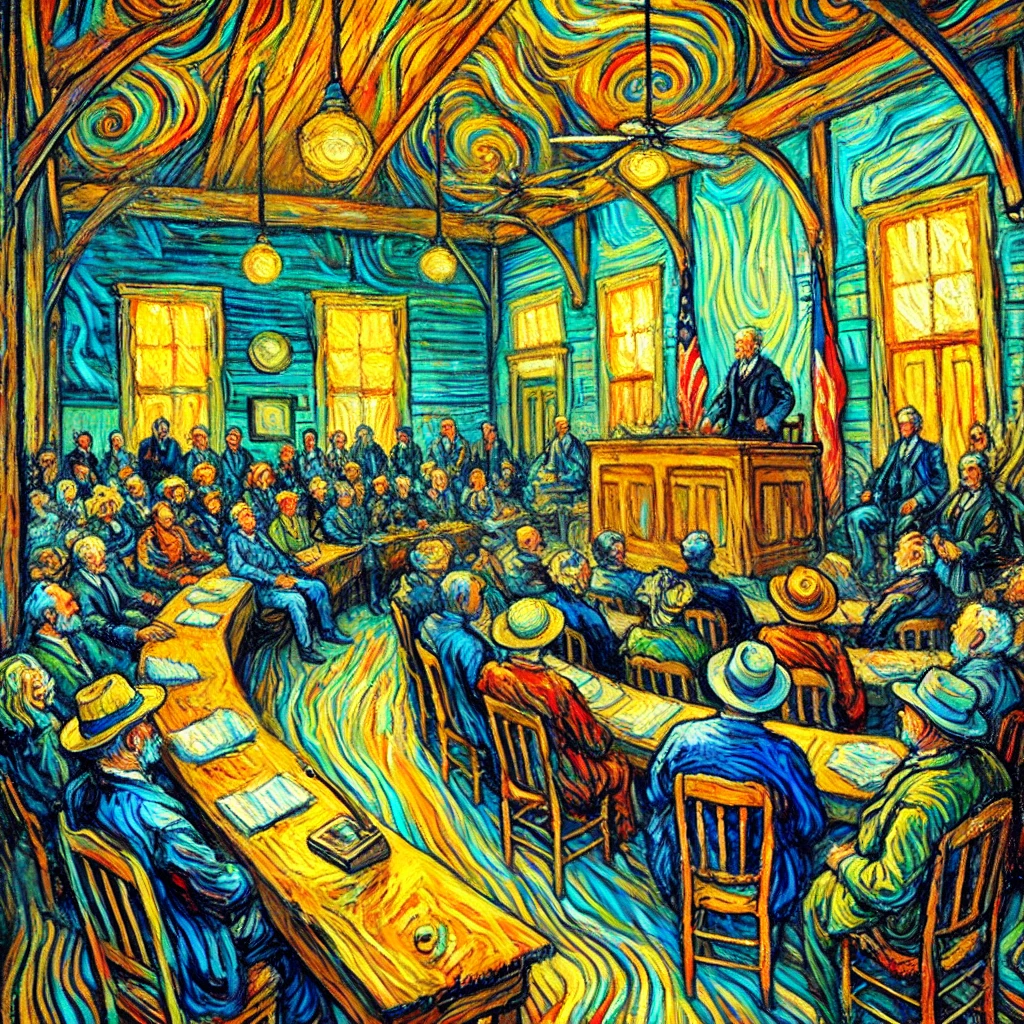
Attendance doubled.
No one talked.
Hazel read the agenda to a room full of nodding heads, raised hands, and legally ambiguous facial expressions.
At one point, the Mayor asked for a motion.
No one moved.
No one spoke.
After thirty seconds, Peeler cleared his throat.
“That was noise,” Marlene said.
“It was a throat.”
“Was it necessary?”
“Yes.”
“Then it was expressive.”
Clovis underlined throat.
Boot stood up slowly.
“I have a permit,” he said.
Hazel checked the clock.
“You’re early.”
“I waited in silence.”
“That counts.”
“For what?”
“Compliance.”
He sat down again.
Act VII – The Meeting About the Meetings
Act VIII: The Unintended Peace
For three days, the town was calm.
No Facebook posts.
No meetings ran late.
No arguments spilled into the parking lot.
People waved instead of talking.
They left notes.
They wrote longer emails.
They stopped mid-sentence and checked their watches.
It was… pleasant.
And deeply unsettling.
Mabel said it felt like living inside a paused remote.
The hardware store owner said sales dropped because no one asked questions.
The diner noticed people pointing at menus aggressively.
Then the first Talking Window Violation Riot occurred.
It started at 2:01 p.m.

Act VIII – The Unintended Peace
Act IX: Everything Happens at Once
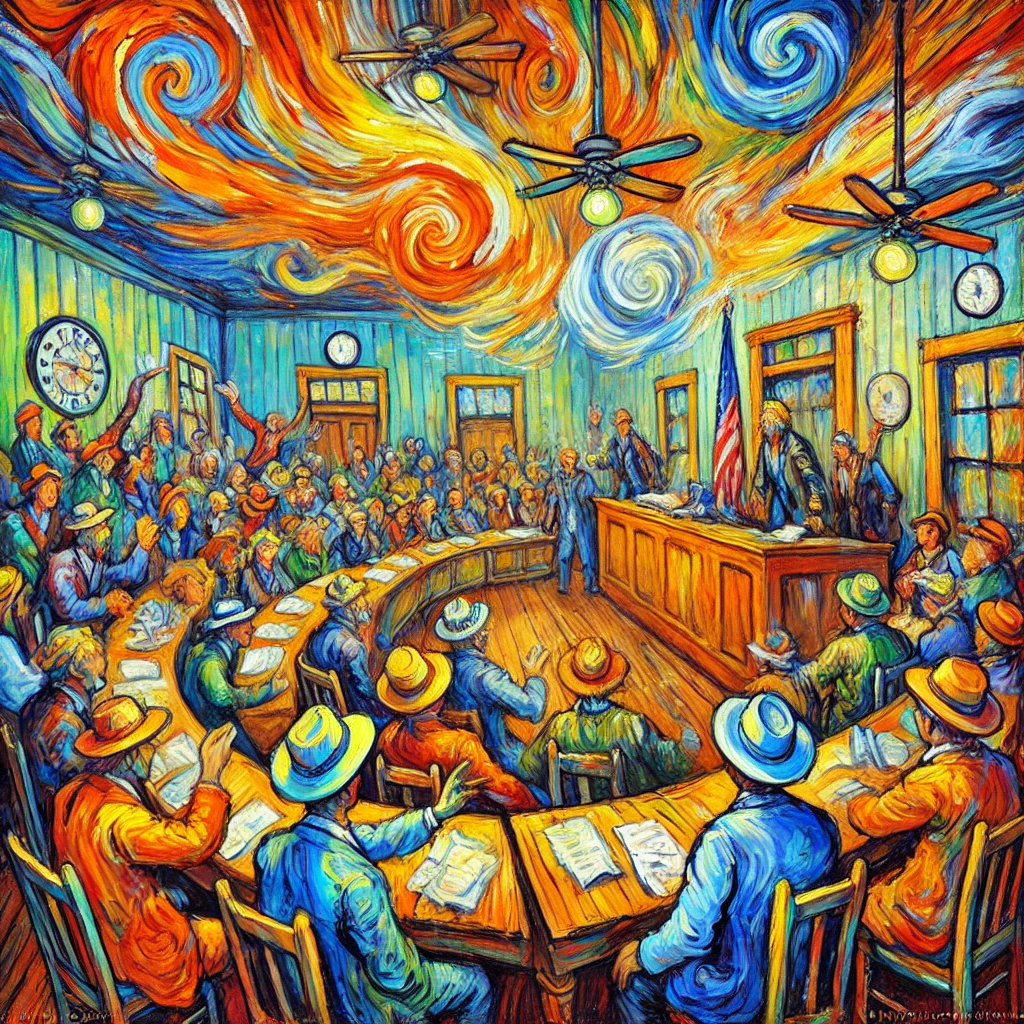
When the window opened, people spoke.
All at once.
Years of stored commentary poured out.
Complaints nested inside apologies.
Suggestions collided.
Old arguments resumed mid-sentence.
The noise was not loud – it was dense.
Peeler called it in as a verbal weather event.
Hazel’s pen snapped.
Clovis filled the last page of his pad, flipped it over, and kept writing.
By 2:16, the Mayor banged the gavel.
“Silence!” he shouted.
The irony was audible.
Act IX – Everything Happens at Once
Epilogue: The Rule Remains, Technically
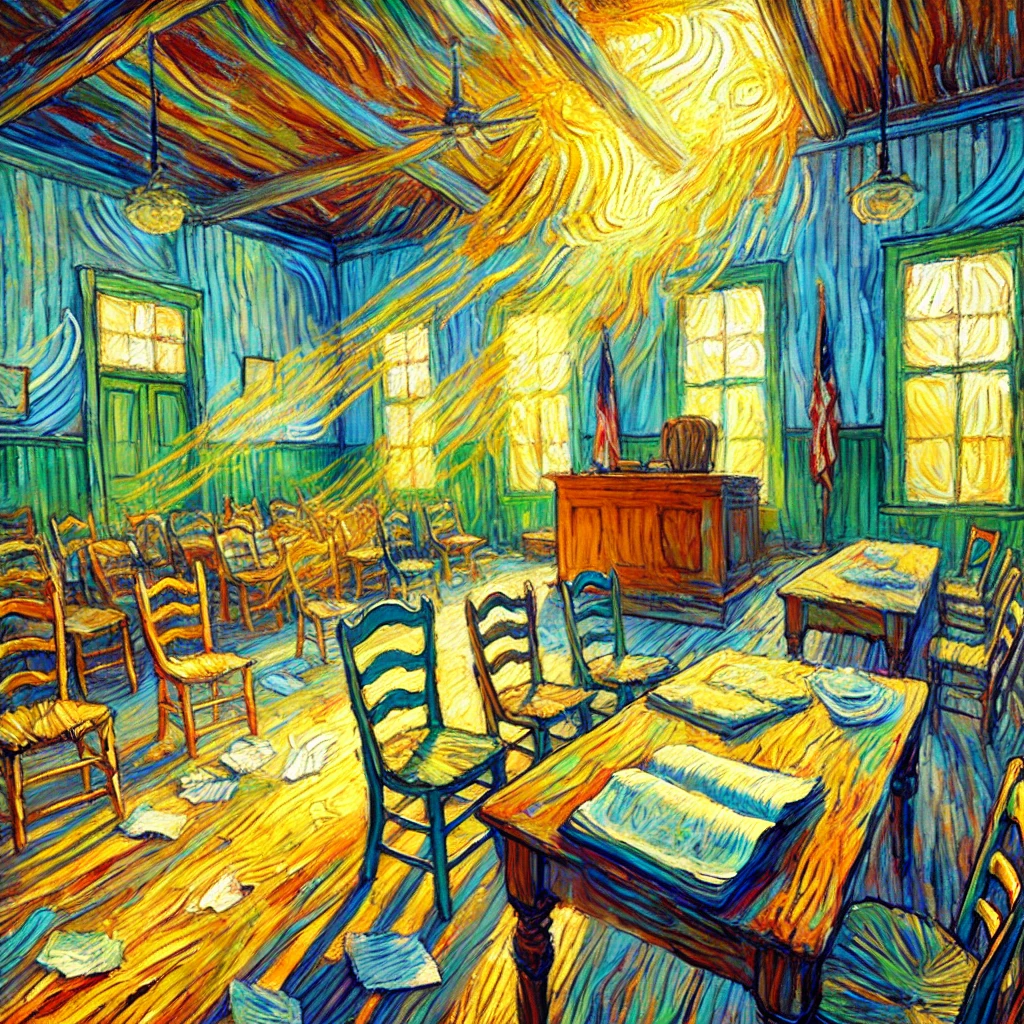
The ordinance was never repealed.
It was amended.
Silence Hours became Recommended Reflection Periods.
Talking permits became Conversation Courtesy Cards.
Enforcement was “paused.”
They are now cited constantly.
No one agrees what they say.
But everyone agrees they’re the record.
And somewhere, at exactly 6:59 p.m., someone checks their watch, inhales, and decides whether the thought is worth waiting for.
Epilogue – The Rule Remains, Technically
Disclaimer
This story is a work of fiction. All characters, meetings, ordinances, enforcement actions, and expressions – verbal or otherwise – are entirely imagined. Any resemblance to actual people, towns, policies, or attempts to regulate when humans may speak is purely coincidental, though perhaps emotionally familiar.
Sequatchie Crossing is not a real place, and no actual municipality has attempted to enforce mandatory silence hours, issue talking permits, or cite residents for expressive sighs, nods, or eyebrow movements (to the best of our knowledge). The events described are intended as satire, reflecting the universal tendency of communities to seek harmony through procedure, and then be surprised by the results.
Opinions expressed by fictional officials, residents, clerks, or note-takers do not represent the views of any real government, organization, or individual – especially not yours. If this story feels uncomfortably accurate, that is a narrative effect, not an accusation.
No meetings were successfully concluded during the writing of this piece.
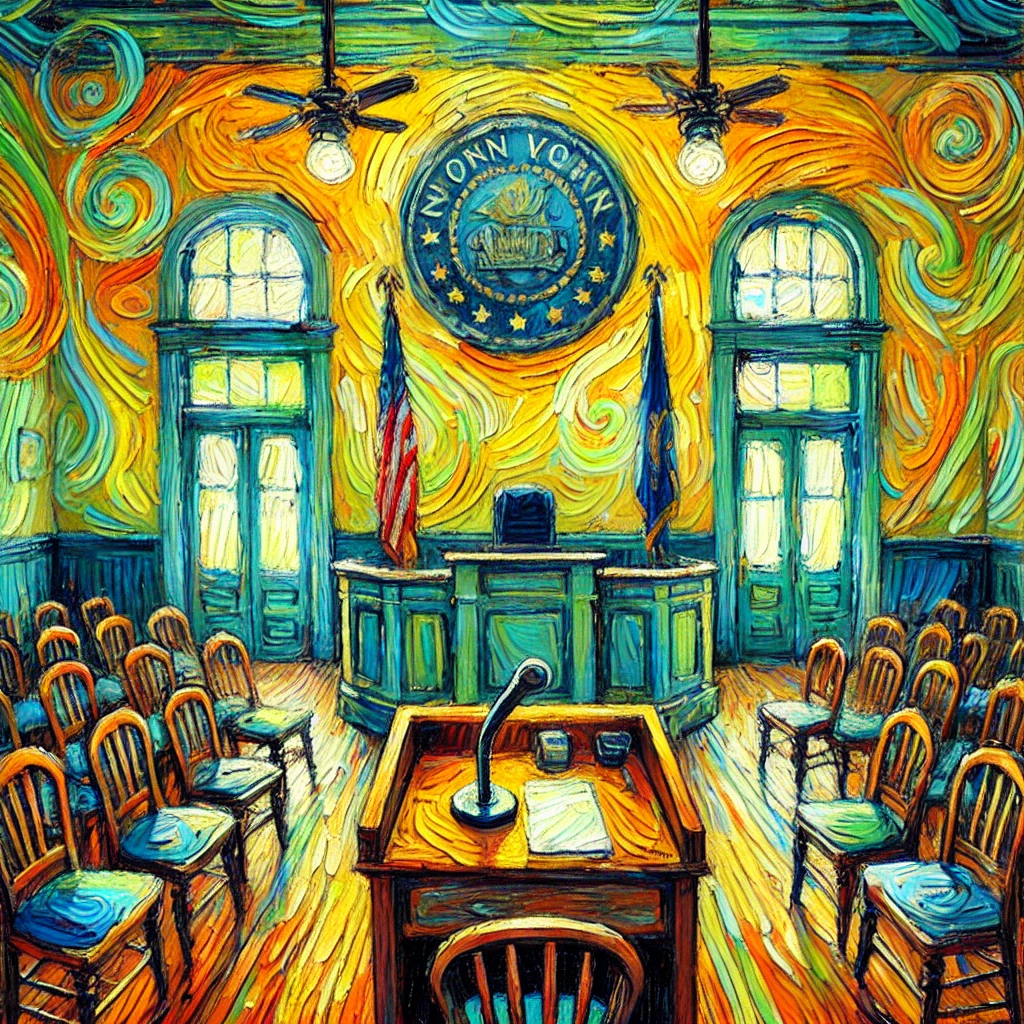
Disclaimer – Mandatory Silence Hours Proposed for Civic Harmony
Real Places Behind the Ruckus – From The Dunlap Directory

Real Places Behind the Ruckus – From The Dunlap Directory
Yes, this story was fictional; even the parts that weren’t true. These places? Absolutely real. Stop by, support local, and keep the Wi-Fi away from livestock:
- Hardee’s Dunlap
- Elder’s Ace Hardware-Dunlap
- Beau Brown Of Jason Lewis Dunlap Supercenter
- Dunlap Buy Sell and Trade
- Kosha Hibachi Chattanooga
- Buy, and Sale in Crossville, Pikeville, Dunlap, Cookeville TN
- Little Tail Farms
- Sequatchie Farmers Co-Op
- Greeter Falls Campground
- AMC Northgate 14
- Hairitage
- Rigsby Farm Equipment
- United Country Southeast Land Solutions
- Tennessee Dude & Guest Ranch
- Hillcrest Farm
- Prime Income & Tax Services
- Dunlap Industries
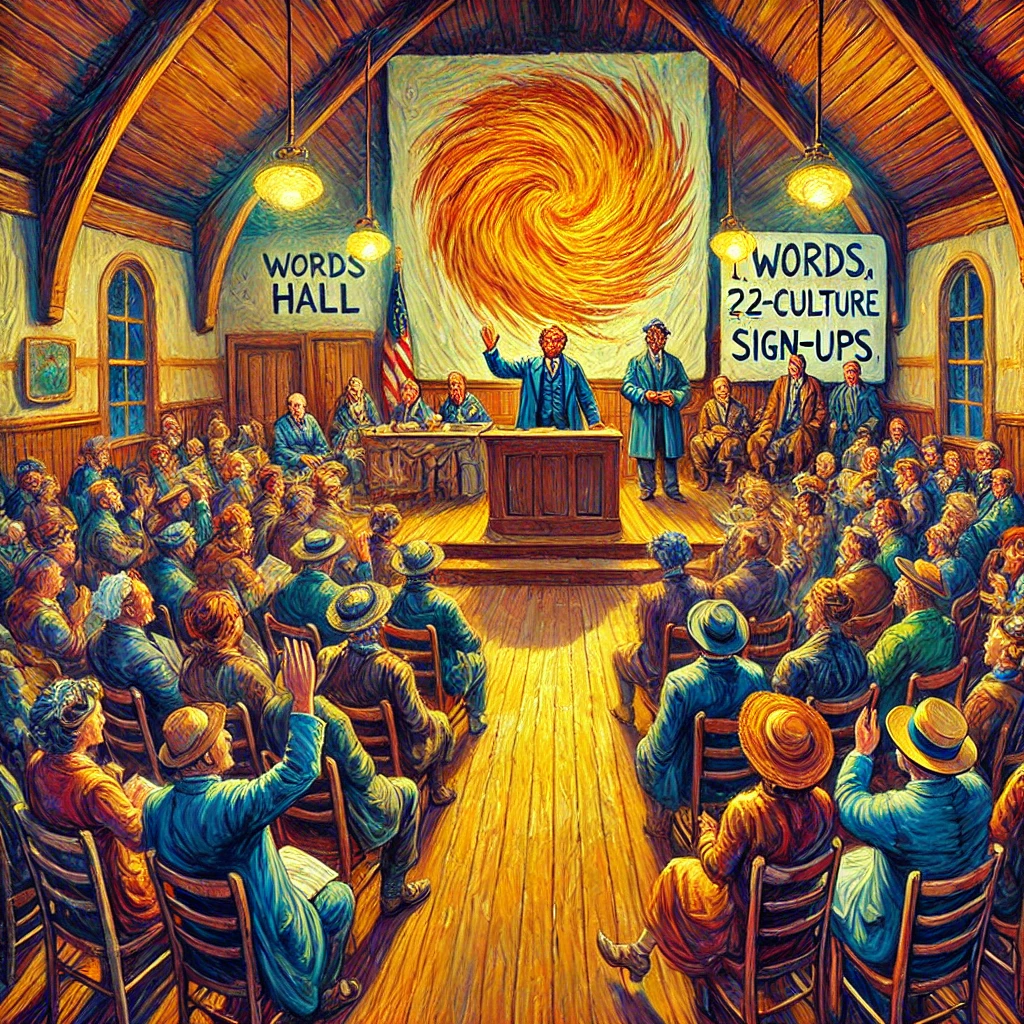
Real Places Behind the Ruckus – From The Dunlap Directory
At Sequatchie Crossing, we tell the stories of Sequatchie Crossing.
Please share this post with your friends, family, or business associates who may want follow the news from Sequatchie Crossing.



0 Comments