


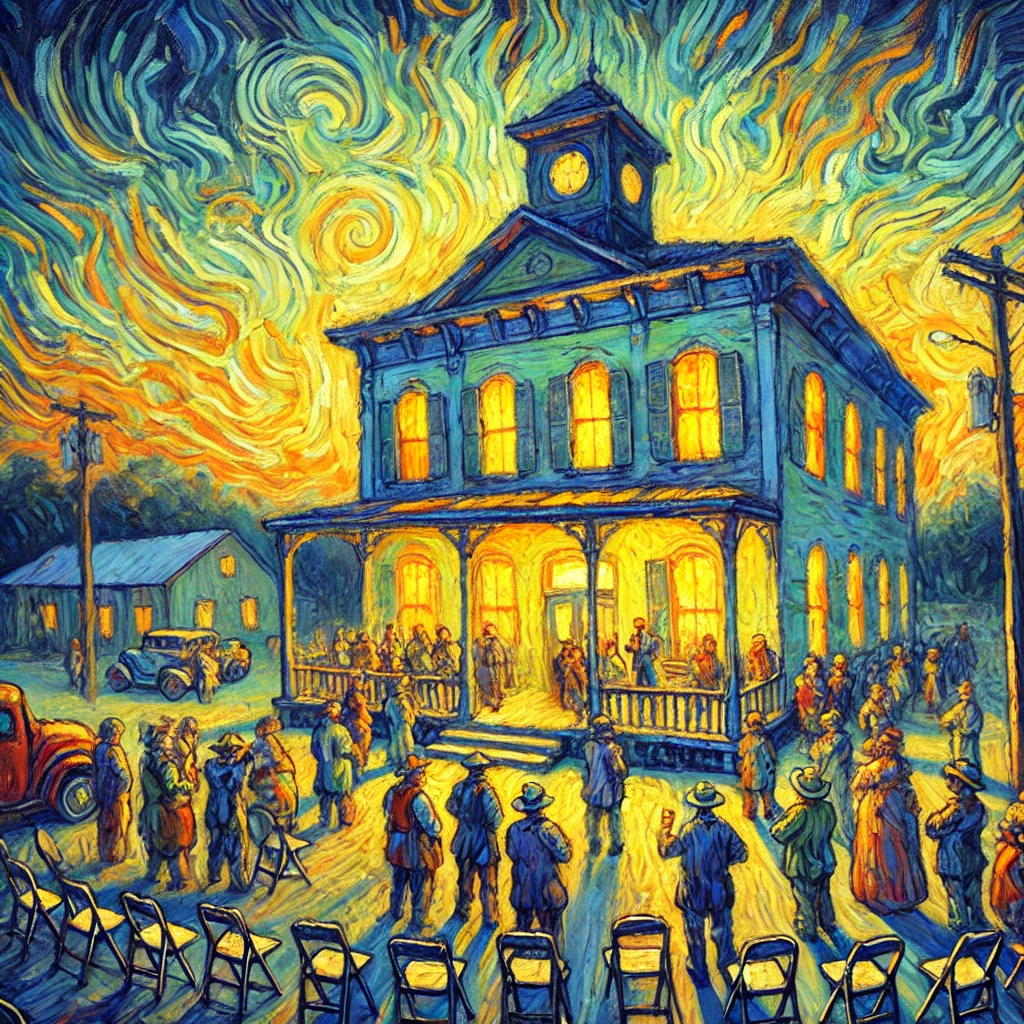
Officials Seek Guidance, Receive Opinions
By Tom Seest
At Sequatchie Crossing, we tell the stories of Sequatchie Crossing.
Please share this post with your friends, family, or business associates who may want follow the news from Sequatchie Crossing.
🎤 Audio Overview
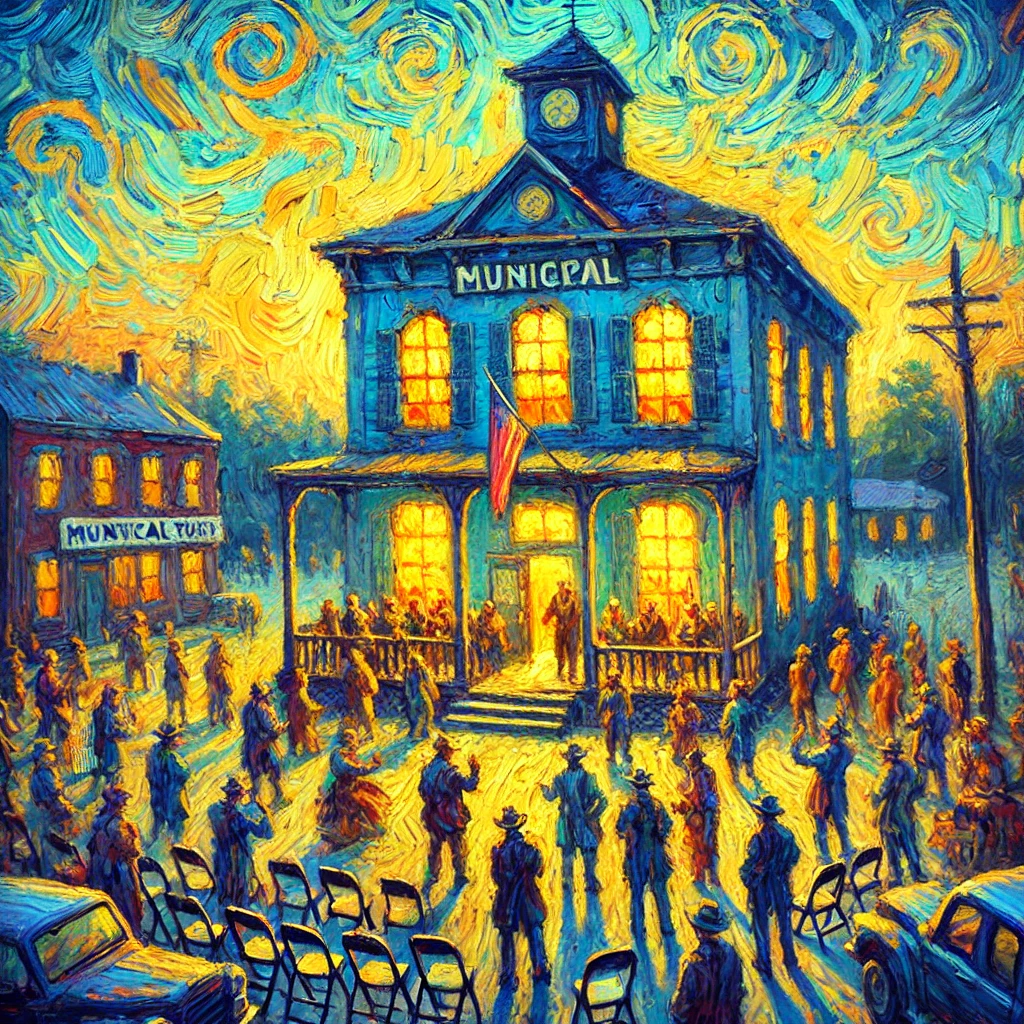
Town Complains Itself Into a Corner
Prologue: The Complaint Before the Complaint
Sequatchie Crossing did not wake up one morning and decide to complain.
That would suggest intent.
Instead, it noticed – somewhere between a Facebook post about potholes and a town hall meeting about parking – that complaining had quietly become the town’s most reliable form of participation.
People who hadn’t voted in twenty years could still tell you, in exact detail, why the voting process was flawed.
People who never attended meetings were deeply concerned about how meetings were being run.
And people who claimed to want transparency were often the most upset when anything was explained.
This was not hypocrisy, exactly.
It was tradition.
So when the Town Council announced it would be holding a Listening Session – not a meeting, not a hearing, not a forum, but a carefully branded event meant to sound non-threatening – no one was surprised.
What surprised them was that everyone showed up.
Act I: The Listening Session That Heard Too Much
The listening session was held in the municipal building’s multipurpose room, which was last renovated in 1987 and smelled faintly of coffee, toner, and unresolved civic tension.
At the front sat the usual suspects:
-
Mayor Caldwell, who believed in calm process and spoke as though every sentence were being read aloud to a nervous horse.
-
Clerk Anita Fowler, who had brought three binders, two legal pads, and an expression that suggested she’d already lived this day once.
-
Sheriff Peeler, seated slightly back, hands folded, present “in case feelings escalated.”
-
And Clovis Strickland, who had arrived early, brought his own chair, and was already writing.
The sign at the door read:
TOWN LISTENING SESSION
Please sign in.
Please be respectful.
Please limit comments to three minutes.
No one noticed the irony until later.
The room filled quickly. Folding chairs scraped. People leaned against walls. Someone brought snacks. Someone else complained about the snacks.
Mayor Caldwell tapped the microphone.
“We’re here to listen,” he said, already aware this was a dangerous sentence.
The first hand went up before he finished speaking.
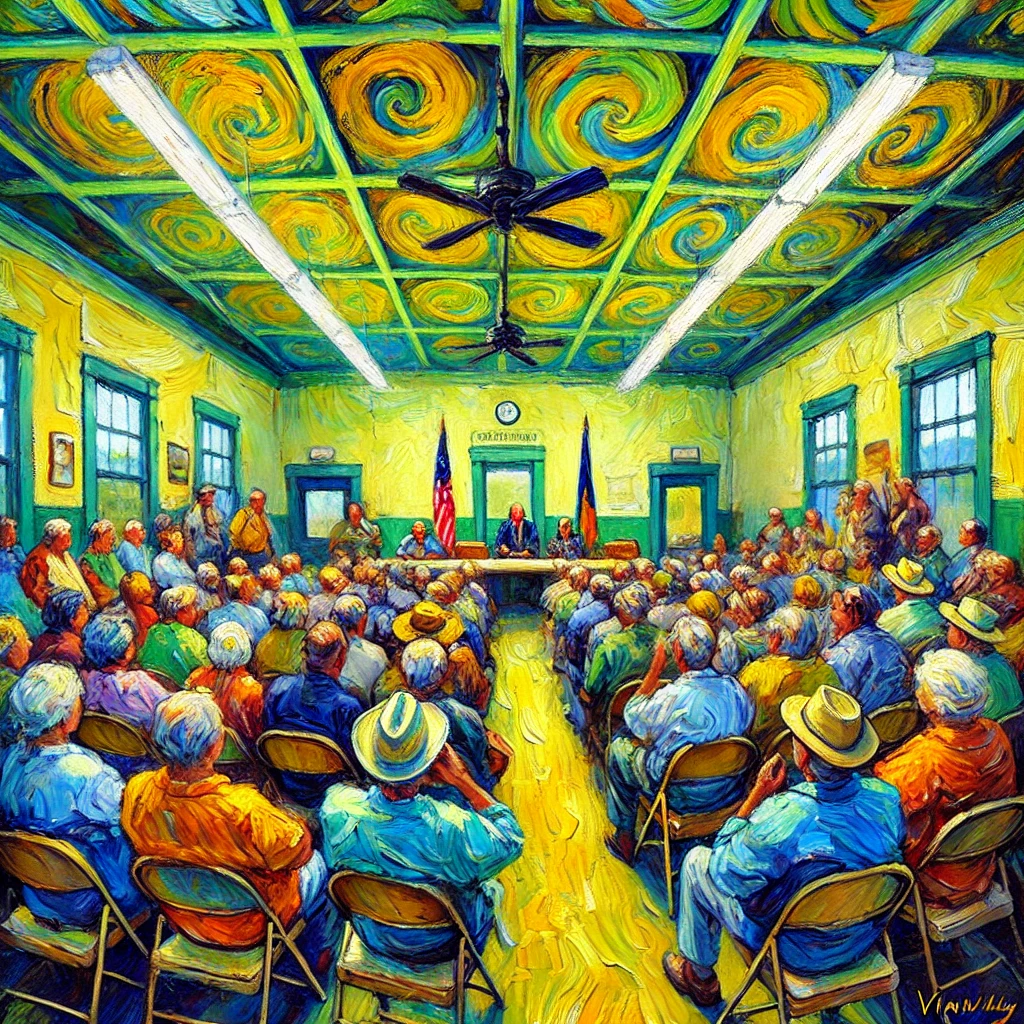
Act I – The Listening Session That Heard Too Much
Act II: Everyone Agrees, Except About Everything
The first speaker wanted fewer rules.
The second speaker wanted more rules, but clearer.
The third speaker wanted the rules enforced only sometimes, preferably on other people.
Someone wanted fewer meetings.
Someone else wanted more meetings, but shorter.
Another wanted longer meetings but with less talking.
A man in the third row complained that no one ever listens.
A woman immediately behind him complained that people like him talk too much.
Clerk Fowler wrote furiously, developing a shorthand that was mostly arrows and question marks.
Sheriff Peeler noted that no one was technically violating any laws, but several people were aggressively toeing the edge of tone.
Clovis Strickland wrote down everything.
Not because he planned to use it.
Because someday, someone would deny saying it.
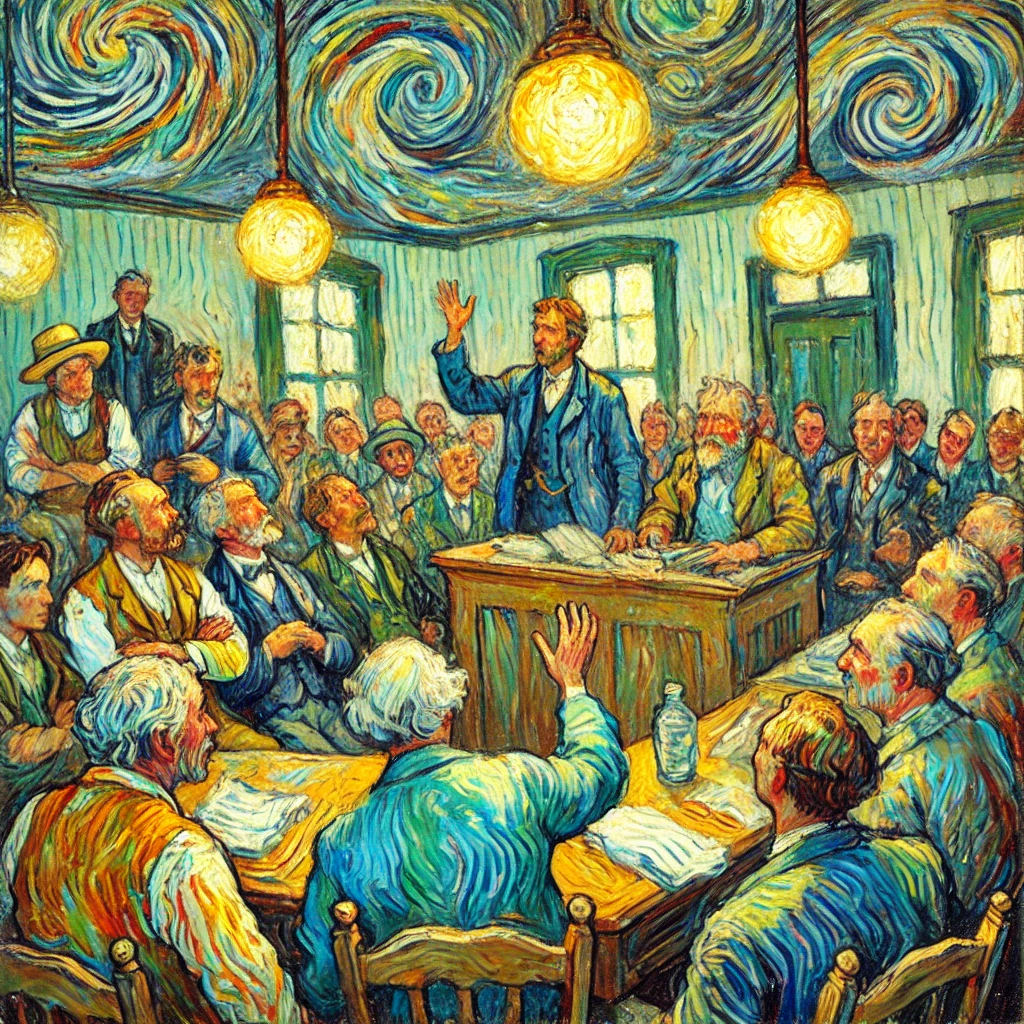
Act II – Everyone Agrees, Except About Everything
Act III: The Comment About Comments
Halfway through the evening, the topic shifted.
Not intentionally.
It just… drifted.
Someone stood and said, “My problem isn’t the issues. My problem is how people talk about the issues.”
This unlocked something.
Suddenly, the room was no longer discussing roads, budgets, or zoning.
It was discussing discussion itself.
-
Comments were too angry.
-
Comments were too polite.
-
Comments were anonymous.
-
Comments weren’t anonymous enough.
-
Comments should stay offline.
-
Comments should be submitted in writing.
-
Comments should be spontaneous.
-
Comments should be limited.
-
Comments should be unlimited, but respectful, but passionate, but brief, but thorough.
Mayor Caldwell attempted to steer the room back to infrastructure.
The room gently but firmly declined.

Act III – The Comment About Comments
Act IV: The Process Problem
A man who had not attended a meeting since 2004 stood and announced:
“I don’t like how decisions are made.”
When asked how he believed decisions were currently made, he paused.
“Well,” he said, “that’s part of the problem.”
This was met with nods.
Another resident complained that nothing ever changes.
Another complained that things change too fast.
A third complained that things change, but not in the right order.
Someone suggested forming a committee to study how complaints are handled.
Someone else suggested abolishing committees entirely.
Clerk Fowler quietly underlined the word committee three times and sighed.

Act IV – The Process Problem
Act V: Clovis Reads the Room (And Writes It Down)
Clovis Strickland had said nothing all evening.
This was concerning.
When he finally stood, the room quieted – not because he was popular, but because he was precise.
“I’ve been taking notes,” he said.
A murmur rippled through the crowd.
“I won’t read them,” he continued. “But I want to say this: everyone here wants to be heard, but no one wants to be responsible for what they said once it’s heard.”
The room did not love this.
“You want transparency,” Clovis said, “until it reflects you.”
Silence.
Sheriff Peeler leaned forward slightly.
Clovis sat down.
And continued writing.

Act V – Clovis Reads the Room (And Writes It Down)
Act VI: The Guidance Request
At the end of the session – two hours longer than scheduled – Mayor Caldwell made an announcement.
“It’s clear,” he said carefully, “that we need guidance.”
This sounded reasonable.
He explained that the town would be seeking input on how to improve civic discourse, streamline public comment, and ensure everyone felt heard without meetings becoming… this.
A survey would be distributed.
A feedback form would be created.
An email address would be established.
The reaction was immediate.
People objected to the survey questions that hadn’t been written yet.
They worried about who would read the emails.
They demanded assurances about moderation, fairness, tone, access, and outcomes.
The guidance request had received opinions.
Many.

Act VI – The Guidance Request
Act VII: The Corner Forms
By the following week, the town found itself in a bind.
If it limited comments, it was silencing voices.
If it didn’t, it was fostering chaos.
If it moderated, it was censoring.
If it didn’t, it was negligent.
Every solution generated new complaints about the solution.
Every attempt at clarification was met with suspicion.
Someone accused the town of “weaponizing process.”
Someone else accused it of “refusing to lead.”
Both were correct, depending on how you felt that day.

Act VII – The Corner Forms
Act VIII: The Official Statement
The town released a statement.
It was four paragraphs long, carefully neutral, and approved by legal counsel.
It said, in essence:
-
The town values input.
-
The town acknowledges concerns.
-
The town is reviewing procedures.
-
The town appreciates patience.
The response was swift.
People complained it said nothing.
Others complained it said too much.
One resident complained about the font.

Act VIII – The Official Statement
Act IX: Life Goes On, Loudly
A pothole was fixed.
Another appeared.
A meeting was scheduled.
Attendance was debated.
Facebook remained active.
So did the diner.
People continued to talk.
People continued to listen – selectively.
And Clovis Strickland filed his notes in a folder labeled:
“This Will Come Up Again.”
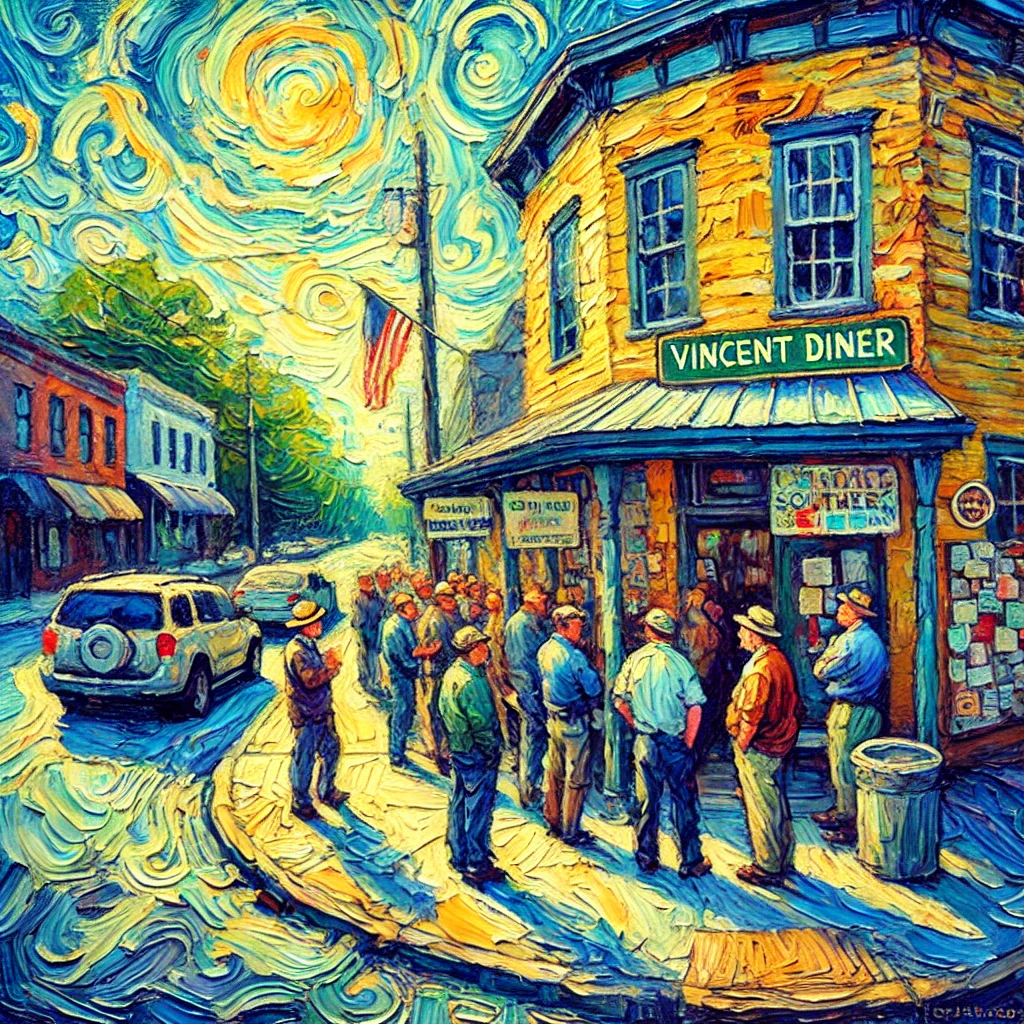
Act IX – Life Goes On, Loudly
Epilogue: The Corner Is Still There
Sequatchie Crossing did not collapse under the weight of its complaints.
It adapted.
Complaining became more refined.
More procedural.
More self-aware.
People learned to preface statements with, “I’m not complaining, but…”
Officials learned to nod without promising.
And the town, having talked itself into a corner, did what it always did.
It rearranged the furniture.
Declared progress.
And scheduled another listening session.
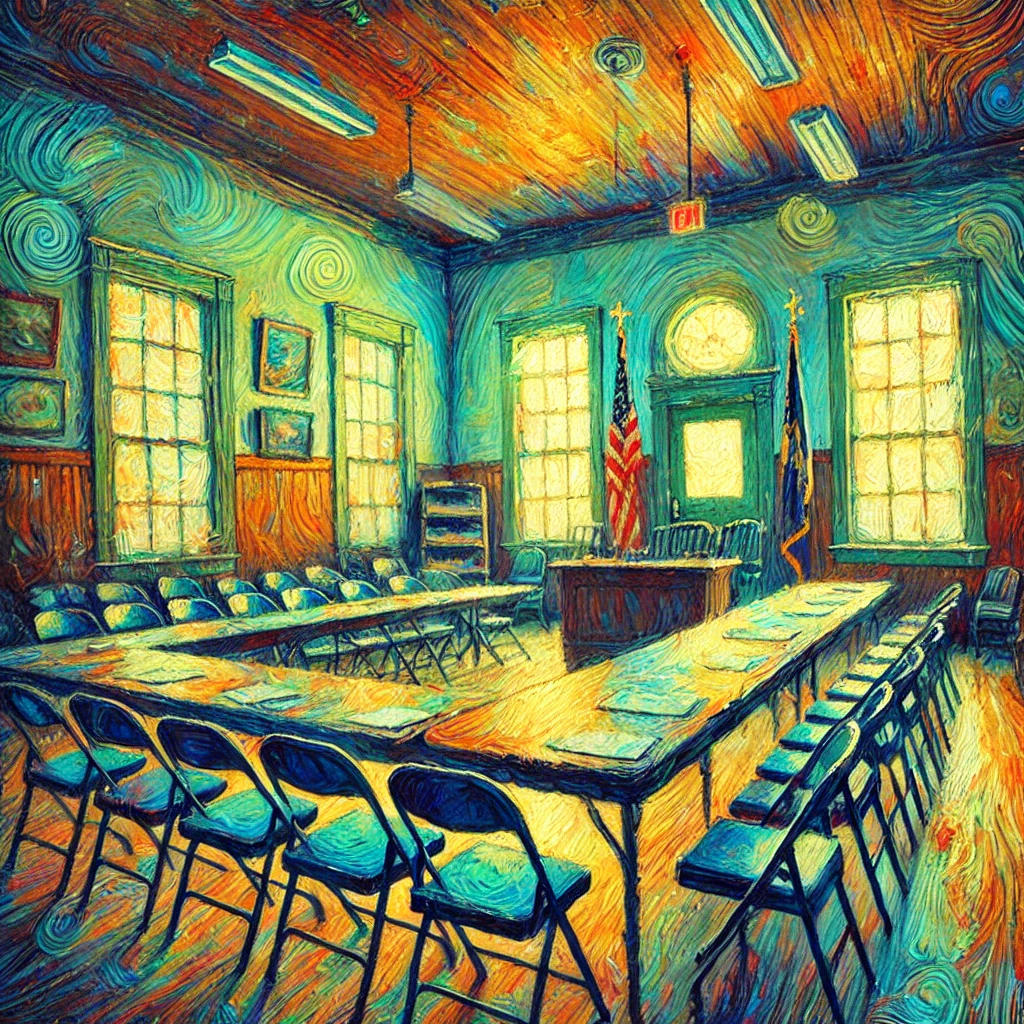
Epilogue – The Corner Is Still There
Disclaimer
Sequatchie Crossing is a work of fiction.
All characters, meetings, complaints, opinions, procedures, listening sessions, frustrations, statements, binders, notes, tone debates, and civic misunderstandings depicted herein are fictional and created for narrative and satirical purposes.
Any resemblance to real towns, real officials, real meetings, real comment sections, real neighbors, or real arguments about how people argue is purely coincidental – though statistically difficult to rule out.
This story does not document an actual meeting, policy, ordinance, or decision of any real governing body.
No public comment rules were harmed in the making of this narrative.
Reader reactions, including agreement, disagreement, offense, recognition, or the sudden urge to “clarify just one thing,” are not evidence of identification and should be processed at the reader’s own discretion.
If you believe this story is about you, it is not.
If you are certain it is, please note that this certainty is also fictional.
Proceed accordingly.

Disclaimer – Town Complains Itself Into a Corner
Real Places Behind the Ruckus – From The Dunlap Directory

Real Places Behind the Ruckus – From The Dunlap Directory
Yes, this story was fictional; even the parts that weren’t true. These places? Absolutely real. Stop by, support local, and keep the Wi-Fi away from livestock:
- Valhalla Acres Campground
- Newson Stone & Masonry
- Dunlap Fast Lube
- Signal Mtn And Dunlap Sell, Trade, Buy
- Hardee’s Dunlap
- Sequatchie Valley Automotive & Off-Road
- VFW Post 5772 Dunlap
- Ginger’s Car Detail
- The Frozen Frenzy
- Sequatchie Liquor
- Sequatchie Valley Lodge
- Dunlap Industries
- Citizens Tri-County Bank – Highway 28 Motor Branch
- Raccoon Mountain Caverns and Campground
- Scenic City Lawn Pros
- Walker’s Dirt Work LLC

Real Places Behind the Ruckus – From The Dunlap Directory
At Sequatchie Crossing, we tell the stories of Sequatchie Crossing.
Please share this post with your friends, family, or business associates who may want follow the news from Sequatchie Crossing.




0 Comments